SCR 143: Smoking: youth: motion picture industry.
- Session Year: 2017-2018
- House: Senate
- Latest Version Date: 2018-05-08
This measure would encourage the motion picture industry to take specified action with regard to the industrys depiction of smoking, and would encourage the State Department of Public Health, the Attorney General, and other state and local agencies to continue to expand efforts to reduce and eliminate the depiction of smoking in entertainment and media venues, as specified.
WHEREAS, Smoking continues to be the leading cause of preventable death in the United States and worldwide, responsible for more than 480,000 deaths per year in the United States, or more than 1,300 deaths every day; and
WHEREAS, For every person who dies because of smoking, at least 30 people live with a serious smoking-related illness. More than 16 million Americans are living with a disease caused by smoking; and
WHEREAS, Smoking causes cancer, heart disease, stroke, lung diseases, diabetes, and chronic obstructive pulmonary disease, which includes emphysema and chronic bronchitis. On average, smokers die 10 years earlier than nonsmokers; and
WHEREAS, The total economic cost of smoking is more than $300 billion per year in the United States, including nearly $170 billion in direct medical care for adults, and more than $156 billion in lost productivity due to illness and death; and
WHEREAS, The tobacco industry spends about $1 million every hour on advertising and promotions, more than $24 million every day, and about $9 billion per year; and
WHEREAS, For each of the 1,300 people who die every day due to smoking, at least two youths or young adults become regular smokers each day, and almost 90 percent of those replacement smokers smoke their first cigarette by 18 years of age; and
WHEREAS, The United States Surgeon General has concluded that smoking prevention efforts should focus on young people, and that youth are vulnerable to social and environmental influences, messages, and images promoting tobacco use; and
WHEREAS, Tobacco industry documents show that the movie industry collaborated for decades in promoting smoking and tobacco brands, before and after the United States Surgeon Generals 1964 report was released stating that smoking causes cancer; and
WHEREAS, The Attorney General of the State of California has made an ongoing effort to enforce the provisions of the Master Settlement Agreement that prohibits any payment or other consideration to any other person or entity to use, display, make reference to, or use as a prop any tobacco product, tobacco product package, advertisement for a tobacco product, or any item bearing a brand name in any motion picture; and
WHEREAS, In 2012, the United States Surgeon General concluded that there is a causal relationship between depictions of smoking in movies and the initiation of smoking by young persons. The more frequently youths see smoking on screen, the more likely they are to start smoking. Youths who are heavily exposed to onscreen smoking imagery are two to three times more likely to begin smoking than youths who are less exposed; and
WHEREAS, Exposure to onscreen smoking recruits an estimated 37 percent of all new young smokers, and is the number one reason that young people start smoking; and
WHEREAS, The federal Centers for Disease Control and Prevention (CDC) reported in 2014 that 6.4 million children alive today will become smokers because of exposure to onscreen smoking. Two million of these young recruits will die prematurely due to smoking-related diseases; and
WHEREAS, The data on smoking images and depiction in the top-grossing movies in the United States has been collected for more than 25 years by the nonprofit organization Breathe California Sacramento Region, and is used by many national and international researchers, public health groups, and medical groups; and
WHEREAS, In July 2017, the CDC released a report summarizing this data and research, and found that occurrences of smoking in movies reached a peak in 2005, and then declined by almost half by 2010. But, since then, from 2010 to 2017, the total number of tobacco incidents in top-grossing movies has increased, with a 57 percent increase occurring in movies rated PG-13; and
WHEREAS, If the motion picture industry had simply continued reducing tobacco content in its youth-rated films at the pace it did between 2005 and 2010, all youth-rated films would have been entirely smoke free by 2015; and
WHEREAS, Since the industrys progress halted, major studios and independent producer-distributors have released 241 top-grossing, youth-rated films in the United States featuring more than 6,900 tobacco incidents, delivering 64.9 billion tobacco impressions in United States theaters alone; and
WHEREAS, The 2017 CDC report concluded that ... the lack of progress in recent years suggests that enhanced measures to address tobacco incidents in movies are warranted. One such intervention would be the assignment of an R rating to any movie with smoking or other tobacco-use imagery (unless the portrayal is of actual historical figures who smoked, a documentary, or if the portrayal includes the negative effects of tobacco use); and
WHEREAS, The CDC estimates that the R rating will save over one million children from premature death caused by cancer or other tobacco-related diseases; and
WHEREAS, In August 2017, 17 of the most prominent and respected medical and public health organizations in the United States sent a letter to the Motion Picture Association of America and the major movie and video production and distribution companies, with the demand that after June 1, 2018, any motion picture with tobacco imagery be rated R, with the exceptions noted above; and
WHEREAS, Major motion picture studios with direct governance authority over the film rating system in the United States, through their trade association, the Motion Picture Association of America, account for two-thirds of the youth-rated films portraying tobacco use released since 2010, 70 percent of youth-rated tobacco incidents, and 86 percent of youth-rated audience tobacco impressions; and
WHEREAS, The United States film industry, simply by leaving smoking out of future films rated for adolescents domestically and in other markets, can turn the page and fundamentally alter the destiny of families around the world for decades to come; and
WHEREAS, The additional health consequences of further delay in taking the substantive steps consistently recommended to the film industry for the past 15 years will be enormous; now, therefore, be it
Resolved by the Senate of the State of California, the Assembly thereof concurring, That the Legislature encourages the major motion picture studios, operating through their trade group, the Motion Picture Association of America, to give an adult R (Restricted) rating to any new film designed for viewing by children or adolescents that shows or implies smoking or tobacco use, with only two categorical exceptions: (a) when the depiction unambiguously reflects the dangers and consequences of smoking or tobacco use, or (b) the depiction exclusively represents the smoking or tobacco use of an actual historic or living person, as in a biographical drama or documentary; and be it further
Resolved, That the Motion Picture Association of America, and the major movie, film, or video studios and producers, independent movie, film, or video producers, and movie, film, or video distributors or exhibitors, are urged to adopt this policy and practice in their film and video rating systems, and educational, informational, and promotional materials for parents, young people, and others; and be it further
Resolved, That the State Department of Public Health, the Attorney General of California, and other state and local agencies, should continue to expand efforts to reduce and eliminate the depiction of smoking in entertainment and media venues, including, but not limited to, movies, films, video, streaming video, video or computer games, social media, and smartphone or computer applications, including the funding of efforts to identify and catalog the images and depiction of smoking in these venues, and to make this information available to both researchers and the general public; and be it further
Resolved, That the Secretary of the Senate transmit copies of this resolution to the State Department of Public Health, the Attorney General of California, the Motion Picture Association of America, and the major movie, film, or video studios and producers in California and the United States, the independent movie, film, or video producers in California and the United States, and the movie, film, or video distributors or exhibitors and their parent companies in California and the United States.
|
Date
|
Status
|
|---|---|
| Aug 21, 2018 | August 21 hearing: Failed passage in committee. |
| Aug 6, 2018 | Referred to Com. on HEALTH. |
| Jul 3, 2018 | In Assembly. Held at Desk. |
| Jul 2, 2018 | Read. Adopted. (Ayes 24. Noes 8.) Ordered to the Assembly. |
| Jun 26, 2018 | Read second time. Ordered to third reading. |
| Jun 25, 2018 | From committee: Be ordered to second reading pursuant to Senate Rule 28.8. |
| Jun 18, 2018 | Set for hearing June 25. |
| Jun 6, 2018 | From committee: Be adopted and re-refer to Com. on APPR. (Ayes 6. Noes 0.) (June 6). Re-referred to Com. on APPR. |
| May 18, 2018 | Set for hearing June 6. |
| May 17, 2018 | Re-referred to Com. on HEALTH. |
| May 8, 2018 | Introduced. Referred to Com. on RLS. |
|
Date
|
Description
|
Location
|
Votes
|
|
|---|---|---|---|---|
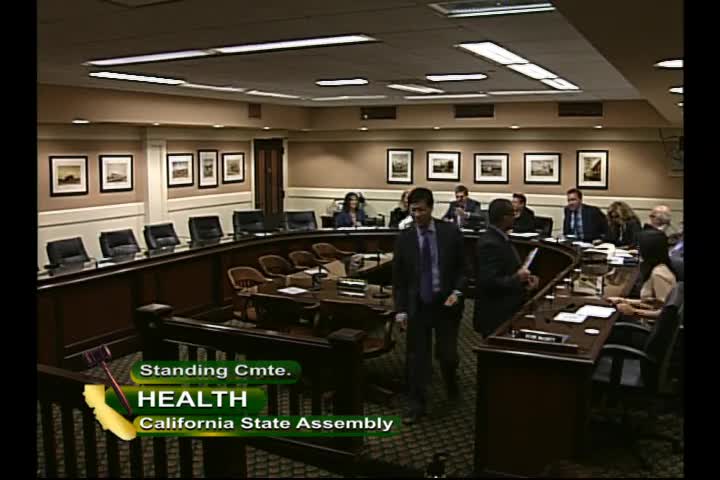
| Aug 21, 2018 | Be adopted and re-referred to the Committee on [Appropriations] | Assembly Standing Committee on Health |
Passed |
|
| Jul 2, 2018 | Senate 3rd Reading SCR143 Pan | Senate Floor |
Passed |
|
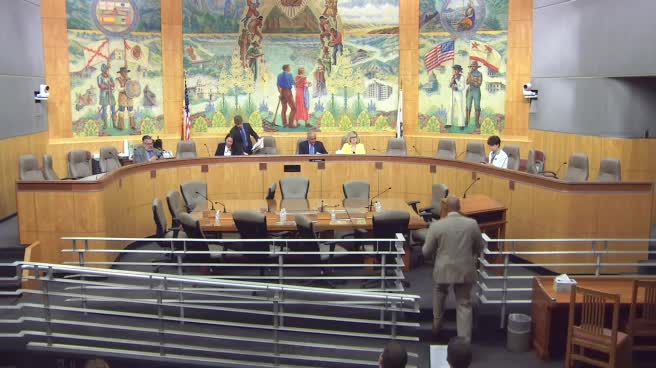
| Jun 6, 2018 | Be adopted, but first be re-referred to the Committee on [Appropriations] | Senate Standing Committee on Health |
Passed |
This list shows positions taken on this bill by organizations on the date displayed, which is linked to the original source.
Positions by individuals are not included.
|
Organization
|
Position
|
Date
|
|---|---|---|
| American Academy Of Family Physicians | ** Support | Aug 20, 2018 |
| American Academy of Pediatrics | * Support | Aug 21, 2018 |
| American Cancer Society | ** Support | Aug 20, 2018 |
| American Heart Association | ** Support | Aug 20, 2018 |
| American Lung Association in California | ** Support | Aug 20, 2018 |
| American Stroke Association | ** Support | Aug 20, 2018 |
| Americans for Nonsmokers' Rights | ** Support | Aug 20, 2018 |
| As You Sow | ** Support | Aug 20, 2018 |
| Breathe California | * Support | Aug 21, 2018 |
| California Academy Of Family Physicians | ** Support | Aug 20, 2018 |
| California Medical Association | * Support | Aug 21, 2018 |
| Catholic Health Initiatives | ** Support | Aug 20, 2018 |
| Cigarette Butt Pollution Project | ** Support | Aug 20, 2018 |
| Dignity Health | ** Support | Aug 20, 2018 |
| Doctor | * Support | Jun 6, 2018 |
| Mercy Investment Services, Inc. | ** Support | Aug 20, 2018 |
| Motion Picture Association Of America | * Against | Jun 6, 2018 |
| Northwest Coalition For Responsible Investment | ** Support | Aug 20, 2018 |
| The San Francisco Marin Medical Society | ** Support | Jun 27, 2018 |
| Trinity Health | ** Support | Jun 27, 2018 |
| UCSF | * Support | Jun 6, 2018 |
Date of Hearing: August 21, 2018
ASSEMBLY COMMITTEE ON HEALTH
Jim Wood, Chair
SBPCA Bill Id:SCR 143
Author:(Pan) – As Introduced Ver:May 8, 2018
SENATE VOTE: 24-8
SUBJECT: Smoking: youth: motion picture industry.
SUMMARY: Encourages the motion picture industry to take action regarding the industry's depiction of smoking, and, encourages the Department of Public Health (DPH), the Attorney General (AG), and others to expand efforts to reduce and eliminate the depiction of smoking in entertainment and media venues. Specifically, this resolution makes the following findings and declarations:
- Smoking continues to be the leading cause of preventable death in the United States and worldwide, responsible for more than 480,000 deaths per year in the United States, or more than 1,300 deaths every day, and causes cancer, heart disease, stroke, lung diseases, diabetes, and chronic obstructive pulmonary disease (COPD), and on average, smokers die 10 years earlier than nonsmokers;
- The total economic cost of smoking is more than $300 billion per year in the United States, including nearly $170 billion in direct medical care for adults, and more than $156 billion in lost productivity due to illness and death;
- The tobacco industry spends about $1 million every hour on advertising and promotions, more than $24 million every day, about $9 billion per year; and, tobacco industry documents show that the movie industry collaborated for decades in promoting smoking and tobacco brands, before and after the United States Surgeon General's 1964 report was released stating that smoking causes cancer;
- The AG has made an ongoing effort to enforce the provisions of the Master Settlement Agreement that prohibits any payment or other consideration to any other person or entity to use, display, make reference to, or use as a prop any tobacco product in any motion picture;
- The federal Centers for Disease Control and Prevention (CDC) reported in 2014 that 6.4 million children alive today will become smokers because of exposure to onscreen smoking and two million of those will die prematurely due to smoking related diseases. The CDC released a report in July of 2017 finding that occurrences of smoking in movies has increased from 2010 to 2017, with a 57% increase in movies rated “PG-13” (Parents Strongly Cautioned: some material may be inappropriate for children under 13); and, the CDC estimates that assigning an “R” (Restricted: no one 17 or under admitted) rating to movies with smoking would save over one million children from premature death caused by cancer or other tobacco-related diseases; and,
- The Legislature encourages the major motion picture studios, operating through their trade group, the Motion Picture Association of America (MPAA), to give an adult rating to any new film designed for viewing by children or adolescents that shows or implies smoking or tobacco use, unless the depiction unambiguously reflects the dangers and consequences of smoking, or the depiction represents the smoking or tobacco use of an actual historic or living person.
EXISTING LAW:
- Prohibits any person, firm, or corporation from selling, giving, or in any way, furnishing tobacco products to any person under the age of 21, including in person and through mail or telephone. Exempts active duty military personnel who are 18 years of age or older from this prohibition.
- Defines, under state law, "smoke" and "smoking" as inhaling, exhaling, burning, or carrying any lighted or heated cigar, cigarette, or pipe, or any other lighted or heated tobacco or plant product intended for inhalation, whether natural or synthetic, in any manner or in any form. Includes in the definition, the use of an electronic smoking device that creates an aerosol or vapor, in any manner or in any form, or the use of any oral smoking device for the purpose of circumventing the prohibition of smoking.
- Defines a "tobacco product" as:
- A product containing, made, or derived from tobacco or nicotine that is intended for human consumption, whether smoked, heated, chewed, absorbed, dissolved, inhaled, snorted, sniffed, or ingested by any other means, including, but not limited to cigarettes, cigars, little cigars, chewing tobacco, pipe tobacco, or snuff;
- An electronic device that delivers nicotine or other vaporized liquids to the person inhaling from the device, including, but not limited to, an electronic cigarette, cigar, pipe, or hookah;
- Any component, part, or accessory of a tobacco product, whether or not sold separately; and,
- A tobacco product does not include a product that has been approved by the United States Food and Drug Administration for sale as a tobacco cessation product or for other therapeutic purposes where the product is marketed and sold solely for such an approved purpose.
FISCAL EFFECT: According to the Senate Appropriations Committee, pursuant to Senate Rule 28.8, negligible state costs.
COMMENTS:
- PURPOSE OF THIS BILL. According to the author, the US Surgeon General has concluded that smoking onscreen causes youth to start smoking. The CDC estimates that 6.4 million young Americans alive today will become smokers because of exposure to smoking in movies. The author notes that since 2003, medical and public health agencies, state Attorneys General (including California's') and families have asked the major motion picture studios and their parent companies to act. The author states that, in 2017, half of the top-grossing PG-13 films featured tobacco, and according to the CDC, giving R-ratings to future movies with tobacco could reduce youth smoking rates by 18% in this generation of kids, preventing 1 million premature deaths. The author notes that in California alone, the University of California San Francisco estimates that an R-rating will save more than 80,000 lives and $2.6 billion in healthcare costs. The author concludes the movie industry’s voluntary rating system needs to be updated to reflect these very real public health dangers, and that a reasonable, responsible R-rating for smoking in movies designed for children and teenagers is the appropriate solution.
- BACKGROUND.
- Smoking prevalence. According to the CDC, nearly 90% of smokers in the U.S. started smoking by the age of 18, and 98% started by age 26. In California, 64% of smokers start by the age of 18, and 96% start by age 26. According to DPH, in 2010, 36.8% of high school students had smoked a whole cigarette by age 13 or 14, and in 2012, illegal tobacco sales to minors rose to 8.7% from 5.6% in 2011. The CDC reports that if smoking continues at the current rate in the U.S., 5.6 million of today’s youth under the age of 18 (about one of every 13) will die early from a tobacco-related disease. Each day in the U.S., more than 3,200 youth aged 18 years or younger smoke their first cigarette, and an additional 2,100 youth and young adults become daily cigarette smokers.
- Tobacco-related diseases. Every year, cigarette smoking causes more than 480,000 deaths in the U.S. The CDC reports that smoking causes more deaths each year than the following causes combined: human immunodeficiency virus, illegal drug and alcohol use, motor vehicle crashes, and firearm-related incidents. Smoking also causes about 90% of all lung cancer deaths and about 80% of all deaths from COPD. Estimates also show that smoking increases the risk of coronary heart disease and stroke by two to four times, as well as the risk of men and women developing lung cancer by 25 times. Smoking causes diminished overall health, increased absenteeism from work, and increased health care utilization and cost.
- Reported influence of smoking in movies. A July 2017 report from the CDC states that the U.S. Surgeon General has concluded there is a causal relationship between depictions of smoking in the movies and the initiation of smoking among young persons. Those who are heavily exposed to onscreen smoking imagery are approximately two to three times as likely to begin smoking as are youth who receive less exposure. Occurrences of tobacco incidents include the use or implied use of a tobacco product, such as cigarettes, cigars, pipes, hookah, smokeless tobacco products, and electronic cigarettes by an actor. According to the CDC, in 2016, 41% of movies that were among the 10 top-grossing movies in any calendar week included tobacco use, compared with 45% in 2010. Among youth-rated movies, 26% included tobacco use in 2016 (including 35% of PG-13 movies) compared with 31% in 2010 (including 43% of PG-13 movies). A steady decline in the number of tobacco incidents in youth-rated movies that occurred between 2005 and 2010 stopped in 2010. The CDC states that from 2010 to 2016, occurrences of tobacco use increased in top-grossing movies by 72%, from 1,824 in 2010 to 3,145 in 2016. This increase included a 43% increase in occurrence in tobacco use, from 564 to 809, among PG-13 rated movies. In 2017, the tobacco incidents in PG-13 rated movies rose to 883. According to the CDC, had the average decline in tobacco incidents that occurred between 2005 and 2010 continued, tobacco incidents would have been eliminated from all youth-rated films by early 2015. The reduction of tobacco incidents in youth-rated movies is expected to prevent the initiation of tobacco use among young people.
- Movie rating system. According to the Classification and Rating Administration (CARA), CARA and the Classification and Rating Appeals Board were established by the MPAA and the National Association of Theatre Owners, Inc. as part of a voluntary system to provide information to parents to aid them in determining the suitability of individual motion pictures for viewing by children. CARA states that ratings are assigned by a board made up of parents who reflect what they believe would be the majority view of their fellow American parents in assigning a rating to a film. CARA states this gives the system a built-in mechanism to continually evolve with current parental concerns and that raters have no film industry affiliation and are employed by CARA, which is independently financed by fees it charges to rate films.
According to a CARA pamphlet entitled, "The Movie Rating System: Its History, How It Works and It's Enduring Value," some of the content CARA considers when issuing a rating includes violence, sex, drugs, language, thematic material, and adult activities. The pamphlet notes that in 2007 adult smoking was made a factor in the rating system, and youth smoking was always considered in a film’s rating. According to CARA, three questions are typically considered: a) is smoking pervasive in the film; b) is smoking glamorized; and, c) is there a historic, public health, or other mitigating context? CARA states that the appearance of smoking in a motion picture does not require the assignment of any particular rating, but rather it is a factor to be evaluated in the overall context of the motion picture.
R-rated movies contain some adult material and may depict adult activity, hard language, intense graphic or persistent violence, sexually oriented nudity, drug abuse, or other elements. Children under the age of 17 are not allowed to attend R-rated films unaccompanied by a parent or adult guardian.
- SUPPORT. Breathe California is the sponsor of this resolution and states that the US Surgeon General has concluded that smoking onscreen causes teenagers and other youth to start smoking. Breathe California also notes that the CDC has concluded that R-rating future movies with tobacco can reduce youth smoking rates by 18%, preventing one million premature deaths.
The American Lung Association, Cancer Action Network, American Heart Association, and American Stroke Association support this bill, noting that in 2016 voters passed Proposition 56 which increased the tobacco tax by $2.00 per pack, providing significant resources to educate children about the dangers of smoking, however, images of famous actors smoking in films represents a danger to undermine that important work.
The California Medical Association notes, in support, young people who are heavily exposed to onscreen smoking imagery are two to three times more likely to begin smoking than youths who are less exposed to it.
- CONCERNS. The MPAA, Inc. notes in a letter of concern that the substance of this resolution was brought as a legal challenge to the ratings system in Forsyth v. MPAA in 2016. MPAA states that in that case, the federal judge dismissed the complaint, finding that the ratings are a form of protected speech. MPAA also notes that the court found the ratings system furthers the filmmakers’ First Amendment rights.
- RELATED LEGISLATION.
- AB 1097 (Levine) would prohibit smoking at state parks and coastal beaches, as specified, and establish that a violation is an infraction with a fine of up to $50. AB 1097 is pending in the Senate Appropriations Committee.
- SB 835 (Glazer) would implement a ban on smoking and disposing of tobacco products, as defined, at state parks and establishes an infraction punishable by a fine of up to $25 for a violation. SB 835 is pending in the Assembly Appropriations Committee.
- SB 836 (Glazer) would prohibit smoking of cigarettes, cigars, pipes and other tobacco-products in state coastal beaches, as specified, and establish that a violation is an infraction with a fine of up to $25. SB 836 is pending in the Assembly Appropriations Committee.
- PREVIOUS LEGISLATION.
- AB 725 (Levine) of 2017 would have prohibited smoking of tobacco products on state coastal beaches and at state parks, as specified, and established that a violation is an infraction with a fine of up to $50. AB 725 was vetoed by Governor Brown who stated in part that, "…such a far-reaching prohibition in every state park and on every state beach is too broad", and, "…if people can't smoke even on a deserted beach, where can they? There must be some limit to the coercive power of government."
- SB 386 (Glazer) of 2017 was substantially similar to AB 725 and vetoed for the same reasons.
- SBX2 5 (Leno), Chapter 7, Statutes of 2015-16 Second Extraordinary Session, recasts and broadens the definition of “tobacco product” to include electronic cigarettes and extends current the restrictions and prohibitions against the use of tobacco products to electronic cigarettes.
- SBX2 7 (Hernandez), Chapter 8, Statutes of 2015-16 Second Extraordinary Session, increases the minimum legal age to purchase or consume tobacco from 18 to 21, removes penalty provisions for those under 21 in possession of tobacco, and exempts military personnel from the age increase.
REGISTERED SUPPORT / OPPOSITION:
Support
Breathe California (sponsor)
American Academy of Family Physicians
American Academy of Pediatrics, California
American Cancer Society
American Heart Association
American Lung Association in California
American Stroke Association
Americans for Nonsmokers' Rights
As You Sow
California Academy of Family Physicians
California Medical Association
Cancer Action Network
Catholic Health Initiatives
Cigarette Butt Pollution Project
Dignity Health
Mercy Investment Services, Inc.
Northwest Coalition for Responsible Investment
Opposition
None on file.
Analysis Prepared by: Lara Flynn / HEALTH / (916) 319-2097
Office of Senate Floor Analyses (916) 651-1520 Fax: (916) 327-4478 | SCR |
THIRD READING
Bill No: SCR 143
:
SENATE HEALTH COMMITTEE: 6-0, 6/6/18
AYES: Hernandez, Leyva, Mitchell, Monning, Nielsen, Pan
NO VOTE RECORDED: Nguyen, Newman, Roth
SENATE APPROPRIATIONS COMMITTEE: Senate Rule 28.8
SOURCE: Breathe California Sacramento Region
DIGEST:
This resolution encourages major motion picture studios to give a Restricted (R) rating to any new film designed for viewing by children and adolescents that shows or implies smoking or tobacco use; urges various entities in the movie industry to adopt the policy and practice in their film and video rating systems; and encourages specified state and local entities to expand efforts to reduce and eliminate the depiction of smoking in entertainment and media venues, as specified.
ANALYSIS: This resolution makes the following legislative findings:
- Smoking continues to be the leading cause of preventable death in the U.S. and worldwide, responsible for more than 480,000 deaths per year in the U.S., or more than 1,300 deaths every day; and for every person who dies because of smoking, at least 30 people live with a serious smoking-related illness, and more than 16 million Americans are living with a disease caused by smoking.
- Smoking causes cancer, heart disease, stroke, lung diseases, diabetes, and chronic obstructive pulmonary disease (COPD), which includes emphysema and chronic bronchitis, and on average, smokers die ten years earlier than nonsmokers.
- The total economic cost of smoking is more than $300 billion per year in the U.S., including nearly $170 billion in direct medical care for adults and more than $156 billion in lost productivity due to illness and death; and the tobacco industry spends about $1 million every hour on advertising and promotions, which amounts to about $9 billion per year.
- For each of the 1,300 people who die every day due to smoking, at least two youths or young adults become regular smokers each day, and almost 90% of those replacement smokers have their first cigarette by age 18; and the U.S. Surgeon General has concluded that smoking prevention efforts should focus on young people, and that youth are vulnerable to social and environmental influences, messages, and images promoting tobacco use.
- Tobacco industry documents show that the movie industry collaborated for decades in promoting smoking and tobacco brands, before and after the U.S. Surgeon General’s 1964 report was released stating that smoking causes cancer.
- The Attorney General of the State of California has made an ongoing effort to enforce the provisions of the Master Settlement Agreement that prohibits any payment or other consideration to any other person or entity to use, display, make reference to, or use as a prop any tobacco product, tobacco product package, advertisement for a tobacco product, or any item bearing a brand name in any motion picture.
- In 2012, the U.S. Surgeon General concluded that there is a causal relationship between depictions of smoking in movies and the initiation of smoking by young persons; and the more frequently youths see smoking on screen, the more likely they are to start smoking; and youths that are heavily exposed to onscreen smoking imagery are two to three times more likely to begin smoking than youths who are less exposed; and exposure to onscreen smoking recruits an estimated 37% of all new young smokers and is the number one reason that young people start smoking.
- The federal Centers for Disease Control and Prevention (CDC) reported in 2014 that 6.4 million children alive today will become smokers because of exposure to onscreen smoking, and two million of those young recruits will die prematurely due to smoking-related diseases.
- The data on smoking images and depictions in the top-grossing movies in the U.S. has been collected for more than 25 years by the nonprofit organization Breathe California Sacramento Region and is used by many national and international researchers, public health groups, and medical groups.
- In July 2017, the CDC released a report summarizing this data and research and found that occurrences of smoking in movies reached a peak in 2005 and then declined by almost half by 2010. But since then, from 2010 to 2017, the total number of tobacco incidents in top-grossing movies has increased with a 57% increase occurring in movies rated PG-13.
- If the motion picture industry had simply continued reducing tobacco content in its youth-rated films at the pace it did between 2005 and 2010, all youth-rated films would have been entirely smoke free by 2015.
- Since the industry’s progress halted, major studios and independent producer-distributors have released 241 top-grossing, youth-rated films in the U.S. featuring more than 6,900 tobacco incidents, delivering 64.9 billion tobacco impressions in U.S. theaters alone.
- The 2017 CDC report concluded that the lack of progress in recent years suggests that enhanced measures to address tobacco incidents in movies are warranted, and one such intervention would be the assignment of an R rating to any movie with smoking or other tobacco-use imagery, which the CDC estimates will save over one million children from premature death caused by cancer or other tobacco-related diseases.
- In August 2017, 17 of the most prominent and respected medical and public health organizations in the U.S. sent a letter to the Motion Picture Association of America (MPAA) and the major movie and video production and distribution companies with the demand that after June 1, 2018, any motion picture with tobacco imagery be rated R, unless the portrayal is of actual historical figures who smoked, in a documentary, or if the portrayal includes the negative effects of tobacco use.
- Major motion picture studios with direct governance authority over the film rating system in the U.S., through their trade association, the MPAA, account for two-thirds of the youth-rated films portraying tobacco use released since 2010, 70% of youth-rated tobacco incidents, and 86% of youth-rated audience tobacco impressions.
- The U.S. film industry, simply by leaving smoking out of future films rated for adolescents domestically and in other markets, can turn the page and fundamentally alter the destiny of families around the world for decades to come; and the additional health consequences of further delay in taking the substantive steps consistently recommended to the film industry for the past 15 years will be enormous.
This resolution:
- Encourages the major motion picture studios, operating through their trade group, the MPAA, to give an R rating to any new film designed for viewing by children and adolescents that shows or implies smoking or tobacco use, with only two categorical exceptions: a) when the depiction unambiguously reflects the dangers and consequences of smoking and tobacco use, or b) the depiction exclusively represents the smoking or tobacco use of an actual historic or living person, as in a biographical drama or documentary.
- Urges the MPAA; major movie, film, or video studios and producers; independent movie, film, or video producers; and movie, film, or video distributors or exhibitors to adopt the policy and practice in their film and video rating systems, and educational, informational, and promotional materials for parents, young people, and others.
- Encourages the State Department of Public Health (DPH), the Attorney General of California, and other state and local agencies to continue to expand efforts to reduce and eliminate the depiction of smoking in entertainment and media venues, including, but not limited to, movies, films, video, streaming video, video or computer games, social media, and smartphone or computer applications, including the funding of efforts to identify and catalog the images and depiction of smoking in these venues, and to make this information available to both researchers and the general public.
- Requests the Secretary of the Senate to transmit copies of this resolution to DPH, the Attorney General of California, the MPAA, and the major movie, film, or video studio and producers in California and the U.S.; the independent movie, film, or video producers in California and the U.S.; and the movie, film, or video distributors or exhibitors and their parent companies in California and the U.S.
Comments
Author’s statement. According to the author, the U.S. Surgeon General has concluded that smoking onscreen causes youth to start smoking. The CDC estimates that 6.4 million young Americans alive today will become smokers because of exposure to smoking in movies, and of those, two million will die prematurely from tobacco-related illnesses. Since 2003, medical and public health agencies, state Attorneys General (including California) and families have asked the major motion picture studios and their parent companies to act. Still, in 2017, half of the top-grossing PG-13 films featured tobacco. According to the CDC, giving R ratings to future movies with tobacco could reduce youth smoking rates by 18% in this generation of kids, preventing one million premature deaths. In California alone, the University of California, San Francisco estimates the R rating will save more than 80,000 lives and $2.6 billion in health care costs. Nearly 50 years ago, America barred tobacco advertising on television and radio. Today, smoking in movies has a stronger promotional effect than traditional advertising. The movie industry’s voluntary rating system needs to be updated to reflect these very real public health dangers. A reasonable, responsible R rating for smoking in movies designed for children and teenagers is the appropriate solution.
- Smoking prevalence. According to the CDC, nearly 90% of smokers in the U.S. started smoking by the age of 18, and 98% started by age 26. In California, 64% of smokers start by the age of 18, and 96% start by age 26. According to DPH, in 2010, 36.8% of high school students had smoked a whole cigarette by age 13 or 14, and in 2012, illegal tobacco sales to minors rose to 8.7% from 5.6% in 2011. The CDC reports that if smoking continues at the current rate in the U.S., 5.6 million of today’s youth under the age of 18 (about one of every 13) will die early from a tobacco-related disease. Each day in the U.S., more than 3,200 youth aged 18 years or younger smoke their first cigarette, and an additional 2,100 youth and young adults become daily cigarette smokers. Flavorings in tobacco products can make them more appealing to youth. According to the CDC, in 2014, 73% of high school students and 56% of middle school students who used tobacco products in the past 30 days reported using a flavored tobacco product. From 2011 to 2016, cigarette smoking declined among middle and high school students. However, the use of electronic cigarettes increased among the same population during the same time: 4.3 % of middle school students reported in 2016 that they used electronic cigarettes, which was an increase from 0.6% in 2011, and 8% of high school students reported having used electronic cigarettes, which was an increase from 1.5%.
- Tobacco-related diseases. Every year, cigarette smoking causes more than 480,000 deaths in the U.S. The CDC reports that smoking causes more deaths each year than the following causes combined: HIV, illegal drug and alcohol use, motor vehicle crashes, and firearm-related incidents. Smoking also causes about 90% of all lung cancer deaths and about 80% of all deaths from COPD. Estimates also show that smoking increases the risk of coronary heart disease and stroke by two to four times, as well as the risk of men and women developing lung cancer by 25 times. Smoking causes diminished overall health, increased absenteeism from work, and increased health care utilization and cost. The CDC reports that just one year after quitting smoking, the risk for heart attack drops sharply, and within two to five years, the risk for stroke may reduce to about that of a nonsmoker’s. Within five years of quitting smoking, risks for cancers of the mouth, throat, esophagus, and bladder drop by about half. The risk for lung cancer also drops by about half after ten years of having quit smoking, according to the CDC.
- Reported influence of smoking in movies. A July 2017 report from the CDC states that the U.S. Surgeon General has concluded there is a causal relationship between depictions of smoking in the movies and the initiation of smoking among young persons. Those who are heavily exposed to onscreen smoking imagery are approximately two to three times as likely to begin smoking as are youth who receive less exposure. Occurrences of tobacco incidents include the use or implied use of a tobacco product, such as cigarettes, cigars, pipes, hookah, smokeless tobacco products, and electronic cigarettes by an actor. According to the CDC, in 2016, 41% of movies that were among the ten top-grossing movies in any calendar week included tobacco use, compared with 45% in 2010. Among youth-rated movies, 26% included tobacco use in 2016 (including 35% of PG-13 movies) compared with 31% in 2010 (including 43% of PG-13 movies). A steady decline in the number of tobacco incidents in youth-rated movies that occurred between 2005 and 2010 stopped in 2010. The CDC states that from 2010 to 2016, occurrences of tobacco use increased in top-grossing movies by 72%, from 1,824 in 2010 to 3,145 in 2016. This increase included a 43% increase in occurrence in tobacco use, from 564 to 809, among PG-13 rated movies. In 2017, the tobacco incidents in PG-13 rated movies rose to 883. According to the CDC, had the average decline in tobacco incidents that occurred between 2005 and 2010 continued, tobacco incidents would have been eliminated from all youth-rated films by early 2015. The reduction of tobacco incidents in youth-rated movies is expected to prevent the initiation of tobacco use among young people.
- Movie rating system. According to the Classification and Rating Administration (CARA), CARA and the Classification and Rating Appeals Board were established by the MPAA and the National Association of Theatre Owners, Inc. as part of a voluntary system to provide information to parents to aid them in determining the suitability of individual motion pictures for viewing by their children. CARA states that ratings are assigned by a board made up of parents who reflect what they believe would be the majority view of their fellow American parents in assigning a rating to a film. CARA states this gives the system a built-in mechanism to continually evolve with current parental concerns. CARA states that raters have no film industry affiliation and are employed by CARA, which is independently financed by fees it charges to rate films. According to CARA’s Classification and Rating Rules document, some of the content CARA considers when issuing a rating includes violence, sex, drugs, language, thematic material, and adult activities. CARA states that in 2007 adult smoking was made a factor in the rating system, and youth smoking was always considered in a film’s rating. According to CARA, three questions are typically considered: is smoking pervasive in the film; is smoking glamorized; and is there a historic, public health, or other mitigating context? CARA states that the appearance of smoking in a motion picture does not require the assignment of any particular rating, but rather it is a factor to be evaluated in the overall context of the motion picture. R-rated movies contain some adult material and may depict adult activity, hard language, intense graphic or persistent violence, sexually oriented nudity, drug abuse, or other elements, according to CARA. Children under the age of 17 are not allowed to attend R-rated films unaccompanied by a parent or adult guardian.
- Letter of Concern: The MPAA writes that ratings are content based rather than an indicator that any movie is suitable or made for children of any age. The MPAA states that implementation of this resolution would undermine CARA’s purpose, which is its ability to evaluate all subjects that are important to parents, and would call upon CARA to tell filmmakers how to make their movies. The MPAA further notes that the substance of this resolution was brought as a legal challenge to the ratings system in Forsyth v. MPAA in 2016, which was dismissed by a federal judge who found that the ratings are a form of protected speech and that the ratings system furthers filmmakers’ First Amendment rights.
FISCAL EFFECT: Appropriation: No Fiscal Com.: Local: No
Breathe California Sacramento Region (source)
American Cancer Society Cancer Action Network
American Heart Association/American Stroke Association
American Lung Association in California
As You Sow
California Medical Association
Catholic Health Initiatives
Dignity Health
Mercy Investment Services, Inc.
Northwest Coalition for Responsible Investment
The San Francisco Marin Medical Society
Trinity Health
OPPOSITION: (Verified 6/26/18)
None received
ARGUMENTS IN SUPPORT: According to Breathe California Sacramento Region, sponsor of this bill, and other supporters, research shows that onscreen smoking in the single most important factor in recruiting young people to tobacco addiction, even more important than peer pressure and parental smoking. The American Cancer Society Cancer Action Network, the American Health Association/American Stroke Association, and the American Lung Association in California argue that images of famous actors smoking in films represents a danger to undermine the important work that Proposition 56, passed in 2016 to increase the tobacco tax by $2 a pack, is achieving by funding programs in schools. Supporters state that annual health care costs in California directly caused by smoking are $13.29 billion, and Medi-Cal covers $3.5 billion of those costs each year. Supporters argue that smoking in movies has the same effect as more traditional tobacco marketing activities by the industry.
6/27/18 10:28:21
SENATE COMMITTEE ON HEALTH
Senator Ed Hernandez, O.D., Chair
BILL NO: SCR 143
AUTHOR: | Pan | ||
VERSION: | May 8, 2018 | ||
HEARING DATE: | June 6, 2018 | ||
CONSULTANT: | Reyes Diaz | ||
SUBJECT: Smoking: youth: motion picture industry
SUMMARY:
Encourages major motion picture studios to give a Restricted (R) rating to any new film designed for viewing by children and adolescents that shows or implies smoking or tobacco use. Urges various entities in the movie industry to adopt the policy and practice in their film and video rating systems. Encourages specified state and local entities to expand efforts to reduce and eliminate the depiction of smoking in entertainment and media venues, as specified.
This resolution makes the following legislative findings:
- Smoking continues to be the leading cause of preventable death in the U.S. and worldwide, responsible for more than 480,000 deaths per year in the U.S., or more than 1,300 deaths every day; and for every person who dies because of smoking, at least 30 people live with a serious smoking-related illness, and more than 16 million Americans are living with a disease caused by smoking.
- Smoking causes cancer, heart disease, stroke, lung diseases, diabetes, and chronic obstructive pulmonary disease (COPD), which includes emphysema and chronic bronchitis, and on average, smokers die ten years earlier than nonsmokers.
- The total economic cost of smoking is more than $300 billion per year in the U.S., including nearly $170 billion in direct medical care for adults and more than $156 billion in lost productivity due to illness and death; and the tobacco industry spends about $1 million every hour on advertising and promotions, which amounts to about $9 billion per year.
- For each of the 1,300 people who die every day due to smoking, at least two youths or young adults become regular smokers each day, and almost 90% of those replacement smokers have their first cigarette by age 18; and the U.S. Surgeon General has concluded that smoking prevention efforts should focus on young people, and that youth are vulnerable to social and environmental influences, messages, and images promoting tobacco use.
- Tobacco industry documents show that the movie industry collaborated for decades in promoting smoking and tobacco brands, before and after the U.S. Surgeon General’s 1964 report was released stating that smoking causes cancer.
- The Attorney General of the State of California has made an ongoing effort to enforce the provisions of the Master Settlement Agreement that prohibits any payment or other consideration to any other person or entity to use, display, make reference to, or use as a prop any tobacco product, tobacco product package, advertisement for a tobacco product, or any item bearing a brand name in any motion picture.
- In 2012, the U.S. Surgeon General concluded that there is a causal relationship between depictions of smoking in movies and the initiation of smoking by young persons; and the more frequently youths see smoking on screen, the more likely they are to start smoking; and youths that are heavily exposed to onscreen smoking imagery are two to three times more likely to begin smoking than youths who are less exposed; and exposure to onscreen smoking recruits an estimated 37% of all new young smokers and is the number one reason that young people start smoking.
- The federal Centers for Disease Control and Prevention (CDC) reported in 2014 that 6.4 million children alive today will become smokers because of exposure to onscreen smoking, and two million of those young recruits will die prematurely due to smoking-related diseases.
- The data on smoking images and depictions in the top-grossing movies in the U.S. has been collected for more than 25 years by the nonprofit organization Breathe California Sacramento Region and is used by many national and international researchers, public health groups, and medical groups.
- In July 2017, the CDC released a report summarizing this data and research and found that occurrences of smoking in movies reached a peak in 2005 and then declined by almost half by 2010. But since then, from 2010 to 2017, the total number of tobacco incidents in top-grossing movies has increased with a 57% increase occurring in movies rated PG-13.
- If the motion picture industry had simply continued reducing tobacco content in its youth-rated films at the pace it did between 2005 and 2010, all youth-rated films would have been entirely smoke free by 2015.
- Since the industry’s progress halted, major studios and independent producer-distributors have released 241 top-grossing, youth-rated films in the U.S. featuring more than 6,900 tobacco incidents, delivering 64.9 billion tobacco impressions in U.S. theaters alone.
- The 2017 CDC report concluded that the lack of progress in recent years suggests that enhanced measures to address tobacco incidents in movies are warranted, and one such intervention would be the assignment of an R rating to any movie with smoking or other tobacco-use imagery, which the CDC estimates will save over one million children from premature death caused by cancer or other tobacco-related diseases.
- In August 2017, 17 of the most prominent and respected medical and public health organizations in the U.S. sent a letter to the Motion Picture Association of America (MPAA) and the major movie and video production and distribution companies with the demand that after June 1, 2018, any motion picture with tobacco imagery be rated R, unless the portrayal is of actual historical figures who smoked, in a documentary, or if the portrayal includes the negative effects of tobacco use.
- Major motion picture studios with direct governance authority over the film rating system in the U.S., through their trade association, the MPAA, account for two-thirds of the youth-rated films portraying tobacco use released since 2010, 70% of youth-rated tobacco incidents, and 86% of youth-rated audience tobacco impressions.
- The U.S. film industry, simply by leaving smoking out of future films rated for adolescents domestically and in other markets, can turn the page and fundamentally alter the destiny of families around the world for decades to come; and the additional health consequences of further delay in taking the substantive steps consistently recommended to the film industry for the past 15 years will be enormous.
This resolution:
- Encourages the major motion picture studios, operating through their trade group, the MPAA, to give an R rating to any new film designed for viewing by children and adolescents that shows or implies smoking or tobacco use, with only two categorical exceptions: a) when the depiction unambiguously reflects the dangers and consequences of smoking and tobacco use, or b) the depiction exclusively represents the smoking or tobacco use of an actual historic or living person, as in a biographical drama or documentary.
- Urges the MPAA; major movie, film, or video studios and producers; independent movie, film, or video producers; and movie, film, or video distributors or exhibitors to adopt the policy and practice in their film and video rating systems, and educational, informational, and promotional materials for parents, young people, and others.
- Encourages the State Department of Public Health (DPH), the Attorney General of California, and other state and local agencies to continue to expand efforts to reduce and eliminate the depiction of smoking in entertainment and media venues, including, but not limited to, movies, films, video, streaming video, video or computer games, social media, and smartphone or computer applications, including the funding of efforts to identify and catalog the images and depiction of smoking in these venues, and to make this information available to both researchers and the general public.
- Requests the Secretary of the Senate to transmit copies of this resolution to DPH, the Attorney General of California, the MPAA, and the major movie, film, or video studio and producers in California and the U.S.; the independent movie, film, or video producers in California and the U.S.; and the movie, film, or video distributors or exhibitors and their parent companies in California and the U.S.
FISCAL EFFECT:
This resolution has not been analyzed by a fiscal committee.
COMMENTS:
- Author’s statement. According to the author, the U.S. Surgeon General has concluded that smoking onscreen causes youth to start smoking. The CDC estimates that 6.4 million young Americans alive today will become smokers because of exposure to smoking in movies, and of those, two million will die prematurely from tobacco-related illnesses. Since 2003, medical and public health agencies, state Attorneys General (including California) and families have asked the major motion picture studios and their parent companies to act. Still, in 2017, half of the top-grossing PG-13 films featured tobacco. According to the CDC, giving R ratings to future movies with tobacco could reduce youth smoking rates by 18% in this generation of kids, preventing one million premature deaths. In California alone, the University of California, San Francisco estimates the R rating will save more than 80,000 lives and $2.6 billion in health care costs. Nearly 50 years ago, America barred tobacco advertising on television and radio. Today, smoking in movies has a stronger promotional effect than traditional advertising. The movie industry’s voluntary rating system needs to be updated to reflect these very real public health dangers. A reasonable, responsible R rating for smoking in movies designed for children and teenagers is the appropriate solution.
- Smoking prevalence. According to the CDC, nearly 90% of smokers in the U.S. started smoking by the age of 18, and 98% started by age 26. In California, 64% of smokers start by the age of 18, and 96% start by age 26. According to DPH, in 2010, 36.8% of high school students had smoked a whole cigarette by age 13 or 14, and in 2012, illegal tobacco sales to minors rose to 8.7% from 5.6% in 2011. The CDC reports that if smoking continues at the current rate in the U.S., 5.6 million of today’s youth under the age of 18 (about one of every 13) will die early from a tobacco-related disease. Each day in the U.S., more than 3,200 youth aged 18 years or younger smoke their first cigarette, and an additional 2,100 youth and young adults become daily cigarette smokers. Flavorings in tobacco products can make them more appealing to youth. According to the CDC, in 2014, 73% of high school students and 56% of middle school students who used tobacco products in the past 30 days reported using a flavored tobacco product. From 2011 to 2016, cigarette smoking declined among middle and high school students. However, the use of electronic cigarettes increased among the same population during the same time: 4.3 % of middle school students reported in 2016 that they used electronic cigarettes, which was an increase from 0.6% in 2011, and 8% of high school students reported having used electronic cigarettes, which was an increase from 1.5%.
- Tobacco-related diseases. Every year, cigarette smoking causes more than 480,000 deaths in the U.S. The CDC reports that smoking causes more deaths each year than the following causes combined: HIV, illegal drug and alcohol use, motor vehicle crashes, and firearm-related incidents. Smoking also causes about 90% of all lung cancer deaths and about 80% of all deaths from COPD. Estimates also show that smoking increases the risk of coronary heart disease and stroke by two to four times, as well as the risk of men and women developing lung cancer by 25 times. Smoking causes diminished overall health, increased absenteeism from work, and increased health care utilization and cost. The CDC reports that just one year after quitting smoking, the risk for heart attack drops sharply, and within two to five years, the risk for stroke may reduce to about that of a nonsmoker’s. Within five years of quitting smoking, risks for cancers of the mouth, throat, esophagus, and bladder drop by about half. The risk for lung cancer also drops by about half after ten years of having quit smoking, according to the CDC.
- Reported influence of smoking in movies. A July 2017 report from the CDC states that the U.S. Surgeon General has concluded there is a causal relationship between depictions of smoking in the movies and the initiation of smoking among young persons. Those who are heavily exposed to onscreen smoking imagery are approximately two to three times as likely to begin smoking as are youth who receive less exposure. Occurrences of tobacco incidents include the use or implied use of a tobacco product, such as cigarettes, cigars, pipes, hookah, smokeless tobacco products, and electronic cigarettes by an actor. According to the CDC, in 2016, 41% of movies that were among the ten top-grossing movies in any calendar week included tobacco use, compared with 45% in 2010. Among youth-rated movies, 26% included tobacco use in 2016 (including 35% of PG-13 movies) compared with 31% in 2010 (including 43% of PG-13 movies). A steady decline in the number of tobacco incidents in youth-rated movies that occurred between 2005 and 2010 stopped in 2010. The CDC states that from 2010 to 2016, occurrences of tobacco use increased in top-grossing movies by 72%, from 1,824 in 2010 to 3,145 in 2016. This increase included a 43% increase in occurrence in tobacco use, from 564 to 809, among PG-13 rated movies. In 2017, the tobacco incidents in PG-13 rated movies rose to 883. According to the CDC, had the average decline in tobacco incidents that occurred between 2005 and 2010 continued, tobacco incidents would have been eliminated from all youth-rated films by early 2015. The reduction of tobacco incidents in youth-rated movies is expected to prevent the initiation of tobacco use among young people.
- Movie rating system. According to the Classification and Rating Administration (CARA), CARA and the Classification and Rating Appeals Board were established by the MPAA and the National Association of Theatre Owners, Inc. as part of a voluntary system to provide information to parents to aid them in determining the suitability of individual motion pictures for viewing by their children. CARA states that ratings are assigned by a board made up of parents who reflect what they believe would be the majority view of their fellow American parents in assigning a rating to a film. CARA states this gives the system a built-in mechanism to continually evolve with current parental concerns. CARA states that raters have no film industry affiliation and are employed by CARA, which is independently financed by fees it charges to rate films. According to CARA’s Classification and Rating Rules document, some of the content CARA considers when issuing a rating includes violence, sex, drugs, language, thematic material, and adult activities. CARA states that in 2007 adult smoking was made a factor in the rating system, and youth smoking was always considered in a film’s rating. According to CARA, three questions are typically considered: is smoking pervasive in the film; is smoking glamorized; and is there a historic, public health, or other mitigating context? CARA states that the appearance of smoking in a motion picture does not require the assignment of any particular rating, but rather it is a factor to be evaluated in the overall context of the motion picture. R-rated movies contain some adult material and may depict adult activity, hard language, intense graphic or persistent violence, sexually oriented nudity, drug abuse, or other elements, according to CARA. Children under the age of 17 are not allowed to attend R-rated films unaccompanied by a parent or adult guardian.
- Related legislation. SB 835 (Glazer) implements a ban on smoking and disposing of tobacco products, as defined, at state parks and establishes an infraction punishable by a fine of up to $25 for a violation. SB 835 is pending in the Assembly.
SB 836 (Glazer) would prohibit smoking of cigarettes, cigars, pipes and other tobacco-products in state coastal beaches, as specified, and establish that a violation is an infraction with a fine of up to $25. SB 836 is pending in the Assembly.
AB 1097 (Levine) would prohibit smoking at state parks and coastal beaches, as specified, and establish that a violation is an infraction with a fine of up to $50. SB 1097 is pending in the Senate Natural Resources and Water Committee.
- Prior legislation. SB 386 (Glazer of 2017) would have prohibited the smoking of cigarettes, cigars, pipes, and other tobacco products at state parks and state coastal beaches, as specified, and established that a violation is an infraction with a fine of up to $100. SB 386 was vetoed by Governor Brown who stated that such a far-reaching prohibition in every state park and on every state beach is too broad. In addition, the fine prescribed in SB 386 for lighting one cigarette is excessive. If people can't smoke even on a deserted beach, where can they? There must be some limit to the coercive power of government.
AB 725 (Levine of 2017) would have prohibited smoking of tobacco products on state coastal beaches and at state parks, as specified, and established that a violation is an infraction with a fine of up to $50. AB 725 was vetoed by Governor Brown who stated that such a far-reaching prohibition in every state park and on every state beach is too broad. In addition, the fine prescribed in AB 725 for lighting one cigarette is excessive. If people can't smoke even on a deserted beach, where can they? There must be some limit to the coercive power of government.
SB 1333 (Block of 2016) would have prohibited the smoking of tobacco products on state coastal beaches and at state parks, as specified, and established that a violation is an infraction with a fine of up to $250. SB 1333 was vetoed by Governor Brown who stated the complete prohibition in all parks and beaches is too broad, and a more measured and less punitive approach might be warranted.
SBX2 5 (Leno, Chapter 7, Statutes of 2016) recasts and broadens the definition of “tobacco product” to include electronic cigarettes and extends current restrictions and prohibitions against the use of tobacco products to electronic cigarettes.
SBX2 7 (Hernandez, Chapter 8, Statutes of 2016) increases the minimum legal age to purchase or consume tobacco from 18 to 21. Removes penalty provisions for those under 21 in possession of tobacco and exempts military personnel from the age increase.
ABX2 7 (Stone, Chapter 4, Statutes of 2016) extended the workplace-smoking ban and closed loopholes, among other things, to address secondhand smoke.
SB 977 (Pan, Chapter 537, Statutes of 2016) prohibits a person from smoking a tobacco product, as defined, within 250 feet of a youth sports event, as defined. Broadens the definition of “smoke or smoking” in existing law.
SB 591 (Pan of 2015) would have imposed an additional cigarette tax at a rate of $2.00 per package of 20 cigarettes, and a corresponding rate for a cigarette tax stamp. SB 591 was placed on the Inactive File on the Senate Floor and no further action was taken.
AB 768 (Thurmond, Chapter 779, Statutes of 2015), prohibits, commencing December 1, 2016, the use or possession of smokeless tobacco products, as defined, on the playing field of a baseball stadium during a professional baseball game or practice.
SB 648 (Corbett of 2013) would have extended the restrictions and prohibitions against the smoking of tobacco products to include restrictions or prohibitions against e-cigarette in various places, including, but not limited to, places of employment, school campuses, public buildings, day care facilities, retail food facilities, and health facilities. SB 648 failed passage in the Assembly Appropriations Committee.
SB 768 (De León of 2013) was substantially similar to SB 591. SB 768 was held on the Senate Appropriations suspense file.
AB 1142 (Bloom of 2013) would have prohibited smoking at state parks and beaches, as specified, and established that a violation is an infraction with a fine of up to $250. AB 1142 failed passage in the Assembly Governmental Organization Committee.
- Support. According to Breathe California Sacramento Region, sponsor of this bill, and other supporters, research shows that onscreen smoking in the single most important factor in recruiting young people to tobacco addiction, even more important than peer pressure and parental smoking. The American Cancer Society Cancer Action Network, the American Health Association/American Stroke Association, and the American Lung Association in California argue that images of famous actors smoking in films represents a danger to undermine the important work that Proposition 56, passed in 2016 to increase the tobacco tax by $2 a pack, is achieving by funding programs in schools. Supporters state that annual health care costs in California directly caused by smoking are $13.29 billion, and Medi-Cal covers $3.5 billion of those costs each year. Supporters argue that smoking in movies has the same effect as more traditional tobacco marketing activities by the industry.
- Letter of concern. The MPAA writes that ratings are content based rather than an indicator that any movie is suitable or made for children of any age. The MPAA states that implementation of this resolution would undermine CARA’s purpose, which is its ability to evaluate all subjects that are important to parents, and would call upon CARA to tell filmmakers how to make their movies. The MPAA further notes that the substance of this resolution was brought as a legal challenge to the ratings system in Forsyth v. MPAA in 2016, which was dismissed by a federal judge who found that the ratings are a form of protected speech and that the ratings system furthers filmmakers’ First Amendment rights.
SUPPORT AND OPPOSITION:
Support: Breathe California Sacramento Region (sponsor)
American Cancer Society Cancer Action Network
American Heart Association/American Stroke Association
American Lung Association in California
California Medical Association
Dignity Health
Mercy Investment Services, Inc.
Northwest Coalition for Responsible Investment
The San Francisco Marin Medical Society
Trinity Health
Oppose: None received
-- END --
Discussed in Hearing
 21MIN
Assembly Standing Committee on Health
 19MIN
Senate Standing Committee on Health
Bill Author

Bill Co-Author(s):