AB 1464: Richmond-San Rafael Bridge.
- Session Year: 2023-2024
- House: Assembly
- Latest Version Date: 2023-03-23
Current Status:
Failed
(2024-02-01: From committee: Filed with the Chief Clerk pursuant to Joint Rule 56.)
Introduced
In Committee
First Chamber
In Committee
Second Chamber
Enacted
What does this bill do?
If the state transportation department and the Bay Area Toll Authority develop a project to open the third westbound lane on the Richmond‑San Rafael Bridge to cars, the bill requires them to consider actions to reduce westbound congestion and keep bike and pedestrian access. Those actions include reopening the third westbound lane during morning commutes, adding a movable “zipper” barrier on the eastbound deck to preserve a continuous bike/ped path and the San Francisco Bay Trail, and operating movable barriers on both decks to shift lanes for the most efficient traffic flow.
The summary is provided by generative AI which can make mistakes. For original language, please view the details in the table below.
Existing law establishes state-owned toll bridges within the geographic jurisdiction of the Metropolitan Transportation Commission, in the San Francisco Bay area, including the Richmond-San Rafael Bridge. Under existing law, the Bay Area Toll Authority is responsible for the administration of the toll revenues from the state-owned toll bridges in the San Francisco Bay area. Existing law requires the Department of Transportation to collect tolls, operate, maintain, and provide rehabilitation of the state-owned toll bridges in the San Francisco Bay area and to be responsible for the design and construction of improvements on those bridges in accordance with programming and scheduling requirements adopted by the Bay Area Toll Authority.
This bill would state the intent of the Legislature to enact subsequent legislation to improve traffic flow on the Richmond-San Rafael Bridge. require the department and the authority, if they develop a project to open the 3rd lane on the westbound level of the Richmond-San Rafael Bridge to motor vehicle traffic, to consider operating the Richmond-San Rafael Bridge in a specified manner.
Existing law establishes state-owned toll bridges within the geographic jurisdiction of the Metropolitan Transportation Commission, including the Richmond-San Rafael Bridge.
This bill would state the intent of the Legislature to enact subsequent legislation to improve traffic flow on the Richmond-San Rafael Bridge.
The Legislature finds and declares all of the following:
(a)The Richmond-San Rafael Bridge opened on September 1, 1956. At the time of construction, the bridge was one of the longest bridges in the world and was constructed at a cost of $62,000,000.
(b)The initial construction, with the help of additional funding provided by the state (Chapter 159 of the Statutes of 1955), provided for the construction of six 12-foot-wide lanes. The six lanes were initially composed of three lanes in both the eastbound and westbound directions.
(c)In 1977, the then little-used third lane on the Richmond-San Rafael Bridge was closed to allow for a pipeline to transport 8,000,000 gallons of water a day from the East Bay Municipal Utility District to drought-stricken Marin County. In 1978, the pipeline was removed and the third lane was restriped as an emergency shoulder.
(d)In 1989, following the Loma Prieta earthquake and the closure of the San Francisco-Oakland Bay Bridge from October 17 to November 18, inclusive, the third lane on the Richmond-San Rafael Bridge was opened in both the eastbound and westbound directions to help ease traffic flow across the bay, and was closed after the San Francisco-Oakland Bay Bridge reopened.
(e)In 2016, the Bay Area Toll Authority and the Metropolitan Transportation Commission (MTC) declared that the Marin County side of the bridge had unacceptable levels of service, not only on the freeway, but also on the local Marin streets in the Cities of Larkspur and San Rafael. As a result, they authorized a $74,000,000 project to reopen the third lane of the lower deck. Completed two years later, the Department of Transportation and MTC reported that the new lane has eliminated afternoon congestion on eastbound I-580 onto the bridge saving drivers approximately 15 minutes daily on their seven mile trip from Marin to Contra Costa County. This equates to annual savings of 700,000 vehicle-hours of delay on weekdays and another 91,000 vehicle hours on weekends. The project was put up for awards, and won Project of the Year in California.
(f)Unaddressed traffic on the East Bay approach of the Richmond-San Rafael Bridge has steadily worsened, even during the pandemic. Each workday, during the morning commute, approximately 18,000 Bay Area residents cross the Richmond-San Rafael Bridge. The vast majority of those commuters, 63 percent, are people of color. Sixty-nine percent of them do not have a college degree, and the majority of commuters, 60 percent, make less than the median income in the San Francisco Bay area. Virtually all of these drivers have no other reasonable means to get to work.
(g)As these 18,000 drivers approach the Richmond-San Rafael Bridge in the County of Contra Costa, they hit a very significant and growing traffic issue. During the peak hour, on average, they face an added 16 minutes of gridlocked, stop-and-go traffic. This traffic jam on the freeway also backs up local streets and roads in the City of Richmond, impacting many local families residing in traditionally disadvantaged communities.
(h)According to air monitors in the City of Richmond, this morning freeway backup is now the largest source of nonwildfire air pollution in the City of Richmond. This pollution is largely concentrated in disadvantaged communities.
(i)In the interest of social justice, environmental justice, improving traffic flow, maximizing existing resources, reducing greenhouse gases, and reducing the environmental impacts resulting from traffic backup on the westbound Richmond-San Rafael Bridge approach, the Department of Transportation and the Bay Area Toll Authority should consider reopening the third westbound lane on the Richmond-San Rafael Bridge to motor vehicle traffic in a manner that considers expanding multimodal transportation, preserving pathways for bicyclists, and reducing localized greenhouse gas emissions.
SEC. 2.Section 30910.8 is added to the Streets and Highways Code, to read:30910.8.If the authority and the department develop a project to open the third lane on the westbound level of the Richmond-San Rafael Bridge to motor vehicle traffic, the authority and the department shall consider doing all of the following as part of the project:
(a)Restoring the third westbound lane on the Richmond-San Rafael Bridge to motor vehicle traffic during the weekday morning commute.
(b)Adding a movable zipper barrier to the eastbound level of the Richmond-San Rafael Bridge similar to the barrier on the westbound level so that a continuously operating bicycle and pedestrian lane and the San Francisco Bay Trail can be maintained.
(c)Operating the moveable zipper barriers on both levels of the Richmond-San Rafael bridge in such a manner so as to allow the most efficient flow of traffic in either direction while preserving an open bicycle and pedestrian lane and the San Francisco Bay Trail.
SECTION 1.It is the intent of the Legislature to enact subsequent legislation to improve traffic flow on the Richmond-San Rafael Bridge.It is the intent of the Legislature to enact subsequent legislation to improve traffic flow on the Richmond-San Rafael Bridge.
|
Date
|
Status
|
|---|---|
| Feb 1, 2024 | From committee: Filed with the Chief Clerk pursuant to Joint Rule 56. |
| Jan 31, 2024 | Died pursuant to Art. IV, Sec. 10(c) of the Constitution. |
| May 18, 2023 | In committee: Held under submission. |
| May 10, 2023 | In committee: Set, first hearing. Referred to APPR. suspense file. |
| May 3, 2023 | In committee: Hearing postponed by committee. |
| Apr 18, 2023 | From committee: Do pass and re-refer to Com. on APPR. (Ayes 15. Noes 0.) (April 17). Re-referred to Com. on APPR. |
| Mar 27, 2023 | Re-referred to Com. on TRANS. |
| Mar 23, 2023 | From committee chair, with author's amendments: Amend, and re-refer to Com. on TRANS. Read second time and amended. |
| Mar 23, 2023 | Referred to Com. on TRANS. |
| Feb 18, 2023 | From printer. May be heard in committee March 20. |
| Feb 17, 2023 | Read first time. To print. |
|
Date
|
Description
|
Location
|
Votes
|
|
|---|---|---|---|---|
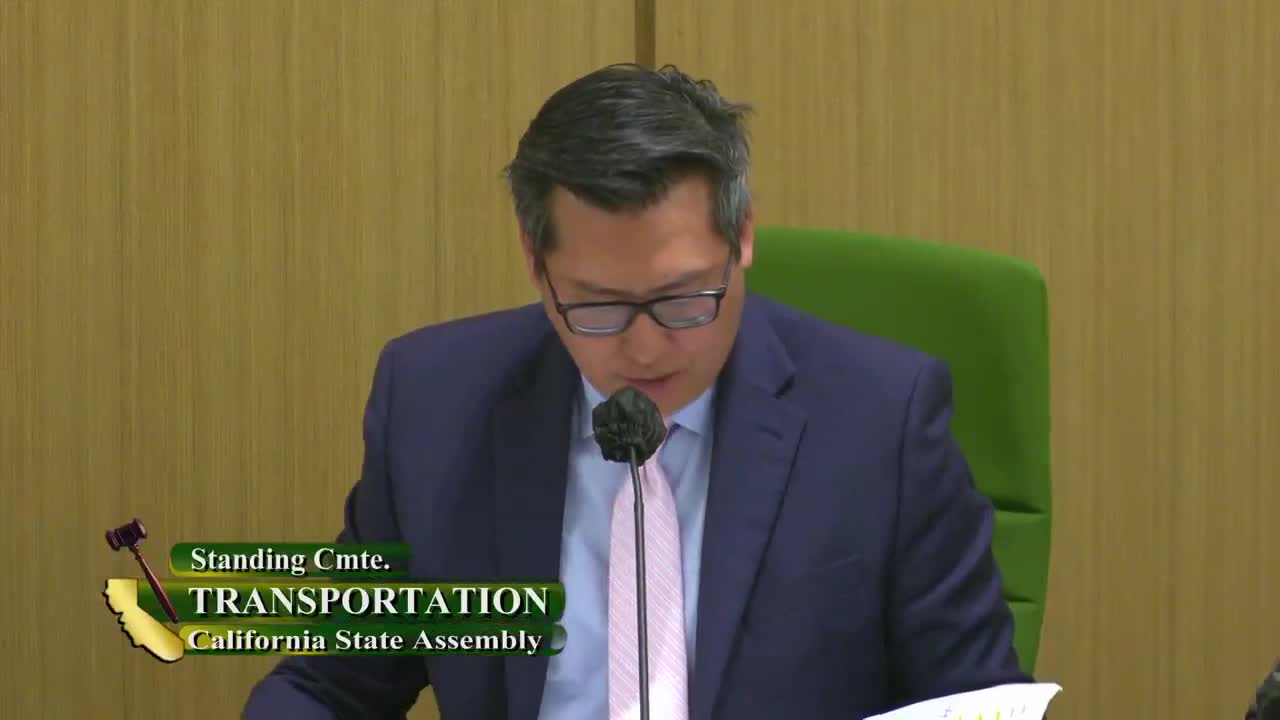
| Apr 17, 2023 | Do pass and be re-referred to the Committee on [Appropriations] | Assembly Standing Committee on Transportation |
Passed |
This list shows positions taken on this bill by organizations on the date displayed, which is linked to the original source.
Positions by individuals are not included.
|
Organization
|
Position
|
Date
|
|---|---|---|
| Bay Area Council | * Support | Apr 17, 2023 |
| Coronado Neighborhood Council | * Support | Apr 17, 2023 |
| North Bay Leadership Council | ** Support |
Date of Hearing: May 10, 2023
ASSEMBLY COMMITTEE ON APPROPRIATIONS
Chris Holden, Chair
ABPCA Bill Id:AB 1464
Author:(Connolly) – As Amended Ver:March 23, 2023
Policy Committee: | Transportation | Vote: | 15 - 0 |
|
| ||
|
|
Urgency: No State Mandated Local Program: No Reimbursable: No
SUMMARY:
This bill requires the Bay Area Toll Authority (BATA) and the California Department of Transportation (Caltrans) to consider the following, if they decide to develop a project to open a third lane on the westbound level of the Richmond-San Rafael Bridge to motor traffic:
- Restore the third westbound lane on the Richmond-San Rafael Bridge to motor vehicle traffic during the weekday morning commute.
- Add a moveable “zipper” barrier to the eastbound level of the Richmond-San Rafael Bridge similar to the barrier on the westbound level so that a continuously operated bicycle and pedestrian lane and the San Francisco Bay Trail can be maintained.
- Operate the moveable zipper barriers on both levels of the Richmond-San Rafael Bridge in such a manner so as to allow the most efficient flow of traffic in either direction while preserving an open bicycle and pedestrian lane and the San Francisco Bay Trail.
FISCAL EFFECT:
Caltrans was not able to provide approved information to the committee by the time this analysis was finalized. However, Caltrans did indicate, unofficially, the consideration this bill requires it, and BATA, to make, would entail significant costs, which is a reasonable assumption.
COMMENTS:
- Purpose. The author intends this bill to lead to the consideration, at least, of reopening the westbound lane on the Richmond-San Rafael Bridge to motor vehicle traffic. According to the author:
Each workday, approximately 80,000 Bay Area residents cross the Richmond San Rafael Bridge in their passenger vehicles. During the morning commute, 63 percent are people of color and the majority of these drivers make less than Bay Area’s median income. Assembly Bill 1464 declares that, in the interest of social justice, environmental justice, improving traffic flow, maximizing existing resources, reducing greenhouse gases, and reducing the environmental impacts resulting from traffic backup on the westbound Richmond-San Rafael Bridge approach, the Department of Transportation and the Bay Area Toll Authority should consider reopening the third westbound lane on the Richmond-San Rafael Bridge to motor vehicle traffic in a manner that considers expanding multimodal transportation, preserving pathways for bicyclists, and reducing localized greenhouse gas emissions
- Background. The Richmond-San Rafael Bridge originally opened in 1956 with three lanes of vehicular traffic in each direction. In the 1970s, one lane of the bridge was temporarily closed to allow for an aqueduct to transport water to a drought-stricken Marin County. Even though the aqueduct was later removed, the bridge mostly operated with two traffic lanes in each direction. In 2018, a pilot project was completed on the eastbound (Marin) side of the bridge to open the third lane of the lower deck of the bridge. This project has reduced congestion on the eastbound side of the bridge. In 2019, a moveable zipper barrier was added to separate the two westbound traffic lanes on the upper deck from a new bicycle/ pedestrian path.
Caltrans, BATA and local and regional transportation agencies have been considering adding a westbound lane of motorized traffic to the bridge.
This bill is supported by, among others, the North Bay Leadership Council, which describes itself as “an employer-led public policy advocacy organization committed to providing leadership in ways to make the North Bay sustainable, prosperous and innovative.” The council writes in support of the bill:
[F]or equity, environmental, economic, and just common-sense reasons, the North Bay Leadership Council requests that BATA study, select and then fund the improvements to allow the 18 bikers to have a protected commute in the morning (on the lower deck), the other 59 bike riders and then have a protected ride the rest of the day (on the upper deck), while also allowing the 80,000 car and truck drivers to have a gridlock-free trip across the bridge.
Analysis Prepared by: Jay Dickenson / APPR. / (916) 319-2081
Discussed in Hearing
 8MIN
Assembly Standing Committee on Transportation
Bill Author

Bill Co-Author(s):