AB 1570: Optometry: certification to perform advanced procedures.
- Session Year: 2023-2024
- House: Assembly
- Latest Version Date: 2024-01-03
Current Status:
Failed
(2024-02-01: From committee: Filed with the Chief Clerk pursuant to Joint Rule 56.)
Introduced
In Committee
First Chamber
In Committee
Second Chamber
Enacted
What does this bill do?
The bill allows optometrists who are already certified to treat glaucoma and who complete new board‑approved education, training, and exams to obtain a certificate to perform certain advanced eye procedures on patients 18 or older, such as laser trabeculoplasty, peripheral iridotomy, posterior capsulotomy, select lesion excisions, injections for chalazia, and corneal crosslinking. It also adds neuromuscular blockers (drugs that relax or paralyze muscles) to the list of medication classes generally excluded from optometry, and requires certified optometrists to meet training rules, report adverse outcomes to the Optometry Board, and comply with board oversight and fees.
The summary is provided by generative AI which can make mistakes. For original language, please view the details in the table below.
Existing law, the Optometry Practice Act, establishes the State Board of Optometry in the Department of Consumer Affairs for the licensure and regulation of the practice of optometry. Existing law makes a violation of the act a misdemeanor. Existing law excludes certain classes of agents from the practice of optometry unless they have an explicit United States Food and Drug Administration-approved indication, as specified.
This bill would add neuromuscular blockers to the list of excluded classes of agents. By expanding the scope of a crime, the bill would impose a state-mandated local program.
Existing law requires an optometrist who holds a therapeutic pharmaceutical agents certification and meets specified requirements to be certified to medically treat authorized glaucomas.
This bill would authorize an optometrist certified to treat glaucoma to obtain certification to perform specified advanced procedures in a patient 18 years of age or older if the optometrist meets certain education, training, examination, and other requirements, as specified. By requiring optometrists, qualified educators, and course administrators to certify or attest specified information relating to advanced procedure competency, thus expanding the crime of perjury, the bill would impose a state-mandated local program. The bill would require the board to set a fee for the issuance and renewal of the certificate authorizing the use of advanced procedures, which would be deposited in the Optometry Fund. The bill would require an optometrist who performs advanced procedures pursuant to these provisions to report certain information to the board, including any adverse treatment outcomes that required a referral to or consultation with another health care provider. The bill would require the board to compile a report summarizing the data collected and make the report available on the boards internet website.
The California Constitution requires the state to reimburse local agencies and school districts for certain costs mandated by the state. Statutory provisions establish procedures for making that reimbursement.
This bill would provide that no reimbursement is required by this act for a specified reason.
Existing law, the Optometry Practice Act, establishes the State Board of Optometry in the Department of Consumer Affairs for the licensure and regulation of the practice of optometry. Existing law makes a violation of the act a misdemeanor. Existing law excludes certain classes of agents from the practice of optometry unless they have an explicit United States Food and Drug Administration-approved indication, as specified.
This bill would add neuromuscular blockers to the list of excluded classes of agents. By expanding the scope of a crime, the bill would impose a state-mandated local program.
Existing law requires an optometrist who holds a therapeutic pharmaceutical agents certification and meets specified requirements to be certified to medically treat authorized glaucomas.
This bill would authorize an optometrist certified to treat glaucoma to obtain certification to perform specified advanced procedures if the optometrist meets certain education, training, examination, and other requirements, as specified. By requiring optometrists, qualified educators, and course administrators to certify or attest specified information relating to advanced procedure competency, thus expanding the crime of perjury, the bill would impose a state-mandated local program. The bill would require the board to set a fee for the issuance and renewal of the certificate authorizing the use of advanced procedures, which would be deposited in the Optometry Fund. The bill would require an optometrist who performs advanced procedures pursuant to these provisions to report certain information to the board, including any adverse treatment outcomes that required a referral to or consultation with another health care provider. The bill would require the board to compile a report summarizing the data collected and make the report available on the boards internet website.
The California Constitution requires the state to reimburse local agencies and school districts for certain costs mandated by the state. Statutory provisions establish procedures for making that reimbursement.
This bill would provide that no reimbursement is required by this act for a specified reason.
(a)The practice of optometry includes the diagnosis, prevention, treatment, and management of disorders and dysfunctions of the visual system, as authorized by this chapter, as well as the provision of habilitative or rehabilitative optometric services, and is the doing of any or all of the following:
(1)The examination of the human eyes and their adnexa, including through the use of all topical and oral diagnostic pharmaceutical agents that are not controlled substances, and the analysis of the human vision system, either subjectively or objectively.
(2)The determination of the powers or range of human vision and the accommodative and refractive states of the human eyes, including the scope of their functions and general condition.
(3)The prescribing, using, or directing the use of any optical device in connection with ocular exercises, visual training, vision training, or orthoptics.
(4)The prescribing, fitting, or adaptation of contact and spectacle lenses to, the human eyes, including lenses that may be classified as drugs or devices by any law of the United States or of this state, and diagnostic or therapeutic contact lenses that incorporate a medication or therapy the optometrist is certified to prescribe or provide.
(5)For an optometrist certified pursuant to Section 3041.3, diagnosing and preventing conditions and diseases of the human eyes and their adnexa, and treating nonmalignant conditions and diseases of the anterior segment of the human eyes and their adnexa, including ametropia and presbyopia:
(A)Using or prescribing, including for rational off-label purposes, topical and oral prescription and nonprescription therapeutic pharmaceutical agents that are not controlled substances and are not antiglaucoma agents or limited or excluded by subdivision (b). For purposes of this section, controlled substance has the same meaning as used in the California Uniform Controlled Substances Act (Division 10 (commencing with Section 11000) of the Health and Safety Code) and the United States Uniform Controlled Substances Act (21 U.S.C. Sec. 801 et seq.).
(B)Prescribing the oral analgesic controlled substance codeine with compounds, hydrocodone with compounds, and tramadol as listed in the California Uniform Controlled Substances Act (Division 10 (commencing with Section 11000) of the Health and Safety Code) and the United States Uniform Controlled Substances Act (21 U.S.C. Sec. 801 et seq.), limited to three days, with referral to an ophthalmologist if the pain persists.
(C)If also certified under subdivision (c), using or prescribing topical and oral antiglaucoma agents for the medical treatment of all primary open-angle, exfoliation, pigmentary, and steroid-induced glaucomas in persons 18 years of age or over. In the case of steroid-induced glaucoma, the prescriber of the steroid medication shall be promptly notified if the prescriber did not refer the patient to the optometrist for treatment.
(D)If also certified under subdivision (d), independent initiation and administration of immunizations for influenza, herpes zoster virus, pneumococcus, and SARS-CoV-2 in compliance with individual Advisory Committee on Immunization Practices (ACIP) vaccine recommendations published by the federal Centers for Disease Control and Prevention (CDC) in persons 18 years of age or over.
(E)Utilizing the following techniques and instrumentation necessary for the diagnosis of conditions and diseases of the eye and adnexa:
(i)Laboratory tests or examinations ordered from an outside facility.
(ii)Laboratory tests or examinations performed in a laboratory with a certificate of waiver under the federal Clinical Laboratory Improvement Amendments of 1988 (CLIA) (Public Law 100-578) (42 U.S.C. Sec. 263a), which shall also be allowed for:
(I)Detecting indicators of possible systemic disease that manifests in the eye for the purpose of facilitating appropriate referral to or consultation with a physician and surgeon.
(II)Detecting the presence of SARS-CoV-2 virus.
(iii)Skin testing performed in an office to diagnose ocular allergies, limited to the superficial layer of the skin.
(iv)X-rays ordered from an outside facility.
(v)Other imaging studies ordered from an outside facility subject to prior consultation with an appropriate physician and surgeon.
(vi)Other imaging studies performed in an office, including those that utilize laser or ultrasound technology, but excluding those that utilize radiation.
(F)Performing the following procedures, which are excluded from restrictions imposed on the performance of surgery by paragraph (6) of subdivision (b), unless explicitly indicated:
(i)Corneal scraping with cultures.
(ii)Debridement of corneal epithelium not associated with band keratopathy.
(iii)Mechanical epilation.
(iv)Collection of blood by skin puncture or venipuncture for laboratory testing authorized by this subdivision.
(v)Suture removal subject to comanagement requirements in paragraph (7) of subdivision (b).
(vi)Treatment or removal of sebaceous cysts by expression.
(vii)Lacrimal punctal occlusion using plugs, or placement of a stent or similar device in a lacrimal canaliculus intended to deliver a medication the optometrist is certified to prescribe or provide.
(viii)Foreign body and staining removal from the cornea, eyelid, and conjunctiva with any appropriate instrument. Removal of corneal foreign bodies and any related stain shall, as relevant, be limited to that which is nonperforating, no deeper than the midstroma, and not reasonably anticipated to require surgical repair.
(ix)Lacrimal irrigation and dilation in patients 12 years of age or over, excluding probing of the nasolacrimal tract. The board shall certify any optometrist who graduated from an accredited school of optometry before May 1, 2000, to perform this procedure after submitting proof of satisfactory completion of 10 procedures under the supervision of an ophthalmologist as confirmed by the ophthalmologist. Any optometrist who graduated from an accredited school of optometry on or after May 1, 2000, shall be exempt from the certification requirement contained in this paragraph.
(x)Administration of oral fluorescein for the purpose of ocular angiography.
(xi)Intravenous injection for the purpose of performing ocular angiography at the direction of an ophthalmologist as part of an active treatment plan in a setting where a physician and surgeon is immediately available.
(xii)Use of noninvasive devices delivering intense pulsed light therapy or low-level light therapy that do not rely on laser technology, limited to treatment of conditions and diseases of the adnexa.
(xiii)Use of an intranasal stimulator in conjunction with treatment of dry eye syndrome.
(G)Using additional noninvasive medical devices or technology that:
(i)Have received a United States Food and Drug Administration-approved indication for the diagnosis or treatment of a condition or disease authorized by this chapter. A licensee shall successfully complete any clinical training imposed by a related manufacturer prior to using any of those noninvasive medical devices or technologies.
(ii)Have been approved by the board through regulation for the rational treatment of a condition or disease authorized by this chapter. Any regulation under this paragraph shall require a licensee to successfully complete an appropriate amount of clinical training to qualify to use each noninvasive medical device or technology approved by the board pursuant to this paragraph.
(b)Exceptions or limitations to the provisions of subdivision (a) are as follows:
(1)Treatment of the following is excluded from the practice of optometry in a patient under 18 years of age, unless explicitly allowed otherwise:
(A)Anterior segment inflammation, which shall not exclude treatment of:
(i)The conjunctiva.
(ii)Nonmalignant ocular surface disease, including dry eye syndrome.
(iii)Contact lens-related inflammation of the cornea.
(iv)An infection of the cornea.
(B)Conditions or diseases of the sclera.
(2)Use of any oral prescription steroid anti-inflammatory medication for a patient under 18 years of age shall be done pursuant to a documented, timely consultation with an appropriate physician and surgeon.
(3)Use of any nonantibiotic oral prescription medication for a patient under five years of age shall be done pursuant to a documented, prior consultation with an appropriate physician and surgeon.
(4)The following classes of agents are excluded from the practice of optometry unless they have an explicit United States Food and Drug Administration-approved indication for treatment of a condition or disease authorized under this section:
(A)Antiamoebics.
(B)Antineoplastics.
(C)Coagulation modulators.
(D)Hormone modulators.
(E)Immunomodulators.
(F)Neuromuscular blockers.
(5)The following are excluded from authorization under subparagraph (G) of paragraph (5) of subdivision (a):
(A)A laboratory test or imaging study.
(B)Any noninvasive device or technology that constitutes surgery under paragraph (6).
(6)Performing surgery is excluded from the practice of optometry. Surgery means any act in which human tissue is cut, altered, or otherwise infiltrated by any means. It does not mean an act that solely involves the administration or prescribing of a topical or oral therapeutic pharmaceutical.
(7)(A) Treatment with topical and oral medications authorized in subdivision (a) related to an ocular surgery shall be comanaged with the ophthalmologist that performed the surgery, or another ophthalmologist designated by that surgeon, during the customary preoperative and postoperative period for the procedure. For purposes of this subparagraph, this may involve treatment of ocular inflammation in a patient under 18 years of age.
(B)Where published, the postoperative period shall be the global period established by the federal Centers for Medicare and Medicaid Services, or, if not published, a reasonable period not to exceed 90 days.
(C)Such comanaged treatment may include addressing agreed-upon complications of the surgical procedure occurring in any ocular or adnexal structure with topical and oral medications authorized in subdivision (a). For patients under 18 years of age, this subparagraph shall not apply unless the patients primary care provider agrees to allowing comanagement of complications.
(c)An optometrist certified pursuant to Section 3041.3 shall be certified to medically treat authorized glaucomas under this chapter after meeting the following requirements:
(1)For licensees who graduated from an accredited school of optometry on or after May 1, 2008, submission of proof of graduation from that institution.
(2)For licensees who were certified to treat glaucoma under this section before January 1, 2009, submission of proof of completion of that certification program.
(3)For licensees who completed a didactic course of not less than 24 hours in the diagnosis, pharmacological, and other treatment and management of glaucoma, submission of proof of satisfactory completion of the case management requirements for certification established by the board.
(4)For licensees who graduated from an accredited school of optometry on or before May 1, 2008, and who are not described in paragraph (2) or (3), submission of proof of satisfactory completion of the requirements for certification established by the board under Chapter 352 of the Statutes of 2008.
(d)An optometrist certified pursuant to Section 3041.3 shall be certified to administer authorized immunizations, as described in subparagraph (D) of paragraph (5) of subdivision (a), after the optometrist meets all of the following requirements:
(1)Completes an immunization training program endorsed by the federal Centers for Disease Control and Prevention (CDC) or the Accreditation Council for Pharmacy Education that, at a minimum, includes hands-on injection technique, clinical evaluation of indications and contraindications of vaccines, and the recognition and treatment of emergency reactions to vaccines, and maintains that training.
(2)Is certified in basic life support.
(3)Complies with all state and federal recordkeeping and reporting requirements, including providing documentation to the patients primary care provider and entering information in the appropriate immunization registry designated by the immunization branch of the State Department of Public Health.
(4)Applies for an immunization certificate in accordance with Section 3041.5.
(e)Other than for prescription ophthalmic devices described in subdivision (b) of Section 2541, any dispensing of a therapeutic pharmaceutical agent by an optometrist shall be without charge.
(f)An optometrist licensed under this chapter is subject to the provisions of Section 2290.5 for purposes of practicing telehealth.
(g)For the purposes of this chapter, all of the following definitions shall apply:
(1)Adnexa means the eyelids and muscles within the eyelids, the lacrimal system, and the skin extending from the eyebrows inferiorly, bounded by the medial, lateral, and inferior orbital rims, excluding the intraorbital extraocular muscles and orbital contents.
(2)Anterior segment means the portion of the eye anterior to the vitreous humor, including its overlying soft tissue coats.
(3)Ophthalmologist means a physician and surgeon, licensed under Chapter 5 (commencing with Section 2000) of Division 2 of the Business and Professions Code, specializing in treating eye disease.
(4)Physician and surgeon means a physician and surgeon licensed under Chapter 5 (commencing with Section 2000) of Division 2 of the Business and Professions Code.
(5)Prevention means use or prescription of an agent or noninvasive device or technology for the purpose of inhibiting the development of an authorized condition or disease.
(6)Treatment means use of or prescription of an agent or noninvasive device or technology to alter the course of an authorized condition or disease once it is present.
(h)In an emergency, an optometrist shall stabilize, if possible, and immediately refer any patient who has an acute attack of angle closure to an ophthalmologist.
SEC. 2.Section 3041.4 is added to the Business and Professions Code, to read:3041.4.(a)An optometrist certified to treat glaucoma pursuant to subdivision (c) of Section 3041 shall be certified to perform the following set of advanced procedures after meeting the requirements in subdivision (b) in a patient 18 years of age or older, after graduating from an accredited school of optometry: optometry and meeting the requirements of subdivision (b):
(1)Laser trabeculoplasty.
(2)Laser peripheral iridotomy for the prophylactic treatment of a clinically significant narrow drainage angle of the anterior chamber of the eye.
(3)Laser posterior capsulotomy after cataract surgery.
(4)Excision or drainage of nonrecurrent lesions of the adnexa evaluated consistent with the standard of care by the optometrist to be noncancerous, not involving the eyelid margin, lacrimal supply, or drainage systems, no deeper than the orbicularis muscle, excepting chalazia, and smaller than five millimeters in diameter. Tissue excised that is not fully necrotic shall be submitted for surgical pathological analysis.
(5)Closure of a wound resulting from a procedure described in paragraph (4).
(6)Injections for the treatment of chalazia and to administer local anesthesia required to perform procedures delineated in paragraph (4).
(7)Corneal crosslinking procedure, or the use of medication and ultraviolet light to make the tissues of the cornea stronger.
(b)An optometrist shall satisfy the requirements specified in paragraphs (1) and (2) to perform the advanced procedures specified in subdivision (a).
(1)Within two three years prior to beginning the requirements in paragraph (2), an optometrist shall satisfy both of the following:
(A)Complete a California State Board of Optometry-approved course of at least 32 hours that is designed to provide education on the advanced procedures delineated in subdivision (a), including, but not limited to, medical decisionmaking that includes cases that would be poor surgical candidates, an overview and case presentations of known complications, practical experience performing the procedures, including a detailed assessment of the optometrists technique, and a written examination for which the optometrist achieves a passing score.
(B)Pass both sections of the Laser and Surgical Procedures Examination of the National Board of Examiners in Optometry, or, in the event this examination is no longer offered, its equivalent, as determined by the California State Board of Optometry. At the California State Board of Optometrys discretion, the requirement to pass the Laser and Surgical Procedures Examination may be waived if an optometrist has successfully passed both sections of the examination previously.
(2)Within three years, years of completing the requirements described in paragraph (1), an optometrist shall complete a California State Board of Optometry-approved training program conducted in California, including the performance of all required procedures that and shall involve sufficient direct experience with live human patients to permit certification of competency, by an accredited California school of optometry optometry, that shall contain the following:
(A)Hands-on instruction of the equivalent of an entire procedure on no less than the following number of simulated eyes or other appropriate models before performing the related procedure on live human patients:
(i)Five for each laser procedure set forth in clauses (i), (ii), and (iii) of subparagraph (B).
(ii)Five to learn the skills to perform excision and drainage procedures and injections authorized by this section. section, reasonably distributed among those procedures.
(iii)Five to learn the skills related to corneal crosslinking.
(B)The performance of at least 43 52 complete surgical procedures on live human patients, as follows:
(i)Eight laser trabeculoplasties.
(ii)Eight laser posterior capsulotomies.
(iii)Five laser peripheral iridotomies.
(iv)Five chalazion excisions.
(v)Four chalazion intralesional injections.
(vi)Seven excisions of an authorized lesion of greater than or equal to two millimeters in size.
(vii)Five excisions or drainages of other authorized lesions.
(viii)One Ten surgical corneal crosslinking cross-linkings involving removal of epithelium.
(C)(i)If necessary to certify the competence of the optometrist, the program shall require sufficient additional experience to that specified in subparagraph (B) before performing complete procedures on live human patients.
(ii)One time per optometrist seeking initial certification under this section, a procedure required by clause (i) to (vii), inclusive, of subparagraph (B) may be substituted for a different procedure required by clause (i) to (vii), inclusive, of subparagraph (B) to achieve the total number of complete surgical procedures required by subparagraph (B) if the procedures impart similar skills. The course administrator shall determine if the procedures impart similar skills.(D)The training required by this section shall include at least a certain At least 40 percent of the required procedures in subparagraph (B) shall be performed in a cohort model where, for each patient and under the direct in-person supervision of a qualified educator, each member of the cohort independently assesses the patient, develops a treatment plan, evaluates the clinical outcome posttreatment, develops a plan to address any adverse or unintended clinical outcomes, and discusses and defends medical decisionmaking. The California State Board of Optometry-approved training program shall be responsible for determining the percentage of the required procedures in subparagraph (B). As used in this subparagraph, a cohort shall consist of at least five optometrists.
(E)Any procedures not completed under the terms of subparagraph (D) may be completed under a preceptorship model where, for each patient and under the direct in-person supervision of a qualified educator, the optometrist independently assesses the patient, develops a treatment plan, evaluates the clinical outcome posttreatment, develops a plan to address any adverse or unintended clinical outcomes, and discusses and defends medical decisionmaking.
(F)The qualified educator shall certify the competent performance of procedures completed pursuant to subparagraphs (D) and (E) on a form approved by the California State Board of Optometry.
(G)Upon the optometrists completion of all certification requirements, the course administrator, who shall be a qualified educator for all the procedures authorized by subdivision (a), on behalf of the program and relying on the certifications of procedures by qualified educators during the program, shall certify that the optometrist is competent to perform advanced procedures using a form approved by the California State Board of Optometry.
(c)The optometrist shall make a timely referral of a patient and all related records to an ophthalmologist or, in an urgent or emergent situation and an ophthalmologist is unavailable, a qualified center to provide urgent or emergent care, after stabilizing the patient to the degree possible if either of the following occur:
(1)The optometrist makes an intraoperative determination that a procedure being performed does not meet a specified criterion required by this section.
(2)The optometrist receives a pathology report for a lesion indicating the possibility of malignancy.
(d)This section does not authorize performing blepharoplasty or any cosmetic surgery procedure, including injections, with the exception of removing acrochordons that meet other qualifying criteria.
(e)An optometrist shall monitor and report the following information to the California State Board of Optometry on a form provided by the California State Board of Optometry or using an internet-based portal:
(1)At the time of license renewal or in response to a request of the California State Board of Optometry, the number and types of procedures authorized by this section that the optometrist performed and the diagnosis of the patient at the time the procedure was performed.
(2)Within three weeks of the event, any adverse treatment outcomes that required a referral to or consultation with another health care provider.
(f)(1)With each subsequent license renewal after being certified to perform the advanced procedures delineated in subdivision (a), the optometrist shall attest that they have performed at least two of each of the delineated procedures in subparagraph (B) of paragraph (2) of subdivision (b) during the period of licensure preceding the renewal.
(2)If the optometrist fails to attest to performance of any of the advanced procedures specified in paragraph (1), the optometrists advanced procedure certification shall no longer authorize the optometrist to perform that procedure until, with regard to that procedure, the optometrist performs at least the number of the specific advanced procedures required to be performed in subparagraph (B) of paragraph (2) of subdivision (b), as applicable, under the supervision of a qualified educator through either the cohort or preceptorship model outlined in subparagraphs (D) and (E) of paragraph (2) of subdivision (b), subject to subparagraph (F) of paragraph (2) of subdivision (b), and the qualified educator certifies that the optometrist is competent to perform the specific advanced procedures. The qualified educator may require the optometrist to perform additional procedures if necessary to certify the competence of the optometrist. The optometrist shall provide the certification to the California State Board of Optometry. be forfeited. To be issued another advanced procedure certification, the optometrist shall comply with the requirements described in subparagraph (B) of paragraph (2) of subdivision (b).
(g)The California State Board of Optometry shall review adverse treatment outcome reports required under subdivision (e) in a timely manner, requesting additional information as necessary to make decisions regarding the need to impose additional training, or to restrict or revoke certifications based on its patient safety authority. The California State Board of Optometry shall compile a report summarizing the data collected pursuant to subdivision (e), including, but not limited to, percentage of adverse outcome distributions by unidentified licensee and California State Board of Optometry interventions, and shall make the report available on its internet website.
(h)The California State Board of Optometry may adopt regulations to implement this section.
(i)The California State Board of Optometry, by regulation, shall set the fee for issuance and renewal of a certificate authorizing the use of advanced procedures at an amount no higher than the reasonable cost of regulating optometrists certified to perform advanced procedures pursuant to this section.
(j)For the purposes of this section, the following definitions apply:
(1)Complete procedure means all reasonably included steps to perform a surgical procedure, including, but not limited to, preoperative care, informed consent, all steps of the actual procedure, required reporting and review of any specimen submitted for pathologic review, and postoperative care. Multiple surgical procedures performed on a patient during a surgical session shall be considered a single surgical procedure.
(2)Qualified educator means a person nominated by an accredited California school of optometry as a person who is believed to be a suitable instructor, is subject to the regulatory authority of that persons licensing board in carrying out required responsibilities under this section, and is either of the following:
(A)A California-licensed optometrist in good standing certified to perform advanced procedures approved by the California State Board of Optometry who has been continuously certified for three years and has performed at least 10 of the specific advanced procedures for which they will serve as a qualified educator during the preceding two years.
(B)A California-licensed physician and surgeon who is board-certified in ophthalmology, in good standing with the Medical Board of California, and in active surgical practice an average of at least 10 hours per week.
SEC. 3.No reimbursement is required by this act pursuant to Section 6 of Article XIIIB of the California Constitution because the only costs that may be incurred by a local agency or school district will be incurred because this act creates a new crime or infraction, eliminates a crime or infraction, or changes the penalty for a crime or infraction, within the meaning of Section 17556 of the Government Code, or changes the definition of a crime within the meaning of Section 6 of Article XIIIB of the California Constitution.
(a)The practice of optometry includes the diagnosis, prevention, treatment, and management of disorders and dysfunctions of the visual system, as authorized by this chapter, as well as the provision of habilitative or rehabilitative optometric services, and is the doing of any or all of the following:
(1)The examination of the human eyes and their adnexa, including through the use of all topical and oral diagnostic pharmaceutical agents that are not controlled substances, and the analysis of the human vision system, either subjectively or objectively.
(2)The determination of the powers or range of human vision and the accommodative and refractive states of the human eyes, including the scope of their functions and general condition.
(3)The prescribing, using, or directing the use of any optical device in connection with ocular exercises, visual training, vision training, or orthoptics.
(4)The prescribing, fitting, or adaptation of contact and spectacle lenses to, the human eyes, including lenses that may be classified as drugs or devices by any law of the United States or of this state, and diagnostic or therapeutic contact lenses that incorporate a medication or therapy the optometrist is certified to prescribe or provide.
(5)For an optometrist certified pursuant to Section 3041.3, diagnosing and preventing conditions and diseases of the human eyes and their adnexa, and treating nonmalignant conditions and diseases of the anterior segment of the human eyes and their adnexa, including ametropia and presbyopia:
(A)Using or prescribing, including for rational off-label purposes, topical and oral prescription and nonprescription therapeutic pharmaceutical agents that are not controlled substances and are not antiglaucoma agents or limited or excluded by subdivision (b). For purposes of this section, controlled substance has the same meaning as used in the California Uniform Controlled Substances Act (Division 10 (commencing with Section 11000) of the Health and Safety Code) and the United States Uniform Controlled Substances Act (21 U.S.C. Sec. 801 et seq.).
(B)Prescribing the oral analgesic controlled substance codeine with compounds, hydrocodone with compounds, and tramadol as listed in the California Uniform Controlled Substances Act (Division 10 (commencing with Section 11000) of the Health and Safety Code) and the United States Uniform Controlled Substances Act (21 U.S.C. Sec. 801 et seq.), limited to three days, with referral to an ophthalmologist if the pain persists.
(C)If also certified under subdivision (c), using or prescribing topical and oral antiglaucoma agents for the medical treatment of all primary open-angle, exfoliation, pigmentary, and steroid-induced glaucomas in persons 18 years of age or over. In the case of steroid-induced glaucoma, the prescriber of the steroid medication shall be promptly notified if the prescriber did not refer the patient to the optometrist for treatment.
(D)If also certified under subdivision (d), independent initiation and administration of immunizations for influenza, herpes zoster virus, pneumococcus, and SARS-CoV-2 in compliance with individual Advisory Committee on Immunization Practices (ACIP) vaccine recommendations published by the federal Centers for Disease Control and Prevention (CDC) in persons 18 years of age or over.
(E)Utilizing the following techniques and instrumentation necessary for the diagnosis of conditions and diseases of the eye and adnexa:
(i)Laboratory tests or examinations ordered from an outside facility.
(ii)Laboratory tests or examinations performed in a laboratory with a certificate of waiver under the federal Clinical Laboratory Improvement Amendments of 1988 (CLIA) (Public Law 100-578) (42 U.S.C. Sec. 263a; Public Law 100-578), 263a), which shall also be allowed for:
(I)Detecting indicators of possible systemic disease that manifests in the eye for the purpose of facilitating appropriate referral to or consultation with a physician and surgeon.
(II)Detecting the presence of SARS-CoV-2 virus.
(iii)Skin testing performed in an office to diagnose ocular allergies, limited to the superficial layer of the skin.
(iv)X-rays ordered from an outside facility.
(v)Other imaging studies ordered from an outside facility subject to prior consultation with an appropriate physician and surgeon.
(vi)Other imaging studies performed in an office, including those that utilize laser or ultrasound technology, but excluding those that utilize radiation.
(F)Performing the following procedures, which are excluded from restrictions imposed on the performance of surgery by paragraph (6) of subdivision (b), unless explicitly indicated:
(i)Corneal scraping with cultures.
(ii)Debridement of corneal epithelium not associated with band keratopathy.
(iii)Mechanical epilation.
(iv)Collection of blood by skin puncture or venipuncture for laboratory testing authorized by this subdivision.
(v)Suture removal subject to comanagement requirements in paragraph (7) of subdivision (b).
(vi)Treatment or removal of sebaceous cysts by expression.
(vii)Lacrimal punctal occlusion using plugs, or placement of a stent or similar device in a lacrimal canaliculus intended to deliver a medication the optometrist is certified to prescribe or provide.
(viii)Foreign body and staining removal from the cornea, eyelid, and conjunctiva with any appropriate instrument. Removal of corneal foreign bodies and any related stain shall, as relevant, be limited to that which is nonperforating, no deeper than the midstroma, and not reasonably anticipated to require surgical repair.
(ix)Lacrimal irrigation and dilation in patients 12 years of age or over, excluding probing of the nasolacrimal tract. The board shall certify any optometrist who graduated from an accredited school of optometry before May 1, 2000, to perform this procedure after submitting proof of satisfactory completion of 10 procedures under the supervision of an ophthalmologist as confirmed by the ophthalmologist. Any optometrist who graduated from an accredited school of optometry on or after May 1, 2000, shall be exempt from the certification requirement contained in this paragraph.
(x)Administration of oral fluorescein for the purpose of ocular angiography.
(xi)Intravenous injection for the purpose of performing ocular angiography at the direction of an ophthalmologist as part of an active treatment plan in a setting where a physician and surgeon is immediately available.
(xii)Use of noninvasive devices delivering intense pulsed light therapy or low-level light therapy that do not rely on laser technology, limited to treatment of conditions and diseases of the adnexa.
(xiii)Use of an intranasal stimulator in conjunction with treatment of dry eye syndrome.
(G)Using additional noninvasive medical devices or technology that:
(i)Have received a United States Food and Drug Administration approved Administration-approved indication for the diagnosis or treatment of a condition or disease authorized by this chapter. A licensee shall successfully complete any clinical training imposed by a related manufacturer prior to using any of those noninvasive medical devices or technologies.
(ii)Have been approved by the board through regulation for the rational treatment of a condition or disease authorized by this chapter. Any regulation under this paragraph shall require a licensee to successfully complete an appropriate amount of clinical training to qualify to use each noninvasive medical device or technology approved by the board pursuant to this paragraph.
(b)Exceptions or limitations to the provisions of subdivision (a) are as follows:
(1)Treatment of the following is excluded from the practice of optometry in a patient under 18 years of age, unless explicitly allowed otherwise:
(A)Anterior segment inflammation, which shall not exclude treatment of:
(i)The conjunctiva.
(ii)Nonmalignant ocular surface disease, including dry eye syndrome.
(iii)Contact lens-related inflammation of the cornea.
(iv)An infection of the cornea.
(B)Conditions or diseases of the sclera.
(2)Use of any oral prescription steroid anti-inflammatory medication for a patient under 18 years of age shall be done pursuant to a documented, timely consultation with an appropriate physician and surgeon.
(3)Use of any nonantibiotic oral prescription medication for a patient under five years of age shall be done pursuant to a documented, prior consultation with an appropriate physician and surgeon.
(4)The following classes of agents are excluded from the practice of optometry unless they have an explicit United States Food and Drug Administration-approved indication for treatment of a condition or disease authorized under this section:
(A)Antiamoebics.
(B)Antineoplastics.
(C)Coagulation modulators.
(D)Hormone modulators.
(E)Immunomodulators.
(F)Neuromuscular blockers.
(5)The following are excluded from authorization under subparagraph (G) of paragraph (5) of subdivision (a):
(A)A laboratory test or imaging study.
(B)Any noninvasive device or technology that constitutes surgery under paragraph (6).
(6)Performing surgery is excluded from the practice of optometry. Surgery means any act in which human tissue is cut, altered, or otherwise infiltrated by any means. It does not mean an act that solely involves the administration or prescribing of a topical or oral therapeutic pharmaceutical.
(7)(A) Treatment with topical and oral medications authorized in subdivision (a) related to an ocular surgery shall be comanaged with the ophthalmologist that performed the surgery, or another ophthalmologist designated by that surgeon, during the customary preoperative and postoperative period for the procedure. For purposes of this subparagraph, this may involve treatment of ocular inflammation in a patient under 18 years of age.
(B)Where published, the postoperative period shall be the global period established by the federal Centers for Medicare and Medicaid Services, or, if not published, a reasonable period not to exceed 90 days.
(C)Such comanaged treatment may include addressing agreed-upon complications of the surgical procedure occurring in any ocular or adnexal structure with topical and oral medications authorized in subdivision (a). For patients under 18 years of age, this subparagraph shall not apply unless the patients primary care provider agrees to allowing comanagement of complications.
(c)An optometrist certified pursuant to Section 3041.3 shall be certified to medically treat authorized glaucomas under this chapter after meeting the following requirements:
(1)For licensees who graduated from an accredited school of optometry on or after May 1, 2008, submission of proof of graduation from that institution.
(2)For licensees who were certified to treat glaucoma under this section before January 1, 2009, submission of proof of completion of that certification program.
(3)For licensees who completed a didactic course of not less than 24 hours in the diagnosis, pharmacological, and other treatment and management of glaucoma, submission of proof of satisfactory completion of the case management requirements for certification established by the board.
(4)For licensees who graduated from an accredited school of optometry on or before May 1, 2008, and who are not described in paragraph (2) or (3), submission of proof of satisfactory completion of the requirements for certification established by the board under Chapter 352 of the Statutes of 2008.
(d)An optometrist certified pursuant to Section 3041.3 shall be certified to administer authorized immunizations, as described in subparagraph (D) of paragraph (5) of subdivision (a), after the optometrist meets all of the following requirements:
(1)Completes an immunization training program endorsed by the federal Centers for Disease Control and Prevention (CDC) or the Accreditation Council for Pharmacy Education that, at a minimum, includes hands-on injection technique, clinical evaluation of indications and contraindications of vaccines, and the recognition and treatment of emergency reactions to vaccines, and maintains that training.
(2)Is certified in basic life support.
(3)Complies with all state and federal recordkeeping and reporting requirements, including providing documentation to the patients primary care provider and entering information in the appropriate immunization registry designated by the immunization branch of the State Department of Public Health.
(4)Applies for an immunization certificate in accordance with Section 3041.5.
(e)Other than for prescription ophthalmic devices described in subdivision (b) of Section 2541, any dispensing of a therapeutic pharmaceutical agent by an optometrist shall be without charge.
(f)An optometrist licensed under this chapter is subject to the provisions of Section 2290.5 for purposes of practicing telehealth.
(g)For the purposes of this chapter, all of the following definitions shall apply:
(1)Adnexa means the eyelids and muscles within the eyelids, the lacrimal system, and the skin extending from the eyebrows inferiorly, bounded by the medial, lateral, and inferior orbital rims, excluding the intraorbital extraocular muscles and orbital contents.
(2)Anterior segment means the portion of the eye anterior to the vitreous humor, including its overlying soft tissue coats.
(3)Ophthalmologist means a physician and surgeon, licensed under Chapter 5 (commencing with Section 2000) of Division 2 of the Business and Professions Code, specializing in treating eye disease.
(4)Physician and surgeon means a physician and surgeon licensed under Chapter 5 (commencing with Section 2000) of Division 2 of the Business and Professions Code.
(5)Prevention means use or prescription of an agent or noninvasive device or technology for the purpose of inhibiting the development of an authorized condition or disease.
(6)Treatment means use of or prescription of an agent or noninvasive device or technology to alter the course of an authorized condition or disease once it is present.
(h)In an emergency, an optometrist shall stabilize, if possible, and immediately refer any patient who has an acute attack of angle closure to an ophthalmologist.
SEC. 2.Section 3041.4 is added to the Business and Professions Code, to read:3041.4.(a)An optometrist certified to treat glaucoma pursuant to subdivision (c) of Section 3041 shall be certified to perform the following set of advanced procedures after meeting the requirements in subdivision (b) after graduating from an accredited school of optometry:
(1)Laser trabeculoplasty.
(2)Laser peripheral iridotomy for the prophylactic treatment of a clinically significant narrow drainage angle of the anterior chamber of the eye.
(3)Laser posterior capsulotomy after cataract surgery.
(4)Excision or drainage of nonrecurrent lesions of the adnexa evaluated consistent with the standard of care by the optometrist to be noncancerous, not involving the eyelid margin, lacrimal supply, or drainage systems, no deeper than the orbicularis muscle, excepting chalazia, and smaller than five millimeters in diameter. Tissue excised that is not fully necrotic shall be submitted for surgical pathological analysis.
(5)Closure of a wound resulting from a procedure described in paragraph (4).
(6)Injections for the treatment of chalazia and to administer local anesthesia required to perform procedures delineated in paragraph (4).
(7)Corneal crosslinking procedure, or the use of medication and ultraviolet light to make the tissues of the cornea stronger.
(b)An optometrist shall satisfy the requirements specified in paragraphs (1) and (2) to perform the advanced procedures specified in subdivision (a).
(1)Within two years prior to beginning the requirements in paragraph (2), an optometrist shall satisfy both of the following:
(A)Complete a California State Board of Optometry-approved course of at least 32 hours that is designed to provide education on the advanced procedures delineated in subdivision (a), including, but not limited to, medical decisionmaking that includes cases that would be poor surgical candidates, an overview and case presentations of known complications, practical experience performing the procedures, including a detailed assessment of the optometrists technique, and a written examination for which the optometrist achieves a passing score.
(B)Pass both sections of the Laser and Surgical Procedures Examination of the National Board of Examiners in Optometry, or, in the event this examination is no longer offered, its equivalent, as determined by the California State Board of Optometry. At the California State Board of Optometrys discretion, the requirement to pass the Laser and Surgical Procedures Examination may be waived if an optometrist has successfully passed both sections of the examination previously.
(2)Within three years, complete a California State Board of Optometry-approved training program conducted in California, including the performance of all required procedures that shall involve sufficient direct experience with live human patients to permit certification of competency, by an accredited California school of optometry that shall contain the following:
(A)Hands-on instruction on no less than the following number of simulated eyes before performing the related procedure on live human patients:
(i)Five for each laser procedure set forth in clauses (i), (ii), and (iii) of subparagraph (B).
(ii)Five to learn the skills to perform excision and drainage procedures and injections authorized by this section.
(iii)Five to learn the skills related to corneal crosslinking.
(B)The performance of at least 43 complete surgical procedures on live human patients, as follows:
(i)Eight laser trabeculoplasties.
(ii)Eight laser posterior capsulotomies.
(iii)Five laser peripheral iridotomies.
(iv)Five chalazion excisions.
(v)Four chalazion intralesional injections.
(vi)Seven excisions of an authorized lesion of greater than or equal to two millimeters in size.
(vii)Five excisions or drainages of other authorized lesions.
(viii)One surgical corneal crosslinking involving removal of epithelium.
(C)(i)If necessary to certify the competence of the optometrist, the program shall require sufficient additional experience to that specified in subparagraph (B) performing complete procedures on live human patients.
(ii)One time per optometrist seeking initial certification under this section, a procedure required by clause (i) to (vii), inclusive, of subparagraph (B) may be substituted for a different procedure required by clause (i) to (vii), inclusive, of subparagraph (B) to achieve the total number of complete surgical procedures required by subparagraph (B) if the procedures impart similar skills. The course administrator shall determine if the procedures impart similar skills.
(D)The training required by this section shall include at least a certain percent of the required procedures in subparagraph (B) performed in a cohort model where, for each patient and under the direct in-person supervision of a qualified educator, each member of the cohort independently assesses the patient, develops a treatment plan, evaluates the clinical outcome posttreatment, develops a plan to address any adverse or unintended clinical outcomes, and discusses and defends medical decisionmaking. The California State Board of Optometry-approved training program shall be responsible for determining the percentage of the required procedures in subparagraph (B).
(E)Any procedures not completed under the terms of subparagraph (D) may be completed under a preceptorship model where, for each patient and under the direct in-person supervision of a qualified educator, the optometrist independently assesses the patient, develops a treatment plan, evaluates the clinical outcome posttreatment, develops a plan to address any adverse or unintended clinical outcomes, and discusses and defends medical decisionmaking.
(F)The qualified educator shall certify the competent performance of procedures completed pursuant to subparagraphs (D) and (E) on a form approved by the California State Board of Optometry.
(G)Upon the optometrists completion of all certification requirements, the course administrator, who shall be a qualified educator for all the procedures authorized by subdivision (a), on behalf of the program and relying on the certifications of procedures by qualified educators during the program, shall certify that the optometrist is competent to perform advanced procedures using a form approved by the California State Board of Optometry.
(c)The optometrist shall make a timely referral of a patient and all related records to an ophthalmologist or, in an urgent or emergent situation and an ophthalmologist is unavailable, a qualified center to provide urgent or emergent care, after stabilizing the patient to the degree possible if either of the following occur:
(1)The optometrist makes an intraoperative determination that a procedure being performed does not meet a specified criterion required by this section.
(2)The optometrist receives a pathology report for a lesion indicating the possibility of malignancy.
(d)This section does not authorize performing blepharoplasty or any cosmetic surgery procedure, including injections, with the exception of removing acrochordons that meet other qualifying criteria.
(e)An optometrist shall monitor and report the following information to the California State Board of Optometry on a form provided by the California State Board of Optometry or using an internet-based portal:
(1)At the time of license renewal or in response to a request of the California State Board of Optometry, the number and types of procedures authorized by this section that the optometrist performed and the diagnosis of the patient at the time the procedure was performed.
(2)Within three weeks of the event, any adverse treatment outcomes that required a referral to or consultation with another health care provider.
(f)(1)With each subsequent license renewal after being certified to perform the advanced procedures delineated in subdivision (a), the optometrist shall attest that they have performed each of the delineated procedures in subparagraph (B) of paragraph (2) of subdivision (b) during the period of licensure preceding the renewal.
(2)If the optometrist fails to attest to performance of any of the advanced procedures specified in paragraph (1), the optometrists advanced procedure certification shall no longer authorize the optometrist to perform that procedure until, with regard to that procedure, the optometrist performs at least the number of the specific advanced procedures required to be performed in subparagraph (B) of paragraph (2) of subdivision (b), as applicable, under the supervision of a qualified educator through either the cohort or preceptorship model outlined in subparagraphs (D) and (E) of paragraph (2) of subdivision (b), subject to subparagraph (F) of paragraph (2) of subdivision (b), and the qualified educator certifies that the optometrist is competent to perform the specific advanced procedures. The qualified educator may require the optometrist to perform additional procedures if necessary to certify the competence of the optometrist. The optometrist shall provide the certification to the California State Board of Optometry.
(g)The California State Board of Optometry shall review adverse treatment outcome reports required under subdivision (e) in a timely manner, requesting additional information as necessary to make decisions regarding the need to impose additional training, or to restrict or revoke certifications based on its patient safety authority. The California State Board of Optometry shall compile a report summarizing the data collected pursuant to subdivision (e), including, but not limited to, percentage of adverse outcome distributions by unidentified licensee and California State Board of Optometry interventions, and shall make the report available on its internet website.
(h)The California State Board of Optometry may adopt regulations to implement this section.
(i)The California State Board of Optometry, by regulation, shall set the fee for issuance and renewal of a certificate authorizing the use of advanced procedures at an amount no higher than the reasonable cost of regulating optometrists certified to perform advanced procedures pursuant to this section.
(j)For the purposes of this section, the following definitions apply:
(1)Complete procedure means all reasonably included steps to perform a surgical procedure, including, but not limited to, preoperative care, informed consent, all steps of the actual procedure, required reporting and review of any specimen submitted for pathologic review, and postoperative care. Multiple surgical procedures performed on a patient during a surgical session shall be considered a single surgical procedure.
(2)Qualified educator means a person nominated by an accredited California school of optometry as a person who is believed to be a suitable instructor, is subject to the regulatory authority of that persons licensing board in carrying out required responsibilities under this section, and is either of the following:
(A)A California-licensed optometrist in good standing certified to perform advanced procedures approved by the California State Board of Optometry who has been continuously certified for three years and has performed at least 10 of the specific advanced procedures for which they will serve as a qualified educator during the preceding two years.
(B)A California-licensed physician and surgeon who is board-certified in ophthalmology, in good standing with the Medical Board of California, and in active surgical practice an average of at least 10 hours per week.
SEC. 3.No reimbursement is required by this act pursuant to Section 6 of Article XIIIB of the California Constitution because the only costs that may be incurred by a local agency or school district will be incurred because this act creates a new crime or infraction, eliminates a crime or infraction, or changes the penalty for a crime or infraction, within the meaning of Section 17556 of the Government Code, or changes the definition of a crime within the meaning of Section 6 of Article XIIIB of the California Constitution.
|
Date
|
Status
|
|---|---|
| Feb 1, 2024 | From committee: Filed with the Chief Clerk pursuant to Joint Rule 56. |
| Jan 31, 2024 | Died pursuant to Art. IV, Sec. 10(c) of the Constitution. |
| Jan 18, 2024 | In committee: Held under submission. |
| Jan 18, 2024 | In committee: Set, first hearing. Referred to APPR. suspense file. |
| Jan 9, 2024 | From committee: Do pass and re-refer to Com. on APPR. (Ayes 11. Noes 3.) (January 9). Re-referred to Com. on APPR. |
| Jan 4, 2024 | Re-referred to Com. on B. & P. |
| Jan 3, 2024 | From committee chair, with author's amendments: Amend, and re-refer to Com. on B. & P. Read second time and amended. |
| Apr 25, 2023 | In committee: Set, first hearing. Hearing canceled at the request of author. |
| Mar 9, 2023 | Referred to Com. on B. & P. |
| Feb 18, 2023 | From printer. May be heard in committee March 20. |
| Feb 17, 2023 | Read first time. To print. |
|
Date
|
Description
|
Location
|
Votes
|
|
|---|---|---|---|---|
| Jan 9, 2024 | Do pass and be re-referred to the Committee on [Appropriations] | Assembly Standing Committee on Business and Professions |
Passed |
This list shows positions taken on this bill by organizations on the date displayed, which is linked to the original source.
Positions by individuals are not included.
|
Organization
|
Position
|
Date
|
|---|---|---|
| American Academy Of Ophthalmology | ** Against | |
| American Association for Pediatric Ophthalmology and Strabismus | ** Against | |
| American College of Surgeons | ** Against | |
| American Glaucoma Society | ** Against | |
| American Society of Ophthalmic Plastic and Reconstructive Surgery | ** Against | |
| American Society of Retina Specialists | ** Against | |
| Association of University Professors of Ophthalmology | ** Against | |
| California Academy Of Eye Physicians And Surgeons | * Against | Jan 9, 2024 |
| California Medical Association | * Against | Jan 9, 2024 |
| California Optometric Association | * Support | Jan 9, 2024 |
| California Orthopedic Association | * Against | Jan 9, 2024 |
| California Society of Dermatology and Dermatologic Surgery | ** Against | |
| California Society Of Plastic Surgeons | ** Against | |
| Community Health Center | ** Support | |
| North Orange County Regional Health Foundation | ** Support | |
| Ruby’s Place | ** Support | |
| Southern California College of Optometry at Marshall B. Ketchum University | ** Support | |
| Stanford University School of Medicine | ** Against | |
| United Nurses Associations Of California/Union Of Health Care Professionals | ** Support | |
| Vsp Vision | * Support | Jan 9, 2024 |
| Western University Of Health Sciences | ** Support |
Date of Hearing: January 18, 2024
ASSEMBLY COMMITTEE ON APPROPRIATIONS
Chris Holden, Chair
ABPCA Bill Id:AB 1570
Author:(Low) – As Amended Ver:January 3, 2024
Policy Committee: | Business and Professions | Vote: | 11 - 3 |
|
| ||
|
|
Urgency: No State Mandated Local Program: Yes Reimbursable: No
SUMMARY:
This bill expands the scope of practice for an optometrist to also perform specified procedures after meeting specified education and training requirements.
Specifically, this bill:
- Adds neuromuscular blockers to the listed classes of agents that are excluded from the practice of optometry absent an explicit U.S. Food and Drug Administration-approved indication for treatment of a condition or disease authorized by statute.
- Authorizes an optometrist certified to treat glaucoma to become additionally certified to perform the following advanced procedures on a patient 18 years of age or older: laser trabeculoplasty; laser peripheral iridotomy for the prophylactic treatment of a clinically significant narrow drainage angle of the anterior chamber of the eye; laser posterior capsulotomy after cataract surgery; excision or drainage of nonrecurrent lesions of the adnexa the optometrist considers to be noncancerous, as specified, and wound closure and local anesthesia for such a procedure; injections for the treatment of chalazia; and corneal crosslinking or the use of medication and ultraviolet light to make the tissues of the cornea stronger.
- Requires an optometrist seeking to become certified to perform advanced procedures listed in item 2, above, to complete specified training and pass a specified examination within three years prior to beginning a Board-approved training program. Specifies numbers of each type of advanced procedure the optometrist must complete in training, and conditions for the training requirements.
- Requires the program course administrator to certify an optometrist is competent to perform advanced procedures using a form approved by the California State Board of Optometry (Board).
- Requires an optometrist to make a timely referral of a patient and all related records to an ophthalmologist or a qualified center to provide urgent or emergent care, after stabilizing the patient to the degree possible if the optometrist: (a) makes an intraoperative determination that a procedure being performed does not meet the statutory standard, or (b) receives a pathology report indicating a lesion might be malignant.
- Requires an optometrist to monitor and report specified information to the Board, including the number and types of procedures, the diagnosis of the patient, and adverse treatment outcomes requiring a referral to or consultation with another health care provider.
- Requires the Board to review adverse treatment outcome reports in a timely manner and request additional information as necessary, and to provide a report on the data.
FISCAL EFFECT:
The Board estimates net costs of this bill as follows:
- $515,000 in fiscal year (FY) 2025-26.
- $507,000 in FY 2026-27.
- $403,400 in FY 2027-28.
- $201,400 in FY 2028-29.
- $107,800 in FY 2029-30.
- $201,400 in FY 2030-31.
- $4,200 in FY 2031-32 and ongoing (State Optometry Fund, Professions and Vocations Fund).
These costs are based on the need for up to two additional staff to implement and operate the provisions of this bill, at a cost of $323,000 in fiscal year (FY) 2025-26 and $315,000 in FY 2026-27 and ongoing. The Board estimates additional annual costs of $192,000 for three years for a limited-term medical consultant to assist with development of the regulatory program and to approve courses and training programs.
The Board also anticipates increased revenue with the new certification fee, which it estimates would need to be at least $400 to recover most costs to regulate the new certification.
The Department of Consumer Affairs estimates an additional $40,000 in one-time, absorbable information technology costs.
COMMENTS:
- Purpose. This bill is sponsored by the California Optometric Association. According to the author:
Today’s optometrists are trained to do much more than they are permitted in California. Optometrists in other states are performing minor surgical procedures, including the use of lasers to treat glaucoma with no adverse events and little to no requirements on training. [This bill] provides additional training that will be more rigorous than any other state and will ensure that patients will have access to the care they need.
- Scope of Practice: Optometry and Ophthalmology. Optometrists are often considered mid-level practitioners with a narrow focus on diagnosing and treating specific eye conditions, while ophthalmologists are physicians and surgeons working within a specialty that emphasizes conditions of the eye. Ophthalmologists may engage in virtually any activity within the practice of optometry, while also being authorized to perform a greater number of treatments and procedures than optometrists. Due in part to a shortage of ophthalmologists in some areas, legislation enacted in recent years has allowed optometrists to treat glaucoma, use therapeutic pharmaceutical agents, and employ the use of new drugs and technologies to treat certain conditions.
- Prior Legislation.
- AB 2236 (Low), of the 2021-22 Legislative Session, was similar to this proposal but included less stringent training requirements. AB 2236 was vetoed by the Governor, who stated:
I am not convinced that the education and training required is sufficient to prepare optometrists to perform the surgical procedures identified. This bill would allow optometrists to perform advanced surgical procedures with less than one year of training. In comparison, physicians who perform these procedures must complete at least a three year residency program.
- Other bills, including AB 407 (Salas), Chapter 652, Statutes of 2021, AB 443 (Salas), Chapter 549, Statutes of 2017, and SB 1406 (Correa), Chapter 352, Statutes of 2008, have expanded and revised the scope of practice for qualified optometrists to diagnose and treat specified disorders of the visual system, and authorized optometrists to administer specific immunizations and treat glaucoma, among other changes.
- Other bills, including AB 407 (Salas), Chapter 652, Statutes of 2021, AB 443 (Salas), Chapter 549, Statutes of 2017, and SB 1406 (Correa), Chapter 352, Statutes of 2008, have expanded and revised the scope of practice for qualified optometrists to diagnose and treat specified disorders of the visual system, and authorized optometrists to administer specific immunizations and treat glaucoma, among other changes.
- Opposition. The California Medical Association writes “This bill would expand the scope of practice for optometrists to perform advanced surgical and laser procedures with minimal training…[and] would put patients at harm…” The sponsor of this bill, however, asserts recent amendments address the opposition’s concerns.
Analysis Prepared by: Allegra Kim / APPR. / (916) 319-2081
Date of Hearing: January 9, 2024
ASSEMBLY COMMITTEE ON BUSINESS AND PROFESSIONS
Marc Berman, Chair
ABPCA Bill Id:AB 1570
Author:(Low) – As Amended Ver:January 3, 2024
SUBJECT: Optometry: certification to perform advanced procedures.
SUMMARY: Expands the scope of practice for optometrists certified to use therapeutic pharmaceutical agents to perform specified advanced procedures after graduating from an accredited school of optometry and meeting additional education and hands-on training requirements, including instruction involving both simulated eyes and live human patients.
EXISTING LAW:
- Establishes the California State Board of Optometry (CBO) within the Department of Consumer Affairs (DCA) for the licensure and regulation of optometrists, registered dispensing opticians, contact lens dispensers, spectacle lens dispensers, and nonresident contact lens dispensers. (Business and Professions Code (BPC) §§ 3000 et seq.)
- Establishes the Medical Board of California (MBC) within the DCA for the licensure and regulation of physicians and surgeons, including ophthalmologists specializing in the diagnosis and treatment of eye disorders. (BPC §§ 2000 et seq.)
- Makes it unlawful for a person to engage in or advertise the practice of optometry without having first obtained an optometrist license from the CBO. (BPC § 3040)
- Provides that the practice of optometry includes the prevention, diagnosis, treatment, and management of disorders and dysfunctions of the visual system, as well as the provision of habilitative or rehabilitative optometric services, and specifically authorizes an optometrist who is certified to use therapeutic pharmaceutical agents to diagnose and treat the human eye for various enumerated conditions. (BPC § 3041)
- Provides that an optometrist diagnosing or treating eye disease shall be held to the same standard of care to which physicians and surgeons and osteopathic physicians and surgeons are held. (BPC § 3041.1)
- Requires the CBO to establish educational and examination requirements for licensure to ensure the competence of optometrists to practice. (BPC § 3041.2)
- Requires an optometrist seeking certification to use therapeutic pharmaceutical agents and diagnose and treat specified conditions to apply for a certificate from the CBO and meet additional education and training requirements. (BPC § 3041.3)
- Authorizes an assistant in any setting where optometry or ophthalmology is practiced who is acting under the direct responsibility and supervision of a physician and surgeon or optometrist to fit prescription lenses and perform specified services, including performing preliminary subjective refraction procedures in connection with finalizing procedures performed by an ophthalmologist or optometrist, subject to certain conditions, including at least 45 hours of documented training in subjective refraction procedures. (BPC § 2544)
THIS BILL:
- Adds neuromuscular blockers to the listed classes of agents that are excluded from the practice of optometry absent an explicit United States Food and Drug Administration (FDA) approved indication for treatment of a condition or disease authorized by statute.
- Requires an optometrist diagnosing or suspecting angle closure glaucoma to attempt medical stabilization, if possible, and immediately refer the patient to an ophthalmologist.
- Authorizes an optometrist certified to treat glaucoma to become additionally certified to perform the following set of advanced procedures on adult patients who are 18 years of age or older:
- Laser trabeculoplasty.
- Laser peripheral iridotomy for the prophylactic treatment of a clinically significant narrow drainage angle of the anterior chamber of the eye.
- Laser posterior capsulotomy after cataract surgery.
- Excision or drainage of nonrecurrent lesions of the adnexa evaluated consistent with the standard of care by the optometrist to be noncancerous, not involving the eyelid margin, lacrimal supply, or drainage systems, no deeper than the orbicularis muscle, excepting chalazia, and smaller than five millimeters in diameter. Tissue excised that is not fully necrotic shall be submitted for surgical pathological analysis.
- Closure of a wound resulting from a procedure to excise or drain nonrecurrent lesions of the adnexa.
- Injections for the treatment of chalazia and to administer local anesthesia required to excise or drain nonrecurrent lesions of the adnexa.
- Corneal crosslinking procedure, or the use of medication and ultraviolet light to make the tissues of the cornea stronger.
- Requires an optometrist seeking to become certified to perform advanced procedures to complete a CBO-approved course of at least 32 hours on those procedures, and pass the Laser and Surgical Procedures Examination of the National Board of Examiners in Optometry, within three years prior to beginning a CBO-approved training program.
- Requires an optometrist seeking to become certified to perform the above advanced procedures to complete a CBO-approved training program within three years of completing coursework and exam requirements, which shall include the following practical training:
- Hands-on instruction of the equivalent of an entire procedure on no less fifteen simulated eyes or other appropriate models before performing the related procedure on live human patients, as specified.
- The performance of at least 52 complete surgical procedures on live human patients, as specified, with a specific number of performances required for each procedure.
- Specifies additional requirements for a CBO-approved training program, including a requirement that at least 40 percent of procedures be performed in a cohort model consisting of at least five optometrists, or a greater percentage if required by the CBO.
- Requires the program course administrator to certify that an optometrist is competent to perform advanced procedures using a form approved by the CBO.
- Requires an optometrist to make a timely referral of a patient and all related records to an ophthalmologist or, in an urgent or emergent situation and an ophthalmologist is unavailable, a qualified center to provide urgent or emergent care, after stabilizing the patient to the degree possible if the optometrist makes an intraoperative determination that a procedure being performed does not meet the statutory standard or if the optometrist receives a pathology report for a lesion indicating the possibility of malignancy.
- Expressly states that the bill does not does not authorize performing blepharoplasty or any cosmetic surgery procedure, including injections, with the exception of removing acrochordons that meet other qualifying criteria.
- Requires an optometrist to attest that they have performed at least two of each of the delineated procedures during the period of licensure preceding the renewal with each subsequent license renewal after being certified to perform the advanced procedures, and provides that an optometrist who fails to attest to the performance of those procedures shall have their certification forfeited.
- Requires an optometrist to monitor and report the following information to the California State Board of Optometry on a form provided by the CBO or using an internet-based portal:
- At the time of license renewal or in response to a request of the CBO, the number and types of procedures authorized by this section that the optometrist performed and the diagnosis of the patient at the time the procedure was performed.
- Within three weeks of the event, any adverse treatment outcomes that required a referral to or consultation with another health care provider.
- Requires the CBO to review adverse treatment outcome reports in a timely manner, requesting additional information as necessary to make decisions regarding the need to impose additional training, or to restrict or revoke certifications based on its patient safety authority, and to provide a report on the data.
- Authorizes the CBO to adopt regulations and set a fee for the implementation of the bill.
- Makes additional technical changes to existing provisions relating to optometric scope of practice.
FISCAL EFFECT: Unknown; this bill is keyed fiscal by the Legislative Counsel.
COMMENTS:
Purpose. This bill is sponsored by the California Optometric Association. According to the author:
“Today’s optometrists are trained to do much more than they are permitted in California. Optometrists in other states are performing minor surgical procedures, including the use of lasers to treat glaucoma with no adverse events and little to no requirements on training. AB 2236 provides additional training that will be more rigorous than any other state and will ensure that patients will have access to the care they need. In some counties, Medi-Cal patients must wait months to get in with an ophthalmologist. Optometrists already provide 81 percent of the eye care under Medi-Cal. Optometrists are located in almost every county in California. Optometrists are well situated to bridge the provider gap for these eye conditions that are becoming more common as our population ages.”
Background.
Practice of Optometry. California first formally regulated optometrists in 1903 when the Legislature defined the practice of optometry and established the California State Board of Examiners in Optometry. In 1913, the Legislature replaced the act with a new Optometry Law, which created a State Board of Optometry with expanded authority over optometrists, opticians, and schools of optometry. Much of the language enacted in this 1913 legislation survives in statute today. Education requirements for optometrists were subsequently enacted in 1923.
As of 2021, the current CBO is responsible for overseeing approximately 31,937 optometrists, opticians, and optical businesses. The CBO is also responsible for issuing certifications for optometrists to use Diagnostic Pharmaceutical Agents (DPA); Therapeutic Pharmaceutical Agents (TPA); TPA with Lacrimal Irrigation and Dilation (TPL); and TPA with Glaucoma Certification (TPG); and TPA with Lacrimal Irrigation and Dilation and Glaucoma Certification (TLG). The CBO additionally issues statements of licensure and fictitious name permits.
Under the Optometry Practice Act, the practice of optometry “includes the prevention and diagnosis of disorders and dysfunctions of the visual system, and the treatment and management of certain disorders and dysfunctions of the visual system, as well as the provision of habilitative or rehabilitative optometric services.” Statute establishes the scope of practice for optometrists by enumerating the examinations, procedures, and treatments that an optometrist may perform. No person may engage in the practice of optometry or advertise themselves as an optometrist in California without a valid license from the CBO.
Scope of Practice Comparison with Ophthalmology. Optometry and ophthalmology are two distinct professions that share a great deal of practice scope and interest. Whereas optometrists are often considered mid-level practitioners with a narrow focus on diagnosing and treating specific eye conditions, ophthalmologists are physicians and surgeons working within a specialty that also places an emphasis on conditions of the eye. As a result, ophthalmologists may engage in virtually any activity within the practice of optometry, while also being authorized to perform a greater number of treatments and procedures than optometrists.
In the wake of what many regard to be a physician shortage in California, efforts have been made to expand the scope of practice for optometrists to provide services traditionally reserved for physicians and surgeons specializing in ophthalmology. For example, legislation enacted in recent years have allowed optometrists to treat glaucoma, use therapeutic pharmaceutical agents, employ the use of new drugs and technologies to treat certain conditions, and treat patients with topical and oral therapeutic pharmaceutical agents. These efforts have drawn on the extensive training optometrists receive to empower them to provide additional services and alleviate the need for patients to obtain care from an ophthalmologist.
Additional Advanced Procedures. Optometrists who meet the bill’s requirements would be authorized to perform specified additional advanced procedures that may currently only be performed by ophthalmologists. Only optometrists who have met the requirements to become certified to use therapeutic pharmaceutical agents are eligible to obtain this further certification. The newly authorized procedures are as follows:
- Laser trabeculoplasty – a laser treatment for glaucoma that uses short pulses of low-energy light to target the melanin, or pigment, in specific ocular cells to improve drainage and lower intraocular pressure.
- Laser peripheral iridotomy – a procedure that uses a laser to create a hole in the iris, allowing the aqueous humor to traverse directly from the posterior to the anterior chamber, relieving a pupillary block; this bill would allow the procedure to be performed for the prophylactic treatment of a clinically significant narrow drainage angle of the anterior chamber of the eye.
- Laser posterior capsulotomy – the use of a laser to create an opening in an artificial lens that was placed into the eye during cataract surgery and subsequently became cloudy.
- Excision or drainage of nonrecurrent lesions of the adnexa – these procedures remove or drain noncancerous lesions of the parts of the area outside of the eyeball but within its orbit, not including the eyelid margin, lacrimal supply, or drainage systems, no deeper than the orbicularis muscle.
- Closure of wounds, injections, and the administration of local anesthesia required to perform the above excision or drainage.
- Corneal crosslinking procedure – a treatment where eyedrop medication and ultraviolet light is used to strengthen the tissues in the cornea, which treats conditions like keratoconus by reinforcing collagen fibers in the eye.
Optometrists seeking this additional certification would be required to complete a CBO-approved course of at least 32 hours that is designed to provide education on the advanced procedures, including, but not limited to, medical decisionmaking that includes cases that would be poor surgical candidates, an overview and case presentations of known complications, practical experience performing the procedures, including a detailed assessment of the optometrist’s technique, and a written examination for which the optometrist achieves a passing score. The optometrists would also be required to pass both sections of the Laser and Surgical Procedures Examination of the National Board of Examiners in Optometry or its equivalent.
In addition to the above coursework requirement, this bill would also require optometrists to complete a CBO-approved training program. This program would include the performance of all required procedures involving sufficient direct experience with live human patients to permit certification of competency, by an accredited California school of optometry. The bill requires that there be at least fifteen procedures on simulated eyes or models, divided equally between laser procedures, excision and drainage procedures, and corneal crosslinking procedures.
After the completion of the hands-on instruction using simulated eyes, this bill would require the performance of at least 52 complete surgical procedures on live human patients. At a minimum, these procedures would be required to include the following:
- Eight laser trabeculoplasties.
- Eight laser posterior capsulotomies.
- Five laser peripheral iridotomies.
- Five chalazion excisions.
- Four chalazion intralesional injections.
- Seven excisions of an authorized lesion of greater than or equal to two millimeters in size.
- Five excisions or drainages of other authorized lesions.
- Ten surgical corneal crosslinkings involving removal of epithelium.
This bill’s hands-on training requirements are intended to compensate for the additional practical instruction received by ophthalmologists in medical school that is not typically received by optometrists during their prelicensure education. The bill would allow some of the procedures to be completed under a preceptorship model and would require at least 40 percent of procedures to be performed under a cohort model with at least five optometrists. Upon the optometrist’s completion of all certification requirements, the course administrator, who must be a qualified educator, is required to certify that the optometrist is competent to perform advanced procedures using a form approved by the CBO.
In order to gauge whether the performance of advanced procedures by optometrists as authorized under the bill correlates with any increase in patient harm, this bill would require optometrists to report any adverse treatment outcomes that required a referral to or consultation with another health care provider to the CBO. The CBO would then review these adverse treatment outcome reports in a timely manner, requesting additional information as necessary to make decisions regarding the need to impose additional training, or to restrict or revoke certifications based on its patient safety authority. The CBO would subsequently be required to compile a report summarizing the data collected, including, but not limited to, percentage of adverse outcome distributions by unidentified licensee and CBO interventions, and would make the report available on its internet website.
As of 2022, ten other states reportedly allow optometrists to perform procedures involving lasers to treat eye conditions. This includes Alaska, Arkansas, Colorado, Indiana, Kentucky, Louisiana, Mississippi, Oklahoma, Virginia, and Wyoming. This bill would provide very specific types of laser procedures to be performed for specified conditions. These procedures are consistent with those allowed in most other states where advanced procedures are permitted.
Prior Related Legislation.
AB 2236 (Low) of 2022 was substantially similar to this proposal but would have only required certification applicants to have performed one corneal crosslinking procedure, among other minor differences. This bill was vetoed by the Governor.
AB 407 (Salas, Chapter 652, Statutes of 2021) expanded and revised the scope of practice for qualified optometrists and optometric assistants to diagnose and treat specified disorders and dysfunctions of the visual system and authorized optometric assistants to perform preliminary subjective refraction procedures under specified conditions.
AB 1467 (Salas and Low) of 2019 would have authorized an optometrist to provide services outlined in a delegation of services agreement between the optometrist and an ophthalmologist. This bill died in the Senate Committee on Business, Professions, and Economic Development.
AB 443 (Salas, Chapter 549, Statutes of 2017) expanded the scope of practice for optometrists to include additional procedures including the administration of specific immunizations for optometrists who meet certain training requirements.
SB 1406 (Correa, Chapter 352, Statutes of 2008) expanded the scope of practice for optometrists, including establishing requirements for glaucoma certification and the requirement related to an acute closed-angle attack.
ARGUMENTS IN SUPPORT:
The California Optometric Association (COA) is sponsoring this bill, arguing in its letter of support that recent amendments to the bill address the opposition’s concerns. According to the COA: “The need for this bill is clear. Optometric patients deserve access to the best treatments and latest technology available and should not have to set up a separate appointment to see a more expensive health care provider for treatments that optometrists are trained to provide and have safely performed in other states for decades.” The COA argues that “the opposition to this bill comes from physicians that don’t want to see competition in the marketplace for these procedures even though ophthalmologists have considerable backlog with patients waiting for lengthy amounts of time. The problems this bill will address will only get worse if we don’t accept the safe solution being offered.”
ARGUMENTS IN OPPOSITION:
The California Medical Association (CMA) opposes this bill, writing: “This bill would expand the scope of practice for optometrists to perform advanced surgical and laser procedures with minimal training. These procedures include corneal crosslinking and laser trabeculoplasty, among others. Under this bill, optometrists would then qualify to perform these advanced procedures after completing only forty-three various eye surgical procedures. An oppose position is recommended because this bill would put patients at harm by allowing undertrained optometrists to perform the aforementioned procedures.” The CMA argues that “although proponents argue that optometrists may have already received training in some procedures as part of their education, this bill creates loopholes in how the program operates and the training is not as rigorous as needed for patient safety. As a result, CMA believes that AB 1570 will create conditions where optometrists will be certified to perform surgical procedures without having been exposed to those procedures in training, which presents a clear threat to patients.”
REGISTERED SUPPORT:
California Optometric Association (Sponsor)
Community Health Centers
North Orange County Regional Health Foundation
Ruby’s Place
Southern California College of Optometry at Marshall B. Ketchum University
United Nurses Associations of California/Union of Health Care Professionals
VSP Global
Western University of Health Sciences
95 individuals
REGISTERED OPPOSITION:
American Academy of Ophthalmology
American Association for Pediatric Ophthalmology and Strabismus
American College of Surgeons
American Glaucoma Society
American Society of Ophthalmic Plastic and Reconstructive Surgery
American Society of Retina Specialists
Association of University Professors of Ophthalmology
California Academy of Eye Physicians and Surgeons
California Medical Association
California Orthopedic Association
California Society of Dermatology and Dermatalogic Surgery
California Society of Plastic Surgeons
Stanford University School of Medicine
5 individuals
Analysis Prepared by: Robert Sumner / B. & P. / (916) 319-3301
Discussed in Hearing
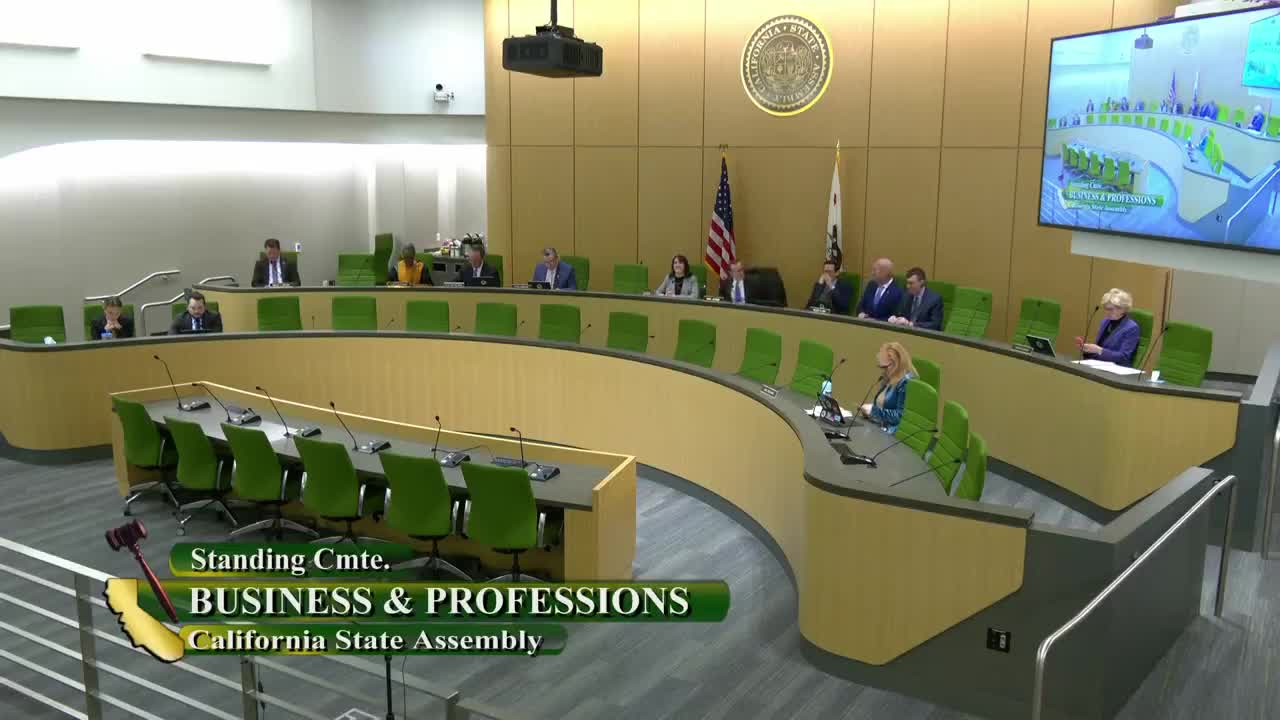 1H
Assembly Standing Committee on Business and Professions
Bill Author

Bill Co-Author(s):