AB 582: Personal Income Tax: tax credits: fire-resistant home improvements.
- Session Year: 2023-2024
- House: Assembly
- Latest Version Date: 2023-04-24
Current Status:
Failed
(2024-02-01: From committee: Filed with the Chief Clerk pursuant to Joint Rule 56.)
Introduced
In Committee
First Chamber
In Committee
Second Chamber
Enacted
The Personal Income Tax Law allows various credits against the taxes imposed by that law.
This bill would allow a credit against those taxes for each taxable year beginning on or after January 1, 2023, 2024, and before January 1, 2028, 2029, to a qualified taxpayer, as defined, in an amount equal to 40% of the taxpayers qualified expenses, as defined, not to exceed $400 per taxable year, or $2,000 cumulatively.
Existing law requires any bill authorizing a new tax credit to contain, among other things, specific goals, purposes, and objectives that the tax credit will achieve, detailed performance indicators, and data collection requirements.
The bill would also include additional information required for any bill authorizing a new tax expenditure.
This bill would take effect immediately as a tax levy.
The Personal Income Tax Law allows various credits against the taxes imposed by that law.
This bill would allow a credit against those taxes for each taxable year beginning on or after January 1, 2023, and before January 1, 2028, to a qualified taxpayer, as defined, in an amount equal to 40% of the taxpayers qualified expenses, as defined, not to exceed $____ $400 per taxable year, or $____ $2,000 cumulatively.
Existing law requires any bill authorizing a new tax credit to contain, among other things, specific goals, purposes, and objectives that the tax credit will achieve, detailed performance indicators, and data collection requirements.
The bill would also include additional information required for any bill authorizing a new tax expenditure.
This bill would take effect immediately as a tax levy.
The Personal Income Tax Law allows various credits against the taxes imposed by that law.
This bill would allow a credit against those taxes for each taxable year beginning on or after January 1, 2023, and before January 1, 2028, to a qualified taxpayer, as defined, in an amount equal to the taxpayers qualified expenses, as defined, not to exceed $____ per year, or $____ cumulatively.
Existing law requires any bill authorizing a new tax credit to contain, among other things, specific goals, purposes, and objectives that the tax credit will achieve, detailed performance indicators, and data collection requirements.
The bill would also include additional information required for any bill authorizing a new tax expenditure.
This bill would take effect immediately as a tax levy.
(a)For each taxable year beginning on or after January 1, 2023, 2024, and before January 1, 2028, 2029, there shall be allowed to a qualified taxpayer a credit against the net tax, as defined in Section 17039, in an amount equal to 40 percent of the taxpayers qualified expenses, subject to subdivision (c).
(b)For purposes of this section, the following definitions apply:
(1)Qualified expenses means costs paid or incurred by a qualified taxpayer associated with any of the following: the building or installation of hardening measures to the taxpayers primary residence, including, but not limited to, the following:
(A)The clearing of vegetation, debris, mulch, stored combustible materials, and any and all movable combustible objects within the boundaries of the property.(B)The incorporation of noncombustible materials into any improvements to the property, including fences and gates.(C)The removal of combustible structures, including sheds and other outbuildings, on the property.(D)The building or installation of hardening measures, including, but not limited to, the following: (i)(A)A Class A fire rated roof.
(ii)(B)Enclosed eaves.
(iii)(C)Fire-resistant vents.
(iv)(D)At least six inches of noncombustible vertical clearance at the bottom of the exterior surface of a building on the property, measured from the ground up.
(2)Qualified taxpayer means an individual that is at least 65 years of age as of the last day of the taxable year, whose primary residence residence, for any taxable years in which the taxpayer claims the credit, is located in a high or very high fire hazard severity zone, as identified by the State Fire Marshal pursuant to Section 51178 of the Government Code, and who satisfies either of the following:
(A)For spouses filing joint returns, heads of household, and surviving spouses, as defined in Section 17046, adjusted gross income is two hundred fifty thousand dollars ($250,000) or less.
(B)For other individuals, adjusted gross income is one hundred twenty-five thousand dollars ($125,000) or less.
(c)Notwithstanding subdivision (a), credits allowed to a qualified taxpayer pursuant to this section shall not exceed four hundred dollars ($400) in a taxable year, or a cumulative total of two thousand dollars ($2,000) without regard to taxable year.
(d)If the credit allowed by this section exceeds either the annual four-hundred-dollar ($400) limit described in subdivision (c) or the net tax, the excess may be carried over to reduce the net tax in the following year, and succeeding three years if necessary, until the credit is exhausted.
(e)(1)For the purposes of complying with Section 41 of the Revenue and Taxation Code, the Legislature finds and declares all of the following:
(A)The specific goal, purpose, and objective that the credit allowed by subdivision (a) will achieve is to compensate adults 65 years of age and older who live in high-risk fire areas for improvements made to mitigate and prevent property damage and loss of life due to wildfires in California.
(B)Detailed performance indicators for the Legislature to use in determining whether the credit meets the goal, purpose, and objective described in subparagraph (A) is the number of taxpayers who utilized the credit and the average dollar amount of credits claimed.
(2)The Franchise Tax Board shall analyze the performance indicators for each taxable year and shall report its findings on or before November 1, 2028, 2029, to the Legislature in compliance with Section 9795 of the Government Code.
(3)The disclosure provisions of this subdivision shall be treated as an exception to Section 19542.
(f)This section shall remain in effect only until December 1, 2028, 2029, and as of that date is repealed.
SEC. 2.This act provides for a tax levy within the meaning of Article IV of the California Constitution and shall go into immediate effect.
(a)For each taxable year beginning on or after January 1, 2023, and before January 1, 2028, there shall be allowed to a qualified taxpayer a credit against the net tax, as defined in Section 17039, for in an amount equal to 40 percent of the taxpayers qualified expenses not to exceed ____ dollars ($____). expenses, subject to subdivision (c).
(b)For purposes of this section, the following definitions apply:
(1)Qualified expenses means costs paid or incurred by a qualified taxpayer associated with home hardening, as that term is defined in Section 4291.5 of the Public Resources Code, the creation of defensible space, and other appropriate fuel reduction activities related to the taxpayers real property. any of the following:
(A)The clearing of vegetation, debris, mulch, stored combustible materials, and any and all movable combustible objects within the boundaries of the property.
(B)The incorporation of noncombustible materials into any improvements to the property, including fences and gates.
(C)The removal of combustible structures, including sheds and other outbuildings, on the property.
(D)The building or installation of hardening measures, including, but not limited to, the following:
(i)A Class A fire rated roof.
(ii)Enclosed eaves.
(iii)Fire-resistant vents.
(iv)At least six inches of noncombustible vertical clearance at the bottom of the exterior surface of a building on the property, measured from the ground up.
(2)Qualified taxpayer means an individual that is at least 65 years of age as of the last day of the taxable year, and whose primary residence is located in a high or very high fire hazard severity zone, as identified by the State Fire Marshal pursuant to Section 51178 of the Government Code, and who satisfies either of the following:
(A)For spouses filing joint returns, heads of household, and surviving spouses, as defined in Section 17046, adjusted gross income is two hundred fifty thousand dollars ($250,000) or less.
(B)For other individuals, adjusted gross income is one hundred twenty-five thousand dollars ($125,000) or less.
(c)Notwithstanding subdivision (a), credits allowed to a qualified taxpayer may pursuant to this section shall not exceed four hundred dollars ($400) in a taxable year, or a cumulative total of ____ dollars ($____) two thousand dollars ($2,000) without regard to taxable year.
(d)If the credit allowed by this section exceeds either the annual four-hundred-dollar ($400) limit described in subdivision (c) or the net tax, the excess may be carried over to reduce the net tax in the following year, and succeeding two three years if necessary, until the credit is exhausted.
(e)(1)For the purposes of complying with Section 41 of the Revenue and Taxation Code, the Legislature finds and declares all of the following:
(A)The specific goal, purpose, and objective that the credit allowed by subdivision (a) will achieve is to compensate adults 65 years of age and older who live in high-risk fire areas for improvements made to mitigate and prevent property damage and loss of life due to wildfires in California.
(B)Detailed performance indicators for the Legislature to use in determining whether the credit meets the goal, purpose, and objective described in subparagraph (A) is the number of taxpayers who utilized the credit and the average dollar amount of credits claimed.
(2)The Franchise Tax Board shall analyze the performance indicators for each taxable year and shall report its findings on or before November 1, 2028, to the Legislature in compliance with Section 9795 of the Government Code.
(3)The disclosure provisions of this subdivision shall be treated as an exception to Section 19542.
(f)This section shall remain in effect only until December 1, 2028, and as of that date is repealed.
SEC. 2.This act provides for a tax levy within the meaning of Article IV of the California Constitution and shall go into immediate effect.
(a)For each taxable year beginning on or after January 1, 2023, and before January 1, 2028, there shall be allowed to a qualified taxpayer a credit against the net tax, as defined in Section 17039, for qualified expenses not to exceed ____ dollars ($____).
(b)For purposes of this section, the following definitions apply:
(1)Qualified expenses means costs paid or incurred by a qualified taxpayer associated with home hardening, as that term is defined in Section 4291.5 of the Public Resources Code, the creation of defensible space, and other appropriate fuel reduction activities related to the taxpayers real property.
(2)Qualified taxpayer means an individual that is at least 65 years of age as of the last day of the taxable year, and satisfies either of the following:
(A)For spouses filing joint returns, heads of household, and surviving spouses, as defined in Section 17046, adjusted gross income is two hundred fifty thousand dollars ($250,000) or less.
(B)For other individuals, adjusted gross income is one hundred twenty-five thousand dollars ($125,000) or less.
(c)Notwithstanding subdivision (a), credits allowed to a qualified taxpayer may not exceed a cumulative total of ____ dollars ($____) without regard to taxable year.
(d)If the credit allowed by this section exceeds the net tax, the excess may be carried over to reduce the net tax in the following year, and succeeding two years if necessary, until the credit is exhausted.
(e)(1)For the purposes of complying with Section 41 of the Revenue and Taxation Code, the Legislature finds and declares all of the following:
(A)The specific goal, purpose, and objective that the credit allowed by subdivision (a) will achieve is to compensate adults 65 years of age and older who live in high-risk fire areas for improvements made to mitigate and prevent property damage and loss of life due to wildfires in California.
(B)Detailed performance indicators for the Legislature to use in determining whether the credit meets the goal, purpose, and objective described in subparagraph (A) is the number of taxpayers who utilized the credit and the average dollar amount of credits claimed.
(2)The Franchise Tax Board shall analyze the performance indicators for each taxable year and shall report its findings on or before November 1, 2028, to the Legislature in compliance with Section 9795 of the Government Code.
(3)The disclosure provisions of this subdivision shall be treated as an exception to Section 19542.
(f)This section shall remain in effect only until December 1, 2028, and as of that date is repealed.
SEC. 2.This act provides for a tax levy within the meaning of Article IV of the California Constitution and shall go into immediate effect.
|
Date
|
Status
|
|---|---|
| Feb 1, 2024 | From committee: Filed with the Chief Clerk pursuant to Joint Rule 56. |
| Jan 31, 2024 | Died pursuant to Art. IV, Sec. 10(c) of the Constitution. |
| May 18, 2023 | In committee: Held under submission. |
| May 18, 2023 | Joint Rule 62(a), file notice suspended. (Page 1580.) |
| May 17, 2023 | In committee: Set, first hearing. Referred to APPR. suspense file. |
| May 2, 2023 | From committee: Do pass and re-refer to Com. on APPR. (Ayes 11. Noes 0.) (May 1). Re-referred to Com. on APPR. |
| Apr 25, 2023 | Re-referred to Com. on REV. & TAX. |
| Apr 24, 2023 | From committee chair, with author's amendments: Amend, and re-refer to Com. on REV. & TAX. Read second time and amended. |
| Mar 21, 2023 | In committee: Set, first hearing. Referred to REV. & TAX. suspense file. |
| Mar 14, 2023 | Re-referred to Com. on REV. & TAX. |
| Mar 13, 2023 | From committee chair, with author's amendments: Amend, and re-refer to Com. on REV. & TAX. Read second time and amended. |
| Feb 17, 2023 | Referred to Com. on REV. & TAX. |
| Feb 10, 2023 | From printer. May be heard in committee March 12. |
| Feb 9, 2023 | Read first time. To print. |
|
Date
|
Description
|
Location
|
Votes
|
|
|---|---|---|---|---|
| May 1, 2023 | Do pass and be re-referred to the Committee on [Appropriations] | Assembly Standing Committee on Revenue and Taxation |
Passed |
This list shows positions taken on this bill by organizations on the date displayed, which is linked to the original source.
Positions by individuals are not included.
|
Organization
|
Position
|
Date
|
|---|---|---|
| California Association Of Realtors | ** Support | |
| California Senior Legislature | ** Support | |
| California Tax Reform Association | ** Against | |
| California Teachers Association | ** Against | |
| Orange County | * Support | Mar 20, 2023 |
Date of Hearing: May 17, 2023
ASSEMBLY COMMITTEE ON APPROPRIATIONS
Chris Holden, Chair
ABPCA Bill Id:AB 582
Author:(Connolly) – As Amended Ver:April 24, 2023
Policy Committee: | Revenue and Taxation | Vote: | 11 - 0 |
|
| ||
|
|
Urgency: No State Mandated Local Program: No Reimbursable: No
SUMMARY:
This bill allows, for each taxable year beginning on or after January 1, 2024, and before January 1, 2029, a tax credit under the Personal Income Tax Law in an amount equal to 40% of costs paid or incurred by a qualified taxpayer associated with the building or installing of hardening measures to the taxpayer’s primary residence.
This bill caps the credit at $400 per taxable year or $2,000 cumulatively and defines “qualified taxpayer” to mean an individual at least 65 years old, under a specified income threshold, whose primary residence is located in a high or very high fire hazard severity zone.
This bill declares the goals and performance indicators for the tax credit and requires the Franchise Tax Board (FTB) to analyze the performance indicators each year and report, by November 1, 2029, the findings to the Legislature.
FISCAL EFFECT:
- General Fund (GF) revenue loss of approximately $7.1 million in fiscal year (FY) 2023-2024, $9.8 million in FY 2024-25, and $8.4 million in FY 2025-26.
- GF costs of an unknown, but potentially significant, amount to FTB to administer the credit and provide the specified analysis and report.
COMMENTS:
- Purpose. According to the author:
Seniors in rural areas are struggling under the brunt of ever-more-deadly and destructive wildfire seasons. Home hardening measures have been proven to save lives and spare communities from the worst of these aggressive fires. California should be doing all it can to help folks in high-risk areas protect themselves and their families from increasing wildfire threats.
- Support and Opposition. This bill is sponsored by the California Senior Legislature, which argues “Nearly two million older Californians live in a high fire severity zone. This legislation assists seniors who reside in fire prone areas to prevent property damage and loss of life.” This bill is also supported by the California Association of Realtors.
This bill is opposed by the California Tax Reform Association and California Teachers Association (CTA). CTA notes that while this bill is well intended, “CTA does not support this approach, as it would reduce overall funding for education” especially as the state faces a budget deficit.
- Home Hardening. In 2021, California experienced more than 8,800 fires that burned over 2.5 million acres, damaging and destroying over 3,600 structures and causing thousands of evacuations. Additionally, the average age of the people who lost their lives during the 2018 Camp Fire was 72 years. This bill provides a tax credit to specified taxpayers age 65 or older to cover costs associated with the building or installing of primary residence hardening measures. As noted in the Assembly Revenue and Taxation Committee’s analysis of this bill, however, “the degree to which this credit would actually serve as an incentive, versus a reward, for taxpayer behavior” is unclear, especially since existing regulations already require insurance companies to factor in a policy holder’s efforts to harden their homes against wildfires.
Analysis Prepared by: Irene Ho / APPR. / (916) 319-2081
Date of Hearing: May 1, 2023
ASSEMBLY COMMITTEE ON REVENUE AND TAXATION
Jacqui Irwin, Chair
ABPCA Bill Id:AB 582 (
Author:Connolly) – As Amended Ver:April 24, 2023
SUSPENSE
Majority vote. Tax levy. Fiscal committee.
SUBJECT: Personal Income Tax: tax credits: fire-resistant home improvements
SUMMARY: Allows, under the Personal Income Tax (PIT) Law, a credit for seniors residing in high or very high-risk fire zones, as specified, who incur "qualified expenses" relating to fire-resistant home improvements. Specifically, this bill:
- Allows, for taxable years beginning on or after January 1, 2024, and before January 1, 2029, a credit equal to 40% of "qualified expenses", as specified, incurred by a "qualified taxpayer" and caps the credit at $400 per taxable year and $2,000 cumulatively.
- Provides that, if the credit allowed exceeds either the annual $400 limit or the taxpayer's income tax liability for the taxable year, the excess may be carried over for up to four years until the credit is exhausted.
- Defines "qualified expenses" as costs paid or incurred by a "qualified taxpayer" associated with the building or installation of hardening measures to the taxpayer's primary residence, including, but not limited to, the following:
- A Class A fire rated roof;
- Enclosed eaves;
- Fire-resistant vents; and,
- At least six inches of noncombustible vertical clearance at the bottom of the exterior surface of a building on the property, measured from the ground up.
- Defines a "qualified taxpayer" as an individual who is at least 65 years of age as of the last day of the taxable year, whose primary residence is located in a high or very high fire hazard severity zone, as identified by the State Fire Marshal pursuant to Government Code Section 51178, and who satisfies either of the following:
- For spouses filing joint returns, heads of household, and surviving spouses, as defined in Revenue & Taxation Code (R&TC) Section 17046, adjusted gross income (AGI) is $250,000 or less; or,
- For other individuals, AGI is $125,000 or less.
- Sunsets the credit's statutory provisions on December 1, 2029.
- Finds and declares the following for purposes of satisfying the requirements of R&TC Section 41:
- The specific goals, purposes, and objectives of this bill are to compensate adults 65 years of age and older who live in high-risk fire areas for improvements made to mitigate and prevent property damage and loss of life due to wildfires in California.
- To measure whether this bill achieves its intended purpose, the Franchise Tax Board (FTB) shall prepare a report on the following:
- The number of taxpayers claiming the credit; and,
- The average credit amount on tax returns claiming the credit.
- Requires the FTB to provide the report required under this bill to the Legislature on or before November 1, 2029 in compliance with Government Code Section 9795.
- Provides that the disclosure requirements of this bill shall be treated as an exception to R&TC Section 19542.
- Takes immediate effect as a tax levy.
EXISTING LAW:
- Allows various tax credits under the PIT Law. These credits are generally designed to encourage socially beneficial behavior or to provide relief to taxpayers who incur specified expenses.
- Requires any bill authorizing a new credit to contain all of the following:
- Specific goals, purposes, and objectives that the tax credit will achieve;
- Detailed performance indicators for the Legislature to use when measuring whether the tax credit meets the goals, purposes, and objectives stated in the bill; and,
- Data collection requirements to enable the Legislature to determine whether the tax credit is meeting, failing to meet, or exceeding those specific goals, purposes, and objectives. The requirements shall include the specific data and baseline measurements to be collected and remitted in each year the credit is in effect, for the Legislature to measure the change in performance indicators, and the specific taxpayers, state agencies, or other entities required to collect and remit data. (R&TC Section 41).
- Establishes various requirements of the Board of Forestry and Fire Protection (Cal Fire), the State Fire Marshal, and local agencies relating to the prevention of fires, including the classification and designation of lands into fire hazard severity zones and the creation of defensible space. (Public Resources Code Section 4201 et seq. and Government Code Section 51175 et seq.).
FISCAL EFFECT: The FTB estimates General Fund revenue losses of $7.1 million in fiscal year (FY) 2023-24, $9.8 million in FY 2024-25, and $8.4 million in FY 2025-26.
COMMENTS:
- The author has provided the following statement in support of this bill:
Seniors in rural areas are struggling under the brunt of ever-more-deadly and destructive wildfire seasons. Home hardening measures have been proven to save lives and spare communities from the worst of these aggressive fires. California should be doing all it can to help folks in high-risk areas protect themselves and their families from increasing wildfire threats.
- In support of this bill, the California Association of Realtors notes, in part:
Within the recent years, California has experienced various catastrophic wildfires. Many property owners living in the wildfire urban interface especially those on fixed incomes such as seniors must invest hundreds of dollars to ensure that they are able to protect themselves against the threat of a wildfire to ensure that they are able to maintain their current insurance policy due to the wildfire risk their home may pose.
- In opposition to this bill, the California Tax Reform Association notes, in part:
Tax credits and expenditure programs are, in theory, established to provide an economic benefit to California by creating incentives that achieve particular goals and outcomes. By providing a financial incentive, the state should be incentivizing a policy change that would otherwise have not occurred. In general, it is questionable that a financial incentive is necessary to encourage homeowners to protect their home from wildfire in areas prone to such destruction. Moreover, in 2022, Insurance Commissioner Ricardo Lara required insurance companies to factor in a policy holder's efforts to harden their homes against wildfire. Given the combination of these factors, it seems questionable that this proposed credit would actually serve as an incentive, versus a reward, for taxpayer behavior.
- Committee Staff Comments:
- What is a "tax expenditure"? Existing law provides various credits, deductions, exclusions, and exemptions for particular taxpayer groups. In the late 1960s, U.S. Treasury officials began arguing that these features of the tax law should be referred to as "expenditures" since they are generally enacted to accomplish some governmental purpose and there is a determinable cost associated with each (in the form of foregone revenues).
As the Department of Finance notes in its annual Tax Expenditure Report, there are several key differences between tax expenditures and direct expenditures. First, tax expenditures are typically reviewed less frequently than direct expenditures. Second, there is generally no control over the amount of revenue losses associated with any given tax expenditure. Finally, it should also be noted that, once enacted, it takes a two-thirds vote to rescind an existing tax expenditure absent a sunset date. This effectively results in a "one-way ratchet" whereby tax expenditures can be conferred by majority vote, but cannot be rescinded, irrespective of their efficacy or cost, without a supermajority vote.
- What problem is this bill attempting to solve? In 2021 alone, California experienced more than 8,800 fires that burned over 2.5 million acres, damaging and/or destroying over 3,600 structures, and causing thousands of evacuations.[1] According to a KQED and CalMatters investigation in 2020, about 2 million people aged 65 and older live in areas where wildfire is a serious threat.[2] The average age of the people who died during the 2017 fires in Sonoma and Napa Counties was 73, and the average age of the people who died in the 2018 Camp fire was 72.
- An incentive or a reward? Typically, tax credits are provided as a matter of legislative grace to encourage taxpayers to behave in ways they might not absent a financial incentive. Regulations announced by Insurance Commissioner Ricardo Lara in 2022 already require insurance companies to factor in a policy holder's efforts to harden their homes against wildfire.[3] Likewise, this credit is intended to encourage homeowners to engage in various activities and purchase improvements that seek to protect against the risks of wildfires. While this is an admirable goal, Committee staff questions the degree to which this credit would actually serve as an incentive, versus a reward, for taxpayer behavior.
- Committee's tax expenditure policy: Both R&TC Section 41 and Committee policy require any tax expenditure bill to outline specific goals, purposes, and objectives that the tax expenditure will achieve, along with detailed performance indicators for the Legislature to use when measuring whether the tax expenditure meets those stated goals, purposes, and objectives. A tax expenditure bill will not be eligible for a Committee vote unless it has complied with these requirements.
- What problem is this bill attempting to solve? In 2021 alone, California experienced more than 8,800 fires that burned over 2.5 million acres, damaging and/or destroying over 3,600 structures, and causing thousands of evacuations.[1] According to a KQED and CalMatters investigation in 2020, about 2 million people aged 65 and older live in areas where wildfire is a serious threat.[2] The average age of the people who died during the 2017 fires in Sonoma and Napa Counties was 73, and the average age of the people who died in the 2018 Camp fire was 72.
In its current form, this bill states that the credit is designed to compensate adults 65 years of age and older who live in high-risk fire areas for improvements made to mitigate and prevent property damage and loss of life due to wildfires in California. In addition, this bill provides that the credit's effectiveness shall be measured by the number of taxpayers claiming the credit. The Committee may wish to consider whether credit utilization, in and of itself, is a sufficient rubric by which to measure this credit's effectiveness.
In addition to the R&TC Section 41 requirements, this Committee's policy also requires that all tax expenditure proposals contain an appropriate sunset provision to be eligible for a vote. According to the policy, an "appropriate sunset provision" means five years, except in the case of a tax expenditure measure providing relief to California veterans, in which case "appropriate sunset provision" means ten years. This bill, as currently drafted, complies with the Committee's policy on sunset dates.
- Prior legislation:
- AB 324 (Choi), of the 2021-22 Legislative Session, allowed a tax credit for qualified taxpayers that install an attic vent closure in a residential property, as specified. AB 324 was held on the Assembly Appropriations Suspense File.
- AB 266 (Choi), of the 2019-20 Legislative Session, was substantially similar to AB 324 and was also held on the Assembly Appropriations Suspense File.
- Prior legislation:
REGISTERED SUPPORT / OPPOSITION:
Support
California Association of Realtors
California Senior Legislature
Opposition
California Tax Reform Association
California Teachers Association
Analysis Prepared by: Wesley Whitaker / REV. & TAX. / (916) 319-2098
2021 Annual Report. The Board of Forestry and Fire Protection. https://bof.fire.ca.gov/media/j3obcuoq/final-2021-bof-annual-report.pdf. ↑
Benichou et al. "Millions of Older Californians Live Where Wildfire Threatens. Mostly, They're on Their Own." KQED. August 14, 2020. https://www.kqed.org/science/1968417/millions-of-older-californians-live-where-wildfire-threatens-mostly-theyre-on-their-own. ↑
"Commissioner Lara announces new regulations to improve wildfire safety and drive down cost of insurance." California Department of Insurance. February 25, 2022. https://www.insurance.ca.gov/0400-news/0100-press-releases/2022/release019-2022.cfm. ↑
Date of Hearing: March 20, 2023
ASSEMBLY COMMITTEE ON REVENUE AND TAXATION
Jacqui Irwin, Chair
ABPCA Bill Id:AB 582 (
Author:Connolly) – As Amended Ver:March 13, 2023
Majority vote. Tax levy. Fiscal committee.
SUBJECT: Personal Income Tax: tax credits: fire-resistant home improvements
SUMMARY: Allows, under the Personal Income Tax (PIT) Law, a credit for seniors residing in high or very high-risk fire zones, as specified, who incur "qualified expenses" relating to fire-resistant home improvements. Specifically, this bill:
- Allows, for taxable years beginning on or after January 1, 2023, and before January 1, 2028, a credit equal to 40% of "qualified expenses", as specified, incurred by a "qualified taxpayer" and caps the credit at $400 per taxable year and $2,000 cumulatively.
- Provides that, if the credit allowed exceeds either the annual $400 limit or the taxpayer's income tax liability for the taxable year, the excess may be carried over for up to four years until the credit is exhausted.
- Defines "qualified expenses" as costs paid or incurred by a qualified taxpayer associated with any of the following:
- The clearing of vegetation, debris, mulch, stored combustible materials, and any and all movable combustible objects within the boundaries of the property;
- The incorporation of noncombustible materials into any improvements to the property, including fences and gates;
- The removal of combustible structures, including sheds and other outbuildings, on the property; and,
- The building or installation of hardening measures, including, but not limited to, the following:
- A Class A fire rated roof;
- Enclosed eaves;
- Fire-resistant vents; and,
- At least six inches of noncombustible vertical clearance at the bottom of the exterior surface of a building on the property, measured from the ground up.
- Defines a "qualified taxpayer" as an individual who is at least 65 years of age as of the last day of the taxable year, whose primary residence is located in a high or very high fire hazard severity zone, as identified by the State Fire Marshal pursuant Government Code Section 51178, and who satisfies either of the following:
- For spouses filing joint returns, heads of household, and surviving spouses, as defined in Revenue & Taxation Code (R&TC) Section 17046, adjusted gross income (AGI) is $250,000 or less; or,
- For other individuals, AGI is one $125,000 or less.
- Sunsets the credit's statutory provisions on December 1, 2028.
- Finds and declares the following for purposes of satisfying the requirements of R&TC Section 41:
- The specific goals, purposes, and objectives of this bill are to compensate adults 65 years of age and older who live in high-risk fire areas for improvements made to mitigate and prevent property damage and loss of life due to wildfires in California.
- To measure whether this bill achieves its intended purpose, the Franchise Tax Board (FTB) shall prepare a report on the following:
- The number of taxpayers claiming the credit; and,
- The average credit amount on tax returns claiming the credit.
- Requires the FTB to provide the report required under this bill to the Legislature on or before November 1, 2028 in compliance with Government Code Section 9795.
- Provides that the disclosure requirements of this bill shall be treated as an exception to R&TC Section 19542.
- Takes immediate effect as a tax levy.
EXISTING LAW:
- Allows various tax credits under the PIT Law. These credits are generally designed to encourage socially beneficial behavior or to provide relief to taxpayers who incur specified expenses.
- Requires any bill authorizing a new credit to contain all of the following:
- Specific goals, purposes, and objectives that the tax credit will achieve;
- Detailed performance indicators for the Legislature to use when measuring whether the tax credit meets the goals, purposes, and objectives stated in the bill; and,
- Data collection requirements to enable the Legislature to determine whether the tax credit is meeting, failing to meet, or exceeding those specific goals, purposes, and objectives. The requirements shall include the specific data and baseline measurements to be collected and remitted in each year the credit is in effect, for the Legislature to measure the change in performance indicators, and the specific taxpayers, state agencies, or other entities required to collect and remit data. (R&TC Section 41.)
- Establishes various requirements of the Board of Forestry and Fire Protection (Cal Fire), the State Fire Marshal, and local agencies relating to the prevention of fires, including the classification and designation of lands into fire hazard severity zones and the creation of defensible space. (Public Resources Code Section 4201 et seq. and Government Code Section 51175 et seq.).
FISCAL EFFECT: The FTB estimates General Fund revenue losses of $30 million in fiscal year (FY) 2023-24, $15 million in FY 2024-25, and $13 million in FY 2025-26.
COMMENTS:
- The author has provided the following statement in support of this bill:
Seniors in rural areas are struggling under the brunt of ever-more-deadly and destructive wildfire seasons. Home hardening measures have been proven to save lives and spare communities from the worst of these aggressive fires. California should be doing all it can to help folks in high-risk areas protect themselves and their families from increasing wildfire threats.
- In support of this bill, the California Association of Realtors notes, in part:
Within the recent years, California has experienced various catastrophic wildfires. Many property owners living in the wildfire urban interface especially those on fixed incomes such as seniors must invest hundreds of dollars to ensure that they are able to protect themselves against the threat of a wildfire to ensure that they are able to maintain their current insurance policy due to the wildfire risk their home may pose.
- Committee Staff Comments:
- What is a "tax expenditure"? Existing law provides various credits, deductions, exclusions, and exemptions for particular taxpayer groups. In the late 1960s, U.S. Treasury officials began arguing that these features of the tax law should be referred to as "expenditures" since they are generally enacted to accomplish some governmental purpose and there is a determinable cost associated with each (in the form of foregone revenues).
As the Department of Finance notes in its annual Tax Expenditure Report, there are several key differences between tax expenditures and direct expenditures. First, tax expenditures are typically reviewed less frequently than direct expenditures. Second, there is generally no control over the amount of revenue losses associated with any given tax expenditure. Finally, it should also be noted that, once enacted, it takes a two-thirds vote to rescind an existing tax expenditure absent a sunset date. This effectively results in a "one-way ratchet" whereby tax expenditures can be conferred by majority vote, but cannot be rescinded, irrespective of their efficacy or cost, without a supermajority vote.
- What problem is this bill attempting to solve? In 2021 alone, California experienced more than 8,800 fires that burned over 2.5 million acres, damaging and/or destroying over 3,600 structures, and causing thousands of evacuations.[1] According to a KQED and CalMatters investigation in 2020, about 2 million people aged 65 and older live in areas where wildfire is a serious threat.[2] The average age of the people who died during the 2017 fires in Sonoma and Napa Counties was 73, and the average age of the people who died in the 2018 Camp fire was 72.
- An incentive or a reward? Typically, tax credits are provided as a matter of legislative grace to encourage taxpayers to behave in ways they might not absent a financial incentive. Regulations announced by Insurance Commissioner Ricardo Lara in 2022 already require insurance companies to factor in a policy holder's efforts to harden their homes against wildfire.[3] Likewise, this credit is intended to encourage homeowners to engage in various activities and purchase improvements that seek to protect against the risks of wildfires. While this is an admirable goal, Committee staff questions the degree to which this credit would actually serve as an incentive, versus a reward, for taxpayer behavior.
- Implementation Considerations:
- Home-hardening and the creation of defensible space includes many kinds of possible expenses: This bill defines qualifying expenses very broadly, including three forms methods of creating defensible space recommended by Cal Fire, which seek to remove fuel from the immediate vicinity of residential property. This bill provides that various "hardening measures" can also qualify as qualified expenses, "including but not limited to" the installation of a "Class A fire rated roof", "enclosed eaves", "fire-resistant vents", and "at least six inches of noncombustible vertical clearance at the bottom of the exterior surface of a building on the property". The Committee may wish to consider whether the lack of specific definitions could create opportunities for confusion or other cases where credits are provided for expenses that do not actually improve fire resiliency.
- Fire severity areas are not static: Determining which parts of the state should be designated as high or very high fire severity zones is an iterative, ongoing process that relies on numerous sources of data and scientific analyses. State law requires that fire severity zones are updated periodically as conditions change, new data are presented, and new lands are developed for residential or commercial use. As currently drafted, this bill does not specify at what point in time a taxpayer's residence must be considered to be within a high or very high fire severity zone to qualify for the credit.
- Prioritizing the protection of primary residences: As currently drafted, this bill does not specify that, to be considered as qualified expenses, the improvements made to a property must be improvements to the taxpayer's primary residence. If this is contrary to the author's intent, the bill should be amended.
- Home-hardening and the creation of defensible space includes many kinds of possible expenses: This bill defines qualifying expenses very broadly, including three forms methods of creating defensible space recommended by Cal Fire, which seek to remove fuel from the immediate vicinity of residential property. This bill provides that various "hardening measures" can also qualify as qualified expenses, "including but not limited to" the installation of a "Class A fire rated roof", "enclosed eaves", "fire-resistant vents", and "at least six inches of noncombustible vertical clearance at the bottom of the exterior surface of a building on the property". The Committee may wish to consider whether the lack of specific definitions could create opportunities for confusion or other cases where credits are provided for expenses that do not actually improve fire resiliency.
- Committee's tax expenditure policy: Both R&TC Section 41 and Committee policy require any tax expenditure bill to outline specific goals, purposes, and objectives that the tax expenditure will achieve, along with detailed performance indicators for the Legislature to use when measuring whether the tax expenditure meets those stated goals, purposes, and objectives. A tax expenditure bill will not be eligible for a Committee vote unless it has complied with these requirements.
- What problem is this bill attempting to solve? In 2021 alone, California experienced more than 8,800 fires that burned over 2.5 million acres, damaging and/or destroying over 3,600 structures, and causing thousands of evacuations.[1] According to a KQED and CalMatters investigation in 2020, about 2 million people aged 65 and older live in areas where wildfire is a serious threat.[2] The average age of the people who died during the 2017 fires in Sonoma and Napa Counties was 73, and the average age of the people who died in the 2018 Camp fire was 72.
In its current form, this bill states that the credit is designed to compensate adults 65 years of age and older who live in high-risk fire areas for improvements made to mitigate and prevent property damage and loss of life due to wildfires in California. In addition, this bill provides that the credit's effectiveness shall be measured by the number of taxpayers claiming the credit. The Committee may wish to consider whether credit utilization, in and of itself, is a sufficient rubric by which to measure this credit's effectiveness.
In addition to the R&TC Section 41 requirements, this Committee's policy also requires that all tax expenditure proposals contain an appropriate sunset provision to be eligible for a vote. According to the policy, an "appropriate sunset provision" means five years, except in the case of a tax expenditure measure providing relief to California veterans, in which case "appropriate sunset provision" means ten years. This bill, as currently drafted, complies with the Committee's policy on sunset dates.
- Prior legislation:
- AB 324 (Choi), of the 2021-22 Legislative Session, allowed a tax credit for qualified taxpayers that install an attic vent closure in a residential property, as specified. AB 324 was held on the Assembly Appropriations Suspense File.
- AB 266 (Choi), of the 2019-20 Legislative Session, was substantially similar to AB 324 and was also held on the Assembly Appropriations Suspense File.
- Prior legislation:
REGISTERED SUPPORT / OPPOSITION:
Support
California Association of Realtors
Opposition
None on file
Analysis Prepared by: Wesley Whitaker / REV. & TAX. / (916) 319-2098
2021 Annual Report. The Board of Forestry and Fire Protection. https://bof.fire.ca.gov/media/j3obcuoq/final-2021-bof-annual-report.pdf. ↑
Benichou et al. "Millions of Older Californians Live Where Wildfire Threatens. Mostly, They're on Their Own." KQED. August 14, 2020. https://www.kqed.org/science/1968417/millions-of-older-californians-live-where-wildfire-threatens-mostly-theyre-on-their-own. ↑
"Commissioner Lara announces new regulations to improve wildfire safety and drive down cost of insurance." California Department of Insurance. February 25, 2022. https://www.insurance.ca.gov/0400-news/0100-press-releases/2022/release019-2022.cfm. ↑
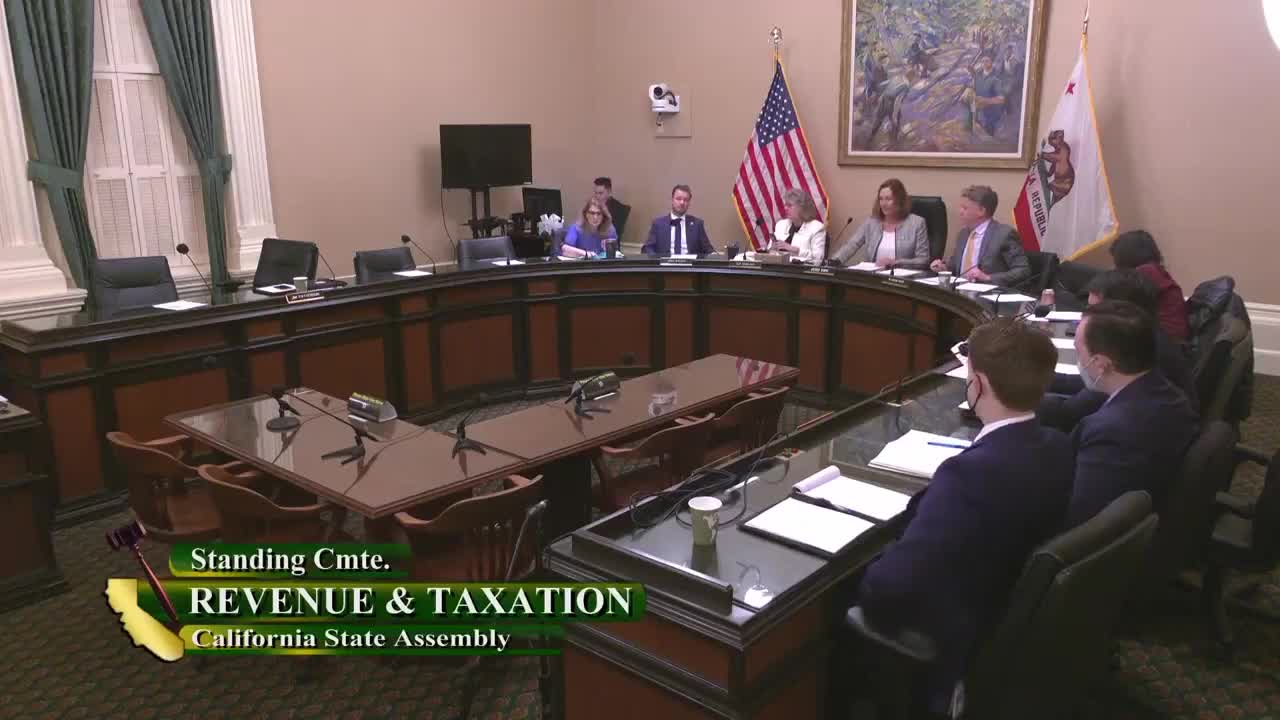
Discussed in Hearing
 10MIN
Assembly Standing Committee on Revenue and Taxation
Bill Author

Bill Co-Author(s):