SB 1017: Available facilities for inpatient and residential mental health or substance use disorder treatment.
- Session Year: 2023-2024
- House: Senate
- Latest Version Date: 2024-02-05
Current Status:
Failed
(2024-05-16: May 16 hearing: Held in committee and under submission.)
Introduced
In Committee
First Chamber
In Committee
Second Chamber
Enacted
Existing law generally requires the State Department of Public Health to license, inspect, and regulate health facilities, defined to include, among other types of health facilities, an acute psychiatric hospital. Existing law generally requires the State Department of Social Services to license, inspect, and regulate various types of care facilities, including, among others, a community crisis home. Existing law requires the State Department of Health Care Services to license and regulate facilities that provide residential nonmedical services to adults who are recovering from problems related to alcohol, drug, or alcohol and drug misuse or abuse, and who need alcohol, drug, or alcohol and drug recovery treatment or detoxification services.
This bill would require the State Department of Health Care Services, in consultation with the State Department of Public Health and the State Department of Social Services, and by conferring with specified stakeholders, to develop a solution to collect, aggregate, and display information about beds in specified types of facilities, including licensed community care facilities and licensed residential alcoholism or drug abuse recovery or treatment facilities, to identify the availability of inpatient and residential mental health or substance use disorder treatment. The bill would require the solution to be operational by January 1, 2026, or the date the State Department of Health Care Services communicates to the Department of Finance in writing that the solution has been implemented to meet these provisions, whichever date is later.
The bill would require the facilities subject to these provisions to submit accurate and timely data to the solution that includes, among other information, the facilitys license type, whether a bed is available, and the target population served at the facility. The bill would require the solution and information contained in the solution to be maintained in compliance with state and federal confidentiality laws. The bill would also prohibit the solution and information contained in the solution from being publically available.
The bill would authorize the State Department of Health Care Services to impose a plan of correction against a facility that failed to comply with the requirements of the solution, and if a facility fails to complete a plan of correction, would further authorize the department to impose civil penalties, subject to an appeal and hearing process. The bill would create the Available Care for Inpatient and Residential Mental Health or Substance Use Disorder Treatment Solution Maintenance and Oversight Fund for the receipt of any penalties. Because the bill would continuously appropriate moneys in the fund to the State Department of Health Care Services for the administrative costs of implementing these provisions, it would create an appropriation.
The bill would authorize the State Department of Health Care Services and the State Department of Social Services to enter into exclusive or nonexclusive contracts or amend existing contracts for the purposes of administering or implementing the solution. The bill would exempt contracts entered into or amended or changes to existing information technology systems made pursuant to these provisions from the requirements of the California State Contracts Register, specified requirements for personal services contracts, the State Contract Act, the Statewide Information Management Manual, and the State Administrative Manual. The bill would further exempt these contracts and changes from review or approval by the Department of General Services. The bill would authorize the State Department of Health Care Services to implement, interpret, or make specific these provisions by means of information notices, provider bulletins, or other similar instructions notwithstanding specific regulatory actions.
(a)(1)The State Department of Health Care Services, in consultation with the State Department of Public Health and the State Department of Social Services, shall develop a solution to collect, aggregate, and display information about beds in all of the following facilities to identify the availability of inpatient and residential mental health or substance use disorder treatment:
(A)Supplemental psychiatric services in a general acute care hospital.
(B)Chemical dependency recovery services in a chemical dependency recovery hospital, a distinct part of a general acute care hospital, or an acute psychiatric hospital.
(C)Acute psychiatric hospitals.
(D)Long-term care facilities with a mental health program approval or certification from the State Department of Health Care Services.
(E)Psychiatric health facilities.
(F)Mental health rehabilitation centers.
(G)Inpatient psychiatric facilities.
(H)Crisis stabilization units.
(I)Psychiatric residential treatment facilities.
(J)Community care facilities licensed by the State Department of Social Services pursuant to the California Community Care Facilities Act (Chapter 3 (commencing with Section 1500) of Division 2 of the Health and Safety Code) that have a mental health program approval or certification from the State Department of Health Care Services, including the following facilities defined in subdivision (a) of Section 1502 of the Health and Safety Code:
(i)Short-term residential therapeutic programs.
(ii)Childrens crisis residential programs.
(iii)Community treatment facilities.
(iv)Social rehabilitation facilities.
(K)Licensed residential alcoholism or drug abuse recovery or treatment facilities.
(2)The facilities specified in paragraph (1) shall submit accurate and timely data to the solution in a form and manner prescribed by the State Department of Health Care Services in consultation with the State Department of Public Health and the State Department of Social Services.
(3)The solution shall be operational by January 1, 2026, or the date the department communicates to the Department of Finance in writing that the solution has been implemented to meet this subdivision, whichever date is later.
(b)(1)Except as described in paragraph (3), the solution created pursuant to subdivision (a) shall include, at a minimum, all of the following:
(A)The contact information for the facilitys designated employee.
(B)The facilitys license type.
(C)Whether the facility provides substance use disorder treatment, mental health treatment, medical treatment, or any combination of those treatments.
(D)Whether the bed is secure for the treatment of a person who, as a result of a mental health disorder, is a danger to others or to themselves or gravely disabled, pursuant to Part 1 (commencing with Section 5000).
(E)The types of diagnoses or treatments for which the bed is appropriate.
(F)The age ranges for which the bed is appropriate.
(G)Whether the bed is available.
(H)Whether the bed is available for children subject to a petition, and those adjudicated a dependent, pursuant to Section 300, nonminor dependents as defined in subdivision (v) of Section 11400, or minors subject to a petition, and those adjudicated a ward, pursuant to Section 601 or 602.
(I)For perinatal residential alcoholism or drug abuse recovery or treatment facilities, whether the bed is available for a minor child of individuals receiving treatment at the facility.
(J)The target populations served at the facility.
(K)The levels of care provided at the facility, including, but not limited to, medically or clinically managed detoxification.
(L)Specific services available, by bed, to assist with determining appropriate placement for treatment, including, but not limited to, medications for addiction treatment.
(M)Type of payment accepted at the facility.
(2)The solution created pursuant to subdivision (a) shall have the following capabilities, at minimum:
(A)To collect data.
(B)To enable searches to identify beds that are appropriate for individuals in need of inpatient or residential mental health or substance use disorder treatment.
(3)The solution shall not include any information relating to state hospitals under the jurisdiction of the State Department of State Hospitals.
(4)The solution and the information contained therein shall be maintained in a manner that complies with all applicable state and federal confidentiality laws. The solution and the information contained therein shall not be publicly available, and the State Department of Health Care Services shall limit access to entities authorized by the department in a manner that is consistent with state and federal confidentiality laws.
(c)(1)The State Department of Health Care Services shall have the authority to impose a plan of correction against a facility specified in subdivision (a) that fails to submit data accurately, timely, or as required pursuant to this section.
(2)The department may determine a reasonable length of time for the facility to complete a plan of correction.
(3)The department may issue a notice of imposition of civil money penalties if the facility fails to complete a plan of correction by the time specified. The department may assess penalties against a facility in the amount of one hundred dollars ($100) per day from the date of notice of imposition of penalties.
(4)A facility may submit a written appeal to the department within 15 working days of the issuance of the notice specified in paragraph (3). The facility shall include any supporting documentation and explain any mitigating circumstances. The department shall make a determination on the appeal within 30 calendar days of receipt of a complete appeal.
(5)A facility may request a formal hearing within 30 calendar days of the departments determination on the appeal pursuant to paragraph (4). Except for licensed residential alcoholism or drug abuse recovery or treatment facilities, hearings to review the imposition of civil money penalties shall be conducted pursuant to the requirements set forth in Section 100171 of the Health and Safety Code. Civil money penalties against a facility shall continue to accrue until the effective date of the final decision of the department.
(6)Notwithstanding Section 100171 of the Health and Safety Code, hearings to review the imposition of civil money penalties against licensed residential alcoholism or drug abuse recovery or treatment facilities shall be conducted pursuant to the requirements set forth in Section 11834.37 of the Health and Safety Code.
(7)The State Department of Health Care Services may obtain a court order to recover unpaid civil money penalties against a facility identified in subdivision (a).
(d)The Available Care for Inpatient and Residential Mental Health or Substance Use Disorder Treatment Solution Maintenance and Oversight Fund is hereby created in the State Treasury, to be administered and overseen by the State Department of Health Care Services. Civil money penalties assessed and collected pursuant to this section shall be deposited into this fund. Notwithstanding Section 13340 of the Government Code, the funds deposited in this fund shall be continuously appropriated, without regard to fiscal year, to the State Department of Health Care Services for purposes of funding its administrative costs associated with implementing this section.
(e)The State Department of Health Care Services shall confer with stakeholders to inform implementation of the solution. The department and stakeholders shall consider strategies for facility use of the solution. Stakeholders represented in this process shall include, but are not limited to, all of the following:
(1)The State Department of Public Health.
(2)The State Department of Social Services.
(3)Organizations representing providers, consumers, and family members.
(4)Organizations that have experience providing inpatient psychiatric level of care or services in a general acute care hospital, chemical dependency recovery hospital, or an acute psychiatric hospital.
(5)Organizations that have experience providing services in licensed long-term care facilities with a mental health program approval or certification from the State Department of Health Care Services.
(6)Organizations that have experience providing psychiatric crisis stabilization.
(7)Organizations that have experience providing services in community care facilities with a mental health program approval or certification from the State Department of Health Care Services, psychiatric health facilities, psychiatric residential treatment facilities, and mental health rehabilitation centers.
(8)Organizations that have experience providing residential alcoholism or drug abuse recovery or treatment services.
(f)(1)The State Department of Health Care Services and the State Department of Social Services may enter into exclusive or nonexclusive contracts, or amend existing contracts, on a bid or negotiated basis for the purposes of administering or implementing the requirements of this section.
(2)Notwithstanding any other law, contracts entered into or amended or changes to existing information technology systems made pursuant to this section shall be exempt from Chapter 6 (commencing with Section 14825) of Part 5.5 of Division 3 of Title 2 of the Government Code, Article 4 (commencing with Section 19130) of Chapter 5 of Part 2 of Division 5 of Title 2 of the Government Code, Part 2 (commencing with Section 10100) of Division 2 of the Public Contract Code, the Statewide Information Management Manual, and the State Administrative Manual and shall be exempt from the review or approval of any division of the Department of General Services.
(g)Notwithstanding Chapter 3.5 (commencing with Section 11340) of Part 1 of Division 3 of Title 2 of the Government Code, the State Department of Health Care Services may implement, interpret, or make specific this section, in whole or in part, by means of information notices, provider bulletins, or other similar instructions, without further regulatory action.
|
Date
|
Status
|
|---|---|
| May 16, 2024 | May 16 hearing: Held in committee and under submission. |
| May 10, 2024 | Set for hearing May 16. |
| Apr 15, 2024 | April 15 hearing: Placed on APPR suspense file. |
| Apr 5, 2024 | Set for hearing April 15. |
| Apr 3, 2024 | From committee: Do pass and re-refer to Com. on APPR. (Ayes 11. Noes 0. Page 3447.) (April 2). Re-referred to Com. on APPR. |
| Mar 26, 2024 | Set for hearing April 2. |
| Mar 20, 2024 | From committee: Do pass and re-refer to Com. on JUD. (Ayes 11. Noes 0. Page 3380.) (March 20). Re-referred to Com. on JUD. |
| Mar 1, 2024 | Set for hearing March 20. |
| Feb 14, 2024 | Referred to Coms. on HEALTH and JUD. |
| Feb 6, 2024 | From printer. May be acted upon on or after March 7. |
| Feb 5, 2024 | Introduced. Read first time. To Com. on RLS. for assignment. To print. |
|
Date
|
Description
|
Location
|
Votes
|
|
|---|---|---|---|---|
| Apr 15, 2024 | Placed on suspense file | Senate Standing Committee on Appropriations |
Passed |
|
| Apr 2, 2024 | Do pass, but first be re-referred to the Committee on [Appropriations] | Senate Standing Committee on Judiciary |
Passed |
|
| Mar 20, 2024 | Do pass, but first be re-referred to the Committee on [Judiciary] | Senate Standing Committee on Health |
Passed |
This list shows positions taken on this bill by organizations on the date displayed, which is linked to the original source.
Positions by individuals are not included.
|
Organization
|
Position
|
Date
|
|---|---|---|
| Alameda County Families Advocating for The Seriously Mentally Ill | ** Support | |
| California Chapter of the American College of Emergency Physicians | ** Support | |
| California Medical Association | * Support | Mar 20, 2024 |
| California Resident | * Against | Mar 20, 2024 |
| California State Association of Psychiatrists | * Support | Apr 2, 2024 |
| California State Sheriffs' Association | * Support | Apr 2, 2024 |
| County Behavioral Health Directors Association of California | * Against Unless Amend | Apr 2, 2024 |
| League Of California Cities | * Support | Apr 2, 2024 |
| Psychiatric Physicians Alliance Of California Ppac | * Support | Apr 2, 2024 |
| Steinberg Institute | * Support | Apr 2, 2024 |
SENATE COMMITTEE ON APPROPRIATIONS
Senator Anna Caballero, Chair
2023 - 2024 Regular Session
SB 1017 (Eggman) - Available facilities for inpatient and residential mental health or substance use disorder treatment
Version: February 5, 2024 | Policy Vote: HEALTH 11 - 0, JUD. 11 - 0 |
Urgency: No | Mandate: No |
Hearing Date: April 15, 2024 | Consultant: Agnes Lee |
Bill Summary:
SB 1017 would require the Department of Health Care Services (DHCS), in consultation with the California Department of Public Health (CDPH) and California Department of Social Services (CDSS), to develop a solution to collect, aggregate, and display information about beds in specified facilities to identify the availability of inpatient and residential mental health or substance use disorder treatment.
Fiscal Impact:
- Unknown ongoing General Fund costs, likely millions, for state administrative staff at DHCS to develop the solution and enforce the collection of data. Costs could be partially funded by moneys in the newly created special fund.
- Potential, unknown ongoing General Fund costs for the CDSS for administration to assist in the implementation of the proposed solution.
- CDPH estimates minor and absorbable costs.
- Potential, unknown ongoing General Fund costs, to the extent the solution would require the development and maintenance of information technology/automation.
Background:
Existing law establishes the licensing and regulation of various inpatient and residential facilities that provide treatment and/or services to address mental health and substance use disorders. These facilities include, but are not limited to: general acute care hospitals, acute psychiatric hospitals, chemical dependency recovery hospitals, psychiatric health facilities, mental health rehabilitation centers, and residential treatment facilities.
In 2021, legislation was enacted to establish the Behavioral Health Continuum Infrastructure Program (BHCIP). The DHCS is authorized to award grants to construct, acquire, and rehabilitate real estate assets or to invest in needed mobile crisis infrastructure to expand the community continuum of behavioral health treatment resources. This includes building new capacity or expanding existing capacity for short-term crisis stabilization, acute and subacute care, crisis residential, community-based mental health residential, substance use disorder residential, peer respite, mobile crisis, community and outpatient behavioral health services, and other clinically enriched longer term treatment and rehabilitation options for persons with behavioral health disorders in the least restrictive and least costly setting.
Current law establishes the Lanterman-Petris-Short (LPS) Act, which authorizes a person to be involuntarily detained for a period of up to 72 hours for assessment, evaluation, and crisis intervention (known as a “5150” hold), when as a result of a mental health disorder the person is a danger to self or others, or is “gravely disabled”. Existing law defines “gravely disabled” as a condition in which a person, as a result of a mental health disorder, a severe substance use disorder, or a co-occurring mental health disorder and a severe substance use disorder, is unable to provide for their basic personal needs for food, clothing, shelter, personal safety, or necessary medical care. Current law requires facilities, for the purposes of detaining a person for up to 72-hour treatment and evaluation, to be designated by a county and approved by DHCS, which may be a licensed psychiatric hospital, a licensed psychiatric health facility, and a certified crisis stabilization unit.
Proposed Law:
Specific provisions of the bill would:
- Require DHCS, in consultation with CDPH and CDSS, to develop a solution to collect, aggregate, and display information about beds, as specified, to identify the availability of inpatient and residential mental health or substance use disorder treatment.
- Grant DHCS the authority to impose a plan of correction against facilities that fail to submit data accurately, timely, or as required under this bill; and authorize DHCS to assess civil money penalties if the facility fails to complete a plan of correction, as specified.
- Create the Available Care for Inpatient and Residential Mental Health or Substance Use Disorder Treatment Solution Maintenance and Oversight Fund into which civil money penalties would be required to be deposited for continuous appropriation to DHCS for administrative costs.
- Require DHCS to confer with specified stakeholders to inform implementation of the solution.
Related Legislation:
SB 363 (Eggman, 2023) was similar to this bill. The bill was held on the suspense file in the Assembly Appropriations Committee.
-- END --
Senator Thomas Umberg, Chair
2023-2024 Regular Session
Bill No: SB 1017 (Author:Eggman)
Version: February 5, 2024
Hearing Date: April 2, 2024
Fiscal: Yes
Urgency: No
Consultant: AM
SUBJECT
Available facilities for inpatient and residential mental health or substance use disorder treatment
DIGEST
This bill requires the State Department of Health Care Services (DHCS), in consultation with the State Department of Public Health and the State Department of Social Services, to develop a solution to collect, aggregate, and display information about beds to identify the availability of inpatient and residential mental health or substance use disorder treatment for specified types of facilities, as provided. The bill requires the solution to be operational by January 1, 2026, or a date DHCS communicates to the Department of Finance that the solution has been implemented, whichever is later. The bill provides that DHCS has the authority to impose a plan of correction or assess civil money penalties, or both, against a facility that fails to submit data accurately, timely, or as required under the bill and provides for an appeal process.
EXECUTIVE SUMMARY
This bill is intended to address the need for inpatient psychiatric services by providing a centralized solution that can identify and locate the appropriate bed for an individual seeking mental health or substance abuse services so that treatment services can be expedited. This bill is substantially similar to several prior bills introduced by the author, the majority of which were not heard by this Committee. The bill is sponsored by the California State Association of Psychiatrists and the Psychiatric Physicians Alliance of California. The bill is supported by organizations representing local governments, law enforcement, and emergency physicians, and organizations representing persons with mental illness. The bill is opposed by the County Behavioral Health Directors Association. The bill passed out of the Senate Health Committee on a vote of 11 to 0.
PROPOSED CHANGES TO THE LAW
Existing law:
- Requires the Department of Health Care Services (DHCS) to license and regulate residential alcoholism or drug abuse (or substance use disorder) recovery or treatment facilities (RTFs). (Health & Saf. Code § 11834.02, et seq.)
- Requires DHCS and counties to provide specialty mental health services for Medi-Cal beneficiaries through a county mental health plan, as specified, which may include crisis stabilization services and inpatient psychiatric care. (Welf. & Inst. Code § 14705 & § 14712.)
- Requires the California Department of Public Health (CDPH) to license and regulate hospitals, including a general acute care hospital (GACH) and an acute psychiatric hospital (APH). (Health & Saf. Code §1250, et. seq.)
- Requires mental health rehabilitation centers (MHRCs) to be licensed only by DHCS subsequent to application by counties, county contract providers, or other organizations and requires DHCS to conduct annual licensing inspections of MHRCs. (Welf. & Ins. Code §5675.)
- Requires chemical dependency recovery hospitals (CDRHs) to be licensed by CDPH and authorizes them to provide 24-hour inpatient care for persons who have a dependency on alcohol or other drugs, or both alcohol and other drugs, and includes the following basic services: patient counseling, group therapy, physical conditioning, family therapy, outpatient services, and dietetic services. (Health & Saf. Code § 1250.3.)
- Requires psychiatric health facilities (PHFs) to be licensed by DHCS and authorizes them to provide 24-hour inpatient care for people with mental health disorders that includes, but is not limited to, the following services: psychiatry; clinical psychology; psychiatric nursing; social work; rehabilitation drug administration; and appropriate food services for those persons whose physical health needs can be met in an affiliated hospital or in outpatient settings. (Health & Saf. Code § 1250.2 & Welf. & Inst. Code §4080.)
- Requires the California Department of Social Services (CDSS) to license community care facilities (CCFs), including any facility, place, or building that is maintained and operated to provide nonmedical residential care, day treatment, adult day care, or foster family agency services for children, adults, or children and adults, including, but not limited to, the physically handicapped, mentally impaired, incompetent persons, and abused or neglected children, and may include crisis residential services. (Health & Saf. Code § 1501, et seq.)
- Establishes the Lanterman-Petris-Short (LPS) Act, which provides for the involuntary detention for treatment and evaluation of people who are gravely disabled or a danger to self or others. (Welf. & Inst. Code, § 5000 et seq.)
- Requires facilities, for the purposes of detaining a person for up to 72-hours of treatment and evaluation, to be designated by a county and approved by DHCS, which may be a licensed psychiatric hospital, a licensed PHF, and a certified crisis stabilization unit (CSU). (Welf. & Inst. Code § 5008.)
This bill:
- Requires DHCS, in consultation with CDPH and CDSS, to develop a solution to collect, aggregate, and display information about beds to identify the availability of inpatient and residential mental health or substance use disorder treatment for all of the following facilities:
- supplemental psychiatric services in GACHs;
- chemical dependency recovery services in CDRHs, a distinct part of a GACH, or APH;
- APHs and licensed long-term care facilities with mental health program approval or certification from DHCS;
- PHFs;
- MHRCs;
- inpatient psychiatric facilities;
- CSUs;
- licensed CCFs with a mental health program approval or certification from DHCS; and
- licensed RTFs.
- Requires the solution to be operational by January 1, 2026, or a date DHCS communicates to the Department of Finance in writing that the solution has been implemented, whichever is later.
- The solution is required to, at a minimum, be capable of collecting data and enabling searches to identify beds that are appropriate for individuals in need of inpatient or residential mental health or substance use disorder treatment.
- The solution is not to include any information relating to state hospitals under the jurisdiction of the California Department of State Hospitals.
- The solution is to be maintained in a manner that complies with all applicable state and federal confidentiality laws.
- The solution and the information contained within is not to be publicly available, and DHCS may limit access to entities authorized by DHCS in a manner that is consistent with state and federal confidentiality laws.
- Requires DHCS to confer with stakeholders to inform implementation of the solution, including, but not limited to: DHCS; DSS; organizations representing providers, consumers, and family members; and organizations that have experience providing inpatient psychiatric care, psychiatric crisis stabilization, residential community mental health, and RTF services.
- Authorizes DHCS and DSS to enter into exclusive or nonexclusive contracts, or amend existing contracts, on a bid or negotiated basis for the purposes of administering or implementing the requirements of the bill.
- The bill exempts contracts entered into or amended or changes to existing information technology systems made pursuant to the bill from specified provisions of law related to contracting, the Statewide Information Management Manual, the State Administrative Manual, and from review or approval by the Department of General Services.
- Authorizes DHCS to implement, interpret, or make specific these provisions, in whole or in part, by means of information notices, provider bulletins, or other similar instructions, without further regulatory action.
- Grants DHCS the authority to impose a plan of correction against a facility that fails to submit data accurately, timely, or as required, and authorizes DHCS to determine a reasonable length of time for a facility to complete a plan of correction.
- Authorizes DHCS to issue a notice of imposition of civil money penalties if a facility fails to complete a plan of correction by the time specified in the amount of $100 per day from the date of notice of imposition of penalties.
- A facility may appeal in writing within 15 working days. A facility is required to include any supporting documentation and explain any mitigating circumstances in its appeal.
- DHCS is required to make a determination on the appeal within 30 calendar days of receipt of a complete appeal.
- A facility may request a formal hearing within 30 calendar days of the determination of DHCS on the appeal, as provided.
- Authorizes DHCS to obtain a court order to recover unpaid civil money penalties against a facility.
COMMENTS
- Stated need for the bill
The author writes:
While California has seen a small increase in the number of psychiatric beds since 2012, we are still falling well below nationally established standards of 40-60 beds per 100,000 adults and have 30% fewer beds than we had in 1995. Finding beds in this environment is hard. Hospital emergency departments continue to be frontline responders in behavioral health crises, and often board patients until an open bed in an appropriate facility is found. The backdrop here is that 16% of California adults live with serious mental illness, and 60% of those individuals do not receive any treatment whatsoever. Identifying open beds so that timely transfers can take place expedites the connection to critical and badly needed treatment. It decreases adverse incidents and improves outcomes. Mental illness or substance use disorders, like many other health conditions, when treated early and with appropriate supports and services, is less disabling with fewer serious consequences. Bed registries are an essential tool to speed access to care and provide timely coordination between service settings. The access to a solution that displays available beds in SB 1017 fits perfectly with current behavioral health infrastructure building initiatives – helping to map and connect patients and facilities and as such contributes to a badly needed transformation of our mental health system.
- Bill requires the establishment of a solution to provide real-time data on availability of beds in specified types of facilities
- Background
The Senate Health Committee provided a detailed analysis of the state of access to treatment beds in California, the current status of grants being awarded under the Behavioral Health Continuum Infrastructure Program (Asm. Comm. on Budget, Ch. 143, Stats. 2021.), and federal initiatives in this policy area.[1] The Senate Health Committee analysis notes:
According to a 2021 RAND report, California requires 50.5 inpatient psychiatric beds per 100,000 adults: 26.0 per 100,000 at the acute level (7,945 beds) and 24.6 per 100,000 at the subacute level (7,518 beds). At the community residential level, the estimated need is 22.3 beds per 100,000 adults. RAND estimated that California has a total of 5,975 beds at the acute level (19.5 per 100,000 adults) and 4,724 at the subacute level (15.4 per 100,000 adults), excluding state hospital beds. If state hospital beds are included, these figures increase to 7,679 (25.1 per 100,000 adults) and 9,168 beds (29.9 per 100,000 adults), respectively. RAND also observed large regional variation. For example, excluding state hospitals, acute bed capacity ranged from 9.1 beds per 100,000 adults in the Northern San Joaquin Valley to 27.9 beds per 100,000 adults in the Superior region of the state. For subacute bed capacity, regional estimates ranged from 7.4 to 31.8 beds per 100,000 adults. At the community residential level, RAND estimated that California has a total of 3,872 beds (12.7 per 100,000 adults). California has a shortfall of approximately 1,971 beds at the acute level (6.4 additional beds required per 100,000 adults) and a shortage of 2,796 beds at the subacute level (9.1 additional beds required per 100,000 adults), or 4,767 subacute and acute beds combined, excluding state hospital beds. If state hospitals were included in this estimate, the shortage of acute inpatient beds would shrink to 267, and there would be no observable shortage in beds at the subacute level. Separately, RAND estimated a shortage of 2,963 community residential beds.[2]
- This bill is substantially similar to prior bills, the majority of which were not heard by this Committee
This bill is almost identical to last year’s SB 363 (Eggman, 2023), which passed this Committee on a vote of 10 to 0 but was held in the Assembly Appropriations Committee. This bill is also substantially similar to SB 1154 (Eggman, 2022), AB 682 (Eggman, 2019), AB 1136 (Eggman, 2018), and AB 2743 (Eggman, 2016), which were not heard by this Committee. SB 1154, AB 682, and AB 2743 were held in the Assembly Appropriations Committee and AB 1136 was held in the Senate Appropriations Committee.
This bill is different from SB 363 (Eggman, 2023) in one major way—instead of requiring DHCS, in consultation with CDPH and CDSS, to develop a real-time, internet-based database to collect, aggregate, and display information about beds to identify the availability of inpatient and residential mental health or substance use disorder treatment options for the specified types of facilities—the bill instead requires those state agencies to develop a solution. The solution and the information contained in the solution is not to be publicly available and must be maintained in a manner that complies with all applicable state and federal confidentiality laws. Under the bill, DHCS may limit access to the solution and information contained therein to entities authorized by DHCS in a manner that is consistent with state and federal confidentiality laws; however, the bill does not specifically state who or what entities are authorized to access the solution. The author may wish to make it clear who or what entities should or should not be authorized to access the solution once it is operative.
The bill authorizes DHCS to impose a plan of correction or civil money penalties, or both, for failure to submit data accurately, timely, or as required by the bill. Under the bill, DHCS is authorized to determine a reasonable length of time for completion of a plan of correction and can assess civil penalties if the facility fails to complete a plan of correction by the specified time in an amount of $100 per day from the date of notice of imposition of the penalties. A facility may appeal issuance of a correction plan or imposition of penalties to the department within 15 working days of the issuance of the notice. DHCS is required to make a determination on the appeal within 30 calendar days of receipt of the appeal. The bill provides for a formal adjudicative hearing process within 30 days of DHCS’s determination on the appeal that is to be conducted pursuant to existing provisions of law governing formal adjudicative proceedings for DHCS. (See Health & Saf. Code § 10017 & § 11834.3.7.) The bill authorizes DHCS to obtain a court order to recover any unpaid civil penalties assessed against a facility. Under the bill, civil penalties collected by DHCS are to be deposited into a specified fund created by the bill and are continuously appropriated, without regard to fiscal year, to DHCS to fund its administrative costs associated with implementing the bill’s provisions.
- Statements in support
The Steinberg Institute writes in support stating:
For decades, California has failed to properly invest in a continuum of behavioral health services and facilities. The result is that far too many are left without care until their illness reaches a crisis point. Furthermore, in these moments of crisis hospital emergency rooms – not behavioral health facilities – are the frontline responders. The consequences are devastating. Too often individuals in crisis languish untreated in emergency departments for long periods of time as staff struggle to find open beds in more appropriate settings.
Behavioral health bed databases, and other similar solutions, are proven tools to help ensure people in need can be quickly referred to the most appropriate facility to gain the treatment they urgently need. A critical component to addressing the needs of people living with mental illness or a substance use disorder and supporting their recovery is to assure that critically important, safe, and intensive care in the least-restrictive setting is accessible when needed.
By requiring the Department of Health Care Services to establish a solution in consultation with the State Department of Public Health and the State Department of Social Services, this bill takes a critical step forward in ensuring people get the care they need when they need it.
- Statements in opposition
The County Behavioral Health Directors Association of California writes in opposition stating:
We commend the author for seeking to address the delays that those in psychiatric crisis too frequently experience when attempting to access vital services. These delays cause unnecessary suffering for patients and their families and stand in the way of a goal we all share – the hope of a continuum of crisis services where patients are connected to care and a bed in an appropriate inpatient facility, without delay. The approach of SB 1017 – which includes conferring with stakeholders to inform the development of this database – recognizes how critical stakeholder buy-in is for ensuring the effectiveness of a bed registry. […]
However, we are concerned about the punitive provisions in SB 1017 which would allow DHCS to assess a plan of correction or penalties against a facility for failing to submit data in an accurately or timely manner when the scope and parameters of those requirements have not yet been developed. We believe a bed registry inventory must be feasible, realistic and workable, particularly when it will require frequent, manual updating by facility staff. We also believe that county behavioral health directors should be part of the stakeholder process to develop a bed registry. For that reason, we request an amendment that would remove sanctions against facilities for their inability to keep a database updated and an amendment to ensure that county behavioral health directors are part of the stakeholder process to develop a database[.]
SUPPORT
California State Association of Psychiatrists (sponsor)
Psychiatric Physicians Alliance of California (sponsor)
Alameda County Families Advocating for the Seriously Mentally Ill
California Chapter of the American College of Emergency Physicians
California State Sheriffs’ Association
League of California Cities
Steinberg Institute
OPPOSITION
County Behavioral Health Directors Association of California
RELATED LEGISLATION
Pending Legislation: None known
Prior Legislation:
SB 363 (Eggman, 2023) would have required the State Department of Health Care Services (DHCS), in consultation with the DPH and DSS, to develop a real-time, internet-based database to collect, aggregate, and display information about beds to identify the availability of inpatient and residential mental health or substance use disorder treatment for specified types of facilities, as provided. SB 363 was held on the Assembly Appropriations Committee suspense file.
AB 512 (Waldron, 2023) would have required the California Health and Human Services Agency, either on its own or through the Behavioral Health Task Force established by the Governor, to create an ad hoc committee to study how to develop a real-time, internet-based system, usable by specified entities, to display information about available beds in specified facilities for the transfer to, and temporary treatment of, individuals in mental health or substance use disorder crisis. AB 512 was held on the Assembly Appropriations Committee suspense file.
SB 929 (Eggman, Ch. 539, Stats. 2022) expanded DHCS’s responsibility in current law to collect and publish information about involuntary detentions to include additional information, such as clinical outcomes, services provided, and availability of treatment beds, as specified.
SB 1154 (Eggman, 2022), was substantially similar to this bill. SB 1154 was held on the Assembly Appropriations Committee suspense file.
AB 2768 (Waldron, 2022) was identical to AB 512. AB 2768 was held on the Senate Appropriations Committee suspense file.
AB 682 (Eggman, 2019), was substantially similar to this bill. AB 682 was held on the Assembly Appropriations Committee suspense file.
AB 1136 (Eggman, 2018), was substantially similar to this bill. AB 1136 was held on the Senate Appropriations Committee suspense file.
AB 2743 (Eggman, 2016) were substantially similar to this bill. AB 2743 was held on the Assembly Appropriations Committee suspense file.
PRIOR VOTES
Senate Health Committee (Ayes 11, Noes 0)
**************
SENATE COMMITTEE ON HEALTH
Senator Richard Roth, Chair
BILL NO: SB 1017
AUTHOR: | Eggman | ||
VERSION: | February 5, 2024 | ||
HEARING DATE: | March 20, 2024 | ||
CONSULTANT: | Reyes Diaz | ||
SUBJECT: Available facilities for inpatient and residential mental health or substance use disorder treatment
SUMMARY:
Requires the Department of Health Care Services, in consultation with the California Department of Public Health and California Department of Social Services, to develop a solution to collect, aggregate, and display information about beds in specified facilities to identify the availability of inpatient and residential mental health or substance use disorder treatment.
Existing law:
- Requires the Department of Health Care Services (DHCS) to license and regulate residential alcoholism or drug abuse (or substance use disorder [SUD]) recovery or treatment facilities (RTFs). [HSC §11834.02, et seq.]
- Requires DHCS and counties to provide specialty mental health services for Medi-Cal beneficiaries through a county mental health plan, as specified, which may include crisis stabilization services and inpatient psychiatric care. [WIC §14705 and §14712]
- Requires the California Department of Public Health (CDPH) to license and regulate hospitals, including a general acute care hospital (GACH) and an acute psychiatric hospital (APH). [HSC §1250, et. seq.]
- Requires mental health rehabilitation centers (MHRCs) to be licensed only by DHCS subsequent to application by counties, county contract providers, or other organizations. Requires DHCS to conduct annual licensing inspections of MHRCs. [WIC §5675]
- Establishes chemical dependency recovery hospitals (CDRHs), licensed by CDPH, to provide 24-hour inpatient care for persons who have a dependency on alcohol or other drugs, or both alcohol and other drugs, and includes the following basic services: patient counseling, group therapy, physical conditioning, family therapy, outpatient services, and dietetic services. Requires each CDRH to have a medical director who is a physician licensed to practice in this state. [HSC §1250.3]
- Establishes psychiatric health facilities (PHFs), licensed by DHCS, which provide 24-hour inpatient care for people with mental health disorders that includes, but is not limited to, the following basic services: psychiatry; clinical psychology; psychiatric nursing; social work; rehabilitation drug administration; and, appropriate food services for those persons whose physical health needs can be met in an affiliated hospital or in outpatient settings. [HSC §1250.2 and WIC §4080]
- Requires the California Department of Social Services (CDSS) to license community care facilities (CCFs), including any facility, place, or building that is maintained and operated to provide nonmedical residential care, day treatment, adult day care, or foster family agency services for children, adults, or children and adults, including, but not limited to, the physically handicapped, mentally impaired, incompetent persons, and abused or neglected children, and may include crisis residential services. [HSC §1501, et seq.]
- Establishes the Lanterman-Petris-Short (LPS) Act, which authorizes a person to be involuntarily detained for a period of up to 72 hours for assessment, evaluation, and crisis intervention (known as a “5150” hold), when as a result of a mental disorder the person is a danger to self or others, or is “gravely disabled”. Defines “gravely disabled” as a condition in which a person, as a result of a mental disorder, is unable to provide for his or her basic personal needs for food, clothing, or shelter. [WIC §5008 and §5150]
- Requires facilities, for the purposes of detaining a person for up to 72-hour treatment and evaluation, to be designated by a county and approved by DHCS, which may be a licensed psychiatric hospital, a licensed psychiatric health facility (PHF), and a certified crisis stabilization unit (CSU). [WIC §5008]
This bill:
- Requires DHCS, in consultation with CDPH and CDSS, to develop a solution to collect, aggregate, and display information about beds in all of the following facilities to identify the availability of inpatient and residential mental health or SUD treatment:
- Supplemental psychiatric services in a GACH;
- Chemical dependency recovery services in a CDRH, a distinct part of a GACH, or an APH;
- APHs;
- Long-term care facilities with a mental health program approval or certification from DHCS;
- PHFs;
- MHRCs;
- Inpatient psychiatric facilities;
- CSUs;
- Psychiatric residential treatment facilities;
- CCFs licensed by CDSS that have a mental health program approval or certification from DHCS, as specified; and,
- RTFs.
- Requires all the identified facilities to submit accurate and timely data to the developed solution in a form and manner prescribed by DHCS, as specified. Requires the developed solution to be operational by January 1, 2026, or the date that DHCS communicated to the Department of Finance, that the solution has been implemented.
- Requires the developed solution to include, at a minimum, all of the following:
- The contact information for the facility’s designated employee;
- The facility’s license type;
- Whether the facility provides SUD treatment, mental health treatment, medical treatment, or any combination of those treatments;
- Whether the bed is secure for the treatment of a person who, as a result of a mental health disorder, is a danger to self or others or gravely disabled;
- The types of diagnoses or treatments for which the bed is appropriate;
- The age ranges for which the bed is appropriate;
- Whether the bed is available;
- Whether the bed is available for children subject to a petition, and those adjudicated a dependent, nonminor dependents, or minors subject to a petition, and those adjudicated a ward, as specified;
- For perinatal RTFs, whether the bed is available for a minor child of individuals receiving treatment at the facility;
- The target populations served at the facility;
- The levels of care provided at the facility, including, but not limited to, medically or clinically managed detoxification;
- Specific services available, by bed, to assist with determining appropriate placement for treatment, including, but not limited to, medications for addiction treatment; and,
- Type of payment accepted at the facility.
- Requires the solution to be capable of, at a minimum, collecting data and enabling searches to identify beds that are appropriate for individuals in need of inpatient or residential mental health or SUD treatment. Prohibits the solution from including any information relating to state hospitals under the jurisdiction of the Department of State Hospitals.
- Requires the solution and the information contained therein to be maintained in a manner that complies with all applicable state and federal confidentiality laws. Prohibits the solution and the information contained from being publicly available. Requires DHCS to limit access to entities it authorizes in a manner that is consistent with state and federal confidentiality laws.
- Authorizes DHCS to impose a plan of correction against any of the identified facilities that fail to submit data accurately, timely, or as required. Permits DHCS to issue a notice of imposition of civil money penalties if a facility fails to complete a plan of correction by the time specified. Permits DHCS to assess penalties against a facility in the amount of $100 per day from the date of notice of imposition of penalties. Establishes a process for a facility to submit a written appeal and to request a formal hearing on any action taken by DHCS.
- Creates the Available Care for Inpatient and Residential Mental Health or SUD Treatment Solution Maintenance and Oversight Fund in the State Treasury to be administered and overseen by DHCS. Requires civil money penalties assessed and collected pursuant to this bill to be deposited into this fund. Requires the moneys deposited in this fund to be continuously appropriated, without regard to fiscal year, to DHCS for purposes of funding its administrative costs associated with implementing this bill.
- Requires DHCS to confer with stakeholders to inform implementation of the developed solution. Requires DHCS and stakeholders to consider strategies for facility use of the solution. Requires stakeholders represented in this process to include, but not be limited to, all of the following:
- CDPH;
- CDSS;
- Organizations representing providers, consumers, and family members;
- Organizations that have experience providing inpatient psychiatric level of care or services in a GACH, CDRH, or a APH;
- Organizations that have experience providing services in licensed long-term care facilities with a mental health program approval or certification from DHCS;
- Organizations that have experience providing psychiatric crisis stabilization;
- Organizations that have experience providing services in CCFs with a mental health program approval or certification from DHCS, PHFs, psychiatric residential treatment facilities, and MHRCs.
- Organizations that have experience providing RTF recovery or treatment services.
FISCAL EFFECT:
This bill has not been analyzed by a fiscal committee.
COMMENTS:
- Author’s statement. According to the author, while California has seen a small increase in the number of psychiatric beds since 2012, we are still falling well below nationally established standards of 40-60 beds per 100,000 adults, and have 30% fewer beds than we had in 1995. Finding beds in this environment is hard. Hospital emergency departments continue to be frontline responders in behavioral health crises and often board patients until an open bed in an appropriate facility is found. The backdrop here is that 16% of California adults live with serious mental illness, and 60% of those individuals do not receive any treatment whatsoever. Identifying open beds so that timely transfers can take place expedites the connection to critical and badly needed treatment. It decreases adverse incidents and improves outcomes. Mental illness and SUDs, like many other health conditions, when treated early and with appropriate supports and services, are less disabling with fewer serious consequences. Bed registries are an essential tool to speed access to care and provide timely coordination between service settings. The access to a system that displays available beds in this bill fits perfectly with current behavioral health infrastructure building initiatives, helping to map and connect patients and facilities, and as such contributes to a badly needed transformation of our mental health system.
- Treatment beds in California. According to a 2021 RAND report, California requires 50.5 inpatient psychiatric beds per 100,000 adults: 26.0 per 100,000 at the acute level (7,945 beds) and 24.6 per 100,000 at the subacute level (7,518 beds). At the community residential level, the estimated need is 22.3 beds per 100,000 adults. RAND estimated that California has a total of 5,975 beds at the acute level (19.5 per 100,000 adults) and 4,724 at the subacute level (15.4 per 100,000 adults), excluding state hospital beds. If state hospital beds are included, these figures increase to 7,679 (25.1 per 100,000 adults) and 9,168 beds (29.9 per 100,000 adults), respectively. RAND also observed large regional variation. For example, excluding state hospitals, acute bed capacity ranged from 9.1 beds per 100,000 adults in the Northern San Joaquin Valley to 27.9 beds per 100,000 adults in the Superior region of the state. For subacute bed capacity, regional estimates ranged from 7.4 to 31.8 beds per 100,000 adults. At the community residential level, RAND estimated that California has a total of 3,872 beds (12.7 per 100,000 adults). California has a shortfall of approximately 1,971 beds at the acute level (6.4 additional beds required per 100,000 adults) and a shortage of 2,796 beds at the subacute level (9.1 additional beds required per 100,000 adults), or 4,767 subacute and acute beds combined, excluding state hospital beds. If state hospitals were included in this estimate, the shortage of acute inpatient beds would shrink to 267, and there would be no observable shortage in beds at the subacute level. Separately, RAND estimated a shortage of 2,963 community residential beds.
- Transformation Transfer Initiative (TTI). In Fiscal Year 2019, the federal Substance Abuse and Mental Health Services Administration (SAMHSA), working with the National Association of State Mental Health Program Directors (NASMHPD), awarded TTI grants for projects in 23 states to improve their coordination of crisis services by making web-based bed registries accessible to front line crisis counselors in local behavioral health agencies, mobile crisis teams, crisis call centers, and EDs. According to a 2021 NASMHPD update, “Improving Access to Behavioral Health Crisis Services with Electronic Bed Registries,” the TTI initiatives have shown clear evidence of success through the years, as well as sustainable, positive impact on state behavioral health systems. Apart from their ability to support a comprehensive crisis system, state administrators view bed registries as a data repository on the day-to-day demand for and supply of behavioral resources. Bed registries provide stakeholders with a transparent view of the crisis system’s flow: bed capacity, referrals, commitments, bottlenecks, placements, and denials of treatment. The update stated that 14 states are implementing or expanding web-based search engines, where users visit the website to view information on crisis bed facilities, their locations, services, availability, and contact information. Users then call the facility or an intermediary, such as a call center, to request a bed. Three states are implementing or expanding referral systems. In addition to providing regularly updated information on bed availability, the websites support authorized users to submit HIPAA-compliant electronic referrals to secure a bed using preset forms and protocols. Once received, facilities respond electronically to referrals. The referral process and its disposition can be timed, documented, and monitored. Six states are implementing referral networks. The bed registry websites provide regularly updated information on bed availability, supports users to submit HIPAA-compliant electronic referrals to secure a bed, and supports referrals for behavioral health crisis and outpatient services to and from service providers who are members of the referral network. As with referral systems, the process and disposition of referrals can be tracked. Because registries collect bed-use data regularly, they can document the day-to-day impact of policy and resource allocation. Search engines collect daily metrics on capacity and utilization of various bed types (e.g., CSU and inpatient), and by geographic region. Referral systems and networks have the added benefit of collecting referrals (indicator of demand), as well as time and distance to obtain treatment. When triangulated with other data sources, hospital boarding for example, state policymakers can begin to see when and where people are helped to stabilize their conditions or, conversely, how treatment is delayed or denied.
- Inpatient Bed Tracking: State Responses to Need for Inpatient Care. According to a 2019 report published by the U.S. Department of Health and Human Services’ Office of the Assistant Secretary for Planning and Evaluation (ASPE), entitled “In-Patient Bed Tracking: State Responses to Need for Inpatient Care,” states have begun to collect and post information on bed availability (i.e., create bed registries or bed tracking systems) as a tool for providers, patients, and caregivers to identify open beds more efficiently. In the absence of a bed registry, ED staff, patients, or other providers must call multiple hospitals or residential settings to determine if there is a slot available that would be appropriate given the patient’s needs. Little was known about state bed registries, their effectiveness, and challenges faced in their execution and utilization. As such, ASPE contracted with the Research Triangle Institute (RTI) to study whether states were making information on open beds available to consumers, the impact that inpatient bed tracking had on patient access, and the challenges that remain with inpatient bed tracking systems. To collect this information, RTI conducted an environmental scan and 13 interviews with 18 stakeholders in five states. Through the environmental scan and discussions with stakeholders, the authors found significant variation among states in how the registries were operating, the types of behavioral health providers they included, and perceptions of their usefulness. In some states, systems to track the availability of psychiatric hospital beds have been challenged by the reluctance of hospitals to update information on open beds frequently enough to be useful given rapid patient turnover. ED staff noted that the system does not negate the need for them to call hospitals to confirm that there is still an open bed that is appropriate for the patient’s needs and that relationships among hospitals and EDs and other crisis system staff may be more efficient than using the bed registries. However, some states reported that the registries were very helpful in locating open beds as well as in documenting the need for additional psychiatric beds. According to the ASPE report, there have been no formal evaluations of the effect of bed registries on access to care. Future research could help improve understanding of the characteristics and processes that make the bed registries most useful. Some avenues to explore include: how financial, regulatory, contractual, and policy levers can be used to encourage participation in bed registry systems; how many consumers are using the public registries and how to increase their usage; whether technology can substitute for human data entry to track available treatment beds; and, whether registries reduce the time and effort required to locate an appropriate inpatient or residential bed.
- Behavioral Health Continuum Infrastructure Program (BHCIP). DHCS was authorized through 2021 legislation to establish BHCIP and award $2.2 billion to construct, acquire, and expand properties, as well as invest in mobile crisis infrastructure related to behavioral health. In partnership with Advocates for Human Potential, Inc., DHCS is releasing these funds through six grant rounds targeting various gaps in the state’s behavioral health facility infrastructure. This infrastructure funding, alongside significant new state and federal investments in homelessness, health care delivery reform, and the social safety net, will help address historic gaps in the behavioral health and long-term care continuum to meet growing demand for services and supports across the lifespan. These investments are intended to ensure care can be provided in the least restrictive settings by creating a wide range of options, including outpatient alternatives, urgent care, peer respite, wellness centers, and social rehabilitation models. A variety of care placements can provide a vital off-ramp from intensive behavioral health service settings and transition individuals, including the most vulnerable and those experiencing homelessness, to community living.
To date, five grant rounds have been awarded in the following areas:
- Mobile Crisis: $205 million ($55 million SAMHSA grant funding) to county, city, or tribal entity behavioral health authorities to implement new and enhanced crisis care mobile units (November 2021 and February 2022);
- County and Tribal Planning Grants: $16 million for counties and tribal entities to expand planning efforts in their communities or regions for the acquisition and expansion of behavioral health infrastructure statewide. Action plans may involve the construction, acquisition, or rehabilitation of behavioral health facilities (January and April 2022);
- Launch Ready: $518.5 million to counties, cities, tribal entities, nonprofit organizations, for-profit organizations, and other private organizations, including private real estate developers, to expand community capacity for serving the behavioral health population, with a requirement to commit to serving Medi-Cal beneficiaries (June 2022);
- Children & Youth: $480.5 million in projects to expand the behavioral health continuum of treatment and service resources in settings that serve Californians ages 25 and younger, including pregnant and postpartum women and their children, and transition-age youth, along with their families (October 2022); and,
- Crisis and Behavioral Health Continuum: $430 million to fund projects focused on crisis services. In June 2023, DHCS awarded 33 organizations for projects that will address significant crisis services gaps, with consideration for funding priority to those that provide crisis services to individuals in need. These funds will support 29 new inpatient and residential facility sites with 774 new treatment beds and 41 outpatient facilities with over 84,647 new annual treatment slots.
Round 6, Unmet Needs, will provide $480 million in grant opportunities, with a focus on incorporating the statewide needs assessment and identifying any remaining unmet needs. According to the BHCIP website, Part I RFA was January 2024, and award announcements are expected in July 2024. Part II is anticipated to follow the same time frame in 2025.
- Double referral. This bill is double referred. Should it pass out of this Committee, it will be referred to the Senate Committee on Judiciary.
- Prior legislation. SB 45 (Roth of 2023) would have established the California Acute Care Psychiatric Hospital Loan Fund to continuously appropriate moneys in that fund to the California Health Facilities Financing Authority to provide loans to qualifying county or city and county applicants to build or renovate acute care psychiatric hospitals, psychiatric health facilities, or psychiatric units in general acute care hospitals, as defined. SB 45 was held on the Assembly Appropriations Committee suspense file.
SB 65 (Ochoa Bough of 2023) would have permitted DHCS, in awarding BHCIP grants, to give a preference to qualified entities that are intending to place their projects in specified closed or unused facilities or properties. SB 65 was held on the Senate Appropriations suspense file.
SB 363 (Eggman of 2023), SB 1154 (Eggman of 2022), AB 682 (Eggman of 2019), AB 1136 (Eggman of 2018), and AB 2743 (Eggman of 2016) were substantially similar to this bill. SB 363, SB 1154, AB 682, and AB 2743 were held on the Assembly Appropriations Committee suspense file. AB 1136 was held on the Senate Appropriations Committee suspense file.
AB 512 (Waldron of 2023) and AB 2768 (Waldron of 2022) would have required the California Health and Human Services Agency, either on its own or through the Behavioral Health Task Force established by the Governor, to create an ad hoc committee to study how to develop a real-time, internet-based system, usable by specified entities, to display information about available beds in specified facilities for the transfer to, and temporary treatment of, individuals in mental health or SUD crisis. AB 512 was held on the Assembly Appropriations Committee suspense file. AB 2768 was held on the Senate Appropriations Committee suspense file.
SB 929 (Eggman, Chapter 539, Statutes of 2022) expands DHCS’s responsibility in current law to collect and publish information about involuntary detentions to include additional information, such as clinical outcomes, services provided, and availability of treatment beds, as specified.
- Support. Supporters of this bill state that currently the search for an appropriate facility or service often entails consultation of a paper list of facilities and making cold calls or blind dialing to ascertain the nature and availability of an appropriate bed. This is a laborious and time-consuming effort. Patients meanwhile languish—often in a state of crisis—waiting for the discovery of an appropriate bed that suits their individual needs. One important component of addressing the needs of people living with serious mental illness or SUD and supporting their recovery is to assure that critically important, safe, and intensive care in the least restrictive setting is accessible when needed. Behavioral health bed databases, and other similar solutions, are proven tools to help ensure people in need can be quickly referred to the most appropriate facility.
- Opposition. The California Association of Alcohol and Drug Program Executives (CAADPE) states that while they understand the intention behind this bill to improve access to treatment, which they support, they believe taking this avenue poses several significant concerns that need to be addressed before moving forward. The requirement for DHCS to develop a solution in various types of facilities appears overly burdensome and bureaucratic. Mandating facilities to submit detailed data about their available beds would divert resources and attention away from providing actual care to patients. Furthermore, they are deeply concerned about the potential for unintended consequences and extraneous circumstances surrounding the creation of this new availability system. Simply because a bed appears open does not necessarily mean it is readily available for immediate use. There could be waiting lists associated with these beds, or the bed may already be accounted for while someone is in the process of transitioning to it. Ramifications could include the unnecessary bussing of individuals around the state in search of sparse specialty beds in a manner that may not be conducive to their well-being. Rushing individuals into facilities without proper consideration for their specific needs and circumstances could exacerbate their mental health or SUD issues rather than providing the necessary support and care they require.
- Oppose unless amended. The County Behavioral Health Directors Association (CBHDA) commends the author for seeking to address the delays that those in psychiatric crisis too frequently experience when attempting to access vital services, which cause unnecessary suffering for patients and their families and stand in the way of a common goal—the hope of a continuum of crisis services where patients are connected to care and a bed in an appropriate inpatient facility, without delay. CBHDA cites the NASMHPD report on state efforts to develop bed registries, where it’s documented why bed registries haven’t lived up to need or expectations in a number of states and concludes that a bed registry that doesn’t have buy-in from the providers of inpatient services is going to have difficulty in succeeding, even if participation is mandatory. CBHDA expresses concern about allowing DHCS to assess a plan of correction or penalties against a facility for failing to update a database when the scope and parameters of that database have not yet been developed. CBHDA believes a bed registry inventory must be feasible, realistic, and workable, particularly when it will require frequent, manual updating by facility staff. CBHDA opposes this bill unless it is amended to remove DHCS’s ability to sanction facilities for their inability to keep a database updated. CBHDA believes the most significant barrier to achieving patient access to critical care isn’t the absence of a database but a shortage of available inpatient psychiatric beds willing to accept the patients in need. CBHDA also would like to see an amendment to ensure that county behavioral health directors are part of the stakeholder process to develop a solution.
SUPPORT AND OPPOSITION:
Support: Psychiatric Physicians Alliance of California (sponsor)
California State Sheriffs’ Association
City of Moorpark
Families Advocating for the Seriously Mentally Ill
Psychiatric Physicians Alliance of California
Steinberg Institute
Oppose: California Association of Alcohol and Drug Program Executives, Inc.
County Behavioral Health Directors Association of California (unless amended)
-- END --
Discussed in Hearing
 11MIN
Senate Standing Committee on Judiciary
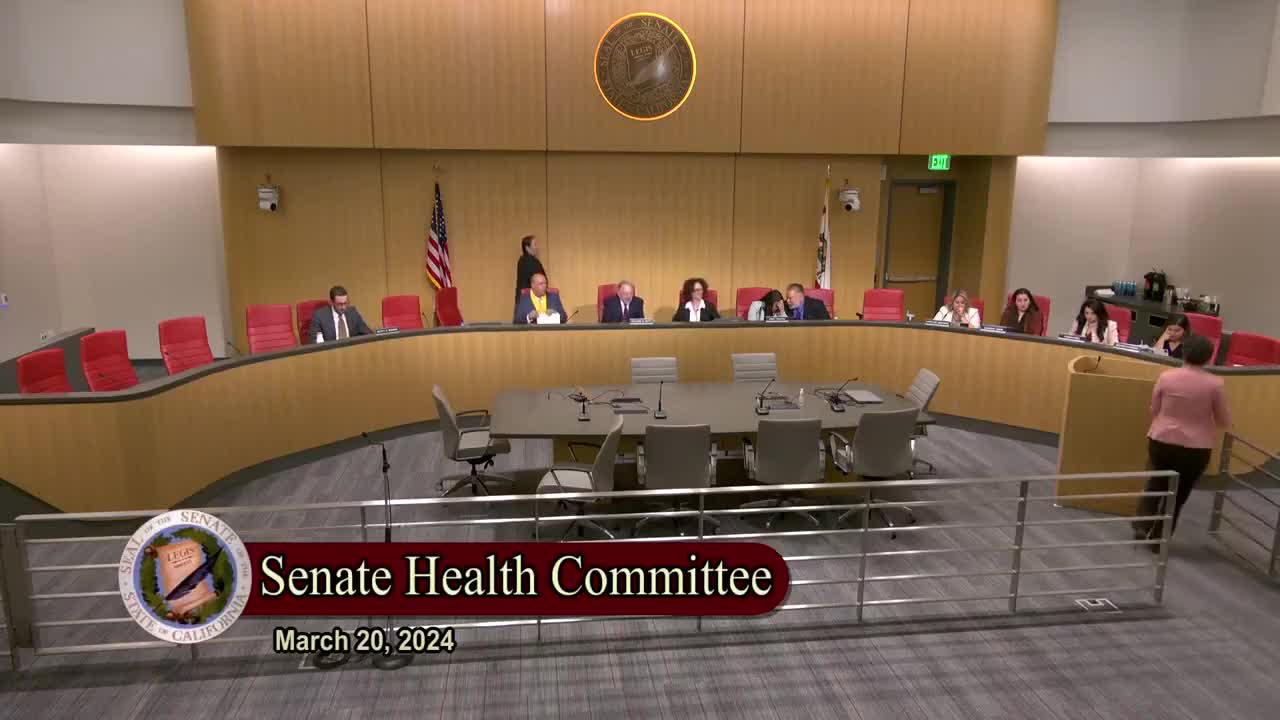 15MIN
Senate Standing Committee on Health
Bill Author
Bill Co-Author(s):
