SB 1052: Mobilehomes.
- Session Year: 2023-2024
- House: Senate
- Latest Version Date: 2024-02-08
Current Status:
Failed
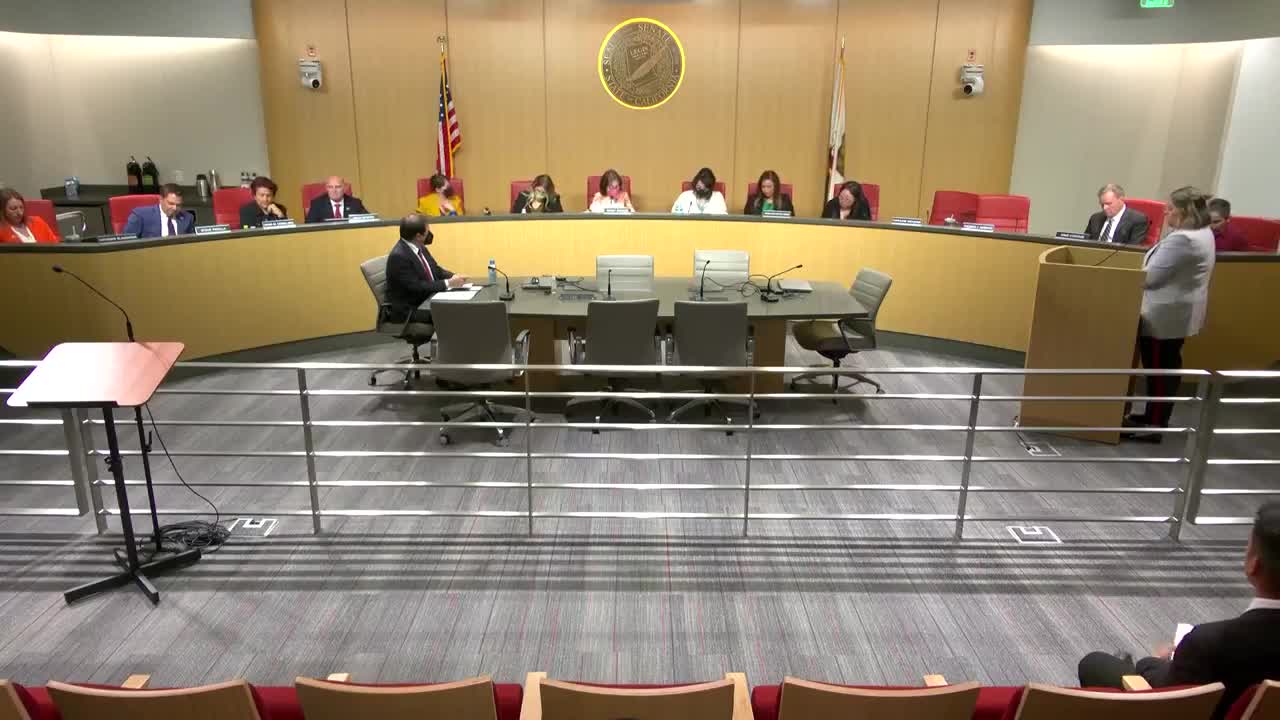
(2024-03-20: March 19 set for first hearing. Failed passage in committee. (Ayes 2. Noes 4. Page 3350.) Reconsideration granted.)
Introduced
In Committee
First Chamber
In Committee
Second Chamber
Enacted
Existing law, the Mobilehome Residency Law Protection Act, until January 1, 2027, establishes the Mobilehome Residency Law Protection Program within the Department of Housing and Community Development to assist in taking and resolving complaints from homeowners relating to the Mobilehome Residency Law. Existing law requires the department, in administering the program, to contract with one or more qualified and experienced nonprofit legal services providers and refer complaints selected for evaluation, and which are not resolved, to these nonprofit legal service providers for possible enforcement action, as specified.
This bill would require a nonprofit legal services provider contracted with the department to provide the department, in its role as the contract manager overseeing the performance of nonprofit legal services contracts, with full access to information regarding the status of each case and the services provided to complainants. The bill would prohibit laws relating to the attorney-client privilege or attorney work product doctrine that protect the confidentiality of communications or records from preventing disclosure, as provided. To the extent any information disclosed to the department includes confidential information subject to the attorney-client privilege or work product protection, the bill would prohibit any described disclosure from constituting a waiver of that privilege or protection. The bill would prohibit the department from disclosing any confidential information received, as specified, to anyone outside of the department. The bill would require the department to conduct regular surveys of complainants referred to a nonprofit legal services provider, as specified. The bill would require the department to monitor updates from a nonprofit legal services provider to detect any inappropriate denial of services and would require the department to respond immediately to correct any denials.
Beginning January 1, 2019, and each subsequent year thereafter, existing law requires the department to assess upon, and collect from, the management of a mobilehome park subject to the Mobilehome Residency Law, an annual registration fee of $10 for each permitted mobilehome lot located within the mobilehome park, to be paid at the time of payment of the annual operating fee imposed under the Mobilehome Parks Act. Existing law establishes the Mobilehome Dispute Resolution Fund for receipt of the receipt of moneys received pursuant to these provisions, and makes the fund available upon appropriation by the Legislature.
This bill would instead authorize the department to collect from the management of a mobilehome park the annual registration fee of $10, as described above, in the event that the department and the Department of Finance agree that the fund can cover only 6 months of expenditures.
Existing constitutional provisions require that a statute that limits the right of access to the meetings of public bodies or the writings of public officials and agencies be adopted with findings demonstrating the interest protected by the limitation and the need for protecting that interest.
This bill would make legislative findings to that effect.
(a)In administering the program, the department shall contract with one or more qualified and experienced nonprofit legal services providers and refer complaints selected for evaluation pursuant to subdivision (f) of Section 18802, and which are not resolved pursuant to subdivision (g) of Section 18802, to those nonprofit legal services providers for possible enforcement action.
(b)The department shall only contract with a nonprofit legal services provider that meets all of the following requirements:
(1)The nonprofit legal services provider has experience in handling complaints, disputes, or matters arising from the provisions of the Mobilehome Residency Law or matters related to general landlord-tenant law.
(2)The nonprofit legal services provider has experience in representing individuals in dispute resolution processes, state court proceedings, and appeals.
(3)The nonprofit legal services provider has sufficient staff and financial ability to provide for legal services to homeowners.
(c)A nonprofit legal services provider contracted with pursuant to this section shall maintain adequate legal malpractice insurance and shall agree to indemnify and hold harmless the state from any claims arising from the legal services provided pursuant to this part.
(d)(1)A nonprofit legal services provider contracted with pursuant to this section shall have the sole authority to determine which referred complaints will be addressed or pursued, based on the resources provided to it pursuant to the contract with the department.
(2)The nonprofit legal services provider shall inform the department of any complaints not handled due to a shortage of resources.
(e)A nonprofit legal services provider contracted with pursuant to this section shall not charge any fees to a homeowner for any services performed in connection with a complaint referred to it by the department.
(f)(1)A nonprofit legal services provider contracted with the department pursuant to this section shall provide the department, in its role as the contract manager overseeing the performance of nonprofit legal services contracts, with full access to information regarding the status of each case and the services provided to complainants.
(2)Laws relating to the attorney-client privilege or attorney work product doctrine that protect the confidentiality of communications or records shall not prevent disclosure pursuant to this subdivision.
(3)To the extent any information disclosed to the department includes confidential information subject to the attorney-client privilege or work product protection, disclosure pursuant to this subdivision shall not constitute a waiver of that privilege or protection.
(4)The department shall not disclose any confidential information received pursuant to this subdivision to anyone outside of the department.
(g)The department shall conduct regular surveys of complainants referred to a nonprofit legal services provider to determine whether the nonprofit legal services provider is in regular communication with the complainants and whether complainants have any concerns about the services provided by the nonprofit legal services provider.
(h)The department shall monitor updates from a nonprofit legal services provider to detect any inappropriate denial of services and shall respond immediately to correct any denials.
(f)(i)This section shall become operative on July 1, 2020.
SEC. 2.Section 18804 of the Health and Safety Code is amended to read:18804.(a)There is hereby established in the State Treasury the Mobilehome Dispute Resolution Fund. The fund shall receive all moneys derived pursuant to this part. Moneys in the fund shall be available, upon appropriation by the Legislature, for purposes of implementing this part.
(b)(1)Beginning January 1, 2019, and each subsequent year thereafter, the department shall assess upon, and collect from, the management of a mobilehome park subject to the Mobilehome Residency Law an annual registration fee of ten dollars ($10) for each permitted mobilehome lot within the mobilehome park. The department shall collect the registration fee at the same time as the annual operating permit fee imposed under the Mobilehome Parks Act (Part 2.1 (commencing with Section 18200)).(b)(1)The department may collect from the management of a mobilehome park subject to the Mobilehome Residency Law an annual registration fee of ten dollars ($10) for each permitted mobilehome lot within the mobilehome park in the event that the department and Department of Finance agree that the fund can cover only six months of expenditures.
(2)The department shall collect the registration fee pursuant to this paragraph at the same time as the annual operating permit fee imposed under the Mobilehome Parks Act (Part 2.1 (commencing with Section 18200) of Division 13 of the Health and Safety Code).
(2)(3)The Legislature finds and declares that the purpose of the fee imposed by this section is to cover the costs of the department incident to the investigation of mobilehome parks for purposes of enforcing the Mobilehome Residency Law.
(c)Notwithstanding any other law or local ordinance, rule, regulation, or initiative measure to the contrary, within 90 days from payment of the registration fee to the department, management may pass on all or a portion of the amount of the annual registration fee assessed under this section to the homeowners within the mobilehome park and may collect the amount or portion thereof from the homeowner with the rent payment and other charges due, except that management shall not aggregate or include the fee in the rent nor shall the amount exceed ten dollars ($10) per mobilehome space annually. The annual registration fee shall appear as a separate line item in the bill and shall be accompanied by a clear written description of the purpose of the charge to homeowners, along with contact information for the department.
SEC. 3.The Legislature finds and declares that Section 1 of this act, which amends Section 18803 of the Health and Safety Code, imposes a limitation on the publics right of access to the meetings of public bodies or the writings of public officials and agencies within the meaning of Section 3 of Article I of the California Constitution. Pursuant to that constitutional provision, the Legislature makes the following findings to demonstrate the interest protected by this limitation and the need for protecting that interest:
This act restricts public access to the personal information retained by the Department of Housing and Community Development to maintain trust and confidentiality in attorney-client interactions.
|
Date
|
Status
|
|---|---|
| Mar 20, 2024 | March 19 set for first hearing. Failed passage in committee. (Ayes 2. Noes 4. Page 3350.) Reconsideration granted. |
| Mar 6, 2024 | Set for hearing March 19. |
| Feb 21, 2024 | Referred to Coms. on HOUSING and JUD. |
| Feb 9, 2024 | From printer. May be acted upon on or after March 10. |
| Feb 8, 2024 | Introduced. Read first time. To Com. on RLS. for assignment. To print. |
|
Date
|
Description
|
Location
|
Votes
|
|
|---|---|---|---|---|
| Mar 19, 2024 | [First] hearing set for [03-20-2024]: Failed passage in Committee. Reconsideration granted | Senate Standing Committee on Housing |
Passed |
|
| Mar 19, 2024 | Do pass, but first be re-referred to the Committee on [Judiciary] | Senate Standing Committee on Housing |
Failed |
This list shows positions taken on this bill by organizations on the date displayed, which is linked to the original source.
Positions by individuals are not included.
|
Organization
|
Position
|
Date
|
|---|---|---|
| California Mobilehome Parkowners Alliance | * Support | Mar 19, 2024 |
| Golden State Manufactured-Home Owners League, Inc. (Gsmol) | * Against | Mar 19, 2024 |
| Golden State ManufacturedHome Owners League Inc Gsmol | * Against | Mar 19, 2024 |
| Western Manufactured Housing Communities Association | ** Support |
SENATE COMMITTEE ON HOUSING
Senator Nancy Skinner, Chair
2023 - 2024 Regular
Bill No: SB 1052 Hearing Date: 3/19/2024
Author: | Seyarto | ||
Version: | 2/8/2024 Introduced | ||
Urgency: | No | Fiscal: | Yes |
Consultant: | Mehgie Tabar | ||
SUBJECT: Mobilehomes
DIGEST: This bill would provide the Department of Housing and Community Development (HCD) access to information from nonprofit legal services providers (LSP) regarding the status of Mobilehome Residency Law Protection Program (MRLPP) cases and the services provided to complainants (i.e., information subject to attorney-client privilege or work product protection). This bill also suspends the $10 annual registration fee paid by homeowners, which covers the cost for HCD to enforce the Mobilehome Residency Law (MRL).
ANALYSIS:
Existing law:
- Regulates, pursuant to MRL, the rights, responsibilities, obligations, and relationships between mobilehome park management and park residents.
- Establishes the Mobilehome Residency Law Protection Act (MRLPA) and states the intent of the Legislature in enacting the MRLPA is to protect and safeguard the most vulnerable mobilehome homeowners by affording them an additional avenue to enforce violations of the MRL.
- Establishes the MRLPP within HCD. Requires HCD to provide assistance in taking complaints, and helping to resolve and coordinate the resolution of those complaints, from homeowners related to the MRL.
- Prohibits HCD from arbitrating, mediating, negotiating, or providing legal advice in connection with mobilehome park rent disputes, lease or rental agreements, or disputes arising from lease or rental agreements. Authorizes HCD to provide information on these issues to the complaining party, park management, or other responsible party.
- Requires HCD to refer any alleged violations of law or regulations within HCD’s jurisdiction to the Division of Codes and Standards within HCD. Authorizes HCD to refer any alleged violations of law or regulations that are not within HCD’s jurisdiction, including, but not limited to, rent disputes, criminal activity, or alleged discrimination, to the appropriate enforcement agency.
- Requires HCD to send a notice to the complaining party and the management or mobilehome park owner if the department selects a complaint for referral to and evaluation by a nonprofit LSP.
- Requires HCD to contract with one or more qualified and experienced nonprofit LSPs in administering the program.
- Prohibits a nonprofit LSP contracted with pursuant to the MRLPA from charging any fees to a homeowner for any services performed in connection with a complaint referred to it by the department.
- Beginning January 1, 2019, and each subsequent year thereafter, requires HCD to assess and collect from park management an annual registration fee of $10 per mobilehome lot within each mobilehome park subject to the MRL. Authorizes park management, notwithstanding any other law or local ordinance, rule, regulation, or initiative measure to the contrary, to pass on all or a portion of the amount of the annual registration fee to homeowners within the mobilehome park. Establishes the Mobilehome Dispute Resolution Fund in the State Treasury to receive all moneys collected via the MRLPA.
- Sunsets and repeals the MRLPA as of January 1, 2027.
This bill:
- Requires a nonprofit LSP contracted with HCD to provide HCD with full access to information regarding the status of each case and the services provided to complainants.
- Prohibits attorney-client privilege protections from preventing the disclosure of case information. To the extent any information disclosed to HCD includes confidential information subject to the attorney-client privilege, the bill would prohibit any described disclosure from constituting a waiver of that privilege or protection.
- Prohibits HCD from disclosing any confidential information received, as specified, to anyone outside of HCD.
- Requires HCD to conduct regular surveys of complainants referred to a nonprofit LSP, as specified.
- Requires HCD to monitor updates from a nonprofit LSP to detect any inappropriate denial of services and would require HCD to respond immediately to correct any denials.
- Authorizes HCD to collect the annual registration fee of $10 for MRLPP, as specified, only if HCD and the Department of Finance agree that the fund can cover only 6 months of expenditures.
COMMENTS:
- Author’s Statement. “SB 1052 will implement the State Auditor’s recommendations regarding the Mobilehome Residency Law Protection Program, which was established in 2020 and has amassed over $8 million in unspent funds collected as ‘lot fees’ from mobilehome park residents. It will eliminate the $10 monthly lot fee and provide greater oversight into whether residents’ complaints are adequately addressed. The recommendations were made after my request for audit last year was approved and fulfilled by the Joint Audit Committee of the State Assembly and Senate. The lot fees were not intended to become a burden but to be used to make it easier for residents of mobilehome parks to seek legal aid. The recommendations from the State Auditor are sound, save taxpayers money, and should be implemented immediately to protect California’s mobilehome park residents.”
- Background. More than 700,000 people live in California's approximately 4,700 mobilehome parks. Mobilehomes are not truly mobile, in that it is often cost prohibitive to relocate them. The cost to move a mobilehome ranges from $2,000 to upwards of $20,000 depending on the size of the home and the distance traveled. A mobilehome owner whose home is located in a mobilehome park does not own the land the unit sits on, and must pay rent and fees for the land and any community spaces.
The MRL extensively regulates the relationship between landlords and homeowners who occupy a mobilehome park. A limited number of provisions also apply to residents who rent, as opposed to own, their mobilehome. The MRL has two parts: Articles 1 through 8 apply to most mobilehome parks and Article 9 applies to resident-owned parks or parks, which are established as a subdivision, cooperative or condominium. The provisions cover many issues, including, but not limited to: 1) the rental and lease contract terms and specific conditions of receipt and delivery of written leases, park rules and regulations, and other mandatory notices; 2) mandatory notice and amendment procedures for mobilehome park rules and regulations; 3) mandatory notice of fees and charges, and increases or changes in them; and 4) specified conditions governing mobilehome park evictions. A dispute that arises pursuant to the application of the MRL generally must be resolved in a civil court of competent jurisdiction.
HCD oversees several areas of mobilehome law, including health and safety standards, registration and titling of mobilehomes and parks, and, through the Mobilehome Ombudsman, assists the public with questions or problems associated with various aspects of mobilehome law. The Mobilehome Ombudsman provides assistance by taking complaints and helping to resolve and coordinate the resolution of those complaints. However, the Ombudsman does not have enforcement authority for the MRL, and cannot arbitrate, mediate, negotiate, or provide legal advice on mobilehome park rent disputes, lease or rental agreements, but may provide general information on these issues.
HCD also inspects parks and mobilehomes for health and safety issues. Under the Mobilehome Park Maintenance (MPM) program, HCD annually inspects 5% of parks for compliance with health and safety requirements under the Health and Safety Code (Mobilehome Parks Act) and Title 25. The program is funded through a $4 fee, of which the property owner may charge half ($2) to the homeowners. In addition to the MPM program, HCD also responds to health and safety complaints under the Mobilehome Parks Act.
- Mobilehome Residency Law Protection Program. AB 3066 (Stone), Chapter 744, Statutes of 2018, established the MRLPP as a time-limited five-year pilot program to intake complaints regarding alleged violations of the MRL and refer complaints to LSPs. This bill extends the sunset date in the MRLPA by 3 years, thereby extending the MRLPP by the same length of time.
- HCD report to the Legislature on the MRLPP. The MRLPA required HCD to produce a report on the MRLPP. HCD included the report in its Annual Report 2021-22, reporting the following:
- HCD collected $10,878,986 in total revenue and expended $3,673,703 at the time of report publication. HCD notes that the final expenditure amount is expected to change due to the fact that nearly 70% of complaints referred to a LSP are currently still either in the complaint intake pipeline or receiving assistance, leaving the cases “open.”
- HCD reported receiving 3,561 total allegations, processing 2,999 of those allegations, referring 409 allegations to another enforcement agency, and referring 579 allegations to a LSP.
- The most common types of allegations received related to violations of the following:
- In-Writing and Required Contents of Rental Agreements (360 allegations),
- Seven Authorized Reasons for Termination of Tenancy (288 allegations),
- Notice for Amendments to Rules and Regulations (238 allegations),
- Trees and Driveways (149 allegations),
- Notice of Rent Increase (146 allegations),
- Utility Service Billing; Rate Schedule (145 allegations),
- Fees Charged for Unlisted Services Without Notice (144 allegations),
- Application of Rules and Regulations to Park Owners and Employees (136 allegations), and
- Allegations involving housing discrimination – referred to the California Civil Rights Department (124 allegations).
- Complaint outcomes.
Outcomes – Complaints Closed as of September 29, 2022 | # of Complaints | # of Allegations |
Closed anonymous complaint | 51 | 13 |
Complainant requested complaint to be closed | 312 | 468 |
Duplicate complaint | 241 | 212 |
No response/unable to reach complainant during intake | 335 | 557 |
Non-jurisdictional | 613 | 323 |
Complainant requested complaint to be closed during the documentation request or good faith discussions | 25 | 66 |
Complaint was not the most severe, deleterious, and economically material and economically impactful or non-jurisdictional after review of the documentation request | 269 | 545 |
Resolved during documentation | 3 | 7 |
No response to good faith inquiry | 56 | 138 |
Resolved during good faith discussions | 47 | 100 |
LSP referral: Closed due to no response from complainant | 10 | 19 |
LSP referral: Complainant requested complaint to be closed | 9 | 21 |
LSP referral: Complainant declined services (e.g. would not sign retainer, complainant retained their own attorney, complainant would not answer eligibility questions, complainant is no longer interested in receiving services) | 2 | 5 |
LSP referral: LSP reviewed the cases, applicable MRLPP statutes, and California law, and determined there are no viable causes of action | 3 | 16 |
LSP referral: LSP provided referral to complainant (e.g. lawyer referral service, another program) | 3 | 6 |
LSP referral: Counsel and advice provided | 27 | 95 |
LSP referral: Case resolved (e.g. settlement reached, unlawful detainer dismissed, agreement reached with park) | 14 | 38 |
- LSPs have authority to determine which complaints to address or pursue and undertake a variety of activities to address complaints. This includes performing interviews with homeowners, providing legal advice or referrals, conferring with park management, conducting onsite investigations, counseling and advice, and initiating judicial or administrative actions to resolve the MRLPP complaint as appropriate.
In addition, HCD was obligated to make recommendations for any statutory or administrative changes to the program. Recommendations include:
- Extend the pilot program for two years and authorize HCD to begin implementing a grant program with an inception date of January 1, 2026.
- Eliminate HCD’s obligation to make a good faith effort to select the most severe, deleterious, and materially and economically impactful alleged violations of the MRL.
- Eliminate the selection of a complaint sample that satisfies geographic representation of the state for evaluation.
- Eliminate the documentation request.
- Eliminate the 25-day good faith negotiation period.
- Expand the authority for LSPs and/or HCD to establish contracts to specifically provide outreach and education to homeowners within mobilehome parks regarding the MRL.
- Program Audit. On March 22, 2023 the Joint Legislative Audit Committee (JLAC) approved an audit of the MRLPP—Audit Request 2023-112—to review HCD’s administration of the program. The audit was finalized on December 19, 2023 and concluded the following:
- As the program changes, HCD must improve its oversight of the MRLPP.
- Attorney-related privileges limit HCD’s ability to effectively oversee the work done by contractors. The privileges prevent the LSPs from providing information that HCD needs to determine if the LSPs are serving referred complainants.
- HCD generally spent program funding appropriately, but has spent less than 40% of the program’s revenue it has collected and has consequently accumulated $8.3 million in unspent funds.
- Suspending the annual fee until the program’s next sunset date would reduce the unspent fund balance while still allowing sufficient funding for HCD to address complaints.
HCD generally agreed with the recommendations the Auditor made to improve its administration of the MRLPP and indicated it would take steps to implement them. However, HCD disagreed with the Audit’s recommendation that the Legislature suspend the program’s $10 fee.
- Allowing recent reforms to take effect. Just last year, AB 318 (Addis, Chapter 736, Statutes of 2023) extended the MRLPA and MRLPP by three years, through January 1, 2027, added an annual reporting requirement, and eliminated program requirements that created barriers for implementation. These changes, in part, also recognize that the program was in its infancy when the COVID-19 pandemic hit, and residents may not have known or utilized the program to its full potential given the state of the emergency.
As of January 1, 2024, MRLPA no longer requires:
- HCD to use good faith efforts to select the most severe, deleterious, and materially and economically impactful alleged violations of the MRL.
- HCD to select a sample of these complaints that satisfy geographic representation of the state for evaluation.
- Parties to negotiate in good faith to resolve the matter for 25 days prior to referral to an LSP.
Given that these program changes have only been in effect for 2 months, and that the audit was published after the legislation that created these changes (AB 318) passed, it is important to assess whether or not recent reforms will address the audit’s feedback. The newly required annual reporting requirement will allow for this assessment and help the legislature decide how to move forward with the MRLPP.
The committee may wish to consider the need for additional changes to the program until assessing the success of recent program reforms through HCD’s annual report (the first of which will be available after 2024).
- Resident protections. The MRLPP is meant to resolve certain disputes between mobilehome/manufactured homeowners in mobilehome parks and park owners/management, and the annual program fee is paid by homeowners. Despite HCD’s current surplus of unspent program funds, if there is an uptick in complaints by homeowners and there is not enough funds to cover the investigation, then HCD will not be able to enforce the MRL.
Suspending the program’s $10 annual fee has the potential to put mobilehome/ manufactured homeowner’s protections at risk.
To address committee concerns about the deleterious impacts that eliminating this program fee would have, mainly on lower income residents, the author will accept amendments to remove the provision that would suspend the MRLPP’s $10 annual program fee.
One of HCD’s challenges with expending program funds is the program’s dependency on contracts with nonprofit LSPs. LSPs do not need to contract with HCD to provide these types of services to residents, yet HCD needs LSPs to implement the program. Even if there is an increase in resident complaint cases, the unspent funds will remain unspent if HCD does not have contracts with enough LSPs to cover the workload. Recent reforms eliminated certain barriers for HCD when referring alleged MRL violations to LSPs, but contracting remains to be a challenge. (To eliminate some challenges HCD experiences when contracting with LSPs, there should be a consideration of converting the MRLPP into a grant program—to allow for more efficient expenditures. This would address the large amount of unspent program funds without eliminating the fee and continue to protect residents.)
- Preserving legal safeguards. This bill would provide HCD access to information from LSPs regarding the status of MRLPP cases and the services provided to complainants—information subject to attorney-client privilege or work product protection. This could further discourage LSPs from contracting with HCD over concern of being required to waive attorney-client privilege on resident cases. This provision is also problematic for residents, who deserve to have the same attorney-client privileges with LSPs as non-mobilehome residents.
The committee may wish to consider whether altering attorney-client privileges would hurt or help residents, particularly within a program intended to protect residents’ rights.
- Opposition. The Golden State Manufactured Home Owners League (GSMOL) writes in opposition to this bill, citing the intent of the program—to protect residents—and concerns that the bill would prevent residents from funding the program. GSMOL states the following “GSMOL and Mobilehome Residents OPPOSE SB 1052.” and “Mobilehome Residents want Governor Newsom’s and Assembly Member Dawn Addis’ law to be allowed to take effect, including the improvements to the Pilot Program.”
- Double-referral. This bill was also referred to the Senate Judiciary Committee.
Related Legislation:
AB 318 (Addis, Chapter 736, Statutes of 2023) — extended the sunset on the MRLPP, which provides for the administrative review and referral of complaints alleging violations of the MRL, from January 1, 2024 to January 1, 2027, and made several changes to the program, as specified.
AB 3066 (Stone, Chapter 774, Statutes of 2018) — established the MRLPP, beginning July 1, 2020, within HCD to help coordinate the resolution of complaints from homeowners relating to the MRL.
FISCAL EFFECT: Appropriation: No Fiscal Com.: Yes Local: No
POSITIONS: (Communicated to the committee before noon on Wednesday,
March 13, 2024.)
SUPPORT:
Western Manufactured Housing Communities Association (WMA)
OPPOSITION:
Golden State Manufactured Home Owners League
-- END --
Bill Author
Bill Co-Author(s):
