SB 23: Property taxation: exemption: disabled veteran homeowners.
- Session Year: 2025-2026
- House: Senate
- Latest Version Date: 2025-03-05
Current Status:
Failed
(2026-02-02: Returned to Secretary of Senate pursuant to Joint Rule 56.)
Introduced
In Committee
Awaiting First Chamber Vote
Passed First Chamber
In Committee
Awaiting Second Chamber Vote
Passed Second Chamber
Enacted
What does this bill do?
This bill would exempt from property tax the principal home of a veteran who is 100% disabled and the veteran’s spouse or unmarried surviving spouse. To qualify, the veteran must be blind in both eyes, have lost the use of two or more limbs, or be rated 100% disabled for a service‑related injury or disease. Claimants must provide U.S. Department of Veterans Affairs or military documentation to the county assessor, and the exemption replaces other property tax breaks for that same residence.
The summary is provided by generative AI which can make mistakes. For original language, please view the details in the table below.
The California Constitution provides that all property is taxable, and requires that it be assessed at the same percentage of fair market value, unless otherwise provided by the California Constitution or federal law. The California Constitution and existing property tax law provide various exemptions from taxation, including, among others, a disabled veterans exemption and a veterans organization exemption.
This bill would exempt from taxation, property owned by, and that constitutes the principal place of residence of, a veteran, the veterans spouse, or the veteran and the veterans spouse jointly, if the veteran is 100% disabled. The bill would provide an unmarried surviving spouse a property exemption in the same amount that they would have been entitled to if the veteran was alive and if certain conditions are met. The bill would require certain documentation to be provided to the county assessor to receive the exemption and would prohibit any other real property tax exemption from being granted to the claimant if receiving the exemption provided by the provisions of this bill. The bill would make these exemptions applicable for property tax lien dates occurring on or after January 1, 2025, but occurring before January 1, 2035. By imposing additional duties on local tax officials, the bill would impose a state-mandated local program.
Existing law requires any bill authorizing a new tax expenditure to contain, among other things, specific goals, purposes, and objectives that the tax expenditure will achieve, detailed performance indicators, and data collection requirements.
This bill would state that it is the intent of the Legislature to apply those requirements to the bill and would set forth specified information relating to those requirements.
The California Constitution requires the state to reimburse local agencies and school districts for certain costs mandated by the state. Statutory provisions establish procedures for making that reimbursement.
This bill would provide that, if the Commission on State Mandates determines that the bill contains costs mandated by the state, reimbursement for those costs shall be made pursuant to the statutory provisions noted above.
Existing law requires the state to reimburse local agencies annually for certain property tax revenues lost as a result of any exemption or classification of property for purposes of ad valorem property taxation.
This bill would provide that, notwithstanding those provisions, no appropriation is made and the state shall not reimburse local agencies for property tax revenues lost by them pursuant to the bill.
This bill would take effect immediately as a tax levy.
The California Constitution provides that all property is taxable, and requires that it be assessed at the same percentage of fair market value, unless otherwise provided by the California Constitution or federal law. The California Constitution and existing property tax law provide various exemptions from taxation, including, among others, a disabled veterans exemption and a veterans organization exemption.
This bill would exempt from taxation, property owned by, and that constitutes the principal place of residence of, a veteran, the veterans spouse, or the veteran and the veterans spouse jointly, if the veteran is 100% disabled. The bill would provide an unmarried surviving spouse a property exemption in the same amount that they would have been entitled to if the veteran was alive and if certain conditions are met. The bill would require certain documentation to be provided to the county assessor to receive the exemption and would prohibit any other real property tax exemption from being granted to the claimant if receiving the exemption provided by the provisions of this bill. The bill would make these exemptions applicable for property tax lien dates occurring on or after January 1, 2025, but occurring before January 1, 2035. By imposing additional duties on local tax officials, the bill would impose a state-mandated local program.
Existing law requires any bill authorizing a new tax expenditure to contain, among other things, specific goals, purposes, and objectives that the tax expenditure will achieve, detailed performance indicators, and data collection requirements.
This bill would state that it is the intent of the Legislature to apply those requirements to the bill and would set forth specified information relating to those requirements.
The California Constitution requires the state to reimburse local agencies and school districts for certain costs mandated by the state. Statutory provisions establish procedures for making that reimbursement.
This bill would provide that, if the Commission on State Mandates determines that the bill contains costs mandated by the state, reimbursement for those costs shall be made pursuant to the statutory provisions noted above.
Existing law requires the state to reimburse local agencies annually for certain property tax revenues lost as a result of any exemption or classification of property for purposes of ad valorem property taxation.
This bill would provide that, notwithstanding those provisions, no appropriation is made and the state shall not reimburse local agencies for property tax revenues lost by them pursuant to the bill.
This bill would take effect immediately as a tax levy.
The California Constitution provides that all property is taxable, and requires that it be assessed at the same percentage of fair market value, unless otherwise provided by the California Constitution or federal law. The California Constitution and existing property tax law provide various exemptions from taxation, including, among others, a disabled veterans exemption and a veterans organization exemption.
This bill would exempt from taxation, property owned by, and that constitutes the principal place of residence of, a veteran, the veterans spouse, or the veteran and the veterans spouse jointly, if the veteran is 100% disabled. The bill would provide an unmarried surviving spouse a property exemption in the same amount that they would have been entitled to if the veteran was alive and if certain conditions are met. The bill would require certain documentation to be provided to the county assessor to receive the exemption and would prohibit any other real property tax exemption from being granted to the claimant if receiving the exemption provided by the provisions of this bill. The bill would make these exemptions applicable for property tax lien dates occurring on or after January 1, 2025, but occurring before January 1, 2035. By imposing additional duties on local tax officials, the bill would impose a state-mandated local program.
Existing law requires any bill authorizing a new tax expenditure to contain, among other things, specific goals, purposes, and objectives that the tax expenditure will achieve, detailed performance indicators, and data collection requirements.
This bill would state that it is the intent of the Legislature to apply those requirements to the bill and would set forth specified information relating to those requirements.
The California Constitution requires the state to reimburse local agencies and school districts for certain costs mandated by the state. Statutory provisions establish procedures for making that reimbursement.
This bill would provide that, if the Commission on State Mandates determines that the bill contains costs mandated by the state, reimbursement for those costs shall be made pursuant to the statutory provisions noted above.
Existing law requires the state to reimburse local agencies annually for certain property tax revenues lost as a result of any exemption or classification of property for purposes of ad valorem property taxation.
This bill would provide that, notwithstanding those provisions, no appropriation is made and the state shall not reimburse local agencies for property tax revenues lost by them pursuant to the bill.
This bill would take effect immediately as a tax levy.
(a)(1)In lieu of the property exemption in Section 205.5, for property tax lien dates occurring on or after January 1, 2025, but occurring before January 1, 2035, property shall be exempt from taxation if all of the following conditions are met:
(A)The property is owned by by, and constitutes the principal place of residence of of, a veteran, the veterans spouse, or the veteran and the veterans spouse jointly.
(B)The veteran is blind in both eyes or has lost the use of two or more limbs as a result of injury or disease incurred in military service or the disability rating by the United States Department of Veterans Affairs or the military service from which the veteran was discharged is 100 percent.
(C)The veteran is totally disabled as a result of injury or disease incurred in military service.
(2)For purposes of this subdivision, property is deemed to be the principal place of residence of a veteran, disabled as described in paragraph (1), who is confined to a hospital or other care facility, if that property would be that veterans principal place of residence were it not for their confinement to a hospital or other care facility, provided that the residence is not rented or leased to a third party. For purposes of this paragraph, a family member who resides at the residence is not a third party.
(b)(1)Property that is owned by, and that constitutes the principal place of residence of, the unmarried surviving spouse of a deceased veteran is exempt from taxation in the same amount that the veteran or veterans spouse would have been entitled to in subdivision (a) if the veteran were alive, in the case of a veteran who was blind in both eyes, had lost the use of two or more limbs, or was totally disabled, provided that either of the following conditions is met:
(A)The deceased veteran, during their lifetime, qualified for the exemption pursuant to subdivision (a), or would have qualified for the exemption under the laws effective on January 1, 2025, except that the veteran died prior to January 1, 2025. The veteran must have been a resident of this state on January 1 of the year in which they died.
(B)The veteran died from an injury or disease that was service-connected as determined by the United States Department of Veterans Affairs, and the veteran was a resident of this state on January 1 of the year in which they died.
(2)(A)Property is deemed to be the principal place of residence of the unmarried surviving spouse of a deceased veteran, who is confined to a hospital or other care facility, if that property would be the unmarried surviving spouses principal place of residence were it not for their confinement to a hospital or other care facility, provided that the residence is not rented or leased to a person other than a member of the deceased veterans family, as defined by paragraph (4) of subsection (c) of Section 267 of the Internal Revenue Code.
(B)Property is deemed to be the principal place of residence of the unmarried surviving spouse of a deceased veteran only if the property was the principal place of residence of the veteran when they died.
(c)For purposes of this section, all of the following definitions apply:
(1)Blind in both eyes means having a visual acuity of 5/200 or less, or concentric contraction of the visual field to 5 degrees or less.
(2)Loss of the use of a limb means that the limb has been amputated or its use has been lost by reason of ankylosis, progressive muscular dystrophies, or paralysis.
(3)Totally disabled means the United States Department of Veterans Affairs or the military service from which the veteran was discharged has rated the disability at 100 percent or has rated the disability compensation at 100 percent by reason of being unable to secure or follow a substantially gainful occupation.
(4)Veteran means either of the following:
(A)A person who is serving in or has served in and has been discharged under other than dishonorable conditions from service in the United States Army, Navy, Air Force, Marine Corps, Coast Guard, or Space Force and served either in time of war or in time of peace in a campaign or expedition for which a medal has been issued by Congress, or in time of peace and because of a service-connected disability was released from active duty, and who has been determined by the United States Department of Veterans Affairs to be eligible for federal veterans health and medical benefits.
(B)Any person who would qualify as a veteran pursuant to subparagraph (A) except that they have, as a result of a service-connected injury or disease, died while on active duty in military service. The United States Department of Veterans Affairs shall determine whether an injury or disease is service connected.
(5)Property that is owned by a veteran or property that is owned by the veterans unmarried surviving spouse includes all of the following:
(A)Property owned by the veteran with the veterans spouse as a joint tenancy, tenancy in common, or as community property.
(B)Property owned by the veteran or the veterans spouse as separate property.
(C)Property owned with one or more other persons to the extent of the interest owned by the veteran, the veterans spouse, or both the veteran and the veterans spouse.
(D)Property owned by the veterans unmarried surviving spouse with one or more other persons to the extent of the interest owned by the veterans unmarried surviving spouse.
(E)So much of the property of a corporation as constitutes the principal place of residence of a veteran or a veterans unmarried surviving spouse when the veteran, or the veterans spouse, or the veterans unmarried surviving spouse is a shareholder of the corporation and the rights of shareholding entitle one to the possession of property, legal title to which is owned by the corporation. The exemption provided by this paragraph shall be shown on the local roll and shall reduce the full value of the corporate property. Notwithstanding any law or articles of incorporation or bylaws of a corporation described in this paragraph, any reduction of property taxes paid by the corporation shall reflect an equal reduction in any charges by the corporation to the person who, by reason of qualifying for the exemption, made possible the reduction for the corporation.
(d)In order to receive the exemption provided in this section, the claimant shall provide the county assessor documentation, including a letter from the United States Department of Veterans Affairs or the military service from which the veteran was discharged demonstrating the veterans disability rating, sufficient to demonstrate the claimants eligibility for the exemption.
(e)An exemption granted to a claimant pursuant to this section shall be in lieu of the veterans exemption provided by subdivisions (o), (p), (q), and (r) of Section 3 of Article XIII of the California Constitution, Section 205.5 of this code, and any other real property tax exemption to which the claimant may be entitled. Any other real property tax exemption shall not be granted to any other person with respect to the same residence for which an exemption has been granted pursuant to this section. However, if two or more veterans qualified pursuant to this section own a property in which they reside, each is entitled to the exemption to the extent of their interest.
(f)This section shall remain in effect only until January 1, 2036, and as of that date is repealed.
SEC. 2.(a)It is the intent of the Legislature to apply the requirements of Section 41 of the Revenue and Taxation Code with respect to the exemption under Section 205.5.1 of the Revenue and Taxation Code, as added by this act.
(b)The goal, purpose, and objective of the exemption is to reduce homelessness by providing a tax exemption to 100 percent disabled veteran homeowners.
(c)(1)To assist the Legislature in determining whether the exemption allowed by this act fulfills the goal, purpose, and objective as described in subdivision (b), the State Board of Equalization shall, to the extent data is available from county assessors, annually collect and report to the to the Legislature, pursuant to paragraph (2), data from county assessors to quantify the amount of assessed value exempted and the number and type of taxpayers granted this exemption.
(2)By June 1, 2025, and every June 1 thereafter until June 1, 2034, the State Board of Equalization shall report this information to the Legislature in accordance with Section 9795 of the Government Code.
SEC. 3.If the Commission on State Mandates determines that this act contains costs mandated by the state, reimbursement to local agencies and school districts for those costs shall be made pursuant to Part 7 (commencing with Section 17500) of Division 4 of Title 2 of the Government Code.
SEC. 4.Notwithstanding Section 2229 of the Revenue and Taxation Code, no appropriation is made by this act and the state shall not reimburse any local agency for any property tax revenues lost by it pursuant to this act.
SEC. 5.This act provides for a tax levy within the meaning of Article IV of the California Constitution and shall go into immediate effect.
(a)(1)In lieu of the property exemption in Section 205.5, for property tax lien dates occurring on or after January 1, 2025, but occurring before January 1, 2035, property shall be exempt from taxation if all of the following conditions are met:
(A)The property is owned by and constitutes the principal place of residence of a veteran, the veterans spouse, or the veteran and the veterans spouse jointly.
(B)The veteran is blind in both eyes or has lost the use of two or more limbs as a result of injury or disease incurred in military service and or the disability rating by the United States Department of Veterans Affairs or the military service from which the veteran was discharged is 100 percent.
(C)The veteran is totally disabled as a result of injury or disease incurred in military service.
(2)For purposes of this subdivision, property is deemed to be the principal place of residence of a veteran, disabled as described in paragraph (1), who is confined to a hospital or other care facility, if that property would be that veterans principal place of residence were it not for their confinement to a hospital or other care facility, provided that the residence is not rented or leased to a third party. For purposes of this paragraph, a family member who resides at the residence is not a third party.
(b)(1)Property that is owned by, and that constitutes the principal place of residence of, the unmarried surviving spouse of a deceased veteran is exempt from taxation in the same amount that the veteran or veterans spouse would have been entitled to in subdivision (a) if the veteran were alive, in the case of a veteran who was blind in both eyes, had lost the use of two or more limbs, or was totally disabled, provided that either of the following conditions is met:
(A)The deceased veteran, during their lifetime, qualified for the exemption pursuant to subdivision (a), or would have qualified for the exemption under the laws effective on January 1, 2025, except that the veteran died prior to January 1, 2025. The veteran must have been a resident of this state on January 1 of the year in which they died.
(B)The veteran died from an injury or disease that was service-connected as determined by the United States Department of Veterans Affairs, and the veteran was a resident of this state on January 1 of the year in which they died.
(2)(A)Property is deemed to be the principal place of residence of the unmarried surviving spouse of a deceased veteran, who is confined to a hospital or other care facility, if that property would be the unmarried surviving spouses principal place of residence were it not for their confinement to a hospital or other care facility, provided that the residence is not rented or leased to a person other than a member of the deceased veterans family, as defined by paragraph (4) of subsection (c) of Section 267 of the Internal Revenue Code.
(B)Property is deemed to be the principal place of residence of the unmarried surviving spouse of a deceased veteran only if the property was the principal place of residence of the veteran when they died.
(c)For purposes of this section, all of the following definitions apply:
(1)Blind in both eyes means having a visual acuity of 5/200 or less, or concentric contraction of the visual field to 5 degrees or less.
(2)Loss of the use of a limb means that the limb has been amputated or its use has been lost by reason of ankylosis, progressive muscular dystrophies, or paralysis.
(3)Totally disabled means the United States Department of Veterans Affairs or the military service from which the veteran was discharged has rated the disability at 100 percent or has rated the disability compensation at 100 percent by reason of being unable to secure or follow a substantially gainful occupation.
(4)Veteran means either of the following:
(A)A person who is serving in or has served in and has been discharged under other than dishonorable conditions from service in the United States Army, Navy, Air Force, Marine Corps, Coast Guard, or Space Force and served either in time of war or in time of peace in a campaign or expedition for which a medal has been issued by Congress, or in time of peace and because of a service-connected disability was released from active duty, and who has been determined by the United States Department of Veterans Affairs to be eligible for federal veterans health and medical benefits.
(B)Any person who would qualify as a veteran pursuant to subparagraph (A) except that they have, as a result of a service-connected injury or disease, died while on active duty in military service. The United States Department of Veterans Affairs shall determine whether an injury or disease is service connected.
(5)Property that is owned by a veteran or property that is owned by the veterans unmarried surviving spouse includes all of the following:
(A)Property owned by the veteran with the veterans spouse as a joint tenancy, tenancy in common, or as community property.
(B)Property owned by the veteran or the veterans spouse as separate property.
(C)Property owned with one or more other persons to the extent of the interest owned by the veteran, the veterans spouse, or both the veteran and the veterans spouse.
(D)Property owned by the veterans unmarried surviving spouse with one or more other persons to the extent of the interest owned by the veterans unmarried surviving spouse.
(E)So much of the property of a corporation as constitutes the principal place of residence of a veteran or a veterans unmarried surviving spouse when the veteran, or the veterans spouse, or the veterans unmarried surviving spouse is a shareholder of the corporation and the rights of shareholding entitle one to the possession of property, legal title to which is owned by the corporation. The exemption provided by this paragraph shall be shown on the local roll and shall reduce the full value of the corporate property. Notwithstanding any law or articles of incorporation or bylaws of a corporation described in this paragraph, any reduction of property taxes paid by the corporation shall reflect an equal reduction in any charges by the corporation to the person who, by reason of qualifying for the exemption, made possible the reduction for the corporation.
(d)In order to receive the exemption provided in this section, the claimant shall provide the county assessor documentation, including a letter from the United States Department of Veterans Affairs or the military service from which the veteran was discharged demonstrating the veterans disability rating, sufficient to demonstrate the claimants eligibility for the exemption.
(e)An exemption granted to a claimant pursuant to this section shall be in lieu of the veterans exemption provided by subdivisions (o), (p), (q), and (r) of Section 3 of Article XIII of the California Constitution, Section 205.5 of this code, and any other real property tax exemption to which the claimant may be entitled. Any other real property tax exemption shall not be granted to any other person with respect to the same residence for which an exemption has been granted pursuant to this section. However, if two or more veterans qualified pursuant to this section own a property in which they reside, each is entitled to the exemption to the extent of their interest.
(f)This section shall remain in effect only until January 1, 2036, and as of that date is repealed.
SEC. 2.(a)It is the intent of the Legislature to apply the requirements of Section 41 of the Revenue and Taxation Code with respect to the exemption under Section 205.5.1 of the Revenue and Taxation Code, as added by this act.
(b)The goal, purpose, and objective of the exemption is to reduce homelessness by providing a tax exemption to 100 percent disabled veteran homeowners.
(c)(1)To assist the Legislature in determining whether the exemption allowed by this act fulfills the goal, purpose, and objective as described in subdivision (b), the State Board of Equalization shall, to the extent data is available from county assessors, annually collect and report to the to the Legislature, pursuant to paragraph (2), data from county assessors to quantify the amount of assessed value exempted and the number and type of taxpayers granted this exemption.
(2)By June 1, 2025, and every June 1 thereafter until June 1, 2034, the State Board of Equalization shall report this information to the Legislature in accordance with Section 9795 of the Government Code.
SEC. 3.If the Commission on State Mandates determines that this act contains costs mandated by the state, reimbursement to local agencies and school districts for those costs shall be made pursuant to Part 7 (commencing with Section 17500) of Division 4 of Title 2 of the Government Code.
SEC. 4.Notwithstanding Section 2229 of the Revenue and Taxation Code, no appropriation is made by this act and the state shall not reimburse any local agency for any property tax revenues lost by it pursuant to this act.
SEC. 5.This act provides for a tax levy within the meaning of Article IV of the California Constitution and shall go into immediate effect.
(a)(1)In lieu of the property exemption in Section 205.5, for property tax lien dates occurring on or after January 1, 2025, but occurring before January 1, 2035, property shall be exempt from taxation if all of the following conditions are met:
(A)The property is owned by and constitutes the principal place of residence of a veteran, the veterans spouse, or the veteran and the veterans spouse jointly.
(B)The veteran is blind in both eyes or has lost the use of two or more limbs as a result of injury or disease incurred in military service and the disability rating by the United States Department of Veterans Affairs or the military service from which the veteran was discharged is 100 percent.
(C)The veteran is totally disabled as a result of injury or disease incurred in military service.
(2)For purposes of this subdivision, property is deemed to be the principal place of residence of a veteran, disabled as described in paragraph (1), who is confined to a hospital or other care facility, if that property would be that veterans principal place of residence were it not for their confinement to a hospital or other care facility, provided that the residence is not rented or leased to a third party. For purposes of this paragraph, a family member who resides at the residence is not a third party.
(b)(1)Property that is owned by, and that constitutes the principal place of residence of, the unmarried surviving spouse of a deceased veteran is exempt from taxation in the same amount that the veteran or veterans spouse would have been entitled to in subdivision (a) if the veteran were alive, in the case of a veteran who was blind in both eyes, had lost the use of two or more limbs, or was totally disabled, provided that either of the following conditions is met:
(A)The deceased veteran, during their lifetime, qualified for the exemption pursuant to subdivision (a), or would have qualified for the exemption under the laws effective on January 1, 2025, except that the veteran died prior to January 1, 2025. The veteran must have been a resident of this state on January 1 of the year in which they died.
(B)The veteran died from an injury or disease that was service-connected as determined by the United States Department of Veterans Affairs, and the veteran was a resident of this state on January 1 of the year in which they died.
(2)(A)Property is deemed to be the principal place of residence of the unmarried surviving spouse of a deceased veteran, who is confined to a hospital or other care facility, if that property would be the unmarried surviving spouses principal place of residence were it not for their confinement to a hospital or other care facility, provided that the residence is not rented or leased to a person other than a member of the deceased veterans family, as defined by paragraph (4) of subsection (c) of Section 267 of the Internal Revenue Code.
(B)Property is deemed to be the principal place of residence of the unmarried surviving spouse of a deceased veteran only if the property was the principal place of residence of the veteran when they died.
(c)For purposes of this section, all of the following definitions apply:
(1)Blind in both eyes means having a visual acuity of 5/200 or less, or concentric contraction of the visual field to 5 degrees or less.
(2)Loss of the use of a limb means that the limb has been amputated or its use has been lost by reason of ankylosis, progressive muscular dystrophies, or paralysis.
(3)Totally disabled means the United States Department of Veterans Affairs or the military service from which the veteran was discharged has rated the disability at 100 percent or has rated the disability compensation at 100 percent by reason of being unable to secure or follow a substantially gainful occupation.
(4)Veteran means either of the following:
(A)A person who is serving in or has served in and has been discharged under other than dishonorable conditions from service in the United States Army, Navy, Air Force, Marine Corps, Coast Guard, or Space Force and served either in time of war or in time of peace in a campaign or expedition for which a medal has been issued by Congress, or in time of peace and because of a service-connected disability was released from active duty, and who has been determined by the United States Department of Veterans Affairs to be eligible for federal veterans health and medical benefits.
(B)Any person who would qualify as a veteran pursuant to subparagraph (A) except that they have, as a result of a service-connected injury or disease, died while on active duty in military service. The United States Department of Veterans Affairs shall determine whether an injury or disease is service connected.
(5)Property that is owned by a veteran or property that is owned by the veterans unmarried surviving spouse includes all of the following:
(A)Property owned by the veteran with the veterans spouse as a joint tenancy, tenancy in common, or as community property.
(B)Property owned by the veteran or the veterans spouse as separate property.
(C)Property owned with one or more other persons to the extent of the interest owned by the veteran, the veterans spouse, or both the veteran and the veterans spouse.
(D)Property owned by the veterans unmarried surviving spouse with one or more other persons to the extent of the interest owned by the veterans unmarried surviving spouse.
(E)So much of the property of a corporation as constitutes the principal place of residence of a veteran or a veterans unmarried surviving spouse when the veteran, or the veterans spouse, or the veterans unmarried surviving spouse is a shareholder of the corporation and the rights of shareholding entitle one to the possession of property, legal title to which is owned by the corporation. The exemption provided by this paragraph shall be shown on the local roll and shall reduce the full value of the corporate property. Notwithstanding any law or articles of incorporation or bylaws of a corporation described in this paragraph, any reduction of property taxes paid by the corporation shall reflect an equal reduction in any charges by the corporation to the person who, by reason of qualifying for the exemption, made possible the reduction for the corporation.
(d)In order to receive the exemption provided in this section, the claimant shall provide the county assessor documentation, including a letter from the United States Department of Veterans Affairs or the military service from which the veteran was discharged demonstrating the veterans disability rating, sufficient to demonstrate the claimants eligibility for the exemption.
(e)An exemption granted to a claimant pursuant to this section shall be in lieu of the veterans exemption provided by subdivisions (o), (p), (q), and (r) of Section 3 of Article XIII of the California Constitution, Section 205.5 of this code, and any other real property tax exemption to which the claimant may be entitled. Any other real property tax exemption shall not be granted to any other person with respect to the same residence for which an exemption has been granted pursuant to this section. However, if two or more veterans qualified pursuant to this section own a property in which they reside, each is entitled to the exemption to the extent of their interest.
(f)This section shall remain in effect only until January 1, 2036, and as of that date is repealed.
SEC. 2.(a)It is the intent of the Legislature to apply the requirements of Section 41 of the Revenue and Taxation Code with respect to the exemption under Section 205.5.1 of the Revenue and Taxation Code, as added by this act.
(b)The goal, purpose, and objective of the exemption is to reduce homelessness by providing a tax exemption to 100 percent disabled veteran homeowners.
(c)(1)To assist the Legislature in determining whether the exemption allowed by this act fulfills the goal, purpose, and objective as described in subdivision (b), the State Board of Equalization shall, to the extent data is available from county assessors, annually collect and report to the to the Legislature, pursuant to paragraph (2), data from county assessors to quantify the amount of assessed value exempted and the number and type of taxpayers granted this exemption.
(2)By June 1, 2025, and every June 1 thereafter until June 1, 2034, the State Board of Equalization shall report this information to the Legislature in accordance with Section 9795 of the Government Code.
SEC. 3.If the Commission on State Mandates determines that this act contains costs mandated by the state, reimbursement to local agencies and school districts for those costs shall be made pursuant to Part 7 (commencing with Section 17500) of Division 4 of Title 2 of the Government Code.
SEC. 4.Notwithstanding Section 2229 of the Revenue and Taxation Code, no appropriation is made by this act and the state shall not reimburse any local agency for any property tax revenues lost by it pursuant to this act.
SEC. 5.This act provides for a tax levy within the meaning of Article IV of the California Constitution and shall go into immediate effect.
CORRECTIONS: HeadingLine 2.|
Date
|
Status
|
|---|---|
| Feb 2, 2026 | Returned to Secretary of Senate pursuant to Joint Rule 56. |
| Apr 28, 2025 | April 28 set for first hearing canceled at the request of author. |
| Mar 28, 2025 | Set for hearing April 28. |
| Mar 12, 2025 | From committee: Do pass and re-refer to Com. on M. & V.A. (Ayes 5. Noes 0.) (March 12). Re-referred to Com. on M. & V.A. |
| Mar 5, 2025 | From committee with author's amendments. Read second time and amended. Re-referred to Com. on REV. & TAX. |
| Feb 26, 2025 | Set for hearing March 12. |
| Feb 25, 2025 | From committee with author's amendments. Read second time and amended. Re-referred to Com. on REV. & TAX. |
| Jan 29, 2025 | Referred to Coms. on REV. & TAX. and M. & V.A. |
| Dec 3, 2024 | (Corrected December 12). |
| Dec 3, 2024 | From printer. May be acted upon on or after January 2. |
| Dec 2, 2024 | Introduced. Read first time. To Com. on RLS. for assignment. To print. |
|
Date
|
Description
|
Location
|
Votes
|
|
|---|---|---|---|---|
| Mar 12, 2025 | Do pass, but first be re-referred to the Committee on [Military and Veterans Affairs] | Senate Standing Committee on Revenue and Taxation |
Passed |
This list shows positions taken on this bill by organizations on the date displayed, which is linked to the original source.
Positions by individuals are not included.
|
Organization
|
Position
|
Date
|
|---|---|---|
| American Legion, Department Of California | ** Support | |
| Amvets, Department Of California | ** Support | |
| California Association Of Realtors | ** Support | |
| California State Commanders Veterans Council | ** Support | |
| California Tribal Business Alliance | ** Support | |
| Councilmember Luis Uribe, City of Riverbank | ** Support | |
| County of Monterey | ** Support | |
| Military Officers Association Of America, California Council Of Chapters | ** Support |
SENATE COMMITTEE ON REVENUE AND TAXATION
Senator Jerry McNerney, Chair
2025 - 2026 Regular
Bill No: | SB 23 | Hearing Date: | 3/12/25 |
Author: | Valladares | Tax Levy: | Yes |
Version: | 3/5/25 Amended | Fiscal: | Yes |
Consultant: | Grinnell | ||
Property taxation: exemption: disabled veteran homeowners
Enacts a full exemption from property tax for disabled veterans.
Background
The California Constitution provides that all property is taxable unless explicitly exempted by the Constitution or federal law. The Constitution limits the maximum amount of any ad valorem tax on real property at 1% of full cash value, plus any locally-authorized bonded indebtedness. Assessors reappraise property whenever it is purchased, newly constructed, or when ownership changes.
The Constitution allows the Legislature to partially or wholly exempt from property tax the value of a disabled veteran’s principal place of residence if the veteran has lost two or more limbs, is totally blind, or is totally disabled as a result of a service-connected injury. The taxpayer must have served in the United States Army, Navy, Air Force, Space Force, Coast Guard, or Marine Corps and been discharged under conditions other than dishonorable. This disabled veterans’ exemption is available to disabled veteran taxpayers or their unmarried surviving spouses, so long as the surviving spouse receives a U.S. Department of Veterans Affairs (USDVA) determination that the spouse’s death was service-connected. The exemption applies instead of other real property exemptions, like the homeowners’ exemption.
Current law defines “totally disabled” to mean that either the USDVA or the military service from which the veteran was discharged has rated the disability at 100 percent, or has rated the disability compensation at 100 percent by reason of being unable to secure or follow a substantially gainful occupation. State law also contains specific definitions for blindness and the loss of two or more limbs.
State law implementing the exemption doesn’t fully exclude the value of a disabled veteran’s property, instead enacting a partial exemption of $100,000 for disabled veteran taxpayers with annual household income of more than $40,000, or $150,000 for income lower than that amount, with each threshold adjusted for inflation by the Department of Industrial Relations using the California Consumer Price Index for all items. The current inflation-adjusted value of the exemption for 2025 is $175,298 for disabled veterans with income above $78,718, and $262,950 for those with income below $78,718.
Seeking to provide additional benefits for disabled veterans, the author wants to increase the amount of the existing disabled veterans' exemption from a partial exemption where taxpayers can claim one of two amounts based on income to a full exemption.
Proposed Law
SB 23 enacts a full exemption from property tax for disabled veterans, using the same definitions that apply to the existing partial exemption. SB 23 additionally requires the claimant seeking the exemption to provide the County Assessor with documentation, including a letter from USDVA or the military service from which the veteran was discharged to demonstrate the veteran’s disability rating and establish eligibility for the exemption. SB 23’s full exemption applies to lien dates starting on January 1, 2025 and ending January 1, 2035.
State Revenue Impact
The Board of Equalization (BOE) estimates that SB 23 will result in an additional property tax revenue loss of $192 million.
Comments
1. Purpose of the bill. According to the author, “SB 23 will exempt the primary residences of veterans who have received a 100% disability rating from the Department of Veterans Affairs from property taxes in the state of California. Additionally, it will extend the same exemption to an unmarried surviving spouse, providing the same benefit to that the veteran would have been entitled to if alive, provided they meet the necessary conditions. Current California law offers a property tax exemption to 100% disabled veterans, but it does not adequately address the financial challenges faced by the veteran community, particularly with ongoing rise in the cost of living. SB 23 aims to alleviate these challenges and provide financial stability to veterans who struggle to secure sufficient income to afford median home prices.”
2. No income test. Generally, property tax exemption amounts do not depend on the taxpayer’s income. However, the current bifurcated disabled veterans’ income-based exemption amounts were enacted by the Legislature when it allowed a greater exemption ($15,000 at the time) for disabled veterans with income sufficiently low to qualify for the Property Tax Postponement program (AB 955, Mangers, 1978). The Legislature maintained the distinction when it fixed the current exemption amounts (SB 320, Royce, 1989) and later applied inflation adjustment (SB 1362, Poochigian, 2000). SB 23’s larger exemption does not incorporate this distinction, instead allowing a full exemption for all qualified disabled veterans. As a result, the bill could increase the benefit received by those disabled veterans who have sufficient income to meet current tax obligations despite their disability. However, the bill’s greater disabled veterans’ exemption reduces taxes for those who have sacrificed greatly for their country. Furthermore, the benefit would likely be easier for Assessors to administer because they would no longer have to verify the taxpayer’s income. The Committee may wish to consider whether the amount of the disabled veterans’ exemption should depend on the disabled veteran’s income.
3. Coming home. According BOE, disabled veteran taxpayers claimed almost $12 billion in exemptions in 2023-24. Across California, the counties of San Diego (17,778), Riverside (12,394), San Bernardino (5,897), Los Angeles (5,634), and Sacramento (4,133) have the most disabled veterans’ exemptions claimed in 2025. The number of exemptions has increased significantly in recent years: in 2018, San Diego had only 6,490, Riverside only 4,895, Los Angeles 3,332, San Bernardino 2,817, and Sacramento 2,660.
4. Related legislation. Governor Newsom’s Proposed 2025-26 Budget proposes to exclude from income for state tax purposes: (1) retirement pay received by a taxpayer from the federal government for service in the uniformed services; and (2) annuity payments received by a qualified taxpayer pursuant to a Department of Defense Survivor Benefit Plan. The exemption would apply for up to $20,000 of military retirement income. Additionally, the exemption would be limited to taxpayers with up to $250,000 in income if filing jointly and up to $125,000 in income for single filers. The proposal is estimated to reduce revenues by $130 million in 2025-26 and by $85 million annually thereafter.
Additionally, the Committee will likely consider several measures adding or enhancing tax benefits for military veteran taxpayers:
- SB 1 (Seyarto) enacts the Military Services Retirement and Surviving Spouse Benefit Payment Act, which excludes two forms of military retirement income from state income tax. SB 1 is identical to the Governor’s Budget proposal. The Committee will also hear the measure at its 3/12/25 hearing.
- SB 56 (Seyarto) provides that service-connected disability benefits do not count toward income for the purposes of determining whether the higher or lower disabled veterans’ exemption amount applies. The Committee will also hear the measure at its 3/12/25 hearing.
- SB 296 (Archuleta) is substantively identical to this bill and is currently pending in the Senate Revenue & Taxation Committee.
- SCA 4 (Archuleta)/SB 623 (Archuleta) amends the California Constitution to allow additional property tax benefits for taxpayers eligible for the disabled veterans’ or veterans’ exemptions from property tax. SCA 4 is currently pending referral in the Senate Rules Committee.
5. Section 41. Section 41 of the Revenue and Taxation Code requires any bill enacting a new tax expenditure to contain, among other things, specific goals, purposes, and objectives that the tax expenditure will achieve and detailed performance indicators, along with data collection and reporting requirements (SB 1335, Leno, 2014). To comply with Section 41, SB 23:
- States that its goal, purpose, and objective is to reduce homelessness by providing a tax exemption to 100 percent disabled veteran homeowners.
- Directs BOE, to the extent data is available from County Assessors, to annually collect and report to the Legislature data from County Assessors to quantify the amount of assessed value exempted and the number and type of taxpayers granted this exemption.
6. Mandate. The California Constitution requires the state to reimburse local governments for the costs of new or expanded state mandated local programs. Because SB 23 expands the disabled veterans’ exemption, Legislative Counsel says that this bill imposes a new state mandate. The measure provides that the state shall not reimburse local agencies for property tax revenue losses, instead stating that should the Commission on State Mandates determine that the bill imposes a reimbursable mandate, reimbursement must be made pursuant to existing statutory provisions.
7. Coming and going. The Senate Rules Committee ordered a double referral of SB 23: first to the Revenue and Taxation Committee to consider its tax implications, and second to the Military and Veterans Affairs Committee.
Support and Opposition
(3/5/25)
Support: Councilmember Luis Uribe, City of Riverbank
American Legion, Department of California
AMVETS, Department of California
California Association of Realtors
California State Commanders Veterans Council
California Tribal Business Alliance
County of Monterey
Military Officers Association of America, California Council of Chapters
Five Individuals
Opposition: None submitted.
-- END --
SENATE COMMITTEE ON REVENUE AND TAXATION
Senator Jerry McNerney, Chair
2025 - 2026 Regular
Bill No: | SB 23 | Hearing Date: | 3/12/25 |
Author: | Valladares | Tax Levy: | Yes |
Version: | 3/5/25 Amended | Fiscal: | Yes |
Consultant: | Grinnell | ||
Property taxation: exemption: disabled veteran homeowners
Enacts a full exemption from property tax for disabled veterans.
Background
The California Constitution provides that all property is taxable unless explicitly exempted by the Constitution or federal law. The Constitution limits the maximum amount of any ad valorem tax on real property at 1% of full cash value, plus any locally-authorized bonded indebtedness. Assessors reappraise property whenever it is purchased, newly constructed, or when ownership changes.
The Constitution allows the Legislature to partially or wholly exempt from property tax the value of a disabled veteran’s principal place of residence if the veteran has lost two or more limbs, is totally blind, or is totally disabled as a result of a service-connected injury. The taxpayer must have served in the United States Army, Navy, Air Force, Space Force, Coast Guard, or Marine Corps and been discharged under conditions other than dishonorable. This disabled veterans’ exemption is available to disabled veteran taxpayers or their unmarried surviving spouses, so long as the surviving spouse receives a U.S. Department of Veterans Affairs (USDVA) determination that the spouse’s death was service-connected. The exemption applies instead of other real property exemptions, like the homeowners’ exemption.
Current law defines “totally disabled” to mean that either the USDVA or the military service from which the veteran was discharged has rated the disability at 100 percent, or has rated the disability compensation at 100 percent by reason of being unable to secure or follow a substantially gainful occupation. State law also contains specific definitions for blindness and the loss of two or more limbs.
State law implementing the exemption doesn’t fully exclude the value of a disabled veteran’s property, instead enacting a partial exemption of $100,000 for disabled veteran taxpayers with annual household income of more than $40,000, or $150,000 for income lower than that amount, with each threshold adjusted for inflation by the Department of Industrial Relations using the California Consumer Price Index for all items. The current inflation-adjusted value of the exemption for 2025 is $175,298 for disabled veterans with income above $78,718, and $262,950 for those with income below $78,718.
Seeking to provide additional benefits for disabled veterans, the author wants to increase the amount of the existing disabled veterans' exemption from a partial exemption where taxpayers can claim one of two amounts based on income to a full exemption.
Proposed Law
SB 23 enacts a full exemption from property tax for disabled veterans, using the same definitions that apply to the existing partial exemption. SB 23 additionally requires the claimant seeking the exemption to provide the County Assessor with documentation, including a letter from USDVA or the military service from which the veteran was discharged to demonstrate the veteran’s disability rating and establish eligibility for the exemption. SB 23’s full exemption applies to lien dates starting on January 1, 2025 and ending January 1, 2035.
State Revenue Impact
Pending.
Comments
1. Purpose of the bill. According to the author, “SB 23 will exempt the primary residences of veterans who have received a 100% disability rating from the Department of Veterans Affairs from property taxes in the state of California. Additionally, it will extend the same exemption to an unmarried surviving spouse, providing the same benefit to that the veteran would have been entitled to if alive, provided they meet the necessary conditions. Current California law offers a property tax exemption to 100% disabled veterans, but it does not adequately address the financial challenges faced by the veteran community, particularly with ongoing rise in the cost of living. SB 23 aims to alleviate these challenges and provide financial stability to veterans who struggle to secure sufficient income to afford median home prices.”
2. No income test. Generally, property tax exemption amounts do not depend on the taxpayer’s income. However, the current bifurcated disabled veterans’ income-based exemption amounts were enacted by the Legislature when it allowed a greater exemption ($15,000 at the time) for disabled veterans with income sufficiently low to qualify for the Property Tax Postponement program (AB 955, Mangers, 1978). The Legislature maintained the distinction when it fixed the current exemption amounts (SB 320, Royce, 1989) and later applied inflation adjustment (SB 1362, Poochigian, 2000). SB 23’s larger exemption does not incorporate this distinction, instead allowing a full exemption for all qualified disabled veterans. As a result, the bill could increase the benefit received by those disabled veterans who have sufficient income to meet current tax obligations despite their disability. However, the bill’s greater disabled veterans’ exemption reduces taxes for those who have sacrificed greatly for their country. Furthermore, the benefit would likely be easier for Assessors to administer because they would no longer have to verify the taxpayer’s income. The Committee may wish to consider whether the amount of the disabled veterans’ exemption should depend on the disabled veteran’s income.
3. Coming home. According to the Board of Equalization (BOE), disabled veteran taxpayers claimed almost $12 billion in exemptions in 2023-24. Across California, the counties of San Diego (17,778), Riverside (12,394), San Bernardino (5,897), Los Angeles (5,634), and Sacramento (4,133) have the most disabled veterans’ exemptions claimed in 2025. The number of exemptions has increased significantly recent years: in 2018, San Diego had only 6,490, Riverside only 4,895, Los Angeles 3,332, San Bernardino 2,817, and Sacramento 2,660.
4. Related legislation. Governor Newsom’s Proposed 2025-26 Budget proposes to exclude from income for state tax purposes: (1) retirement pay received by a taxpayer from the federal government for service in the uniformed services; and (2) annuity payments received by a qualified taxpayer pursuant to a Department of Defense Survivor Benefit Plan. The exemption would apply for up to $20,000 of military retirement income. Additionally, the exemption would be limited to taxpayers with up to $250,000 in income if filing jointly and up to $125,000 in income for single filers. The proposal is estimated to reduce revenues by $130 million in 2025-26 and by $85 million annually thereafter.
Additionally, the Committee will likely consider several measures adding or enhancing tax benefits for military veteran taxpayers:
- SB 1 (Seyarto) enacts the Military Services Retirement and Surviving Spouse Benefit Payment Act, which excludes two forms of military retirement income from state income tax. SB 1 is identical to the Governor’s Budget proposal. The Committee will also hear the measure at its 3/12/25 hearing.
- SB 56 (Seyarto) provides that service-connected disability benefits do not count toward income for the purposes of determining whether the higher or lower disabled veterans’ exemption amount applies. The Committee will also hear the measure at its 3/12/25 hearing.
- SB 296 (Archuleta) is substantively identical to this bill and is currently pending in the Senate Revenue & Taxation Committee.
- SCA 4 (Archuleta)/SB 623 (Archuleta) amends the California Constitution to allow additional property tax benefits for taxpayers eligible for the disabled veterans’ or veterans’ exemptions from property tax. SCA 4 is currently pending referral in the Senate Rules Committee.
5. Section 41. Section 41 of the Revenue and Taxation Code requires any bill enacting a new tax expenditure to contain, among other things, specific goals, purposes, and objectives that the tax expenditure will achieve and detailed performance indicators, along with data collection and reporting requirements (SB 1335, Leno, 2014). To comply with Section 41, SB 23:
- States that its goal, purpose, and objective is to reduce homelessness by providing a tax exemption to 100 percent disabled veteran homeowners.
- Directs BOE, to the extent data is available from County Assessors, to annually collect and report to the Legislature data from County Assessors to quantify the amount of assessed value exempted and the number and type of taxpayers granted this exemption.
6. Mandate. The California Constitution requires the state to reimburse local governments for the costs of new or expanded state mandated local programs. Because SB 23 expands the disabled veterans’ exemption, Legislative Counsel says that this bill imposes a new state mandate. The measure provides that the state shall not reimburse local agencies for property tax revenue losses, instead stating that should the Commission on State Mandates determine that the bill imposes a reimbursable mandate, reimbursement must be made pursuant to existing statutory provisions.
7. Coming and going. The Senate Rules Committee ordered a double referral of SB 23: first to the Revenue and Taxation Committee to consider its tax implications, and second to the Military and Veterans Affairs Committee.
Support and Opposition
(3/5/25)
Support: Councilmember Luis Uribe, City of Riverbank
American Legion, Department of California
AMVETS, Department of California
California Association of Realtors
California State Commanders Veterans Council
County of Monterey
Military Officers Association of America, California Council of Chapters
Five Individuals
Opposition: None submitted.
-- END --
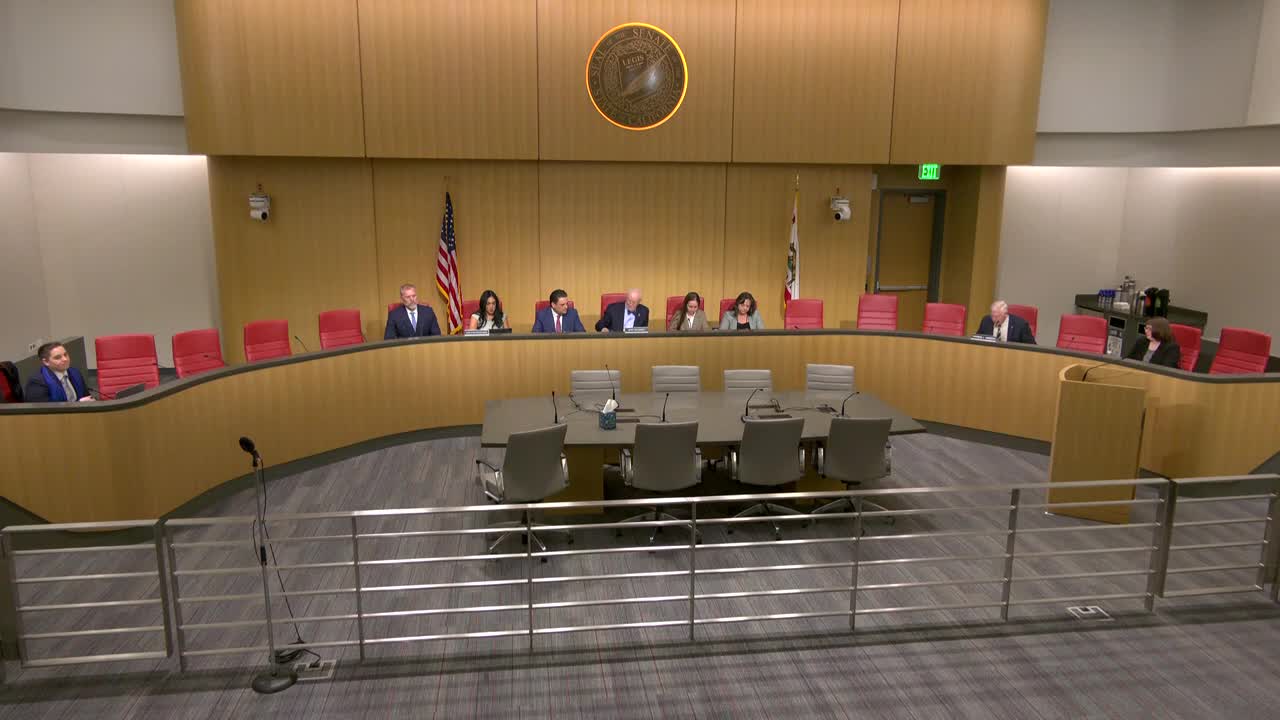
Discussed in Hearing
 13MIN