SB 797: Electric utility distribution and transmission system facilities: undergrounding and insulation.
- Session Year: 2025-2026
- House: Senate
- Latest Version Date: 2025-05-06
Current Status:
Failed
(2026-02-02: Returned to Secretary of Senate pursuant to Joint Rule 56.)
Introduced
In Committee
Awaiting First Chamber Vote
Passed First Chamber
In Committee
Awaiting Second Chamber Vote
Passed Second Chamber
Enacted
Existing law vests the Public Utilities Commission with regulatory authority over public utilities, including electrical corporations. Under existing law, it is the policy of the state that each electrical corporation continue to operate its electric distribution grid in its service territory and to do so in a safe, reliable, efficient, and cost-effective manner.
This bill would require the commission, until January 1, 2031, to form a working group to study the cost of undergrounding and insulating overhead electric utility distribution system facilities or transmission system facilities, compile wildfire mitigation reports of electric utilities, and provide the Legislature, on or before July 1, 2027, with a plan on how to most effectively invest in undergrounding and insulating those facilities or how to otherwise support electrical corporations, as provided.
The California Constitution requires the state to reimburse local agencies and school districts for certain costs mandated by the state. Statutory provisions establish procedures for making that reimbursement.This bill would provide that no reimbursement is required by this act for a specified reason.The California Environmental Quality Act (CEQA) requires a lead agency, as defined, to prepare, or cause to be prepared, and certify the completion of an environmental impact report on a project that it proposes to carry out or approve that may have a significant effect on the environment or to adopt a negative declaration if it finds that the project will not have that effect. CEQA also requires a lead agency to prepare a mitigated negative declaration for a project that may have a significant effect on the environment if revisions in the project would avoid or mitigate that effect and there is no substantial evidence that the project, as revised, would have a significant effect on the environment.
CEQA requires the Office of Land Use and Climate Innovation to prepare and develop, and for the Secretary of the Natural Resources Agency to certify and adopt, proposed guidelines for the implementation of CEQA by public agencies that are required to include a list of classes of projects that have been determined not to have a significant effect on the environment and exempts those classes of projects from CEQA, commonly known as categorical exemptions. Pursuant to its authority, the secretary has adopted a categorical exemption for the replacement or reconstruction of existing structures and facilities where the new structure will be located on the same site as the structure replaced and will have substantially the same purpose and capacity as the structure replaced, including, but not limited to, conversion of overhead electric utility distribution system facilities to underground, as provided.
This bill, until the submission of a prescribed plan on how to most effectively invest in undergrounding and insulating overhead electric utility distribution system facilities or transmission system facilities, but no later than July 1, 2027, would exempt from CEQA a project for the conversion of those facilities to underground and the insulation of those facilities. facilities, unless the project is located in an environmentally sensitive area, as defined. Because a lead agency would be required to determine if a project qualifies for this exemption, the bill would impose a state-mandated local program.
Existing law vests the Public Utilities Commission with regulatory authority over public utilities, including electrical corporations. Under existing law, it is the policy of the state that each electrical corporation continue to operate its electric distribution grid in its service territory and to do so in a safe, reliable, efficient, and cost-effective manner.
This bill would require the commission, until January 1, 2031, to form a working group to study the cost of undergrounding and insulating overhead electric utility distribution system facilities or transmission system facilities, compile wildfire mitigation reports of electric utilities, and provide the Legislature, on or before July 1, 2027, with a plan on how to most effectively invest in undergrounding and insulating those facilities or how to otherwise support electrical corporations, as provided.
The California Constitution requires the state to reimburse local agencies and school districts for certain costs mandated by the state. Statutory provisions establish procedures for making that reimbursement.
This bill would provide that no reimbursement is required by this act for a specified reason.
The California Environmental Quality Act (CEQA) requires a lead agency, as defined, to prepare, or cause to be prepared, and certify the completion of an environmental impact report on a project that it proposes to carry out or approve that may have a significant effect on the environment or to adopt a negative declaration if it finds that the project will not have that effect. CEQA also requires a lead agency to prepare a mitigated negative declaration for a project that may have a significant effect on the environment if revisions in the project would avoid or mitigate that effect and there is no substantial evidence that the project, as revised, would have a significant effect on the environment.
CEQA requires the Office of Land Use and Climate Innovation to prepare and develop, and for the Secretary of the Natural Resources Agency to certify and adopt, proposed guidelines for the implementation of CEQA by public agencies that are required to include a list of classes of projects that have been determined not to have a significant effect on the environment and exempts those classes of projects from CEQA, commonly known as categorical exemptions. Pursuant to its authority, the secretary has adopted a categorical exemption for the replacement or reconstruction of existing structures and facilities where the new structure will be located on the same site as the structure replaced and will have substantially the same purpose and capacity as the structure replaced, including, but not limited to, conversion of overhead electric utility distribution system facilities to underground, as provided.
This bill, until the submission of a prescribed plan on how to most effectively invest in undergrounding and insulating overhead electric utility distribution system facilities or transmission system facilities, but no later than July 1, 2027, would exempt from CEQA a project for the conversion of those facilities to underground and the insulation of those facilities. Because a lead agency would be required to determine if a project qualifies for this exemption, the bill would impose a state-mandated local program.
Existing law vests the Public Utilities Commission with regulatory authority over public utilities, including electrical corporations. Under existing law, it is the policy of the state that each electrical corporation continue to operate its electric distribution grid in its service territory and to do so in a safe, reliable, efficient, and cost-effective manner.
This bill would require the commission, until January 1, 2031, to form a working group to study the cost of undergrounding and insulating overhead electric utility distribution system facilities or transmission system facilities, compile wildfire mitigation reports of electric utilities, and provide the Legislature, on or before July 1, 2027, with a plan on how to most effectively invest in undergrounding and insulating those facilities or how to otherwise support electrical corporations, as provided.
The California Constitution requires the state to reimburse local agencies and school districts for certain costs mandated by the state. Statutory provisions establish procedures for making that reimbursement.
This bill would provide that no reimbursement is required by this act for a specified reason.
Existing law requires each planning agency to prepare, and the legislative body of each county and city to adopt, a comprehensive, long-term general plan for the physical development of the county or city, as specified.This bill would make nonsubstantive changes to those provisions.Existing law requires each planning agency to prepare, and the legislative body of each county and city to adopt, a comprehensive, long-term general plan for the physical development of the county or city, as specified.
This bill would make nonsubstantive changes to those provisions.
(a)The commission shall form a working group to study the cost of undergrounding and insulating electric utility distribution system facilities or transmission system facilities, compile wildfire mitigation reports of electrical utilities, and provide the Legislature, on or before July 1, 2027, with a plan on how to most effectively invest in undergrounding and insulating those facilities or how to provide support to electrical corporations in order to prevent fires in lands classified as very high fire hazard severity zones, as defined in Section 51177 of the Government Code, in lands designated as Wildland Urban Interface Fire Areas, as described in Section 13108.5.1 of the Health and Safety Code, and in state forests, as defined in Section 4643 of the Public Resources Code.
(b)(1)The plan to be submitted pursuant to subdivision (a) shall be submitted in compliance with Section 9795 of the Government Code.
(2)Pursuant to Section 10231.5 of the Government Code, this section is repealed on January 1, 2031.
SEC. 3.No reimbursement is required by this act pursuant to Section 6 of Article XIIIB of the California Constitution because a local agency or school district has the authority to levy service charges, fees, or assessments sufficient to pay for the program or level of service mandated by this act, within the meaning of Section 17556 of the Government Code.(a)This division does not apply to a project for the conversion of overhead electric utility distribution system facilities or transmission system facilities to underground or the insulation of electric utility distribution system facilities or transmission system facilities. facilities, except that this division shall apply to the project if the project is located in an environmentally sensitive area, as defined in Section 30107.5.
(b)This section shall become inoperative upon submission of the plan pursuant to Section 279 of the Public Utilities Code, but no later than July 1, 2027, and as of January 1, 2028, is repealed.
SEC. 2.Section 279 is added to the Public Utilities Code, to read:279.(a)The commission shall form a working group to study the cost of undergrounding and insulating electric utility distribution system facilities or transmission system facilities, compile wildfire mitigation reports of electrical utilities, and provide the Legislature, on or before July 1, 2027, with a plan on how to most effectively invest in undergrounding and insulating those facilities or how to provide support to electrical corporations in order to prevent fires in lands classified as very high fire hazard severity zones, as defined in Section 51177 of the Government Code, in lands designated as Wildland Urban Interface Fire Areas, as described in Section 13108.5.1 of the Health and Safety Code, and in state forests, as defined in Section 4643 of the Public Resources Code.
(b)(1)The plan to be submitted pursuant to subdivision (a) shall be submitted in compliance with Section 9795 of the Government Code.
(2)Pursuant to Section 10231.5 of the Government Code, this section is repealed on January 1, 2031.
SEC. 3.No reimbursement is required by this act pursuant to Section 6 of Article XIIIB of the California Constitution because a local agency or school district has the authority to levy service charges, fees, or assessments sufficient to pay for the program or level of service mandated by this act, within the meaning of Section 17556 of the Government Code.
(a)This division does not apply to a project for the conversion of overhead electric utility distribution system facilities or transmission system facilities to underground or the insulation of electric utility distribution system facilities or transmission system facilities.
(b)This section shall become inoperative upon submission of the plan pursuant to Section 279 of the Public Utilities Code, but no later than July 1, 2027, and as of January 1, 2028, is repealed.
SEC. 2.Section 279 is added to the Public Utilities Code, to read:279.(a)The commission shall form a working group to study the cost of undergrounding and insulating electric utility distribution system facilities or transmission system facilities, compile wildfire mitigation reports of electrical utilities, and provide the Legislature, on or before July 1, 2027, with a plan on how to most effectively invest in undergrounding and insulating those facilities or how to provide support to electrical corporations in order to prevent fires in lands classified as very high fire hazard severity zones, as defined in Section 51177 of the Government Code, in lands designated as Wildland Urban Interface Fire Areas, as described in Section 13108.5.1 of the Health and Safety Code, and in state forests, as defined in Section 4643 of the Public Resources Code.
(b)(1)The plan to be submitted pursuant to subdivision (a) shall be submitted in compliance with Section 9795 of the Government Code.
(2)Pursuant to Section 10231.5 of the Government Code, this section is repealed on January 1, 2031.
SEC. 3.No reimbursement is required by this act pursuant to Section 6 of Article XIIIB of the California Constitution because a local agency or school district has the authority to levy service charges, fees, or assessments sufficient to pay for the program or level of service mandated by this act, within the meaning of Section 17556 of the Government Code.
SECTION 1.Section 65300 of the Government Code is amended to read:65300.Each planning agency shall prepare, and the legislative body of each county and city shall adopt, a comprehensive, long-term general plan for the physical development of the county or city, and of any land outside its boundaries that in the planning agencys judgment bears relation to its planning. Chartered cities shall adopt general plans that contain the mandatory elements specified in Section 65302.Each planning agency shall prepare prepare, and the legislative body of each county and city shall adopt adopt, a comprehensive, long-term general plan for the physical development of the county or city, and of any land outside its boundaries which that in the planning agencys judgment bears relation to its planning. Chartered cities shall adopt general plans which that contain the mandatory elements specified in Section 65302.
|
Date
|
Status
|
|---|---|
| Feb 2, 2026 | Returned to Secretary of Senate pursuant to Joint Rule 56. |
| May 23, 2025 | May 23 hearing: Held in committee and under submission. |
| May 20, 2025 | Set for hearing May 23. |
| May 19, 2025 | May 19 hearing: Placed on APPR. suspense file. |
| May 9, 2025 | Set for hearing May 19. |
| May 6, 2025 | Read second time and amended. Re-referred to Com. on APPR. |
| May 5, 2025 | From committee: Do pass as amended and re-refer to Com. on APPR. (Ayes 13. Noes 1. Page 935.) (April 29). |
| Apr 23, 2025 | From committee: Do pass and re-refer to Com. on E., U & C. (Ayes 8. Noes 0. Page 867.) (April 23). Re-referred to Com. on E., U & C. |
| Apr 22, 2025 | Set for hearing April 29 in E., U & C. pending receipt. |
| Apr 9, 2025 | From committee with author's amendments. Read second time and amended. Re-referred to Com. on E.Q. |
| Apr 4, 2025 | Set for hearing April 23. |
| Apr 2, 2025 | Re-referred to Coms. on E.Q. and E., U & C. |
| Mar 26, 2025 | From committee with author's amendments. Read second time and amended. Re-referred to Com. on RLS. |
| Mar 12, 2025 | Referred to Com. on RLS. |
| Feb 24, 2025 | Read first time. |
| Feb 24, 2025 | From printer. May be acted upon on or after March 24. |
| Feb 21, 2025 | Introduced. To Com. on RLS. for assignment. To print. |
|
Date
|
Description
|
Location
|
Votes
|
|
|---|---|---|---|---|
| May 19, 2025 | Placed on suspense file | Senate Standing Committee on Appropriations |
Passed |
|
| Apr 29, 2025 | Do pass as amended, but first amend, and re-refer to the Committee on [Appropriations] | Senate Standing Committee on Energy, Utilities and Communications |
Passed |
|
| Apr 23, 2025 | Do pass, but first be re-referred to the Committee on [Energy, Utilities and Communications] | Senate Standing Committee on Environmental Quality |
Passed |
This list shows positions taken on this bill by organizations on the date displayed, which is linked to the original source.
Positions by individuals are not included.
|
Organization
|
Position
|
Date
|
|---|---|---|
| North American Wood Pole Council | ** Against | |
| Treated Wood Council | ** Against | |
| Western Wood Preservers Institute | ** Against |
SENATE COMMITTEE ON
Senator Anna Caballero, Chair
2025 - 2026 Regular Session
SB 797 (Choi) - Electric utility distribution and transmission system facilities: undergrounding and insulation
Version: | Policy Vote: |
Urgency: | Mandate: |
Hearing Date: | Consultant: |
Bill Summary:
This bill would require the California Public Utilities Commission (CPUC) to form a working group to study the cost of undergrounding and insulating overhead electric utility distribution system facilities or transmission system facilities, compile wildfire mitigation reports of electric utilities, and provide the Legislature, on or before July 1, 2027, with a plan on how to most effectively invest in undergrounding and insulating those facilities or how to otherwise support electrical corporations, as provided.
Fiscal Impact:
- The CPUC estimates one-time costs of $500,000 and ongoing costs of $1.7 million annually (ratepayer funds) to formulate and participate in a working group, study costs and wildfire risk reduction effectiveness, and develop comprehensive plans on the most effective means of implementing undergrounding and on how to support utilities in the prevention of fires across high fire risk areas, among other things.
- Unknown but potentially significant cost pressure (various funds) to provide funding for implementation of undergrounding or support for utilities as identified in the CPUC plans required by this bill.
Background:
California wildfire and electric utility infrastructure. Electrical equipment, including downed power lines, arcing, and conductor contact with trees and grass, can act as an ignition source. Risks for wildfires also increased with the extended drought and bark beetle infestation that has increased tree mortalities and, as a result, increased the fuel, and risk for wildfires. In recent years, California has experienced a number of catastrophic wildfires, including several ignited by electrical utility infrastructure.
Wildfire Mitigation Plan. As a result of SB 1028 (Hill, Chapter 598, Statutes of 2016), and further expanded by SB 901 (Dodd, Chapter 626, Statutes of 2018) and AB 1054 (Holden, Chapter 79, Statutes of 2019), electric investor-owned utilities (IOUs) are required to file WMPs with guidance by OEIS (as of 2021). OEIS reviews and determines whether to approve these plans and ensures compliance with guidance and statute. The electric IOUs’ WMPs detail, describe and summarize electric IOU responsibilities, actions, and resources to mitigate wildfires. These actions include plans to harden their system to prevent wildfire ignitions caused by utility infrastructure, such as widespread electric line replacement with covered conductors designed to lower wildfire ignition, pole replacement, and consideration for converting overhead electrical lines underground. The plans also include information regarding the electric IOUs’ efforts to conduct extensive vegetation management to reduce the risk of tree branches, grasses, and other vegetation from coming into contact with utility infrastructure. The WMPs also require electric utilities to incorporate their protocols and procedures for proactive power shutoffs as required by CPUC rules.
Further, SB 884 (McGuire, Chapter 819, Statutes of 2022) required the CPUC to establish a voluntary program for expediting the undergrounding of large electric IOUs distribution infrastructure. Electric IOUs with 250,000 or more customer accounts may participate in the program. Electric IOUs wishing to participate in the program must first submit their 10-year plan to OEIS for review who must approve or deny the plan within nine months. If OEIS approves the plan, the electric IOU submits an application to the CPUC for conditional approval of the plan’s costs.
Wildfire mitigation as significant driver of costs in electric utility bills. The CPUC in its most recent SB 695 Utility Cost Report has noted that wildfire-related costs are a key driver putting upward pressure on customers’ electric rates. The CPUC has stated that over the next several years, wildfire risk mitigation costs are projected to continue their upward trend. In a recent study by the Energy Institute at Haas “Risk-Cost Tradeoffs in Power Sector Wildfire Prevention”, the authors note that in 2023 WMPs, California electric IOUs proposed investing over $9 billion annually to reduce wildfire ignition risk. Pacific Gas & Electric’s (PG&E) recent general rate case included authorization to underground up to 1200 miles of electric distribution lines. This contributed to the overall rate increases that customers are experiencing this year, roughly $35 per month more for the average utility bill, with another rate increase approved for a portion of the utility’s wildfire-related expenses, and the expectation that more are on the horizon. PG&E is also pursuing efforts to underground 10,000 miles of electric distribution lines in areas with high-fire risk with the intent to reduce wildfire ignition risk by approximately 99% as the best long-term solution for keeping customers and communities safe. In the case of Southern California Edison (SCE) and San Diego Gas & Electric (SDG&E), their wildfire mitigation costs may be on a downward trend in the mid- to long-term, as much of their mitigation has been or will be completed, though they had less reliance on undergrounding lines as a primary strategy. However, the experience with recent wildfires in Southern California may affect this trajectory, though it may be too early to know for certain.
Proposed Law:
This bill would require the California Public Utilities Commission (CPUC) to form a working group to study the cost of undergrounding and insulating overhead electric utility distribution system facilities or transmission system facilities, compile wildfire mitigation reports of electric utilities, and provide the Legislature, on or before July 1, 2027, with a plan on how to most effectively invest in undergrounding and insulating those facilities or how to otherwise support electrical corporations, as provided.
Related Legislation:
SB 252 (Valladares) of the current legislative session, would establish a statutory exemption from CEQA for all projects to underground powerlines.
SB 254 (Becker) of the current legislative session, includes various proposals to address electric utility bill affordability, including requirements to consider the time required to implement an action and the amount of risk reduced when electric utilities implement wildfire mitigation strategies.
SB 256 (Perez) of the current legislative session, includes various provisions related to wildfire mitigation by electrical corporations, including notifications regarding deenergizations and the conversion of overhead electrical distribution utility infrastructure to underground.
SB 272 (Cervantes) of the current legislative session, includes various proposals related to deenergization events.
SB 332 (Wahab) of the current legislative session, includes various proposals, including consideration of underground of electrical infrastructure within an electrical corporation’s wildfire mitigation plan.
AB 1228 (Essayli) of the current legislative session, would exempt the approval of a distribution infrastructure undergrounding plans from CEQA.
SB 884 (McGuire, Chapter 819, Statutes of 2022) required the CPUC to create a program to encourage utility companies to underground distribution powerlines and requires the OEIS to approve or deny undergrounding plans submitted by utility companies within nine months.
-- END --
SENATE COMMITTEE ON ENERGY, UTILITIES AND COMMUNICATIONS
Senator Josh Becker, Chair
2025 - 2026 Regular
Bill No: SB 797 Hearing Date: 4/29/2025
Author: | Choi | ||
Version: | 4/9/2025 Amended | ||
Urgency: | No | Fiscal: | Yes |
Consultant: | Nidia Bautista | ||
SUBJECT: California Environmental Quality Act: exemption: electric utility distribution and transmission system facilities: undergrounding and insulation
DIGEST: This bill exempts undergrounding of electrical utility infrastructure from environmental review via the California Environmental Quality Act (CEQA) and requires the California Public Utilities Commission (CPUC) to form a workgroup regarding undergrounding of electrical infrastructure and report to the Legislature on specified findings.
ANALYSIS:
Existing law:
- Establishes and vests the CPUC with regulatory authority over public utilities, including electrical corporations. (Article XII of the California Constitution)
- Establishes the Office of Energy Infrastructure Safety (OEIS) is the successor to, and, effective July 1, 2021, is vested with, all of the duties, powers, and responsibilities of the Wildfire Safety Division within the CPUC established pursuant to Section 326 of the Public Utilities Code, including, but not limited to, the power to compel information and conduct investigations. (Government Code §15475)
- Requires every public utility to furnish and maintain adequate, efficient, just, and reasonable service, instrumentalities, equipment, and facilities, as are necessary to promote the safety, health, comfort, and convenience of its patrons, employees, and the public. (Public Utilities Code §451)
- Establishes the policy of the state that each electrical corporation is required to continue operate its electric distribution grid in its service territory and to do so in a safe, reliable, efficient, and cost-effective manner. (Public Utilities Code §399.2(a))
- Requires each electrical corporation to annually prepare a wildfire mitigation plan (WMP) and to submit the plan to the Wildfire Safety Division, and, as of July 1, 2021, to the OEIS, for review and approval. (Public Utilities Code §8386 (b))
- Requires a WMP of an electrical corporation to include, among other things, protocols for deenergizing portions of the electrical distribution system that consider the associated impacts on public safety, and protocols related to mitigating the public safety impacts of those protocols, including impacts on critical first responders and on health and communications infrastructure. (Public Utilities Code §§8386 (c)(6))
- Requires the CPUC to establish an expedited utility distribution undergrounding program. Requires, to participate in the program, large electrical corporations to submit to the OEIS a distribution infrastructure undergrounding plan meeting certain requirements. Requires the OEIS upon the submission of the plan, to publish the plan for public comment. (Public Utilities Code §8388.5)
- CEQA requires lead agencies with the principal responsibility for carrying out or approving a project to prepare a negative declaration, mitigated negative declaration, or environmental impact report (EIR) for the project, unless the project is exempt from CEQA. (Public Resources Code §21000 et seq.). If a project may have a significant effect on the environment, the lead agency must prepare a draft EIR. (CEQA Guidelines 15064(a)(1), (f)(1)).
- Establishes a CEQA exemption for replacement or reconstruction of existing structures and facilities where the new structure will be located on the same site as the structure replaced and will have substantially the same purpose and capacity as the structure replaced, which explicitly includes:
- Replacement or reconstruction of existing utility systems and/or facilities involving negligible or no expansion of capacity. (CEQA Guidelines §15302 (c))
- Conversion of overhead electric utility distribution system facilities to underground including connection to existing overhead electric utility distribution lines where the surface is restored to the condition existing prior to the undergrounding. (CEQA Guidelines §15302 (d)).
This bill:
- Exempts from CEQA, until the submission of a prescribed plan on how to most effectively invest in undergrounding and insulating overhead electric utility distribution system facilities or transmission system facilities, but no later than July 1, 2027, a project for the conversion of those facilities to underground and the insulation of those facilities, unless the project is located in an environmentally sensitive area, as defined. Imposes a state-mandated local program because a lead agency would be required to determine if a project qualifies for this exemption.
- Requires the CPUC, until January 1, 2031, to form a working group to study the cost of undergrounding and insulating overhead electric utility distribution system facilities or transmission system facilities, compile wildfire mitigation reports of electric utilities, and provide the Legislature, on or before July 1, 2027, with a plan on how to most effectively invest in undergrounding and insulating those facilities or how to otherwise support electrical corporations, as provided.
Background
California wildfire and electric utility infrastructure. Electrical equipment, including downed power lines, arcing, and conductor contact with trees and grass, can act as an ignition source. Risks for wildfires also increased with the extended drought and bark beetle infestation that has increased tree mortalities and, as a result, increased the fuel, and risk for wildfires. In recent years, California has experienced a number of catastrophic wildfires, including several ignited by electrical utility infrastructure.
Wildfire Mitigation Plan. As a result of SB 1028 (Hill, Chapter 598, Statutes of 2016), and further expanded by SB 901 (Dodd, Chapter 626, Statutes of 2018) and AB 1054 (Holden, Chapter 79, Statutes of 2019), electric investor-owned utilities (IOUs) are required to file WMPs with guidance by OEIS (as of 2021). OEIS reviews and determines whether to approve these plans and ensures compliance with guidance and statute. The electric IOUs’ WMPs detail, describe and summarize electric IOU responsibilities, actions, and resources to mitigate wildfires. These actions include plans to harden their system to prevent wildfire ignitions caused by utility infrastructure, such as widespread electric line replacement with covered conductors designed to lower wildfire ignition, pole replacement, and consideration for converting overhead electrical lines underground. The plans also include information regarding the electric IOUs’ efforts to conduct extensive vegetation management to reduce the risk of tree branches, grasses, and other vegetation from coming into contact with utility infrastructure. The WMPs also require electric utilities to incorporate their protocols and procedures for proactive power shutoffs as required by CPUC rules.
Further, SB 884 (McGuire, Chapter 819, Statutes of 2022) required the CPUC to establish a voluntary program for expediting the undergrounding of large electric IOUs distribution infrastructure. Electric IOUs with 250,000 or more customer accounts may participate in the program. Electric IOUs wishing to participate in the program must first submit their 10-year plan to OEIS for review who must approve or deny the plan within nine months. If OEIS approves the plan, the electric IOU submits an application to the CPUC for conditional approval of the plan’s costs.
Wildfire mitigation as significant driver of costs in electric utility bills. The CPUC in its most recent SB 695 Utility Cost Report has noted that wildfire-related costs are a key driver putting upward pressure on customers’ electric rates. The CPUC has stated that over the next several years, wildfire risk mitigation costs are projected to continue their upward trend. In a recent study by the Energy Institute at Haas “Risk-Cost Tradeoffs in Power Sector Wildfire Prevention”, the authors note that in 2023 WMPs, California electric IOUs proposed investing over $9 billion annually to reduce wildfire ignition risk. Pacific Gas & Electric’s (PG&E) recent general rate case included authorization to underground up to 1200 miles of electric distribution lines. This contributed to the overall rate increases that customers are experiencing this year, roughly $35 per month more for the average utility bill, with another rate increase approved for a portion of the utility’s wildfire-related expenses, and the expectation that more are on the horizon. PG&E is also pursuing efforts to underground 10,000 miles of electric distribution lines in areas with high-fire risk with the intent to reduce wildfire ignition risk by approximately 99% as the best long-term solution for keeping customers and communities safe. In the case of Southern California Edison (SCE) and San Diego Gas & Electric (SDG&E), their wildfire mitigation costs may be on a downward trend in the mid- to long-term, as much of their mitigation has been or will be completed, though they had less reliance on undergrounding lines as a primary strategy. However, the experience with recent wildfires in Southern California may affect this trajectory, though it may be too early to know for certain.
Comments
Incoming! This bill was heard the Senate Environmental Quality Committee on Wednesday, April 23rd where the author committed to accept the proposed committee amendments to remove the language in this bill concerning a CEQA exemption. As such, the remaining language in this bill focuses on the requirement that the CPUC develop a working group to study the cost of undergrounding and insulating electric utility distribution system facilities or transmission system facilities, as specified.
Need for working group and compilation of wildfire mitigation plans. The author proposes the need for a workgroup to study the cost of undergrounding and insulating overhead electric utility distribution system facilities or transmission system facilities. This bill requires the workgroup to compile WMPs of electric utilities and provide the Legislature with a plan on how to most effectively invest in undergrounding and insulating power infrastructure by July 1, 2027. With regards to the WMPs, these are all posted on the OEIS’ website and available for review by the public. Within each WMP is much information about specific strategies and costs for each electrical corporation. Given the existing OEIS WMP framework to review and approve WMPs for electrical corporations, it is unclear the formation of a workgroup would yield much additional information not readily available within each electrical corporation’s approve WMPs. This bill requires the workgroup to develop a plan on how to most effectively invest in undergrounding and insulating electrical lines or how to provide support for electrical corporations in order to prevent fires in specified location, including state forests, wildland urban interface fire areas, and very high fire hazard severity zones. These designations are broader, and generally, more expansive than the current requirements on electrical corporations to mitigate wildfire risks in high fire threat districts.
Dual referral. This bill passed out of the Senate Environmental Quality Committee on April 23, 2025 with a vote of 8-0.
Prior/Related Legislation
SB 252 (Valladares) of the current legislative session, establishes a statutory exemption from CEQA for all projects to underground powerlines. The bill is held by the author in the Senate Environmental Quality Committee.
SB 254 (Becker) of the current legislative session, includes various proposals to address electric utility bill affordability, including requirements to consider the time required to implement an action and the amount of risk reduced when electric utilities implement wildfire mitigation strategies. The bill is pending in this committee.
SB 256 (Perez) of the current legislative session, includes various provisions related to wildfire mitigation by electrical corporations, including notifications regarding deenergizations and the conversion of overhead electrical distribution utility infrastructure to underground. The bill is pending in this committee.
SB 272 (Cervantes) of the current legislative session, includes various proposals related to deenergization events. The bill is pending in this committee.
SB 332 (Wahab) of the current legislative session, includes various proposals, including consideration of underground of electrical infrastructure within an electrical corporation’s wildfire mitigation plan. The bill is pending in the Senate Appropriations Committee.
AB 1228 (Essayli) of the current legislative session, exempts the approval of a distribution infrastructure undergrounding plans from CEQA. The bill is pending in the Assembly Utilities & Energy Committee.
SB 884 (McGuire, Chapter 819, Statutes of 2022) required the CPUC to create a program to encourage utility companies to underground distribution powerlines and requires the OEIS to approve or deny undergrounding plans submitted by utility companies within nine months.
FISCAL EFFECT: Appropriation: No Fiscal Com.: Yes Local: Yes
SUPPORT:
None received
OPPOSITION:
North American Wood Pole Council
Treated Wood Council
Western Wood Preservers Institute
ARGUMENTS IN SUPPORT: The author states:
Wildfires caused by power-related infrastructure have caused some of the largest fires in California history. The state needs a plan on how to exactly invest in undergrounding and insulation of this infrastructure, so that we can truly fire-proof California.
SB 797 would require the California Public Utilities Commission (CPUC) to form a workgroup to gather data and evaluate how to effectively invest in undergrounding and insulating utility power lines in various wildfire-prone areas across the state. I ask the committee to allow the creation of this group to better understand the cost and statistics behind undergrounding.
ARGUMENTS IN OPPOSITION: The organizations in opposition generally oppose efforts to exclusively require undergrounding of electric utility infrastructure. Their main concerns relate to the language in this bill concerning the CEQA exemption which the author has agreed to remove.
-- END --
SENATE COMMITTEE ON ENVIRONMENTAL QUALITY
Senator Blakespear, Chair
2025 - 2026 Regular
Bill No: SB 797
Author: | Choi | ||
Version: | 4/9/2025 | Hearing Date: | 4/23/2025 |
Urgency: | No | Fiscal: | Yes |
Consultant: | Brynn Cook | ||
SUBJECT: California Environmental Quality Act: exemption: electric utility distribution and transmission system facilities: undergrounding and insulation
DIGEST: This bill creates an exemption from the California Environmental Quality Act (CEQA) to underground or insulate overhead electricity utility distribution and transmission facilities before July 1, 2025, and tasks the Public Utilities Commission (PUC) to form a working group and develop a plan, by July 1, 2027, to invest in undergrounding and insulating power lines.
ANALYSIS:
Existing law:
- CEQA requires lead agencies with the principal responsibility for carrying out or approving a project to prepare a negative declaration (ND), mitigated negative declaration (MND), or environmental impact report (EIR) for the project, unless the project is exempt from CEQA. (Public Resources Code (PRC) §21000 et seq.). If a project may have a significant effect on the environment, the lead agency must prepare a draft EIR. (CEQA Guidelines 15064(a)(1), (f)(1)).
- Establishes a CEQA exemption for replacement or reconstruction of existing structures and facilities where the new structure will be located on the same site as the structure replaced and will have substantially the same purpose and capacity as the structure replaced, which explicitly includes:
- Replacement or reconstruction of existing utility systems and/or facilities involving negligible or no expansion of capacity (CEQA Guidelines §15302 (c))
- Conversion of overhead electric utility distribution system facilities to underground including connection to existing overhead electric utility distribution lines where the surface is restored to the condition existing prior to the undergrounding. (CEQA Guidelines §15302 (d)).
This bill:
- Creates a CEQA exemption to underground or insulate overhead electricity utility distribution and transmission facilities.
- Sunsets this exemption by July 1, 2027 or once the PUC develops a plan on how to effectively invest in undergrounding or insulating electric utility distribution or transmission system facilities, whichever is sooner.
- Requires the PUC to form a working group to come up with a plan on how to effectively invest in undergrounding and insulating those facilities, considering costs and wildfire risks, by July 1, 2027.
Background
- The A, B, C’s of CEQA. CEQA is designed to (a) make government agencies and the public aware of the environmental impacts of a proposed project, (b) ensure the public can take part in the review process, and (c) identify and implement measures to mitigate or eliminate any negative impact the project may have on the environment. CEQA is enforced by civil lawsuits that can challenge any project’s environmental review. Nonprofits, private individuals, public agencies, advocacy groups, and other organizations can all file lawsuits under CEQA. Under CEQA, projects (unless they have a specific exemption) must undergo environmental analysis. This process starts with an initial study which determines what level of further environmental review is needed for a given project. If a project has no significant effects on the environment, or if those effects can be fully mitigated, the project can move forward with a negative declaration (ND) or mitigated negative declaration (MND). If the initial study finds that the project has potentially significant effects on the environment, then a full EIR is conducted. An EIR provides a thorough environmental review of a proposed project, includes proposed mitigation measures for any significant effects that it identifies, and considers alternatives to the proposed.
- CEQA exemptions. Some projects may be eligible for CEQA exemptions. If a project is exempt from CEQA, the lead agency simply identifies which exemption the project is eligible for, and no further environmental review or public engagement is required. There are two types of CEQA exemptions— statutory and categorical. Statutory exemptions are created by the Legislature and apply even if a project has the potential to significantly affect the environment. In contrast, categorical exemptions, which are developed by the Office of Planning and Research and approved by the Secretary of the Natural Resources Agency as part of the CEQA guidelines, generally do not apply if there are significant environmental impacts associated with the project. There are over 120 statutory CEQA exemptions in the Public Resources Code, Water Code, Government Code, Health and Safety Code. There are also 33 categorical CEQA exemptions listed in the CEQA guidelines.
- Transmission Powerlines vs. Distribution Powerlines. Generally speaking, there are two different types of powerlines used by utility companies:
- Transmission powerlines, which are bigger, bulkier, heavier, and higher off the ground, generally held up by large metal towers. These lines bring power from generating facilities or in from out of state and the power is then transferred to distribution powerlines; and
- Distribution powerlines, which are thinner, lighter, and not as high off the ground and have historically been held up by wooden poles. These lines take power from the transmission powerlines and deliver it to homes and businesses.
- Powerlines, Wildfires, & Public Safety Power Shutoffs. There have been many well-documented cases of powerlines causing massive wildfires. A downed line is suspected of sparking January’s Eaton Fire, which leveled the southern California city of Altadena and killed 17 people. A downed powerline in Sonoma County in 2019 was responsible for igniting the Kincade Fire, which burned more than 77,000 acres of land.
To avoid the potential for wildfires, utility companies will implement Public Safety Power Shutoff (PSPS) events, where they de-energize certain powerlines – thus shutting off power to homes and businesses – when high-wind events are in the weather forecast. While PSPS events certainly reduce or eliminate the risk of wildfires being caused by downed powerlines, they can be a major – and sometimes costly – inconvenience to homeowners, renters, businesses, and others.
- Going Underground vs. Covering Up Aboveground. Aside from removing powerlines entirely, utility companies that want to avoid calling PSPS events and reduce or eliminate the risk of wildfires being caused by a downed power line are left with two basic choices – covering the powerlines above ground (known as “covered conductor”) or undergrounding the lines.
The covered conductor approach has the advantage of being faster and cheaper.
The downside is while it can significantly reduce the risk of downed powerlines and fires being caused by those downed lines, the covered conductor strategy cannot entirely eliminate that risk. The powerlines are still exposed to wind and other weather elements, and the covered conductor cannot cover the entire powerline all the way to the pole.
The undergrounding approach has the advantage of eliminating the need to call PSPS events and eliminating the risk of wildfires being caused by downed powerlines because those lines will be underground.
The downside of undergrounding is the cost. According to the California Public Utilities Commission (PUC), the cost to underground existing distribution powerlines can be up to $6.1 million per mile – about 8 times more than the $750,000 per mile it can cost to install new overheard distribution lines. For the bulkier, heavier transmission powerlines, the PUC puts the cost of new overhead lines at $1 million to $11 million per mile while the cost to underground existing overhead transmission lines would be $6 million to $100 million per mile.
Comments
- Purpose of Bill. According to the author, “Wildfires caused by power-related infrastructure have caused some of the largest fires in California history. The state needs a plan on how to exactly invest in undergrounding and insulation of this infrastructure, so that we can truly fire-proof California.
SB 797 would require the California Public Utilities Commission (CPUC) to form a workgroup to gather data and evaluate how to effectively invest in undergrounding and insulating utility power lines in various wildfire-prone areas across the state. It would also provide a small CEQA exemption for undergrounding projects that are conducted outside of environmentally sensitive areas until the Legislature receives a report from this workgroup, which would be due by July 2027. I ask the committee to allow the creation of this group so the Legislature can better understand the costs and options related to undergrounding.”
- This is already – at least partially – the law. The CEQA Guidelines already exempt insulating existing distribution and transmission powerlines, and undergrounding existing distribution powerlines from CEQA. Because these exemptions are categorical exemptions, they only apply if the projects meet certain conditions, including that the project does not have cumulative impacts over time, and that the projects do not have significant impacts resulting from ‘unusual circumstances” (CEQA Guidelines 15300.2). In the case of undergrounding, the surface must be restored to the condition it was in before the undergrounding project began.
Given that insulating and distribution powerlines are already exempt from CEQA, the practical effect of this bill would be to (a) eliminate the requirements that projects be environmentally benign, and (b) exempt all transmission powerline undergrounding projects from CEQA.
- CEQA time and costs may be a drop in the bucket. CEQA exemptions reduce the time and costs associated with environmental review for a project. However, in the case of undergrounding transmission lines, the costs and timelines associated with CEQA may be the least of the project proponents’ worries. According to the PUC, the cost to underground transmission powerlines is somewhere between $6 million and $100 million per mile. Even without CEQA, it is difficult to imagine a utility company pursuing approval for such a project absent the ability to recover those costs from its ratepayers, which if approved by the PUC, would no doubt have a significant impact on the utility bills issued to residents in the affected territory.
- The cart before the horse. This bill requires the PUC to study the effectiveness of undergrounding vs. insulating power lines in the context of wildfires and to develop a plan on how to advance insulating and undergrounding based on the findings of that workgroup.
In the meantime, the bill specifies that undergrounding and insulating projects shall not go through CEQA while this plan is being developed.
Because the findings to this plan should inform the use of undergrounding vs. insulating transmission and distribution lines, that information should be available before undergrounding transmission lines is granted a CEQA exemption to speed it through the permitting process.
The author and Committee may wish to amend the bill to remove the CEQA exemption for undergrounding or insulating distribution and transmission lines.
Moving forward, the author may wish to task the PUC workgroup with also considering the costs and benefits of using CEQA exemptions, specifically considering the potential costs associated with either policy.
- Committee amendments. Staff recommends the committee adopt the bolded amendments contained in comment 4 above.
Due to timing constraints, these changes must be amended into the bill as part of the actions taken by the next committee. Should the author commit to taking these amendments, the motion in this committee will be “do pass” with that understanding.
DOUBLE REFERRAL
If this measure is approved by the Senate Environmental Quality Committee, the do pass motion must include the action to re-refer the bill to the Senate Energy, Utilities and Communications Committee.
Related/Prior Legislation
SB 252 (Valladares, 2025) establishes a statutory exemption from CEQA for all projects to underground powerlines. SB 252 is in this committee, but was pulled from its hearing by request of the author.
AB 1228 (Essayli, 2025) exempts the approval of a distribution infrastructure undergrounding plans from CEQA. AB 1228 is pending in the Assembly Utilities & Energy Committee.
SB 884 (McGuire), Chapter 819, Statutes of 2022, requires the PUC to create a program to encourage utility companies to underground distribution powerlines and requires the Office of Energy Infrastructure and Safety (OEIS) to approve or deny undergrounding plans submitted by utility companies within nine months.
SOURCE:
SUPPORT:
None received
OPPOSITION:
North American Wood Pole Council
Treated Wood Council
Western Wood Preservers Institute
-- END --
SENATE COMMITTEE ON ENVIRONMENTAL QUALITY
Senator Blakespear, Chair
2025 - 2026 Regular
Bill No: SB 797
Author: | Choi | ||
Version: | 4/9/2025 | Hearing Date: | 4/23/2025 |
Urgency: | No | Fiscal: | Yes |
Consultant: | Brynn Cook | ||
SUBJECT: California Environmental Quality Act: exemption: electric utility distribution and transmission system facilities: undergrounding and insulation
DIGEST: This bill creates an exemption from the California Environmental Quality Act (CEQA) to underground or insulate overhead electricity utility distribution and transmission facilities before July 1, 2025, and tasks the Public Utilities Commission (PUC) to form a working group and develop a plan, by July 1, 2027, to invest in undergrounding and insulating power lines.
ANALYSIS:
Existing law:
- CEQA requires lead agencies with the principal responsibility for carrying out or approving a project to prepare a negative declaration (ND), mitigated negative declaration (MND), or environmental impact report (EIR) for the project, unless the project is exempt from CEQA. (Public Resources Code (PRC) §21000 et seq.). If a project may have a significant effect on the environment, the lead agency must prepare a draft EIR. (CEQA Guidelines 15064(a)(1), (f)(1)).
- Establishes a CEQA exemption for replacement or reconstruction of existing structures and facilities where the new structure will be located on the same site as the structure replaced and will have substantially the same purpose and capacity as the structure replaced, which explicitly includes:
- Replacement or reconstruction of existing utility systems and/or facilities involving negligible or no expansion of capacity (CEQA Guidelines §15302 (c))
- Conversion of overhead electric utility distribution system facilities to underground including connection to existing overhead electric utility distribution lines where the surface is restored to the condition existing prior to the undergrounding. (CEQA Guidelines §15302 (d)).
This bill:
- Creates a CEQA exemption to underground or insulate overhead electricity utility distribution and transmission facilities.
- Sunsets this exemption by July 1, 2027 or once the PUC develops a plan on how to effectively invest in undergrounding or insulating electric utility distribution or transmission system facilities, whichever is sooner.
- Requires the PUC to form a working group to come up with a plan on how to effectively invest in undergrounding and insulating those facilities, considering costs and wildfire risks, by July 1, 2027.
Background
- The A, B, C’s of CEQA. CEQA is designed to (a) make government agencies and the public aware of the environmental impacts of a proposed project, (b) ensure the public can take part in the review process, and (c) identify and implement measures to mitigate or eliminate any negative impact the project may have on the environment. CEQA is enforced by civil lawsuits that can challenge any project’s environmental review. Nonprofits, private individuals, public agencies, advocacy groups, and other organizations can all file lawsuits under CEQA. Under CEQA, projects (unless they have a specific exemption) must undergo environmental analysis. This process starts with an initial study which determines what level of further environmental review is needed for a given project. If a project has no significant effects on the environment, or if those effects can be fully mitigated, the project can move forward with a negative declaration (ND) or mitigated negative declaration (MND). If the initial study finds that the project has potentially significant effects on the environment, then a full EIR is conducted. An EIR provides a thorough environmental review of a proposed project, includes proposed mitigation measures for any significant effects that it identifies, and considers alternatives to the proposed
- CEQA exemptions. Some projects may be eligible for CEQA exemptions. If a project is exempt from CEQA, the lead agency simply identifies which exemption the project is eligible for, and no further environmental review or public engagement is required. There are two types of CEQA exemptions— statutory and categorical. Statutory exemptions are created by the Legislature and apply even if a project has the potential to significantly affect the environment. In contrast, categorical exemptions, which are developed by the Office of Planning and Research and approved by the Secretary of the Natural Resources Agency as part of the CEQA guidelines, generally do not apply if there are significant environmental impacts associated with the project. There are over 120 statutory CEQA exemptions in the Public Resources Code, Water Code, Government Code, Health and Safety Code. There are also 33 categorical CEQA exemptions listed in the CEQA guidelines.
- Transmission Powerlines vs. Distribution Powerlines. Generally speaking, there are two different types of powerlines used by utility companies:
- Transmission powerlines, which are bigger, bulkier, heavier, and higher off the ground, generally held up by large metal towers. These lines bring power from generating facilities or in from out of state and the power is then transferred to distribution powerlines; and
- Distribution powerlines, which are thinner, lighter, and not as high off the ground and have historically been held up by wooden poles. These lines take power from the transmission powerlines and deliver it to homes and businesses.
- Powerlines, Wildfires, & Public Safety Power Shutoffs. There have been many well-documented cases of powerlines causing massive wildfires. A downed line is suspected of sparking January’s Eaton Fire, which leveled the southern California city of Altadena and killed 17 people. A downed powerline in Sonoma County in 2019 was responsible for igniting the Kincade Fire, which burned more than 77,000 acres of land.
To avoid the potential for wildfires, utility companies will implement Public Safety Power Shutoff (PSPS) events, where they de-energize certain powerlines – thus shutting off power to homes and businesses – when high-wind events are in the weather forecast. While PSPS events certainly reduce or eliminate the risk of wildfires being caused by downed powerlines, they can be a major – and sometimes costly – inconvenience to homeowners, renters, businesses, and others.
- Going Underground vs. Covering Up Aboveground. Aside from removing powerlines entirely, utility companies that want to avoid calling PSPS events and reduce or eliminate the risk of wildfires being caused by a downed power line are left with two basic choices – covering the powerlines above ground (known as “covered conductor”) or undergrounding the lines.
The covered conductor approach has the advantage of being faster and cheaper.
The downside is while it can significantly reduce the risk of downed powerlines and fires being caused by those downed lines, the covered conductor strategy cannot entirely eliminate that risk. The powerlines are still exposed to wind and other weather elements, and the covered conductor cannot cover the entire powerline all the way to the pole.
The undergrounding approach has the advantage of eliminating the need to call PSPS events and eliminating the risk of wildfires being caused by downed powerlines because those lines will be underground.
The downside of undergrounding is the cost. According to the California Public Utilities Commission (PUC), the cost to underground existing distribution powerlines can be up to $6.1 million per mile – about 8 times more than the $750,000 per mile it can cost to install new overheard distribution lines. For the bulkier, heavier transmission powerlines, the PUC puts the cost of new overhead lines at $1 million to $11 million per mile while the cost to underground existing overhead transmission lines would be $6 million to $100 million per mile.
Comments
- Purpose of Bill. According to the author, “Wildfires caused by power-related infrastructure have caused some of the largest fires in California history. The state needs a plan on how to exactly invest in undergrounding and insulation of this infrastructure, so that we can truly fire-proof California.
SB 797 would require the California Public Utilities Commission (CPUC) to form a workgroup to gather data and evaluate how to effectively invest in undergrounding and insulating utility power lines in various wildfire-prone areas across the state. It would also provide a small CEQA exemption for undergrounding projects that are conducted outside of environmentally sensitive areas until the Legislature receives a report from this workgroup, which would be due by July 2027. I ask the committee to allow the creation of this group so the Legislature can better understand the costs and options related to undergrounding.”
- This is already – at least partially – the law. The CEQA Guidelines already exempt insulating existing distribution and transmission powerlines, and undergrounding existing distribution powerlines from CEQA. Because these exemptions are categorical exemptions, they only apply if the projects meet certain conditions, including that the project does not have cumulative impacts over time, and that the projects do not have significant impacts resulting from ‘unusual circumstances” (CEQA Guidelines 15300.2). In the case of undergrounding, the surface must be restored to the condition it was in before the undergrounding project began.
Given that insulating and distribution powerlines are already exempt from CEQA, the practical effect of this bill would be to (a) eliminate the requirements that projects be environmentally benign, and (b) exempt all transmission powerline undergrounding projects from CEQA.
- CEQA time and costs may be a drop in the bucket. CEQA exemptions reduce the time and costs associated with environmental review for a project. However, in the case of undergrounding transmission lines, the costs and timelines associated with CEQA may be the least of the project proponents’ worries. According to the PUC, the cost to underground transmission powerlines is somewhere between $6 million and $100 million per mile. Even without CEQA, it is difficult to imagine a utility company pursuing approval for such a project absent the ability to recover those costs from its ratepayers, which if approved by the PUC, would no doubt have a significant impact on the utility bills issued to residents in the affected territory.
- The cart before the horse. This bill requires the PUC to study the effectiveness of undergrounding vs. insulating power lines in the context of wildfires and to develop a plan on how to advance insulating and undergrounding based on the findings of that workgroup.
In the meantime, the bill specifies that undergrounding and insulating projects shall not go through CEQA while this plan is being developed.
Because the findings to this plan should inform the use of undergrounding vs. insulating transmission and distribution lines, that information should be available before undergrounding transmission lines is granted a CEQA exemption to speed it through the permitting process.
The author and Committee may wish to amend the bill to remove the CEQA exemption for undergrounding or insulating distribution and transmission lines, and instead task the PUC workgroup with also considering the costs and benefits of using CEQA exemptions, specifically considering the potential costs associated with either policy. - Committee amendments. Staff recommends the committee adopt the bolded amendments contained in comment 4 above.
Due to timing constraints, these changes must be amended into the bill as part of the actions taken by the next committee. Should the author commit to taking these amendments, the motion in this committee will be “do pass” with that understanding.
DOUBLE REFERRAL
If this measure is approved by the Senate Environmental Quality Committee, the do pass motion must include the action to re-refer the bill to the Senate Energy, Utilities and Communications Committee.
Related/Prior Legislation
SB 252 (Valladares, 2025) establishes a statutory exemption from CEQA for all projects to underground powerlines. SB 252 is in this committee, but was pulled from its hearing by request of the author.
AB 1228 (Essayli, 2025) exempts the approval of a distribution infrastructure undergrounding plans from CEQA. AB 1228 is pending in the Assembly Utilities & Energy Committee.
SB 884 (McGuire), Chapter 819, Statutes of 2022, requires the PUC to create a program to encourage utility companies to underground distribution powerlines and requires the Office of Energy Infrastructure and Safety (OEIS) to approve or deny undergrounding plans submitted by utility companies within nine months.
SOURCE:
SUPPORT:
None received
OPPOSITION:
North American Wood Pole Council
Treated Wood Council
Western Wood Preservers Institute
-- END --
Discussed in Hearing
 13MIN
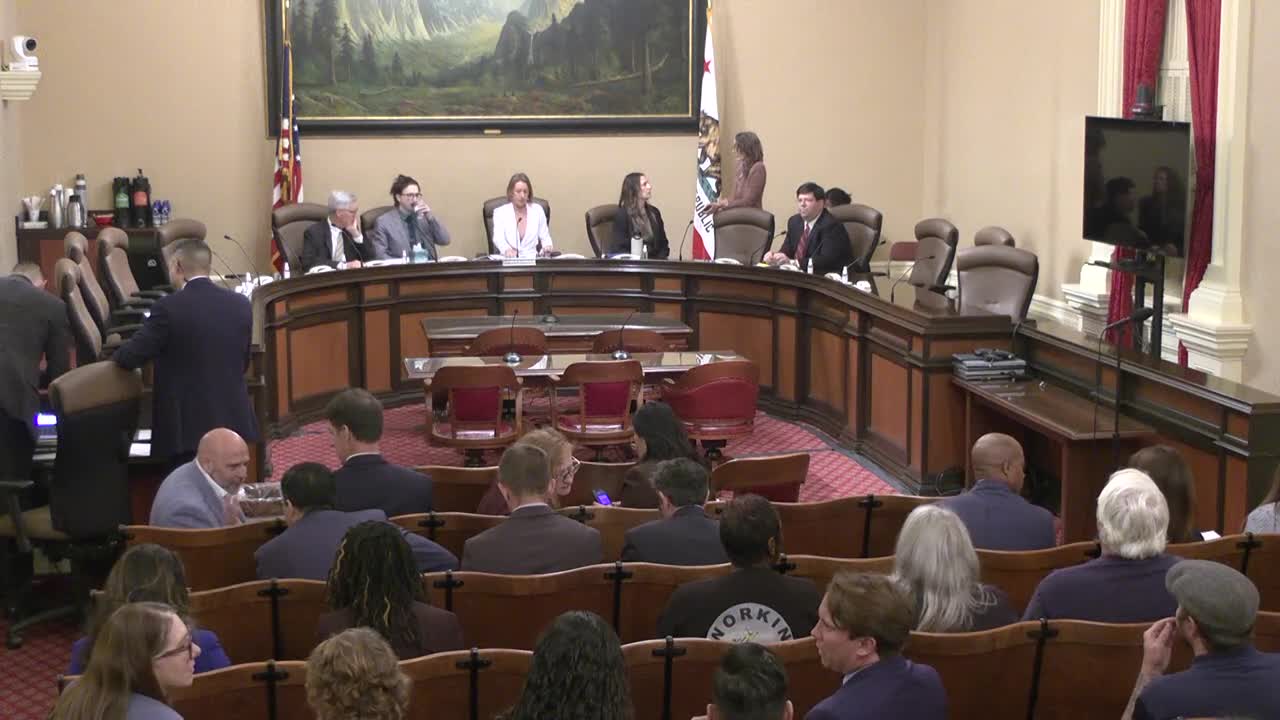
Senate Standing Committee on Energy, Utilities and Communications
 5MIN
Senate Standing Committee on Environmental Quality
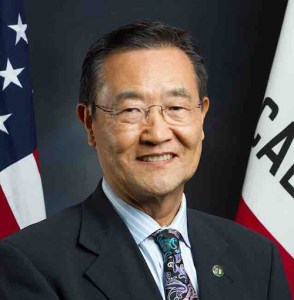
Bill Author
Bill Co-Author(s):