ACR 120: Data trusts: at-risk children.
- Session Year: 2015-2016
- House: Assembly
- Latest Version Date: 2016-08-05
This measure would recognize that the Legislature supports the development of safe and secure data sharing between public education, social service, and research entities through the Silicon Valley Regional Data Trust as it pertains specifically to at-risk, foster, homeless, and justice-involved children and youth and their families, in order to better serve, protect, and improve the futures of these Californians.
This measure would recognize that the Legislature supports the development of safe and secure data sharing between public education, social service, and research entities through the Silicon Valley Regional Data Trust as it pertains specifically to at-risk, foster, homeless, and justice-involved children and youth and their families, in order to better serve, protect, and improve the futures of these Californians.
This measure would recognize that the Legislature supports the development of safe and secure data sharing between public education, social service, and research entities through the Silicon Valley Regional Data Trust as it pertains specifically to at-risk, foster, homeless, and justice-involved children and youth and their families, in order to better serve, protect, and improve the futures of these Californians.
This measure would recognize that the Legislature supports the development of safe and secure data sharing between public education, social service, and research entities through the Silicon Valley Regional Data Trust as it pertains specifically to at-risk, foster, homeless, and justice-involved children and youth and their families, in order to better serve, protect, and improve the futures of these Californians.
WHEREAS, Children in California would benefit from a reliable and secure data sharing environment that would assist social service providers and public education institutions in best responding to the personal circumstances and needs of students and families and would allow researchers using aggregate data to better support these efforts; and
WHEREAS, The mission of the Silicon Valley Regional Data Trust is to serve as a pilot demonstration site for addressing the needs of diverse communities using a comprehensive data-informed approach that provides quality services and promotes a healthy, safe, and prosperous community while safeguarding sensitive personal data; and
WHEREAS, Improved collaborations between agencies can help address the complex challenges of serving vulnerable California children and their families; and
WHEREAS, The County of Santa Clara is currently participating in the FosterVision Project with the Santa Clara County Office of Education to share data about youth between schools and the county in the interest of improving services to foster and juvenile-justice-involved youth with appropriate protections to safeguard sensitive data; and
WHEREAS, The establishment of information sharing agreements through a tri-county regional data trust utilizing the Santa Clara County Office of Education Data Zone as the hub in partnership with the University of California, Santa Cruz, will help ensure that data systems are interoperable within and across agencies and sectors by adopting common data standards, definitions, and language to best serve the children in those counties; and
WHEREAS, In order to safeguard the privacy of California children and families, it is essential that the data trust strictly adhere to existing state and federal law requiring the protection of personal information and data pertaining to students and at-risk youth and follow data security industry best practices in the interest of protecting Californias most vulnerable youth while allowing appropriate data access and sharing; now, therefore, be it
Resolved by the Assembly of the State of California, the Senate thereof concurring, That the Legislature supports the development of safe and secure data sharing between public education, social service, and research entities through the Silicon Valley Regional Data Trust as it pertains specifically to at-risk, foster, homeless, and justice-involved children and youth and their families, in order to better serve, protect, and improve the futures of these Californians; and be it further
Resolved, That the Chief Clerk of the Assembly transmit sufficient copies of this resolution to the author for appropriate distribution.
|
Date
|
Status
|
|---|---|
| Jan 19, 2016 | Introduced. To print. |
| Jan 20, 2016 | From printer. |
| Feb 4, 2016 | Referred to Com. on P. & C.P. |
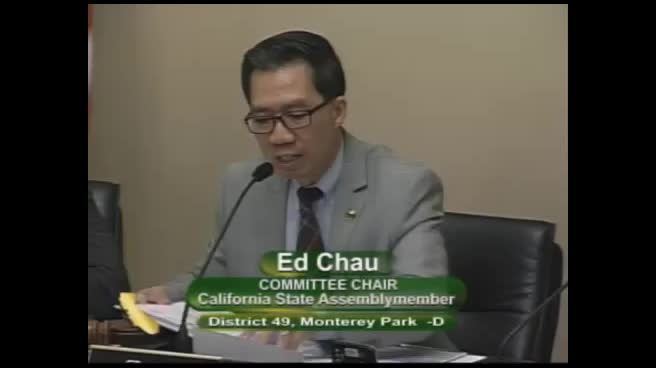
| Apr 6, 2016 | From committee: Be adopted. Ordered to Third Reading. (Ayes 9. Noes 0.) (April 5). |
| Apr 7, 2016 | Amended, adopted, and to Senate. |
| Apr 7, 2016 | Amended, adopted, and to Senate. (Page 4231.) |
| Apr 11, 2016 | In Senate. To Com. on RLS. |
| Apr 28, 2016 | Re-referred to Com. on JUD. |
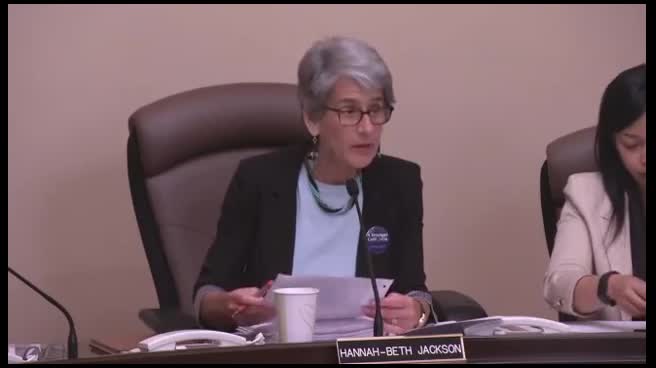
| Jun 15, 2016 | From committee: Be adopted. Ordered to Third Reading. (Ayes 7. Noes 0.) (June 14). |
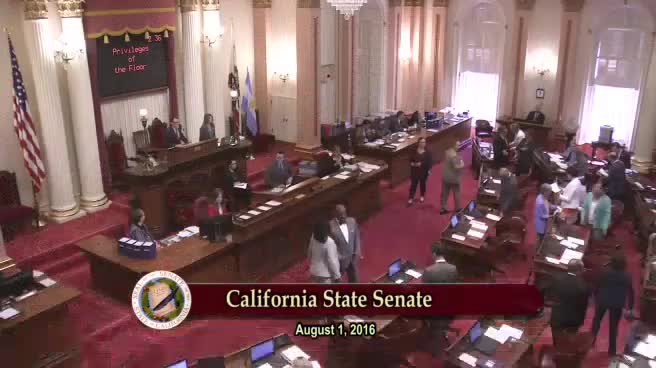
| Aug 1, 2016 | Adopted and to Assembly. |
| Aug 1, 2016 | Adopted and to Assembly. (Ayes 39. Noes 0. Page 4725.) |
| Aug 2, 2016 | In Assembly. Ordered to Engrossing and Enrolling. |
| Aug 5, 2016 | Chaptered by Secretary of State - Res. Chapter 97, Statutes of 2016. |
| Aug 5, 2016 | Enrolled and filed with the Secretary of State at 3 p.m. |
|
Date
|
Description
|
Location
|
Votes
|
|
|---|---|---|---|---|
| Aug 1, 2016 | Assembly 3rd Reading ACR120 Mark Stone By Beall | Senate Floor |
Passed |
|
| Jun 14, 2016 | Be adopted. Ordered to third reading | Senate Standing Committee on Judiciary |
Passed |
|
| Apr 5, 2016 | Be adopted. To third reading. | Assembly Standing Committee on Privacy and Consumer Protection |
Passed |
This list shows positions taken on this bill by organizations on the date displayed, which is linked to the original source.
Positions by individuals are not included.
|
Organization
|
Position
|
Date
|
|---|---|---|
| Santa Clara County Board of Supervisors | ** Support | Aug 1, 2016 |
| Silicon Valley Regional Data Trust | ** Support | Aug 1, 2016 |
Office of Senate Floor Analyses (916) 651-1520 Fax: (916) 327-4478 | ACR |
THIRD READING
Bill No: ACR 120
:
SENATE JUDICIARY COMMITTEE: 7-0, 6/14/16
AYES: Jackson, Moorlach, Anderson, Hertzberg, Leno, Monning, Wieckowski
ASSEMBLY FLOOR: Read and adopted, 4/7/16
SOURCE: Silicon Valley Regional Data Trust
DIGEST: This resolution recognizes that the Legislature supports the development of safe and secure data sharing between public education, social service, and research entities through the Silicon Valley Regional Data Trust as it pertains specifically to at-risk, foster, homeless, and justice-involved children and youth and their families, in order to better serve, protect, and improve the futures of these Californians.
Existing law:
- Provides that, among other rights, all people have an inalienable right to pursue and obtain privacy. (Cal. Const., art. I, Sec. 1.)
- Permits a person to bring an action in tort for an invasion of privacy and provides that in order to state a claim for violation of the constitutional right to privacy, a plaintiff must establish the following three elements: (1) a legally protected privacy interest; (2) a reasonable expectation of privacy in the circumstances; and (3) conduct by the defendant that constitutes a serious invasion of privacy. (Hill v. National Collegiate Athletic Assn. (1994) 7 Cal.4th 1.) Existing law recognizes four types of activities considered to be an invasion of privacy, giving rise to civil liability including the public disclosure of private facts. (Id.)
- Requires an operator of an Internet Web site or online service directed to a child, as defined, or an operator of an Internet Web site or online service that has actual knowledge that it is collecting personal information from a child to provide notice of what information is being collected and how that information is being used, and to give the parents of the child the opportunity to refuse to permit the operator’s further collection of information from the child. (15 U.S.C. Sec. 6502.)
- Provides that the Federal Educational Rights and Privacy Act restricts a school that receives federal funds from releasing educational records (or personally identifiable information contained therein) of students without the written consent of their parents, as specified. Existing law also gives the parents of students who are or have been in attendance at a school the right to inspect and review the education records of their children. (20 U.S.C. Sec. 1232g.)
- Prohibits an operator from knowingly engaging in targeted advertising to students or their parents or legal guardians using covered information, as defined, amassing a profile of a K-12 student, selling a student’s information, or disclosing covered information, as provided. (Bus. & Prof. Code Secs. 22584 and 22585.)
- Requires an operator of a commercial Web site or online service that collects personally identifiable information through the Internet about individual consumers residing in California who use or visit its Web site to conspicuously post its privacy policy. (Bus. & Prof. Code Sec. 22575.)
This resolution:
- States that children in California would benefit from a reliable and secure data sharing environment that would assist social service providers and public education institutions in best responding to the personal circumstances and needs of students and families and would allow researchers using aggregate data to better support these efforts.
- States that the mission of the Silicon Valley Regional Data Trust (SVRDT) is to serve as a pilot demonstration site for addressing the needs of diverse communities using a comprehensive data-informed approach that provides quality services and promotes a healthy, safe, and prosperous community while safeguarding sensitive personal data.
- Recognizes that improved collaborations between agencies can help address the complex challenges of serving vulnerable California children and their families.
- Recognizes that the County of Santa Clara is currently participating in the FosterVision Project with the Santa Clara County Office of Education to share data about youth between schools and the county in the interest of improving services to foster and juvenile-justice-involved youth with appropriate protections to safeguard sensitive data.
- States that the establishment of information sharing agreements through a tri-county regional data trust utilizing the Santa Clara County Office of Education Data Zone as the hub in partnership with the University of California, Santa Cruz, will help ensure that data systems are interoperable within and across agencies and sectors by adopting common data standards, definitions, and language to best serve the children in those counties.
- Recognizes that, in order to safeguard the privacy of California children and families, it is essential that the data trust strictly adhere to existing state and federal law requiring the protection of personal information and data pertaining to students and at-risk youth and follow data security industry best practices in the interest of protecting California’s most vulnerable youth while allowing appropriate data access and sharing.
- Declares that the Legislature supports the development of safe and secure data sharing between public education, social service, and research entities through the SVRDT as it pertains specifically to at-risk, foster, homeless, and justice-involved children and youth and their families, in order to better serve, protect, and improve the futures of these Californians.
Background
Despite California’s commitment to provide high-quality public education for all students, students in California’s public schools generally fail to meet proficiency standards. In 2015, the results of a new test on student performance revealed that:
Of more than 3.1 million public school students tested in English statewide, only 44 percent met or exceeded standards; in math, only 33 percent met that threshold, according to the state Department of Education, which released the new scores. Scores at Bay Area schools generally mirrored the statewide results, as performance correlated with family and community wealth, language ability and ethnicity. […]
“The alarm bells should be going off all over,” said Matt Hammer, who leads a nonprofit education advocacy and school incubation group, Innovate Public Schools, in San Jose. “What’s going to happen to children who aren’t doing math at grade level?”
Among these students is another group that consistently underperforms: children in foster care. Yet, until recently, education reform efforts to address the specific needs of these children have been rare. In large part, this is due to the fact that California (like many other states) has little statewide information about the education and performance of youth who are in the foster system. Challenges related to the availability and sharing of information between the education and child welfare system are common, resulting in the needs of these students often going unrecognized and unmet, leaving them far behind their classmates in academic achievement. (See Barrat, V. X., & Berliner, B. (2013). The Invisible Achievement Gap, Part 1: Education Outcomes of Students in Foster Care in California’s Public Schools. San Francisco: WestEd.)
Established in June of 2015, the Silicon Valley Regional Data Trust (SVRDT) is a tri-county collaborative of the Santa Clara, San Mateo and Santa Cruz County Offices of Education, Social Services, Justice, Mental and Public Health agencies and the University of California-Santa Cruz. SVRDT was designed to coordinate regional working groups charged with developing standards to use when sharing data to better serve at-risk youth. As part of its first year work plan, SVRDT engaged consultants to guide various working groups, assist in the development of the information sharing, and work with regional agencies to develop and gain approval of interagency data sharing and other legal agreements. In addition, SVRDT has recently formalized a Memorandum of Understanding with the Santa Clara Office of Education, which will establish the data warehouse that will store data from the partnering public agencies.
This resolution publicly recognizes that the Legislature supports the development of safe and secure data sharing between public education, social service, and research entities through the SVRDT to better serve at-risk youth and their families.
FISCAL EFFECT: Appropriation: No Fiscal Com.: Local: No
Silicon Valley Regional Data Trust (source)
Santa Clara County Board of Supervisors
OPPOSITION: (Verified 6/14/16)
None received
ARGUMENTS IN SUPPORT: The Silicon Valley Regional Data Trust, sponsor, writes:
SVRDT’s mission is to provide a secure information-sharing environment, which stimulates change in the culture and practice of how data is used by education, health, and human services, in collaboration with researchers and the private sector to develop actionable and impactful solutions to critical educational and social problems.”
Prepared by: Nichole Rapier / JUD. / (916) 651-4113
7/29/16 12:37:21
**** END ****
Senator Hannah-Beth Jackson, Chair
2015-2016 Regular Session
Bill No: ACR 120 (Author:Mark Stone)
Version: April 7, 2016
Hearing Date: June 14, 2016
Fiscal: No
Urgency: No
Consultant: NR
SUBJECT
Data trusts: at-risk children
DESCRIPTION
This measure would recognize that the Legislature supports the development of safe and secure data sharing between public education, social service, and research entities through the Silicon Valley Regional Data Trust as it pertains specifically to at-risk, foster, homeless, and justice-involved children and youth and their families, in order to better serve, protect, and improve the futures of these Californians.
BACKGROUND
Despite California’s commitment to provide high-quality public education for all students, students in California’s public schools generally fail to meet proficiency standards. In 2015, the results of a new test on student performance revealed that:
Of more than 3.1 million public school students tested in English statewide, only 44 percent met or exceeded standards; in math, only 33 percent met that threshold, according to the state Department of Education, which released the new scores. Scores at Bay Area schools generally mirrored the statewide results, as performance correlated with family and community wealth, language ability and ethnicity. […]
“The alarm bells should be going off all over,” said Matt Hammer, who leads a nonprofit education advocacy and school incubation group, Innovate Public Schools, in San Jose. “What’s going to happen to children who aren’t doing math at grade level?”
Among these students is another group that consistently underperforms: children in foster care. Yet, until recently, education reform efforts to address the specific needs of these children have been rare. In large part, this is due to the fact that California (like many other states) has little statewide information about the education and performance of youth who are in the foster system. Challenges related to the availability and sharing of information between the education and child welfare system are common, resulting in the needs of these students often going unrecognized and unmet, leaving them far behind their classmates in academic achievement. (See Barrat, V. X., & Berliner, B. (2013). The Invisible Achievement Gap, Part 1: Education Outcomes of Students in Foster Care in California’s Public Schools. San Francisco: WestEd.)
Established in June of 2015, the Silicon Valley Regional Data Trust (SVRDT) is a tri-county collaborative of the Santa Clara, San Mateo and Santa Cruz County Offices of Education, Social Services, Justice, Mental and Public Health agencies and the University of California-Santa Cruz. SVRDT was designed to coordinate regional working groups charged with developing standards to use when sharing data to better serve at-risk youth. As part of its first year work plan, SVRDT engaged consultants to guide various working groups, assist in the development of the information sharing, and work with regional agencies to develop and gain approval of interagency data sharing and other legal agreements. In addition, SVRDT has recently formalized a Memorandum of Understanding with the Santa Clara Office of Education, which will establish the data warehouse that will store data from the partnering public agencies.
This resolution would publicly recognize that the Legislature supports the development of safe and secure data sharing between public education, social service, and research entities through the SVRDT to better serve at-risk youth and their families.
CHANGES TO EXISTING LAW
Existing law provides that, among other rights, all people have an inalienable right to pursue and obtain privacy. (Cal. Const., art. I, Sec. 1.)
Existing case law permits a person to bring an action in tort for an invasion of privacy and provides that in order to state a claim for violation of the constitutional right to privacy, a plaintiff must establish the following three elements: (1) a legally protected privacy interest; (2) a reasonable expectation of privacy in the circumstances; and (3) conduct by the defendant that constitutes a serious invasion of privacy. (Hill v. National Collegiate Athletic Assn. (1994) 7 Cal.4th 1.) Existing law recognizes four types of activities considered to be an invasion of privacy, giving rise to civil liability including the public disclosure of private facts. (Id.)
Existing federal law requires an operator of an Internet Web site or online service directed to a child, as defined, or an operator of an Internet Web site or online service that has actual knowledge that it is collecting personal information from a child to provide notice of what information is being collected and how that information is being used, and to give the parents of the child the opportunity to refuse to permit the operator’s further collection of information from the child. (15 U.S.C. Sec. 6502.)
Existing federal law, the Federal Educational Rights and Privacy Act, restricts a school that receives federal funds from releasing educational records (or personally identifiable information contained therein) of students without the written consent of their parents, as specified. Existing law also gives the parents of students who are or have been in attendance at a school the right to inspect and review the education records of their children. (20 U.S.C. Sec. 1232g.)
Existing law prohibits an operator from knowingly engaging in targeted advertising to students or their parents or legal guardians using covered information, as defined, amassing a profile of a K-12 student, selling a student’s information, or disclosing covered information, as provided. (Bus. & Prof. Code Secs. 22584 and 22585.)
Existing law requires an operator of a commercial Web site or online service that collects personally identifiable information through the Internet about individual consumers residing in California who use or visit its Web site to conspicuously post its privacy policy. (Bus. & Prof. Code Sec. 22575.)
This measure would state that children in California would benefit from a reliable and secure data sharing environment that would assist social service providers and public education institutions in best responding to the personal circumstances and needs of students and families and would allow researchers using aggregate data to better support these efforts.
This measure would state that the mission of the Silicon Valley Regional Data Trust (SVRDT) is to serve as a pilot demonstration site for addressing the needs of diverse communities using a comprehensive data-informed approach that provides quality services and promotes a healthy, safe, and prosperous community while safeguarding sensitive personal data.
This measure would recognize that improved collaborations between agencies can help address the complex challenges of serving vulnerable California children and their families.
This measure would recognize that the County of Santa Clara is currently participating in the FosterVision Project with the Santa Clara County Office of Education to share data about youth between schools and the county in the interest of improving services to foster and juvenile-justice-involved youth with appropriate protections to safeguard sensitive data.
This measure would state that the establishment of information sharing agreements through a tri-county regional data trust utilizing the Santa Clara County Office of Education Data Zone as the hub in partnership with the University of California, Santa Cruz, will help ensure that data systems are interoperable within and across agencies and sectors by adopting common data standards, definitions, and language to best serve the children in those counties.
This measure would recognize that, in order to safeguard the privacy of California children and families, it is essential that the data trust strictly adhere to existing state and federal law requiring the protection of personal information and data pertaining to students and at-risk youth and follow data security industry best practices in the interest of protecting California’s most vulnerable youth while allowing appropriate data access and sharing.
This measure would declare that the Legislature supports the development of safe and secure data sharing between public education, social service, and research entities through the SVRDT as it pertains specifically to at-risk, foster, homeless, and justice-involved children and youth and their families, in order to better serve, protect, and improve the futures of these Californians.
COMMENT
- Stated need for the bill
According to the author:
California has a variety of high-needs students enrolled in public school, including foster youth and justice-involved youth, who have consistently poorer educational, social, and correctional outcomes than their peers. Additionally, California schools have an achievement gap between some categories of students that, in spite of much study, have remained persistent and at times has even widened. However, the state does not consistently track or measure how many high-needs students in certain categories attend public schools, what their needs are, where they are enrolled, how well they fare academically, or what they do when they leave the educational system. As California looks for ways to help students who are more likely than their peers to experience negative outcomes, the state should test new approaches to appropriately share information between social service providers, educational service providers and research institutions in order to help individual students receive tailored services, as well as to provide critical aggregate data to researchers.
- Maintaining student privacy
The right to privacy is a fundamental right protected by Section 1 of Article I of the Constitution of California, and the information of students is specifically protected under both state and federal law. Federal law prohibits public schools from releasing educational records without the written consent of the parents, and requires the operator of an online service or Internet Web site to provide notice to parents regarding how any information collected about a child is being used and additionally give the parents the opportunity to prohibit further collection of the information. (See 15 U.S.C. Sec. 6502 and 20 U.S.C. Sec. 1232g.) California has additionally created prohibitions against online operators amassing a profile of a K-12 student, selling a student’s information, or disclosing covered information. (See Bus. & Prof. Code Secs. 22584 and 22585.)
This measure would declare the Legislature’s support for the development of safe and secure data sharing between public education, social service, and research entities through the Silicon Valley Regional Data Trust (SVRDT) to better serve, protect, and improve the futures of at-risk, foster, homeless, and justice-involved children and youth and their families. Staff notes that at this time, SVRDT is in the planning stages, and has not yet begun sharing student information, nor does the pilot project that SVRDT seeks to implement have a known start date. To date, SVRDT has spent considerable time and energy identifying national experts to secure data sharing agreement and design secure data infrastructures. Until evidence suggests otherwise, existing privacy protections that have been enacted on the state and federal level will govern the information that SVRDT seeks to share and store as well.
In support, the sponsor writes, “SVRDT’s mission is to provide a secure information-sharing environment, which stimulates change in the culture and practice of how data is used by education, health, and human services, in collaboration with researchers and the private sector to develop actionable and impactful solutions to critical educational and social problems.”
Support: Santa Clara County Board of Supervisors
Opposition: None Known
HISTORY
Source: Silicon Valley Regional Data Trust
Related Pending Legislation: None Known
Prior Legislation: None Known
Prior Vote: Assembly Privacy and Consumer Protection Committee (Ayes 9, Noes 0)
**************
ASSEMBLY THIRD READING
ATR Bill Id:ACR 120
Author:(Mark Stone)
As Introduced Ver:January 19, 2016
Majority vote
Committee | Votes | Ayes | Noes |
Privacy | 9-0 | Chau, Baker, Calderon, Cooper, Dababneh, Gatto, Gordon, Low, Olsen |
SUMMARY: Declares the Legislature's support for the development of safe and secure data sharing between public education, social service, and research entities through the Silicon Valley Regional Data Trust (SVRDT) as it pertains to at-risk, foster, homeless, and justice-involved children and youth and their families. Specifically, this bill:
- Recognizes that children in California would benefit from a reliable and secure data-sharing environment that would assist social service providers and public education institutions in best responding to the personal circumstances and needs of students and families and would allow researchers using aggregate data to better support these efforts.
- Recognizes that the mission of the SVRDT is to serve as a pilot demonstration site for addressing the needs of diverse communities using a comprehensive data-informed approach that provides quality services and promotes a healthy, safe, and prosperous community while safeguarding sensitive personal data.
- Recognizes that improved collaborations between agencies can help address the complex challenges of serving vulnerable California children and their families.
- Recognizes that the County of Santa Clara is currently participating in the Foster Vision Project with the Santa Clara County Office of Education to share data about youth between schools and the county in the interest of improving services to foster and juvenile-justice-involved youth with appropriate protections to safeguard sensitive data.
- Recognizes that the establishment of information sharing agreements through a tri-county regional data trust utilizing the Santa Clara County Office of Education Data Zone as the hub in partnership with the University of California, Santa Cruz, will help ensure that data systems are interoperable within and across agencies and sectors by adopting common data standards, definitions, and language to best serve the children in those counties.
- Recognizes that, in order to safeguard the privacy of California children and families, it is essential that the data trust strictly adhere to existing state and federal law requiring the protection of personal information and data pertaining to students and at-risk youth and follow data security industry best practices in the interest of protecting California's most vulnerable youth while allowing appropriate data access and sharing.
- Declares that the Legislature supports the development of safe and secure data sharing between public education, social service, and research entities through the SVRDT as it pertains specifically to at-risk, foster, homeless, and justice-involved children and youth and their families, in order to better serve, protect, and improve the futures of these Californians.
FISCAL EFFECT: None
COMMENTS:
- Purpose of this bill. This bill is intended to express the Legislature's support for a regional data-sharing pilot project designed to improve educational and social service outcomes for youths in the foster and criminal justice systems. This bill is sponsored by the SVRDT.
- The Silicon Valley Regional Data Trust. The SVRDT's stated mission is to apply "advanced analytics to a regional multi-agency dataset, balancing ethical, privacy, and social policies, to improve services and educational outcomes especially for children of poverty."
SVRDT supports data sharing among county agencies, school districts, non-profits and educational technology firms to inform regional policy, practice, and research. It intends to use the shared data to engage in mining and analysis that will facilitate personalization of learning plans and improvement of service provision to children of poverty.
SVRDT is a pilot project at this stage and has not yet begun operations. Its Web site does not provide a target start-up date.
By its own account, SVRDT has not yet developed its guidelines for data privacy, saying that it "will develop guidelines for the Regional Data Trust that define and govern what is allowable under privacy regulations such as [Family Educational Rights and Privacy Act] FERPA, [Health Insurance Portability and Accountability Act] HIPAA, and [Children's Online Privacy Protection Act] COPPA and will develop datasharing agreements that accordingly protect students' privacy and confidentiality." Nevertheless, student data would remain protected by existing state and federal law once the program begins operation.
Support
Silicon Valley Regional Data Trust (sponsor)
Opposition
None on file.
Analysis Prepared by: Hank Dempsey / P. & C.P. / (916) 319-2200 FN: 0002711
Date of Hearing: April 5, 2016
ASSEMBLY COMMITTEE ON PRIVACY AND CONSUMER PROTECTION
Ed Chau, Chair
ABPCA Bill Id:ACR 120 (
Author:Mark Stone) – As Introduced Ver:January 19, 2016
SUBJECT: Data trusts: at-risk children
SUMMARY: Declares the Legislature's support for the development of safe and secure data sharing between public education, social service, and research entities through the Silicon Valley Regional Data Trust (SVRDT) as it pertains to at-risk, foster, homeless, and justice-involved children and youth and their families. Specifically, this bill:
- Recognizes that children in California would benefit from a reliable and secure data sharing environment that would assist social service providers and public education institutions in best responding to the personal circumstances and needs of students and families and would allow researchers using aggregate data to better support these efforts.
- Recognizes that the mission of the SVRDT is to serve as a pilot demonstration site for addressing the needs of diverse communities using a comprehensive data-informed approach that provides quality services and promotes a healthy, safe, and prosperous community while safeguarding sensitive personal data.
- Recognizes that improved collaborations between agencies can help address the complex challenges of serving vulnerable California children and their families.
- Recognizes that the County of Santa Clara is currently participating in the FosterVision Project with the Santa Clara County Office of Education to share data about youth between schools and the county in the interest of improving services to foster and juvenile-justice-involved youth with appropriate protections to safeguard sensitive data.
- Recognizes that the establishment of information sharing agreements through a tri-county regional data trust utilizing the Santa Clara County Office of Education Data Zone as the hub in partnership with the University of California, Santa Cruz, will help ensure that data systems are interoperable within and across agencies and sectors by adopting common data standards, definitions, and language to best serve the children in those counties.
- Recognizes that, in order to safeguard the privacy of California children and families, it is essential that the data trust strictly adhere to existing state and federal law requiring the protection of personal information and data pertaining to students and at-risk youth and follow data security industry best practices in the interest of protecting California’s most vulnerable youth while allowing appropriate data access and sharing.
- Declares that the Legislature supports the development of safe and secure data sharing between public education, social service, and research entities through the SVRDT as it pertains specifically to at-risk, foster, homeless, and justice-involved children and youth and their families, in order to better serve, protect, and improve the futures of these Californians.
EXISTING LAW:
- Protects, pursuant to the federal Family Educational Rights and Privacy Act (FERPA), the confidentiality of educational records (and personally identifiable information contained therein) by prohibiting the funding of schools that permit the release of those records. It applies to all schools that receive funds under an applicable program of the U.S. Department of Education. Generally, schools must have written permission from the parent or eligible student in order to release any information from a student’s education record. FERPA’s prohibition only applies to the school itself and contains various exemptions where the data may be released without the written consent of the parents. (20 U.S.C. Sec. 1232g(b)(1))
- Prohibits, pursuant to the federal Children's Online Privacy Protection Act of 1998 (COPPA), an operator of a website or online service directed to children under the age of 13 from collecting personal information from a child, including a child’s first and last name, home or other physical address including street name and name of a city or town, e-mail address, telephone number, or Social Security number. (5 U.S.C. 6501-6505)
- Prohibits an operator from knowingly engaging in targeted advertising to students or their parents or legal guardians using covered information, as defined, amassing a profile of a K-12 student, selling a student’s information, or disclosing covered information, as provided. (Business and Professions Code (BPC) Section 22584-85)
- Defines an “operator” as the operator of a website, online service, online application, or mobile application with actual knowledge that the site, service, or application is used primarily for K–12 school purposes and was designed and marketed for K-12 school purposes. (BPC 22584(a))
- Requires an operator of a commercial website or online service that collects personally identifiable information through the Internet about individual consumers residing in California who use or visit its website to conspicuously post its privacy policy. (BPC 22575)
FISCAL EFFECT: None
COMMENTS:
- Purpose of this bill. This bill is intended to express the Legislature's support for a regional data-sharing pilot project designed to improve educational and social service outcomes for youths in the foster and criminal justice systems. The bill is sponsored by the Silicon Valley Regional Data Trust (SVRDT).
- Author's statement. According to the author, "Many vulnerable California students, including those who are in foster care and those who are or have been involved in the juvenile justice system, face unique challenges that make it difficult for them to succeed academically. While both educational institutions and social service providers offer myriad programs to support at-risk students, students do not always participate in programs that would benefit them, or they are enrolled far later than they should be. Sometimes this happens because educational institutions and social service providers may not always share critical information about struggling students that would trigger interventions or enrollment in helpful programs."
"The California Legislature has prioritized closing the achievement gap, as well as helping students in foster care and justice-involved youth succeed academically. ACR 120 reflects this commitment to helping these students by calling for appropriate, secure data sharing amongst service providers. Specifically, ACR 120 supports a proposed pilot project between the Santa Clara County Office of Education, the San Mateo County Office of Education, [Santa Cruz County] and the University of California Santa Cruz, in order to test this secure data-sharing approach to improving student outcomes. Additionally, ACR 120 calls for the data to be accessible to researchers who seek to study the proposed pilot project.
"ACR 120 reflects the Legislature's long-standing commitment to helping improve educational and life outcomes of California's students."
- The Silicon Valley Regional Data Trust. The SVRDT 's stated mission to apply "advanced analytics to a regional multi-agency dataset, balancing ethical, privacy, and social policies, to improve services and educational outcomes especially for children of poverty."
SVRDT supports data sharing among county agencies, school districts, non-profits and educational technology firms to inform regional policy, practice, and research. It intends to use the shared data to engage in mining and analysis that will facilitate personalization of learning plans and improvement of service provision to children of poverty.
SVRDT is a pilot project at this stage and has not yet begun operations. Its website does not provide a target start-up date.
- Data sharing, privacy and high-needs students. By its own account, SVRDT has not yet developed its guidelines for data privacy, saying that it "will develop guidelines for the Regional Data Trust that define and govern what is allowable under privacy regulations such as FERPA, HIPAA and COPPA and will develop data sharing agreements that accordingly protect students’ privacy and confidentiality."
However, the author contends that student data would be adequately protected under state law. "There are specific provisions [in existing law] that allow for data collection on student populations as long as the data remains the property of the school district and that it be used specifically for the tailoring of educational services by the schools, not for anything else…[Existing law also contains] specific provisions that allow for the existence of cloud-based data hubs that provide services for tailored education with no commercial use. The data is to be used and seen by teachers to support their in class activities and improve the educational outcomes of their students and nothing else. It is under these conditions that the SVRDT operates in conjunction with the Santa Clara County Office of Education."
- Arguments in support. According to the sponsor, the SVRDT, "ACR 120 will designate the Silicon Valley Regional Data Trust (SVRDT) as a pilot for implementing regional cross-agency data sharing in order to provide better integrated services to the region's most at-risk youth and families and could service as a statewide model…"
"SVRDT is a partnership between the county offices of education and health and human service agencies of San Mateo, Santa Clara and Santa Cruz Counties and the University of California, Santa Cruz. It will link data from schools and health and human service agencies that serve the region's children and families. The Santa Clara County Office of Education's Data Zone will provide the technical infrastructure for SVRDT. SVRDT's foundation of governance, legal and technical infrastructures will insure the security and privacy of data in accordance with local, state and federal regulations. Public schools and health and human service agencies will collaborate with university researchers to maintain ethical standards of data access and use and to analyze data to answer questions crucial to providing efficient, effective and coordinated services.
"By designating SVRDT as a pilot for implementing regional cross-agency data sharing, ACR 120 will afford SVRDT recognition that will support its efforts to build and sustain a secure information sharing environment and to attract resources. As a pilot, SVRDT can inform interagency data sharing in other regions of the state and help to shape state policies to support interagency data sharing that improves public services while maintaining data security and privacy."
REGISTERED SUPPORT / OPPOSITION:
Support
Silicon Valley Regional Data Trust (sponsor)
Opposition
None on file.
Analysis Prepared by: Hank Dempsey / P. & C.P. / (916) 319-2200
Discussed in Hearing
 3MIN
Senate Floor
 5MIN
Senate Standing Committee on Judiciary
 8MIN
Assembly Standing Committee on Privacy and Consumer Protection
Bill Author

Bill Co-Author(s):