SB 1075: Department of Justice: crime statistics reporting.
- Session Year: 2015-2016
- House: Senate
- Latest Version Date: 2016-04-14
Existing law requires the Department of Justice to present a report to the Governor annually containing the statewide criminal statistics of the preceding year. Existing law also requires specified local agencies, including chiefs of police and sheriffs, to report statistical data to the department at the time and in the manner the department prescribes.
This bill would require that report to include statistics on child molestation, as defined, in the same format and within the same tables existing Table 1 and Table 2 that report on the number, rate per 100,000 population, and percentage change in other violent crimes, including rape.
Existing law requires the Department of Justice to present a report to the Governor annually containing the statewide criminal statistics of the preceding year. Existing law also requires specified local agencies, including chiefs of police and sheriffs, to report statistical data to the department at the time and in the manner the department prescribes.
This bill would require that report to include statistics on child molestation, as defined, in the same format and within the same tables that report on the number, rate per 100,000 population, and percentage change in other violent crimes, including rape.
(a)The annual report published by the department pursuant to Section 13010 shall include statistics on child molestation in the same format and within the same tables existing Table 1 and Table 2 that report on the number, rate per 100,000 population, and percentage change in other violent crimes, including rape.
(b)For purposes of this section, child molestation shall include the combined total of offenses defined in subdivisions (a) and (b) of Section 288 and Section 288.5.
(a)The annual report published by the department pursuant to Section 13010 shall include statistics on child molestation in the same format and within the same tables that report on the number, rate per 100,000 population, and percentage change in other violent crimes, including rape.
(b)For purposes of this section, child molestation shall include the combined total of offenses defined in subdivisions (a) and (b) of Section 288 and Section 288.5.
|
Date
|
Status
|
|---|---|
| May 27, 2016 | From committee: Do pass. (Ayes 7. Noes 0. Page 4003.) (May 27). |
| Aug 11, 2016 | August 11 hearing. Held in committee and under submission. |
| Jun 29, 2016 | June 29 set for first hearing. Placed on APPR. suspense file. |
| Jun 22, 2016 | From committee: Do pass and re-refer to Com. on APPR. (Ayes 7. Noes 0.) (June 21). Re-referred to Com. on APPR. |
| Jun 6, 2016 | Referred to Com. on PUB. S. |
| Jun 1, 2016 | In Assembly. Read first time. Held at Desk. |
| May 31, 2016 | Read third time. Passed. (Ayes 38. Noes 0.) Ordered to the Assembly. |
| May 31, 2016 | Read third time. Passed. (Ayes 38. Noes 0. Page 4042.) Ordered to the Assembly. |
| May 27, 2016 | Read second time. Ordered to third reading. |
| May 27, 2016 | From committee: Do pass. (Ayes 7. Noes 0.) (May 27). |
| Feb 16, 2016 | Introduced. Read first time. To Com. on RLS. for assignment. To print. |
| May 20, 2016 | Set for hearing May 27. |
| May 2, 2016 | May 2 hearing: Placed on APPR. suspense file. |
| Apr 22, 2016 | Set for hearing May 2. |
| Apr 14, 2016 | Read second time and amended. Re-referred to Com. on APPR. |
| Apr 13, 2016 | From committee: Do pass as amended and re-refer to Com. on APPR. (Ayes 7. Noes 0.) (April 5). |
| Apr 13, 2016 | From committee: Do pass as amended and re-refer to Com. on APPR. (Ayes 7. Noes 0. Page 3395.) (April 5). |
| Mar 17, 2016 | Set for hearing April 5. |
| Feb 25, 2016 | Referred to Com. on PUB. S. |
| Feb 17, 2016 | From printer. May be acted upon on or after March 18. |
|
Date
|
Description
|
Location
|
Votes
|
|
|---|---|---|---|---|
| Jun 21, 2016 | Do pass and be re-referred to the Committee on [Appropriations] | Assembly Standing Committee on Public Safety |
Passed |
|
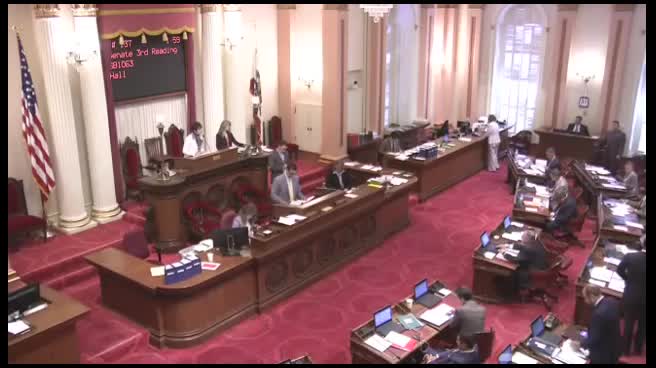
| May 31, 2016 | Senate 3rd Reading SB1075 Runner By Anderson | Senate Floor |
Passed |
|
| May 27, 2016 | Do pass | Senate Standing Committee on Appropriations |
Passed |
|
| May 2, 2016 | Placed on suspense file | Senate Standing Committee on Appropriations |
Passed |
|
| Apr 5, 2016 | Do pass as amended, but first amend, and re-refer to the Committee on [Appropriations] | Senate Standing Committee on Public Safety |
Passed |
This list shows positions taken on this bill by organizations on the date displayed, which is linked to the original source.
Positions by individuals are not included.
Date of Hearing: June 29, 2016
ASSEMBLY COMMITTEE ON APPROPRIATIONS
Lorena Gonzalez, Chair
SBPCA Bill Id:SB 1075
Author:(Runner) – As Amended Ver:April 14, 2016
Policy Committee: | Public Safety | Vote: | 7 - 0 |
Urgency: No State Mandated Local Program: No Reimbursable: No
SUMMARY:
This bill requires the Department of Justice (DOJ) to include disaggregated information on specific child molestation crimes in its annual statewide criminal statistics report. Specifically, this bill:
- Requires the DOJ in its annual report "Crime in California," to include statistics on child molestation in the same format and within the existing Tables that report on the number, rates per 100,000 population, and percentage change in other violent crimes, including rape.
- States that child molestation shall include the combined total offenses of lewd and lascivious acts upon a child under the age of 14, and continuous sexual assault of a child.
FISCAL EFFECT:
Moderate GF costs to DOJ, in the $170,000 range in 2016-17, $210,000 in 2017-18, and $110,000 on going. These costs include: a) staff for software development, support in implementing the collection of the new data set, developing new procedures, forms, and informational bulletins; b) staff for making format changes to existing publications to incorporate the new data: and c) contracting services to design, develop, test, and implement the enhancements to existing systems.
COMMENTS:
- Background: DOJ prepares an annual report entitled Crime in California. Its most recent available report, for 2014, presents an overview of the criminal justice system in California. Statistics are presented for reported crimes, arrests, dispositions of adult felony arrests, adult probation, criminal justice personnel, citizens’ complaints against peace officers, domestic violence-related calls for assistance, and law enforcement officers killed or assaulted. In addition, statistics for preceding years are provided for historical context.
- Purpose. SB 1075 requires the DOJ to include child molestation statistics in the Crime in California report. According to the author, “The bill provides that the number of child molest offenses and the rate of offense per 100,000 California residents be reported in the same manner employed to report crimes of rape.
"Accurate information is necessary to effectively allocate resources and funding. SB 1075 will give sex crimes against children the same scrutiny as rape, robbery and vehicle theft and provide policymakers and law enforcement with much needed data."
Analysis Prepared by: Pedro Reyes / APPR. / (916) 319-2081
Date of Hearing: June 21, 2016
Chief Counsel: Gregory Pagan
ASSEMBLY COMMITTEE ON PUBLIC SAFETY
Reginald Byron Jones-Sawyer, Sr., Chair
SBPCA Bill Id:SB 1075
Author:(Runner) – As Amended Ver:April 14, 2016
SUMMARY: Requires the Department of Justice (DOJ) to include disaggregated information on child molestation crimes in its annual statewide criminal statistics report. Specifically, this bill:
- Requires the DOJ in its annual report "Crime in California", to include statistics on child molestation in the same format and within the existing Table 1 and Table 2 that reports on the number, rates per 100,000 population, and percentage change in other violent crimes, including rape.
- States that child molestation shall include the combined total offenses of lewd and lascivious acts upon a child under the age of 14, and continuous sexual assault of a child.
EXISTING LAW:
- Requires the DOJ to collect specified crime-related data, and to prepare an annual report of crime-related statistics. (Pen.Code, §13010.)
- Specifies that the DOJ annual report contain statistics regarding the amount and types of offenses known to public authorities; the personal and social characteristics of criminals and delinquents; the administrative actions taken by law enforcement, judicial, penal, and correctional agencies or institutions, including those in the juvenile justice system, in dealing with criminals or delinquents; and the number of citizens' complaints received by law enforcement agencies, as specified. (Pen.Code, §13012.)
- Requires every person and agency that deals with crimes or criminals or with delinquency or delinquents to maintain specified records and report statistical data to the DOJ when requested by the Attorney General. (Pen.Code §13020.)
- States that any person who lives with, or has recurring access to, a child and engages in three or more acts of substantial sexual conduct, or commits three or more acts of lewd and lascivious conduct with a child under the age of 14 over a period of at least three months, is guilty of the felony of continuous sexual abuse of a child, punishable by 6, 12, or 16 years in the state prison, by a fine not to exceed $10,000, or by both a fine and imprisonment. (Pen.Code, § 288.5.)
- Provides that any person who commits lewd and lascivious acts with a child under the age of 14 years shall be imprisoned in state prison for three, six or eight years. (Pen.Code, §288.)
- Defines a "lewd act with a child" as any touching (through clothing or on the skin) of a child (by the defendant or by the child at the instigation of the defendant) done for sexual gratification (of the perpetrator or the child). [People v. Martinez (1995) 11 Cal.4th 434, 452.]
FISCAL EFFECT: Unknown
COMMENTS:
- Author's Statement: According to the author, "SB 1075 requires the California Department of Justice to include child molest statistics in the Crime in California Report prepared annually by the Department. The bill provides that the number of child molest offenses and the rate of offense per 100,000 California residents be reported in the same manner employed to report crimes of rape. The bill defines child molest to include violation of Penal Code Section 288 (a) (lewd or lascivious acts upon a child under the age of 14) or Penal Code 288.5 (continuous sexual abuse of a child).
"Accurate information is necessary to effectively allocate resources and funding. SB 1075 will give sex crimes against children the same scrutiny as rape, robbery and vehicle theft and provide policymakers and law enforcement with much needed data." - Background: DOJ prepares an annual report entitled Crime in California. Its most recent available report, Crime in California 2014, explains:
"Crime in California, 2014 presents an overview of the criminal justice system in California. Current year statistics are presented for reported crimes, arrests, dispositions of adult felony arrests, adult probation, criminal justice personnel, citizens’ complaints against peace officers, domestic violence-related calls for assistance, and law enforcement officers killed or assaulted. In addition, statistics for preceding years are provided for historical context."
This bill would require the California Department of Justice to include disaggregated child molestation statistics in the Crime in California Report prepared annually by the Department. The bill provides that the number of child molestation offenses and the rate of offense per 100,000 California residents be reported in the same manner employed to report crimes of rape. The bill defines child molest to include violations of subdivisions (a) and (b) of Penal Code section 288 (lewd or lascivious acts upon a child under the age of 14) or Penal Code section 288.5 (continuous sexual abuse of a child).
It appears that the report currently contains some information on the offenses targeted by this bill under the characterization of “lewd or lascivious,” although for purposes of the report that definition includes a broader array of sections (specifically, Penal Code sections 220, 266j, 288(a), 288(b)(1), 288(b)(2), 288(c)(1)*, 288(c)(2), and 288.5(a).) For example, the 2014 report indicates that between 2009 and 2014, adult felony arrests for lewd and lascivious crimes decreased 20.9 percent, and increased 3 percent between 2013 and 2014. (See page 26 of the report.) In addition, the report appears to include a breakdown of the age of the offender for this category of offenses (See page 40 of the 2014 report). This bill would require that this category of offenses be broken down to specifically identify two child molestation crimes.
REGISTERED SUPPORT / OPPOSITION:
Support
Crime Victims United
Opposition
California Police Chiefs' Association
Analysis Prepared by: Gregory Pagan / PUB. S. / (916) 319-3744
Office of Senate Floor Analyses (916) 651-1520 Fax: (916) 327-4478 | SB |
THIRD READING
Bill No: SB 1075
:
SENATE PUBLIC SAFETY COMMITTEE: 7-0, 4/5/16
AYES: Hancock, Anderson, Glazer, Leno, Liu, Monning, Stone
SENATE APPROPRIATIONS COMMITTEE: 7-0, 5/27/16
AYES: Lara, Bates, Beall, Hill, McGuire, Mendoza, Nielsen
DIGEST: This bill requires the Department of Justice to include disaggregated information on child molestation crimes in its annual statewide criminal statistics report, as specified.
ANALYSIS: Existing law requires the Department of Justice (DOJ) to publish an annual report containing statewide statistical information pertaining to crime, as specified. (Penal Code §§ 13010 et seq.)
This bill:
1) Requires DOJ to include in this annual report “statistics on child molestation in the same format and within the same tables that report on the number, rate per 100,000 population, and percentage change in other violent crimes, including rape,” which is within tables 1 and 2 of the report.
2) Provides that for purposes of this provision, child molestation shall include the combined total of offenses defined in subdivisions (a) and (b) of Section 288 and Section 288.5.
Background
As the author notes, DOJ prepares an annual report entitled Crime in California. Its most recent available report, Crime in California 2014, explains:
Crime in California, 2014 presents an overview of the criminal justice system in California. Current year statistics are presented for reported crimes, arrests, dispositions of adult felony arrests, adult probation, criminal justice personnel, citizens’ complaints against peace officers, domestic violence-related calls for assistance, and law enforcement officers killed or assaulted. In addition, statistics for preceding years are provided for historical context.
This bill requires the DOJ to include disaggregated child molestation statistics in the Crime in California Report prepared annually by the Department. The bill provides that the number of child molestation offenses and the rate of offense per 100,000 California residents be reported in the same manner employed to report crimes of rape. This bill defines child molest to include violations of subdivisions (a) and (b) of Penal Code Section 288 (lewd or lascivious acts upon a child under the age of 14) or Penal Code Section 288.5 (continuous sexual abuse of a child).
It appears that the report currently contains some information on the offenses targeted by this bill under the characterization of “lewd or lascivious,” although for purposes of the report that definition includes a broader array of sections (specifically, Penal Code Sections 220, 266j, 288(a), 288(b)(1), 288(b)(2), 288(c)(1), 288(c)(2), and 288.5(a).) For example, the 2014 report indicates that between 2009 and 2014, adult felony arrests for lewd and lascivious crimes decreased 20.9 percent, and increased 3 percent between 2013 and 2014. (See page 26 of the report.) In addition, the report appears to include a breakdown of the age of the offender for this category of offenses (See page 40 of the 2014 report). This bill requires that this category of offenses be broken down to specifically identify two child molestation crimes.
FISCAL EFFECT: Appropriation: Fiscal Com.: Local:
According to the Senate Appropriations Committee, one-time costs that are potentially in excess of $100,000 (General Fund) to the DOJ to make the necessary automation changes to enable reporting of the specified crimes in its annual report. Minor and absorbable ongoing costs.
None received
OPPOSITION: (Verified 5/27/16)
California Police Chiefs Association Inc.
ARGUMENTS IN SUPPORT: A note from the author states in part: “Much of the focus of policymakers and the public is the protection of the most vulnerable, California’s children. Despite this focus little attention is paid to the incidence of child molest compared to rape. A recent summary of inmate commitment offenses reveals that 3,077 California state prisoners have been sentenced for commission of rape. By comparison 9,363 inmates (more than three times as many) were committed for molesting a child. Perhaps it is time that crimes of child molest receive the same level of scrutiny as rape, robbery and vehicle theft.”
ARGUMENTS IN OPPOSITION: A letter from the California Police Chiefs Association, Inc. states in part: “SB 1075 would create an additional data point to be collected at the state-level that is not required at the federal level. In doing so, SB 1075 will require local agencies to create two crime data reports- one for the California DOJ and one for the United States DOJ. Furthermore, the United States DOJ is transitioning all states to the national Incident-Based Reporting System (NIBRS) which provides a more thorough account of crime in a state. Like UCR, NIBRS does not require the reporting of child molestation cases. Thus, at the time of NIBRS implementation in California, law enforcement agencies will still be required to submit to reports- one to the California DOJ and one to the United States DOJ should SB 1075 become law.
5/28/16 16:45:59
SENATE COMMITTEE ON
Senator Ricardo Lara, Chair
2015 - 2016 Regular Session
SB 1075 (Runner) - Department of Justice: crime statistics reporting
Version: | Policy Vote: |
Urgency: | Mandate: |
Hearing Date: | Consultant: |
This bill meets the criteria for referral to the Suspense File.
Bill Summary:
SB 1075 would require the Department of Justice (DOJ) to include disaggregated information on child molestation crimes in its annual statewide criminal statistics report, as specified.
Fiscal Impact:
One-time costs potentially in excess of $100,000 (General Fund) to the DOJ to make the necessary automation changes to enable reporting of the specified crimes in its annual report. Minor and absorbable ongoing costs.
Background:
Existing law requires the DOJ to present a report annually to the Governor containing the statewide criminal statistics of the preceding year. Under existing law, local agencies including chiefs of police and sheriffs, are required to report statistical data to the DOJ at the time and in the manner the DOJ prescribes.
As described in its most recent annual report, “Crime in California, 2014, presents an overview of the criminal justice system in California. Current year statistics are presented for reported crimes, arrests, dispositions of adult felony arrests, adult probation, criminal justice personnel, citizens’ complaints against peace officers, domestic violence- related calls for assistance, and law enforcement officers killed or assaulted. In addition, statistics for preceding years are provided for historical context.”
Proposed Law:
This bill would require the annual criminal statistics report published by the DOJ to include statistics on child molestation in the same format and within the existing Table 1 and Table 2 of that report on the number, rate per 100,000 population, and percentage change in other violent crimes, including rape.
This bill specifies, for purposes of this measure, child molestation shall include the combined total of offenses defined in subdivisions (a) and (b) of Penal Code §§ 288 and 288.5.
Staff Comments:
The DOJ has indicated the provisions of this bill will result in new workload to enable the collection of the specified crime statistics and incorporate the information into its annual report. It is estimated the one-time costs to complete the enhancements to its existing data systems could cost in excess of $100,000. Any ongoing workload related to the inclusion of the specified data is estimated to be absorbable within existing resources.
-- END --
SENATE COMMITTEE ON PUBLIC SAFETY
Senator Loni Hancock, Chair
2015 - 2016 Regular
Bill No: SB 1075 Hearing Date: April 5, 2016
Author: | Runner | ||
Version: | February 16, 2016 | ||
Urgency: | No | Fiscal: | Yes |
Consultant: | ML | ||
Subject: Department of Justice: Crime Statistics Reporting
HISTORY
Source: Author
Prior Legislation: None
Support: Unknown
Opposition: None known
PURPOSE
The purpose of this bill is to require the Department of Justice to include disaggregated information on child molestation crimes in its annual statewide criminal statistics report, as specified.
Existing law generally requires the Department of Justice (DOJ) to publish an annual report containing statewide statistical information pertaining to crime, as specified. (Penal Code §§ 13010 et seq.)
This bill requires DOJ to include in this annual report “statistics on child molestation in the same format and within the same tables that report on the number, rate per 100,000 population, and percentage change in other violent crimes, including rape.”
This bill provides that, for purposes of this provision, child molestation shall include the combined total of offenses defined in subdivisions (a) and (b) of Section 288 and Section 288.5.”
RECEIVERSHIP/OVERCROWDING CRISIS AGGRAVATION
For the past several years this Committee has scrutinized legislation referred to its jurisdiction for any potential impact on prison overcrowding. Mindful of the United States Supreme Court ruling and federal court orders relating to the state’s ability to provide a constitutional level of health care to its inmate population and the related issue of prison overcrowding, this Committee has applied its “ROCA” policy as a content-neutral, provisional measure necessary to ensure that the Legislature does not erode progress in reducing prison overcrowding.
On February 10, 2014, the federal court ordered California to reduce its in-state adult institution population to 137.5% of design capacity by February 28, 2016, as follows:
- 143% of design bed capacity by June 30, 2014;
- 141.5% of design bed capacity by February 28, 2015; and,
- 137.5% of design bed capacity by February 28, 2016.
In December of 2015 the administration reported that as “of December 9, 2015, 112,510 inmates were housed in the State’s 34 adult institutions, which amounts to 136.0% of design bed capacity, and 5,264 inmates were housed in out-of-state facilities. The current population is 1,212 inmates below the final court-ordered population benchmark of 137.5% of design bed capacity, and has been under that benchmark since February 2015.” (Defendants’ December 2015 Status Report in Response to February 10, 2014 Order, 2:90-cv-00520 KJM DAD PC, 3-Judge Court, Coleman v. Brown, Plata v. Brown (fn. omitted).) One year ago, 115,826 inmates were housed in the State’s 34 adult institutions, which amounted to 140.0% of design bed capacity, and 8,864 inmates were housed in out-of-state facilities. (Defendants’ December 2014 Status Report in Response to February 10, 2014 Order, 2:90-cv-00520 KJM DAD PC, 3-Judge Court, Coleman v. Brown, Plata v. Brown (fn. omitted).)
While significant gains have been made in reducing the prison population, the state must stabilize these advances and demonstrate to the federal court that California has in place the “durable solution” to prison overcrowding “consistently demanded” by the court. (Opinion Re: Order Granting in Part and Denying in Part Defendants’ Request For Extension of December 31, 2013 Deadline, NO. 2:90-cv-0520 LKK DAD (PC), 3-Judge Court, Coleman v. Brown, Plata v. Brown (2-10-14). The Committee’s consideration of bills that may impact the prison population therefore will be informed by the following questions:
- Whether a proposal erodes a measure which has contributed to reducing the prison population;
- Whether a proposal addresses a major area of public safety or criminal activity for which there is no other reasonable, appropriate remedy;
- Whether a proposal addresses a crime which is directly dangerous to the physical safety of others for which there is no other reasonably appropriate sanction;
- Whether a proposal corrects a constitutional problem or legislative drafting error; and
- Whether a proposal proposes penalties which are proportionate, and cannot be achieved through any other reasonably appropriate remedy.
COMMENTS
1. Need for This Bill
According to the author:
The California Department of Justice has prepared annual statistical reports on crime for more than fifty years. The report chronicles both violent and property crimes and currently includes homicide, rape, robbery and aggravated assault as well as burglary, grand theft and vehicle theft. Arson was added in 1980. Over the years the definitions of both rape and aggravated assault have changed to include spousal rape and certain instances of domestic violence which were historically ignored. Child molest like spousal rape was a crime that was largely ignored when the FBI Crime Index (and California Index) was first established. In the 1960’s and 1970’s California often regarded child molest as a treatable mental disorder sending offenders for treatment in mental hospitals rather than prison under the state’s Mentally Disordered Sex Offender program (MDSO.) Until much more recently interfamilial child molest was treated as a lesser offense than stranger molest under California law. Offenders who were members of the victim’s household were often granted probation rather than incarceration.
The legislature and the law enforcement community commit considerable resources to reduce sex offenses and to apprehend, incarcerate and ultimately rehabilitate violators. Public agencies also treat victims who often suffer life altering emotional injury.
Much of the focus of policymakers and the public is the protection of the most vulnerable, California’s children. Despite this focus little attention is paid to the incidence of child molest compared to rape. A recent summary of inmate commitment offenses reveals that 3,077 California state prisoners have been sentenced for commission of rape. By comparison 9,363 inmates (more than three times as many) were committed for molesting a child. Perhaps it is time that crimes of child molest receive the same level of scrutiny as rape, robbery and vehicle theft.
2. Effect of Legislation; Background
As the author notes, DOJ prepares an annual report entitled Crime in California. Its most recent available report, Crime in California 2014, explains:
Crime in California, 2014 presents an overview of the criminal justice system in California. Current year statistics are presented for reported crimes, arrests, dispositions of adult felony arrests, adult probation, criminal justice personnel, citizens’ complaints against peace officers, domestic violence-related calls for assistance, and law enforcement officers killed or assaulted. In addition, statistics for preceding years are provided for historical context.
This bill would require the California Department of Justice to include disaggregated child molestation statistics in the Crime in California Report prepared annually by the Department. The bill provides that the number of child molestation offenses and the rate of offense per 100,000 California residents be reported in the same manner employed to report crimes of rape. The bill defines child molest to include violations of subdivisions (a) and (b) of Penal Code section 288 (lewd or lascivious acts upon a child under the age of 14) or Penal Code section 288.5 (continuous sexual abuse of a child).
It appears that the report currently contains some information on the offenses targeted by this bill under the characterization of “lewd or lascivious,” although for purposes of the report that definition includes a broader array of sections (specifically, Penal Code sections 220, 266j, 288(a), 288(b)(1), 288(b)(2), 288(c)(1)*, 288(c)(2), and 288.5(a).) For example, the 2014 report indicates that between 2009 and 2014, adult felony arrests for lewd and lascivious crimes decreased 20.9 percent, and increased 3 percent between 2013 and 2014. (See page 26 of the report.) In addition, the report appears to include a breakdown of the age of the offender for this category of offenses (See page 40 of the 2014 report). This bill would require that this category of offenses be broken down to specifically identify two child molestation crimes.
-- END --

Bill Co-Author(s):