SB 1471: Health professions development: loan repayment.
- Session Year: 2015-2016
- House: Senate
- Latest Version Date: 2016-04-21
Existing law establishes the Steven M. Thompson Physician Corps Loan Repayment Program in the California Physician Corps Program within the Health Professions Education Foundation, which provides financial incentives, including repayment of educational loans, to a physician and surgeon who practices in a medically underserved area, as defined. defined, and who is trained in, and practices, in certain practice settings or primary specialities, as defined. Existing law authorizes the selection committee to fill up to 20% of the available positions with program applicants from specialities outside of the primary specialties, including psychiatry. Existing law establishes the Medically Underserved Account for Physicians, a continuously appropriated account, within the Health Professions Education Fund that is managed by the Health Professions Education Foundation and the Office of Statewide Health Planning and Development, to primarily provide funding for the ongoing operations of the Steven M. Thompson Physician Corps Loan Repayment Program.
Existing law, the Knox-Keene Health Care Service Plan Act of 1975, provides for the licensure and regulation of health care service plans by the Department of Managed Health Care and imposes certain requirements on health care service plans. Existing law imposes various fines and administrative penalties on health care service plans for certain violations of the act, which are deposited into the Managed Care Administrative Fines and Penalties Fund. Existing law requires the first $1,000,000 in the fund to be transferred each year to the Medically Underserved Account for Physicians and to be used, upon appropriation by the Legislature, for purposes of the Steven M. Thompson Physician Corps Loan Repayment Program. Existing law requires all remaining funds to be transferred each year to the Major Risk Medical Insurance Fund and to be used, upon appropriation by the Legislature, for purposes of the Major Risk Medical Insurance Program.
This bill would expand the eligibility for loan repayment funds under the Steven M. Thompson Physician Corps Loan Repayment Program to include those physicians providing psychiatric services. The bill would provide that continuously appropriated funds deposited into the Medically Underserved Account for Physicians shall not be made available under the Steven M. Thompson Physician Corps Loan Repayment Program to fund the repayment of loans for those physicians providing psychiatric services or those physicians whose primary specialty is psychiatry, as specified.
The bill would instead require, after the first $1,000,000 is transferred from the Managed Care Administrative Fines and Penalties Fund to the Medically Underserved Account for Physicians, $1,000,000 to be transferred each year to the Major Risk Medical Insurance Fund to be used, upon appropriation by the Legislature, for the Major Risk Medical Insurance Program. The bill would require any amount remaining over the amounts transferred to the Medically Underserved Account for Physicians and the Major Risk Medical Insurance Fund to be transferred each year to the Medically Underserved Account for Physicians to be used, upon appropriation by the Legislature, for the Steven M. Thompson Physician Corps Loan Repayment Program, and provide that one-half of these moneys are to be used may be prioritized to fund the repayment of loans for those physicians providing psychiatric services or those physicians whose primary specialty is psychiatry program applicants who are trained in, and practice, psychiatry, under the Steven M. Thompson Physician Corps Loan Repayment Program.
The bill would also delete a reference to an obsolete program and make other technical, nonsubstantive changes.
Existing law establishes the Steven M. Thompson Physician Corps Loan Repayment Program in the California Physician Corps Program within the Health Professions Education Foundation, which provides financial incentives, including repayment of educational loans, to a physician and surgeon who practices in a medically underserved area, as defined. Existing law establishes the Medically Underserved Account for Physicians, a continuously appropriated account, within the Health Professions Education Fund that is managed by the Health Professions Education Foundation and the Office of Statewide Health Planning and Development, to primarily provide funding for the ongoing operations of the Steven M. Thompson Physician Corps Loan Repayment Program.
Existing law, the Knox-Keene Health Care Service Plan Act of 1975, provides for the licensure and regulation of health care service plans by the Department of Managed Health Care and imposes certain requirements on health care service plans. Existing law imposes various fines and administrative penalties on health care service plans for certain violations of the act, which are deposited into the Managed Care Administrative Fines and Penalties Fund. Existing law requires the first $1,000,000 in the fund to be transferred each year to the Medically Underserved Account for Physicians and to be used, upon appropriation by the Legislature, for purposes of the Steven M. Thompson Physician Corps Loan Repayment Program. Existing law requires all remaining funds to be transferred each year to the Major Risk Medical Insurance Fund and to be used, upon appropriation by the Legislature, for purposes of the Major Risk Medical Insurance Program.
This bill would expand the eligibility for loan repayment funds under the Steven M. Thompson Physician Corps Loan Repayment Program to include those physicians providing psychiatric services. The bill would provide that continuously appropriated funds deposited into the Medically Underserved Account for Physicians shall not be made available under the Steven M. Thompson Physician Corps Loan Repayment Program to fund the repayment of loans for those physicians providing psychiatric services or those physicians whose primary specialty is psychiatry, as specified.
The bill would instead require, after the first $1,000,000 is transferred from the Managed Care Administrative Fines and Penalties Fund to the Medically Underserved Account for Physicians, $1,000,000 to be transferred each year to the Major Risk Medical Insurance Fund to be used, upon appropriation by the Legislature, for the Major Risk Medical Insurance Program. The bill would require any amount remaining over the amounts transferred to the Medically Underserved Account for Physicians and the Major Risk Medical Insurance Fund to be transferred each year to the Medically Underserved Account for Physicians to be used, upon appropriation by the Legislature, for the Steven M. Thompson Physician Corps Loan Repayment Program, and provide that one-half of these moneys are to be used to fund the repayment of loans for those physicians providing psychiatric services or those physicians whose primary specialty is psychiatry under the Steven M. Thompson Physician Corps Loan Repayment Program.
The bill would also delete a reference to an obsolete program and make other technical, nonsubstantive changes.
Existing law, the Knox-Keene Health Care Service Plan Act of 1975, provides for the licensure and regulation of health care service plans by the Department of Managed Health Care, and makes a willful violation of its provisions a crime. Existing law provides for the regulation of health insurers by the Department of Insurance. Existing law requires health care service plans and insurers to disclose or provide for the disclosure to specified entities persons and the process that the plan uses to authorize or deny health care services under the benefits provided by the plan, including coverage for subacute care, transitional inpatient care, or care provided in skilled nursing facilities.
This bill would expand the above requirement to include disclosure of the process the plan uses to authorize or deny behavioral health treatment. By changing the definition of an existing crime with respect to health care service plans, this bill would impose a state-mandated local program.
The California Constitution requires the state to reimburse local agencies and school districts for certain costs mandated by the state. Statutory provisions establish procedures for making that reimbursement.
This bill would provide that no reimbursement is required by this act for a specified reason.
(a)There is hereby created in the State Treasury the Managed Care Administrative Fines and Penalties Fund.
(b)The fines and administrative penalties collected pursuant to this chapter, on and after September 30, 2008, shall be deposited into the Managed Care Administrative Fines and Penalties Fund.
(c)The fines and administrative penalties deposited into the Managed Care Administrative Fines and Penalties Fund shall be transferred by the department, annually, as follows:
(1)The first one million dollars ($1,000,000) shall be transferred to the Medically Underserved Account for Physicians within the Health Professions Education Fund and shall, upon appropriation by the Legislature, be used for the purposes of the Steven M. Thompson Physician Corps Loan Repayment Program, as specified in Article 5 (commencing with Section 128550) of Chapter 5 of Part 3 of Division 107 and, notwithstanding Section 128555, shall not be used to provide funding for the Physician Volunteer Program.
(2)Until January 1, 2017, any amount over the first one million dollars ($1,000,000), including accrued interest, in the fund shall be transferred to the Major Risk Medical Insurance Fund continued pursuant to Section 15893 of the Welfare and Institutions Code and shall, upon appropriation by the Legislature, be used for the Major Risk Medical Insurance Program for the purposes specified in Section 15894 of the Welfare and Institutions Code.
(3)On and after January 1, 2017, and annually thereafter, the second one million dollars ($1,000,000) shall be transferred to the Major Risk Medical Insurance Fund continued pursuant to Section 15893 of the Welfare and Institutions Code and shall, upon appropriation by the Legislature, be used for the Major Risk Medical Insurance Program for the purposes specified in Section 15894 of the Welfare and Institutions Code.
(4)(A)On and after January 1, 2017 any amount over the first two million dollars ($2,000,000), including accrued interest, in the fund shall be transferred to the Medically Underserved Account for Physicians within the Health Professions Education Fund and shall, upon appropriation by the Legislature, and subject to subparagraph (B), be used for the purposes of the Steven M. Thompson Physician Corps Loan Repayment Program, as specified in Article 5 (commencing with Section 128550) of Chapter 5 of Part 3 of Division 107 and, notwithstanding Section 128555, shall not be used to provide funding for the Physician Volunteer Program.
(B)One-half Up to one-half of the moneys deposited into the Medically Underserved Account for Physicians within the Health Professions Education Fund under this paragraph shall, upon appropriation by the Legislature, be used may be prioritized to fund the repayment of loans loans pursuant to paragraph (2) of subdivision (d) of Section 128553 for those physicians providing psychiatric services or those physicians whose primary specialty is psychiatry program applicants who are trained in, and practice, psychiatry, under the Steven M. Thompson Physician Corps Loan Repayment Program, as specified in Article Program (Article 5 (commencing with Section 128550) of Chapter 5 of Part 3 of Division 107. 107).
(d)Notwithstanding subdivision (b) of Section 1356 and Section 1356.1, the fines and administrative penalties authorized pursuant to this chapter shall not be used to reduce the assessments imposed on health care service plans pursuant to Section 1356.
SEC. 2.Section 128551 of the Health and Safety Code is amended to read:128551.(a)It is the intent of this article that the Health Professions Education Foundation and the office provide the ongoing program management of the two programs identified in subdivision (b) of Section 128550 as a part of the California Physician Corps Program.
(b) For purposes of subdivision (a), the foundation shall consult with the Medical Board of California, Office of Statewide Health Planning and Development, and shall establish and consult with an advisory committee of not more than seven members, that shall include two members recommended by the California Medical Association and may include other members of the medical community, including ethnic representatives, medical schools, health advocates representing ethnic communities, primary care clinics, public hospitals, and health systems, statewide agencies administering state and federally funded programs targeting underserved communities, and members of the public with expertise in health care issues.
SEC. 3.Section 128552 of the Health and Safety Code is amended to read:128552.For purposes of this article, the following definitions shall apply:
(a)Account means the Medically Underserved Account for Physicians established within the Health Professions Education Fund pursuant to this article.
(b)Foundation means the Health Professions Education Foundation.
(c)Fund means the Health Professions Education Fund.
(d)Medi-Cal threshold languages means primary languages spoken by limited-English-proficient (LEP) population groups meeting a numeric threshold of 3,000, eligible LEP Medi-Cal beneficiaries residing in a county, 1,000 Medi-Cal eligible LEP beneficiaries residing in a single ZIP Code, or 1,500 LEP Medi-Cal beneficiaries residing in two contiguous ZIP Codes.
(e)Medically underserved area means an area defined as a health professional shortage area in Part 5 (commencing with Section 5.1) of Subchapter A of Chapter 1 of Title 42 of the Code of Federal Regulations or an area of the state where unmet priority needs for physicians exist as determined by the California Healthcare Workforce Policy Commission pursuant to Section 128225.
(f)Medically underserved population means the Medi-Cal program and uninsured populations.
(g)Office means the Office of Statewide Health Planning and Development (OSHPD).
(h)Physician Volunteer Program means the Physician Volunteer Registry Program established by the Medical Board of California.
(i)Practice setting, for the purposes of this article only, means either of the following:
(1)A community clinic as defined in subdivision (a) of Section 1204 and subdivision (c) of Section 1206, a clinic owned or operated by a public hospital and health system, or a clinic owned and operated by a hospital that maintains the primary contract with a county government to fulfill the countys role pursuant to Section 17000 of the Welfare and Institutions Code, which is located in a medically underserved area and at least 50 percent of whose patients are from a medically underserved population.
(2)A physician owned and operated medical practice setting that provides primary care or psychiatric services located in a medically underserved area and has a minimum of 50 percent of patients who are uninsured, Medi-Cal beneficiaries, or beneficiaries of another publicly funded program that serves patients who earn less than 250 percent of the federal poverty level.
(j)Primary specialty means family practice, internal medicine, pediatrics, psychiatry, or obstetrics/gynecology.
(k)Program means the Steven M. Thompson Physician Corps Loan Repayment Program.
(l)Selection committee means a minimum three-member committee of the board, that includes a member that was appointed by the Medical Board of California.
SEC. 4.Section 128555.5 is added to the Health and Safety Code, to read:128555.5.Notwithstanding subdivision (e) of Section 128555, funds deposited into the Medically Underserved Account for Physicians shall not be made available to fund the repayment of loans under the Steven M. Thompson Physician Corps Loan Repayment Program for those physicians providing psychiatric services or those physicians whose primary specialty is psychiatry, except as provided in subparagraph (B) of paragraph (4) of subdivision (c) of Section 1341.45.
(a)There is hereby created in the State Treasury the Managed Care Administrative Fines and Penalties Fund.
(b)The fines and administrative penalties collected pursuant to this chapter, on and after September 30, 2008, shall be deposited into the Managed Care Administrative Fines and Penalties Fund.
(c)The fines and administrative penalties deposited into the Managed Care Administrative Fines and Penalties Fund shall be transferred by the department, beginning September 1, 2009, and annually thereafter, annually, as follows:
(1)The first one million dollars ($1,000,000) shall be transferred to the Medically Underserved Account for Physicians within the Health Professions Education Fund and shall, upon appropriation by the Legislature, be used for the purposes of the Steven M. Thompson Physician Corps Loan Repayment Program, as specified in Article 5 (commencing with Section 128550) or of Chapter 5 of Part 3 of Division 107 and, notwithstanding Section 128555, shall not be used to provide funding for the Physician Volunteer Program.
(2) AnyUntil January 1, 2017, any amount over the first one million dollars ($1,000,000), including accrued interest, in the fund shall be transferred to the Major Risk Medical Insurance Fund continued pursuant to Section 15893 of the Welfare and Institutions Code and shall, upon appropriation by the Legislature, be used for the Major Risk Medical Insurance Program for the purposes specified in Section 15894 of the Welfare and Institutions Code.
(3)On and after January 1, 2017, and annually thereafter, the second one million dollars ($1,000,000) shall be transferred to the Major Risk Medical Insurance Fund continued pursuant to Section 15893 of the Welfare and Institutions Code and shall, upon appropriation by the Legislature, be used for the Major Risk Medical Insurance Program for the purposes specified in Section 15894 of the Welfare and Institutions Code.
(4)(A)On and after January 1, 2017 any amount over the first two million dollars ($2,000,000), including accrued interest, in the fund shall be transferred to the Medically Underserved Account for Physicians within the Health Professions Education Fund and shall, upon appropriation by the Legislature, and subject to subparagraph (B), be used for the purposes of the Steven M. Thompson Physician Corps Loan Repayment Program, as specified in Article 5 (commencing with Section 128550) of Chapter 5 of Part 3 of Division 107 and, notwithstanding Section 128555, shall not be used to provide funding for the Physician Volunteer Program.
(B)One-half of the moneys deposited into the Medically Underserved Account for Physicians within the Health Professions Education Fund under this paragraph shall, upon appropriation by the Legislature, be used to fund the repayment of loans for those physicians providing psychiatric services or those physicians whose primary specialty is psychiatry under the Steven M. Thompson Physician Corps Loan Repayment Program, as specified in Article 5 (commencing with Section 128550) of Chapter 5 of Part 3 of Division 107.
(d)Notwithstanding subdivision (b) of Section 1356 and Section 1356.1, the fines and administrative penalties authorized pursuant to this chapter shall not be used to reduce the assessments imposed on health care service plans pursuant to Section 1356.
(e)The amendments made to this section by the act adding this subdivision shall become operative on July 1, 2014.
SEC. 2.Section 128551 of the Health and Safety Code is amended to read:128551.(a)It is the intent of this article that the Health Professions Education Foundation and the office provide the ongoing program management of the two programs identified in subdivision (b) of Section 128550 as a part of the California Physician Corps Program.
(b) For purposes of subdivision (a), the foundation shall consult with the Medical Board of California, Office of Statewide Health Planning and Development, and shall establish and consult with an advisory committee of not more than seven members, that shall include two members recommended by the California Medical Association and may include other members of the medical community, including ethnic representatives, medical schools, health advocates representing ethnic communities, primary care clinics, public hospitals, and health systems, statewide agencies administering state and federally funded programs targeting underserved communities, and members of the public with expertise in health care issues.
SEC. 3.Section 128552 of the Health and Safety Code is amended to read:128552.For purposes of this article, the following definitions shall apply:
(a)Account means the Medically Underserved Account for Physicians established within the Health Professions Education Fund pursuant to this article.
(b)Foundation means the Health Professions Education Foundation.
(c)Fund means the Health Professions Education Fund.
(d)Medi-Cal threshold languages means primary languages spoken by limited-English-proficient (LEP) population groups meeting a numeric threshold of 3,000, eligible LEP Medi-Cal beneficiaries residing in a county, 1,000 Medi-Cal eligible LEP beneficiaries residing in a single ZIP Code, or 1,500 LEP Medi-Cal beneficiaries residing in two contiguous ZIP Codes.
(e)Medically underserved area means an area defined as a health professional shortage area in Part 5 (commencing with Section 5.1) of Subchapter A of Chapter 1 of Title 42 of the Code of Federal Regulations or an area of the state where unmet priority needs for physicians exist as determined by the California Healthcare Workforce Policy Commission pursuant to Section 128225.
(f)Medically underserved population means the Medi-Cal program, Healthy Families Program, program and uninsured populations.
(g)Office means the Office of Statewide Health Planning and Development (OSHPD).
(h)Physician Volunteer Program means the Physician Volunteer Registry Program established by the Medical Board of California.
(i)Practice setting, for the purposes of this article only, means either of the following:
(1)A community clinic as defined in subdivision (a) of Section 1204 and subdivision (c) of Section 1206, a clinic owned or operated by a public hospital and health system, or a clinic owned and operated by a hospital that maintains the primary contract with a county government to fulfill the countys role pursuant to Section 17000 of the Welfare and Institutions Code, which is located in a medically underserved area and at least 50 percent of whose patients are from a medically underserved population.
(2)A physician owned and operated medical practice setting that provides primary care or psychiatric services located in a medically underserved area and has a minimum of 50 percent of patients who are uninsured, Medi-Cal beneficiaries, or beneficiaries of another publicly funded program that serves patients who earn less than 250 percent of the federal poverty level.
(j)Primary specialty means family practice, internal medicine, pediatrics, psychiatry, or obstetrics/gynecology.
(k)Program means the Steven M. Thompson Physician Corps Loan Repayment Program.
(l)Selection committee means a minimum three-member committee of the board, that includes a member that was appointed by the Medical Board of California.
SEC. 4.Section 128555.5 is added to the Health and Safety Code, to read:128555.5.Notwithstanding subdivision (e) of Section 128555, funds deposited into the Medically Underserved Account for Physicians shall not be made available to fund the repayment of loans under the Steven M. Thompson Physician Corps Loan Repayment Program for those physicians providing psychiatric services or those physicians whose primary specialty is psychiatry, except as provided in subparagraph (B) of paragraph (4) of subdivision (c) of Section 1341.45.
All matter omitted in this version of the bill appears in the bill as introduced in the Senate, February 19, 2016. (JR11)(a) A plan shall disclose or provide for the disclosure to the director and to network providers the process that the plan, its contracting provider groups, or any entity with which the plan contracts for services that include utilization review or utilization management functions, uses to authorize, modify, or deny health care services under the benefits provided by the plan, including coverage for subacute care, transitional inpatient care, or care provided in skilled nursing facilities. facilities, and behavioral health treatment. A plan shall also disclose those processes to enrollees or persons designated by an enrollee, or to any other person or organization, upon request. The disclosure to the director shall include the policies, procedures, and the description of the process that are filed with the director pursuant to subdivision (b) of Section 1367.01.
(b) The criteria or guidelines used by plans, or any entities with which plans contract for services that include utilization review or utilization management functions, to determine whether to authorize, modify, or deny health care services shall:
(1) Be developed with involvement from actively practicing health care providers.
(2) Be consistent with sound clinical principles and processes.
(3) Be evaluated, and updated if necessary, at least annually.
(4) If used as the basis of a decision to modify, delay, or deny services in a specified case under review, be disclosed to the provider and the enrollee in that specified case.
(5) Be available to the public upon request. A plan shall only be required to disclose the criteria or guidelines for the specific procedures or conditions requested. A plan may charge reasonable fees to cover administrative expenses related to disclosing criteria or guidelines pursuant to this paragraph, limited to copying and postage costs. The plan may also make the criteria or guidelines available through electronic communication means.
(c) The disclosure required by paragraph (5) of subdivision (b) shall be accompanied by the following notice: The materials provided to you are guidelines used by this plan to authorize, modify, or deny care for persons with similar illnesses or conditions. Specific care and treatment may vary depending on individual need and the benefits covered under your contract.
SEC. 2.Section 10123.135 of the Insurance Code is amended to read:10123.135.(a)Every disability insurer, or an entity with which it contracts for services that include utilization review or utilization management functions, that covers hospital, medical, or surgical expenses and that prospectively, retrospectively, or concurrently reviews and approves, modifies, delays, or denies, based in whole or in part on medical necessity, requests by providers prior to, retrospectively, or concurrent with the provision of health care services to insureds, or that delegates these functions to medical groups or independent practice associations or to other contracting providers, shall comply with this section.
(b)A disability insurer that is subject to this section, or any entity with which an insurer contracts for services that include utilization review or utilization management functions, shall have written policies and procedures establishing the process by which the insurer prospectively, retrospectively, or concurrently reviews and approves, modifies, delays, or denies, based in whole or in part on medical necessity, requests by providers of health care services for insureds. These policies and procedures shall ensure that decisions based on the medical necessity of proposed health care services are consistent with criteria or guidelines that are supported by clinical principles and processes. These criteria and guidelines shall be developed pursuant to subdivision (f). These policies and procedures, and a description of the process by which an insurer, or an entity with which an insurer contracts for services that include utilization review or utilization management functions, reviews and approves, modifies, delays, or denies requests by providers prior to, retrospectively, or concurrent with the provision of health care services to insureds, shall be filed with the commissioner, and shall be disclosed by the insurer to insureds and providers upon request, and by the insurer to the public upon request.
(c)If the number of insureds covered under health benefit plans in this state that are issued by an insurer subject to this section constitute at least 50 percent of the number of insureds covered under health benefit plans issued nationwide by that insurer, the insurer shall employ or designate a medical director who holds an unrestricted license to practice medicine in this state issued pursuant to Section 2050 of the Business and Professions Code or the Osteopathic Initiative Act, or the insurer may employ a clinical director licensed in California whose scope of practice under California law includes the right to independently perform all those services covered by the insurer. The medical director or clinical director shall ensure that the process by which the insurer reviews and approves, modifies, delays, or denies, based in whole or in part on medical necessity, requests by providers prior to, retrospectively, or concurrent with the provision of health care services to insureds, complies with the requirements of this section. Nothing in this subdivision shall be construed as restricting the existing authority of the Medical Board of California.
(d)If an insurer subject to this section, or individuals under contract to the insurer to review requests by providers, approve the providers request pursuant to subdivision (b), the decision shall be communicated to the provider pursuant to subdivision (h).
(e)An individual, other than a licensed physician or a licensed health care professional who is competent to evaluate the specific clinical issues involved in the health care services requested by the provider, may not deny or modify requests for authorization of health care services for an insured for reasons of medical necessity. The decision of the physician or other health care provider shall be communicated to the provider and the insured pursuant to subdivision (h).
(f)(1)An insurer shall disclose, or provide for the disclosure, to the commissioner and to network providers, the process that the insurer, its contracting provider groups, or any entity with which it contracts for services that include utilization review or utilization management functions, uses to authorize, delay, modify, or deny health care services under the benefits provided by the insurance contract, including coverage for subacute care, transitional inpatient care, or care provided in skilled nursing facilities. facilities, and behavioral health treatment. An insurer shall also disclose those processes to policyholders or persons designated by a policyholder, or to any other person or organization, upon request.
(2)The criteria or guidelines used by an insurer, or an entity with which an insurer contracts for utilization review or utilization management functions, to determine whether to authorize, modify, delay, or deny health care services, shall comply with all of the following:
(A)Be developed with involvement from actively practicing health care providers.
(B)Be consistent with sound clinical principles and processes.
(C)Be evaluated, and updated if necessary, at least annually.
(D)If used as the basis of a decision to modify, delay, or deny services in a specified case under review, be disclosed to the provider and the policyholder in that specified case.
(E)Be available to the public upon request. An insurer shall only be required to disclose the criteria or guidelines for the specific procedures or conditions requested. An insurer may charge reasonable fees to cover administrative expenses related to disclosing criteria or guidelines pursuant to this paragraph that are limited to copying and postage costs. The insurer may also make the criteria or guidelines available through electronic communication means.
(3)The disclosure required by subparagraph (E) of paragraph (2) shall be accompanied by the following notice: The materials provided to you are guidelines used by this insurer to authorize, modify, or deny health care benefits for persons with similar illnesses or conditions. Specific care and treatment may vary depending on individual need and the benefits covered under your insurance contract.
(g)If an insurer subject to this section requests medical information from providers in order to determine whether to approve, modify, or deny requests for authorization, the insurer shall request only the information reasonably necessary to make the determination.
(h)In determining whether to approve, modify, or deny requests by providers prior to, retrospectively, or concurrent with the provision of health care services to insureds, based in whole or in part on medical necessity, every insurer subject to this section shall meet the following requirements:
(1)Decisions to approve, modify, or deny, based on medical necessity, requests by providers prior to, or concurrent with, the provision of health care services to insureds that do not meet the requirements for the time period for review required by paragraph (2), shall be made in a timely fashion appropriate for the nature of the insureds condition, not to exceed five business days from the insurers receipt of the information reasonably necessary and requested by the insurer to make the determination. In cases where the review is retrospective, the decision shall be communicated to the individual who received services, or to the individuals designee, within 30 days of the receipt of information that is reasonably necessary to make this determination, and shall be communicated to the provider in a manner that is consistent with current law. For purposes of this section, retrospective reviews shall be for care rendered on or after January 1, 2000.
(2)When the insureds condition is such that the insured faces an imminent and serious threat to his or her health, including, but not limited to, the potential loss of life, limb, or other major bodily function, or the normal timeframe for the decisionmaking process, as described in paragraph (1), would be detrimental to the insureds life or health or could jeopardize the insureds ability to regain maximum function, decisions to approve, modify, or deny requests by providers prior to, or concurrent with, the provision of health care services to insureds shall be made in a timely fashion, appropriate for the nature of the insureds condition, but not to exceed 72 hours or, if shorter, the period of time required under Section 2719 of the federal Public Health Service Act (42 U.S.C. Sec. 300gg-19) and any subsequent rules or regulations issued thereunder, after the insurers receipt of the information reasonably necessary and requested by the insurer to make the determination.
(3)Decisions to approve, modify, or deny requests by providers for authorization prior to, or concurrent with, the provision of health care services to insureds shall be communicated to the requesting provider within 24 hours of the decision. Except for concurrent review decisions pertaining to care that is underway, which shall be communicated to the insureds treating provider within 24 hours, decisions resulting in denial, delay, or modification of all or part of the requested health care service shall be communicated to the insured in writing within two business days of the decision. In the case of concurrent review, care shall not be discontinued until the insureds treating provider has been notified of the insurers decision and a care plan has been agreed upon by the treating provider that is appropriate for the medical needs of that patient.
(4)Communications regarding decisions to approve requests by providers prior to, retrospectively, or concurrent with the provision of health care services to insureds shall specify the specific health care service approved. Responses regarding decisions to deny, delay, or modify health care services requested by providers prior to, retrospectively, or concurrent with the provision of health care services to insureds shall be communicated to insureds in writing, and to providers initially by telephone or facsimile, except with regard to decisions rendered retrospectively, and then in writing, and shall include a clear and concise explanation of the reasons for the insurers decision, a description of the criteria or guidelines used, and the clinical reasons for the decisions regarding medical necessity. Any written communication to a physician or other health care provider of a denial, delay, or modification or a request shall include the name and telephone number of the health care professional responsible for the denial, delay, or modification. The telephone number provided shall be a direct number or an extension, to allow the physician or health care provider easily to contact the professional responsible for the denial, delay, or modification. Responses shall also include information as to how the provider or the insured may file an appeal with the insurer or seek department review under the unfair practices provisions of Article 6.5 (commencing with Section 790) of Chapter 1 of Part 2 of Division 1 and the regulations adopted thereunder.
(5)If the insurer cannot make a decision to approve, modify, or deny the request for authorization within the timeframes specified in paragraph (1) or (2) because the insurer is not in receipt of all of the information reasonably necessary and requested, or because the insurer requires consultation by an expert reviewer, or because the insurer has asked that an additional examination or test be performed upon the insured, provided that the examination or test is reasonable and consistent with good medical practice, the insurer shall, immediately upon the expiration of the timeframe specified in paragraph (1) or (2), or as soon as the insurer becomes aware that it will not meet the timeframe, whichever occurs first, notify the provider and the insured, in writing, that the insurer cannot make a decision to approve, modify, or deny the request for authorization within the required timeframe, and specify the information requested but not received, or the expert reviewer to be consulted, or the additional examinations or tests required. The insurer shall also notify the provider and enrollee of the anticipated date on which a decision may be rendered. Upon receipt of all information reasonably necessary and requested by the insurer, the insurer shall approve, modify, or deny the request for authorization within the timeframes specified in paragraph (1) or (2), whichever applies.
(6)If the commissioner determines that an insurer has failed to meet any of the timeframes in this section, or has failed to meet any other requirement of this section, the commissioner may assess, by order, administrative penalties for each failure. A proceeding for the issuance of an order assessing administrative penalties shall be subject to appropriate notice to, and an opportunity for a hearing with regard to, the person affected. The administrative penalties shall not be deemed an exclusive remedy for the commissioner. These penalties shall be paid to the Insurance Fund.
(i)Every insurer subject to this section shall maintain telephone access for providers to request authorization for health care services.
(j)Nothing in this section shall cause a disability insurer to be defined as a health care provider for purposes of any provision of law, including, but not limited to, Section 6146 of the Business and Professions Code, Sections 3333.1 and 3333.2 of the Civil Code, and Sections 340.5, 364, 425.13, 667.7, and 1295 of the Code of Civil Procedure.
SEC. 3.No reimbursement is required by this act pursuant to Section 6 of Article XIIIB of the California Constitution because the only costs that may be incurred by a local agency or school district will be incurred because this act creates a new crime or infraction, eliminates a crime or infraction, or changes the penalty for a crime or infraction, within the meaning of Section 17556 of the Government Code, or changes the definition of a crime within the meaning of Section 6 of Article XIIIB of the California Constitution.
|
Date
|
Status
|
|---|---|
| May 20, 2016 | Set for hearing May 27. |
| Aug 11, 2016 | August 11 hearing. Held in committee and under submission. |
| Jun 29, 2016 | June 29 set for first hearing. Placed on APPR. suspense file. |
| Jun 22, 2016 | From committee: Do pass and re-refer to Com. on APPR. (Ayes 17. Noes 0.) (June 21). Re-referred to Com. on APPR. |
| Jun 6, 2016 | Referred to Com. on HEALTH. |
| Jun 1, 2016 | In Assembly. Read first time. Held at Desk. |
| May 31, 2016 | Read third time. Passed. (Ayes 39. Noes 0.) Ordered to the Assembly. |
| May 31, 2016 | Read third time. Passed. (Ayes 39. Noes 0. Page 4061.) Ordered to the Assembly. |
| May 27, 2016 | Read second time. Ordered to third reading. |
| May 27, 2016 | From committee: Do pass. (Ayes 7. Noes 0.) (May 27). |
| May 27, 2016 | From committee: Do pass. (Ayes 7. Noes 0. Page 4011.) (May 27). |
| Feb 19, 2016 | Introduced. To Com. on RLS. for assignment. To print. |
| May 9, 2016 | May 9 hearing: Placed on APPR. suspense file. |
| Apr 29, 2016 | Set for hearing May 9. |
| Apr 27, 2016 | Withdrawn from committee. |
| Apr 27, 2016 | Re-referred to Com. on APPR. |
| Apr 21, 2016 | From committee with author's amendments. Read second time and amended. Re-referred to Com. on HEALTH. |
| Apr 15, 2016 | Set for hearing April 20. |
| Apr 14, 2016 | From committee with author's amendments. Read second time and amended. Re-referred to Com. on HEALTH. |
| Mar 10, 2016 | Referred to Com. on HEALTH. |
| Feb 22, 2016 | Read first time. |
| Feb 22, 2016 | From printer. May be acted upon on or after March 23. |
|
Date
|
Description
|
Location
|
Votes
|
|
|---|---|---|---|---|
| Jun 21, 2016 | Do pass and be re-referred to the Committee on [Appropriations] | Assembly Standing Committee on Health |
Passed |
|
| May 31, 2016 | Senate 3rd Reading SB1471 Hernandez | Senate Floor |
Passed |
|
| May 27, 2016 | Do pass | Senate Standing Committee on Appropriations |
Passed |
|
| May 9, 2016 | Placed on suspense file | Senate Standing Committee on Appropriations |
Passed |
|
| Apr 20, 2016 | Do pass as amended, but first amend, and re-refer to the Committee on [Appropriations] | Senate Standing Committee on Health |
Passed |
This list shows positions taken on this bill by organizations on the date displayed, which is linked to the original source.
Positions by individuals are not included.
|
Organization
|
Position
|
Date
|
|---|---|---|
| California Association Of Marriage And Family Therapists | ** Support | May 31, 2016 |
| California Medical Association, Inc. | ** Support | May 31, 2016 |
| California Psychiatric Association | ** Support | May 31, 2016 |
| County Behavioral Health Directors Association of California | ** Support | May 31, 2016 |
| Medical Board of California | ** Support | May 31, 2016 |
Date of Hearing: June 29, 2016
ASSEMBLY COMMITTEE ON APPROPRIATIONS
Lorena Gonzalez, Chair
SBPCA Bill Id:SB 1471
Author:(Hernandez) – As Amended Ver:April 21, 2016
Policy Committee: | Health | Vote: | 17 - 0 |
Urgency: No State Mandated Local Program: No Reimbursable: No
SUMMARY:
This bill redirects an additional portion of funds generated from fines and penalties on managed care plans into health professional loan repayment programs, as specified. Specifically, this bill:
- Limits the amount of funds redirected to the Major Risk Medical Insurance Program (MRMIP) just to the second $1 million in the Managed Care Administrative Fines and Penalties Fund annually (currently, loan repayment programs receive the first $1 million and the MRMIP program receives all funds over $1 million).
- Deposits any amount over $2 million in the fines and penalties fund to the Medically Underserved Account for Physicians (MUAP) for loan repayment programs, as specified.
- Authorizes up to half of the amount over the first $2 million deposited into the MUAP to be prioritized to fund the repayment of loans for providers of psychiatric services.
FISCAL EFFECT:
- This bill appears to conflict somewhat with a recent budget action. The comparison of this bill to current law and to the proposed budget action is shown below.
Current law | 2016 Budget Act (SB 826 (Leno), proposed, intended to be effective until 2019-20) | SB 1471 (proposed) | |
First $1 million | Loan repayment | Loan repayment | Loan repayment |
Amount between $1 and $2 million | MRMIP | DHCS, support of Medi-Cal | MRMIP |
Amounts over $2 million | Loan repayment |
As a practical matter, in absence of state funding demand for MRMIP, funds could be redirected by statute to support other state needs, including comprehensive health care programs that are currently funded through the GF. Indeed, the administration proposed trailer bill language in 2016 redirecting funds from the Managed Care Administrative Fines and Penalties Fund to offset GF costs for the Medi-Cal program instead of supporting MRMIP. A compromise was reached whereby the 2016 Budget Act, pending gubernatorial approval at the time this analysis was prepared, redirects $2.016 million in 2016-17 that otherwise would be transferred to MRMIP, to the Department of Health Care Services to offset GF costs for Medi-Cal. Per budget bill language in SB 826 (Leno), the redirection is intended to continue until fiscal year 2019-20. However, it does not appear there are statutory modifications currently under consideration that would effectuate the intended redirection of funds for future years.
Due to the timing of this bill, additional loan repayment awards could not be provided by OSHPD until 2017-18, and technically the transfer could be effectuated July 1, 2017. Thus, the bill certainly conflicts with the intent language included in the budget, but it does not appear to conflict on a technical basis, as the redirection of funds to Medi-Cal is only for 2016-17.
- If the budget action is not signed into law, and in years 2020-21 and beyond in any case, the bill would simply redirect funds from support of MRMIP to loan repayment programs. Given that long-term enrollment, long-term costs, and costs to reconcile past expenditures for MRMIP still appear uncertain, the reduction in funding for MRMIP could result in unknown potential future risk to the GF, which would become responsible for any MRMIP costs not covered by the program's currently available fund balance.
Additionally, the Office of Statewide Health Planning and Development would incur costs to administer the additional awards, commensurate with the level of funds transferred to the loan repayment program. Current law allows the fund to pay for administrative costs of up to five percent of the total state appropriation for the program.
COMMENTS:
- Purpose. According to the author, the Steven M. Thompson Physician Corps Loan Repayment Program, funded by the MUAP, was created in response to physician shortages in medically underserved areas. The author notes funding for this program has been unpredictable and insufficient, with demand exceeding available funding every year. Additionally, the author notes this bill will help address a shortage of psychiatric services. This bill is author-sponsored and supported by mental health providers, the Medical Board of California, and local behavioral health agencies.
- Background.
- Managed Care Administrative Fines and Penalties Fund. This fund is used to deposit various fines and administrative penalties for the licensing and regulation of health care service plans by the Department of Managed Health Care (DMHC). Revenue accumulation to the fund is variable based on the level and timing of enforcement activity and fines and penalties paid in a given year, and revenues transferred from the fund have fluctuated from about $1 million to over $9 million annually over the last five years.
- Major Risk Medical Insurance Program. MRMIP is a high-risk pool that was originally designed to provide health insurance to Californians unable to obtain coverage in the individual health insurance market because of a preexisting condition. With the implementation of the federal Affordable Care Act, individuals may not be denied coverage because of a preexisting condition. MRMIP caseload has declined from 6,570 in 2013 to 1,794 in 2015.
- Steven M. Thompson Physician Corps Loan Repayment Program. This loan repayment program is administered the Health Professions Education Foundation within the Office of Statewide Health Planning and Development (OSHPD). It provides for the repayment of educational loans for physicians and surgeons who practice in medically underserved areas (MUAs) of the state. This program would be the beneficiary of the redirection of fine and penalty revenue.
- Prior Legislation.
- SB 20 (Hernandez), of 2013, upon a finding by the Department of Finance that MRMIP is inoperative, halted transfers of specified revenues from the Managed Care Administrative Fines and Penalties Fund to the MRMIP program, and instead transfers funds to the loan repayment program, similar to this bill. SB 20 was referred to the Suspense File in this committee in 2013 and not heard on suspense. It was amended to a new purpose on April 9, 2014.
- AB 860 (Perea and Bocanegra), of 2013, required that, after the first $1 million, is transferred each year from the Managed Care Administrative Fines and Penalties Fund to the MUAP, $600,000 be transferred each year from the fund to the Steven M. Thompson Medical School Scholarship Account, as specified. AB 860 would have required that any amount remaining over the amounts transferred to those two accounts be transferred each year to MRMIF for purposes of MRMIP. AB 860 was held on the Suspense File in this committee.
- SB 635 (Hernandez) of 2012 was similar to SB 20, but transferred the funds upon a finding that MRMIP is inoperative to a newly created Song-Brown Program Account, which supports training for health care professionals. SB 635 was held on the Suspense File in this committee.
- SB 1379 (Ducheny), Chapter 607, Statutes of 2008, requires fines and administrative penalties levied against health plans under Knox-Keene to be placed in the Managed Care Administrative Fines and Penalties Fund and used, upon appropriation by the Legislature, for a physician loan-repayment program and MRMIP, instead of being deposited into the Managed Care Fund.
Analysis Prepared by: Lisa Murawski / APPR. / (916) 319-2081
Date of Hearing: June 21, 2016
ASSEMBLY COMMITTEE ON HEALTH
Jim Wood, Chair
SBPCA Bill Id:SB 1471
Author:(Hernandez) – As Amended Ver:April 21, 2016
SENATE VOTE: 39-0
SUBJECT: Health professions development: loan repayment.
SUMMARY: Requires, on and after January 1, 2017 any funds over two million dollars in the Managed Care Administrative Fines and Penalties Fund (MCA Fund) to annually be transferred to the Medically Underserved Account for Physicians (MUAP) in the Health Professions Education Fund (HPEF), to be used for the purposes of the Steven M. Thompson Physician Corps Loan Repayment Program (SMT Program). Specifically, this bill:
- Clarifies the current distribution of funds deposited into the MCA Fund as follows:
- The first $1 million to be transferred to the MUAP to be used for the SMT Program; and,
- On and after January 1, 2017, any amount over the first $1 million, including accrued interest, in the MCA Fund be transferred to the Major Risk Medical Insurance Fund (MRMIF) to be used for the Major Risk Medical Insurance Program (MRMIP).
- Specifies that on and after January 1, 2017, and annually thereafter, any amount over the first $2 million, including accrued interest, in the MCA Fund be transferred to the MUAP within the HPEF, and upon appropriation by the Legislature, be used for the SMT Program.
- Authorizes up to half of the amount over the first $2 million deposited into the MUAP within HPEF to be prioritized to fund the repayment of loans for providers of psychiatric services.
- Deletes an obsolete reference in law to the Healthy Families Program.
EXISTING LAW:
- Creates the SMT Program within the HPEF, administered by the Office of Statewide Health Planning and Development (OSHPD), which provides for the repayment of educational loans for physicians and surgeons who practice in medically underserved areas (MUAs) of the state.
- Provides for the licensure and regulation of health care service plans (health plans) by the Department of Managed Health Care (DMHC) under the Knox-Keene Health Care Service Plan Act of 1975 (Knox-Keene). Subjects health plans to fines and administrative penalties for failing to comply with specified provisions of Knox-Keene. Requires health plans to pay specified assessments each fiscal year as a reimbursement of their share of the costs and expenses reasonably incurred in the administration of Knox-Keene.
- Establishes the MRMIP, administered by the Managed Risk Medical Insurance Board (MRMIB), to provide major risk medical coverage to eligible persons who have been rejected for coverage by at least one private health plan. Creates the MRMIF for purposes of MRMIP.
- Requires fines and administrative penalties assessed against health plans by DMHC to be deposited into the MCA Fund. Requires those fines and penalties collected up to $1 million be deposited into the MUAP in the HPEF for purposes of the SMT Program. Requires any amount over the first $1 million to be transferred to the MRMIF to be used, upon appropriation by the Legislature, for use by MRMIP.
FISCAL EFFECT: According to the Senate Appropriations Committee:
Unknown potential future cost pressure due to the reduction in funding for MRMIP (General Fund or Proposition 99 funds). Under current law, the cost of operating MRMIP is funded with subscriber premiums and state funds. The state has used Proposition 99 (Tobacco Tax) funds and transfers from MCA Fund to subsidize the program. Enrollment in MRMIP has declined significantly in recent years, from 4,782 in January 2014 to a projected enrollment of 1,400 in 2018. The declining MRMIP enrollment (and the existing MRMIF balance, estimated to be $132 million at the end of this fiscal year) should reduce the need for additional state funds in the future. However, as long as MRMIP is active there is a potential need for additional state funding. It is also important to note that final reconciliation of expenditures in MRMIP takes several years, so there is some uncertainty about future MRMIP funding needs, even with declining enrollment.
COMMENTS:
- PURPOSE OF THIS BILL. According to the author the SMT Program was created in response to the physician shortage problem in MUAs, but funding for this program has been unpredictable and insufficient, with demand exceeding available funding every year. Additionally, through various stakeholder meetings and informational hearings related to the mental health workforce, mounting information, though largely anecdotal, highlight the shrinking psychiatry workforce. Added to the lack of providers is the low numbers who are willing to treat patients with insurance—both public health system and commercial market. The SMT Program currently allows for up to 20% of the available SMT Program funds to be awarded to applicants from specialties outside of the primary care specialties, including psychiatry, but is annually disbursed among other specialties. This bill will provide much-needed funding for the SMT Program to assist with loan repayment for physicians who agree to practice in MUAs of the state for a minimum of three years, as well as prioritizing new funds for those who provide psychiatric services.
- BACKGROUND.
- Physician supply in California. California is home to the largest number of primary care physicians (PCPs) and nurse practitioners in the country. However, the state ranks 23rd in the number of PCPs per resident. An August 2014 report by the California HealthCare Foundation (CHCF) states that California has only 35 to 49 PCPs per 100,000 Medi-Cal enrollees. Federal guidelines call for the state to have 60 to 80 doctors per 100,000 patients. The supply of PCPs also varies substantially across California’s counties. The number of PCPs actively practicing in California counties is, in too many cases, at the bottom range of, or below, the state's need. According to 2011 Health Resources and Services Administration data, 29 of California’s 58 counties fall at the lower end or below the needed supply range for PCPs. In other words, half of Californians live in a community where they do not have adequate access to the health care services they need.
- Access to mental health care in California. According to a CHCF 2013 report, “Mental Health Care in California: Painting a Picture,” nearly one in six California adults has a mental health need, and approximately one in 20 suffers from a serious mental illness that makes it difficult to carry out major life activities. The rate among children is even higher: 1 in 13 suffers from a mental illness that limits participation in daily activities. According to the report, the distribution of licensed mental health providers varied considerably among California regions. The Bay Area has the greatest concentration of licensed mental health professionals, exceeding the state average. The Inland Empire and San Joaquin Valley fell well below the state average for all mental health professions. The Northern and Sierra region was below average in the numbers of psychiatrists and psychologists, but above average for marriage and family therapists.
- SMT Program. The SMT program was created in response to the physician-shortage problem in MUAs, but funding for this program has been unpredictable and insufficient, with demand exceeding available funding every year. According to OSHPD, the SMT program encourages recently licensed physicians to practice in Health Professional Shortage Areas (HPSAs) in California. The program repays up to $105,000 in educational loans in exchange for full-time service for at least three years. To be considered eligible for an award, applicants must:
a) Be an allopathic or osteopathic physician;
b) Be free of any contractual service obligations (i.e. the National Health Service Corps Federal Loan Repayment Program or other financial incentive programs);
c) Have outstanding educational debt from a government or commercial lending institution;
d) Have a valid, unrestricted license to practice medicine in California;
e) Be employed or have accepted employment in a HPSA in California; and,
f) Commit to providing full-time direct patient care in a HPSA.
Currently, up to 20% of the available SMT Program funds may be awarded to program applicants from specialties outside of the primary care specialties, including psychiatry.
- Administrative Fines and Penalties. The purpose of the MCA Fund is to act as a depository for fines and administrative penalties associated with the licensing and regulation of health care service plans. In September of each year, DMHC transfers the revenue collected in the MCA Fund during the previous 12 month period. This amount fluctuates from year to year, based on the amounts of fines and penalties levied by DMHC. According to DMHC, the current balance in the MCA Fund is just over $3 million.
- MRMIP. MRMIP is a program originally developed to provide health insurance for Californians who were unable to obtain coverage in the individual insurance market due to pre-existing conditions. The Patient Protection and Affordable Care Act gave Californian's otherwise unable to obtain health insurance coverage additional choices, but according to the 2016 Application and Handbook, MRMIP will continue to provide coverage as well. MRMIP services are delivered through contracts with health insurance plans. MRMIP subscribers participate in the payment for the cost of their coverage by paying subscriber contributions, an annual deductible and copayments. MRMIP supplements subscriber contributions to cover the cost of care and is funded annually by tobacco tax funds.
- SUPPORT. The California Psychiatric Association (CPA) states this bill will potentially increase the number of psychiatrists serving in California’s MUAs of California by giving psychiatrists an opportunity to better access loan repayments in the SMT Program. CPA notes that California has 339 areas designated as federal Mental HPSAs.
The Medical Board of California (MBC) states this bill would provide much needed funding for the SMT Program to assist with loan repayment for physicians who agree to practice in medically underserved areas, as well as prioritize new funds for those who are trained in, and practice psychiatry, promoting MBC's mission of access to care.
The Association of California Healthcare Districts supports this bill, noting that it is especially difficult for rural regions to attract a physician workforce and loan repayment programs are a critical step in solving the health care workforce shortage and ensuring access to health care services in the most underserved areas of the state. - POLICY COMMENT. SB 826 (Leno) which enacts the 2016-17 Budget redirects all monies in the MCA Fund above the first million dedicated to the SMT Program, to the Medi-Cal program through 2019-20, based on the assumption that the existing funds in the MRMIF will be sufficient to fund MRMIP. Since this bill conflicts with the recently enacted budget, the author may wish address this and identify an alternative funding source.
- RELATED LEGISLATION. SB 1139 (Lara), would deem eligible any student, including a person without lawful immigration status and/or a person who is exempt from nonresident tuition, who meets the requirements for admission to participate in a medical school program and a medical residency training program; would prohibit specified grant and loan repayment and forgiveness programs from denying an application based on an applicant’s citizenship or immigration status; would require an applicant, when mandatory disclosure of a social security number is required, to provide it if one has been issued, or an individual taxpayer identification number that has been or will be submitted. SB 1139 is set to be heard in the Assembly Health Committee on June 28, 2016.
- PREVIOUS LEGISLATION.
- SB 20 (Hernandez), of 2013, was substantially similar to this bill. SB 20 was held on suspense in the Assembly Appropriations Committee before being amended to a new purpose on April 9, 2014.
- AB 860 (Perea and Bocanegra), of 2013, would have required that, after the first $1 million, is transferred each year from the MCA Fund to the MUAP, $600,000 be transferred each year from the fund to the Steven M. Thompson Medical School Scholarship Account, as specified. AB 860 would have required that any amount remaining over the amounts transferred to those two accounts be transferred each year to MRMIF for purposes of MRMIP. AB 860 was held on suspense in the Assembly Appropriations Committee.
- SB 635 (Hernandez) of 2012 would have, upon a finding by the Department of Finance that MRMIP is inoperative, halted transfers of specified revenues from the MCA Fund to the MRMIP program, and instead transferred the funds to a newly created Song-Brown Program Account, which supports training for health care professionals. SB 635 was held on suspense in the Assembly Appropriations Committee.
- SB 1379 (Ducheny), Chapter 607, Statutes of 2008, requires fines and administrative penalties levied against health plans under Knox-Keene to be placed in the MCA Fund and used, upon appropriation by the Legislature, for a physician loan-repayment program and MRMIP, instead of being deposited into the State Managed Care Fund. Requires DMHC to make a one-time transfer of fine and administrative penalty revenue of $10 million to MRMIP and $1 million to the loan repayment program. Prohibits using the fines and administrative penalties authorized by Knox-Keene to reduce assessments on health plans.
- AB 2439 (De La Torre), Chapter 640, Statutes of 2008, mandates the MBC assess a $25 fee to applicants for issuance or renewal of a physician and surgeon's license. Provides that up to 15% of the funds collected shall be dedicated to loan assistance for physicians and surgeons who agree to practice in geriatric care settings or settings that primarily serve adults over the age of 65 or adults with disabilities.
REGISTERED SUPPORT / OPPOSITION:
Support
Association of California Healthcare Districts
California Association of Marriage and Family Therapists
California Psychiatric Association
County Behavioral Health Directors Association
Medical Board of California
Opposition
None on file.
Analysis Prepared by: Lara Flynn / HEALTH / (916) 319-2097
Office of Senate Floor Analyses (916) 651-1520 Fax: (916) 327-4478 | SB |
THIRD READING
Bill No: SB 1471
:
SENATE HEALTH COMMITTEE: 7-0, 4/20/16
AYES: Hernandez, Nguyen, Hall, Mitchell, Monning, Pan, Roth
NO VOTE RECORDED: Nielsen, Wolk
SENATE APPROPRIATIONS COMMITTEE: 7-0, 5/27/16
AYES: Lara, Bates, Beall, Hill, McGuire, Mendoza, Nielsen
DIGEST: This bill requires funds in the Managed Care Administrative Fines and Penalties Fund to be transferred each year to the Medically Underserved Account for Physicians in the Health Professions Education Fund and to the Major Risk Medical Insurance Fund, as specified.
Existing law:
- Creates the Steven M. Thompson Physician Corps Loan Repayment Program (SMT Program) within the Health Professions Education Fund (HPEF), administered by the Office of Statewide Health Planning and Development (OSHPD), which provides for the repayment of educational loans for physicians and surgeons who practice in medically underserved areas of the state, as defined.
- Provides for the licensure and regulation of health care service plans (health plans) by the Department of Managed Health Care (DMHC) under the Knox-Keene Health Care Service Plan Act of 1975 (Knox-Keene). Subjects health plans to fines and administrative penalties for failing to comply with specified provisions of Knox-Keene. Requires health plans to pay specified assessments each fiscal year as a reimbursement of their share of the costs and expenses reasonably incurred in the administration of Knox-Keene.
- Establishes the Major Risk Medical Insurance Program (MRMIP), administered by the Managed Risk Medical Insurance Board (MRMIB), to provide major risk medical coverage to eligible persons who have been rejected for coverage by at least one private health plan. Creates the Major Risk Medical Insurance Fund for purposes of MRMIP.
- Requires fines and administrative penalties assessed against health plans by DMHC to be deposited into the Managed Care Administrative Fines and Penalties Fund (MCAFPF). Requires those fines and penalties collected up to $1 million be deposited into the Medically Underserved Account for Physicians in the HPEF for purposes of the SMT Program. Requires any amount over the first $1 million to be transferred to the Major Risk Medical Insurance Fund to be used, upon appropriation by the Legislature, for use by MRMIP.
This bill:
- Requires, beginning January 1, 2017, and annually thereafter, the second $1 million to be transferred to the Major Risk Medical Insurance Fund to be used by MRMIP (after the first $1 million gets transferred to the HPEF for the SMT Program).
- Requires, beginning January 1, 2017, and annually thereafter, any amount over the first $2 million, including accrued interest, to be transferred to the HPEF for the SMT Program. Allows up to one-half of these moneys to be prioritized to fund the loan repayment of those providing psychiatric services.
- Makes other conforming changes, and deletes references to inoperative programs.
Comments
- Author’s statement. According to the author, the SMT program was created in response to the physician shortage problem in underserved areas, but funding for this program has been unpredictable and insufficient, with demand exceeding available funding every year. Additionally, through various stakeholder meetings and informational hearings related to the mental health workforce, mounting information, though largely anecdotal, and various media reports highlight the shrinking psychiatry workforce. Added to the lack of providers is the low numbers who are willing to treat patients with insurance—both public health system and commercial market. The current SMT Program currently allows for up to 20% of the available SMT Program funds to be awarded to program applicants from specialties outside of the primary care specialties, including psychiatry, but is annually disbursed among other specialties. This bill will provide much-needed funding for the SMT Program to assist with loan repayment for physicians who agree to practice in medically underserved areas of the state for a minimum of three years, as well as prioritizing new funds for those who provide psychiatric services.
- Primary Care Physician and Psychiatry Workforce Shortage. According to a report commissioned by the California Health Care Foundation, the number of primary care physicians actively practicing in California is at the very bottom range of, or below, the state's need. The distribution of these physicians is equally as poor. In 2008, there were 69,460 actively practicing physicians in California (this includes Doctors of Medicine and Doctors of Osteopathic Medicine) with only 35% of these physicians reported practicing primary care. This equates to 63 active primary care physicians per 100,000 persons. According to the Council on Graduate Medical Education, a range of 60 to 80 primary care physicians is needed per 100,000 persons to adequately meet the needs of the population. When the same metric is applied regionally, only 16 of 58 California counties fall within the needed supply range for primary care physicians. Additionally, California and the rest of the nation suffer from shortages of mental health providers. The maldistribution of existing providers compounds the issue, particularly for federally designated medically underserved areas. Recent studies show that the U.S. mental health provider shortage is also made worse by the aging of the psychiatry specialty. Shortages in psychiatry may be considered even more acute than they are in primary care. (http://www.modernhealthcare.com/article/20150715/NEWS/150719943)
- The ACA. As a result of implementation of the Affordable Care Act (ACA), it is estimated that 3 to 7 million Californians will be newly eligible for health insurance starting in 2014. The ACA aims to change how care is delivered. It will provide incentives for expanded and improved primary care, which may affect demand for some health care professionals more than others, and create team-based models of service delivery. Research indicates that health care reform will place higher skill demands on all members of the health care workforce as systems try to improve quality while limiting costs. Studies have also found that insured persons use more health care services than uninsured persons, particularly in primary care and preventive services. This was the experience in Massachusetts, which saw a substantial increase in demand for primary care services as a result of its 2006 health reform.
- SMT Program. The SMT program was created in response to the physician-shortage problem in underserved areas, but funding for this program has been unpredictable and insufficient, with demand exceeding available funding every year. According to OSHPD, the SMT program encourages recently licensed physicians to practice in Health Professional Shortage Areas (HPSAs) in California. The program repays up to $105,000 in educational loans in exchange for full-time service for at least three years. To be considered eligible for an award, applicants must:
- Be an allopathic or osteopathic physician;
- Be free of any contractual service obligations (i.e. the National Health Service Corps Federal Loan Repayment Program or other financial incentive programs);
- Have outstanding educational debt from a government or commercial lending institution;
- Have a valid, unrestricted license to practice medicine in California;
- Be employed or have accepted employment in a HPSA in California; and
- Commit to providing full-time direct patient care in a HPSA.
Currently, up to 20% of the available SMT Program funds may be awarded to program applicants from specialties outside of the primary care specialties, including psychiatry.
- Administrative Fines and Penalties. The purpose of the MCAFPF is to act as a depository for fines and administrative penalties associated with the licensing and regulation of health care service plans. In September of each year, DMHC transfers the revenue collected in the MCAFPF during the previous 12 month period. This amount fluctuates from year to year, which is illustrated in the table below. According to DMHC, the current balance in the MCAFPF is $3,016,796.10.
Revenue Transferred from the MCAFPF Over the Last Five Years | |||
Year | Transfer to | Transfer to | Total Revenue |
2011 | 1,000,000.00 | 2,416,138.19 | 3,416,138.19 |
2012 | 1,000,000.00 | 92,709.98 | 1,092,709.98 |
2013 | 976,887.73 | - | 976,887.73 |
2014 | 1,000,000.00 | 727,601.79 | 1,727,601.79 |
2015 | 1,000,000.00 | 8,541,412.58 | 9,541,412.58 |
Total | 4,976,887.73 | 11,777,862.54 | 16,754,750.27 |
*Pursuant to Health and Safety Code Section 1341.45, the first $1,000,000 is deposited into the Medically Underserved Account for Physicians within the Health Professions Education Fund. Any amount over the first $1,000,000 is transferred to the Major Risk Medical Insurance Fund.
- MRMIP. According to DHCS’s Web site and the MRMIP 2016 Application and Handbook, MRMIP provides state-subsidized coverage through two health plans to individuals denied coverage in the individual market or whose premiums exceed MRMIP premiums. MRMIP enrollment was expected largely to no longer be necessary, beginning in 2014, due to the reforms enacted under the ACA, such as guaranteed issue. According to information from DHCS, in January 2014, MRMIP enrollment was 4,782 individuals, and by December 2015, enrollment was at 1,794. Projected enrollment figures support the expected decline, with figures estimated at: 1,579 individuals in 2016; 1,485 in 2017; and 1,441 in 2018.
Related/Prior Legislation
SB 20 (Hernandez, of 2013) was substantially similar to this bill. SB 20 was held on suspense in the Assembly Appropriations Committee before being amended to a new purpose on April 9, 2014.
AB 860 (Perea and Bocanegra, of 2013) would have required that, after the first $1,000,000, is transferred each year from the MCAFPF to the Medically Underserved Account for Physicians, $600,000 be transferred each year from the fund to the Steven M. Thompson Medical School Scholarship Account, as specified. The bill would have required that any amount remaining over the amounts transferred to those two accounts be transferred each year to the Major Risk Medical Insurance Fund for purposes of MRMIP. AB 860 was held on suspense in the Assembly Appropriations Committee.
SB 635 (Hernandez, of 2012) would have, upon a finding by the Department of Finance that MRMIP is inoperative, halted transfers of specified revenues from the MCAFPF to the MRMIP program, and instead transferred the funds to a newly created Song-Brown Program Account, which supports training for health care professionals. SB 635 was held on suspense in the Assembly Appropriations Committee.
SB 1379 (Ducheny, Chapter 607, Statutes of 2008) required fines and administrative penalties levied against health plans under the Knox-Keene Act to be placed in the MCAFPF and used, upon appropriation by the Legislature, for a physician loan-repayment program and MRMIP, instead of being deposited into the State Managed Care Fund. Required DMHC to make a one-time transfer of fine and administrative penalty revenue of $10 million to MRMIP and $1 million to the loan repayment program. Prohibieds using the fines and administrative penalties authorized by the Knox-Keene Act to reduce assessments on health plans.
AB 2439 (De La Torre, Chapter 640, Statutes of 2008) mandated the Medical Board of California assess a $25 fee to applicants for issuance or renewal of a physician and surgeon's license. Provided that up to 15% of the funds collected shall be dedicated to loan assistance for physicians and surgeons who agree to practice in geriatric care settings or settings that primarily serve adults over the age of 65 or adults with disabilities.
FISCAL EFFECT: Appropriation: Fiscal Com.: Local:
According to the Senate Appropriations Committee:
- Unknown potential future cost pressure due to the reduction in funding for the MRMIP (General Fund or Proposition 99 funds). Under current law, the cost of operating the MRMIP is funded with subscriber premiums and state funds. The state has used Proposition 99 (Tobacco Tax) funds and transfers from the Managed Care Administrative Fines and Penalties Fund to subsidize the program. Enrollment in the MRMIP has declined significantly in recent years, from 4,782 in January 2014 to a projected enrollment of 1,400 in 2018. The declining MRMIP enrollment (and the existing MRMIP fund balance) should reduce the need for additional state funds in the future. However, as long as the MRMIP is active there is a potential need for additional state funding. It is also important to note that final reconciliation of expenditures in the MRMIP takes several years, so there is some uncertainty about future MRMIP funding needs, even with declining enrollment.
California Association of Marriage and Family Therapists
California Medical Association
California Psychiatric Association
County Behavioral Health Directors Association of California
Medical Board of California
OPPOSITION: (Verified 5/27/16)
None received
ARGUMENTS IN SUPPORT: Supporters argue that this bill provides much needed funding for the SMT Program to assist with the loan repayment of physicians who agree to practice in medically underserved areas of the state. The Medical Board of California states that this bill promotes the Board’s mission of access to care.
5/30/16 19:37:05
**** END ****
SENATE COMMITTEE ON
Senator Ricardo Lara, Chair
2015 - 2016 Regular Session
SB 1471 (Hernandez) - Health professions development: loan repayment
Version: | Policy Vote: |
Urgency: | Mandate: |
Hearing Date: | Consultant: |
This bill meets the criteria for referral to the Suspense File.
Bill Summary:
SB 1471 would change the allocation of funds from the Managed Care Administrative Fines and Penalties Fund that are transferred each year to the Medically Underserved Account for Physicians and the Major Risk Medical Insurance Fund.
Fiscal Impact:
Unknown potential future cost pressure due to the reduction in funding for the Major Risk Medical Insurance Program (General Fund or Proposition 99 funds). Under current law, the cost of operating the Program is funded with subscriber premiums and state funds. The state has used Proposition 99 (Tobacco Tax) funds and transfers from the Managed Care Administrative Fines and Penalties Fund to subsidize the program. Enrollment in the Program has declined significantly in recent years, from 4,782 in January 2014 to a projected enrollment of 1,400 in 2018. The declining Program enrollment (and the existing Program fund balance) should reduce the need for additional state funds in the future. However, as long as the Program is active there is a potential need for additional state funding. It is also important to note that final reconciliation of expenditures in the Program takes several years, so there is some uncertainty about future Program funding needs, even with declining enrollment.
Background:
Under current law, health plans in the state are regulated by the Department of Managed Health Care, under the Knox-Keene Health Care Service Act of 1975. The Department is authorized to assess administrative fines and penalties on health plans for violations of the Knox-Keene Act. Current law requires the first $1 million in fines and penalties to be transferred to the Medically Underserved Account for Physicians (within the Health Professions Education Fund) to support the Stephen M. Thompson Physician Corps Loan Repayment Program. Any remaining fines and penalties are transferred to the Major Risk Medical Insurance Fund, to support the Major Risk Medical Insurance Program.
Under Current law, the Steven M. Thompson Physician Corps Loan Repayment Program provides up to $105,000 in loan repayments for physicians who agree to work in medically underserved areas for at least three years
Under current law, the state operates the Major Risk Medical Insurance Program, which provides health care coverage to individuals who are unable to purchase coverage in the individual market due to a pre-existing condition. Premiums in the Program are set at 100 percent of what an equivalent policy would cost in the private market. Because individuals in the program have a preexisting condition, the cost of providing coverage for this population is significantly larger than the costs of the broader population. Therefore, the premiums paid by the state to participating health plans are higher than normal market rates. The state funds the gap between the cost coverage and the premiums charged to subscribers.
Under current law, the first $1 million in fines and penalties assessed by the Department of Managed Health Care is transferred to the Steven M. Thompson program. Any funds above the initial $1 million are transferred to support the Major Risk Medical Insurance Program. The amount of funding transferred to the Major Risk Medical Insurance Program has varied from less than $100,000 to over $8,000,000 depending on the fines and penalties levied by the Department in any given year.
Proposed Law:
SB 1471 would change the allocation of that funds in the Managed Care Administrative Fines and Penalties Fund that are transferred each year to the Medically Underserved Account for Physicians and the Major Risk Medical Insurance Fund.
Specifically, the bill would:
- Continue to require the first $1 million in fines and penalties in the Managed Care Administrative Fines and Penalties Fund to be transferred to the Steven M. Thompson Program;
- Require the second $1 million in fines and penalties in the Managed Care Administrative Fines and Penalties Fund to be transferred to the Major Risk Medical Insurance Fund;
- Require any funds beyond $2 million in fines and penalties in the Managed Care Administrative Fines and Penalties Fund to be transferred to the Steven M. Thompson Program;
- Authorize up to one-half of the funds (over $2 million) transferred under the bill to be used for loan repayments for psychiatrists under the Steven M. Thompson Program.
Related Legislation:
- SB 20 (Hernandez, 2013) would have required all the fines and penalties assessed by the Department of Managed Health Care to be available for support of the Steven M. Thompson Physician Corps Loan Repayment Program, once the Major Risk Medical Insurance Program becomes inoperative. That bill was held on the Assembly Appropriations Committee’s Suspense File and subsequently amended for another purpose.
- SB 635 (Hernandez, 2011) would have transferred fine and penalty revenues generated by the Department of Managed Health Care to another account for the support of medical education. That bill was held in the Assembly Appropriations Committee.
- AB 860 (Perea and Bocanegra) would have required certain fine and penalty revenues to be transferred for use in a related program to support medical education. That bill was held in the Assembly Appropriations Committee.
Staff Comments:
While fines and penalties assessed by the Department of Managed Health Care are deposited in the Managed Care Administrative Fines and Penalties Fund, under law fines and penalties are General Fund revenues.
The Major Risk Medical Insurance Program was created to allow individuals who are unable to purchase health care coverage in the private market because of a pre-existing condition to purchase affordable coverage. Beginning in 2014, the federal Affordable Care Act (and implementing state legislation) require insurance plans and health plans to provide “guaranteed issue” coverage to individuals as long as the individual pays his or her premiums. Individuals who have a pre-existing condition can no longer be denied coverage in the private market. Therefore, demand for coverage for the Major Risk Medical Insurance Program has declined significantly since January 1, 2014. However, state law authorizing the program has no sunset and there may be certain individuals (such undocumented immigrants or uninsured women who become pregnant) who may wish to participate in the program. At this time it is difficult to predict when demand for program funding will end absent legislative action.
-- END --
SENATE COMMITTEE ON HEALTH
Senator Ed Hernandez, O.D., Chair
BILL NO: SB 1471
AUTHOR: | Hernandez | ||
VERSION: | April 14, 2016 | ||
HEARING DATE: | April 20, 2016 | ||
CONSULTANT: | Reyes Diaz | ||
SUBJECT: Health professions development: loan repayment.
SUMMARY:
Requires funds in the Managed Care Administrative Fines and Penalties Fund to be transferred each year to the Medically Underserved Account for Physicians in the Health Professions Education Fund and to the Major Risk Medical Insurance Fund, as specified.
Existing law:
- Creates the Steven M. Thompson Physician Corps Loan Repayment Program (SMT Program) within the Health Professions Education Fund (HPEF), administered by the Office of Statewide Health Planning and Development (OSHPD), which provides for the repayment of educational loans for physicians and surgeons who practice in medically underserved areas of the state, as defined.
- Provides for the licensure and regulation of health care service plans (health plans) by the Department of Managed Health Care (DMHC) under the Knox-Keene Health Care Service Plan Act of 1975 (Knox-Keene). Subjects health plans to fines and administrative penalties for failing to comply with specified provisions of Knox-Keene. Requires health plans to pay specified assessments each fiscal year as a reimbursement of their share of the costs and expenses reasonably incurred in the administration of Knox-Keene.
- Establishes the Major Risk Medical Insurance Program (MRMIP), administered by the Managed Risk Medical Insurance Board (MRMIB), to provide major risk medical coverage to eligible persons who have been rejected for coverage by at least one private health plan. Creates the Major Risk Medical Insurance Fund for purposes of MRMIP.
- Requires fines and administrative penalties assessed against health plans by DMHC to be deposited into the Managed Care Administrative Fines and Penalties Fund (MCAFPF). Requires those fines and penalties collected up to $1 million be deposited into the Medically Underserved Account for Physicians in the HPEF for purposes of the SMT Program. Requires any amount over the first $1 million to be transferred to the Major Risk Medical Insurance Fund to be used, upon appropriation by the Legislature, for use by MRMIP.
This bill:
- Requires, beginning January 1, 2017, and annually thereafter, the second $1 million to be transferred to the Major Risk Medical Insurance Fund to be used by MRMIP (after the first $1 million gets transferred to the HPEF for the SMT Program).
- Requires, beginning January 1, 2017, and annually thereafter, any amount over the first $2 million, including accrued interest, to be transferred to the HPEF for the SMT Program. Requires one-half of these moneys to fund repayment of loans for those physicians providing psychiatric services or those physicians whose primary specialty is psychiatry, as specified.
- Prohibits existing continually appropriated funds deposited into the Medically Underserved Account for Physicians from being made available to fund the repayment of loans under the SMT Program for those physicians providing psychiatric services or those physicians whose primary specialty is psychiatry, as specified, except as provided in 2) above.
- Makes other conforming changes, and deletes references to inoperative programs.
FISCAL EFFECT:
This bill has not been analyzed by a fiscal committee.
COMMENTS:
- Author’s statement. According to the author, the SMT program was created in response to the physician shortage problem in underserved areas, but funding for this program has been unpredictable and insufficient, with demand exceeding available funding every year. Additionally, through various stakeholder meetings and informational hearings related to the mental health workforce, mounting information, though largely anecdotal, and various media reports highlight the shrinking psychiatry workforce. Added to the lack of providers is the low numbers who are willing to treat patients with insurance—both public health system and commercial market. The current SMT Program currently allows for up to 20% of the available SMT Program funds to be awarded to program applicants from specialties outside of the primary care specialties, including psychiatry, but is annually disbursed among other specialties. This bill will provide much-needed funding for the SMT Program to assist with loan repayment for physicians who agree to practice in medically underserved areas of the state for a minimum of three years, as well as prioritizing new funds for those who provide psychiatric services.
- Primary Care Physician and Psychiatry Workforce Shortage. According to a report commissioned by the California Health Care Foundation, the number of primary care physicians actively practicing in California is at the very bottom range of, or below, the state's need. The distribution of these physicians is equally as poor. In 2008, there were 69,460 actively practicing physicians in California (this includes Doctors of Medicine and Doctors of Osteopathic Medicine) with only 35% of these physicians reported practicing primary care. This equates to 63 active primary care physicians per 100,000 persons. According to the Council on Graduate Medical Education, a range of 60 to 80 primary care physicians is needed per 100,000 persons to adequately meet the needs of the population. When the same metric is applied regionally, only 16 of 58 California counties fall within the needed supply range for primary care physicians. Additionally, California and the rest of the nation suffer from shortages of mental health providers. The maldistribution of existing providers compounds the issue, particularly for federally designated medically underserved areas. Recent studies show that the U.S. mental health provider shortage is also made worse by the aging of the psychiatry specialty. Shortages in psychiatry may be considered even more acute than they are in primary care. [1]
- The ACA. As a result of implementation of the Affordable Care Act (ACA), it is estimated that 3 to 7 million Californians will be newly eligible for health insurance starting in 2014. The ACA aims to change how care is delivered. It will provide incentives for expanded and improved primary care, which may affect demand for some health care professionals more than others, and create team-based models of service delivery. Research indicates that health care reform will place higher skill demands on all members of the health care workforce as systems try to improve quality while limiting costs. Studies have also found that insured persons use more health care services than uninsured persons, particularly in primary care and preventive services. This was the experience in Massachusetts, which saw a substantial increase in demand for primary care services as a result of its 2006 health reform.
- SMT Program. The SMT program was created in response to the physician-shortage problem in underserved areas, but funding for this program has been unpredictable and insufficient, with demand exceeding available funding every year. According to OSHPD, the SMT program encourages recently licensed physicians to practice in Health Professional Shortage Areas (HPSAs) in California. The program repays up to $105,000 in educational loans in exchange for full-time service for at least three years. To be considered eligible for an award, applicants must:
- Be an allopathic or osteopathic physician;
- Be free of any contractual service obligations (i.e. the National Health Service Corps Federal Loan Repayment Program or other financial incentive programs);
- Have outstanding educational debt from a government or commercial lending institution;
- Have a valid, unrestricted license to practice medicine in California;
- Be employed or have accepted employment in a HPSA in California; and
- Commit to providing full-time direct patient care in a HPSA.
Currently, up to 20% of the available SMT Program funds may be awarded to program applicants from specialties outside of the primary care specialties, including psychiatry.
- Administrative Fines and Penalties. The purpose of the MCAFPF is to act as a depository for fines and administrative penalties associated with the licensing and regulation of health care service plans. In September of each year, DMHC transfers the revenue collected in the MCAFPF during the previous 12 month period. This amount fluctuates from year to year, which is illustrated in the table below. According to DMHC, the current balance in the MCAFPF is $3,016,796.10.
Revenue Transferred from the MCAFPF Over the Last Five Years | |||
Year | Transfer to | Transfer to | Total Revenue |
2011 | 1,000,000.00 | 2,416,138.19 | 3,416,138.19 |
2012 | 1,000,000.00 | 92,709.98 | 1,092,709.98 |
2013 | 976,887.73 | - | 976,887.73 |
2014 | 1,000,000.00 | 727,601.79 | 1,727,601.79 |
2015 | 1,000,000.00 | 8,541,412.58 | 9,541,412.58 |
Total | 4,976,887.73 | 11,777,862.54 | 16,754,750.27 |
*Pursuant to Health and Safety Code Section 1341.45, the first $1,000,000 is deposited into the Medically Underserved Account for Physicians within the Health Professions Education Fund. Any amount over the first $1,000,000 is transferred to the Major Risk Medical Insurance Fund.
- MRMIP. According to DHCS’s Web site and the MRMIP 2016 Application and Handbook, MRMIP provides state-subsidized coverage through two health plans to individuals denied coverage in the individual market or whose premiums exceed MRMIP premiums. MRMIP enrollment was expected largely to no longer be necessary, beginning in 2014, due to the reforms enacted under the ACA, such as guaranteed issue. According to information from DHCS, in January 2014, MRMIP enrollment was 4,782 individuals, and by December 2015, enrollment was at 1,794. Projected enrollment figures support the expected decline, with figures estimated at: 1,579 individuals in 2016; 1,485 in 2017; and 1,441 in 2018.
- Related legislation. SB 1139 (Lara), would deem eligible any student, including a person without lawful immigration status and/or a person who is exempt from nonresident tuition, who meets the requirements for admission to participate in a medical school program and a medical residency training program; would prohibit specified grant and loan repayment and forgiveness programs from denying an application based on an applicant’s citizenship or immigration status; would require an applicant, when mandatory disclosure of a social security number is required, to provide it if one has been issued, or an individual taxpayer identification number that has been or will be submitted. SB 1139 is pending in the Senate Appropriations Committee.
- Prior legislation. SB 20 (Hernandez, of 2013), was substantially similar to this bill. SB 20 was held on suspense in the Assembly Appropriations Committee before being amended to a new purpose on April 9, 2014.
AB 860 (Perea and Bocanegra, of 2013), would have required that, after the first $1,000,000, is transferred each year from the MCAFPF to the Medically Underserved Account for Physicians, $600,000 be transferred each year from the fund to the Steven M. Thompson Medical School Scholarship Account, as specified. The bill would require that any amount remaining over the amounts transferred to those two accounts be transferred each year to the Major Risk Medical Insurance Fund for purposes of MRMIP. AB 860 was held on suspense in the Assembly Appropriations Committee.
SB 635 (Hernandez, of 2012), would have, upon a finding by the Department of Finance that MRMIP is inoperative, halted transfers of specified revenues from the MCAFPF to the MRMIP program, and instead transferred the funds to a newly created Song-Brown Program Account, which supports training for health care professionals. SB 635 was held on suspense in the Assembly Appropriations Committee.
SB 1379 (Ducheny, Chapter 607, Statutes of 2008), requires fines and administrative penalties levied against health plans under the Knox-Keene Act to be placed in the MCAFPF and used, upon appropriation by the Legislature, for a physician loan-repayment program and MRMIP, instead of being deposited into the State Managed Care Fund. Requires DMHC to make a one-time transfer of fine and administrative penalty revenue of $10 million to MRMIP and $1 million to the loan repayment program. Prohibits using the fines and administrative penalties authorized by the Knox-Keene Act to reduce assessments on health plans.
AB 2439 (De La Torre, Chapter 640, Statutes of 2008), mandates the Medical Board of California assess a $25 fee to applicants for issuance or renewal of a physician and surgeon's license. Provides that up to 15% of the funds collected shall be dedicated to loan assistance for physicians and surgeons who agree to practice in geriatric care settings or settings that primarily serve adults over the age of 65 or adults with disabilities.
- Clarifying Amendments.
- In SEC 1, Section 1341.45(c)(4)(B), clarify that up to one-half of the moneys deposited for the SMT Program may be prioritized to fund the loan repayment of those providing psychiatric services.
- In SEC 3 of the bill, page 6, in line 27, strike out “or psychiatric services” and in line 33, strike out “psychiatry,”
- Strike out SEC 4.
SUPPORT AND OPPOSITION:
Support: None received
Oppose: None received
-- END --
http://www.modernhealthcare.com/article/20150715/NEWS/150719943 ↑
Discussed in Hearing
View Older Hearings
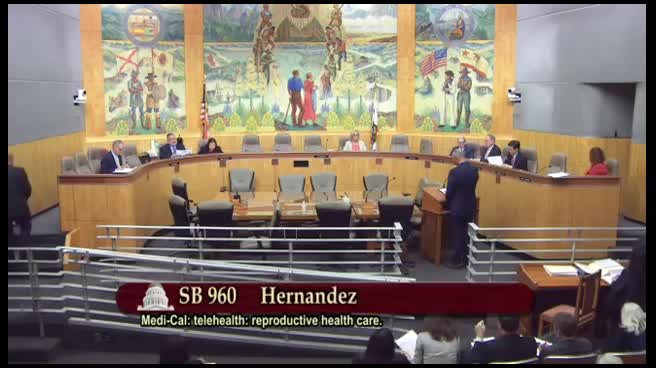
Bill Author
Bill Co-Author(s):