SB 23: CalWORKs: eligibility.
- Session Year: 2015-2016
- House: Senate
- Latest Version Date: 2014-12-01
Existing law requires each county to provide cash assistance and other social services to needy families through the California Work Opportunity and Responsibility to Kids (CalWORKs) program using federal Temporary Assistance to Needy Families (TANF) block grant program, state, and county funds. Under existing law, for purposes of determining a familys maximum aid payment under the CalWORKs program, the number of needy persons in the same family is not increased for any child born into a family that has received aid under the CalWORKs program continuously for the 10 months prior to the birth of the child, with specified exceptions.
This bill would repeal that exclusion for purposes of determining the familys maximum aid payment and would expressly prohibit the denial of aid, or the denial of an increase in the maximum aid payment, if a child, on whose behalf aid or an increase in aid is being requested, was born into an applicants or recipients family while the applicants or recipients family was receiving aid under the CalWORKs program. The bill would specify that an applicant or recipient is not entitled to an increased benefit payment for any month prior to January 1, 2016, as a result of the repeal of that exclusion or the enactment of that express prohibition. The bill would also prohibit the department from conditioning an applicants or recipients eligibility for aid on the applicants or recipients disclosure of information regarding rape, incest, or contraception, as specified, or the applicants or recipients use of contraception.
Existing law continuously appropriates moneys from the General Fund to defray a portion of county aid grant costs under the CalWORKs program.
This bill would declare that no appropriation would be made for purposes of the bill.
To the extent that this bill affects eligibility under the CalWORKs program, the bill would create a state-mandated local program.
The California Constitution requires the state to reimburse local agencies and school districts for certain costs mandated by the state. Statutory provisions establish procedures for making that reimbursement.
This bill would provide that, if the Commission on State Mandates determines that the bill contains costs mandated by the state, reimbursement for those costs shall be made pursuant to these statutory provisions.
The Legislature finds and declares all of the following:
(a)Scientific research has demonstrated that young children living in deep poverty experience lifelong cognitive impairments limiting their ability to be prepared for, and succeed in, school.
(b)Academic research has documented an increase in missed days of school and an increase in visits to hospital emergency rooms by children who live in deep poverty.
(c)The Maximum Family Grant rule was adopted to limit the length of time a family could receive basic needs assistance, and to limit the amount of assistance a family could receive, through the Aid to Families with Dependent Children (AFDC) program before the implementation of welfare reform. At the time the rule was adopted, there was no limit on the length of time a family could receive aid, no work requirements, and the benefits provided were approximately 80 percent of the federal poverty level.
(d)Since the implementation of the Maximum Family Grant rule, AFDC has been replaced with the California Work Opportunity and Responsibility to Kids Act (CalWORKs), which imposes lifetime limits on aid and requires adult CalWORKs participants to meet work requirements in order to receive a maximum benefit of approximately 40 percent of the federal poverty level.
(e)The Maximum Family Grant rule makes poor children poorer, reducing the income of families with infants to below 30 percent of the federal poverty level.
(f)This act is necessary to protect infants born to families receiving CalWORKs from experiencing lifelong cognitive impairments due to the toxic stress of deep poverty and to ready those children for participation in Californias public school system.
(g)This act is also necessary to protect the reproductive and privacy rights of all applicants for, and recipients of, aid under CalWORKs.
SEC. 2.Section 11270.5 is added to the Welfare and Institutions Code, immediately following Section 11270, to read:11270.5.(a)An applicant for, or recipient of, aid under this chapter shall not be required, as a condition of eligibility, to do any of the following:
(1)Divulge that any member of the assistance unit is a victim of rape or incest.
(2)Share confidential medical records related to any member of the assistance units rape or incest.
(3)Use contraception, choose a particular method of contraception, or divulge the method of contraception that any member of the assistance unit uses.
(b)An applicant for, or recipient of, aid under this chapter shall not be denied aid, nor denied an increase in the maximum aid payment, for a child born into the applicants or recipients family during a period in which the applicants or recipients family was receiving aid under this chapter.
(c)An applicant for, or recipient of, aid under this chapter shall not be entitled to an increased benefit payment for any month prior to January 1, 2016, as a result of the repeal of former Section 11450.04 (as added by Section 1 of Chapter 196 of the Statutes of 1994) or the enactment of this section.
SEC. 3.Section 11450.04 of the Welfare and Institutions Code is repealed.11450.04.(a)For purposes of determining the maximum aid payment specified in subdivision (a) of Section 11450 and for no other purpose, the number of needy persons in the same family shall not be increased for any child born into a family that has received aid under this chapter continuously for the 10 months prior to the birth of the child. For purposes of this section, aid shall be considered continuous unless the family does not receive aid during two consecutive months. This subdivision shall not apply to applicants for, or recipients of, aid unless notification is provided pursuant to this section.
(b)This section shall not apply with respect to any of the following children:
(1)Any child who was conceived as a result of an act of rape, as defined in Sections 261 and 262 of the Penal Code, if the rape was reported to a law enforcement agency, medical or mental health professional or social services agency prior to, or within three months after, the birth of the child.
(2)Any child who was conceived as a result of an incestuous relationship if the relationship was reported to a medical or mental health professional or a law enforcement agency or social services agency prior to, or within three months after, the birth of the child, or if paternity has been established.
(3)Any child who was conceived as a result of contraceptive failure if the parent was using an intrauterine device, a Norplant, or the sterilization of either parent.
(c)This section shall not apply to any child born on or before November 1, 1995.
(d)(1)This section shall not apply to any child to whom it would otherwise apply if the family has not received aid for 24 consecutive months while the child was living with the family.
(2)This section shall not apply to any child conceived when either parent was a nonneedy caretaker relative.
(3)This section shall not apply to any child who is no longer living in the same home with either parent.
(e)One hundred percent of any child support payment received for a child born into the family, but for whom the maximum aid payment is not increased pursuant to this section, shall be paid to the assistance unit. Any such child support payment shall not be considered as income to the family for the purpose of calculating the amount of aid for which the family is eligible under this article.
(f)Commencing January 1, 1995, each county welfare department shall notify applicants for assistance under this chapter, in writing, of the provisions of this section. The notification shall also be provided to recipients of aid under this chapter, in writing, at the time of recertification, or sooner. The notification required by this section shall set forth the provisions of this section and shall state explicitly the impact these provisions would have on the future aid to the assistance unit. This section shall not apply to any recipients child earlier than 12 months after the mailing of an informational notice as required by this subdivision.
(g)(1)The department shall seek all appropriate federal waivers for the implementation of this section.
(2)The department shall implement this section commencing on the date the Director of Social Services executes a declaration, that shall be retained by the director, stating that the administrative actions required by paragraph (1) as a condition of implementation of this section have been taken by the United States Secretary of Health and Human Services.
(h)Subdivisions (a) to (g), inclusive, shall become operative on January 1, 1995.
SEC. 4.No appropriation pursuant to Section 15200 of the Welfare and Institutions Code shall be made for the purposes of this act.
SEC. 5.If the Commission on State Mandates determines that this act contains costs mandated by the state, reimbursement to local agencies and school districts for those costs shall be made pursuant to Part 7 (commencing with Section 17500) of Division 4 of Title 2 of the Government Code.
|
Date
|
Status
|
|---|---|
| Jun 1, 2015 | Read third time. Passed. (Ayes 27. Noes 6.) Ordered to the Assembly. |
| Aug 29, 2016 | Ordered to inactive file on request of Assembly Member Calderon. |
| Aug 16, 2016 | Ordered to third reading. |
| Aug 16, 2016 | From inactive file. |
| Aug 15, 2016 | Notice of intention to remove from inactive file given by Assembly Member Cooper. |
| Sep 4, 2015 | Ordered to inactive file on request of Assembly Member Holden. |
| Aug 31, 2015 | Read second time. Ordered to third reading. |
| Aug 28, 2015 | From committee: Do pass. (Ayes 14. Noes 0.) (August 27). |
| Aug 19, 2015 | August 19 set for first hearing. Placed on APPR. suspense file. |
| Jul 15, 2015 | From committee: Do pass and re-refer to Com. on APPR. (Ayes 5. Noes 2.) (July 14). Re-referred to Com. on APPR. |
| Jun 15, 2015 | Referred to Com. on HUM. S. |
| Jun 2, 2015 | In Assembly. Read first time. Held at Desk. |
| Dec 1, 2014 | Introduced. Read first time. To Com. on RLS. for assignment. To print. |
| Jun 1, 2015 | Read third time. Passed. (Ayes 27. Noes 6. Page 1193.) Ordered to the Assembly. |
| May 28, 2015 | Read second time. Ordered to third reading. |
| May 28, 2015 | From committee: Do pass. (Ayes 5. Noes 1.) (May 28). |
| May 28, 2015 | From committee: Do pass. (Ayes 5. Noes 1. Page 1146.) (May 28). |
| May 23, 2015 | Set for hearing May 28. |
| Apr 13, 2015 | April 13 hearing: Placed on APPR. suspense file. |
| Apr 2, 2015 | Set for hearing April 13. |
| Mar 25, 2015 | From committee: Do pass and re-refer to Com. on APPR. (Ayes 4. Noes 0. Page 416.) (March 24). Re-referred to Com. on APPR. |
| Feb 3, 2015 | Set for hearing March 24. |
| Jan 15, 2015 | Referred to Com. on HUMAN S. |
| Dec 2, 2014 | From printer. May be acted upon on or after January 1. |
|
Date
|
Description
|
Location
|
Votes
|
|
|---|---|---|---|---|
| Aug 27, 2015 | Do pass. | Assembly Standing Committee on Appropriations |
Passed |
|
| Jul 14, 2015 | Do pass and be re-referred to the Committee on [Appropriations] | Assembly Standing Committee on Human Services |
Passed |
|
| Jun 1, 2015 | Senate 3rd Reading SB23 Mitchell | Senate Floor |
Passed |
|
| May 28, 2015 | Do pass | Senate Standing Committee on Appropriations |
Passed |
|
| Apr 13, 2015 | Placed on suspense file | Senate Standing Committee on Appropriations |
Passed |
|
| Mar 24, 2015 | Do pass, but first be re-referred to the Committee on [Appropriations] | Senate Standing Committee on Human Services |
Passed |
This list shows positions taken on this bill by organizations on the date displayed, which is linked to the original source.
Positions by individuals are not included.
|
Organization
|
Position
|
Date
|
|---|---|---|
| 9 to 5 California | ** Support | Jun 1, 2015 |
| 9to5, National Association of Working Women | ** Support | Aug 19, 2015 |
| Access Women's Health Justice | * Support | Jul 14, 2015 |
| ACCESS Women's Health Justice - co-sponsor | ** Support | Aug 19, 2015 |
| Act for Women and Girls | ** Support | Aug 19, 2015 |
| Advancement Project | ** Support | Aug 19, 2015 |
| AFSCME Local 3930 | ** Support | Jun 1, 2015 |
| Alameda County Board of Supervisors | ** Support | Aug 19, 2015 |
| Alameda County Community Food Bank | ** Support | Aug 19, 2015 |
| Alameda County Resident | * Support | Jul 14, 2015 |
| Alameda County Social Services Agency | ** Support | Aug 19, 2015 |
| Alliance for Community Transformations | ** Support | Jun 1, 2015 |
| Alliance Of Californians For Community Empowerment | ** Support | Aug 19, 2015 |
| American Academy of Pediatrics | * Support | Jul 14, 2015 |
| American Association of University Women | ** Support | Aug 19, 2015 |
| American Civil Liberties Union of California | ** Support | Aug 19, 2015 |
| Asian Law Alliance | ** Support | Aug 19, 2015 |
| Asian Pacific Policy & Planning Council | ** Support | Jun 1, 2015 |
| Association of California Commissions for Women | ** Support | Jun 1, 2015 |
| Avaya | * Support | Jul 14, 2015 |
| Bay Area Legal Aid | ** Support | Aug 19, 2015 |
| black women for wellness | ** Support | Aug 19, 2015 |
| Business and Professional Women of Nevada County | ** Support | Aug 19, 2015 |
| Butte County Department of Employment and Social Services | ** Support | Jun 1, 2015 |
| Cal-Islanders Humanitarian Association | ** Support | Jun 1, 2015 |
| California Alternative Payment Program Association | ** Support | Jun 1, 2015 |
| California Association Of Food Banks | ** Support | Aug 19, 2015 |
| California Black Health Network | ** Support | Aug 19, 2015 |
| California Catholic Conference of Bishops | ** Support | Aug 19, 2015 |
| California Communities United Institute | ** Support | Jun 1, 2015 |
| California Community College CalWORKs Association | ** Support | Jun 1, 2015 |
| California Domestic Workers Coalition | * Support | Mar 24, 2015 |
| California Family Health Council Inc. | ** Support | Aug 19, 2015 |
| California Family Resource Association | ** Support | Aug 19, 2015 |
| California Food Policy Advocates | ** Support | Aug 19, 2015 |
| California Hunger Action Coalition | ** Support | Jun 1, 2015 |
| California Hunger Coalition | ** Support | Aug 19, 2015 |
| California Immigrant Policy Center | ** Support | Aug 19, 2015 |
| California Latinas for Reproductive Justice - co-sponsor | ** Support | Aug 19, 2015 |
| California March Of Dimes Birth Defects Foundation | * Support | Jul 14, 2015 |
| California National Organization For Women | ** Support | Jun 1, 2015 |
| California Nurse - Midwives Association | ** Support | Jun 1, 2015 |
| California Nurses Association | ** Support | Aug 19, 2015 |
| California Pan-Ethic Health Network | ** Support | Aug 19, 2015 |
| California Partnership | ** Support | Aug 19, 2015 |
| California Partnership To End Domestic Violence | ** Support | Aug 19, 2015 |
| California Reinvestment Coalition | ** Support | Jun 1, 2015 |
| California Rural Legal Assistance Foundation, Inc. | ** Support | Aug 19, 2015 |
| California Wic Association | ** Support | Aug 19, 2015 |
| California Women's Law Center | ** Support | Jun 1, 2015 |
| California Work and Family Coalition | * Support | Mar 24, 2015 |
| Californians United for a Responsible Budget | ** Support | Jun 1, 2015 |
| Casa de Esperanza | ** Support | Jun 1, 2015 |
| Center for Law and Social Policy | ** Support | Aug 19, 2015 |
| Center on Reproductive Rights and Justice at UC Berkley School of Law | * Support | Mar 24, 2015 |
| Center on Reproductive Rights and Justice, UC Berkeley | ** Support | Aug 19, 2015 |
| Center on Reproductive Rights at Justice at UC Berkeley School of Law | * Indeterminate | Apr 13, 2015 |
| Child Care Alliance of Los Angeles | ** Support | Aug 19, 2015 |
| Child Care Law Center | ** Support | Aug 19, 2015 |
| Children Now | ** Support | Aug 19, 2015 |
| Children's Defense Fund-California | ** Support | Aug 19, 2015 |
| Children'S Law Center Of California | * Support | Jul 14, 2015 |
| Chinese Progressive Association | ** Support | Jun 1, 2015 |
| Citizens for Choice | ** Support | Aug 19, 2015 |
| City and County of San Francisco | ** Support | Aug 19, 2015 |
| City Of San Mateo | * Support | Jul 14, 2015 |
| Coalition of California Reproductive Rights Organization | * Support | Jul 14, 2015 |
| Community Food and Justice Coalition | ** Support | Jun 1, 2015 |
| Consumer Attorneys Of California | ** Support | Aug 19, 2015 |
| Contra Costa | ** Support | Aug 19, 2015 |
| County Of Los Angeles | ** Support | Jun 1, 2015 |
| County Welfare Directors Association of CA , co-sponsor | ** Support | Aug 19, 2015 |
| Courage Campaign | ** Support | Aug 19, 2015 |
| CWDA | ** Support | Mar 24, 2015 |
| Department on the Status of Women | ** Support | Jun 1, 2015 |
| East Bay Community Law Center - co-sponsor | ** Support | Aug 19, 2015 |
| Ella Baker Center For Human Rights | ** Support | Aug 19, 2015 |
| Equal Rights Advocates | ** Support | Aug 19, 2015 |
| Family Violence Law Center | ** Support | Aug 19, 2015 |
| Feminist Democrats of Sacramento County | ** Support | Jun 1, 2015 |
| First 5 Monterey County | ** Support | Aug 19, 2015 |
| First Place for Youth | ** Support | Jun 1, 2015 |
| Food for People, Inc., Humboldt County | ** Support | Aug 19, 2015 |
| Forward Together | ** Support | Aug 19, 2015 |
| Friends Committee On Legislation Of California | ** Support | Aug 19, 2015 |
| Guam Communications Network | ** Support | Aug 19, 2015 |
| Having Our Say | ** Support | Aug 19, 2015 |
| Health & Human Services Network | ** Support | Jun 1, 2015 |
| Help a Mother Out | ** Support | Jun 1, 2015 |
| Hernandez Strategy Group | * Support | Apr 13, 2015 |
| Housing California | ** Support | Jun 1, 2015 |
| Hunger Action Los Angeles | ** Support | Aug 19, 2015 |
| Hunger Advocacy Network | ** Support | Aug 19, 2015 |
| Interface Children & Family Services | ** Support | Jun 1, 2015 |
| Jewish Family Service of Los Angeles | ** Support | Aug 19, 2015 |
| Jewish Family Service of San Diego | ** Support | Jun 1, 2015 |
| Korean Community Center of the East Bay | ** Support | Jun 1, 2015 |
| Latino Coalition for a Healthy California | ** Support | Aug 19, 2015 |
| Law Foundation of Silicon Valley | ** Support | Aug 19, 2015 |
| Law Students for Reproductive Justice | ** Support | Jun 1, 2015 |
| League of Women Voters of CA | ** Support | Aug 19, 2015 |
| Legal Aid Society - Employment Law Center | ** Support | Jun 1, 2015 |
| Legal Services of Northern California | ** Support | Aug 19, 2015 |
| Libreria Del Pueblo, Inc. | ** Support | Jun 1, 2015 |
| LIUNA Locals 777 & 792 | ** Support | Aug 19, 2015 |
| Long Beach | ** Support | Aug 19, 2015 |
| Los Angeles | ** Support | Aug 19, 2015 |
| Los Angeles County Board of Supervisors | ** Support | Aug 19, 2015 |
| Lutheran Office of Public Policy | ** Support | Aug 19, 2015 |
| March of Dimes Foundation, California Chapter | ** Support | Jun 1, 2015 |
| Monterey County Board of Supervisors | ** Support | Aug 19, 2015 |
| Mother | * Support | Jul 14, 2015 |
| NARAL Pro-Choice California | ** Support | Jun 1, 2015 |
| National Association of Social Workers | * Support | Mar 24, 2015 |
| National Association of Social Workers, CA Chapter | ** Support | Aug 19, 2015 |
| National Center for Youth Law | ** Support | Jun 1, 2015 |
| National Council of Jewish Women | ** Support | Aug 19, 2015 |
| National Health Law Program | ** Support | Aug 19, 2015 |
| National Women's Law Center | ** Support | Aug 19, 2015 |
| National Women's Political Caucus of CA | ** Support | Aug 19, 2015 |
| Pacific Islander Cancer Survivors Network | ** Support | Aug 19, 2015 |
| Page N | ** Support | Aug 19, 2015 |
| Page O | ** Support | Aug 19, 2015 |
| Page P | ** Support | Aug 19, 2015 |
| Page Q | ** Against | Aug 19, 2015 |
| Parent Voices | ** Support | Aug 19, 2015 |
| Peace Over Violence | ** Support | Jun 1, 2015 |
| Physicians for Reproductive Health | ** Support | Aug 19, 2015 |
| Planned Parenthood Advocacy Project Los Angeles County | ** Support | Aug 19, 2015 |
| Planned Parenthood Affiliates Of California | ** Support | Aug 19, 2015 |
| Planned Parenthood Northern California Action Fund | ** Support | Aug 19, 2015 |
| Planned Parenthood Pasadena and San Gabriel Valley | ** Support | Aug 19, 2015 |
| Prevention Law Projects | ** Support | Mar 24, 2015 |
| Public Counsel's Children's Right Project and Homelessness of? | ** Support | Mar 24, 2015 |
| Public Interest Law Project | ** Support | Aug 19, 2015 |
| Rainbow Services, Ltd. | ** Support | Jun 1, 2015 |
| River City Food Bank | ** Support | Aug 19, 2015 |
| Riverside All of Us or None | ** Support | Aug 19, 2015 |
| Rubicon Programs | ** Support | Aug 19, 2015 |
| Sacramento | ** Support | Aug 19, 2015 |
| Sacramento County Hunger Coalition | ** Support | Aug 19, 2015 |
| San Diego Hunger Coalition | ** Support | Aug 19, 2015 |
| San Francisco Living Wage Coalition | ** Support | Jun 1, 2015 |
| San Luis Obispo County | ** Support | Aug 19, 2015 |
| San Mateo County Board of Education | ** Support | Aug 19, 2015 |
| Santa Clara County Board of Supervisors | ** Support | Aug 19, 2015 |
| Santa Cruz County First District Supervisor | ** Support | Aug 19, 2015 |
| SAVE | ** Support | Jun 1, 2015 |
| SEIU California State Council | * Support | Jul 14, 2015 |
| Solano County Board of Supervisors | ** Support | Aug 19, 2015 |
| Sonoma County Human Services Department | ** Support | Jun 1, 2015 |
| Special Needs Network, Inc. | ** Support | Jun 1, 2015 |
| St. Anthony Foundation | ** Support | Aug 19, 2015 |
| St. Anthony's San Francisco | ** Support | Jun 1, 2015 |
| Starting Over, Inc. | ** Support | Jun 1, 2015 |
| Strong Hearted Native Women's Coalition | ** Support | Jun 1, 2015 |
| Stronger California Advocates Network | ** Support | Aug 19, 2015 |
| Tehama County Department of Social Services | ** Support | Jun 1, 2015 |
| The Feminist Agenda Network | ** Support | Aug 19, 2015 |
| Time for Change Foundation | ** Support | Aug 19, 2015 |
| UC Berkeley School of Law Center on Reproductive Rights and Justice | * Support | Jul 14, 2015 |
| United Ways Of California | ** Support | Aug 19, 2015 |
| Ventura County Board of Supervisors | ** Support | Jun 1, 2015 |
| Violence Prevention Coalition of Greater Los Angeles | ** Support | Aug 19, 2015 |
| Vision Compromiso | ** Support | Aug 19, 2015 |
| Voices for Progress | ** Support | Aug 19, 2015 |
| Western Center on Law and Poverty, co-sponsor | ** Support | Aug 19, 2015 |
| Western Regional Advocacy Project | ** Support | Jun 1, 2015 |
| Women Lawyers of Sacramento | ** Support | Aug 19, 2015 |
| Women Organizing Resources, Knowledge and Services | ** Support | Jun 1, 2015 |
| Women's Community Clinic | ** Support | Aug 19, 2015 |
| Women's Health Specialist of California | ** Support | Jun 1, 2015 |
| YWCA of Glendale | ** Support | Jun 1, 2015 |
SB 23
Page 5
SENATE THIRD READING
SB 23
(Mitchell)
As Introduced December 1, 2014
Majority vote
SENATE VOTE: 27-6
Committee |
Votes |
Ayes |
Noes |
Human Services |
5-2 |
Chu, Calderon, Lopez, Mark Stone, Thurmond |
Mayes, Maienschein |
Appropriations |
14-0 |
Gomez, Bloom, Bonta, Calderon, Nazarian, Eggman, Eduardo Garcia, Holden, Jones, Quirk, Rendon, Wagner, Weber, Wood |
|
SUMMARY: Repeals the maximum family grant (MFG) or "family cap" rule under the California Work Opportunity and Responsibility to Kids (CalWORKs) program. Specifically, this bill:
Prohibits requiring an applicant or recipient of CalWORKs aid to do any of the following as a condition of eligibility:
Divulge that any member of the assistance unit is a victim of rape or incest;
Share confidential medical records related to any member of the assistance unit's rape or incest; or
Use contraception, choose a particular method of contraception, or divulge the method of contraception that any member of the assistance unit uses.
Prohibits denial of aid or denial of an increase in the maximum aid payment to a CalWORKs applicant or recipient due to a child being born into the applicant's or recipient's family while the family is receiving CalWORKs aid.
Repeals Welfare and Institutions Code (WIC) Section 11450.04, which establishes the MFG rule, including exclusions for families in which a mother reports she is a victim of rape or incest or in instances where specified methods of contraception fail.
Specifies that any increased benefit payment resulting from this bill will occur after January 1, 2016, and a CalWORKs applicant or recipient will not be entitled to a retroactive benefit payment increase as a result of repealing the prior statute.
Prohibits an appropriation for the purposes of this act, as specified.
Declares a number of legislative findings pertaining to the impact of the MFG rule on families, including that the MFG rule makes poor children poorer, reducing the income of families with infants to below 30% of the federal poverty level.
EXISTING LAW:
Establishes under federal law the Temporary Assistance for Needy Families (TANF) program to provide aid and welfare-to-work services to eligible families and, in California, provides that TANF funds for welfare-to-work services are administered through the CalWORKs program. (42 United States Code Section 601 et seq., WIC Section 11200 et seq.)
Requires all individuals over 16 years of age, unless they are otherwise exempt, to participate in welfare-to-work activities as a condition of eligibility for CalWORKs. (WIC Sections 11320.3 and 11322.6)
Establishes the number of weekly hours of welfare-to-work participation necessary to remain eligible for aid, including requirements for an unemployed parent in a two-parent assistance unit, as specified. (WIC Section 11322.8)
Prohibits an increase in aid based on an increase in the number of needy persons in a family due to the birth of an additional child, if the family has received aid continuously for the 10 months prior to the birth of the child, as specified. (WIC Section 11450.04(a))
Exempts the following individuals and circumstances from this prohibition:
Any child who was conceived as a result of an act of rape, as defined in Penal Code Sections 261 and 262, if the rape was reported to a law enforcement agency, medical or mental health professional or social services agency prior to, or within three months after, the birth of the child;
Any child who was conceived as a result of an incestuous relationship if the relationship was reported to a medical or mental health professional or a law enforcement agency or social services agency prior to, or within three months after, the birth of the child or if paternity has been established;
Any child who was conceived as a result of contraceptive failure if the parent was using an intrauterine device, a Norplant, or the sterilization of either parent;
If the family does not receive aid for two consecutive months during the 10-months prior to the child's birth;
Children born on or before November 1, 1995;
Any child who would qualify for the maximum family grant cap if the family did not receive aid for 24 consecutive months while the child was living with the family;
Any child conceived when either parent was a non-needy caretaker relative; and
Any child who is no longer living in the same home with either parent. (WIC Section 11450.04(b))
Requires the state Department of Social Services (DSS) to seek appropriate federal waivers to implement the MFG limit and associated conditions, as specified, and directs DSS to implement the rule on the date the waiver is received by declaration of the department's director. (WIC Section 11450.04(g))
Establishes a 48-month lifetime limit of CalWORKs benefits for eligible adults, including a CalWORKs welfare-to-work 24-month time clock, upon exhaustion of which a recipient must meet federal work requirements in order to retain eligibility. (WIC Section 11454 and 11322.85)
FISCAL EFFECT: According to the Assembly Appropriations Committee this bill will have the following fiscal impact:
Increase in CalWORKs grant costs in the range of $188 million to $220 million (General Fund (GF)) annually based on data from county consortia indicating 13.3% of all children in CalWORKs households (134,900 children) are currently impacted by the MFG rule.
Potential future additional CalWORKs grant costs of $3.5 million to $4.1 million (GF) for every 2,500 children born into CalWORKs families each year who otherwise would have been subject to the MFG rule, with annual costs cumulatively increasing in subsequent years.
Potential reduction in CalFresh benefits (Federal Funds) for a percentage of families due to the increase in CalWORKs grant levels under the repeal of the MFG rule. While many families may not experience a reduction due to their limited or lack of income, for every 10% of families that are impacted, CalFresh benefits could decline by up to $5.6 million to $6.6 million annually.
Ongoing potential cost savings in averted administrative hearings related to challenges to MFG determinations. At an estimated cost of $1,025 per hearing, elimination of 250 hearings per year would result in cost savings of over $250,000 (GF) per year.
Potential minor offset to CalWORKs grant cost increases due to child support payments considered countable income in lieu of being provided to the CalWORKs family under the MFG rule.
One-time costs (GF), likely significant, for automation changes necessary to implement eligibility changes.
COMMENTS:
History of the Maximum Family Grant rule: In the early 1990's, ongoing controversy regarding the existence and nature of "intergenerational welfare" and whether the availability of public assistance benefits motivated family formation patterns became the backdrop for the first statewide family cap policy, which was implemented in New Jersey in 1992. Under the Aid to Families with Dependent Children (AFDC) program, states needed waivers to implement family cap policies, which required states to conduct rigorous evaluations of their policies and identify whether the policies achieved their intended goals. In 1992, Governor Wilson put Proposition 165 on the ballot, which was a welfare reform and budget powers initiative that included family cap provisions. After the ballot initiative was rejected by voters (54% to 46%), implementation of a family cap policy in the state was delayed until AB 473 (Brulte), Chapter 196, Statutes of 1994 created California's MFG rule. Upon passage, California was still required to obtain a federal waiver to be able to implement the new MFG rule, as the rule was inconsistent with AFDC regulations. California's waiver application was heavily contested.
The Personal Responsibility and Work Opportunity Reconciliation Act of 1996 (PRWORA), which was the final piece of federal welfare reform legislation, repealed the AFDC program and created the block-granted TANF program. The new approach emphasized integrating parents into the workforce and granted states flexibility in implementing their respective programs. Because PRWORA eliminated the waiver requirement for family cap policies, California proceeded with its MFG rule established under AB 473 without a waiver. The legislation was based on the belief that increasing welfare grants for children born into AFDC families may incentivize families to have additional children for the explicit purpose of increasing their monthly grant. By limiting the grant amount, policymakers believed families would be dissuaded from having additional children. Elimination of the waiver requirement for a family cap policy under PRWORA allowed California to abandon any efforts to prove the new rule’s effectiveness. California's MFG policy has not been amended since its original enactment.
How the MFG rule is applied: The current MFG rule prohibits CalWORKs aid payments, with certain exceptions, for a child that is born into a family that has been receiving aid for 10 or more continuous months. In practical terms for the family, the grant payment that was previously intended for only those members who are aided is spread more thinly and used to also support the newborn child in the family who isn't aided.
If a family receives aid for the 10 continuous months preceding the birth of a child, that child is excluded and does not receive an aid payment. However, if the family is off aid for two or more months during the 10-month period preceding the birth of the child, the 10 months are not considered to be continuous, and the child does receive an aid payment. Additionally, the MFG rule does not apply if a family returns to aid after a break of two or more years during which the family did not receive any aid, provided that the family still meets eligibility requirements and aided children are still under 18 years old.
Exceptions to the MFG rule: Current statute allows aid payments for a child who would otherwise be excluded from receiving aid due to the MFG rule if the child is conceived due to incest or rape and the incident has been reported to a law enforcement agency, a medical or mental health professional or social services prior to, or within three months after, the birth of the child. This aspect of the policy requires mothers – already in a vulnerable state and in need of assistance to maintain their family's safety and well-being – to report their victimization, perhaps much sooner than they're ready to come forward. Additionally, it does not take into consideration the possibility that a mother could be putting herself and her children in danger if her attacker seeks retribution after she makes such a report.
Statute also allows aid payments for a child who would otherwise be excluded due to the MFG rule if the child is conceived due to the failure of one of three contraception methods specified in statute: an intrauterine device, Norplant, or sterilization of either parent. Not only does this aspect of the policy involve government in the personal sexual health matters of recipients, it also does not take into account any other validated methods of contraception or any of the personal safety and health reasons for which a parent may choose to not use any of the three specified methods or any other method of contraception (e.g., age, spiritual or religious beliefs, or health status). Additionally, the reference to one of the acceptable methods specified in statute, Norplant, is outdated, as the product has been discontinued for use in the United States.
Child support interactions: Federal and state laws impose requirements on families in welfare programs in order to increase child support collections on behalf of families applying for or receiving CalWORKs. Unless the applicant or recipient has good cause (e.g., fear of retaliation from an abuser), he or she is required to cooperate with the local child support agency to collect child support payments from absent parents as a condition of eligibility for CalWORKs. Child support payments collected from non-custodial parents of children in a CalWORKs family are retained by the state to offset the cost of providing aid, with the exception of the first $50 collected each month, which is passed on to the CalWORKs family.
State law pertaining to the MFG rule provides that child support collected on behalf of an excluded child must be paid entirely to the family rather than to the state or county as reimbursement for public assistance, and the child support payment is not considered income for purposes of public benefit calculations. While this policy may be considered advantageous for families with children who would otherwise not receive any aid, the policy still results in a shortfall for many families. Cases in which the non-custodial parent can’t be located or can’t afford to pay child support, or when the aided parent doesn’t have a waiver and would experience undue emotional hardship due to having to maintain a connection with an abusive or otherwise unstable non-custodial parent, there is no benefit for the child excluded under the MFG rule. Because this bill repeals all MFG-related provisions in statute, it deletes the requirement that all child support be passed through for children subject to the MFG rule, thereby aligning child support pass-through practices for all children in the CalWORKs program.
Family cap policies in other states: There are currently only 15 other states with family cap policies in effect for their TANF programs, eight of which implement a full child exclusion from aid similar to California. Among the remaining seven states, three have a partial exclusion and increase the family's aid payment by a reduced amount, two more increase a parent’s earned income disregard rather than provide cash aid, and another provides the family with a voucher for benefits instead of cash aid.
Need for this bill: According to the author, explaining the need for this bill as it pertains to the health of California's families, "As states have realized the long term health consequences of denying services to infants, there has been a movement to repeal MFG policies. California must protect the health of children born into extreme poverty and repeal this draconian and ineffective rule. The MFG rule has not led to changes in birthrates among poor women but has resulted in women being forced to make desperate decisions that endanger the health and safety of themselves and their children."
Analysis Prepared by: Myesha Jackson / HUM. S. / (916) 319-2089 FN: 0001605
Date of Hearing: August 19, 2015
ASSEMBLY COMMITTEE ON APPROPRIATIONS
Jimmy Gomez, Chair
SB 23
(Mitchell) – As Introduced December 1, 2014
Policy Committee: |
Human Services |
Vote: |
5 - 2 |
|
|
|
|
|
|
|
|
Urgency: No State Mandated Local Program: Yes Reimbursable: Yes
SUMMARY: This bill repeals the maximum family grant (MFG) or “family cap” rule under the California Work Opportunity and Responsibility to Kids (CalWORKs) program. Specifically, this bill:
Repeals the MFG rule and expressly prohibits denial of aid or denial of an increase in the maximum aid payment to a CalWORKs applicant or recipient due to a child being born into the applicant’s or recipient’s family while the family is receiving CalWORKs aid.
Prohibits requiring an applicant or recipient of CalWORKs aid to do any of the following as a condition of eligibility:
Divulge that any member of the assistance unit is a victim of rape or incest.
Share confidential medical records related to any member of the assistance unit’s rape or incest.
Use contraception, choose a particular method of contraception, or divulge the method of contraception that any member of the assistance unit uses.
Specifies that any increased benefit payment resulting from this bill will occur after January 1, 2016, and a CalWORKs applicant or recipient will not be entitled to a retroactive benefit payment increase as a result of the repeal of the MFG.
FISCAL EFFECT:
Increase in CalWORKs grant costs in the range of $188 million to $220 million (GF) annually based on data from county consortia indicating 13.3 percent of all children in CalWORKs households (134,900 children) are currently impacted by the MFG rule.
Potential future additional CalWORKs grant costs of $3.5 million to $4.1 million (GF) for every 2,500 children born into CalWORKs families each year who otherwise would have been subject to the MFG rule, with annual costs cumulatively increasing in subsequent years.
Potential reduction in CalFresh benefits (Federal Funds) for a percentage of families due to the increase in CalWORKs grant levels under the repeal of the MFG rule. While many families may not experience a reduction due to their limited or lack of income, for every 10 percent of families that are impacted, CalFresh benefits could decline by up to $5.6 million to $6.6 million annually.
Ongoing potential cost savings in averted administrative hearings related to challenges to MFG determinations. At an estimated cost of $1,025 per hearing, elimination of 250 hearings per year would result in cost savings of over $250,000 (GF) per year.
Potential minor offset to CalWORKs grant cost increases due to child support payments considered countable income in lieu of being provided to the CalWORKs family under the MFG rule.
One-time costs (GF), likely significant, for automation changes necessary to implement eligibility changes.
COMMENTS:
Purpose. According to the author, in explaining the need for this bill as it pertains to the health of California’s families, “As states have realized the long term health consequences of denying services to infants, there has been a movement to repeal MFG policies. California must protect the health of children born into extreme poverty and repeal this draconian and ineffective rule. The MFG rule has not led to changes in birthrates among poor women, but has resulted in women being forced to make desperate decisions that endanger the health and safety of themselves and their children.”
This bill seeks to repeal the MFG rule not only because it has been proven ineffective, but also because of the adverse effects it has on families in poverty and the dignity of women in general.
Background. Existing law establishes guidelines for determining a family’s maximum aid payment under the CalWORKs program, including all eligible family members, as well as the level of aid to be paid. Existing law, under the maximum family grant (MFG) rule, prohibits, with some exceptions, an increase in CalWORKs aid based on an increase in the number of needy persons in a family due to the birth of a child, if the family has received aid continuously for the 10 months prior to the birth of the child.
The current MFG rule, which denies aid ($128 per month on average) was adopted as part of the 1994-95 state budget agreement after it was rejected by the voters in 1992. It has not been amended since its original enactment. The original legislation was based on the belief that increasing welfare grants for children born into AFDC families may provide an incentive for families to have additional children to increase their monthly grant. By limiting the grant amount, policy makers believed families would be dissuaded from having additional children and therefore reduce the amount of "intergenerational" poverty. More recent studies have since debunked the belief that increasing welfare grants encourages parents to have additional children.
Beginning in the early 1990s, 24 states implemented family cap rules. Today, just 16 states still have family cap rules in place, including California. In 2002 and 2003, Maryland and Illinois repealed their policies and were followed by Wyoming, Nebraska, Oklahoma, Kansas, Maryland, and Minnesota. This is the fourth attempt to repeal the MFG rule in California since 2007.
Arguments in Support. This bill has a wide range of supporters. The arguments for repealing the MFG rule range from documenting the misguided notion that denying aid dissuades families from having children, to exposing the effects of poverty and deep poverty on children, to outrage regarding the personal indignity experienced by women confronted with an antiquated rule that requires them to expose extremely personal, and sometimes traumatic, information based on stereotypical and discriminatory thinking regarding women on aid.
While the near-term costs of eliminating the MFG rule are significant, more broadly, the long-term effects of its repeal are unknown but could significantly reduce the costs of the projected lifetime physical, mental, and social impacts related to children raised in poverty and the long-term economic and societal effects linked to this policy.
Prior Legislation.
SB 899 (Mitchell) 2014, was nearly identical to this bill. It was held in the Senate Appropriations committee.
AB 271 (Mitchell) 2013, was substantially similar to this bill. It was held in the Senate Appropriations committee.
AB 833 (Yamada) 2011, would have eliminated the family cap exclusion, as of January 1, 2012, for any child with a disability under the federal Individuals with Disabilities Education Act (IDEA). It died in the Assembly Human Services Committee.
AB 22 (Lieber) 2007, was substantially similar to this bill. It was held in the Assembly Appropriations committee.
AB 473 (Brulte) Chapter 196, Statutes of 1994, created California’s maximum family grant (MFG) rule and required California to obtain a federal waiver to implement it.
Analysis Prepared by: Jennifer Swenson / APPR. / (916) 319-2081
SB 23
Page 9
Date of Hearing: July 14, 2015
ASSEMBLY COMMITTEE ON HUMAN SERVICES
Kansen Chu, Chair
SB 23
(Mitchell) – As Introduced December 1, 2014
SENATE VOTE: 27-6
SUBJECT: CalWORKs: eligibility.
SUMMARY: Repeals the maximum family grant (MFG) or “family cap” rule under the California Work Opportunity and Responsibility to Kids (CalWORKs) program.
Specifically, this bill:
Prohibits requiring an applicant or recipient of CalWORKs aid to do any of the following as a condition of eligibility:
Divulge that any member of the assistance unit is a victim of rape or incest;
Share confidential medical records related to any member of the assistance unit’s rape or incest; or
Use contraception, choose a particular method of contraception, or divulge the method of contraception that any member of the assistance unit uses.
Prohibits denial of aid or denial of an increase in the maximum aid payment to a CalWORKs applicant or recipient due to a child being born into the applicant’s or recipient’s family while the family is receiving CalWORKs aid.
Repeals Section 11450.04 of the Welfare and Institutions Code, which establishes the MFG rule, including exclusions for families in which a mother reports she is a victim of rape or incest or in instances where specified methods of contraception fail.
Specifies that any increased benefit payment resulting from this bill will occur after January 1, 2016, and a CalWORKs applicant or recipient will not be entitled to a retroactive benefit payment increase as a result of repealing the prior statute.
Prohibits an appropriation for the purposes of this act, as specified.
Declares a number of legislative findings pertaining to the impact of the MFG rule on families, including that the Maximum Family Grant rule makes poor children poorer, reducing the income of families with infants to below 30% of the federal poverty level.
EXISTING LAW:
Establishes under federal law the Temporary Assistance for Needy Families (TANF) program to provide aid and welfare-to-work services to eligible families and, in California, provides that TANF funds for welfare-to-work services are administered through the CalWORKs program. (42 U.S.C. 601 et seq., WIC 11200 et seq.)
Establishes income, asset and real property limits used to determine eligibility for the program, including net income below the Maximum Aid Payment (MAP), based on family size and county of residence, which is around 40% of the Federal Poverty Level. (WIC 11450, 11150 et seq.)
Prohibits an increase in aid based on an increase in the number of needy persons in a family due to the birth of an additional child, if the family has received aid continuously for the 10 months prior to the birth of the child, as specified. (WIC 11450.04 (a))
Exempts this prohibition in the following circumstances:
Any child who was conceived as a result of an act of rape, as defined in Sections 261 and 262 of the Penal Code, if the rape was reported to a law enforcement agency, medical or mental health professional or social services agency prior to, or within three months after, the birth of the child;
Any child who was conceived as a result of an incestuous relationship if the relationship was reported to a medical or mental health professional or a law enforcement agency or social services agency prior to, or within three months after, the birth of the child or if paternity has been established;
Any child who was conceived as a result of contraceptive failure if the parent was using an intrauterine device, a Norplant, or the sterilization of either parent;
If the family does not receive aid for two consecutive months during the 10-months prior to the child’s birth;
Children born on or before November 1, 1995;
Any child who would qualify for the maximum family grant cap if the family did not receive aid for 24 consecutive months while the child was living with the family;
Any child conceived when either parent was a non-needy caretaker relative; and
Any child who is no longer living in the same home with either parent. (WIC 11450.04 (b))
Requires 100% of any child support payment received for a child who is born under the maximum family grant (MFG) cap, and therefore not aided as part of the assistance unit, to be paid to the family. Additionally, prohibits any such child support payment from being counted as income in calculating CalWORKs benefits. (WIC 11450.04(e))
Requires each county welfare department to notify recipients of the MFG provisions in writing at the time of application and recertification, as specified. (WIC 11450.04(f))
Requires the state Department of Social Services (DSS) to seek appropriate federal waivers to implement the MFG limit and associated conditions, as specified, and directs DSS to implement the rule on the date the waiver is received by declaration of the department’s director. (WIC 11450.04(g))
Establishes a 48-month lifetime limit of CalWORKs benefits for eligible adults, including a CalWORKs welfare-to-work 24-month time clock, upon exhaustion of which a recipient must meet federal work requirements in order to retain eligibility. (WIC 11454, 11322.85)
Requires all individuals over 16 years of age, unless they are otherwise exempt, to participate in welfare-to-work activities as a condition of eligibility for CalWORKs. (WIC 11320.3, 11322.6)
Establishes the number of weekly hours of welfare-to-work participation necessary to remain eligible for aid, including requirements for an unemployed parent in a two-parent assistance unit, as specified. (WIC 11322.8)
FISCAL EFFECT: According to the April 7, 2015 analysis of the Senate Appropriations Committee, this bill is expected to have the following fiscal impact:
Major increase in CalWORKs grant costs in the range of $188 million to $220 million (General Fund) annually based on data from county consortia indicating 13.3% of all children in CalWORKs households (134,900 children) are currently impacted by the MFG rule.
Potential future additional CalWORKs grant costs of $3.5 million to $4.1 million (General Fund) for every 2,500 children born into CalWORKs families each year who otherwise would have been subject to the MFG rule, with annual costs cumulatively increasing in subsequent years.
Potential reduction in CalFresh benefits (Federal Fund) for a percentage of families due to the increase in CalWORKs grant levels under the repeal of the MFG rule. While many families may not experience a reduction due to their limited or lack of income, for every 10% of families that are impacted, CalFresh benefits could decline by up to $5.6 million to $6.6 million annually.
Ongoing potential cost savings in averted administrative hearings related to challenges to MFG determinations. At an estimated cost of $1,025 per hearing, elimination of 250 hearings per year would result in cost savings of over $250,000 (General Fund) per year.
Potential minor offset to CalWORKs grant cost increases due to child support payments considered countable income in lieu of being provided to the CalWORKs family under the MFG rule.
One-time costs likely significant and in excess of $150,000 (General Fund) for automation changes necessary to implement eligibility changes.
COMMENTS:
CalWORKs: The California Work Opportunity and Responsibility to Kids (CalWORKs) program provides monthly income assistance and employment-related services aimed at moving children out of poverty and helping families meet basic needs. Federal funding for CalWORKs comes from the Temporary Assistance for Needy Families (TANF) block grant. The average 2015-16 monthly cash grant for a family of three on CalWORKs (one parent and two children) is $506.55, and the maximum monthly grant amount for a family of three, if the family has no other income and lives in a high-cost county, is $704. According to recent data from the California Department of Social Services, over 540,000 families rely on CalWORKs, including over one million children. Nearly 80% of the children are under age twelve and almost 40% are under age five.
History of the Maximum Family Grant rule: In the early 1990’s, ongoing controversy regarding the existence and nature of “intergenerational welfare” and whether the availability of public assistance benefits motivated family formation patterns became the backdrop for the first statewide family cap policy, which was implemented in New Jersey in 1992. Under the Aid to Families with Dependent Children (AFDC) program, states needed waivers to implement family cap policies, which required states to conduct rigorous evaluations of their policies and identify whether the policies achieved their intended goals. In 1992, Governor Wilson put Proposition 165 on the ballot, which was a welfare reform and budget powers initiative that included family cap provisions. After the ballot initiative was rejected by voters (54%-46%), implementation of a family cap policy in the state was delayed until AB 473 (Brulte), Chapter 196, Statutes of 1994 created California’s maximum family grant (MFG) rule. Upon passage, California was still required to obtain a federal waiver to be able to implement the new MFG rule, as the rule was inconsistent with AFDC regulations. California’s waiver application was heavily contested.
The Personal Responsibility and Work Opportunity Reconciliation Act of 1996 (PRWORA), which was the final piece of federal welfare reform legislation, repealed the AFDC program and created the block-granted Temporary Assistance for Needy Families (TANF) program. The new approach emphasized integrating parents into the workforce and granted states flexibility in implementing their respective programs. Because PRWORA eliminated the waiver requirement for family cap policies, California proceeded with its MFG rule established under AB 473 (Brulte) without a waiver. The legislation was based on the belief that increasing welfare grants for children born into AFDC families may incentivize families to have additional children for the explicit purpose of increasing their monthly grant. By limiting the grant amount, policymakers believed families would be dissuaded from having additional children. Elimination of the waiver requirement for a family cap policy under PRWORA allowed California to abandon any efforts to prove the new rule’s effectiveness. California’s MFG policy has not been amended since its original enactment.
How the MFG rule is applied: The current MFG rule prohibits CalWORKs aid payments, with certain exceptions, for a child that is born into a family that has been receiving aid for 10 or more continuous months. In practical terms for the family, the grant payment that was previously intended for only those members who are aided is spread more thinly and used to also support the newborn child in the family who isn’t aided.
If a family receives aid for the 10 continuous months preceding the birth of a child, that child is excluded and does not receive an aid payment. However, if the family is off aid for two or more months during the 10 month period preceding the birth of the child, the 10 months are not considered to be continuous, and the child does receive an aid payment. Additionally, the MFG rule does not apply if a family returns to aid after a break of two or more years during which the family did not receive any aid, provided that the family still meets eligibility requirements and aided children are still under 18 years old.
Exceptions to the MFG rule: Current statute allows aid payments for a child who would otherwise be excluded from receiving aid due to the MFG rule if the child is conceived due to incest or rape and the incident has been reported to a law enforcement agency, a medical or mental health professional or social services prior to, or within three months after, the birth of the child. This aspect of the policy requires mothers—already in a vulnerable state and in need of assistance to maintain their family’s safety and well-being—to report their victimization, perhaps much sooner than they’re ready to come forward. Additionally, it does not take into consideration the possibility that a mother could be putting herself and her children in danger if her attacker seeks retribution after she makes such a report.
Statute also allows aid payments for a child who would otherwise be excluded due to the MFG rule if the child is conceived due to the failure of one of three contraception methods specified in statute: an intrauterine device, Norplant, or sterilization of either parent. Not only does this aspect of the policy involve government in the personal sexual health matters of recipients, it also does not take into account any other validated methods of contraception or any of the personal safety and health reasons for which a parent may choose to not use any of the three specified methods or any other method of contraception (e.g., age, spiritual or religious beliefs, or health status). Additionally, the reference to one of the acceptable methods specified in statute, Norplant, is outdated, as the product has been discontinued for use in the United States.
Child support interactions: Federal and state laws impose requirements on families in welfare programs in order to increase child support collections on behalf of families applying for or receiving CalWORKs. Unless the applicant or recipient has good cause (e.g., fear of retaliation from an abuser), he or she is required to cooperate with the local child support agency to collect child support payments from absent parents as a condition of eligibility for CalWORKs. Child support payments collected from non-custodial parents of children in a CalWORKs family are retained by the state to offset the cost of providing aid, with the exception of the first $50 collected each month, which is passed on to the CalWORKs family.
State law pertaining to the MFG rule provides that child support collected on behalf of an excluded child must be paid entirely to the family rather than to the state or county as reimbursement for public assistance, and the child support payment is not considered income for purposes of public benefit calculations. While this policy may be considered advantageous for families with children who would otherwise not receive any aid, the policy still results in a shortfall for many families. Cases in which the non-custodial parent can’t be located or can’t afford to pay child support, or when the aided parent doesn’t have a waiver and would experience undue emotional hardship due to having to maintain a connection with an abusive or otherwise unstable non-custodial parent, there is no benefit for the child excluded under the MFG rule. Because this bill repeals all MFG-related provisions in statute, it deletes the requirement that all child support be passed through for children subject to the MFG rule, thereby aligning child support pass-through practices for all children in the CalWORKs program.
Family cap policies in other states: There are currently only 15 other states with family cap policies in effect for their TANF programs, eight of which implement a full child exclusion from aid similar to California. Among the remaining seven states, three have a partial exclusion and increase the family’s aid payment by a reduced amount, two more increase a parent’s earned income disregard rather than provide cash aid, and another provides the family with a voucher for benefits instead of cash aid. 1
Need for this bill: While the average grant for a parent and two children on CalWORKs is $506.55—provided the parent has other income—the maximum monthly grant for that same family with no other income is $704 in the state’s 17 high-cost counties and $670 in the 41 other counties. A monthly maximum grant amount of $670 means $22.33 per day, per family, or $7.44 per family member, per day to meet basic needs, including rent, clothing, utility bills, food, and anything else a family needs to ensure children can be cared for at home and safely remain with their families. This grant amount puts the annual household income at $8,040 per year, or 40% of poverty. Federal Poverty Guidelines for 2015 show that 100% of poverty for a family of three is $20,090 per year.
In most cases, the additional amount of aid that a family would receive to provide for a child that is currently excluded from aid due to the MFG rule would be around $125 per month. However, if a mother receives CalWORKs aid for herself and her two children, but has another child that is excluded from aid due to the MFG rule, that $22.33 per day from the monthly grant amount of $670 is spread even more thinly and becomes $5.58 per family member, per day. This is a nominal amount that will likely not cover all of a child’s needs, but without this additional grant amount, families are slipping even deeper into poverty.
Data from the National Low Income Housing Coalition (NLIHC) further demonstrate the shortcomings of the maximum monthly CalWORKs grant amounts even before stretching aid to care for a new baby born into a family receiving aid. According to NLIHC, the average fair market rent for a studio apartment in California is currently $915 per month. In Alameda County, which is one of the state’s high-cost counties for purposes of calculating CalWORKs eligibility and determining aid payments, the rent required for a studio jumps up to $1,039 per month. Fair market rent for a studio apartment is $788 per month in San Bernardino County, which is one of the state’s 41 low-cost counties in which the monthly maximum aid payment for a parent and two children is $670.
According to the author, explaining the need for this bill as it pertains to the health of California’s families, “As states have realized the long term health consequences of denying services to infants, there has been a movement to repeal MFG policies. California must protect the health of children born into extreme poverty and repeal this draconian and ineffective rule. The MFG rule has not led to changes in birthrates among poor women but has resulted in women being forced to make desperate decisions that endanger the health and safety of themselves and their children.”
PRIOR LEGISLATION:
SB 899 (Mitchell) 2014, was identical to this bill. It died on the Senate Appropriations Committee Suspense File.
AB 271 (Mitchell) 2013, also would have eliminated the family cap and was amended to make all aid payments resulting from the repeal of the rule prospective. It died on the Senate Appropriations Committee Suspense File.
AB 833 (Yamada) 2011, would have eliminated the family cap exclusion, as of January 1, 2012, for any child with a disability under the federal Individuals with Disabilities Education Act (IDEA). Died in the Assembly Human Services Committee.
AB 22 (Lieber) 2007, would have eliminated the family cap exclusion of children born into CalWORKs families by phasing out the policy, beginning with any child born on or after January 1, 2008 and would have completely repealed the family cap by January 1, 2011. Died in the Assembly Appropriations Committee.
AB 473 (Brulte) Chapter 196, Statutes of 1994, created California’s maximum family grant (MFG) rule and required California to obtain a federal waiver to implement it.
REGISTERED SUPPORT / OPPOSITION:
Support
ACCESS Women’s Health Justice – co-sponsor
ACT for Women and Girls
Advancement Project
Alameda County Board of Supervisors
Alameda County Community Food Bank
Alameda County Social Services Agency
Alliance of Californians for Community Empowerment (ACCE)
American Association of University Women (AAUW)
American Civil Liberties Union of California
American Federation of State, County and Municipal Employees (AFSCME), AFL-CIO
Asian Law Alliance
Bay Area Legal Aid
Binational Center for the Development of Oaxacan Indigenous Communities
Black Women for Wellness
Business and Professional Women of Nevada County
California Association of Food Banks
California Black Health Network (CBHN)
California Catholic Conference of Bishops
California Family Health Council (CFHC)
California Family Resource Association
California Food Policy Advocates (CFPA)
California Hunger Coalition (CHAC)
California Immigrant Policy Center
California Labor Federation
California Latinas for Reproductive Justice (CLRJ) – co-sponsor
California Nurses Association
California Pan-Ethic Health Network (CPEHN)
California Partnership to End Domestic Violence (the Partnership)
California Partnership
California Rural Legal Assistance Foundation (CRLAF)
California WIC Association
Center for Law and Social Policy (CLASP)
Center on Reproductive Rights and Justice, UC Berkeley
Central California Legal Services, Inc.
Child Care Alliance of Los Angeles
Child Care Law Center
Children Now
Children’s Defense Fund-California (CDF-CA)
Citizens for Choice
City and County of San Francisco
Coalition of California Welfare Rights Organization
Consumer Attorneys of California
County Welfare Directors Association of CA (CWDA), co-sponsor
Courage Campaign
East Bay Community Law Center – co-sponsor
Ella Baker Center for Human Rights
Equal Rights Advocates (ERA)
Family Violence Law Center (FVLC)
First 5 Monterey County
Food for People, Inc., Humboldt County
Forward Together
Friends Committee on Legislation of California (FCLCA)
Guam Communications Network
Having Our Say (HOS)
Hunger Action Los Angeles
Hunger Advocacy Network
Jewish Family Service of Los Angeles (JFS)
Latino Coalition for a Healthy California
Law Foundation of Silicon Valley
League of Women Voters of CA
Legal Services of Northern California
LIUNA Locals 777 & 792
Los Angeles County Board of Supervisors
Lutheran Office of Public Policy
Monterey County Board of Supervisors
National Association of Social Workers, CA Chapter (NASW-CA)
9to5, National Association of Working Women
National Council of Jewish Women
Contra Costa
Long Beach
Los Angeles
Sacramento
National Health Law Program (NHeLP)
National Lawyers Guild San Francisco San Francisco Bay Area Chapter (NLGSF)
National Women’s Law Center
National Women’s Political Caucus of CA (NWPCCA)
Pacific Islander Cancer Survivors Network
Parent Voices
Physicians for Reproductive Health
Planned Parenthood Action Fund, Santa Barbara, Ventura and San Luis Bispo Counties
Planned Parenthood Advocacy Project Los Angeles County
Planned Parenthood Affiliates of California (PPAC)
Planned Parenthood Community Action Fund Orange and San Bernardino Counties
Planned Parenthood Northern California Action Fund
Planned Parenthood Pasadena and San Gabriel Valley
Public Interest Law Project (“PILP”)
River City Food Bank
Riverside All of Us or None
Rubicon Programs
Sacramento County Hunger Coalition
San Diego Hunger Coalition
San Luis Obispo County
San Mateo County Board of Education
Santa Clara County Board of Supervisors
Santa Cruz County First District Supervisor
SEIU
Solano County Board of Supervisors
St. Anthony Foundation
Strong Hearted Native Women’s Coalition, Inc.
Stronger California Advocates Network
The Feminist Agenda Network
Time for Change Foundation
United Ways of California
Violence Prevention Coalition of Greater Los Angeles
Vision Compromiso
Voices for Progress
Western Center on Law and Poverty, co-sponsor
Western Regional Advocacy Project, (WRAP)
Women Lawyers of Sacramento
Women’s Community Clinic
Women’s Foundation of California
5 individuals
Opposition
None on file.
Analysis Prepared by: Myesha Jackson / HUM. S. / (916) 319-2089
1 Huber, Erika, David Kassabian, and Elissa Cohen (2014). Welfare Rules Databook: State TANF Policies as of July 2013, OPRE Report 2014-52, Washington, DC: Office of Planning, Research and Evaluation, Administration for Children and Families, US Department of Health and Human Services.
SB 23
Page 10
|
Office of Senate Floor Analyses (916) 651-1520 Fax: (916) 327-4478 |
THIRD READING
Bill No: SB 23
Introduced: 12/1/14
SENATE HUMAN SERVICES COMMITTEE: 4-0, 3/24/15
AYES: McGuire, Hancock, Liu, Nguyen
NO VOTE RECORDED: Berryhill
SENATE APPROPRIATIONS COMMITTEE: 5-1, 5/28/15
AYES: Lara, Beall, Hill, Leyva, Mendoza
NOES: Nielsen
NO VOTE RECORDED: Bates
SUBJECT: CalWORKs: eligibility
SOURCES: County Welfare Directors Association
UDW/AFSCME Local 3930
Western Center on Law and Poverty
DIGEST: This bill repeals the state’s Maximum Family Grant rule, which prohibits aid to a child born into a family receiving CalWORKs benefits if the child was conceived after the family began receiving aid; prohibits the denial of aid for that child; and expressly prohibits the state from requiring an applicant or recipient to disclose whether they were a victim of incest or rape, their method of contraception or whether a family used contraception, as specified.
Existing law:
Establishes the federal Temporary Assistance for Needy Families (TANF) program, which permits states to implement the program under a state plan, (42 USC § 601 et seq.) and establishes in state law the California Work Opportunity and Responsibility to Kids program (CalWORKs) to provide cash assistance and other social services for low-income families through the TANF program. Under CalWORKs, each county provides assistance through a combination of state, county and federal funds. (WIC 10530)
Establishes guidelines for determining a family’s maximum aid payment, including all eligible family members, as well as the level of aid to be paid, as specified. (WIC 11450)
Prohibits an increase in aid based on an increase in the number of needy persons in a family due to the birth of an additional child, if the family has received aid continuously for the 10 months prior to the birth of the child, as specified. (WIC 11450.04 (a))
Exempts the prohibition in #3 above in the following circumstances:
Any child who was conceived as a result of an act of rape, as defined in Sections 261 and 262 of the Penal Code, if the rape was reported to a law enforcement agency, medical or mental health professional or social services agency prior to, or within three months after, the birth of the child.
Any child who was conceived as a result of an incestuous relationship if the relationship was reported to a medical or mental health professional or a law enforcement agency or social services agency prior to, or within three months after, the birth of the child or if paternity has been established.
Any child who was conceived as a result of contraceptive failure if the parent was using an intrauterine device, a Norplant, or the sterilization of either parent.
If the family does not receive aid for two consecutive months during the 10-months prior to the child’s birth.
Children born on or before November 1, 1995.
Any child who would qualify for the maximum family grant cap if the family did not receive aid for 24 consecutive months while the child was living with the family.
Any child conceived when either parent was a non-needy caretaker relative.
Any child who is no longer living in the same home with either parent. (WIC 11450.04 (b) et seq.)
Requires 100 percent of any child support payment received for a child who is born under the maximum family grant (MFG) cap – and therefore is not the recipient of aid – to be paid to the family. Additionally, prohibits any such child support payment from being counted as income in calculating CalWORKs benefits. (WIC 11450.04 (e))
Requires each county welfare department to notify recipients of the MFG provisions in writing at the time of application and recertification, as specified. (WIC 11450.04 (f))
Requires the state Department of Social Services (CDSS) to seek appropriate federal waivers to implement the MFG limit and associated conditions, as specified, and directs CDSS to implement the rule on the date the waiver is received by declaration of the department’s director. (WIC 11450.04 (g))
This bill:
Makes legislative findings and declarations that:
Scientific research has demonstrated that young children living in deep poverty experience lifelong cognitive impairments limiting their ability to be prepared for and succeed in school.
Academic research has documented an increase in missed days of school and in visits to hospital emergency rooms by children who live in deep poverty.
The MFG rule was adopted to limit the amount of time a family could receive assistance and to limit the amount of assistance received. The rule was passed before implementation of welfare reform. At the time the rule was adopted, there was no limit on the length of time a family could receive aid, no work requirements and the benefits provided were approximately 80 percent of the federal poverty level (FPL).
Since the rule’s implementation, lifetime limits on aid and work requirements have been enacted in order to receive a maximum benefit of approximately 40 percent of the FPL.
The MFG rule makes poor children poorer, reducing the income of families with infants to less than 30 percent of the FPL.
This legislation is necessary to protect infants born to families receiving CalWORKs from experiencing lifelong cognitive impairments due to the toxic stress of deep poverty and to ready those children for participation in California’s public school system.
This legislation is necessary to protect the reproductive and privacy rights of all applicants for, and recipients of, aid under the CalWORKs program.
Prohibits an applicant for, or recipient of, CalWORKs aid from being required as a condition of eligibility to do any of the following:
Divulge that any member of the assistance unit is a victim of rape or incest.
Share confidential medical records related to any member of the assistance unit’s rape or incest.
Use contraception, choose a particular method of contraception, or divulge the method of contraception that any member of the assistance unit uses.
Prohibits an applicant for or recipient of CalWORKs benefits from being denied aid, or denied an increase in the maximum aid payment, for a child born into the family during a period in which the family is receiving aid.
Specifies that no increased benefit will be paid for any month prior to January 1, 2016, as a result of repealing the prior statute.
Repeals WIC 11450.04 which establishes and defines the MFG rule, including exclusions for families in which a mother reports she is a victim of rape or incest or in instances where specified methods of contraception fail.
Prohibits appropriation pursuant to WIC 15200 be made for the purposes of this act.
Background
Poverty and CalWORKs. California has the highest poverty rate in the nation – nearly one-quarter of residents are living at or below the FPL, earning no more than $20,090 per year for a family of three. During and after the Great Recession, California saw growing rates of deep childhood poverty – those living below 50 percent of the FPL. A critical anti-poverty strategy is the CalWORKS program, which provides cash assistance to approximately 540,000 families – including more than 1 million children, according to 2014 federal data. Federal funding for CalWORKs comes from the TANF block grant. Currently, a grant to a family of three in a high-cost California county is $704 per month, or roughly 40 percent of the FPL.
Maximum Family Grant rule. AB 473 (Brulte, Chapter 196, Statutes of 1994) created California's MFG rule as part of budget trailer bill; the language has not been amended since its original enactment. The MFG legislation was based on the belief that increasing welfare grants for children born into AFDC families may incentivize families to have additional children for the explicit purpose of increasing their monthly grant. By limiting the grant amount, policymakers argued that families would be dissuaded from having additional children. Today, CDSS estimates indicate that 134,900 children, or about 13.3 percent of all children in CalWORKs households are currently impacted by the MFG rule. According to a 2013 CDSS sampling of cases, approximately 58 percent of MFG children are under age 6. For a family with an MFG child, the loss in grant in 2015 is between $116 and $136 per month, according to CDSS data.
How the MFG rule works. California’s MFG rule prohibits CalWORKs aid payments, with certain exceptions, for a child that is born into a family that has been receiving aid for 10 or more continuous months, or for longer than the gestational period of the new baby. If the family is not receiving aid for two or more months during the 10-month period preceding the birth of the child, the new child is eligible for aid. The MFG rule does not apply if a family returns to aid after a break of two or more years during which the family did not receive any aid, provided that the family still meets eligibility requirements and aided children are still under 18 years old.
Exceptions to the MFG rule. California’s statute permits exceptions to the MFG rule for incidents in which a child was born as a result of rape or incest, as long as the mother of the child can document that she reported the crime to law enforcement or a mental health professional or social services agency. The report must have been made prior to the child’s birth or within three months after the child was born.
Similarly, state law permits an exception to the MFG rule if the child is born as a result of the failure of one of three types of contraceptives specified in statute:
An intrauterine device,
Norplant (which was discontinued for use in the United States in 2002 amid questions about its effectiveness and lawsuits over its side-effects), or
Sterilization of either parent.
Effect on fertility rates. A number of researchers across the country have concluded that the family cap has little to no effect on fertility rates. The U.S. General Accounting Office (GAO) noted in its 2001 examination of the issue that it could not conclude that family cap policies reduce the incidence of out-of-wedlock births, affect the number of abortions, or change the size of the TANF caseload, but it did find that the family cap was effective in reducing the amount that states were paying to families who qualified for benefits.
Effects of deep poverty on children. Numerous studies have correlated the effects of deep childhood poverty with poor health and outcomes including low birth weight, lead poisoning, child mortality and hospitalization. Other studies have drawn correlations between deep poverty and repeating a grade, being a high school dropout and having a learning disability. A 2011 article in the journal Developmental Psychology estimated that a $1,000 increase in annual income – less than $100 per month -- increases young children’s achievement by 5 to 6 percent of a standard deviation. In 2000, researchers writing in the journal Child Development concluded that family caps and sanctions, such as the MFG, appear to disproportionately affect families with very young children who are most susceptible to adverse effects of deep poverty. The researchers recommended policy considerations focus on avoiding fiscal sanctions to those families.
FISCAL EFFECT: Appropriation: No Fiscal Com.: Yes Local: Yes
According to a Senate Appropriations Committee analysis, this bill will result in increases in CalWORKs grant costs in the range of $188 million to $220 million (GF) annually. Additionally the committee identified potential future CalWORKs grant costs of $3.5 million to $4.1 million (GF) for every 2,500 children born into CalWORKs families each year who otherwise would have been subject to the MFG rule, and the potential reduction in CalFresh benefits (Federal Fund) of $5.6 to $6.6 million annually for those families who see increases in their CalWORKs grants that require a CalFresh benefit recalculation. The committee also identified ongoing potential cost savings of more than $250,000 (GF) annually in averted administrative hearings, potential minor offset to CalWORKs grant cost increases due to child support payments considered countable income in lieu of being provided to the CalWORKs family under the MFG rule and one-time automation costs in excess of $150,000 (General Fund).
County Welfare Directors Association (co-source)
UDW/AFSCME Local 3930 (co-source)
Western Center on Law and Poverty (co-source)
ACT for Women and Girls
ACCESS Women’s Health Justice
Alameda County Board of Supervisors
Alameda County Food Bank
Alliance for Community Transformations
American Association of University Women
American Civil Liberties Union of California
Asian Law Alliance
Asian Pacific Policy & Planning Council
Association of California Commissions for Women
Bay Area Legal Aid
Black Women for Wellness
Butte County Department of Employment and Social Services
Business and Professional Women of Nevada County
California Alternative Payment Program Association
California Association of Food Banks
California Black Health Network
California Catholic Conference of Bishops
California Communities United Institute
California Community College CalWORKs Association
California Family Health Council
California Food Policy Advocates
California Hunger Action Coalition
California Immigrant Policy Center
California Labor Federation
California Latinas for Reproductive Justice
California National Organization for Women
California Nurse – Midwives Association
California Pan-Ethnic Health Network
California Partnership
California Partnership to End Domestic Violence
California Reinvestment Coalition
California Rural Legal Assistance Foundation
Californians United for a Responsible Budget
California WIC Association
California Women’s Law Center
Cal-Islanders Humanitarian Association
Casa de Esperanza
Center for Law and Social Policy
Center for Reproductive Rights and Justice at the University of California, Berkeley School of Law
Child Care Law Center
Children Now
Children’s Defense Fund – California
Chinese Progressive Association
Citizens for Choice
Coalition of California Welfare Rights Organizations, Inc.
Community Food and Justice Coalition
Consumer Attorneys of California
County of Los Angeles
Courage Campaign
Department on the Status of Women
East Bay Community Law Center
Feminist Democrats of Sacramento County
First 5 Monterey County
First Place for Youth
Forward Together
Friends Committee on Legislation of California
Guam Communications Network
Having Our Say
Health & Human Services Network
Help a Mother Out
Housing California
Interface Children & Family Services
Jewish Family Service of San Diego
John Burton Foundation
Korean Community Center of the East Bay
Law Students for Reproductive Justice
League of Women Voters of California
Legal Aid Society – Employment Law Center
Libreria Del Pueblo, Inc.
LIUNA Locals 777 & 792
Los Angeles County Board of Supervisors
Lutheran Office of Public Policy
March of Dimes Foundation, California Chapter
Monterey County
NARAL Pro-Choice California
National Association of Social Workers, California Chapter
National Center for Youth Law
National Council of Jewish Women California
National Health Law Program
National Women’s Political Caucus of California
9 to 5 California
Parent Voices
Partnership to End Domestic Violence
Pacific Islander Cancer Survivors Network
Peace Over Violence
Physicians for Reproductive Health
Planned Parenthood Affiliates of California
Public Counsel’s Children’s Right Project and Homelessness Prevention Law Projects
Public Interest Law Project
Rainbow Services, Ltd.
San Francisco Living Wage Coalition
San Diego Hunger Coalition
San Luis Obispo County Department of Social Services
SAVE
Service Employees International Union (SEIU)
SEIU Local 721
Sonoma County Human Services Department
Special Needs Network, Inc.
Starting Over, Inc.
St. Anthony’s San Francisco
Strong Hearted Native Women’s Coalition
Tehama County Department of Social Services
United Ways of California
Ventura County Board of Supervisors
Western Regional Advocacy Project
Women’s Foundation of California
Women’s Health Specialist of California
Women Organizing Resources, Knowledge and Services
YWCA of Glendale
(Two individuals)
OPPOSITION: (Verified 5/29/15)
None received
ARGUMENTS IN SUPPORT: The author states that as a result of California’s MFG policy, women are forced to make decisions about the types of birth control they can use if they are receiving public benefits. Women who are raped are required to report that sensitive and highly personal fact to their welfare caseworker in order for their babies to receive aid. Some families chose to refuse assistance (and become very poor) for the last three months of a pregnancy rather than lose the grant for the new baby – which is less than $200 a month – but will help pay for diapers and wipes, according to the author. According to the author, in some extreme cases, women will refuse a doctor’s advice about when she should deliver her baby in order to stay off aid for a full two months during her pregnancy, which would allow her to avoid the grant cap. The author states that this kind of desperation is unconscionable to force upon poor women - especially considering the fact that the maximum grant is just enough to put a family at about 40 percent of the federal poverty line.
Prepared by: Mareva Brown / HUMAN S. / (916) 651-1524
5/30/15 10:25:43
**** END ****
SB 23 (Mitchell) Page 4 of 4
SENATE COMMITTEE ON APPROPRIATIONS
Senator Ricardo Lara, Chair
2015 - 2016 Regular
SB 23 (Mitchell) – CalWORKs: repeal of the maximum family grant rule
Version: December 1, 2014 Policy Vote: Human Services 4-0
Urgency: No Mandate: Yes
Hearing Date: April 7, 2015 Consultant: Jolie Onodera
This bill meets the criteria for referral to the Suspense File.
Bill Summary:
SB 23 would expressly prohibit the denial of aid or the denial of an increase in the maximum aid payment for a child born into the family of a CalWORKs recipient, and would not entitle increased benefit payments for months prior to January 1, 2016. This bill would prohibit the conditioning of eligibility for CalWORKs aid based on an applicant’s or recipient’s disclosure of information about being a victim of rape, incest, or contraception failure, as specified.
Fiscal Impact:
Major increase in CalWORKs grant costs in the range of $188 million to $220 million (General Fund) annually based on data from county consortia indicating 13.3 percent of all children in CalWORKs households (134,900 children) are currently impacted by the MFG rule.
Potential future additional CalWORKs grant costs of $3.5 million to $4.1 million (General Fund) for every 2,500 children born into CalWORKs families each year who otherwise would have been subject to the MFG rule, with annual costs cumulatively increasing in subsequent years.
Potential reduction in CalFresh benefits (Federal Fund) for a percentage of families due to the increase in CalWORKs grant levels under the repeal of the MFG rule. While many families may not experience a reduction due to their limited or lack of income, for every 10 percent of families that are impacted, CalFresh benefits could decline by up to $5.6 million to $6.6 million annually.
Ongoing potential cost savings in averted administrative hearings related to challenges to MFG determinations. At an estimated cost of $1,025 per hearing, elimination of 250 hearings per year would result in cost savings of over $250,000 (General Fund) per year.
Potential minor offset to CalWORKs grant cost increases due to child support payments considered countable income in lieu of being provided to the CalWORKs family under the MFG rule.
One-time costs likely significant and in excess of $150,000 (General Fund) for automation changes necessary to implement eligibility changes.
Background:
Existing law establishes guidelines for determining a family’s maximum aid payment under the CalWORKs program, including all eligible family members, as well as the level of aid to be paid. Existing law under the maximum family grant (MFG) rule, which was established in California by AB 473 (Brulte) Chapter 196/1994, prohibits an increase in CalWORKs aid based on an increase in the number of needy persons in a family due to the birth of an additional child, if the family has received aid continuously for the 10 months prior to the birth of the child, as specified. Existing law exempts the following circumstances from this prohibition:
Any child who was conceived as a result of an act of rape if the rape was reported to a law enforcement agency, medical or mental health professional or social services agency prior to, or within three months after, the birth of the child.
Any child who was conceived as a result of an incestuous relationship if the relationship was reported to a medical or mental health professional or a law enforcement agency or social services agency prior to, or within three months after, the birth of the child, or if paternity has been established.
Any child who was conceived as a result of contraceptive failure if the parent was using an intrauterine device, a Norplant, or the sterilization of either parent.
If the family does not receive aid for two consecutive months during the 10 months prior to the child’s birth.
Children born on or before November 1, 1995.
Any child who would qualify for the MFG cap if the family did not receive aid for 24 consecutive months while the child was living with the family.
Any child conceived when either parent was a non-needy caretaker relative.
Any child who is no longer living in the same home with either parent.
According to the U.C. Berkeley Law Center on Reproductive Rights and Justice article, Bringing Families Out of ‘Cap’tivity: The Need to Repeal the CalWORKs Maximum Family Grant Rule (April 2013), “Since the early 1990’s, 24 states have implemented a child exclusion, or family cap, rule in their welfare programs, the majority of which exclude all cash benefits for a newborn. Today, California is one of 16 states where a family cap remains in place. Maryland and Illinois eliminated their programs in 2002 and 2003, respectively, leading the way for other states.” Subsequent to the article’s publication, legislation was enacted in Minnesota in May 2013, removing its family cap policy, thereby leaving California as one of 15 states to maintain such a policy.
Proposed Law:
This bill repeals Welfare and Institutions Code (WIC) § 11450.04, which establishes and defines the MFG rule, including exclusions for families in which a mother reports she is a victim of rape, incest, or specified methods of contraception failure. In addition, this bill:
Prohibits an applicant for, or recipient of, CalWORKs aid from being required as a condition of eligibility to do any of the following:
Divulge any member of the assistance unit’s (AU’s) status as a victim of rape or incest.
Share confidential medical records related to any member of the AU’s rape or incest.
Use contraception, choose a particular method of contraception, or divulge the method of contraception that any member of the assistance unit uses.
Prohibits an applicant for or recipient of CalWORKs benefits from being denied aid, or denied an increase in the maximum aid payment, for a child born into the family during a period in which the family is receiving CalWORKs aid.
Specifies that applicants for or recipients of aid are not entitled to increased benefit payments for any month prior to January 1, 2016, as a result of the repeal of the MFG rule.
Makes uncodified legislative findings and declarations that this legislation is necessary to protect the reproductive and privacy rights of all applicants for, and recipients of, aid under CalWORKs.
Prior Legislation:
SB 899 (Mitchell) 2014 was virtually identical to this measure. This bill was held on the Suspense File of this Committee.
AB 271 (Mitchell) 2013 was virtually identical to this measure. This bill was held on the Suspense File of this Committee.
Elimination of the MFG rule was part of the 2013-14 Budget Conference Committee package of proposals that was ultimately rejected by the Legislature.
AB 22 (Lieber) 2007 was substantially similar to this measure. This bill was held on the Suspense File of the Assembly Committee on Appropriations.
AB 473 (Brulte) Chapter 196/1994 established California’s MFG rule and required California to obtain a federal waiver to implement the rule. This bill was enacted prior to the establishment of the state’s CalWORKs program which implemented the federal Personal Responsibility and Work Opportunity Reconciliation Act (PRWORA).
Staff Comments:
Based on information provided by the Department of Social Services (DSS) of data collected from the county consortia, 13.3 percent of total children in CalWORKs families are currently subject to the MFG rule. This equates to 134,900 children.
Assuming a per child CalWORKs grant increase ranging from $116 to $136 per month, annual costs to provide CalWORKs grant payments to the 134,900 impacted children in existing CalWORKs families would be in the range of $188 million to $220 million (General Fund). Future annual costs for existing cases thereafter could potentially be greater due to increases in CalWORKs grant levels to the extent permitted under AB 85 (Committee on Budget) Chapter 24/2013, which specifies additional annual grant increases subject to projected expenditure and revenue thresholds.
It is unknown how many additional children would be impacted prospectively under the provisions of this bill, as comprehensive statewide data was unavailable at the time of this analysis on the caseload trend of the number of children affected by the MFG rule. Based on point-in-time data for Los Angeles County, although the percentage of cases affected by the MFG rule has declined since 2006, the overall number of MFG children has increased and the percentage of MFG children to the total number of CalWORKs children has remained relatively stable. For every 2,500 children born into CalWORKs families each year that otherwise would have been subject to the MFG rule, additional annual costs in the range of $3.5 million to $4.1 million would be incurred, with annual costs cumulatively increasing in subsequent years.
Some CalWORKs families would potentially experience a reduction in CalFresh benefits (Federal Funds) due to the higher CalWORKs grant payments received under the repeal of the MFG rule. Under federal SNAP benefit calculation formulas, for every $100 increase in a CalFresh household’s monthly net income (after various deductions), the amount of the food benefit decreases by up to $30. While there are many CalWORKs families with little to no income that would still receive the maximum CalFresh benefit, there would likely be some percentage of families who would experience a CalFresh benefit reduction. For every 10 percent of CalWORKs families impacted, CalFresh benefits could decline by up to $5.6 million to $6.6 million annually.
To the extent repealing the MFG rule results in the elimination of administrative hearings related to contested MFG determinations could result in administrative cost savings of over $250,000 per year, assuming approximately 250 MFG-related hearings conducted annually at a cost of $1,025 per hearing would no longer be required.
Under existing law, child support collected on behalf of an excluded child is required to be paid entirely to the family, rather than to the state or county as reimbursement for public assistance, and is not considered income for purposes of public benefit calculations. To the extent the provisions of this bill decrease the number of child support payments paid directly to the family could result in a minor offset in CalWORKs program costs for a number of child support payments that would be counted as income in the absence of the MFG rule.
According to the Urban Institute study, The Effect of Specific Welfare Policies on Poverty (McKernan and Ratcliffe, 2006), the family cap policy increases the deep poverty rate of mothers by 12.5 percent and increases the deep poverty rate of children by 13.1 percent. While the near-term costs of eliminating the MFG rule are significant, more broadly, the long-term effects of its repeal are unknown but could significantly reduce the costs of the projected lifetime physical, mental, and social impacts related to children raised in poverty and the long-term economic and societal effects linked to this policy.
-- END --
SB 23 (Mitchell) Page 9 of 9
SENATE COMMITTEE ON HUMAN SERVICES
Senator McGuire, Chair
2015 - 2016 Regular
Bill No: SB 23
Author: |
Mitchell |
||
Version: |
December 1, 2014 |
Hearing Date: |
March 24, 2015 |
Urgency: |
No |
Fiscal: |
Yes |
Consultant: |
Mareva Brown |
||
Subject: CalWORKs: eligibility
SUMMARY
This bill would repeal the state’s Maximum Family Grant rule, which prohibits aid to a child born into a family receiving CalWORKs benefits if the child was conceived after the family began receiving aid. It would prohibit the denial of aid for that child, and would expressly prohibit the state from requiring an applicant or recipient to disclose whether they were a victim of incest or rape, their method of contraception or whether a family used contraception, as specified.
ABSTRACT
Existing law:
1) Establishes the federal Temporary Assistance for Needy Families (TANF) program, which permits states to implement the program under a state plan. (42 USC § 601 et seq.)
2) Establishes in state law the CalWORKs program to provide cash assistance and other social services for low-income families through the TANF program. Under CalWORKs, each county provides assistance through a combination of state, county and federal TANF funds. (WIC 10530)
3) Establishes guidelines for determining a family’s maximum aid payment, including all eligible family members, as well as the level of aid to be paid, as specified. (WIC 11450)
4) Prohibits an increase in aid based on an increase in the number of needy persons in a family due to the birth of an additional child, if the family has received aid continuously for the 10 months prior to the birth of the child, as specified. (WIC 11450.04 (a))
5) Exempts this prohibition in the following circumstances:
a. Any child who was conceived as a result of an act of rape, as defined in Sections 261 and 262 of the Penal Code, if the rape was reported to a law enforcement agency, medical or mental health professional or social services agency prior to, or within three months after, the birth of the child.
b. Any child who was conceived as a result of an incestuous relationship if the relationship was reported to a medical or mental health professional or a law enforcement agency or social services agency prior to, or within three months after, the birth of the child or if paternity has been established.
c. Any child who was conceived as a result of contraceptive failure if the parent was using an intrauterine device, a Norplant, or the sterilization of either parent.
d. If the family does not receive aid for two consecutive months during the 10-months prior to the child’s birth.
e. Children born on or before November 1, 1995.
f. Any child who would qualify for the maximum family grant cap if the family did not receive aid for 24 consecutive months while the child was living with the family.
g. Any child conceived when either parent was a non-needy caretaker relative.
h. Any child who is no longer living in the same home with either parent. (WIC 11450.04 (b) et seq.)
6) Requires 100 percent of any child support payment received for a child who is born under the maximum family grant (MFG) cap – and therefore is not the recipient of aid – to be paid to the family. Additionally, prohibits any such child support payment from being counted as income in calculating CalWORKs benefits. (WIC 11450.04 (e))
7) Requires each county welfare department to notify recipients of the MFG provisions in writing at the time of application and recertification, as specified. (WIC 11450.04 (f))
8) Requires the state Department of Social Services (CDSS) to seek appropriate federal waivers to implement the MFG limit and associated conditions, as specified, and directs DSS to implement the rule on the date the waiver is received by declaration of the department’s director. (WIC 11450.04 (g))
This bill:
Makes legislative findings and declarations that:
Scientific research has demonstrated that young children living in deep poverty experience lifelong cognitive impairments limiting their ability to be prepared for and succeed in school.
Academic research has documented an increase in missed days of school and in visits to hospital emergency rooms by children who live in deep poverty.
The Maximum Family Grant (MFG) rule was adopted to limit the amount of time a family could receive assistance and to limit the amount of assistance received. The rule was passed before implementation of welfare reform. At the time the rule was adopted, there was no limit on the length of time a family could receive aid, no work requirements and the benefits provided were approximately 80 percent of the federal poverty level (FPL).
Since the rule’s implementation, lifetime limits on aid and work requirements have been enacted in order to receive a maximum benefit of approximately 40 percent of the FPL.
The Maximum Family Grant rule makes poor children poorer, reducing the income of families with infants to less than 30 percent of the FPL.
This legislation is necessary to protect infants born to families receiving CalWORKs from experiencing lifelong cognitive impairments due to the toxic stress of deep poverty and to ready those children for participation in California’s public school system.
This legislation is necessary to protect the reproductive and privacy rights of all applicants for, and recipients of, aid under the CalWORKs program.
Prohibits an applicant for, or recipient of, CalWORKs aid from being required as a condition of eligibility to do any of the following:
Divulge that any member of the assistance unit is a victim of rape or incest.
Share confidential medical records related to any member of the assistance unit’s rape or incest.
Use contraception, choose a particular method of contraception, or divulge the method of contraception that any member of the assistance unit uses.
Prohibits an applicant for or recipient of CalWORKs benefits from being denied aid, or denied an increase in the maximum aid payment, for a child born into the family during a period in which the family is receiving aid.
Specifies that no increased benefit will be paid for any month prior to January 1, 2016, as a result of repealing the prior statute.
Repeals WIC 11450.04 which establishes and defines the MFG rule, including exclusions for families in which a mother reports she is a victim of rape or incest or in instances where specified methods of contraception fail.
Prohibits appropriation pursuant to WIC 15200 be made for the purposes of this act.
FISCAL IMPACT
This bill has not been analyzed by a fiscal committee, however a Senate Appropriation Committee analysis of SB 899 in 2014, which had identical language, estimated there would be major first year increase in CalWORKs grant costs of about $205 million (General Fund) based on data from county consortia indicating 13.33 percent of all children in CalWORKs households (131,400 children) were impacted by the MFG rule. The analysis noted that future costs for existing cases could increase by five percent per year ($10 million increase after the first year). It also estimated potential future costs of $3.9 million to $7.8 million (General Fund) for every 2,500 to 5,000 children born into CalWORKs families each year who otherwise would have been subject to the MFG rule, with annual costs cumulatively increasing in subsequent years as well as other relatively minor costs for automation and offsets for child support payment increases and averted administrative hearings.
BACKGROUND AND DISCUSSION
Purpose of the bill:
The author states that as a result of California’s MFG policy, women are forced to make decisions about the types of birth control they can use if they are receiving public benefits. Women who are raped are required to report that sensitive and highly personal fact to their welfare caseworker in order for their babies to receive aid. Some families chose to refuse assistance (and become very poor) for the last three months of a pregnancy rather than lose the grant for the new baby – which is less than $200 a month – but will help pay for diapers and wipes, according to the author. According to the author, in some extreme cases, women will refuse a doctor’s advice about when she should deliver her baby in order to stay off aid for a full two months during her pregnancy, which would allow her to avoid the grant cap. The author states that this kind of desperation is unconscionable to force upon poor women - especially considering the fact that the maximum grant is just enough to put a family at about 40 percent of the federal poverty line.
Poverty
and CalWORKs
California has the highest poverty rate in the nation – just under one-quarter of residents are living at or below the federal poverty level (FPL), meaning they earn no more than $20,090 per year for a family of three. During and after the Great Recession, California saw growing rates of deep childhood poverty – those living below 50 percent of the federal poverty line.
One of California’s most essential anti-poverty strategies is the California Work Opportunity and Responsibility to Kids program (CalWORKs), which provides cash assistance to approximately 540,000 families – including more than 1 million children, according to 2014 federal data. Federal funding for CalWORKs comes from the TANF block grant.
Currently, a grant to a family of three in a high-cost California county is $670 per month but that will increase to $704 per month in April 2015. The current grant level is 40 percent of the federal poverty threshold (FPL), compared with 81 percent of FPL in 1989 and 55 percent in 1997. In the past five years, California’s CalWORKs benefit has undergone significant grant cuts, the elimination of a Cost of Living Adjustment, and a radical restructuring of the Welfare to Work activities, requirements and time limits. Adults in the program have gone from a 60-month lifetime limit on CalWORKs aid to a 48-month limit, with strict requirements on work participation to remain in the program after 24 months.
Maximum Family Grant rule
In 1992, against the backdrop of a debate about whether "intergenerational welfare" was encouraging women to avoid work and have additional children, New Jersey passed the nation’s first statewide family cap policy. The policy prohibited additional benefits from being provided to a family for children born after the family began receiving welfare benefits. The policy, which was soon copied by other states, came amid a national conversation that would become the basis for the Personal Responsibility and Work Opportunity Reconciliation Act of 1996 (PRWORA), which established a 60-month time-limit on benefits in most cases, and emphasized integrating parents into the workforce as part of the program.
Prior to the passage of PRWORA, states needed waivers to implement family cap policies, which required rigorous evaluations of whether the policies achieved their intended goals. AB 473 (Brulte, Chapter 196, Statutes of 1994) created California's maximum family grant (MFG) rule as part of budget trailer bill, and required California to obtain a federal waiver to be able to implement the new MFG rule, as the rule was inconsistent with existing federal regulations. California's waiver application was approved in August of 1996, however waiver approval coincided with the passage of PRWORA, which granted states flexibility to implement their own policies without need for a waiver, and California proceeded with the MFG policy without implementing the waiver. California's MFG policy has not been amended since its original enactment.
The MFG legislation was based on the belief that increasing welfare grants for children born into AFDC families may incentivize families to have additional children for the explicit purpose of increasing their monthly grant. By limiting the grant amount, policymakers argued that families would be dissuaded from having additional children. In a heated floor debate in July 1994, in which the bill’s author argued that the MFG would “encourage the transition to self-sufficiency,” then-Assemblyman John Burton questioned whether this move would achieve the intended goal. “Welfare reform is getting people off of welfare and into a productive role in society with a job, not starving some kid who happens to be born into a family that is on AFDC,” Burton argued.
Today, CDSS estimates about 134,900 children per month are subject to the MFG rule. According to a 2013 CDSS sampling of cases, approximately 58 percent of MFG children are under age 6. For a family with an MFG child, the loss in grant in 2015 is between $116 and $136 per month, according to CDSS data.
How the MFG rule works
California’s MFG rule prohibits CalWORKs aid payments, with certain exceptions, for a child that is born into a family that has been receiving aid for 10 or more continuous months, or for longer than the gestational period of the new baby.
If the family is not receiving aid for two or more months during the 10-month period preceding the birth of the child, the new child becomes eligible for aid in the CalWORKs benefit calculation. Additionally, the MFG rule does not apply if a family returns to aid after a break of two or more years during which the family did not receive any aid, provided that the family still meets eligibility requirements and aided children are still under 18 years old.
Exceptions to the MFG rule
California’s statute permits exceptions to the MFG rule for incidents in which a child was born as a result of rape or incest, as long as the mother of the child can document that she reported the crime to law enforcement or a mental health professional or social services agency. The report must have been made prior to the child’s birth or within three months after the child was born.
Similarly, state law permits an exception to the MFG rule if the child is born as a result of the failure of one of three types of contraceptives specified in statute:
An intrauterine device,
Norplant (which was discontinued for use in the United States in 2002 amid questions about its effectiveness and lawsuits over its side-effects),
Sterilization of either parent.
Other states
Beginning in the early 1990s, 24 states implemented family cap rules. Today, just 16 states still have family cap rules in place, including California. In 2002 and 2003, Maryland and Illinois repealed their policies and were followed by Wyoming, Nebraska, Oklahoma, Kansas and Maryland.1
Effect on fertility rates
A number of research studies on the effects of the family cap across the country have concluded that the cap had little to no effect on fertility rates.2 However, the U.S. General Accounting Office noted in its 2001 examination of the issue that most states implemented family caps as part of their welfare reforms designed to provide incentives for women to reduce the number of out-of-wedlock births and to encourage self-sufficiency. Specifically, the study noted that “Due to limitations of the existing research, we cannot conclude that family cap policies reduce the incidence of out-of-wedlock births, affect the number of abortions, or change the size of the TANF caseload.” It cited a number of methodological limitations. It did note, however, that the family cap was effective in reducing the amount that states were paying to families who qualified for benefits.3
Effects of deep poverty on children
Numerous studies have correlated the effects of deep childhood poverty with poor health and outcomes including low birth weight, lead poisoning, child mortality and hospitalization. Other studies have drawn correlations between deep poverty and repeating a grade, being a high school dropout and having a learning disability.
A 2011 article in the journal Developmental Psychology4 estimated that a $1,000 increase in annual income – less than $100 per month -- increases young children’s achievement by 5 to 6 percent of a standard deviation. In 2000, researchers noted in the journal Child Development that family caps and sanctions appear to disproportionately affect families with very young children who are most susceptible to adverse effects of deep poverty and recommended policy considerations focus on avoiding fiscal sanctions to those families.
“Recent research suggests that economic deprivation is most harmful to a child's chances
for achievement when it occurs early in the child's life. Economic logic suggests that policies aimed at preventing either economic deprivation itself or its effects are likely to constitute profitable social investments in the twenty-first century.” 5
Related legislation
SB 899 (Mitchel 2014) was identical to this bill. It was held in the Senate Appropriations committee.
AB 271 (Mitchell, 2013) was substantially similar to this bill. It was held in the Senate Appropriations committee.
AB 22 (Lieber, 2007) was substantially similar to this bill. It was held in the Assembly Appropriations committee.
AB 473 (Brulte, Chapter 196, Statutes of 1994) created California's maximum family grant (MFG) rule and required California to obtain a federal waiver to implement it.
POSITIONS
Support:
CWDA (Co-Sponsor)
UDW/AFSCME Local 3930 (Co-Sponsor
Western Center on Law and Poverty (Co-Sponsor)
ACT for Women and Girls
ACCESS Women’s Health Justice
Alameda County Board of Supervisors
Alameda County Food Bank
Alliance for Community Transformations
American Association of University Women
American Civil Liberties Union of California
Asian Law Alliance
Asian Pacific Policy & Planning Council
Association of California Commissions for Women (ACCW)
Bay Area Legal Aid
Black Women for Wellness
Business and Professional Women of Nevada County
California Association of Food Banks
California Black Health Network
California Catholic Conference
California Communities United Institute
California Community College CalWORKs Association
California Family Health Council
California Food Policy Advocates
California Hunger Action Coalition
California Immigrant Policy Center
California Labor Federation
California Latinas for Reproductive Justice
California National Organization for Women
California Nurse – Midwives Association
California Pan-Ethnic Health Network
California Partnership
California Reinvestment Coalition
Californians United for a Responsible Budget
California WIC Association
California Women’s Law Center
Cal-Islanders Humanitarian Association
Casa de Esperanza
Center for Law and Social Policy
Center for Reproductive Rights and Justice at the University of California, Berkeley School of Law
Child Care Law Center
Children Now
Children’s Defense Fund – California
Chinese Progressive Association
Citizens for Choice
County of Los Angeles
Courage Campaign
Department on the Status of Women
East Bay Community Law Center
Feminist Democrats of Sacramento County
Forward Together
Friends Committee on Legislation of California
Guam Communications Network
Having Our Say
Help a Mother Out
Housing California
Interface Children & Family Services
Jewish Family Service of San Diego
John Burton Foundation
Korean Community Center of the East Bay
Law Students for Reproductive Justice
League of Women Voters of California
Legal Aid Society – Employment Law Center
Libreria Del Pueblo, Inc.
LIUNA Locals 777 & 792
Los Angeles County Board of Supervisors
Lutheran Office of Public Policy
March of Dimes Foundation, California Chapter
Monterey County
NARAL Pro-Choice California
National Center for Youth Law
National Council of Jewish Women California
National Health Law Program
National Women’s Political Caucus of California
9 to 5 California
Parent Voices’
Partnership to End Domestic Violence
Pacific Islander Cancer Survivors Network
Peace Over Violence
Physicians for Reproductive Health
Planned Parenthood Affiliates of California
Public Counsel’s Children’s Right Project and Homelessness Prevention Law Projects
Public Interest Law Project
Rainbow Services, Ltd.
San Francisco Living Wage Coalition
SAVE
SEIU Local 721
Sonoma County Human Services Department
Special Needs Network, Inc.
Starting Over, Inc.
Strong Hearted Native Women’s Coalition
Tehama County Department of Social Services
United Ways of California
Ventura County Board of Supervisors
Western Regional Advocacy Project
Women’s Health Specialist of California
YWCA of Glendale
(Two individuals)
Oppose:
None.
-- END --
1 Welfare Rules Database, Urban Institute and “Bringing Families out of Cap’tivity: The Need to Repeal the CalWORKs Maximum Family Grant Rule,” UC Berkeley School of Law, April 2013
2 Dyer, Wendy and Robert W. Fairlie, “Do Family Caps Reduce Out-of-Wedlock Births?” Economic Growth Center, Yale University, December 2003.
3 U.S. General Accounting Office, “More Research Needed on TANF Family Caps and Other Policies for Reducing Out-of-Wedlock Births,” September 2001, p 2-3.
4 Duncan, Greg, et al, “Does Money Really Matter? Estimating Impacts of Family Income on Young Children’s Achievement With Data From Random-Assignment Experiments,” Developmental Psychology, 2011, Vol. 47, No. 5, 1263–1279
5 Ibid
Discussed in Hearing
 9MIN
Assembly Standing Committee on Appropriations
 30MIN
Assembly Standing Committee on Human Services
 8MIN
Senate Floor
 14MIN
Senate Standing Committee on Appropriations
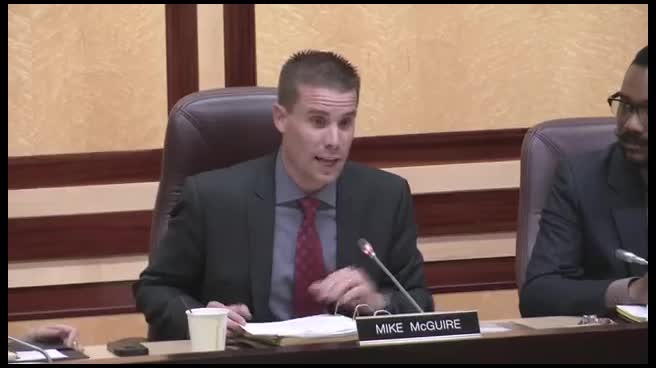
Senate Standing Committee on Human Services
Bill Author

Bill Co-Author(s):