SB 490: Regional centers: audits.
- Session Year: 2015-2016
- House: Senate
- Latest Version Date: 2015-06-18
Under existing law, the Lanterman Developmental Disabilities Services Act, the State Department of Developmental Services is authorized to contract with regional centers to provide services and supports to individuals with developmental disabilities. Existing law requires an entity that receives payments between $250,000 and $500,000 per year from one or more regional centers to obtain an independent audit or review of its financial statements and requires an entity that receives payments that are equal to or more than $500,000 per year to obtain an independent audit. Existing law exempts payments made using usual and customary rates for services provided by regional centers from these requirements.
This bill would instead require an entity to obtain an independent audit or review report of its financial statements relating to payments made by regional centers if it receives payments between $500,000 and $2,000,000 from one or more regional centers and would authorize these entities to apply for, and require the regional center to grant, a 2-year exemption from this requirement if the regional center does not find issues in the audit or review that have an impact on regional center services. The bill would also require an entity to obtain an independent audit if it receives payments that are equal to or more than $2,000,000 and would authorize these entities to apply for, and require the regional center to grant, a 2-year exemption from the audit requirement if the audit resulted in an unmodified opinion, an unmodified opinion with additional communication, or a qualified opinion with issues that are not material and pervasive. The bill would require a regional center to notify the department of any exemption it grants to an entity that receives a qualified opinion report. The bill would also exempt social security benefit payments from these requirements.
Under existing law, the Lanterman Developmental Disabilities Services Act, the State Department of Developmental Services is authorized to contract with regional centers to provide services and supports to individuals with developmental disabilities. Existing law requires an entity that receives payments between $250,000 and $500,000 per year from one or more regional centers to obtain an independent audit or review of its financial statements and requires an entity that receives payments that are equal to or more than $500,000 per year to obtain an independent audit. Existing law exempts payments made using usual and customary rates for services provided by regional centers from these requirements.
This bill would instead require an entity to obtain an independent audit or review report of its financial statements relating to payments made by regional centers if it receives payments between $500,000 and $2,000,000 from one or more regional centers and would authorize these entities to apply for, and require the regional center to grant, a 2-year exemption from this requirement if the regional center does not find issues in the audit or review that have an impact on regional center services. The bill would also instead require an entity to obtain an independent audit if it receives payments that are equal to or more than $2,000,000 and would authorize these entities to apply for, and require the regional center to grant, a 2-year exemption from the audit requirement if the audit resulted in an unqualified unmodified opinion, an unqualified unmodified opinion with explanatory language, additional communication, or a qualified opinion with issues that are not material and pervasive. The bill would require a regional center to notify the department of any exemption it grants to an entity that receives a qualified opinion report. The bill would also exempt social security benefit payments from these requirements.
Under existing law, the Lanterman Developmental Disabilities Services Act, the State Department of Developmental Services is authorized to contract with regional centers to provide services and supports to individuals with developmental disabilities. Existing law requires an entity that receives payments between $250,000 and $500,000 per year from one or more regional centers to obtain an independent audit or review of its financial statements and requires an entity that receives payments that are equal to or more than $500,000 per year to obtain an independent audit. Existing law exempts payments made using usual and customary rates for services provided by regional centers from these requirements.
This bill would instead require an entity to obtain an independent audit or review report of its financial statements relating to payments made by regional centers if it receives payments between $500,000 and $2,000,000 from one or more regional centers and would authorize these entities to apply for, and require the regional center to grant, a 2-year exemption from this requirement if the regional center does not find issues in the audit or review that have an impact on regional center services. The bill would also instead require an entity to obtain an independent audit if it receives payments that are equal to or more than $2,000,000 and would authorize these entities to apply for, and require the regional center to grant, a 2-year exemption from the requirement if the audit resulted in an unqualified opinion, an unqualified opinion with explanatory language, or a qualified opinion with issues that are not material and pervasive. The bill would require a regional center to notify the department of any exemption it grants to an entity that receives a qualified opinion report. The bill would also exempt social security benefit payments from these requirements.
(a)(1)An entity that receives payments from one or more regional centers shall contract with an independent accounting firm to obtain an independent audit or review of its financial statements relating to payments made by regional centers subject to all of the following:
(A)If the amount received from the regional center or regional centers during the entitys fiscal year is more than or equal to five hundred thousand dollars ($500,000) but less than two million dollars ($2,000,000), the entity shall obtain an independent audit or independent review report of its financial statements for the period. Consistent with Subchapter 21 (commencing with Section 58800) of Title 17 of the California Code of Regulations, this subdivision shall also apply to work activity program providers receiving less than two hundred fifty thousand dollars ($250,000).
(B)If the amount received from the regional center or regional centers during the entitys fiscal year is equal to or more than two million dollars ($2,000,000), the entity shall obtain an independent audit of its financial statements for the period.
(2)This requirement does not apply to payments made using usual and customary rates, as defined by Title 17 of the California Code of Regulations, for services provided by regional centers or social security benefit payments.
(3)This requirement does not apply to state and local governmental agencies, the University of California, or the California State University.
(b)An entity subject to subdivision (a) shall provide copies of the independent audit or independent review report required by subdivision (a), and accompanying management letters, to the vendoring regional center within 30 days after completion of the audit or review. nine months of the end of the fiscal year for the entity.
(c)Regional centers that receive the audit or review reports required by subdivision (b) shall review and require resolution by the entity for issues identified in the report that have an impact on regional center services. Regional centers shall take appropriate action, up to termination of vendorization, for lack of adequate resolution of issues.
(d)Regional centers shall notify the department of all qualified opinion reports or reports noting significant issues that directly or indirectly impact regional center services within 30 days after receipt. Notification shall include a plan for resolution of issues.
(e)For purposes of this section, an independent review of financial statements shall be performed by an independent accounting firm and shall cover, at a minimum, all of the following:
(1)An inquiry as to the entitys accounting principles and practices and methods used in applying them.
(2)An inquiry as to the entitys procedures for recording, classifying, and summarizing transactions and accumulating information.
(3)Analytical procedures designed to identify relationships or items that appear to be unusual.
(4)An inquiry about budgetary actions taken at meetings of the board of directors or other comparable meetings.
(5)An inquiry about whether the financial statements have been properly prepared in conformity with generally accepted accounting principles and whether any events subsequent to the date of the financial statements would have a material effect on the statements under review.
(6)Working papers prepared in connection with a review of financial statements describing the items covered as well as any unusual items, including their disposition.
(f)For purposes of this section, an independent review report shall cover, at a minimum, all of the following:
(1)Certification that the review was performed in accordance with standards established by the American Institute of Certified Public Accountants.
(2)Certification that the statements are the representations of management.
(3)Certification that the review consisted of inquiries and analytical procedures that are lesser in scope than those of an audit.
(4)Certification that the accountant is not aware of any material modifications that need to be made to the statements for them to be in conformity with generally accepted accounting principles.
(g)The department shall not consider a request for adjustments to rates submitted in accordance with Title 17 of the California Code of Regulations by an entity receiving payments from one or more regional centers solely to fund either anticipated or unanticipated changes required to comply with this section.
(h)(1)An entity required to obtain an independent audit or independent review of its financial statement pursuant to subparagraph (A) of paragraph (1) of subdivision (a) may apply to the regional center for, and the regional center shall grant, a two-year exemption from the independent audit or independent review requirement if the regional center does not find issues in the prior years independent audit or independent review that have an impact on regional center services.
(2)An entity required to obtain an independent audit of its financial statements pursuant to subparagraph (B) of paragraph (1) of subdivision (a) may apply to the regional center for an exemption from the independent audit requirement, subject to all of the following conditions:
(A)If the independent audit for the prior year resulted in an unmodified opinion or an unmodified opinion with additional communication, the regional center shall grant the entity a two-year exemption.
(B)If the independent audit for the prior year resulted in a qualified opinion and the issues are not material and pervasive, the regional center shall grant the entity a two-year exemption. However, the entity and the regional center shall continue to address issues raised in this independent audit, regardless of whether the exemption is granted.
(3)A regional center shall notify the department of any exemption it grants to an entity that receives a qualified opinion report.
(a)(1)An entity that receives payments from one or more regional centers shall contract with an independent accounting firm to obtain an independent audit or review of its financial statements relating to payments made by regional centers subject to all of the following:
(A)If the amount received from the regional center or regional centers during the entitys fiscal year is more than or equal to five hundred thousand dollars ($500,000) but less than two million dollars ($2,000,000), the entity shall obtain an independent audit or independent review report of its financial statements for the period. Consistent with Subchapter 21 (commencing with Section 58800) of Title 17 of the California Code of Regulations, this subdivision shall also apply to work activity program providers receiving less than two hundred fifty thousand dollars ($250,000).
(B)If the amount received from the regional center or regional centers during the entitys fiscal year is equal to or more than two million dollars ($2,000,000), the entity shall obtain an independent audit of its financial statements for the period.
(2)This requirement does not apply to payments made using usual and customary rates, as defined by Title 17 of the California Code of Regulations, for services provided by regional centers or social security benefit payments.
(3)This requirement does not apply to state and local governmental agencies, the University of California, or the California State University.
(b)An entity subject to subdivision (a) shall provide copies of the independent audit or independent review report required by subdivision (a), and accompanying management letters, to the vendoring regional center within 30 days after completion of the audit or review.
(c)Regional centers that receive the audit or review reports required by subdivision (b) shall review and require resolution by the entity for issues identified in the report that have an impact on regional center services. Regional centers shall take appropriate action, up to termination of vendorization, for lack of adequate resolution of issues.
(d)Regional centers shall notify the department of all qualified opinion reports or reports noting significant issues that directly or indirectly impact regional center services within 30 days after receipt. Notification shall include a plan for resolution of issues.
(e)For purposes of this section, an independent review of financial statements shall be performed by an independent accounting firm and shall cover, at a minimum, all of the following:
(1)An inquiry as to the entitys accounting principles and practices and methods used in applying them.
(2)An inquiry as to the entitys procedures for recording, classifying, and summarizing transactions and accumulating information.
(3)Analytical procedures designed to identify relationships or items that appear to be unusual.
(4)An inquiry about budgetary actions taken at meetings of the board of directors or other comparable meetings.
(5)An inquiry about whether the financial statements have been properly prepared in conformity with generally accepted accounting principles and whether any events subsequent to the date of the financial statements would have a material effect on the statements under review.
(6)Working papers prepared in connection with a review of financial statements describing the items covered as well as any unusual items, including their disposition.
(f)For purposes of this section, an independent review report shall cover, at a minimum, all of the following:
(1)Certification that the review was performed in accordance with standards established by the American Institute of Certified Public Accountants.
(2)Certification that the statements are the representations of management.
(3)Certification that the review consisted of inquiries and analytical procedures that are lesser in scope than those of an audit.
(4)Certification that the accountant is not aware of any material modifications that need to be made to the statements for them to be in conformity with generally accepted accounting principles.
(g)The department shall not consider a request for adjustments to rates submitted in accordance with Title 17 of the California Code of Regulations by an entity receiving payments from one or more regional centers solely to fund either anticipated or unanticipated changes required to comply with this section.
(h)(1)An entity required to obtain an independent audit or independent review of its financial statement pursuant to subparagraph (A) of paragraph (1) of subdivision (a) may apply to the regional center for, and the regional center shall grant, a two-year exemption from the independent audit or independent review requirement if the regional center does not find issues in the prior years independent audit or independent review that have an impact on regional center services.
(2)An entity required to obtain an independent audit of its financial statements pursuant to subparagraph (B) of paragraph (1) of subdivision (a) may apply to the regional center for an exemption from the independent audit requirement, subject to all of the following conditions:
(A)If the independent audit for the prior year resulted in an unqualified unmodified opinion or an unqualified unmodified opinion with explanatory language, additional communication, the regional center shall grant the entity a two-year exemption.
(B)If the independent audit for the prior year resulted in a qualified opinion and the issues are not material and pervasive, the regional center shall grant the entity a two-year exemption. However, the entity and the regional center shall continue to address issues raised in this independent audit, regardless of whether the exemption is granted.
(3)A regional center shall notify the department of any exemption it grants to an entity that receives a qualified opinion report.
(a)(1)An entity receiving that receives payments from one or more regional centers shall contract with an independent accounting firm for to obtain an independent audit or review of its financial statements relating to payments made by regional centers subject to all of the following:
(A)When If the amount received from the regional center or regional centers during the entitys fiscal year is more than or equal to two hundred fifty thousand dollars ($250,000) five hundred thousand dollars ($500,000) but less than five hundred thousand dollars ($500,000), two million dollars ($2,000,000), the entity shall obtain an independent audit or independent review report of its financial statements for the period. Consistent with Subchapter 21 (commencing with Section 58800) of Title 17 of the California Code of Regulations, this subdivision shall also apply to work activity program providers receiving less than two hundred fifty thousand dollars ($250,000).
(B)When If the amount received from the regional center or regional centers during the entitys fiscal year is equal to or more than five hundred thousand dollars ($500,000), two million dollars ($2,000,000), the entity shall obtain an independent audit of its financial statements for the period.
(2)This requirement does not apply to payments made using usual and customary rates, as defined by Title 17 of the California Code of Regulations, for services provided by regional centers. centers or social security benefit payments.
(3)This requirement does not apply to state and local governmental agencies, the University of California, or the California State University.
(b)An entity subject to subdivision (a) shall provide copies of the independent audit or independent review report required by subdivision (a), and accompanying management letters, to the vendoring regional center within 30 days after completion of the audit or review.
(c)Regional centers receiving that receive the audit or review reports required by subdivision (b) shall review and require resolution by the entity for issues identified in the report that have an impact on regional center services. Regional centers shall take appropriate action, up to termination of vendorization, for lack of adequate resolution of issues.
(d)Regional centers shall notify the department of all qualified opinion reports or reports noting significant issues that directly or indirectly impact regional center services within 30 days after receipt. Notification shall include a plan for resolution of issues.
(e)For purposes of this section, an independent review of financial statements must shall be performed by an independent accounting firm and shall cover, at a minimum, all of the following:
(1)An inquiry as to the entitys accounting principles and practices and methods used in applying them.
(2)An inquiry as to the entitys procedures for recording, classifying, and summarizing transactions and accumulating information.
(3)Analytical procedures designed to identify relationships or items that appear to be unusual.
(4)An inquiry about budgetary actions taken at meetings of the board of directors or other comparable meetings.
(5)An inquiry about whether the financial statements have been properly prepared in conformity with generally accepted accounting principles and whether any events subsequent to the date of the financial statements would have a material effect on the statements under review.
(6)Working papers prepared in connection with a review of financial statements describing the items covered as well as any unusual items, including their disposition.
(f)For purposes of this section, an independent review report shall cover, at a minimum, all of the following:
(1)Certification that the review was performed in accordance with standards established by the American Institute of Certified Public Accountants.
(2)Certification that the statements are the representations of management.
(3)Certification that the review consisted of inquiries and analytical procedures that are lesser in scope than those of an audit.
(4)Certification that the accountant is not aware of any material modifications that need to be made to the statements for them to be in conformity with generally accepted accounting principles.
(g)The department shall not consider a request for adjustments to rates submitted in accordance with Title 17 of the California Code of Regulations by an entity receiving payments from one or more regional centers solely to fund either anticipated or unanticipated changes required to comply with this section.
(h)(1)An entity required to obtain an independent audit or independent review of its financial statement pursuant to subparagraph (A) of paragraph (1) of subdivision (a) may apply to the regional center for, and the regional center shall grant, a two-year exemption from the independent audit or independent review requirement if the regional center does not find issues in the prior years independent audit or independent review that have an impact on regional center services.
(2)An entity required to obtain an independent audit of its financial statements pursuant to subparagraph (B) of paragraph (1) of subdivision (a) may apply to the regional center for an exemption from the independent audit requirement, subject to all of the following conditions:
(A)If the independent audit for the prior year resulted in an unqualified opinion or an unqualified opinion with explanatory language, the regional center shall grant the entity a two-year exemption.
(B)If the independent audit for the prior year resulted in a qualified opinion and the issues are not material and pervasive, the regional center shall grant the entity a two-year exemption. However, the entity and the regional center shall continue to address issues raised in this independent audit, regardless of whether the exemption is granted.
(3)A regional center shall notify the department of any exemption it grants to an entity that receives a qualified opinion report.
|
Date
|
Status
|
|---|---|
| May 4, 2015 | From committee: Do pass. (Ayes 7. Noes 0.) (May 4). |
| Aug 27, 2015 | August 27 hearing: Held in committee and under submission. |
| Aug 19, 2015 | August 19 set for first hearing. Placed on APPR. suspense file. |
| Jul 1, 2015 | From committee: Do pass and re-refer to Com. on APPR. (Ayes 7. Noes 0.) (June 30). Re-referred to Com. on APPR. |
| Jun 18, 2015 | From committee with author's amendments. Read second time and amended. Re-referred to Com. on HUM. S. |
| May 22, 2015 | Referred to Com. on HUM. S. |
| May 11, 2015 | Read third time. Passed. (Ayes 36. Noes 0.) Ordered to the Assembly. |
| May 11, 2015 | Read third time. Passed. (Ayes 36. Noes 0. Page 948.) Ordered to the Assembly. |
| May 11, 2015 | In Assembly. Read first time. Held at Desk. |
| May 5, 2015 | Read second time. Ordered to third reading. |
| Feb 26, 2015 | Introduced. Read first time. To Com. on RLS. for assignment. To print. |
| May 4, 2015 | From committee: Do pass. (Ayes 7. Noes 0. Page 884.) (May 4). |
| Apr 28, 2015 | Set for hearing May 4. |
| Apr 23, 2015 | Read second time and amended. Re-referred to Com. on APPR. |
| Apr 22, 2015 | From committee: Do pass as amended and re-refer to Com. on APPR. with recommendation: To consent calendar. (Ayes 5. Noes 0. Page 726.) (April 21). |
| Apr 15, 2015 | Set for hearing April 21. |
| Apr 14, 2015 | April 14 hearing postponed by committee. |
| Mar 19, 2015 | Set for hearing April 14. |
| Mar 12, 2015 | Referred to Coms. on HUMAN S. and APPR. |
| Feb 27, 2015 | From printer. May be acted upon on or after March 29. |
|
Date
|
Description
|
Location
|
Votes
|
|
|---|---|---|---|---|
| Jun 30, 2015 | Do pass and be re-referred to the Committee on [Appropriations] | Assembly Standing Committee on Human Services |
Passed |
|
| May 11, 2015 | Senate 3rd Reading SB490 Beall | Senate Floor |
Passed |
|
| May 4, 2015 | Do pass | Senate Standing Committee on Appropriations |
Passed |
|
| Apr 21, 2015 | Do pass as amended, but first amend, and re-refer to the Committee on [Appropriations] with the recommendation: To Consent Calendar | Senate Standing Committee on Human Services |
Passed |
This list shows positions taken on this bill by organizations on the date displayed, which is linked to the original source.
Positions by individuals are not included.
|
Organization
|
Position
|
Date
|
|---|---|---|
| Association Of Regional Center Agencies | ** Support | Jun 30, 2015 |
| California Disability Services Association | ** Support | Jun 30, 2015 |
| Cerebral Palsy Center for the Bay Area | ** Support | Jun 30, 2015 |
| Community Residential Care Association of California | ** Support | Jun 30, 2015 |
| ResCoalition | * Indeterminate | Jun 30, 2015 |
| ResCoalition - sponsor | ** Support | Jun 30, 2015 |
| State Council on Developmental Disabilities | ** Support | Jun 30, 2015 |
| The Arc and United Cerebral Palsy California Collaboration | ** Support | Jun 30, 2015 |
| Trinity Change, Inc. | ** Support | May 11, 2015 |
Date of Hearing: August 19, 2015
ASSEMBLY COMMITTEE ON APPROPRIATIONS
Jimmy Gomez, Chair
SB 490
(Beall) – As Amended June 18, 2015
Policy Committee: |
Human Services |
Vote: |
7 - 0 |
|
|
|
|
|
|
|
|
Urgency: No State Mandated Local Program: No Reimbursable: No
SUMMARY:
This bill raises the threshold amount required for a provider of Regional Center services to obtain an independent audit from $500,000 to $2 million and the threshold for a lesser review from $250,000 to $500,000. It also requires a regional center to grant a two-year exemption to the annual audit requirement if there were no issues in the audit or review that impacted regional center services, and makes other changes to existing audit requirements.
FISCAL EFFECT:
The existing requirements for independent audits/reviews for regional center service providers were established in the developmental services trailer bill (SB 74, Committee on Budget and Fiscal Review, Chapter 9, Statutes of 2011). The audits were intended to ensure adequate accounting procedures and internal controls, identify poor billing practices, errors in billings and inappropriate transactions that would otherwise be billed to the regional centers. The 2011 Budget Act assumed that better financial record keeping would reduce billing by vendors to regional centers, yielding savings. The budget assumed a 1% reduction in costs, which equaled about $22 million to the General Fund.
Because these savings are, in practice, cost avoidance they are difficult to quantify, and therefore it is difficult to quantify the state fiscal impact of relaxing the audit requirements. This bill would result in approximately 833 vendors (38%) no longer being reviewed and could result in potential erosion of state savings. Assuming that only 10% of the anticipated savings occurred, this bill could result in a cost to the state of $836,000 (GF), measured in foregone savings.
COMMENTS:
Purpose. According to the author, the current review and audit requirements are overly financially burdensome for the vendors required to obtain them without quite resulting in the intended results or reaching the estimated savings target attached to the requirements in SB 74. The author further states that there are a number of ambiguities in SB 74 that this bill seeks to clarify, including through ensuring that only monies paid by regional centers to a provider should be subject to an audit or review.
Background. The Department of Developmental Services (DDS) is responsible for coordinating care and services for about 250,000 people with developmental disabilities. The vast majority of these people are served by 21 regional centers, which are non-profit entities that contract with the state. The regional centers, in turn, contract with a variety of vendors to provide direct services to the developmentally disabled.
A report by the Bureau of State Audits in 2010 found that regional centers were not appropriately monitoring expenditures by vendors. In response to the report, SB 74 imposed new auditing requirements on regional center vendors. SB 74 requires vendors that receive payments of more than $500,000 per year to obtain an independent fiscal audit. Regional center vendors that receive payments between $250,000 and $500,000 per year are required to obtain either an independent audit or an independent financial review. The 2011 Budget Act assumed that these additional auditing requirements would reduce inappropriate billing for services and save the state General Fund about $22 million per year.
DDS estimates that increasing the threshold for audit reviews from $250,000 to $500,000 would eliminate the requirement for 38 percent of providers to conduct an audit review or audit. In 2013-14, 2,214 entities were required to obtain an in-depth review or audit at the $250,000 threshold; doubling that threshold would reduce the number to 1,381. Additionally, if the threshold for audits were raised from $500,000 to $2 million, as proposed in this bill, it would result in nearly 70 percent of providers being eliminated from the audit requirement: Only 410 vendors would be required to obtain an independent audit from a total of 1,381 currently eligible vendors.
Prior Legislation.
SB 1259 (Emmerson) 2012, would have authorized two-year exemptions from audit requirements similar to provisions of this bill. The bill was held on the Senate Appropriations Suspense File.
SB 74 (Committee on Budget and Fiscal Review) Chapter 9, Statutes of 2011, established the audit and review requirements, among other provisions.
Analysis Prepared by: Jennifer Swenson / APPR. / (916) 319-2081
SB 490
Page 8
Date of Hearing: June 30, 2015
ASSEMBLY COMMITTEE ON HUMAN SERVICES
Kansen Chu, Chair
SB 490
(Beall) – As Amended June 18, 2015
SENATE VOTE: 36-0
SUBJECT: Regional centers: audits.
SUMMARY: Increases audit and financial review thresholds for regional center vendors.
Specifically, this bill:
Clarifies that an audit or review of an entity that receives payment from one or more regional centers, pursuant to specified requirements, shall pertain to financial statements relating to payments made by regional centers.
Deletes the requirement that an entity that receives between $250,000 and $500,000 from one or more regional centers in a fiscal year must obtain an audit or review of its financial statements and instead triggers the requirement for an independent audit or independent review report of an entity’s financial statements when the amount received from regional centers is between $500,000 and $2,000,000 during the entity’s fiscal year.
Accordingly, increases the threshold for dollars received from a regional center that triggers an entity’s requirement to obtain an independent audit of financial statements from $500,000 to $2,000,000 during a fiscal year.
Adds income from payments for social security benefits to the list of excluded income types for purposes of the audit requirement threshold.
Permits an entity that obtains an independent audit or independent review based on regional center payments of between $500,000 and $2 million to request a two-year exemption if the regional center does not find issues in the prior year’s audit or review that has an impact on regional center services. Requires the regional center to grant the vendor request if that condition is met.
Permits an entity that is required to obtain an independent audit of its financial statements based on regional center payments of $2 million or more to apply to the regional center for an exemption subject to all of the following:
If the independent audit for the prior year resulted in an unmodified opinion or an unmodified opinion with explanatory language, the regional center shall grant the entity a two-year exemption; and
If the independent audit for the prior year resulted in a qualified opinion and the issues are not material and pervasive, the regional center shall grant the entity a two-year exemption, and the entity and the regional center shall continue to address issues raised in the independent audit, regardless of whether the exemption is granted;
Requires a regional center to notify the Department of Developmental Services (DDS) of any exemption it grants to an entity that receives a qualified opinion report.
EXISTING LAW:
Establishes an entitlement to services for individuals with developmental disabilities under the Lanterman Developmental Disabilities Services Act (Lanterman Act). (WIC 4500 et seq.)
Grants all individuals with developmental disabilities, among all other rights and responsibilities established for any individual by the United States Constitution and laws and the California Constitution and laws, the right to treatment and habilitation services and supports in the least restrictive environment. (WIC 4502)
Establishes a system of 21 nonprofit regional centers throughout the state to identify needs and coordinate services for eligible individuals with developmental disabilities and requires DDS to contract with regional centers to provide case management services and arrange for or purchase services that meet the needs of individuals with developmental disabilities, as defined. (WIC 4620 et seq.)
Requires the development of an individual program plan (IPP) for each regional center consumer, which specifies services to be provided to the consumer, based on his or her individualized needs determination and preferences, and defines that planning process as the vehicle to ensure that services and supports are customized to meet the needs of consumers who are served by regional centers. (WIC 4512)
Creates a process by which regional centers may “vendorize” service providers, thereby providing a path to contract for services with that provider and ensuring maximum flexibility and availability of appropriate services and support for persons with developmental disabilities. (WIC 4648)
Authorizes regional centers to solicit an individual or agency through a request for proposals or other means to provide needed services or supports not presently available, provided it is necessary to expand the availability of needed services of good quality. (WIC 4648(e)(1))
Requires regional centers to provide the consumer, his or her parent, legal guardian, or other appropriate authorized representative, as specified, at least annually, a statement of services and supports the regional center purchased, for the purpose of ensuring that the services are delivered. (WIC 4648(h))
Authorizes DDS and regional centers to monitor services and supports purchased for regional center consumers without prior notice, as specified, and authorizes DDS to conduct fiscal reviews and audits of service providers’ records. (WIC 4648.1(a))
Requires that DDS and regional center staff involved in monitoring or auditing services provided to regional center consumers be granted access to a provider’s grounds, buildings, service program, and all related records and documentation, as specified. (WIC 4648.1(b))
Requires that an entity receiving payments from one or more regional centers contract with an independent accounting firm for an audit or review of its financial statements subject to all of the following:
When the amount received from the regional center or regional centers during the entity’s fiscal year is more than or equal to two hundred fifty thousand dollars ($250,000) but less than five hundred thousand dollars ($500,000), the entity shall obtain an independent audit or independent review report of its financial statements for the period. This includes work activity program providers receiving less than two hundred fifty thousand dollars ($250,000), as specified; and
When the amount received from the regional center or regional centers during the entity’s fiscal year is equal to or more than five hundred thousand dollars ($500,000), the entity shall obtain an independent audit of its financial statements for the period. (WIC 4652.5 (a)(1))
Excludes certain payment types, as specified, from consideration and exempts state and local agencies, the UC and CSU university systems from the audit requirement. (WIC 4652.5(a)(2) and (a)(3))
Requires vendors to provide copies of the audit or review to the vendoring regional center within 30 days of completion, and requires regional centers to review them and require resolution of issues identified in the report that have an impact on regional center services. (WIC 4652.5(b))
Requires regional centers to take appropriate action, which may entail termination of vendorization, for lack of adequate resolution of issues. (WIC 4652.5(c))
Requires regional centers to notify DDS of all qualified opinion reports or reports noting significant issues that directly or indirectly impact regional center services within 30 days after receipt, and requires the notification to include a plan for resolution of issues. (WIC 4652.5 (d))
Specifies that an independent review of financial statements must be performed by an independent accounting firm and requires the review to include at a minimum:
An inquiry as to the entity’s accounting principles and practices and methods used in applying them;
An inquiry as to the entity’s procedures for recording, classifying, and summarizing transactions and accumulating information;
Analytical procedures designed to identify relationships or items that appear to be unusual;
An inquiry about budgetary actions taken at meetings of the board of directors or other comparable meetings;
An inquiry about whether the financial statements have been properly prepared in conformity with generally accepted accounting principles and whether any events subsequent to the date of the financial statements would have a material effect on the statements under review; and
Working papers prepared in connection with a review of financial statements describing the items covered as well as any unusual items, including their disposition. (WIC 4652.5(e))
Specifies that the independent review report shall cover, at a minimum, all of the following:
Certification that the review was performed in accordance with standards established by the American Institute of Certified Public Accountants;
Certification that the statements are the representations of management;
Certification that the review consisted of inquiries and analytical procedures that are lesser in scope than those of an audit; and
Certification that the accountant is not aware of any material modifications that need to be made to the statements for them to be in conformity with generally accepted accounting principles. (WIC 4652.5(f))
Prohibits DDS from considering requests for adjustments to rates by an entity receiving regional center payments solely to fund either anticipated or unanticipated changes required for an entity to comply with the audit or review requirements, as specified. (WIC 4652.5(g))
Requires every charitable corporation, commercial fundraiser for charitable purposes, unincorporated association, and trustee required to file reports with the Attorney General, as defined, that receives or accrues in any fiscal year gross revenue of two million dollars ($2,000,000) or more, exclusive of grants from, and contracts for services with, governmental entities for which the governmental entity requires an accounting of the funds received, to obtain an annual financial audit, as defined, and requires the audited financial statements to be available for public inspection no later than nine months after the close of the fiscal year to which the statements relate, as defined. (GOV 12586 (e)(1))
Requires a regional center to audit records of service providers, as specified, to the extent the regional center determines it is necessary. (California Code of Regulations Title 17 §50606)
FISCAL EFFECT: According to the April 23, 2015 Senate Appropriations Committee analysis, this bill is not likely to result in significant cost increases for regional center services.
COMMENTS:
Developmental services: The Lanterman Act (WIC § 4500 et seq.) guides the provision of services and supports for Californians with developmental disabilities. Each individual under the Act, typically referred to as a “consumer,” is legally entitled to treatment and habilitation services and supports in the least restrictive environment. Lanterman Act services are designed to enable all individuals served to live more independent and productive lives in the community.
The term “developmental disability” means a disability that originates before an individual attains 18 years of age, is expected to continue indefinitely, and constitutes a substantial disability for that individual. It includes intellectual disabilities, cerebral palsy, epilepsy, and autism spectrum disorder. Other developmental disabilities are those disabling conditions similar to an intellectual disability that require treatment (i.e., care and management) similar to that required by individuals with an intellectual disability.
Direct responsibility for implementation of the Lanterman Act service system is shared by DDS and 21 regional centers, which are private nonprofit entities, established pursuant to the Lanterman Act, that contract with DDS to carry out many of the state’s responsibilities under the Act. The 21 regional centers serve 280,000 consumers, providing services such as residential placements, supported living services, respite care, transportation, day treatment programs, work support programs, and various social and therapeutic activities.
Services provided to people with developmental disabilities are outlined in an IPP, which is developed by the IPP team—including, among others, the consumer, his or her legally authorized representative, and one or more regional center representatives—and is based on the consumer’s needs and choices. The Lanterman Act requires that the IPP promote community integration and maximize opportunities for each consumer to develop relationships, be part of community life, increase control over his or her life, and acquire increasingly positive roles in the community. The IPP must give the highest preference to those services and supports that allow minors to live with their families and adults to live as independently as possible in the community.
Regional center vendors: Prior to being approved to receive funding from a regional center for providing services to a consumer, a service provider must become vendored by the regional center that oversees the catchment area in which the provider is located. This “vendorization” process includes verifying that the provider is qualified to provide the planned services and meets all other regulatory standards and requirements. It is important to note that vendorization makes a provider eligible to provide services paid for by the regional center, but does not guarantee the regional center will refer consumers. Furthermore, there is nothing precluding a vendor from being vendorized by more than one regional center. There are over 45,000 vendors that provide services paid for by regional centers in California.
Audits and reviews: Independent accounting professionals complete audit reports to review whether financial records have been maintained in accordance with Generally Acceptable Accounting Principles (GAAP) and assess the financial status and stability of a business or company based on its assets and liabilities. Auditor opinion categories are as follows:
An unmodified opinion, which is often called a clean opinion and is the best possible report category, is issued when an auditor determines that the financial records are presented fairly and free of any misrepresentations. An unmodified opinion also indicates that the financial records have been maintained in accordance with GAAP. This type of opinion is sometimes also called an “unqualified” opinion;
A qualified opinion is issued when a company’s financial records have not been maintained in accordance with GAAP but no misrepresentations are identified. This type of opinion indicates the reason that the audit report is not unqualified;
An adverse opinion is issued when an auditor concludes that the audited financial statements do not adhere to the GAAP and do not fairly represent the organization’s financial position. An auditor will often work with the organization to resolve or correct issues so the published audit can be either qualified or unqualified; and
A disclaimer of opinion is provided when an auditor chooses not to issue an opinion, either due to significant uncertainties in the appropriateness of the materials, significant limitations in the scope of the audit, or if the auditor feels he or she cannot complete an impartial or independent audit of the organization.
A review report is substantially smaller in scope than a full audit and does not result in the issuance of an opinion. The purpose of the review is to analyze the financial data of a business and make inquiries of the company’s management in order to express limited assurances that the company is in conformity with GAAP. A Certified Public Accountant will issue either a clean review report, or will issue no report based on a material modification that needs to be made.
Bureau of State Audits report: The Bureau of State Audits released a report in August 2010 entitled “Department of Developmental Services: A More Uniform and Transparent Procurement and Rate‑Setting Process Would Improve the Cost‑Effectiveness of Regional Centers.” The report concluded that regional centers were not appropriately monitoring expenditures of vendors and that they did not always document why certain vendors are selected, how rates are set, or how contracts are procured. This raised concerns about favoritism and fiscal irresponsibility on the part of regional centers and also fueled conversations within the Legislature about the need for more vendor expenditure transparency and oversight.
Regional center vendor audit requirements: SB 74 (Committee on Budget and Fiscal Review), Chapter 9, Statutes of 2011, a developmental services trailer bill, required that each regional center vendor receiving more than $250,000 submit to an independent audit or independent review report of its financial statements for the period. It also required vendors receiving $500,000 or more to obtain an independent audit of financial statements (they are not able to meet the statutory requirement with an independent review). These requirements were attached to estimated savings that would be derived through identifying and remedying poor billing practices and inappropriate spending of regional center dollars. The estimated savings projection was 1% in regional center purchase of services costs, and a DDS description of the proposal indicated that it would allow the department to focus its own audits on those vendors with qualified reports or significant issues raised during the independent audits. According to the sponsors of this bill, financial review costs can range from $2,000 to $4,000, while the cost for impacted vendors to have an audit conducted is often between $6,000 and $14,000.
Need for this bill: According to the author, the current review and audit requirements are overly financially burdensome for the vendors required to obtain them without quite resulting in the intended results or reaching the estimated savings target attached to the requirements in SB 74. The author states that there are a number of ambiguities in SB 74 that this bill seeks to clarify, including through ensuring that only monies paid by regional centers to a provider should be subject to an audit or review.
Under current law, vendors are required to provide copies of their fiscal review or audit to their vendoring regional center within 30 days of completion. However, because this requirement does not indicate a timeline for completion, some vendors avoid the 30-day submission requirement by not complying with their respective audit or review requirements. Recent author’s amendments to this bill seek to ensure the reviews and audits are occurring and information is being reported to regional centers by requiring that the information be submitted to regional centers within nine months of the end of the fiscal year for the vendor rather than tying the submission date to the completion date.
Staff comments: Because DDS has no way to track the fiscal impact of the audit requirement, there is no way to verify whether its enactment under SB 74 has resulted in the anticipated amount of cost savings, either through improved accounting and billing practices or the deterrent effect of increased scrutiny of financial records. Association of Regional Center Agencies (ARCA) data show that audit completion varies throughout the state. An ARCA survey of 18 of the state’s 21 regional centers revealed a 52% independent audit compliance rate among vendors with 99% of those audits resulting in unqualified vendor opinions. DDS reports that approximately 90 audits across 10 regional centers have been reported to the Department for a plan of correction since enactment of the requirement. It is important to note that the information gathered during a review is insufficient to establish whether corrective action might be needed.
There were 2,214 entities required to obtain an independent review or audit in 2013-14, 1,381 of which received $500,000 or more from regional centers and were required to meet the higher audit standard. This bill eliminates the audit and review requirements for vendors that receive between $250,000 and $500,000 annually from regional centers, thereby eliminating the requirement for any information to be gathered for 833 vendors. Additionally, by raising the audit threshold from $500,000 to $2 million in regional center dollars received, almost 70% of providers would no longer have to meet their current audit requirement, which leaves only 410 vendors out of the 1,381 currently required to obtain an independent audit.
The author of this bill seeks to provide some financial relief to developmental services providers through eliminating audit and review requirements for a number of vendors and allowing a clean audit or review to result in a two-year exemption from the independent audit or independent review requirement. However, committee staff believes it will be of utmost importance for the state to promote transparency and additional oversight of how dollars are spent within the developmental services system in the coming years. The committee may wish to revisit the audit standards in developmental services-related regulations and statute as conversations about rate-setting and rate methodologies continue between the Legislature and the Administration.
PRIOR LEGISLATION:
SB 1259 (Emmerson) 2012, would have authorize two-year exemptions from audit requirements similar to provisions of this bill. It died on the Senate Appropriations Suspense File.
SB 74 (Committee on Budget and Fiscal Review) Chapter 9, Statutes of 2011, established the audit and review requirements, among other provisions.
DOUBLE REFERRAL. This bill has been double-referred. Should this bill pass out of this committee, it will be referred to the Assembly Appropriations Committee.
REGISTERED SUPPORT / OPPOSITION:
Support
ResCoalition – sponsor
Association of Regional Center Agencies (ARCA)
California Disability Services Association (CDSA)
Cerebral Palsy Center for the Bay Area
Community Residential Care Association of California
Independent Options
State Council on Developmental Disabilities
The Alliance
The Arc and United Cerebral Palsy California Collaboration
Trinity CHANGE
Opposition
None on file.
Analysis Prepared by: Myesha Jackson / HUM. S. / (916) 319-2089
SB 490
Page 8
|
Office of Senate Floor Analyses (916) 651-1520 Fax: (916) 327-4478 |
THIRD READING
Bill No: SB 490
Author: Beall (D) and Huff (R), et al.
Amended: 4/23/15
SENATE HUMAN SERVICES COMMITTEE: 5-0, 4/21/15
AYES: McGuire, Berryhill, Hancock, Liu, Nguyen
SENATE APPROPRIATIONS COMMITTEE: 7-0, 5/4/15
AYES: Lara, Bates, Beall, Hill, Leyva, Mendoza, Nielsen
SUBJECT: Regional centers: audits
DIGEST: This bill raises the threshold amount required for a provider of regional center services to obtain an independent audit from $500,000 to $2 million and the threshold for a lesser review from $250,000 to $500,000. It also requires a regional center to grant a two-year exemption to the annual audit requirement if there were no issues in the audit or review that impacted regional center services, and makes other changes to existing audit requirements.
Existing law:
Establishes that the Department of Developmental Services (DDS) contracts with private non-profit regional centers to provide fixed points of contact in the community for persons with developmental disabilities and their families, so that these persons may have access to the services and supports best suited to them throughout their lifetime. (Welfare and Institutions Code (WIC) 4620)
Requires that an entity receiving payments from one or more regional centers shall contract with an independent accounting firm for an audit or review of its financial statements subject to all of the following: (WIC 4652.5. (a) (1))
When the amount received from the regional center or regional centers during the entity’s fiscal year is more than or equal to $250,000 but less than $500,000, as defined, the entity shall obtain an independent audit or independent review report of its financial statements for the period.
When the amount received from the regional center or regional centers during the entity’s fiscal year is equal to or more than $500,000, the entity shall obtain an independent audit of its financial statements for the period.
Requires vendors to provide copies of the audit or review to the vendoring regional center within 30 days of completion, and requires regional centers to review them and require resolution of issues identified in the report that have an impact on regional center services. (WIC 4652.5. (b))
Requires regional centers to take appropriate action, up to termination of vendorization, for lack of adequate resolution of issues. (WIC 4652.5. (c))
Requires regional centers to notify DDS of all qualified opinions or reports noting significant issues that impact regional center services within 30 days after receipt, with a plan for resolution of issues. (WIC 4652.5. (d))
Specifies that an independent review of financial statements must be performed by an independent accounting firm and requires the review to include at a minimum:
An inquiry as to the entity’s accounting principles and practices and methods used in applying them.
An inquiry as to the entity’s procedures for recording, classifying, and summarizing transactions and accumulating information.
Analytical procedures designed to identify relationships or items that appear to be unusual.
An inquiry about budgetary actions taken at meetings of the board of directors or other comparable meetings.
An inquiry about whether the financial statements have been properly prepared in conformity with generally accepted accounting principles and whether any events subsequent to the date of the financial statements would have a material effect on the statements under review.
Working papers prepared in connection with a review of financial statements describing the items covered as well as any unusual items, including their disposition. (WIC 4652.5. (e))
Specifies the elements that an independent review report shall cover, as defined. (WIC 4652.5. (f))
Prohibits DDS from considering requests for rate adjustments by an entity receiving regional center payments solely to fund either anticipated or unanticipated changes required to comply with this section, as defined. (WIC 4652.5. (g))
Requires every charitable corporation, commercial fundraiser for charitable purposes, unincorporated association, and trustee required to file reports with the Attorney General, as defined, that receives or accrues in any fiscal year gross revenue of $2 million or more, as specified, to obtain an annual financial audit, as defined, and requires the audit statements to be available for public inspection no later than nine months after the close of the fiscal year to which the statements relate, as defined. (Government Code (GOV) 12586(e) (1))
This bill:
Adds to the existing requirement that an entity receiving regional center payments must obtain an audit new language requiring that the audit or review must relate to payments made by regional centers.
Increases the window for an independent audit or independent review from $250,000 to $500,000 to a new window of $500,000 to $2 million, thereby also deleting the requirement that vendors receiving less than $500,000 obtain any independent audit or review, as specified.
Increases the threshold for a vendor to be required to obtain an independent audit of its financial statements from $500,000 to $2 million.
Adds to the list of vendor exemptions any income from payments for social security benefits.
Permits an entity that obtains an independent audit or independent review based on regional center payments of between $500,000 and $2 million to request a two-year exemption if the regional center does not find issues in the prior year’s audit or review that has an impact on regional center services.
Requires the regional center to grant a vendor request under that circumstance.
Permits an entity that is required to obtain an independent audit of its financial statements based on regional center payments in excess of $2 million to apply to the regional center for an exemption subject to all of the following conditions:
If the independent audit for the prior year resulted in an unmodified opinion or an unqualified opinion with additional communication, the regional center shall grant the entity a two-year exemption.
If the independent audit for the prior year resulted in a qualified opinion and the issues are not material and pervasive, the regional center shall grant the entity a two-year exemption. However, the entity and the regional center shall continue to address issues raised in this independent audit, regardless of whether the exemption is granted.
Requires a regional center to notify DDS of any exemption it grants to an entity that receives a qualified opinion report.
Background
The Lanterman
Act. The Lanterman Developmental Disabilities Services Act,
established an entitlement to services and supports
for Californians with developmental disabilities and set up an
extensive system to care for individuals who are living in their
communities. A developmental disability is defined in statute as one
that originates before the age of 18 years, continues, or can be
expected to continue, indefinitely, and constitutes a substantial
disability. Today, more than 275,000 children and adults with
developmental disabilities are served in community-based programs and
supported by state- and federally funded services that are
coordinated by 21 local, nonprofit regional centers. About 74 percent
of consumers live in the home of a parent or guardian, according to
DDS data from June 2014.
Vendorization. To be eligible to provide services to a regional center client, a provider must become a vendor of those services in a specific regional center’s catchment area. According to the DDS Web site, “vendorization is the process for identification, selection, and utilization of service providers based on the qualifications and other requirements necessary in order to provide the services.”
Bureau of State Audits (BSA) report. In August 2010, the BSA released a report concluding that regional centers were not appropriately monitoring expenditures of vendors and that the centers themselves did not always document how rates are set, why certain vendors are selected, or how contracts are procured resulting in “the appearance of favoritism or fiscal irresponsibility.” The audit prompted a Senate Human Services Committee hearing as well as discussions in the Senate Budget subcommittee about the need for additional oversight of vendor expenditures. While DDS is tasked with auditing service providers (WIC 4648.1), the DDS does not have sufficient resources to conduct audits on many vendors and typically focuses on those that have been brought to its attention.
Audit requirements. Faced with dramatic fiscal shortfalls in 2011, and on the heels of the BSA findings, the Administration and Legislature added a requirement for vendors receiving more than $250,000 to obtain either an independent audit or a lesser audit review to ensure good bookkeeping practices (SB 74, Committee on Budget and Fiscal Review, Chapter 9, Statutes of 2011).
Thresholds. Vendors receiving more than $500,000 in regional center funding are required to obtain an independent audit. The thresholds were derived, in part, by a budget savings estimate that projected improved accounting procedures and internal controls by vendors at this level would save about one percent in annual purchase of service costs. The audits were not expected to find significant amounts of fraud, rather the savings assumed that the audits would identify poor billing practices, errors in billings and inappropriate transactions that would otherwise be billed to regional centers. DDS would be able to focus its audits on those vendors with qualified reports or significant issues raised, according to a DDS description of the proposal.
California statute governing charitable corporations and fundraising (GOV 12586(e) (1)) requires any entity that accrues in any fiscal year gross revenue of $2 million or more exclusive of grants from, and contracts for services with, governmental entities for which the governmental entity requires an accounting of the funds received, to obtain an independent audit for conformity with generally acceptable accounting principles. The audit results are required to be made available to the state and the public no later than nine months after the close of the fiscal year to which the statements relate, as specified.
Audit and review findings. An audit report is completed by an independent accounting professional to appraise the financial status of a business or company. It considers a company’s assets and liabilities, and reviews whether financial records have been maintained in accordance with Generally Acceptable Accounting Standards (GAAS). There are four types of auditor opinions a business can receive:
Unmodified opinion – Often called a clean opinion, and formerly called an unqualified opinion, this is issued when an auditor determines that the financial records are presented fairly and free of any misrepresentations.
Qualified opinion – A company’s financial records have not been maintained in accordance with GAAS but no misrepresentations are identified.
Adverse opinion – Issued when an auditor concludes that the audited financial statements do not fairly represent the organization’s financial position and there are significant departures from GAAS.
Disclaimer of opinion – An auditor also may choose not to issue an opinion, either due to significant uncertainties in the appropriateness of the materials, significant limitations in the scope of the audit or the auditor feels he or she cannot be impartial or independent about the business.
An audit review is substantially smaller in scope than a full audit. Its purpose is to analyze the financial data of a business and make inquiries of the company’s management in order to express limited assurances that the company is in conformity with GAAS. No opinions are issued with an audit review. A Certified Public Accountant will issue either a clean review report, or will issue no report based on a material modification that needs to be made.
Comments
DDS reports that it has no way to track cost savings from efficiencies in business practices resulting from the audits and therefore no way to measure actual savings from enactment of the audits. The Association of Regional Center Agencies (ARCA) reports that audit completion varies statewide. On average, according to an ARCA survey of 18 of 21 regional centers, 52 percent of vendors have completed audits with 99 percent of audits resulting in unqualified vendor opinions. About 90 audits have been reported to DDS with problems.
FISCAL EFFECT: Appropriation: No Fiscal Com.: No Local: No
According to the Senate Appropriations Committee, this bill is not likely to result in significant cost increases for regional center services. The existing audit requirement does not examine vendor billing records to determine whether a vendor is appropriately billing a regional center for authorized services. Rather, the audit requirement was intended to improve vendor financial record keeping, generally. The Budget Act of 2011 assumed that better financial record keeping would reduce billing by vendors to regional centers, yielding savings. (The Budget assumed a 1% reduction in costs, which equaled about $22 million from the General Fund.) Because the auditors are not looking at the appropriateness of the services provided, staff does not believe that the audit requirement is likely to generate significant savings. Therefore, relaxing the audit requirement is not likely to increase costs to purchase services by the regional centers.
ResCoalition (source)
Association of Regional Center Agencies
Arc and United Cerebral Palsy California Collaboration
California Disability Services Association
Cerebral Palsy Center for the Bay Area
Community Residential Care Association of California
The Alliance
Trinity Change, Inc.
None received
None received
ARGUMENTS IN SUPPORT: According to the author, the vendor audit requirement was intended to save the state more than $20 million annually through increased accountability, but as of March of 2014, DDS has received fewer than 100 audits of concern and none of them resulted in any savings. The cost to perform the financial reviews and audits are borne solely by the vendors at an average cost of $10,000 per audit. Additionally, the author states SB 490 clarifies ambiguities in the original bill, including what monies are subject to an audit. As a result, some accounting firms are auditing the vendors’ entire budget including revenue that is not from the regional center while others are auditing only the portion from regional centers. This bill clarifies that only monies paid by the regional centers are subject to the audit review.
Finally, the author states, this bill aligns the vendor audit threshold with that of nonprofit auditing practices elsewhere in the state. Existing law (GOV 12586(e) (1)), states that non-profits with revenue greater than $2 million dollars shall be subject to annual fiscal audits. The current threshold creates a lower trigger (of $500,000) for much more expensive independent audit rather than a simpler financial review, the author states.
Prepared by: Mareva Brown / HUMAN S. / (916) 651-1524
5/6/15 17:02:28
**** END ****
SB 490 (Beall) Page 2 of 2
SENATE COMMITTEE ON APPROPRIATIONS
Senator Ricardo Lara, Chair
2015 - 2016 Regular Session
SB 490 (Beall) - Regional centers: audits
|
|
Version: April 23, 2015 |
Policy Vote: HUMAN S. 5 - 0 |
Urgency: No |
Mandate: No |
Hearing Date: May 4, 2015 |
Consultant: Brendan McCarthy |
This bill does not meet the criteria for referral to the Suspense File.
Bill Summary:
SB 490 would raise the thresholds at which regional center vendors must obtain either an independent review or audit of its financial statements. The bill would also require a regional center to grant a two year exemption from the existing audit or review requirement if no issues are raised in the previous audit or review.
Fiscal Impact:
The bill is not likely to result in significant cost increases for regional center services. The existing audit requirement does not examine vendor billing records to determine whether a vendor is appropriately billing a regional center for authorized services. Rather, the audit requirement was intended to improve vendor financial record keeping, generally. The Budget Act of 2011 assumed that better financial record keeping would reduce billing by vendors to regional centers, yielding savings. (The budget assumed a 1% reduction in costs, which equaled about $22 million from the General Fund.) Since the enactment of this requirement, the Department of Developmental Services has not been able to document savings due to the audit requirement. Because the auditors are not looking at the appropriateness of the services provided, staff does not believe that the audit requirement is likely to generate significant savings. Therefore, relaxing the audit requirement is not likely to increase costs to purchase services by the regional centers.
Background:
The Department of Developmental Services is responsible for coordinating care and services for about 250,000 people with developmental disabilities. The vast majority of these people are served by 21 regional centers, which are non-profit entities that contract with the state. The regional centers, in turn, contract with a variety of vendors to provide direct services to the developmentally disabled.
An report by the Bureau of State Audits in 2010 found that regional centers were not appropriately monitoring expenditures by vendors. In response to the report, the 2011 developmental services trailer bill (SB 74, Committee on Budget and Fiscal Review, Statutes of 2011), imposed new auditing requirements on regional center vendors. SB 74 requires vendors that receive payments of more than $500,000 per year to obtain an independent fiscal audit. Regional center vendors that receive payments between $250,000 and $500,000 per year are required to obtain either an independent audit or an independent financial review. The 2011 Budget Act assumed that these additional auditing requirements would reduce inappropriate billing for services and save the state General Fund about $22 million per year.
Proposed Law:
SB 490 would raise the thresholds at which a regional center vendor must obtain either an independent review or audit of its financial statements. The bill would also require a regional center to grant a two year exemption from the existing audit or review requirement if no issues are raised in the previous audit or review.
Specific provisions of the bill would:
Limit the existing requirement for independent audits or independent review by limiting the scope of audits and reviews to payments made by regional centers to the vendor;
Raise the threshold at which a vendor must obtain an independent audit or independent review from $250,000 to $500,000;
Raise the threshold at which a vendor must obtain an independent audit from $500,000 to $2,000,000;
Require a regional center to grant a two-year exemption from audit or review requirements if a vendor’s prior audit or review did not result in significant issues.
Related Legislation:
SB 1259 (Emmerson, 2012) would have authorize two-year exemptions from audit requirements, similar to provisions of this bill. That bill was held on this committee’s Suspense File.
-- END --
SB 490 (Beall) Page 8 of 8
SENATE COMMITTEE ON HUMAN SERVICES
Senator McGuire, Chair
2015 - 2016 Regular
Bill No: SB 490
Author: |
Beall |
||
Version: |
February 26, 2015 |
Hearing Date: |
April 21, 2015 |
Urgency: |
No |
Fiscal: |
No |
Consultant: |
Mareva Brown |
||
Subject: Regional centers: audits
SUMMARY
This bill would raise the threshold amount required for a provider of Regional Center services to obtain an independent audit from $500,000 to $2 million and the threshold for a lesser review from $250,000 to $500,000. It also would require a regional center to grant a two-year exemption to the annual audit requirement if there were no issues in the audit or review that impacted regional center services, and makes other changes to existing audit requirements.
ABSTRACT
Existing law:
Defines, in California law, “developmental disability” as a disability that originates before the age of 18, continues, or can be expected to continue, indefinitely, and constitutes a substantial disability. This term also includes autism. (WIC 4512)
Establishes the California Department of Developmental Services (DDS) as the agency that oversees the state’s developmental centers, and specifies the duties of the department and developmental center employees (WIC 4400 et seq.)
Establishes in California law that DDS contracts with private non-profit regional centers to provide fixed points of contact in the community for persons with developmental disabilities and their families, so that these persons may have access to the services and supports best suited to them throughout their lifetime. (WIC 4620)
Requires that an entity receiving payments from one or more regional centers shall contract with an independent accounting firm for an audit or review of its financial statements subject to all of the following: (WIC 4652.5. (a) (1))
When the amount received from the regional center or regional centers during the entity’s fiscal year is more than or equal to two hundred fifty thousand dollars ($250,000) but less than five hundred thousand dollars ($500,000), the entity shall obtain an independent audit or independent review report of its financial statements for the period. This includes work activity program providers receiving less than two hundred fifty thousand dollars ($250,000), as specified.
When the amount received from the regional center or regional centers during the entity’s fiscal year is equal to or more than five hundred thousand dollars ($500,000), the entity shall obtain an independent audit of its financial statements for the period.
Exempts state agencies, the UC and CSU university systems and certain providers, as defined, from the audit requirement. (4652.5. (a) (2), et seq.)
Requires vendors to provide copies of the audit or review to the vendoring regional center within 30 days of completion, and requires regional centers to review them and require resolution of issues identified in the report that have an impact on regional center services. (WIC 4652.5. (b))
Requires regional centers to take appropriate action, up to terminaton of vendorization, for lack of adequate resolution of issues. (WIC 4652.5. (c))
Requires regional centers to notify DDS of all qualified opinion reports or reports noting significant issues that directly or indirectly impact regional center services within 30 days after receipt, and requires the notification include a plan for resolution of issues. (WIC 4652.5. (d))
Specifies that an indepent review of financial statements must be performed by an independent accounting firm and requires the review to include at a minimum:
An inquiry as to the entity’s accounting principles and practices and methods used in applying them.
An inquiry as to the entity’s procedures for recording, classifying, and summarizing transactions and accumulating information.
Analytical procedures designed to identify relationships or items that appear to be unusual.
An inquiry about budgetary actions taken at meetings of the board of directors or other comparable meetings.
An inquiry about whether the financial statements have been properly prepared in conformity with generally accepted accounting principles and whether any events subsequent to the date of the financial statements would have a material effect on the statements under review.
Working papers prepared in connection with a review of financial statements describing the items covered as well as any unusual items, including their disposition. (WIC 4652.5. (e))
Specifies that the independent review report shall cover, at a minimum, all of the following:
Certification that the review was performed in accordance with standards established by the American Institute of Certified Public Accountants.
Certification that the statements are the representations of management.
Certification that the review consisted of inquiries and analytical procedures that are lesser in scope than those of an audit.
Certification that the accountant is not aware of any material modifications that need to be made to the statements for them to be in conformity with generally accepted accounting principles. (WIC 4652.5. (f))
Prohibits DDS from considering requests for adjustments to rates by an entity receiving regional center payments solely to fund either anticipated or unanticipated changes required to comply with this section, as defined. (WIC 4652.5. (g))
Requires every charitable corporation, commercial fundraiser for charitable purposes, unincorporated association, and trustee required to file reports with the Attorney General, as defined, that receives or accrues in any fiscal year gross revenue of two million dollars ($2,000,000) or more, exclusive of grants from, and contracts for services with, governmental entities for which the governmental entity requires an accounting of the funds received, to obtain an annual financial audit, as defined, and requires the audited financial statements to be available for public inspection no later than nine months after the close of the fiscal year to which the statements relate, as defined. (GOV 12586(e) (1))
This bill:
Adds to the existing requirement that an entity receiving regional center payments must obtain an audit new language requiring that the audit or review must relate to payments made by regional centers.
Increases the window for an independent audit or indepent review from $250,000 to $500,000 to a new window of $500,000 to $2 million, thereby also deleting the requirement that vendors receiving less than $500,000 obtain any independent audit or review, as specified.
Increases the threshold for a vendor to be required to obtain an independent audit of its financial statements from $500,000 to $2 million.
Adds to the list of vendor exemptions any income from payments for social security benefits.
Permits an entity that obtains an independent audit or independent review based on regional center payments of between $500,000 and $2 million to request a two-year exemption if the regional center does not find issues in the prior year’s audit or review that has an impact on regional center services.
Requires the regional center to grant a vendor request under that circumstance.
Permits an entity that is required to obtain an independent audit of its financial statements based on regional center payments in excess of $2 million to apply to the regional center for an exemption subject to all of the following conditions:
If the independent audit for the prior year resulted in an unqualified opinion or an unqualified opinion with explanatory language, the regional center shall grant the entity a two-year exemption.
If the independent audit for the prior year resulted in a qualified opinion and the issues are not material and pervasive, the regional center shall grant the entity a two-year exemption. However, the entity and the regional center shall continue to address issues raised in this independent audit, regardless of whether the exemption is granted.
Requires a regional center to notify DDS of any exemption it grants to an entity that receives a qualified opinion report.
FISCAL IMPACT
This bill has not been analyzed by a fiscal committee.
BACKGROUND AND DISCUSSION
Purpose of the bill
According to the author, the vendor audit requirement was intended to save the state more than $20 million annually through increased accountability, but as of March of 2014, DDS has received fewer than 100 audits of concern and none of them resulted in any savings. The cost to perform the financial reviews and audits are borne solely by the vendors at an average cost of $10,000 per audit. Additionally, the author states SB 490 clarifies ambiguities in the original bill, including what monies are subject to an audit. As a result, some accounting firms are auditing the vendors’ entire budget including revenue that is not from the regional center while others are auditing only the portion from regional centers. This bill clarifies that only monies paid by the regional centers are subject to the audit review.
Finally, the author states, this bill aligns the vendor audit threshold with that of nonprofit auditing practices elsewhere in the state. Existing law (GOV 12586(e) (1)), states non-profits with revenue greater than $2 million dollars shall be subject to annual fiscal audits. The current threshold creates a lower trigger (of $500,000) for much more expensive independent audit rather than a simpler financial review, the author states.
The Lanterman Act
The Lanterman Developmental Disabilities Services Act, passed in 1974, established an entitlement to services and supports for Californians with developmental disabilities and set up an extensive system to care for individuals who are living in their communities. A developmental disability is defined in statute as one that originates before the age of 18, continues, or can be expected to continue, indefinitely, and constitutes a substantial disability. Today, more than 275,000 children and adults with developmental disabilities are served in community-based programs and supported by state- and federally funded services that are coordinated by local, nonprofit regional centers.
The state’s 21 regional centers vary considerably in size and organization. Statewide, slightly more than half of the regional center population is between age 18 and 61 years old; about two-thirds of all consumers have an intellectual disability, three in 10 are diagnosed with autism or a related disorder, and 18 percent are identified as having severe behaviors, according to data reported by the Department of Developmental Services (DDS). About 74 percent of consumers live in the home of a parent or guardian, according to DDS statewide data from June 2014.
Vendorization
To be eligible to provide services to a regional center client, a provider must become a vendor of those services in a specific regional center’s catchment area. According to the DDS website, “vendorization is the process for identification, selection, and utilization of service providers based on the qualifications and other requirements necessary in order to provide the services. The vendorization process allows regional centers to verify, prior to the provision of services to consumers, that an applicant meets all of the requirements and standards specified in regulations.”
In truth, regional centers must vendorize any applicant who meets all the requirements for the service to be provided. The DDS website notes that vendorization in no way obligates that regional center to purchase service from that vendor. Applicants who pass vendorization requirements are assigned a service code and unique vendor identification number by the regional center, which determines the appropriate vendor category for the service to be provided.
Bureau of State Audits report
In August 2010, the Bureau of State Audits released a report entitled “Department of Developmental Services: A More Uniform and Transparent Procurement and Rate‑Setting Process Would Improve the Cost‑Effectiveness of Regional Centers.” Among its conclusions was that regional centers were not appropriately monitoring expenditures of vendors and that the centers themselves did not always document how rates are set, why certain vendors are selected, or how contracts are procured; “thus, in some cases, the ways in which regional centers established payment rates and selected vendors had the appearance of favoritism or fiscal irresponsibility.”1 The audit prompted a Senate Human Services Committee hearing as well as discussions in the Senate budget subcommittee about the need for additional oversight of vendor expenditures. While DDS is tasked with auditing service providers (WIC 4648.1), the department does not have sufficient resources to conduct audits on many vendors and typically focuses on those that have been brought to its attention.
Audit requirements
Faced with dramatic fiscal shortfalls in 2011, and on the heels of the BSA findings, the Administration and Legislature added a requirement for vendors receiving more than $250,000 to obtain either an independent audit or a lesser audit review to ensure good bookkeeping practices (SB 74 Committee on Budget and Fiscal Review, Chapter 9, Statutes of 2011).
Thresholds
Vendors receiving more than $500,000 in regional center funding are required to obtain an independent audit. The thresholds were derived, in part, by a budget savings estimate that projected improved accounting procedures and internal controls by vendors at this level would save about 1 percent in annual purchase of service costs. The audits were not expected to find significant amounts of fraud, rather the savings assumed that the audits would identify poor billing practices, errors in billings and inappropriate transactions that would otherwise be billed to regional centers. DDS would be able to focus its audits on those vendors with qualified reports or significant issues raised, according to a Department description of the proposal.
Previously, this $500,000 threshold was similar to a federal requirement that mandated entities receiving federal grants conduct an annual audit once their funding reached $500,000. However, as of January 1, 2015, this threshold was increased to $750,000 (OMB A133 Circular). These “Single Audits” require comprehensive testing of compliance and internal controls over compliance of federal programs.
California statute governing charitable corporations and fundraising (GOV 12586(e) (1)) requires any entity that accrues in any fiscal year gross revenue of $2 million or more exclusive of grants from, and contracts for services with, governmental entities for which the governmental entity requires an accounting of the funds received, to obtain an independent audit for conformity with generally acceptable accounting principles. The audit results are required to be made available to the state and the public no later than nine months after the close of the fiscal year to which the statements relate, as specified.
Audit and Review findings
An audit report is completed by an independent accounting professional to appraise the financial status of a business or company. It considers a company’s assets and liabilities, and reviews whether financial records have been maintained in accordance with Generally Acceptable Accounting Standards (GAAS). There are four types of auditor opinions a business can receive:
Unmodified opinion – Often called a clean opinion, and formerly called an unqualified opinion, this is issued when an auditor determines that the financial records are presented fairly and free of any misrepresentations. In addition, an unmodified opinion indicates that the financial records have been maintained in accordance with the GAAS. This is the best possible report.
Qualified opinion – In situations when a company’s financial records have not been maintained in accordance with GAAS but no misrepresentations are identified, an auditor will issue a qualified opinion, which highlights the reason that the audit report is not unqualified.
Adverse opinion – When an auditor concludes that the audited financial statements do not fairly represent the organization’s financial position and there are significant departures from GAAS, an adverse opinion will be issued. Often, an auditor will advise the organization that there is a problem and work with them to resolve or correct issues so the published audit can be either qualified or unqualified.
Disclaimer of opinion – An auditor also may choose not to issue an opinion, either due to significant uncertainties in the appropriateness of the materials, significant limitations in the scope of the audit or the auditor feels he or she cannot be impartial or independent about the business.
An audit review is substantially smaller in scope than a full audit. Its purpose is to analyze the financial data of a business and make inquiries of the company’s management in order to express limited assurances that the company is in conformity with GAAS. No opinions are issued with an audit review. A Certified Public Accountant will issue either a clean review report, or will issue no report based on a material modification that needs to be made.
Related legislation:
SB 1259 (Emmerson, 2012) was substantially similar to this bill. It was held in the Senate Appropriations Committee.
SB 74 (Committee on Budget and Fiscal Review, Chapter 9, Statutes of 2011) established the audit requirements.
COMMENTS
This bill is similar to SB 1259 (Emmerson, 2012) which sought to modify the audit requirements just months after they were enacted in trailer bill as a cost-savings measure. The Governor’s assumption in proposing the audits in trailer bills was that the audits would save $39.5 million (total funding) of which $21.3 million was general fund as part of the mid-year 2011-12 savings. The assumption of cost savings was based on a belief that poor billing practices, errors in billings and inappropriate transactions billed to regional centers resulted in about 1 percent annual losses.
DDS reports that it has no way to track cost savings from efficiencies in business practices resulting from the audits and therefore no way to measure actual savings from enactment of the audits.
Since that time, the Association of Regional Center Agencies (ARCA) reports that audit completion varies statewide. On average, according to an ARCA survey of 18 of 21 regional centers, 52 percent of vendors have completed audits with 99 percent of audits resulting in unqualified vendor opinions. DDS reports that approximately 90 audits have been reported to the Department with problems. The original legislation did not require regional centers to report to DDS the number of audits or reviews completed successfully and the Department does not have any data on overall compliance with the audit requirement, nor does it know which vendors have passed with clean audits or reviews.
DDS estimates that increasing the threshold for audit reviews from $250,000 to $500,000 would eliminate the requirement for 38 percent of providers to conduct an audit review or audit. In 2013-14, 2,214 entities were required to obtain an in-depth review or audit at the $250,000 threshold; doubling that threshold would reduce the number to 1,381. Additionally, if the threshold for audits were raised from $500,000 to $2 million, as proposed in this bill, it would result in nearly 70 percent of providers being eliminated from the audit requirement: Only 410 vendors would be required to obtain an independent audit from a total of 1,381 currently eligible vendors.
As the group of vendors receiving from $250,000 to more than $500,000 in regional center funding was specifically targeted as needing better bookkeeping practices in the original legislative proposal, the author may want to re-consider how to ensure cost-savings among these vendors as the bill moves forward.
Staff recommends the following amendment:
In keeping with changes to generally accepted accounting standard language, change “unqualified” to “unmodified” and other standard language changes as follows:
(A) If the independent audit for the prior year resulted in an
unqualified
unmodified opinion
or an unqualified
unmodified opinion
with explanatory language,
additional communication the
regional center shall grant the entity a two-year exemption.
POSITIONS
Support:
ResCoalition (Sponsor)
Association of Regional Center Agencies
The Alliance
Arc and United Cerebral Palsy California Collaboration
California Disability Services Association
Cerebral Palsy Center for the Bay Area
Trinity Change, Inc.
Oppose:
None.
-- END --
1 “Department of Developmental Services: A More Uniform and Transparent Procurement and Rate‑Setting Process Would Improve the Cost‑Effectiveness of Regional Centers,” Bureau of State Audits, Report No. 2009-118, August 2010, pg. 155
Discussed in Hearing
 7MIN
Assembly Standing Committee on Human Services
 3MIN
Senate Floor
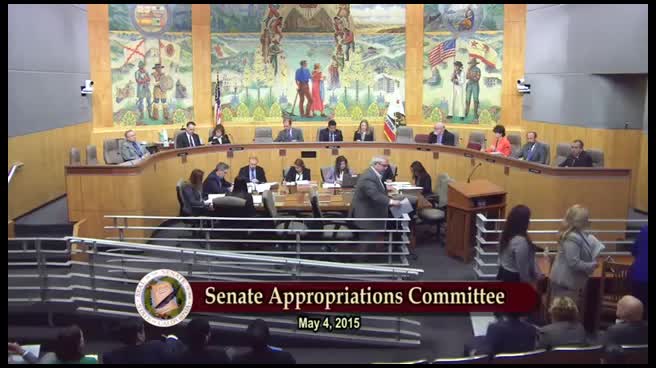 3MIN