SB 857: State employment: memorandum of understanding: Bargaining Unit 7.
- Session Year: 2015-2016
- House: Senate
- Latest Version Date: 2016-08-08
(1)Existing law provides that a provision of a memorandum of understanding reached between the state employer and a recognized employee organization representing state civil service employees that requires the expenditure of funds does not become effective unless approved by the Legislature in the annual Budget Act.
This bill would approve provisions of a memorandum of understanding entered into between the state employer and State Bargaining Unit 7, the California Statewide Law Enforcement Association, that require the expenditure of funds and would provide that these provisions will become effective even if these provisions are approved by the Legislature in legislation other than the annual Budget Act.
This bill would provide that provisions of the memorandum of understanding approved by this bill that require the expenditure of funds will not take effect unless funds for those provisions are specifically appropriated by the Legislature and would authorize the state employer and the affected employee organization to meet and confer to renegotiate the affected provisions if funds for those provisions are not specifically appropriated by the Legislature. The bill would appropriate $38,611,000 in augmentation of certain items of the Budget Act of 2016, according to a specified schedule, for State Bargaining Unit 7 employee compensation for expenditure in the 201617 fiscal year. The bill would appropriate to the Controller from the General Fund, unallocated special funds, including federal funds and unallocated nongovernmental cost funds, and any other fund from which state employees are compensated, the amount necessary for the payment of compensation and employee benefits to state employees covered by the memorandum of understanding described above if the Budget Act is not enacted on or before July 1 in the 201718 or 201819 fiscal years, as specified.
(2)The Public Employees Medical and Hospital Care Act (PEMHCA), which is administered by the Board of Administration of the Public Employees Retirement System, prescribes methods for calculating the state employer contribution for postemployment health care benefits for eligible retired public employees and their families and for the vesting of these benefits. PEMHCA requires the employer contribution for an employee or annuitant who is in employment or retired from state service to be adjusted by the Legislature in the annual Budget Act, as specified. PEMHCA prescribes different ways of calculating the employer contributions for employees and annuitants depending on date of hire, years of service, and bargaining unit.
This bill, for state employees who are first employed and become members of the retirement system on or after January 1, 2017, and are represented by State Bargaining Unit 7, as specified, would limit the employer contribution for annuitants to 80% of the weighted average of the health benefit plan premiums for an active employee enrolled for self-alone, during the benefit year to which the formula is applied, for the 4 health benefit plans with the largest state civil service enrollment, as specified. The bill would similarly limit the employer contribution for an enrolled family member of an annuitant to 80% of the weighted average of the additional premiums required for enrollment of those family members during the benefit year to which the formula is applied and would provide the same limit on employer contributions for annuitants enrolled in Medicare health benefit plans.
(3)PEMHCA requires state employees to have a specified number of years of state service, depending on hiring date and other factors, before they may receive any portion of the employer contribution payable for annuitants for postretirement health benefits and increases the percentage they may receive based upon additional years of service.
This bill would prohibit state employees who are first employed and become members of the retirement system on or after January 1, 2017, and are represented by State Bargaining Unit 7, as specified, from receiving any portion of the employer contribution payable for annuitants unless the person is credited with at least 15 years of state service at the time of retirement. The bill would prescribe the percentage of the employer contribution payable for postretirement health benefits for these employees based on the number of completed years of credited state service at retirement, with 50% after 15 credited years of service and 100% after 25 or more years of service.
(4)PEMHCA generally requires that an employee or annuitant who is enrolled in, or whose family member is enrolled in, a Medicare health benefit plan be paid the amount of the Medicare Part B premiums, as specified, and prohibits this payment from exceeding the difference between the maximum employer contribution and the amount contributed by the employer toward the cost of premiums for the health benefit plan in which the employee or annuitant and his or her family members are enrolled. Existing law excepts from this requirement state employees who are first employed and become members of the retirement system on or after specified dates and are represented by specified state bargaining units.
This bill would also except from the requirement described above state employees who are first employed and become members of the retirement system on or after January 1, 2017, and are represented by State Bargaining Unit 7, as specified.
(5)PEMHCA establishes the Public Employees Contingency Reserve Fund for the purpose of funding health benefits and funding administrative expenses. PEMHCA establishes the Annuitants Health Care Coverage Fund, which is continuously appropriated, for the purpose prefunding health care coverage for annuitants, including administrative costs. PEMHCA defines prefunding for these purposes. Existing law requires the state and employees of State Bargaining Unit 9, 10, or 12 to prefund retiree health care with the goal of reaching a 50% cost sharing of normal costs by July 1, 2019, and prescribes schedules of contribution percentages in this regard.
This bill would require the state and employees of State Bargaining Unit 7 to prefund retiree health care with the goal of reaching a 50% cost sharing of normal costs by July 1, 2019, and would prescribe a schedule of contribution percentages in this regard, with the contributions to be deposited in the Annuitants Health Care Coverage Fund. By depositing new revenue in a continuously appropriated fund, this bill would make an appropriation.
(6)Existing law, the State Employees Dental Care Act, authorizes the state to enter into contracts, upon negotiations with employee organizations, with carriers for dental care plans for employees, annuitants, and eligible family members. Existing law permits these plans to include premiums to be paid by employees and annuitants and also authorizes the plans to be self-funded if an employer determines it to be cost effective. Existing law prohibits specified employees from receiving an employer contribution for these benefits for annuitants unless the person is credited with 10 or more years of state service or for other specified employees unless the person is credited with 15 or more years of state service.
This bill would prohibit state employees, as specified, who are first employed and become members of the retirement system on or after January 1, 2017, and are represented by State Bargaining Unit 7 from receiving an employer contribution for dental benefits, as described above, for annuitants unless the person is credited with 15 or more years of state service. The bill would prescribe the percentage of the employer contribution payable for these dental benefits for these employees based on the number of completed years of credited state service at retirement, with 50% after 15 credited years of service and 100% after 25 or more years of service.
(7)This bill would declare that it is to take effect immediately as a bill providing for appropriations related to the Budget Bill.
This bill would express the intent of the Legislature to enact statutory changes relating to the Budget Act of 2016.
This bill would express the intent of the Legislature to enact statutory changes relating to the Budget Act of 2016.
This bill would express the intent of the Legislature to enact statutory changes relating to the Budget Act of 2016.
The Legislature finds and declares that the purposes of this act is to approve the agreement entered into by the state employer and State Bargaining Unit 7 pursuant to Section 3517.5 of the Government Code.
SEC. 2.The provisions of the memorandum of understanding prepared pursuant to Section 3517.5 of the Government Code and entered into by the state employer and State Bargaining Unit 7, dated June 9, 2016, and that require the expenditure of funds, are hereby approved for the purposes of subdivision (b) of Section 3517.6 of the Government Code.
SEC. 3.The provisions of the memorandum of understanding approved in Section 2 of this act that require the expenditure of funds shall not take effect unless funds for these provisions are specifically appropriated by the Legislature. If funds for these provisions are not specifically appropriated by the Legislature, either the state employer or the affected employee organization may reopen negotiations on all or part of the memorandum of understanding.
SEC. 4.Notwithstanding Section 3517.6 of the Government Code, the provisions of the memorandum of understanding included in Section 2 of this act that require the expenditure of funds shall become effective even if the provisions of the memorandum of understanding are approved by the Legislature in legislation other than the annual Budget Act.
SEC. 5.The sum of thirty-eight million six hundred eleven thousand dollars ($38,611,000) is hereby appropriated for State Bargaining Unit 7 for expenditure in the 201617 fiscal year in augmentation of, and for the purpose of, state employee compensation, as provided in Items 9800-001-0001, 9800-001-0494, and 9800-001-0988 of Section 2.00 of the Budget Act of 2016, in accordance with the following schedule:
(a)Nine million six hundred sixty-seven thousand dollars ($9,667,000) from the General Fund in augmentation of Item 9800-001-0001.
(b)Nineteen million three hundred ninety-two thousand dollars ($19,392,000) from unallocated special funds in augmentation of Item 9800-001-0494.
(c)Nine million five hundred fifty-two thousand dollars ($9,552,000) from other unallocated nongovernmental cost funds in augmentation of Item 9800-001-0988.
SEC. 6.Section 19829.9845 of the Government Code is amended to read:19829.9845.(a)Notwithstanding Section 13340, for the 201718 fiscal year, if the Budget Act of 2017 is not enacted by July 1, 2017, for the memorandum memoranda of understanding entered into between the state employer and State Bargaining Unit 7 (effective July 2, 2016, to July 1, 2019, inclusive) and State Bargaining Unit 12 (effective July 1, 2015, to July 1, 2019, inclusive) there is hereby continuously appropriated to the Controller from the General Fund, unallocated special funds, including, but not limited to, federal funds and unallocated nongovernmental cost funds, and any other fund from which state employees are compensated, the amount necessary for the payment of compensation and employee benefits to state employees covered by the an above memorandum of understanding until the Budget Act of 2017 is enacted. The Controller may expend an amount no greater than necessary to enable the Controller to compensate state employees covered by the an above memorandum of understanding for work performed between July 1, 2017, of the 201718 fiscal year and the enactment of the Budget Act of 2017.
(b)If the memorandum memoranda of understanding entered into between the state employer and State Bargaining Unit 7 (effective July 2, 2016, to July 1, 2019, inclusive) and State Bargaining Unit 12 (effective July 1, 2015, to July 1, 2019, inclusive) is are in effect and approved by the Legislature, the compensation and contribution for employee benefits for state employees represented by this these bargaining unit units shall be at a rate consistent with the applicable memorandum of understanding referenced above.
(c)Expenditures related to any warrant drawn pursuant to subdivision (a) are not augmentations to the expenditure authority of a department. Upon the enactment of the Budget Act of 2017, these expenditures shall be subsumed by the expenditure authority approved in the Budget Act of 2017 for each affected department.
(d)This section shall only apply to an employee covered by the term terms of the State Bargaining Unit 7 (effective July 2, 2016, to July 1, 2019, inclusive) and State Bargaining Unit 12 (effective July 1, 2015, to July 1, 2019, inclusive) memorandum memoranda of understanding. Notwithstanding Section 3517.8, this section shall not apply after the term terms of the memorandum memoranda of understanding has have expired. For purposes of this section, the memorandum memoranda of understanding for State Bargaining Unit 7 and State Bargaining Unit 12 expires expire on July 1, 2019.
SEC. 7.Section 19829.9846 of the Government Code is amended to read:19829.9846.(a)Notwithstanding Section 13340, for the 201819 fiscal year, if the Budget Act of 2018 is not enacted by July 1, 2018, for the memorandum memoranda of understanding entered into between the state employer and State Bargaining Unit 7 (effective July 2, 2016, to July 1, 2019, inclusive) and State Bargaining Unit 12 (effective July 1, 2015, to July 1, 2019, inclusive) there is hereby continuously appropriated to the Controller from the General Fund, unallocated special funds, including, but not limited to, federal funds and unallocated nongovernmental cost funds, and any other fund from which state employees are compensated, the amount necessary for the payment of compensation and employee benefits to state employees covered by the an above memorandum of understanding until the Budget Act of 2018 is enacted. The Controller may expend an amount no greater than necessary to enable the Controller to compensate state employees covered by the an above memorandum of understanding for work performed between July 1, 2018, of the 201819 fiscal year and the enactment of the Budget Act of 2018.
(b)If the memorandum memoranda of understanding entered into between the state employer and State Bargaining Unit 7 (effective July 2, 2016, to July 1, 2019, inclusive) and State Bargaining Unit 12 (effective July 1, 2015, to July 1, 2019, inclusive) is are in effect and approved by the Legislature, the compensation and contribution for employee benefits for state employees represented by this these bargaining unit units shall be at a rate consistent with the applicable memorandum of understanding referenced above.
(c)Expenditures related to any warrant drawn pursuant to subdivision (a) are not augmentations to the expenditure authority of a department. Upon the enactment of the Budget Act of 2018, these expenditures shall be subsumed by the expenditure authority approved in the Budget Act of 2018 for each affected department.
(d)This section shall only apply to an employee covered by the term terms of the State Bargaining Unit 7 (effective July 2, 2016, to July 1, 2019, inclusive) and State Bargaining Unit 12 (effective July 1, 2015, to July 1, 2019, inclusive) memorandum memoranda of understanding. Notwithstanding Section 3517.8, this section shall not apply after the term terms of the memorandum memoranda of understanding has have expired. For purposes of this section, the memorandum memoranda of understanding for State Bargaining Unit 7 and State Bargaining Unit 12 expires expire on July 1, 2019.
SEC. 8.Section 22871.3 of the Government Code is amended to read:22871.3.(a)The employer contribution for each annuitant enrolled in a basic plan shall be an amount equal to 80 percent of the weighted average of the health benefit plan premiums for an employee or annuitant enrolled for self-alone, during the benefit year to which the formula is applied, for the four health benefit plans that had the largest active state civil service enrollment, excluding family members, during the previous benefit year. For each annuitant with enrolled family members, the employer contribution shall be an amount equal to 80 percent of the weighted average of the additional premiums required for enrollment of those family members, during the benefit year to which the formula is applied, in the four health benefit plans that had the largest active state civil service enrollment, excluding family members, during the previous benefit year.
(b)The employer contribution for each annuitant enrolled in a Medicare health benefit plan in accordance with Section 22844 shall be an amount equal to 80 percent of the weighted average of the health benefit plan premiums for an annuitant enrolled in a Medicare health benefit plan for self-alone, during the benefit year to which the formula is applied, for the four Medicare health benefit plans that had the largest state annuitant enrollment, excluding family members, during the previous benefit year. For each annuitant with enrolled family members, the employer contribution shall be an amount equal to 80 percent of the weighted average of the additional premiums required for enrollment of those family members, during the benefit year to which the formula is applied, in the four Medicare health benefit plans that had the largest state annuitant enrollment, excluding family members, during the previous benefit year. If the annuitant is eligible for Medicare Part A, with or without cost, and Medicare Part B, regardless of whether the annuitant is actually enrolled in Medicare Part A or Part B, the employer contribution shall not exceed the amount calculated under this subdivision.
(c)This section applies to:
(1)A state employee who is first employed by the state and becomes a state member of the system on or after January 1, 2016, and who is represented by State Bargaining Unit 9 or 10.
(2)A state employee related to State Bargaining Unit 9 or 10 who is excepted from the definition of state employee in subdivision (c) of Section 3513 and first employed by the state and becomes a state member of the system on or after January 1, 2016.
(3)A state employee represented by State Bargaining Unit 6 6, 7, or 12 who is first employed by the state and becomes a state member of the system on or after January 1, 2017.
(4)A state employee related to State Bargaining Unit 6 6, 7, or 12 who is excepted from the definition of state employee in subdivision (c) of Section 3513 and first employed by the state and becomes a state member of the system on or after January 1, 2017.
(5)A judicial branch employee who is first employed by the state and becomes a state member of the system on or after January 1, 2017. This paragraph does not apply to a judge who is subject to Chapter 11 (commencing with Section 75000) or Chapter 11.5 (commencing with Section 75500) of Title 8.
(d)If the provisions of this section are in conflict with the provisions of a memorandum of understanding reached pursuant to Section 3517.5 or Chapter 12 (commencing with Section 3560) of Division 4 of Title 1, the memorandum of understanding shall be controlling without further legislative action, except that if those provisions require the expenditure of funds, the provisions may not become effective unless approved by the Legislature.
SEC. 9.Section 22874.3 of the Government Code is amended to read:22874.3.(a)Notwithstanding Sections 22870, 22871, 22873, and 22874 22874, a state employee, defined by subdivision (c) of Section 3513, who is first employed by the state and becomes a state member of the system on or after January 1, 2017, and who is represented by State Bargaining Unit 6, 6 or 7 shall not receive any portion of the employer contribution payable for annuitants unless the person is credited with 15 years of state service at the time of retirement.
(b)The percentage of the employer contribution payable for postretirement health benefits for an employee subject to this section shall be based on the completed years of credited state service at retirement as shown in the following table:
Years of Service Contribution Credited Years | Credited Years Percentage Percentage of Employer |
15 | 50 |
16 | 55 |
17 | 60 |
18 | 65 |
19 | 70 |
20 | 75 |
21 | 80 |
22 | 85 |
23 | 90 |
24 | 95 |
25 or more | 100 |
(c)This section shall apply only to state employees that retire for service. For purposes of this section, state service means service rendered as an employee of the state or an appointed or elected officer of the state for compensation.
(d)This section does not apply to:
(1)Former state employees previously employed before January 1, 2017, who return to state employment on or after January 1, 2017.
(2)State employees hired prior to January 1, 2017, who become subject to representation by State Bargaining Unit 6 or 7 on or after January 1, 2017.
(3)State employees on an approved leave of absence employed before January 1, 2017, who return to active employment on or after January 1, 2017.
(4)State employees hired after January 1, 2017, who are first represented by a State Bargaining Unit other than Bargaining Unit 6, 6 or 7, who later become represented by State Bargaining Unit 6. 6 or 7.
(e)Notwithstanding Section 22875, this section shall also apply to a related state employee who is excepted from the definition of state employee in subdivision (c) of Section 3513 and is first employed by the state and becomes a state member of the system on or after January 1, 2017.
SEC. 10.Section 22879 of the Government Code is amended to read:22879.(a)The board shall pay monthly to an employee or annuitant who is enrolled in, or whose family member is enrolled in, a Medicare health benefit plan under this part the amount of the Medicare Part B premiums, exclusive of penalties, except as provided in Section 22831. This payment may not exceed the difference between the maximum employer contribution and the amount contributed by the employer toward the cost of premiums for the health benefit plan in which the employee or annuitant and his or her family members are enrolled. No payment may be made in any month if the difference is less than one dollar ($1).
(b)This section shall be applicable only to state employees, annuitants who retired while state employees, and the family members of those persons.
(c)With respect to an annuitant, the board shall pay to the annuitant the amount required by this section from the same source from which his or her allowance is paid. Those amounts are hereby appropriated monthly from the General Fund to reimburse the board for those payments.
(d)There is hereby appropriated from the appropriate funds the amounts required by this section to be paid to active state employees.
(e)This section does not apply to:
(1)A state employee who is first employed by the state and becomes a state member of the system on or after January 1, 2016, and who is represented by State Bargaining Unit 9 or 10.
(2)A state employee related to State Bargaining Unit 9 or 10 who is excepted from the definition of state employee in subdivision (c) of Section 3513 and is first employed by the state and becomes a state member of the system on or after January 1, 2016.
(3)A state employee who is first employed by the state and becomes a state member of the system on or after January 1, 2017, and who is represented by State Bargaining Unit 6 6, 7, or 12.
(4)A state employee related to State Bargaining Unit 6 6, 7, or 12 who is excepted from the definition of state employee in subdivision (c) of Section 3513 and is first employed by the state and becomes a state member of the system on or after January 1, 2017.
(5)A judicial branch employee who is first employed by the state and becomes a state member of the system on or after January 1, 2017. This paragraph does not apply to a judge who is subject to Chapter 11 (commencing with Section 75000) or Chapter 11.5 (commencing with Section 75500) of Title 8.
SEC. 11.Section 22944.5 of the Government Code is amended to read:22944.5.(a) (1) The (1)The state and employees in State Bargaining Unit 7, 9, 10, or 12 shall prefund retiree health care, with the goal of reaching a 50-percent cost sharing of actuarially determined normal costs for both employer and employees by July 1, 2019.
(2)The state and employees in State Bargaining Unit 6 shall prefund retiree health care, with the goal of reaching a 50-percent cost sharing of actuarially determined normal costs for both employer and employees by July 1, 2018.
(3)The state and employees in the judicial branch shall prefund retiree health care, with the goal of reaching a 50-percent cost sharing of actuarially determined normal costs for both employer and employees by July 1, 2017.
(b)(1)The employees in State Bargaining Unit 9 shall make contributions to prefund retiree health care based on the following schedule, and the state shall make a matching contribution:
(A)Effective July 1, 2017, 0.5 percent of pensionable compensation.
(B)Effective July 1, 2018, an additional 0.5 percent for a total employee contribution of 1.0 percent of pensionable compensation.
(C)Effective July 1, 2019, an additional 1.0 percent for a total employee contribution of 2.0 percent of pensionable compensation.
(2)The employees in State Bargaining Unit 10 shall make contributions to prefund retiree health care based on the following schedule, and the state shall make a matching contribution:
(A)Effective July 1, 2017, 0.7 percent of pensionable compensation.
(B)Effective July 1, 2018, an additional 0.7 percent for a total employee contribution of 1.4 percent of pensionable compensation.
(C)Effective July 1, 2019, an additional 1.4 percent for a total employee contribution of 2.8 percent of pensionable compensation.
(3)The employees in State Bargaining Unit 6 shall make contributions to prefund retiree health care based on the following schedule, and the state shall make a matching contribution:
(A)Effective July 1, 2016, 1.3 percent of pensionable compensation.
(B)Effective July 1, 2017, an additional 1.3 percent for a total employee contribution of 2.6 percent of pensionable compensation.
(C)Effective July 1, 2018, an additional 1.4 percent for a total employee contribution of 4.0 percent of pensionable compensation.
(4)The state employees in the judicial branch shall make contributions to prefund retiree health care based on the following schedule, and the state shall make a matching contribution:
(A)Effective July 1, 2016, 1.5 percent of pensionable compensation.
(B)Effective July 1, 2017, up to an additional 1.5 percent for a total employee contribution of up to 3.0 percent of pensionable compensation. The additional amount shall be determined by the Director of Finance no later than April 1, 2017, based on the actuarially determined normal costs identified in the state valuation.
(C)This paragraph does not apply to a judge who is subject to Chapter 11 (commencing with Section 75000) or Chapter 11.5 (commencing with Section 75500) of Title 8.
(5)The employees in State Bargaining Unit 12 shall make contributions to prefund retiree health care based on the following schedule, and the state shall make a matching contribution:
(A)Effective July 1, 2017, 1.9 percent of pensionable compensation.
(B)Effective July 1, 2018, an additional 1.4 percent for a total employee contribution of 3.3 percent of pensionable compensation.
(C)Effective July 1, 2019, an additional 1.3 percent for a total employee contribution of 4.6 percent of pensionable compensation.
(6)The employees in State Bargaining Unit 7 shall make contributions to prefund retiree health care based on the following schedule, and the state shall make a matching contribution:
(A)Effective July 1, 2017, 1.3 percent of pensionable compensation.
(B)Effective July 1, 2018, an additional 1.4 percent for a total employee contribution of 2.7 percent of pensionable compensation.
(C)Effective July 1, 2019, an additional 1.3 percent for a total employee contribution of 4.0 percent of pensionable compensation.
(c)This section only applies to employees who are eligible for health benefits, including permanent intermittent employees.
(d)Contributions paid pursuant to this section shall be deposited in the Annuitants Health Care Coverage Fund and shall not be refundable under any circumstances to an employee or his or her beneficiary or survivor.
(e)If the provisions of this section are in conflict with the provisions of a memorandum of understanding reached pursuant to Section 3517.5, the memorandum of understanding shall be controlling without further legislative action, except that if those provisions of a memorandum of understanding require the expenditure of funds, the provisions shall not become effective unless approved by the Legislature in the annual Budget Act.
(f)This section shall also apply to a state employee related to a bargaining unit described in subdivision (a) who is excepted from the definition of state employee in subdivision (c) of Section 3513.
SEC. 12.Section 22958.1 of the Government Code is amended to read:22958.1.(a)Notwithstanding Sections 22953, 22957, and 22958, the following employees shall not receive any portion of the employer contribution payable for annuitants unless the person is credited with 15 or more years of state service, as defined by this section, at the time of retirement:
(1)A state employee, as defined by subdivision (c) of Section 3513, who is first employed by the state and becomes a state member of the system on or after January 1, 2017, and is represented by State Bargaining Unit 6 6, 7, or 12.
(2)A state employee related to State Bargaining Unit 6 6, 7, or 12 who is excepted from the definition of state employee in subdivision (c) of Section 3513 and is first employed by the state and becomes a state member of the system on or after January 1, 2017.
(b)The percentage of the employer contribution payable for postretirement dental care benefits for an employee subject to this section shall be based on the funding provision of the plan and the completed years of credited state service at retirement as shown in the following table:
Credited Years | Percentage of Employer |
15 | 50 |
16 | 55 |
17 | 60 |
18 | 65 |
19 | 70 |
20 | 75 |
21 | 80 |
22 | 85 |
23 | 90 |
24 | 95 |
25 or more | 100 |
(c)This section shall apply only to state employees that retire for service. For purposes of this section, state service means service rendered as an employee of the state or an appointed or elected officer of the state for compensation.
(d)This section does not apply to:
(1)Former state employees previously employed prior to January 1, 2017, who return to state employment on or after January 1, 2017.
(2)State employees hired prior to January 1, 2017, who become subject to representation by State Bargaining Unit 6 6, 7, or 12 on or after January 1, 2017.
(3)State employees on an approved leave of absence employed before January 1, 2017, who return to active employment on or after January 1, 2017.
(4)State employees hired after January 1, 2017, who are first represented by a State Bargaining Unit other than Bargaining Unit 6 6, 7, or 12, who later become represented by State Bargaining Unit 6 6, 7, or 12.
(e)In those cases where the state has assumed from a public agency a function and the related personnel, service rendered by that personnel for compensation as employees or appointed or elected officers of that public agency may not be credited as state service for the purposes of this section unless the former employer has paid or agreed to pay the state the amount actuarially determined to equal the cost for any employee dental benefits that were vested at the time that the function and the related personnel were assumed by the state, and the Department of Finance finds that the contract contains a benefit factor sufficient to reimburse the state for the amount necessary to fully compensate for the postretirement dental benefit costs of those personnel. For noncontracting public agencies, the state agency that has assumed the function shall certify the completed years of public agency service to be credited to the employee as state service credit under this section.
SEC. 13.This act is a bill providing for appropriations related to the Budget Bill within the meaning of subdivision (e) of Section 12 of Article IV of the California Constitution, has been identified as related to the budget in the Budget Bill, and shall take effect immediately.
SECTION 1.It is the intent of the Legislature to enact statutory changes, relating to the Budget Act of 2016.
It is the intent of the Legislature to enact statutory changes, relating to the Budget Act of 2016.
It is the intent of the Legislature to enact statutory changes relating to the Budget Act of 2016.
|
Date
|
Status
|
|---|---|
| Jan 7, 2016 | Introduced. Read first time. To Com. on RLS. for assignment. To print. |
| Jan 8, 2016 | From printer. May be acted upon on or after February 7. |
| Jan 11, 2016 | Referred to Com. on B. & F.R. |
| Apr 11, 2016 | Ordered to second reading. |
| Apr 11, 2016 | Withdrawn from committee. |
| Apr 12, 2016 | Read second time. Ordered to third reading. |
| Apr 14, 2016 | In Assembly. Read first time. Held at Desk. |
| Apr 14, 2016 | Read third time. Passed. (Ayes 25. Noes 11. Page 3546.) Ordered to the Assembly. |
| Apr 14, 2016 | Read third time. Passed. (Ayes 25. Noes 11.) Ordered to the Assembly. |
| May 2, 2016 | Referred to Com. on BUDGET. |
| May 25, 2016 | From committee with author's amendments. Read second time and amended. Re-referred to Com. on BUDGET. |
| Aug 8, 2016 | From committee with author's amendments. Read second time and amended. Re-referred to Com. on BUDGET. |
| Aug 10, 2016 | From committee: Do pass. (Ayes 25. Noes 0.) (August 10). |
| Aug 11, 2016 | Read second time. Ordered to third reading. |
| Aug 24, 2016 | Ordered to inactive file on request of Assembly Member Calderon. |
|
Date
|
Description
|
Location
|
Votes
|
|
|---|---|---|---|---|
| Aug 10, 2016 | Do pass. | Assembly Standing Committee on Budget |
Passed |
|
| Apr 14, 2016 | Senate 3rd Reading SB857 Committee On B. & F.R. (Leno) | Senate Floor |
Passed |
This list shows positions taken on this bill by organizations on the date displayed, which is linked to the original source.
Positions by individuals are not included.
SENATE THIRD READING
STR Bill Id:SB 857
Author:(Committee on Budget and Fiscal Review)
As Amended Ver:August 8, 2016
Majority vote. Budget Bill Appropriation Takes Effect Immediately
SENATE VOTE: 25-11
Committee | Votes | Ayes | Noes |
Budget | 25-0 | Ting, Obernolte, Travis Allen, Bloom, Bonta, Campos, Chávez, Chiu, Cooper, Gordon, Harper, Holden, Irwin, Kim, Lackey, McCarty, Melendez, Mullin, Nazarian, O'Donnell, Patterson, Rodriguez, Thurmond, Wilk, Williams |
SUMMARY: Makes necessary statutory and technical changes to implement the Budget Act of 2016 related to Civil Service improvement provisions. Specifically, this bill provides legislative ratification of the memoranda of understanding (MOU) agreed to by the state and bargaining unit (BU) 7, Protective Services and Public Safety, represented exclusively by California Statewide Law Enforcement Association (CSLEA).
EXISTING LAW:
- Establishes the Ralph C. Dills Act, which requires the state to collectively bargain with the exclusive representatives of employee groups (i.e. bargaining units) regarding wages and working conditions, and to define negotiated agreements in MOUs.
- Establishes the California Department of Human Resources (CalHR) as the official representative of the Governor in all matters related to collective bargaining with state employees.
- Requires that any MOU between the state and an exclusive representative must be ratified by the Legislature.
- Establishes the California Public Employees' Retirement System (CalPERS), which administers health and retirement benefits for state employees.
- Requires the Legislative Analyst's Office (LAO) to analyze all state MOUs and to provide analyses of an MOU and its fiscal impact to the Legislature within 10 days of receipt of an MOU from CalHR.
- Provides that fully vested state retirees (e.g., with 20 or more years of state employment) are entitled to an employer contribution for retiree health care equal to 100% of the weighted average premium of the four health plans most highly utilized by all members. Dependents are eligible for a contribution based on 90% of the average additional premiums paid for dependents during the benefit year in which the formula is applied. This is referred to as the 100/90 formula.
- Requires that Medicare-eligible retirees enroll in Medicare and choose a Medicare-coordinated health plan. Since these plans may be cheaper than non-Medicare (or "Basic" plans), thus resulting in some portion of the employer contribution going unused, current law requires that any unused portion of the 100/90 formula contributions may be applied to reimburse retirees for the costs of Medicare Part B premiums. These reimbursements are made in the form of an additional payment to the retiree on the retirement warrant up to the cost of the Part B premium. Whether or not a retiree receives the Medicare Part B reimbursement in full or in part depends upon the cost of that retiree's health plan.
- Provides that most state employees (those hired after 1985 or 1989, depending on class) must work for 10 years to receive 50% of the 100/90 formula, with an additional 5% per year of service until, after 20 years, they are vested to receive 100% of the 100/90 formula. Individuals hired prior to 1985 or 1989 could be subject to either five-year or 10-year vesting for full coverage of the 100/90 formula.
- Provides that retirees who were covered in certain bargaining units while actively employed will receive an employer retiree health contribution based on the 80/80 formula (i.e., 80% of the weighted average premium of the four health plans most highly utilized by all members).
- Provides that the employer contribution for active state employee health care shall be determined through collective bargaining.
FISCAL EFFECT: Appropriates $38.6 million for State BU 7 for expenditure in 2016-17, in augmentation of the funds appropriated under the Employee Compensation items of the 2016 Budget Act.
COMMENTS:
The following information summarizing the general provisions of the MOU was provided by CalHR:
Number of Employees: The BU 7 agreement affects approximately 7,204 full-time equivalents.
HEALTH BENEFITS
- Employer Contribution for Active State Employees
- The state's monthly health consolidated benefit contribution for each employee shall continue to be a flat dollar amount equal to 80% of the weighted average of the basic health benefit plan premiums of the four largest enrolled basic health plans. For each employee with enrolled family members, the employer shall continue to contribute an additional flat dollar amount equal to 80% of the weighted average of the additional premiums. The flat dollar amounts shall be increased as appropriate pursuant to the formulas on January 1, 2017, January 1, 2018, and January 1, 2019.
- Employer Contribution for Future Retirees
- Employees first hired on or after January 1, 2017, will receive an employer contribution for retiree health benefits based on an "80/80" formula. Retirees and their dependents enrolled in a basic health benefit plan will receive an employer contribution equal to 80% of the weighted average premium of the four largest basic health benefit plans based on state active employee enrollment. Retirees and their dependents enrolled in a Medicare health benefit plan will receive an employer contribution equal to 80% of the weighted average premium of the four largest Medicare health benefit plans based on state retiree enrollment.
- Prefunding of Other Post-Employment Benefits
- The state and BU 7 members will prefund retiree healthcare with the goal of reaching 50% cost sharing of actuarially determined total normal cost for employer and employees by July 1, 2019. The state and employees will each make the following contributions:
- Effective July 1, 2017, 1.3% for a total of 1.9% of pensionable compensation.
- Effective July 1, 2018, an additional 1.4% for a total of 2.7% of pensionable compensation.
- Effective July 1, 2019, an additional 1.3% for a total of 4.0% of pensionable compensation.
- The state and BU 7 members will prefund retiree healthcare with the goal of reaching 50% cost sharing of actuarially determined total normal cost for employer and employees by July 1, 2019. The state and employees will each make the following contributions:
- Post-Employment Health and Dental Benefit Vesting Schedule
- All employees first employed by the state on or after January 1, 2017, will be subject to an extended vesting schedule providing 50% of the employer contribution upon completion of 15 years of state service, increasing 5% for each additional year of service, until the employee is 100% vested at 25 years of state service.
- Medicare Part B Supplemental Benefit
- All employees first hired on or after January 1, 2017, will no longer be eligible to use the employer contribution for retiree health benefits for Medicare Part B premiums.
COMPENSATION
- General Salary Increase (GSI)
- Effective July 1, 2016, BU 7 employees shall receive a 3% GSI.
- Effective July 1, 2017, BU 7 employees shall receive a 3% GSI.
- Effective July 1, 2018, BU 7 employees shall receive a 2% GSI.
- Special Salary Adjustments
- Effective July 1, 2016 BU 7 employees in the Public Safety Dispatcher, Public Safety Operator, and Communications Operator classifications shall receive a special salary adjustment of 5%.
- Effective July 1, 2016, BU 7 employees in the Motor Carrier Specialist I classifications shall receive a special salary adjustment of 3%.
- Effective July 1, 2016, BU 7 employees in the State Park Peace Officer (Ranger and Lifeguard) classifications shall receive a special salary adjustment of 5%.
- Effective July 1, 2016, BU 7 employees in specified investigator classifications shall receive a special salary adjustment of 5%.
- Effective July 1, 2016, BU 7 employees in the Agent, Alcoholic Beverage Control classification shall receive a special salary adjustment.
- Effective July 1, 2016, BU 7 employees in the Coordinator (Fire and Rescue Services, and Law Enforcement) classifications shall receive a special salary adjustment.
- Longevity Peace Officer Pay Differential
- Effective the first day of the pay period following ratification, each step of the Longevity Pay Differential for peace officers shall be increased by 1%.
- Education Incentive Pay
- Effective the first day of the pay period following ratification, the monthly education incentive pay shall increase from $50 to $75 for an Associate of Arts or Associate of Science Degree and from $100 to $125 for a Bachelor of Arts or Bachelor of Science Degree.
- Uniform Allowance
- Effective the first day of the pay period following ratification, the uniform replacement allowance shall be increased as follows:
- From $640 to $950 for full-time employees in specified classifications;
- From $540 to $640 for less than full-time employees in specified classifications;
- From $20 to $55 for specified Lifeguards;
- From $385 to $950 for Oil Spill Prevention Specialist;
- From $450 to $950 for Communications Operators employed at the Department of Forestry and Fire Protection.
- Effective the first day of the pay period following ratification, specified employees shall receive a uniform maintenance and cleaning allowance of $25 per month.
- Effective the first day of the pay period following ratification, employees in the Motor Carrier Specialist I and School Pupil Transportation Safety Coordinator classifications shall receive an annual boot reimbursement of $150.
- Effective the first day of the pay period following ratification, the uniform replacement allowance shall be increased as follows:
MISCELLANEOUS
- The maximum amount of leave that can be deducted from each employee for the Union Release Time Bank shall increase from 1.5 hours to 2 hours.
- Effective May 1, 2017, and depending on the availability of department funds, the amount of leave that can be cashed out each year shall increase from 20 hours to 80 hours.
- Incorporates the Wounded Warriors Transitional Leave Act, which provides up to 96 hours of additional sick leave for employees hired after January 1, 2016, who is a military veteran with a service connected disability rated 30%.
- Allows an employee to transfer up to three months of leave credits to a family member under certain conditions.
- Removes the requirement that a new employee must work two years before receiving the full employer health contribution.
- Effective the first day of the pay period following ratification, the lodging reimbursement rates shall increase from $125 to $140 for Alameda, San Mateo, and Santa Clara Counties and from $150 to $250 for San Francisco.
- Effective the first day of the pay period following ratification, the Overtime Meal Allowance shall increase from $7.50 to $8.00.
- Requires the state to provide specified items of protective equipment based on an employee's classification and place of employment.
- Effective the first day of the pay period following ratification, physical fitness pay shall be included in regular base pay.
- Extends the amount of time between voluntary transfers from 12 months to 24 months for Special Agents and Special Agent Supervisors at the Department of Justice.
- Requires Special Agents and Special Agent Supervisors at the Department of Justice who reinstate or are hired from a reemployment list to work 24 months before requesting a voluntary transfer.
DURATION
July 1, 2015, through July 1, 2019.
Analysis Prepared by: Genevieve Morelos / BUDGET / (916) 319-2099 FN: 0004066
Date of Hearing: August 10, 2016
ASSEMBLY COMMITTEE ON BUDGET
Philip Ting, Chair
SBPCA Bill Id:SB 857
Author:(Committee on Budget and Fiscal Review) – As Amended Ver:August 8, 2016
SENATE VOTE: 25-11
SUBJECT: Budget Act of 2016
SUMMARY: Makes necessary statutory and technical changes to implement the Budget Act of 2016 related to Civil Service improvement provisions. Specifically, this bill:
- Provides legislative ratification of the memoranda of understanding (MOU) agreed to by the state and bargaining unit (BU) 7, Protective Services and Public Safety, represented exclusively by California Statewide Law Enforcement Association (CSLEA).
EXISTING LAW:
- Establishes the Ralph C. Dills Act, which requires the state to collectively bargain with the exclusive representatives of employee groups (i.e. bargaining units) regarding wages and working conditions, and to define negotiated agreements in MOUs.
- Establishes the California Department of Human Resources (CalHR) as the official representative of the Governor in all matters related to collective bargaining with state employees.
- Requires that any MOU between the state and an exclusive representative must be ratified by the Legislature.
- Establishes the California Public Employees' Retirement System (CalPERS), which administers health and retirement benefits for state employees.
- Requires the Legislative Analyst's Office (LAO) to analyze all state MOUs and to provide analyses of an MOU and its fiscal impact to the Legislature within 10 days of receipt of an MOU from CalHR.
- Provides that fully vested state retirees (e.g., with 20 or more years of state employment) are entitled to an employer contribution for retiree health care equal to 100% of the weighted average premium of the four health plans most highly utilized by all members. Dependents are eligible for a contribution based on 90% of the average additional premiums paid for dependents during the benefit year in which the formula is applied. This is referred to as the 100/90 formula.
- Requires that Medicare-eligible retirees enroll in Medicare and choose a Medicare-coordinated health plan. Since these plans may be cheaper than non-Medicare (or "Basic" plans), thus resulting in some portion of the employer contribution going unused, current law requires that any unused portion of the 100/90 formula contributions may be applied to reimburse retirees for the costs of Medicare Part B premiums. These reimbursements are made in the form of an additional payment to the retiree on the retirement warrant up to the cost of the Part B premium. Whether or not a retiree receives the Medicare Part B reimbursement in full or in part depends upon the cost of that retiree's health plan.
- Provides that most state employees (those hired after 1985 or 1989, depending on class) must work for 10 years to receive 50% of the 100/90 formula, with an additional 5% per year of service until, after 20 years, they are vested to receive 100% of the 100/90 formula. Individuals hired prior to 1985 or 1989 could be subject to either 5 year or 10 year vesting for full coverage of the 100/90 formula.
- Provides that retirees who were covered in certain bargaining units while actively employed will receive an employer retiree health contribution based on the 80/80 formula (i.e., 80% of the weighted average premium of the four health plans most highly utilized by all members).
- Provides that the employer contribution for active state employee health care shall be determined through collective bargaining.
FISCAL EFFECT: Appropriates $38.6 million for State BU 7 for expenditure in 2016-17, in augmentation of the funds appropriated under the Employee Compensation items of the 2016 Budget Act.
COMMENTS: The following information summarizing the general provisions of the MOU was provided by CalHR:
Number of Employees: The BU 7 agreement affects approximately 7,204 full-time equivalents.
HEALTH BENEFITS
- Employer Contribution for Active State Employees
- The state’s monthly health consolidated benefit contribution for each employee shall continue to be a flat dollar amount equal to 80% of the weighted average of the basic health benefit plan premiums of the four largest enrolled basic health plans. For each employee with enrolled family members, the employer shall continue to contribute an additional flat dollar amount equal to 80% of the weighted average of the additional premiums. The flat dollar amounts shall be increased as appropriate pursuant to the formulas on January 1, 2017, January 1, 2018, and January 1, 2019.
- Employer Contribution for Future Retirees
- Employees first hired on or after January 1, 2017, will receive an employer contribution for retiree health benefits based on an “80/80” formula. Retirees and their dependents enrolled in a basic health benefit plan will receive an employer contribution equal to 80% of the weighted average premium of the four largest basic health benefit plans based on state active employee enrollment. Retirees and their dependents enrolled in a Medicare health benefit plan will receive an employer contribution equal to 80% of the weighted average premium of the four largest Medicare health benefit plans based on state retiree enrollment.
- Employees first hired on or after January 1, 2017, will receive an employer contribution for retiree health benefits based on an “80/80” formula. Retirees and their dependents enrolled in a basic health benefit plan will receive an employer contribution equal to 80% of the weighted average premium of the four largest basic health benefit plans based on state active employee enrollment. Retirees and their dependents enrolled in a Medicare health benefit plan will receive an employer contribution equal to 80% of the weighted average premium of the four largest Medicare health benefit plans based on state retiree enrollment.
- Prefunding of Other Post-Employment Benefits
- The state and BU 7 members will prefund retiree healthcare with the goal of reaching 50% cost sharing of actuarially determined total normal cost for employer and employees by July 1, 2019. The state and employees will each make the following contributions:
- Effective July 1, 2017, 1.3% for a total of 1.9% of pensionable compensation.
- Effective July 1, 2018, an additional 1.4% for a total of 2.7% of pensionable compensation.
- Effective July 1, 2019, an additional 1.3% for a total of 4.0% of pensionable compensation.
- Effective July 1, 2017, 1.3% for a total of 1.9% of pensionable compensation.
- The state and BU 7 members will prefund retiree healthcare with the goal of reaching 50% cost sharing of actuarially determined total normal cost for employer and employees by July 1, 2019. The state and employees will each make the following contributions:
- Post-Employment Health and Dental Benefit Vesting Schedule
- All employees first employed by the state on or after January 1, 2017, will be subject to an extended vesting schedule providing 50% of the employer contribution upon completion of 15 years of state service, increasing 5% for each additional year of service, until the employee is 100% vested at 25 years of state service.
- All employees first employed by the state on or after January 1, 2017, will be subject to an extended vesting schedule providing 50% of the employer contribution upon completion of 15 years of state service, increasing 5% for each additional year of service, until the employee is 100% vested at 25 years of state service.
- Medicare Part B Supplemental Benefit
- All employees first hired on or after January 1, 2017, will no longer be eligible to use the employer contribution for retiree health benefits for Medicare Part B premiums.
COMPENSATION
- General Salary Increase (GSI)
- Effective July 1, 2016, BU 7 employees shall receive a 3% GSI.
- Effective July 1, 2017, BU 7 employees shall receive a 3% GSI.
- Effective July 1, 2018, BU 7 employees shall receive a 2% GSI.
- Effective July 1, 2016, BU 7 employees shall receive a 3% GSI.
- Special Salary Adjustments
- Effective July 1, 2016 BU 7 employees in the Public Safety Dispatcher, Public Safety Operator, and Communications Operator classifications shall receive a special salary adjustment of 5%.
- Effective July 1, 2016, BU 7 employees in the Motor Carrier Specialist I classifications shall receive a special salary adjustment of 3%.
- Effective July 1, 2016, BU 7 employees in the State Park Peace Officer (Ranger and Lifeguard) classifications shall receive a special salary adjustment of 5%.
- Effective July 1, 2016, BU 7 employees in specified investigator classifications shall receive a special salary adjustment of 5%.
- Effective July 1, 2016, BU 7 employees in the Agent, Alcoholic Beverage Control classification shall receive a special salary adjustment.
- Effective July 1, 2016, BU 7 employees in the Coordinator (Fire and Rescue Services, and Law Enforcement) classifications shall receive a special salary adjustment.
- Effective July 1, 2016 BU 7 employees in the Public Safety Dispatcher, Public Safety Operator, and Communications Operator classifications shall receive a special salary adjustment of 5%.
- Longevity Peace Officer Pay Differential
- Effective the first day of the pay period following ratification, each step of the Longevity Pay Differential for peace officers shall be increased by 1%.
- Effective the first day of the pay period following ratification, each step of the Longevity Pay Differential for peace officers shall be increased by 1%.
- Education Incentive Pay
- Effective the first day of the pay period following ratification, the monthly education incentive pay shall increase from $50 to $75 for an Associate of Arts or Associate of Science Degree and from $100 to $125 for a Bachelor of Arts or Bachelor of Science Degree.
- Effective the first day of the pay period following ratification, the monthly education incentive pay shall increase from $50 to $75 for an Associate of Arts or Associate of Science Degree and from $100 to $125 for a Bachelor of Arts or Bachelor of Science Degree.
- Uniform Allowance
- Effective the first day of the pay period following ratification, the uniform replacement allowance shall be increased as follows:
- From $640 to $950 for full-time employees in specified classifications;
- From $540 to $640 for less than full-time employees in specified classifications;
- From $20 to $55 for specified Lifeguards;
- From $385 to $950 for Oil Spill Prevention Specialist;
- From $450 to $950 for Communications Operators employed at the Department of Forestry and Fire Protection.
- From $640 to $950 for full-time employees in specified classifications;
- Effective the first day of the pay period following ratification, specified employees shall receive a uniform maintenance and cleaning allowance of $25 per month.
- Effective the first day of the pay period following ratification, employees in the Motor Carrier Specialist I and School Pupil Transportation Safety Coordinator classifications shall receive an annual boot reimbursement of $150.
- Effective the first day of the pay period following ratification, the uniform replacement allowance shall be increased as follows:
MISCELLANEOUS
- The maximum amount of leave that can be deducted from each employee for the Union Release Time Bank shall increase from 1.5 hours to 2 hours.
- Effective May 1, 2017, and depending on the availability of department funds, the amount of leave that can be cashed out each year shall increase from 20 hours to 80 hours.
- Incorporates the Wounded Warriors Transitional Leave Act, which provides up to 96 hours of additional sick leave for employees hired after January 1, 2016, who is a military veteran with a service connected disability rated 30%.
- Allows an employee to transfer up to three months of leave credits to a family member under certain conditions.
- Removes the requirement that a new employee must work two years before receiving the full employer health contribution.
- Effective the first day of the pay period following ratification, the lodging reimbursement rates shall increase from $125 to $140 for Alameda, San Mateo, and Santa Clara Counties and from $150 to $250 for San Francisco.
- Effective the first day of the pay period following ratification, the Overtime Meal Allowance shall increase from $7.50 to $8.00.
- Requires the state to provide specified items of protective equipment based on an employee's classification and place of employment.
- Effective the first day of the pay period following ratification, physical fitness pay shall be included in regular base pay.
- Extends the amount of time between voluntary transfers from 12 months to 24 months for Special Agents and Special Agent Supervisors at the Department of Justice.
- Requires Special Agents and Special Agent Supervisors at the Department of Justice who reinstate or are hired from a reemployment list to work 24 months before requesting a voluntary transfer.
DURATION
- July 1, 2015 through July 1, 2019.
REGISTERED SUPPORT / OPPOSITION:
None on file.
Analysis Prepared by: Genevieve Morelos / BUDGET / (916) 319-2099
Office of Senate Floor Analyses (916) 651-1520 Fax: (916) 327-4478 | SB 857 |
THIRD READING
Bill No: SB 857
Author: Committee on Budget and Fiscal Review
Introduced: 1/7/16
DIGEST: This bill expresses the intent of the Legislature to enact statutory changes relating to the Budget Act of 2016.
ANALYSIS: Senate Bills 826 through 860, inclusive, are to be considered as vehicles for the 2016-17 Budget Trailer Bills.
FISCAL EFFECT: Appropriation: No Fiscal Com.: No Local: No
None received
OPPOSITION: (Verified 4/12/16)
None received
Prepared by: Melissa Ward / SFA / (916) 651-1520
4/13/16 15:43:00
**** END ****
Discussed in Hearing
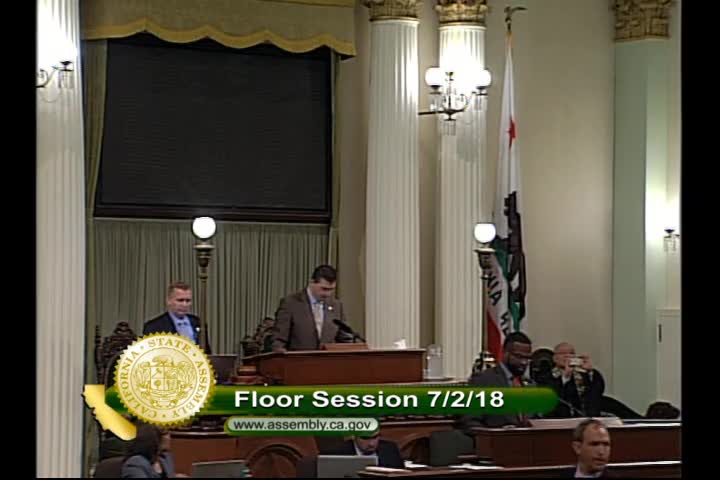 3MIN
Assembly Floor
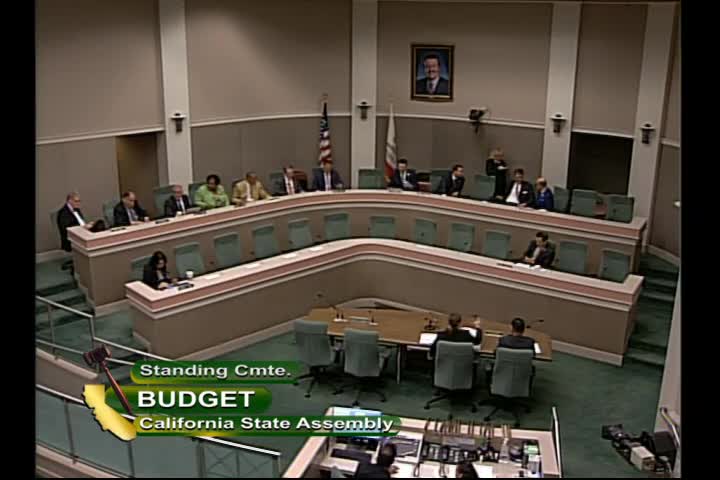 1H
Assembly Standing Committee on Budget
 8MIN
Assembly Standing Committee on Budget
Bill Author
Bill Co-Author(s):