AB 2308: Cigarettes: single-use filters.
- Session Year: 2017-2018
- House: Assembly
- Latest Version Date: 2018-02-13
Under existing law, the Stop Tobacco Access to Kids Enforcement Act, an enforcing agency, as defined, may assess civil penalties against any person, firm, or corporation that sells, gives, or in any way furnishes a cigarette, among other items, to a person who is under 21 years of age, except as specified. The existing civil penalties range from $400 to $600 for a first violation, up to $5,000 to $6,000 for a 5th violation within a 5-year period.
Existing law prohibits the sale, distribution, or nonsale distribution of tobacco products directly or indirectly to any person under 21 years of age through the United States Postal Service or through any other public or private postal or package delivery service. Under existing law, a district attorney, city attorney, or the Attorney General may assess civil penalties against a violator of not less than $1,000 or more than $2,000 for the first violation and up to $10,000 for a 5th or subsequent violation within a 5-year period.
Under existing law, every person, firm, or corporation that knowingly or under circumstances in which it has knowledge, or should otherwise have grounds for knowledge, sells, gives, or in any way furnishes a cigarette, among other specified items, to another person who is under 21 years of age is, except as specified, subject to either a criminal action for a misdemeanor or to a civil action brought by a city attorney, a county counsel, or a district attorney, punishable by a fine of $200 for the first offense, $500 for the 2nd offense, and $1,000 for the 3rd offense.
This bill would state findings and declarations of the Legislature regarding the health and safety hazards to residents of the state related to cigarettes utilizing single-use filters. The bill would prohibit a person or entity from selling, giving, or in any way furnishing to another person of any age in this state a cigarette utilizing a single-use filter made of any material, including cellulose acetate, any other fibrous plastic material, or any organic or biodegradable material. The bill would prohibit that selling, giving, or furnishing, whether conducted directly or indirectly through an in-person transaction or by means of any public or private method of shipment or delivery to an address in this state.
This bill would authorize a city attorney, county counsel, or district attorney to assess a $500 civil fine against each person determined to have violated those prohibitions in a proceeding conducted pursuant to the procedures of the enforcing agency, as specified.
(a)Studies published in the peer-reviewed journal Tobacco Control estimate the percentage of smokers who litter to range from 75 percent to 92 percent, for smokers between 21 and 25 years of age. It is estimated that 845,500 tons of cigarette butts become litter around the globe each year.
(b)Cigarette butts have consistently been the single most-recovered item since collections began among volunteer groups, including the Ocean Conservancy and its International Coastal Cleanup event, which cleans litter in waterways, beaches, and parks in this state.
(c)Although the citation rate for littering cigarette waste is annually about five times that of general litter from vehicles, as reported in the Department of Motor Vehicles citation statistics, cigarette butts remain at the top of the list for litter on our highways.
(d)The Department of Transportation has estimated the costs to clean up cigarette butts at forty-one million dollars ($41,000,000) annually.
(e)The City and County of San Francisco has estimated costs for city abatement of cigarette butts at over six million dollars ($6,000,000) annually.
(f)From 2006 to 2008, the American Association of Poison Control Centers reported approximately 12,600 cases of children ingesting cigarettes or cigarette butts. Children under six years of age are especially prone to cigarette butt ingestion.
(g)The well-documented and common occurrence of cigarette butt ingestion by domestic animals points to the larger impact that improperly discarded cigarette butts have on our environment and wildlife.
(h)As early as the mid-1960s, the Surgeon General of the United States judged cigarette filters to be useless in reducing harm to the average smoker.
(i)A 2017 review published in the Journal of the National Cancer Institute concluded that filter ventilation has contributed to the rise in lung adenocarcinomas among smokers and recommended that the FDA consider regulating its use, up to and including a ban.
(j)Banning the sale, gift, or other furnishing of cigarettes utilizing single-use filters is necessary to keep toxic litter out of our states environment and promote the health and safety of our states residents.
(k)In its cigarette and tobacco products tax evasion report for 201213, the State Board of Equalization noted that 90.6 percent of cigarette contraband and excise tax evasion was driven by retailer evasion and 9.4 percent by individual consumer evasion. Strong safeguards, including retail inspections, have proven effective in preventing further black market evasion.
22966.(a)A person or entity shall not sell, give, or in any way furnish to another person, of any age, in this state, a cigarette utilizing a single-use filter made of any material including, but not limited to, cellulose acetate, any other fibrous plastic material, or any organic or biodegradable material. The prohibition under this subdivision applies to any direct or indirect transaction, whether made in-person in this state or by means of any public or private method of shipment or delivery to an address in this state.
(b)The sale, gift, or other furnishing of one to 20 cigarettes constitutes a single violation of this section.
22967.(a)(1)A city attorney, county counsel, or district attorney may assess a civil fine of five hundred dollars ($500) for each violation of Section 22966. Only a city attorney, county counsel, or district attorney may assess the civil fine against each person determined to be in violation of Section 22966.
(2)Proceedings under this section shall be conducted pursuant to the procedures of the enforcing agency that are consistent with Section 131071 of the Health and Safety Code and in accordance with Article 6 (commencing with Section 11425.10) of Chapter 4.5 of Part 1 of Division 3 of Title 2 of the Government Code.
(b)Fine moneys assessed pursuant to this section shall be deposited in the treasury of the city or county, respectively, of the city attorney, county counsel, or district attorney who assessed the fine.
22968.A city attorney, county counsel, or district attorney acting as an enforcing agency, as defined in subdivision (b) of Section 22950.5, is encouraged, but not required, to develop guidelines for its agency to conduct tobacco control investigations of violations of subdivision (a) of Section 22966 concurrent with investigations of violations of Section 308 of the Penal Code or Division 8.5 (commencing with Section 22950), conducted in accordance with Section 22952, or concurrent with investigations of violations of any tobacco control provisions created by local ordinance in its jurisdiction.
REVISIONS: HeadingLines 2 and 3.|
Date
|
Status
|
|---|---|
| Jun 12, 2018 | From committee: Without further action pursuant to Joint Rule 62(a). |
| May 2, 2018 | In committee: Set, first hearing. Failed passage. |
| Mar 21, 2018 | Coauthors revised. |
| Mar 5, 2018 | Referred to Coms. on G.O. and HEALTH. |
| Feb 14, 2018 | From printer. May be heard in committee March 16. |
| Feb 13, 2018 | Read first time. To print. |
|
Date
|
Description
|
Location
|
Votes
|
|
|---|---|---|---|---|
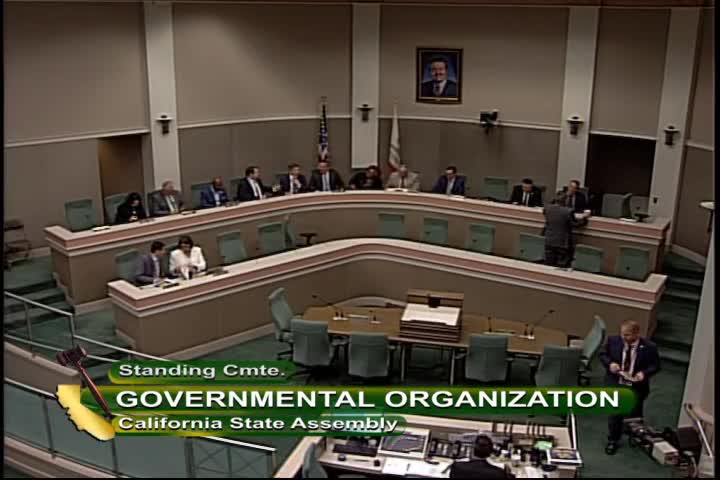
| May 2, 2018 | Do pass and be re-referred to the Committee on [Health] | Assembly Standing Committee on Governmental Organization |
Failed |
This list shows positions taken on this bill by organizations on the date displayed, which is linked to the original source.
Positions by individuals are not included.
|
Organization
|
Position
|
Date
|
|---|---|---|
| Alameda County Board of Supervisors | * Support | May 2, 2018 |
| Algalita Marine Research And Education | ** Support | May 1, 2018 |
| American Petroleum and Convenience Store Association | * Against | May 2, 2018 |
| APCA Sacramento Chapter | * Against | May 2, 2018 |
| Audubon California | ** Support | May 1, 2018 |
| Azul | ** Support | May 1, 2018 |
| Bay Area Stormwater Management Agencies Association | ** Support | May 1, 2018 |
| CalAsian Chamber of Commerce | ** Against | May 1, 2018 |
| California Black Chamber of Commerce | ** Against | May 1, 2018 |
| California Chamber Of Commerce | * Against | May 2, 2018 |
| California Coastkeeper Alliance | ** Support | May 1, 2018 |
| California Distributors Association | * Against | May 2, 2018 |
| California Hispanic Chambers Of Commerce | ** Against | May 1, 2018 |
| California Independent Oil Marketers Association | ** Against | May 1, 2018 |
| california licensed beverage association | ** Against | May 1, 2018 |
| California Manufacturers & Technology Association | * Against | May 2, 2018 |
| California Retailers Association | * Against | May 2, 2018 |
| Californians Against Waste | ** Support | May 1, 2018 |
| Chico Bag | ** Support | May 1, 2018 |
| Cigarette Butt Pollution Project | ** Support | May 1, 2018 |
| CIOMA | * Against | May 2, 2018 |
| City of Carmel-by-the-Sea | ** Support | May 1, 2018 |
| City Of Palo Alto | ** Support | May 1, 2018 |
| City of Santa Cruz | ** Support | May 1, 2018 |
| City of Santa Monica | * Support | May 2, 2018 |
| City Of Watsonville | ** Support | May 1, 2018 |
| Civil Justice Association Of California | * Against | May 2, 2018 |
| Clean South Bay | ** Support | May 1, 2018 |
| Clean Water Action | ** Support | May 1, 2018 |
| County Health Executives Association Of California | * Support | May 2, 2018 |
| County of Monterey | ** Support | May 1, 2018 |
| Defenders Of Wildlife | ** Support | May 1, 2018 |
| Environment California | ** Support | May 1, 2018 |
| Heal The Bay | * Support | May 2, 2018 |
| Los Angeles Alliance for a New Economy | ** Support | May 1, 2018 |
| Mi Familia Vota | ** Support | May 1, 2018 |
| Monterey Regional Storm Water Management Program | ** Support | May 1, 2018 |
| National Parks Conservation Association | ** Support | May 1, 2018 |
| Plastic Pollution Coalition | ** Support | May 1, 2018 |
| San Francisco Bay Area Physicians for Social Responsibility | ** Support | May 1, 2018 |
| Santa Clara Valley Water District | ** Support | May 1, 2018 |
| Santa Cruz County Board of Supervisors | * Support | May 2, 2018 |
| Save Our Shores | ** Support | May 1, 2018 |
| Save The Bay | ** Support | May 1, 2018 |
| Seventh Generation Advisors | ** Support | May 1, 2018 |
| Sierra Club California | ** Support | May 1, 2018 |
| StopWaste | ** Support | May 1, 2018 |
| Surfrider Foundation | ** Support | May 1, 2018 |
| The 5 Gyres Institute | ** Support | May 1, 2018 |
| The Last Plastic Straw | ** Support | May 1, 2018 |
| The Nature Conservancy | ** Support | May 1, 2018 |
| The Story of Stuff Project | ** Support | May 1, 2018 |
| The Trust For Public Land | ** Support | May 1, 2018 |
| The Watershed Project | ** Support | May 1, 2018 |
| UPSTREAM | ** Support | May 1, 2018 |
| Wildcoast | ** Support | May 1, 2018 |
| Wishtoyo Chumash Foundation | ** Support | May 1, 2018 |
| Zero Waste USA | ** Support | May 1, 2018 |
Date of Hearing: May 2, 2018
ASSEMBLY COMMITTEE ON GOVERNMENTAL ORGANIZATION
Adam Gray, Chair
ABPCA Bill Id:AB 2308 (
Author:Mark Stone) – As Introduced Ver:February 13, 2018
SUBJECT: Cigarettes: single-use filters
SUMMARY: Prohibits the sale of cigarettes utilizing single-use filters. Specifically, this bill:
- Prohibits a person or entity from selling, giving, or in any way furnishing to another person of any age in this state a cigarette utilizing a single-use filter made of any material, and any organic or biodegradable material. This prohibition applies to any direct or indirect transaction, whether made in-person in this state or by means of any public or private method of shipment or delivery to an address in this state.
- Specifies that a district attorney or city attorney may assess a civil fine of $500 dollars for each violation.
- Specifies that the sale, gift, or other furnishing of one to 20 cigarettes constitutes a single violation.
- Specifies that the fine moneys assessed shall be deposited in the treasury of the city or county, respectively, of the city attorney or district attorney who assessed the fine.
- Requires adjudicative proceedings conducted by enforcing agency be consistent with Section 131071 of the Health and Safety Code and in accordance with Article 6 (commencing with Section 11425.10) of Chapter 4.5 of Part 1 of Division 3 of Title 2 of the Government Code.
- Encourages a city attorney, county counsel, or district attorney acting as an enforcing agency to develop guidelines for its agency to conduct tobacco control investigations in accordance with this bill.
- Makes various legislative findings relating to the problem of cigarette butt littering.
EXISTING LAW:
- Requires, under the Stop Tobacco Access to Kids Enforcement Act (STAKE Act), all persons engaging in the retail sale of tobacco products to check the identification of tobacco purchasers, to establish the age of the purchaser, if the purchaser reasonably appears to be under 21 years of age.
- Specifies that an enforcing agency may assess civil penalties against any person, firm, or corporation that sells, gives, or in any way furnishes to another person who is under 21 years of age, any tobacco, cigarette, cigarette papers, any other instrument or paraphernalia that is designed for the smoking or ingestion of tobacco, or products prepared from tobacco. The existing civil penalties range from $400-$600 for a fist violation and up to $5,000 to $6,000 for a 5th violation within a 5-year period.
- Prohibits the sale, distribution, or non-sale distribution of tobacco products directly or indirectly to any person under 21 years of age through the United States Postal Service, through any other public or private postal or package delivery service at locations, including, but not limited to, public mailboxes and mailbox stores. Under existing law, a district attorney, city attorney, or the Attorney General may assess civil penalties against a violator of not less than $1,000 or more than $2,000 for the first violation and up to $10,000 for a 5th violation within a 5-year period.
- Specifies that every person, firm, or corporation that knowingly or under circumstances in which it has knowledge, or should otherwise have grounds for knowledge, sells, gives, or in any way furnishes to another person who is under 21 years of age any cigarette is subject to either a criminal action for a misdemeanor or to a civil action brought by a city attorney, a county counsel, or a district attorney, punishable by a fine of $200 for the first offense, $500 for the second offense, and $1,000 for the third and subsequent offense.
- Prohibits a person in any vehicle or a pedestrian from throwing or discharging from or upon any road or highway or adjoining area, public or private, any lighted or non-lighted cigarette, cigar, match or any flaming or glowing substance. Current law specifies that such a violation shall be punished by a mandatory fine of not less than $100 dollars but no more than $1,000 upon a first conviction, by a mandatory fine of $500 dollars but no more than $1,000 dollars for a second violation and by a mandatory fine of $750 dollars but no more than $1,000 dollars for a third and subsequent violation. In addition to fines, current law also mandates that the court require the offender to pick up litter or clean up graffiti, as specified, in the jurisdiction of the court.
- Prohibits a person from discarding, dropping, or scattering of small quantities of waste matter ordinarily carried on or about the person in a place other than a place or container for the proper disposal thereof. Current law specifies that a violation shall be punished by a mandatory fine of $250 dollars but no more than $1,000 dollars for a first conviction, by a mandatory fine of not less than $500 dollar but no more than $1,500 for a second violation, and by a mandatory fine of no less than $750 but no more than $3,000 dollars upon a third conviction or subsequent conviction. The court may, in addition to the fines, require any violator to pick up litter at a time and place within the jurisdiction of the court for not less than eight hours.
FISCAL EFFECT: This bill is keyed non-fiscal by Legislative Counsel.
COMMENTS:
Purpose of the bill: According to the author: “Tobacco companies have long claimed that existing anti-litter laws and awareness programs are doing enough to address the dangers and costs of cigarette waste. But despite robust laws and enforcement, cigarette waste continues to present a serious environmental problem. Cigarette butts are the number one most ubiquitous type of litter collected from parks, rivers, beaches and highways, and clean-up cost taxpayers tens of millions of dollars each year.
Clearing cigarette butts off roadways costs the California Department of Transportation an estimated $41 million per year, and the City and County of San Francisco estimates costs for butt clean-up to be approximately $7.4 million per year. What doesn’t get cleaned up can remain as an eyesore in the environment for up to fifteen years.
Despite the fact that single-use filters are useless in reducing harm to smokers, the tobacco industry has spent decades deceptively marketing filtered cigarettes as a healthier alternative to unfiltered cigarettes. Far from protecting anyone’s health, improperly discarded cigarette butts can hurt people and kill wildlife. When children or pets ingest cigarette butts, they can experience nicotine poisoning and can require medical treatment. Fish, birds and other animals that eat cigarette butts can starve to death as a result of a false feeling of satiation from the plastic. Chemicals that leach from cigarette butts are toxic to fish and aquatic insects and can end up in our groundwater.
If single-use filters are prohibited, the end of the cigarette that is discarded by the smoker will no longer be a ubiquitous, non-biodegradable plastic pellet that is saturated with toxic chemicals, it will instead be composed of completely biodegradable paper and unsmoked tobacco.
AB 2308 is a simple solution to the many problems associated with cigarette waste, it’s time to ban the butts.”
Background: The problem of cigarette butt litter is well documented and supported by numerous studies. Cigarette butts are the most common form of litter, as an estimated 4.5 trillion cigarette butts are thrown away annually worldwide. In 2009 over 1.6 million pieces of cigarette butt litter were retrieved from U.S. beaches, according to the Surfrider Foundation. During the 2008 Coastal Cleanup Day in California, 340,000 cigarette butts were collected from California beaches. The Surfrider Foundation estimates that Americans discard more than 175 million pounds of cigarette butts every year. Therefore, it is no surprise that cigarette butts remain the most common type of trash found during coastal cleanup days.
The vast majority of cigarette butts are made from a plastic called cellulose acetate. Cellulose acetate is created by exposing a wood pulp to an acid reagent and a catalyst, and because of its design it is not biodegradable so it can remain in the environment for ten to fifteen years before it photodegrades enough to neutralize the harm of the waste. Under the ideal environmental conditions, cellulose acetate will go through the process of photodegradation, during which ultraviolet rays from the sun will eventually break the filter into smaller pieces. However, even after fifteen years the butt will not be completely disintegrated; it will essentially be diluted in water or soil.
Discarded cigarette butts may present health risks to animals and humans, especially children. From 2006 to 2008, the American Association of Poison Control Centers reported nearly 14,000 medical problems caused by tobacco products among children, and 90 percent were due to the ingestion of cigarettes or cigarette butts. The vast majority of cases were non-toxic, and the children were not hospitalized.
The Master Settlement Agreement (MSA): The MSA is an accord reached in November 1998 between the state Attorneys General of 46 states, five U.S. territories, the District of Columbia and the five largest cigarette manufacturers in America concerning the advertising, marketing and promotion of cigarettes. In addition to requiring the tobacco industry to pay the settling states billions of dollars annually to offset the costs of future illnesses caused by their products, the MSA also imposed restrictions on the sale and marketing of cigarettes by participating cigarette manufacturers. Among its many provisions, the MSA: Forbids participating cigarette manufacturers from directly or indirectly targeting youth; imposes significant prohibitions or restrictions on advertising, marketing and promotional programs or activities; and bans or restricts cartoons, transit advertising, most forms of outdoor advertising, including billboards, product placement in media, branded merchandise, free product samples (except in adult-only facilities), and most sponsorships.
Under the MSA, payments to the states are based on the participating manufacturer’s shares of national cigarette sales and shipments. Over the years, states have collected tremendous amounts of tobacco revenue. According to report published by the Campaign for Tobacco-Free Kids, titled: “A State-by-State Look at the 1998 Tobacco Settlement 19 Years Later”, states will collect an estimated $246 billion over the first 25 years of the MSA. California alone is projected to receive more than $25 billion through the year 2025, where the funds are shared evenly by the state and local government entities and used for tobacco prevention programs.
Tobacco Control Act of 2009: Prior to 1996, the Food and Drug Administration (FDA) played no role in the regulation of tobacco products, and regulations were controlled through a combination of state and congressional regulations. Most state laws dealt with the sale of tobacco products, including the issue of selling to minors and licensing of distributors.
In 1996, the FDA issued the "FDA Rule," which asserted its authority over tobacco products and issued a rule intending to prevent and reduce tobacco use by children. The intended regulations included prohibiting non-face-to-face sales of tobacco products, prohibiting outdoor advertising of tobacco products near schools or playgrounds, imposing more stringent advertising regulations, and prohibiting brand-name sponsorship, among other things. After the regulations were issued in 1996, tobacco companies sued. In the 2000 Supreme Court case FDA v. Brown & Williamson Tobacco Corp., the court ruled that Congress had not given the FDA authority over tobacco and tobacco marketing. As a result, Congress was forced to provide explicit FDA authority to regulate tobacco, which was finally accomplished 13 years later with the passage of the “Family Smoking Prevention and Tobacco Control Act” (Tobacco Control Act) in 2009.
The Tobacco Control Act was signed into law by President Barack Obama on June 22, 2009. The law gave the FDA comprehensive authority to regulate the manufacturing, marketing, and sale of tobacco products. Specifically, the Tobacco Control Act, among other things, gave the FDA the authority to: (1) Require tobacco companies to submit an ingredients list of any product sold or imported in the United States; (2) Require tobacco companies to make public the nicotine content of their products and to adopt standards of nicotine content and to reduce or eliminate other harmful substances present; (3) Enlarge warnings on tobacco packaging so that they take up 50% of the front and back panel area; (4) Regulate the use of terms such as "mild" and "light" by requiring that tobacco products conform to certain standards regarding these terms; and (5) Create a Tobacco Products Scientific Advisory Committee to help inform the FDA on issues relating to tobacco products.
It is important to note, the Tobacco Control Act gives state, local and tribal governments the ability to pass more stringent laws that prohibit the sale, distribution, possession, exposure to, access to, advertising and promotion of, or use of tobacco products by individuals of any age. However, it also prohibits state, local and tribal governments from changing tobacco product standards outline in the Tobacco Control Act, which include provisions respecting the construction of a tobacco product.
Health benefits of cigarette filters: Historically, filters were added to cigarettes beginning in the early 1950's as the first evidence on the health risks of smoking began to be reported. At the time, there was a prevailing theory that cigarette tar was responsible for causing lung cancer and other diseases and that a reduction of tar could be achieved through the use of a filter. As a result, filters began to be made from a variety of materials including cellulose acetate. Laboratory test indicate that the filters seemed to have succeeded in reducing the amount of tar that is consumed by the smoker according to smoking machines. Beginning in the 1970s, the tobacco industry further modified the design of cigarettes to reduce the yield of tar. The reductions were accomplished primarily by adding ventilation holes to the filter and other modifications.
Though all of this has resulted in a reduction in the yield of tar when measured by a smoking machine, scientists have argued that this does not reflect the way that people actually smoke and that filters have done little to protect smokers. Various scientists argue that smokers compensate for the reduced yield by taking a deeper inhalation and also blocking the ventilation holes with their fingers, which may result in smaller particles traveling deeper into the smoker’s lungs.
Ultimately, it seems that cigarette filters have done very little to curb the health risks of smoking. However, there is no viable evidence that suggests forcing smokers to use unfiltered cigarettes is a healthier option, in fact, it is fair to ask: Would unfiltered cigarettes pose a greater risk than today's filtered cigarettes?
Impact of a prohibition on single-use filter cigarettes: Though there seems to be some consensus on the fact that a cigarette filter has done little to mitigate the health risk of cigarettes, the impact of a prohibition on single-use filter cigarettes is harder to quantify. One of the positive impacts could be a reduction in the amount of people who smoke, however the amount in that reduction is hard to estimate. Surely there would be some people who currently smoke who simply stop smoking, however if there is one thing that studies have proven over the years is that quitting smoking is very difficult. It would make sense that the prohibition would result in less cigarette butt litter, as the product would not be as easily available, however if all smokers who smoke filtered cigarettes switch to unfiltered cigarettes one would think that those would also end up in our environment.
The prohibition on single-use filter cigarettes could also increase the black market sales of cigarettes. According to the Tax Foundation, 31.5% of the cigarettes smoked in California are smuggled cigarettes. California currently ranks 6th among all states in this category. A full prohibition on single-use filter cigarettes would surely only make the matter worse. Many smokers state that the reason they do not smoke unfiltered cigarettes is because of the bitter taste associated with that type of cigarette. Even though a certain percentage of smokers would simply switch to unfiltered cigarettes, it would seem that some would try and obtain single use filter cigarettes in other illegal ways. If the number of smuggled cigarettes is currently at 31.5%, even though they are not currently prohibited in our state, it is easy to see how that number could drastically increase. The Tax Foundation states that a person can make upwards of $25,000 dollars on a single car trip smuggling cigarettes.
Such an increase in smuggled cigarettes would not only give rise to an increase black market activity, but would also dramatically decrease the amount of tax revenue to the state of California. Those tax revenues not only support the state's general fund, but mainly support programs aimed at reducing the negative impacts of smoking. If single use filter cigarettes are thus prohibited in the state of California, there could be a scenario where there is a drastic increase in cigarette smuggling. Such an increase would significantly reduce the amount of tax revenue that is dedicated to programs aimed at reducing the negative impacts of smoking. This would not be a problem if there is also a similar reduction in the amount of people who are smoking, however it is hard to predict if such a reduction would occur or if smokers would simply move to smoking smuggled cigarettes.
Tribal Governments: There are currently 109 federally recognized Indian tribes in California and more than 70 entities petitioning for recognition. Tribes in California currently have nearly 100 separate reservations or Rancherias. The vast majority of these recognized tribes have gas stations, convenience stores and casinos on their land that sell tobacco products.
In general, under federal law, states are limited in their ability to regulate certain activities that occur within the borders of federally recognized tribal lands, including taxation of tobacco sales. Sales made by anyone (including tribal members) off of reservation land are subject to state taxes, as are those made on-reservation to customers who are not tribal members. Further complicating matters, while federal law requires remittance of state taxes to the state for sales to non-members, a state cannot force a tribe to do so where it refuses – making enforcement difficult. The ability of tribes to price tax-free tobacco products lower than off-reservation competitors can attract non-tribal consumers, and limitations on a state’s ability to collect taxes owed from those sales can mean significant revenue loss for the state.
A similar situation may arise if AB 2308 were to become law. This bill gives local jurisdictions – a city attorney, county counsel, or district attorney – the ability to assess a civil fine on retailers who sale filtered cigarettes. Given that local jurisdictions have no civil authority to regulate activities that occur within the borders of federally recognized tribal lands, a case could be made that tribes would still be able to sell filtered cigarettes at a gas station, convenience store or casino on their land.
Tax Revenue from Tobacco Products: With the passage of Proposition 56 of 2016, the excise tax on a pack of cigarettes increased from $0.87 cents to $2.87. The revenue allocation of this excise tax can be broken down by separating the $0.87 cents tax from the recent increased tax of $2.00.
The revenues from the $0.87 cents excise tax on cigarettes and tobacco products are deposited into four funds. The allocation of funds is as follows: of the total $0.87 tax per package of twenty (20) cigarettes, ten cents ($0.10) is deposited into the Cigarette Tax Fund, and two cents ($0.02) goes into the Breast Cancer Fund. Twenty-five cents ($0.25) is deposited into the Cigarette and Tobacco Products Surtax Fund and may only be used for the following purposes: (1) Tobacco-related health education programs and disease research; (2) Medical and hospital care and treatment of patients who cannot afford those services, and for whom payment will not be made by any private coverage or federal program; and (3) Programs for fire prevention; environmental conservation; protection, restoration, enhancement, and maintenance of fish, waterfowl, and wildlife habitat areas; and enhancement of state and local parks and recreation. The remaining $0.50 cents is deposited into the California Children and Families Trust Fund and is used for programs that encourage proper childhood development, including the development of professional and parental education and training, informed selection of childcare, development and education of childcare providers, and research into the best practices and standards for all programs and services relating to early childhood development. According to the BOE, in fiscal year 2014/2015, California received $835 million from the $0.87 cents tax on cigarettes and other tobacco products. These funds were allocated as follows:
- Cigarette Tax Fund - $86 million
- Cigarette and Tobacco Products Surtax Fund - $268 million
- Breast Cancer Fund - $20 million
- California Children and Families Trust Fund - $461 million
The revenue allocation for the $2.00 excise tax was prescribed in Proposition 56. In some cases, the law requires the new revenue to supplement existing spending on the programs. However, the law dedicates the bulk of the new revenue to Medi‑Cal to supplement, not supplant, the existing spending on the program. The Legislative Analyst Office (LAO) has concurred with the administration’s estimate that the $2.00 tax will result in $1.4 billion revenue in Fiscal Year 2017/2018. Under Proposition 56, $1.3 billion of the revenue would be allocated to Medi-Cal.
Support: A coalition of environmental advocacy groups write in support: “Cigarette filters do not burn down when a cigarette is smoked leaving the smoker with what is commonly referred to as cigarette butt, which then must be disposed – too often on our streets, storm drains, beaches and Bay. Moreover, these cigarette butts are the equivalent of toxic waste and may be ingested by children or wildlife, contaminate fragile ecosystems and cost local governments taxpayer dollars…
Coupled with reports from the Surgeon General and the US Department of Health and Human Services pointing to the ineffectiveness of the ‘filters’ at reducing harm to smokers, taking the cigarette butts out of the equation to prevent further litter and harm to California is the right thing to do…
AB 2308 is a novel solution to a long-standing problem that shows no signs of going away. In addition, reports from the Surgeon General and the US Department of Health and Human Services pointing to the ineffectiveness of the ‘filters’ at reducing harm to smokers, taking the cigarette butts out of the equation to prevent further litter and harm to California is the right thing to do. For all of these reasons, we strongly urge your AYE vote on AB 2308 to assure passage of this important measure to keep toxic cigarette waste from littering our state and communities.”
Opposition: A coalition of state chambers of commerce, retailers and distributors write in opposition: “This bill is attempting to change a significant component of a tobacco product that Congress has determined only the FDA has the authority to regulate. The bill would impose specific civil penalties for violations of the bill. For the following reasons the coalition opposes AB 2308:
- AB 2308 is at odds with the FDA’s sole authority to establish tobacco product standards.
- In 2009, Congress granted the FDA the sole authority to establish standards for the construction and other properties of tobacco products.
- The FDA legislation expressly pre-empts the states from enacting their own laws governing the construction of tobacco products.
- This bill gives further advantage to the unregulated, unlicensed, untaxed black market by taking a legal regulated product off the market.”
Policy Considerations
Should this bill become law, it is reasonable to assume that a portion of the smoking population would not quit smoking or begin using unfiltered cigarettes; rather they would resort to the black market or simply go to a federally recognized tribal land to purchase their filtered cigarettes. This would severely hinder the intent of the bill to prevent cigarette butt litter and would negatively impact tobacco tax and MSA revenue that is generated for a variety of programs, including Medi-Cal. The committee may wish to consider the impact this bill would have on littering against the potential increase in illegal and non-taxable sales of cigarettes and the impact it would have on programs funded by tax and MSA revenue.
While studies indicate cigarette filters have done very little to mitigate the health risks of smoking, it is unclear what the long term health impacts would be from moving smokers from filtered to unfiltered cigarettes. The Committee may wish to consider whether it is appropriate to pass a cigarette filter ban before the health impacts are fully understood.
As stated above, the Tobacco Control Act limits the ability of state, local and tribal governments to pass laws that change tobacco product standards, specifically provisions relating to the construction of a tobacco product. It is unclear whether or not banning filtered cigarettes is within the scope of the state’s jurisdiction under the Tobacco Control Act. The Committee may wish to consider whether it is appropriate to move AB 2308 as it may be in conflict with federal law.
Double-Referral: This bill is double-referred to the Assembly Health Committee, where it will be heard if passed by this Committee.
Prior Legislation: AB 84 (Stone) of 2015-2016 Legislative Session. Would have prohibited that sale of cigarettes utilizing single-use filters. (Never heard in Assembly G.O. Committee)
AB 1504 (Stone) of 2013-2014 Legislative Session. Would have prohibited that sale of cigarettes utilizing single-use filters. (Died in Assembly G.O. Committee).
Related Legislation: SB 835 (Glazer) of 2017-2018 Legislative Session. Prohibits smoking of cigarettes, cigars, pipes and other tobacco-products in state parks, as specified, and establish that a violation is an infraction with a fine of up to $25. (Pending in Senate Appropriations Committee)
SB 386 (Glazer) of 2017-2018 Legislative Session. Would have prohibited the smoking of cigarettes, cigars, pipes and other tobacco products at state parks and state coastal beaches, as specified, and established that a violation is an infraction with a fine of up to $100. (This bill was vetoed by Governor Brown)
AB 1097 (Levine) of 2017-2018 Legislative Session. Prohibits smoking at state parks and coastal beaches, as specified, and establish that a violation is an infraction with a fine of up to $50. (Pending in Senate Natural Resources and Water Committee)
AB 725 (Levine) of 2017-2018 Legislative Session. Would have prohibited smoking of tobacco products on state coastal beaches and at state parks, as specified, and established that a violation is an infraction with a fine of up to $50. (This bill was vetoed by Governor Brown)
SB 1333 (Block) of 2016-2017 Legislative Session. Would have prohibited smoking of tobacco products on state coastal beaches and at state parks, as specified, and established that a violation is an infraction with a fine of up to $250. (This bill was vetoed by Governor Brown)
SBX2-5 (Leno), Chapter 7, Statutes of 2015-16 Second Extraordinary Session. Expanded the definition of tobacco products to include e-cigarettes and extends current restrictions and prohibitions against the use of tobacco products to e-cigarettes. The bill also establishes an annual e-cigarette retailer licensing fee of $265 per location.
ABX2-7 (Stone), Chapter 4, Statutes of 2015-16 Second Extraordinary Session. Prohibited smoking in owner-operated businesses and removes some exemptions in existing law that allows tobacco smoking in certain workplaces: Hotel/motel lobbies, meeting & banquet rooms, warehouses, break rooms, businesses with 5 or less employees.
SBX2-7 (Hernandez), Chapter 8, Statutes of 2015-16 Second Extraordinary Session. Increased the minimum legal age to purchase or consume tobacco from 18 to 21, conforms existing law regarding purchasing, selling, and enforcement of tobacco and tobacco products to reflect the new age limit, and deletes existing penalties applicable when a person under 18 years of age purchases tobacco.
ABX2-9 (Thurmond and Nazarian), Chapter 5, Statutes of 2015-16 Second Extraordinary Session. Clarified charter school eligibility for tobacco use prevention program (TUPE) funds; require the California State Department of Education to require all school districts, charter schools, and county offices of education receiving TUPE funds to adopt and enforce a tobacco-free campus policy; prohibit the use of tobacco and nicotine products in any county office of education, charter school, or school district-owned or leased building, on school or district property, and in school or district vehicles; and, require all schools, districts, and offices of education to post a sign reading "Tobacco use is prohibited" at all entrances.
ABX2-10 (Bloom) of 2015-2016 Second Extraordinary Session. Would have allowed counties to impose a tax on the privilege of distributing cigarettes and tobacco products. (Vetoed by Governor Brown).
ABX2-11 (Nazarian), Chapter 6, Statutes of 2015-16 Second Extraordinary Session. Revised the Cigarette and Tobacco Products Licensing Act of 2003 to change the retailer license fee from a $100 one-time fee to a $265 annual fee, and increase the distributor and wholesaler license fee from $1,000 to $1,200.
AB 1142 (Bloom) of 2013-2014 Legislative Session. Would have prohibited smoking at state parks and beaches, as specified, and established that a violation is an infraction with a fine of up to $250. (Died in Assembly Governmental Organization Committee)
AB 2496 (Nava), Chapter 265, Statutes of 2010. Amended the California Cigarette and Tobacco Products Licensing Act of 2003 in governing the financial and other obligations of non-participating tobacco manufacturers (NPMs) as part of its diligence obligation.
AB 2733 (Ruskin), Chapter 607, Statutes of 2010. Amended the Licensing Act to prohibit a licensee whose license has been suspended or revoked from giving cigarette and tobacco products away or displaying those products during the period of license suspension or revocation, as specified.
SB 4 (Oropeza) of 2009-2010 Legislative Session. Would have prohibited smoking in state parks and beaches. (This bill was vetoed by Governor Schwarzenegger)
SB 882 (Corbett), Chapter 312, Statutes of 2010. Provided that it is unlawful to provide electronic cigarettes to minors.
SB 1418 (Oropeza) of 2007-2008 Legislative Session. Would have prohibited smoking of tobacco products on state coastal beaches and at state parks, as specified, and established that a violation is an infraction with a fine of up to $250. (This bill died before the Senate Natural Resources and Water Committee)
SB 625 (Padilla), Chapter 654, Statutes of 2007. Established a $100 reinstatement fee upon retailers that engage in the sale of cigarettes and tobacco products in this state but fail to renew the necessary licenses.
SB 4 (Oropeza) of 2007-2008 Legislative Session. Would have prohibited smoking of tobacco products on state coastal beaches and at state parks, as specified, and established that a violation is an infraction with a fine of up to $250. (Died before the Senate Natural Resources and Water Committee)
AB 1503 (Koretz/Vargas) of 2003-2004 Legislative Session. Would have prohibited the smoking of cigarettes, cigars and pipes on a coastal state beach, as specified. (Died on the Senate Floor)
AB 454 (Yee) of 2003-2004 Legislative Session. Would have restricted smoking on public beaches. (Died in the Senate Natural Resources and Water Committee)
AB 71 (Horton), Chapter 890, Statutes of 2003, enacts the Cigarette and Tobacco Products Licensing Act of 2003, which imposes licensing requirements on tobacco manufacturers, wholesalers, retailers and importers; requires manufacturers to pay a one-time fee; and, imposes additional civil and criminal penalties on individuals and businesses who violate tobacco-related, anti-contraband laws, and laws prohibiting tobacco-related sales to minors.
REGISTERED SUPPORT / OPPOSITION:
Support
Alameda County Board of Supervisors |
Algalita Marine Research and Education |
Audubon California |
Azul |
Bay Area Stormwater Management Agencies Association |
California Coastkeeper Alliance |
Californians Against Waste |
Chico Bag |
Cigarette Butt Pollution Project |
City of Carmel-by-the-Sea |
City of Palo Alto |
City of Santa Cruz |
City of Watsonville |
CLEAN South Bay |
Clean Water Action |
County Health Executives Association of California |
County of Monterey |
County of Santa Cruz |
Defenders of Wildlife |
Environment California |
Heal the Bay |
Los Angeles Alliance for a New Economy (LAANE) |
Mi Familia Vota |
Monterey Regional Storm Water Management Program |
National Parks Conservation Association |
Paul Koretz, Los Angeles City Council Member, District 5 |
Plastic Pollution Coalition |
San Francisco Bay Area Physicians for Social Responsibility |
Santa Clara Valley Water District |
Save Our Shores |
Save the Bay |
Seventh Generation Advisors |
Sierra Club California |
StopWaste |
Surfrider Foundation |
The 5 Gyres Institute |
The Last Plastic Straw |
The Nature Conservancy |
The Story of Stuff Project |
The Trust for Public Land |
The Watershed Project |
Upstream |
WILDCOAST |
Wishtoyo Chumash Foundation |
Zero Waste USA Various Individuals |
Opposition
American Petroleum and Convenience Store Association
CalAsian Chamber of Commerce
California Black Chamber of Commerce
California Chamber of Commerce
California Distributors Association
California Hispanic Chambers of Commerce
California Independent Oil Marketers Association
California Licensed Beverage Association
California Manufacturers & Technology Association
California Retailers Association
Civil Justice Association of California
Retailers and Store Owners United to Rebuild California’s Economy
Analysis Prepared by: Kenton Stanhope / G.O. / (916) 319-2531
Discussed in Hearing
 49MIN
Assembly Standing Committee on Governmental Organization
Bill Author





