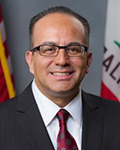
AJR 7: Internet: net neutrality: access.
- Session Year: 2017-2018
- House: Assembly
- Latest Version Date: 2017-09-12
This measure would declare that the Legislature strongly supports, and would respectfully urge the President of the United States and Members of the United States Congress to continue to protect, net neutrality, open Internet access, the federal Lifeline programs discounted telephone service for qualifying low-income consumers, and the E-rate programs discounted telecommunication and Internet access services for schools and libraries. The measure would declare that the Legislature views these as high priorities for California and the country, and opposes any federal efforts to rescind or block them.
This measure would declare that the Legislature strongly supports, and would respectfully urge the President of the United States and Members of the United States Congress to continue to protect, net neutrality, open Internet access, the federal Lifeline programs discounted telephone service for qualifying low-income consumers, and the E-rate programs discounted telecommunication and Internet access services for schools and libraries. The measure would declare that the Legislature views these as high priorities for California and the country, and opposes any federal efforts to rescind or block them.
This measure would declare that the Legislature strongly supports, and would respectfully urge the President of the United States and Members of the United States Congress to continue to protect, net neutrality, open Internet access, the federal Lifeline programs discounted telephone service for qualifying low-income consumers, and the E-rate programs discounted telecommunication and Internet access services for schools and libraries. The measure would declare that the Legislature views these as high priorities for California and the country, and opposes any federal efforts to rescind or block them.
This measure would declare that the Legislature strongly supports, and would respectfully urge the President of the United States and Members of the United States Congress to continue to protect, net neutrality, open Internet access, the federal Lifeline programs discounted telephone service for qualifying low-income consumers, and the E-rate programs discounted telecommunication and Internet access services for schools and libraries. The measure would declare that the Legislature views these as high priorities for California and the country, and opposes any federal efforts to rescind or block them.
This measure would declare that the Legislature strongly supports, and would respectfully urge the President of the United States and Members of the United States Congress to continue to protect, net neutrality, open Internet access, the federal Lifeline programs discounted telephone service for qualifying low-income consumers, and the E-Rate E-rate programs discounted telecommunication and Internet access services for schools and libraries. The measure would declare that the Legislature views these as high priorities for California and the country, and opposes any federal efforts to rescind or block them.
This measure would declare that the Legislature strongly supports, and would respectfully urge the President of the United States and Members of the United States Congress to continue to protect, net neutrality, open Internet access, the Lifeline programs discounted telephone service for qualifying low-income consumers, and the E-Rate programs discounted telecommunication and Internet access services for schools and libraries. The measure would declare that the Legislature views these as high priorities for California and the country, and opposes any federal efforts to rescind or block them.
WHEREAS, High-speed Internet access service, referred to generically as broadband advanced communication services, including both wired and wireless technologies, is essential in the 21st century for economic competitiveness and quality of life; and
WHEREAS, Broadband infrastructure is vital to the operation and management of other critical infrastructures, including energy generation systems, the power grid, water supply systems, smart cities, the Internet of Things, public safety and emergency response systems, medical facilities, educational institutions, and libraries; and
WHEREAS, Studies confirm that the use of broadband advanced communication services increases economic productivity, public and private organizational operation efficiency, and enhanced business profitability; and
WHEREAS, The provision and maintenance of equitable access to technology, broadband Internet access services, digital content, and classroom management tools are necessary for all students, teachers, and school administrators in California, including those in rural and other unserved and underserved areas, in order to provide equal educational resources to all students at all education levels; and
WHEREAS, The Federal Communications Commission (FCC) adopted open Internet rules on February 26, 2015, to protect free expression and innovation on the Internet and to promote investment in the nations broadband networks; and
WHEREAS, Those open Internet rules ensure that consumers and businesses have access to a fast, fair, and open Internet by imposing three bright-line rules: (1) Broadband providers shall not block access to lawful content, applications, services, or nonharmful devices; (2) Broadband providers shall not impair or degrade lawful Internet traffic on the basis of content, application, or service, or use of a nonharmful device; and (3) Broadband providers shall not favor some lawful Internet traffic over other lawful Internet traffic in exchange for consideration of any kind; and
WHEREAS, Because the Internet must be a place in which companies, large and small, as well as individual developers, can compete on a level playing field, the State of California supports net neutrality as a principle that underpins a fast, fair, and open Internet for consumers and businesses to ensure equal access to lawful content by prohibiting paid prioritization, throttling, and blocking; and
WHEREAS, The federal Lifeline program provides a discount on telephone service to qualifying low-income consumers in every state, territory, commonwealth, and Tribal land, and ensures that all Americans have the opportunities and security that telephone service provides, including connecting to jobs, family, and emergency services; and
WHEREAS, On March 31, 2016, the FCC adopted a comprehensive reform and modernization of the federal Lifeline program by including broadband Internet access service as a support service in the federal Lifeline program and established a federal Lifeline National Eligibility Verifier to make independent subscriber eligibility determinations; and
WHEREAS, Federal Lifeline program moneys should be dedicated solely to the purposes established by Congress and the FCC, and diverting those moneys to pay for other programs through the imposition of state taxes, fees, or surcharges on federal Lifeline program benefits or connections should be prohibited; and
WHEREAS, Established as a part of the federal Telecommunications Act of 1996, the FCCs E-rate program provides discounts on telecommunication and Internet access services to schools and libraries, based on poverty level; now, therefore, be it
Resolved by the Assembly and the Senate of the State of California, jointly, That the Legislature strongly supports each of the above positions, initiatives, and programs, views them as high priorities for California and the country, and opposes any federal efforts to rescind or block them; and be it further
Resolved, That the Legislature respectfully urges the President of the United States and Members of the United States Congress to continue to protect net neutrality, open Internet access, the federal Lifeline programs discounted telephone service for qualifying low-income consumers, and the E-rate programs discounted telecommunication and Internet access services for schools and libraries; and be it further
Resolved, That the Chief Clerk of the Assembly transmit copies of this resolution to the President and Vice President of the United States, to the Speaker of the House of Representatives, to the Majority Leader of the Senate, to each Senator and Representative from California in the Congress of the United States, and to the author for appropriate distribution.
WHEREAS, High-speed Internet access service, referred to generically as broadband advanced communication services, including both wired and wireless technologies, is essential in the 21st century for economic competitiveness and quality of life; and
WHEREAS, Broadband infrastructure is vital to the operation and management of other critical infrastructures, including energy generation systems, the power grid, water supply systems, smart cities, the Internet of Things, public safety and emergency response systems, medical facilities, educational institutions, and libraries; and
WHEREAS, Studies confirm that the use of broadband advanced communication services increases economic productivity, public and private organizational operation efficiency, and enhanced business profitability; and
WHEREAS, The provision and maintenance of equitable access to technology, broadband Internet access services, digital content, and classroom management tools are necessary for all students, teachers, and school administrators in California, including those in rural and other unserved and underserved areas, in order to provide equal educational resources to all students at all education levels; and
WHEREAS, The Federal Communications Commission (FCC) adopted open Internet rules on February 26, 2015, to protect free expression and innovation on the Internet and to promote investment in the nations broadband networks; and
WHEREAS, Those open Internet rules ensure that consumers and businesses have access to a fast, fair, and open Internet by imposing three bright-line rules: (1) Broadband providers shall not block access to lawful content, applications, services, or nonharmful devices; (2) Broadband providers shall not impair or degrade lawful Internet traffic on the basis of content, application, or service, or use of a nonharmful device; and (3) Broadband providers shall not favor some lawful Internet traffic over other lawful Internet traffic in exchange for consideration of any kind; and
WHEREAS, Because the Internet must be a place in which companies, large and small, as well as individual developers, can compete on a level playing field, the State of California supports net neutrality as a principle that underpins a fast, fair, and open Internet for consumers and businesses to ensure equal access to lawful content by prohibiting paid prioritization, throttling, and blocking; and
WHEREAS, The federal Lifeline program provides a discount on telephone service to qualifying low-income consumers in every state, territory, commonwealth, and Tribal land, and ensures that all Americans have the opportunities and security that telephone service provides, including connecting to jobs, family, and emergency services; and
WHEREAS, On March 31, 2016, the FCC adopted a comprehensive reform and modernization of the federal Lifeline program by including broadband Internet access service as a support service in the federal Lifeline program and established a federal Lifeline National Eligibility Verifier to make independent subscriber eligibility determinations; and
WHEREAS, Federal Lifeline program moneys should be dedicated solely to the purposes established by Congress and the FCC, and diverting those moneys to pay for other programs through the imposition of state taxes, fees, or surcharges, directly or indirectly, surcharges on federal Lifeline program benefits or connections should be prohibited; and
WHEREAS, Established as a part of the federal Telecommunications Act of 1996, the FCCs E-rate program provides discounts on telecommunication and Internet access services to schools and libraries, based on poverty level; now, therefore, be it
Resolved by the Assembly and the Senate of the State of California, jointly, That the Legislature strongly supports each of the above positions, initiatives, and programs, views them as high priorities for California and the country, and opposes any federal efforts to rescind or block them; and be it further
Resolved, That the Legislature respectfully urges the President of the United States and Members of the United States Congress to continue to protect net neutrality, open Internet access, the federal Lifeline programs discounted telephone service for qualifying low-income consumers, and the E-rate programs discounted telecommunication and Internet access services for schools and libraries; and be it further
Resolved, That the Chief Clerk of the Assembly transmit copies of this resolution to the President and Vice President of the United States, to the Speaker of the House of Representatives, to the Majority Leader of the Senate, to each Senator and Representative from California in the Congress of the United States, and to the author for appropriate distribution.
WHEREAS, High-speed Internet access service, referred to generically as broadband advanced communication services, including both wired and wireless technologies, is essential in the 21st century for economic competitiveness and quality of life; and
WHEREAS, Broadband infrastructure is vital to the operation and management of other critical infrastructures, including energy generation systems, the power grid, water supply systems, smart cities, the Internet of Things, public safety and emergency response systems, medical facilities, educational institutions, and libraries; and
WHEREAS, Studies confirm that the use of broadband advanced communication services increases economic productivity, public and private organizational operation efficiency, and enhanced business profitability; and
WHEREAS, The provision and maintenance of equitable access to technology, broadband Internet access services, digital content, and management tools are necessary for all students, teachers, and school administrators in California, including those in rural and other unserved and underserved areas, in order to provide equal educational resources to all students at all education levels; and
WHEREAS, The Federal Communications Commission (FCC) adopted open Internet rules on February 26, 2015, to protect free expression and innovation on the Internet and to promote investment in the nations broadband networks; and
WHEREAS, Those open Internet rules ensure that consumers and businesses have access to a fast, fair, and open Internet by imposing three bright-line rules: (1) Broadband providers shall not block access to lawful content, applications, services, or nonharmful devices; (2) Broadband providers shall not impair or degrade lawful Internet traffic on the basis of content, application, or service, or use of a nonharmful device; and (3) Broadband providers shall not favor some lawful Internet traffic over other lawful Internet traffic in exchange for consideration of any kind; and
WHEREAS, Because the Internet must be a place in which companies, large and small, as well as individual developers, can compete on a level playing field, the State of California supports net neutrality as a principle that underpins a fast, fair, and open Internet for consumers and businesses to ensure equal access to lawful content by prohibiting paid prioritization, throttling, and blocking; and
WHEREAS, The federal Lifeline program provides a discount on telephone service to qualifying low-income consumers in every state, territory, commonwealth, and Tribal land, and ensures that all Americans have the opportunities and security that telephone service provides, including connecting to jobs, family, and emergency services; and
WHEREAS, On March 31, 2016, the FCC adopted a comprehensive reform and modernization of the federal Lifeline program by including broadband Internet access service as a support service in the federal Lifeline program and established a federal Lifeline National Eligibility Verifier to make independent subscriber eligibility determinations; and
WHEREAS, Federal Lifeline program moneys should be dedicated solely to the purposes established by Congress and the FCC, and diverting those moneys to pay for other programs through the imposition of state taxes, fees, or surcharges, directly or indirectly, on federal Lifeline program benefits or connections should be prohibited; and
WHEREAS, Established as a part of the federal Telecommunications Act of 1996, the FCCs E-rate program provides discounts on telecommunication and Internet access services to schools and libraries, based on poverty level; now, therefore, be it
Resolved by the Assembly and the Senate of the State of California, jointly, That the Legislature strongly supports each of the above positions, initiatives, and programs, views them as high priorities for California and the country, and opposes any federal efforts to rescind or block them; and be it further
Resolved, That the Legislature respectfully urges the President of the United States and Members of the United States Congress to continue to protect net neutrality, open Internet access, the federal Lifeline programs discounted telephone service for qualifying low-income consumers, and the E-rate programs discounted telecommunication and Internet access services for schools and libraries; and be it further
Resolved, That the Chief Clerk of the Assembly transmit copies of this resolution to the President and Vice President of the United States, to the Speaker of the House of Representatives, to the Majority Leader of the Senate, to each Senator and Representative from California in the Congress of the United States, and to the author for appropriate distribution.
WHEREAS, High-speed Internet access service, referred to generically as broadband advanced communication services, including both wired and wireless technologies, is essential in the 21st century for economic competitiveness and quality of life; and
WHEREAS, Broadband infrastructure is vital to the operation and management of other critical infrastructures, including energy generation systems, the power grid, water supply systems, smart cities, the Internet of Things, public safety and emergency response systems, medical facilities, educational institutions, and libraries; and
WHEREAS, Studies confirm that the use of broadband advanced communication services increases economic productivity, public and private organizational operation efficiency, and enhanced business profitability; and
WHEREAS, The provision and maintenance of equitable access to technology, broadband Internet access services, digital content, and management tools are necessary for all students, teachers, and school administrators in California, including those in rural and other unserved and underserved areas, in order to provide equal educational resources to all students at all education levels; and
WHEREAS, The Federal Communications Commission (FCC) approved the Open Internet Order to protect net neutrality, the principle that the government should treat all Internet traffic equally, regardless of its source and who consumes it; adopted open Internet rules on February 26, 2015, to protect free expression and innovation on the Internet and to promote investment in the nations broadband networks; and
WHEREAS, Those open Internet rules ensure that consumers and businesses have access to a fast, fair, and open Internet by imposing three bright-line rules: (1) Broadband providers shall not block access to lawful content, applications, services, or nonharmful devices; (2) Broadband providers shall not impair or degrade lawful Internet traffic on the basis of content, application, or service, or use of a nonharmful device; and (3) Broadband providers shall not favor some lawful Internet traffic over other lawful Internet traffic in exchange for consideration of any kind; and
WHEREAS, The FCC net neutrality rules reclassified broadband Internet access service as a telecommunications service under Title II of the Communications Act of 1934, which was enacted to protect consumers by banning unjust or unreasonable discrimination in the provision of telephone services under the same principles now extended to Internet access; andWHEREAS, Because the Internet must be a place in which companies, large and small, as well as individual developers, can compete on a level playing field, the State of California supports net neutrality as a principle that underpins a free fast, fair, and open Internet and ensures for consumers and businesses to ensure equal access to lawful content by prohibiting paid prioritization, throttling, and blocking; and
WHEREAS, The FCCs federal Lifeline program provides a discount on telephone service to qualifying low-income consumers in every state, territory, commonwealth, and Tribal land, and ensures that all Americans have the opportunities and security that telephone service provides, including connecting to jobs, family, and emergency services; and
WHEREAS, On March 31, 2016, the FCC adopted a comprehensive reform and modernization of the federal Lifeline program by including broadband Internet access service as a support service in the federal Lifeline program and established a federal Lifeline National Eligibility Verifier to make independent subscriber eligibility determinations; and
WHEREAS, Established as a part of the 1996 federal Telecommunications Act, Act of 1996, the FCCs E-Rate E-rate program provides discounts on telecommunication and Internet access services to schools and libraries, based on poverty level; now, therefore, be it
Resolved by the Assembly and the Senate of the State of California, jointly, That the Legislature strongly supports each of the above positions, initiatives, and programs, views them as high priorities for California and the country, and opposes any federal efforts to rescind or block them; and be it further
Resolved, That the Legislature respectfully urges the President of the United States and Members of the United States Congress to continue to protect net neutrality, open Internet access, the federal Lifeline programs discounted telephone service for qualifying low-income consumers, and the E-Rate E-rate programs discounted telecommunication and Internet access services for schools and libraries; and be it further
Resolved, That the Chief Clerk of the Assembly transmit copies of this resolution to the President and Vice President of the United States, to the Speaker of the House of Representatives, to the Majority Leader of the Senate, to each Senator and Representative from California in the Congress of the United States, and to the author for appropriate distribution.
WHEREAS, High-speed Internet access service, referred to generically as broadband advanced communication services, including both wired and wireless technologies, is essential in the 21st century for economic competitiveness and quality of life; and
WHEREAS, Broadband infrastructure is vital to the operation and management of other critical infrastructures, including energy generation systems, the power grid, water supply systems, public safety and emergency response systems, medical facilities, educational institutions, and libraries; and
WHEREAS, Studies confirm that the use of broadband advanced communication services increases economic productivity, public and private organizational operation efficiency, and enhanced business profitability; and
WHEREAS, The provision and maintenance of equitable access to technology, broadband Internet access services, digital content, and management tools are necessary for all students, teachers, and school administrators in California, including those in rural and other underserved areas, in order to provide equal educational resources to all students at all education levels; and
WHEREAS, The Federal Communications Commission (FCC) approved the Open Internet Order to protect net neutrality, the principle that the government should treat all Internet traffic equally, regardless of its source and who consumes it; and
WHEREAS, The FCC net neutrality rules reclassified broadband Internet access service as a telecommunications service under Title II of the Communications Act of 1934, which was enacted to protect consumers by banning unjust or unreasonable discrimination in the provision of telephone services under the same principles now extended to Internet access; and
WHEREAS, Because the Internet must be a place in which companies, large and small, as well as individual developers, can compete on a level playing field, the State of California supports net neutrality as a principle that underpins a free and open Internet and ensures for equal access to content by prohibiting paid prioritization, throttling, and blocking; and
WHEREAS, The FCCs Lifeline program provides a discount on telephone service to qualifying low-income consumers in every state, territory, commonwealth, and Tribal land, and ensures that all Americans have the opportunities and security that telephone service provides, including connecting to jobs, family, and emergency services; and
WHEREAS, On March 31, 2016, the FCC adopted a comprehensive reform and modernization of the Lifeline program by including broadband Internet access service as a support service in the Lifeline program and established a Lifeline National Eligibility Verifier to make independent subscriber eligibility determinations; and
WHEREAS, Established as a part of the 1996 Telecommunications Act, the FCCs E-Rate program provides discounts on telecommunication and Internet access services to schools and libraries, based on poverty level; now, therefore, be it
Resolved by the Assembly and the Senate of the State of California, jointly, That the Legislature strongly supports each of the above positions, initiatives, and programs, views them as high priorities for California and the country, and opposes any federal efforts to rescind or block them; and be it further
Resolved, That the Legislature respectfully urges the President of the United States and Members of the United States Congress to continue to protect net neutrality, open Internet access, the Lifeline programs discounted telephone service for qualifying low-income consumers, and the E-Rate programs discounted telecommunication and Internet access services for schools and libraries; and be it further
Resolved, That the Chief Clerk of the Assembly transmit copies of this resolution to the President of the United States, to the Speaker of the House of Representatives, to the Majority Leader of the Senate, to each Senator and Representative from California in the Congress of the United States, and to the author for appropriate distribution.
|
Date
|
Status
|
|---|---|
| Sep 12, 2017 | Chaptered by Secretary of State - Res. Chapter 151, Statutes of 2017. |
| Sep 12, 2017 | Enrolled and filed with the Secretary of State at 10 a.m. |
| Sep 5, 2017 | Senate amendments concurred in. To Engrossing and Enrolling. |
| Aug 31, 2017 | In Assembly. Concurrence in Senate amendments pending. |
| Aug 31, 2017 | Adopted and to Assembly. |
| Aug 21, 2017 | Amended. Ordered to third reading. |
| Jul 20, 2017 | From committee: Amend, and be adopted as amended. (Ayes 8. Noes 1.) (July 18). |
| Jul 10, 2017 | From committee chair, with author's amendments: Amend, and re-refer to committee. Amended and re-referred to Com. on E., U. & C. |
| Jul 6, 2017 | In committee: Hearing postponed by committee. |
| Jun 28, 2017 | In committee: Hearing postponed by committee. |
| Jun 1, 2017 | Re-referred to Com. on E., U. & C. |
| May 23, 2017 | In Senate. To Com. on RLS. |
| May 22, 2017 | Coauthors revised. |
| May 10, 2017 | From committee: Be adopted. Ordered to Third Reading. (Ayes 9. Noes 1.) (May 10). |
| Apr 18, 2017 | Re-referred to Com. on C. & C. |
| Apr 17, 2017 | From committee chair, with author's amendments: Amend, and re-refer to Com. on C. & C. Amended. |
| Apr 3, 2017 | Referred to Com. on C. & C. |
| Mar 21, 2017 | From printer. |
| Mar 20, 2017 | Introduced. To print. |
|
Date
|
Description
|
Location
|
Votes
|
|
|---|---|---|---|---|
| Sep 5, 2017 | AJR 7 MULLIN Concurrence in Senate Amendments | Assembly Floor |
Passed |
|
| Aug 31, 2017 | Assembly 3rd Reading AJR7 Mullin et al. By Skinner | Senate Floor |
Passed |
|
| Jul 18, 2017 | Be adopted as amended | Senate Standing Committee on Energy, Utilities and Communications |
Passed |
|
| May 22, 2017 | AJR 7 MULLIN Assembly Third Reading | Assembly Floor |
Passed |
|
| May 10, 2017 | Be adopted. To third reading. | Assembly Standing Committee on Communications and Conveyance |
Passed |
This list shows positions taken on this bill by organizations on the date displayed, which is linked to the original source.
Positions by individuals are not included.
|
Organization
|
Position
|
Date
|
|---|---|---|
| Association Of California School Administrators | ** Support | Aug 22, 2017 |
| computer-using educators | ** Support | Aug 22, 2017 |
| Consortium for School Networking | ** Support | Aug 22, 2017 |
| Educational Support Systems | * Support | May 10, 2017 |
| International Society for Technology in Education | ** Support | Aug 22, 2017 |
| San Mateo County Office Of Education | ** Support | May 10, 2017 |
| san mateo county superintendent of schools, anne campbell | ** Support | Aug 22, 2017 |
| State Educational Technology Directors Association | ** Support | Aug 22, 2017 |
| tracfone wireless, inc. | ** Support | Aug 22, 2017 |
| Winters Joint Unified School District | ** Support | Aug 22, 2017 |
CONCURRENCE IN SENATE AMENDMENTS
CSA1 Bill Id:AJR 7
Author:(Mullin)
As Amended Ver:August 21, 2017
Majority vote
ASSEMBLY: | 55-18 | (May 22, 2017) | SENATE: | 28-8 | (August 31, 2017) |
Original Committee Reference: C. & C.
SUMMARY: Urges the President of the United States and Members of the United States Congress to continue to protect net neutrality, open Internet access, the federal Lifeline program, and the E-rate program.
The Senate amendments:
- Specifies that the Federal Lifeline program moneys should be dedicated solely to the purposes established by Congress and the Federal Communications Commission (FCC), and diverting those moneys to pay for other programs through the imposition of state taxes, fees, or surcharges on federal Lifeline program benefits or connections should be prohibited.
- Makes additional clarifying changes.
EXISTING LAW:
- Establishes the Moore Universal Telephone Service Act, which requires the California Public Utilities Commission (CPUC) to establish a program to offer high quality basic telephone service at affordable rates to the greatest number of California residents, in order to achieve universal service by making residential service affordable to low-income citizens through the creation of a lifeline class of service. (Public Utilities Code (PUC) Section 871 et seq.)
- Requires the CPUC to develop, implement, and administer a program to advance universal service by providing discounted rates to qualifying schools maintaining kindergarten or any of grades one to 12, inclusive, community colleges, libraries, hospitals, health clinics, and community organizations. (PUC Section 280)
- Requires the CPUC to establish a program to provide a telecommunications device capable of serving the needs of individuals who are deaf or hard of hearing, together with a single party line, at no charge additional to the basic exchange rate, to a subscriber who is certified as an individual who is deaf or hard of hearing by a licensed physician and surgeon, audiologist, or a qualified state or federal agency, as determined by the CPUC, and to a subscriber that is an organization representing individuals who are deaf or hard of hearing, as specified. (PUC Section 2881)
FISCAL EFFECT: Unknown. This resolution is keyed non-fiscal by the Legislative Counsel.
COMMENTS:
- Authors Statement: According to the author, "AJR 7 respectfully urges the President of the United States and Members of the United States Congress to protect net neutrality, open Internet access, the federal Lifeline program's discounted telephone service for qualifying low-income consumers, and the E-Rate program's discounted telecommunication and Internet access services for schools and libraries. The measure would declare that the Legislature views these as high priorities for California and the country and opposes any federal efforts to rescind or block them."
- Background: The FCC is an independent federal agency overseen by Congress to regulate interstate and international communications by radio, television, wire, satellite and cable in the United States. The FCC is tasked with promoting the development of competitive networks, as well as ensuring universal service, consumer protection, public safety, and national security. In California, the CPUC regulates the telecommunications industry by developing and implementing policies to ensure fair, affordable universal access to necessary services, developing rules and regulatory tools, removing barriers that prevent a competitive market, and reducing or eliminating burdensome regulations.
- Net Neutrality & Open Access: Net neutrality is the principle that Internet Service providers (ISPs) should not discriminate against legal content and applications, by charging content providers different delivery speeds to deliver their content. Hence, ISPs cannot block, throttle, or create special "fast lanes" for certain content. In February 2015, the FCC adopted Open Internet rules which established three "bright-line" rules banning certain practices that the FCC considers to harm open access to the Internet. The bright-line rules include:
- No Block: Broadband providers may not block access to legal content, applications, services, or non-harmful devices;
- No Throttling: Broadband providers may not impair or degrade lawful Internet traffic on the basis of content, applications, services, or non-harmful devices; and,
- No Paid Prioritization: Broadband providers may not favor some lawful Internet traffic over other lawful traffic in exchange for consideration of any kind.
- FCC's Lifeline Program: The FCC's Lifeline program was created in 1985 to provide discounts on phone service for eligible low-income consumers in the United States. In March 2016, the FCC updated the Lifeline program to allow support for broadband services as well as bundled voice and data services. The FCC set aside a budget of $2.25 billion to support the program. In addition, the CPUC also implements a California Lifeline program that provide discounted home phone and cell phone services to qualified households, in order to help consumer lower the cost of their phone bills.
- FCC's E-Rate Program: The E-rate program was established by the FCC to provide discounts to schools and libraries to help aid in the cost of affording broadband. The discount ranges from 20% to 90% of the costs of eligible service. The FCC established a cap of $3.9 billion for the program. In addition, the CPUC also established the California Teleconnect Fund, which provides a 25% off voice services and a 50% discount for broadband on select communications services to schools, libraries, hospitals and other non-profits organizations.
This resolution urges the President of the United States and Members of the United States Congress to continue to protect net neutrality, open Internet access, the federal Lifeline program, and the E-rate program, and specifies that the Legislature strongly supports each of the specified positions, initiatives, and programs, and views them as high priorities for California and the country, and opposes any federal efforts to rescind or block them.
Analysis Prepared by: Edmond Cheung / C. & C. / (916) 319-2637 FN: 0001616
Office of Senate Floor Analyses (916) 651-1520 Fax: (916) 327-4478 | AJR |
THIRD READING
Bill No: AJR 7
:
SENATE ENERGY, U. & C. COMMITTEE: 8-1, 7/18/17
AYES: Hueso, Bradford, Cannella, Hill, McGuire, Skinner, Stern, Wiener
NOES: Morrell
NO VOTE RECORDED: Hertzberg, Vidak
ASSEMBLY FLOOR: 55-18, 5/22/17 - See last page for vote
DIGEST:
This resolution urges the President of the United States and Members of the United States Congress to protect specified broadband communications-related policies and rules, specifically: net neutrality and open Internet access, the federal Lifeline program that provides discounted telephone service for qualifying low-income consumers, and the E-rate program’s discounted telecommunication and Internet access services for schools and libraries.
Existing law:
- Establishes the Moore Universal Telephone Service Act, which requires the California Public Utilities Commission (CPUC) to establish a program to offer high quality basic telephone service at affordable rates to the greatest number of California residents, in order to achieve universal service by making residential service affordable to low-income citizens through the creation of a lifeline class of service. (Public Utilities Code §871 et seq.)
- Requires the CPUC to develop, implement, and administer a program to advance universal service by providing discounted rates to qualifying schools maintaining kindergarten or any of grades 1 to 12, inclusive, community colleges, libraries, hospitals, health clinics, and community organizations. (Public Utilities Code §280)
- Requires CPUC to establish a program to provide a telecommunications device capable of serving the needs of individuals who are deaf or hard of hearing, together with a single party line, at no charge additional to the basic exchange rate, to a subscriber who is certified as an individual who is deaf or hard of hearing by a licensed physician and surgeon, audiologist, or a qualified state or federal agency, as determined by CPUC, and to a subscriber that is an organization representing individuals who are deaf or hard of hearing, as specified. (Public Utilities Code §2881)
- Prohibits CPUC from exercising regulatory jurisdiction or control over Voice over Internet Protocol and Internet Protocol enabled services except as required or expressly delegated by federal law or expressly directed to do so by statute, as specified. (Public Utilities Code §710)
This resolution:
- Makes several findings regarding communications services and adoption of federal policies, including:
- The economic benefits of high speed broadband advanced communications services and its necessity for other critical infrastructure, such as energy, water, public safety and others;
- The need for equitable access to technology, broadband Internet access service, digital content, and classroom management tools for all students, teachers, and school administrators in California in order to provide equal educational resources to all students;
- The need for open Internet rules, as adopted by the Federal Communications Commission (FCC), in order to protect free expression and innovation on the Internet and to promote investment in the nation’s broadband networks, and to ensure a level playing field for companies large and small, as well as, individual developers;
- The benefits of the federal Lifeline program in providing discounted telephone service to qualifying low-income consumers;
- The FCC’s reform and modernization of the federal Lifeline program by including broadband Internet access service; and
- The establishment of the federal E-rate program that provides discounts on telecommunications and Internet access services to schools and libraries, based on poverty levels.
- Urges the President of the United States and Members of the United States Congress to continue to protect net neutrality, open Internet access, the federal Lifeline program’s discounted telephone service for qualifying low-income consumers, and the E-rate program’s discounted telecommunication and Internet access services for schools and libraries.
Background
Communications service oversight. The FCC is an independent federal agency overseen by Congress to regulate interstate and international communications by radio, television, wire, satellite and cable in the United States. The agency is directed by five commissioners who are appointed by the President of the United States and confirmed by the United State Senate. The FCC is tasked with promoting the development of competitive networks, as well as ensuring universal service, consumer protection, public safety, and national security. In California, the CPUC regulates the telecommunications industry by developing and implementing policies to ensure fair, affordable universal access to necessary services, developing rules and regulatory tools, removing barriers that prevent a competitive market, and reducing or eliminating burdensome regulations.
Net neutrality & Open Internet access. Net neutrality is the principle that Internet service providers (ISPs) should not discriminate against legal content and applications by charging content providers different delivery speeds to deliver their content. Under net neutrality, ISPs cannot block, throttle, or create special “fast lanes” for certain content. For example, an ISP would be prohibited from delivering TV shows being streamed by a competitor video company at a slower speed over its service compared to a TV show from one of its own content companies.
In February 2015, the FCC adopted Open Internet rules which classified ISPs as “telecommunications service” under Title II of the Telecommunications Act of 1996, instead of “information service.” The classification under Title II of the Telecommunications Act further provides the FCC with authority to regulate the service, as they might with telephone service. The Open Internet rules established three “bright-line” rules banning certain practices that the FCC considers to harm open access to the Internet. The bright-line rules include:
- No Blocking: Broadband providers may not block access to legal content, applications, services, or non-harmful devices;
- No Throttling: Broadband providers may not impair or degrade lawful Internet traffic on the basis of content, applications, services, or non-harmful devices; and
- No Paid Prioritization: Broadband providers may not favor some lawful Internet traffic over other lawful traffic in exchange for consideration of any kind.
FCC - Lifeline program. The FCC’s Lifeline program was created in 1985 to provide discounts on phone service for eligible low-income consumers in the United States. In March 2016, the FCC updated the Lifeline program to allow support for broadband services as well as bundled voice and data services. The FCC set aside a budget of $2.25 billion to support the program. In addition, the CPUC also implements a California Lifeline program that provide discounted home phone and cell phone services to qualified households, in order to help consumer lower the cost of their phone bills. Eligible consumers include individuals who are enrolled in certain public assistance programs such as, Medicaid/Medi-Cal, Women, Infants and Children Program, and California Work Opportunity and Responsibility to Kids, among others. The California Lifeline program is funded through a surcharge applied to all end-users of telecommunications services. As of December 2016, the surcharge for the California Lifeline program is set at 4.75 percent. Eligible low-income consumers may receive a $13.75 discount from the California Lifeline program in addition to a $9.25 discount from the federal Lifeline program.
FCC - E-rate program. The E-rate program was established by the FCC to provide discounts to schools and libraries to help aid in the cost of affording broadband. The discount ranges from 20 percent to 90 percent of the costs of eligible service. The FCC established a cap of $3.9 billion for the E-rate program. The E-rate program is funded by an assessment on interstate and international telephone revenues, which a company may recover from their residential and business customers. In addition, CPUC also established the California Teleconnect Fund, which provides a 25 percent off voice services and a 50 percent discount for broadband on select communications services to schools, libraries, hospitals and other non-profits organizations. The California Teleconnect Fund is funded through a surcharge applied to all end-users of telecommunications services. As of December 2016, the surcharge is set at 1.08 percent.
Purpose of this resolution. This resolution urges the President of the United States and Members of the United States Congress to continue to protect net neutrality, open Internet access, the federal Lifeline program, and the E-rate program, and specifies that the Legislature strongly supports each of the specified positions, initiatives, and programs, and views them as high priorities for California and the country, and opposes any federal efforts to rescind or block them.
What About Title II? Within the FCC’s 2015 Open Internet rules included provisions to reclassify ISPs from an “information service” under Title I of the Act, to a “telecommunications service” under Title II of the Act. This would allow the FCC to regulate ISPs similar to traditional public utilities, which may include rate of return regulation. However, when the FCC adopted the 2015 Open Internet rules it specified that certain provisions of Title II would not apply to broadband services, these included those related to rate regulation. Proponents of net neutrality argue that FCC needs to reclassify ISPs as common carriers (e.g. a private company that is required to sell their services to everyone under the same terms) under Title II of the Act in order to prevent anticompetitive behaviors. Previous court cases have limited the FCC’s regulation of the issues related to unfair blocking and discrimination when the Internet service has been classified under Title I as an “information service.” The lack of success in those court cases, promulgated the FCC to reclassify the service under Title II as a telecommunications service. Opponents of the FCC’s decision argue that although they are not opposed to the general principles of net neutrality, they believe the Federal Trade Commission already has the authority to prevent anticompetitive business practices and that Title II is an archaic provision created to regulate telecommunications services long before the Internet existed. Opponents of the Open Internet rules also argue that regulating ISPs under Title II would have the opposite effect of impeding innovation and investments. The Utility Reform Network, in their letter regarding AJR 7 expresses concern regarding the omission of the Title II classification.
On May 18th, the FCC issued a notice of proposed rulemaking to put out for public comment a proposal to repeal the Open Internet rules that classified ISPs under Title II and would revert the classification of the service back to an “information service” under Title I of the Telecommunications Act. The FCC’s rulemaking is expected to take several months, with a final vote unlikely until later this year. California Attorney General Xavier Becerra joined several other state’s attorney generals in written comments to the FCC supporting the Open Internet rules and the classification of the service under Title II. Should the California Legislature choose to weigh in on this issue, it may want to explicitly mention their support for the Title II classification.
FISCAL EFFECT: Appropriation: No Fiscal Com.: Local: No
Association of California School Administrators
Computer-Using Educators
Consortium for School Networking
International Society for Technology in Education
San Mateo County Superintendent of Schools, Anne Campbell
State Educational Technology Directors Association
TracFone Wireless, Inc.
Winters Joint Unified School District
OPPOSITION: (Verified 8/21/17)
None received
ARGUMENTS IN SUPPORT: According to the author, “AJR 7 respectfully urges the President of the United States and Members of the United States Congress to protect Net Neutrality, Open Internet access, the federal Lifeline program’s discounted telephone service for qualifying low-income consumers, and the E-Rate program’s discounted telecommunication and Internet access services for schools and libraries. The measure would declare that the Legislature views these as high priorities for California and the country and opposes any federal efforts to rescind or block them.”
ASSEMBLY FLOOR: 55-18, 5/22/17
AYES: Aguiar-Curry, Arambula, Berman, Bloom, Bocanegra, Burke, Caballero, Calderon, Cervantes, Chau, Chiu, Chu, Cooley, Cooper, Dababneh, Daly, Eggman, Frazier, Friedman, Cristina Garcia, Eduardo Garcia, Gipson, Gloria, Gomez, Gonzalez Fletcher, Gray, Grayson, Holden, Irwin, Jones-Sawyer, Kalra, Lackey, Levine, Limón, Low, McCarty, Medina, Mullin, Muratsuchi, O'Donnell, Quirk, Quirk-Silva, Reyes, Ridley-Thomas, Rodriguez, Rubio, Salas, Santiago, Steinorth, Mark Stone, Thurmond, Ting, Weber, Wood, Rendon
NOES: Travis Allen, Baker, Brough, Chávez, Choi, Cunningham, Dahle, Flora, Gallagher, Harper, Kiley, Mathis, Mayes, Melendez, Obernolte, Patterson, Voepel, Waldron
NO VOTE RECORDED: Acosta, Bigelow, Bonta, Chen, Fong, Maienschein, Nazarian
8/22/17 16:01:10
**** END ****
SENATE COMMITTEE ON ENERGY, UTILITIES AND COMMUNICATIONS
Senator Ben Hueso, Chair
2017 - 2018 Regular
Bill No: Hearing Date: 7/18/17
Author: | |||
Version: | As Amended | ||
Urgency: | Fiscal: | ||
Consultant: | |||
SUBJECT:
DIGEST: This measure urges the President of the United States and Members of the United States Congress to protect specified broadband communications-related policies and rules, specifically: net neutrality and open Internet access, the federal Lifeline program that provides discounted telephone service for qualifying low-income consumers, and the E-Rate program’s discounted telecommunication and Internet access services for schools and libraries.
ANALYSIS:
Existing law:
- Establishes the Moore Universal Telephone Service Act, which requires the California Public Utilities Commission (CPUC) to establish a program to offer high quality basic telephone service at affordable rates to the greatest number of California residents, in order to achieve universal service by making residential service affordable to low-income citizens through the creation of a lifeline class of service. (Public Utilities Code §871 et seq.)
- Requires the CPUC to develop, implement, and administer a program to advance universal service by providing discounted rates to qualifying schools maintaining kindergarten or any of grades 1 to 12, inclusive, community colleges, libraries, hospitals, health clinics, and community organizations. (Public Utilities Code §280)
- Requires CPUC to establish a program to provide a telecommunications device capable of serving the needs of individuals who are deaf or hard of hearing, together with a single party line, at no charge additional to the basic exchange rate, to a subscriber who is certified as an individual who is deaf or hard of hearing by a licensed physician and surgeon, audiologist, or a qualified state or federal agency, as determined by CPUC, and to a subscriber that is an organization representing individuals who are deaf or hard of hearing, as specified. (Public Utilities Code §2881)
- Prohibits CPUC from exercising regulatory jurisdiction or control over Voice over Internet Protocol and Internet Protocol enabled services except as required or expressly delegated by federal law or expressly directed to do so by statute, as specified (Public Utilities Code §710)
This resolution:
- Makes several findings regarding communications services and adoption of federal policies, including:
- the economic benefits of high speed broadband advanced communications services and its necessity for other critical infrastructure, such as energy, water, public safety and others;
- the need for equitable access to technology, broadband Internet access service, digital content, and management tools for all students, teachers, and school administrators in California in order to provide equal educational resources to all students;
- the need for open Internet rules, as adopted by the Federal Communications Commission (FCC), in order to protect free expression and innovation on the Internet and to promote investment in the nation’s broadband networks, and to ensure a level playing field for companies large and small, as well as, individual developers;
- the benefits of the federal Lifeline program in providing discounted telephone service to qualifying low-income consumers;
- the FCC’s reform and modernization of the federal Lifeline program by including broadband Internet access service; and
- the establishment of the federal E-rate program that provides discounts on telecommunications and Internet access services to schools and libraries, based on poverty levels.
- Urges the President of the United States and Members of the United States Congress to continue to protect net neutrality, open Internet access, the federal Lifeline program’s discounted telephone service for qualifying low-income consumers, and the E-rate program’s discounted telecommunication and Internet access services for schools and libraries.
Background
Communications Service Oversight. The FCC is an independent federal agency overseen by Congress to regulate interstate and international communications by radio, television, wire, satellite and cable in the United States. The agency is directed by five commissioners who are appointed by the President of the United States and confirmed by the United State Senate. The FCC is tasked with promoting the development of competitive networks, as well as ensuring universal service, consumer protection, public safety, and national security. In California, the CPUC regulates the telecommunications industry by developing and implementing policies to ensure fair, affordable universal access to necessary services, developing rules and regulatory tools, removing barriers that prevent a competitive market, and reducing or eliminating burdensome regulations.
Net Neutrality & Open Internet Access. Net neutrality is the principle that Internet service providers (ISPs) should not discriminate against legal content and applications by charging content providers different delivery speeds to deliver their content. Under net neutrality, ISPs cannot block, throttle, or create special “fast lanes” for certain content. For example, an ISP would be prohibited from delivering TV shows being streamed by a competitor video company at a slower speed over its service compared to a TV show from one of its own content companies.
In February 2015, the FCC adopted Open Internet rules which classified ISPs as “telecommunications service” under Title II of the Telecommunications Act of 1996, instead of “information service.” The classification under Title II of the Telecommunications Act further provides the FCC with authority to regulate the service, as they might with telephone service. The Open Internet rules established three “bright-line” rules banning certain practices that the FCC considers to harm open access to the Internet. The bright-line rules include:
- No Block: Broadband providers may not block access to legal content, applications, services, or non-harmful devices;
- No Throttling: Broadband providers may not impair or degrade lawful Internet traffic on the basis of content, applications, services, or non-harmful devices; and
- No Paid Prioritization: Broadband providers may not favor some lawful Internet traffic over other lawful traffic in exchange for consideration of any kind.
FCC - Lifeline Program. The FCC’s Lifeline program was created in 1985 to provide discounts on phone service for eligible low-income consumers in the United States. In March 2016, the FCC updated the Lifeline program to allow support for broadband services as well as bundled voice and data services. The FCC set aside a budget of $2.25 billion to support the program. In addition, the CPUC also implements a California Lifeline program that provide discounted home phone and cell phone services to qualified households, in order to help consumer lower the cost of their phone bills. Eligible consumers include individuals who are enrolled in certain public assistance programs such as, Medicaid/Medi-Cal, Women, Infants and Children Program, and California Work Opportunity and Responsibility to Kids, among others. The California Lifeline program is funded through a surcharge applied to all end-users of telecommunications services. As of December 2016, the surcharge for the California Lifeline program is set at 4.75 percent. Eligible low-income consumers may receive a $13.75 discount from the California Lifeline program in addition to a $9.25 discount from the federal Lifeline program.
FCC - E-Rate Program. The E-rate program was established by the FCC to provide discounts to schools and libraries to help aid in the cost of affording broadband. The discount ranges from 20 percent to 90 percent of the costs of eligible service. The FCC established a cap of $3.9 billion for the program. The E-rate program is funded by an assessment on interstate and international telephone revenues, which a company may recover from their residential and business customers. In addition, CPUC also established the California Teleconnect Fund, which provides a 25 percent off voice services and a 50 percent discount for broadband on select communications services to schools, libraries, hospitals and other non-profits organizations. The California Teleconnect Fund is funded through a surcharge applied to all end-users of telecommunications services. As of December 2016, the surcharge is set at 1.08 percent.
This Resolution. This resolution urges the President of the United States and Members of the United States Congress to continue to protect net neutrality, open Internet access, the federal Lifeline program, and the E-rate program, and specifies that the Legislature strongly supports each of the specified positions, initiatives, and programs, and views them as high priorities for California and the country, and opposes any federal efforts to rescind or block them.
What About Title II? Within the FCC’s 2015 Open Internet rules included provisions to reclassify ISPs from an “information service” under Title I of the Act, to a “telecommunications service” under Title II of the Act. This would allow the FCC to regulate ISPs similar to traditional public utilities, which may include rate of return regulation. However, when the FCC adopted the 2015 Open Internet rules it specified that certain provisions of Title II would not apply to broadband services, these included those related to rate regulation. Proponents of net neutrality argue that FCC needs to reclassify ISPs as common carriers (e.g. a private company that is required to sell their services to everyone under the same terms) under Title II of the Act, in order to prevent anticompetitive behaviors. Previous court cases have limited the FCC’s regulation of the issues related to unfair blocking and discrimination when the internet service has been classified under Title I. While opponents argue that although they are not opposed to the general principles of net neutrality, the Federal Trade Commission (FTC) already has the authority to prevent anticompetitive business practices and that Title II is an archaic provision created to regulate telecommunications services long before the Internet existed. Opponents of the Open Internet rules also argue that regulating ISPs under Title II would have the opposite effect of impeding innovation and investments. The Utility Reform Network (TURN), in their letter regarding AJR 7 express concern regarding the omission of the Title II classification.
On May 18th, the FCC issued a notice of proposed rulemaking to put out for public comment a proposal to repeal the Open Internet rules that classified ISPs under Title II and would revert the service back to an “information service” under Title 1 of the Telecommunications Act. The FCC’s rulemaking is expected to take several months, with a final vote unlikely until later this year. Should the California Legislature choose to weigh in on this issue, it may want to explicitly mention their support for the Title II classification. The author and committee may wish to include the provisions that were in this measure related to the Open Internet rules that classified ISPs as common carriers under Title II of the Telecommunications Act, as that is the crux of the debate at the FCC.
FISCAL EFFECT: Appropriation: Fiscal Com.: Local:
SUPPORT:
Association of California School Administrators
Computer-Using Educators
Consortium for School Networking
International Society for Technology in Education
San Mateo County Superintendent of Schools, Anne Campbell
State Educational Technology Directors Association
TracFone Wireless, Inc.
Winters Joint Unified School District
OPPOSITION:
None received
ARGUMENTS IN SUPPORT: According to the Author:
AJR 7 respectfully urges the President of the United States and Members of the United States Congress to protect Net Neutrality, Open Internet access, the federal Lifeline program’s discounted telephone service for qualifying low-income consumers, and the E-Rate program’s discounted telecommunication and Internet access services for schools and libraries. The measure would declare that the Legislature views these as high priorities for California and the country and opposes any federal efforts to rescind or block them.
-- END --
Date of Hearing: May 10, 2017
ASSEMBLY COMMITTEE ON COMMUNICATIONS AND CONVEYANCE
Miguel Santiago, Chair
ABPCA Bill Id:AJR 7 (
Author:Mullin) – As Amended Ver:April 17, 2017
SUBJECT: Internet: net neutrality: access
SUMMARY: Urges the President of the United States and Members of the United States Congress to continue to protect net neutrality, open Internet access, the federal Lifeline program, and the E-rate program. Specifically, this resolution makes the following legislative findings:
- High-speed Internet access service, referred to generically as “broadband advanced communication services,” including both wired and wireless technologies, is essential in the 21st century for economic competitiveness and quality of life.
- Broadband infrastructure is vital to the operation and management of other critical infrastructures, including energy generation systems, the power grid, water supply systems, smart cities, the Internet of Things, public safety and emergency response systems, medical facilities, educational institutions, and libraries.
- Studies confirm that the use of broadband advanced communication services increases economic productivity, public and private organizational operation efficiency, and enhanced business profitability.
- The provision and maintenance of equitable access to technology, broadband Internet access services, digital content, and management tools are necessary for all students, teachers, and school administrators in California, including those in rural and other unserved and underserved areas, in order to provide equal educational resources to all students at all education levels.
- The Federal Communications Commission (FCC) adopted open Internet rules on February 26, 2015, to protect free expression and innovation on the Internet and to promote investment in the nation’s broadband networks.
- The FCC’s open Internet rules ensure that consumers and businesses have access to a fast, fair, and open Internet by imposing three bright-line rules: (1) Broadband providers shall not block access to lawful content, applications, services, or nonharmful devices; (2) Broadband providers shall not impair or degrade lawful Internet traffic on the basis of content, application, or service, or use of a nonharmful device; and (3) Broadband providers shall not favor some lawful Internet traffic over other lawful Internet traffic in exchange for consideration of any kind.
- Because the Internet must be a place in which companies, large and small, as well as individual developers, can compete on a level playing field, the State of California supports net neutrality as a principle that underpins a fast, fair, and open Internet for consumers and businesses to ensure equal access to lawful content by prohibiting paid prioritization, throttling, and blocking.
- The federal Lifeline program provides a discount on telephone service to qualifying low-income consumers in every state, territory, commonwealth, and Tribal land, and ensures that all Americans have the opportunities and security that telephone service provides, including connecting to jobs, family, and emergency services.
- On March 31, 2016, the FCC adopted a comprehensive reform and modernization of the federal Lifeline program by including broadband Internet access service as a support service in the federal Lifeline program and established a federal Lifeline National Eligibility Verifier to make independent subscriber eligibility determinations.
- Established as a part of the federal Telecommunications Act of 1996, the FCC’s E-rate program provides discounts on telecommunication and Internet access services to schools and libraries, based on poverty level.
- The Legislature strongly supports each of the specified positions, initiatives, and programs, views them as high priorities for California and the country, and opposes any federal efforts to rescind or block them.
- The Legislature respectfully urges the President of the United States and Members of the United States Congress to continue to protect net neutrality, open Internet access, the federal Lifeline program’s discounted telephone service for qualifying low-income consumers, and the E-rate program’s discounted telecommunication and Internet access services for schools and libraries.
EXISTING LAW:
- Establishes the Moore Universal Telephone Service Act, which requires the California Public Utilities Commission (CPUC) to establish a program to offer high quality basic telephone service at affordable rates to the greatest number of California residents, in order to achieve universal service by making residential service affordable to low-income citizens through the creation of a lifeline class of service. (Public Utilities Code (PUC) Section 871 et seq.)
- Requires CPUC to develop, implement, and administer a program to advance universal service by providing discounted rates to qualifying schools maintaining kindergarten or any of grades 1 to 12, inclusive, community colleges, libraries, hospitals, health clinics, and community organizations. (PUC Section 280)
- Requires CPUC to establish a program to provide a telecommunications device capable of serving the needs of individuals who are deaf or hard of hearing, together with a single party line, at no charge additional to the basic exchange rate, to a subscriber who is certified as an individual who is deaf or hard of hearing by a licensed physician and surgeon, audiologist, or a qualified state or federal agency, as determined by CPUC, and to a subscriber that is an organization representing individuals who are deaf or hard of hearing, as specified. (PUC Section 2881)
- Prohibits CPUC from exercising regulatory jurisdiction or control over Voice over Internet Protocol and Internet Protocol enabled services except as required or expressly delegated by federal law or expressly directed to do so by statute, as specified (PUC Section 710)
FISCAL EFFECT: Unknown. This resolution is keyed non-fiscal by the Legislative Counsel.
COMMENTS:
- Authors Statement: According to the author, “AJR 7 respectfully urges the President of the United States and Members of the United States Congress to protect net neutrality, open Internet access, the federal Lifeline program’s discounted telephone service for qualifying low-income consumers, and the E-Rate program’s discounted telecommunication and Internet access services for schools and libraries. The measure would declare that the Legislature views these as high priorities for California and the country and opposes any federal efforts to rescind or block them.”
- Background: The FCC is an independent federal agency overseen by Congress to regulate interstate and international communications by radio, television, wire, satellite and cable in the United States. The agency is directed by five commissioners who are appointed by the President of the United States and confirmed by the United State Senate. The FCC is tasked with promoting the development of competitive networks, as well as ensuring universal service, consumer protection, public safety, and national security. In addition, the Federal Trade Commission (FTC) is an independent federal agency tasked with promoting consumer protection and preventing anticompetitive business practices. In California, CPUC regulates the telecommunications industry by developing and implementing policies to ensure fair, affordable universal access to necessary services, developing rules and regulatory tools, removing barriers that prevent a competitive market, and reducing or eliminating burdensome regulations.
- Net Neutrality & Open Access: Net neutrality is the principle that Internet Service providers (ISPs) should not discriminate against legal content and applications, by charging content providers different delivery speeds to deliver their content. Hence, ISPs cannot block, throttle, or create special “fast lanes” for certain content. For example, an ISP would be prohibited from delivering a TV shows being streamed by a competitor video company at a slower speed compared to a TV show it was streaming. In February 2015, the FCC adopted Open Internet rules which established three “bright-line” rules banning certain practices that the FCC considers to harm open access to the Internet. The bright-line rules include:
- No Block: Broadband providers may not block access to legal content, applications, services, or non-harmful devices;
- No Throttling: Broadband providers may not impair or degrade lawful Internet traffic on the basis of content, applications, services, or non-harmful devices; and
- No Paid Prioritization: Broadband providers may not favor some lawful Internet traffic over other lawful traffic in exchange for consideration of any kind.
In 1996, Congress passed the Telecommunications Act of 1996 (the Act) which updated the nations telecommunication law to allow greater entry into the communication market to promote competition. Within the FCC’s 2015 Open Internet rules included provisions to reclassify ISPs from an “information service” under Title I of the Act, to a “telecommunications service” under Title II of the Act. This would allow FCC to regulate ISPs similar to traditional public utilities, which may include rate of return regulation. However, when the FCC adopted the 2015 Open Internet rules it specified that certain provisions of Title II would not apply to broadband services. Proponents of net neutrality argue that FCC needs to reclassify ISPs as common carriers (e.g. a private company that is required to sell their services to everyone under the same terms) under Title II of the Act, in order to prevent anticompetitive behaviors. While opponents argue that although they are not opposed to the general principles of net neutrality, FTC already has the authority to prevent anticompetitive business practices and that Title II is an archaic provision created to regulate telecommunications services long before the Internet existed. Opponents also argue that regulating ISPs under Title II would have the opposite effect of impeding innovation and investments. As of April 2017, the Chairman of FCC, Ajit Pai, has indicated that the FCC intends to repeal certain provisions of the 2015 Open Internet rules, including the Title II provisions. The FCC is expected to begin the repeal process in May 2017.
- FCC’s Lifeline Program: The FCC’s Lifeline program was created in 1985 to provide discounts on phone service for eligible low-income consumers in the United States. In March 2016, the FCC updated the Lifeline program to allow support for broadband services as well as bundled voice and data services. The FCC set aside a budget of $2.25 billion to support the program. In addition, the CPUC also implements a California Lifeline program that provide discounted home phone and cell phone services to qualified households, in order to help consumer lower the cost of their phone bills. Eligible consumers include individuals who are enrolled in certain public assistance programs such as, Medicaid/Medi-Cal, Women, Infants and Children Program, and California Work Opportunity and Responsibility to Kids, among others. The California Lifeline program is funded through a surcharge applied to all end-users of telecommunications services. As of December 2016, the surcharge for the California Lifeline program is set at 4.75 percent. Eligible low-income consumers may receive a $13.75 discount from the California Lifeline program in addition to a $9.25 discount from the Federal Lifeline program.
- FCC’s E-Rate Program: The E-rate program was established by the FCC to provide discounts to schools and libraries to help aid in the cost of affording broadband. The discount ranges from 20 percent to 90 percent of the costs of eligible service. The FCC established a cap of $3.9 billion for the program. The E-rate program is funded by an assessment on interstate and international telephone revenues, which a company may recover from their residential and business customers. In addition, CPUC also established the California Teleconnect Fund, which provides a 25 percent off voice services and a 50 percent discount for broadband on select communications services to schools, libraries, hospitals and other non-profits organizations. The California Teleconnect Fund is funded through a surcharge applied to all end-users of telecommunications services. As of December 2016, the surcharge is set at 1.08 percent.
This resolution urges the President of the United States and Members of the United States Congress to continue to protect net neutrality, open Internet access, the federal Lifeline program, and the E-rate program, and specifies that the Legislature strongly supports each of the specified positions, initiatives, and programs, and views them as high priorities for California and the country, and opposes any federal efforts to rescind or block them.
- Arguments in Support: According to the State Educational Technology Directors Association, “Delivering high capacity broadband to all students will require significant federal, state, and local leadership. The E-rate and Lifeline programs are essential federal tools for helping schools and families connect to the digital learning resources students need to thrive academically, including acquiring the skills demanded by postsecondary institutions and businesses. Federal policy makers should support successful implementation of the recent policy reforms made to the E-rate and Lifeline programs.”
REGISTERED SUPPORT / OPPOSITION:
Support
Association of California School Administrators
Consortium for School Networking
International Society for Technology in Education
San Mateo County Office of Education
State Educational Technology Directors Association
Winters Joint Unified School District
Opposition
None on file.
Analysis Prepared by: Edmond Cheung / C. & C. / (916) 319-2637
ASSEMBLY THIRD READING
ATR Bill Id:AJR 7
Author:(Mullin)
As Amended Ver:April 17, 2017
Majority vote
Committee | Votes | Ayes | Noes |
Communications | 9-1 | Santiago, Bonta, Cervantes, Dababneh, Eduardo Garcia, Holden, Low, Rodriguez, Wood | Obernolte |
SUMMARY: Urges the President of the United States and Members of the United States Congress to continue to protect net neutrality, open Internet access, the federal Lifeline program, and the E-rate program. Specifically, this resolution makes the following legislative findings:
- High-speed Internet access service, referred to generically as "broadband advanced communication services," including both wired and wireless technologies, is essential in the 21st century for economic competitiveness and quality of life.
- Broadband infrastructure is vital to the operation and management of other critical infrastructures, including energy generation systems, the power grid, water supply systems, smart cities, the Internet of Things, public safety and emergency response systems, medical facilities, educational institutions, and libraries.
- Studies confirm that the use of broadband advanced communication services increases economic productivity, public and private organizational operation efficiency, and enhanced business profitability.
- The provision and maintenance of equitable access to technology, broadband Internet access services, digital content, and management tools are necessary for all students, teachers, and school administrators in California, including those in rural and other unserved and underserved areas, in order to provide equal educational resources to all students at all education levels.
- The Federal Communications Commission (FCC) adopted open Internet rules on February 26, 2015, to protect free expression and innovation on the Internet and to promote investment in the nation's broadband networks.
- The FCC's open Internet rules ensure that consumers and businesses have access to a fast, fair, and open Internet by imposing three bright-line rules: a) Broadband providers shall not block access to lawful content, applications, services, or nonharmful devices; b) Broadband providers shall not impair or degrade lawful Internet traffic on the basis of content, application, or service, or use of a nonharmful device; and c) Broadband providers shall not favor some lawful Internet traffic over other lawful Internet traffic in exchange for consideration of any kind.
- Because the Internet must be a place in which companies, large and small, as well as individual developers, can compete on a level playing field, the State of California supports net neutrality as a principle that underpins a fast, fair, and open Internet for consumers and businesses to ensure equal access to lawful content by prohibiting paid prioritization, throttling, and blocking.
- The federal Lifeline program provides a discount on telephone service to qualifying low-income consumers in every state, territory, commonwealth, and Tribal land, and ensures that all Americans have the opportunities and security that telephone service provides, including connecting to jobs, family, and emergency services.
- On March 31, 2016, the FCC adopted a comprehensive reform and modernization of the federal Lifeline program by including broadband Internet access service as a support service in the federal Lifeline program and established a federal Lifeline National Eligibility Verifier to make independent subscriber eligibility determinations.
- Established as a part of the federal Telecommunications Act of 1996, the FCC's E-rate program provides discounts on telecommunication and Internet access services to schools and libraries, based on poverty level.
- The Legislature strongly supports each of the specified positions, initiatives, and programs, views them as high priorities for California and the country, and opposes any federal efforts to rescind or block them.
- The Legislature respectfully urges the President of the United States and Members of the United States Congress to continue to protect net neutrality, open Internet access, the federal Lifeline program's discounted telephone service for qualifying low-income consumers, and the E-rate program's discounted telecommunication and Internet access services for schools and libraries.
FISCAL EFFECT: Unknown. This resolution is keyed non-fiscal by the Legislative Counsel.
COMMENTS:
- Authors Statement: According to the author, "AJR 7 respectfully urges the President of the United States and Members of the United States Congress to protect net neutrality, open Internet access, the federal Lifeline program's discounted telephone service for qualifying low-income consumers, and the E-Rate program's discounted telecommunication and Internet access services for schools and libraries. The measure would declare that the Legislature views these as high priorities for California and the country and opposes any federal efforts to rescind or block them."
- Background: The FCC is an independent federal agency overseen by Congress to regulate interstate and international communications by radio, television, wire, satellite and cable in the United States. The FCC is tasked with promoting the development of competitive networks, as well as ensuring universal service, consumer protection, public safety, and national security. In California, the California Public Utilities Commission (CPUC) regulates the telecommunications industry by developing and implementing policies to ensure fair, affordable universal access to necessary services, developing rules and regulatory tools, removing barriers that prevent a competitive market, and reducing or eliminating burdensome regulations.
- Net Neutrality & Open Access: Net neutrality is the principle that Internet Service providers (ISPs) should not discriminate against legal content and applications, by charging content providers different delivery speeds to deliver their content. Hence, ISPs cannot block, throttle, or create special "fast lanes" for certain content. In February 2015, FCC adopted Open Internet rules which established three "bright-line" rules banning certain practices that FCC considers to harm open access to the Internet. The bright-line rules include:
- No Block: Broadband providers may not block access to legal content, applications, services, or non-harmful devices;
- No Throttling: Broadband providers may not impair or degrade lawful Internet traffic on the basis of content, applications, services, or non-harmful devices; and
- No Paid Prioritization: Broadband providers may not favor some lawful Internet traffic over other lawful traffic in exchange for consideration of any kind.
- FCC's Lifeline Program: The FCC's Lifeline program was created in 1985 to provide discounts on phone service for eligible low-income consumers in the United States. In March 2016, FCC updated the Lifeline program to allow support for broadband services as well as bundled voice and data services. The FCC set aside a budget of $2.25 billion to support the program. In addition, CPUC also implements a California Lifeline program that provide discounted home phone and cell phone services to qualified households, in order to help consumer lower the cost of their phone bills.
- FCC's E-Rate Program: The E-rate program was established by FCC to provide discounts to schools and libraries to help aid in the cost of affording broadband. The discount ranges from 20% to 90% of the costs of eligible service. The FCC established a cap of $3.9 billion for the program. In addition, CPUC also established the California Teleconnect Fund, which provides a 25% off voice services and a 50% discount for broadband on select communications services to schools, libraries, hospitals and other non-profits organizations.
This resolution urges the President of the United States and Members of the United States Congress to continue to protect net neutrality, open Internet access, the federal Lifeline program, and the E-rate program, and specifies that the Legislature strongly supports each of the specified positions, initiatives, and programs, and views them as high priorities for California and the country, and opposes any federal efforts to rescind or block them.
Analysis Prepared by: Edmond Cheung / C. & C. / (916) 319-2637 FN: 0000328
Discussed in Hearing
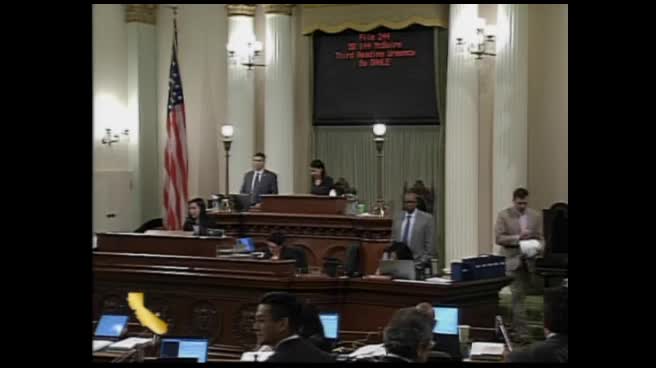 1MIN
Assembly Floor
 2MIN
Senate Floor
 25MIN
Senate Standing Committee on Energy, Utilities and Communications
 2MIN
Assembly Floor
 10MIN
Assembly Standing Committee on Communications and Conveyance
Bill Author

Bill Co-Author(s):