SB 197: Sales and use taxes: exemption: military and veteran medical facilities.
- Session Year: 2017-2018
- House: Senate
- Latest Version Date: 2017-07-10
Existing state sales and use tax laws impose a tax on retailers measured by the gross receipts from the sale of tangible personal property sold at retail in this state, or on the storage, use, or other consumption in this state of tangible personal property purchased from a retailer for storage, use, or other consumption in this state. The Sales and Use Tax Law provides various exemptions from those taxes, including an exemption for the sale of, or the storage, use, or other consumption of, meals and food products that are furnished or served by any nonprofit veterans organization for purposes of fundraising, as specified.
This bill, on and after April 1, 2017, and before January 1, 2023, would exempt from these taxes the gross receipts from the sale of, and the storage, use, or other consumption in this state of, building materials and supplies purchased by a qualified person for use by that qualified person in the construction of specified military and veteran medical facilities. The bill would make a legislative finding and declaration that the retroactive application of the bill serves a public purpose and does not constitute a gift of public funds.
The Bradley-Burns Uniform Local Sales and Use Tax Law authorizes cities and counties to impose local sales and use taxes in conformity with the Sales and Use Tax Law, and existing laws authorize districts, as specified, to impose transactions and use taxes in accordance with the Transactions and Use Tax Law, which generally conforms to the Sales and Use Tax Law. Amendments to the Sales and Use Tax Law are automatically incorporated into the local tax laws.
Existing law requires the state to reimburse cities and counties for revenue losses caused by the enactment of sales and use tax exemptions.
This bill would provide that, notwithstanding these provisions, no appropriation is made and the state shall not reimburse cities and counties for sales and use tax revenues lost by them pursuant to this bill.
This bill would take effect immediately as a tax levy.Existing state sales and use tax laws impose a tax on retailers measured by the gross receipts from the sale of tangible personal property sold at retail in this state, or on the storage, use, or other consumption in this state of tangible personal property purchased from a retailer for storage, use, or other consumption in this state. The Sales and Use Tax Law provides various exemptions from those taxes, including an exemption for the sale of, or the storage, use, or other consumption of, meals and food products that are furnished or served by any nonprofit veterans organization for purposes of fundraising, as specified.
This bill bill, before January 1, 2023, would exempt from these taxes the gross receipts from the sale of, and the storage, use, or other consumption in this state of, building materials and supplies purchased by a qualified person for use by that qualified person in the construction of specified military and veteran medical facilities.
The Bradley-Burns Uniform Local Sales and Use Tax Law authorizes cities and counties to impose local sales and use taxes in conformity with the Sales and Use Tax Law, and existing laws authorize districts, as specified, to impose transactions and use taxes in accordance with the Transactions and Use Tax Law, which generally conforms to the Sales and Use Tax Law. Amendments to the Sales and Use Tax Law are automatically incorporated into the local tax laws.
Existing law requires the state to reimburse cities and counties for revenue losses caused by the enactment of sales and use tax exemptions.
This bill would provide that, notwithstanding these provisions, no appropriation is made and the state shall not reimburse cities and counties for sales and use tax revenues lost by them pursuant to this bill.
This bill would take effect immediately as a tax levy.
Existing state sales and use tax laws impose a tax on retailers measured by the gross receipts from the sale of tangible personal property sold at retail in this state of, state, or on the storage, use, or other consumption in this state of, of tangible personal property purchased from a retailer for storage, use, or other consumption in this state. The Sales and Use Tax Law provides various exemptions from those taxes, including an exemption for the sale of, or the storage, use, or other consumption of, meals and food products that are furnished or served by any nonprofit veterans organization for purposes of fundraising, as specified.
This bill would exempt from these taxes the gross receipts from the sale of, and the storage, use, or other consumption in this state of, building materials and supplies purchased by a qualified person for use by that qualified person in the construction of specified military and veteran medical facilities.
The Bradley-Burns Uniform Local Sales and Use Tax Law authorizes cities and counties to impose local sales and use taxes in conformity with the Sales and Use Tax Law, and existing laws authorize districts, as specified, to impose transactions and use taxes in accordance with the Transactions and Use Tax Law, which generally conforms to the Sales and Use Tax Law. Amendments to the Sales and Use Tax Law are automatically incorporated into the local tax laws.
Existing law requires the state to reimburse cities and counties for revenue losses caused by the enactment of sales and use tax exemptions.
This bill would provide that, notwithstanding these provisions, no appropriation is made and the state shall not reimburse cities and counties for sales and use tax revenues lost by them pursuant to this bill.
This bill would take effect immediately as a tax levy.
Existing state sales and use tax laws impose a tax on retailers measured by the gross receipts from the sale of tangible personal property sold at retail in this state of, or on the storage, use, or other consumption in this state of, tangible personal property purchased from a retailer for storage, use, or other consumption in this state. The Sales and Use Tax Law provides various exemptions from those taxes, including an exemption for the sale of, or the storage, use, or consumption of, meals and food products that are furnished or served by any nonprofit veterans organization for purposes of fundraising, as specified.
This bill would exempt from these taxes the gross receipts from the sale of, and the storage, use, or other consumption in this state of, building materials and supplies purchased by a qualified person for use by that qualified person in the construction of specified military and veteran medical facilities.
The Bradley-Burns Uniform Local Sales and Use Tax Law authorizes counties and cities and counties to impose local sales and use taxes in conformity with the Sales and Use Tax Law, and existing laws authorize districts, as specified, to impose transactions and use taxes in accordance with the Transactions and Use Tax Law, which generally conforms to the Sales and Use Tax Law. Amendments to the Sales and Use Tax Law are automatically incorporated into the local tax laws.
Existing law requires the state to reimburse counties and cities and counties for revenue losses caused by the enactment of sales and use tax exemptions.
This bill would provide that, notwithstanding Section 2230 of the Revenue and Taxation Code, these provisions, no appropriation is made and the state shall not reimburse any local agencies cities and counties for sales and use tax revenues lost by them pursuant to this bill.
This bill would take effect immediately as a tax levy.
Existing state sales and use tax laws impose a tax on retailers measured by the gross receipts from the sale of tangible personal property sold at retail in this state of, or on the storage, use, or other consumption in this state of, tangible personal property purchased from a retailer for storage, use, or other consumption in this state. The Sales and Use Tax Law provides various exemptions from those taxes, including an exemption for the sale of, or the storage, use, or consumption of, meals and food products that are furnished or served by any nonprofit veterans organization for purposes of fundraising, as specified.
This bill would exempt from these taxes the gross receipts from the sale of, and the storage, use, or other consumption in this state of, building materials and supplies purchased by a qualified person for use by that qualified person in the construction of specified military and veteran medical facilities.
The Bradley-Burns Uniform Local Sales and Use Tax Law authorizes counties and cities to impose local sales and use taxes in conformity with the Sales and Use Tax Law, and existing laws authorize districts, as specified, to impose transactions and use taxes in accordance with the Transactions and Use Tax Law, which generally conforms to the Sales and Use Tax Law. Amendments to the Sales and Use Tax Law are automatically incorporated into the local tax laws.
Existing law requires the state to reimburse counties and cities for revenue losses caused by the enactment of sales and use tax exemptions.
This bill would provide that, notwithstanding Section 2230 of the Revenue and Taxation Code, no appropriation is made and the state shall not reimburse any local agencies for sales and use tax revenues lost by them pursuant to this bill.
This bill would take effect immediately as a tax levy.
(a)Before On and after April 1, 2017, and before January 1, 2023, there are exempted from the taxes imposed by this part the gross receipts from the sale of, and the storage, use, or other consumption in this state of, building materials and supplies purchased by a qualified person for use by that qualified person in the construction of a qualified facility.
(b)For the purposes of this section, the following definitions shall apply:
(1)(A)Building materials and supplies includes, but is not limited to, machinery, equipment, materials, accessories, appliances, contrivances, furniture, fixtures, and all technical equipment or other tangible personal property of any other nature or description description, and the building materials and supplies meet all of the following:
(i)Are necessary to construct and equip that facility to provide services for which the facility is designed. Building a qualified facility.
(ii)Become part of the completed facility.
(iii)Are transferred to the United States Department of Defense or the United States Department of Veterans Affairs as a gift described in this subdivision.
(B)Building materials and supplies shall not include any tools that a qualified person would normally use or other construction equipment that a qualified person uses in construction activities, specifically including construction of a qualified facility.
(2)Qualified facility means either of the following:
(A)A medical facility, or a temporary residential facility for families of patients receiving care, including either or both in-patient and out-patient inpatient and outpatient care, at a medical facility, located on a United States military base located in California.
(B)A United States Department of Veterans Affairs medical center, or a temporary residential facility for families of patients receiving care at or as part of a United States Department of Veterans Affairs medical center, located in California.
(3)Qualified nonprofit organization means an organization exempt from taxation pursuant to Section 501(c)(3) of the Internal Revenue Code that constructs a qualified facility as a gift to the United States Department of Defense pursuant to Section 2601 of Title 10 of the United States Code or the United States Department of Veterans Affairs pursuant to Section 8301 of Title 38 of the United States Code.
(4)Qualified person means either or both of the following:
(A)A qualified nonprofit organization.
(B)A contractor, subcontractor, or builder working under contract with a qualified nonprofit organization to construct a qualified facility.
(c)The exemption provided by this section shall only apply to sales and purchases that occur after the date the United States Department of Defense or the United States Department of Veterans Affairs accepts the offer of the qualified nonprofit organization to construct the qualified facility and on or before the date the United States Department of Defense or the United States Department of Veterans Affairs accepts the qualified facility.
(d)(1)An exemption shall not be allowed under this section with respect to sales by, or purchases from, a retailer engaged in business in this state or from a retailer who that is authorized by the board, under the rules and regulations as it may prescribe, to collect the tax and who that is, for the purposes of this part relating to the use tax, regarded as a retailer engaged in business in this state, unless the purchaser furnishes the retailer with an exemption certificate completed in accordance with any instructions or regulations as the board may prescribe and the retailer retains a copy of the exemption certificate in its records and furnishes the copy of the exemption certificate to the board upon request.
(2)If a purchaser furnishes the retailer with a copy of an exemption certificate pursuant to paragraph (1), but uses materials or fixtures purchased with the exemption certificate in a manner not qualifying for the exemption, the purchaser shall be liable for payment of sales tax, with applicable interest, as if the purchaser were a retailer making a retail sale of the materials or fixtures at the time the property is so used, and the cost of the materials or fixtures to the purchaser shall be deemed the gross receipts from that retail sale.
SEC. 2.Notwithstanding Section 2230 of the Revenue and Taxation Code, no appropriation is made by this act and the state shall not reimburse cities and counties for any sales and use tax revenues lost by them under this act.
SEC. 3.This act provides for a tax levy within the meaning of Article IV of the California Constitution and shall go into immediate effect.SEC. 3.The Legislature finds and declares that this act, and its retroactive application, serves a public purpose and does not constitute a gift of public funds within the meaning of Section 6 of Article XVI of the California Constitution.
(a)There Before January 1, 2023, there are exempted from the taxes imposed by this part the gross receipts from the sale of, and the storage, use, or other consumption in this state of, building materials and supplies purchased by a qualified person for use by that qualified person in the construction of a qualified facility.
(b)For the purposes of this section, the following definitions shall apply:
(1)Building materials and supplies includes, but is not limited to, machinery, equipment, materials, accessories, appliances, contrivances, furniture, fixtures, and all technical equipment or other tangible personal property of any other nature or description necessary to construct and equip that facility to provide services for which the facility is designed. Building materials and supplies shall not include any tools that a qualified person would normally use in construction activities, specifically including construction of a qualified facility.
(2)Qualified facility means either of the following:
(A)A medical facility, or a temporary residential facility for families of patients receiving care, including either or both in-patient and out-patient care, at a medical facility, located on a United States military base located in California.
(B)A United States Department of Veterans Affairs medical center, or a temporary residential facility for families of patients receiving care at or as part of a United States Department of Veterans Affairs medical center, located in California.
(3)Qualified nonprofit organization means an organization exempt from taxation pursuant to Section 501(c)(3) of the Internal Revenue Code that constructs a qualified facility as a gift to the United States Department of Defense pursuant to Section 2601 of Title 10 of the United States Code or the United States Department of Veterans Affairs pursuant to Section 8301 of Title 38 of the United States Code.
(4)Qualified person means either or both of the following:
(A)A qualified nonprofit organization.
(B)A contractor, subcontractor, or builder working under contract with a qualified nonprofit organization to construct a qualified facility.
(c)The exemption provided by this section shall only apply to sales and purchases that occur after the date the United States Department of Defense or the United States Department of Veterans Affairs accepts the offer of the qualified nonprofit organization to construct the qualified facility and on or before the date the United States Department of Defense or the United States Department of Veterans Affairs accepts the qualified facility.
(d)(1)An exemption shall not be allowed under this section with respect to sales by, or purchases from, a retailer engaged in business in this state or from a retailer who is authorized by the board, under the rules and regulations as it may prescribe, to collect the tax and who is, for the purposes of this part relating to the use tax, regarded as a retailer engaged in business in this state, unless the purchaser furnishes the retailer with an exemption certificate completed in accordance with any instructions or regulations as the board may prescribe and the retailer retains a copy of the exemption certificate in its records and furnishes the copy of the exemption certificate to the board upon request.
(2)If a purchaser furnishes the retailer with a copy of an exemption certificate pursuant to paragraph (1), but uses materials or fixtures purchased with the exemption certificate in a manner not qualifying for the exemption, the purchaser shall be liable for payment of sales tax, with applicable interest, as if the purchaser were a retailer making a retail sale of the materials or fixtures at the time the property is so used, and the cost of the materials or fixtures to the purchaser shall be deemed the gross receipts from that retail sale.
SEC. 2.Notwithstanding Section 2230 of the Revenue and Taxation Code, no appropriation is made by this act and the state shall not reimburse cities and counties for any sales and use tax revenues lost by them under this act.
SEC. 3.This act provides for a tax levy within the meaning of Article IV of the California Constitution and shall go into immediate effect.
(a)There are exempted from the taxes imposed by this part the gross receipts from the sale of, and the storage, use, or other consumption in this state of, building materials and supplies purchased by a qualified person for use by that qualified person in the construction of a qualified facility.
(b)For the purposes of this section, the following definitions shall apply:
(1)Building materials and supplies includes, but is not limited to, machinery, equipment, materials, accessories, appliances, contrivances, furniture, fixtures, and all technical equipment or other tangible personal property of any other nature or description necessary to construct and equip that facility to provide services for which the facility is designed. Building materials and supplies shall not include any tools that a qualified person would normally use in construction activities, specifically including construction of a qualified facility.
(2)Qualified facility means either of the following:
(A)A medical facility, or a temporary residential facility for families of patients receiving care, including either or both in-patient and out-patient care, at a medical facility, located on a United States military base located in California.
(B)A United States Department of Veterans Affairs medical center, or a temporary residential facility for families of patients receiving care at or as part of a United States Department of Veterans Affairs medical center, located in California.
(3)Qualified nonprofit organization means an organization exempt from taxation pursuant to Section 501(c)(3) of the Internal Revenue Code that constructs a qualified facility as a gift to the United States Department of Defense pursuant to Section 2601 of Title 10 of the United States Code or the United States Department of Veterans Affairs pursuant to Section 8301 of Title 38 of the United States Code.
(4)Qualified person means either or both of the following:
(A)A qualified nonprofit organization.
(B)A contractor, subcontractor, or builder working under contract with a qualified nonprofit organization to construct a qualified facility.
(c)The exemption provided by this section shall only apply to sales and purchases that occur after the date the United States Department of Defense or the United States Department of Veterans Affairs accepts the offer of the qualified nonprofit organization to construct the qualified facility and on or before the date the United States Department of Defense or the United States Department of Veterans Affairs accepts the qualified facility.
(d)(1)An exemption shall not be allowed under this section with respect to sales by, or purchases from, a retailer engaged in business in this state or from a retailer who is authorized by the board, under the rules and regulations as it may prescribe, to collect the tax and who is, for the purposes of this part relating to the use tax, regarded as a retailer engaged in business in this state, unless the purchaser furnishes the retailer with an exemption certificate completed in accordance with any instructions or regulations as the board may prescribe and the retailer retains a copy of the exemption certificate in its records and furnishes the copy of the exemption certificate to the board upon request.
(2)If a purchaser furnishes the retailer with a copy of an exemption certificate pursuant to paragraph (1), but uses materials or fixtures purchased with the exemption certificate in a manner not qualifying for the exemption, the purchaser shall be liable for payment of sales tax, with applicable interest, as if the purchaser were a retailer making a retail sale of the materials or fixtures at the time the property is so used, and the cost of the materials or fixtures to the purchaser shall be deemed the gross receipts from that retail sale.
SEC. 2.Notwithstanding Section 2230 of the Revenue and Taxation Code, no appropriation is made by this act and the state shall not reimburse cities and counties for any sales and use tax revenues lost by them under this act.
SEC. 3.This act provides for a tax levy within the meaning of Article IV of the California Constitution and shall go into immediate effect.
(a)There are exempted from the taxes imposed by this part the gross receipts from the sale of, and the storage, use, or other consumption in this state of, building materials and supplies purchased by a qualified person for use by that qualified person in the construction of a qualified facility.
(b)For purposes of this section, the following definitions shall apply:
(1)Building materials and supplies includes, but is not limited to, machinery, equipment, materials, accessories, appliances, contrivances, furniture, fixtures, and all technical equipment or other tangible personal property of any other nature or description necessary to construct and equip that facility to provide services for which the facility is designed. Building materials and supplies shall not include any tools that a qualified person would normally use in construction activities, specifically including construction of a qualified facility.
(2)Qualified facility means either of the following:
(A)A medical facility, or a temporary residential facility for families of patients receiving care care, including either or both in-patient and out-patient care, at a medical facility, located on a United States military base located in California.
(B)A United States Department of Veterans Affairs medical center, or a temporary residential facility for families of patients receiving care at or as part of a United States Department of Veterans Affairs medical center, located in California.
(3)Qualified nonprofit organization means a nonprofit an organization exempt from federal income taxes as an organization described in taxation pursuant to Section 501(c)(3) of the Internal Revenue Code that offers to construct constructs a qualified facility as a gift to the United States Department of Defense pursuant to Section 2601 of Title 10 of the United States Code. Code or the United States Department of Veterans Affairs pursuant to Section 8301 of Title 38 of the United States Code.
(4)Qualified person means either or both of the following:
(A)A qualified nonprofit organization.
(B)A contractor, subcontractor, or builder working under contract with a qualified nonprofit organization to construct a qualified facility.
(c)The exemption provided by this section shall only apply to sales and purchases that occur after the date the United States Department of Defense or the United States Department of Veterans Affairs accepts the offer of the qualified nonprofit organization to construct the qualified facility and on or before the date the United States Department of Defense or the United States Department of Veterans Affairs accepts the completed qualified facility.
(d)(1)An exemption shall not be allowed under this section with respect to sales by, or purchases from, a retailer engaged in business in this state or from a retailer who is authorized by the board, under the rules and regulations as it may prescribe, to collect the tax and who is, for the purposes of this part relating to the use tax, regarded as a retailer engaged in business in this state, unless the purchaser furnishes the retailer with an exemption certificate completed in accordance with any instructions or regulations as the board may prescribe and the retailer retains a copy of the exemption certificate in its records and furnishes the copy of the exemption certificate to the board upon request.
(2)If a purchaser furnishes the retailer with a copy of an exemption certificate pursuant to paragraph (1), but uses materials or fixtures purchased with the exemption certificate in a manner not qualifying for the exemption, the purchaser shall be liable for payment of sales tax, with applicable interest, as if the purchaser were a retailer making a retail sale of the materials or fixtures at the time the property is so used, and the cost of the materials or fixtures to the purchaser shall be deemed the gross receipts from that retail sale.
SEC. 2.Notwithstanding Section 2230 of the Revenue and Taxation Code, no appropriation is made by this act and the state shall not reimburse any local agency cities and counties for any sales and use tax revenues lost by it them under this act.
SEC. 3.This act provides for a tax levy within the meaning of Article IV of the California Constitution and shall go into immediate effect.
(a)There are exempted from the taxes imposed by this part the gross receipts from the sale of, and the storage, use, or other consumption in this state of, building materials and supplies purchased by a qualified person for use by that qualified person in the construction of a qualified facility.
(b)For purposes of this section, the following definitions shall apply:
(1)Building materials and supplies includes, but is not limited to, machinery, equipment, materials, accessories, appliances, contrivances, furniture, fixtures, and all technical equipment or other tangible personal property of any other nature or description necessary to construct and equip that facility to provide services for which the facility is designed.
(2)Qualified facility means either of the following:
(A)A medical facility, or a temporary residential facility for families of patients receiving care at a medical facility, located on a United States military base located in California.
(B)A United States Department of Veterans Affairs medical center, or a temporary residential facility for families of patients receiving care at a United States Department of Veterans Affairs medical center, located in California.
(3)Qualified nonprofit organization means a nonprofit organization exempt from federal income taxes as an organization described in Section 501(c)(3) of the Internal Revenue Code that offers to construct a qualified facility as a gift to the United States Department of Defense pursuant to Section 2601 of Title 10 of the United States Code.
(4)Qualified person means either of the following:
(A)A qualified nonprofit organization.
(B)A contractor, subcontractor, or builder working under contract with a qualified nonprofit organization to construct a qualified facility.
(c)The exemption provided by this section shall only apply to sales and purchases that occur after the date the United States Department of Defense accepts the offer of the qualified nonprofit organization to construct the qualified facility and on or before the date the United States Department of Defense accepts the completed qualified facility.
(d)(1)An exemption shall not be allowed under this section with respect to sales by, or purchases from, a retailer engaged in business in this state or from a retailer who is authorized by the board, under the rules and regulations as it may prescribe, to collect the tax and who is, for the purposes of this part relating to the use tax, regarded as a retailer engaged in business in this state, unless the purchaser furnishes the retailer with an exemption certificate completed in accordance with any instructions or regulations as the board may prescribe and the retailer retains the exemption certificate in its records and furnishes the exemption certificate to the board upon request.
(2)If a purchaser furnishes the retailer with an exemption certificate pursuant to paragraph (1), but uses materials or fixtures purchased with the exemption certificate in a manner not qualifying for the exemption, the purchaser shall be liable for payment of sales tax, with applicable interest, as if the purchaser were a retailer making a retail sale of the materials or fixtures at the time the property is so used, and the cost of the materials or fixtures to the purchaser shall be deemed the gross receipts from that retail sale.
SEC. 2.Notwithstanding Section 2230 of the Revenue and Taxation Code, no appropriation is made by this act and the state shall not reimburse any local agency for any sales and use tax revenues lost by it under this act.
SEC. 3.This act provides for a tax levy within the meaning of Article IV of the California Constitution and shall go into immediate effect.
|
Date
|
Status
|
|---|---|
| Sep 1, 2017 | September 1 hearing: Held in committee and under submission. |
| Jul 19, 2017 | July 19 set for first hearing. Placed on APPR. suspense file. |
| Jul 10, 2017 | From committee with author's amendments. Read second time and amended. Re-referred to Com. on APPR. |
| Jul 7, 2017 | From committee with author's amendments. Read second time and amended. Re-referred to Com. on APPR. |
| Jun 22, 2017 | Read second time and amended. Re-referred to Com. on APPR. |
| Jun 21, 2017 | From committee: Do pass as amended and re-refer to Com. on APPR. (Ayes 9. Noes 0.) (June 19). |
| May 22, 2017 | Referred to Com. on REV. & TAX. |
| May 1, 2017 | In Assembly. Read first time. Held at Desk. |
| May 1, 2017 | Read third time. Passed. (Ayes 37. Noes 0. Page 904.) Ordered to the Assembly. |
| Apr 24, 2017 | Read second time. Ordered to third reading. |
| Apr 20, 2017 | Read third time and amended. |
| Apr 18, 2017 | Read second time. Ordered to third reading. |
| Apr 17, 2017 | From committee: Do pass. (Ayes 7. Noes 0. Page 708.) (April 17). |
| Apr 5, 2017 | Set for hearing April 17. |
| Mar 29, 2017 | From committee: Do pass and re-refer to Com. on APPR. (Ayes 7. Noes 0. Page 537.) (March 29). Re-referred to Com. on APPR. |
| Mar 20, 2017 | From committee with author's amendments. Read second time and amended. Re-referred to Com. on GOV. & F. |
| Mar 8, 2017 | Set for hearing March 29. |
| Feb 9, 2017 | Referred to Com. on GOV. & F. |
| Jan 31, 2017 | From printer. May be acted upon on or after March 2. |
| Jan 30, 2017 | Introduced. Read first time. To Com. on RLS. for assignment. To print. |
|
Date
|
Description
|
Location
|
Votes
|
|
|---|---|---|---|---|
| Jun 19, 2017 | Do pass as amended and be re-referred to the Committee on [Appropriations] | Assembly Standing Committee on Revenue and Taxation |
Passed |
|
| May 1, 2017 | Senate 3rd Reading SB197 Bates et al. | Senate Floor |
Passed |
|
| Apr 17, 2017 | Do pass | Senate Standing Committee on Appropriations |
Passed |
|
| Mar 29, 2017 | Do pass, but first be re-referred to the Committee on [Appropriations] | Senate Standing Committee on Governance and Finance |
Passed |
This list shows positions taken on this bill by organizations on the date displayed, which is linked to the original source.
Positions by individuals are not included.
|
Organization
|
Position
|
Date
|
|---|---|---|
| American G.I. Forum of California | ** Support | Jun 16, 2017 |
| American Legion - Department of California | ** Support | Jun 16, 2017 |
| AMVETS - Department of California | ** Support | Jun 16, 2017 |
| California Association Of County Veterans Service Officers | ** Support | Jun 16, 2017 |
| California State Commanders Veterans Council | ** Support | Jun 16, 2017 |
| One individual | ** Support | Apr 26, 2017 |
| paralyzed veterans of america, cal-diego chapter | ** Support | Jun 16, 2017 |
| San Diego Regional Chamber Of Commerce | ** Support | Jun 16, 2017 |
| State Board of Equalization | ** Support | Jun 16, 2017 |
| State Board of Equalization Member George Runner | ** Support | Jun 16, 2017 |
| Vietnam Veterans of America - California State Council | ** Support | Jun 16, 2017 |
Date of Hearing: July 19, 2017
ASSEMBLY COMMITTEE ON APPROPRIATIONS
Lorena Gonzalez Fletcher, Chair
SBPCA Bill Id:SB 197
Author:(Bates) – As Amended Ver:July 10, 2017
Policy Committee: | Revenue and Taxation | Vote: | 9 - 0 |
Urgency: No State Mandated Local Program: No Reimbursable: No
SUMMARY:
This bill establishes a sales and use tax (SUT) exemption for building materials and supplies purchased by a qualified nonprofit, or a contractor or subcontractor working with a qualified nonprofit, for use in the construction of a United States Department of Veterans Affair medical facility or a medical facility located on a United States military base. This exemption applies to purchases made between April 1, 2017 and January 1, 2023.
FISCAL EFFECT:
- One-time estimated General Fund (GF) revenue loss of $109,000 as a result of the proposed sales tax exemption for the project currently being constructed at Camp Pendleton.
- Potential GF revenue loss in the range of $100,000 as a result of the exemption being used on a future facility located in Northern California. The timing of this revenue loss is unknown because the project is not yet finalized.
- Unknown administrative costs to administer the exemption. While applying the exemption on future purchases is likely to lead to absorbable costs for the Board of Equalization (BOE) or its successor agency, recent amendments to the bill make it retroactive, thereby complicating administration and potentially resulting in additional administrative costs.
COMMENTS:
- Background. The Intrepid Fallen Heroes Fund (Fund) provides financial support to severely wounded military personnel and veterans and their families. Since its inception, it has provided nearly $200 million in support, and the Fund is supported entirely with donations from the public. The Fund has also launched a campaign to build up to nine medical centers at military bases around the country to provide care to service members suffering from traumatic brain injury and psychological health conditions. A new 25,000 square foot facility located at Camp Pendleton is expected to be completed in May 2018, and supporters hope for another facility to be built in Northern California.
- Purpose. According to the author, SB 197 will lower the costs of constructing the new medical facilities in California that serve veterans and active duty troops afflicted with post traumatic stress disorder (PTSD).
- Recent Amendments. Recent author amendments clarify the scope of the exemption as well as make the exemption retroactive to purchases made after April 1, 2017. The stated purpose of these amendments is to make sure that the relevant purchases made related to the Camp Pendleton facility all receive exemption since construction has already started.
The Committee has a number of concerns with the amendment that makes the proposed SUT exemption retroactive. First, tax expenditures are typically implemented so as to encourage behavior deemed necessary for the public good. However, that construction has already started raises questions about whether this exemption is needed at all in order to support the construction of this facility. Second, retroactivity complicates administration of the bill. This is especially important given the transition of certain duties previously handled by BOE to its successor agency. Finally, it is generally the policy of the Assembly Committee on Revenue and Taxation to not permit any retroactive tax expenditures, regardless of the stated purpose, and this amendment was not brought up with that policy committee when it was heard in June 2017.
- Recent legislation. AB 2518 (Gomez), of the 2015-16 Legislative Session, would have established a partial SUT exemption for building and construction supplies purchased for use by specified nonprofit corporations to build low income housing. AB 2518 was held on this committee on Suspense.
Analysis Prepared by: Luke Reidenbach / APPR. / (916) 319-2081
Date of Hearing: June 19, 2017
ASSEMBLY COMMITTEE ON REVENUE AND TAXATION
Sebastian Ridley-Thomas, Chair
SBPCA Bill Id:SB 197
Author:(Bates) – As Amended Ver:April 20, 2017
Majority vote. Tax levy. Fiscal committee.
SENATE VOTE: 37-0
SUBJECT: Sales and use taxes: exemption: military and veteran medical facilities
SUMMARY: Establishes a sales and use tax (SUT) exemption for "building materials and supplies" purchased by a "qualified person" for use in the construction of a "qualified facility". Specifically, this bill:
- Establishes a SUT exemption for "building materials and supplies" purchased by a "qualified person" for use by that "qualified person" in the construction of a "qualified facility".
- Defines "building materials and supplies" to include machinery, equipment, materials, accessories, appliances, contrivances, furniture, fixtures, and all technical equipment or other tangible personal property (TPP) of any other nature or description necessary to construct and equip that facility to provide services for which the facility is designed. The term "building materials and supplies" specifically excludes any tools that a "qualified person" would normally use in construction activities, specifically including construction of a "qualified facility".
- Defines a "qualified person" as either or both of the following:
- A "qualified nonprofit organization"; or,
- A contractor, subcontractor, or builder working under contract with a "qualified nonprofit organization" to construct a "qualified facility".
- Defines a "qualified facility" as either of the following:
- A medical facility, or a temporary residential facility for families of patients receiving care, including either or both in-patient and out-patient care, at a medical facility, located on a United States (U.S.) military base located in California; or,
- A U.S. Department of Veterans Affairs medical center, or a temporary residential facility for families of patients receiving care at or as part of a U.S. Department of Veterans Affairs medical center, located in California.
- Defines a "qualified nonprofit organization" as an organization exempt from taxation under Internal Revenue Code Section 501(c)(3) that constructs a qualified facility as a gift to the U.S. Department of Defense under Section 2601 of Title 10 of the U.S. Code or the U.S. Department of Veterans Affairs under Section 8301 of Title 38 of the U.S. Code.
- Provides that the SUT exemption shall only apply to sales and purchases that occur after the date the U.S. Department of Defense or the U.S. Department of Veterans Affairs accepts the offer of the qualified nonprofit organization to construct the qualified facility and on or before the date the U.S. Department of Defense or U.S. Department of Veterans Affairs accepts the qualified facility.
- Requires the purchaser to provide the retailer with an exemption certificate completed in accordance with any instructions or regulations the State Board of Equalization (BOE) prescribes. Moreover, the retailer must retain a copy of the exemption certificate in its records and provide a copy of the exemption certificate to the BOE upon request.
- Contains a standard recapture provision for materials used in a manner not qualifying for the exemption.
- Provides that, notwithstanding Revenue and Taxation Code Section 2230, the state shall not reimburse cities and counties for any SUT revenues lost by them under this bill.
- Takes immediate effect as a tax levy.
EXISTING LAW:
- Imposes a sales tax on retailers for the privilege of selling TPP, absent a specific exemption. The tax is based upon the retailer's gross receipts from TPP sales in this state.
- Imposes a complimentary use tax on the storage, use, or other consumption of TPP purchased out-of-state and brought into California. The use tax is imposed on the purchaser; and unless the purchaser pays the use tax to an out-of-state retailer registered to collect California's use tax, the purchaser remains liable for the tax. The use tax is set at the same rate as the state's sales tax and must generally be remitted to the BOE.
- Provides no general SUT exemption merely because the retailer or purchaser is engaged in charitable activities, is a nonprofit organization, or enjoys certain privileges under applicable property or income tax laws.
FISCAL EFFECT: The BOE estimates that this bill would result in a one-time state and local revenue loss of $223,000. This estimate is based on one planned project in California.
COMMENTS:
- The author has provided the following statement in support of this bill:
Senator Toni Atkins and I have joined forces to author SB 197 that would lower the cost of constructing new medical facilities in California that serve veterans and active duty troops afflicted with posttraumatic stress disorder (PTSD), traumatic brain injury (TBI) and related conditions.
SB 197 would grant the state the authority to waive state and local sales and use taxes for qualified charitable organizations that purchase building materials and supplies to construct and equip such facilities. More specifically, this bill would help the non-profit Intrepid Fallen Heroes Fund to build a new facility at Marine Corps Base Camp Pendleton, and possibly another facility in Northern California in the future. The short term loss of sales tax revenue would be mitigated by the state benefiting from the construction of brand new medical facilities at no additional cost to taxpayers.
Maryland, Texas and Virginia have already granted sales tax exemptions to qualified charitable organizations for purchases of tangible personal property used to construct similar facilities. California law currently exempts various items from taxes, including the storage, use, or consumption of meals and food products that are furnished or served by any nonprofit veteran's organization for the purpose of fundraising. However, current law does not exempt purchases of materials to build life-saving treatment and research centers such as the proposed facility at Camp Pendleton.
SB 197 would stretch every charitable dollar to its fullest and help add additional medical care infrastructure to take care of those who have served our nation.
- This bill is supported by the BOE, which notes that, "The exemption will lower the cost of constructing new medical facilities serving veterans and active duty troops afflicted with posttraumatic stress disorder, traumatic brain injury, and related conditions." The BOE also notes:
The exemption applies only to purchases by certain nonprofit organizations or a contractor, subcontractor, or builder working under contract with the nonprofit organization to construct a veteran's medical facility, or a temporary residential facility for families of veterans receiving care. Also, the nonprofit organization must offer to construct the facility as a gift to the United States Department of Defense or the United States Department of Veterans Affairs.
- The BOE notes the following in its staff analysis of this bill:
- Effect of the bill: "This bill exempts from sales and use tax, sales of building materials and supplies to contractors, subcontractors, builders and qualifying nonprofit organizations to construct and equip specified medical and residential facilities for wounded veterans and their families that are gifted to the United States, as specified."
- The BOE's administration would not be significantly impacted: "The bill's language narrowly defines the circumstances under which the proposed exemption would apply; however, the language is broad in terms of scope of the exemption (e.g., it includes a facility's construction materials along with all medical equipment, furniture, and apparatus necessary to equip the facility necessary to provide the services for which it is designed)."
- Committee Staff Comments:
- What is a "tax expenditure"? Existing law provides various credits, deductions, exclusions, and exemptions for particular taxpayer groups. In the late 1960s, U.S. Treasury officials began arguing that these features of the tax law should be referred to as "expenditures" since they are generally enacted to accomplish some governmental purpose and there is a determinable cost associated with each (in the form of foregone revenues).
- How is a tax expenditure different from a direct expenditure? As the Department of Finance notes in its annual Tax Expenditure Report, there are several key differences between tax expenditures and direct expenditures. First, tax expenditures are reviewed less frequently than direct expenditures once they are put in place. Second, there is generally no control over the amount of revenue losses associated with any given tax expenditure. Finally, it should also be noted that, once enacted, it takes a two-thirds vote to rescind an existing tax expenditure absent a sunset date. This effectively results in a "one-way ratchet" whereby tax expenditures can be conferred by majority vote, but cannot be rescinded, irrespective of their efficacy or cost, without a supermajority vote.
- An overview of the SUT Law: California's SUT Law imposes a sales tax on retailers for the privilege of selling TPP, absent a specific exemption. The tax is based upon a retailer's gross receipts from TPP sales in California. The SUT Law also imposes a mirror "use tax" on the storage, use, or other consumption of TPP purchased out-of-state and brought into California. The use tax is imposed on the purchaser, and unless the purchaser pays the use tax to an out-of-state retailer registered to collect California's use tax, the purchaser remains liable for the tax. The use tax is set at the same rate as the state's sales tax and must generally be remitted to the BOE.
- What is a "tax expenditure"? Existing law provides various credits, deductions, exclusions, and exemptions for particular taxpayer groups. In the late 1960s, U.S. Treasury officials began arguing that these features of the tax law should be referred to as "expenditures" since they are generally enacted to accomplish some governmental purpose and there is a determinable cost associated with each (in the form of foregone revenues).
The SUT represents the state's second largest source of General Fund (GF) revenues. Nevertheless, the past 60 years have seen a dramatic reduction in the state's reliance on the SUT and a corresponding increase in its reliance on personal income tax revenues. In fiscal year (FY) 2014-15, SUT revenues were estimated to comprise 23% of the state's GF revenues, down from nearly 60% in FY 1950-51.
- What accounts for the state's reduced reliance on SUT revenues? The SUT Law was enacted in a very different era. In the 1930s, California's economy was largely dominated by manufacturing, and residents mostly bought and sold tangible goods. Thus, in establishing the base for a new consumption tax, it made sense to impose the tax on sales of TPP, defined as personal property that may be "seen, weighed, measured, felt, or touched." Over the past 80 years, however, California's economy has seen dramatic growth in the service and information sectors, resulting in a significant erosion of the SUT base. For example, the Commission on the 21st Century Economy noted that spending on taxable goods represented 34.6% of personal income in 2008, down from 55.4% in 1980. As a result, tax experts and economists from across the political spectrum argue that California should expand its SUT base.
It could be argued that, while well-intentioned, additional SUT exemptions further erode an already shrinking SUT base. This, in turn, increases fiscal pressures to maintain or even increase California's relatively high SUT rate. High rates arguably promote non-compliance and encourage out-of-state purchases, placing California retailers at a competitive disadvantage. High rates also risk impacting consumer decision-making, which runs counter to widely accepted principles of sound tax policy.
- What would this bill do? This bill would establish a complete SUT exemption for "building materials and supplies" used in the construction of a qualified medical facility. Committee staff understands that this exemption is being advanced to exempt construction materials used to build a new medical facility at Camp Pendleton.
- Applying the SUT Law to construction contracts: Specific rules govern the furnishing and installing of TPP under a construction contract. As a general matter, a contractor making improvements to real property is considered the consumer of materials like electrical wiring and concrete furnished and installed as part of a construction contract. As such, SUT generally applies to the contractor's purchases of such building materials. In the case of fixtures, however, a different rule applies. Specifically, a contractor is generally regarded as the retailer of fixtures, which are items of TPP that do not lose their identity when installed (e.g., lighting fixtures, air conditioning units, etc.). Thus, tax generally applies to the contractor's fixture sales.
- Background: This bill has its origins in the work of the Intrepid Fallen Heroes Fund (Fund). Begun in 2000 and established as an independent nonprofit organization in 2003, the Fund has reportedly provided nearly $200 million in support for the families of military personnel lost in service and for severely wounded military personnel and veterans. These efforts are funded entirely with donations from the public.
In 2013, the Fund launched a campaign to build up to nine "Intrepid Spirit" centers at major military bases around the country to provide care to service members suffering from traumatic brain injury and psychological health conditions. The first five centers are now open and the sixth is currently under construction.[1] On May 10, 2017, a groundbreaking ceremony was held at Camp Pendleton for a new $12.5 million traumatic brain injury treatment center. The new 25,000 square foot facility is scheduled to be completed in May 2018, and will be equipped with the latest medical technology and staffed by personnel from the Naval Hospital Camp Pendleton.
- Scope of the exemption: In one sense, the proposed exemption would only apply in a very narrow set of circumstances. Specifically, the building materials would have to be purchased by or for a qualified nonprofit organization for use in a qualified facility. Moreover, the facility would have to be constructed as a gift to either the U.S. Department of Defense or the U.S. Department of Veterans Affairs. In another sense, however, the scope of materials actually covered by the exemption is extremely broad. Specifically, this bill defines "building materials and supplies" to include machinery, equipment, materials and other TPP of any other nature or description necessary to build and equip a qualified facility. While the term specifically excludes tools normally used in construction activities, it is not entirely clear to Committee staff where one would draw the line between exempt machinery and equipment and non-exempt tools. Clearly, items like concrete, wiring, wood frames, and other materials actually incorporated into the facility would fall on the exempt side of the ledger. Other items defy easy categorization. For example, if a contractor were to purchase a specialized piece of equipment necessary for constructing the Camp Pendleton facility, would that item be considered exempt as necessary equipment or non-exempt as a tool that could conceivably be used in subsequent construction projects? Greater definitional clarity may be helpful in preventing future administrative complications.
- A note on sunsets: In its current form, this bill does not include a sunset provision. This Committee has a longstanding policy favoring the inclusion of sunsets to allow periodic legislative review of tax expenditure programs. As such, the author and Committee may wish to consider adding an appropriate sunset provision to this bill.
- Prior legislation: AB 2518 (Gomez), of the 2015-16 Legislative Session, would have established a partial SUT exemption for building and construction supplies purchased for use by specified nonprofit corporations to build low income housing. AB 2518 was held on the Assembly Committee on Appropriation's Suspense File.
REGISTERED SUPPORT / OPPOSITION:
Support
American G.I. Forum of California
American Legion – Department of California
AMVETS – Department of California
California Association of County Veterans Service Officers
California State Commanders Veterans Council
Military Officers Association of America, California Council of Chapters
Paralyzed Veterans of America, Cal-Diego Chapter
San Diego Regional Chamber of Commerce
State Board of Equalization
State Board of Equalization Member George Runner
Vietnam Veterans of America – California State Council
Opposition
None on file
Analysis Prepared by: M. David Ruff / REV. & TAX. / (916) 319-2098
Intrepid Spirit centers are currently operational at Fort Belvoir, Virginia, Camp Lejeune, North Carolina, Fort Campbell, Kentucky, Fort Hood, Texas, and Fort Bragg, North Carolina. Another center is under construction at Joint Base Lewis-McChord, Washington. ↑
Office of Senate Floor Analyses (916) 651-1520 Fax: (916) 327-4478 | SB |
THIRD READING
Bill No: SB 197
:
SENATE GOVERNANCE & FIN. COMMITTEE: 7-0, 3/29/17
AYES: McGuire, Nguyen, Beall, Hernandez, Hertzberg, Lara, Moorlach
SENATE APPROPRIATIONS COMMITTEE: 7-0, 4/17/17
AYES: Lara, Bates, Beall, Bradford, Hill, Nielsen, Wiener
DIGEST: This bill exempts from the state and local sales and use tax specified building materials and supplies used by a qualified nonprofit organization to construct a facility used to care for military veterans.
Senate Floor Amendments of 4/20/17 add co-authors and make a nonsubstantive change.
Existing law:
- Imposes the sales tax on every retailer engaged in business in this state that sells tangible personal property, and requires them to collect the appropriate tax from the purchase and remit the amount to the Board of Equalization (BOE).
- Applies a state sales and use tax rate of 7.25%, and additionally allows cities and counties to increase the sales and use tax rate up to 2% for either specific or general purposes pursuant to the California Constitution’s vote requirements.
- Exempts from the state and local sales and use tax some items, such as prescription drugs and cold food, while exempting other from the state sales tax, but not the local share, such as farm equipment and machinery, and diesel fuel used for farming and food processing.
- Considers, generally, construction contractors as consumers of materials, such as electrical wiring, concrete, and other items, for sales tax purposes. As such, the contractor pays tax when purchasing materials used to construct the contracted project, and incorporates the tax into the “lump sum” charged to his or her customer.
- Provides construction contractors can be treated as retailers, in which case the construction contractor does not pay sales tax on their materials when they purchase them, and instead collect the tax from his or her customer and remit it to BOE in three specific cases:
- If the construction contract explicitly provides for the transfer of title to the materials prior to the time the materials are installed, and separately states the sales price of the materials, exclusive of the charge for installation.
- If the construction contract is a “time and materials” contract, where the contractor agrees to furnish and install materials or fixtures, or both, and separately states a charge for the materials or fixtures and a charge for their installation or fabrication.
- When installing fixtures, which are accessories to a structure such as solar panels, that do not lose their identity when installer, based on the price he or she charges for the fixture.
- Provides that the United States Government is exempt from paying the sales and use tax, and therefore always treats a construction contractor as a consumer of materials and fixtures furnished and installed in the performance of construction contracts with the United States Government.
- Does not provide nonprofit organizations with a blanket exemption from the sales and use tax, but does contain exemptions and other provisions for specific groups. Some organizations may not owe tax on any of their sales, whereas some organizations may owe tax on some but not all sales. Others are responsible for tax just like other California sellers.
This bill:
- Exempts from the state and local sales and use tax building materials and supplies, not including tools, used to construct qualified facilities, defined as a:
- Medical facility, or a temporary residential facility for families of patients receiving care at a medical facility, including either inpatient or outpatient care, located on a United States military base located in California, or
- A United States Department of Veterans Affairs (USDVA) medical center, or a temporary residential facility for families of patients receiving care at or as a part of a USDVA medical center, located in California.
- Applies only to charities qualified under Section 501(c)(3) of the Internal Revenue Code or its contractors or subcontractors, that constructs a qualified facilities as a gift to the United States Department of Defense or USDVA.
- Provides that the exemption is only effective after the date the DOD or USDVA accepts the offer to construct the qualified facility, and on or before the date the DOD or USDVA accepts the facility.
- States that the exemption does not apply to contractors considered retailers, unless the purchaser furnishes the retailer with an exemption certificate, and the retailer retains the exemption certificate in its records and furnishes the exemption certificate to BOE upon request. If a purchaser furnishes the retailer with an exemption certificate, but uses materials or fixtures purchased with the exemption certificate in a manner not qualifying for the exemption, the purchaser shall be liable for payment of sales tax, with applicable interest.
- Takes effect immediately as a tax levy.
Background
The Intrepid Fallen Heroes Fund (Fund) is a 501(c) (3) charitable organization that provides services to support severely injured military personnel. In 2007, the Fund completed construction of the Center for the Intrepid in San Antonio, Texas, to serve military personnel catastrophically disabled in operations in Iraq and Afghanistan, and veterans severely injured in other operations. The Fund also constructed the National Intrepid Center of Excellence for the research, diagnosis and treatment of military personnel and veterans suffering from traumatic brain injury on the Navy campus at Bethesda, Maryland. In 2010, the Intrepid Fallen Heroes Fund launched its current effort to “Intrepid Spirit” centers to serve as satellites to the San Antonio facility. Each facility is approximately 25,000 square feet and costs approximately $11 million to build and equip. The Fund constructs centers with donated funds, and then gifts the facility to the United States Government. The Fund has completed five centers, with one under construction, and three more planned, one of which in Camp Pendleton in San Diego County.
FISCAL EFFECT: Appropriation: Fiscal Com.: Local:
According to the Senate Appropriations Committee, “The Board of Equalization (BOE) indicates that this bill would result in a one-time state and local revenue loss of $223,000, $109,000 of which would be from the General Fund. BOE notes that it would incur absorbable administrative costs for notification, regulation revision, and responding to inquiries.”
American G.I. Forum of California
American Legion – Department of California
AMVETS – Department of California
BOE Member George Runner
California Association of County Veterans Service Officers
California State Commanders Veterans Council
Military Officers Association of America, California Council of Chapters
Vietnam Veterans of America – California State Council
One individual
OPPOSITION: (Verified 4/18/17)
None received
ARGUMENTS IN SUPPORT: According to the author, “Senator Toni Atkins and I have joined forces to author SB 197 that would lower the cost of constructing new medical facilities in California that serve veterans and active duty troops afflicted with posttraumatic stress disorder (PTSD), traumatic brain injury (TBI) and related conditions. SB 197 would grant the state the authority to waive state and local sales and use taxes for qualified charitable organizations that purchase building materials and supplies to construct and equip such facilities. More specifically, this bill would help the non-profit Intrepid Fallen Heroes Fund to build a new facility at Marine Corps Base Camp Pendleton, and possibly another facility in Northern California in the future. The short term loss of sales tax revenue would be mitigated by the state benefiting from the construction of brand new medical facilities at no additional cost to taxpayers. Maryland, Texas and Virginia have already granted sales tax exemptions to qualified charitable organizations for purchases of tangible personal property used to construct similar facilities. California law currently exempts various items from taxes, including the storage, use, or consumption of meals and food products that are furnished or served by any nonprofit veteran’s organization for the purpose of fundraising. However, current law does not exempt purchases of materials to build life-saving treatment and research centers such as the proposed facility at Camp Pendleton. SB 197 would stretch every charitable dollar to its fullest and help add additional medical care infrastructure to take care of those who have served our nation”
4/26/17 10:16:53
**** END ****
Office of Senate Floor Analyses (916) 651-1520 Fax: (916) 327-4478 | SB |
THIRD READING
Bill No: SB 197
:
SENATE GOVERNANCE & FIN. COMMITTEE: 7-0, 3/29/17
AYES: McGuire, Nguyen, Beall, Hernandez, Hertzberg, Lara, Moorlach
SENATE APPROPRIATIONS COMMITTEE: 7-0, 4/17/17
AYES: Lara, Bates, Beall, Bradford, Hill, Nielsen, Wiener
DIGEST: This bill exempts from the state and local sales and use tax specified building materials and supplies used by a qualified nonprofit organization to construct a facility used to care for military veterans.
Existing law:
- Imposes the sales tax on every retailer engaged in business in this state that sells tangible personal property, and requires them to collect the appropriate tax from the purchase and remit the amount to the Board of Equalization (BOE).
- Applies a state sales and use tax rate of 7.25%, and additionally allows cities and counties to increase the sales and use tax rate up to 2% for either specific or general purposes pursuant to the California Constitution’s vote requirements.
- Exempts from the state and local sales and use tax some items, such as prescription drugs and cold food, while exempting other from the state sales tax, but not the local share, such as farm equipment and machinery, and diesel fuel used for farming and food processing.
- Considers, generally, construction contractors as consumers of materials, such as electrical wiring, concrete, and other items, for sales tax purposes. As such, the contractor pays tax when purchasing materials used to construct the contracted project, and incorporates the tax into the “lump sum” charged to his or her customer.
- Provides construction contractors can be treated as retailers, in which case the construction contractor does not pay sales tax on their materials when they purchase them, and instead collect the tax from his or her customer and remit it to BOE in three specific cases:
- If the construction contract explicitly provides for the transfer of title to the materials prior to the time the materials are installed, and separately states the sales price of the materials, exclusive of the charge for installation.
- If the construction contract is a “time and materials” contract, where the contractor agrees to furnish and install materials or fixtures, or both, and separately states a charge for the materials or fixtures and a charge for their installation or fabrication.
- When installing fixtures, which are accessories to a structure such as solar panels, that do not lose their identity when installer, based on the price he or she charges for the fixture.
- Provides that the United States Government is exempt from paying the sales and use tax, and therefore always treats a construction contractor as a consumer of materials and fixtures furnished and installed in the performance of construction contracts with the United States Government.
- Does not provide nonprofit organizations with a blanket exemption from the sales and use tax, but does contain exemptions and other provisions for specific groups. Some organizations may not owe tax on any of their sales, whereas some organizations may owe tax on some but not all sales. Others are responsible for tax just like other California sellers.
This bill:
- Exempts from the state and local sales and use tax building materials and supplies, not including tools, used to construct qualified facilities, defined as a:
- Medical facility, or a temporary residential facility for families of patients receiving care at a medical facility, including either inpatient or outpatient care, located on a United States military base located in California, or
- A United States Department of Veterans Affairs (USDVA) medical center, or a temporary residential facility for families of patients receiving care at or as a part of a USDVA medical center, located in California.
- Applies only to charities qualified under Section 501(c)(3) of the Internal Revenue Code or its contractors or subcontractors, that constructs a qualified facilities as a gift to the United States Department of Defense or USDVA.
- Provides that the exemption is only effective after the date the DOD or USDVA accepts the offer to construct the qualified facility, and on or before the date the DOD or USDVA accepts the facility.
- States that the exemption does not apply to contractors considered retailers, unless the purchaser furnishes the retailer with an exemption certificate, and the retailer retains the exemption certificate in its records and furnishes the exemption certificate to BOE upon request. If a purchaser furnishes the retailer with an exemption certificate, but uses materials or fixtures purchased with the exemption certificate in a manner not qualifying for the exemption, the purchaser shall be liable for payment of sales tax, with applicable interest.
- Takes effect immediately as a tax levy.
Background
The Intrepid Fallen Heroes Fund (Fund) is a 501(c) (3) charitable organization that provides services to support severely injured military personnel. In 2007, the Fund completed construction of the Center for the Intrepid in San Antonio, Texas, to serve military personnel catastrophically disabled in operations in Iraq and Afghanistan, and veterans severely injured in other operations. The Fund also constructed the National Intrepid Center of Excellence for the research, diagnosis and treatment of military personnel and veterans suffering from traumatic brain injury on the Navy campus at Bethesda, Maryland. In 2010, the Intrepid Fallen Heroes Fund launched its current effort to “Intrepid Spirit” centers to serve as satellites to the San Antonio facility. Each facility is approximately 25,000 square feet and costs approximately $11 million to build and equip. The Fund constructs centers with donated funds, and then gifts the facility to the United States Government. The Fund has completed five centers, with one under construction, and three more planned, one of which in Camp Pendleton in San Diego County.
FISCAL EFFECT: Appropriation: Fiscal Com.: Local:
According to the Senate Appropriations Committee, “The Board of Equalization (BOE) indicates that this bill would result in a one-time state and local revenue loss of $223,000, $109,000 of which would be from the General Fund. BOE notes that it would incur absorbable administrative costs for notification, regulation revision, and responding to inquiries.”
American G.I. Forum of California
American Legion – Department of California
AMVETS – Department of California
BOE Member George Runner
California Association of County Veterans Service Officers
California State Commanders Veterans Council
Military Officers Association of America, California Council of Chapters
Vietnam Veterans of America – California State Council
One individual
OPPOSITION: (Verified 4/18/17)
None received
ARGUMENTS IN SUPPORT: According to the author, “Senator Toni Atkins and I have joined forces to author SB 197 that would lower the cost of constructing new medical facilities in California that serve veterans and active duty troops afflicted with posttraumatic stress disorder (PTSD), traumatic brain injury (TBI) and related conditions. SB 197 would grant the state the authority to waive state and local sales and use taxes for qualified charitable organizations that purchase building materials and supplies to construct and equip such facilities. More specifically, this bill would help the non-profit Intrepid Fallen Heroes Fund to build a new facility at Marine Corps Base Camp Pendleton, and possibly another facility in Northern California in the future. The short term loss of sales tax revenue would be mitigated by the state benefiting from the construction of brand new medical facilities at no additional cost to taxpayers. Maryland, Texas and Virginia have already granted sales tax exemptions to qualified charitable organizations for purchases of tangible personal property used to construct similar facilities. California law currently exempts various items from taxes, including the storage, use, or consumption of meals and food products that are furnished or served by any nonprofit veteran’s organization for the purpose of fundraising. However, current law does not exempt purchases of materials to build life-saving treatment and research centers such as the proposed facility at Camp Pendleton. SB 197 would stretch every charitable dollar to its fullest and help add additional medical care infrastructure to take care of those who have served our nation”
4/19/17 17:03:05
**** END ****
SENATE COMMITTEE ON
Senator Ricardo Lara, Chair
2017 - 2018 Regular Session
SB 197 (Bates) - Sales and use taxes: exemption: military and veteran medical facilities
Version: | Policy Vote: |
Urgency: | Mandate: |
Hearing Date: | Consultant: |
This bill meets the criteria for referral to the Suspense File.
Bill Summary:
SB 197 would exempt from the sales and use tax (SUT) a qualified person’s building material and supply purchases for use in specified military and veteran facility construction.
Fiscal Impact:
The Board of Equalization (BOE) indicates that this bill would result in a one-time state and local revenue loss of $223,000, $109,000 of which would be from the General Fund. BOE notes that it would incur absorbable administrative costs for notification, regulation revision, and responding to inquiries.
Background:
Except where a specific exemption or exclusion is provided, current law imposes the SUT on all retailers for the privilege of selling tangible personal property (TPP) at retail in California, or on the storage, use, or other consumption in this state of TPP purchased from a retailer.
After BOE collects SUT revenue ($51 billion in 2014-15), it allocates the money to various state and local funds. Roughly half—collected from an approximately 3.9 percent rate—goes to the General Fund and can be spent on any state program, such as education, health care, and criminal justice. Another 1.25 percent, known as the Bradley-Burns rate, goes to cities and counties for general purposes. Three sales tax funds have uniform state rates and support specified programs—an approximately 1.1 percent rate for 2011 realignment (county-administered criminal justice, mental health, and social service programs); a 0.5 percent rate for 1991 realignment (county-administered health and social services programs); and a 0.5 percent rate for city and county public safety programs pursuant to Proposition 172 (1993). Additionally, some local governments levy optional local rates—known as Transactions and Use Taxes (TUTs)—and a small portion of these funds are used for general purposes. As of January 1, 2017, the average statewide SUT rate was 8.21 percent.
State law fully exempts many items from SUT (such as prescription drugs, food, electricity, and poultry litter), while other items are exempted from the state sales tax, but not the local share, such as farm equipment and machinery, diesel fuel used for farming and food processing, teleproduction and postproduction equipment, timber harvesting equipment and machinery, and racehorse breeding stock. Partial SUT exemptions are difficult for both retailers and the BOE, and complicate return preparation and processing. Moreover, errors attributable to these partial exemptions occur frequently, resulting in additional return processing workload for BOE.
When construction contractors purchase products, such as electrical wiring and concrete to improve real property, state law generally considers them to be the consumers of the materials. Consequently, the contractor pays SUT when purchasing these materials, and incorporates the tax into the “lump sum” charged to his or her customer. However, state law may treat construction contractors as retailers. In this instance, contractors do not pay SUT on materials when they purchase them, and instead collect the tax from their customers and remit it to BOE. Retailer treatment ensures that the value of any markup on the materials is included in the SUT base, and applies in three specific cases:
- If the construction contract explicitly provides for the transfer of title to the materials prior to the time the materials are installed, and separately states the sales price of the materials, exclusive of the charge for installation.
- If the construction contract is a “time and materials” contract, where the contractor agrees to furnish and install materials or fixtures, or both, and separately states a charge for the materials or fixtures and a charge for their installation or fabrication.
- When installing fixtures, which are accessories to a structure such as solar panels, that do not lose their identity when installer, based on the price he or she charges for the fixture.
The federal government is exempt from paying SUT. Consequently, a construction contractor is always a consumer of materials and fixtures furnished and installed with respect to construction contracts with the United States Government.
In contrast, nonprofit organizations do not have a blanket exemption from SUT. However, current law does contain exemptions and other provisions for specific groups. Some organizations may not owe tax on any of their sales, whereas some organizations may owe tax on some but not all sales. Others are responsible for tax just like other California sellers. BOE Publication 18 details the specific tax treatment for nonprofit organizations.
The Intrepid Fallen Heroes Fund is a 501(c) (3) charitable organization that provides services to support severely injured military personnel. In 2007, the Fund completed construction of the Center for the Intrepid in San Antonio, Texas, to serve military personnel catastrophically disabled in operations in Iraq and Afghanistan, and veterans severely injured in other operations. The Fund also constructed a facility on the Navy campus at Bethesda, Maryland for the treatment of traumatic brain injuries. In 2010, the Intrepid Fallen Heroes Fund launched its current effort to “Intrepid Spirit” centers to serve as satellites to the San Antonio facility. Each facility is approximately 25,000 square feet and costs approximately $11 million to build and equip. The Fund has completed five Centers, with one under construction, and three more planned.
The Fund generally constructs facilities using donated funds, and then gifts the facility to the federal government. The Fund is currently planning on constructing a Center on Camp Pendleton in San Diego County.
Proposed Law:
This bill would exempt from SUT specified building materials and supplies used to construct qualified facilities, defined as (1) a medical facility, or a temporary residential facility for families of patients receiving care at a medical facility, including either inpatient or outpatient care, located on a United States military base located in California, or (2) a United States Department of Veterans Affairs (USDVA) medical center, or a temporary residential facility for families of patients receiving care at or as a part of a USDVA medical center, located in California.
The measure applies only to nonprofit 501(c) (3) charities, or its contractor or subcontractor, that constructs a qualified facility as a gift to the United States Department of Defense (DOD) or USDVA, as specified. The bill’s exemption is only effective after the date the DOD or USDVA accepts the offer to construct the qualified facility, and on or before the date the DOD or USDVA accepts the facility.
The exemption does not apply to contractors considered retailers, unless (1) the purchaser furnishes the retailer with an exemption certificate, and (2) the retailer retains the exemption certificate in its records and furnishes the exemption certificate to BOE upon request. If a purchaser furnishes the retailer with an exemption certificate, but uses materials or fixtures purchased with the exemption certificate in a manner not qualifying for the exemption, the purchaser shall be liable for payment of sales tax, with applicable interest.
Staff Comments:
BOE’s revenue loss is built on one known project that would qualify under the provisions of the bill. Specifically, BOE research staff assumes total construction and equipment costs of $9 million for the project, 30 percent (or $2.7 million) of which would be materials. At the current average statewide SUT rate of 8.21 percent, the revenue loss would be $223,000, $109,000 of which would be General Fund. To the extent that additional, similar facilities are constructed in the State in the out years, the revenue loss from this measure would increase.
In recent years, most new SUT exemptions have included only the state share, such as equipment used in research and manufacturing, and equipment and fuel used in agriculture. SB 197’s exemption applies to both the state and local shares of the SUT. Because the measure precludes the state from reimbursing local agencies revenue losses from the measure, the bill would not only affect the state budget, but any local agency that would have otherwise received SUT revenue as well. Specifically, BOE estimates that the bill would reduce local revenues by $114,000.
-- END --
SENATE COMMITTEE ON GOVERNANCE AND FINANCE
Senator Mike McGuire, Chair
2017 - 2018 Regular
Bill No: | SB 197 | Hearing Date: | 3/29/17 |
Author: | Bates | Tax Levy: | Yes |
Version: | 3/20/17 Amended | Fiscal: | Yes |
Consultant: | Grinnell | ||
Sales and use taxes: exemption: military and veteran medical facilities
Exempts from the state and local sales and use tax specified building materials and supplies used by a qualified nonprofit organization to construct a facility used to care for military veterans.
Background
State law imposes the sales tax on every retailer engaged in business in this state that sells tangible personal property, and requires them to collect the appropriate tax from the purchase and remit the amount to the Board of Equalization (BOE). Sales tax applies whenever a retail sale is made, which is basically any sale other than one for resale in the regular course of business. Unless the person pays the sales tax to the retailer, he or she is liable for the use tax, which is imposed on any person consuming tangible personal property in the state. The use tax rate is the same rate as the sales tax rate, and must be remitted on or before the last day of the month following the quarterly period in which the person made the purchase. The current rate is 7.25% in the table below. Additionally, cities and counties may increase the sales and use tax rate up to 2% for either specific or general purposes pursuant to the California Constitution’s vote requirements.
Rate | Jurisdiction | Purpose/Authority | |
|---|---|---|---|
3.9375% | State (General Fund) | State general purposes | |
1.0625% |
| Realignment of local public safety services | |
0.50% | State (Local Revenue Fund) | Local governments to fund health and welfare programs | |
0.50% | State (Local Public Safety Fund) | Local governments to fund public safety services | |
1.25% | Local (City/County) 1.00% City and County | City and county general operations. Dedicated to county transportation purposes | |
7.25% | Total Statewide Rate |
Many items are fully exempted from the sales and use tax in this state (prescription drugs, food, poultry litter), while others are exempted from the state sales tax, but not the local share, such as farm equipment and machinery, diesel fuel used for farming and food processing, teleproduction and postproduction equipment, timber harvesting equipment and machinery, and racehorse breeding stock.
When construction contractors purchase products to improve real property, state law generally considers them the consumers of materials, such as electrical wiring, concrete, and other items, for sales tax purposes. As such, the contractor pays tax when purchasing materials used to construct the contracted project, and incorporates the tax into the “lump sum” charged to his or her customer. However, state law may treat construction contractors as retailers, in which case the construction contractor does not pay sales tax on their materials when they purchase them, and instead collect the tax from his or her customer and remit it to BOE. Retailer treatment ensures that the value of any markup on the materials is included in the sales tax base, and applies in three specific cases:
- If the construction contract explicitly provides for the transfer of title to the materials prior to the time the materials are installed, and separately states the sales price of the materials, exclusive of the charge for installation.
- If the construction contract is a “time and materials” contract, where the contractor agrees to furnish and install materials or fixtures, or both, and separately states a charge for the materials or fixtures and a charge for their installation or fabrication.
- When installing fixtures, which are accessories to a structure such as solar panels, that do not lose their identity when installer, based on the price he or she charges for the fixture.
The United States government is exempt from paying the sales and use tax. As such, a construction contractor is always a consumer of materials and fixtures furnished and installed in the performance of construction contracts with the United States Government.
State law does not provide nonprofit organizations with a blanket exemption from the sales and use tax, but does contain exemptions and other provisions for specific groups. Some organizations may not owe tax on any of their sales, whereas some organizations may owe tax on some but not all sales. Others are responsible for tax just like other California sellers. BOE Publication 18 details the specific tax treatment for nonprofit organizations.
The Intrepid Fallen Heroes Fund is a 501(c) (3) charitable organization that provides services to support severely injured military personnel. In 2007, the Fund completed construction of the Center for the Intrepid in San Antonio, Texas, to serve military personnel catastrophically disabled in operations in Iraq and Afghanistan, and veterans severely injured in other operations. The Fund also constructed the National Intrepid Center of Excellence for the research, diagnosis and treatment of military personnel and veterans suffering from traumatic brain injury on the Navy campus at Bethesda, Maryland. In 2010, the Intrepid Fallen Heroes Fund launched its current effort to “Intrepid Spirit” centers to serve as satellites to the San Antonio facility. Each facility is approximately 25,000 square feet and costs approximately $11 million to build and equip. The Fund has completed five centers, with one under construction, and three more planned.
The Fund generally constructs facilities using donated funds, and then gifts the facility to the United States Government. With the Fund planning on constructing a Center on Camp Pendleton in San Diego County, the author wants to exempt from the sales and use tax building materials and supplies used to construct facilities like the one the Fund plans to build.
Proposed Law
Senate Bill 197 exempts from the state and local sales and use tax building materials and supplies, not including tools, used to construct qualified facilities, defined as a:
- Medical facility, or a temporary residential facility for families of patients receiving care at a medical facility, including either inpatient or outpatient care, located on a United States military base located in California, or
- A United States Department of Veterans Affairs (USDVA) medical center, or a temporary residential facility for families of patients receiving care at or as a part of a USDVA medical center, located in California.
The measure applies only to nonprofit 501(c) (3) charities, or its contractor or subcontractor, that constructs a qualified facility as a gift to the United States Department of Defense (DOD) or USDVA, as specified. The bill’s exemption is only effective after the date the DOD or USDVA accepts the offer to construct the qualified facility, and on or before the date the DOD or USDVA accepts the facility. The exemption does not apply to contractors considered retailers, unless the purchaser furnishes the retailer with an exemption certificate, and the retailer retains the exemption certificate in its records and furnishes the exemption certificate to BOE upon request. If a purchaser furnishes the retailer with an exemption certificate, but uses materials or fixtures purchased with the exemption certificate in a manner not qualifying for the exemption, the purchaser shall be liable for payment of sales tax, with applicable interest.
The measure takes effect immediately as a tax levy, and provides that the state will not reimburse local agencies for lost sales and use tax revenues.
State Revenue Impact
According to BOE, SB 197 results in a one-time state and local revenue loss of $223,000.
Comments
1. Purpose of the bill. According to the author, “Senator Toni Atkins and I have joined forces to author SB 197 that would lower the cost of constructing new medical facilities in California that serve veterans and active duty troops afflicted with posttraumatic stress disorder (PTSD), traumatic brain injury (TBI) and related conditions. SB 197 would grant the state the authority to waive state and local sales and use taxes for qualified charitable organizations that purchase building materials and supplies to construct and equip such facilities. More specifically, this bill would help the non-profit Intrepid Fallen Heroes Fund to build a new facility at Marine Corps Base Camp Pendleton, and possibly another facility in Northern California in the future. The short term loss of sales tax revenue would be mitigated by the state benefiting from the construction of brand new medical facilities at no additional cost to taxpayers. Maryland, Texas and Virginia have already granted sales tax exemptions to qualified charitable organizations for purchases of tangible personal property used to construct similar facilities. California law currently exempts various items from taxes, including the storage, use, or consumption of meals and food products that are furnished or served by any nonprofit veteran’s organization for the purpose of fundraising. However, current law does not exempt purchases of materials to build life-saving treatment and research centers such as the proposed facility at Camp Pendleton. SB 197 would stretch every charitable dollar to its fullest and help add additional medical care infrastructure to take care of those who have served our nation”
2. New tax expenditure. California law allows various income tax credits, deductions, and sales and use tax exemptions for taxpayers that incur certain expenses, such as child adoption, or to influence behavior, including business practices and decisions. The Legislature typically enacts such tax incentives to encourage taxpayers to do something that but for the tax credit, they would otherwise not do. The Department of Finance is required to annually publish a list of tax expenditures, currently totaling around $57 billion in 2016-17. SB 197 adds a new, likely one-time tax expenditure by enacting a sales and use tax exemption on building supplies used to construct a qualified facility. While the project and charity receiving the tax benefit are truly worthy by all accounts, the bill would confer a tax benefit for activity that will likely take place regardless of the bill is enacted. Additionally, the state and affected local agencies must either reduce spending or increase taxes to match the amount of foregone revenue, all else equal. By not paying taxes, SB 197 would help the Fund stretch its donations further. However, the Committee may wish to consider whether the bill’s benefits are worth the tradeoff.
3. State and local. In recent years, most new sales and use tax exemptions have included only the state share of the sales tax, such as equipment used in research and manufacturing, and equipment and fuel used in agriculture. SB 197’s exemption applies to both the state and local shares of the sales tax. Because the measure precludes the state from reimbursing local agencies revenue losses from the measure, the bill would not only affect the state budget, but any local agency that would have otherwise received sales and use tax revenue as well.
Support and Opposition
(3/23/17)
Support: BOE Member George Runner, one individual.
Opposition: None received.
-- END --
Discussed in Hearing
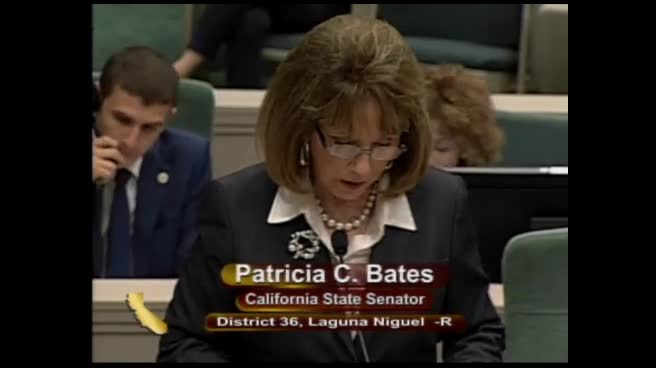 8MIN
Assembly Standing Committee on Appropriations
 2MIN
Assembly Standing Committee on Revenue and Taxation
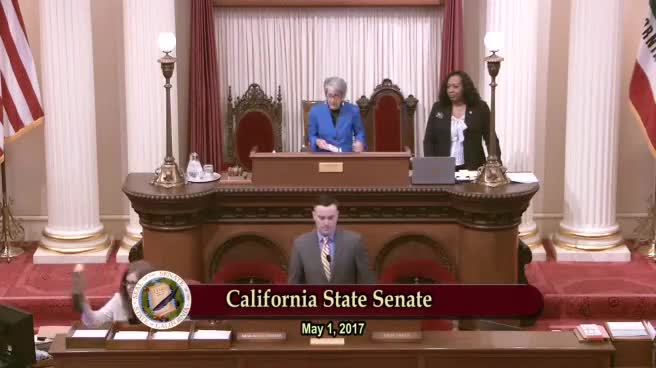 4MIN
Senate Floor
 5MIN
Senate Standing Committee on Appropriations


Bill Co-Author(s):