SB 199: The California Health Care Cost, Quality, and Equity Atlas.
- Session Year: 2017-2018
- House: Senate
- Latest Version Date: 2017-03-30
Existing law requires the California Health and Human Services Agency to research the options for developing a cost, quality, and equity data atlas. Existing law requires the research to include certain topics, including, among others, identification of key data submitters and submitters, a comparative analysis of potential models used in other states. states, and an assessment of types of governance structures that incorporate representatives of health care stakeholders and experts. Existing law requires the agency to have made the results of the above-described research available to the public no later than March 1, 2017, by submitting a report to the Assembly and Senate Committees on Health.
This bill would require the Secretary of California Health and Human Services, in furtherance of the goal of creating the California Health Care Cost, Quality, and Equity Atlas, to convene an advisory committee composed of a broad spectrum of health care stakeholders and experts, as specified. The bill would require the secretary to charge the advisory committee with identifying the type of data, purpose of use, and entities and individuals that are required to report to, or that may have access to, a health care cost, quality, and equity atlas, and with developing a set of recommendations based on specified findings of the March 1, 2017, report.
This bill would delete the above requirements and would instead require certain health care entities, including health care service plans, health insurers, and health care providers to provide specified information to the Secretary of California Health and Human Services, including, but not limited to, utilization data and health care pricing information. The bill would authorize the secretary to report a health care entity that fails to comply with the above-described requirement to the health care entitys regulating agency and would authorize the regulating agency to enforce that requirement using its existing enforcement procedures.This bill would require all data disclosures made pursuant to these provisions to comply with all applicable state and federal laws for the protection of the privacy, security, and confidentiality of data and would prohibit the disclosure of any unaggregated, individually identifiable health information or medical information. The bill would also require individually identifiable health information and medical information to be protected by security measures, including, but not limited to, encryption. The bill would require that certain confidentially negotiated contract terms be protected in data disclosures made pursuant to these provisions and would prohibit certain individually identifiable proprietary contract information from being disclosed in an unaggregated format. The bill would authorize the secretary to enter into contracts or agreements to share the information collected, under prescribed conditions.This bill would also require the secretary to convene an advisory committee composed of a broad spectrum of health care stakeholders and experts, as specified, to identify the type of data, purpose of use, and entities and individuals that are required to report to, or that may have access to, a health care cost, quality, and equity database. The bill would require the secretary to arrange for the preparation of a report to the Legislature and the Governor, to be submitted by January 1, 2020, that examines and addresses specified issues, including, among others, containing the cost of health care services and coverage and improving the quality and medical appropriateness of health care. The bill would prohibit members of the committee from receiving a per diem or travel expense reimbursement, or any other expense reimbursement.Existing constitutional provisions require that a statute that limits the right of access to the meetings of public bodies or the writings of public officials and agencies be adopted with findings demonstrating the interest protected by the limitation and the need for protecting that interest.This bill would make legislative findings to that effect.Existing law requires the California Health and Human Services Agency to research the options for developing a cost, quality, and equity data atlas. Existing law requires the research to include certain topics, including, among others, identification of key data submitters and a comparative analysis of potential models used in other states.
This bill would delete the above requirements and would instead require certain health care entities, including health care service plans, health insurers, and health care providers to provide specified information to the Secretary of California Health and Human Services, including, but not limited to, utilization data and health care pricing information. The bill would authorize the secretary to report a health care entity that fails to comply with the above-described requirement to the health care entitys regulating agency and would authorize the regulating agency to enforce that requirement using its existing enforcement procedures.
This bill would require all data disclosures made pursuant to these provisions to comply with all applicable state and federal laws for the protection of the privacy, security, and confidentiality of data and would prohibit the disclosure of any unaggregated, individually identifiable health information or medical information. The bill would also require individually identifiable health information and medical information to be protected by security measures, including, but not limited to, encryption. The bill would require that certain confidentially negotiated contract terms be protected in data disclosures made pursuant to these provisions and would prohibit certain individually identifiable proprietary contract information from being disclosed in an unaggregated format. The bill would authorize the secretary to enter into contracts or agreements to share the information collected, under prescribed conditions.
This bill would also require the secretary to convene an advisory committee composed of a broad spectrum of health care stakeholders and experts, as specified, to identify the type of data, purpose of use, and entities and individuals that are required to report to, or that may have access to, a health care cost, quality, and equity database. The bill would require the secretary to arrange for the preparation of a report to the Legislature and the Governor, to be submitted by January 1, 2020, that examines and addresses specified issues, including, among others, containing the cost of health care services and coverage and improving the quality and medical appropriateness of health care. The bill would prohibit members of the committee from receiving a per diem or travel expense reimbursement, or any other expense reimbursement.
Existing constitutional provisions require that a statute that limits the right of access to the meetings of public bodies or the writings of public officials and agencies be adopted with findings demonstrating the interest protected by the limitation and the need for protecting that interest.
This bill would make legislative findings to that effect.
(a)In furtherance of the goal of creating the California Health Care Cost, Quality, and Equity Atlas, the Secretary of California Health and Human Services shall convene an advisory committee composed of a broad spectrum of health care stakeholders and experts, including, but not limited to, all of the following:
(1)Health care service plans, including specialized health care service plans.
(2)Insurers that have a certificate of authority from the Insurance Commissioner to provide health insurance, as defined in Section 106 of the Insurance Code.
(3)Suppliers, as defined in paragraph (3) of subdivision (b) of Section 1367.50.
(4)Providers, as defined in paragraph (2) of subdivision (b) of Section 1367.50.
(5)Self-insured employers.
(6)Multiemployer self-insured plans that are responsible for paying for health care services provided to beneficiaries or the trust administrator for a multiemployer self-insured plan.
(7)Businesses that purchase health care coverage for their employees.
(8)Organized labor.
(9)Consumers.
(b)(1) The secretary shall charge the advisory committee with the task of identifying the type of data, purpose of use, and entities and individuals that are required to report to, or that may have access to, a health care cost, quality, and equity atlas.
(2)The advisory committee shall hold public meetings with stakeholders, solicit input, and set its own meeting agendas. Meetings of the advisory committee are subject to the Bagley-Keene Open Meeting Act (Article 9 (commencing with Section 11120) of Chapter 1 of Part 1 of Division 3 of Title 2 of the Government Code).
(c)The advisory committee shall develop recommendations based on the findings of the report required pursuant to Section 127670, including, but not limited to, all of the following:
(1)The type of technology solutions identified in the report required pursuant to Section 127670, including building a new database or leveraging existing databases, or developing a network of networks, as described in the report, to facilitate a hybrid version of the two options.
(2)Prioritization of use cases described in the report.
(3)Identification of financing mechanisms for the creation and sustainability of the system, as identified in the report.
(4)Identification of a governance structure.
(d)Notwithstanding any other law, the members of the advisory committee shall not receive per diem or travel expense reimbursement, or any other expense reimbursement.
SECTION 1.It is the intent of the Legislature in enacting this act to make cost and quality data available and to encourage health care service plans, health insurers, and providers to develop innovative approaches, services, and programs that may have the potential to deliver health care that is both cost effective and responsive to the needs of enrollees and insureds, including recognizing the diversity of California and the impact of social determinants of health.SEC. 2.Chapter 8 (commencing with Section 127670) of Part 2 of Division 107 of the Health and Safety Code, as added by Section 3 of Chapter 727 of the Statutes of 2016, is repealed.SEC. 3.Chapter 8 (commencing with Section 127670) is added to Part 2 of Division 107 of the Health and Safety Code, to read:8.California Health Care Cost, Quality, and Equity Database127670.(a)(1)Solely for the purpose of developing information for inclusion in a health care cost, quality, and equity database, and consistent with paragraph (9) of subdivision (b) of Section 56.10 of the Civil Code, a health care service plan, including a specialized health care service plan, an insurer licensed to provide health insurance, as defined in Section 106 of the Insurance Code, a supplier, as defined in paragraph (3) of subdivision (b) of Section 1367.50, or a provider, as defined in paragraph (2) of subdivision (b) of Section 1367.50, shall, and a self-insured employer, a multiemployer self-insured plan that is responsible for paying for health care services provided to beneficiaries, and the trust administrator for a multiemployer self-insured plan may, provide all of the following to the Secretary of California Health and Human Services:(A)Utilization data from the health care service plans and insurers medical, dental, and pharmacy claims or, in the case of entities that do not use claims data, including, but not limited to, integrated delivery systems, encounter data consistent with the core set of data elements for data submission proposed by the All-Payer Claims Database Council, the University of New Hampshire, and the National Association of Health Data Organizations.(B)Pricing information for health care items, services, and medical and surgical episodes of care gathered from allowed charges for covered health care items and services or, in the case of entities that do not use or produce individual claims, price information that is the best possible proxy to pricing information for health care items, services, and medical and surgical episodes of care available in lieu of actual cost data to allow for meaningful comparisons of provider prices and treatment costs.(C)Information sufficient to determine the impacts of social determinants of health, including age, gender, race, ethnicity, limited English proficiency, sexual orientation and gender identity, ZIP Code, and any other factors for which there is peer-reviewed evidence.(2)(A)The secretary may report an entitys failure to comply with paragraph (1) to the entitys regulating agency.(B)The regulating agency of an entity described in paragraph (1) may enforce paragraph (1) using its existing enforcement procedures. Notwithstanding any other law, moneys collected pursuant to this authorization shall be subject to appropriation by the Legislature, and the failure to comply with paragraph (1) is not a crime.(b)(1)(A)Subject to paragraph (9) of subdivision (b) of Section 56.10 of the Civil Code, all uses and disclosures of data made pursuant to this section shall comply with all applicable state and federal laws for the protection of the privacy and security of data, including, but not limited to, the Confidentiality of Medical Information Act (Part 2.6 (commencing with Section 56) of Division 1 of the Civil Code), the Information Practices Act of 1977 (Chapter 1 (commencing with Section 1798) of Title 1.8 of Part 4 of Division 3 of the Civil Code), Title 1.81 (commencing with Section 1798.80) of Part 4 of Division 3 of the Civil Code, and the federal Health Insurance Portability and Accountability Act of 1996 (Public Law 104-191), and the federal Health Information Technology for Economic and Clinical Health Act, Title XIII of the federal American Recovery and Reinvestment Act of 2009 (Public Law 111-5), and implementing regulations.(B)Use and disclosure of data pursuant to this section shall be consistent with privacy and security protections for individually identifiable health information and medical information under state and federal law, including any applicable exceptions to the requirement to obtain patient authorization, including, but not limited to, paragraph (9) of subdivision (b) of, and paragraph (7) of subdivision (c) of, Section 56.10 of the Civil Code.(2)(A)All policies and protocols developed pursuant to this section shall ensure that the privacy, security, and confidentiality of individually identifiable health information and medical information is protected. The secretary shall not disclose any unaggregated, individually identifiable health information or medical information and shall develop a protocol for assessing the risk of reidentification stemming from disclosure of any health information and medical information that is aggregated, individually identifiable health information, or medical information. This paragraph does not preclude sharing individually identifiable health information that is not aggregated with researchers for research purposes, consistent with paragraph (7) of subdivision (c) of Section 56.10 of the Civil Code.(B)For the purposes of this paragraph, the following terms have the following meanings:(i)Individually identifiable health information has the same meaning as in Section 160.103 of Title 45 of the Code of Federal Regulations.(ii)Medical information has the same meaning as in Section 56.05 of the Civil Code.(3)Confidentially negotiated contract terms contained in a contract between a health care service plan or insurer and a provider or supplier shall be protected in any public disclosure of data made pursuant to this section. Individually identifiable proprietary contract information included in a contract between a health care service plan or insurer and a provider or supplier shall not be disclosed in an unaggregated format.(c)The secretary may enter into contracts or agreements to share the information collected under this section for the purposes of this chapter, provided that any use of that information complies with the requirements of this section.(d)(1)The agency administering the California Health Care Cost, Quality, and Equity Database shall adopt rigorous standards of security protection to ensure as nearly as possible that the information contained in and collected for the purposes of the California Health Care Cost, Quality, and Equity Database is not compromised. This shall include, but is not limited to, requiring encryption.(2)For the purposes of paragraph (1), the term encryption means the protection of data in electronic form, in storage or in transit, using an encryption technology that has been generally accepted by experts in the field of information security that renders data indecipherable in the absence of associated cryptographic keys necessary to enable decryption of the data. Encryption includes appropriate management and safeguards of cryptographic keys to protect the integrity of the encryption.(e)For purposes of this section, the California Health and Human Services Agency is an agency subject to Chapter 1 (commencing with Section 1798) of Title 1.8 of Part 4 of Division 3 of the Civil Code.127672.(a)The secretary shall convene an advisory committee, composed of a broad spectrum of health care stakeholders and experts, including, but not limited to, representatives of the entities that are required to provide information pursuant to subdivision (a) of Section 127670 and representatives of purchasers, including, but not limited to, businesses, organized labor, and consumers, to identify the type of data, purpose of use, and entities and individuals that are required to report to, or that may have access to, a health care cost, quality, and equity database. The advisory committee shall hold public meetings with stakeholders, solicit input, and set its own meeting agendas. Meetings of the advisory committee are subject to the Bagley-Keene Open Meeting Act (Article 9 (commencing with Section 11120) of Chapter 1 of Part 1 of Division 3 of Title 2 of the Government Code).(b)The secretary shall arrange for the preparation of a report, which shall be submitted to the Legislature and the Governor, on or before January 1, 2020, based on the findings of the advisory committee, including input from the public meetings, that shall, at a minimum, examine and address the following issues:(1)Assessing California health care needs and available resources.(2)Containing the cost of health care services and coverage.(3)Improving the quality and medical appropriateness of health care.(4)Reducing health disparities and addressing the social determinants of health.(5)Increasing the transparency of health care costs and the relative efficiency with which care is delivered.(6)Use of disease management, wellness, prevention, and other innovative programs to keep people healthy, reduce disparities and costs, and improve health outcomes for all populations.(7)Efficient utilization of prescription drugs and technology.(8)Reducing unnecessary, inappropriate, and wasteful health care.(9)Educating consumers in the use of health care information.(c)(1)A report submitted under subdivision (b) shall be submitted in compliance with Section 9795 of the Government Code.(2)The requirement for submitting a report pursuant to subdivision (b) is inoperative on July 1, 2023, pursuant to Section 10231.5 of the Government Code.(d)Notwithstanding any other law, the members of the advisory committee shall not receive per diem or travel expense reimbursement, or any other expense reimbursement.SEC. 4.The Legislature finds and declares that Section 3 of this act, which adds Section 127670 of the Health and Safety Code, imposes a limitation on the publics right of access to the meetings of public bodies or the writings of public officials and agencies within the meaning of Section 3 of Article I of the California Constitution. Pursuant to that constitutional provision, the Legislature makes the following findings to demonstrate the interest protected by this limitation and the need for protecting that interest: In order to protect confidential and proprietary information submitted to the secretary, it is necessary for that information to remain confidential.It is the intent of the Legislature in enacting this act to make cost and quality data available and to encourage health care service plans, health insurers, and providers to develop innovative approaches, services, and programs that may have the potential to deliver health care that is both cost effective and responsive to the needs of enrollees and insureds, including recognizing the diversity of California and the impact of social determinants of health.
SEC. 2.Chapter 8 (commencing with Section 127670) of Part 2 of Division 107 of the Health and Safety Code, as added by Section 3 of Chapter 727 of the Statutes of 2016, is repealed.SEC. 3.Chapter 8 (commencing with Section 127670) is added to Part 2 of Division 107 of the Health and Safety Code, to read:8.California Health Care Cost, Quality, and Equity Database127670.(a)(1)Solely for the purpose of developing information for inclusion in a health care cost, quality, and equity database, and consistent with paragraph (9) of subdivision (b) of Section 56.10 of the Civil Code, a health care service plan, including a specialized health care service plan, an insurer licensed to provide health insurance, as defined in Section 106 of the Insurance Code, a supplier, as defined in paragraph (3) of subdivision (b) of Section 1367.50, or a provider, as defined in paragraph (2) of subdivision (b) of Section 1367.50, shall, and a self-insured employer, a multiemployer self-insured plan that is responsible for paying for health care services provided to beneficiaries, and the trust administrator for a multiemployer self-insured plan may, provide all of the following to the Secretary of California Health and Human Services:
(A)Utilization data from the health care service plans and insurers medical, dental, and pharmacy claims or, in the case of entities that do not use claims data, including, but not limited to, integrated delivery systems, encounter data consistent with the core set of data elements for data submission proposed by the All-Payer Claims Database Council, the University of New Hampshire, and the National Association of Health Data Organizations.
(B)Pricing information for health care items, services, and medical and surgical episodes of care gathered from allowed charges for covered health care items and services or, in the case of entities that do not use or produce individual claims, price information that is the best possible proxy to pricing information for health care items, services, and medical and surgical episodes of care available in lieu of actual cost data to allow for meaningful comparisons of provider prices and treatment costs.
(C)Information sufficient to determine the impacts of social determinants of health, including age, gender, race, ethnicity, limited English proficiency, sexual orientation and gender identity, ZIP Code, and any other factors for which there is peer-reviewed evidence.
(2)(A)The secretary may report an entitys failure to comply with paragraph (1) to the entitys regulating agency.
(B)The regulating agency of an entity described in paragraph (1) may enforce paragraph (1) using its existing enforcement procedures. Notwithstanding any other law, moneys collected pursuant to this authorization shall be subject to appropriation by the Legislature, and the failure to comply with paragraph (1) is not a crime.
(b)(1)(A)Subject to paragraph (9) of subdivision (b) of Section 56.10 of the Civil Code, all uses and disclosures of data made pursuant to this section shall comply with all applicable state and federal laws for the protection of the privacy and security of data, including, but not limited to, the Confidentiality of Medical Information Act (Part 2.6 (commencing with Section 56) of Division 1 of the Civil Code), the Information Practices Act of 1977 (Chapter 1 (commencing with Section 1798) of Title 1.8 of Part 4 of Division 3 of the Civil Code), Title 1.81 (commencing with Section 1798.80) of Part 4 of Division 3 of the Civil Code, and the federal Health Insurance Portability and Accountability Act of 1996 (Public Law 104-191), and the federal Health Information Technology for Economic and Clinical Health Act, Title XIII of the federal American Recovery and Reinvestment Act of 2009 (Public Law 111-5), and implementing regulations.
(B)Use and disclosure of data pursuant to this section shall be consistent with privacy and security protections for individually identifiable health information and medical information under state and federal law, including any applicable exceptions to the requirement to obtain patient authorization, including, but not limited to, paragraph (9) of subdivision (b) of, and paragraph (7) of subdivision (c) of, Section 56.10 of the Civil Code.
(2)(A)All policies and protocols developed pursuant to this section shall ensure that the privacy, security, and confidentiality of individually identifiable health information and medical information is protected. The secretary shall not disclose any unaggregated, individually identifiable health information or medical information and shall develop a protocol for assessing the risk of reidentification stemming from disclosure of any health information and medical information that is aggregated, individually identifiable health information, or medical information. This paragraph does not preclude sharing individually identifiable health information that is not aggregated with researchers for research purposes, consistent with paragraph (7) of subdivision (c) of Section 56.10 of the Civil Code.
(B)For the purposes of this paragraph, the following terms have the following meanings:
(i)Individually identifiable health information has the same meaning as in Section 160.103 of Title 45 of the Code of Federal Regulations.
(ii)Medical information has the same meaning as in Section 56.05 of the Civil Code.
(3)Confidentially negotiated contract terms contained in a contract between a health care service plan or insurer and a provider or supplier shall be protected in any public disclosure of data made pursuant to this section. Individually identifiable proprietary contract information included in a contract between a health care service plan or insurer and a provider or supplier shall not be disclosed in an unaggregated format.
(c)The secretary may enter into contracts or agreements to share the information collected under this section for the purposes of this chapter, provided that any use of that information complies with the requirements of this section.
(d)(1)The agency administering the California Health Care Cost, Quality, and Equity Database shall adopt rigorous standards of security protection to ensure as nearly as possible that the information contained in and collected for the purposes of the California Health Care Cost, Quality, and Equity Database is not compromised. This shall include, but is not limited to, requiring encryption.
(2)For the purposes of paragraph (1), the term encryption means the protection of data in electronic form, in storage or in transit, using an encryption technology that has been generally accepted by experts in the field of information security that renders data indecipherable in the absence of associated cryptographic keys necessary to enable decryption of the data. Encryption includes appropriate management and safeguards of cryptographic keys to protect the integrity of the encryption.
(e)For purposes of this section, the California Health and Human Services Agency is an agency subject to Chapter 1 (commencing with Section 1798) of Title 1.8 of Part 4 of Division 3 of the Civil Code.
127672.(a)The secretary shall convene an advisory committee, composed of a broad spectrum of health care stakeholders and experts, including, but not limited to, representatives of the entities that are required to provide information pursuant to subdivision (a) of Section 127670 and representatives of purchasers, including, but not limited to, businesses, organized labor, and consumers, to identify the type of data, purpose of use, and entities and individuals that are required to report to, or that may have access to, a health care cost, quality, and equity database. The advisory committee shall hold public meetings with stakeholders, solicit input, and set its own meeting agendas. Meetings of the advisory committee are subject to the Bagley-Keene Open Meeting Act (Article 9 (commencing with Section 11120) of Chapter 1 of Part 1 of Division 3 of Title 2 of the Government Code).
(b)The secretary shall arrange for the preparation of a report, which shall be submitted to the Legislature and the Governor, on or before January 1, 2020, based on the findings of the advisory committee, including input from the public meetings, that shall, at a minimum, examine and address the following issues:
(1)Assessing California health care needs and available resources.
(2)Containing the cost of health care services and coverage.
(3)Improving the quality and medical appropriateness of health care.
(4)Reducing health disparities and addressing the social determinants of health.
(5)Increasing the transparency of health care costs and the relative efficiency with which care is delivered.
(6)Use of disease management, wellness, prevention, and other innovative programs to keep people healthy, reduce disparities and costs, and improve health outcomes for all populations.
(7)Efficient utilization of prescription drugs and technology.
(8)Reducing unnecessary, inappropriate, and wasteful health care.
(9)Educating consumers in the use of health care information.
(c)(1)A report submitted under subdivision (b) shall be submitted in compliance with Section 9795 of the Government Code.
(2)The requirement for submitting a report pursuant to subdivision (b) is inoperative on July 1, 2023, pursuant to Section 10231.5 of the Government Code.
(d)Notwithstanding any other law, the members of the advisory committee shall not receive per diem or travel expense reimbursement, or any other expense reimbursement.
SEC. 4.The Legislature finds and declares that Section 3 of this act, which adds Section 127670 of the Health and Safety Code, imposes a limitation on the publics right of access to the meetings of public bodies or the writings of public officials and agencies within the meaning of Section 3 of Article I of the California Constitution. Pursuant to that constitutional provision, the Legislature makes the following findings to demonstrate the interest protected by this limitation and the need for protecting that interest:
In order to protect confidential and proprietary information submitted to the secretary, it is necessary for that information to remain confidential.
|
Date
|
Status
|
|---|---|
| Sep 1, 2017 | September 1 hearing: Held in committee and under submission. |
| Jul 19, 2017 | July 19 set for first hearing. Placed on APPR. suspense file. |
| Jun 27, 2017 | From committee: Do pass and re-refer to Com. on APPR. with recommendation: To consent calendar. (Ayes 10. Noes 0.) (June 27). Re-referred to Com. on APPR. |
| Jun 21, 2017 | From committee: Do pass and re-refer to Com. on P. & C.P. with recommendation: To consent calendar. (Ayes 15. Noes 0.) (June 20). Re-referred to Com. on P. & C.P. |
| Jun 1, 2017 | Referred to Coms. on HEALTH and P. & C.P. |
| May 23, 2017 | In Assembly. Read first time. Held at Desk. |
| May 22, 2017 | Read third time. Passed. (Ayes 37. Noes 0. Page 1147.) Ordered to the Assembly. |
| May 16, 2017 | Read second time. Ordered to third reading. |
| May 15, 2017 | From committee: Be ordered to second reading pursuant to Senate Rule 28.8. |
| May 4, 2017 | Set for hearing May 15. |
| Apr 27, 2017 | Withdrawn from committee. |
| Apr 27, 2017 | From committee: Do pass and re-refer to Com. on JUD. (Ayes 9. Noes 0. Page 886.) (April 26). Re-referred to Com. on JUD. |
| Apr 4, 2017 | Set for hearing April 26. |
| Apr 3, 2017 | April 19 set for first hearing canceled at the request of author. |
| Mar 30, 2017 | From committee with author's amendments. Read second time and amended. Re-referred to Com. on HEALTH. |
| Mar 15, 2017 | Set for hearing April 19. |
| Feb 9, 2017 | Referred to Coms. on HEALTH and JUD. |
| Jan 31, 2017 | From printer. May be acted upon on or after March 2. |
| Jan 30, 2017 | Introduced. Read first time. To Com. on RLS. for assignment. To print. |
|
Date
|
Description
|
Location
|
Votes
|
|
|---|---|---|---|---|
| Jun 27, 2017 | Do pass and be re-referred to the Committee on [Appropriations] with recommendation: To Consent Calendar | Assembly Standing Committee on Privacy and Consumer Protection |
Passed |
|
| Jun 20, 2017 | Do pass and be re-referred to the Committee on [Privacy and Consumer Protection] with recommendation: To Consent Calendar | Assembly Standing Committee on Health |
Passed |
|
| May 22, 2017 | Senate 3rd Reading SB199 Hernandez et al. | Senate Floor |
Passed |
|
| Apr 26, 2017 | Do pass, but first be re-referred to the Committee on [Judiciary] | Senate Standing Committee on Health |
Passed |
This list shows positions taken on this bill by organizations on the date displayed, which is linked to the original source.
Positions by individuals are not included.
|
Organization
|
Position
|
Date
|
|---|---|---|
| California Association Of Health Plans | * Support | Apr 26, 2017 |
| California Labor Federation | ** Support | Jun 23, 2017 |
| California Pan-Ethnic Health Network | * Support | Apr 26, 2017 |
| California Teachers Association | ** Support | Jun 23, 2017 |
| City and County of San Francisco | ** Support | Jun 23, 2017 |
| Consumers Union | ** Support | Jun 23, 2017 |
| Health Access California | ** Support | Jun 23, 2017 |
| san francisco health service system | ** Support | Jun 15, 2017 |
| SEIU California | * Support | Apr 26, 2017 |
Date of Hearing: July 19, 2017
ASSEMBLY COMMITTEE ON APPROPRIATIONS
Lorena Gonzalez Fletcher, Chair
SBPCA Bill Id:SB 199
Author:(Hernandez) – As Amended Ver:March 30, 2017
Policy Committee: | Health | Vote: | 15 - 0 |
Privacy and Consumer Protection | 10 - 0 | ||
|
|
Urgency: No State Mandated Local Program: No Reimbursable: No
SUMMARY:
This bill requires the California Health and Human Services Agency (CHHSA) to convene an advisory committee to make recommendations related to a statewide health care cost, quality, and equity atlas.
FISCAL EFFECT:
Costs to CHHSA to staff the advisory committee of $40,000 GF annually for 1-2 years.
COMMENTS:
- Purpose. According to the author, a statewide health care cost, quality, and equity atlas would inform the state in its efforts to constrain health care costs, to improve quality, and to reduce disparities. This bill is a logical next step in moving forward with planning and implementation of such a database. This bill is supported by consumer and health care advocates, and has no opposition.
- Background. Given the high and growing cost of health care, there is considerable interest in transparency and containment of health care costs among policymakers, payers, purchasers, and the public. Nearly 20 other states consolidate data on health care services from multiple payers through large-scale databases called All-Payer Claims Databases, or APCDs. Prior California legislation has attempted to establish a system in the state called a health care atlas, which is similar in concept to an APCD but has a slightly broader focus that includes quality and health disparities. The administration has also stated, in a previous grant proposal to the federal government, that such an atlas is a critical building block in the effort to transform and improve the health care system.
CHHSA submitted a report in March 2017, pursuant to SB 1159 (Hernández), Chapter 727, Statutes of 2016, which required CHHSA to research the options for developing a cost, quality, and equity data atlas. The report provided a comparative analysis of potential models from other states, potential use cases, and an analysis of current capabilities, and raised a host of issues including staffing, governance, funding, and others. This bill requires CHHSA to convene an advisory committee to evaluate the various models raised in the report and to issue recommendations with respect to a technology solution, prioritization of use cases, identification of a funding mechanism, and identification of a governance structure.
- Prior Legislation. SB 26 (Hernandez) of 2015, and SB 1322 (Hernandez) of 2014, each would have required the state to develop a health care atlas. SB 26 was held in Senate Appropriations Committee, on Suspense. SB 1322 was held in this committee, on Suspense.
AB 1558 (Roger Hernández) of 2014, would have created the California Health Data Organization within the University of California to organize data provided by health plans and insurers on a website to allow consumers to compare the prices paid for procedures, as specified. AB 1558 was held in Senate Appropriations Committee, on Suspense.
Analysis Prepared by: Lisa Murawski / APPR. / (916) 319-2081
Date of Hearing: June 27, 2017
ASSEMBLY COMMITTEE ON PRIVACY AND CONSUMER PROTECTION
Ed Chau, Chair
SBPCA Bill Id:SB 199
Author:(Hernandez) – As Amended Ver:March 30, 2017
SENATE VOTE: 37-0
SUBJECT: The California Health Care Cost, Quality, and Equity Atlas
SUMMARY: Requires the California Health and Human Services Agency (CHHSA) to convene an advisory committee comprised of health care stakeholders and experts to identify the type of data, purpose of use and entities that are required to report to or have access to a health care cost, quality and equity database. Specifically, this bill:
- Requires CHHSA to convene an advisory committee comprised of health care service plans, insurers, suppliers, providers, self-insured employers, multiemployer self-insured plans, businesses that purchase health care coverage, organized labor and consumers.
- Requires the advisory committee to identify the type of data, purpose of use, and entities and individuals that are required to report, or that may have access to a health care cost, quality and equity database.
- Authorizes the advisory committee to hold public meetings with stakeholders, solicit input, and set its own agendas.
- Requires the advisory committee to hold public meetings that are subject to the Bagley-Keen Open Meeting Act.
- Requires the advisory committee to develop recommendations based on the findings of a separate report required under existing law, which reported options for developing a database, called the California Health Care Cost, Quality and Equity Atlas (Atlas).
- Requires the recommendations to address the type of technology solutions identified, prioritization of uses cases, identification of financing mechanisms, and a governance structure for the Atlas, as specified.
- Prohibits the advisory committee from receiving per diem, travel expense reimbursement or any other expense reimbursement.
EXISTING LAW:
- Requires CHHSA to research the options for developing the Atlas, and requires that research to include:
- Identification of key data submitters, as specified;
- A comparative analysis of potential models used in other states and an assessment of information that should be included in the Atlas, as specified;
- An assessment of types of governance structures that incorporate representatives of health care stakeholders and experts, as specified;
- Recommendations on potential funding approaches to support the activities of the Atlas that recognize federal and state confidentiality of medical information laws;
- An assessment on the extent to which the Atlas could be developed in conjunction with existing public or private activities, as specified; and,
- Consultation with a broad spectrum of health care stakeholders and experts, as specified. (Health and Safety Code (HSC) Section 127670)
- Permits CHHSA to enter into contracts or agreements to conduct the research, and requires CHHSA to make the results available to the public no later than March 1, 2017, by submitting a report to the Assembly and Senate Committees on Health. (HSC 127670)
- Prohibits, under the federal Health Insurance Portability and Accountability Act (HIPAA), a covered entity (health plan, health care provider, and health care clearing house) from disclosing medical information, except as specified or as authorized by the patient in writing. (45 Code of Federal Regulations (C.F.R.) Section. 164.500 et seq.)
- Prohibits, under the state Confidentiality of Medical Information Act (CMIA), providers of health care, health care service plans, or contractors, as defined, from sharing medical information without the patient’s written authorization, subject to certain exceptions. (Civil Code Section 56 et seq.)
FISCAL EFFECT: According to the Senate Appropriations Committee, pursuant to Senate Rule 28.8, any additional state costs are not significant, and do not and will not require the appropriation of additional state funds, and the bill will cause no significant reduction in revenues.
COMMENTS:
- Purpose of this bill: This bill is intended to move California another step toward developing a statewide database that collects and analyzes medical and pharmaceutical claims from private and public payers by requiring an advisory committee to make high-level recommendations for its design and implementation. SB 199 is author-sponsored.
- Author’s statement: According to the author, “Over the past three years, the Senate Committee on Health convened several health care experts to discuss factors that contribute to the growing cost of health care in California and efforts to make care more affordable. During these series of hearings, the Committee heard testimony about some major cost drivers in the health care system, including pharmaceuticals, hospital costs, and the effects of geographic location on contracting; and about the effect of health care costs on consumers.”
“The hearings examined policy solutions to control health care costs as California’s successful implementation of the Affordable Care Act (ACA) has resulted in a 91% coverage rate. Testimony presented at the hearings illustrated the complexity of the health care market and the array of approaches to containing costs. In addition to expanded coverage, the author believes that, like past health care reform efforts, a long-term, comprehensive action agenda for California policymakers is necessary to ensure that health care costs are appropriate and health care premiums are affordable. This bill moves California further towards making valuable information related to cost and quality transparent to encourage our health care system to provide care that is safe, medically effective, patient-centered, timely, efficient, affordable and equitable.”
- Health care spending is on the rise: According to the Centers for Medicare and Medicaid Services the National Health Expenditures Highlights report shows that, in 2015, U.S. health care spending increased 5.8% to reach $3.2 trillion, or $9,990 per person. The coverage expansion that began in 2014 as a result of the ACA continued to have an impact on the growth of health care spending in 2015. Additionally, faster growth in total health care spending in 2015 was driven by stronger growth in spending for private health insurance, hospital care, physician and clinical services, and the continued strong growth in Medicaid and retail prescription drug spending. The overall share of the U.S. economy devoted to health care spending was 17.8% in 2015, up from 17.4% in 2014.
Multiple other states have established databases that collect health insurance claim information from all health care payers into a statewide database known as an “all-payer claims database” (APCD). The author contends that establishing the Atlas, which would function as an APCD, will help identify ways to contain health care costs while improving access to health care and keeping premiums affordable for Californians. - California Health Care Cost, Quality, and Equity Atlas (Atlas): In March 2017, CHHSA released the report required by SB 1159 (Hernandez, Chapter 727, Statutes of 2016), which summarized research and was meant to provide policy makers with a conceptual framework of what is required to develop the Atlas. The report provided an assessment of the efforts underway in other states and existing public and private California systems to determine their ability to submit data to the Atlas, or be utilized, in its implementation.
CHSSA looked at APCD models in Colorado, Connecticut, Massachusetts, Minnesota, New York, Pennsylvania, Utah, and Washington and found that each state has used a different implementation approach, though there are a number of common themes and lessons learned among the states analyzed. The report found that no single system in California has all the necessary capabilities for implementing the Atlas; however, the report identified systems that could be used to initiate a phased implementation.
The report outlined several implementation issues to consider: First, to establish the Atlas, CHHSA needs authorizing legislation defining a governance structure. Second, a sustainable source of revenue is needed to create and maintain the Atlas. Many states have used grant funding for implementation and sustainability, while others use state general funds. Third, and perhaps the biggest consideration to the Atlas implementation is deciding on a technology solution. This bill seeks to create a stakeholder consensus on each of these issues and provide recommendations for the next steps of creating a California APCD.
- Privacy and patient data-sharing: APCD models in other states have similar procedures related to the release of data to researchers or other government agencies. Some states that do release data to non-government entities must follow the CFR and HIPAA rules, and will only release data after completing an application and data use agreement. The CHHSA report recommends that in order to appropriately track people over time in a data Atlas, protected health information must be used.
This bill requires that the advisory committee make recommendations to identify the type of data, purpose of use and entities that should be required to report or have access to the database. The bill does not mention privacy or security considerations, but any ACPD would be bound by federal HIPAA standards for health information, as well as state CMIA requirements, such that patient data could not be disclosed without consent or de-identification. - Arguments in support: According to American Federation of State, County and Municipal Employees (AFSCME), AFL-CIO, “SB 199 will increase our understanding of the real causes of health care cost and quality concerns by requiring health insurers and providers to provide specified information for the purposes of implementing a health care cost and quality database. It creates an advisory committee, composed of a broad spectrum of health care stakeholders and experts to research and recommend appropriate and timely strategies for promoting high-quality care and containing health care costs and to make recommendations regarding the establishment, implementation and ongoing administration of a database.”
- Previous legislation: SB 1159 (Hernandez), Chapter 727, Statutes of 2016, requires CHHSA to research the options for the Atlas that are consistent with the confidentiality of medical information in existing law.
- Double-referral: This bill was double-referred to Assembly Health, where it passed on June 20, 2017, on a 15 to 0 vote.
REGISTERED SUPPORT / OPPOSITION:
Support
American Federation of State, County and Municipal Employees (AFSCME), AFL-CIO
California Labor Federation
California Teachers Association
City and County of San Francisco
Consumers Union
Health Access California
Opposition
None on file.
Analysis Prepared by: Jennifer Chase / P. & C.P. / (916) 319-2200
Date of Hearing: June 20, 2017
ASSEMBLY COMMITTEE ON HEALTH
Jim Wood, Chair
SBPCA Bill Id:SB 199
Author:(Hernandez) – As Amended Ver:March 30, 2017
SENATE VOTE: 37-0
SUBJECT: The California Health Care Cost, Quality, and Equity Atlas.
SUMMARY: Requires the Secretary of the California Health and Human Services Agency (CHHSA), in furtherance of the goal of creating the California Health Care Cost, Quality, and Equity Atlas (Atlas), to convene an advisory committee composed of a broad spectrum of health care stakeholders and experts, as specified, to identify the type of data, purpose of use, and entities and individuals that would report to and have access to the Atlas. Specifically, this bill:
- Requires CHHSA, in furtherance of the goal of creating the Atlas, to convene an advisory committee composed of a broad spectrum of health care stakeholders and experts, including, but not limited to, all of the following:
- Health plans, including specialized health plans;
- Insurers;
- Suppliers, defined as physicians or other health care practitioners, or entities that furnish health care services other than a provider;
- Providers, defined as hospitals, skilled nursing facilities, outpatient rehabilitation facilities, home health agencies, hospices, clinics, or rehabilitation agencies;
- Self-insured employers;
- Multiemployer self-insured plans, as specified;
- Businesses that purchase health care coverage for their employees;
- Organized labor; and,
- Consumers.
- Requires the CHHSA Secretary to charge the advisory committee with the task of identifying the type of data, purpose of use, and entities and individuals that are required to report to, or that will have access to the Atlas.
- Requires the advisory committee to hold public meetings with stakeholders, solicit input, and set its own meeting agendas. Requires the meetings to be subject to the Bagley-Keene Open Meeting Act.
- Requires the advisory committee to develop recommendations based on the findings of the report required under existing law, including, but not limited to:
- The type of technology solutions, including building a new database or leveraging existing databases, or developing a network of networks, to facilitate a hybrid version of the two options;
- Prioritization of use cases, as described;
- Identification of financing mechanisms for the creation and sustainability of the system, as identified; and,
- Identification of a governance structure.
- Prohibits advisory committee members from receiving per diem or travel expense reimbursement, or any other expense reimbursement.
EXISTING LAW:
- Requires CHHSA to research the options for developing an Atlas, and requires that research to include:
- Identification of key data submitters, as specified;
- A comparative analysis of potential models used in other states and an assessment of information that should be included in the Atlas, as specified;
- An assessment of types of governance structures that incorporate representatives of health care stakeholders and experts, as specified;
- Recommendations on potential funding approaches to support the activities of the Atlas that recognize federal and state confidentiality of medical information laws.
- An assessment on the extent to which the Atlas could be developed in conjunction with existing public or private activities, as specified; and,
- Consultation with a broad spectrum of health care stakeholders and experts, as specified.
- Permits CHHSA to enter into contracts or agreements to conduct the research, and requires CHHSA to make the results available to the public no later than March 1, 2017, by submitting a report to the Assembly and Senate Committees on Health.
- Requires, under the Bagley-Keene Open Meeting Act, that all meetings of a state body be open and public and all persons be permitted to attend any meeting, except as provided.
FISCAL EFFECT: According to the Senate Appropriations Committee, pursuant to Senate Rule 28.8, negligible state costs.
COMMENTS:
- PURPOSE OF THIS BILL. According to the author, over the past three years, the Senate Committee on Health convened several health care experts to discuss factors that contribute to the growing cost of health care in California and efforts to make care more affordable. During these series of hearings, the Committee heard testimony about some major cost drivers in the health care system, including pharmaceuticals, hospital costs, and the effects of geographic location on contracting; and, about the effect of health care costs on consumers. The hearings examined policy solutions to control health care costs as California’s successful implementation of the Patient Protection and Affordable Care Act (ACA) has resulted in a 91% coverage rate. Testimony presented at the hearings illustrated the complexity of the health care market and the array of approaches to containing costs. In addition to expanded coverage, the author believes that, like past health care reform efforts, a long-term, comprehensive action agenda for California policymakers is necessary to ensure that health care costs are appropriate and health care premiums are affordable. The author states that this bill moves California further towards making valuable information related to cost and quality transparent to encourage our health care system to provide care that is safe, medically effective, patient-centered, timely, efficient, affordable, and equitable.
- BACKGROUND. According to the Centers for Medicare and Medicaid Services (CMS) National Health Expenditures Highlights, in 2015, U.S. health care spending increased 5.8% to reach $3.2 trillion, or $9,990 per person. The coverage expansion that began in 2014 as a result of the ACA continued to have an impact on the growth of health care spending in 2015. Additionally, faster growth in total health care spending in 2015 was driven by stronger growth in spending for private health insurance, hospital care, physician and clinical services, and the continued strong growth in Medicaid and retail prescription drug spending. The overall share of the U.S. economy devoted to health care spending was 17.8% in 2015, up from 17.4% in 2014.
- All-Payer claims databases. According to the National Conference of State Legislatures, in recent years, a growing number of states have established databases that collect health insurance claims information from all health care payers into a statewide information repository. By December 2016 at least 18 states had enacted “all-payer claims databases” (or APCDs), and of these 16 are operational. APCDs are designed to inform cost containment and quality improvement efforts. Payers include private health insurers, Medicaid, children’s health insurance and state employee health benefit programs, prescription drug plans, dental insurers, self-insured employer plans, and Medicare (where it is available to a state). The databases contain eligibility and claims data (medical, pharmacy, and dental) and are used to report cost, use, and quality information. The data consist of service-level information based on valid claims processed by health payers. Service-level information includes charges and payments, the provider(s) receiving payment, clinical diagnosis and procedure codes, and patient demographics. To mask the identity of patients and ensure privacy, states usually encrypt, aggregate and suppress patient identifiers. States that have been implementing APCDs more recently include Connecticut, Nebraska, New York, Virginia, and West Virginia. States that have had existing voluntary efforts to maintain an APCD include Virginia, Washington, and Wisconsin.
- Existing California initiatives. The California Healthcare Performance Information System (CHPI) is a voluntary physician performance database with statistical analysis that will publish information online. According to the CHPI website, CHPI is building the most robust healthcare database in the State of California. It combines data on the healthcare experiences of more than 12 million people from health plans and Medicare to evaluate the quality and efficiency of medical services. CHPI's current activities build upon six years of performance measurement work conducted by health plans and the Pacific Business Group on Health through the California Physician Performance Initiative. These organizations collected data from Medicare and three private health plans to measure and report the performance of more than 10,000 physicians statewide.
- All-Payer claims databases. According to the National Conference of State Legislatures, in recent years, a growing number of states have established databases that collect health insurance claims information from all health care payers into a statewide information repository. By December 2016 at least 18 states had enacted “all-payer claims databases” (or APCDs), and of these 16 are operational. APCDs are designed to inform cost containment and quality improvement efforts. Payers include private health insurers, Medicaid, children’s health insurance and state employee health benefit programs, prescription drug plans, dental insurers, self-insured employer plans, and Medicare (where it is available to a state). The databases contain eligibility and claims data (medical, pharmacy, and dental) and are used to report cost, use, and quality information. The data consist of service-level information based on valid claims processed by health payers. Service-level information includes charges and payments, the provider(s) receiving payment, clinical diagnosis and procedure codes, and patient demographics. To mask the identity of patients and ensure privacy, states usually encrypt, aggregate and suppress patient identifiers. States that have been implementing APCDs more recently include Connecticut, Nebraska, New York, Virginia, and West Virginia. States that have had existing voluntary efforts to maintain an APCD include Virginia, Washington, and Wisconsin.
In September 2015, the California Department of Insurance, the University of California, San Francisco, and Consumer Reports announced the launch of California Healthcare Compare (CHC), a Web-based tool that intends to offer quality and price information in a consumer-focused Website. CHC allows consumers to compare hospital and medical group quality in the areas of maternity care, hip and knee replacement, back pain, colon cancer screening, and diabetes to help consumers make informed decisions about where to seek care. The website also reveals estimated regional costs for more than 100 different medical procedures or conditions ranging from appendicitis to prostate cancer, illustrating price differences depending on where care is obtained.
The Regional Cost and Quality Atlas is an interactive Website released in July 2016 that tracks performance on six clinical quality measures for the priority health conditions of cancer, diabetes, and asthma; three measures of hospital utilization; and average annual total cost of care per enrollee across 19 California geographic regions (the same regions that had been defined for Covered California). The project is a partnership between the Integrated Healthcare Association (IHA), the California HealthCare Foundation (CHCF), and CHHSA and includes information about care provided in 2013 to nearly two-thirds of the state's total population, or 24 million people. With continued CHCF support, IHA in 2017 will update the atlas with 2015 data, highlighting changes from the 2013 baseline data.
- SB 1159 report. In 2014, the State of California received a federal design grant from CMS. The grant provided funds for a technical feasibility analysis of how California might consider developing a cost and quality database that promotes transparency and monitors trends in health care delivery. In 2016, pursuant to SB 1159 (Hernandez), Chapter 727, Statutes of 2016, the CHHSA began to explore options for the development of the Atlas to identify ways in which cost, quality, and equity data, when utilized together, can support the development of innovative approaches, services, and programs in both the private and public sectors. In March 2017, CHHSA released the report required by SB 1159, which summarized research and was meant to provide policy makers with a conceptual framework of what is required to develop the Atlas. The report was intended to inform the potential design and implementation of the Atlas. The report looked to assess the technical feasibility of the Atlas, which expands upon the concepts of a typical APCD, but attempts to include more than just claims data to help understand and improve the quality and cost of health care delivery. The report assessed eight states where a form of the Atlas was either fully implemented or in varying stages of implementation, including Colorado, Connecticut, Massachusetts, Minnesota, New York, Pennsylvania, Utah, and Washington. Additionally, the report included an analysis of California’s existing capabilities. The report found that no single system in California has all the necessary capabilities for implementing the Atlas; however, there are systems that could be used to initiate a phased implementation.
- SUPPORT. The American Federation of State, County and Municipal Employees state that this bill is an important step to identifying reasons for rising health care costs and effective solutions. Health Access California supports the creation of a cost and quality database to further the quadruple aim of better health, better health care, lower costs, and fewer health disparities.
- DOUBLE-REFERRAL. This bill is double referred; upon passage in this Committee, this bill will be referred to the Assembly Privacy and Consumer Protection Committee.
- PREVIOUS LEGISLATION.
- SB 26 (Hernandez) of 2015 would have required the CHHSA Secretary to, no later than January 1, 2017, use a competitive process to contract, as specified, with one or more independent, nonprofit organizations in order to administer the California Health Care Cost and Quality Database. Would have required the nonprofit organization, no later than January 1, 2019, to make a publicly available, Web-based, searchable database, as specified. Would have required the information and analysis included in the database to be presented in a way that facilitates comparisons of cost, quality, and patient satisfaction across payers, provider organizations, and other suppliers of health care services. SB 1322 was held on the Senate Appropriations Committee suspense file.
- SB 1322 (Hernandez) of 2014, was substantially similar to SB 26. SB 1322 was held on the Assembly Appropriations Committee suspense file.
- SB 1182 (Leno), Chapter 577, Statutes of 2014, requires health plans and insurers to share specified data with purchasers that have 1,000 or more enrollees or that are multiemployer trusts.
- AB 1558 (Roger Hernández) of 2014, would have created the California Health Data Organization within the University of California to organize data provided by health plans and insurers on a Website to allow consumers to compare the prices paid for procedures, as specified. AB 1558 was held on the Senate Appropriations Committee suspense file.
- SB 746 (Leno) of 2013, would have established new data reporting requirements on all health plans applicable to products sold in the large group market and established new specific data reporting requirements related to annual medical trend factors by service category, as well as claims data or de-identified patient-level data, as specified, for a health plan that exclusively contracts with no more than two medical groups in the state to provide or arrange for professional medical services for the enrollees of the plan. SB 746 was vetoed by the Governor, who urged all parties to work together in the effort to make health care costs more transparent.
- SB 1196 (Hernandez), Chapter 869, Statutes of 2011, prohibits a contract between a health plan insurer and a provider or supplier, from prohibiting, conditioning, or in any way restricting the disclosure of claims data related to health care services provided to an enrollee or subscriber of the health plan or carrier, or beneficiaries of any self-funded health coverage arrangement administered by the carrier to a qualified entity, as defined.
- SB 751 (Gaines and Hernandez), Chapter 244, Statutes of 2011, prohibits contracts between health plans or insurers and hospitals from containing any provision that restricts the ability of the health plans or insurers from furnishing information to enrollees or insureds concerning cost range of procedures or the quality of services.
- AB 2389 (Gaines) of 2009, would have prohibited a contract between a health facility and a health plan or insurer from containing a provision that restricts the ability of the health plan or insurer to furnish information on the cost of procedures or health care quality information to enrollees or insureds. AB 2389 died in the Assembly on Concurrence.
- AB 2967 (Lieber) of 2008, would have established a Health Care Cost and Quality Transparency Committee to develop and recommend to the CHHSA Secretary a health care cost and quality transparency plan, and would have made the CHHSA Secretary responsible for the timely implementation of the transparency plan. AB 2967 died on the Senate Inactive File.
- SB 1300 (Corbett) of 2008, would have prohibited a contract between a health care provider and a health plan from containing a provision that restricts the ability of the health plan to furnish information on the cost of procedures or health care quality information to plan enrollees. SB 1300 died on the Senate Floor.
- AB 1296 (Torrico), Chapter 698 Statutes of 2007, requires a health plan or contractor offering health benefits to California Public Employees’ Retirement System (CalPERS) members and annuitants to disclose to CalPERS the cost, utilization, actual claim payments, and contract allowance amounts for health care services rendered by participating hospitals to each member and annuitant.
- ABX1 1 (Nuñez) of 2007, among many other provisions relating to health care reform, contained nearly identical language as that contained in AB 2967. ABX1 1 failed passage in the Senate Health Committee.
- AB 1528 (Cohn), Chapter 672, Statutes of 2003, requires the Governor to convene the California Health Care Quality Improvement and Cost Containment Commission and specifies the composition of the commission. Requires the commission to examine and address specified health care issues and requires the commission to issue a report to the Legislature and the Governor, on or before January 1, 2005, making recommendations for health care cost containment.
REGISTERED SUPPORT / OPPOSITION:
Support
American Federation of State, County and Municipal Employees, AFL-CIO
California Labor Federation
California Teachers Association
Consumers Union
Health Access California
San Francisco Health Service System
Opposition
None on file.
Analysis Prepared by: Kristene Mapile / HEALTH / (916) 319-2097
Office of Senate Floor Analyses (916) 651-1520 Fax: (916) 327-4478 | SB 199 |
THIRD READING
Bill No: SB 199
Amended: 3/30/17
SENATE HEALTH COMMITTEE: 9-0, 4/26/17
AYES: Hernandez, Nguyen, Atkins, Leyva, Mitchell, Monning, Newman, Nielsen, Roth
SENATE APPROPRIATIONS COMMITTEE: Senate Rule 28.8
SUBJECT: The California Health Care Cost, Quality, and Equity Atlas
DIGEST:
This bill requires the California Health and Human Services Agency (CHHSA), in furtherance of the goal of creating the California Health Care Cost, Quality, and Equity Atlas (Atlas), to convene an advisory committee composed of a broad spectrum of health care stakeholders and experts, as specified, to identify the type of data, purpose of use, and entities and individuals that would report to and have access to the Atlas.
Existing law:
- Requires CHHSA to research the options for developing an Atlas, and requires that research to include:
- Identification of key data submitters, as specified;
- A comparative analysis of potential models used in other states and an assessment of information that should be included in the Atlas, as specified;
- An assessment of types of governance structures that incorporate representatives of health care stakeholders and experts, as specified;
- Recommendations on potential funding approaches to support the activities of the Atlas that recognize federal and state confidentiality of medical information laws;
- An assessment on the extent to which the Atlas could be developed in conjunction with existing public or private activities, as specified; and,
- Consultation with a broad spectrum of health care stakeholders and experts, as specified.
- Permits CHHSA to enter into contracts or agreements to conduct the research, and requires CHHSA to make the results available to the public no later than March 1, 2017, by submitting a report to the Assembly and Senate Committees on Health.
This bill:
- Requires CHHSA, in furtherance of the goal of creating the Atlas, to convene an advisory committee composed of a broad spectrum of health care stakeholders and experts, including, but not limited to, all of the following:
- Health plans, including specialized health plans;
- Insurers;
- Providers, defined as hospitals, skilled nursing facilities, outpatient rehabilitation facilities, home health agencies, hospices, clinics, or rehabilitation agencies;
- Suppliers, defined as physicians or other health care practitioners, or entities that furnish health care services other than a provider;
- Self-insured employers;
- Multiemployer self-insured plans, as specified;
- Businesses that purchase health care coverage for their employees;
- Organized labor; and,
- Consumers.
- Requires CHHSA to charge the advisory committee with the task of identifying the type of data, purpose of use, and entities and individuals that are required to report to, or that may have access to the Atlas.
- Requires the advisory committee to hold public meetings with stakeholders, solicit input, and set its own meeting agendas. Requires the meetings to be subject to the Bagley-Keene Open Meeting Act.
- Requires the advisory committee to develop recommendations based on the findings of the report required under existing law, including, but not limited to:
- The type of technology solutions, including building a new database or leveraging existing databases, or developing a network of networks, as described in the report, to facilitate a hybrid version of the two options;
- Prioritization of use cases described in the report;
- Identification of financing mechanisms for the creation and sustainability of the system, as identified in the report; and,
- Identification of a governance structure.
- Prohibits advisory committee members from receiving per diem or travel expense reimbursement, or any other expense reimbursement.
Background
- Health Spending. According to the Centers for Medicare and Medicaid Services, health care continues to grow at higher rates than inflation. In 2015, U.S. health care spending increased 5.8% to reach $3.2 trillion, or $9,990 per person. The coverage expansion that began in 2014 as a result of in the Affordable Care Act (ACA) continued to have an impact on the growth of health care spending in 2015. Additionally, faster growth in total health care spending in 2015 was driven by stronger growth in spending for private health insurance, hospital care, physician and clinical services, and the continued strong growth in Medicaid and retail prescription drug spending. Higher spending is due to multiple factors including greater use of medical technology and higher health care prices, not necessarily more frequent doctor visits or hospital admissions.
According to the Kaiser Family Foundation, in 2015 the U.S. Department of Commerce’s Bureau of Economic Analysis (BEA) contributed to making health spending more comprehensible for consumers by analyzing health spending and price growth by common diseases and diagnoses. The BEA analyzed health spending by disease from 2000 to 2010, sorting diseases and diagnoses into categories. Americans spent the most ($234 billion) on circulatory diseases such as hypertension and heart disease in 2010. General preventive care and general medical care for everyday problems such as the common cold or flu cost Americans about $207 billion. Musculoskeletal problems such as back pain or arthritis came in third at $170 billion. Some prominent disease categories represented smaller shares of spending. For example, cancer represented 6.7% of spending, or $116 billion, and mental health conditions including dementia and depression accounted for 4.6% of spending, or $79 billion.
- All-Payer claims databases. According to the National Conference of State Legislatures, several states have established databases that collect health insurance claims information from all health care payers into a statewide information repository, referred to as “all-payer claims databases” (APCD) to inform cost containment and quality improvement efforts. APCDs contain eligibility and claims data (medical, pharmacy and dental) and consist of “service-level” information based on valid claims processed by health payers. Service-level information includes charges and payments, the provider(s) receiving payment, clinical diagnosis and procedure codes, and patient demographics. To mask the identity of patients and ensure privacy, states usually encrypt, aggregate and suppress patient identifiers. Colorado, Kansas, Minnesota, Tennessee, Maine, Maryland, Massachusetts, New Hampshire, Utah and Vermont all have APCDs. Most of these states house their APCDs at a state agency (either an existing agency or a newly created entity); one APCD (Colorado) is run by a nonprofit organization. In most states, authorizing legislation articulates broad reporting goals which are further refined in rules or regulations for data collection and data use.
- Existing California initiatives. The California Healthcare Performance Information System (CHPI) is a voluntary physician performance database with statistical analysis that will eventually publish information online. According to the CHPI Web site, starting in 2015, output will be an analysis of claims data aggregated from more than 12 million patients enrolled in CHPI’s three participating California health plans: Blue Shield, Anthem Blue Cross and United Healthcare, as well as Medicare. CHPI was federally certified to include data from Medicare’s five million California beneficiaries, and became the first Qualified Entity to receive Medicare data.
In September 2015, the California Department of Insurance, the University of California San Francisco, and Consumer Reports announced the launch of California Healthcare Compare, a Web-based tool that intends to offer quality and price information in a consumer-focused Web site. California Healthcare Compare allows consumers to compare hospital and medical group quality in the areas of maternity care, hip and knee replacement, back pain, colon cancer screening, and diabetes to help consumers make informed decisions about where to seek care. The site also reveals estimated regional costs for more than 100 different medical procedures or conditions ranging from appendicitis to prostate cancer, illustrating price differences depending on where care is obtained.
The Regional Cost and Quality Atlas is an interactive Web site released in July 2016 that tracks performance on six clinical quality measures for the priority health conditions of cancer, diabetes, and asthma; three measures of hospital utilization; and average annual total cost of care per enrollee across 19 California geographic regions (the same regions that had been defined for Covered California). The project is a partnership between the Integrated Healthcare Association, the California HealthCare Foundation, and CHHSA. Plans submit detailed data files including claims and enrollment data to Truven Health Systems, which uses this detail to calculate actual payments to physician organizations for a set of enrollees divided by number of enrollees. Payments include professional services, pharmacy, hospital care, ancillary services, as well as payments made by consumers to cover cost-sharing amounts. The atlas includes information about care provided in 2013 to nearly two-thirds of the state's total population (24 million people).
- SB 1159 report. In March 2017, CHHSA released the report required by SB 1159 (Hernandez, Chapter 722, Statutes of 2016), which summarized research and was meant to provide policy makers with a conceptual framework of what is required to develop the Atlas. The report provided an assessment the efforts underway in other states and existing public and private California systems to determine their ability to submit data to the Atlas, or be utilized, in its implementation. CHSSA looked at APCD models in Colorado, Connecticut, Massachusetts, Minnesota, New York, Pennsylvania, Utah, and Washington and found that each state has used a different implementation approach, though there are a number of common themes and lessons learned among the states analyzed. The report found that no single system in California has all the necessary capabilities for implementing the Atlas; however, there are systems that could be used to initiate a phased implementation.
The report includes potential use cases that could guide the development and implementation of the Atlas. In conversations with stakeholders, CHHSA found that uses cases are important in defining the scope and utility of the Atlas. The system capability analysis found that the California Department of Health Care Services, the California Department of Public Health, and Office of Statewide Health Planning and Development systems and datasets, when combined, could provide some initial use cases to narrow the development options. These datasets can provide meaningful information, which provide a framework for the use cases moving forward. Finally, the report summarizes the various governance structures used in states across the country—they vary from state to state, and each have strengths and weakness.
Comments
- Author’s statement. According to the author, over the past three years, the Senate Committee on Health convened several health care experts to discuss factors that contribute to the growing cost of health care in California and efforts to make care more affordable. During these series of hearings, the Committee heard testimony about some major cost drivers in the health care system, including pharmaceuticals, hospital costs, and the effects of geographic location on contracting; and about the effect of health care costs on consumers. The hearings examined policy solutions to control health care costs as California’s successful implementation of the ACA has resulted in a 91% coverage rate. Testimony presented at the hearings illustrated the complexity of the health care market and the array of approaches to containing costs. In addition to expanded coverage, the author believes that, like past health care reform efforts, a long-term, comprehensive action agenda for California policymakers is necessary to ensure that health care costs are appropriate and health care premiums are affordable. This bill moves California further towards making valuable information related to cost and quality transparent to encourage our health care system to provide care that is safe, medically effective, patient-centered, timely, efficient, affordable and equitable.
FISCAL EFFECT: Appropriation: No Fiscal Com.: Yes Local: No
American Federation of State, County and Municipal Employees, AFL-CIO
California Labor Federation, AFL-CIO
California Teachers Association
City and County of San Francisco
Consumers Union
Health Access California
OPPOSITION: (Verified 5/16/17)
None received
ARGUMENTS IN SUPPORT: Consumers Union writes that the report required under SB 1159, while a comprehensive catalog of information, was just a first step toward the goal of developing health data on cost, quality, and the impacts of social determinants on health equity in California. Consumers Union states that this bill is a necessary next step. Health Access California writes that a cost and quality database, especially with the addition of data on the social determinants of health, could improve transparency and allow policymakers, purchasers, and others to pursue the quadruple aim of lower health care costs, improved health outcomes, improved health system and improved health equity. The California Teachers Association states that making better health care decisions requires a level of transparency that has been a challenge within an industry that systematically opposes transparency, and the data provided in this bill will be an essential tool in the bargaining process, one that has the potential to free up monies to be used in the classroom to help students thrive. The American Federation of State, County and Municipal Employees (AFSCME), AFL-CIO, writes that as the country is especially aware at this time, health care is complicated, and identifying reasons for rising health care costs and effective solutions for the problem has required and will continue to demand hard work and diligence from all of us. AFSCME states that this bill is an important step in this fight.
Prepared by: Melanie Moreno / HEALTH /
5/16/17 16:22:02
**** END ****
SENATE COMMITTEE ON HEALTH
Senator Ed Hernandez, O.D., Chair
BILL NO: SB 199
AUTHOR: | Hernandez | ||
VERSION: | March 30, 2017 | ||
HEARING DATE: | April 26, 2017 | ||
CONSULTANT: | Melanie Moreno | ||
SUBJECT: The California Health Care Cost, Quality, and Equity Atlas.
SUMMARY:
Requires the California Health and Human Services Agency, in furtherance of the goal of creating the California Health Care Cost, Quality, and Equity Atlas (Atlas), to convene an advisory committee composed of a broad spectrum of health care stakeholders and experts, as specified, to identify the type of data, purpose of use, and entities and individuals that would report to and have access to the Atlas.
Existing law:
- Requires the California Health and Human Services Agency (CHHSA) to research the options for developing an Atlas, and requires that research to include:
- Identification of key data submitters, as specified;
- A comparative analysis of potential models used in other states and an assessment of information that should be included in the Atlas, as specified;
- An assessment of types of governance structures that incorporate representatives of health care stakeholders and experts, as specified;
- Recommendations on potential funding approaches to support the activities of the Atlas that recognize federal and state confidentiality of medical information laws.
- An assessment on the extent to which the Atlas could be developed in conjunction with existing public or private activities, as specified; and,
- Consultation with a broad spectrum of health care stakeholders and experts, as specified.
- Permits CHHSA to enter into contracts or agreements to conduct the research, and requires CHHSA to make the results available to the public no later than March 1, 2017, by submitting a report to the Assembly and Senate Committees on Health.
This bill:
- Requires CHHSA, in furtherance of the goal of creating the Atlas, to convene an advisory committee composed of a broad spectrum of health care stakeholders and experts, including, but not limited to, all of the following:
- Health plans, including specialized health plans;
- Insurers;
- Providers, defined as hospitals, skilled nursing facilities, outpatient rehabilitation facilities, home health agencies, hospices, clinics, or rehabilitation agencies;
- Suppliers, defined as physicians or other health care practitioners, or entities that furnishes health care services other than a provider;
- Self-insured employers;
- Multiemployer self-insured plans, as specified;
- Businesses that purchase health care coverage for their employees;
- Organized labor; and,
- Consumers.
- Requires CHHSA to charge the advisory committee with the task of identifying the type of data, purpose of use, and entities and individuals that are required to report to, or that may have access to the Atlas.
- Requires the advisory committee to hold public meetings with stakeholders, solicit input, and set its own meeting agendas. Requires the meetings to be subject to the Bagley-Keene Open Meeting Act.
- Requires the advisory committee to develop recommendations based on the findings of the report required under existing law, including, but not limited to:
- The type of technology solutions, including building a new database or leveraging existing databases, or developing a network of networks, as described in the report, to facilitate a hybrid version of the two options;
- Prioritization of use cases described in the report;
- Identification of financing mechanisms for the creation and sustainability of the system, as identified in the report; and,
- Identification of a governance structure.
- Prohibits advisory committee members from receiving per diem or travel expense reimbursement, or any other expense reimbursement.
FISCAL EFFECT:
This bill has not been analyzed by a fiscal committee.
COMMENTS:
- Author’s statement. According to the author, over the past three years, the Senate Committee on Health convened several health care experts to discuss factors that contribute to the growing cost of health care in California and efforts to make care more affordable. During these series of hearings, the Committee heard testimony about some major cost drivers in the health care system, including pharmaceuticals, hospital costs, and the effects of geographic location on contracting; and about the effect of health care costs on consumers. The hearings examined policy solutions to control health care costs as California’s successful implementation of the Affordable Care Act (ACA) has resulted in a 91% coverage rate. Testimony presented at the hearings illustrated the complexity of the health care market and the array of approaches to containing costs. In addition to expanded coverage, the author believes that, like past health care reform efforts, a long-term, comprehensive action agenda for California policymakers is necessary to ensure that health care costs are appropriate and health care premiums are affordable. This bill moves California further towards making valuable information related to cost and quality transparent to encourage our health care system to provide care that is safe, medically effective, patient-centered, timely, efficient, affordable and equitable.
- Background on health spending According to the Centers for Medicare and Medicaid Services (CMS), health care continues to grow at higher rates than inflation. In 2015, U.S. health care spending increased 5.8% to reach $3.2 trillion, or $9,990 per person. The coverage expansion that began in 2014 as a result of in the ACA continued to have an impact on the growth of health care spending in 2015. Additionally, faster growth in total health care spending in 2015 was driven by stronger growth in spending for private health insurance, hospital care, physician and clinical services, and the continued strong growth in Medicaid and retail prescription drug spending. Higher spending is due to multiple factors including greater use of medical technology and higher health care prices, not necessarily more frequent doctor visits or hospital admissions.
According to the Kaiser Family Foundation, in 2015 the U.S. Department of Commerce’s Bureau of Economic Analysis (BEA) contributed to making health spending more comprehensible for consumers by analyzing health spending and price growth by common diseases and diagnoses. The BEA analyzed health spending by disease from 2000 to 2010, sorting diseases and diagnoses into categories. As shown by the chart below, Americans spent the most ($234 billion) on circulatory diseases such as hypertension and heart disease in 2010. General preventive care and general medical care for everyday problems such as the common cold or flu cost Americans about $207 billion. Musculoskeletal problems such as back pain or arthritis came in third at $170 billion. Some prominent disease categories represented smaller shares of spending. For example, cancer represented 6.7% of spending, or $116 billion, and mental health conditions including dementia and depression accounted for 4.6% of spending, or $79 billion.
- All-Payer claims databases. According to the National Conference of State Legislatures, several states have established databases that collect health insurance claims information from all health care payers into a statewide information repository, referred to as “all-payer claims databases” (APCD) to inform cost containment and quality improvement efforts. APCDs contain eligibility and claims data (medical, pharmacy and dental) and consist of “service-level” information based on valid claims processed by health payers. Service-level information includes charges and payments, the provider(s) receiving payment, clinical diagnosis and procedure codes, and patient demographics. To mask the identity of patients and ensure privacy, states usually encrypt, aggregate and suppress patient identifiers. Colorado, Kansas, Minnesota, Tennessee, Maine, Maryland, Massachusetts, New Hampshire, Utah and Vermont all have APCDs. Most of these states house their APCDs at a state agency (either an existing agency or a newly created entity); one APCD (Colorado) is run by a nonprofit organization. In most states, authorizing legislation articulates broad reporting goals which are further refined in rules or regulations for data collection and data use.
- Existing California initiatives. The California Healthcare Performance Information System (CHPI) is a voluntary physician performance database with statistical analysis that will eventually publish information online. According to the CHPI website, starting in 2015, output will be an analysis of claims data aggregated from more than 12 million patients enrolled in CHPI’s three participating California health plans- Blue Shield, Anthem Blue Cross and United Healthcare, as well as Medicare. CHPI was federally certified to include data from Medicare’s five million California beneficiaries, and became the first Qualified Entity to receive Medicare data.
In September 2015, the California Department of Insurance, the University of California San Francisco, and Consumer Reports announced the launch of California Healthcare Compare, a web-based tool that intends to offer quality and price information in a consumer-focused website. California Healthcare Compare allows consumers to compare hospital and medical group quality in the areas of maternity care, hip and knee replacement, back pain, colon cancer screening, and diabetes to help consumers make informed decisions about where to seek care. The site also reveals estimated regional costs for more than 100 different medical procedures or conditions ranging from appendicitis to prostate cancer, illustrating price differences depending on where care is obtained.
The Regional Cost and Quality Atlas is an interactive website released in July 2016 that tracks performance on six clinical quality measures for the priority health conditions of cancer, diabetes, and asthma; three measures of hospital utilization; and average annual total cost of care per enrollee across 19 California geographic regions (the same regions that had been defined for Covered California). The project is a partnership between the Integrated Healthcare Association, the California HealthCare Foundation, and CHHSA. Plans submit detailed data files including claims and enrollment data to Truven Health Systems, which uses this detail to calculate actual payments to physician organizations for a set of enrollees divided by number of enrollees. Payments include professional services, pharmacy, hospital care, ancillary services, as well as payments made by consumers to cover cost-sharing amounts. The atlas includes information about care provided in 2013 to nearly two-thirds of the state's total population (24 million people).
- SB 1159 report. In March 2017, CHHSA released the report required by SB 1159 (Hernandez, Chapter 722, Statutes of 2016), which summarized research and was meant to provide policy makers with a conceptual framework of what is required to develop the Atlas. The report provided an assessment the efforts underway in other states and existing public and private California systems to determine their ability to submit data to the Atlas, or be utilized, in its implementation. CHSSA looked at APCD models in Colorado, Connecticut, Massachusetts, Minnesota, New York, Pennsylvania, Utah, and Washington and found that each state has used a different implementation approach, though there are a number of common themes and lessons learned among the states analyzed. The report found that no single system in California has all the necessary capabilities for implementing the Atlas; however, there are systems that could be used to initiate a phased implementation.
The report includes potential use cases that could guide the development and implementation of the Atlas. In conversations with stakeholders, CHHSA found that uses cases are important in defining the scope and utility of the Atlas. The system capability analysis found that the California Department of Health Care Services, the California Department of Public Health, and Office of Statewide Health Planning and Development systems and datasets, when combined, could provide some initial use cases to narrow the development options. These datasets can provide meaningful information, which provide a framework for the use cases moving forward. Finally, the report summarizes the various governance structures used in states across the country—they vary from state to state, and each have strengths and weakness.
- Prior legislation. SB 1159 (Hernandez, Chapter 727, Statutes of 2016) requires CHHSA to research the options for the Atlas that is consistent with the confidentiality of medical information in existing law.
SB 26 (Hernandez of 2015) would have required CHHSA to use a competitive process to contract, as specified, with one or more independent, nonprofit organizations in order to administer the California Health Care Cost and Quality Database. SB 26 would have required the nonprofit organization to make a publicly available, web-based, searchable database, as specified and would have required the information and analysis included in the database to be presented in a way that facilitates comparisons of cost, quality, and patient satisfaction across payers, provider organizations, and other suppliers of health care services. SB 26 was held on the Senate Appropriations Committee suspense file.
SB 1322 (Hernandez of 2014) was substantially similar to SB 26. SB 1322 was held on the Assembly Appropriations Committee suspense file.
AB 1558 (Roger Hernández of 2014) would have created the California Health Data Organization within the University of California to organize data provided by health plans and insurers on a website to allow consumers to compare the prices paid for procedures, as specified. AB 1558 was held on the Senate Appropriations Committee suspense file.
AB 2967 (Lieber of 2008) would have established a Health Care Cost and Quality Transparency Committee to develop and recommend to the CHHSA Secretary a health care cost and quality transparency plan, and would have made the Secretary responsible for the timely implementation of the transparency plan. AB 2967 died on the Senate Inactive File.
AB 1 X1 (Nuñez of 2007) among many other provisions relating to health care reform, contained nearly identical language as that contained in AB 2967. AB1 X1 failed passage in the Senate Health Committee.
- Support. Consumers Union writes that report required under SB 1159 while a comprehensive catalog of information, it was just a first step toward the goal of developing health data on cost, quality, and the impacts of social determinants on health equity in California. Consumers Union states that this bill is a necessary next step. Health Access California writes that a cost and quality database, especially with the addition of data on the social determinants of health, could improve transparency and allow policymakers, purchasers, and others to pursue the quadruple aim of lower health care costs, improved health outcomes, improved health system and improved health equity. The California Teachers Association states that making better health care decisions requires a level of transparency that has been a challenge within an industry that systematically opposes transparency, and the data provided in this bill will be an essential tool in the bargaining process, one that has the potential to free up monies to be used in the classroom to help students thrive. The American Federation of State, County and Municipal Employees (AFSME), AFL-CIO, writes that as the country is especially aware at this time, health care is complicated, and identifying reasons for rising health care costs and effective solutions for the problem has required and will continue to demand hard work and diligence from all of us. AFSME states that this bill is an important step in this fight.
SUPPORT AND OPPOSITION:
Support: American Federation of State, County and Municipal Employees, AFL-CIO
California Labor Federation, AFL-CIO
California Teachers Association
City and County of San Francisco
Consumers Union
Health Access California
Oppose: None received.
-- END --
Discussed in Hearing
 11MIN
Assembly Standing Committee on Privacy and Consumer Protection
 2MIN
Senate Floor
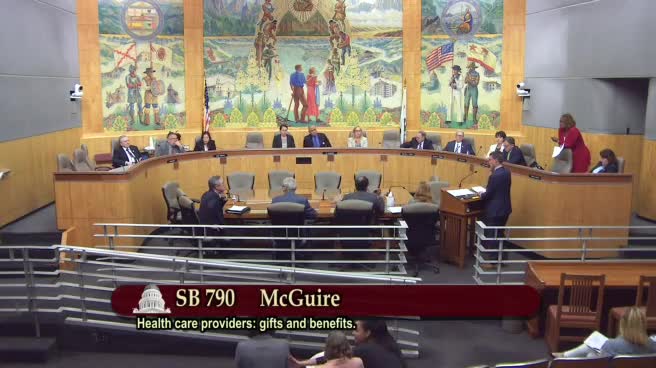 5MIN
Senate Standing Committee on Health
Bill Author

Bill Co-Author(s):