SB 376: State Energy Resources Conservation and Development Commission: chair: report to the Legislature.
- Session Year: 2017-2018
- House: Senate
- Latest Version Date: 2017-02-14
Existing law establishes the State Energy Research Conservation and Development Commission headed by a chair who is designated by the Governor and vests the commission with authority over various energy-related matters. Existing law assigns various duties to the chair.
This bill would require the chair to appear annually before the appropriate policy committees of the Senate and Assembly and to report on the commissions activities, as specified.
(a)The chair of the commission shall direct the adviser, the executive director, and other staff in the performance of their duties in conformance with the policies and guidelines established by the commission.
(b)(1)The chair of the commission shall appear annually before the appropriate policy committees of the Senate and Assembly and shall report on the commissions plans to carry out the commissions responsibilities, including, but not limited to, its responsibilities regarding all of the following:
(A)Research, development, and demonstration.
(B)Building and appliance efficiency standards.
(C)Electricity and natural gas demand forecasts.
(D)Siting of thermal powerplants.
(E)Implementation of the Renewables Portfolio Standards Program and energy labeling.
(F)Transportation fuels and alternative fuel vehicles.
(2)The chair of the commission shall also report on the activities taken by the commission in the previous year and the processes instituted to solicit input from Californians in diverse regions of the state.
(3)The chair shall report on the successes and challenges encountered in carrying out the responsibilities specified in paragraph (1) and the activities and processes instituted reported pursuant to paragraph (2).
|
Date
|
Status
|
|---|---|
| Sep 1, 2017 | September 1 hearing: Held in committee and under submission. |
| Jun 28, 2017 | June 28 set for first hearing. Placed on suspense file. |
| Jun 21, 2017 | From committee: Do pass and re-refer to Com. on APPR. (Ayes 14. Noes 0.) (June 21). Re-referred to Com. on APPR. |
| May 18, 2017 | Referred to Com. on U. & E. |
| Apr 6, 2017 | In Assembly. Read first time. Held at Desk. |
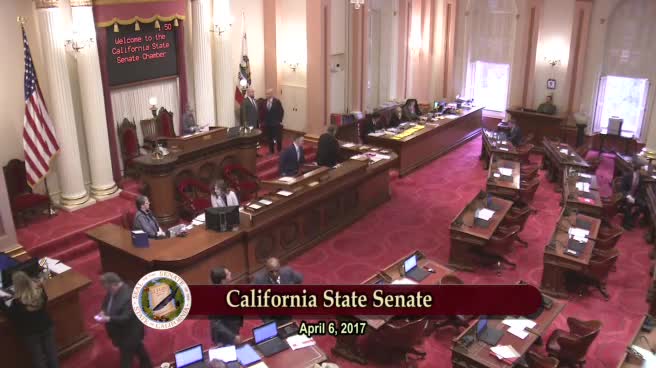
| Apr 6, 2017 | Read third time. Passed. (Ayes 39. Noes 0. Page 644.) Ordered to the Assembly. |
| Apr 4, 2017 | Read second time. Ordered to third reading. |
| Apr 3, 2017 | From committee: Be ordered to second reading pursuant to Senate Rule 28.8. |
| Mar 24, 2017 | Set for hearing April 3. |
| Mar 21, 2017 | From committee: Do pass and re-refer to Com. on APPR. (Ayes 11. Noes 0. Page 429.) (March 21). Re-referred to Com. on APPR. |
| Mar 9, 2017 | Set for hearing March 21. |
| Feb 23, 2017 | Referred to Com. on E., U. & C. |
| Feb 15, 2017 | From printer. May be acted upon on or after March 17. |
| Feb 14, 2017 | Introduced. Read first time. To Com. on RLS. for assignment. To print. |
|
Date
|
Description
|
Location
|
Votes
|
|
|---|---|---|---|---|
| Jun 21, 2017 | Do pass and be re-referred to the Committee on [Appropriations] | Assembly Standing Committee on Utilities and Energy |
Passed |
|
| Apr 6, 2017 | Senate 3rd Reading SB376 Bradford | Senate Floor |
Passed |
|
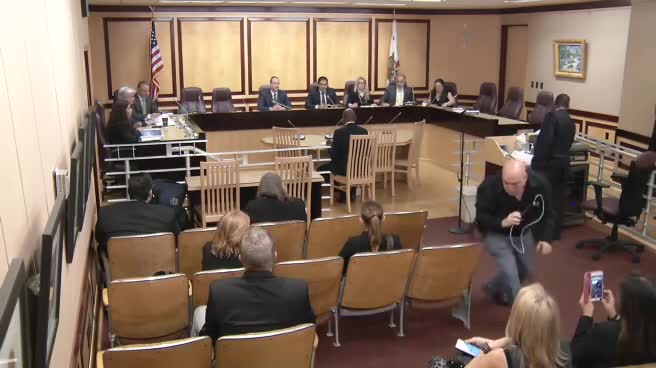
| Mar 21, 2017 | Do pass, but first be re-referred to the Committee on [Appropriations] | Senate Standing Committee on Energy, Utilities and Communications |
Passed |
This list shows positions taken on this bill by organizations on the date displayed, which is linked to the original source.
Positions by individuals are not included.
|
Organization
|
Position
|
Date
|
|---|---|---|
| Sierra Club California | ** Support | Jun 20, 2017 |
Date of Hearing: June 28, 2017
ASSEMBLY COMMITTEE ON APPROPRIATIONS
Lorena Gonzalez Fletcher, Chair
SBPCA Bill Id:SB 376
Author:(Bradford) – As Introduced Ver:February 14, 2017
Policy Committee: | Utilitites and Energy | Vote: | 14-0 |
|
| ||
|
|
Urgency: No State Mandated Local Program: No Reimbursable: No
SUMMARY:
This bill requires the Chair of the California Energy Commission (CEC) to appear annually before the appropriate policy committees of the Senate and the Assembly to report on the CEC’s plans to carry out its responsibilities, including, but not limited to the following:
- Research, development, and demonstration;
- Building and appliance efficiency standards;
- Electricity and natural gas demand forecasts;
- Siting of thermal powerplants;
- Implementation of the Renewables Portfolio Standards Program and energy labeling; and
- Transportation fuels and alternative vehicle fuels.
Additionally, this bill requires the CEC Chair to report its successes and challenges in carrying out its responsibilities and on activities taken to solicit input from Californians in diverse regions of the state.
FISCAL EFFECT:
No additional state costs.
COMMENTS:
- Purpose. According to the author’s office, “oversight is a tool used by the Legislature to ensure that state agencies and departments are serving the people of California and carrying out the implementation of public policies. As important, reports from the agency or department leadership could provide real-time assessment on a particular issue. A good example of this would be the recent Senate Energy, Utilities, and Communications Oversight hearing of the California Public Utilities Commission (CPUC), where President Picker provided his thoughts on issues on the horizon for State energy policy. This hearing was substantive and provided many important insights on State energy policy. Had the CEC Chairman also provided a report on CEC activities at this hearing, the Committee may have gained additional insights on energy issues. It would also have provided the Committee an opportunity to gain an understanding of how the CPUC and CEC coordinate with respect to their overlapping policies on energy procurement, energy forecasts, renewable energy, and energy efficiency.”
- Background. In 1974 the Warren-Alquist State Energy Resources Conservation and Development Act created the CEC in response to the energy crisis of the early 1970s and the state’s unsustainable growing demand for energy resources.
The CEC is made up of five Commissioners appointed by the Governor and confirmed by the Senate. Commissioners serve staggered five-year terms. The Governor also designates a Chair and Vice Chair as primary agency leads. The Commissioners represent specific areas of expertise: law, environment, economics, science/engineering, and the public at large. The responsibilities of the CEC are basically those designated in the bill about which the Chair is required to report.
The CEC’s primary funding source is a surcharge per kilowatt hour of electricity used in the state. The Energy Resources Programs Account (ERPA) surcharge rate is currently at $0.00029 per kilowatt-hour with a cap at $0.0003 per kilowatt hour.
- Prior Legislation. AB 1735 (Chapter 452, Statutes of 2003) established the requirement that the president of the California Public Utilities Commission (PUC) annually appear before the appropriate legislative policy committees.
Analysis Prepared by: Jennifer Galehouse / APPR. / (916) 319-2081
Date of Hearing: June 21, 2017
ASSEMBLY COMMITTEE ON UTILITIES AND ENERGY
Chris Holden, Chair
SBPCA Bill Id:SB 376
Author:(Bradford) – As Introduced Ver:February 14, 2017
SENATE VOTE: 39-0
SUBJECT: State Energy Resources Conservation and Development Commission: chair: report to the Legislature
SUMMARY: Mandates the Chair of the California Energy Commission (CEC) report to the legislature annually. Specifically, this bill:
- Requires the Chair of the CEC to appear before and report to the relevant Senate and Assembly Committees.
- The hearing should include the commission’s plans to carry out their responsibilities and the activities taken by the commission in the previous year.
EXISTING LAW:
- Directs the CEC to continually assess energy consumption trends and to analyze the social, economic, and environmental consequences of these trends; carry out, energy conservation measures; and recommend to the Governor and the Legislature new and expanded energy conservation measures. (Public Resources Code §25200 et seq.)
- Requires the CPUC to prepare an annual report on its activities, including scheduled proceedings and decisions, performance metrics, and other specified information. (Public Utilities Code §910)
- Requires the president of the CPUC to annually appear before the appropriate policy committees of the Senate and Assembly to present its annually mandated report. (Public Utilities Code §321.6)
FISCAL EFFECT: This bill is keyed fiscal and will be referred to the Assembly Committee on Appropriations for its review. This bill passed out of Senate Appropriations under Senate Rule 28.8 due to a determination that this measure has minimum impact to state costs or revenues.
BACKGROUND:
What is the CEC? In 1974 the Warren-Alquist State Energy Resources Conservation and Development Act created the State Energy Resources Conservation and Development Commission (more commonly known as the “California Energy Commission” or “CEC”). The Act guides all the Commission’s actions. It states:
- The Legislature hereby finds and declares that electrical energy is essential to the health, safety and welfare of the people of this state and to the state economy, and that it is the responsibility of state government to ensure that a reliable supply of electrical energy is maintained at a level consistent with the need for such energy for protection of public health and safety, for promotion of the general welfare, and for environmental quality protection.
- It is the policy of the state and the intent of the Legislature to establish and consolidate the state's responsibility for energy resources, for encouraging, developing, and coordinating research and development into energy supply and demand problems, and for regulating electrical generating and related transmission facilities.
- It is further the policy of the state and the intent of the Legislature to employ a range of measures to reduce wasteful, uneconomical, and unnecessary uses of energy, thereby reducing the rate of growth of energy consumption, prudently conserve energy resources, and assure statewide environmental, public safety, and land use goals.
- It is further the policy of the state and the intent of the Legislature to promote all feasible means of energy and water conservation and all feasible uses of alternative energy and water supply sources.
CPUC Does This. Statute requires the president of the CPUC to appear annually before the appropriate policy committees of the legislature. The president is to present the statutorily required annual report on the CPUC’s activities, including scheduled proceedings and decisions, performance metrics, and other specified information. A recent survey of Senate and Assembly policy committee staff indicates there is no parallel annual requirement in statute applicable to any other state agency.
COMMENTS:
- Author’s Comments. According to the author’s office, “oversight is a tool used by the Legislature to ensure that state agencies and departments are serving the people of California and carrying out the implementation of public policies. As important, reports from the agency or department leadership could provide real-time assessment on a particular issue. A good example of this would be the recent Senate Energy, Utilities, and Communications Oversight hearing of the California Public Utilities Commission (CPUC), where President Picker provided his thoughts on issues on the horizon for State energy policy. This hearing was substantive and provided many important insights on State energy policy. Had the CEC Chairman also provided a report on CEC activities at this hearing, the Committee may have gained additional insights on energy issues. It would also have provided the Committee an opportunity to gain an understanding of how the CPUC and CEC coordinate with respect to their overlapping policies on energy procurement, energy forecasts, renewable energy, and energy efficiency.”
- Necessity. The CEC like most state agencies has a good rapport with the Legislature. It is very responsive to the Committee and members to requests for information and participation in public hearings.
- Prior Legislation. AB 1735 (Chapter 452, Statutes of 2003) established the requirement that the president of the CPUC annually appear before the appropriate legislative policy committees.
REGISTERED SUPPORT / OPPOSITION:
Support
Sierra Club California
Opposition
None on file.
Analysis Prepared by: Elle Hoxworth / U. & E. /
Office of Senate Floor Analyses (916) 651-1520 Fax: (916) 327-4478 | SB |
THIRD READING
Bill No: SB 376
:
SENATE ENERGY, U. & C. COMMITTEE: 11-0, 3/21/17
AYES: Hueso, Morrell, Bradford, Cannella, Hertzberg, Hill, McGuire, Skinner, Stern, Vidak, Wiener
SENATE APPROPRIATIONS COMMITTEE: Senate Rule 28.8
DIGEST: This bill requires the chair of the California Energy Commission (CEC) to appear annually before the appropriate policy committees of the Senate and the Assembly.
Existing law:
- Directs the CEC to continually assess energy consumption trends and to analyze the social, economic, and environmental consequences of these trends; carry out, energy conservation measures; and recommend to the Governor and the Legislature new and expanded energy conservation measures. (Public Resources Code §25200 et seq.)
- Authorizes the California Public Utilities Commission (CPUC) to fix rates, establish rules, examine records, issue subpoenas, administer oaths, take testimony, punish for contempt, and prescribe a uniform system of accounts for all public utilities, including electrical and gas corporations, subject to its jurisdiction. (Article 12 of the California Constitution)
- Requires the CPUC to prepare an annual report on its activities, including scheduled proceedings and decisions, performance metrics, and other specified information. (Public Utilities Code §910)
- Requires the president of the CPUC to annually appear before the appropriate policy committees of the Senate and Assembly to present the annual report. (Public Utilities Code §321.6)
This bill requires the chair of the CEC to appear annually before the appropriate policy committees of the Senate and Assembly and report on the CEC’s plans to carry out the CEC’s responsibilities.
Background
The State Energy Resources Conservation and Development Commission (more commonly known as the “California Energy Commission” or “CEC”) describes itself as the state's primary energy policy and planning agency and as committed to reducing energy costs and environmental impacts of energy use - such as greenhouse gas emissions - while ensuring a safe, resilient, and reliable supply of energy. Statute assigns to CEC several distinct responsibilities. Those responsibilities include:
- Forecasting natural gas and electricity demand, which forms the core assumptions of the state’s energy planning efforts.
- Permitting powerplants with an operating capacity of 50 megawatts or more that use heat to produce electricity, which considers all engineering and environmental requirements.
- Setting energy efficiency standards applicable to appliances and buildings.
- Funding energy-related research, development and demonstration projects.
- Awarding financial incentives for energy-related research, development and demonstration projects; developing and deploying low-carbon fuels and advanced vehicle technologies; and installation of solar photovoltaic systems on new homes.
- Certifying renewable powerplants as eligible resources for compliance with the state’s Renewable Portfolio Standard and verifying the renewable electricity used for compliance.
The CEC is involved, directly or indirectly, in all aspects of energy policy development and implementation and energy regulation in the state.
According to the Department of Finance, the CEC has 673 approved positions and an annual budget of $486.2 million, as proposed in the 2017-18 Governor’s Budget. The CEC’s primary funding source is a surcharge per kilowatt hour of electricity used in the state. The Energy Resources Programs Account (ERPA) surcharge rate is currently at $0.00029 per kilowatt-hour with a cap at $0.0003 per kilowatt hour.
Currently, statute does not require the chair of the CEC to appear before the legislative policy committees. Nevertheless, representatives of the CEC regularly appear before the Legislature, upon request, as part of oversight and informational hearings and as part of the budget process. This analysis is unaware of an occasion when a representative of the CEC refused a request by a legislative committee that it appear before the committee.
In contrast, statute requires the president of the CPUC to appear annually before the appropriate policy committees of the Legislature. The president is to present the statutorily required annual report on the CPUC’s activities, including scheduled proceedings and decisions, performance metrics, and other specified information. A recent survey of Senate and Assembly policy committee staff indicates there is no parallel annual requirement in statute applicable to any other state agency.
A search of legislative analyses fails to reveal the exact motivation for creation of the requirement that the CPUC president appear before the policy committees. Capitol lore says there was a frustration with the general lack of cooperation of the then-president of the CPUC. Purportedly, the then-president either refused to appear at policy and budget committee hearings or simple failed to show up at hearings at which he was scheduled to appear.
In any case, statute has, for several years, required the president of the CPUC to appear before the “appropriate” policy committees of the Senate and Assembly. While statute does not specify what is meant by appropriate, the president has appeared annually before the Senate Committee on Energy, Utilities and Communications and before the Assembly Committee on Utilities and Commerce. Statute specifies information on which the president is to present. The annual appearances have proved useful in providing a forum for members of the Legislature to present, and receive answers to, questions of the president and CPUC staff that might, in the absence of the mandatory appearances, go unasked.
A policy committee of the Legislature can request a state official to appear before committee any time the committee believes such an appearance would be useful. It is hard to imagine the chair of the CEC refusing to appear before a policy committee, if asked to do so. Such appearances are a duty of the job. And, after all, the Legislature has considerable authority over the CEC. For example, the Legislature can modify or eliminate the CEC’s budget. The Legislature can also legislate the CEC out of existence, a power the Legislature cannot exercise over the CPUC, the existence of which is specified in the California Constitution.
Nonetheless, there is no harm in requiring the chair of the CEC to appear annually before the appropriate policy committees of the Legislature. Doing so may even prove fruitful, as it institutionalizes a regular dialogue between the chair and legislators, as the parallel requirement does in regards to the CPUC.
However, the author may wish to clarify what is meant by the “appropriate” policy committees. Depending upon interpretation, the CEC chair may find him- or herself appearing before three policy committees in each house that have jurisdiction over energy, transportation and environmental issues.
More broadly, the author might want to consider changing his target. The California Independent System Operator (CAISO) has considerable influence over state energy planning and policy. CAISO was created in statute. CAISO board members are appointed by the governor and confirmed by the Senate. However, as a nonprofit public benefit corporation, CAISO does not need its budget approved by the Legislature. As a result, CAISO officials do not appear before the legislative budget committees. To increase the Legislature’s awareness of the activities of CAISO and its importance to implementation and achievement of California’s energy policies, the author may wish to amend the bill to consider requiring the president and chief executive officer of CAISO to appear annually before legislative policy committees.
Related/Prior Legislation
AB 1735 (Committee on Utilities and Commerce, Chapter 452, Statutes of 2003) established the requirement that the president of the CPUC annually appear before the appropriate legislative policy committees.
FISCAL EFFECT: Appropriation: Fiscal Com.: Local:
None received
None received
ARGUMENTS IN SUPPORT: According to the author, oversight is a tool used by the Legislature to ensure that state agencies and departments are serving the people of California and carrying out the implementation of public policies. As important, reports from the agency or department leadership could provide real-time assessment on a particular issue.
A good example of this would be the recent Senate Energy, Utilities, and Communications Oversight hearing of the CPUC, where President Picker provided his thoughts on issues on the horizon for State energy policy. This hearing was substantive and provided many important insights on State energy policy. Had the CEC Chairman also provided a report on CEC activities at this hearing, the Committee may have gained additional insights on energy issues. It would also have provided the Committee an opportunity to gain an understanding of how the CPUC and CEC coordinate with respect to their overlapping policies on energy procurement, energy forecasts, renewable energy, and energy efficiency.
4/5/17 14:56:25
**** END ****
SENATE COMMITTEE ON ENERGY, UTILITIES AND COMMUNICATIONS
Senator Ben Hueso, Chair
2017 - 2018 Regular
Bill No: SB 376 Hearing Date: 3/21/2017
Author: | Bradford | ||
Version: | 2/14/2017 As Introduced | ||
Urgency: | No | Fiscal: | Yes |
Consultant: | Jay Dickenson | ||
SUBJECT: State Energy Resources Conservation and Development Commission: chair: report to the Legislature
DIGEST: This bill requires the chair of the California Energy Commission (CEC) to appear annually before the appropriate policy committees of the Senate and the Assembly.
ANALYSIS:
Existing law:
- Directs the CEC to continually assess energy consumption trends and to analyze the social, economic, and environmental consequences of these trends; carry out, energy conservation measures; and recommend to the Governor and the Legislature new and expanded energy conservation measures. (Public Resources Code §25200 et seq.)
- Authorizes the California Public Utilities Commission (CPUC) to fix rates, establish rules, examine records, issue subpoenas, administer oaths, take testimony, punish for contempt, and prescribe a uniform system of accounts for all public utilities, including electrical and gas corporations, subject to its jurisdiction. (Article 12 of the California Constitution)
- Requires the CPUC to prepare an annual report on its activities, including scheduled proceedings and decisions, performance metrics, and other specified information. (Public Utilities Code §910)
- Requires the president of the CPUC to annually appear before the appropriate policy committees of the Senate and Assembly to present the annual report. (Public Utilities Code §321.6)
This bill requires the chair of the CEC to appear annually before the appropriate policy committees of the Senate and Assembly and report on the CEC’s plans to carry out the CEC’s responsibilities.
Background
The State Energy Resources Conservation and Development Commission (more commonly known as the “California Energy Commission” or “CEC”) describes itself as state's primary energy policy and planning agency and as committed to reducing energy costs and environmental impacts of energy use - such as greenhouse gas emissions - while ensuring a safe, resilient, and reliable supply of energy. Statute assigns to CEC several distinct responsibilities. Those responsibiliites inlcude:
- Forecasting natural gas and electricity demand, which forms the core assumptions of the state’s energy planning efforts.
- Permitting powerplants with an operating capacity of 50 megawatts or more that use heat to produce electricity, which considers all engineering and environmental requirements.
- Setting energy efficiency standards applicable to appliances and buildings.
- Funding energy-related research, development and demonstration projects.
- Awarding financial incentives for energy-related research, development and demonstration projects; developing and deploying low-carbon fuels and advanced vehicle technologies; and installation of solar photovoltaic systems on new homes.
- Certifying renewable powerplants as eligible resources for compliance with the state’s Renewable Portfolio Standard and verifying the renewable electricity used for compliance.
The CEC is involved, directly or indirectly, in all aspects of energy policy development and implementation and energy regulation in the state.
According to the Department of Finance, CEC has 673 approved positions and an annual budget of $486.2 million, as proposed in the 2017-18 Governor’s Budget. The CEC’s primary funding source is a surcharge per kilowatt hour of electricity used in the state. The Energy Resources Programs Account (ERPA) surcharge rate is currently at $0.00029 per kilowatt-hour with a cap at $0.0003 per kilowatt hour.
Currently, statute does not require the chair of the CEC to appear before the legislative policy committees. Nevertheless, representatives of the CEC regularly appear before the legislature, upon request, as part of oversight and informational hearings and as part of the budget process. This analysis is unaware of an occasion when a representative of the CEC refused a request by a legislative committee that it appear before the committee.
In contrast, statute requires the president of the CPUC to appear annually before the appropriate policy committees of the legislature. The president is to present the statutorily required annual report on the CPUC’s activities, including scheduled proceedings and decisions, performance metrics, and other specified information. A recent survey of Senate and Assembly policy committee staff indicates there is no parallel annual requirement in statute applicable to any other state agency.
A search of legislative analyses fails to reveal the exact motivation for creation of the requirement that the CPUC president appear before the policy committees. Capitol lore says there was a frustration with the general lack of cooperation of the then-president of the CPUC. Purportedly, the then-president either refused to appear at policy and budget committee hearings or simple failed to show up at hearing at which he was schedule to appear.
In any case, statute has, for several years, required the president of the CPUC to appear before the “appropriate” policy committees of the Senate and Assembly. While statute does not specify what is meant by appropriate, the president has appeared annually before the Senate Committee on Energy, Utilities and Communications and before the Assembly Committee on Utilities and Commerce. Statute specifies information on which the president is to present. The annual appearances have proved useful in providing a forum for members of the legislature to present, and receive answers to, questions of the president and CPUC staff that might, in the absence of the mandatory appearances, go unasked.
A policy committee of the Legislature can request a state official to appear before committee any time the committee believes such an appearance would be useful. It is hard to imagine the chair of the CEC refusing to appear before a policy committee, if asked to do so. Such appearances are a duty of the job. And, after all, the Legislature has considerable authority over the CEC. For example, the Legislature can modify or eliminate the CEC’s budget. The Legislature can also legislate the CEC out of existence, a power the Legislature cannot exercise over the CPUC, the existence of which is specified in the California Constitution.
Nonetheless, there is no harm in requiring the chair of the CEC to appear annually before the appropriate policy committees of the Legislature. Doing so may even prove fruitful, as it institutionalizes a regular dialogue between the chair and legislators, as the parallel requirement does in regards to the CPUC.
However, the author may wish to clarify what is meant by the “appropriate” policy committees. Depending upon interpretation, the CEC chair may find him- or herself appearing before three policy committees in each house that have jurisdiction over energy, transportation and environmental issues.
More broadly, the author might want to consider changing his target. The California Independent System Operator (CAISO) has considerable influence over state energy planning and policy. CAISO was created in statute. CAISO board members are appointed by the governor and confirmed by the Senate. However, as a nonprofit public benefit corporation, CAISO does not need its budget approved by the Legislature. As a result, CAISO officials do not appear before the legislative budget committees. To increase the Legislature’s awareness of the activities of CAISO and its importance to implementation and achievement of California’s energy policies, the author may wish to amend the bill to consider requiring the president and chief executive officer of CAISO appear annually before legislative policy committees.
Prior/Related Legislation
AB 1735 (Chapter 452, Statutes of 2003) established the requirement that the president of the CPUC annually appear before the appropriate legislative policy committees.
FISCAL EFFECT: Appropriation: No Fiscal Com.: Yes Local: No
SUPPORT:
None received.
OPPOSITION:
None received.
ARGUMENTS IN SUPPORT: According to the author, oversight is a tool used by the Legislature to ensure that state agencies and departments are serving the people of California and carrying out the implementation of public policies. As important, reports from the agency or department leadership could provide real-time assessment on a particular issue.
A good example of this would be the recent Senate Energy, Utilities, and Communications Oversight hearing of the CPUC, where President Picker provided his thoughts on issues on the horizon for State energy policy. This hearing was substantive and provided many important insights on State energy policy. Had the CEC Chairman also provided a report on CEC activities at this hearing, the Committee may have gained additional insights on energy issues. It would also have provided the Committee an opportunity to gain an understanding of how the CPUC and CEC coordinate with respect to their overlapping policies on energy procurement, energy forecasts, renewable energy, and energy efficiency.
-- END --
Discussed in Hearing
 2MIN
Senate Floor
 3MIN
Senate Standing Committee on Energy, Utilities and Communications
Bill Author

Bill Co-Author(s):