SB 493: Vehicles: right-turn violations.
- Session Year: 2017-2018
- House: Senate
- Latest Version Date: 2017-02-16
Existing law requires a driver facing a steady circular red signal alone to stop at a marked limit line, but if none, before entering the crosswalk on the near side of the intersection or, if none, then before entering the intersection, and to remain stopped until an indication to proceed is shown, except as specified. A violation of this provision is an infraction punishable by a fine of $100.
This bill would recast those provisions, and instead would make a violation of that requirement for a right turn, or a left turn from a one-way street onto a one-way street, punishable by a fine of $35. The bill would make additional conforming changes. The bill would also make a statement of legislative findings and declarations.
The Legislature finds and declares all of the following:
(a)It is imperative that drivers always look for and yield to pedestrians.
(b)Pedestrian safety is very important.
(c)This measure does not legalize rolling right hand turns; it simply reduces the fine for this illegal driving maneuver.
SEC. 2.Section 21453 of the Vehicle Code is amended to read:21453.(a)A driver facing a steady circular red signal alone shall stop at a marked limit line, but if none, before entering the crosswalk on the near side of the intersection or, if none, then before entering the intersection, and shall remain stopped not proceed straight through the intersection, or turn in a manner prohibited by a sign, or turn left, except from a one-way street onto a one-way street, until an indication to proceed is shown, except as provided in subdivision (b). shown.
(b) Except when a sign is in place prohibiting a turn, a driver, after stopping as required by subdivision (a), facing a steady circular red signal, may turn right, or turn left from a one-way street onto a one-way street. A driver making that turn shall yield the right-of-way to pedestrians lawfully within an adjacent crosswalk and to any vehicle that has approached or is approaching so closely as to constitute an immediate hazard to the driver, and shall continue to yield the right-of-way to that vehicle until the driver can proceed with reasonable safety.(b)A driver facing a steady circular red signal alone shall stop at a marked limit line, but if none, before entering the crosswalk on the near side of the intersection or, if none, before entering the intersection, prior to turning right, or turning left from a one-way street onto a one-way street.
(c)A driver facing a steady red arrow signal shall not enter the intersection to make the movement indicated by the arrow and, unless entering the intersection to make a movement permitted by another signal, shall stop at a clearly marked limit line, but if none, before entering the crosswalk on the near side of the intersection, or if none, then before entering the intersection, and shall remain stopped until an indication permitting movement is shown.
(d)Unless otherwise directed by a pedestrian control signal as provided in Section 21456, a pedestrian facing a steady circular red or red arrow signal shall not enter the roadway.
(e)A driver making a turn pursuant to subdivision (b) shall yield the right-of-way to pedestrians lawfully within an adjacent crosswalk and to any vehicle that has approached or is approaching so closely as to constitute an immediate hazard to the driver, and shall continue to yield the right-of-way to that vehicle until the driver can proceed with reasonable safety.
SEC. 3.Section 21971 of the Vehicle Code is amended to read:21971.Notwithstanding any other provision of law, any person who violates subdivision (a) or (b) of Section 21451, subdivision (b) or (e) of Section 21453, subdivision (a) of Section 21950, or Section 21952, and causes the bodily injury of anyone other than the driver is guilty of an infraction punishable under Section 42001.18.
SEC. 4.Section 42001.15 of the Vehicle Code is amended to read:42001.15.(a)Every person convicted of an infraction for a violation of subdivision (a) or (c) of Section 21453, subdivision (c) of Section 21454, or subdivision (a) of Section 21457 shall be punished by a fine of one hundred dollars ($100).
(b)Every person convicted of an infraction for a violation of subdivision (b) or (e) of Section 21453 shall be punished by a fine of thirty-five dollars ($35).
|
Date
|
Status
|
|---|---|
| Sep 1, 2017 | September 1 hearing: Held in committee and under submission. |
| Jul 19, 2017 | July 19 set for first hearing. Placed on APPR. suspense file. |
| Jun 27, 2017 | From committee: Do pass and re-refer to Com. on APPR. (Ayes 14. Noes 0.) (June 26). Re-referred to Com. on APPR. |
| Jun 12, 2017 | Referred to Com. on TRANS. |
| Jun 1, 2017 | In Assembly. Read first time. Held at Desk. |
| May 31, 2017 | Read third time. Passed. (Ayes 40. Noes 0. Page 1357.) Ordered to the Assembly. |
| May 26, 2017 | Ordered to special consent calendar. |
| May 26, 2017 | Read second time. Ordered to third reading. |
| May 25, 2017 | From committee: Do pass. (Ayes 7. Noes 0. Page 1185.) (May 25). |
| May 19, 2017 | Set for hearing May 25. |
| May 1, 2017 | May 1 hearing: Placed on APPR. suspense file. |
| Apr 21, 2017 | Set for hearing May 1. |
| Apr 19, 2017 | From committee: Do pass and re-refer to Com. on APPR. (Ayes 11. Noes 0. Page 751.) (April 18). Re-referred to Com. on APPR. |
| Apr 4, 2017 | Set for hearing April 18. |
| Mar 2, 2017 | Referred to Com. on T. & H. |
| Feb 17, 2017 | From printer. May be acted upon on or after March 19. |
| Feb 16, 2017 | Introduced. Read first time. To Com. on RLS. for assignment. To print. |
|
Date
|
Description
|
Location
|
Votes
|
|
|---|---|---|---|---|
| Jun 26, 2017 | Do pass and be re-referred to the Committee on [Appropriations] | Assembly Standing Committee on Transportation |
Passed |
|
| May 31, 2017 | Special Consent Calendar # SB493 | Senate Floor |
Passed |
|
| May 25, 2017 | Do pass | Senate Standing Committee on Appropriations |
Passed |
|
| May 1, 2017 | Placed on suspense file | Senate Standing Committee on Appropriations |
Passed |
|
| Apr 18, 2017 | Do pass, but first be re-referred to the Committee on [Appropriations] | Senate Standing Committee on Transportation and Housing |
Passed |
This list shows positions taken on this bill by organizations on the date displayed, which is linked to the original source.
Positions by individuals are not included.
|
Organization
|
Position
|
Date
|
|---|---|---|
| aaa northern california | ** Support | Jun 23, 2017 |
| American Civil Liberties Union of California | ** Support | Jun 23, 2017 |
| Automobile Club of Southern California | * Support | Jun 26, 2017 |
| California Association Of Highway Patrolmen | ** Support | Jun 23, 2017 |
| California Police Chiefs Association | ** Against | May 27, 2017 |
| Safer Streets LA | ** Support | Jun 23, 2017 |
| Western States Trucking Association | ** Support | Jun 23, 2017 |
Date of Hearing: July 19, 2017
ASSEMBLY COMMITTEE ON APPROPRIATIONS
Lorena Gonzalez Fletcher, Chair
SBPCA Bill Id:SB 493
Author:(Hill) – As Introduced Ver:February 16, 2017
Policy Committee: | Transportation | Vote: | 14 - 0 |
Urgency: No State Mandated Local Program: No Reimbursable: No
SUMMARY:
This bill reduces the base fine, from $100 to $35, for turning right on a red light (rolling right turn), or turning left from a one-way street onto another one-way street, without coming to a complete stop.
FISCAL EFFECT:
- Unknown potentially significant effect on fine and penalty revenues that support various state and local programs, such as trial courts. On the one hand, reducing the base fine, and thus reducing the associated penalties, could result in less revenue collected from lower fine and penalty amounts. On the other hand, the lower amounts will be easier for people to afford and as a result more people will likely pay the fine and penalties when assessed. In addition, revenue collection will depend on the number of red light violations that occur and are charged the lower fine amounts. Currently, there is not detailed data on the number of right turn rolling stop red light violations that are currently charged a $100 base fine (due to lack of clarity in existing law it is possible that some rolling right turn violations are already charged a $35 base fine). Thus, the potential magnitude of violations that would be subject to a lower fine amount is unknown. The net effect of these changes is unknown, although there is the potential for significant change (more than $150,000) in revenue collection.
- Minor and absorbable information technology programming costs to the Department of Motor Vehicles.
COMMENTS:
- Background. Existing law requires a driver to stop at a red light and prohibits the driver from proceeding until given an indication to do so. Failing to stop at a red light is a violation carrying a base fine of $100, as well as a violation point. Due to additional penalties applied to the base fine, a $100 base fine is equivalent to a total of $541. The additional penalties include various state and local assessments that fund specific programs through complex funding formulas.
- Purpose. According to the author, the intent of this bill is to correct a drafting error in the enactment of AB 1191 (Shelley), Chapter 852, Statutes of 1997, that increased the base fine for red light violations from $35 to $100. The author asserts that AB 1191 was intended to only target drivers for going straight through intersections or making left-turns against a red light, which are the most dangerous violations at intersections and can result in catastrophic right angle collisions. The author contends that citing a right turn on a red light at $100, with the total cost at $541 after assessments, is overly punitive given that the maneuver that is not overtly dangerous. To address this issue, the author has introduced this bill which would reduce the base fine for rolling right turn violations to $35, ultimately resulting in a total fine of $289, after penalty assessments are applied. The author notes that lowering the fine for these violations would make the monetary penalty more equitable and in the context of other traffic violations.
Analysis Prepared by: Jessica Peters / APPR. / (916) 319-2081
Date of Hearing: June 26, 2017
ASSEMBLY COMMITTEE ON TRANSPORTATION
Jim Frazier, Chair
SBPCA Bill Id:SB 493
Author:(Hill) – As Introduced Ver:February 16, 2017
SENATE VOTE: 40-0
SUBJECT: Vehicles: right-turn violations
SUMMARY: Reduces the base fine, from $100 to $35, for turning right on a red light (rolling right turn), or turning left from a one-way street onto another one-way street, without coming to a complete stop.
EXISTING LAW:
- Requires a driver to stop at a red light and prohibits the driver from proceeding until given an indication to do so. Failing to stop at a red light is a violation carrying a base fine of $100, as well as a violation point.
- Allows a driver to turn right after coming to a complete stop, unless there is a sign prohibiting it. Also allows a driver to turn left from a one-way street onto another one-way street, after coming to a complete stop, during a red light.
- Provides that stopping, but then proceeding to make an unsafe turn - for example, by failing to yield to a pedestrian in the crosswalk - carries a $35 base fine and a violation point.
- Provides that the state Judicial Council annually adopts a uniform traffic penalty schedule for all non-parking infractions outlined in the Vehicle Code.
- Establishes the base fine for red-light violations at $100; due to additional surcharges, penalties, and assessments, a $100 base fine is equivalent to a total of $541.
FISCAL EFFECT: According to the Senate Appropriations Committee, this bill would result in unknown, but potentially significant, loss of state and local penalty assessment revenues.
COMMENTS: According to the author, the intent of this bill is to correct a drafting error in the enactment of AB 1191 (Shelley), Chapter 852, Statutes of 1997, that increased the base fine for red light violations from $35 to $100. The author asserts that AB 1191 was intended to only target drivers for going straight through intersections or making left-turns against a red light, which are the most dangerous violations at intersections and can result in catastrophic right angle collisions. AB 1191 raised the fine for these violations to more accurately reflect their seriousness and the potential for catastrophic accidents. He notes, however, that AB 1191 also raised the fine for failing to make a complete stop on a right turn on a red light, a violation that, while it should not be condoned, is far less serious and does not warrant the increased fine of a running straight through the intersection, particularly given that these citations, with fines and penalties, have a total cost of $541.
With the advent of automated traffic enforcement systems (also known as red light cameras),
AB 1191 has resulted in a significant increase in the number of drivers being cited, at the higher fine rate, for rolling right turn violations. The author contends that citing these violations at $100, with the total cost at $541 after assessments, is overly punitive given that the maneuver that is not overtly dangerous. To address this issue, the author has introduced this bill which would reduce the base fine for rolling right turn violations to $35, ultimately resulting in a total fine of $289, after penalty assessments are applied. He notes that lowering the fine for these violations would make the monetary penalty more equitable and in the context of other traffic violations.
To the author's point, generally, the Vehicle Code assigns higher penalties to traffic violations with potential for injury or death. Violations with a fine equal to the fine for running a red light, include failure to yield to an emergency vehicle, throwing lighted material on the highway, and failure to use child safety seats. Violations resulting in $35 fines include failing to yield the right-of-way in a crosswalk and unsafe turns or lane changes.
A San Mateo County Civil Grand Jury report noted that "the fine for failure to stop before making a right-hand turn seems out of proportion to similar offenses and, as a result, is often appealed in traffic court." The report states that there has been an 80% increase in the number of red light citations and that challenges to the citations are overwhelming the San Mateo County Superior Court. Similarly, a Texas Transportation Institute report entitled "Synthesis on the Safety of Right Turn on Red in the United States and Canada" concluded that rolling right turns are not a dangerous maneuver at signalized intersections for either vehicles or pedestrians in most circumstances and, proportionally, rolling right turn crashes are very low (less than 0.5% of all crashes) and, in the event of a crash, the outcome is generally not severe.
The author carried nearly identical bills in 2010, 2015, and 2016. AB 909 of 2010 was vetoed by Governor Schwarzenegger. In his veto message, the Governor noted that modifying the law to make red-light violations less egregious would send the wrong message to the public that California is tolerant of these types of offenses. SB 681 of 2015 and SB 986 of 2016, were both held in the Senate Appropriations Committee on the suspense file.
Previous legislation: SB 986 (Hill) of 2016 would have reduced the base fine for “rolling right turn” violations from $100 to $35. SB 986 was held on the Assembly Appropriations Committee suspense file.
SB 681 (Hill) of 2015 would have reduced the base fine for “rolling right turn” violations from $100 to $35. SB 681 was held on the Senate Appropriations Committee suspense file.
AB 909 (Hill) of 2010 would have reduced the base fine for “rolling right turn” violations from $100 to $35. AB 909 was vetoed by Governor Schwarzenegger.
AB 1191 (Shelley), Chapter 852, Statutes of 1997, increased the base fine for red-light signal violations from $35 to $100.
REGISTERED SUPPORT / OPPOSITION:
Support
AAA Northern California
American Civil Liberties Union of California
Automobile Club of Southern California
California Association of Highway Patrolmen
Safer Streets LA
Western States Trucking Association
Opposition
None on file
Analysis Prepared by: Victoria Alvarez / TRANS. / (916) 319-2093
Office of Senate Floor Analyses (916) 651-1520 Fax: (916) 327-4478 | SB |
THIRD READING
Bill No: SB 493
:
SENATE TRANS. & HOUSING COMMITTEE: 11-0, 4/18/17
AYES: Beall, Cannella, Allen, Atkins, McGuire, Mendoza, Morrell, Roth, Skinner, Wieckowski, Wiener
NO VOTE RECORDED: Bates, Gaines
SENATE APPROPRIATIONS COMMITTEE: 7-0, 5/25/17
AYES: Lara, Bates, Beall, Bradford, Hill, Nielsen, Wiener
DIGEST:
This bill reduces the base fine for “rolling right turn” violations.
Existing law:
- Requires a driver to stop at a red light and prohibits the driver from proceeding until given an indication to do so. Failing to stop at a red light is a violation carrying a base fine of $100, as well as a violation point.
- Allows a driver to turn right after coming to a complete stop, unless there is a sign prohibiting it. Also allows a driver to turn left from a one-way street onto another one-way street, after coming to a complete stop, during a red light.
- Provides that stopping, but then proceeding to make an unsafe turn — for example, by failing to yield to a pedestrian in the crosswalk — carries a $35 base fine and a violation point.
- Provides that the state Judicial Council annually adopts a uniform traffic penalty schedule for all non-parking infractions outlined in the Vehicle Code.
- Establishes the base fine for red-light violations at $100; due to additional surcharges, penalties, and assessments, a $100 base fine is equivalent to a total of $541.
This bill provides that turning right on a red light, or turning left from a one-way street onto another one-way street without first coming to a complete stop, is a violation carrying a base fine of $35.
Comments
- Purpose. The author states that a nearly $500 fine for a “rolling right” is simply too egregious, especially considering that much more dangerous maneuvers are cited for less. This bill simply makes sure that the penalty fits with the seriousness of the offense; failing to come to a complete stop at a red light when turning right, should carry the same fine as making an unsafe right turn.
- Violation points. The Department of Motor Vehicles (DMV) assigns violation points against an individual’s driver’s license for certain traffic offenses to identify a driver as a negligent operator. Violation points vary with the gravity of the offense; for example, a “fix-it” ticket does not count for any violation points, a speeding ticket counts for one violation point, and driving while under the influence of alcohol or drugs counts for two violation points. DMV may suspend an individual’s driver’s license for six months if he or she receives four points in one year, six points in two years, or eight points in three years. Existing law assigns one violation point to red-light offenses; this bill will not change that provision.
- What about pedestrian safety? Existing law requires a driver to yield to a pedestrian in a crosswalk or intersection. Existing law also requires a driver to come to a complete stop before making a turn on a red light. While this bill reduces the fine for a rolling right turn, it does not make a rolling right turn legal, nor does it affect the pedestrian right-of-way statute.
- Trying again. The author carried bills nearly identical to this bill in 2010, 2015, and 2016 (see Related/Prior Legislation below). The author states that his office has been contacted more than 50 times regarding this issue. The author states that the penalty should fit the offense, particularly since more egregious offenses carry lesser fines; for example, passing unsafely, driving the wrong way on a one-way street, and driving on the sidewalk, all carry a base fine of only $70.
Related/Prior Legislation
SB 986 (Hill, 2016) would have reduced the base fine for “rolling right turn” violations from $100 to $35. The bill was held on the suspense file in the Assembly Appropriations Committee.
SB 681 (Hill, 2015) would have reduced the base fine for “rolling right turn” violations from $100 to $35. The bill was held on the suspense file in the Senate Appropriations Committee.
AB 909 (Hill, 2010) would have reduced the base fine for “rolling right turn” violations from $100 to $35. The bill was vetoed by Governor Schwarzenegger.
AB 1191 (Shelley, Chapter 852, Statutes of 1997) increased the base fine for red-light signal violations from $35 to $100.
FISCAL EFFECT: Appropriation: Fiscal Com.: Local:
According to the Senate Appropriations Committee, unknown, significant loss of state and local penalty assessment revenues. Many of the penalty assessments, fines, and fees added onto the base fine for convictions of traffic infractions are dependent upon the amount of the base fine. Reducing the base fine for failure to stop before turning right on a red light, or turning left from a one-way street onto another one-way street, would result in the following reductions in fine and fee revenues for each conviction:
- State Penalty Assessment: reduction of $60 per conviction. (State Penalty Fund, distributed to nine other Special Funds, and county General Fund)
- County Penalty Assessment: reduction of $42 per conviction. (various Special Funds)
- Court Construction Penalty Assessment: reduction of $30 per conviction. (various Special Funds supporting court facilities)
- Proposition 69 DNA Penalty Assessment: reduction of $6 per conviction. (primarily state or local DNA Identification Fund)
- DNA Identification Fund Penalty Assessment: reduction of $24 per conviction. (primarily state DNA Identification Fund)
- Emergency Medical Services Penalty Assessment: reduction of $12 per conviction. (primarily Maddy EMS Fund)
- State Surcharge: reduction of $13 per conviction (state General Fund)
The DMV has conviction data indicating that an annual average of over 300,000 red light violations were reported to them for assessment of a violation point in recent years. Senate Appropriations Committee staff notes, however, that there is no reliable statewide data on the number of red light violations that are a result of a driver turning right on a red light. For every 10,000 violations subject to a reduced base fine, there would be a total reduction of $1.74 million in state and local penalty assessment revenues. (General Fund, various Special Funds, and local funds)
AAA Northern California, Nevada, Utah
American Civil Liberties Union of California
Automobile Club of Southern California
California Association of Highway Patrolmen
Safer Streets L.A.
Western States Trucking Association
OPPOSITION: (Verified 5/25/17)
California Police Chiefs Association
ARGUMENTS IN SUPPORT: Supporters state that this bill ensures that the penalty fits the crime because “rolling right” violations are far less dangerous than straight-through violations.
ARGUMENTS IN OPPOSITION: The California Police Chiefs Association, writing in opposition, states that this bill will undermine law enforcement efforts to change behavior in regard to “California stops” and that it will lead to an increase in accidents involving pedestrians and bicyclists.
5/27/17 17:21:32
**** END ****
SENATE COMMITTEE ON APPROPRIATIONS
Senator Ricardo Lara, Chair
2017 - 2018 Regular Session
SB 493 (Hill) - Vehicles: right-turn violations
Version: February 16, 2017 | Policy Vote: T. & H. 11 - 0 |
Urgency: No | Mandate: No |
Hearing Date: May 1, 2017 | Consultant: Mark McKenzie |
This bill meets the criteria for referral to the Suspense File.
Bill Summary:
SB 493 would reduce the base fine from $100 to $35 for turning right on a red light, or turning left from a one-way street onto another one-way street, without coming to a complete stop.
Fiscal Impact:
Unknown, significant loss of state and local penalty assessment revenues. As noted in the background section below, many of the penalty assessments, fines, and fees added onto the base fine for convictions of traffic infractions are dependent upon the amount of the base fine. Reducing the base fine for failure to stop before turning right on a red light, or turning left from a one-way street onto another one-way street, would result in the following reductions in fine and fee revenues for each conviction:
- State Penalty Assessment: reduction of $60 per conviction. (State Penalty Fund, distributed to nine other Special Funds, and county General Fund)
- County Penalty Assessment: reduction of $42 per conviction. (various Special Funds)
- Court Construction Penalty Assessment: reduction of $30 per conviction. (various Special Funds supporting court facilities)
- Proposition 69 DNA Penalty Assessment: reduction of $6 per conviction. (primarily state or local DNA Identification Fund)
- DNA Identification Fund Penalty Assessment: reduction of $24 per conviction. (primarily state DNA Identification Fund)
- Emergency Medical Services Penalty Assessment: reduction of $12 per conviction. (primarily Maddy EMS Fund)
- State Surcharge: reduction of $13 per conviction (state General Fund)
The Department of Motor Vehicles (DMV) has conviction data indicating that an annual average of over 300,000 red light violations were reported to them for assessment of a violation point in recent years (see staff comments). Staff notes, however, that there is no reliable statewide data on the number of red light violations that are a result of a driver turning right on a red light. For every 10,000 violations subject to a reduced base fine, there would be a total reduction of $1.74 million in state and local penalty assessment revenues. (General Fund, various Special Funds, and local funds)
Background:
Existing law requires a driver to stop at an intersection when faced with a steady red light or red arrow, and to remain stopped until an indication to proceed is shown. Except where a sign is in place prohibiting a turn, a driver facing a red light who has come to a complete stop may turn right or turn left from a one-way street onto another one-way street. A driver making such a turn must yield right-of-way to pedestrians in an adjacent crosswalk and to vehicles approaching until the driver can proceed with reasonable safety. Failure to stop at a red light is an infraction punishable by a base fine of $100. Failure to yield right-of-way to pedestrians or approaching vehicles when making a turn after coming to a complete stop is an infraction punishable by a base fine of $35.
In addition to base fines for traffic violations, existing law imposes numerous additional penalty assessments, fees, and surcharges for convictions of these infractions, all of which significantly increase the total bail owed as a result of violations. For example, the total bail on a violation with a base fine of $35 is $238, and the total bail on a violation with a base fine of $100 is $490 (not including fees associated with traffic violator schools). Existing law specifies a complex process for the distribution of fine and fee revenues to numerous state and local funds. Some of these add-on fines and fees were enacted to fund specific activities, such as emergency medical services or DNA-related activities, while others support general court operations, court facilities construction, or state and local general funds.
The following assessments and fees are a flat charge per conviction: a $4 Emergency Medical Air Transportation Penalty Assessment; a $40 Court Operations Assessment; A $30 Conviction Assessment Fee; and a $1 Night Court Fee. The following charges, however, are dependent upon amount of the base fine:
- State Penalty Assessment: $10 for every $10 of a base fine*
- County Penalty Assessment: $7 for every $10 of a base fine*
- Court Construction Penalty Assessment: $5 for every $10 of a base fine*
- Proposition 69 DNA Penalty Assessment: $1 for every $10 of a base fine*
- DNA Identification Fund Penalty Assessment: $4 for every $10 of a base fine*
- Emergency Medical Services Penalty Assessment: $2 for every $10 of a base fine*
- State Surcharge: 20% of a base fine
(* the base fines are rounded up to the next $10 increment for purposes of calculating the assessment)
Proposed Law:
SB 493 would specify that failure to come to a complete stop at an intersection when facing a steady red light prior to turning right, or turning left from a one-way street onto another one-way street, is an infraction punishable by a base fine of $35.
Related Legislation:
Both SB 986 (Hill), which was held on the Assembly Appropriations Committee’s Suspense File last year, and SB 681 (Hill), which was held on this Committee’s Suspense File in January of 2016, were effectively identical to this bill.
AB 909 (Hill), which was vetoed by Governor Schwarzenegger in 2010, would have reduced the base fine from $100 to $35 for turning right on a red light, or turning left from a one-way street onto another one-way street, without coming to a complete stop. The veto message included the following:
A driver running a red-light, whether they are traveling straight, or turning right, makes a very dangerous traffic movement that endangers the nearby motoring public, bicyclists, and pedestrians. Modifying existing law to make red-light violations from a right turn less egregious sends the wrong message to the public that California is tolerant of these types of offenses. It is our responsibility to protect the motoring public and not increase the risk of traffic collisions.
AB 1191 (Shelley), Chap 852/1997, increased the base fine for red light signal violations to $100.
Staff Comments:
This bill would decrease the base fine for what many consider to be a less dangerous form of red light violation than running straight through an intersection or turning left on red. The author contends that previous legislation that increased the base fine for a red light violation to $100 was intended to target straight through and left turn on red violations since they are the most dangerous violations at intersections, but that the measure inadvertently made right turn violations subject to the same increased base fine. By reducing the base fine for rolling right turns, this bill is intended to ensure the penalty matches the severity of the offense.
In addition to payment of fines and fees, a person convicted of a red light violation is also subject to the assignment of a violation point against his or her driver’s license. The DMV reports the following conviction data on the number of red light violations that were reported to them for assessment of a violation point: 356,376 total convictions in 2014, 304,970 total convictions in 2015, and approximately 270,000 in 2016. Staff notes that there is no reliable statewide data on the number of red light violations that are a result of a driver turning right on a red light. The author has provided data from cities where red light enforcement cameras have been installed that indicates an average of 40% of tickets issued for red light violations are a result of drivers failing to stop before turning right on red (nearly 97,000 out of a total of approximately 243,000 citations issued through red light cameras in 2014). It is unclear that this percentage would be applicable statewide due to variations in enforcement across jurisdictions, but it appears safe to assume that the reduced base fines in this bill would apply to citations numbering in the tens of thousands in a given year.
-- END --
SENATE COMMITTEE ON TRANSPORTATION AND HOUSING
Senator Jim Beall, Chair
2017 - 2018 Regular
Bill No: Hearing Date: 4/18/2017
Author: | Hill | ||
Version: | 2/16/2017 | ||
Urgency: | No | Fiscal: | Yes |
Consultant: | Erin Riches | ||
SUBJECT: .
DIGEST: This bill reduces the base fine for “rolling right turn” violations.
ANALYSIS:
Existing law:
- Requires a driver to stop at a red light and prohibits the driver from proceeding until given an indication to do so. Failing to stop at a red light is a violation carrying a base fine of $100, as well as a violation point.
- Allows a driver to turn right after coming to a complete stop, unless there is a sign prohibiting it. Also allows a driver to turn left from a one-way street onto another one-way street, after coming to a complete stop, during a red light.
- Provides that stopping, but then proceeding to make an unsafe turn — for example, by failing to yield to a pedestrian in the crosswalk — carries a $35 base fine and a violation point.
- Provides that the state Judicial Council annually adopts a uniform traffic penalty schedule for all non-parking infractions outlined in the Vehicle Code.
- Establishes the base fine for red-light violations at $100; due to additional surcharges, penalties, and assessments, a $100 base fine is equivalent to a total of $541.
This bill provides that turning right on a red light, or turning left from a one-way street onto another one-way street without first coming to a complete stop, is a violation carrying a base fine of $35.
COMMENTS:
- Purpose. The author states that a nearly $500 fine for a “rolling right” is simply too egregious, especially considering that much more dangerous maneuvers are cited for less. This bill simply makes sure that the penalty fits with the seriousness of the offense; failing to come to a complete stop at a red light when turning right, should carry the same fine as making an unsafe right turn.
- Violation points. The Department of Motor Vehicles (DMV) assigns violation points against an individual’s driver’s license for certain traffic offenses to identify a driver as a negligent operator. Violation points vary with the gravity of the offense; for example, a “fix-it” ticket does not count for any violation points, a speeding ticket counts for one violation point, and driving while under the influence of alcohol or drugs counts for two violation points. DMV may suspend an individual’s driver’s license for six months if he or she receives four points in one year, six points in two years, or eight points in three years. Existing law assigns one violation point to red-light offenses; this bill would not change that provision.
- What about pedestrian safety? Existing law requires a driver to yield to a pedestrian in a crosswalk or intersection. Existing law also requires a driver to come to a complete stop before making a turn on a red light. While this bill reduces the fine for a rolling right turn, it does not make a rolling right turn legal, nor does it affect the pedestrian right-of-way statute.
- Trying again. The author carried bills nearly identical to this bill in 2010, 2015, and 2016 (see “Related Legislation” below). The author states that his office has been contacted more than 50 times regarding this issue. The author states that the penalty should fit the offense, particularly since more egregious offenses carry lesser fines; for example, passing unsafely, driving the wrong way on a one-way street, and driving on the sidewalk, all carry a base fine of only $70.
Related Legislation:
SB 986 (Hill, 2016) — would have reduced the base fine for “rolling right turn” violations from $100 to $35. This bill was held on the suspense file in the Assembly Appropriations Committee.
SB 681 (Hill, 2015) — would have reduced the base fine for “rolling right turn” violations from $100 to $35. This bill was held on the suspense file in the Senate Appropriations Committee.
AB 909 (Hill, 2010) — would have reduced the base fine for “rolling right turn” violations from $100 to $35. This bill was vetoed by Governor Schwarzenegger.
AB 1191 (Shelley, Chapter 852, Statutes of 1997) — increased the base fine for red-light signal violations from $35 to $100.
FISCAL EFFECT: Appropriation: No Fiscal Com.: Yes Local: No
POSITIONS: (Communicated to the committee before noon on Wednesday,
April 12, 2017.)
SUPPORT:
AAA Northern California, Nevada, Utah
Automobile Club of Southern California
Safer Streets L.A.
Western States Trucking Association
OPPOSITION:
California Police Chiefs Association
-- END --
Discussed in Hearing
 3MIN
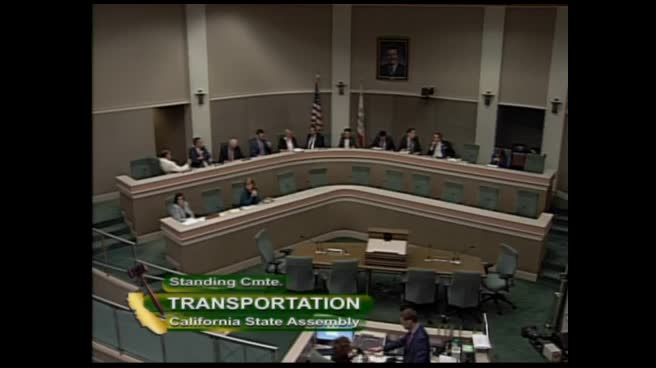
Assembly Standing Committee on Transportation
 48MIN
Senate Standing Committee on Appropriations
 5MIN
Senate Standing Committee on Transportation and Housing
Bill Author

Bill Co-Author(s):
