AB 1047: Firearms purchase notification registry.
- Session Year: 2023-2024
- House: Assembly
- Latest Version Date: 2024-01-03
Current Status:
Failed
(2024-02-01: From committee: Filed with the Chief Clerk pursuant to Joint Rule 56.)
Introduced
In Committee
First Chamber
In Committee
Second Chamber
Enacted
Existing law generally regulates the sale and transfer of firearms, including, among other requirements and subject to exceptions, that the transfer of a firearm be conducted through a firearms dealer. Existing law, subject to exceptions, imposes a 10-day waiting period for delivery of a firearm, during which time a background check is conducted by the Department of Justice to determine if the proposed recipient of the firearm is prohibited from owning or possessing a firearm.
This bill would require the Department of Justice to develop and launch a secure internet-based platform to allow a person who resides in California to voluntarily add their own name to a registry that would advise friends and family members a licensed behavioral health clinician of the persons attempt to purchase a firearm during the 10-day waiting period. The bill would, at the time of registration, require the registrant to add up to 5 list the email addresses of family or friends address of a licensed behavioral health clinician and would require the department, as soon as practicable but within the 10-day waiting period, to provide notice by email to the provided addresses address that the registrant is in the process of purchasing a firearm, the registrant voluntarily added their name to the registry, and the purpose of the registry is for a third party to potentially intervene and prevent the registrant from purchasing a firearm.
Existing law generally regulates the sale and transfer of firearms, including, among other requirements and subject to exceptions, that the transfer of a firearm be conducted through a firearms dealer. Existing law, subject to exceptions, imposes a 10-day waiting period for delivery of a firearm, during which time a background check is conducted by the Department of Justice to determine if the proposed recipient of the firearm is prohibited from owning or possessing a firearm.
This bill would require the Department of Justice to develop and launch a secure internet-based platform to allow a person who resides in California to voluntarily add their own name to a registry that would advise friends and family members of the persons attempt to purchase a firearm during the 10-day waiting period. The bill would, at the time of registration, require the registrant to add up to 5 email addresses of family or friends and would require the department, as soon as practicable but within the 10-day waiting period, to provide notice by email to the provided addresses that the registrant is in the process of purchasing a firearm, the registrant voluntarily added their name to the registry, and the purpose of the registry is for a third party to potentially intervene and prevent the registrant from purchasing a firearm.
(a)The Department of Justice shall develop and launch a secure internet-based platform to allow a person who resides in California to voluntarily add their own name to a registry that will advise friends and family members a licensed behavioral health clinician of the persons attempt to purchase a firearm during the 10-day waiting period pursuant to Section 27540. The department, in cooperation with other relevant state agencies, shall ensure that this internet-based platform is easy to find. The department shall ensure that the internet-based platform does both of the following credibly:
(1)Verifies the identity of a person who opts to register or requests removal.
(2)Prevents unauthorized disclosure of a person registering or requesting removal.
(b)(1)Once the internet-based platform is operative, a person who resides in California may request, via the platform, to be added to the registry.
(2)At the time of registration, a registrant is required to list up to five email addresses the email address of a licensed behavioral health clinician to be contacted during the 10-day waiting period pursuant Section 27540.
(3)As soon as practicable but during the 10-day waiting period, the department shall promptly provide notice by email to the provided addresses.
(4)The department shall, in the notice, provide the following information:
(A)The registrant is in the process of purchasing a firearm.
(B)The registrant voluntarily added their name to the registry so that the family member or friend a licensed behavioral health clinician would be contacted during the 10-day waiting period.
(C)The purpose of the registry is for a third party to potentially intervene and prevent the registrant from purchasing a firearm.
(5)If the registrant requests through the internet-based platform to have their name removed from the registry, the department shall promptly provide notice by email to the provided addresses of the registrants request and remove the registrant from the registry within 10 days of receiving the request.
(6)If the registrant fails to provide an email address pursuant to paragraph (2), the department shall provide the email notice pursuant to paragraph (3) to the local county office of behavioral health.
(c)(1)The fact that a person has requested to be added to the registry, is on the registry, has requested to be removed from the registry, or has been removed from the registry is confidential and shall not be disclosed except as authorized by law.
(2)Except as provided in subparagraph (D), the following are unlawful acts under this section:
(A)A person or entity obtains unlawful or unauthorized access to the internet-based platform.
(B)A person or entity discloses the fact that the registrant is listed on the registry.
(C)A person or entity takes any adverse action against the registrant, including any action relating to health care, employment, education, housing, insurance, government benefits, and contracting, on the basis of their being listed on the registry. This subparagraph does not apply to any action pursuant to Section 43.92 of the Civil Code.
(D)Subparagraphs (B) and (C) are not violated when the disclosure or adverse action is made with the consent of the registrant, or pursuant to a good faith belief that the registrant purchasing, possessing, or obtaining a firearm would constitute an undue risk to public safety or to the safety of the registrant.
(a)The Department of Justice shall develop and launch a secure internet-based platform to allow a person who resides in California to voluntarily add their own name to a registry that will advise friends and family members of the persons attempt to purchase a firearm during the 10-day waiting period pursuant to Section 27540. The department, in cooperation with other relevant state agencies, shall ensure that this internet-based platform is easy to find. The department shall ensure that the internet-based platform does both of the following credibly:
(1)Verifies the identity of a person who opts to register or requests removal.
(2)Prevents unauthorized disclosure of a person registering or requesting removal.
(b)(1)Once the internet-based platform is operative, a person who resides in California may request, via the platform, to be added to the registry.
(2)At the time of registration, a registrant is required to list up to five email addresses to be contacted during the 10-day waiting period pursuant Section 27540.
(3)As soon as practicable but during the 10-day waiting period, the department shall promptly provide notice by email to the provided addresses.
(4)The department shall, in the notice, provide the following information:
(A)The registrant is in the process of purchasing a firearm.
(B)The registrant voluntarily added their name to the registry so that the family member or friend would be contacted during the 10-day waiting period.
(C)The purpose of the registry is for a third party to potentially intervene and prevent the registrant from purchasing a firearm.
(5)If the registrant requests through the internet-based platform to have their name removed from the registry, the department shall promptly provide notice by email to the provided addresses of the registrants request and remove the registrant from the registry within 10 days of receiving the request.
(c)(1)The fact that a person has requested to be added to the registry, is on the registry, has requested to be removed from the registry, or has been removed from the registry is confidential and shall not be disclosed except as authorized by law.
(2)Except as provided in subparagraph (D), the following are unlawful acts under this section:
(A)A person or entity obtains unlawful or unauthorized access to the internet-based platform.
(B)A person or entity discloses the fact that the registrant is listed on the registry.
(C)A person or entity takes any adverse action against the registrant, including any action relating to health care, employment, education, housing, insurance, government benefits, and contracting, on the basis of their being listed on the registry. This subparagraph does not apply to any action pursuant to Section 43.92 of the Civil Code.
(D)Subparagraphs (B) and (C) are not violated when the disclosure or adverse action is made with the consent of the registrant, or pursuant to a good faith belief that the registrant purchasing, possessing, or obtaining a firearm would constitute an undue risk to public safety or to the safety of the registrant.
|
Date
|
Status
|
|---|---|
| Feb 1, 2024 | From committee: Filed with the Chief Clerk pursuant to Joint Rule 56. |
| Jan 31, 2024 | Died pursuant to Art. IV, Sec. 10(c) of the Constitution. |
| Jan 18, 2024 | In committee: Held under submission. |
| Jan 18, 2024 | In committee: Set, first hearing. Referred to APPR. suspense file. |
| Jan 9, 2024 | From committee: Do pass and re-refer to Com. on APPR. (Ayes 6. Noes 1.) (January 9). Re-referred to Com. on APPR. |
| Jan 4, 2024 | Re-referred to Com. on PUB. S. |
| Jan 3, 2024 | From committee chair, with author's amendments: Amend, and re-refer to Com. on PUB. S. Read second time and amended. |
| Mar 28, 2023 | In committee: Set, second hearing. Hearing canceled at the request of author. |
| Mar 21, 2023 | In committee: Set, first hearing. Hearing canceled at the request of author. |
| Feb 23, 2023 | Referred to Com. on PUB. S. |
| Feb 16, 2023 | From printer. May be heard in committee March 18. |
| Feb 15, 2023 | Read first time. To print. |
|
Date
|
Description
|
Location
|
Votes
|
|
|---|---|---|---|---|
| Jan 9, 2024 | Do pass and be re-referred to the Committee on [Appropriations] | Assembly Standing Committee on Public Safety |
Passed |
This list shows positions taken on this bill by organizations on the date displayed, which is linked to the original source.
Positions by individuals are not included.
|
Organization
|
Position
|
Date
|
|---|---|---|
| County Behavioral Health Directors Association | * Against | Jan 9, 2024 |
| Peace Officers Research Association Of California | ** Against |
Date of Hearing: January 18, 2024
ASSEMBLY COMMITTEE ON APPROPRIATIONS
Chris Holden, Chair
ABPCA Bill Id:AB 1047
Author:(Maienschein) – As Amended Ver:January 3, 2024
Policy Committee: | Public Safety | Vote: | 6 - 1 |
|
| ||
|
|
Urgency: No State Mandated Local Program: No Reimbursable: No
SUMMARY:
This bill requires the Department of Justice (DOJ) to create a registry to which a person (“registrant”) can voluntarily add their name and the email address of a licensed behavioral health clinician. If a registrant attempts to purchase a firearm, DOJ must notify the registrant’s specified clinician during the 10-day firearm purchase waiting period.
FISCAL EFFECT:
One-time costs (Dealer Record of Sale (DROS) Fund, General Fund), likely in the millions of dollars, for DOJ to create the registry, plus ongoing costs, potentially in the hundreds of thousands of dollars annually, for DOJ to maintain the registry and send the notifications required by the bill. If the DROS Fund does not have sufficient funds to cover these expenses, DOJ would likely need an appropriation from the General Fund to fulfill this bill’s requirements.
COMMENTS:
- Purpose. According to the author:
While California has been a national leader in our gun violence prevention efforts, there are still far too many people dying from gun violence- especially by suicides involving a firearm. A study by the New England Journal of Medicine found the risk of suicide by firearm among handgun owners peaked immediately after the first acquisition of a firearm, showing that individuals can be seeking to purchase handguns during a time of personal crisis. AB 1047 will give individuals an opportunity to voluntarily put their names on a list to request to have their designated behavioral health clinician alerted in the event they attempt to purchase a firearm.
- Background. This bill requires DOJ to create a secure, internet-based registry that allows a person to register their name and the email address of a licensed behavioral health clinician with DOJ. If a registrant attempts to purchase a firearm, DOJ must notify the registrant’s specified clinician during the 10-day firearm purchase waiting period. If a registrant does not supply the name of a clinician, DOJ must notify a local county behavioral health office of the pending firearms sale. Of note, participation in the registry triggers the notification of a clinician or county behavioral health office but does not prohibit a registrant from completing an otherwise legal firearm transaction.
According to the text of the bill, the purpose of the registry is “for a third party to potentially intervene and prevent the registrant from purchasing a firearm.” However, there are significant open questions about this approach, including whether individuals would voluntarily opt into this type of registry and what liability clinicians and county behavioral health offices would incur if they were notified by DOJ of a pending firearm transaction.
- Prior Legislation. AB 29 (Gabriel), of the 2023-2024 Legislative Session, would have required DOJ to develop and maintain a secure online platform to allow a California resident to voluntarily add their own name to the California Do Not Sell List for firearms, which would prohibit the individual from purchasing a firearm. AB 29 was held on this committee’s suspense file.
AB 1927 (Bonta), of the 2017-2018 Legislative Session, would have required DOJ to conduct a study and report to the Legislature regarding options for allowing people to voluntarily register to prohibit themselves from purchasing firearms. Governor Brown vetoed AB 1927.
Analysis Prepared by: Annika Carlson / APPR. / (916) 319-2081
Date of Hearing: January 9, 2024
Counsel: Liah Burnley
ASSEMBLY COMMITTEE ON
Kevin McCarty, Chair
ABPCA Bill Id:
Author:() – As Ver:
SUMMARY:
Requires the Department of Justice (DOJ) to develop and maintain a website where California residents can place themselves on a registry to notify a licensed behavior health clinician if the person attempts to purchase a firearm. Specifically, this bill:
- Requires the DOJ to create a website where a California resident can add their name to a registry and provide the email address of a licensed behavioral health clinician to be notified if the registrant attempts to purchase a firearm.
- Mandates that the DOJ ensure the website is easy to find, credibly verifies the identity of the resident registering or requesting removal, and prevents unauthorized disclosure of the registrant.
- States that if the registrant attempts to purchase a firearm, the DOJ must send an email during the firearm purchase 10-day waiting period notifying the clinician of the attempted purchase.
- States that if the registrant fails to provide an email address for a licensed behavioral health clinician, the DOJ must send the notice to the registrant’s local county office of behavioral health.
- Requires the DOJ to provide the following information in the email notification:
- That the registrant is in the process of purchasing a firearm;
- That the registrant voluntarily added their name so the recipient of the email would be notified; and,
- That the registry’s purpose is for a third party to possibly intervene and prevent the registrant from completing the purchase.
- States that if the registrant requests to have their name removed from the registry, the DOJ must do so within 10 days.
- Protects the confidentiality of a registrant and prohibits disclosure except as authorized by law.
- States that it is unlawful for a person or entity to:
- Unlawfully obtain access to the website;
- Disclose the fact that the registrant is on the list; or,
- Take any adverse action against the registrant based on their participation in the registry, including for actions relate to health care, employment, education, housing, insurance benefits, and contracting. Exempts the immunity-from-liability law regarding psychotherapists.
- Makes disclosure or adverse action lawful with the registrant’s consent, or if such disclosure or adverse action was pursuant to a good faith belief that not doing so would constitute an undue risk to public safety.
EXISTING LAW:
- Prohibits persons convicted of felonies and certain violent misdemeanors from owning or possessing a firearm. (Pen. Code, §§ 29800 & 29805.)
- Prohibits individuals subject to specified restraining orders from possessing or owning a firearm. (Pen. Code, § 29825.)
- Prohibits a person from owning a firearm for up to a lifetime period based on certain mental-health related behavior, including being placed under a conservatorship, being found mentally incompetent to stand trial, being found not guilty by reason of insanity, or being placed in a “5150” or related hold. (Welf. & Inst. Code, § 8103.)
- Prohibits persons who know or have reasonable cause to believe that a person is prohibited from having firearms and ammunition to supply or provide the prohibited person with firearms or ammunition. (Pen. Code, §§ 27500, 30306; & Welf. & Inst. Code, § 8101.)
- Requires the DOJ, upon submission of firearm purchaser information, to examine its records to determine if the purchaser is prohibited from possessing, receiving, owning, or purchasing a firearm. (Pen. Code, §§ 28200 et seq.)
- Prohibits a firearms dealer from delivering a firearm within 10 days after the application to purchase or after notice by the DOJ that the applicant is not ineligible to possess a firearm, as specified, whichever is later. Peace officers, among other specified persons, are exempted. (Pen. Code, §§ 26815; 26950 et seq.)
- Requires, in connection with any sale, loan or transfer of a firearm, a licensed dealer to provide the DOJ with specified personal information about the seller and purchaser, as well as the name and address of the dealer. A copy of the dealer’s record of safe (DROS), containing the buyer and seller's personal information, must be provided to the buyer or seller upon request. (Pen. Code, §§ 28160, 28210, & 28215.)
FISCAL EFFECT:
Unknown
COMMENTS:
- Author's Statement: According to the author, “While California has been a national leader in our gun violence prevention efforts, there are still far too many people dying from gun violence- especially by suicides involving a firearm. A study by the New England Journal of Medicine found the risk of suicide by firearm among handgun owners peaked immediately after the first acquisition of a firearm, showing that individuals can be seeking to purchase handguns during a time of personal crisis. AB 1047 will give individuals an opportunity to voluntarily put their names on a list to request to have their designated behavioral health clinician alerted in the event they attempt to purchase a firearm. If someone does not have a designated licensed behavioral health clinical, the county of behavioral health that this person resides in will be notified and contact this individual. This notification will enable the licensed providers to check in with individuals and assist them if they are in crisis, and hopefully prevent a tragedy.”
- Firearms and Mental Health Interventions: According to statistics gathered from the Centers for Disease Control and Prevention (CDC) in 2021, there were 48,830 gun-related deaths in the United States, of those, 26,328 were suicides. (Pew Research Center. What the data says about gun deaths in the U.S. (hereafter Pew Gun Death Data) (Apr. 26, 2023.) <https://www.pewresearch.org/short-reads/2023/04/26/what-the-data-says-about-gun-deaths-in-the-u-s/>.) Although there is no difference in the rate of mental illness or suicidal ideation in households with and without firearms, the risk of completed suicide is especially high for people in firearm-owning households. (Gibbons et al. Legal Liability for Returning Firearms to Suicidal Persons Who Voluntarily Surrender Them in 50 States. (hereafter Legal Liability for Returning Firearms) (May 2020) <https://www.ncbi.nlm.nih.gov/pmc/articles/PMC7144456/>.) Some studies have noted that the increased risk for suicide is due to the availability of a particularly lethal method of suicide, such as a firearm. (Ibid.) As a result, helping people survive periods of suicidal ideation by reducing their access to a lethal method, such as a firearm, can likely help many people survive. (Ibid.) This type of restriction could possibly apply in other gun-violence scenarios, such as mass shootings.
This bill seeks to reduce that risk of harm by alerting a mental health provider, or a local county office of behavioral health, that the individual has purchased a firearm. Although this bill does not require the mental health provider to act upon the information, presumably the mental health provider would reach out to the individual. One important thing to note regarding the possible addition of information for county offices of behavioral health is that the offices are facing significant workforce challenges. (County Behavioral Health Directors Association. 2023 Workforce Report. (hereafter Workforce Report) (Feb. 13, 2023) <https://www.cbhda.org/021323_workforcereport>.) Most offices report difficulty recruiting and retaining sufficient numbers of behavioral health professionals, a problem exacerbated by COVID-19. (Id. at 59.) - Argument in Support: None received.
- Argument in Opposition: According to Peace Officers’ Research Association of California (PORAC) “AB 1047 is unnecessary bill. This bill, like others, does not address the issue of gun laws we already have, that are not being enforced. This year it’s voluntary and there will be a follow-up next year to make it mandatory. Until we start focusing on those breaking the law, we will oppose laws directed at law abiding gun owners.”
- Prior Legislation:
- AB 29 (Gabriel), of the 2023-2024 Legislative Session, would have required the DOJ to develop and launch an Internet-based platform to allow California residents to voluntarily add their own name to the California Do Not Sell List for firearms, which prohibits an individual from purchasing a firearm. AB 29 would have also authorized California residents to voluntarily list up to five electronic email addresses with the registry to be notified that the person has voluntarily added their name to the registry or that the person requested that their name be removed from the registry. AB 29 was held under submission in the Assembly Appropriations Committee.
- AB 1927 (Bonta), of the 2017-2018 Legislative Session, would have required the DOJ to develop and launch an Internet-based platform to allow California residents to voluntarily add their name to the California Do Not Sell List for firearms, which would have prohibited an individual from purchasing a firearm. The governor vetoed a substantially amended version of the bill.
- AB 29 (Gabriel), of the 2023-2024 Legislative Session, would have required the DOJ to develop and launch an Internet-based platform to allow California residents to voluntarily add their own name to the California Do Not Sell List for firearms, which prohibits an individual from purchasing a firearm. AB 29 would have also authorized California residents to voluntarily list up to five electronic email addresses with the registry to be notified that the person has voluntarily added their name to the registry or that the person requested that their name be removed from the registry. AB 29 was held under submission in the Assembly Appropriations Committee.
REGISTERED SUPPORT / OPPOSITION:
Support
None received.
Opposition
Peace Officers Research Association of California (PORAC)
2 Private Individuals
Analysis Prepared by:
Date of Hearing: March 21, 2023
Counsel: Mureed Rasool
ASSEMBLY COMMITTEE ON
Reginald Byron Jones-Sawyer, Sr., Chair
ABPCA Bill Id:
Author:() – As Ver:
SUMMARY:
Requires the Department of Justice (DOJ) to create a website where a California resident can add their name to a registry and provide the email addresses of five people who will be notified if the registrant attempts to purchase a firearm. Specifically, this bill:
- Requires the DOJ to develop and maintain a website where California residents can place themselves on a registry to notify friends and family members if the person attempts to purchase a firearm.
- Requires that the registrant provide up to five email addresses when signing up.
- States that if a registrant attempts to purchase a firearm, the DOJ must send a notification email during the 10-day waiting period to the email addresses provided.
- Mandates that the DOJ ensure the website is easy to find, credibly verifies the identity of the resident registering or requesting removal, and prevents unauthorized disclosure of the registrant.
- Requires the DOJ to provide the following information in the notification email:
- That the registrant is in the process of purchasing a firearm;
- That the registrant voluntarily added their name so the recipient of the email would be notified; and,
- That the registry’s purpose is so a third party will possibly intervene and prevent the registrant from going through with the purchase.
- States that if the registrant requests to have their name removed from the registry, the DOJ must do so within 10 days and must also notify the email addresses previously provided by the registrant.
- Protects the confidentiality of a registrant and prohibits disclosure except as authorized by law.
- States that it is unlawful for a person or entity to:
- Unlawfully obtain access to the website;
- Disclose the fact that the registrant is on the list; or,
- Take any adverse action against the registrant based on their participation in the registry, including for actions relate to health care, employment, education, housing, insurance benefits, and contracting. Exempts the immunity from liability law regarding psychotherapists.
- Makes disclosure or adverse action lawful with the registrant’s consent, or if such disclosure or adverse action was pursuant to a good faith belief that not doing so would constitute an undue risk to public safety.
EXISTING LAW:
- Prohibits persons who knows or has reasonable cause to believe that a person is prohibited from having firearms and ammunition to supply or provide the same with firearms or ammunition. (Pen. Code, §§ 27500, 30306; & Welf. & Inst. Code, § 8101.)
- Provides that persons convicted of felonies and certain violent misdemeanors are prohibited from owning or possessing a firearm. (Pen. Code, §§ 29800 & 29805.)
- Prohibits a person that is subject to specified restraining orders from possessing or owning a firearm. (Pen. Code, § 29825.)
- Prohibits a person from owning a firearm for up to a lifetime period based on certain mental-health related behavior such as being placed under a conservatorship, being found mentally incompetent to stand trial, being found not guilty by reason of insanity, or being placed in a “5150” or related hold. (Welf. & Inst. Code, § 8103.)
- Requires the DOJ, upon submission of firearm purchaser information, to examine its records to determine if the purchaser is prohibited from possessing, receiving, owning, or purchasing a firearm. (Pen. Code, §§ 28200 et seq.)
- Prohibits the delivery of a firearm within 10 days of the application to purchase, or, after notice by the department, within 10 days of the submission to the department of any corrections to the application to purchase, or within 10 days of the submission to the department of a specified fee. Peace officers, among other specified persons, are exempted. (Pen. Code, §§ 26815; 26950 et seq.)
- Requires that in connection with any sale, loan or transfer of a firearm, a licensed dealer to provide the DOJ with specified personal information about the seller and purchaser as well as the name and address of the dealer. A copy of the dealer’s record of safe (DROS), containing the buyer and seller's personal information, must be provided to the buyer or seller upon request. (Pen. Code, §§ 28160, 28210, & 28215.)
FISCAL EFFECT:
Unknown
COMMENTS:
- Author's Statement: According to the author, “While California has been a national leader in our gun violence prevention efforts, there are still far too many people dying from gun violence- especially by suicides involving a firearm. A study by the New England Journal of Medicine found the risk of suicide by firearm among handgun owners peaked immediately after the first acquisition of a firearm showing that individuals can be seeking to purchase handguns during a time of personal crisis. AB 1047 will give individuals an opportunity to voluntarily request to have their designated friends or family alerted in the event they attempt to purchase a firearm. This notification will enable loved ones to check in with each other, seek help or treatment for their loved one in crisis, and hopefully prevent tragedy.”
- Suicide and Firearms: According to researchers, there is strong evidence that access to firearms, whether from household availability or a new purchase, is associated with an increased risk of suicide. Suicide attempts that involve the use of a gun are more likely to result in death. The risk of suicide by guns is far higher in states with high rates of gun ownership than in those with low ownership rates. The increased risk of suicide applies not only to the gun owner but to others living in a household with guns. (https://www.ncbi.nlm.nih.gov/pmc/articles/PMC3518361/)
Fifty-two percent of gun deaths in California are suicides, which accounts for roughly 1,500 gun violence deaths each year. This is the 44th-higest rate in the nation. On average, more Californians die every year from suicide by firearm than from homicide by firearm. (https://maps.everytownresearch.org/wp-content/uploads/2020/04/Every-State-Fact-Sheet-2.0-042720-California.pdf) - Firearm Notification Registry & Responsibility: Law Professor Frederick Vars wrote an article entitled “Self Defense Against Gun Violence” in October 2015 about the potential policy benefits of providing individuals an opportunity to voluntarily add their own name to the list of those already prohibited from purchasing a firearm. (Vars, Self-Defense Against Gun Suicide, 56 B.C.L.Rev. 1465, 1469-71) AB 29 (Gabriel), which was recently heard in this committee, primarily implemented a “Do Not Sell List.” Among other things, AB 29 prevented persons who added themselves on the “Do Not Sell List” from being able to legally purchase a firearm. AB 29 also includes a provision allowing a registrant to provide email addresses of individuals who would be notified by the DOJ that the registrant added themselves onto the “Do Not Sell List.”
This bill takes the idea of creating a registry for individuals who are worried about what they may do if they purchase a firearm, however, it does not prevent a person from legally purchasing a firearm. Instead, this bill would act as a notification system only. This bill would essentially require the DOJ to inform those on the email list that the registrant provided their information, that the registrant is in the process of purchasing a firearm, and that the purpose of the registry is for a third party to potentially intervene and prevent the registrant from purchasing the firearm.
One question is what kind of position does it leave the recipient of the notification in? When it comes to AB 29, the moral responsibility placed on the email recipient of knowing that the registrant is, for some reason or another, worried about what they may do with a firearm, is somewhat tempered by the fact that the registrant is prevented from purchasing a firearm through legal means.
This bill presents a more problematic situation. Not only is the registrant allowed to legally purchase a firearm, they are actually in the process of doing so, as the email notice is triggered by the background check, and will be sent during the 10-day waiting period to purchase the firearm. What is the email recipient supposed to do? What if they confront the registrant and the registrant, who unfortunately may be going through a difficult period, becomes hostile? Could the email recipient be put in danger? Should the email addressee tell someone else? If so, then they might be in violation of the law because this bill makes it unlawful to disclose the fact that the registrant is on the registry unless the registrant consents to disclosure, or if the disclosure was pursuant to a good faith belief that there would be “an undue risk to public safety or to the safety of the registrant.” Assuming the email recipient was aware of this prohibition, what factors should they take into consideration to determine what constitutes an undue risk to public safety or the safety of the registrant?
Furthermore, although this bill presumes that family and friends would be on the list provided by the registrant, there are no sections that provide a credible means of ensuring that. What does an email addressee who may barely know the registrant do? In the case of employers who may be listed by the registrant, things become even more complicated. This bill makes it unlawful for any person or entity to take adverse action against a registrant, including actions related to employment. However, would civil liability become an issue for the employer if no action was taken, and the registrant later commits a violent act at the worksite with the firearm they purchased?
Under general principles of tort liability the “‘the person who has not created a peril is not liable in tort merely for failure to take affirmative action to assist or protect another’ from that peril.” (Brown v. USA Taekwondo (2021) 11 Cal.5th 204, 214. [quoting Williams v. State of California (1983) 34 Cal.3d 18, 23].) However, the no-duty-to-protect rule is not absolute and individuals may have an affirmative duty to protect others from harm at the hands of a third party, even though the risk of harm is not of their own making. (Id. at 215.) Relationships between parents and children, colleges and students, innkeepers and guests, as well as employers and employees are all examples of special relationships that give rise to an affirmative duty to protect. (Id. at 216.) Considerations in determining whether one individual is liable to another for the actions of a third party include the foreseeability of harm and the moral blame attached to the individual’s conduct. (Id. at 217.)
Under this bill, an employer who is listed by the registrant as a person to receive email notification might have to carefully balance taking adverse action against the registrant, which is only allowed if the employer correctly determines that there is an undue risk to public safety, with the prospect of not doing anything, which may leave them subject to tort liability.
Although this bill’s intent is laudable and touches on a very serious subject, should the DOJ help facilitate putting individuals in such positions? - Argument in Support: None submitted.
- Argument in Opposition: None submitted.
- Related Legislation: AB 29 (Gabriel), would require the DOJ to develop and launch an Internet-based platform to allow California residents to voluntarily add their own name to the California Do Not Sell List for firearms, which prohibits an individual from purchasing a firearm. Also authorizes California residents to voluntarily list up to five electronic email addresses with the registry to be notified that the person has voluntarily added their name to the registry or that the person requested that their name be removed from the registry. AB 29 is currently pending hearing in the Assembly Health Committee.
- Prior Legislation: AB 1927 (Bonta), of the 2017-2018 Legislative Session, would have required the DOJ to develop and launch an Internet-based platform to allow California residents to voluntarily add their name to the California Do Not Sell List for firearms, which would have prohibited an individual from purchasing a firearm. The governor vetoed a substantially amended version of the bill.
REGISTERED SUPPORT / OPPOSITION:
Support
None.
Opposition
None.
Analysis Prepared by:
Discussed in Hearing
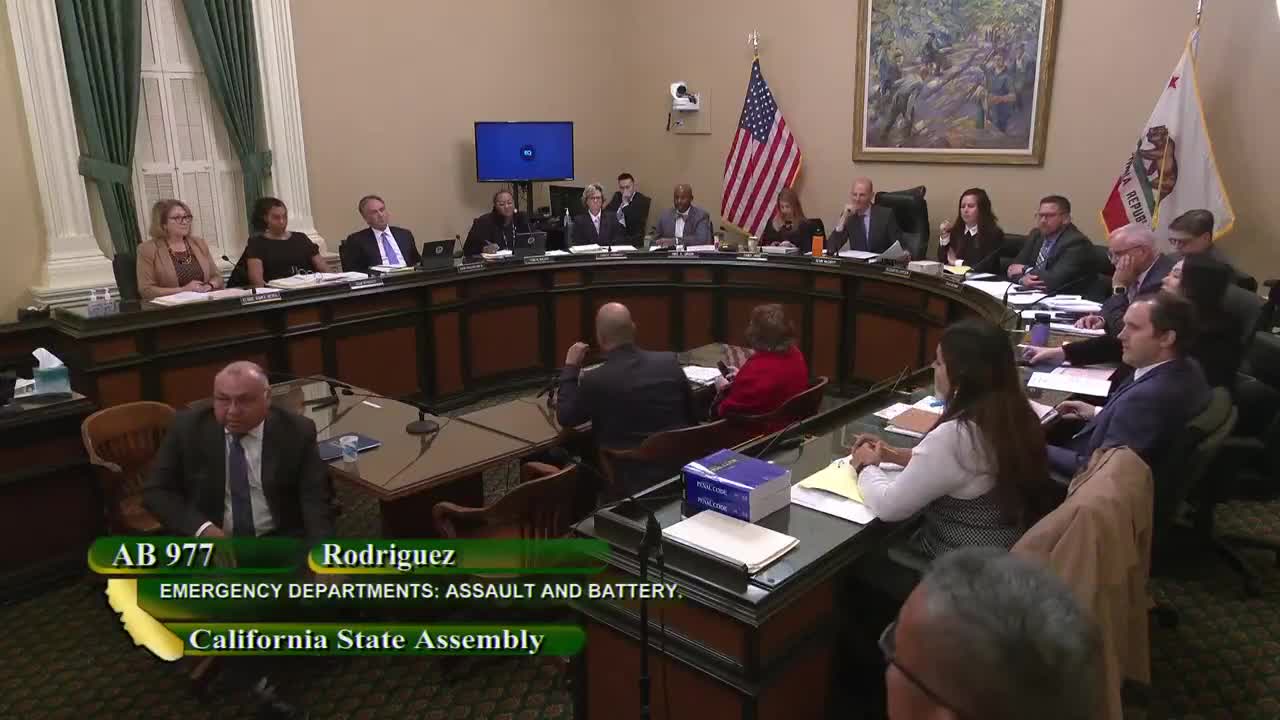 7MIN
Assembly Standing Committee on Public Safety
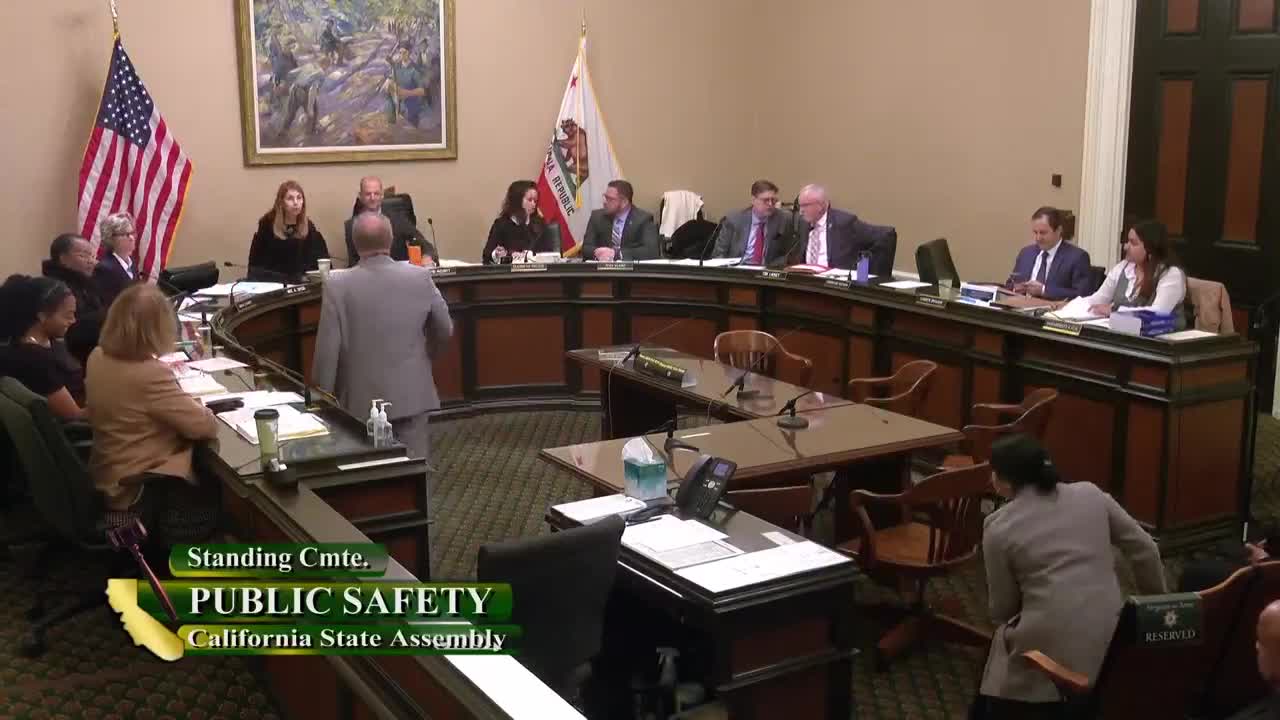 29SEC
Assembly Standing Committee on Public Safety
Bill Author

Bill Co-Author(s):