AB 1265: Transportation fuels: gasoline specifications.
- Session Year: 2023-2024
- House: Assembly
- Latest Version Date: 2023-03-09
Current Status:
Failed
(2024-01-03: From committee: Without further action pursuant to Joint Rule 62(a).)
Introduced
In Committee
First Chamber
In Committee
Second Chamber
Enacted
The California Global Warming Solutions Act of 2006 establishes the State Air Resources Board as the state agency responsible for monitoring and regulating sources emitting greenhouse gases. The act requires the state board to approve a statewide greenhouse gas emissions limit equivalent to the statewide greenhouse gas emissions level in 1990 and to ensure the statewide greenhouse gas emissions are reduced to at least 40% below the statewide greenhouse gas emissions limit by 2030. The act authorizes the state board to include the use of market-based compliance mechanisms in its regulation of greenhouse gas emissions.
This bill would specify that transportation fuels are not subject to regulations implementing a market-based compliance mechanism for greenhouse gas emissions.
Existing law authorizes the state board to adopt and implement motor vehicle fuel specifications for the control of air contaminants and sources of air pollution. Existing law authorizes the state board to grant variances from the gasoline specifications, as provided.
This bill would require the state board to grant variances from gasoline specifications, including for gasoline imported from outside the state, whenever a refinery outage or other supply interruption would result in substantial short-term price increases, as specified.
Existing law requires the state board to establish, by regulation, maximum standards for volatility of gasoline, as provided. Pursuant to these authorities, the state board has adopted the California Reformulated Gasoline regulations, which include regulations establishing the maximum Reid vapor pressure of gasoline for various regions of the state at specified time periods.
This bill would require the state board to waive the Reid vapor pressure requirement on summer-blend gasoline under the California Reformulated Gasoline regulations and to allow for the early transition to winter-blend gasoline if the state board determines that the gasoline market is experiencing a sudden and unusual increase in gasoline prices.
The California Global Warming Solutions Act of 2006 establishes the State Air Resources Board as the state agency responsible for monitoring and regulating sources emitting greenhouse gases. The act requires the state board to adopt rules and regulations to achieve the maximum technologically feasible and cost-effective greenhouse gas emissions reductions to ensure that the statewide greenhouse gas emissions are reduced to at least 40% below the statewide greenhouse gas emissions limit, as defined, no later than December 31, 2030. Pursuant to the act, the state board has adopted the Low Carbon Fuel Standard regulations.This bill would repeal the Low Carbon Fuel Standard regulations.The California Global Warming Solutions Act of 2006 establishes the State Air Resources Board as the state agency responsible for monitoring and regulating sources emitting greenhouse gases. The act requires the state board to adopt rules and regulations to achieve the maximum technologically feasible and cost-effective greenhouse gas emissions reductions to ensure that the statewide greenhouse gas emissions are reduced to at least 40% below the statewide greenhouse gas emissions limit, as defined, no later than December 31, 2030. Pursuant to the act, the state board has adopted the Low Carbon Fuel Standard regulations.
This bill would repeal the Low Carbon Fuel Standard regulations.
Transportation fuels are not subject to regulations implementing a market-based compliance mechanism adopted pursuant to Section 38562 and Part 5 (commencing with Section 38570).
SEC. 2.Section 43013.2 of the Health and Safety Code is amended to read:43013.2.(a) (1) The Legislature finds and declares that variances from the state boards gasoline specifications may be needed if gasoline producers cannot meet the specifications as required due to circumstances beyond their reasonable control, or to prevent sudden increases in gasoline prices for California consumers and businesses, and that the state boards process for granting variances from fuel specifications should be clarified.
(2)It is the intent of the Legislature that the variance process consider the impacts of granting the variance on all parties, including the applicant, the public, the producers of complying fuel, and upon air quality.
(b)The state board may grant variances from gasoline specifications adopted by the state board pursuant to Sections 43013 and 43018. In granting a variance, the board may impose fees and conditions.
(c)The state board shall adopt regulations to implement this section in accordance with Chapter 3.5 (commencing with Section 11340) of Part 1 of Division 3 of Title 2 of the Government Code. The regulations shall establish guidelines for the consideration of variances and the imposition of fees and conditions. Any fees or conditions shall be imposed in a fair and equitable manner consistent with the regulations. The regulations shall include methods for estimating excess emissions and factors to be considered in determining what is beyond the reasonable control of the applicant. The regulations also shall establish a schedule of fees to be paid by an applicant for a variance to cover the reasonable and necessary costs to the state board in processing the variance. The state board shall adopt initial regulations as emergency regulations after conducting at least one public workshop. The initial adoption of emergency regulations following the effective date of this section shall be deemed to be an emergency and necessary for the immediate preservation of the public peace, health and safety, or general welfare.
(d)All variance fee revenues collected pursuant to this section by the state board, except those fees paid by an applicant for a variance to cover the reasonable and necessary costs to the state board for processing the variance, shall be transmitted to the Treasurer for deposit in the High Polluter Repair or Removal Account created pursuant to subdivision (a) of Section 44091. All money deposited in the account pursuant to this section shall be available, upon appropriation by the Legislature, to implement a program for accelerated retirement of light-duty vehicles to achieve the emission reductions required by the M-1 Strategy of the 1994 State Implementation Plan.
(e)In considering whether to grant a variance, and with regard to any fees and conditions that are imposed as part of the variance, the state board shall take into account whether granting the variance will place the applicant at a cost advantage over other persons, including those persons who produce complying gasoline.
(f)Any determination of the state board, or the executive officer of the state board pursuant to the authority delegated pursuant to Section 39516, regarding the issuance of any variance from gasoline specifications shall be based solely upon substantial evidence in the record of the variance proceeding. The variance shall be valid for a period not exceeding 120 days, commencing on or after March 1, 1996. The variance may be extended, subject to this section, for up to 90 additional days, upon a showing of need. The board shall grant a variance only for the minimum period required to attain compliance.
(g)If a physical catastrophe occurs to a producer of complying gasoline, the state board may extend a variance upon the showing of need. Notwithstanding subdivision (f), any variance extension related to a physical catastrophe shall be approved by the state board. As used in this subdivision, physical catastrophe means a sudden unforeseen emergency beyond the reasonable control of the refiner, causing the severe reduction or total loss of one or more critical refinery units that materially impact the refiners ability to produce complying gasoline. Physical catastrophe does not include events which are not physical in nature such as design errors or omissions, financial or economic burdens, or any reduction in production that is not the direct result of qualifying physical damage.
(h)Notwithstanding any other provision of law, except in the case of emergency variances, the state board shall provide at least 10 days public notice of its consideration of any variance or extension.
(i)Notwithstanding any other provision of law, the state board shall grant variances from gasoline specifications adopted by the state board, including for the importation of gasoline from outside the state, whenever a refinery outage or other similar supply interruption would otherwise result in substantial short-term price increases for California consumers and businesses.
(i)(j)Subdivisions (b) and (e) do not constitute a change in, but are declaratory of, existing law.
SEC. 3.Section 43830.5 is added to the Health and Safety Code, to read:43830.5.The state board shall waive the Reid vapor pressure requirement on summer-blend gasoline specified in Section 2262.4 of Title 13 of the California Code of Regulations and shall allow for the early transition to winter-blend gasoline to lower gasoline prices for California consumers and businesses if the state board determines that the gasoline market is experiencing a sudden and unusual increase in gasoline prices.
SECTION 1.Section 38567.5 is added to the Health and Safety Code, to read:38567.5.(a)For purposes of this section, Low Carbon Fuel Standard means the Low Carbon Fuel Standard regulations (Subarticle 7 (commencing with Section 95480) of Article 4 of Subchapter 10 of Chapter 1 of Division 3 of Title 17 of the California Code of Regulations).(b)The Low Carbon Fuel Standard is hereby repealed.(a)For purposes of this section, Low Carbon Fuel Standard means the Low Carbon Fuel Standard regulations (Subarticle 7 (commencing with Section 95480) of Article 4 of Subchapter 10 of Chapter 1 of Division 3 of Title 17 of the California Code of Regulations).
(b)The Low Carbon Fuel Standard is hereby repealed.
|
Date
|
Status
|
|---|---|
| Jan 3, 2024 | From committee: Without further action pursuant to Joint Rule 62(a). |
| Apr 17, 2023 | In committee: Set, first hearing. Failed passage. |
| Mar 13, 2023 | Re-referred to Com. on TRANS. |
| Mar 9, 2023 | From committee chair, with author's amendments: Amend, and re-refer to Com. on TRANS. Read second time and amended. |
| Mar 9, 2023 | Referred to Coms. on TRANS. and NAT. RES. |
| Feb 17, 2023 | From printer. May be heard in committee March 19. |
| Feb 16, 2023 | Read first time. To print. |
|
Date
|
Description
|
Location
|
Votes
|
|
|---|---|---|---|---|
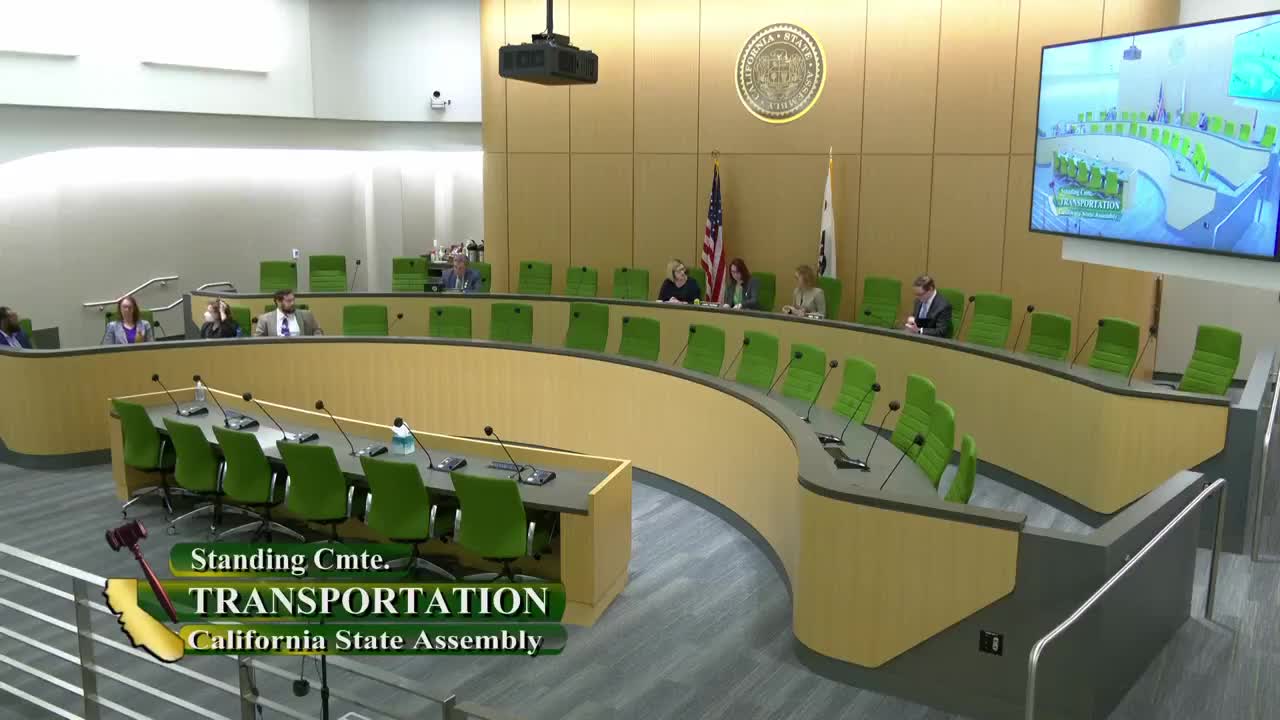
| Apr 17, 2023 | Do pass and be re-referred to the Committee on [Natural Resources] | Assembly Standing Committee on Transportation |
Failed |
This list shows positions taken on this bill by organizations on the date displayed, which is linked to the original source.
Positions by individuals are not included.
|
Organization
|
Position
|
Date
|
|---|---|---|
| California Nurses Association | ** Against |
Date of Hearing: April 17, 2023
ASSEMBLY COMMITTEE ON TRANSPORTATION
Laura Friedman, Chair
ABPCA Bill Id:AB 1265 (
Author:Gallagher) – As Amended Ver:March 9, 2023
SUBJECT: Transportation fuels: gasoline specifications
SUMMARY: Removes transportation fuels from under the state’s Cap-and-Trade program and requires the California Air Resources Board (CARB) to waive certain gasoline requirements in response to a sudden and unusual increase in gasoline prices. Specifically, this bill:
- States that transportation fuels are not subject to the state’s greenhouse gas emissions (GHG) limits and emissions reduction measures and the state’s market-based compliance mechanism that imposes declining annual aggregate emission limits for sources that emit GHGs, also known as Cap-and-Trade.
- Requires CARB to grant variances from its gasoline specifications, including the importation of gasoline from outside the state, whenever a refinery outage or other similar supply interruption would otherwise result in substantial short-term price increases for California consumers and businesses.
- Adds to codified findings and declarations that variances from CARB’s gasoline specifications may be needed to prevent sudden increases in gasoline prices for California consumers and businesses.
- Requires CARB to waive the Reid vapor pressure requirement on summer-blend gasoline and allow for the early transition to winter-blend gasoline to lower gasoline to lower gasoline prices for California consumers and businesses if CARB determines that the gasoline market is experiencing a sudden and unusual increase in gasoline prices.
EXISTING LAW:
- Makes findings and declarations that variances from CARB’s gasoline specifications may be needed if gasoline producers cannot meet the specifications as required due to circumstances beyond their reasonable control and that CARB’s process for granting variances from fuel specifications should be clarified. (Health and Safety Code (HSC) 38562)
- Requires CARB to adopt regulations establishing guidelines for the consideration of variances and the imposition of fees and conditions. Requires fees or conditions to be imposed in a fair and equitable manner consistent with the regulations. Requires the regulations to include methods for estimating excess emissions and factors to be considered in determining what is beyond the reasonable control of the applicant. Requires the regulations to establish a schedule of fees to be paid by an applicant for a variance to cover the reasonable and necessary costs to CARB in processing the variance.
- Requires CARB to adopt initial regulations as emergency regulations after conducting at least one public workshop.
- Requires variance fee revenues collected by CARB, except those paid by an applicant to cover the reasonable and necessary costs to CARB for processing the variance, to be transmitted to the Treasurer for deposit in the High Polluter Repair or Removal Account, and requires funds to be available, upon appropriation by the Legislature, to implement a program for accelerated retirement of light-duty vehicles to achieve emission reductions required by the M-1 Strategy of the 1994 State Implementation Plan.
- Requires CARB, pursuant to California Global Warming Solutions Act of 2006 (AB 32 (Núñez) Chapter 488, Statutes of 2006), to adopt a statewide greenhouse gas (GHG) emissions limit equivalent to 1990 levels by 2020 and to develop a scoping plan for achieving the maximum technologically feasible and cost effective reductions in GHGs. (HSC 38500)
- Requires, pursuant to SB 32 (Pavley) Chapter 249, Statutes of 2016 that CARB ensure that statewide GHG emissions are reduced to at least 40% below 1990 levels by 2030. (HSC 38566)
- Provides, pursuant to the California Climate Crisis Act (AB 1279 (Muratsuchi) Chapter 337, Statutes of 2022) that it is the policy of the state to do both of the following:
- Achieve net zero GHG emissions as soon as possible but no later than 2045; and,
- Ensure that by 2045, GHG emissions are reduced to at least 85% below 1990 levels.
- Authorizes CARB to include the use of market-based compliance mechanisms to comply with the GHG emissions limits and emissions reduction measures adopted by regulation to achieve the maximum technologically feasible and cost-effective reductions in GHG emissions. (HSC 38562 & 38570)
- Authorizes CARB to adopt a regulation that establishes a system of market-based declining annual aggregate emissions limits for sources or categories of sources that emit GHGs, applicable from January 1, 2012 to December 31, 2030. (HSC 38562)
FISCAL EFFECT: Unknown
COMMENTS: The state’s Cap-and-Trade Program establishes a declining limit on major sources of GHG emissions throughout California and creates an economic incentive for investment in cleaner, more efficient technologies. Cap-and-Trade covers approximately 80% of the state’s GHG emissions. CARB creates allowances equal to the total amount of permissible emissions (i.e., the “cap”). One allowance equals one metric ton of carbon dioxide equivalent emissions (using the 100-year global warming potential). Each year, fewer allowances are created and the annual cap declines. Covered entities may acquire allowances through auction, limited free allocation (for eligible entities), and by trading with other entities in the Program (i.e., the “trade”). A majority of allowances are made available through quarterly allowance auctions. Regulated entities must surrender allowances, and a limited number of offset credits, to cover their emissions. The increasing annual auction reserve (or floor) price for allowances, along with the reduction in annual allowances creates a steady and sustained carbon price signal to prompt action to reduce GHG emissions.
Starting in 2013, the state’s largest industrial emitters along with utilities and electricity generators and importers have been subject to the Cap-and-Trade Program. On January 1, 2015, fuels, such as gasoline, diesel and natural gas, were added under the Cap-and-Trade Program. This requires fuel suppliers to reduce GHG emissions by supplying low carbon fuels or purchasing pollution permits, called “allowances,” to cover the GHGs produced when the conventional petroleum-based fuel they supply is burned.
Transportation constitutes almost 40% of all carbon pollution produced in California, by far the largest contributor to GHG emissions. Transportation fuels also produce 80% of smog-causing pollution and more than 95% of fine particle pollution from diesel engines. Reducing emissions from the transportation sector is critical to achieving the state’s climate goals, as well as meeting ambient air quality standards and reducing localized health impacts.
In 2014, several Legislators attempted to delay the transition of bringing fuels under the cap. At that time, a report from the Legislative Analyst’s Office concluded that “gasoline price increase [of including fuels under the cap] likely will be roughly 13 cents to 20 cents per gallon, but could be higher.” The report also noted that “we could observe large increases in gasoline prices even if the [Cap-and-Trade] program itself has a small effect. For example, a price increase of 60 cents per gallon of gasoline—an increase larger than many of the estimates we reviewed—would be smaller than the difference between the highest and lowest weekly gasoline prices observed in 2013.”
Summer- and winter-grades of gasoline. In warmer temperatures, gasoline can evaporate from a car’s fuel system. This can produce additional smog and increased emissions. Summer-grade gasoline has a lower volatility, or lower Reid vapor pressure (RVP) than winter-grade gasoline to limit evaporative emissions that normally increase with warm weather and cause unhealthy ground-level ozone. It costs refiners several cents per gallon more to make summer-grade gasoline, compared with winter-grade fuel, which is part of the reason that retail pump prices can rise in the summer.
Gasoline grades vary from state-to-state, region-to-region based on state and federal requirements that may have stricter limits on volatility due to air quality concerns especially in high-smog areas. The RVP standards for California’s gasoline stem from the Clean Air Act of 1963 requiring the Environmental Protection Agency (EPA) to set National Ambient Air Quality Standards (NAAQS). The federally mandated dates for summer-grade gasoline and reformulated gasoline, where required, are May 1 to September 15 for refiners and terminals, and June 1 to September 15 for gasoline retailers. In California switchover dates are earlier, and summer-grade gasoline must be in use for a longer period. In September 2023, Governor Newsom directed CARB to transition to winter-blend gasoline one month early. The message stated, “In light of the dramatic increase in gas prices that California is experiencing, we should not wait until the end of the month to start distributing, or to ramp up production of, our winter-blend gasoline. Allowing refiners to make an early transition to winter-blend gasoline could quickly increase fuel supply and provide a much needed safety valve with minimal air quality impacts. Accordingly, I am directing that CARB immediately take whatever steps are necessary to allow for an early transition to winter-blend gasoline to be manufactured, imported, distributed, and sold in California.”
California’s gasoline prices have been steadily increasing and displaying substantial volatility for decades. Over the past twenty years, gasoline prices in California have risen from an annual average price of $1.56 a gallon in 2002 to $5.41 a gallon in 2022.[1] This increase is nearly double the rate of overall inflation over that time span, which, if it were the only factor at play, would correspond to $2.60 per gallon gasoline prices in 2022.[2] In addition to a long-term trend of increased prices, price volatility is also a concern, with weekly price swings of $0.30 per gallon not uncommon.[3]
Californians generally pay higher prices for gasoline compared to the rest of the country. According to the California Energy Commission (CEC), there are five main reasons why California retail gasoline prices are higher than the average price in the United States, specifically: higher taxes on gasoline, higher gasoline production costs, environmental program costs, California’s shorter winter season (which corresponds to higher relative consumption of the more expensive to produce summer-grade gasoline), and the isolated nature of the California fuels market.[4]
Gasoline prices at the pump in California have been increasing over time and showing volatility month-to-month and even week-to-week. The long-term rise in prices, extraordinary price volatility, and difference in gasoline prices compared to other states came to a head in the summer and fall of 2022. From a weekly average price of $2.74 a gallon in May 2020, prices rose to a peak of $6.29 a gallon in June 2022, followed by a brief decline leading into another peak of $5.90 in October 2022.
High prices and volatility prompted the Governor, on November 30th, 2022 to call a special session commencing December 5th, 2022 to consider and act upon legislation to:
- Deter price gouging by oil companies by imposing a financial penalty on excessive margins, with any penalties collected to be returned to Californians.
- Empower the Energy Commission and the Department of Tax and Fee Administration to more closely review and evaluate costs, profits, and pricing in the refining, distribution, and retail segments of the market for gasoline in California.
- Provide for greater regulatory oversight of the refining, distribution, and retail segments of the market to prevent avoidable supply shortages and excessive price increases.
- Make conforming changes to existing law consistent with paragraphs (a), (b), and (c).
SBX1-2 (Skinner of 2023) was introduced containing the concept and general framework for the Governor’s windfall profits penalty proposal The bill was amended to create a watchdog division within the CEC to investigate alleged price gouging by the oil industry, and to authorize the CEC to set through its rulemaking process a threshold above which profits would be penalized. SBX1-2 (Skinner), Chapter 1, Statutes of 2023 was enacted on March 28, 2023.
According to the author, “Californians are struggling to make ends meet with record inflation and rising costs. [This bill] is a multi-pronged and straightforward solution to provide immediate relief at the pump. California is a “fuel island” because of its strict regulations on gasoline formulations. Almost all of the gasoline consumed in the state comes from in-state refineries resulting in significant supply issues if there are refinery outages or production issues. Additionally, even though transportation fuel is subject to LCFS to reduce its carbon intensity, it is also subject to cap-and-trade, further increasing consumer costs. [This bill] will significantly lower costs by removing gasoline from cap-and-trade. The bill will also ensure a more nimble market if price spike are imminent by allowing CARB to grant variances from gasoline specifications, including for the import of gasoline from out of state and on when to transition fuel blends.”
In opposition, the California Nurse Association/National Nurses United (CNA) writes, “CNA opposes [this bill] because it undermines California’s long-standing efforts to combat climate change by granting exceptions for transportation fuel producers and providers that are entirely unnecessary and duplicative of current law. Historically, California has been a leader nationwide in the fight against climate change. [This bill] impairs this important work by rolling back regulation of transportation fuels and thereby reducing air quality in California. [This bill] would ultimately exacerbate the climate crisis, putting further pressure on our state’s already overburdened health system.
Exempting transportation fuels from regulations that impose market-based compliance mechanisms as proposed by [this bill] would severely weaken CARB’s ability to regulate GHG emissions. In 2006, California passed AB 32, the “California Global Warming Solutions Act of 2006,” taking the lead nationally in the transition to a sustainable, low-carbon future by requiring a sharp reduction of GHG emissions by 2030. Removing transportation fuels, one of the largest sources of GHG production, from the scope of this regulatory framework, will make it all but impossible for CARB to reach the goal set forth by AB 32.
[This bill] also requires CARB to grant variances from gasoline specifications to prevent short-term price increases as a result of supply disruption or refinery outages but this is entirely unnecessary as current law already allows for variances in the case of such emergencies. The inclusion of this language is thus entirely unnecessary, and would only serve to bail out negligent producers during refinery outages and supply interruptions that were foreseeable and preventable.
Additionally, the bill’s inclusion of provisions allowing CARB to waive Reid vapor pressure regulation and to regulate the transition from summer to winter-blend gasoline is also completely unnecessary, because…there is already a contingency in place for actual emergencies that cause increases in the price of gasoline. But [this bill] would make this extraordinary relief easier to grant in circumstances that do not rise to an emergency, thereby weakening California’s environmental protections.”
Committee comments: This bill would remove transportation fuels from under the state’s Cap-and-Trade program in an attempt to lower gas prices for Californians. However, there is no guarantee that this would result in lower gas prices for consumers, and it would seriously compromise the state’s ability to achieve its goal of reducing GHG emissions to 40% and 85% below 1990 levels by 2030 and 2045, respectively. In addition, this bill would require CARB to waive gasoline volatility requirements in response to unusual price increases. This could lead to deleterious air quality impacts such as an increase in smog-forming particulates and pollutants which would be especially detrimental in regions of California that are already in nonattainment for federal air quality standards. Moreover, it is unclear if this would be allowable under federal Clean Air Act requirements.
Double referral: This bill is double referred to the Assembly Natural Resources Committee and will be heard by that Committee as it relates to issues under its jurisdiction, should it pass out of this committee.
Related and previous legislation: SBX1-2 (Skinner) Chapter 1, Statutes of 2023 mandates that specified entities along California's oil and gasoline supply chain report extensive data to the CEC and authorizes the CEC to establish a maximum gross gasoline refining margin and penalty on gasoline sold by refiners in the state, pursuant to certain findings, and requires various reports and assessments by the CEC to be submitted to the Legislature regarding the current status and future managed decline of transportation fuels.
SB 1322 (Allen) Chapter 374, Statutes of 2022 provides more information about refiners’ margins by requiring reporting of data that will make windfall profits more apparent.
AB 69 (Perea of 2013) would have delayed application of cap and trade to the fuel industry for three years. This bill was held in the Senate Rules Committee.
SB 709 (Maddy) Chapter 675, Statutes of 1995 establishes legislative intent for gasoline specification variances.
REGISTERED SUPPORT / OPPOSITION:
Support
None on file
Opposition
California Nurses Association
Analysis Prepared by: Christine Casey / TRANS. / (916) 319-2093
U.S. Energy Information Administration (EIA); “California All Grades All Formulations Retail Gasoline Prices” ↑
U.S. Bureau of Labor Statistics; “CPI Inflation Calculator” ↑
EIA; “Weekly California All Grades All Formulations Retail Gasoline Prices” ↑
CEC; “What Drives California’s Gasoline Prices?” ↑
Discussed in Hearing
 17MIN
Assembly Standing Committee on Transportation
Bill Author

Bill Co-Author(s):