AB 554: Corporations for the prevention of cruelty to animals: enforcement of laws.
- Session Year: 2023-2024
- House: Assembly
- Latest Version Date: 2023-03-15
Current Status:
Failed
(2024-02-01: Died on inactive file.)
Introduced
In Committee
First Chamber
In Committee
Second Chamber
Enacted
Existing law authorizes the formation of nonprofit corporations under the Nonprofit Public Benefit Corporation Law by 20 or more persons for the prevention of cruelty to animals. Existing law authorizes a corporation, or human officer thereof, to proffer a complaint against any person, before any court or magistrate having jurisdiction, for the violation of any law relating to or affecting animals and to aid in the prosecution of the offender before a court or magistrate.
This bill would authorize a corporation, or humane officer thereof, proffering a complaint under existing law to bring it as a civil action to obtain specific or preventive injunctive relief to enforce laws relating to or affecting animals.
This bill would also make legislative findings and declarations in support of its provisions.
Existing law authorizes the formation of nonprofit corporations under the Nonprofit Public Benefit Corporation Law by 20 or more persons for the prevention of cruelty to animals. Existing law authorizes a corporation, or human officer thereof, to proffer a complaint against any person, before any court or magistrate having jurisdiction, for the violation of any law relating to or affecting animals and to aid in the prosecution of the offender before a court or magistrate.
This bill would authorize a corporation, or humane officer thereof, proffering a complaint under existing law to bring it as a civil action to obtain specific or preventive relief to enforce laws relating to or affecting animals.
This bill would also make legislative findings and declarations in support of its provisions.
The Legislature finds and declares all of the following:
(a)The Nonprofit Corporation Law governs the creation and operation of Societies for the Prevention of Cruelty to Animals to protect the legal interest of animals not to be subjected to cruelty or other forms of illegal harm. Under that law, Societies for the Prevention of Cruelty to Animals are authorized to proffer a complaint for the violation of any law relating to or affecting animals.
(b)This bill would clarify the authority of Societies for the Prevention of Cruelty to Animals to proffer a complaint to prevent cruelty to animals and other forms of illegal harm. This bill would specify that Societies for the Prevention of Cruelty to Animals may proffer a complaint by bringing a civil action for specific or preventive injunctive relief to prevent the violation of any law relating to or affecting animals.
SEC. 2.Section 10404 of the Corporations Code is amended to read:10404.(a)Any such corporation, or humane officer thereof, may proffer a complaint against any person, before any court or magistrate having jurisdiction, for the violation of any law relating to or affecting animals and may aid in the prosecution of the offender before the court or magistrate.
(b)Any such corporation, or humane officer thereof, proffering a complaint under subdivision (a), may bring it as a civil action for specific or preventive injunctive relief, including to enjoin possession, to enforce any law relating to or affecting animals that would be a basis for a complaint under subdivision (a).
The Legislature finds and declares all of the following:
(a)The Nonprofit Corporation Law governs the creation and operation of Societies for the Prevention of Cruelty to Animals to protect the legal interest of animals not to be subjected to cruelty or other forms of illegal harm. Under that law, Societies for the Prevention of Cruelty to Animals are authorized to proffer a complaint for the violation of any law relating to or affecting animals.
(b)This bill would clarify the authority of Societies for the Prevention of Cruelty to Animals to proffer a complaint to prevent cruelty to animals and other forms of illegal harm. This bill would specify that Societies for the Prevention of Cruelty to Animals may proffer a complaint by bringing a civil action for specific or preventive relief to prevent the violation of any law relating to or affecting animals.
SEC. 2.Section 10404 of the Corporations Code is amended to read:10404.(a)Any such corporation, or humane officer thereof, may proffer a complaint against any person, before any court or magistrate having jurisdiction, for the violation of any law relating to or affecting animals and may aid in the prosecution of the offender before the court or magistrate.
(b)Any such corporation, or humane officer thereof, proffering a complaint under subdivision (a), may bring it as a civil action for specific or preventive relief, including to enjoin possession, to enforce any law relating to or affecting animals that would be a basis for a complaint under subdivision (a).
|
Date
|
Status
|
|---|---|
| Feb 1, 2024 | Died on inactive file. |
| May 25, 2023 | Ordered to inactive file at the request of Assembly Member Gabriel. |
| Apr 26, 2023 | Read second time. Ordered to third reading. |
| Apr 25, 2023 | From committee: Do pass. (Ayes 9. Noes 0.) (April 24). |
| Mar 16, 2023 | Re-referred to Com. on B. & F. |
| Mar 15, 2023 | Read second time and amended. |
| Mar 14, 2023 | From committee: Amend, and do pass as amended and re-refer to Com. on B. & F. (Ayes 11. Noes 0.) (March 14). |
| Feb 27, 2023 | Re-referred to Coms. on JUD. and B. & F. pursuant to Assembly Rule 96. |
| Feb 17, 2023 | Referred to Coms. on B. & F. and JUD. |
| Feb 9, 2023 | From printer. May be heard in committee March 11. |
| Feb 8, 2023 | Read first time. To print. |
|
Date
|
Description
|
Location
|
Votes
|
|
|---|---|---|---|---|
| Apr 24, 2023 | Do pass. | Assembly Standing Committee on Banking and Finance |
Passed |
|
| Mar 14, 2023 | Do pass as amended and be re-referred to the Committee on [Banking and Finance] | Assembly Standing Committee on Judiciary |
Passed |
This list shows positions taken on this bill by organizations on the date displayed, which is linked to the original source.
Positions by individuals are not included.
|
Organization
|
Position
|
Date
|
|---|---|---|
| Agricultural Council Of California | * Against | Apr 24, 2023 |
| American Kennel Club, INC. | ** Support | |
| Animal Legal Defense Fund | * Support | Apr 24, 2023 |
| Association Of California Egg Farmers | ** Against | |
| California Agricultural Teachers Association | ** Against | |
| California Cattlemen'S Association | * Against | Apr 24, 2023 |
| California Farm Bureau | * Against | Apr 24, 2023 |
| California Grade and Feed Association | * Against | Apr 24, 2023 |
| California Grain and Feed Association | ** Against | |
| California Pork Producers Association | ** Against | |
| California Poultry Federation | * Against | Apr 24, 2023 |
| California Rifle Pistol Association | * Against | Mar 14, 2023 |
| Center For Biological Diversity | ** Support | |
| Milk Producers Council | ** Against | |
| Pacific Egg & Poultry Association | ** Against | |
| Platinum Advisors LLC | * Against | Apr 24, 2023 |
| Professional Bull Riders | ** Against | |
| Professional Rodeo Cowboys Association | ** Against | |
| Safari West | * Against | Apr 24, 2023 |
| Social Compassion In Legislation | * Support | Apr 24, 2023 |
| Western Fairs Association | * Against | Apr 24, 2023 |
| Western Justice | ** Against | |
| Western United Dairies | * Against | Apr 24, 2023 |
ASSEMBLY THIRD READING
ATR Bill Id:AB 554
Author:(Gabriel)
As Amended Ver:March 15, 2023
Majority vote
SUMMARY
Clarifies that nonprofit corporations established for the prevention of cruelty to animals may file specified civil actions to enjoin behavior affecting animals.
Major Provisions
- Provides that a nonprofit corporation established for the prevention of cruelty, or humane officer thereof may bring it as a civil action for specific or injunctive relief, including to enjoin possession, to enforce any law relating to or affecting animals that would be a basis for a complaint under existing animal welfare laws.
- Makes various findings and declarations about the need to clarify existing law to ensure the protection of animals from unlawful abuse.
COMMENTS
Since the 1900s, nonprofit corporations established for the prevention of cruelty towards animals have been authorized to assist law enforcement and prosecutors in stopping animal abuse by filing civil actions to stop conduct that is harmful to animals. However, the statutes authorizing such conduct are drafted in an arcane and confusing manner, thus requiring the nonprofits to regularly litigate their standing in cases seeking to stop animal abuse. This bill simply clarifies that nonprofit corporations have standing to file civil actions seeking injunctive relief to stop a person from committing animal abuse. In support of the measure, the author states:
AB 554 would strengthen California's animal protection laws by clarifying that Societies for the Protection of Cruelty to Animals (SPCAs) can seek injunctive relief to enforce civil protection laws. This bill would clarify the existing path for private enforcement of animal protection laws while conserving judicial resources. California enacted its animal cruelty laws in 1872 and has enacted many other important and groundbreaking animal protection laws in recent years. However, civil enforcement of these laws is often necessary to ensure the desired effect. Statutory clarification that incorporated SPCAs have standing to civilly enforce animal protection laws would ensure a consistent statewide standard, while saving the courts' time and resources adjudicating standing and related procedural issues.
Longstanding existing law permits Societies for the Protection of Cruelty to Animals to assist law enforcement through the civil justice system. In 1905, the Legislature authorized the creation of nonprofit corporations for the prevention of cruelty to animals. AB 481 (Drew) Chapter 434, Statutes of 1905. As a part of that initial authorization these corporations were authorized to "proffer a complaint against any person, before any court or magistrate having jurisdiction, for the violation of any law relating to or affecting animals and may aid in the prosecution of the offender before the court or magistrate." Ostensibly, this language was designed to permit these nonprofit corporations to assist local law enforcement agencies to enforce laws against animal cruelty. Although there is no readily available analysis of a 118 year-old bill, one can surmise that this assistance was necessary in 1905 because California undoubtedly lacked the existing animal welfare services, including shelters and code enforcement officers that serve to protect animals in the present day.
Ambiguities in existing law are forcing Societies for the Protection of Cruelty to Animals to repeatedly litigate their standing in matters seeking to enjoin practices constituting animal abuse. Although the authority for nonprofit corporations for the prevention of cruelty to animals to assist in the enforcement of animal welfare is over 100 years old, the nature of the drafting of this old statute has resulted in ambiguity as to what powers these nonprofits actually have. Indeed, the "proffer" language has led some private citizens to seek to file their own lawsuits to enforce animal laws, a move courts have held to be invalid. Furthermore, this vague language has required nonprofits to continuously relitigate their standing to file these cases in recent years. This has occurred despite prior holdings that the power of a nonprofit to civilly enforce animal welfare laws is part of an, "explicit and comprehensive legislative scheme for enforcement of anticruelty laws." (Animal Legal Defense Fund v. California Exposition & State Fairs (2008) 239 Cal. App. 4th 1286, 1297.) Indeed, the proponents of this measure note that, as recently as last year, the standing of nonprofit corporations seeking to enforce animal welfare laws was still the subject of appellate litigation. (Caru Society for Prevention of Cruelty to Animals v. Anthony, (Cal. Ct. App. Jun. 7, 2022) No. A160487.)
This bill. Seeking to provide greater clarity surrounding standing of nonprofit corporations for the prevention of cruelty to animals, this measure seeks to codify the ruling in an unpublished First District Court of Appeal case that upheld the right of these nonprofit corporations to file civil actions to stop animal abuse. The bill clarifies that, as they have for the past 118 years, nonprofit corporations for the prevention of cruelty to animals may file civil actions to stop animal abuse that is prohibited in the Penal Code. Additionally, this measure clarifies that, upon showing that animal abuse is occurring in violation of the Penal Code, a court order enjoining the unlawful conduct is the appropriate civil remedy. It should be noted that, much like the existing law, the provisions of this bill are civilly enforced and do not affect, preclude, or supersede any criminal enforcement brought by a district attorney.
According to the Author
AB 554 would strengthen California's animal protection laws by clarifying that Societies for the Protection of Cruelty to Animals (SPCAs) can seek injunctive relief to enforce civil protection laws. This bill would clarify the existing path for private enforcement of animal protection laws while conserving judicial resources. California enacted its animal cruelty laws in 1872 and has enacted many other important and groundbreaking animal protection laws in recent years. However, civil enforcement of these laws is often necessary to ensure the desired effect. Statutory clarification that incorporated SPCAs have standing to civilly enforce animal protection laws would ensure a consistent statewide standard, while saving the courts' time and resources adjudicating standing and related procedural issues.
Arguments in Support
This measure is supported by the Animal Legal Defense Fund Social Compassion in Legislation, an advocacy organization for animal welfare. They highlight the need to avoid unnecessary litigation over settled, but unclear, existing laws. The Animal Legal Defense Fund writes:
Under current law, California Corporations Code §10404, SPCAs, formed under California Corporations Code section 10400, are authorized to "proffer a complaint against any person, before any court or magistrate having jurisdiction, for the violation of any law relating to or affecting animals and may aid in the prosecution of the offender before the court or magistrate."
While the intent of the legislation authorizes SPCAs to file complaints seeking a wide range of remedies such as injunctive relief (i.e. a court order requiring a person to do or cease doing a specific action instead of monetary damages) to prevent animal cruelty, this has not always been the case in practice due to a lack of clarity in the original language. The authority to "proffer a complaint" is not explicitly defined, and the remedy for injunctive relief is not as clear as it could be. Defendants frequently take advantage of this ambiguity, wasting court resources and creating additional legal hurdles for those seeking to protect animals.
California enacted its animal cruelty law in 1872 and has enacted many other important and groundbreaking animal protection laws in recent years. Civil enforcement of these laws is often necessary to ensure desired effect. Statutory clarification that incorporated SPCAs have standing to civilly enforce animal protection laws would ensure a consistent statewide standard while saving the courts time and resources dealing with standing and related procedural issues.
SPCAs will more effectively be able to privately enforce animal protection laws, which is especially important when government agencies do not have resources to do so. Providing a clear path for private enforcement through injunctive relief (i.e. specific or preventive relief instead of monetary damages) takes pressure off the justice system to be the sole avenue for enforcement of animal cruelty.
Arguments in Opposition
This bill is opposed by a coalition of agricultural organizations, particularly those that raise animals. They argue:
The Corporations Code sets an incredibly low bar for a group to incorporate as an SPCA, meaning that virtually any group could simply file new or restated articles of incorporation which would then authorize it to bring civil suits under the provisions of AB 554. As a result, AB 554 is ripe for abuse by extremist groups which are fundamentally opposed to production agriculture, fairs, zoos, and other practices involving the keeping or handling of animals, causing undue reputational and financial harm to such businesses.
A fact sheet for AB 554 states that one aim of the bill is "conserving judicial resources." In reality, the bill will do just the opposite, increasing the burdens upon the state's civil justice system by establishing a new right of action for SPCAs and humane officers in the civil courts. Rather than the status quo, in which prosecutorial discretion may result in an ill-supported criminal claim avoiding the judicial process, for instance upon the prosecutor's determination that no law has been violated or there is insufficient evidence to prosecute, an SPCA under AB 554 can simply bring that ill-founded claim to civil court. Additionally, given the lower bar for bringing and litigating a civil case and the likelihood for abuse, significantly more § 10404 cases are likely to arise in the civil courts than are currently filed in criminal courts.
FISCAL COMMENTS
None
VOTES
ASM JUDICIARY: 11-0-0
YES: Maienschein, Essayli, Connolly, Dixon, Haney, Kalra, Pacheco, Papan, Reyes, Robert Rivas, Sanchez
ASM BANKING AND FINANCE: 9-0-3
YES: Grayson, Bauer-Kahan, Cervantes, Mike Fong, Gabriel, Petrie-Norris, Waldron, Wicks, Wilson
ABS, ABST OR NV: Chen, Dixon, Soria
UPDATED
VERSION: March 15, 2023
CONSULTANT: Nicholas Liedtke / JUD. / (916) 319-2334 FN: 0000238
Date of Hearing: April 24, 2023
ASSEMBLY COMMITTEE ON BANKING AND FINANCE
Timothy Grayson, Chair
ABPCA Bill Id:AB 554 (
Author:Gabriel) – As Amended Ver:March 15, 2023
SUBJECT: Corporations for the prevention of cruelty to animals: enforcement of laws
SUMMARY: Specifies that a nonprofit corporation established for the prevention of cruelty to animals may file specified civil actions to enjoin behavior affecting animals.
Specifically, this bill:
- Provides that a nonprofit corporation established for the prevention of cruelty, or humane officer thereof may bring it as a civil action for specific or injunctive relief, including to enjoin possession, to enforce any law relating to or affecting animals that would be a basis for a complaint under existing animal welfare laws.
- Makes various findings and declarations about the need to clarify existing law to ensure the protection of animals from unlawful abuse.
EXISTING LAW:
- Establishes the Nonprofit Public Benefit Corporation Law and provides for the rules and regulations of corporations established for a public or charitable purpose. (Corporations Code Section 5110 et seq.)
- Provides that corporations for the prevention of cruelty to animals may be formed under the Nonprofit Public Benefit Corporation Law by groups of 20 or more persons who are residents of the State of California. (Corporations Code Section 10400.)
- Requires all magistrates, sheriffs, and officers of police, as may be required, to assist a public benefit corporation established for the prevention of cruelty to animals, as well as its officers, members, and agents, in the enforcement of all laws relating to or affecting animals. (Corporations Code Section 10405.)
- Authorizes a public benefit corporation established for the prevention of cruelty to animals to proffer a complaint against any person, before any court or magistrate having jurisdiction, for the violation of any law relating to or affecting animals and may aid in the prosecution of the offender before the court or magistrate. (Corporations Code Section 10404.)
FISCAL EFFECT: None. This bill is keyed non-fiscal by Legislative Counsel.
COMMENTS:
- Purpose.
According to the author:
AB 554 would strengthen California's animal protection laws by clarifying that Societies for the Protection of Cruelty to Animals (SPCAs) can seek injunctive relief to enforce civil protection laws. This bill would clarify the existing path for private enforcement of animal protection laws while conserving judicial resources. California enacted its animal cruelty laws in 1872 and has enacted many other important and groundbreaking animal protection laws in recent years. However, civil enforcement of these laws is often necessary to ensure the desired effect. Statutory clarification that incorporated SPCAs have standing to civilly enforce animal protection laws would ensure a consistent statewide standard, while saving the courts’ time and resources adjudicating standing and related procedural issues.
- Nonprofit Public Benefit Corporations and Animal Welfare Organizations
The majority of the registered nonprofit corporations in California are organized as public benefit corporations. Under California law, a public benefit corporation must be formed for public or charitable purposes and may not be organized for the private gain of any person. A public benefit corporation cannot distribute profits, gains, or dividends to any person. Public benefit corporations often qualify for exemption from income tax. However, the failure of a public benefit corporation to qualify for income tax exemption does not necessarily free the organization and its responsible directors or officers from accountability of charitable assets.
While public benefit corporations can form for a host of different charitable purposes, California law explicitly identifies and differentiates a corporation for the prevention of cruelty to animals, which is provided a quasi-governmental function. The Nonprofit Public Benefit Corporation Law grants these nonprofit organizations the power to “proffer” complaints against a person for the violation of any law relating to or affecting animals and may aid in the prosecution of the offender before the court. Separately, Corporations Code Section 14500 authorizes Societies for the Preventions of Cruelty to Animals (SPCAs) to appoint humane officers who assist in the enforcement of California’s animal protection laws. Humane officers exercise the powers of a peace officers and help in the prevention and investigation of animal abuse as well as the apprehension of suspected animal abusers.
Animal welfare organizations use the enforcement authority granted to them under the Corporations Code. In 2017, an SPCA filed lawsuit against a California business owner for operating an illegal puppy mill. According to the Animal Legal Defense Fund (ALDF), the property held as many as 50 dogs, and generated complaints from neighbors about odors, dog bites, and unsanitary conditions. The SPCA brought the lawsuit under California Corporations Code section 10404, the code section that is the subject of this bill.
While SPCAs are granted special status under the Corporations Code, the process for forming them has undergone changes specifically intended to promote the formation of nonprofits and reduce burdens on the courts. SB 1417 (Cox), Chapter 652, Statutes of 2010, repealed Corporations Code Sections 10401 and 10402, eliminating the requirement that the organization’s articles of incorporation be endorsed either by the Department of Justice or by the judge of the superior court in the county. Following the enactment of SB 1417, a corporation for the prevention of cruelty to animals can be formed without the need to obtain endorsement of its articles or other special restrictions.
- What this bill does.
AB 554 specifies that a SCPA, or its humane officer, proffering a complaint under current law may bring it as a civil action for specific or injunctive relief to enforce any law relating to or affecting animals that would otherwise be a basis for a complaint under current law. According to supporters, AB 554 clarifies an enforcement authority that already exists, and the bill was previously heard in Assembly Judiciary Committee, where it passed out 11-0.
Since passing Assembly Judiciary Committee on a bipartisan basis, a collection of agriculture groups have come out in opposition, arguing that AB 554 expands Corporations Code Section 10404 to establish a new private right of action for SPCAs. Supporters and opponents have now offered the committee their interpretation of case law and the legislative intent of this nearly 120 year old law.
Opponents appear most worried about the possibility of activist organizations forming SPCAs for the purpose of engaging in frivolous and burdensome legal activism. As part of their argument, they point to how easily a group of individuals can form a SPCA (especially given legislative reforms in 2010), and they also contend the two cases cited by AB 554’s sponsors aren’t as clear cut as represented.
The debate about what current law does or does not authorize a SPCA to do is relevant to the Legislature’s decision on AB 554, and both opponents and supporters have submitted materials to the committee to support their respective cases. On balance, it does appear that case law supports the author’s argument that AB 554 is strengthening an existing path for private enforcement of animal protection laws. However, the author may wish to obtain an opinion from Legislative Counsel, who can help referee the disagreement between the two parties to provide the Legislature further guidance.
Importantly, this disagreement about the contours of current law also distracts from what should be the debate around AB 554: is it good policy to empower SPCAs to more effectively enforce animal protection laws, either by clarifying their existing authority (as argued by supporters) or by creating a new authority (as argued by opponents)?
The cases cited by both supporters and opposition show that SPCA actions directly resulted in the further prevention of animal cruelty. In one dog hoarding case, the local city attorney’s office lacked the resources to engage in the litigation required to prevent further neglect, and in another case a preliminary injunction was entered that prevented the further sale of sick and underage puppies. In a world of limited law enforcement resources and a need to prioritize those resources, SPCAs can play a crucial role in ensuring animals are protected.
- Support
This bill is supported by ALDF, who writes:
Under current law, California Corporations Code §10404, SPCAs, formed under California Corporations Code section 10400, are authorized to “proffer a complaint against any person, before any court or magistrate having jurisdiction, for the violation of any law relating to or affecting animals and may aid in the prosecution of the offender before the court or magistrate.”
While the intent of the legislation authorizes SPCAs to file complaints seeking a wide range of remedies such as injunctive relief (i.e. a court order requiring a person to do or cease doing a specific action instead of monetary damages) to prevent animal cruelty, this has not always been the case in practice due to a lack of clarity in the original language. The authority to "proffer a complaint" is not explicitly defined, and the remedy for injunctive relief is not as clear as it could be. Defendants frequently take advantage of this ambiguity, wasting court resources and creating additional legal hurdles for those seeking to protect animals.
…SPCAs will more effectively be able to privately enforce animal protection laws, which is especially important when government agencies do not have resources to do so. Providing a clear path for private enforcement through injunctive relief (i.e. specific or preventive relief instead of monetary damages) takes pressure off the justice system to be the sole avenue for enforcement of animal cruelty
- Opposition
Groups representing agricultural interests, such as the California Farm Bureau, California Poultry Association, California Cattlemen’s Association, and the Milk Producers Council, oppose AB 554, arguing it creates a new private right of action and would encourage a wave of unwarranted lawsuits from activist groups. These groups argue that AB 554 is ripe for abuse by bad actors and that no civil cause of action is necessary in light of existing criminal authorities. The coalition argues:
Prosecutions in criminal court under § 10404 have an important safeguard for the accused: the direct involvement of the state in advancing such prosecutions. The complaint must be proffered to a court or magistrate, and while an SPCA humane officer “may aid in the prosecution of the offender before the court or magistrate” (Corp. Code § 10404), that prosecution will still be brought by a government prosecutor on behalf of the People. In this context, prosecutors vet any allegations made by an SPCA or humane officer, ensuring both that a legally-cognizable ‘wrong’ has been perpetrated and that there is sufficient evidence to successfully prosecute the case.
State actors acting as a ‘buffer’ against ill-founded prosecutions would be absent in the filing of a civil complaint, however, rendering AB 554 ripe for abuse by ill-intentioned actors, including extremist animal rights groups. Well-funded organizations could bring spurious or frivolous claims of ‘abuse’ against humanely-operating livestock producers, zoos, fairs, and other businesses in an effort to tarnish their reputations, to force the expenditure of significant time and monetary resources in their defense, or to exact civil settlements from these businesses. Such plaintiffs need not win at trial on the legal merits of these cases; merely filing and pursuing a civil lawsuit can achieve their end of irreparably damaging businesses engaged in the production, stewardship, and care of animals.
REGISTERED SUPPORT / OPPOSITION:
Support
American Kennel Club, INC.
Animal Legal Defense Fund
Center for Biological Diversity
Social Compassion in Legislation
Oppose
Agricultural Council of California
Association of California Egg Farmers
California Agricultural Teachers Association
California Cattlemen's Association
California Farm Bureau
California Grain and Feed Association
California Pork Producers Association
California Poultry Federation
Milk Producers Council
Pacific Egg & Poultry Association
Professional Bull Riders
Professional Rodeo Cowboys Association
Western Justice
Western United Dairies
Analysis Prepared by: Luke Reidenbach / B. & F. / (916) 319-3081
Date of Hearing: March 14, 2023
ASSEMBLY COMMITTEE ON JUDICIARY
Brian Maienschein, Chair
ABPCA Bill Id:AB 554
Author:(Gabriel) – As Introduced Ver:February 8, 2023
proposed consent (As Proposed to be Amended)
SUBJECT: Corporations for the prevention of cruelty to animals: enforcement of laws
KEY ISSUE: should the existing law regarding the ability of a nonprofit corporation established for the prevention of cruelty to animals to bring a civil action for injunctive relief to enforce animal welfare laws be clarified?
SYNOPSIS
This non-controversial and straightforward measure codifies recent case law to clarify the 118-year statutory language authorizing nonprofit corporations established for the prevention of cruelty to animals to file civil actions to stop conduct that violates California’s animal welfare laws. Originally adopted in 1905, California law permits animal welfare nonprofits to “proffer a complaint against any person, before any court or magistrate having jurisdiction, for the violation of any law relating to or affecting animals.” Given that this statute indeed reads like a 118-year old law, in recent years nonprofits established for the prevention of the cruelty to animals have been forced to repeatedly litigate their ability to file civil law suits. Meanwhile, defendants seek to use the oddly worded statute to evade responsibility for violating animal cruelty laws. This measure simply codifies a 2022 appellate court opinion to make it clear that nonprofit corporations established for the prevention of cruelty to animals have standing to file civil actions to seek an injunction to prevent ongoing abuse to animals.
This bill is supported by Animal Legal Defense Fund and Social Compassion in Legislation. Both organizations note that clarifying the law regarding standing to enforce animal cruelty laws will cut down on needless litigation and ensure that legal actions to protect animals can proceed in a more expedient manner, thereby more quickly removing animals from harm. As proposed to be amended, this bill has no known opposition. Should this bill be approved by this Committee, it will subsequently be referred to the Committee on Banking and Finance.
SUMMARY: Clarifies that nonprofit corporations established for the prevention of cruelty to animals may file specified civil actions to enjoin behavior affecting animals. Specifically, this bill:
- Provides that a nonprofit corporation established for the prevention of cruelty, or humane officer thereof may bring it as a civil action for specific or injunctive relief, including to enjoin possession, to enforce any law relating to or affecting animals that would be a basis for a complaint under existing animal welfare laws.
- Makes various findings and declarations about the need to clarify existing law to ensure the protection of animals from unlawful abuse.
EXISTING LAW:
- Establishes the Nonprofit Public Benefit Corporation Law and provides for the rules and regulations of corporations established for a public or charitable purpose. (Corporations Code Section 5110 et seq.)
- Provides that corporations for the prevention of cruelty to animals may be formed under the Nonprofit Public Benefit Corporation Law by groups of 20 or more persons who are residents of the State of California. (Corporations Code Section 10400.)
- Requires all magistrates, sheriffs, and officers of police, as may be required, to assist a public benefit corporation established for the prevention of cruelty to animals, as well as its officers, members, and agents, in the enforcement of all laws relating to or affecting animals. (Corporations Code Section 10405.)
- Authorizes a public benefit corporation established for the prevention of cruelty to animals to proffer a complaint against any person, before any court or magistrate having jurisdiction, for the violation of any law relating to or affecting animals and may aid in the prosecution of the offender before the court or magistrate. (Corporations Code Section 10404.)
- Provides that every person who maliciously and intentionally maims, mutilates, tortures, or wounds a living animal, or maliciously and intentionally kills an animal, other than species designated for protection by the Fish and Game Code, is guilty of a crime punishable as a felony by imprisonment or by a fine of not more than twenty thousand dollars ($20,000), or by both that fine and imprisonment, or alternatively, as a misdemeanor by imprisonment in a county jail for not more than one year, or by a fine of not more than twenty thousand dollars ($20,000), or by both that fine and imprisonment. (Penal Code Section 597 (a).)
- Provides that every person is liable to punishment by the laws of this State, for a public offense committed by them therein, except where it is by law cognizable exclusively in the courts of the United States; and except as otherwise provided by law the jurisdiction of every public offense is in any competent court within the jurisdictional territory of which it is committed. (Penal Code Section 777.)
- Provides that preventive relief is granted by injunction, provisional or final. (Civil Code Section 3420.)
- Provides that upon notice and motion, the court may modify or dissolve a final injunction upon a showing that there has been a material change in the facts upon which the injunction was granted, that the law upon which the injunction was granted has changed, or that the ends of justice would be served by the modification or dissolution of the injunction. (Civil Code Section 3424 (a).)
- Requires every civil action to be prosecuted in the name of the real party in interest, except as otherwise provided by statute. (Code of Civil Procedure Section 367.)
- Provides that the following persons may sue, in a civil action, without joining as parties the persons for whose benefit the action is prosecuted:
- A personal representative, as specified;
- A trustee of an express trust;
- A person with whom, or in whose name, a contract is made for the benefit of another, except as specified; and
- Any other person expressly authorized by statute. (Code of Civil Procedure Section 369 (a).)
FISCAL EFFECT: As currently in print this bill is keyed non-fiscal.
COMMENTS: Since the 1900s, nonprofit corporations established for the prevention of cruelty towards animals have been authorized to assist law enforcement and prosecutors in stopping animal abuse by filing civil actions to stop conduct that is harmful to animals. However, the statutes authorizing such conduct are drafted in an arcane and confusing manner, thus requiring the nonprofits to regularly litigate their standing in cases seeking to stop animal abuse. This bill simply clarifies that nonprofit corporations have standing to file civil actions seeking injunctive relief to stop a person from committing animal abuse. In support of the measure, the author states:
AB 554 would strengthen California's animal protection laws by clarifying that Societies for the Protection of Cruelty to Animals (SPCAs) can seek injunctive relief to enforce civil protection laws. This bill would clarify the existing path for private enforcement of animal protection laws while conserving judicial resources. California enacted its animal cruelty laws in 1872 and has enacted many other important and groundbreaking animal protection laws in recent years. However, civil enforcement of these laws is often necessary to ensure the desired effect. Statutory clarification that incorporated SPCAs have standing to civilly enforce animal protection laws would ensure a consistent statewide standard, while saving the courts’ time and resources adjudicating standing and related procedural issues.
Longstanding existing law permits Societies for the Protection of Cruelty to Animals to assist law enforcement through the civil justice system. In 1905, the Legislature authorized the creation of nonprofit corporations for the prevention of cruelty to animals. (AB 481 (Drew) Chap. 434, Stats. 1905.) As a part of that initial authorization these corporations were authorized to “proffer a complaint against any person, before any court or magistrate having jurisdiction, for the violation of any law relating to or affecting animals and may aid in the prosecution of the offender before the court or magistrate.” Ostensibly, this language was designed to permit these nonprofit corporations to assist local law enforcement agencies to enforce laws against animal cruelty. Although there is no readily available analysis of a 118 year-old bill, one can surmise that this assistance was necessary in 1905 because California undoubtedly lacked the existing animal welfare services, including shelters and code enforcement officers, that serve to protect animals in the present day.
Ambiguities in existing law are forcing Societies for the Protection of Cruelty to Animals to repeatedly litigate their standing in matters seeking to enjoin practices constituting animal abuse. Although the authority for nonprofit corporations for the prevention of cruelty to animals to assist in the enforcement of animal welfare is over 100 years old, the nature of the drafting of this old statute has resulted in ambiguity as to what powers these nonprofits actually have. Indeed, the “proffer” language has led some private citizens to seek to file their own lawsuits to enforce animal laws, a move courts have held to be invalid. Furthermore, this vague language has required nonprofits to continuously relitigate their standing to file these cases in recent years. This has occurred despite prior holdings that the power of a nonprofit to civilly enforce animal welfare laws is part of an, “explicit and comprehensive legislative scheme for enforcement of anticruelty laws.” (Animal Legal Defense Fund v. California Exposition & State Fairs (2008) 239 Cal. App. 4th 1286, 1297.) Indeed, the proponents of this measure note that, as recently as last year, the standing of nonprofit corporations seeking to enforce animal welfare laws was still the subject of appellate litigation. (Caru Society for Prevention of Cruelty to Animals v. Anthony, (Cal. Ct. App. Jun. 7, 2022) No. A160487.)
This bill. Seeking to provide greater clarity surrounding standing of nonprofit corporations for the prevention of cruelty to animals, this measure seeks to codify the ruling in an unpublished First District Court of Appeal case that upheld the right of these nonprofit corporations to file civil actions to stop animal abuse. The bill clarifies that, as they have for the past 118 years, nonprofit corporations for the prevention of cruelty to animals may file civil actions to stop animal abuse that is prohibited in the Penal Code. Additionally, this measure clarifies that, upon showing that animal abuse is occurring in violation of the Penal Code, a court order enjoining the unlawful conduct is the appropriate civil remedy. It should be noted that, much like the existing law, the provisions of this bill are civilly enforced and do not affect, preclude, or supersede any criminal enforcement brought by a district attorney.
Author’s amendments better align this bill to existing case law. As noted, this bill simply clarifies the court’s holding in Caru Society for Prevention of Cruelty to Animals v. Anthony. Some animal stakeholders note that in that decision the court ordered injunctive relief. The bill, as currently in print, provides for “preventive relief.” Although the existing Civil Code Section 3420 essentially defines “preventative relief” to mean injunctive relief, some stakeholders worried this language may introduce ambiguity into a bill designed to clarify a presently ambiguous statute, and permit enforcement actions to be filed before any action violating the Penal Code actually occurred. Given that this was not the intent of this bill, and to fully align this bill with the decision in the Caru Society for Prevention of Cruelty to Animals v. Anthony, the author is proposing the following amendment to subdivision (b) of Corporations Code Section 10404 to read:
(b) Any such corporation, or humane officer thereof, proffering a complaint under subdivision (a), may bring it as a civil action for specific or injunctive preventive relief, including to enjoin possession, to enforce any law relating to or affecting animals that would be a basis for a complaint under subdivision (a).
ARGUMENTS IN SUPPORT: This measure is supported by the Animal Legal Defense Fund Social Compassion in Legislation, an advocacy organization for animal welfare. They highlight the need to avoid unnecessary litigation over settled, but unclear, existing laws. The Animal Legal Defense Fund writes:
Under current law, California Corporations Code §10404, SPCAs, formed under California Corporations Code section 10400, are authorized to “proffer a complaint against any person, before any court or magistrate having jurisdiction, for the violation of any law relating to or affecting animals and may aid in the prosecution of the offender before the court or magistrate.”
While the intent of the legislation authorizes SPCAs to file complaints seeking a wide range of remedies such as injunctive relief (i.e. a court order requiring a person to do or cease doing a specific action instead of monetary damages) to prevent animal cruelty, this has not always been the case in practice due to a lack of clarity in the original language. The authority to "proffer a complaint" is not explicitly defined, and the remedy for injunctive relief is not as clear as it could be. Defendants frequently take advantage of this ambiguity, wasting court resources and creating additional legal hurdles for those seeking to protect animals.
California enacted its animal cruelty law in 1872 and has enacted many other important and groundbreaking animal protection laws in recent years. Civil enforcement of these laws is often necessary to ensure desired effect. Statutory clarification that incorporated SPCAs have standing to civilly enforce animal protection laws would ensure a consistent statewide standard while saving the courts time and resources dealing with standing and related procedural issues.
SPCAs will more effectively be able to privately enforce animal protection laws, which is especially important when government agencies do not have resources to do so. Providing a clear path for private enforcement through injunctive relief (i.e. specific or preventive relief instead of monetary damages) takes pressure off the justice system to be the sole avenue for enforcement of animal cruelty.
REGISTERED SUPPORT / OPPOSITION:
Support
Animal Legal Defense Fund
Social Compassion in Legislation
Opposition
None on file
Analysis Prepared by: Nicholas Liedtke / JUD. / (916) 319-2334
Discussed in Hearing
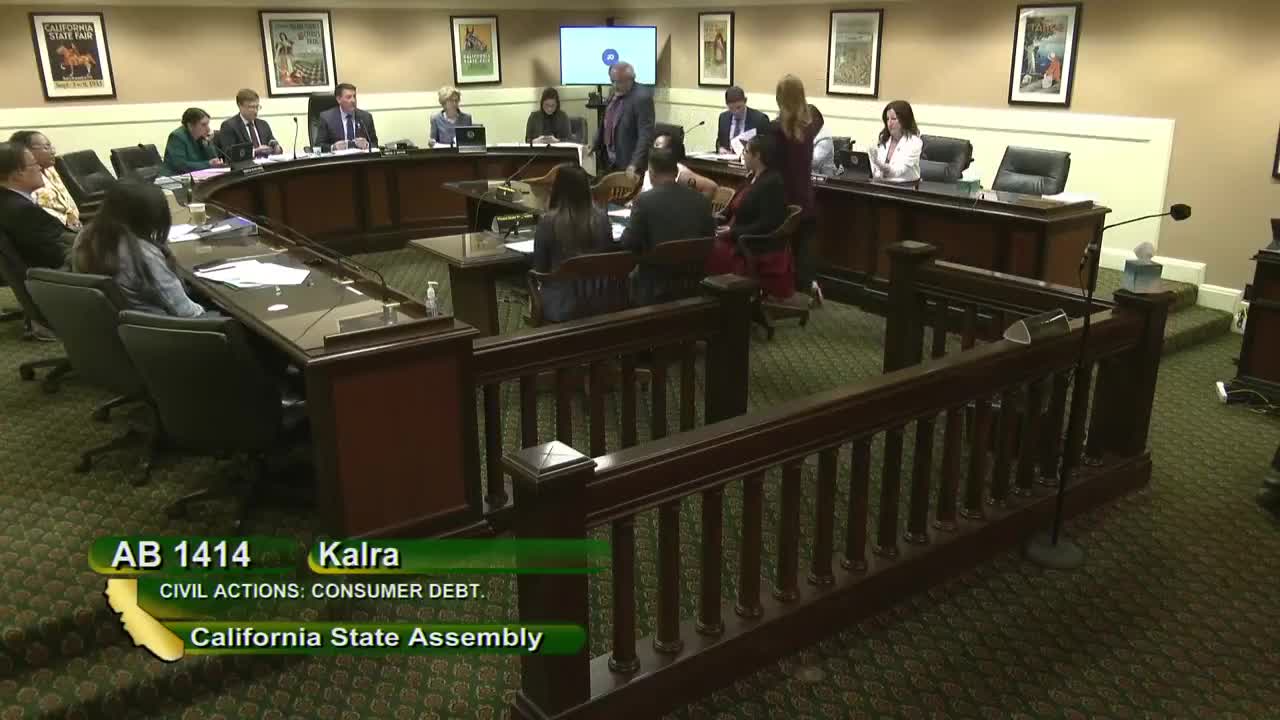 32MIN
Assembly Standing Committee on Banking and Finance
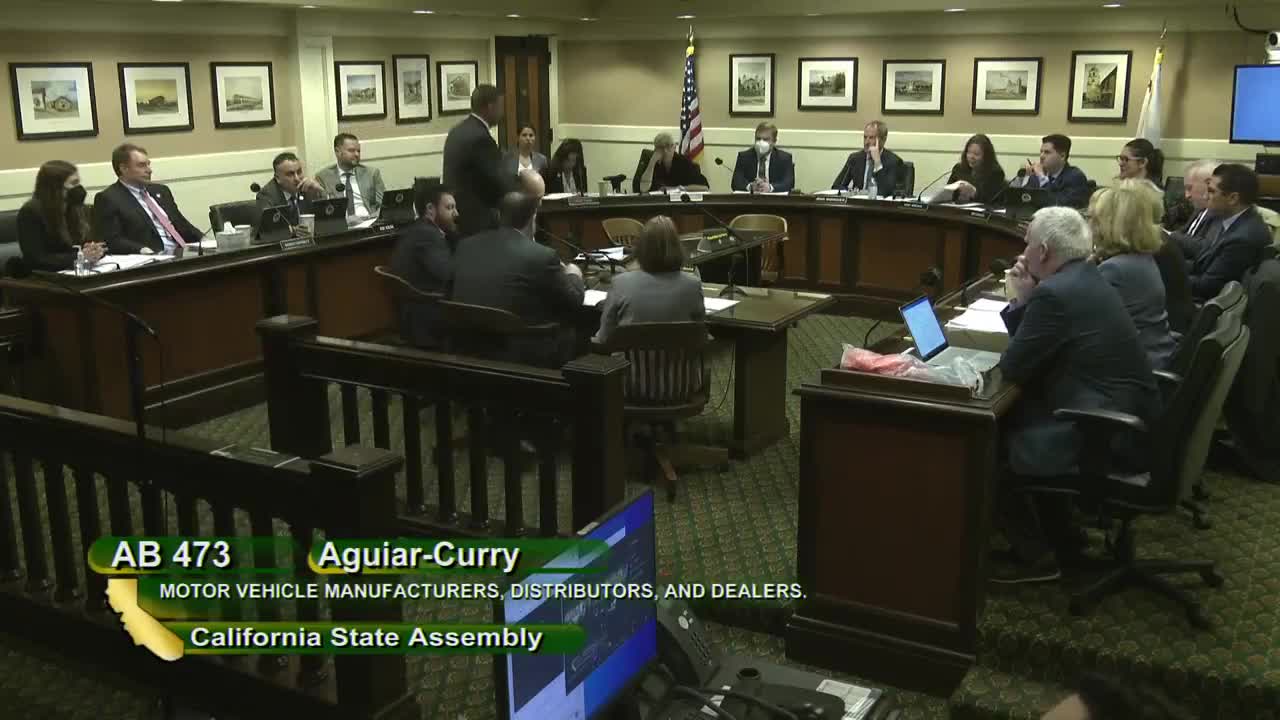 6MIN
Assembly Standing Committee on Judiciary
Bill Author