AB 673: Hydrogen-fueling stations: preference.
- Session Year: 2023-2024
- House: Assembly
- Latest Version Date: 2023-03-13
Current Status:
Failed
(2024-02-01: From committee: Filed with the Chief Clerk pursuant to Joint Rule 56.)
Introduced
In Committee
First Chamber
In Committee
Second Chamber
Enacted
What does this bill do?
The bill requires the California Energy Commission, when deciding whether to fund hydrogen fueling stations for medium‑ and heavy‑duty vehicles, to evaluate if those stations should also serve light‑duty vehicles. In that review the commission must consider safety, local demand from light‑duty hydrogen vehicles, and how much fuel the station can supply; the rule does not apply to the state’s Clean Transportation Program or certain existing fund allocations.
The summary is provided by generative AI which can make mistakes. For original language, please view the details in the table below.
Existing law establishes the Clean Transportation Program, administered by the State Energy Resources Conservation Development Commission to provide financial assistance to develop and deploy innovative technologies that transform Californias fuel and vehicle types to help attain the states climate change policies. Existing law specifies projects that are eligible for financial assistance, including alternative and renewable fuel projects to develop and improve alternative and renewable low-carbon fuels, including, among other fuels, hydrogen. Existing law specifies that the moneys in the Alternative and Renewable Fuel and Vehicle Technology Fund, upon appropriation by the Legislature, are to be used by the commission to implement the program. Existing law, until January 1, 2024, requires the commission to annually allocate $20,000,000, not to exceed 20% of the moneys appropriated by the Legislature from the Alternative and Renewable Fuel and Vehicle Technology Fund, to fund the deployment of publicly available hydrogen-fueling stations, as provided.
This bill would, except for the Clean Transportation Program and moneys allocated from the Alternative and Renewable Fuel and Vehicle Technology Fund, require the commission to give a preference to projects for the construction and operation of publicly available hydrogen-fueling stations that provide fuel for all types of vehicles, including light-, medium-, and heavy-duty vehicles, in programs it administers providing financial assistance to those projects. commission, when considering providing funding for projects for the construction and operation of hydrogen-fueling medium- and heavy-duty stations, to evaluate whether the project needs to also include access for light-duty vehicles. In this evaluation, the bill would require the commission to consider safety, regional light-duty vehicle hydrogen fueling needs, and the station fueling capacity.
Existing law establishes the Clean Transportation Program, administered by the State Energy Resources Conservation Development Commission to provide financial assistance to develop and deploy innovative technologies that transform Californias fuel and vehicle types to help attain the states climate change policies. Existing law specifies projects that are eligible for financial assistance, including alternative and renewable fuel projects to develop and improve alternative and renewable low-carbon fuels, including, among other fuels, hydrogen. Existing law specifies that the moneys in the Alternative and Renewable Fuel and Vehicle Technology Fund, upon appropriation by the Legislature, are to be used by the commission to implement the program. Existing law, until January 1, 2024, requires the commission to annually allocate $20,000,000, not to exceed 20% of the moneys appropriated by the Legislature from the Alternative and Renewable Fuel and Vehicle Technology Fund, to fund the deployment of publicly available hydrogen-fueling stations, as provided.
This bill would, except for the Clean Transportation Program and moneys allocated from the Alternative and Renewable Fuel and Vehicle Technology Fund, require the commission to give a preference to projects for the construction and operation of publicly available hydrogen-fueling stations that provide fuel for all types of vehicles, including light-, medium-, and heavy-duty vehicles, in programs it administers providing financial assistance to those projects.
(a)Except as provided in subdivision (b), the commission shall give a preference to projects for the construction and operation of publicly available hydrogen-fueling stations that provide fuel for all types of vehicles, including light-, medium-, and heavy-duty vehicles, in programs it administers providing financial assistance for those projects. when considering providing funding for projects for the construction and operation of hydrogen-fueling medium- and heavy-duty stations, the commission shall evaluate whether the project needs to also include access for light-duty vehicles. In its evaluation, the commission shall consider safety, regional light-duty vehicle hydrogen fueling needs, and the station fueling capacity.
(b)This section does not apply to the Clean Transportation Program created pursuant to Section 44272 of the Health and Safety Code or to any allocation provided pursuant to Section 43018.9 of the Health and Safety Code if that allocation continues beyond January 1, 2024.
REVISIONS: HeadingLine 2.(a)Except as provided in subdivision (b), the commission shall give a preference to projects for the construction and operation of publicly available hydrogen-fueling stations that provide fuel for all types of vehicles, including light-, medium-, and heavy-duty vehicles, in programs it administers providing financial assistance for those projects.
(b)This section does not apply to the Clean Transportation Program created pursuant to Section 44272 of the Health and Safety Code or to any allocation provided pursuant to Section 43018.9 of the Health and Safety Code if that allocation continues beyond January 1, 2024.
|
Date
|
Status
|
|---|---|
| Feb 1, 2024 | From committee: Filed with the Chief Clerk pursuant to Joint Rule 56. |
| Jan 31, 2024 | Died pursuant to Art. IV, Sec. 10(c) of the Constitution. |
| May 18, 2023 | In committee: Held under submission. |
| May 18, 2023 | Joint Rule 62(a), file notice suspended. (Page 1580.) |
| May 17, 2023 | In committee: Set, first hearing. Referred to APPR. suspense file. |
| May 3, 2023 | In committee: Hearing postponed by committee. |
| Apr 26, 2023 | In committee: Hearing postponed by committee. |
| Apr 11, 2023 | From committee: Do pass and re-refer to Com. on APPR. (Ayes 10. Noes 0.) (April 10). Re-referred to Com. on APPR. |
| Mar 21, 2023 | Coauthors revised. |
| Mar 21, 2023 | From committee: Do pass and re-refer to Com. on NAT. RES. (Ayes 15. Noes 0.) (March 20). Re-referred to Com. on NAT. RES. |
| Mar 14, 2023 | Re-referred to Com. on TRANS. |
| Mar 13, 2023 | From committee chair, with author's amendments: Amend, and re-refer to Com. on TRANS. Read second time and amended. |
| Feb 23, 2023 | Referred to Coms. on TRANS. and NAT. RES. |
| Feb 14, 2023 | From printer. May be heard in committee March 16. |
| Feb 13, 2023 | Read first time. To print. |
|
Date
|
Description
|
Location
|
Votes
|
|
|---|---|---|---|---|
| Apr 10, 2023 | Do pass and be re-referred to the Committee on [Appropriations] | Assembly Standing Committee on Natural Resources |
Passed |
|
| Mar 20, 2023 | Do pass and be re-referred to the Committee on [Natural Resources] | Assembly Standing Committee on Transportation |
Passed |
This list shows positions taken on this bill by organizations on the date displayed, which is linked to the original source.
Positions by individuals are not included.
|
Organization
|
Position
|
Date
|
|---|---|---|
| 350 Bay Area Action | ** Against | |
| 350 Humboldt: Grass Roots Climate Action | ** Against | |
| California Hydrogen Coalition | * Neutral | Mar 20, 2023 |
| Center for Biological Diversity | * Against | Apr 10, 2023 |
Date of Hearing: May 17, 2023
ASSEMBLY COMMITTEE ON APPROPRIATIONS
Chris Holden, Chair
ABPCA Bill Id:AB 673
Author:(Bennett) – As Amended Ver:March 13, 2023
Policy Committee: | Transportation | Vote: | 15 - 0 |
Natural Resources | 10 - 0 | ||
|
|
Urgency: No State Mandated Local Program: No Reimbursable: No
SUMMARY:
This bill requires the California Energy Commission (CEC), when considering providing funding for projects for the construction and operation of hydrogen-fueling medium- and heavy-duty stations, to evaluate whether the project needs to also include access for light-duty vehicles, taking into account safety, regional light-duty vehicle hydrogen fueling needs and the station fueling capacity.
The bill explicitly states it does not apply to funding from the Clean Transportation Program (CTP).
FISCAL EFFECT:
No direct costs to CEC.
This bill sets a low bar: CEC must evaluate whether a project needs to include access for light-duty vehicles. Such evaluation should not be too burdensome to CEC.
However, CEC warns the bill’s exclusion of the Clean Transportation Program may be insufficient to ensure the bill’s requirements do not, in fact, apply to CTP funding. This is because some of CTP’s funding, such as that provided from the General Fund by the Budget Act of 2021, does not explicitly allocate that money to CTP. If this is the case, the bill would entail significant work for CEC.
COMMENTS:
- Purpose. The author intends this bill to ensure hydrogen fueling is available to drivers of light-duty fuel cell vehicles. According to the author:
In these early stages of California’s transition from a carbon based transportation system to a carbonless system, we should keep both electric battery and hydrogen fuel cell technology competing with each other in as many areas as possible. We should not allow a lack of hydrogen fueling infrastructure to be an impediment to California’s transition to clean energy.
- Background. The state has ambitious clean energy goals: a reduction of statewide greenhouse gas (GHG) emissions to 40% below the 1990 level by 2030, and carbon neutrality as soon as possible, but no later than 2045.
100% Zero Emission. To these ends, in September of 2020, the Governor issued Executive Order (EO) N-79-20, which proclaims the following goals:
- 100% of in-state sales of new passenger cars and trucks be zero-emission by 2035.
- 100% of medium- and heavy-duty vehicles in the state be zero-emission by 2045 for all operations where feasible and by 2035 for drayage trucks.
- 100% of off-road vehicles and equipment zero-emission by 2035, where feasible.
Money for ZEV Fueling Infrastructure. The state provides subsidizes the cost of zero-emission vehicle (ZEV) fueling infrastructure. The CTP is a longstanding statutory program, administered by CEC to provide grants to accelerate development and deployment of clean vehicles, including zero-emission vehicle fueling infrastructure, alternative vehicle technologies and alternative fuels. The program receives about $110 million annually from a portion of a variety of annual and biennial taxes on vehicles and vessels, as follows: the biennial vessel registration fee ($10); the annual smog abatement fee ($4); the annual vehicle identification fee ($2.50) and the annual vehicle registration fee ($2.00). Statute in 2008 authorized collection of these fees and established the Advanced and Renewable Fuel and Vehicle Technology Program, since renamed as the much-more-wieldy CTP, and collection of the fees was reauthorized in 2013.
Statute requires CEC to allocate $20 million in CTP program monies to fund hydrogen fueling stations until there are at least 100 publicly available in the state. According to CEC’s 2022-23 Investment Plan Update for the CTP, between public and private investments, CEC staff anticipates California will install 200 hydrogen refueling stations with capacity to serve 273,000 fuel cell vehicles. Automakers expect to have 65,000 light-duty fuel cell vehicles on the road in 2028, so station capacity should not be a near-term barrier to light-duty fuel cell vehicle deployment.
In addition, Budget Act of 2022 and accompanying legislation appropriated $484 million from the General Fund to CEC for projects consistent with CTP. Of that amount, $96 million is for ZEV drayage infrastructure, $215 million for ZEV light-duty charging infrastructure, and $99 million for ZEV infrastructure for clean trucks, buses, and off-road equipment. This bill state’s it does not apply to CTP; presumably, it applies to the monies appropriated in the Budget Act of 2022.
Analysis Prepared by: Jay Dickenson / APPR. / (916) 319-2081
Date of Hearing: April 10, 2023
ASSEMBLY COMMITTEE ON NATURAL RESOURCES
Luz Rivas, Chair
ABPCA Bill Id:AB 673 (
Author:Bennett) – As Amended Ver:March 13, 2023
SUBJECT: Hydrogen-fueling stations: preference
SUMMARY: Requires the California Energy Commission (CEC), when considering funding hydrogen fueling stations for medium- and heavy-duty vehicles, to evaluate whether the project needs to also serve light-duty vehicles, subject to specified considerations and exceptions for existing programs that may provide funding for hydrogen fueling stations.
EXISTING LAW:
- Establishes Clean Transportation Program (CTP), administered by CEC, with funding from vehicle and vessel registration, vehicle identification plates, and smog-abatement fees that provide up to $100 million annually for grants, revolving loans, loan guarantees, and other financial assistance to accelerate the development and deployment of clean, efficient, low carbon alternative fuels and technologies. Projects to develop alternative and renewable low-carbon hydrogen fuels are eligible. The fees that fund CTP sunset January 1, 2024. (Health and Safety Code (HSC) 44272)
- Requires CEC to allocate $20 million annually, not to exceed 20% of the money appropriated by the Legislature from the Alternative and Renewable Fuel and Vehicle Technology Fund, to fund hydrogen fueling stations until there are at least 100 public hydrogen fueling stations in operation in California. This section sunsets January 1, 2024. (HSC 43018.9)
THIS BILL:
- Requires the CEC, when considering providing funding for projects for the construction and operation of hydrogen-fueling medium- and heavy-duty stations, to evaluate whether the project needs to also include access for light-duty vehicles.
- Requires the CEC to consider safety, regional light-duty vehicle hydrogen fueling needs, and the station fueling capacity.
- Provides this requirement does not apply to funding provided pursuant to the CTP or HSC 43018.9, if that allocation continues beyond January 1, 2024.
FISCAL EFFECT: Unknown
COMMENTS:
- Background. According to the CEC’s 2022-23 CTP Investment Plan Update, between public and private investments, CEC staff anticipates that California will meet the goal of 200 hydrogen refueling stations with sufficient capacity to serve 273,000 fuel cell vehicles. Automakers expect to have 65,000 light-duty fuel cell vehicles on the road in 2028, so station capacity should not be a near-term barrier to light-duty fuel cell vehicle deployment once these stations are operational.
Recent investments focus on the medium- and heavy-duty sector. According to the Alternative Fuels Data Center, “the rollout of heavy-duty hydrogen trucks, such as line-haul trucks, will necessitate very large stations compared to light-duty needs. The increase in production and distribution of hydrogen for these stations could improve efficiency and utilization of expensive capital equipment leading to lower fuel costs per kilogram, benefiting both heavy- and light-duty customers.”
Historically, CTP has been the main program funding zero-emission vehicle (ZEV) infrastructure, receiving $100 million annually from various fees. However, recent budget surpluses allowed the Legislature to appropriate General Fund (GF) money for ZEV infrastructure. The 2023 Budget Act AB 179 (Committee on Budget) Chapter 45, Statutes of 2022 and accompanying legislation AB 211 (Committee on Budget) Chapter 574, Statutes of 2022 appropriated $484 million GF to the CEC for projects consistent with CTP. Of that amount, $96 million is for ZEV drayage infrastructure, $215 million for ZEV light-duty charging infrastructure, and $99 million for ZEV infrastructure for clean trucks, buses, and off-road equipment.
- Author’s statement:
AB 673 is an attempt to direct the CEC to give bonus points to funding when medium and heavy duty hydrogen refueling station proposals include a refueling option for light-duty vehicles. In these early stages of California’s transition from a carbon-based transportation system to a carbonless system we should keep both electric battery and hydrogen fuel cell technology competing with each other in as many areas as possible. We should not allow a lack of hydrogen fueling infrastructure to be an impediment to California’s transition to clean energy.
- Related legislation. AB 241 (Reyes) and SB 84 (Gonzalez) revise and expand the CTP, and extend the fees that support the program until 2035. Neither bill extends the hydrogen station funding commitment in HSC 43018.9. AB 241 is pending in the Assembly Transportation Committee. SB 84 is pending in the Senate Transportation Committee. In addition, Department of Finance has proposed a budget trailer bill extending the CTP and related. The trailer bill extends HSC 43018.9 until 2035, but does not change the 100 station target.
- Double referral. This bill passed the Assembly Transportation Committee on March 20 by a vote of 15-0.
REGISTERED SUPPORT / OPPOSITION:
Support
None on file
Opposition
350 Bay Area Action
350 Humboldt: Grass Roots Climate Action
Analysis Prepared by: Lawrence Lingbloom / NAT. RES. /
Date of Hearing: March 20, 2023
ASSEMBLY COMMITTEE ON TRANSPORTATION
Laura Friedman, Chair
ABPCA Bill Id:AB 673 (
Author:Bennett) – As Amended Ver:March 13, 2023
SUBJECT: Hydrogen-fueling stations: preference
SUMMARY: Requires the State Energy Resources Conservation Development Commission (also known as the California Energy Commission, CEC) when considering providing funding for medium- and heavy-duty hydrogen station to evaluate whether the project needs to also include access for light-duty vehicles. Specifically, this bill:
- Requires CEC, in its evaluation, to consider safety, regional light-duty vehicle hydrogen fueling needs, and the station fueling capacity.
- States that these provisions do not apply to the Clean Transportation Program (CTP) or to the $20 million yearly set-aside for funding of hydrogen-fueling stations until the goal of 100 stations is met.
EXISTING LAW:
- Establishes CTP, administered by CEC, with funding from vehicle and vessel registration, vehicle identification plates, and smog-abatement fees that provide up to $100 million annually for grants, revolving loans, loan guarantees, and other financial assistance to accelerate the development and deployment of clean, efficient, low carbon alternative fuels and technologies. The fees that fund CTP sunset January 1, 2024. (Health and Safety Code (HSC) 44272)
- Requires CEC to allocate $20 million annually, not to exceed 20% of the money appropriated by the Legislature from the Alternative and Renewable Fuel and Vehicle Technology Fund, to fund hydrogen-fueling stations until there are at least 100 publicly available hydrogen-fueling stations in operation in California. This section is repealed January 1, 2024.
- Requires California Air Resources Board (CARB) to aggregate and report the number of hydrogen-fueled vehicles that motor vehicle manufacturers project to be sold or leased over the next three years and the total number of hydrogen-fueled vehicles registered with the Department of Motor Vehicles (DMV). (HSC 43018.9)
- Requires CEC to develop and adopt an investment plan, in consultation with an advisory body and through a public process, to determine priorities for investment of funds and technologies to achieve the goals of the CTP. (HSC 44272.5)
- Requires CEC to submit to the Legislature a yearly update to the investment plan. (HSC 44272.7)
FISCAL EFFECT: Unknown
COMMENTS:
Since 2006, California has set several goals to reduce greenhouse gas (GHG) emissions, address climate change, and improve the public health of its residents. These goals require incremental progress that are intended to result in large emission reductions, including:
- Reduce GHG emissions to 40% below 1990 levels by 2030, SB 32 (Pavley) Chapter 488, Statutes of 2016.
- Reduce short-lived climate pollutant emissions, such as methane, to 40 to 50% below 2013 levels by 2030, SB 1383 (Lara) Chapter 395, Statutes of 2016.
- Achieve a carbon-neutral economy by 2045, AB 1279 (Muratsuchi) Chapter 337, Statutes of 2022.
Additionally, California has led on the transition to zero-emission vehicles (ZEVs), setting specific goals to boost the supply of ZEVs as well as charging and fueling stations, including:
- By 2025:
- 1.5 million ZEVs on the road (Executive Order (EO) B-16-12)
- Installation of 200 hydrogen-fueling stations and 250,000 battery-electric vehicle chargers, including 10,000 direct-current fast chargers, by 2025 (EO B-48-18)
- By 2030:
- 5 million ZEVs on the road. (EO B-48-18)
- 8 million ZEVs on the road. (California Air Resources Board (CARB) estimate to meet EO N-79-20)
- By 2035:
- Transition 100% of new sales of passenger vehicles and trucks to ZEVs (EO N-79-20)
- Transition 100% of drayage trucks to zero emission (EO N-79-20)
- Transition 100% of operating off-road vehicles and equipment to zero emission everywhere feasible (EO N-79-20)
- By 2045:
- Transition 100% of operating medium- and heavy-duty trucks and buses to zero emission everywhere feasible (EO N-79-20)
The need for a greater amount of ZEV infrastructure is growing rapidly as the number of ZEVs in the state increases. In 2021, the state reached of a total of one million light-duty ZEVs sold in California. In Quarter (Q) Q1-Q3 of 2022, 17.7% of new vehicle sales were ZEVs. These numbers include both battery-electric vehicles and fuel-cell electric vehicles, with the vast majority being battery-electric. ZEV infrastructure is necessary to address range needs and to encourage the purchase of ZEVs. The state is investing heavily in the deployment of ZEV charging and fueling stations during this early transitional stage.
CARB’s ‘2022 Annual Evaluation of Fuel Cell EV Deployment and Hydrogen Fuel Station Network Development’ provides an analysis of the need for additional publicly available hydrogen-fueling stations for the subsequent three years in terms of quantity of fuel needed for the actual and projected number of light-duty hydrogen-fueled vehicles, geographic areas where fuel will be needed, and station coverage. Based on DMV vehicle registration data from April 1, 2022, CARB estimates that 11,314 light-duty hydrogen-fueled vehicles currently have a valid and active registration within the state. Sales in Q1 were slightly more than 1,000 vehicles.
According to the CEC’s 2022-23 Investment Plan Update for the Clean Transportation Program, between public and private investments, CEC staff anticipates that California will meet the goal of 200 hydrogen refueling stations with sufficient capacity to serve 273,000 fuel cell vehicles. Automakers expect to have 65,000 light-duty fuel cell vehicles on the road in 2028, so station capacity should not be a near-term barrier to light-duty fuel cell vehicle deployment once these stations are operational.
Recent investments focus on the medium- and heavy-duty sector. According to the Alternative Fuels Data Center, “the rollout of heavy-duty hydrogen trucks, such as line-haul trucks, will necessitate very large stations compared to light-duty needs. The increase in production and distribution of hydrogen for these stations could improve efficiency and utilization of expensive capital equipment leading to lower fuel costs per kilogram, benefiting both heavy- and light-duty customers.”
Historically, CTP has been the main program funding ZEV infrastructure, receiving $100 million annually from various fees. However, recent budget surpluses allowed the Legislature to appropriate General Fund (GF) money for ZEV infrastructure. The 2023 Budget Act AB 179 (Committee on Budget) Chapter 45, Statutes of 2022 and accompanying legislation AB 211 (Committee on Budget) Chapter 574, Statutes of 2022 appropriated $484 million GF to the CEC for projects consistent with CTP. Of that amount, $96 million is for ZEV drayage infrastructure, $215 million for ZEV light-duty charging infrastructure, and $99 million for ZEV infrastructure for clean trucks, buses, and off-road equipment.
This bill aligns with the Legislature’s direction in supporting medium- and heavy-duty ZEV infrastructure with recent GF appropriations, while also directing CEC to evaluate whether refueling stations can serve multiple vehicle classes in order to maximize state investments and broaden benefits for Californians.
According to the author, “In these early stages of California’s transition from a carbon based transportation system to a carbonless system, we should keep both electric battery and hydrogen fuel cell technology competing with each other in as many areas as possible. We should not allow a lack of hydrogen fueling infrastructure to be an impediment to California’s transition to clean energy.”
In opposition, 350 Bay Area Action writes, “[This bill] calls for light, medium, and heavy duty vehicles to be served by the proposed hydrogen fueling stations. There is widespread consensus in the scientific and environmental community that a) publicly-accessible stations should only serve heavy-duty commercial vehicles, and b) that heavy-duty vehicles should be refueled at hubs or in industry-owned lots. The first choice of technology for light and medium-duty vehicles is battery-electric vehicles (BEV), which are powered solely by an electric battery, with no gas engine parts. Most BEVs are capable of fast charging and Level 2 charging. BEVs have an efficiency that is 30 to 50% greater than the efficiency of hydrogen fuel cell vehicles.”
Double referral: This bill is double referred to the Assembly Natural Resources Committee and will be heard by that Committee as it relates to issues under its jurisdiction.
Related and previous legislation: AB 241 (Reyes) of this session states the intent of the Legislature to enact future legislation related to the CTP.
SB 84 (Gonzalez) of this session states the intent of the Legislature to enact future legislation related to the CTP.
AB 2562 (Bennett) of the 2021-22 Session would have required CEC to provide preference to certain hydrogen-fueling station projects, such as those 1) located at ports, 2) co-located at a fueling station serving medium- and heavy-duty trucks, and 3) located along a federally designated Trade Corridor of National and Regional Significance. AB 2562 was held in the Assembly Appropriations Committee.
REGISTERED SUPPORT / OPPOSITION:
Support
None on file
Opposition
Bay Area Action
Analysis Prepared by: Christine Casey / TRANS. / (916) 319-2093
Discussed in Hearing
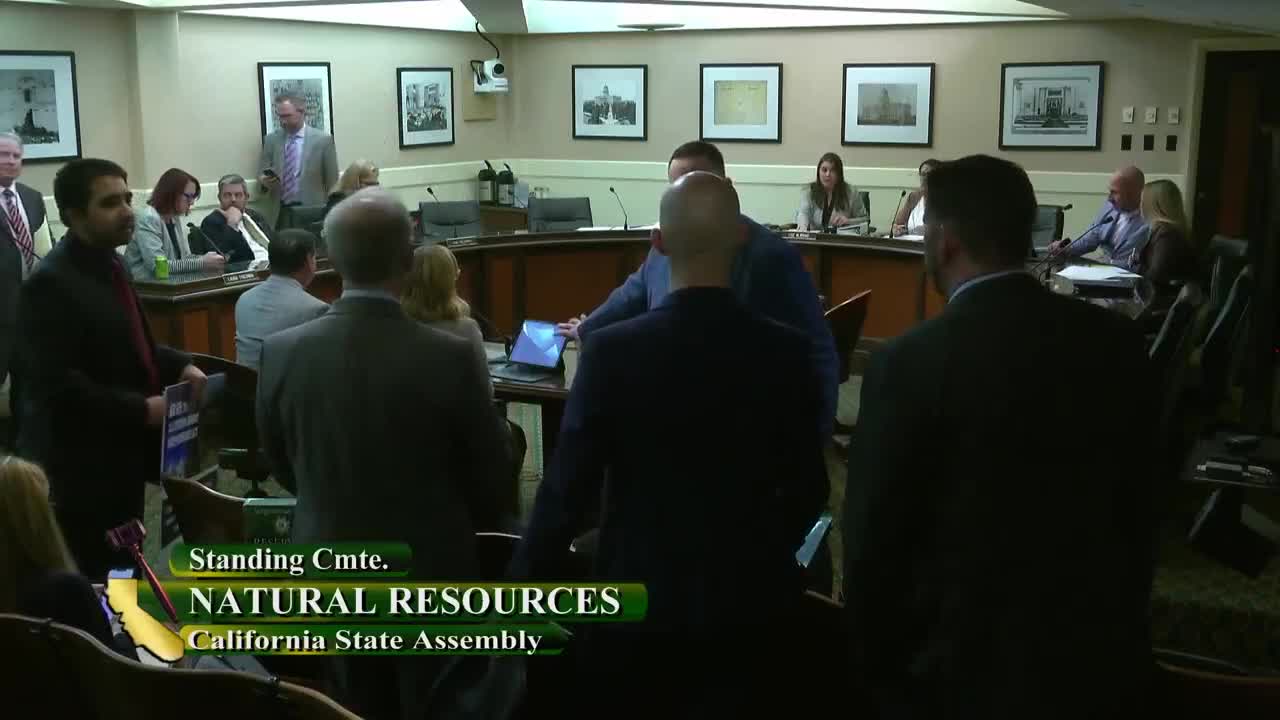 3MIN
Assembly Standing Committee on Natural Resources
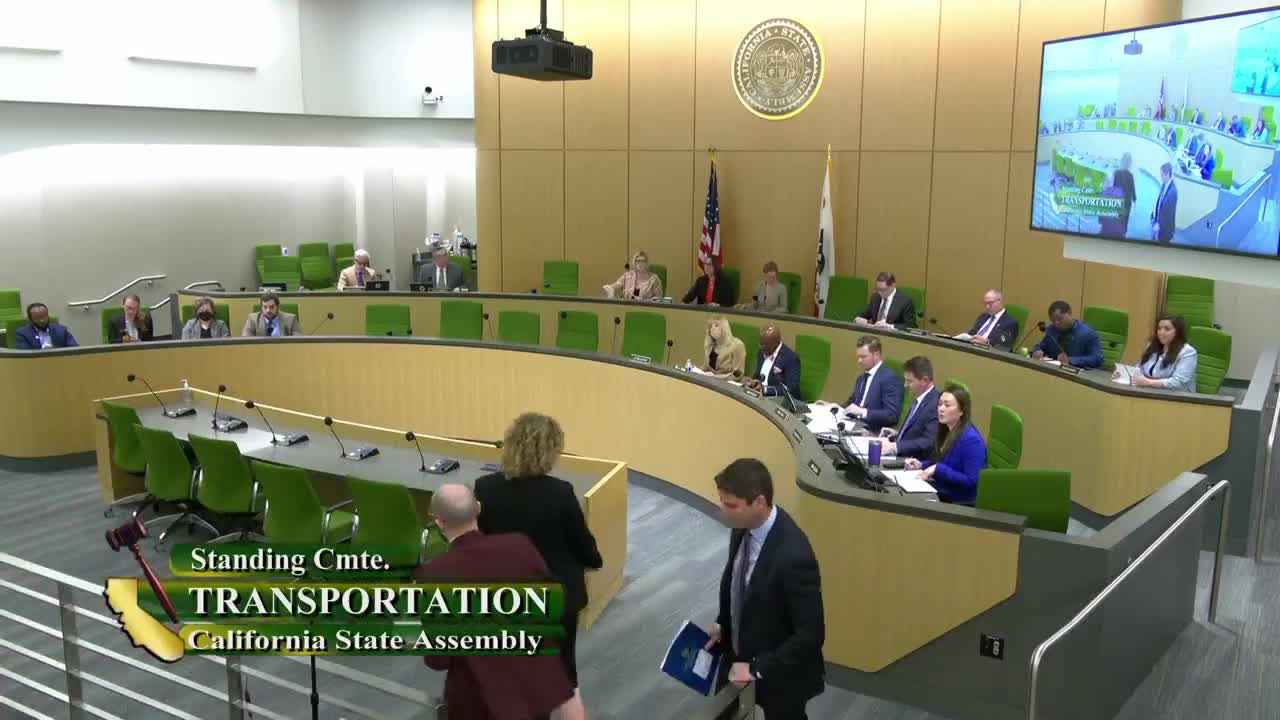 7MIN
Assembly Standing Committee on Transportation
Bill Author

Bill Co-Author(s):
