SB 1401: Family childcare home: United States Armed Forces.
- Session Year: 2023-2024
- House: Senate
- Latest Version Date: 2024-02-16
Current Status:
Failed
(2024-06-25: June 25 set for first hearing canceled at the request of author.)
Introduced
In Committee
First Chamber
In Committee
Second Chamber
Enacted
Existing law generally requires the State Department of Social Services to license and regulate various types of child daycare facilities, including, among others, daycare centers and family daycare homes. Under existing law, a willful or repeated violation of those provisions is a crime. Existing law exempts from those provisions various entities, including, among others, community care facilities, certain program facilities administered by the Department of Corrections and Rehabilitation, and extended daycare programs operated by public or private schools.
This bill would also exempt, from the above-described licensing and regulation provisions, a family childcare home administered by a person certified as a family childcare provider by a branch of the United States Armed Forces and that exclusively provides care for children of eligible federal personnel, as defined, and surviving spouses.
This chapter, Chapter 3.5 (commencing with Section 1596.90), and Chapter 3.6 (commencing with Section 1597.30) do not apply to any of the following:
(a)Any health facility, as defined by in Section 1250.
(b)Any clinic, as defined by Section 1202. in Section 1200.
(c)Any community care facility, as defined by in Section 1502.
(d)Any family childcare home providing care for the children of only one family in addition to the operators own children.
(e)Any cooperative arrangement between parents for the care of their children when no payment is involved and the arrangement meets all of the following conditions:
(1)In a cooperative arrangement, parents shall combine their efforts so that each parent, or set of parents, rotates as the responsible caregiver with respect to all of the children in the cooperative.
(2)Any person caring for children shall be a parent, legal guardian, stepparent, grandparent, aunt, uncle, or adult sibling of at least one of the children in the cooperative.
(3)There can be no payment of money or receipt of in-kind income in exchange for the provision of care. This does not prohibit in-kind contributions of snacks, games, toys, blankets for napping, pillows, and other materials parents deem appropriate for their children. It is not the intent of this paragraph to prohibit payment for outside activities, the amount of which may not exceed the actual cost of the activity.
(4)No more than 12 children are receiving care in the same place at the same time.
(f)Any arrangement for the receiving and care of children by a relative.
(g)Any public recreation program. Public recreation program means a program operated by the state, city, county, special district, school district, community college district, chartered city, or chartered city and county that meets either of the following criteria:
(1)The program is operated only during hours other than normal school hours for kindergarten and grades 1 to 12, inclusive, in the public school district where the program is located, or operated only during periods when students in kindergarten and grades 1 to 12, inclusive, are normally not in session in the public school district where the program is located, for either of the following periods:
(A)For under 20 hours per week.
(B)For a total of 14 weeks or less during a 12-month period. This total applies to any 14 weeks within any 12-month period, without regard to whether the weeks are consecutive.
In determining normal school hours or periods when students are normally not in session, the State Department of Social Services shall, when appropriate, consider the normal school hours or periods when students are normally not in session for students attending a year-round school.
(2)The program is provided to children who are over the age of four years and nine months and not yet enrolled in school and the program is operated during either of the following periods:
(A)For under 16 hours per week.
(B)For a total of 12 weeks or less during a 12-month period. This total applies to any 12 weeks within any 12-month period, without regard to whether the weeks are consecutive.
(3)The program is provided to children under the age of four years and nine months with sessions that run 12 hours per week or less and are 12 weeks or less in duration. A program subject to this paragraph may permit children to be enrolled in consecutive sessions throughout the year. However, the program shall not permit children to be enrolled in a combination of sessions that total more than 12 hours per week for each child.
(h)Extended daycare programs operated by public or private schools, including, but not limited to, expanded learning opportunity programs, as specified in subparagraphs (B) and (C) of paragraph (9) (10) of subdivision (b) of Section 46120 of the Education Code.
(i)Any school parenting program or adult education childcare program that satisfies both of the following:
(1)Is operated by a public school district or operated by an individual or organization pursuant to a contract with a public school district.
(2)Is not operated by an organization specified in Section 1596.793.
(j)Any child daycare program that operates only one day per week for no more than four hours on that one day.
(k)Any child daycare program that offers temporary childcare services to parents and that satisfies both of the following:
(1)The services are only provided to parents and guardians who are on the same premises as the site of the child daycare program.
(2)The child daycare program is not operated on the site of a ski facility, shopping mall, department store, or any other similar site identified by the department by regulation.
(l)Any program that provides activities for children of an instructional nature in a classroom-like setting and satisfies both of the following:
(1)Is operated only during periods of the year when students in kindergarten and grades 1 to 12, inclusive, are normally not in session in the public school district where the program is located due to regularly scheduled vacations.
(2)Offers any number of sessions during the period specified in paragraph (1) that when added together do not exceed a total of 30 days when only schoolage children are enrolled in the program or 15 days when children younger than schoolage are enrolled in the program.
(m)A program facility administered by the Department of Corrections and Rehabilitation that (1) houses both women and their children, and (2) is specifically designated for the purpose of providing substance abuse treatment and maintaining and strengthening the family unit pursuant to Chapter 4 (commencing with Section 3410) of Title 2 of Part 3 of the Penal Code, or Chapter 4.8 (commencing with Section 1174) of Title 7 of Part 2 of that code.
(n)Any crisis nursery, as defined in paragraph (17) of subdivision (a) of Section 1502.
(o)(1)Commencing with the adoption of emergency regulations pursuant to paragraph (3), or no later than July 1, 2019, whichever comes first, a California state preschool program operated by a local educational agency under contract with the State Department of Education and that operates in a school building, as defined by in Section 17283 of the Education Code, that meets all of the following conditions:
(A)The program is operated in a local educational agency facility that meets the requirements of the Field Act, as specified in Article 3 (commencing with Section 17280) and Article 6 (commencing with Section 17365) of Chapter 3 of Part 10.5 of Division 1 of Title 1 of, and Article 7 (commencing with Section 81130) of Chapter 1 of Part 49 of Division 7 of Title 3 of, the Education Code.
(B)The local educational agency facility is constructed consistent with California Building Standards Code pursuant to Title 24 of the California Code of Regulations.
(C)The local educational agency facility meets the requirements for kindergarten classrooms in accordance with Chapter 13 (commencing with Section 14000) of Division 1 of Title 5 of the California Code of Regulations.
(D)The program meets all other requirements of California state preschool programs pursuant to Chapter 19 (commencing with Section 17906) of Division 1 of Title 5 of the California Code of Regulations.
(2)A California state preschool program exempt under this subdivision shall be considered licensed under Division 12 (commencing with Section 101151) of Title 22 of the California Code of Regulations for purposes of establishing a rating on an early learning quality rating and improvement system matrix pursuant to Section 8203.1 of the Education Code.
(3)(A)No later than October 1, 2017, the Legislative Analyst shall convene a stakeholder process for the purpose of ensuring state preschools operated by local educational agencies are maintaining all existing necessary health and safety requirements.
(B)The stakeholder process shall identify and make recommendations on any health and safety requirements currently required under Title 22 of the California Code of Regulations, but not included in Title 5 of the California Code of Regulations, the Field Act, Title 24 of the California Code of Regulations, the California Plumbing Code, the Education Code, or this code, including, but not limited to, all of the following:
(i)Adequate outdoor shade structures.
(ii)Access to age and developmentally appropriate bathroom and drinking water facilities.
(iii)Appropriate processes for parent notification and resolution of code and regulation violations.
(C)The stakeholder process participants shall include experts on early childhood education health and safety issues from local educational agency and nonlocal educational agency state preschool program providers, and representatives from the State Department of Education, State Department of Social Services, Department of Finance, and legislative staff.
(D)No later than March 15, 2018, the Legislative Analyst shall report to the appropriate fiscal and policy committees of the Legislature, the Department of Finance, and the State Department of Education on recommendations or observations as a result of the stakeholder process. These recommendations or observations shall consider the fiscal impact on the state. No sooner than 30 days after the report is provided, the State Department of Education shall commence a process to adopt emergency regulations pursuant to Section 11346.1 of the Government Code to satisfy the requirements of this paragraph. The adoption of emergency regulations shall be deemed an emergency and necessary for the immediate preservation of the public peace, health, safety, or general welfare.
(4)For purposes of this subdivision, the following terms have the following meanings:
(A)California state preschool program means any classroom that is funded, in whole or in part, by funds received pursuant to Section 8207 of the Education Code.
(B)Local educational agency means a school district, county office of education, or charter school.
(p)(1)A family childcare home administered by a person certified as a family childcare provider by a branch of the United States Armed Forces and that exclusively provides care for children of eligible federal personnel and surviving spouses.
(2)For purposes of this subdivision, the following definitions apply:
(A)United States Armed Forces has the same meaning as set forth in Section 101(a)(4) of Title 10 of the United State Code, or its successor.
(B)Eligible has the same meaning as set forth in Section 4(d)(1)-(2) of Instruction Number 6060.02 of the United States Department of Defense, dated August 5, 2014, and as updated on September 1, 2020, or its successor.
|
Date
|
Status
|
|---|---|
| Jun 25, 2024 | June 25 set for first hearing canceled at the request of author. |
| Jun 3, 2024 | Referred to Com. on HUM. S. |
| May 22, 2024 | In Assembly. Read first time. Held at Desk. |
| May 21, 2024 | Read third time. Passed. (Ayes 39. Noes 0. Page 4048.) Ordered to the Assembly. |
| Apr 16, 2024 | Read second time. Ordered to third reading. |
| Apr 15, 2024 | From committee: Be ordered to second reading pursuant to Senate Rule 28.8. |
| Apr 5, 2024 | Set for hearing April 15. |
| Apr 2, 2024 | From committee: Do pass and re-refer to Com. on APPR. (Ayes 5. Noes 0. Page 3428.) (April 1). Re-referred to Com. on APPR. |
| Mar 12, 2024 | Set for hearing April 1. |
| Feb 29, 2024 | Referred to Com. on HUMAN S. |
| Feb 20, 2024 | From printer. May be acted upon on or after March 18. |
| Feb 16, 2024 | Introduced. Read first time. To Com. on RLS. for assignment. To print. |
|
Date
|
Description
|
Location
|
Votes
|
|
|---|---|---|---|---|
| May 21, 2024 | Senate 3rd Reading SB1401 Blakespear | Senate Floor |
Passed |
|
| Apr 1, 2024 | Do pass, but first be re-referred to the Committee on [Appropriations] | Senate Standing Committee on Human Services |
Passed |
This list shows positions taken on this bill by organizations on the date displayed, which is linked to the original source.
Positions by individuals are not included.
|
Organization
|
Position
|
Date
|
|---|---|---|
| Military Services in California | ** Support | |
| U. S. Department of Defense | ** Support |
Date of Hearing: June 25, 2024
ASSEMBLY COMMITTEE ON HUMAN SERVICES
Alex Lee, Chair
SBPCA Bill Id:SB 1401
Author:(Blakespear) – As Introduced Ver:February 16, 2024
SENATE VOTE: 39-0
SUBJECT: Family childcare home: United States Armed Forces
SUMMARY: Exempts a family childcare home (FCCH) administered by a person certified as a family childcare (FCC) provider by a branch of the United States (U.S.) Armed Forces, and that exclusively provides care for children of eligible federal personnel and surviving spouses, from child daycare licensure and regulation by the California Department of Social Services (CDSS).
EXISTING LAW:
State law:
- Establishes the California Child Daycare Facilities Act, creating a separate licensing category for child daycare centers and family daycare homes within CDSS’ existing licensing structure. (Health and Safety Code [HSC] § 1596.70 et seq.)
- Defines the following terms:
- “Child daycare facility” to mean a facility that provides nonmedical care to children under 18 years of age in need of personal services, supervision, or assistance for sustaining the activities of daily living or for the protection of the individual on less than a 24-hour basis. Child daycare facilities include daycare centers, employer-sponsored childcare centers, and family daycare homes. (HSC § 1596.750)
- “Family daycare home” to mean a facility that regularly provides care, protection, and supervision for 14 or fewer children, including children under 10 years of age who reside at the home, in the provider’s own home, for periods of less than 24-hours per day, while the parents or guardians are away. (HSC § 1596.78)
- Requires any person or entity operating, as specified, a child daycare facility in California to have a current valid license from CDSS. (22 California Code of Regulations [CCR] § 101156(a))
- Directs CDSS, and any local agency with which it contracts for purposes of licensing activities, to conduct an initial site visit and grant or deny an application for license within 30 days of receiving a complete licensing application for a daycare center. (HSC § 1597.13)
- Exempts a small family daycare home from the Carbon Monoxide Poisoning Prevention Act of 2010, except for the requirement for the home to contain a fire extinguisher and smoke and carbon monoxide detector. (HSC § 1597.455)
- Requires, whenever any FCCH license has reasonable cause to believe that a child in their care has suffered injury or has been subjected to any act of violence while under the licensee’s care, the license to, as soon as possible, report that injury or act of violence to the parents, or guardians of that child. (HSC § 1597.467(a))
- Provides that the failure of a licensee to report any injury of, or act of violence to, a child under the licensee’s care may be grounds for the suspension of their license, but shall not constitute a misdemeanor. (HSC § 1597.467(d))
- Provides that no family daycare home shall be licensed or registered as a large family daycare home after January 1, 1984, unless the provider has at least one year’s experience as a regulated small family daycare home operator, or as an administrator of a licensed daycare center. (HSC § 1597.52(b))
- Requires CDSS to notify a family daycare home in writing of all deficiencies in its compliance and specified rules and regulations and to set a reasonable length of time for compliance by the family daycare home. Authorizes CDSS, upon a finding of noncompliance with a plan of correction, to levy a civil penalty that shall be paid to CDSS each day until the family daycare home is in compliance (HSC § 1597.56(a))
- Requires, in developing a plan of correction, both the licensee and CDSS to give due consideration to the following factors:
- The gravity of violation;
- The history of previous violations;
- The possibility of a threat to the health or safety of any child in the facility;
- The number of children affected by the violations; and,
- The availability of equipment or personnel necessary to correct the violation, if appropriation. (HSC § 1597.56(b))
- Requires CDSS to ensure that the licensee’s plan of correction is verifiable and measureable. Requires the plan of correction to specify what evidence is acceptable to establish that a deficiency has been corrected. Requires this evidence to be included in CDSS’ facility file. (HSC § 1597.56(c))
- Requires, in addition to the suspension, temporary suspension, or revocation of a license issued under this chapter, CDSS to levy a civil penalty. (HSC § 1597.58(a))
- Requires the amount of the civil penalty to be $100 per day for each violation if a facility fails to correct a deficiency after being provided a specified length of time to correct that deficiency.
- Requires, if a licensee or a licensee’s representative submits evidence to CDSS that the licensee has corrected a deficiency, and CDSS, after reviewing that evidence, has determined that the deficiency has been corrected, the civil penalty to cease as of the day CDSS received that evidence;
- Requires, if CDSS deems it necessary, CDSS to inspect the facility within five working days after CDSS receives evidence to confirm that the deficiency has been corrected;
- Requires, if CDSS determines that the deficiency has not been corrected, the civil penalty to continue to accrue from the date of the original citation; and,
- Requires, if CDSS is able to verify that the deficiency was corrected prior to the date on which CDSS received the evidence, the civil penalty to cease as of that earlier date. (HSC § 1597.58(b)(1))
- Requires CDSS, upon issuing a notification of deficiency to a facility for a repeat violation of a violation specified in 13) above, to assess an immediate civil penalty of $250 per repeat violation and $100 for each day the repeat violation continues after citation. Requires the notification of deficiency to state the manner in which the deficiency constitutes a repeat violation and shall be submitted to a supervisor for review and approval. (HSC § 1597.58(b)(2)(A))
- Requires CDSS to assess an immediate civil penalty of $500 per violation and $100 for reach day the violation continues after citation, for any of the following serious violations:
- Any violation that CDSS determines resulted in the injury or illness of a child;
- Absence of supervision, including, but not limited to, a child left unattended and a child left alone with a person under 18 years of age;
- Accessible bodies of water, when prohibited by this chapter or regulations adopted pursuant to this chapter;
- Accessible firearms, ammunition, or both;
- Refused entry to a facility or any part of a facility; or,
- The presence of a person subject to a CDSS Order of Exclusion on the premises. (HSC § 1597.58(c))
- Requires CDSS and the local agencies with which it contracts for the licensing of family daycare homes for children to grant or deny a license to a family daycare home for children within 30 days after receipt of all appropriate licensing application materials as determined by CDSS, provided both of the following conditions are met:
- A site visit has been completed and the family daycare home has been found to be in compliance with licensing standards; and,
- The applicant and each specified person has obtained a criminal record clearance, or been granted a criminal record exemption by CDSS or the local contracting agency. (HSC § 1597.59)
- Authorizes, when CDSS determines that a family daycare home for children is operating without a license and notifies the unlicensed provider of the requirements of the license, the licensing agency to issue a cease and desist order only if it finds and documents that continued operation of the facility will be dangerous to the health and safety of the children or if a license held by the facility has been revoked by CDSS within two years preceding the determination of unlicensed operation. (HSC § 1597.61(a))
- Prohibits, commencing September 1, 2016, a person to be employed or volunteer at a family daycare home if they have not been immunized against influenza, pertussis, and measles. (HSC § 1597.622(a)(1))
Federal law:
- Provides that a provider of childcare services or youth program service is eligible for federal financial assistance if the provider:
- Is licensed to provide those services under applicable state and local law; and,
- Has previously provided such services for members of the armed forced or employees of the United States; and, either:
- Is a family home daycare provider; or,
- Is a provider of family childcare services that:
- Otherwise provides federally funded or sponsored child development services;
- Provides the services in a child development center owned and operated by a private, not-for-profit organizations;
- Provides before-school or after-school childcare program in a public school facility;
- Conducts an otherwise federally funded or federally sponsored school age childcare or youth services program;
- Conducts a school age childcare or youth services program that is owned and operated by a not-for-profit organization; or,
- Is a provider of another category of childcare services or youth services determined by the Secretary of Defense as appropriate for meeting the needs of members of the armed forces or employees of the Department of Defense (DoD) (10 United States Code § 1798)
- Requires individuals who have regular contact with children under 18 years of age in DoD-sanctioned childcare services programs will undergo a criminal history background check in order to protect the health, safety, and well-being of children in such program. (32 Code of Federal Regulations § 86.4(a))
FISCAL EFFECT: According to the Senate Appropriations Committee, pursuant to Senate Rule 28.8 the February 16, 2024, version of this bill would result in negligible state costs.
COMMENTS:
Background: Need for this bill. The provisions of this bill seek to exempt FCCHs certified by the U.S. Armed Forces from state licensure and regulation in an effort to reduce the administrative burdens reported by the Sponsors of this bill, the DoD, involved with seeking licensure from CDSS. While the DoD has extensive rules and regulations for childcare certification that are consistent with state requirements in many instances, including health and safety inspections, educational and training requirements, as well as background checks, there are several gaps in the DoD requirements when compared to the requirements established by the state. For example, a critical gap includes a lack of federal oversight of military-operated childcare centers located on military bases, which has resulted in documented cases of child abuse by staff. Additionally, in terms of reducing administrative burdens, it takes 30 days for the state to approve or deny a licensure application while it takes the DoD two to nine months to certify a home.
California Childcare Licensure. The California Child Daycare Facilities Act governs the licensure, maintenance, and operation of child daycare centers and family daycare homes in the state. This law and the associated regulations found in Title 22 of the CCR establish, among other things, general health and safety requirements, staff-to-child ratios, and provider training requirements. Child daycare centers include licensed infant centers, preschools, extended daycare facilities, and school age childcare centers.
FCCHs are operated in the licensee’s own home, which may be rented, leased, or owned, and are permitted to be in a mobile home park or an apartment. FCCHs provide nonmedical care and supervision in a family-like setting, providing a nurturing environment for children while supporting their cognitive, social, and emotional development. FCCHs are further categorized into small (eight or fewer children) and large homes (as many as 14 children) based on the size of the childcare group and the ages of the children. As of 2021, CDSS’ Community Care Licensing Division has the responsibility of licensing and monitoring the state’s 10,481 childcare centers and 25,205 FCCHs.
To become a licensed FCC provider, an applicant over 18 years of age must submit an application to CDSS, which includes a criminal background clearance, a fire safety clearance (only for large FCCHs), complete a pre-licensing orientation, provide proof of immunization and liability insurance, and pass a home inspection. Applicants and licensees are subject to initial application fees and subsequent annual fees based on the type and capacity of the facility. Fees range from $73 to $2,420 for FCCHs and daycare centers, respectively, with adjustments recommended periodically to ensure appropriateness. Additional fees beyond the initial and annual charges include fees for relocation of facilities, adjustments in licensed capacity, orientation sessions for staff, and a late fee for overdue annual licensing fees. Existing law requires CDSS to approve or deny a childcare licensure application within 30 days, if all materials are submitted. Once a license is obtained, it cannot be transferred to other individuals or locations.
Department of Defense Childcare Certification. The certification process, along with established policies, responsibilities, and procedures for providing care to children who are eligible for military childcare are outlined in DoD Instruction 6060.02. The DoD certifies four distinct childcare programs including Family Child Care (FCC) which offers childcare in their homes designed for infants through school age children. Each FCC provider determines what care they offer, which may include full-day, part-day, school year, summer camp, 24/7, and extended care. Some FCC providers offer flexible operating hours, and are able to adjust their hours to accommodate requests from parents.
Military Family Childcare Providers. According to Militarychildcare.com, military FCC providers are childcare professionals who are certified by their military “installation” to support military families by providing high-quality and affordable childcare in home-based settings on or near installations in the U.S. and abroad.
To receive the DoD Certificate to Operate, FCC providers must meet specified criteria. An applicant must submit a certification application, which includes a criminal history background check, including all residents over 18 years of age, pass a home inspection for fire, safety and sanitation, complete a health screening, proof of immunization and liability insurance, and obtain a pet certificate for animals in the household that demonstrates vaccination records, as needed. Certified FCC providers are encouraged to seek accreditation from an appropriate national accrediting body, but are not required. These providers do not need to be in the military and may be a civilian, and are permitted to have their FCCH on or off a military installation.
Certified FCC providers that are located off military installations are required to meet state licensing, registration, or inspections in addition to those required by the DoD. The DoD has a process to register and certify homes located off an installation. The Congressional Research Service issued a report in 2020 stating that it takes approximately two to nine months to certify a new FCC.
California and DoD Comparison. There are a number of regulations in which California’s requirements can be compared to the DoD’s requirements. The regulations described below include, but are not limited to the following:
Criminal Background Checks. Before issuing a license, CDSS requires applicants and all adults in the home to obtain a criminal record clearance or exemption. Obtaining a criminal record clearance involves submitting fingerprints to both the California Department of Justice (DOJ) and the Federal Bureau of Investigation (FBI) prior to working with children. Some individuals, such as volunteers providing limited services, students, medical professionals, and third-party contractors are exempt from fingerprinting under specified conditions. All individuals must sign a Criminal Record Statement declaring any past convictions, excluding minor traffic violations.
Non-compliance can result in citations and civil penalties and if a criminal record reveals a conviction other than a minor traffic violation, CDSS is required to deny the license application or take administrative action for current licensees, potentially revoking the license. CDSS is authorized to act upon arrests by notifying licensees to cease operations or temporarily exclude individuals associated with the facility pending investigation outcomes. CDSS maintains authority to deny clearances and take action to ensure the client safety in licensed facilities and is required to notify individuals of any denials based on arrest information, detailing the conduct and the right to contest the decision. These checks are designed to ensure that no one with a disqualifying criminal history is involved in childcare.
For criminal record exemptions, CDSS requires immediate removal of individuals with certain convictions, such as sex offenses against minors, felonies, and certain violent crimes, from the facility while considering their exemption status. If CDSS identifies that an individual with a criminal record resides at, or is associated with a licensed facility, the license application will be denied or revoked unless the person has received a full pardon or exemption.
In addition to securing criminal background clearances, California requires child abuse and neglect checks before granting a FCCH license or approval. CDSS is required to check child abuse and neglect complaint records from the county’s child protective services (CPS) agency where the applicant has resided in the past two years and check the Child Abuse Central Index (CACI) through the DOJ. Applicants are required to submit the CACI checks concurrently with fingerprint submissions for criminal background checks. CDSS is required to investigate any reports from the county CPS agency and CACI, except for unfounded reports. Licensing can be denied if child abuse is substantiated through these investigations. Post-licensure, CDSS will investigate any new reports from the CACI and take administrative action, such as license revocation, only if child abuse allegations are substantiated.
Similarly, DoD requires criminal background checks for all individuals who have regular, contact with children in FCCHs and are required to sign a Basic Criminal History and Statement of Admission declaring any past convictions, other than a minor traffic violation. DoD background checks include an FBI fingerprint check, a State Child Abuse Registry review, and additional screenings not required by California, such as a State Criminal History Repository check for all states that the applicant has resided and name-based criminal history records check for states lived in during the past five years.
The DoD Instruction stipulates that individuals who do not submit or pass a criminal background check are ineligible for FCC provider certification and cannot receive a Certificate to Operate. However, the Instruction lacks provisions on investigating founded background checks, acting on arrests, and contesting denials of criminal clearances. Additionally, the Instruction does not specify processes for identifying individuals with criminal records residing in or associated with FCCHs and potential administrative actions. Yet, Navy Instructions 1700.9E outline criteria for criminal background disqualifications for child and youth program services, including convictions for sexual offenses, drug felonies, violent crimes, or offenses involving children, among other factors.
Education & Training Requirements. Lead teachers in large FCCHs are required to have one year of experience in an early childhood education (ECE)-licensed setting or one year of experience as a licensed small FCCH, while small FCCHs are not required to have ECE units. In contrast, military certified FCC providers only need a high school diploma or its equivalent, with the majority of their training occurring on the job.
California requires completing orientation and at least 15 hours of health and safety training for FCCHs as a condition of licensure. The training covers areas such as pediatric cardiopulmonary resuscitation (CPR), pediatric first aid, and preventive health practices, including recognizing, managing, and preventing infectious diseases and childhood injuries. Additionally, one staff member with a current certification in pediatric first aid and CPR is required to be onsite at all times when children are present. Since January 1, 2016, all state FCCH licensees are also required to complete at least one hour of childhood nutrition training as part of the preventive health practices course. Optional training includes sanitary food handling, emergency preparedness and evacuation, and caring for children with special needs.
Similarly, certified FCC providers are required to complete orientation and training. Newly hired FCC providers are required to complete 40 hours of orientation prior to working with children, followed by 24 hours of ongoing training annually. Several DoD training topics overlap with California’s requirement, including child abuse prevention, identification, and reporting, illness symptom recognition, pediatric CPR and first aid, and nutrition. Military FCC training also encompasses additional areas such as health and sanitation procedures, discipline techniques, child safety and fire prevention, working with children with special needs, safe infant sleep practices, obesity prevention, and meal service – many of which are covered in state regulations.
Inspections. State law and regulations require CDSS to conduct both scheduled and unannounced inspections of FCCHs to ensure compliance. During these inspections, licensees are required to allow CDSS to privately interview children or staff and to inspect, audit, and copy children’s or other FCCH records. Annual unannounced site visits are required for childcare facilities under certain conditions, and these inspections review all aspects of childcare, including health and safety practices and the physical condition of the home. Providers are required to maintain detailed records and report any significant changes or incidents to CDSS.
Similarly, certified FCCs that provide over 10 hours of childcare weekly are required to undergo at least four unannounced inspections annually to maintain DoD certification. These inspections consist of three local inspections and one higher headquarters inspection to ensure compliance with DoD guidelines. Local inspections, led by a representative of the installation commander or equivalent, cover health and sanitation, fire and safety, and general compliance.
Both California and the DoD conduct additional inspections in response to complaints, with parents having access to inspection results. The DoD Instruction requires that any deficiencies identified during inspections be addressed with a corrective action plan, including appropriate timelines for resolution.
Compliance Mechanisms. California law imposes potential fines on FCCH licensees who fail to comply with regulations. CDSS can levy a daily penalty of $100 per violation for up to five days for infractions such as not obtaining necessary criminal record clearances for associated individuals in childcare facilities. Subsequent violations within 12 months can incur penalties for up to 30 days. Infractions also include not notifying parents or representatives about the exclusion or reinstatement of individuals from the home and failing to obtain signed acknowledgments of these notifications.
CDSS can suspend or revoke FCCH licenses for violations of laws and regulations, harmful conduct, criminal convictions, and failure to meet training requirements, with a hearing set within 15 days and held within 30 days. State regulations require licensees to pay civil penalties, which persist despite license transfer, surrender, forfeiture, or revocation. CDSS can deny or revoke a license for unpaid penalties.
Operating an unlicensed childcare facility in California incurs a daily penalty of $200 if the operator does not submit a completed application within 15 days of receiving a Notice of Operation in Violation of Law or continues to operate after a license denial. Penalties start on the 16th day after the notice or upon receipt of the denial and continue until compliance or cessation of operation. Operators can report cessation to CDSS, with penalties stopping upon verification. Penalties must be paid upon notice, and failure to pay may lead to legal action. Operators can appeal within 10 working days, but penalties continue to accrue during the appeal process.
The DoD Instruction emphasizes compliance with DoD policies and regulations but lacks specific provisions for penalizing military certified-FCC providers for violations. It does not detail fines, penalties, or notification requirements for failing to obtain necessary criminal record clearances or for subsequent violations. The Instruction also does not outline DoD’s authority to suspend, revoke, or bar FCC provider certification for policy violations or harmful conduct. Compliance is enforced through regular inspections and oversight.
Each branch of the Armed Forces has its own regulations for FCC provider certification, denial, suspension, and revocation, with common grounds being suspected child abuse, endangering child safety, and noncompliance with training requirements. The Army and Air Force allow noncertified FCC providers to continue providing care provisionally if they intend to become certified, a policy not specified in Navy regulations. Immediate suspension can occur in severe noncompliance cases, with detailed procedures required for suspension or revocation. Installation commanders make final decisions, with the Army emphasizing written parent notifications when care is provided by uncertified individuals and prompt complaint investigations. The Army and Air Force conduct unannounced visits to uncertified providers and may involve Security Forces if legal violations are suspected.
Childcare Licensure Exemptions. Under current law, individuals who provide care for the children of only one family in addition to their own are not required to obtain a license. These caregivers are known as Family, Friend, and Neighbor providers. Other exemptions from licensure include cooperative childcare arrangements between parents with no payment involved, childcare provided by a relative, childcare programs operating one day a week for less than four hours, and temporary or drop-in childcare programs when parents or guardians are on the premises. All other providers that care for children in exchange for money must obtain the appropriate licensure.
According to the Author and Sponsor, five states currently exempt certain providers from state childcare licensing requirements. Statutes in Alaska, Connecticut, Montana, and Oklahoma are nearly identical to the proposed bill.
- Connecticut House Bill 5049, Public Act 23-29, signed into law in 2023, exempted from state licensing requirements certain childcare programs that only serve military members’ children if they are administered by the federal government or on federal property (e.g. a military installation) or a FCCH provider certified by the U.S. Coast Guard or a DoD military branch.
- Title 7, Alaska Administrative Code, Section 57.015 provides for the exemption of a facility located on a DoD or U.S. Coast Guard installation that is located on federal property, or a facility certified as a FCC provider by a branch of the DoD or by the U.S. Coast Guard.
- Montana House Bill 336, signed into law in 2023, required the state to recognize the status of and may not require a state license for a facility that is licensed as a FCC provider or childcare facility by a branch of the U.S. Armed Forces, including the U.S. Coast Guard.
- Oklahoma Senate Bill 1286, signed into law in 2022, exempted a facility licensed as a FCC provider by a branch of the DoD or by the U.S. Coast Guard from the provisions of the Oklahoma Child Care Facilities Licensing Act.
Florida Senate Bill 538, Chapter 2023-249, signed into law in 2023, required the Department of Children and Families (DCF) or local licensing agencies to issue a provisional license or registration for a FCCH to an operator or owner who is applying for an initial license or registration for a FCCH and has made adequate provisions for the health and safety of the child and who provides sufficient evidence that they have competed within the previous six months:
- Training pursuant to the DoD Instruction 6060.02; and,
- Background screening pursuant to the designated requirements of the DoD for a FCCH and has received favorable suitability and fitness determinations.
This provisional license allows a FCCH operator to provide childcare services while simultaneously completing any remaining DCF licensure requirements.
This bill would exempt a FCCH administered by a person certified as a FCC provider by a branch of the U.S. Armed Forces, exclusively providing care for children of eligible federal personnel and surviving spouses, from childcare licensure.
Medical Foster Homes Licensing Exemption. AB 550 (Flora) of 2019, sought to exempt medical foster homes for older and medically frail veterans established by a U.S. Department of Veterans Affairs facility, as a pilot project until January 1, 2023, from state licensure or regulation under the
California Residential Care Facilities for the Elderly Act. Governor Newsom vetoed the bill stating:
This bill would authorize a Medical Foster Home Pilot Program for veterans that would be exempt from state licensure or regulation and subject only to oversight by the federal government. Other community care facilities in the state are subject to licensure and regulation by the Department of Social Services to ensure safety standards and safeguards.
The state should maintain oversight of the operation of the homes proposed under this bill to ensure that California veterans in these homes do not have fewer safety protections than residents in other community care settings.
Therefore, I am directing the California Health and Human Services Agency and the Department of Social Services to explore a workable regulatory model, including any necessary statutory changes, to allow such a pilot program to move forward. I am committed to working collaboratively on a regulatory model that preserves California's oversight and values while allowing for Medical Foster Homes to operate in our state.”
In order to address Governor Newsom’s concerns, AB 2119 (Flora), Chapter 381, Statutes of 2022, authorized CDSS to establish a program to issue licenses for medical foster care homes for veterans as allowed under the U.S. Department of Veterans Affairs and delineates the administrative requirements for the program.
This bill seeks similar exemptions to AB 550 (Flora) from state licensure and regulations under the Child Daycare Facilities Act and to be subject only to federal oversight.
Reported Child Abuse at Military Childcare Centers. Congress is pushing for better oversight of military childcare centers following a Military.com investigation in April 2024 that uncovered multiple child abuse cases at military-operated child development centers in three states (Hawaii, Pennsylvania, and California), prompting the DoD Inspector General to review the oversight of these facilities. The Defense Secretary made the case that existing inspections and policies protect children from abuse. However, according to the 2024 Military.com article, “Military’s Handling of Abuse at Day Cares under Increasing Pressure from Congress, Inspector General,” there are still significant concerns about the timeliness and transparency of abuse reporting.
The Military.com investigation found that abuse incidents at military-operated childcare centers often go unreported to parents, with a confusing chain of responsibility hindering investigations and prosecutions. The House Armed Services Committee has approved a provision in the National Defense Authorization Act requiring childcare workers on military bases to notify parents of incidents within 24 hours. This requirement, sponsored by Rep. Jill Tokuda, D-Hawaii, is in response to documented abuse at a Hawaii child development center near Joint Base Pearl Harbor-Hickam, where staff failed to report or document the full extent of abuse of a 15-month old toddler who was “pinched, shoved, smothered and pushed against a wall” by at least two daycare workers captured on surveillance video. Two of the daycare workers who were allegedly involved continued to work for five more months. After more than a year, three workers were charged with abuse in Hawaii civilian court.
According to the 2024 Military.com article, in the civilian sector, state law and regulations typically require immediate documentation and parent notification of incidents so that parents can take action. Military daycares, however, are not required to abide by those state laws and regulations, and instead, follow a more complex set of rules, often leading to inconsistent and delayed reporting. This complexity is compounded by contradictory regulations between the DoD and Individual Services, and delegated authority to garrison commanders, creating a fragmented oversight system. Consequently, the Military.com investigation further reports that service branch rules prioritize protecting the institution over ensuring accountability and transparency, while parents are often kept in the dark as officials formulate public relations responses, with minimal safeguards to guarantee proper handling of abuse allegations.
The Army recently implemented a policy requiring daycare centers to report incidents involving sexual behavior between children to parents, aligning with state laws for civilian daycares. This change follows another Military.com report in December 2023 on a case in the Pennsylvania U.S. Army War College's daycare, where a child who was four years of age was inappropriately touched by another preschooler and suffered injuries, but parents were not informed immediately, and the incident was not documented as required. The Army's new regulation also involves the Family Advocacy Program (FAP), though a February 2024 report from the Government Accountability Office found that most FAP clinicians lack the necessary expertise to handle such cases effectively.
In November 2022, Military.com reported that a Navy childcare center at Naval Air Weapons Station China Lake in California temporarily closed its center for three days after video footage revealed sanitation policy, food safety, and accountability and supervision violations, including a “touch policy” violation that showed a child being “physically, emotionally, and mentally harmed.” It took a month and a half after the incident was caught on tape for the parents to find out what had happened. The video footage also revealed that three employees violated the Navy child and youth programs guidance and touch policy. Additionally, the Navy failed to inform other parents of an earlier issue involving an employee resigning amid child abuse allegations in August 2022. This led to an investigation by the Naval Criminal Investigative Service in October 2022, prompting a review of policies and procedures. Navy officials stated that their childcare professionals are mandated reporters and required by law to report suspected child abuse to CPS. However, CPS lacks clear jurisdiction over daycares on federal property. Even after a “touch violation” is substantiated and reported, there is no set timeline for informing parents. Additionally, only a limited number of officials are authorized to communicate about such incidents, and identifying the responsible investigators is challenging.
Interviews with dozens of families revealed common experiences of not being informed when their children were injured and faced significant legal expenses to obtain information from the military. The investigation also included a review of hundreds of pages of military regulations and over 1,000 pages of documents obtained through the Freedom of Information Act (FOIA), showing that families often had to resort to FOIA requests to learn about their children’s injuries or trauma. Following the evaluation to assess the effectiveness of implemented policies and procedures for identifying and reporting allegations of child abuse at military-operated child development centers, the DoD Inspector General will conduct an additional evaluation that focuses on how the DoD addressed and communicated regarding allegations of child abuse.
Author’s Statement: According to the Author, “Like other child care options, those for military families have long wait times. In 2022, more than 4,000 children were on the wait list for Navy child care centers in San Diego alone. Furthermore, the Department of Defense (DOD) estimates there is nearly a 50 percent deficit in the number of Family Child Care (FCC) providers needed. That forces many military families to turn to more expensive and less convenient civilian child care options.
“By creating a state licensure exemption for FCC providers who are already certified by the DOD, [this bill] would help providers — 87% of whom were military spouses in 2021 — by reducing the administrative burden associated with completing time-consuming, expensive and sometimes redundant state child care licensure requirements. A waiver means these spouses can start earning income much faster after a move, preventing financial instability with their families and helping to reduce the shortage of child care in their new location.
“This is a simple, sensible step we can take to better support military families. Having access to reliable child care is essential for all working families, including the fine men and women serving in the U.S. Armed Forces to protect us. [This bill] reduces red tape so home child care providers can open more quickly on and near military bases.”
Equity Implications: The absence of uniform regulatory oversight can create inconsistencies in how childcare is delivered across certified FCC providers and state licensed providers on California land, impacting the overall standardization of childcare services within the state. Additionally, exempting military-certified FCCs may be perceived as preferential treatment of military communities in state law and regulations, as well as undermine state authority, exacerbating an already fragmented childcare system with differing regulatory standards.
Policy Considerations: Exempting FCCHs administered by a person certified as an FCC provider by the branch of the U.S. Armed Forces and that exclusively provides care for children of eligible federal personnel and surviving spouses from state licensure and regulations risks perpetuating the same issues seen in military-operated childcare centers located on base, potentially compromising child safety, care quality, and parental peace of mind. There is no indication that children would be safer if the state removed all oversight.
- Reduced Oversight and Accountability: Military childcare centers on base have demonstrated significant lapses in accountability, where incidents of abuse were not promptly reported or adequately investigated, prompting the Inspector General to evaluate these facilities. Exempting certified FCC providers from state oversight could exacerbate these issues, leading to reduced monitoring and enforcement of safety and quality standards.
- Delayed Reporting and Responses to Abuse: As highlighted earlier, military-operated childcare centers often fail to inform parents about incidents immediately. Without CDSS regulation, certified FCCs might similarly delay or mishandle the reporting of abuse and neglect, leaving children in potentially harmful situations for longer periods.
- Inconsistent Standards: The Sponsors of the bill contend that the FCC program is “designed to ensure the highest standards of quality and safety are met in FCCHs,” that the certification process is one of the most stringent in the country, and that the standards ensure strict oversight of service providers. While certification requirements regarding training, criminal background checks and inspections meet or exceed state licensure requirements, the only compliance mechanism found in the DoD Instruction is requiring commanders to develop a corrective action plan with appropriate timelines to address any deficiencies identified during inspection. This leaves the corrective action plan up to the discretion of each commander at each installation and is not standardized. CDSS has established extensive regulations and processes in the event that a licensee is not adhering to state law and regulations, with varying degrees of civil penalties for particular infractions, as described earlier, as well as processes for suspending, revoking or barring licenses. The DoD Instruction lacks such provisions. Exempting certified FCC providers from state standards could result in inconsistent care quality, as military certification requirements do not equivalently align with state requirements.
- Lack of Transparency: As reported by Military.com, families have struggled to obtain information about incidents involving their children in military childcare centers. Without CDSS regulation, there would be fewer mechanisms to ensure transparency and that parents are informed about their children’s well-being immediately.
- Jurisdictional Confusion: As noted, there is already confusion about jurisdiction and responsibility between military and civilian authorities in cases of child abuse. As highlighted by the Senate Human Services Committee, “It is unclear who would have jurisdiction and responsibility to investigate should a federally-certified provider operate a FCCH off of a military base and on California land.” Exempting certified FCC providers from state regulation could further complicate which agency is responsible for oversight, reporting, and investigation, potentially leading to gaps in protection and enforcement.
- Military Leadership Changes: The DoD leadership is subject to change upon a new Administration taking over the Executive Branch which could lead to a change in federal regulations that do not require civilian approval. Relying on federal regulations to conduct oversight of California-based facilities that could be changed quickly by military leadership could drastically impact operations and standards of these facilities.
- Limited Resource for Families: As mentioned, families have faced legal and financial hurdles in obtaining information and accountability in military childcare centers. Moreover, there are cameras on military childcare centers to document any cases of child abuse, but there may be no cameras in certified FCCHs off base. Without CDSS’ regulatory framework, families using these FCCHs might find it even more challenging to seek resources and information, and ensure their children's safety and well-being.
Should this bill move forward and wish to ease reported licensing requirements, the Author may wish to consider requiring CDSS to establish an application process, in consultation with the DoD, that expedites the licensure application process for a certified FCC provider, streamline certified FCC provider applications by eliminating redundancies in state requirements, and allowing the DoD to send application materials on behalf of certified FCC provider applicants. The application materials to be submitted are not to be older than one year upon submission to CDSS. CDSS continues to maintain oversight and is authorized to conduct scheduled and unannounced inspections of certified FCCHs to ensure compliance with state law and regulations.
Proposed Committee Amendments: The Committee proposes amendments to address policy considerations stated above to do the following:
- Define the following terms:
- “Eligible” has the same meaning as set forth in Section 4(d) of Instruction Number 6060.02 of the Department of Defense, dated August 5, 2014, and as updated on September 1, 2020, or its successor;
- “United States Armed Forces” has the same meaning as set forth in Section 101(a)(4) of Title 10 of the United State Code, or its successor; and,
- “United States Department of Defense” is the executive division of the federal government responsible for ensuring national security and supervising United States military forces.
- Require the State Department of Social Services, on or before July 1, 2026, in consultation with the United States Department of Defense, to establish a process for identifying an application for a family childcare home that is administered by a person certified as a family childcare provider by a branch of the United States Armed Forces and that exclusively provides care for children of eligible federal personnel and surviving spouses. The process shall address, at a minimum, but shall not be limited to addressing, all of the following:
- Expediting the licensure application process for a person certified as a family childcare provider by a branch of the United States Armed Forces;
- Eliminating duplicative and substantively similar state licensing and federal certification requirements to streamline the application process; and,
- Allowing the United States Department of Defense to send application materials to the State Department of Social Services on behalf of the applicant, who is certified as a family childcare provider by a branch of the United States Armed Forces. Application materials, as described in this subdivision, that may be submitted pursuant to this process shall not be older than one year upon submission to the State Department of Social Services.
- Provide that nothing in this section precludes the State Department of Social Services from conducting scheduled and unannounced inspections of the family childcare homes, as described, to ensure compliance with state law and regulations.
RELATED AND PRIOR LEGISLATION:
SB 114 (Committee on Budget and Fiscal Review), Chapter 48, Statutes of 2023, a budget trailer bill, exempted extended daycare programs operated by public or private schools, including, but not limited to, expanded learning opportunity programs from Title 22 licensing requirements.
AB 2119 (Flora), Chapter 381, Statutes of 2022, see comments above.
AB 550 (Flora) of 2019, see comments above.
AB 99 (Committee on Budget), Chapter 15, Statutes of 2017, a budget trailer bill, exempted State Preschool programs operated by local educational agencies from Title 22 licensing requirements upon adoption of emergency regulations or by June 30, 2019, whichever comes first.
REGISTERED SUPPORT / OPPOSITION:
Support
U.S. Department of Defense (Sponsor)
City of Oceanside
City of Vista
Military Services in California
Opposition
None on file.
Analysis Prepared by: Bri-Ann Hernández / HUM. S. / (916) 319-2089
SENATE RULES COMMITTEE Office of Senate Floor Analyses (916) 651-1520 Fax: (916) 327-4478 | SB 1401 |
THIRD READING
Bill No: SB 1401
Author: Blakespear (D)
Introduced: 2/16/24
Vote: 21
SENATE HUMAN SERVICES COMMITTEE: 5-0, 4/1/24
AYES: Alvarado-Gil, Ochoa Bogh, Blakespear, Menjivar, Wahab
SENATE APPROPRIATIONS COMMITTEE: Senate Rule 28.8
SUBJECT: Family childcare home: United States Armed Forces
SOURCE: Author
DIGEST:
This bill exempts a family childcare home administered by a person certified as a family childcare provider by a branch of the United States Armed Forces and that exclusively provides care for children of eligible federal personnel and surviving spouses as exempt from child daycare facility licensure and regulation by the California Department of Social Services (CDSS).
ANALYSIS:
Existing law:
- Establishes the Child Day Care Facilities Act (CDCFA) with CDSS as the licensing entity for child care centers and family child care homes, to ensure that working families have access to healthy and safe child care providers and that child care programs contribute positively to a child’s emotional, cognitive, and educational development, and are able to respond to, and provide for, the unique characteristics and needs of children. Further, creates a separate licensing category for child daycare centers and family daycare homes within CDSS’s existing licensing structure through the CDCFA. (HSC 1596.70 et seq.)
- Exempts the following list from child daycare facility licensure and regulation:
- Any health facility.
- Any clinic.
- Any community care facility.
- Any family childcare home providing care for the children of only one family in addition to the operator’s own children.
- Any cooperative arrangement between parents for the care of their children when no payment is involved and the arrangement meets specified conditions.
- Any arrangement for the receiving and care of children by a relative.
- Any public recreation program operated by the state, city, county, special district, school district, community college district, chartered city, or chartered city and county, as specified.
- Extended daycare programs operated by public or private schools.
- Any school parenting program or adult education childcare program, as specified.
- Any child daycare program that operates only one day per week for nor more than four hours on that day.
- Any child daycare program that offers temporary childcare services to parents who are on the same premises as the site and is not operated on the site of a ski facility, shopping mall, department store, or any other similar site.
- Any program that provides activities for children of an instructional nature in a classroom-like setting, as specified.
- A program facility administered by the Department of Corrections and Rehabilitation that houses both women and their children and is specifically designated for the purpose of providing substance abuse treatment and maintaining and strengthening the family unit, as specified.
- Any crisis nursery.
- A California State Preschool Program operated by a local educational agency under contract with the State Department of Education and that operates in a school building, as specified. (HSC 1596.792)
- Defines “armed forces” as meaning the Army, Navy, Air Force, Marine Corps, Space Force, and Coast Guard. (10 U.S.C. 101(a)(4))
This bill:
- Corrects a citation to the proper Health & Safety Code that defines “clinic.”
- Exempts from child daycare licensing and regulation a family childcare home administered by a person certified as a family childcare provider by a branch of the United States Armed Forces and that exclusively provides care for children of eligible federal personnel and surviving spouses.
- Defines “United States Armed Forces” as having the same meaning as Section 101(a)(4) of Title 10 of the United State Code, or its successor.
- Defines “Eligible” as having the same meaning as Section 4(d)(1-2) of Instruction Number 6060.02 of the United States Department of Defense, dated August 5, 2014, and as updated on September 1, 2020, or its successor.
Background
Family Child Care Home Licensure
Family child care (FCC), formerly called family day care, is regularly provided care, protection, and supervision of children in the licensee’s own home, known as a Family Child Care Home (FCCHs). Families who choose FCC for their child might do so because the FCCH is close to where they live, the provider speaks their home language, they prefer a home-like setting over a child care center, or their child is more comfortable with small class sizes.
The California Child Day Care Facilities Act of 1984 established the Child Care Licensing Program at CDSS. The mission of the Child Care Licensing Program is to ensure the health and safety of children in care and to improve the quality of their care through regulation and consultation. This mission is accomplished through prevention, compliance, and enforcement.
FCCH licensure requirements are outlined in the California Code of Regulations, Title 22, Division 12. To become licensed, a FCCH licensee applicant is required to have training in preventative health practices, as well as obtain a California criminal record clearance or exemption, fire safety clearance, and specified immunizations. After becoming licensed, a small FCCH licensee may provide care for up to eight children, while a large FCCH licensee may provide care for up to 14 children, as specified. Licensees must also adhere to regulations regarding personnel requirements and records, reporting requirements, alterations to the FCCH or grounds, staffing ratios, and annual licensing fees, among others. The Child Care Licensing Program conducts inspections of all licensed child care facilities every three years.
According to CDSS, during Fiscal Year 2022-23, the average processing time for a FCCH license application was 93 days, with the quickest processing times from 45 to 60 days. The most common reasons for delays for a FCCH application to take longer than others to process were the need for a criminal record exemption, fire clearances (for large FCCH facilities), required immunizations, and required training (CPR/First Aid/Preventative Health). There are also many factors that impact the timelines for the Regional Offices, including an influx of large numbers of applications.
Child Care Licensure Exemptions
Under current law, a person providing care for the children of only one family in addition to their own children is not subject to licensure. These providers are known as Family, Friend, and Neighbor providers, or sometimes referred to as unlicensed providers. In addition, any cooperative arrangement between parents for child care with no exchange of payment, any arrangement for child care by a relative, any child care program that operates one day per week for less than four hours, and any temporary or drop-in child care program when parents or guardians are on the same premises, are not subject to licensure.
According to the author and sponsor, five states currently provide an exemption from state child care licensing requirements. Enacted statutes in Alaska, Connecticut, Montana, and Oklahoma are nearly identical to this bill. Florida law[1] requires a local licensing agency or the state department to instead issue a provisional license or registration if a child care facility operator or owner provides evidence that they have completed, within the previous six months, training pursuant to the U.S. Department of Defense Instruction 6060.02 and background screening by the U.S. Department of Defense, as specified, and received a favorable suitability and fitness determination. Further, the Florida statute provides that a provisional license or registration may not be issued for a period that exceeds six months; however, a provisional license or registration may be renewed for one additional six-month period in special circumstances.
This bill would add a FCCH administered by a person certified as a family childcare provider by a branch of the United States Armed Forces and that exclusively provides care for children of eligible federal personnel and surviving spouses as exempt from child care licensure.
Comments
This bill seeks to exempt a FCCH provider certified with a branch of the U.S. Armed Forces from child care licensure through CDSS, effectively granting the federally-certified provider reciprocity in California. There are no exemptions to child care licensure in state law that are granted on the basis of licensure or certification by an external government.
It is unclear who would have jurisdiction and responsibility to investigate should a federally-certified provider operate a FCCH off of a military base and on California land. According to the U.S. Department of Defense’s website, MilitaryChildCare.com, if a provider is located off base, the state may require additional licensing, registration, or inspections in addition to those required by the Department.
The author may wish to include a reference to federal certification standards for FCCHs.
Related/Prior Legislation
SB 114 (Committee on Budget and Fiscal Review, Chapter 48, Statutes of 2023), a budget trailer bill, exempted extended daycare programs operated by public or private schools, including, but not limited to, expanded learning opportunity programs from Title 22 licensing requirements.
AB 99 (Committee on Budget, Chapter 15, Statutes of 2017), a budget trailer bill, exempted State Preschool programs operated by local educational agencies from Title 22 licensing requirements upon adoption of emergency regulations or by June 30, 2019, whichever comes first.
FISCAL EFFECT: Appropriation: No Fiscal Com.: Yes Local: No
SUPPORT: (Verified 4/15/24)
Military Services in California
U.S. Department of Defense
OPPOSITION: (Verified 4/15/24)
None received
Prepared by: Diana Dominguez / HUMAN S. / (916) 651-1524
4/16/24 14:08:58
**** END ****
http://www.leg.state.fl.us/statutes/index.cfm?App_mode=Display_Statute&Search_String=&URL=0400-0499/0402/Sections/0402.309.html ↑
SENATE COMMITTEE ON HUMAN SERVICES
Senator Alvarado-Gil, Chair
2023 - 2024 Regular
Bill No: | SB 1401 | ||
Author: | Blakespear | ||
Version: | February 16, 2024 | Hearing Date: | April 1, 2024 |
Urgency: | No | Fiscal: | Yes |
Consultant: | Diana Dominguez | ||
Subject: Family childcare home: United States Armed Forces
SUMMARY
This bill exempts a family childcare home administered by a person certified as a family childcare provider by a branch of the United States Armed Forces and that exclusively provides care for children of eligible federal personnel and surviving spouses as exempt from child daycare facility licensure and regulation by the California Department of Social Services (CDSS).
ABSTRACT
Existing Law:
- Establishes the Child Day Care Facilities Act (CDCFA) with CDSS as the licensing entity for child care centers and family child care homes, to ensure that working families have access to healthy and safe child care providers and that child care programs contribute positively to a child’s emotional, cognitive, and educational development, and are able to respond to, and provide for, the unique characteristics and needs of children. Further, creates a separate licensing category for child daycare centers and family daycare homes within CDSS’s existing licensing structure through the CDCFA. (HSC 1596.70 et seq.)
- Exempts the following list from child daycare facility licensure and regulation:
- Any health facility.
- Any clinic.
- Any community care facility.
- Any family childcare home providing care for the children of only one family in addition to the operator’s own children.
- Any cooperative arrangement between parents for the care of their children when no payment is involved and the arrangement meets specified conditions.
- Any arrangement for the receiving and care of children by a relative.
- Any public recreation program operated by the state, city, county, special district, school district, community college district, chartered city, or chartered city and county, as specified.
- Extended daycare programs operated by public or private schools.
- Any school parenting program or adult education childcare program, as specified.
- Any child daycare program that operates only one day per week for nor more than four hours on that day.
- Any child daycare program that offers temporary childcare services to parents who are on the same premises as the site and is not operated on the site of a ski facility, shopping mall, department store, or any other similar site.
- Any program that provides activities for children of an instructional nature in a classroom-like setting, as specified.
- A program facility administered by the Department of Corrections and Rehabilitation that houses both women and their children and is specifically designated for the purpose of providing substance abuse treatment and maintaining and strengthening the family unit, as specified.
- Any crisis nursery.
- A California State Preschool Program operated by a local educational agency under contract with the State Department of Education and that operates in a school building, as specified. (HSC 1596.792)
- Any health facility.
- Defines “armed forces” as meaning the Army, Navy, Air Force, Marine Corps, Space Force, and Coast Guard. (10 U.S.C. 101(a)(4))
This Bill:
- Corrects a citation to the proper Health & Safety Code that defines “clinic.”
- Exempts from child daycare licensing and regulation a family childcare home administered by a person certified as a family childcare provider by a branch of the United States Armed Forces and that exclusively provides care for children of eligible federal personnel and surviving spouses.
- Defines “United States Armed Forces” as having the same meaning as Section 101(a)(4) of Title 10 of the United State Code, or its successor.
- Defines “Eligible” as having the same meaning as Section 4(d)(1-2) of Instruction Number 6060.02 of the United States Department of Defense, dated August 5, 2014, and as updated on September 1, 2020, or its successor.
FISCAL IMPACT
This bill has not yet been analyzed by a fiscal committee.
BACKGROUND AND DISCUSSION
Purpose of the Bill:
According to the author, “Like other child care options, those for military families have long wait times. In 2022, more than 4,000 children were on the wait list for Navy child care centers in San Diego alone. Furthermore, the Department of Defense (DOD) estimates there is nearly a 50 percent deficit in the number of Family Child Care (FCC) providers needed. That forces many military families to turn to more expensive and less convenient civilian child care options. By creating a state licensure exemption for FCC providers who are already certified by the DOD, SB 1401 would help providers — 87% of whom were military spouses in 2021 — by reducing the administrative burden associated with completing time-consuming, expensive and sometimes redundant state child care licensure requirements. A waiver means these spouses can start earning income much faster after a move, preventing financial instability with their families and helping to reduce the shortage of child care in their new location.”
The author continues, “This is a simple, sensible step we can take to better support military families. Having access to reliable child care is essential for all working families, including the fine men and women serving in the U.S. Armed Forces to protect us. SB 1401 reduces red tape so home child care providers can open more quickly on and near military bases.”
Family Child Care Home Licensure
Family child care (FCC), formerly called family day care, is regularly provided care, protection, and supervision of children in the licensee’s own home, known as a Family Child Care Home (FCCHs). Families who choose FCC for their child might do so because the FCCH is close to where they live, the provider speaks their home language, they prefer a home-like setting over a child care center, or their child is more comfortable with small class sizes.
The California Child Day Care Facilities Act of 1984 established the Child Care Licensing Program at CDSS. The mission of the Child Care Licensing Program is to ensure the health and safety of children in care and to improve the quality of their care through regulation and consultation. This mission is accomplished through prevention, compliance, and enforcement.
FCCH licensure requirements are outlined in the California Code of Regulations, Title 22, Division 12. To become licensed, a FCCH licensee applicant is required to have training in preventative health practices, as well as obtain a California criminal record clearance or exemption, fire safety clearance, and specified immunizations. After becoming licensed, a small FCCH licensee may provide care for up to eight children, while a large FCCH licensee may provide care for up to 14 children, as specified. Licensees must also adhere to regulations regarding personnel requirements and records, reporting requirements, alterations to the FCCH or grounds, staffing ratios, and annual licensing fees, among others. The Child Care Licensing Program conducts inspections of all licensed child care facilities every three years.
According to CDSS, during Fiscal Year 2022-23, the average processing time for a FCCH license application was 93 days, with the quickest processing times from 45 to 60 days. The most common reasons for delays for a FCCH application to take longer than others to process were the need for a criminal record exemption, fire clearances (for large FCCH facilities), required immunizations, and required training (CPR/First Aid/Preventative Health). There are also many factors that impact the timelines for the Regional Offices, including an influx of large numbers of applications.
Child Care Licensure Exemptions
Under current law, a person providing care for the children of only one family in addition to their own children is not subject to licensure. These providers are known as Family, Friend, and Neighbor providers, or sometimes referred to as unlicensed providers. In addition, any cooperative arrangement between parents for child care with no exchange of payment, any arrangement for child care by a relative, any child care program that operates one day per week for less than four hours, and any temporary or drop-in child care program when parents or guardians are on the same premises, are not subject to licensure.
According to the author and sponsor, five states currently provide an exemption from state child care licensing requirements. Enacted statutes in Alaska, Connecticut, Montana, and Oklahoma are nearly identical to this bill. Florida law[1] requires a local licensing agency or the state department to instead issue a provisional license or registration if a child care facility operator or owner provides evidence that they have completed, within the previous six months, training pursuant to the U.S. Department of Defense Instruction 6060.02 and background screening by the U.S. Department of Defense, as specified, and received a favorable suitability and fitness determination. Further, the Florida statute provides that a provisional license or registration may not be issued for a period that exceeds six months; however, a provisional license or registration may be renewed for one additional six-month period in special circumstances.
This bill would add a FCCH administered by a person certified as a family childcare provider by a branch of the United States Armed Forces and that exclusively provides care for children of eligible federal personnel and surviving spouses as exempt from child care licensure.
Related/Prior Legislation
SB 114 (Committee on Budget and Fiscal Review, Chapter 48, Statutes of 2023), a budget trailer bill, exempted extended daycare programs operated by public or private schools, including, but not limited to, expanded learning opportunity programs from Title 22 licensing requirements.
AB 99 (Committee on Budget, Chapter 15, Statutes of 2017), a budget trailer bill, exempted State Preschool programs operated by local educational agencies from Title 22 licensing requirements upon adoption of emergency regulations or by June 30, 2019, whichever comes first.
COMMENTS
This bill seeks to exempt a FCCH provider certified with a branch of the U.S. Armed Forces from child care licensure through CDSS, effectively granting the federally-certified provider reciprocity in California. There are no exemptions to child care licensure in state law that are granted on the basis of licensure or certification by an external government.
It is unclear who would have jurisdiction and responsibility to investigate should a federally-certified provider operate a FCCH off of a military base and on California land. According to the U.S. Department of Defense’s website, MilitaryChildCare.com, if a provider is located off base, the state may require additional licensing, registration, or inspections in addition to those required by the Department.
The author may wish to include a reference to federal certification standards for FCCHs.
POSITIONS
Support:
U.S. Department of Defense
Oppose:
None
-- END --
http://www.leg.state.fl.us/statutes/index.cfm?App_mode=Display_Statute&Search_String=&URL=0400-0499/0402/Sections/0402.309.html ↑
Discussed in Hearing
View Older Hearings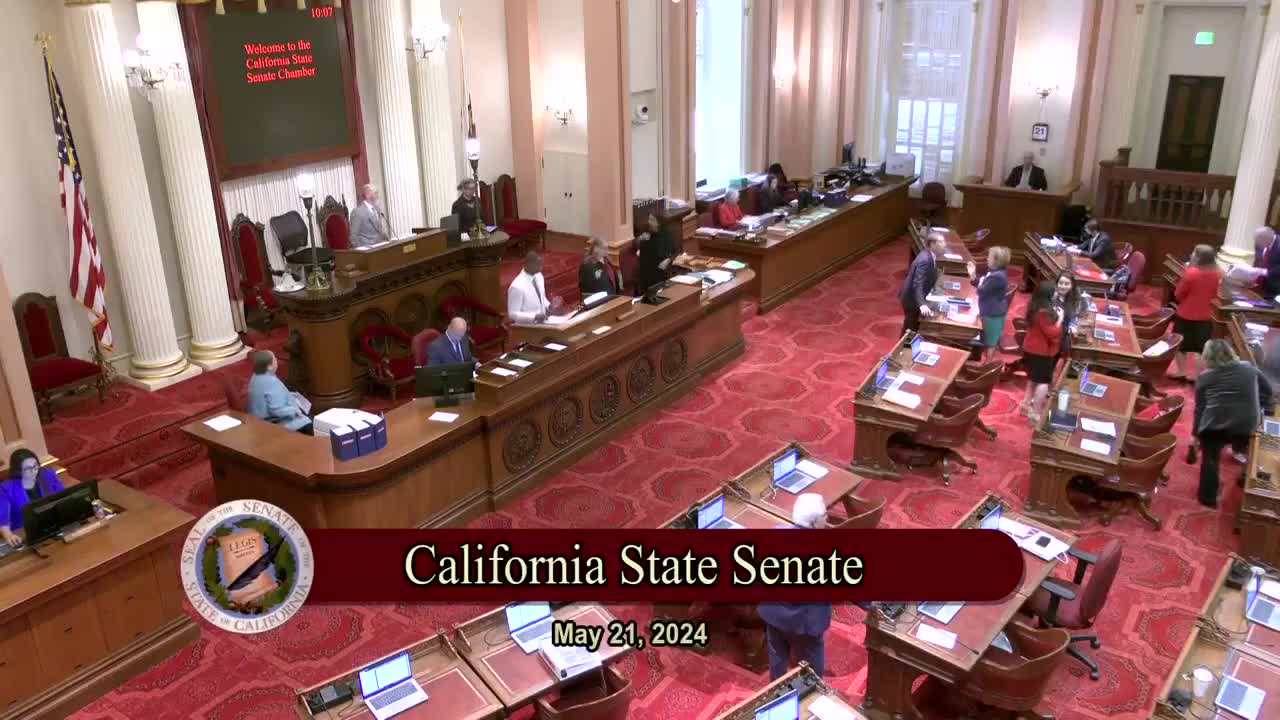
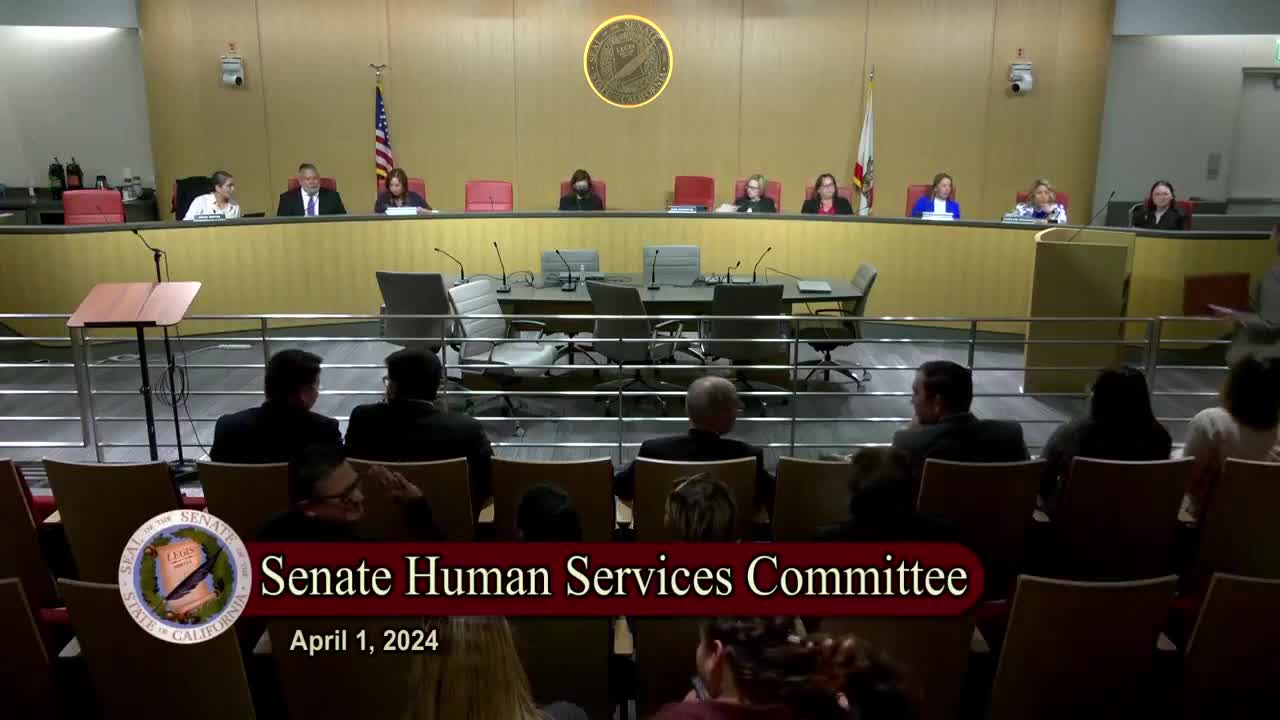
Bill Author
Bill Co-Author(s):