SB 584: Laborforce housing: Short-Term Rental Tax Law.
- Session Year: 2023-2024
- House: Senate
- Latest Version Date: 2023-05-18
Current Status:
Failed
(2023-06-29: June 28 set for first hearing canceled at the request of author.)
Introduced
In Committee
First Chamber
In Committee
Second Chamber
Enacted
Existing law establishes the Department of Housing and Community Development and sets forth its powers and duties. Existing law establishes various programs providing assistance for, among other things, emergency housing, multifamily housing, farmworker housing, homeownership for very low and low-income households, and downpayment assistance for first-time homebuyers.
This bill would enact the Laborforce Housing Financing Act of 2023, and define laborforce housing as housing that, among other things, is owned and managed by specified entities solely for the benefit of residents and households unable to afford market rent, and whose residents enjoy certain protections. The bill would establish, in the State Treasury, the Laborforce Housing Fund, to be continuously appropriated to the department, establish the Laborforce Housing Fund in the State Treasury, and would make moneys in the fund available to the department, upon appropriation by the Legislature, for the creation of laborforce housing and other specified housing projects by public entities, local housing authorities, and mission-driven nonprofit housing providers, as provided. By creating a new continuously appropriated fund, the bill would make an appropriation.
The bill would limit the use of fund moneys to construction or rehabilitation projects that require either that all construction workers on the project are paid at least the applicable prevailing wage rate, or that all contractors and subcontractors at every tier will use a skilled and trained workforce to complete the project, in accordance with specified provisions. These certifications would expand the crime of perjury, thereby imposing a state-mandated local program.
Existing law imposes taxes upon income and real property, and taxes upon certain transactions and excise taxes. The Fee Collection Procedures Law provides procedures for the collection of certain fees and surcharges and is administered by the California Department of Tax and Fee Administration (CDTFA). Under existing law, a violation of the Fee Collection Procedures Law is a crime.
This bill would, beginning January 1, 2025, impose a tax on the occupancy of a short-term rental in this state at the rate of 15% of the rental price of the short-term rental. The bill would define short-term rental for this purpose to mean the occupancy of a home, house, a room in a home or house, or other lodging that is not a hotel, inn, motel, or bed and breakfast, in this state for a period of 30 days or less. The bill would require a short-term rental facilitator, as defined, to collect the tax in the case where the facilitator processes the payment for the rental. The bill would require the operator, as defined, to collect the tax where no facilitator processes payment for the rental. The bill would require all revenues, less refunds and reimbursement to the CDTFA of administration and collection costs, be deposited in the Laborforce Housing Fund.
This bill would require the CDTFA to administer and collect the tax pursuant to the Fee Collection Procedures Law. By expanding the application of the crimes associated with the Fee Collection Procedures Law, the bill would impose a state-mandated local program.
The California Constitution requires the state to reimburse local agencies and school districts for certain costs mandated by the state. Statutory provisions establish procedures for making that reimbursement.
This bill would provide that no reimbursement is required by this act for a specified reason.
This bill would declare that it is to take effect immediately as an urgency statute.
Existing law establishes the Department of Housing and Community Development and sets forth its powers and duties. Existing law establishes various programs providing assistance for, among other things, emergency housing, multifamily housing, farmworker housing, homeownership for very low and low-income households, and downpayment assistance for first-time homebuyers.
This bill would enact the Laborforce Housing Financing Act of 2023, and define laborforce housing as housing that, among other things, is owned and managed by specified entities solely for the benefit of residents and households unable to afford market rent, and whose residents enjoy certain protections. The bill would establish, in the State Treasury, the Laborforce Housing Fund, to be continuously appropriated to the department, for the creation of laborforce housing and other specified housing projects by public entities, local housing authorities, and mission-driven nonprofit housing providers, as provided. By creating a new continuously appropriated fund, the bill would make an appropriation.
The bill would also provide that the operator of a residential property and a transient occupancy business, as defined, that facilitates the payment of rent made by a person for transient occupancy in a residential property rented for transient occupancy after January 1, 2024, are jointly and severally liable for a laborforce housing assessment, as provided, to be paid to the department no later than 90 days after the rent is received. The bill would require all laborforce housing assessments received by the department be deposited in the Laborforce Housing Fund. The bill would require the department to adopt rules, policies, guidelines, or standards to implement these provisions, as provided.The bill would limit the use of fund moneys to construction or rehabilitation projects that require either that all construction workers on the project are paid at least the applicable prevailing wage rate, or that all contractors and subcontractors at every tier will use a skilled and trained workforce to complete the project, in accordance with specified provisions. These certifications would expand the crime of perjury, thereby imposing a state-mandated local program.
Existing law imposes taxes upon income and real property, and taxes upon certain transactions and excise taxes. The Fee Collection Procedures Law provides procedures for the collection of certain fees and surcharges and is administered by the California Department of Tax and Fee Administration (CDTFA). Under existing law, a violation of the Fee Collection Procedures Law is a crime.
This bill would, beginning January 1, 2025, impose a tax on the occupancy of a short-term rental in this state at the rate of 15% of the rental price of the short-term rental. The bill would define short-term rental for this purpose to mean the occupancy of a home, house, a room in a home or house, or other lodging that is not a hotel, inn, motel, or bed and breakfast, in this state for a period of 30 days or less. The bill would require a short-term rental facilitator, as defined, to collect the tax in the case where the facilitator processes the payment for the rental. The bill would require the operator, as defined, to collect the tax where no facilitator processes payment for the rental. The bill would require all revenues, less refunds and reimbursement to the CDTFA of administration and collection costs, be deposited in the Laborforce Housing Fund.
This bill would require the CDTFA to administer and collect the tax pursuant to the Fee Collection Procedures Law. By expanding the application of the crimes associated with the Fee Collection Procedures Law, the bill would impose a state-mandated local program.
The California Constitution requires the state to reimburse local agencies and school districts for certain costs mandated by the state. Statutory provisions establish procedures for making that reimbursement.
This bill would provide that no reimbursement is required by this act for a specified reason.
This bill would declare that it is to take effect immediately as an urgency statute.
Existing law establishes the Department of Housing and Community Development and sets forth its powers and duties. Existing law establishes various programs providing assistance for, among other things, emergency housing, multifamily housing, farmworker housing, homeownership for very low and low-income households, and downpayment assistance for first-time homebuyers.
This bill would enact the Laborforce Housing Financing Act of 2023, and define laborforce housing as housing that, among other things, is owned and managed by specified entities solely for the benefit of residents and households unable to afford market rent, and whose residents enjoy certain protections. The bill would establish, in the State Treasury, the Laborforce Housing Fund, to be continuously appropriated to the department, for the creation of laborforce housing and other specified housing projects by public entities, local housing authorities, and mission-driven nonprofit housing providers, as provided. By creating a new continuously appropriated fund, the bill would make an appropriation.
The bill would also provide that the operator of a residential property and a transient occupancy business, as defined, that facilitates the payment of rent made by a person for transient occupancy in a residential property rented for transient occupancy after January 1, 2024, are jointly and severally liable for a laborforce housing assessment, as provided, to be paid to the department no later than 90 days after the rent is received. The bill would require all laborforce housing assessments received by the department be deposited in the Laborforce Housing Fund. The bill would require the department to adopt rules, policies, guidelines, or standards to implement these provisions, as provided.
The bill would limit the use of fund moneys to construction or rehabilitation projects that require either that all construction workers on the project are paid at least the applicable prevailing wage rate, or that all contractors and subcontractors at every tier will use a skilled and trained workforce to complete the project, in accordance with specified provisions. These certifications would expand the crime of perjury, thereby imposing a state-mandated local program.
The California Constitution requires the state to reimburse local agencies and school districts for certain costs mandated by the state. Statutory provisions establish procedures for making that reimbursement.
This bill would provide that no reimbursement is required by this act for a specified reason.
This bill would declare that it is to take effect immediately as an urgency statute.
Existing law, the California Occupational Safety and Health Act of 1973, was enacted for the purpose of ensuring safe and healthful working conditions by, among other things, authorizing the enforcement of effective standards.This bill would make nonsubstantive changes to that provision.Existing law, the California Occupational Safety and Health Act of 1973, was enacted for the purpose of ensuring safe and healthful working conditions by, among other things, authorizing the enforcement of effective standards.
This bill would make nonsubstantive changes to that provision.
This act shall be known as the Laborforce Housing Financing Act of 2023.
SEC. 2.Chapter 3.6 (commencing with Section 50535) is added to Part 2 of Division 31 of the Health and Safety Code, to read:3.6.Laborforce Housing1.General Provisions50535.The Legislature finds and declares all of the following:
(a)The affordable housing crisis in the State of California is a statewide problem that continues to worsen and that is causing individual suffering and weighing down the California economy. No locality has the ability to address this crisis on its own.
(1)Californias statewide housing crisis is exacerbated by the commercial use of residential homes and apartments for transient occupancies. Such commercial use of residential homes and apartments reduces the supply of residential units available for permanent residency and raises rents for permanent occupants.
(2)Current efforts to address the affordable housing crisis by incentivizing private production of affordable housing by for-profit and nonprofit developers are laudable, but they are not sufficient on their own to alleviate the crisis. Nor are rent subsidies for low-income tenants, while laudable, sufficient on their own to create an adequate supply of affordable housing.
(3)The experience in other countries demonstrates that Californias affordable housing crisis will not be resolved unless the government plays a greater role in building and rehabilitating affordable housing projects. The government must learn to play this role without creating the problems that plagued public housing projects in the past.
(b)It is the intent of the Legislature to create a state program to finance publicly owned housing that is built sustainably with union labor and that avoids the problems that plagued public housing projects in the past. If successful, this program can be expanded in the future.
(c)It is also the intent of the Legislature to impose a statewide assessment on the commercial use of residential homes and apartments for transient occupancy and to use the money collected to pay for the development and rehabilitation of affordable housing to partly replace the residential units that are not available for permanent occupancy.
50535.1.For purposes of this chapter, the following definitions apply:
(a)Afford and affordable mean that a household pays no more than 30 percent of its household income on rent.
(b)Community land trust has the same meaning as that term is defined in clause (ii) of subparagraph (C) of paragraph (11) of subdivision (a) of Section 402.1 of the Revenue and Taxation Code. (c)(b)Department means the Department of Housing and Community Development.
(d)(c)Extremely low income has the same meaning as the term extremely low income households is defined in Section 50106 of the Health and Safety Code.
(e)(d)(1)Laborforce housing means housing that meets all of the following requirements:
(A)The housing units are owned and managed by a public entity, a local housing authority, a community land trust, or a mission-driven not-for-profit private entity solely for the benefit of residents and households unable to afford market rent.
(B)Each housing development contains housing units that accommodate a mix of household income ranges, including extremely low income, very low income, and low income, as well as moderate income households unable to afford market rent, and all housing units are permanently deed-restricted affordable to households at each of those income levels to ensure that every household pays an affordable rent.
(C)Residents of the housing units enjoy the protections set forth in Section 50539, and shall be afforded due process prior to being subject to eviction procedures.
(D)The housing units are protected for the duration of their useful life, and the land associated with the housing units is protected permanently from being sold or transferred to any private person or for-profit entity or a public-private partnership.
(E)Residents have the right to participate directly and meaningfully in decisionmaking affecting the operation and management of the housing units in which they reside.
(2)Laborforce housing includes both new construction of units of laborforce housing and the acquisition and rehabilitation of existing housing units preserved as laborforce housing.
(f)(e)Laborforce Housing Fund means the fund established by Section 50537.
(g)(f)Low income has the same meaning as the term lower income household is defined in Section 50079.5 of the Health and Safety Code.
(h)(g)Mission-driven not-for-profit entity means an eligible nonprofit corporation with all of the attributes described in subparagraph (D) of paragraph (3) of subdivision (a) of Section 2924m of the Civil Code.
(i)(h)Moderate income has the same meaning as the term persons and families of moderate income is defined in Section 50093 of the Health and Safety Code.
(j)(i)Operator means a person who is proprietor of a residential property rented for transient occupancy, whether in the capacity of owner, lessee, sublessee, mortgagee in possession, licensee, or any other capacity. Where the operator performs their functions through a managing agent of any type or character other than an employee, the managing agent shall also be deemed an operator for the purposes of this chapter, and shall have the same duties and liabilities as their principal.
(k)(j)Person means any individual, firm, partnership, joint venture, association, social club, fraternal organization, joint stock company, corporation, estate, trust, business trust, receiver, trustee, syndicate, or any other group or combination acting as a unit.
(l)(k)Prevailing wage rates means the wage rates determined by the Director of Industrial Relations pursuant to Part 7 (commencing with Section 1720) of Division 2 of the Labor Code.
(m)(l)Project labor agreement means an agreement that meets the requirements of Section 2500 of the Public Contract Code.
(n)(m)Rent means the consideration charged by the operator, valued in money, for the occupancy of the residential property rented for transient occupancy, including any fee, including, but not limited to, a cleaning fee or charge, without any deduction therefrom whatsoever.
(o)(n)Residential property rented for transient occupancy means any structure in the state, or any portion of that structure, which is zoned for residential use as a home or apartment, and is rented for transient occupancy for dwelling, lodging, or sleeping purposes. Residential property rented for transient occupancy does not include a hotel, inn, motel, bed and breakfast, or similar business.
(p)(o)Skilled and trained workforce has the same meaning as provided in Chapter 2.9 (commencing with Section 2600) of Part 1 of Division 2 of the Public Contract Code.
(q)(p)Transient occupancy means the use or possession, or the right to the use or possession, of any buildings, structures, or portion thereof for dwelling, lodging, or sleeping purposes, by reason of concession, permit, right of access, license, or other agreement for a period of 30 consecutive calendar days or less, counting portions of calendar days as full days.
(r)(q)Transient occupancy business means any person in the business of arranging for the rental of residential property for transient occupancy. Transient occupancy business includes corporations that advertise residential property for transient occupancy, accept or facilitate the acceptance of rental payments, and then pass a portion of those payments on to the operators of property.
(s)(r)Very low income has the same meaning as the term very low income households is defined in Section 50105 of the Health and Safety Code.
50535.2.The department shall adopt rules, policies, guidelines, or standards to implement this chapter. No rule, policy, guideline, or standard issued by the department in implementing this chapter shall be subject to the requirements of the Administrative Procedure Act (Chapter 3.5 (commencing with Section 11340) of Part 1 of Division 3 of Title 2 of the Government Code).
2.Administration of the Laborforce Housing Fund50537.(a)There is hereby established, in the State Treasury, the Laborforce Housing Fund. Notwithstanding Section 13340 of the Government Code, the fund is continuously appropriated to the department without regard to fiscal years for purposes of this chapter. Moneys in the fund shall be available, upon appropriation by the Legislature, to the department for purposes of this chapter.
(b)Revenues deposited in the Laborforce Housing Fund shall only consist of laborforce housing assessments received by the department pursuant to Section 50536.5.
50537.1.(a)Public entities, local housing authorities, and mission-driven nonprofit housing providers shall be eligible to receive funding from the Laborforce Housing Fund for the creation of laborforce housing.
(b)Notwithstanding ineligibility under subdivision (a), all housing projects deemed eligible for funding under the Alternative Models for Permanent Affordable Housing program, as set forth in section 22.618.3(d)(1)(ii)b of Measure ULA (2022), the Los Angeles Program to Prevent Homelessness and Fund Affordable Housing (House LA), or any substantially identical local program, shall be eligible for funding under this chapter.
(c)The department may use revenues deposited in the Laborforce Housing Fund to pay for the administration and collection of the laborforce housing assessments.(c)The department may use up to 5 percent of program funds to administer and oversee the program.
50537.2.(a)No less than 65 percent of funds allocated in a given year from the Laborforce Housing Fund shall be allocated to the creation of laborforce housing through new construction.
(b)A maximum of 30 percent of the funding allocated from the Laborforce Housing Fund in a given year may be used for the creation of laborforce housing through acquisition and rehabilitation of existing housing.
(c)A maximum of 5 percent of the funding allocated in a given year from the Laborforce Housing Fund may be used to meet the operating needs of laborforce housing projects and for planning and implementation of local laborforce housing or renter protection programs.
50537.3.(a)The department shall establish a process for soliciting applications and shall have discretion to award funding from the Laborforce Housing Fund in the manner that the department determines will best effectuate the purposes of this chapter.
(b)The department shall endeavor, to the extent feasible, to award funds collected from the laborforce housing assessments to laborforce housing projects in the counties in which the funds were collected.
3.Labor Standards for Laborforce Housing Projects50538.Revenues from the Laborforce Housing Fund may be used to pay for construction or rehabilitation work on a project only if either of the following is true:
(a)All construction and rehabilitation work is subject to a project labor agreement that requires payment of at least the applicable prevailing wage rate to all construction workers on the project.
(b)The department or a local public agency has obtained an enforceable commitment from the prime contractor or other entity undertaking the work that all contractors and subcontractors at every tier will use a skilled and trained workforce to complete the project.
4.Tenant Protections for Laborforce Housing Projects50539.(a)All of the following protections shall apply to tenants in a property funded under this chapter:
(1)Tenants shall be protected from termination or eviction except for just cause, as defined in Section 1946.2 of the Civil Code, or a more protective local policy, which protections shall be in place from the time the tenancy is created, with no waiting period.
(2)A tenant who qualifies at the time of the creation of the tenancy as income eligible shall not be terminated solely on the basis of a subsequent change in income.
(3)No household or member of a household that resides in the property at the time of its acquisition shall be evicted, nor shall their tenancy be terminated, on the ground of their income or other eligibility requirements for deed-restricted units in the property.
(4)The maximum allowable annual rent increase for any unit shall not exceed the lesser of 3 percent of the rent, or 6 percent of the California Consumer Price Index.
(5)No tenant in a property acquired with funding under this chapter shall be deprived of any rights or protections under state or local law that they enjoyed prior to the time of its acquisition. Tenants shall enjoy full rights of association and free speech, including the right to organize tenant unions, and shall be protected from any act of discrimination, harassment, or retaliation.
(b)Notwithstanding any other state or local law, the department shall require, in the rules, policies, guidelines, or standards adopted pursuant to Section 50535.2, the inclusion of language in tenant leases that incorporates the protections of this section, and in the provisions of Section 1946.2 of the Civil Code or a local policy that provides greater tenant rights against termination.
SEC. 3.Part 16 (commencing with Section 35500) is added to Division 2 of the Revenue and Taxation Code, to read:16.Short-Term Rental Tax Law1.General Provisions and Definitions35500.This part shall be known, and may be cited, as the Short-Term Rental Tax Law.
35501.For purposes of this part, the following definitions shall apply:
(a)Department means the California Department of Tax and Fee Administration.
(b)Marketplace means a physical or electronic place, including, but not limited to, an internet website or a dedicated software application, where a short-term rental facilitator facilitates the occupancy of a short-term rental in this state, regardless of whether the facilitator has a physical presence in this state.
(c)Operator means a person who is the proprietor of a short-term rental, whether in the capacity of owner, lessee, sublessee, mortgagee in possession, licensee, or any other capacity. Where the operator performs their functions through a managing agent of any type or character other than an employee, the managing agent shall also be deemed an operator for the purposes of this part.
(d)Renter means a person who uses a short-term rental facilitator to facilitate the occupation of a short-term rental in this state.
(e)Rental price means the total amount for which a renter retains the right to occupy a short-term rental, valued in money, whether paid in money or otherwise.
(f)Short-term rental means the occupancy of a home, house, a room in a home or house, or other lodging that is not a hotel, inn, motel, or bed and breakfast, in this state for a period of 30 days or less.
(g)(1)Short-term rental facilitator means a person that facilitates for consideration, regardless of whether it is deducted as fees from the transaction, the use of a short-term rental that is not owned by the person facilitating the rental, through a marketplace operated by the person or a related person, and that does both of the following:
(A)Directly, or indirectly through one or more related persons, engages in any of the following:
(i)Transmits or otherwise communicates the offer or acceptance between the renter and the operator.
(ii)Owns or operates the electronic or physical infrastructure or technology that brings renters and operators together.
(iii)Provides a virtual currency that renters are allowed or required to use to facilitate occupancy of a short-term rental.
(iv)Software development or research and development activities related to any of the activities described in paragraph (2), if such activities are directly related to facilitating short-term rentals.
(B)Directly, or indirectly through one or more related persons, engages in any of the following activities with respect to facilitating short-term rentals:
(i)Payment processing services.
(ii)Listing short-term rentals that are not owned by that person or a related person.
(iii)Setting prices.
(iv)Branding short-term rentals as those of the short-term rental facilitator.
(v)Taking orders or reservations.
(2)Notwithstanding paragraph (1), newspapers, periodicals, and internet websites are not facilitating a short-term rental under this part if they meet all the following requirements:
(A)They advertise short-term rentals.
(B)They refer renters to the operator by telephone, internet link, or other means to complete the sale, and do not participate further in the sale by, either directly or indirectly through agreements or arrangements with third parties, collecting payment from the renter.
(C)Acceptance of the offer to occupy a short-term rental displayed in the advertisement does not take place upon their owned and operated electronic or physical infrastructure that brings renters and operators together.
35502.For purposes of this part, a person is related to another person if both persons are related to each other pursuant to Section 267(b) of the Internal Revenue Code, as that section was amended by Section 345 of Division Q of the Consolidated Appropriations Act, 2016 (Public Law 114-113), and the regulations thereunder.
2.Imposition of Tax35504.(a)Beginning January 1, 2025, a renter shall pay a tax on the occupancy of a short-term rental in this state at the rate of 15 percent of the rental price of the short-term rental.
(b)(1)Where a short-term rental facilitator processes the payment for the short-term rental, the short-term rental facilitator shall collect the tax imposed by this section at the time the renter enters an agreement to occupy the short-term rental.
(2)Where a short-term rental facilitator does not process payment for the short-term rental, the operator of a short-term rental for consideration shall collect the tax imposed by this section.
(c)(1)A short-term rental facilitator with de minimis facilitations of short-term rentals, or a short-term rental operator with de minimis short-term rental operations, is not required to collect the tax imposed pursuant to subdivision (a).
(2)(A)For purposes of this subdivision, a short-term rental facilitator is considered to have de minimis facilitations of short-term rentals if the facilitator derived less than one hundred thousand dollars ($100,000) from facilitating short-term rentals during the previous calendar year. The de minimis facilitation threshold shall be based on the aggregate of all short-term rentals in the state facilitated by a person or related person.
(B)For purposes of this subdivision, an operator is considered to have de minimis short-term rental operations if the operator derived less than one hundred thousand dollars ($100,000) from short-term rental operations during the previous calendar year, including those short-term rental operations facilitated by a short-term rental facilitator.
3.Administration35506.The department shall administer and collect the taxes imposed by this part pursuant to the Fee Collection Procedures Law (Part 30 (commencing with Section 55001)). For purposes of this part, the references in the Fee Collection Procedures Law to fee shall include the taxes imposed by this part, and references to feepayer shall include a person required to pay the taxes imposed by this part.
35507.(a)The taxes imposed by this part shall be due and payable quarterly on or before the last day of the month following each calendar quarter.
(b)The payments shall be accompanied by a return filed by the short-term rental facilitator or operator using electronic media on or before the last day of the month following each quarterly period for the preceding quarterly period. Returns shall be authenticated in a form or pursuant to methods as may be prescribed by the department.
(c)The tax that is required to be collected by the short-term rental facilitator or operator and any amount unreturned to the renter which is not tax but was collected from the renter under the representation by the short-term rental facilitator or operator that it was tax constitutes debts owed by the short-term rental facilitator or operator to the state.
35508.A short-term rental facilitator or operator that is required to collect the tax imposed by this part shall register for a permit with the department using electronic media and shall set forth the name under which it transacts or intends to transact business and any other information as the department may require.
35509.(a)The department may prescribe, adopt, and enforce regulations relating to the administration and enforcement of this part, including, but not limited to, collections, reporting, refunds, and appeals.
(b)(1)The department may prescribe, adopt, and enforce emergency regulations as necessary to implement this part.
(2)An emergency regulation prescribed, adopted, or enforced pursuant to this paragraph shall be adopted in accordance with Chapter 3.5 (commencing with Section 11340) of Part 1 of Division 3 of Title 2 of the Government Code, and, for purposes of that chapter, including Section 11349.6 of the Government Code, the adoption of the regulation is an emergency and shall be considered by the Office of Administrative Law as necessary for the immediate preservation of the public peace, health and safety, and general welfare.
35510.All revenues, interest, and penalties derived from the tax imposed by this part, less refunds and reimbursement to the department for expenses incurred in administration and collection of the tax, shall be deposited into the Laborforce Housing Fund established pursuant to Section 50537 of the Health and Safety Code.
SEC. 4.No reimbursement is required by this act pursuant to Section 6 of Article XIIIB of the California Constitution because the only costs that may be incurred by a local agency or school district will be incurred because this act creates a new crime or infraction, eliminates a crime or infraction, or changes the penalty for a crime or infraction, within the meaning of Section 17556 of the Government Code, or changes the definition of a crime within the meaning of Section 6 of Article XIIIB of the California Constitution.
SEC. 5.This act is an urgency statute necessary for the immediate preservation of the public peace, health, or safety within the meaning of Article IV of the California Constitution and shall go into immediate effect. The facts constituting the necessity are:
In order to address the statewide affordable housing crisis in California and to prepare for the collection of a laborforce housing assessment and the process for disbursing funds for laborforce housing, it is necessary that this act take effect immediately.
This act shall be known as the Laborforce Housing Financing Act of 2023.
SEC. 2.Chapter 3.6 (commencing with Section 50535) is added to Part 2 of Division 31 of the Health and Safety Code, to read:3.6.Laborforce Housing1.General Provisions50535.The Legislature finds and declares all of the following:
(a)The affordable housing crisis in the State of California is a statewide problem that continues to worsen and that is causing individual suffering and weighing down the California economy. No locality has the ability to address this crisis on its own.
(1)Californias statewide housing crisis is exacerbated by the commercial use of residential homes and apartments for transient occupancies. Such commercial use of residential homes and apartments reduces the supply of residential units available for permanent residency and raises rents for permanent occupants.
(2)Current efforts to address the affordable housing crisis by incentivizing private production of affordable housing by for-profit and nonprofit developers are laudable, but they are not sufficient on their own to alleviate the crisis. Nor are rent subsidies for low-income tenants, while laudable, sufficient on their own to create an adequate supply of affordable housing.
(3)The experience in other countries demonstrates that Californias affordable housing crisis will not be resolved unless the government plays a greater role in building and rehabilitating affordable housing projects. The government must learn to play this role without creating the problems that plagued public housing projects in the past.
(b)It is the intent of the Legislature to create a state program to finance publicly owned housing that is built sustainably with union labor and that avoids the problems that plagued public housing projects in the past. If successful, this program can be expanded in the future.
(c)It is also the intent of the Legislature to impose a statewide assessment on the commercial use of residential homes and apartments for transient occupancy and to use the money collected to pay for the development and rehabilitation of affordable housing to partly replace the residential units that are not available for permanent occupancy.
50535.1.For purposes of this chapter, the following definitions apply:
(a)Afford and affordable mean that a household pays no more than 30 percent of its household income on rent.
(b)Community land trust has the same meaning as that term is defined in clause (ii) of subparagraph (C) of paragraph (11) of subdivision (a) of Section 402.1 of the Revenue and Taxation Code.
(c)Department means the Department of Housing and Community Development.
(d)Extremely low income has the same meaning as the term extremely low income households is defined in Section 50106 of the Health and Safety Code.
(e)(1)Laborforce housing means housing that meets all of the following requirements:
(A)The housing units are owned and managed by a public entity, a local housing authority, a community land trust, or a mission-driven not-for-profit private entity solely for the benefit of residents and households unable to afford market rent.
(B)Each housing development contains housing units that accommodate a mix of household income ranges, including extremely low income, very low income, and low income, as well as moderate income households unable to afford market rent, and all housing units are permanently deed-restricted affordable to households at each of those income levels to ensure that every household pays an affordable rent.
(C)Residents of the housing units enjoy the protections set forth in Section 50539, and shall be afforded due process prior to being subject to eviction procedures.
(D)The housing units are protected for the duration of their useful life, and the land associated with the housing units is protected permanently from being sold or transferred to any private person or for-profit entity or a public-private partnership.
(E)Residents have the right to participate directly and meaningfully in decisionmaking affecting the operation and management of the housing units in which they reside.
(2)Laborforce housing includes both new construction of units of laborforce housing and the acquisition and rehabilitation of existing housing units preserved as laborforce housing.
(f)Laborforce Housing Fund means the fund established by Section 50537.
(g)Low income has the same meaning as the term lower income household is defined in Section 50079.5 of the Health and Safety Code.
(h)Mission-driven not-for-profit entity means an eligible nonprofit corporation with all of the attributes described in subparagraph (D) of paragraph (3) of subdivision (a) of Section 2924m of the Civil Code.
(i)Moderate income has the same meaning as the term persons and families of moderate income is defined in Section 50093 of the Health and Safety Code.
(j)Operator means a person who is proprietor of a residential property rented for transient occupancy, whether in the capacity of owner, lessee, sublessee, mortgagee in possession, licensee, or any other capacity. Where the operator performs their functions through a managing agent of any type or character other than an employee, the managing agent shall also be deemed an operator for the purposes of this chapter, and shall have the same duties and liabilities as their principal.
(k)Person means any individual, firm, partnership, joint venture, association, social club, fraternal organization, joint stock company, corporation, estate, trust, business trust, receiver, trustee, syndicate, or any other group or combination acting as a unit.
(l)Prevailing wage rates means the wage rates determined by the Director of Industrial Relations pursuant to Part 7 (commencing with Section 1720) of Division 2 of the Labor Code.
(m)Project labor agreement means an agreement that meets the requirements of Section 2500 of the Public Contract Code.
(n)Rent means the consideration charged by the operator, valued in money, for the occupancy of the residential property rented for transient occupancy, including any fee, including, but not limited, to limited to, a cleaning fee or charge, without any deduction therefrom whatsoever.
(o)Residential property rented for transient occupancy means any structure in the state, or any portion of that structure, which is zoned for residential use as a home or apartment, and is rented for transient occupancy for dwelling, lodging lodging, or sleeping purposes. Residential property rented for transient occupancy does not include a hotel, inn, motel, bed and breakfast, or similar business.
(p)Skilled and trained workforce has the same meaning as provided in Chapter 2.9 (commencing with Section 2600) of Part 1 of Division 2 of the Public Contract Code.
(q)Transient occupancy means the use or possession, or the right to the use or possession, of any buildings, structures, or portion thereof for dwelling, lodging, or sleeping purposes, by reason of concession, permit, right of access, license, or other agreement for a period of 30 consecutive calendar days or less, counting portions of calendar days as full days.
(r)Transient occupancy business means any person in the business of arranging for the rental of residential property for transient occupancy. Transient occupancy business includes corporations that advertise residential property for transient occupancy, accept or facilitate the acceptance of rental payments, and then pass a portion of those payments on to the operators of property.
(s)Very low income has the same meaning as the term very low income households is defined in Section 50105 of the Health and Safety Code.
50535.2.The department shall adopt rules, policies, guidelines, or standards to implement this chapter. No rule, policy, guideline, or standard issued by the department in implementing this chapter shall be subject to the requirements of the Administrative Procedure Act (Chapter 3.5 (commencing with Section 11340) of Part 1 of Division 3 of Title 2 of the Government Code).
2.Laborforce Housing Assessments50536.(a)For each payment of rent made by a person for transient occupancy in a residential property rented for transient occupancy after January 1, 2024, the operator of the residential property and any transient occupancy business that facilitates the transaction shall be jointly and severally liable for the laborforce housing assessment described in this article.(b)The laborforce housing assessment shall be equal to __ percent of the rent charged for the transient occupancy. The laborforce housing assessment shall apply in addition to any local tax, fee, or other assessment.(c)The laborforce housing assessment shall be paid to the department no later than 90 days after the rent is received.(d)The laborforce housing assessment constitutes a debt owed to the department. The debt is extinguished only upon payment by either the operator or any transient occupancy business. (e)Every operator and transient occupancy business shall keep and preserve, for at least four years from the date of the rental, records sufficient to enable the department to determine the existence and amount of any laborforce housing assessments owed.(f)Any operator or transient occupancy business that fails to timely pay any laborforce housing assessment owed to the department shall also owe to the department a penalty of 10 percent of the unpaid amount plus interest on the unpaid amount at the rate of 10 percent per annum.(g)The department may file suit, in any jurisdiction in which any part of the rent from which the total debt owed arises, against an operator or transient occupancy business, or both, that has failed to pay any laborforce housing assessment, including any penalty or interest owed. The department shall file the suit within four years of the date on which any unpaid laborforce housing assessment was due. Multiple unpaid laborforce housing assessments may be recovered in a single suit.50536.5.All funds received by the department from the laborforce housing assessment established by this article shall be deposited in the Laborforce Housing Fund.3.2.Administration of the Laborforce Housing Fund50537.(a)There is hereby established, in the State Treasury, the Laborforce Housing Fund. Notwithstanding Section 13340 of the Government Code, the fund is continuously appropriated to the department without regard to fiscal years for purposes of this chapter.
(b)Revenues deposited in the Laborforce Housing Fund shall only consist of laborforce housing assessments received by the department pursuant to Section 50536.5.
50537.1.(a)Public entities, local housing authorities, and mission-driven nonprofit housing providers shall be eligible to receive funding from the Laborforce Housing Fund for the creation of laborforce housing.
(b)Notwithstanding ineligibility under subdivision (a), all housing projects deemed eligible for funding under the Alternative Models for Permanent Affordable Housing program, as set forth in section 22.618.3(d)(1)(ii)b of Measure ULA (2022), the Los Angeles Program to Prevent Homelessness and Fund Affordable Housing (House LA), or any substantially identical local program, shall be eligible for funding under this chapter.
(c)The department may use revenues deposited in the Laborforce Housing Fund to pay for the administration and collection of the laborforce housing assessments.
50537.2.(a)No less than 65 percent of funds allocated in a given year from the Laborforce Housing Fund shall be allocated to the creation of laborforce housing through new construction.
(b)A maximum of 30 percent of the funding allocated from the Laborforce Housing Fund in a given year may be used for the creation of laborforce housing through acquisition and rehabilitation of existing housing.
(c)A maximum of 5 percent of the funding allocated in a given year from the Laborforce Housing Fund may be used to meet the operating needs of laborforce housing projects and for planning and implementation of local laborforce housing or renter protection programs.
50537.3.(a)The department shall establish a process for soliciting applications and shall have discretion to award funding from the Laborforce Housing Fund in the manner that the department determines will best effectuate the purposes of this chapter.
(b)The department shall endeavor, to the extent feasible, to award funds collected from the laborforce housing assessments to laborforce housing projects in the counties in which the funds were collected.
4.3.Labor Standards for Laborforce Housing Projects50538.Revenues from the Laborforce Housing Fund may be used to pay for construction or rehabilitation work on a project only if either of the following is true:
(a)All construction and rehabilitation work is subject to a project labor agreement that requires payment of at least the applicable prevailing wage rate to all construction workers on the project.
(b)The department or a local public agency has obtained an enforceable commitment from the prime contractor or other entity undertaking the work that all contractors and subcontractors at every tier will use a skilled and trained workforce to complete the project.
5.4.Tenant Protections for Laborforce Housing Projects50539.(a)All of the following protections shall apply to tenants in a property funded under this chapter:
(1)Tenants shall be protected from termination or eviction except for just cause, as defined in Section 1946.2 of the Civil Code, or a more protective local policy, which protections shall be in place from the time the tenancy is created, with no waiting period.
(2)A tenant who qualifies at the time of the creation of the tenancy as income eligible shall not be terminated solely on the basis of a subsequent change in income.
(3)No household or member of a household that resides in the property at the time of its acquisition shall be evicted, nor shall their tenancy be terminated, on the ground of their income or other eligibility requirements for deed-restricted units in the property.
(4)The maximum allowable annual rent increase for any unit shall not exceed the lesser of 3 percent of the rent, or 6 percent of the California Consumer Price Index.
(5)No tenant in a property acquired with funding under this chapter shall be deprived of any rights or protections under state or local law that they enjoyed prior to the time of its acquisition. Tenants shall enjoy full rights of association and free speech, including the right to organize tenant unions, and shall be protected from any act of discrimination, harassment, or retaliation.
(b)Notwithstanding any other state or local law, the department shall require, in the rules, policies, guidelines, or standards adopted pursuant to Section 50535.2, the inclusion of language in tenant leases that incorporates the protections of this section, and in the provisions of Section 1946.2 of the Civil Code or a local policy that provides greater tenant rights against termination.
SEC. 3.Part 16 (commencing with Section 35500) is added to Division 2 of the Revenue and Taxation Code, to read:16.Short-Term Rental Tax Law1.General Provisions and Definitions35500.This part shall be known, and may be cited, as the Short-Term Rental Tax Law.
35501.For purposes of this part, the following definitions shall apply:
(a)Department means the California Department of Tax and Fee Administration.
(b)Marketplace means a physical or electronic place, including, but not limited to, an internet website or a dedicated software application, where a short-term rental facilitator facilitates the occupancy of a short-term rental in this state, regardless of whether the facilitator has a physical presence in this state.
(c)Operator means a person who is the proprietor of a short-term rental, whether in the capacity of owner, lessee, sublessee, mortgagee in possession, licensee, or any other capacity. Where the operator performs their functions through a managing agent of any type or character other than an employee, the managing agent shall also be deemed an operator for the purposes of this part.
(d)Renter means a person who uses a short-term rental facilitator to facilitate the occupation of a short-term rental in this state.
(e)Rental price means the total amount for which a renter retains the right to occupy a short-term rental, valued in money, whether paid in money or otherwise.
(f)Short-term rental means the occupancy of a home, house, a room in a home or house, or other lodging that is not a hotel, inn, motel, or bed and breakfast, in this state for a period of 30 days or less.
(g)(1)Short-term rental facilitator means a person that facilitates for consideration, regardless of whether it is deducted as fees from the transaction, the use of a short-term rental that is not owned by the person facilitating the rental, through a marketplace operated by the person or a related person, and that does both of the following:
(A)Directly, or indirectly through one or more related persons, engages in any of the following:
(i)Transmits or otherwise communicates the offer or acceptance between the renter and the operator.
(ii)Owns or operates the electronic or physical infrastructure or technology that brings renters and operators together.
(iii)Provides a virtual currency that renters are allowed or required to use to facilitate occupancy of a short-term rental.
(iv)Software development or research and development activities related to any of the activities described in paragraph (2), if such activities are directly related to facilitating short-term rentals.
(B)Directly, or indirectly through one or more related persons, engages in any of the following activities with respect to facilitating short-term rentals:
(i)Payment processing services.
(ii)Listing short-term rentals that are not owned by that person or a related person.
(iii)Setting prices.
(iv)Branding short-term rentals as those of the short-term rental facilitator.
(v)Taking orders or reservations.
(2)Notwithstanding paragraph (1), newspapers, periodicals, and internet websites are not facilitating a short-term rental under this part if they meet all the following requirements:
(A)They advertise short-term rentals.
(B)They refer renters to the operator by telephone, internet link, or other means to complete the sale, and do not participate further in the sale by, either directly or indirectly through agreements or arrangements with third parties, collecting payment from the renter.
(C)Acceptance of the offer to occupy a short-term rental displayed in the advertisement does not take place upon their owned and operated electronic or physical infrastructure that brings renters and operators together.
35502.For purposes of this part, a person is related to another person if both persons are related to each other pursuant to Section 267(b) of the Internal Revenue Code, as that section was amended by Section 345 of Division Q of the Consolidated Appropriations Act, 2016 (Public Law 114-113), and the regulations thereunder.
2.Imposition of Tax35504.(a)Beginning January 1, 2025, a renter shall pay a tax on the occupancy of a short-term rental in this state at the rate of 15 percent of the rental price of the short-term rental.
(b)(1)Where a short-term rental facilitator processes the payment for the short-term rental, the short-term rental facilitator shall collect the tax imposed by this section at the time the renter enters an agreement to occupy the short-term rental.
(2)Where a short-term rental facilitator does not process payment for the short-term rental, the operator of a short-term rental for consideration shall collect the tax imposed by this section.
(c)(1)A short-term rental facilitator with de minimis facilitations of short-term rentals, or a short-term rental operator with de minimis short-term rental operations, is not required to collect the tax imposed pursuant to subdivision (a).
(2)(A)For purposes of this subdivision, a short-term rental facilitator is considered to have de minimis facilitations of short-term rentals if the facilitator derived less than one hundred thousand dollars ($100,000) from facilitating short-term rentals during the previous calendar year. The de minimis facilitation threshold shall be based on the aggregate of all short-term rentals in the state facilitated by a person or related person.
(B)For purposes of this subdivision, an operator is considered to have de minimis short-term rental operations if the operator derived less than one hundred thousand dollars ($100,000) from short-term rental operations during the previous calendar year, including those short-term rental operations facilitated by a short-term rental facilitator.
3.Administration35506.The department shall administer and collect the taxes imposed by this part pursuant to the Fee Collection Procedures Law (Part 30 (commencing with Section 55001)). For purposes of this part, the references in the Fee Collection Procedures Law to fee shall include the taxes imposed by this part, and references to feepayer shall include a person required to pay the taxes imposed by this part.
35507.(a)The taxes imposed by this part shall be due and payable quarterly on or before the last day of the month following each calendar quarter.
(b)The payments shall be accompanied by a return filed by the short-term rental facilitator or operator using electronic media on or before the last day of the month following each quarterly period for the preceding quarterly period. Returns shall be authenticated in a form or pursuant to methods as may be prescribed by the department.
(c)The tax that is required to be collected by the short-term rental facilitator or operator and any amount unreturned to the renter which is not tax but was collected from the renter under the representation by the short-term rental facilitator or operator that it was tax constitutes debts owed by the short-term rental facilitator or operator to the state.
35508.A short-term rental facilitator or operator that is required to collect the tax imposed by this part shall register for a permit with the department using electronic media and shall set forth the name under which it transacts or intends to transact business and any other information as the department may require.
35509.(a)The department may prescribe, adopt, and enforce regulations relating to the administration and enforcement of this part, including, but not limited to, collections, reporting, refunds, and appeals.
(b)(1)The department may prescribe, adopt, and enforce emergency regulations as necessary to implement this part.
(2)An emergency regulation prescribed, adopted, or enforced pursuant to this paragraph shall be adopted in accordance with Chapter 3.5 (commencing with Section 11340) of Part 1 of Division 3 of Title 2 of the Government Code, and, for purposes of that chapter, including Section 11349.6 of the Government Code, the adoption of the regulation is an emergency and shall be considered by the Office of Administrative Law as necessary for the immediate preservation of the public peace, health and safety, and general welfare.
35510.All revenues, interest, and penalties derived from the tax imposed by this part, less refunds and reimbursement to the department for expenses incurred in administration and collection of the tax, shall be deposited into the Laborforce Housing Fund established pursuant to Section 50537 of the Health and Safety Code.
SEC. 3.SEC. 4.No reimbursement is required by this act pursuant to Section 6 of Article XIIIB of the California Constitution because the only costs that may be incurred by a local agency or school district will be incurred because this act creates a new crime or infraction, eliminates a crime or infraction, or changes the penalty for a crime or infraction, within the meaning of Section 17556 of the Government Code, or changes the definition of a crime within the meaning of Section 6 of Article XIIIB of the California Constitution.
SEC. 4.SEC. 5.This act is an urgency statute necessary for the immediate preservation of the public peace, health, or safety within the meaning of Article IV of the California Constitution and shall go into immediate effect. The facts constituting the necessity are:
In order to address the statewide affordable housing crisis in California and to prepare for the collection of a laborforce housing assessment and the process for disbursing funds for laborforce housing, it is necessary that this act take effect immediately.
This act shall be known as the Laborforce Housing Financing Act of 2023.
SEC. 2.Chapter 3.6 (commencing with Section 50535) is added to Part 2 of Division 31 of the Health and Safety Code, to read:3.6.Laborforce Housing1.General Provisions50535.The Legislature finds and declares all of the following:
(a)The affordable housing crisis in the State of California is a statewide problem that continues to worsen and that is causing individual suffering and weighing down the California economy. No locality has the ability to address this crisis on its own.
(1)Californias statewide housing crisis is exacerbated by the commercial use of residential homes and apartments for transient occupancies. Such commercial use of residential homes and apartments reduces the supply of residential units available for permanent residency and raises rents for permanent occupants.
(2)Current efforts to address the affordable housing crisis by incentivizing private production of affordable housing by for-profit and nonprofit developers are laudable, but they are not sufficient on their own to alleviate the crisis. Nor are rent subsidies for low-income tenants, while laudable, sufficient on their own to create an adequate supply of affordable housing.
(3)The experience in other countries demonstrates that Californias affordable housing crisis will not be resolved unless the government plays a greater role in building and rehabilitating affordable housing projects. The government must learn to play this role without creating the problems that plagued public housing projects in the past.
(b)It is the intent of the Legislature to create a state program to finance publicly owned housing that is built sustainably with union labor and that avoids the problems that plagued public housing projects in the past. If successful, this program can be expanded in the future.
(c)It is also the intent of the Legislature to impose a statewide assessment on the commercial use of residential homes and apartments for transient occupancy and to use the money collected to pay for the development and rehabilitation of affordable housing to partly replace the residential units that are not available for permanent occupancy.
50535.1.For purposes of this chapter, the following definitions apply:
(a)Afford and affordable mean that a household pays no more than 30 percent of its household income on rent.
(b)Community land trust has the same meaning as that term is defined in clause (ii) of subparagraph (C) of paragraph (11) of subdivision (a) of Section 402.1 of the Revenue and Taxation Code.
(c)Department means the Department of Housing and Community Development.
(d)Extremely low income has the same meaning as the term extremely low income households is defined in Section 50106 of the Health and Safety Code.
(e)(1)Laborforce housing means housing that meets all of the following requirements:
(A)The housing units are owned and managed by a public entity, a local housing authority, a community land trust, or a mission-driven not-for-profit private entity solely for the benefit of residents and households unable to afford market rent.
(B)Each housing development contains housing units that accommodate a mix of household income ranges, including extremely low income, very low income, and low income, as well as moderate income households unable to afford market rent, and all housing units are permanently deed-restricted affordable to households at each of those income levels to ensure that every household pays an affordable rent.
(C)Residents of the housing units enjoy the protections set forth in Section 50539, and shall be afforded due process prior to being subject to eviction procedures.
(D)The housing units are protected for the duration of their useful life, and the land associated with the housing units is protected permanently from being sold or transferred to any private person or for-profit entity or a public-private partnership.
(E)Residents have the right to participate directly and meaningfully in decisionmaking affecting the operation and management of the housing units in which they reside.
(2)Laborforce housing includes both new construction of units of laborforce housing and the acquisition and rehabilitation of existing housing units preserved as laborforce housing.
(f)Laborforce Housing Fund means the fund established by Section 50537.
(g)Low income has the same meaning as the term lower income household is defined in Section 50079.5 of the Health and Safety Code.
(h)Mission-driven not-for-profit entity means an eligible nonprofit corporation with all of the attributes described in subparagraph (D) of paragraph (3) of subdivision (a) of Section 2924m of the Civil Code.
(i)Moderate income has the same meaning as the term persons and families of moderate income is defined in Section 50093 of the Health and Safety Code.
(j)Operator means a person who is proprietor of a residential property rented for transient occupancy, whether in the capacity of owner, lessee, sublessee, mortgagee in possession, licensee, or any other capacity. Where the operator performs their functions through a managing agent of any type or character other than an employee, the managing agent shall also be deemed an operator for the purposes of this chapter, and shall have the same duties and liabilities as their principal.
(k)Person means any individual, firm, partnership, joint venture, association, social club, fraternal organization, joint stock company, corporation, estate, trust, business trust, receiver, trustee, syndicate, or any other group or combination acting as a unit.
(l)Prevailing wage rates means the wage rates determined by the Director of Industrial Relations pursuant to Part 7 (commencing with Section 1720) of Division 2 of the Labor Code.
(m)Project labor agreement means an agreement that meets the requirements of Section 2500 of the Public Contract Code.
(n)Rent means the consideration charged by the operator, valued in money, for the occupancy of the residential property rented for transient occupancy, including any fee, including, but not limited, to a cleaning fee or charge, without any deduction therefrom whatsoever.
(o)Residential property rented for transient occupancy means any structure in the state, or any portion of that structure, which is zoned for residential use as a home or apartment, and is rented for transient occupancy for dwelling, lodging or sleeping purposes. Residential property rented for transient occupancy does not include a hotel, inn, motel, bed and breakfast, or similar business.
(p)Skilled and trained workforce has the same meaning as provided in Chapter 2.9 (commencing with Section 2600) of Part 1 of Division 2 of the Public Contract Code.
(q)Transient occupancy means the use or possession, or the right to the use or possession, of any buildings, structures, or portion thereof for dwelling, lodging, or sleeping purposes, by reason of concession, permit, right of access, license, or other agreement for a period of 30 consecutive calendar days or less, counting portions of calendar days as full days.
(r)Transient occupancy business means any person in the business of arranging for the rental of residential property for transient occupancy. Transient occupancy business includes corporations that advertise residential property for transient occupancy, accept or facilitate the acceptance of rental payments, and then pass a portion of those payments on to the operators of property.
(s)Very low income has the same meaning as the term very low income households is defined in Section 50105 of the Health and Safety Code.
50535.2.The department shall adopt rules, policies, guidelines, or standards to implement this chapter. No rule, policy, guideline, or standard issued by the department in implementing this chapter shall be subject to the requirements of the Administrative Procedure Act (Chapter 3.5 (commencing with Section 11340) of Part 1 of Division 3 of Title 2 of the Government Code).
2.Laborforce Housing Assessments50536.(a)For each payment of rent made by a person for transient occupancy in a residential property rented for transient occupancy after January 1, 2024, the operator of the residential property and any transient occupancy business that facilitates the transaction shall be jointly and severally liable for the laborforce housing assessment described in this article.
(b)The laborforce housing assessment shall be equal to __ percent of the rent charged for the transient occupancy. The laborforce housing assessment shall apply in addition to any local tax, fee, or other assessment.
(c)The laborforce housing assessment shall be paid to the department no later than 90 days after the rent is received.
(d)The laborforce housing assessment constitutes a debt owed to the department. The debt is extinguished only upon payment by either the operator or any transient occupancy business.
(e)Every operator and transient occupancy business shall keep and preserve, for at least four years from the date of the rental, records sufficient to enable the department to determine the existence and amount of any laborforce housing assessments owed.
(f)Any operator or transient occupancy business that fails to timely pay any laborforce housing assessment owed to the department shall also owe to the department a penalty of 10 percent of the unpaid amount plus interest on the unpaid amount at the rate of 10 percent per annum.
(g)The department may file suit, in any jurisdiction in which any part of the rent from which the total debt owed arises, against an operator or transient occupancy business, or both, that has failed to pay any laborforce housing assessment, including any penalty or interest owed. The department shall file the suit within four years of the date on which any unpaid laborforce housing assessment was due. Multiple unpaid laborforce housing assessments may be recovered in a single suit.
50536.5.All funds received by the department from the laborforce housing assessment established by this article shall be deposited in the Laborforce Housing Fund.
3.Administration of the Laborforce Housing Fund50537.(a)There is hereby established, in the State Treasury, the Laborforce Housing Fund. Notwithstanding Section 13340 of the Government Code, the fund is continuously appropriated to the department without regard to fiscal years for purposes of this chapter.
(b)Revenues deposited in the Laborforce Housing Fund shall only consist of laborforce housing assessments received by the department pursuant to Section 50536.5.
50537.1.(a)Public entities, local housing authorities, and mission-driven nonprofit housing providers shall be eligible to receive funding from the Laborforce Housing Fund for the creation of laborforce housing.
(b)Notwithstanding ineligibility under subdivision (a), all housing projects deemed eligible for funding under the Alternative Models for Permanent Affordable Housing program, as set forth in section 22.618.3(d)(1)(ii)b of Measure ULA (2022), the Los Angeles Program to Prevent Homelessness and Fund Affordable Housing (House LA), or any substantially identical local program, shall be eligible for funding under this chapter.
(c)The department may use revenues deposited in the Laborforce Housing Fund to pay for the administration and collection of the laborforce housing assessments.
50537.2.(a)No less than 65 percent of funds allocated in a given year from the Laborforce Housing Fund shall be allocated to the creation of laborforce housing through new construction.
(b)A maximum of 30 percent of the funding allocated from the Laborforce Housing Fund in a given year may be used for the creation of laborforce housing through acquisition and rehabilitation of existing housing.
(c)A maximum of 5 percent of the funding allocated in a given year from the Laborforce Housing Fund may be used to meet the operating needs of laborforce housing projects and for planning and implementation of local laborforce housing or renter protection programs.
50537.3.(a)The department shall establish a process for soliciting applications and shall have discretion to award funding from the Laborforce Housing Fund in the manner that the department determines will best effectuate the purposes of this chapter.
(b)The department shall endeavor, to the extent feasible, to award funds collected from the laborforce housing assessments to laborforce housing projects in the counties in which the funds were collected.
4.Labor Standards for Laborforce Housing Projects50538.Revenues from the Laborforce Housing Fund may be used to pay for construction or rehabilitation work on a project only if either of the following is true:
(a)All construction and rehabilitation work is subject to a project labor agreement that requires payment of at least the applicable prevailing wage rate to all construction workers on the project.
(b)The department or a local public agency has obtained an enforceable commitment from the prime contractor or other entity undertaking the work that all contractors and subcontractors at every tier will use a skilled and trained workforce to complete the project.
5.Tenant Protections for Laborforce Housing Projects50539.(a)All of the following protections shall apply to tenants in a property funded under this chapter:
(1)Tenants shall be protected from termination or eviction except for just cause, as defined in Section 1946.2 of the Civil Code, or a more protective local policy, which protections shall be in place from the time the tenancy is created, with no waiting period.
(2)A tenant who qualifies at the time of the creation of the tenancy as income eligible shall not be terminated solely on the basis of a subsequent change in income.
(3)No household or member of a household that resides in the property at the time of its acquisition shall be evicted, nor shall their tenancy be terminated, on the ground of their income or other eligibility requirements for deed-restricted units in the property.
(4)The maximum allowable annual rent increase for any unit shall not exceed the lesser of 3 percent of the rent, or 6 percent of the California Consumer Price Index.
(5)No tenant in a property acquired with funding under this chapter shall be deprived of any rights or protections under state or local law that they enjoyed prior to the time of its acquisition. Tenants shall enjoy full rights of association and free speech, including the right to organize tenant unions, and shall be protected from any act of discrimination, harassment, or retaliation.
(b)Notwithstanding any other state or local law, the department shall require, in the rules, policies, guidelines, or standards adopted pursuant to Section 50535.2, the inclusion of language in tenant leases that incorporates the protections of this section, and in the provisions of Section 1946.2 of the Civil Code or a local policy that provides greater tenant rights against termination.
SEC. 3.No reimbursement is required by this act pursuant to Section 6 of Article XIIIB of the California Constitution because the only costs that may be incurred by a local agency or school district will be incurred because this act creates a new crime or infraction, eliminates a crime or infraction, or changes the penalty for a crime or infraction, within the meaning of Section 17556 of the Government Code, or changes the definition of a crime within the meaning of Section 6 of Article XIIIB of the California Constitution.
SEC. 4.This act is an urgency statute necessary for the immediate preservation of the public peace, health, or safety within the meaning of Article IV of the California Constitution and shall go into immediate effect. The facts constituting the necessity are:
In order to address the statewide affordable housing crisis in California and to prepare for the collection of a laborforce housing assessment and the process for disbursing funds for laborforce housing, it is necessary that this act take effect immediately.
SECTION 1.Section 6300 of the Labor Code is amended to read:6300.The California Occupational Safety and Health Act of 1973 is hereby enacted for the purpose of ensuring safe and healthful working conditions for all working Californians by authorizing the enforcement of effective standards, assisting and encouraging employers to maintain safe and healthful working conditions, and by providing for research, information, education, training, and enforcement in the field of occupational safety and health.The California Occupational Safety and Health Act of 1973 is hereby enacted for the purpose of assuring ensuring safe and healthful working conditions for all California working men and women working Californians by authorizing the enforcement of effective standards, assisting and encouraging employers to maintain safe and healthful working conditions, and by providing for research, information, education, training, and enforcement in the field of occupational safety and health.
|
Date
|
Status
|
|---|---|
| Jun 29, 2023 | June 28 set for first hearing canceled at the request of author. |
| Jun 15, 2023 | Referred to Coms. on H. & C.D. and REV. & TAX. |
| Jun 1, 2023 | In Assembly. Read first time. Held at Desk. |
| May 31, 2023 | Read third time. Urgency clause adopted. Passed. (Ayes 27. Noes 11. Page 1395.) Ordered to the Assembly. |
| May 22, 2023 | Read second time. Ordered to third reading. |
| May 18, 2023 | Read second time and amended. Ordered to second reading. |
| May 18, 2023 | From committee: Do pass as amended. (Ayes 5. Noes 2. Page 1176.) (May 18). |
| May 16, 2023 | Set for hearing May 18. |
| May 15, 2023 | May 15 hearing: Placed on APPR suspense file. |
| May 5, 2023 | Set for hearing May 15. |
| May 1, 2023 | Read second time and amended. Re-referred to Com. on APPR. |
| Apr 27, 2023 | From committee: Do pass as amended and re-refer to Com. on APPR. (Ayes 5. Noes 2. Page 939.) (April 26). |
| Apr 19, 2023 | From committee: Do pass and re-refer to Com. on GOV. & F. (Ayes 8. Noes 2. Page 797.) (April 18). Re-referred to Com. on GOV. & F. |
| Apr 13, 2023 | Set for hearing April 26 in GOV. & F. pending receipt. |
| Apr 11, 2023 | Set for hearing April 18. |
| Mar 29, 2023 | Re-referred to Coms. on HOUSING and GOV. & F. |
| Mar 21, 2023 | From committee with author's amendments. Read second time and amended. Re-referred to Com. on RLS. |
| Feb 22, 2023 | Referred to Com. on RLS. |
| Feb 16, 2023 | From printer. May be acted upon on or after March 18. |
| Feb 15, 2023 | Introduced. Read first time. To Com. on RLS. for assignment. To print. |
|
Date
|
Description
|
Location
|
Votes
|
|
|---|---|---|---|---|
| May 31, 2023 | Senate 3rd Reading SB584 Limón et al. Urgency Clause | Senate Floor |
Passed |
|
| May 18, 2023 | Do pass as amended | Senate Standing Committee on Appropriations |
Passed |
|
| May 15, 2023 | Placed on suspense file | Senate Standing Committee on Appropriations |
Passed |
|
| Apr 26, 2023 | Do pass as amended, but first amend, and re-refer to the Committee on [Appropriations] | Senate Standing Committee on Governance and Finance |
Passed |
|
| Apr 18, 2023 | Do pass, but first be re-referred to the Committee on [Governance and Finance] | Senate Standing Committee on Housing |
Passed |
This list shows positions taken on this bill by organizations on the date displayed, which is linked to the original source.
Positions by individuals are not included.
|
Organization
|
Position
|
Date
|
|---|---|---|
| Airbnb | ** Against | |
| Airbnb Host Community of The East Bay | ** Against | |
| Bay Area Council | ** Against | |
| calasian chamber | ** Against | |
| California Association Of Realtors | ** Against | |
| California Chamber Of Commerce | ** Against | |
| California Community Land Trust Network | ** Support | |
| California Democratic Party Renters Council | ** Support | |
| California Federation of Teachers, AFL-CIO | ** Support | |
| California Housing Consortium | * Indeterminate | Apr 26, 2023 |
| California Housing Partnership Corporation | ** Against | |
| California Labor Federation | * Support | Apr 26, 2023 |
| California School Employees Association | * Support | Apr 18, 2023 |
| California State Pipe Trades Council | * Support | Apr 18, 2023 |
| Chamber Of Progress | ** Against | |
| Coastal Orange County Area Airbnb Host Community | ** Against | |
| Expedia Group | ** Against | |
| Fresno Area Airbnb Host Community | ** Against | |
| Heat and Frost Insulators Local 16 | * Support | Apr 26, 2023 |
| Home Sharers Democratic Club | ** Against | |
| Housing Contractors Of California | ** Against | |
| Housing Now! CA | ** Support | |
| Housing Stability Fund Oversight Board | * Support | Apr 26, 2023 |
| Inner City Law Center | ** Support | |
| Insulators Local 16 | * Support | Apr 26, 2023 |
| Ironworkers Local 433 | * Support | Apr 26, 2023 |
| Lake Arrowhead Airbnb Host Community | ** Against | |
| Local 398 Plumbers and Steamfitters | * Support | Apr 26, 2023 |
| Long Beach Hosting Club | ** Against | |
| Plumbers and Pipefitters UA Local 246 | * Support | Apr 26, 2023 |
| Plumbers and Pipefitters UA Local 447 | * Support | Apr 26, 2023 |
| Public Advocates Inc. | ** Support | |
| Sacramento-Sierra's Building and Construction Trades Council | * Support | Apr 26, 2023 |
| San Francisco Travel Association | ** Against | |
| Silicon Valley Leadership Group | ** Against | |
| Sonoma, Napa and Marin County Area Host Community | ** Against | |
| State Building and Construction Trades Council of California | ** Support | |
| Technet | ** Against | |
| Tenants Together | ** Support | |
| Tenemos que Reclamar y Unidos Salvar La Tierra | ** Support | |
| Tenemos Que Reclamar Y Unidos Salvar LA Tierra - South LA | ** Support | |
| Western Electrical Contractors Association | ** Against |
SENATE RULES COMMITTEE Office of Senate Floor Analyses (916) 651-1520 Fax: (916) 327-4478 | SB 584 |
THIRD READING
Bill No: SB 584
Author: Limón (D), et al.
Amended: 5/18/23
Vote: 27 - Urgency
SENATE HOUSING COMMITTEE: 8-2, 4/18/23
AYES: Wiener, Blakespear, Caballero, Cortese, McGuire, Skinner, Umberg, Wahab
NOES: Ochoa Bogh, Seyarto
NO VOTE RECORDED: Padilla
SENATE GOVERNANCE & FIN. COMMITTEE: 5-2, 4/26/23
AYES: Caballero, Blakespear, Durazo, Skinner, Wiener
NOES: Seyarto, Dahle
NO VOTE RECORDED: Glazer
SENATE APPROPRIATIONS COMMITTEE: 5-2, 5/18/23
AYES: Portantino, Ashby, Bradford, Wahab, Wiener
NOES: Jones, Seyarto
SUBJECT: Laborforce housing: Short-Term Rental Tax Law
SOURCE: State Building and Construction Trades Council of California
DIGEST:
This bill requires a 15% state short-term rental (STR) occupancy tax to be collected, as specified, and allocates the funds for the construction, acquisition and rehabilitation of affordable housing and renter protection programs, as specified.
ANALYSIS: Existing law establishes several housing programs, administered by HCD, that finance housing rehabilitation and new construction, including but not limited to the following:
- Multifamily Housing Program (MHP) – assists the new construction, rehabilitation, and preservation of permanent and transitional rental housing for lower-income households.
- Joe Serna Jr., Farmworker Housing Grant Program – finances the new construction, rehabilitation, and acquisition of owner-occupied and rental units for agricultural workers, with a priority for lower-income households.
This bill:
- Defines “laborforce housing” or “laborforce housing projects” (projects) as housing that meets all the following requirements:
- The housing units are owned and managed by a public entity, a local housing authority, or a non-profit, as specified.
- Each development contains units that accommodate a mix of housing of household income ranges at or below moderate income. All units shall be permanently deed-restricted affordable to households at each of those income levels to ensure that every household pays an affordable rent.
- Residents shall enjoy specified tenant protections outlined below.
- The housing units are protected for the duration of their useful life, and the land associated with the housing units is protected permanently from being sold or transferred to any person or for-profit or public-private partnership.
- Residents have the right to participate directly and meaningfully in decision-making affecting the operation and management of the housing units in which they reside.
- Defines “short-term rental” as the occupancy of a home, house, a room in a home or house or other lodging that is not a hotel, inn, motel, or bed and breakfast in this state for a period of 30 days or less.
State short-term rental tax
- Requires a renter of an STR, beginning after January 1, 2025, to pay a tax on the occupancy of the STR at the rate of 15% of the rental price of the STR to the California Department of Tax and Fee Administration (CTFA). “Rental price” means the total amount for which a renter retains the right to occupy an STR, valued in money, whether paid in money or otherwise.
- Provides that an STR facilitator or operator with de minimis facilitations of STR is not required to collect the tax in (3). De minimis facilitations of STR means the facilitator or operator derived less than $100,000 from STRs during the prior calendar year.
- Requires funds collected by CTFA shall be deposited in the Laborforce Housing Fund (Fund). Moneys in the fund shall be available upon appropriation by the Legislature.
Laborforce housing administration and funding uses
- Authorizes public entities, local housing authorities, and nonprofit housing provides to receive funding from the Fund.
- Authorizes HCD to use any funds for administration purposes.
- Requires no less than 65% of the funds to be allocated to the creation of laborforce housing through new construction.
- Requires no more than 30% of the funds to be used for the creation of laborforce housing through the acquisition and rehabilitation of existing housing.
- Requires a maximum of 5% of the funds to be used to meet the operating needs of projects and for planning and implementation of local housing or renter protection programs, and authorizes up to 5% to be utilized for administration.
Labor standards
- Requires funds to be used to pay for construction or rehabilitation work on a project only if either of the following is true:
- All construction and rehabilitation work is subject to a project labor agreement that requires payments of at least the applicable prevailing wage rate to all construction workers on the project.
- HCD or a local public agency has obtained an enforceable commitment from the prime contractor or other entity undertaking the work that all contractors and subcontractors at every tier will use a skilled and trained workforce to complete the project.
Tenant protections
- Requires all of the following protections to apply to tenants in a property funded by this bill:
- Tenants shall be protected from termination or eviction except for just cause, as specified.
- A tenant who qualifies at the time of the creation of the tenancy shall not be terminated solely on the basis of a subsequent change in income.
- No household or member of a household that resides in the property at the time of its acquisition shall be evicted, nor shall their tenancy be terminated on the ground of their income or other eligibility requirements for deed-restricted units in the property.
- The maximum allowable rent increase for any unit shall not exceed the lesser of 3% of the rent or 6% of the California Consumer Price Index.
- No tenant in a property acquired with funding by this bill shall be deprived of any rights or protections under state or local law that they enjoyed prior to the time of its acquisition. Tenants shall enjoy full rights of association and free speech including the right to organize tenant unions and shall be protected from any act of discrimination, harassment, or retaliation.
Background
Developing housing that is affordable to very low- and low-income families requires some amount of public investment. The high cost of land and construction, as well as regulatory barriers, in California generally makes it economically impossible to build new housing that can be sold or rented at prices affordable to those households. The private sector sometimes provides financial subsidies or land donations mandatorily through inclusionary zoning policies or voluntarily through density bonus ordinances. In most cases, some amount of public financial subsidy is needed from federal, state, and/or local governments.
Prior to 1974, the federal government invested heavily in affordable housing construction. When those units began to deteriorate, the Housing Community and Development Act ended most new construction of public housing and the Housing Choice Voucher Program (Section 8) was created in its place. This new program allowed eligible tenants to pay only a portion of their rent (based on their income) and shifted funds from public housing authorities to the private sector. The goal was to eliminate concentrations of low-income people in housing developments. In 1981, the Reagan administration dismantled federal affordable housing funding. From 1978 to 1983, the funding for low- to moderate-income housing decreased by 77%. In 1970, there were 300,000 more low-cost rental units (6.5 million) than low-income renter households (6.2 million). By 1985, however, the number of low-cost units had fallen to 5.6 million, and the number of low-income renter households had grown to 8.9 million, a disparity of 3.3 million units.
At the state level, California has invested significantly in affordable housing construction and rehabilitation in recent years through the passage of one-time discretionary actions in the budget and the passage of voter approved bonds. Only funds from the Affordable Housing and Sustainable Communities program (AHSC), federal and state low income housing tax credits, and funds from SB 2 (Atkins, Chapter 364, Statutes of 2017), are ongoing sources of funding. Additionally, investments provided by voter approved general obligation bonds have been fully allocated. These investments, while critical, have not made up for decades of disinvestment from the federal level.
Comments
- Short-term rentals and the housing crisis. Short-term rentals (STRs), such as those listed through Airbnb and VRBO, likely have measurable and inequitable impacts on overall housing affordability, both for rentals and homeownership. A 2020 study by the National Bureau of Economic Research found that for that for every 1% increase in STR listings, overall rents increase by .018% and housing prices increase by .026%. STRs also decrease long-term housing supply overall. Several studies analyzing individual STR markets (Los Angeles and NYC neighborhoods) found that STRs contributed to the removal of between 1-12.5% of a neighborhood’s housing. This may be due to the fact that, as concluded by researchers at Carnegie Mellon University, STRs motivate property owners to convert properties away from the long-term rental market.
STRs also may impact communities of color more acutely. First, STRs may be linked to increases in gentrification. For example, a study in Los Angeles found that the prevalence of STRs correlated with rent hikes and gentrification in adjacent districts. In another study of neighborhoods in New York City, the neighborhoods in which landlords are most incentivized to convert long-term rental units into STRs—and therefore those most at risk of rising rents and housing costs and losing affordable housing supply—are those that are currently gentrifying. These NYC neighborhoods were on average 71% non-white. Second, there is documented discrimination against Black hosts on STR platforms, in which racial prejudice based on profile names and photos reduces frequency of reservations to Black-hosted units. These practices indicated that that communities of color may be locked out of the potential income and equity streams that benefit STR landlords, which further exacerbate the racialized effects of gentrification in neighborhoods by the STR market.
This bill creates a new program at HCD, which would finance “laborforce” housing units and provide grants to cities, counties, local housing authorities, and eligible non-profits. Funds can be used for the construction of new housing and acquisition and rehabilitation of existing housing. Laborforce housing must be affordable to a mix of incomes at ranges from 120% area median income and below, and shall be permanently deed restricted. All tenants in laborforce housing projects shall enjoy specified tenant protections and all workers on projects funded by HCD for laborforce housing must be subject to a project labor agreement or meet skilled and trained workforce requirements.
The program is funded by a new, 15% state STR occupancy tax imposed on STRs rented after January 1, 2025. The tax is imposed on the total amount for which the renter retains to occupy the right to occupy an STR. Facilitators or operators who make less than $100,000 from facilitating STRs during the prior calendar year are not required to collect this tax. The facilitator or operators subject to this new tax is responsible for collecting and remitting it to CTFA.
2) Appropriations amendments. This bill was amended in the Appropriations Committee to remove community land trusts, require money in the fund to be made available upon appropriation, and to allow HCD to use up to 5% of the funds for administration.
FISCAL EFFECT: Appropriation: No Fiscal Com.: Yes Local: Yes
According to the Senate Appropriations Committee:
Short-Term Rental Tax Law
- Unknown short-term rental tax revenue gains, potentially in the range of $150 million annually, based on preliminary projections. (deposited into the Laborforce Housing Fund, established by this bill)
- CDTFA’s administrative costs have yet to be determined. However, the Department anticipates it would incur substantial administrative costs to implement its provisions of the bill, minimally reaching the millions of dollars annually (General Fund). Cost drivers would include computer programming, notifying affected retailers, modifying tax returns, developing special notices, preparing guidelines for staff, and answering questions from retailers and the public. Ongoing administrative costs would be reimbursed from the tax revenues prior to depositing proceeds into the Laborforce Housing Fund.
Laborforce Housing Program
- HCD estimates costs of approximately $3.2 million annually for 16.0 PY of staff to develop and administer the new grant program established by this bill, assuming $150 million is appropriated each year. HCD staff would develop and revise guidelines and annual notices of funding availability (NOFAs), develop and revise processes for program monitoring, evaluate funding applications, execute standard agreements, research best practices, and conduct ongoing compliance monitoring and enforcement. HCD indicates that the staffing requirements would increase by an additional 2.0 PY and $374,000 each year for permanent ongoing compliance monitoring. For every $750 million allocated for the program in the aggregate, an additional 2.0 PY of management staff would be required, at a cost of $417,000 ongoing. (Laborforce Housing Fund)
SUPPORT: (Verified 5/18/23)
State Building and Construction Trades Council of California (source)
California Community Land Trust Network
California Democratic Party Renters Council
California Federation of Teachers AFL-CIO
Housing Now! CA
Inner City Law Center
Public Advocates Inc.
Tenants Together
Tenemos Que Reclamar Y Unidos Salvar LA Tierra - South LA
OPPOSITION: (Verified 5/18/23)
Airbnb
Airbnb Host Community of The East Bay
California Association of Realtors
California Housing Partnership Corporation
Coastal Orange County Area Airbnb Host Community
Fresno Area Airbnb Host Community
Home Sharers Democratic Club
Housing Contractors of California
Lake Arrowhead Airbnb Host Community
Long Beach Hosting Club
Sonoma, Napa and Marin County Area Host Community
Western Electrical Contractors Association
Bay Area Council
CalAsian Chamber
California Chamber of Commerce
Chamber of Progress
Expedia Group
San Francisco Travel Association
Silicon Valley Leadership Group
TechNet
ARGUMENTS IN SUPPORT: According to the author, “SB 584 creates a state program to finance publicly owned housing and addresses our housing crisis by developing homes for the benefit of middle and low-income Californians. This bill creates a statewide assessment on the commercial use of residential homes and apartments for short-term vacation rentals. The grant funds will be distributed to counties proportionate to the amount collected in the local jurisdiction to be used by public entities and local housing authorities to pay for the costs of construction and rehabilitation of affordable housing.”
ARGUMENTS IN OPPOSITION: The California Housing Partnership Corporation (CHPC) is opposed due to the labor provisions in the bill. CHPC argues that that in the current constrained labor market, getting at least three bids for prevailing wage contracts is a challenge. This bill would limit the eligible labor pool even further. CHPC further notes the need to provide consistent funding for existing, successful programs. The California Housing Consortium (CHC), writing a letter of concerns, shares the perspective of CHPC, and further requests that the bill be amended to only fund below market rate units. Expedia Group, expedia.com, Hotels.com, and Vrbo, is opposed because it “creates complex and burdensome obligations by establishing first-ever statewide assessment on STRs.” The Western Electrical Contractors Association (WECA) is opposed because the bill mandates the use of project labor agreements for all construction and rehabilitation work. The California Association of Realtors are opposed but did not state any reasons for the opposition.
Prepared by: Alison Hughes / HOUSING / (916) 651-4124
5/26/23 12:55:06
SENATE COMMITTEE ON APPROPRIATIONS
Senator Anthony Portantino, Chair
2023 - 2024 Regular Session
SB 584 (Limón) - Laborforce housing: Short-Term Rental Tax Law
Version: May 1, 2023 | Policy Vote: HOUSING 8 - 2, GOV. & F. 5 - 2 |
Urgency: Yes | Mandate: Yes |
Hearing Date: May 18, 2023 | Consultant: Mark McKenzie |
Bill Summary:
SB 584 an urgency measure, would impose a tax on the occupancy of short-term rentals at a rate of 15% of the rental price, beginning January 1, 2025, which would be administered and collected by the California Department of Tax and Fee Administration (CDTFA). Proceeds of the tax would be deposited into the Laborforce Housing Fund, and continuously appropriated to the Department of Housing and Community Development (HCD), to provide grants to public entities, local housing authorities, and mission-driven nonprofit housing providers for the creation of “laborforce housing,” as specified.
*********** ANALYSIS ADDENDUM – SUSPENSE FILE ***********
The following information is revised to reflect amendments
adopted by the committee on May 18, 2023
Fiscal Impact:
Short-Term Rental Tax Law
- Unknown short-term rental tax revenue gains, potentially in the range of $150 million annually, based on preliminary projections. (deposited into the Laborforce Housing Fund, established by this bill)
- CDTFA’s administrative costs have yet to be determined. However, the Department anticipates it would incur substantial administrative costs to implement its provisions of the bill, minimally reaching the millions of dollars annually (General Fund). Cost drivers would include computer programming, notifying affected retailers, modifying tax returns, developing special notices, preparing guidelines for staff, and answering questions from retailers and the public. Ongoing administrative costs would be reimbursed from the tax revenues prior to depositing proceeds into the Laborforce Housing Fund.
Laborforce Housing Program
- HCD estimates costs of approximately $3.2 million annually for 16.0 PY of staff to develop and administer the new grant program established by this bill, assuming $150 million is appropriated each year. HCD staff would develop and revise guidelines and annual notices of funding availability (NOFAs), develop and revise processes for program monitoring, evaluate funding applications, execute standard agreements, research best practices, and conduct ongoing compliance monitoring and enforcement. HCD indicates that the staffing requirements would increase by an additional 2.0 PY and $374,000 each year for permanent ongoing compliance monitoring. For every $750 million allocated for the program in the aggregate, an additional 2.0 PY of management staff would be required, at a cost of $417,000 ongoing. (Laborforce Housing Fund)
Author Amendments:
- Strike “community land trusts” from the list of entities that may own and manage housing units as one of the requirements to meet the definition of “laborforce housing.”
Committee Amendments:
- Delete the continuous appropriation and instead make moneys in the Laborforce Housing Fund available to HCD, upon appropriation by the Legislature, for purposes of the bill.
- Delete a provision authorizing HCD to use revenues in the Laborforce Housing Fund to pay for the administration and collection of laborforce housing assessments, and instead authorize HCD to use up to 5% of program funds to administer and oversee the program.
-- END --
SENATE COMMITTEE ON
Senator Anthony Portantino, Chair
2023 - 2024 Regular Session
SB 584 (Limón) - Laborforce housing: Short-Term Rental Tax Law
Version: | Policy Vote: |
Urgency: | Mandate: |
Hearing Date: | Consultant: |
Bill Summary:
SB 584 an urgency measure, would impose a tax on the occupancy of short-term rentals at a rate of 15% of the rental price, beginning January 1, 2025, which would be administered and collected by the California Department of Tax and Fee Administration (CDTFA). Proceeds of the tax would be deposited into the Laborforce Housing Fund, and continuously appropriated to the Department of Housing and Community Development (HCD), to provide grants to public entities, local housing authorities, and mission-driven nonprofit housing providers for the creation of “laborforce housing,” as specified.
Fiscal Impact:
Short-Term Rental Tax Law
- Unknown short-term rental tax revenue gains, potentially in the range of $150 million annually, based on preliminary projections. (deposited into the Laborforce Housing Fund, established by this bill)
- CDTFA’s administrative costs have yet to be determined. However, the Department anticipates it would incur substantial administrative costs to implement its provisions of the bill, minimally reaching the millions of dollars annually (General Fund). Cost drivers would include computer programming, notifying affected retailers, modifying tax returns, developing special notices, preparing guidelines for staff, and answering questions from retailers and the public. Ongoing administrative costs would be reimbursed from the tax revenues prior to depositing proceeds into the Laborforce Housing Fund.
Laborforce Housing Program
- HCD estimates costs of approximately $6.6 million annually for 34.0 PY of staff to develop and administer the new grant program established by this bill. HCD staff would develop and revise guidelines and annual notices of funding availability (NOFAs), develop and revise processes for program monitoring, evaluate funding applications, execute standard agreements, research best practices, and conduct ongoing compliance monitoring and enforcement. Additional staffing may be required in the future to conduct ongoing monitoring over full duration of the affordability term for housing created by this program. (General Fund / Laborforce Housing Fund)
Background:
State law establishes HCD, the California Housing Finance Agency, and the California Tax Credit Allocation Committee in the Office of the State Treasurer, and charges each with specified powers and responsibilities to implement the state’s housing policies and programs.
There are a variety of definitions of social housing, but generally it is distinguished from privately-owned, for-profit housing provided through market mechanisms. The Organization for Economic Cooperation and Development (OECD) defines social housing as “the stock of residential rental accommodations provided at sub-market prices and allocated according to specific rules rather than according to market mechanisms.”
Under this definition, there are an estimated 480,000 subsidized housing units available for rent in California, or about 3.5% of the state’s housing stock. These deed-restricted affordable rental units are generally built using a mix of public and private financing and residency is restricted to low-income households that make no more than 80% of county area median income. Other versions of social housing specify permanent affordability requirements and ownership by the government or a non-profit entity. Most of California’s deed-restricted affordable housing is not publicly owned and the length of affordability requirements varies, though permanent affordability is not required in most cases. The affordable housing programs administered by HCD typically require a 55-year deed-restricted affordability requirement. Yet another variation of social housing involves making accommodations available to all individuals regardless of their household income. In particular, Vienna, Austria is often held up as an example of a large city with widespread mixed-income social housing and an estimated 40% of the city’s housing stock is social housing. In the Viennese model, higher income households pay market rate rents which then subsidize the below market rents for lower-income households, referred to as “cross-subsidization.
In recent years, Internet-based platforms like Homeaway, VRBO and Airbnb have facilitated increasing numbers of short-term rentals of homes and rooms within residences. Short-term rentals, also known as vacation-rentals, are usually an individual’s residential property, such as a home, room, apartment, or condominium they rent out to a visitor for fewer than 30 consecutive days. Generally, the home sharing industry involves three primary participants: (1) the home sharing platforms, such as Airbnb, that advertises residential properties offered for temporary rental and facilitates connecting renters with hosts for a fee, and process payment for the rental, (2) the consumer who is often referred to as the “renter” “guest,” or “visitor” of the residential property, and (3) the supplier, owner, operator, or “host” of the residential property. Short-term rentals are not a new practice, but the development of online hosting platforms, bookings, advertisements, and payments has increased.
Proposed Law:
SB 584, an urgency measure, would impose a tax on the occupancy of short-term rentals at a rate of 15% of the rental price, beginning January 1, 2025, and deposit proceeds of the tax in the Laborforce Housing Fund. The bill would also enact the Laborforce Housing Financing Act of 2023, which would require HCD to develop and administer a new grant program for the creation of “laborforce housing.” Specifically, this bill would:
Short-Term Rental Tax Law:
- Require a renter to pay a tax on the occupancy of a short-term rental in this state at a rate of 15% of the rental price of the short-term rental, beginning January 1, 2025.
- Require the short-term rental facilitator, as defined, to collect the tax at the time the renter enters an agreement to occupy the short-term rental, if the facilitator processes the payment for the rental. If the short-term rental facilitator does not process payment for the rental, the operator of a short-term rental would collect the tax.
- Provide that a short-term rental facilitator or operator is not required to collect the tax if the facilitator or operator derived less than $100,000 from short-term rentals in the previous calendar year, as specified.
- Require CDTFA to administer and collect the taxes pursuant to the Fee Collection Procedures Law. A short-term rental facilitator or operator must register for a permit with CDTFA, and forward tax payments on a quarterly basis, as specified.
- Require all revenues, interest, and penalties derived from the short-term rental tax, less refunds and reimbursement to CDTFA for expenses incurred in the administration and collection of the tax, to be deposited into the Labor Workforce Housing Fund.
Laborforce Housing Finance Act:
- Establish the Laborforce Housing Fund in the State Treasury, and continuously appropriate laborforce housing assessment revenues to HCD without regard to fiscal year for purposes of the bill.
- Define “laborforce housing” as housing that meets all of the following requirements:
- Housing units owned and managed by a public agency, a local authority, a community land trust, or a mission-driven nonprofit private entity solely for the benefit of residents and households unable to afford market rent.
- Housing developments that contain units that accommodate a mix of household income ranges, including extremely low, very low, low, and moderate income households unable to afford market rent, and all units are permanently deed-restricted as affordable to those income levels.
- Residents enjoy full protection against termination without just cause or for any discriminatory, retaliatory, or other arbitrary reason, and are afforded due process prior to being subject to eviction procedures.
- Housing units are protected for the duration of their useful life, and the land associated with housing units is protected permanently, from being sold or transferred to any private person or for-profit entity or a public-private partnership.
- Residents have the right to participate directly and meaningfully in decision making affecting the operation and management of their housing units.
- Require HCD to establish an application process and endeavor to award funds to laborforce housing projects in the counties in which the laborforce housing assessment funds were collected.
- Require public entities, local housing authorities, and mission-driven nonprofit housing providers to be eligible for funding for the creation of laoborforce housing. Housing projects deemed eligible for funding under a specified Measure ULA, “House LA,” or other substantially identical local program would also be eligible for funding.
- Require, in a given year, at least 65% of funds to be allocated for the creation of laborforce housing through new construction, up to 3% of funds to be allocated for housing through acquisition and rehabilitation, and up to 5% of funds to be allocated to meet the operating needs of projects and for planning and implementation of local laborforce housing or renter protection programs.
- Require all construction and rehabilitation work to be subject to a project labor agreement that requires payment of at least prevailing wages to all construction workers on the project, or HCD or a local public agency has obtained an enforceable commitment from the prime contractor that all contractors and subcontractors will use a skilled and trained workforce to complete the project.
- Require specified protections to apply to tenants in a property funded by the bill.
Related Legislation:
SB 555 (Wahab), which is currently on this Committee’s Suspense File, would enact the Stable Affordable Housing Act of 2023, and declare a five-year goal of creating 600,000 units of social housing, and a 10-year goal of creating 1.2 million units of social housing, through a mix of acquisition and new production. The bill would also require HCD to develop, adopt, and submit to the Legislature a California Social Housing Plan for achieving those goals by January 1, 2025. The definition of “social housing in SB 555 is nearly identical to the definition of “laborforce housing” specified in SB 584.
AB 309 (Lee), which is currently pending in the Assembly Appropriations Committee, would create the California Housing Authority as an independent entity in state government for the purpose of developing mixed-income social housing for all California residents.
AB 2053 (Lee), which failed passage in the Senate Governance and Finance Committee last year, would have created the California Housing Authority as an independent entity in state government for the purpose of developing mixed-income social housing for all California residents.
Recommended Amendments:
Staff recommends an amendment to delete the continuous appropriation of moneys in the Laborforce Housing Fund to HCD, and instead make funding for the new laborforce housing grant program subject to an appropriation in the annual Budget Act, to ensure adequate oversight of the program by the Legislature. Staff also recommends an amendment to allow up to 5% of funds to be used to pay for HCD’s costs to administer the grant program. The current language allows HCD to use revenues in the Fund to pay for the administration and collection of the laborforce housing assessments, but CDTFA administers the collection of the tax.
-- END --
SENATE COMMITTEE ON GOVERNANCE AND FINANCE
Senator Anna M. Caballero, Chair
2023 - 2024 Regular
Bill No: | SB 584 | Hearing Date: | 4/26/23 |
Author: | Limón | Tax Levy: | No |
Version: | 3/21/23 | Fiscal: | Yes |
Consultant: | Grinnell | ||
Laborforce housing
Requires the Department of Housing and Community Development (HCD) to collect an assessment from those who rent property for less than 30 days, and allocate the proceeds for the construction, acquisition and rehabilitation of laborforce housing.
Background
California’s housing challenges. California faces a severe housing shortage. In its most recent statewide housing assessment, HCD estimated that California needs to build an additional 100,000 units per year over recent averages of 80,000 units per year to meet the projected need for housing in the state. A variety of causes have contributed to the lack of housing production. Recent reports by the Legislative Analyst’s Office (LAO) and others point to local approval processes as a major factor. They argue that local governments control most of the decisions about where, when, and how to build new housing, and those governments are quick to respond to vocal community members who may not want new neighbors. The building industry also points to California Environmental Quality Act (CEQA) review, and housing advocates note a lack of a dedicated source of funds for affordable housing.
Transient occupancy taxes. State law allows cities and counties to levy a tax on the privilege of occupying a room or rooms, or other living space, in a hotel, inn, tourist home, motel or other lodging unless the occupancy is for a period of more than 30 days. These taxes – commonly known as Transient Occupancy Taxes or TOTs – are typically collected by lodging providers as an itemized charge based on a percentage of a customer’s bill, who then remit proceeds to the local agency where the lodging was provided. In California, 431 cities and 54 counties levy a TOT, mostly for general revenue purposes, at rates from 3% to over 14%. According to the State Controller’s Office, TOTs generated more than $2.6 billion in revenue for local agencies in the 2017-18 fiscal year, which fell to about $1.6 billion in 2020-21. The state does not currently impose its own TOT.
Short-term rentals. In recent years, Internet-based platforms like Homeaway, VRBO and Airbnb have facilitated increasing numbers of short-term rentals of homes and rooms within residences. Short-term rentals, also known as vacation-rentals, are usually an individual’s residential property, such as a home, room, apartment, or condominium they rent out to a visitor for fewer than 30 consecutive days. Generally, the home sharing industry involves three primary participants: (1) the home sharing platforms, such as Airbnb, that advertises residential properties offered for temporary rental and facilitates connecting renters with hosts for a fee, and process payment for the rental, (2) the consumer who is often referred to as the “renter” “guest,” or “visitor” of the residential property, and (3) the supplier, owner, operator, or “host” of the residential property. Short-term rentals are not a new practice, but the development of online hosting platforms, bookings, advertisements, and payments has increased.
Seeking to provide an ongoing revenue source to construct affordable housing units, the State Building and Construction Trades Council wants to impose an assessment on operators and facilitators of short-term occupancy in residential property to pay for the creation of laborforce housing.
Proposed Law
Senate Bill 584 enacts the Laborforce Housing Financing Act of 2023, which:
- Imposes a laborforce housing assessment on those who receive payments for transient occupancy in a residential property.
- Creates the Laborforce Housing Fund in the State Treasury, where revenues from the assessment are deposited, and out of which the Department of Housing and Community Development (HCD) allocates funds to create laborforce housing.
- Sets labor standards for laborforce housing.
- Establishes tenant protections for tenants in laborforce housing.
Laborforce housing assessments. SB 584 imposes an assessment of an unspecified percentage on each payment of rent made by a person for transient occupancy in a residential property, as defined. The bill provides that the operator of the residential property and any transient occupancy business, as defined, that facilitates the transaction are jointly and severally liable for the assessment. The measure explicitly excludes a hotel, inn, motel, bed and breakfast, or similar business from the assessment, and rental arrangements longer than 30 consecutive calendar days.
The assessment applies to payments made on or after January 1, 2024, and in addition to any local tax, fee, or other assessment. Operators or transient occupancy businesses must pay the assessment to HCD no later than 90 days after the rent is received.
The measure provides that the laborforce housing assessment constitutes a debt owed to HCD, which is extinguished only upon payment by either the operator or any transient occupancy business. The bill requires any operator and transient occupancy business to keep and preserve, for at least four years from the date of the rental, records sufficient to enable HCD to determine the existence and amount of any assessments owed. SB 584 applies a timely payment penalty of 10 percent of the unpaid amount plus interest at the rate of 10 percent per year.
The bill allows HCD to file suit in any jurisdiction in which any part of the rent from which the total debt owed arises, against an operator or transient occupancy business, or both, that has failed to pay any laborforce housing assessment, including any penalty or interest owed within four years of the date on which any unpaid laborforce housing assessment was due. The measure allows multiple unpaid laborforce housing assessments to be recovered in a single suit.
The Laborforce Housing Fund. SB 584 creates the Laborforce Housing Fund, consisting solely of revenues from the bill’s assessments, and continuously appropriates proceeds to HCD without regard to fiscal years. The bill directs HCD to allocate proceeds to the creation of laborforce housing, defined as housing that meets all the following requirements:
- A public entity, a local housing authority, a community land trust, or a non-profit, as specified, own and manage the housing units.
- Each development contains units that accommodate a mix of housing of household income ranges at or below moderate income. All units shall be permanently deed-restricted affordable to households at each of those income levels to ensure that every household pays an affordable rent.
- Residents shall enjoy specified tenant protections outlined below.
- The housing units are protected for the duration of their useful life, and the land associated with the housing units is protected permanently from being sold or transferred to any person or for-profit or public-private partnership.
- Residents have the right to participate directly and meaningfully in decision-making affecting the operation and management of the housing units in which they reside.
The bill allows public entities, local housing authorities, and nonprofit housing providers to receive funding from the fund, and HCD to use any funds for administration purposes. SB 584 divides funding in the following ways:
- 65% of the funds allocated must create laborforce housing through new construction.
- 30% of the funds allocated must create laborforce housing through the acquisition and rehabilitation of existing housing.
- 5% of the funds must be used to meet the operating needs of projects and for planning and implementation of local housing or renter protection programs.
HCD must establish an application process and have discretion to allocate funding in the manner HCD determines will best effectuate this bill, and endeavor, to the extent feasible, to award funds to projects in the counties in which the funds were collected.
Labor standards. SB 584 restricts funds allocated by HCD from the Fund for construction or rehabilitation work on a project only if:
- All construction and rehabilitation work is subject to a project labor agreement that requires payments of at least the applicable prevailing wage rate to all construction workers on the project.
- HCD or a local public agency has obtained an enforceable commitment from the prime contractor or other entity undertaking the work that all contractors and subcontractors at every tier will use a skilled and trained workforce to complete the project.
Tenant protections. SB 584 requires all of the following protections to apply to tenants in a property funded by HCD with its assessments:
- Tenants shall be protected from termination or eviction except for just cause, as specified.
- A tenant who qualifies at the time of the creation of the tenancy shall not be terminated solely on the basis of a subsequent change in income.
- No household or member of a household that resides in the property at the time of its acquisition shall be evicted, nor shall their tenancy be terminated on the ground of their income or other eligibility requirements for deed-restricted units in the property.
- The maximum allowable rent increase for any unit shall not exceed the lesser of 3% of the rent or 6% of the California Consumer Price Index.
- No tenant in a property acquired with funding by this bill shall be deprived of any rights or protections under state or local law that they enjoyed prior to the time of its acquisition. Tenants shall enjoy full rights of association and free speech including the right to organize tenant unions and shall be protected from any act of discrimination, harassment, or retaliation.
Other provisions. SB 584 requires HCD to adopt rules, policies, guidelines, or standards to implement, none of which are subject to the Administrative Procedures Act. The measure defines several terms, and contains legislative findings and declarations supporting its purposes, as well as an urgency clause.
State Revenue Impact
No estimate.
Comments
1. Purpose of the bill. According to the author, “SB 584 creates a state program to finance publicly owned housing and addresses our housing crisis by developing homes for the benefit of middle and low-income Californians. This bill creates a statewide assessment on the commercial use of residential homes and apartments for short-term vacation rentals. The grant funds will be distributed to counties proportionate to the amount collected in the local jurisdiction to be used by public entities and local housing authorities to pay for the costs of construction and rehabilitation of affordable housing.”
2. Sure, but will it work? SB 584 imposes a tax on any amount of rent charged from simply receiving a few dollars from someone to stay in a spare room for a day or two to the multitude of short-term rentals conducted every day through online facilitators. The measure charges HCD with collecting and enforcing the assessment for every short-term rental transaction that occurs in the state outside a motel, hotel, or inn, although the agency has no other revenue collection responsibilities, no return and refund processing procedures, collections mechanisms, information technology, personnel, or other capabilities generally found in the state’s tax agencies. The bill provides that operators or transient occupancy businesses must send the assessment to HCD within 90 days of payment, not along with a tax return that covers a taxable period. The Committee may wish to consider amending SB 584 to strike its current tax and instead implement one that:
- Shift collections duties from HCD to the California Department of Tax and Fee Administration (CDTFA)
- Shift the imposition of the tax from the renter to the purchaser,
- Set a de minimis threshold for rent payments received, and apply the tax only when payments above that amount are received,
- Require the operator or facilitator to collect the tax from the purchaser, remit it to CDTFA, and direct CDTFA to administer the tax in accordance with the Fee Collections Procedures Law,
- Establish return filing and tax payment requirements,
- Import definitions from the Sales and Use Tax Law and Marketplace Facilitator Act, and
- Grant CDTFA regulatory authority to implement the tax.
3. Time and money. New tax programs require time and money to implement: Tax agencies must design forms, inform sellers, hire necessary staff, and program information technology systems. However, SB 584’s tax applies on or after January 1, 2024, less than eight months from now. Additionally, the measure does not provide for any costs needed to implement its tax. Start-up costs would either need to be included in this year’s 2022-23 Budget Act, or authorization made to allow the Director of the Department of Finance to make a loan from the General Fund for costs necessary to implement the bill.
4. Related legislation. SB 555 (McGuire, 2021) would have enacted the “Fair and Effective Collection of Due and Payable Transient Occupancy Taxes Derived from Short-term Rentals Arranged by Short-term Facilitators Act of 2021.” The bill allowed local agencies to enact an ordinance exclusively delegating their authority to collect TOT to CDTFA and required a “short-term rental facilitator,” as defined, to collect TOT from a purchaser and transmit it to the CDTFA, which would then transmit revenue back to the county’s transient local agency. The bill died in the Assembly Appropriations Committee.
5. Incoming! The Senate Housing Committee approved SB 584 by a vote of 8 to 2 on April 18th. The Governance and Finance Committee is hearing the measure as the committee of second reference.
6. Urgency. As an urgency statute, SB 584 must be approved by 2/3 vote of each house of the Legislature. Regular legislation takes effect on the January 1 following its passage, but urgency bills take effect as soon as they are passed, signed, and chaptered.
Support and Opposition
(4/21/23)
Support: State Building and Construction Trades Council of Ca (Sponsor)
California Democratic Party Renters Council
Housing Now! CA
Inner City Law Center
Public Advocates INC.
Tenants Together
Tenemos Que Reclamar Y Unidos Salvar LA Tierra
Opposition: California Association of Realtors
California Housing Partnership Corporation
Western Electrical Contractors Association
-- END --
SENATE COMMITTEE ON HOUSING
Senator Scott Wiener, Chair
2023 - 2024 Regular
Bill No: SB 584 Hearing Date: 4/18/2023
Author: | Limón | ||
Version: | 3/21/2023 | ||
Urgency: | Yes | Fiscal: | Yes |
Consultant: | Alison Hughes | ||
SUBJECT: Laborforce housing
DIGEST: This urgency bill requires the Department of Housing and Community Development (HCD) to collect an unspecified laborforce housing assessment from owners and transient occupancy businesses in residential property that are rented for specified transient occupancy and allocate the funds for the construction, acquisition and rehabilitation of affordable housing and renter protection programs, as specified.
ANALYSIS:
Existing law establishes several housing programs, administered by HCD, that finance housing rehabilitation and new construction, including but not limited to the following:
- Multifamily Housing Program (MHP) – assists the new construction, rehabilitation, and preservation of permanent and transitional rental housing for lower-income households.
- Joe Serna Jr., Farmworker Housing Grant Program – finances the new construction, rehabilitation, and acquisition of owner-occupied and rental units for agricultural workers, with a priority for lower-income households.
This urgency bill:
- Defines “laborforce housing” or “laborforce housing projects” (projects) as housing that meets all the following requirements:
- The housing units are owned and managed by a public entity, a local housing authority, a community land trust, or a non-profit, as specified.
- Each development contains units that accommodate a mix of housing of household income ranges at or below moderate income. All units shall be permanently deed-restricted affordable to households at each of those income levels to ensure that every household pays an affordable rent.
- Residents shall enjoy specified tenant protections outlined below.
- The housing units are protected for the duration of their useful life, and the land associated with the housing units is protected permanently from being sold or transferred to any person or for-profit or public-private partnership.
- Residents have the right to participate directly and meaningfully in decision-making affecting the operation and management of the housing units in which they reside.
- Defines “transient occupancy” as the use or possession, or the right to use or possession of any buildings, structures, or portion thereof for dwelling, lodging or sleeping purposes, by reason of concession, permit, right of access, license, or other agreement for a period of 30 consecutive calendar days or less, counting portions of calendar days as full days.
- Defines “transient occupancy business” as any person in the business of arranging for the rental of residential property for transient occupancy.
- Laborforce housing assessment (assessment)
- Provides that for each payment made by a person for transient occupancy in residential property rented for transient occupancy after January 1, 2024, the operator shall be jointly and severally liable for the assessment.
- Every operator and transient occupancy business shall keep and preserve for at least four years from the date of the rental, records sufficient to enable HCD to determine any amounts of assessments owed.
- Any operator or transient occupancy business that fails to timely pay the assessment shall own HCD a penalty of 10% of the unpaid amount plus interest at 10% per annum.
- Authorizes HCD to sue any operator or transient occupancy business for failure to pay the required assessment. HCD shall have four years from the date on which the assessment was due to file suit.
- Provides that the assessment shall be equal to an unspecified percent of the rent charged for the transient occupancy. The assessment shall apply in addition to any local tax, fee, or other assessment.
- Requires the assessment to be paid to HCD no later than 90 days after the rent is received. All funds shall be deposited into the Laborforce Housing Fund (fund).
- Laborforce housing administration and funding uses
- Authorizes public entities, local housing authorities, and nonprofit housing provides to receive funding from the fund.
- Authorizes HCD to use any funds for administration purposes.
- Requires no less than 65% of the funds to be allocated to the creation of laborforce housing through new construction.
- Requires no more than 30% of the funds to be used for the creation of laborforce housing through the acquisition and rehabilitation of existing housing.
- Requires a maximum of 5% of the funds to be used to meet the operating needs of projects and for planning and implementation of local housing or renter protection programs.
- Requires HCD to adopt rules, policies, guidelines or standards to implement this bill, which are not subject to the Administrative Procedure Act.
- HCD shall establish an application process and have discretion to allocate funding in the manner HCD determines will best effectuate this bill.
- HCD shall endeavor, to the extent feasible, to award funds to projects in the counties in which the funds were collected.
Labor standards
- Requires funds to be used to pay for construction or rehabilitation work on a project only if either of the following is true:
- All construction and rehabilitation work is subject to a project labor agreement that requires payments of at least the applicable prevailing wage rate to all construction workers on the project.
- HCD or a local public agency has obtained an enforceable commitment from the prime contractor or other entity undertaking the work that all contractors and subcontractors at every tier will use a skilled and trained workforce to complete the project.
Tenant protections
- Requires all of the following protections to apply to tenants in a property funded by this bill:
- Tenants shall be protected from termination or eviction except for just cause, as specified.
- A tenant who qualifies at the time of the creation of the tenancy shall not be terminated solely on the basis of a subsequent change in income.
- No household or member of a household that resides in the property at the time of its acquisition shall be evicted, nor shall their tenancy be terminated on the ground of their income or other eligibility requirements for deed-restricted units in the property.
- The maximum allowable rent increase for any unit shall not exceed the lesser of 3% of the rent or 6% of the California Consumer Price Index.
- No tenant in a property acquired with funding by this bill shall be deprived of any rights or protections under state or local law that they enjoyed prior to the time of its acquisition. Tenants shall enjoy full rights of association and free speech including the right to organize tenant unions and shall be protected from any act of discrimination, harassment, or retaliation.
COMMENTS:
- Author’s Statement. “SB 584 creates a state program to finance publicly owned housing and addresses our housing crisis by developing homes for the benefit of middle and low-income Californians. This bill creates a statewide assessment on the commercial use of residential homes and apartments for short-term vacation rentals. The grant funds will be distributed to counties proportionate to the amount collected in the local jurisdiction to be used by public entities and local housing authorities to pay for the costs of construction and rehabilitation of affordable housing.”
- California’s Housing Crisis. California has the largest concentration of severely unaffordable housing markets in the nation and the statewide average home value reached a new record in June 2022 at $793,3003. To keep up with demand, the state Department of Housing and Community Development (HCD) estimates that California must plan for the development of more than 2.5 million homes over the next eight years, and no less than one million of those homes must meet the needs of lower-income households (more than 640,000 very low-income and 385,000 low-income units are needed). For decades, not enough housing was constructed to meet need, resulting in a severe undersupply of housing.
As a result of the severe housing shortage, millions of Californians, who are disproportionately lower-income and people of color, must make hard decisions about paying for housing at the expense of food, health care, child care, and transportation—one in three households in the state don’t earn enough money to meet their basic needs. A lack of affordable housing is the biggest contributor to homelessness. As housing costs continue to rise, rent becomes less affordable for lower-income households, who are forced to live beyond their means (paying more than 30% of income on housing costs) or are pushed out of their homes, leading to rapid increases in homelessness. Variation in rates of homelessness cannot be explained by variation in rates of individual factors such as poverty or mental illness, however, cities with higher rents and lower rental vacancy rates (i.e., tighter housing markets) are directly linked to higher per capita rates of homelessness.
- Affordable housing finance generally. Developing housing that is affordable to very low- and low-income families requires some amount of public investment. The high cost of land and construction, as well as regulatory barriers, in California generally makes it economically impossible to build new housing that can be sold or rented at prices affordable to those households. The private sector sometimes provides financial subsidies or land donations mandatorily through inclusionary zoning policies or voluntarily through density bonus ordinances. In most cases, however, some amount of public financial subsidy is needed from federal, state, and/or local governments.
- Publicly available funds for affordable housing. Prior to 1974, the federal government invested heavily in affordable housing construction. When those units began to deteriorate, the Housing Community and Development Act ended most new construction of public housing and the Housing Choice Voucher Program (Section 8) was created in its place. This new program allowed eligible tenants to pay only a portion of their rent (based on their income) and shifted funds from public housing authorities to the private sector. The goal was to eliminate concentrations of low-income people in housing developments. In 1981, the Reagan administration dismantled federal affordable housing funding. From 1978 to 1983, the funding for low- to moderate-income housing decreased by 77%. In 1970, there were 300,000 more low-cost rental units (6.5 million) than low-income renter households (6.2 million). By 1985, however, the number of low-cost units had fallen to 5.6 million, and the number of low-income renter households had grown to 8.9 million, a disparity of 3.3 million units. Federal investments have not gone back up to pre-1978 levels.
At the state level, California has invested significantly in affordable housing construction and rehabilitation in recent years through the passage of one-time discretionary actions in the budget and the passage of voter approved bonds. It should be noted that of these investments, only funds from the Affordable Housing and Sustainable Communities program (AHSC), federal and state low income housing tax credits, and funds from SB 2 (Atkins, Chapter 364, Statutes of 2017), are ongoing sources of funding. Additionally, investments provided by voter approved general obligation bonds have been fully allocated. These investments, while critical, have not made up for decades of disinvestment from the federal level. Significant ongoing investments are necessary to meet the current undersupply of housing affordable to lower-income families.
- Short-term rentals and the housing crisis. Short-term rentals (STRs), such as those listed through Airbnb and VRBO, likely have measurable and inequitable impacts on overall housing affordability, both for rentals and homeownership. A 2020 study by the National Bureau of Economic Research found that for that for every 1% increase in STR listings, overall rents increase by .018% and housing prices increase by .026%.[1]
These increases may be more acute in more populated cities experiencing greater housing supply issues. For example, in New York City (NYC) between 2009 and 2016, rents in the eight neighborhoods with greater increases in STR listings experienced significant increases in rent (between and 21% and 62%). In aggregate, NYC renters had to pay an additional $616 million in 2016 in rent due to price increases directly linked to STRs, with half of the increases concentrated in the neighborhoods where STRs were most heavily concentrated.[2]
STRs also decrease long-term housing supply overall. Several studies analyzing individual STR markets (Los Angeles and NYC neighborhoods) found that STRs contributed to the removal of between 1-12.5% of a neighborhood’s housing.[3]-[4] This may be due to the fact that, as concluded by researchers at Carnegie Mellon University, STRs motivate property owners to convert properties away from the long-term rental market.[5]
STRs also may impact communities of color more acutely. First, STRs may be linked to increases in gentrification. For example, a study in Los Angeles found that the prevalence of STRs correlated with rent hikes and gentrification in adjacent districts.3 In another study of neighborhoods in New York City, the neighborhoods in which landlords are most incentivized to convert long-term rental units into STRs—and therefore those most at risk of rising rents and housing costs and losing affordable housing supply—are those that are currently gentrifying.4 These NYC neighborhoods were on average 71% non-white. Second, there is documented discrimination against Black hosts on STR platforms, in which racial prejudice based on profile names and photos reduces frequency of reservations to Black-hosted units.[6] These practices indicated that that communities of color may be locked out of the potential income and equity streams that benefit STR landlords, which further exacerbate the racialized effects of gentrification in neighborhoods by the STR market.[7]
This bill creates a new program at HCD, which would finance “laborforce” housing units and provide grants to cities, counties, local housing authorities, and eligible non-profits. Funds can be used for the construction of new housing and acquisition and rehabilitation of existing housing. Laborforce housing must be affordable to a mix of incomes at ranges from 120% area median income and below, and shall be permanently deed restricted. All tenants in laborforce housing projects shall enjoy specified tenant protections and all workers on projects funded by HCD for laborforce housing must be subject to a project labor agreement or meet skilled and trained workforce requirements.
The program is funded by a new, unspecified transient occupancy tax imposed on STRs rented after January 1, 2024. The operator shall be responsible for collecting the tax and remitting to HCD, and may be subject to fines for failure to comply with specified provisions.
- Overlap with other social housing bills. There are discrepancies between this bill and other housing bills in the legislature this year.
- SB 555 (Wahab): Mix of housing serving ELI, VLI, LI and Mod Income; units permanently deed-restricted affordable; focus on 10- & 5-year unit goals and HCD-required Social Housing Plan and annual reporting; creates the California Social Housing Fund in the State Treasury.
- SB 584 (Limon): Mix of housing serving ELI, VLI, LI and Mod Income; focus on new construction workforce housing and acquisition/rehab; If projects not subject to a PLA, S&T workforce required; HCD to collect a tax on short term rentals and distribute to managing entities; HCD given guideline authority to implement bill.
- AB 309 (Lee): Mix of housing affordable to all income levels; creates the California Housing Authority to focus on acquisition of property to own, hold, clear, improve, rehabilitate, sell, assign, exchange, transfer, convey, lease, or dispose of; S&T workforce required; creates a revolving loan fund to provide zero-interest loans for housing construction, provides authority to issue GO bonds, and seeks to achieve revenue neutrality over the long term through rent cross-subsidization or cost rent.
There is a strong argument that social housing should be mixed income and serve a wide range of income levels. In Vienna, Austria—one of the best examples of a long-standing social housing system—social housing provides affordable homes to a large percentage of the population, a fundamental difference from means-tested assistance in the US. The Viennese model relies on two key components: government-owned and funded social housing blocks and public-private partnerships for mixed income housing that achieve cross-subsidization. Although Vienna provides access to affordable housing for a considerable portion of the population, private developers still play a role in the housing market. The large number of cross-subsidized mixed income housing units create competition in the private rental market, and private developers are forced to maintain low rents to remain competitive.
Moving forward, the authors will need to work together to align these bills and address discrepancies, and the author will commit to work with the committee through this process.
- Setting a precedent. The committee has very serious concerns about the labor provisions in this bill. This bill, for the first time ever, would require the use of a skilled and trained workforce as a condition for the funding of 100% affordable housing projects through a state housing financing program. It is not clear that in all areas of the state there are enough workers available today -- or will be available in the near future -- to meet the skilled and trained workforce requirement in this bill. According to US Census Data, there are about 920,000 construction industry workers in California’s labor force; 123,000 workers completed apprenticeship programs – including non-union programs – between the years 2000 and 2021. According to the Nor Cal Carpenters Union, this means that fewer than 1 in every 7 California construction workers has completed an apprenticeship program in the last 21 years. Because most apprenticeship program graduates work on nonresidential buildings, the Nor Cal Carpenters Union estimates that fewer than 1 in every 10 blue-collar residential worker meets the “skilled and trained” workforce criteria. By adding requirements that could prohibit certain workers and contractors from performing work on affordable housing developments, this provision could stop desperately needed affordable housing units from being built.
Moving forward, the committee strongly urges the author to instead include strong labor protections to ensure workers on these projects are paid prevailing wages and full health benefits, while seeking additional ways to grow the pipeline of workers who can meet the “skilled and trained” standards in the future. The goal should be to ensure workers are paid high wages while also meeting the housing needs for the lowest income Californians.
- Opposition. The California Housing Partnership Corporation (CHPC) is opposed due to the labor provisions in the bill. CHPC argues that that in the current constrained labor market, getting at least three bids for prevailing wage contracts is a challenge. This bill would limit the eligible labor pool even further. CHPC further notes the need to provide consistent funding for existing, successful programs. The California Housing Consortium (CHC), writing a letter of concerns, shares the perspective of CHPC, and further requests that the bill be amended to only fund below market rate units. Expedia Group, expedia.com, Hotels.com, and Vrbo, is opposed because it “creates complex and burdensome obligations by establishing first-ever statewide assessment on STRs.” The Western Electrical Contractors Association (WECA) is opposed because the bill mandates the use of project labor agreements for all construction and rehabilitation work. The California Association of Realtors are opposed but did not state any reasons for the opposition.
- Double-referral. This bill was also referred to the Senate Governance and Finance Committee.
FISCAL EFFECT: Appropriation: Fiscal Com.: Local:
POSITIONS: (Communicated to the committee before noon on Wednesday,
April 12, 2023.)
SUPPORT:
State Building and Construction Trades Council of CA (Sponsor)
California Community Land Trust Network
California Democratic Party Renters Council
Public Advocates INC.
OPPOSITION:
California Association of Realtors
California Housing Partnership Corporation
Western Electrical Contractors Association
-- END --
Barron et al. The Effect of Home-Sharing on House Prices and Rents: Evidence from Airbnb. Marketing Science. 2020. https://doi.org/10.1287/mksc.2020.1227 ↑
The Impact of Airbnb on NYC rents by the Office of the New York City Comptroller. 2018. https://comptroller.nyc.gov/wp-content/uploads/documents/AirBnB_050318.pdf ↑
Dayne Lee. How Airbnb Short-Term Rentals Exacerbate Los Angeles’s Affordable Housing Crisis: Analysis and Policy Recommendations. Harvard Law and Policy Review. 2016. https://harvardlpr.com/wp-content/uploads/sites/20/2016/02/10.1_10_Lee.pdf ↑
Wachsmuth & Weisler. Airbnb and the rent gap: gentrification through the sharing economy. Environment and Planning. 2018. https://doi.org/10.1177/0308518X18778038 ↑
Li et al. Market Shifts in the Sharing Economy: The Impact of Airbnb on Housing Rentals. Management Science. 2021. https://dx.doi.org/10.2139/ssrn.3435105 ↑
Edelman et al. Racial Discrimination in the Sharing Economy: Evidence from a Field Experiment. American Economic Journal. 2017. DOI: 10.1257/app.20160213 ↑
Allyson Gold. Community Consequences of Airbnb. Washington Law Review. 2019. https://digitalcommons.law.uw.edu/wlr/vol94/iss4/2 ↑
Discussed in Hearing
 13MIN
Senate Floor
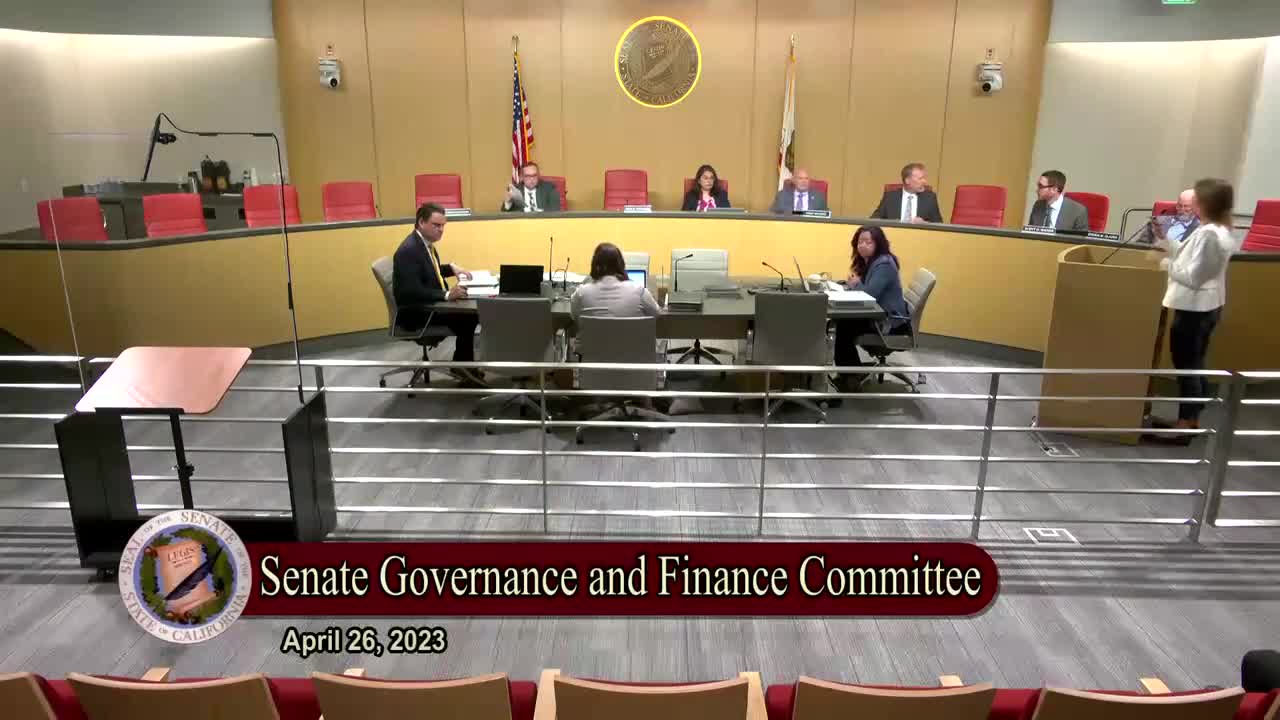 30MIN
Senate Standing Committee on Governance and Finance
 23MIN
Senate Standing Committee on Housing
Bill Author

Bill Co-Author(s):
