SCA 2: Elections: voter qualifications.
- Session Year: 2023-2024
- House: Senate
- Latest Version Date: 2023-04-25
Current Status:
Failed
(2024-08-31: Ordered to inactive file on request of Senator Gonzalez.)
Introduced
In Committee
First Chamber
In Committee
Second Chamber
Enacted
The California Constitution allows a United States citizen who is at least 18 years of age and a resident of California to vote.
This measure would reduce the minimum voting age to 17.
The California Constitution allows a United States citizen who is at least 18 years of age and a resident of California to vote.
This measure would reduce the minimum voting age to 17.
Resolved by the Senate, the Assembly concurring, That the Legislature of the State of California at its 202324 Regular Session commencing on the fifth day of December 2022, two-thirds of the membership of each house concurring, hereby proposes to the people of the State of California that the Constitution of the State be amended as follows:
(a)A United States citizen who is at least 17 years of age and a resident in this State may vote.
(b)An elector disqualified from voting while serving a state or federal prison term, as described in Section 4, shall have their right to vote restored upon the completion of their prison term.
Resolved by the Senate, the Assembly concurring, That the Legislature of the State of California at its 202324 Regular Session commencing on the fifth day of December 2022, two-thirds of the membership of each house concurring, hereby proposes to the people of the State of California that the Constitution of the State be amended as follows:
(a)A United States citizen 18 who is at least 17 years of age and resident in this State may vote.
(b)An elector disqualified from voting while serving a state or federal prison term, as described in Section 4, shall have their right to vote restored upon the completion of their prison term.
|
Date
|
Status
|
|---|---|
| Aug 31, 2024 | Ordered to inactive file on request of Senator Gonzalez. |
| Sep 5, 2023 | Read second time. Ordered to third reading. |
| Sep 1, 2023 | From committee: Be adopted. (Ayes 5. Noes 2. Page 2275.) (September 1). |
| Aug 29, 2023 | Set for hearing September 1. |
| Aug 28, 2023 | August 28 hearing: Placed on APPR suspense file. |
| Aug 24, 2023 | Set for hearing August 28. |
| May 9, 2023 | From committee: Be adopted and re-refer to Com. on APPR. (Ayes 4. Noes 1. Page 1026.) (May 8). Re-referred to Com. on APPR. |
| Apr 25, 2023 | From committee with author's amendments. Read second time and amended. Re-referred to Com. on E. & C.A. |
| Apr 25, 2023 | Set for hearing May 8. |
| Mar 1, 2023 | Referred to Com. on E. & C.A. |
| Feb 17, 2023 | From printer. May be acted upon on or after March 19. |
| Feb 16, 2023 | Introduced. Read first time. To Com. on RLS. for assignment. To print. |
|
Date
|
Description
|
Location
|
Votes
|
|
|---|---|---|---|---|
| Sep 1, 2023 | Be adopted | Senate Standing Committee on Appropriations |
Passed |
|
| Aug 28, 2023 | Placed on suspense file | Senate Standing Committee on Appropriations |
Passed |
|
| May 8, 2023 | Be adopted, but first be re-referred to the Committee on [Appropriations] | Senate Standing Committee on Elections and Constitutional Amendments |
Passed |
This list shows positions taken on this bill by organizations on the date displayed, which is linked to the original source.
Positions by individuals are not included.
|
Organization
|
Position
|
Date
|
|---|---|---|
| Aclu California Action | ** Support | |
| Alameda County Taxpayers Association, Inc. | ** Against | |
| California Environmental Voters | ** Support | |
| California Nurses Association/National Nurses United | ** Support | |
| California Parents Union | * Against | May 8, 2023 |
| Center for Information and Research on Civic Learning and Engagement | ** Support | |
| Election Integrity Project California, Inc. | ** Against | |
| Fresno County Democratic Party | ** Support | |
| Funky Fathers | * Against | Aug 28, 2023 |
| Generation Citizen | ** Support | |
| Generation Up | * Indeterminate | May 8, 2023 |
| Generation Up | * Support | May 8, 2023 |
| Initiate Justice Action | ** Support | |
| League Of Women Voters Of California | ** Support | |
| Peace and Freedom Party of California | ** Support | |
| Power CA Action | * Support | May 8, 2023 |
| Silicon Valley Young Democrats | ** Support | |
| Vote16 Culver City | ** Support | |
| Young Invincibles | ** Support |
SENATE RULES COMMITTEE Office of Senate Floor Analyses (916) 651-1520 Fax: (916) 327-4478 | SCA 2 |
THIRD READING
Bill No: SCA 2
Author: Stern (D), et al.
Amended: 4/25/23
Vote: 27
SENATE ELECTIONS & C.A. COMMITTEE: 4-1, 5/8/23
AYES: Glazer, Allen, McGuire, Menjivar
NOES: Nguyen
NO VOTE RECORDED: Newman, Umberg
SENATE APPROPRIATIONS COMMITTEE: 5-2, 9/1/23
AYES: Portantino, Ashby, Bradford, Wahab, Wiener
NOES: Jones, Seyarto
SUBJECT: Elections: voter qualifications
SOURCE: California Association of Student Councils
Generation Up, Inc.
PowerCA Action
DIGEST:
This constitutional amendment, if approved by voters, lowers the voting age from 18 years of age to 17 years of age.
ANALYSIS:
Existing law:
- Provides, pursuant to Twenty Sixth Amendment to the United States (US) Constitution that, “The right of citizens of the United States, who are eighteen years of age or older, to vote shall not be denied or abridged by the United States or by any state on account of age.”
- Permits a person who is a US citizen, a resident of California, not in prison for the conviction of a felony, and is at least 18 years of age at the time of the next election to register to vote and vote in any local, state, or federal election.
- Allows a person who is at least 16 years old and otherwise meets all voter eligibility requirements to preregister to vote. Provides that the registration will be deemed effective as soon as the affiant is 18 years old at the time of the next election.
- Requires every constitutional amendment, bond measure, or other legislative measure submitted to the people by the Legislature appear on the ballot of the first statewide election occurring at least 131 days after the adoption of the proposal by the Legislature.
This constitutional amendment lowers the voting age from 18 years of age to 17 years of age, subject to voter approval.
Background
Consistent with United States Constitution. The Twenty Sixth Amendment to the US Constitution states, “The right of citizens of the United States, who are eighteen years of age or older, to vote shall not be denied or abridged by the United States or by any state on account of age.” Additionally, Article II, Section 2 of the California Constitution states, “A United States citizen 18 years of age and resident in this State may vote.” Since the US Constitution only addresses abridging the right to vote and this measure expands voting rights, there does not appear to be a conflict with the federal constitution. In an opinion dated April 12, 2004, the Legislative Counsel opined that an amendment to the California Constitution to permit a person under the age of 18 to vote would not violate federal law.
Proposition 18 of 2020. In 2020, ACA 4 (Mullin, Resolution Chapter 30, Statutes of 2020), would have, if approved by voters, permitted a US citizen who is 17 years of age, is a resident of the state, and who will be at least 18 years of age at the time of the next general election to vote in any primary or special election that occurs before the next general election in which the citizen would be eligible to vote if at least 18 years of age. This measure appeared as Proposition 18 at the November 3, 2020 statewide general election. The measure was not approved by voters with approximately 56 percent of voters rejecting the measure.
Local Efforts to Lower the Voting Age in California. In 2016, voters in the City of Berkeley approved a charter amendment that permits the City Council to lower the voting age to 16 years old for school board elections.
Additionally, in 2020, the Oakland City Council voted to submit a ballot measure, which was subsequently approved by voters during the November 3, 2020 general election, to amend the city’s charter to authorize the City Council to allow eligible individuals who are at least 16 years old to vote for the office of School Director by ordinance.
Even though both measures passed, they have yet to be implemented by their respective jurisdictions.
Population Projections. According to population projections compiled by the Department of Finance from July 2021, it was projected that there would be 541,048 residents who are 17 years of age in 2023. It should be noted that these are projections and not actual population totals. Additionally, the actual number of 17-year-olds eligible to register to vote and who actually vote would also be different.
Preregistration Numbers. Under existing law, California permits a person who is at least 16 years old and otherwise meets all voter eligibility requirements to preregister to vote. The individual’s registration is deemed effective as soon as the affiant is 18 years old at the time of the next election. According to the Secretary of State, as of February 10, 2023, there were 128,203 preregistered voters. It should be noted that voters who will be 18 years old on Election Day are included in active registration statistics, but remain preregistrants until their 18th birthday.
Other States. Although it appears that no state allows people under the age of 18 to vote in federal general elections, according to information from the National Conference of State Legislatures, at least 18 states (Colorado, Connecticut, Delaware, Illinois, Indiana, Kentucky, Maine, Maryland, Mississippi, Nebraska, New Mexico, North Carolina, Ohio, South Carolina, Utah, Vermont, Virginia, and West Virginia) and the District of Columbia permit a 17-year-old to vote in a primary election if the voter will turn 18 by the time of the general election. In some other states, 17-year-olds are allowed to participate in presidential caucuses if they will be 18 by the date of the general election, though the eligibility requirements for participating in a presidential caucus generally is determined by the political party conducting the caucus.
In Maryland, Takoma Park, Greenbelt, Hyattsville, Riverdale Park, and Mount Rainier allow 16- and 17-year-olds to vote in municipal elections. Takoma Park first permitted 16- and 17-year-olds to vote in its elections held in 2013, and Hyattsville first allowed 16- and 17-year-olds to vote in its 2015 elections. The city of Greenbelt, Maryland amended its charter in 2018 to allow 16- and 17-year-olds to vote in municipal elections. The first election in Greenbelt with a lower voting age requirement was held in November 2019.
Report from the Berkeley Institute for Young Americans. In April of 2023, the Berkeley Institute for Young Americans published a policy report about lowering the voting age to 17. The report reviewed research evidence, California’s historical context, and the predicted turnout rates for 17-year-olds. The report concluded that if the voting age were lowered to 17, estimates showed that between 20-27 percent of all 17-year-olds in California would have participated in the 2018 midterm election, and between 26-46 percent of all 17-year-olds would have participated in the 2020 general election. It should be noted that this data depends on estimates from the Cooperative Election Study and the Current Population Survey. In addition, these turnout estimates do not account for other factors including, but not limited to, the popularity of an election, whether civics education is offered to 17-year-olds, and the newness of the voting age change.
The report also inferred that lowering the voting age has potential to increase turnout rates and establish life-long voting habits, especially if civics education plays an important role. Additionally, perceptions that 16-and 17-year-olds do not have the political maturity or cognitive ability to vote are not supported by developmental science. The report notes that researchers in the field of neuroscience and adolescent development have determined that by age 16 adolescents are capable of mature reasoning and decision-making on a similar footing with the cognitive functioning of adults. As it relates to influence, evidence also showed that youth are no more likely to be influenced by parents or peer networks than older adults. Finally, the report concluded that allowing young people to vote will weaken regulations that currently protect adolescents from special interests during election campaigns, and that changing the voting age will affect other legal definitions of adulthood.
Comments
- According to the author, currently, in California, young voters have the lowest turnout rate of any age demographic. While this leaves them drastically underrepresented, they are by no means disengaged and uninterested in the political climate, which is currently dominated by issues such as climate change that have a greater effect on them than older voters. This is often because many 18-year-olds are in a time of transition—graduating from high school, going to college, or getting a job. Lowering the voting age to 17 will catch youth at a time when they are still connected to their school, their home, and their community. Converging research demonstrates that voting is habitual, and the earlier in life one votes, the more likely they are to continue voting. In fact, evidence suggests that when younger voters are engaged in the political process, the civic engagement trickles up to influence their parents and their friends. Democracy is not a spectator sport. And yet, half of our high school seniors are left sitting on the sidelines, learning about government in theory, but unable to cast that crucial first vote in their hometown, where civic habits are built. Lowering the voting age will expand democracy by bringing younger voters into the electoral process, helping them and those around them to establish a lifelong habit of voting.
- Age of Majority. This measure breaks with traditional notions of the age of majority and the responsibilities and privileges that accompany it. For the most part, California law does not allow minors to enter into civil contracts, including marriage, or to be held to the same standards of accountability in criminal matters, except in certain circumstances. With a few limited exceptions (most notably the legal drinking age and the legal smoking age), California confers the legal rights and responsibilities attendant with adulthood on those individuals who are 18 years of age or older.
Related/Prior Legislation
ACA 4 (Mullin, Resolution Chapter 30, Statutes of 2020), would have, if approved by voters, permitted a US citizen who is 17 years of age, is a resident of the state, and who will be at least 18 years of age at the time of the next general election to vote in any primary or special election that occurs before the next general election in which the citizen would be eligible to vote if at least 18 years of age. This was seen as Proposition 18 on the November 3, 2020 ballot where approximately 56 percent of voters rejected the measure. ACA 2 (Mullin, 2015), ACA 7 (Mullin, 2013), ACA 2 (Furutani, 2009), ACA 17 (Mullin, 2005), and ACA 25 (Mullin, 2004), all were similar to ACA 4. All of these measures were approved by the Assembly Elections & Redistricting Committee (or, in the case of ACA 25 of 2004, the Assembly Elections, Redistricting, and Constitutional Amendments Committee), but none of the measures passed off the Assembly Floor.
ACA 8 (Low, 2020) would have lowered the voting age to 17 years olds. ACA 8 was referred to this committee, but was not heard.
ACA 10 (Low, 2017) would have lowered the voting age to 17. ACA 10 failed passage on the Assembly Floor.
ACA 7 (Gonzalez, 2016) would have prop permitted 16- and 17-year-olds to vote in school and community college district governing board elections, as specified. A vote was not taken when the measure was heard in the Assembly Committee on Elections and Redistricting.
AB 2517 (Thurmond, 2016) would have allowed a charter city to permit 16- and 17- year-olds to vote in school district elections if those elections are governed by the city’s charter, as specified. A vote was not taken when the bill was heard in the Assembly Committee on Elections and Redistricting.
SB 113 (Jackson, Chapter 619, Statutes of 2014) expanded preregistration by authorizing a 16-year-old to preregister to vote, provided the person meets all other eligibility requirements.
AB 30 (Price, Chapter 364, Statutes of 2009) allowed a person who is 17 years of age to preregister to vote, provided he or she would otherwise meet all eligibility requirements.
SCA 19 (Vasconcellos, 2004) would have lowered the voting age to 16, with all votes counting equally as a single vote. SCA 19 initially proposed to lower the voting age to 14 years, with votes by 14- and 15-year-olds counting as one-quarter of a vote, and votes by 16- and 17-year-olds counting as one-half of a vote, but subsequently was amended. instead to SCA 19 failed passage in the Senate Appropriations Committee.
ACA 23 (Speier, 1995) would have lowered the voting age to 14, but was never set for a hearing in the Assembly Elections, Reapportionment, and Constitutional Amendments Committee.
FISCAL EFFECT: Appropriation: No Fiscal Com.: Yes Local: No
SUPPORT: (Verified 1/3/24)
ACLU California Action
California Environmental Voters
California Nurses Association/National Nurses United
Center for Information and Research on Civic Learning and Engagement
Fresno County Democratic Party
Generation Citizen
Initiate Justice Action
League of Women Voters of California
Peace and Freedom Party of California
Silicon Valley Young Democrats
Vote16 Culver City
Young Invincibles
One Individual
OPPOSITION: (Verified 1/3/24)
Alameda County Taxpayers’ Association, Inc.
Election Integrity Project California, Inc.
Three Individuals
ARGUMENTS IN SUPPORT: In a letter sponsoring SCA 2, the California Association of Student Councils stated, in part, the following:
Research has shown that the earlier in life one votes, the more likely they are to continue voting. Furthermore, a robust body of evidence demonstrates that 16- and 17-year-olds have the necessary cognitive skills and civic knowledge to vote responsibly. As a result, there has been a nationwide movement to engage youth earlier in the electoral process. California, along with ten other states, allow 16-year-olds to pre-register to vote. California’s pre-registration program began in 2016, and as of 2020, more than 500,000 California teens have taken advantage of the preregistration program.
Research demonstrates that voting is habitual—if someone votes in the first election for which they are eligible, they are far more likely to continue voting throughout their lifetimes. Furthermore, when younger voters participate in the political process, this civic engagement is more likely to trickle up and influence their friends and families. Lowering the voting age not only will bring younger voters into the electoral process, but will also have positive impacts on those around them.
ARGUMENTS IN OPPOSITION: In a letter opposing SCA 2, Election Integrity Project California, Inc., provided the following reasons for their position:
- Anyone who has been 17 and is now ten or more years older knows by personal experience that 17-year-olds do NOT have the maturity or life experience to cast a reasonable, well-researched and considered vote.
- 17-year-olds are not legally adults.
- 17-year-olds are captive audiences in school.
- High school students have little to no real-world experience to inform their voting choices.
- Political participation is open to all. Voting is different.
Our youth show magnificent potential to manage the future. But let’s not blur the line between potential and readiness. Voting is an adult responsibility. 18 is the age of majority. Allowing minors to vote is wrong and could be disastrous.
Prepared by: Scott Matsumoto / E. & C.A. / (916) 651-4106
1/3/24 11:30:36
**** END ****
SENATE COMMITTEE ON APPROPRIATIONS
Senator Anthony Portantino, Chair
2023 - 2024 Regular Session
SCA 2 (Stern) - Elections: voter qualifications
Version: April 25, 2023 | Policy Vote: E. & C.A. 4 - 1 |
Urgency: | Mandate: No |
Hearing Date: August 28, 2023 | Consultant: Robert Ingenito |
Bill Summary:
SCA 2, if approved by the voters, would lower the voting age from 18 years of age to 17 years of age.
Fiscal Impact:
This measure would result in one-time General Fund costs to the Secretary of State (SOS) in the range of $738,000 to $984,000, likely in 2024-25, for printing and mailing costs to place the measure on the ballot in a statewide election. Actual costs may be higher or lower, depending on the length of required elements and the overall size of the ballot.
Background:
The Twenty Sixth Amendment to the US Constitution states, “The right of citizens of the United States, who are eighteen years of age or older, to vote shall not be denied or abridged by the United States or by any state on account of age.” Additionally, Article II, Section 2 of the California Constitution states, “A United States citizen 18 years of age and resident in this State may vote.”
Since the US Constitution only addresses abridging the right to vote and this measure would expand voting rights, there does not appear to be a conflict with the federal Constitution. In an opinion dated April 12, 2004, the Legislative Counsel opined that an amendment to the California Constitution to permit a person under the age of 18 to vote would not violate federal law.
Proposed Law:
This measure would lower the voting age from 18 years of age to 17 years of age, subject to voter approval.
Related Legislation:
- ACA 4 (Mullin, Resolution Chapter 30, Statutes of 2020), would have, if approved by voters, permitted a US citizen who is 17 years of age, is a resident of the state, and who will be at least 18 years of age at the time of the next general election to vote in any primary or special election that occurs before the next general election in which the citizen would be eligible to vote if at least 18 years of age. This was seen as Proposition 18 on the November 3, 2020 ballot where approximately 56 percent of voters rejected the measure. ACA 2 (Mullin) of 2015, ACA 7 (Mullin) of 2013, ACA 2 (Furutani) of 2009, ACA 17 (Mullin) of 2005, and ACA 25 (Mullin) of 2004, all were similar to ACA 4. All of these measures were approved by the Assembly Elections & Redistricting Committee (or, in the case of ACA 25 of 2004, the Assembly Elections, Redistricting, and Constitutional Amendments Committee), but none of the measures passed off the Assembly Floor.
- ACA 8 (Low, 2020), would have lowered the voting age to 17. The measure was not heard by the Senate Committee on Elections and Constitutional Amendments. Similarly, ACA 10 (Low, 2017) proposed lowering the voting age to 17, but failed passage on the Assembly Floor.
- ACA 7 (Gonzalez, 2016) would have permitted 16- and 17-year-olds to vote in school and community college district governing board elections, as specified. A vote was not taken when the measure was heard in the Assembly Committee on Elections and Redistricting.
- AB 2517 (Thurmond, 2016) would have allowed a charter city to permit 16- and 17- year-olds to vote in school district elections if those elections are governed by the city’s charter, as specified. A vote was not taken when the bill was heard in the Assembly Committee on Elections and Redistricting.
- SCA 19 (Vasconcellos, 2004) initially proposed to lower the voting age to 14 years, with votes by 14- and 15-year-olds counting as one-quarter of a vote, and votes by 16- and 17-year-olds counting as one-half of a vote. The measure subsequently was amended instead to lower the voting age to 16, with all votes counting equally as a single vote. SCA 19 failed passage in the Senate Appropriations Committee.
Staff Comments:
SOS indicates that printing and mailing costs associated with placing a measure on the statewide ballot are approximately $123,000 per page, depending on the length of the ballot. The fiscal estimates noted above reflect the addition of 6-8 pages in the Voter Information Guide. Actual costs would depend upon the length of the title and summary, analysis by the LAO, proponent and opponent arguments, and text of the proposal.
-- END --
SENATE COMMITTEE ON
ELECTIONS AND CONSTITUTIONAL AMENDMENTS
Senator Steven Glazer, Chair
2023 - 2024 Regular
Bill No: 2 Hearing Date: 5/8/23
Author: | Stern | ||
Version: |
| ||
Urgency: | Fiscal: | ||
Consultant: | |||
Subject:
DIGEST
This measure, if approved by voters, lowers the voting age from 18 years of age to 17 years of age.
ANALYSIS
Existing law:
- Provides, pursuant to Twenty Sixth Amendment to the United States (US) Constitution that, “The right of citizens of the United States, who are eighteen years of age or older, to vote shall not be denied or abridged by the United States or by any state on account of age.”
- Permits a person who is a US citizen, a resident of California, not in prison for the conviction of a felony, and is at least 18 years of age at the time of the next election to register to vote and vote in any local, state, or federal election.
- Allows a person who is at least 16 years old and otherwise meets all voter eligibility requirements to preregister to vote. Provides that the registration will be deemed effective as soon as the affiant is 18 years old at the time of the next election.
- Requires every constitutional amendment, bond measure, or other legislative measure submitted to the people by the Legislature appear on the ballot of the first statewide election occurring at least 131 days after the adoption of the proposal by the Legislature.
This measure:
- Lowers the voting age from 18 years of age to 17 years of age, subject to voter approval.
BACKGROUND
Consistent with United States Constitution. The Twenty Sixth Amendment to the US Constitution states, “The right of citizens of the United States, who are eighteen years of age or older, to vote shall not be denied or abridged by the United States or by any state on account of age.” Additionally, Article II, Section 2 of the California Constitution states, “A United States citizen 18 years of age and resident in this State may vote.” Since the US Constitution only addresses abridging the right to vote and this measure expands voting rights, there does not appear to be a conflict with the federal constitution. In an opinion dated April 12, 2004, the Legislative Counsel opined that an amendment to the California Constitution to permit a person under the age of 18 to vote would not violate federal law.
Proposition 18 of 2020. In 2020, ACA 4 (Mullin), Resolution Chapter 30, Statutes of 2020, would have, if approved by voters, permitted a US citizen who is 17 years of age, is a resident of the state, and who will be at least 18 years of age at the time of the next general election to vote in any primary or special election that occurs before the next general election in which the citizen would be eligible to vote if at least 18 years of age. This measure appeared as Proposition 18 at the November 3, 2020 statewide general election. The measure was not approved by voters with approximately 56 percent of voters rejecting the measure.
Local Efforts to Lower the Voting Age in California. In 2016, voters in the City of Berkeley approved a charter amendment that permits the City Council to lower the voting age to 16 years old for school board elections.
Additionally, in 2020, the Oakland City Council voted to submit a ballot measure, which was subsequently approved by voters during the November 3, 2020 general election, to amend the city’s charter to authorize the City Council to allow eligible individuals who are at least 16 years old to vote for the office of School Director by ordinance.
Even though both measures passed, they have yet to be implemented by their respective jurisdictions.
Population Projections. According to population projections compiled by the Department of Finance from July 2021, it was projected that there would be 541,048 residents who are 17 years of age in 2023. It should be noted that these are projections and not actual population totals. Additionally, the actual number of 17-year-olds eligible to register to vote and who actually vote would also be different.
Preregistration Numbers. Under existing law, California permits a person who is at least 16 years old and otherwise meets all voter eligibility requirements to preregister to vote. The individual’s registration is deemed effective as soon as the affiant is 18 years old at the time of the next election. According to the Secretary of State, as of February 10, 2023, there were 128,203 preregistered voters. It should be noted that voters who will be 18 years old on Election Day are included in active registration statistics, but remain preregistrants until their 18th birthday.
Other States. Although it appears that no state allows people under the age of 18 to vote in federal general elections, according to information from the National Conference of State Legislatures, at least 18 states (Colorado, Connecticut, Delaware, Illinois, Indiana, Kentucky, Maine, Maryland, Mississippi, Nebraska, New Mexico, North Carolina, Ohio, South Carolina, Utah, Vermont, Virginia, and West Virginia) and the District of Columbia permit a 17-year-old to vote in a primary election if the voter will turn 18 by the time of the general election. In some other states, 17-year-olds are allowed to participate in presidential caucuses if they will be 18 by the date of the general election, though the eligibility requirements for participating in a presidential caucus generally is determined by the political party conducting the caucus.
In Maryland, Takoma Park, Greenbelt, Hyattsville, Riverdale Park, and Mount Rainier allow 16- and 17-year-olds to vote in municipal elections. Takoma Park first permitted 16- and 17-year-olds to vote in its elections held in 2013, and Hyattsville first allowed 16- and 17-year-olds to vote in its 2015 elections. The city of Greenbelt, Maryland amended its charter in 2018 to allow 16- and 17-year-olds to vote in municipal elections. The first election in Greenbelt with a lower voting age requirement was held in November 2019.
Report from the Berkeley Institute for Young Americans. In April of 2023, the Berkeley Institute for Young Americans published a policy report about lowering the voting age to 17. The report reviewed research evidence, California’s historical context, and the predicted turnout rates for 17-year-olds. The report concluded that if the voting age were lowered to 17, estimates showed that between 20-27 percent of all 17-year-olds in California would have participated in the 2018 midterm election, and between 26-46 percent of all 17-year-olds would have participated in the 2020 general election. It should be noted that this data depends on estimates from the Cooperative Election Study and the Current Population Survey. In addition, these turnout estimates do not account for other factors including, but not limited to, the popularity of an election, whether civics education is offered to 17-year-olds, and the newness of the voting age change.
The report also inferred that lowering the voting age has potential to increase turnout rates and establish life-long voting habits, especially if civics education plays an important role. Additionally, perceptions that 16-and 17-year-olds do not have the political maturity or cognitive ability to vote are not supported by developmental science. The report notes that researchers in the field of neuroscience and adolescent development have determined that by age 16 adolescents are capable of mature reasoning and decision-making on a similar footing with the cognitive functioning of adults. As it relates to influence, evidence also showed that youth are no more likely to be influenced by parents or peer networks than older adults. Finally, the report concluded that allowing young people to vote will weaken regulations that currently protect adolescents from special interests during election campaigns, and that changing the voting age will affect other legal definitions of adulthood.
COMMENTS
- According to the author: Currently, in California, young voters have the lowest turnout rate of any age demographic. While this leaves them drastically underrepresented, they are by no means disengaged and uninterested in the political climate, which is currently dominated by issues such as climate change that have a greater effect on them than older voters. This is often because many 18-year-olds are in a time of transition—graduating from high school, going to college, or getting a job. Lowering the voting age to 17 will catch youth at a time when they are still connected to their school, their home, and their community. Converging research demonstrates that voting is habitual, and the earlier in life one votes, the more likely they are to continue voting. In fact, evidence suggests that when younger voters are engaged in the political process, the civic engagement trickles up to influence their parents and their friends. Democracy is not a spectator sport. And yet, half of our high school seniors are left sitting on the sidelines, learning about government in theory, but unable to cast that crucial first vote in their hometown, where civic habits are built. Lowering the voting age will expand democracy by bringing younger voters into the electoral process, helping them and those around them to establish a lifelong habit of voting.
- Age of Majority. This measure breaks with traditional notions of the age of majority and the responsibilities and privileges that accompany it. For the most part, California law does not allow minors to enter into civil contracts, including marriage, or to be held to the same standards of accountability in criminal matters, except in certain circumstances.
With a few limited exceptions (most notably the legal drinking age and the legal smoking age), California confers the legal rights and responsibilities attendant with adulthood on those individuals who are 18 years of age or older. The committee should consider whether the right to vote is appropriate to confer on certain individuals who have not yet reached the age of majority. - Argument in Support. In a letter sponsoring SCA 2, the California Association of Student Councils stated, in part, the following:
Research has shown that the earlier in life one votes, the more likely they are to continue voting. Furthermore, a robust body of evidence demonstrates that 16- and 17-year-olds have the necessary cognitive skills and civic knowledge to vote responsibly. As a result, there has been a nationwide movement to engage youth earlier in the electoral process. California, along with ten other states, allow 16-year-olds to pre-register to vote. California’s pre-registration program began in 2016, and as of 2020, more than 500,000 California teens have taken advantage of the preregistration program.
Research demonstrates that voting is habitual—if someone votes in the first election for which they are eligible, they are far more likely to continue voting throughout their lifetimes. Furthermore, when younger voters participate in the political process, this civic engagement is more likely to trickle up and influence their friends and families. Lowering the voting age not only will bring younger voters into the electoral process, but will also have positive impacts on those around them.
- Argument in Opposition. In a letter opposing SCA 2, Election Integrity Project California, Inc., provided the following reasons for their position:
- Anyone who has been 17 and is now ten or more years older knows by personal experience that 17-year-olds do NOT have the maturity or life experience to cast a reasonable, well-researched and considered vote.
- 17-year-olds are not legally adults.
- 17-year-olds are captive audiences in school.
- High school students have little to no real-world experience to inform their voting choices.
- Political participation is open to all. Voting is different.
Our youth show magnificent potential to manage the future. But let’s not blur the line between potential and readiness. Voting is an adult responsibility. 18 is the age of majority. Allowing minors to vote is wrong and could be disastrous.
RELATED/PRIOR LEGISLATION
ACA 4 (Mullin), Resolution Chapter 30, Statutes of 2020, would have, if approved by voters, permitted a US citizen who is 17 years of age, is a resident of the state, and who will be at least 18 years of age at the time of the next general election to vote in any primary or special election that occurs before the next general election in which the citizen would be eligible to vote if at least 18 years of age. This was seen as Proposition 18 on the November 3, 2020 ballot where approximately 56 percent of voters rejected the measure. ACA 2 (Mullin) of 2015, ACA 7 (Mullin) of 2013, ACA 2 (Furutani) of 2009, ACA 17 (Mullin) of 2005, and ACA 25 (Mullin) of 2004, all were similar to ACA 4. All of these measures were approved by the Assembly Elections & Redistricting Committee (or, in the case of ACA 25 of 2004, the Assembly Elections, Redistricting, and Constitutional Amendments Committee), but none of the measures passed off the Assembly Floor.
ACA 8 (Low) of 2020, would have lowered the voting age to 17 years olds. ACA 8 was referred to this committee, but was not heard. Similarly, ACA 10 (Low) of 2017 proposed lowering the voting age to 17. ACA 10 failed passage on the Assembly Floor.
ACA 7 (Gonzalez) of 2016 would have permitted 16- and 17-year-olds to vote in school and community college district governing board elections, as specified. A vote was not taken when the measure was heard in the Assembly Committee on Elections and Redistricting.
AB 2517 (Thurmond) of 2016 would have allowed a charter city to permit 16- and 17- year-olds to vote in school district elections if those elections are governed by the city’s charter, as specified. A vote was not taken when the bill was heard in the Assembly Committee on Elections and Redistricting.
AB 30 (Price), Chapter 364, Statutes of 2009, allowed a person who is 17 years of age to preregister to vote, provided he or she would otherwise meet all eligibility requirements.
SB 113 (Jackson), Chapter 619, Statutes of 2014, expanded preregistration by authorizing a 16-year-old to preregister to vote, provided the person meets all other eligibility requirements.
SCA 19 (Vasconcellos) of 2004 initially proposed to lower the voting age to 14 years, with votes by 14- and 15-year-olds counting as one-quarter of a vote, and votes by 16- and 17-year-olds counting as one-half of a vote. SCA 19 subsequently was amended instead to lower the voting age to 16, with all votes counting equally as a single vote. SCA 19 failed passage in the Senate Appropriations Committee.
ACA 23 (Speier) of 1995 proposed lowering the voting age to 14, but was never set for a hearing in the Assembly Elections, Reapportionment, and Constitutional Amendments Committee.
POSITIONS
Sponsor: California Association of Student Councils
GENUp CA
Support: California Nurses Association/National Nurses United
Center for Information and Research on Civic Learning and Engagement
Generation Citizen
Initiate Justice Action
League of Women Voters of California
Peace and Freedom Party of California
PowerCA Action
Vote16 Culver City
Young Invincibles
One Individual
Oppose: Alameda County Taxpayers’ Association, Inc.
Election Integrity Project California, Inc.
Three Individuals
-- END --
Discussed in Hearing
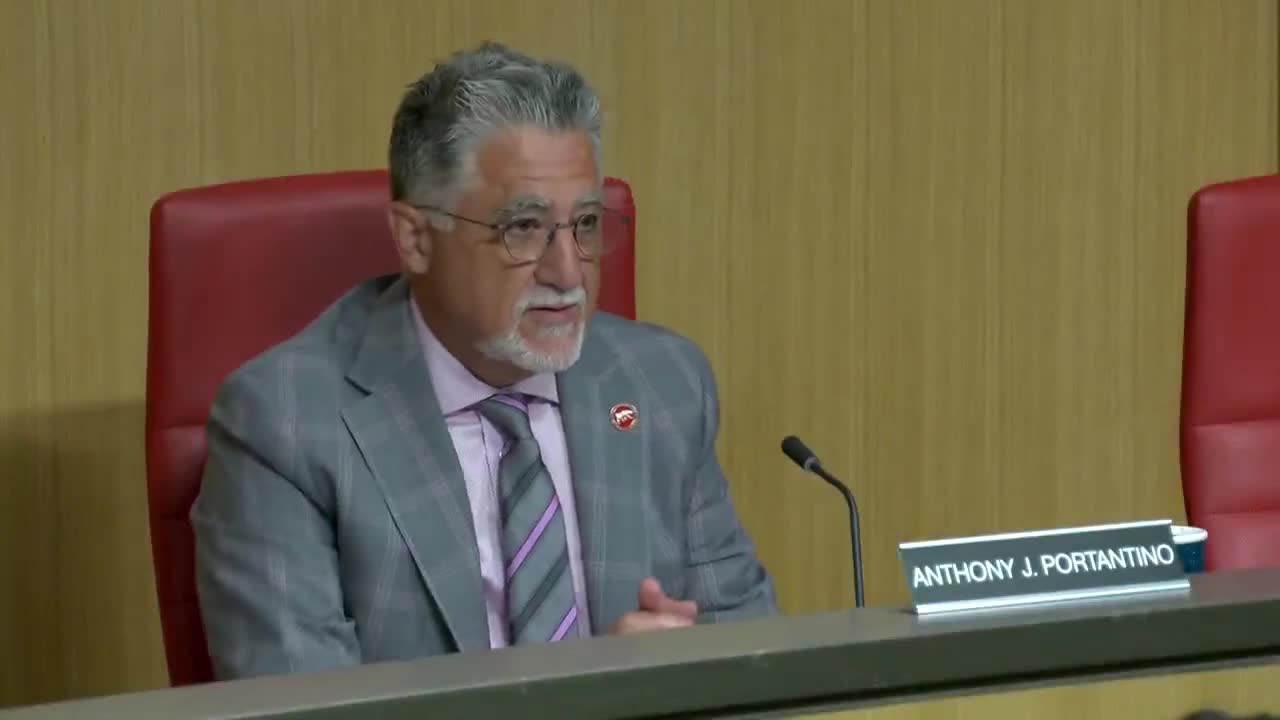 7MIN
Senate Standing Committee on Appropriations
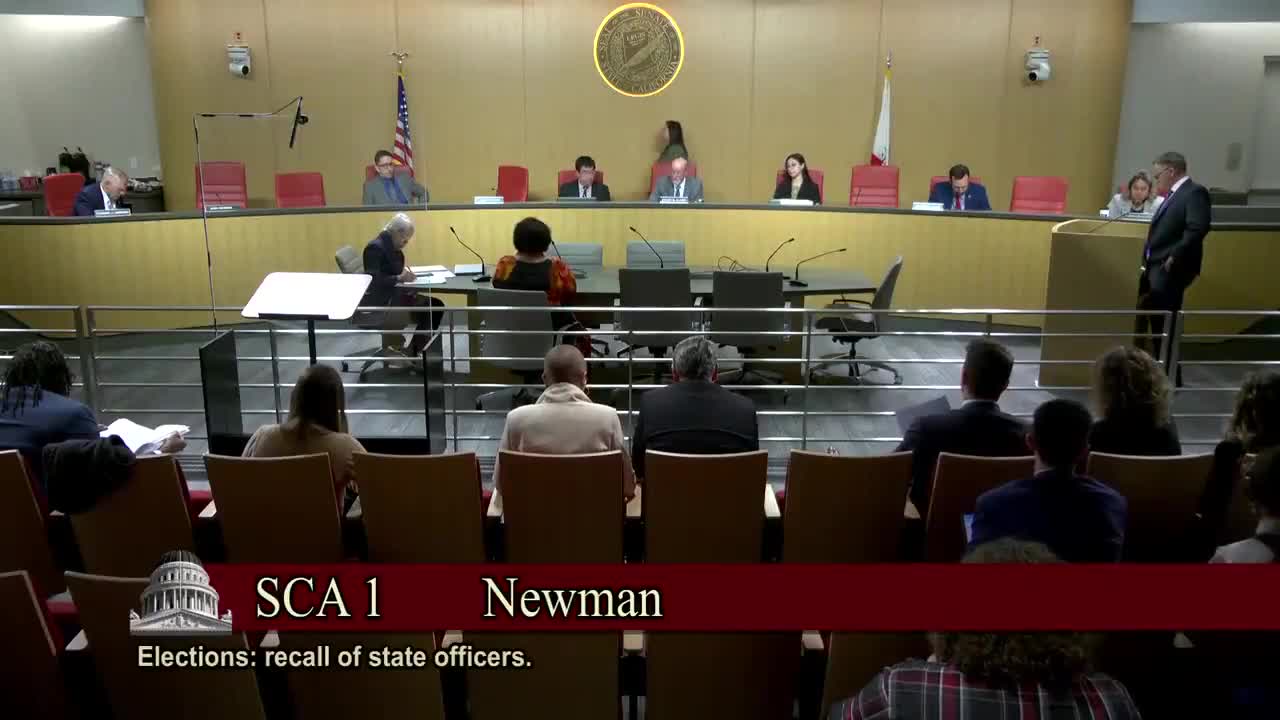 28MIN
Senate Standing Committee on Elections and Constitutional Amendments
Bill Author

Bill Co-Author(s):