SCR 137: No room for hate.
- Session Year: 2023-2024
- House: Senate
- Latest Version Date: 2024-04-15
Current Status:
Failed
(2024-04-25: In Assembly. Held at Desk.)
Introduced
In Committee
First Chamber
In Committee
Second Chamber
Enacted
What does this bill do?
This resolution says the California Legislature joins communities across the state in declaring there is no room for hate and that hate harms residents, students, and people targeted for their race, religion, sexual orientation, gender identity, or national origin. It cites rising hate-incident data, mentions problems like doxxing and school-based attacks, and points to existing state laws and grants that aim to prevent and respond to hate.
The summary is provided by generative AI which can make mistakes. For original language, please view the details in the table below.
This measure would proclaim that the Legislature joins all communities throughout the state in their commitments and affirmations that in California, there is no room for hate.
WHEREAS, California, as a state where innovation, cultural diversity, and inclusion thrive, has no room for hate; and
WHEREAS, The United States Department of Justice (U.S. DOJ) reports 2,201 incidents of hate crime in 2022 with 62.1% of reported hate crimes in California motivated by racial, ethnic, or ancestry bias, 18.9% motivated by sexual orientation bias, and 14.4% motivated by religious bias; and
WHEREAS, The U.S. DOJ found that in 2022 there were a reported 1,336 reported hate crime offenses across colleges, universities, secondary and elementary schools, up from 700 in 2018 and 896 in 2021; and
WHEREAS, The U.S. DOJ also found that a total of 5,652 juveniles were reported as victims of hate crime from 2018 through 2022, with 30.6% of these juvenile victims, 1,729 juveniles, experiencing hate crime at school locations; and
WHEREAS, In schools, between 2018 and 2022, racial, ethnic, and ancestry bias is the most significant motive for reported hate crimes including 1,690 reported hate crime offenses involving anti-Black or African American bias, 245 reported hate crime offenses involving anti-White bias, 184 reported hate crime offenses involving multiple races or group bias, 183 reported hate crime offenses involving anti-Hispanic or Latino bias, and 105 reported hate crime offenses involving anti-Asian bias; and
WHEREAS, In schools, between 2018 and 2022, 950 reported hate crime offenses involved religious bias, including significant increase in hate towards people of Jewish, Muslim, Sikh, Hindu, Buddhist, Catholic, and Eastern Orthodox faiths and
WHEREAS, In schools, between 2018 and 2022, 786 reported hate crime offenses involved sexual orientation bias and 134 reported hate crime offenses involved gender identity bias; and
WHEREAS, The Council on American-Islamic Relations(CAIR) 2024 Civil Rights Report notes that CAIR received 8,061 complaints nationwide in 2023, marking the highest number of complaints CAIR has ever recorded in its 30-year history; and
WHEREAS, In January 2024 the Anti-Defamation League published an assessment of hate crime incidents between October 7, 2023 and January 7, 2024 and noted there was a 361-percent increase compared to the same period one year prior, which saw 712 incidents; and
WHEREAS, The Coalition of Hindus of North Americas 2022 assessment of the 2020 Federal Bureau of Investigation data on hate crimes shows hate crimes against Indian Americans were up 500%; and
WHEREAS, Doxxing, the act of publicly providing personally identifiable information about an individual, is a means of harassment and intimidation and has increased across college and university campuses; and
WHEREAS, Across history and the globe, genocides, the worst form of hate, have been committed time and again; and
WHEREAS, In 2023, the Civil Rights, Accessibility and Racial Equity Office within the State Department of Social Services awarded $91,000,000 in Stop the Hate Program Funding grants to 173 organizations to provide direct, preventative, and intervention services as they related to hate crimes and the victims; and
WHEREAS, According to a 2023 WalletHub report detailing the most and least diverse states in the nation, California is the most diverse state in the nation across multiple metrics, including socioeconomic diversity and cultural diversity; and
WHEREAS, The California Fair Employment and Housing Act prohibits harassment of employees, applicants, unpaid interns, volunteers, and independent contractors by any person based on protected characteristics, including race, religion, and gender; and
WHEREAS, The Unruh Civil Rights Act provides protection from discrimination by all business establishments in California, including housing and public accommodations, because of age, ancestry, color, disability, national origin, race, religion, sex, and sexual orientation; and
WHEREAS, In 1992, the City of Hayward created the Anti-Discrimination Action Plan with the goal of reducing discrimination incidents and assisting victims. During this time, the City of Hayward citizens initiated the No Room for Racism campaign bumper stickers found on local vehicles. Recently, the statement No Room for Racism has become a second slogan for the city.
WHEREAS, California, with all its diversity, antidiscrimination protections, and funding mechanisms, affirms that we are a state where there is no room for hate; now, therefore, be it
Resolved by the Senate of the State of California, the Assembly thereof concurring, That the Legislature joins all communities throughout the state in their commitments and affirmations that in California, there is no room for hate; and be it further
Resolved, That the Secretary of the Senate transmit copies of this resolution to the author for appropriate distribution.
|
Date
|
Status
|
|---|---|
| Apr 25, 2024 | In Assembly. Held at Desk. |
| Apr 25, 2024 | Read. Adopted. (Ayes 36. Noes 0. Page 3770.) Ordered to the Assembly. |
| Apr 24, 2024 | From committee: Ordered to third reading. |
| Apr 15, 2024 | Introduced. Referred to Com. on RLS. |
|
Date
|
Description
|
Location
|
Votes
|
|
|---|---|---|---|---|
| Apr 25, 2024 | Senate 3rd Reading SCR137 Wahab et al. | Senate Floor |
Passed |
This list shows positions taken on this bill by organizations on the date displayed, which is linked to the original source.
Positions by individuals are not included.
SENATE RULES COMMITTEE Office of Senate Floor Analyses (916) 651-1520 Fax: (916) 327-4478 | SCR 137 |
THIRD READING
Bill No: SCR 137
Author: Wahab (D), et al.
Introduced: 4/15/24
SUBJECT: No room for hate
SOURCE: Author
DIGEST:
This resolution proclaims that the Legislature joins all communities throughout the state in their commitments and affirmations that in California, there is no room for hate.
ANALYSIS: This resolution makes the following legislative findings:
- The United States Department of Justice (U.S. DOJ) reports 2,201 incidents of hate crime in 2022 with 62.1% of reported hate crimes in California motivated by racial, ethnic, or ancestry bias, 18.9% motivated by sexual orientation bias, and 14.4% motivated by religious bias.
- The U.S. DOJ also found that a total of 5,652 juveniles were reported as victims of hate crime from 2018 through 2022, with 30.6% of these juvenile victims, 1,729 juveniles, experiencing hate crime at school locations.
- In schools, between 2018 and 2022, racial, ethnic, and ancestry bias is the most significant motive for reported hate crimes including 1,690 reported hate crime offenses involving anti-Black or African American bias, 245 reported hate crime offenses involving anti-White bias, 184 reported hate crime offenses involving multiple races or group bias, 183 reported hate crime offenses involving anti-Hispanic or Latino bias, and 105 reported hate crime offenses involving anti-Asian bias.
- In January 2024 the Anti-Defamation League published an assessment of hate crime incidents between October 7, 2023 and January 7, 2024 and noted there was a 361-percent increase compared to the same period one year prior, which saw 712 incidents.
- In 2023, the Civil Rights, Accessibility and Racial Equity Office within the State Department of Social Services awarded $91,000,000 in Stop the Hate Program Funding grants to 173 organizations to provide direct, preventative, and intervention services as they related to hate crimes and the victims.
- The California Fair Employment and Housing Act prohibits harassment of employees, applicants, unpaid interns, volunteers, and independent contractors by any person based on protected characteristics, including race, religion, and gender. The Unruh Civil Rights Act provides protection from discrimination by all business establishments in California, including housing and public accommodations, because of age, ancestry, color, disability, national origin, race, religion, sex, and sexual orientation.
- California, with all its diversity, antidiscrimination protections, and funding mechanisms, affirms that we are a state where there is no room for hate.
This resolution proclaims that the Legislature joins all communities throughout the state in their commitments and affirmations that in California, there is no room for hate.
Comments
According to the Author:
In 1992, the City of Hayward created the Anti-Discrimination Action Plan with the goal of reducing discrimination incidents and assisting victims. During this time, the City of Hayward residents initiated the “No Room for Racism” campaign bumper stickers found on local vehicles. Recently, the statement “No Room for Racism” has become a second slogan for the city.
As a former Hayward City Councilmember, I’m inspired by my City’s commitment to anti-discrimination and inclusivity.
However, it is undeniable that something more insidious has been gaining traction across California and our nation. In order to combat any issue, we must name it. So we must callout the rise in hate that threatens our communities and state.
Stop AAPI Hate’s 2023 Shades of Hate report examined the nuances of what hate looks like for our communities. They arrived at three key observations:
- Hate is not confined to interpersonal interactions but is bred within a larger environment of societal hate, requiring a broader approach to prevention and healing.
- Hate is also coded and hidden. Non-explicit hate is potentially more pervasive, just as harmful, and must be understood and addressed alongside more explicit forms of hate.
- Offenders are not just individuals but also institutions and their representatives leaving room for improvement in institutional policies and practices for civil rights solutions.
It’s clear to me those observations can be extended across multiple communities; across California itself. We must acknowledge the persistence of hate, and affirm that California is a place of acceptance at a time when hate is invading the hearts and minds of our country.
FISCAL EFFECT: Appropriation: No Fiscal Com.: No Local: No
SUPPORT: (Verified 4/23/24)
None received
OPPOSITION: (Verified 4/23/24)
None received
Prepared by: Aizenia Randhawa / SFA / (916) 651-1520
4/24/24 13:52:51
**** END ****
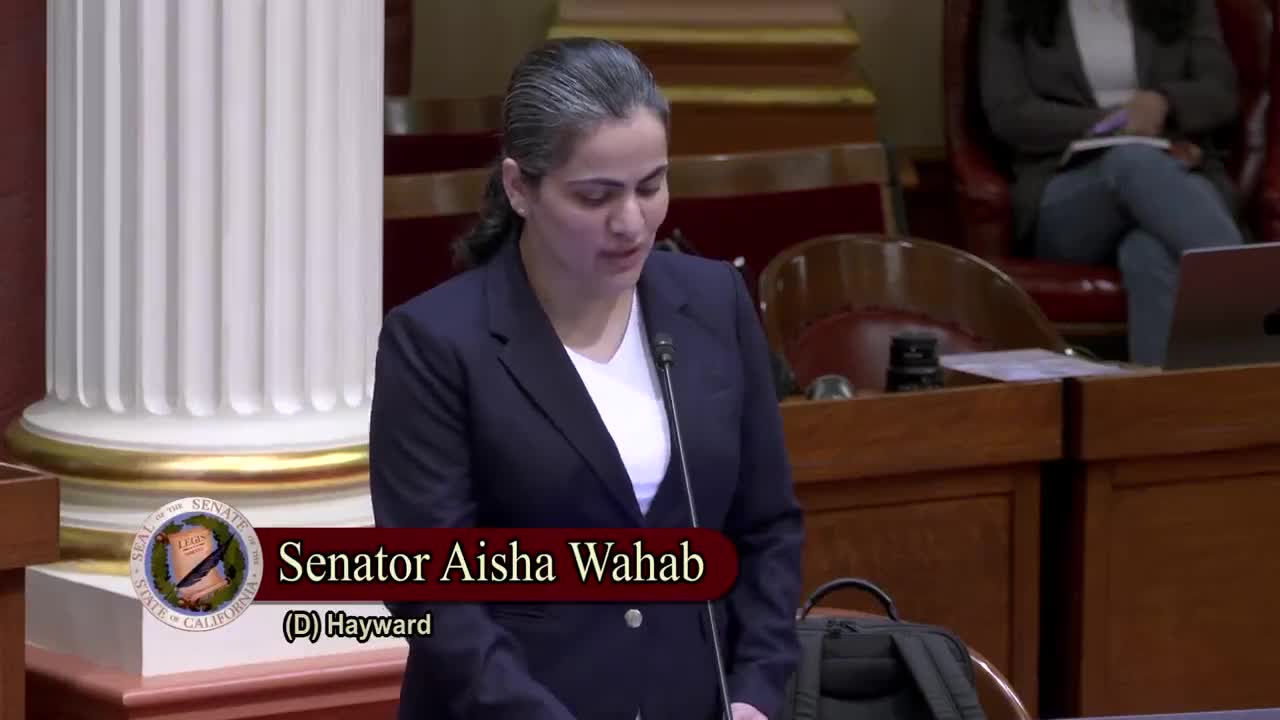
Bill Author

Bill Co-Author(s):
