SR 107
- Session Year: 2023-2024
- House: Senate
- Latest Version Date: 2024-08-16
Current Status:
Failed
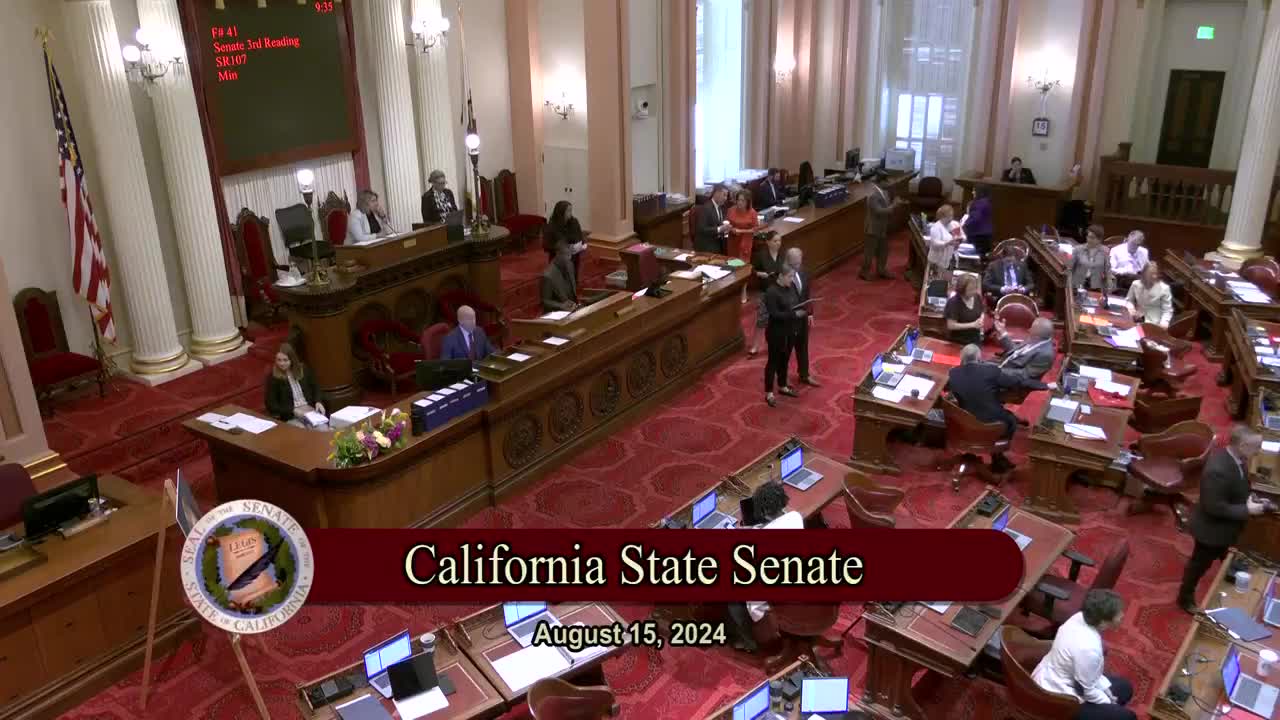
(2024-08-15: Read. Adopted. (Ayes 40. Noes 0. Page 5069.))
Introduced
In Committee
First Chamber
In Committee
Second Chamber
Enacted
What does this bill do?
This resolution names October 1 each year as Korean American Senior Day in California and honors Korean American seniors for their social, economic, and cultural contributions. It encourages federal, state, and local groups to promote Korean history and culture and recognizes the role of senior centers and families in supporting elders.
The summary is provided by generative AI which can make mistakes. For original language, please view the details in the table below.
WHEREAS, Korean Senior Day is celebrated in South Korea, the land of its origin, to honor and celebrate senior citizens within the Korean community; and
WHEREAS, Korean American Senior Day shows appreciation for elderly individuals and their contributions to society, and serves as a reminder of the importance of filial piety and respect for elders in Korean culture ensuring that elders feel valued, included, and appreciated; and
WHEREAS, On Korean American Senior Day families express gratitude to parents and grandparents through gifts, meals, and spending quality time together; and
WHEREAS, In 2004, the Hanul Family Alliance, based in Chicago, began its annual celebration of Korean American Senior Day and this is the first state resolution introduced in the United States regarding Korean American Senior Day; and
WHEREAS, According to the United States Census Bureau, Korean Americans represent over 1,500,000 residents in the United States, the largest Korean diaspora outside of Korea, and, 17.4 percent of the Korean American population in the United States are seniors, defined as individuals who are 65 years of age or older; and
WHEREAS, The Korean population of California was 343,742 persons in 2000 and 441,438 persons in 2010. The Korean population of today represents an increase of 97,696 persons (7.6 percent) from 2010 to 2020, and an increase of 133,736 persons (28 percent) from 2000 to 2020; totaling 477,478 persons living in California. The Korean community in California is the largest diaspora in the United States and 14.9 percent of the Korean population in California are seniors; and
WHEREAS, Older adults are the fastest growing population in California, where thousands of Californians turn 65 years of age each day, and the number of Californians older than 60 years of age is due to increase from 7,600,000 individuals, to 10,800,000 individuals, by the year 2050; and
WHEREAS, People of color will make up over one-half of Californias senior population by the year 2035, with the Latinx and Asian-Pacific Islander community making up the fastest growing racial and ethnic older adult population; and
WHEREAS, The Counties of Los Angeles, Orange, Santa Clara, San Diego, Alameda, San Bernardino, San Francisco, Riverside, Contra Costa, and San Mateo have the highest density Korean American populations in California and there are several Koreatowns across California within these counties and more; and
WHEREAS, Korean American seniors, 65 years of age and older, have worked diligently in their respective career fields as entrepreneurs, business owners, lawyers, and film editors, among many other things, and paved the way for future Korean contributions to the United States; and
WHEREAS, Korean Americans continue to contribute to our economy, culture, and society through the fields of health, science, technology, sports, entertainment, and more. Examples include the creation of the Robotics and Mechanism Laboratory (RoMeLa) and all its works, the lymphoma vaccine, the invention of multitouch sensing on devices, the design of famous sports cars, advancements of NASA and the international space station, the development of the 32-bit microprocessing computer chip, and influences on Western media; and
WHEREAS, Korean American Senior Centers across California, which provide social services, education programs, financial assistance programs, language assistance programs, job and career programs, transportation operations for seniors, and more, include the East Bay Korean American Senior Center, the Wilshire Adult Day Health Care Center, the Koreatown Senior and Community Center in the City of Los Angeles, the San Diego Korean American Senior Center, and the Korean American Seniors Association of Orange County; now, therefore, be it
Resolved by the Senate of the State of California, That the Senate recognizes the role that Korean American seniors have played in the social, economic, and political development of California throughout the states history, and commends Korean Americans for their notable accomplishments and contributions to California; and be it further
Resolved, That the Senate recognizes October 1, annually, as Korean American Senior Day and encourages all federal, state, and local organizations to promote the commemoration of Korean history and culture; and be it further
Resolved, That the Secretary of the Senate transmit copies of this resolution to the author for appropriate distribution.
WHEREAS, Korean Senior Day is celebrated in South Korea, the land of its origin, to honor and celebrate senior citizens within the Korean community; and
WHEREAS, Korean American Senior Day shows appreciation for elderly individuals and their contributions to society, and serves as a reminder of the importance of filial piety and respect for elders in Korean culture ensuring that elders feel valued, included, and appreciated; and
WHEREAS, On Korean American Senior Day families express gratitude to parents and grandparents through gifts, meals, and spending quality time together; and
WHEREAS, In 2004, the Hanul Family Alliance, based in Chicago, began its annual celebration of Korean American Senior Day and this is the first state resolution introduced in the United States regarding Korean American Senior Day; and
WHEREAS, According to the United States Census Bureau, Korean Americans represent over 1,500,000 residents in the United States, the largest Korean diaspora outside of Korea, and, 17.4 percent of the Korean American population in the United States are seniors, defined as individuals who are 65 years of age or older; and
WHEREAS, The Korean population of California was 343,742 persons in 2000 and 441,438 persons in 2010. The Korean population of today represents an increase of 97,696 persons (7.6 percent) from 2010 to 2020, and an increase of 133,736 persons (28 percent) from 2000 to 2020; totaling 477,478 persons living in California. The Korean community in California is the largest diaspora in the United States and 14.9 percent of the Korean population in California are seniors; and
WHEREAS, Older adults are the fastest growing population in California, where thousands of Californians turn 65 years of age each day, and the number of Californians older than 60 years of age is due to increase from 7,600,000 individuals, to 10,800,000 individuals, by the year 2050; and
WHEREAS, People of color will make up over one-half of Californias senior population by the year 2035, with the Latinx and Asian-Pacific Islander community making up the fastest growing racial and ethnic older adult population; and
WHEREAS, The Counties of Los Angeles, Orange, Santa Clara, San Diego, Alameda, San Bernardino, San Francisco, Riverside, Contra Costa, and San Mateo have the highest density Korean American populations in California and there are several Koreatowns across California within these counties and more; and
WHEREAS, Korean American seniors, 65 years of age and older, have worked diligently in their respective career fields as entrepreneurs, business owners, lawyers, and film editors, among many other things, and paved the way for future Korean contributions to the United States; and
WHEREAS, Korean Americans continue to contribute to our economy, culture, and society through the fields of health, science, technology, sports, entertainment, and more. Examples include the creation of the Robotics and Mechanism Laboratory (RoMeLa) and all its works, the lymphoma vaccine, the invention of multitouch sensing on devices, the design of famous sports cars, advancements of NASA and the international space station, the development of the 32-bit microprocessing computer chip, and influences on Western media; and
WHEREAS, Korean American Senior Centers across California, which provide social services, education programs, financial assistance programs, language assistance programs, job and career programs, transportation operations for seniors, and more, include the East Bay Korean American Senior Center, the Wilshire Adult Day Health Care Center, the Koreatown Senior and Community Center in the City of Los Angeles, the San Diego Korean American Senior Center, and the Korean American Seniors Association of Orange County; now, therefore, be it
Resolved by the Senate of the State of California, That the Senate recognizes the role that Korean American seniors have played in the social, economic, and political development of California throughout the states history, and commends Korean Americans for their notable accomplishments and contributions to California; and be it further
Resolved, That the Senate recognizes October 2, 1, annually, as Korean American Senior Day and encourages all federal, state, and local organizations to promote the commemoration of Korean history and culture; and be it further
Resolved, That the Secretary of the Senate transmit copies of this resolution to the author for appropriate distribution.
WHEREAS, Korean Senior Day is celebrated in South Korea, the land of its origin, to honor and celebrate senior citizens within the Korean community; and
WHEREAS, Korean American Senior Day shows appreciation for elderly individuals and their contributions to society, and serves as a reminder of the importance of filial piety and respect for elders in Korean culture ensuring that elders feel valued, included, and appreciated; and
WHEREAS, On Korean American Senior Day families express gratitude to parents and grandparents through gifts, meals, and spending quality time together; and
WHEREAS, In 2004, the Hanul Family Alliance, based in Chicago, began its annual celebration of Korean American Senior Day and this is the first state resolution introduced in the United States regarding Korean American Senior Day; and
WHEREAS, According to the United States Census Bureau, Korean Americans represent over 1,500,000 residents in the United States, the largest Korean diaspora outside of Korea, and, 17.4 percent of the Korean American population in the United States are seniors, defined as individuals who are 65 years of age or older; and
WHEREAS, The Korean population of California was 343,742 persons in 2000 and 441,438 persons in 2010. The Korean population of today represents an increase of 97,696 persons (7.6 percent) from 2010 to 2020, and an increase of 133,736 persons (28 percent) from 2000 to 2020; totaling 477,478 persons living in California. The Korean community in California is the largest diaspora in the United States and 14.9 percent of the Korean population in California are seniors; and
WHEREAS, Older adults are the fastest growing population in California, where thousands of Californians turn 65 years of age each day, and the number of Californians older than 60 years of age is due to increase from 7,600,000 individuals, to 10,800,000 individuals, by the year 2050; and
WHEREAS, People of color will make up over one-half of Californias senior population by the year 2035, with the Latinx and Asian-Pacific Islander community making up the fastest growing racial and ethnic older adult population; and
WHEREAS, The Counties of Los Angeles, Orange, Santa Clara, San Diego, Alameda, San Bernardino, San Francisco, Riverside, Contra Costa, and San Mateo have the highest density Korean American populations in California and there are several Koreatowns across California within these counties and more; and
WHEREAS, Korean American seniors, 65 years of age and older, have worked diligently in their respective career fields as entrepreneurs, business owners, lawyers, and film editors, among many other things, and paved the way for future Korean contributions to the United States; and
WHEREAS, Korean Americans continue to contribute to our economy, culture, and society through the fields of health, science, technology, sports, entertainment, and more. Examples include the creation of the Robotics and Mechanism Laboratory (RoMeLa) and all its works, the lymphoma vaccine, the invention of multitouch sensing on devices, the design of famous sports cars, advancements of NASA and the international space station, the development of the 32-bit microprocessing computer chip, and influences on Western media; and
WHEREAS, Korean American Senior Centers across California, which provide social services, education programs, financial assistance programs, language assistance programs, job and career programs, transportation operations for seniors, and more, include the East Bay Korean American Senior Center, the Wilshire Adult Day Health Care Center, the Koreatown Senior and Community Center in the City of Los Angeles, the San Diego Korean American Senior Center, and the Korean American Seniors Association of Orange County; now, therefore, be it
Resolved by the Senate of the State of California, That the Senate recognizes the role that Korean American seniors have played in the social, economic, and political development of California throughout the states history, and commends Korean Americans for their notable accomplishments and contributions to California; and be it further
Resolved, That the Senate recognizes October 2, annually, as Korean American Senior Day and encourages all federal, state, and local organizations to promote the commemoration of Korean history and culture; and be it further
Resolved, That the Secretary of the Senate transmit copies of this resolution to the author for appropriate distribution.
|
Date
|
Status
|
|---|---|
| Aug 15, 2024 | Read. Adopted. (Ayes 40. Noes 0. Page 5069.) |
| Aug 14, 2024 | From committee: Ordered to third reading. |
| Aug 12, 2024 | From committee with author's amendments. Read second time and amended. Re-referred to Com. on RLS. |
| Aug 5, 2024 | Introduced. Referred to Com. on RLS. |
|
Date
|
Description
|
Location
|
Votes
|
|
|---|---|---|---|---|
| Aug 15, 2024 | Senate 3rd Reading SR107 Min | Senate Floor |
Passed |
This list shows positions taken on this bill by organizations on the date displayed, which is linked to the original source.
Positions by individuals are not included.
SENATE RULES COMMITTEE Office of Senate Floor Analyses (916) 651-1520 Fax: (916) 327-4478 | SR 107 |
THIRD READING
Bill No: SR 107
Author: Min (D)
Amended: 8/12/24
Vote: Majority
SUBJECT: Korean American Senior Day
SOURCE: Author
DIGEST:
This resolution recognizes October 2, annually, as Korean American Senior Day and encourages all federal, state, and local organizations to promote the commemoration of Korean history and culture.
ANALYSIS: This resolution makes the following legislative findings:
- Korean Senior Day is celebrated in South Korea, the land of its origin, to honor and celebrate senior citizens within the Korean community. Korean American Senior Day shows appreciation for elderly individuals and their contributions to society, and serves as a reminder of the importance of filial piety and respect for elders in Korean culture ensuring that elders feel valued, included, and appreciated.
- According to the United States Census Bureau, Korean Americans represent over 1,500,000 residents in the United States, the largest Korean diaspora outside of Korea, and, 17.4 percent of the Korean American population in the United States are seniors, defined as individuals who are 65 years of age or older.
- The Korean population of California was 343,742 persons in 2000 and 441,438 persons in 2010. The Korean population of today represents an increase of 97,696 persons (7.6 percent) from 2010 to 2020, and an increase of 133,736 persons (28 percent) from 2000 to 2020; totaling 477,478 persons living in California. The Korean community in California is the largest diaspora in the United States and 14.9 percent of the Korean population in California are seniors.
- Older adults are the fastest growing population in California, where thousands of Californians turn 65 years of age each day, and the number of Californians older than 60 years of age is due to increase from 7,600,000 individuals, to 10,800,000 individuals, by the year 2050.
This resolution:
- Recognizes the role that Korean American seniors have played in the social, economic, and political development of California throughout the state’s history, and commends Korean Americans for their notable accomplishments and contributions to California
- Recognizes October 1, annually, as Korean American Senior Day and encourages all federal, state, and local organizations to promote the commemoration of Korean history and culture.
FISCAL EFFECT: Appropriation: No Fiscal Com.: No Local: No
SUPPORT: (Verified 8/12/24)
None received
OPPOSITION: (Verified 8/12/24)
None received
Prepared by: Russell Manning / SFA / (916) 651-1520
8/14/24 14:03:24
**** END ****
Bill Author

Bill Co-Author(s):