SR 9
- Session Year: 2023-2024
- House: Senate
- Latest Version Date: 2023-01-24
Current Status:
Failed
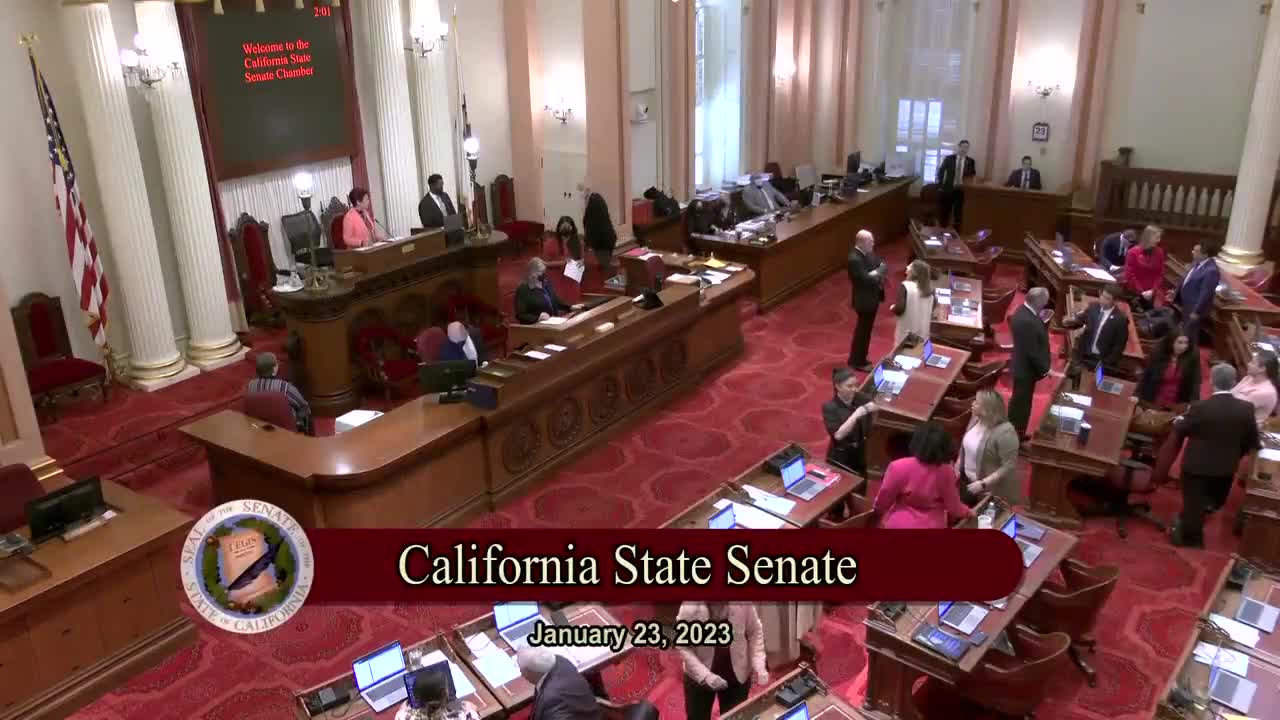
(2023-01-23: Read. Adopted. (Ayes 31. Noes 6. Page 96.))
Introduced
In Committee
First Chamber
In Committee
Second Chamber
Enacted
What does this bill do?
This California Senate resolution urges the President and Congress to pass federal laws guaranteeing reproductive freedom, including the right to abortion and to use or refuse contraception, to protect people’s ability to decide whether to continue a pregnancy.
The summary is provided by generative AI which can make mistakes. For original language, please view the details in the table below.
WHEREAS, January 22, 2023, marks the 50th anniversary of the United States Supreme Courts landmark decision in Roe v. Wade (1973) 410 U.S. 113, which affirmed the fundamental right to control reproductive decisions and decide whether to continue a pregnancy or obtain an abortion, which is an occasion deserving of acknowledgment; and
WHEREAS, Roe v. Wade was overturned by a 6-3 vote of the United States Supreme Court in Dobbs v. Jackson Womens Health Organization (2022) 597 U.S. ____ on June 24, 2022; and
WHEREAS, Roe v. Wade had been the cornerstone of ones ability to control their reproductive lives, affirming the right of anyone who could become pregnant in the United States to decide when and if to have children; and
WHEREAS, Abortion is a safe and common medical procedure and nearly one in four women in the United States will have an abortion by 45 years of age; and
WHEREAS, The Turnaway Study shows that denying people abortion creates economic hardship and insecurity that lasts for years and negatively impacts those people and their children; and
WHEREAS, Maternal death rates are 62 percent higher and perinatal death rates are 15 percent higher in states where abortion is restricted than in states with access to abortion and abortion bans disproportionately harm youth, people with low incomes, and communities of color; and
WHEREAS, As a result of the Dobbs decision repealing Roe v. Wade, 13 states have total abortion bans in effect and almost one-third of women and people who can become pregnant of reproductive age in the United States live in a state where abortion is not legal or is severely restricted; and
WHEREAS, With Roe v. Wade overturned, it is likely that abortion will be banned or severely restricted in 24 states, affecting more than 36 million women and even more people who can become pregnant; and
WHEREAS, Without the protections under Roe, there are no federal protections for patients and providers of sexual and reproductive health care from being criminalized for receiving or providing essential health care services; and
WHEREAS, The State of California stands in strong support of every individuals fundamental right to choose whether to continue a pregnancy; and
WHEREAS, Four years before Roe v. Wade, our state Supreme Court held that Californians have the fundamental constitutional right to procreative choice, a right that follows our states recognition of the right to privacy in matters relating to marriage, family, and sex, in People v. Belous (1969) 71 Cal. 2d 954; and
WHEREAS, Our state Supreme Court recognized that while, at the time, there was no enumerated privacy right in either our or federal Constitution, the right to privacy was indisputably a fundamental right; and
WHEREAS, To further lay the groundwork to protect that right, California voters, in 1972, one year before Roe v. Wade, passed a constitutional amendment to explicitly provide for the constitutional right to privacy; and
WHEREAS, In the immediate aftermath of the United States Supreme Courts devastating decision in Dobbs v. Jackson, the Legislature passed and the Governor signed a comprehensive package of legislation expanding, protecting, and strengthening access to reproductive health care, including abortions for all Californians and people seeking such care, in our state; and
WHEREAS, The Legislature passed Senate Constitutional Amendment 10 to put Proposition 1 on the November 2022 ballot; and
WHEREAS, The California voters overwhelmingly supported Proposition 1, and enacted a state constitutional right to prohibit the state from interfering with an individuals reproductive freedom in their most intimate decisions, which includes their fundamental right to choose to have an abortion and their fundamental right to choose or refuse contraceptives; now, therefore, be it
Resolved by the Senate of the State of California, That the Senate urges the President of the United States and the United States Congress to enact federal legislation that guarantees the right to reproductive freedom, including abortion and contraception; and be it further
Resolved, That the Secretary of the Senate transmit copies of this resolution to the President and Vice President of the United States, to the Speaker of the House of Representatives, to the Majority Leader of the Senate, to each Senator and Representative from California in the Congress of the United States, and to the author for appropriate distribution.
WHEREAS, January 22, 2023, marks the 50th anniversary of the United States Supreme Courts landmark decision in Roe v. Wade (1973) 410 U.S. 113, which affirmed the fundamental right to control reproductive decisions and decide whether to continue a pregnancy or obtain an abortion, which is an occasion deserving of acknowledgment; and
WHEREAS, Roe v. Wade was overturned by a 6-3 vote of the United States Supreme Court in Dobbs v. Jackson Womens Health Organization (2022) 597 U.S. ____ on June 24, 2022; and
WHEREAS, Roe v. Wade had been the cornerstone of ones ability to control their reproductive lives, affirming the right of anyone who could become pregnant in the United States to decide when and if to have children; and
WHEREAS, Abortion is a safe and common medical procedure and nearly one in four women in the United States will have an abortion by 45 years of age; and
WHEREAS, The Turnaway Study shows that denying people abortion creates economic hardship and insecurity that lasts for years and negatively impacts those people and their children; and
WHEREAS, Maternal death rates are 62 percent higher and perinatal death rates are 15 percent higher in states where abortion is restricted than in states with access to abortion and abortion bans disproportionately harm youth, people with low incomes, and communities of color; and
WHEREAS, As a result of the Dobbs decision repealing Roe v. Wade, 13 states have total abortion bans in effect and almost one-third of women and people who can become pregnant of reproductive age in the United States live in a state where abortion is not legal or is severely restricted; and
WHEREAS, With Roe v. Wade overturned, it is likely that abortion will be banned or severely restricted in 26 24 states, affecting more than 36 million women and even more people who can become pregnant; and
WHEREAS, Without the protections under Roe, there are no federal protections for patients and providers of sexual and reproductive health care from being criminalized for receiving or providing essential health care services; and
WHEREAS, The State of California stands in strong support of every individuals fundamental right to choose whether to continue a pregnancy; and
WHEREAS, Four years before Roe v. Wade, our state Supreme Court held that Californians have the fundamental constitutional right to procreative choice, a right that follows our states recognition of the right to privacy in matters relating to marriage, family, and sex, in People v. Belous (1969) 71 Cal. 2d 954; and
WHEREAS, Our state Supreme Court recognized that while, at the time, there was no enumerated privacy right in either our or federal Constitution, the right to privacy was indisputably a fundamental right; and
WHEREAS, To further lay the groundwork to protect that right, California voters, in 1972, one year before Roe v. Wade, passed a constitutional amendment to explicitly provide for the constitutional right to privacy; and
WHEREAS, In the immediate aftermath of the United States Supreme Courts devastating decision in Dobbs v. Jackson, the Legislature passed and the Governor signed a comprehensive package of legislation expanding, protecting, and strengthening access to reproductive health care, including abortions for all Californians and people seeking such care, in our state; and
WHEREAS, The Legislature passed Senate Constitutional Amendment 10 to put Proposition 1 on the November 2022 ballot; and
WHEREAS, The California voters overwhelmingly supported Proposition 1, and enacted a state constitutional right to prohibit the state from interfering with an individuals reproductive freedom in their most intimate decisions, which includes their fundamental right to choose to have an abortion and their fundamental right to choose or refuse contraceptives; now, therefore, be it
Resolved by the Senate of the State of California, That the Senate urges the President of the United States and the United States Congress to enact federal legislation that guarantees the right to reproductive freedom, including abortion and contraception; and be it further
Resolved, That the Secretary of the Senate transmit copies of this resolution to the President and Vice President of the United States, to the Speaker of the House of Representatives, to the Majority Leader of the Senate, to each Senator and Representative from California in the Congress of the United States, and to the author for appropriate distribution.
WHEREAS, January 22, 2023, marks the 50th anniversary of the United States Supreme Courts landmark decision in Roe v. Wade (1973) 410 U.S. 113, which affirmed the fundamental right to control reproductive decisions and decide whether to continue a pregnancy or obtain an abortion, which is an occasion deserving of acknowledgment; and
WHEREAS, Roe v. Wade was overturned by a 6-3 vote of the United States Supreme Court in Dobbs v. Jackson Womens Health Organization (2022) 597 U.S. ____ on June 24, 2022; and
WHEREAS, Roe v. Wade had been the cornerstone of ones ability to control their reproductive lives, affirming the right of anyone who could become pregnant in the United States to decide when and if to have children; and
WHEREAS, Abortion is a safe and common medical procedure and nearly one in four women in the United States will have an abortion by 45 years of age; and
WHEREAS, The Turnaway Study shows that denying people abortion creates economic hardship and insecurity that lasts for years and negatively impacts those people and their children; and
WHEREAS, Maternal death rates are 62 percent higher and perinatal death rates are 15 percent higher in states where abortion is restricted than in states with access to abortion and abortion bans disproportionately harm youth, people with low incomes, and communities of color; and
WHEREAS, As a result of the Dobbs decision repealing Roe v. Wade, 13 states have total abortion bans in effect and almost one-third of women and people who can become pregnant of reproductive age in the United States live in a state where abortion is not legal or is severely restricted; and
WHEREAS, With Roe v. Wade overturned, it is likely that abortion will be banned or severely restricted in 26 states, affecting more than 36 million women and even more people who can become pregnant; and
WHEREAS, Without the protections under Roe, there are no federal protections for patients and providers of sexual and reproductive health care from being criminalized for receiving or providing essential health care services; and
WHEREAS, The State of California stands in strong support of every individuals fundamental right to choose whether to continue a pregnancy; and
WHEREAS, Four years before Roe v. Wade, our state Supreme Court held that Californians have the fundamental constitutional right to procreative choice, a right that follows our states recognition of the right to privacy in matters relating to marriage, family, and sex, in People v. Belous (1969) 71 Cal. 2d 954; and
WHEREAS, Our state Supreme Court recognized that while, at the time, there was no enumerated privacy right in either our or federal Constitution, the right to privacy was indisputably a fundamental right; and
WHEREAS, To further lay the groundwork to protect that right, California voters, in 1972, one year before Roe v. Wade, passed a constitutional amendment to explicitly provide for the constitutional right to privacy; and
WHEREAS, In the immediate aftermath of the United States Supreme Courts devastating decision in Dobbs v. Jackson, the Legislature passed and the Governor signed a comprehensive package of legislation expanding, protecting, and strengthening access to reproductive health care, including abortions for all Californians and people seeking such care, in our state; and
WHEREAS, The Legislature passed Senate Constitutional Amendment 10 to put Proposition 1 on the November 2022 ballot; and
WHEREAS, The California voters overwhelmingly supported Proposition 1, and enacted a state constitutional right to prohibit the state from interfering with an individuals reproductive freedom in their most intimate decisions, which includes their fundamental right to choose to have an abortion and their fundamental right to choose or refuse contraceptives; now, therefore, be it
Resolved by the Senate of the State of California, That the Senate urges the President of the United States and the United States Congress to enact federal legislation that guarantees the right to reproductive freedom, including abortion and contraception; and be it further
Resolved, That the Secretary of the Senate transmit copies of this resolution to the President and Vice President of the United States, to the Speaker of the House of Representatives, to the Majority Leader of the Senate, to each Senator and Representative from California in the Congress of the United States, and to the author for appropriate distribution.
|
Date
|
Status
|
|---|---|
| Jan 23, 2023 | Read. Adopted. (Ayes 31. Noes 6. Page 96.) |
| Jan 18, 2023 | Read second time and amended. Ordered to third reading. |
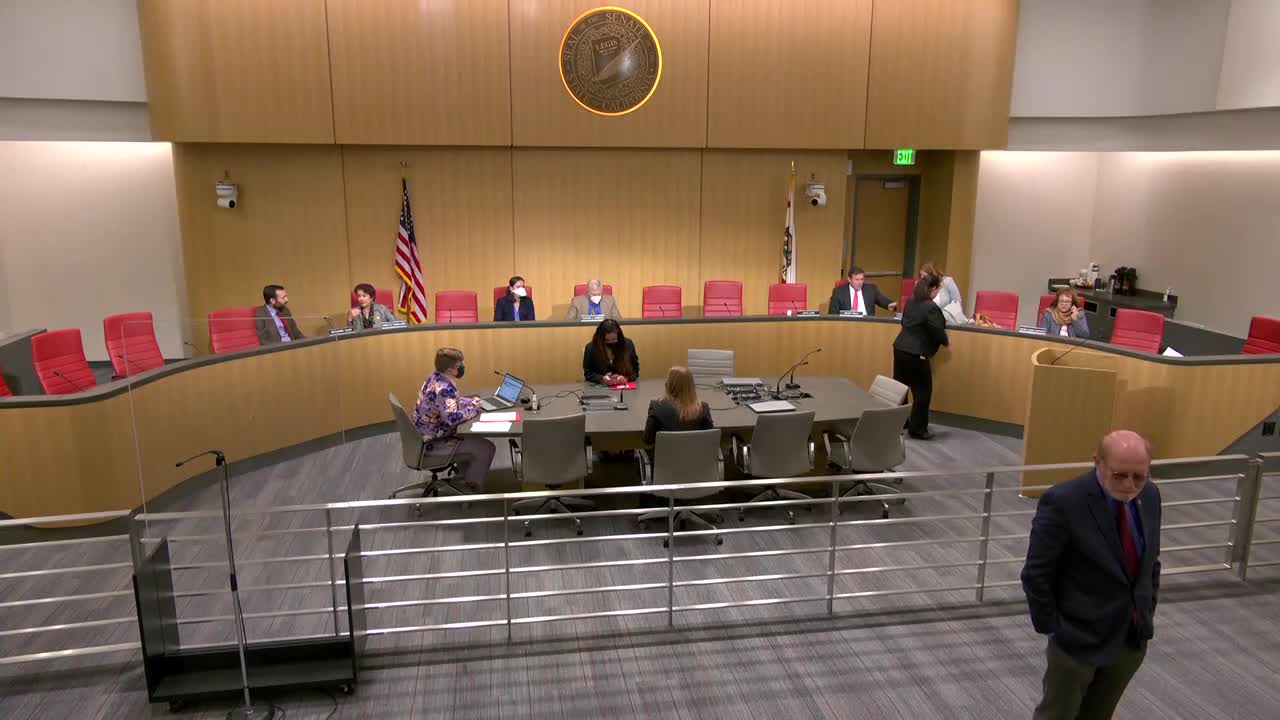
| Jan 17, 2023 | From committee: Be adopted as amended. (Ayes 9. Noes 1. Page 69.) (January 17). |
| Jan 13, 2023 | Set for hearing January 17. |
| Jan 11, 2023 | Re-referred to Com. on JUD. |
| Jan 9, 2023 | Introduced. Referred to Com. on RLS. |
|
Date
|
Description
|
Location
|
Votes
|
|
|---|---|---|---|---|
| Jan 23, 2023 | Senate 3rd Reading SR9 Skinner et al. | Senate Floor |
Passed |
|
| Jan 17, 2023 | Be adopted as amended | Senate Standing Committee on Judiciary |
Passed |
This list shows positions taken on this bill by organizations on the date displayed, which is linked to the original source.
Positions by individuals are not included.
|
Organization
|
Position
|
Date
|
|---|---|---|
| Access Reproductive Justice | ** Support | |
| American Nurses Association/California | ** Support | |
| Black Women For Wellness Action Project | ** Support | |
| California Catholic Conference | * Against | Jan 17, 2023 |
| California Family Council | ** Against | |
| California Latinas for Reproductive Justice | * Support | Jan 17, 2023 |
| California Nurse Midwives Association | ** Support | |
| Capital Resource Institute | * Against | Jan 17, 2023 |
| Essential Access Health | ** Support | |
| NARAL Pro-Choice California | ** Support | |
| Planned Parenthood Affiliates Of California | ** Support | |
| Pro-life San Francisco | * Against | Jan 17, 2023 |
| Right to Life League | ** Against | |
| San Diego County | * Against | Jan 17, 2023 |
| The Women's Building | ** Support |
SENATE RULES COMMITTEE Office of Senate Floor Analyses (916) 651-1520 Fax: (916) 327-4478 | SR 9 |
THIRD READING
Bill No: SR 9
Author: Skinner (D) and Atkins (D), et al.
Amended: 1/18/23
Vote: Majority
SENATE JUDICIARY COMMITTEE: 9-1, 1/17/23
AYES: Umberg, Allen, Ashby, Caballero, Durazo, Laird, Min, Stern, Wiener
NOES: Niello
NO VOTE RECORDED: Wilk
SUBJECT: Reproductive Health
SOURCE: Black Women for Wellness Action Project
NARAL Pro-Choice California
DIGEST:
This resolution marks the 50th anniversary of the U. S. Supreme Court’s decision in the case Roe v. Wade (1973) 410 U.S. 113, which established a person’s right under the federal constitution to choose whether or not to carry a pregnancy to term. This resolution also recognizes that in the immediate aftermath of the U. S. Supreme Court’s devastating decision in Dobbs v. Jackson Women’s Health Organization ((2022) 597 U.S. ____), which overturned Roe by a vote of 6-3, there is nothing prohibiting patients and providers of sexual and reproductive health care from being criminalized for receiving or providing essential health care services, including abortion, in other states and therefore, urges the President of the United States and the United States Congress to enact federal legislation that guarantees the right to reproductive freedom.
ANALYSIS:
Existing law:
- Prohibits the state from denying or interfering with an individual’s reproductive freedom in their most intimate decisions, which includes their fundamental right to choose to have an abortion and their fundamental right to choose or refuse contraceptives. Specifies that this provision is intended to further the constitutional right to privacy guaranteed by Section 1 of Article I of the California Constitution, and the constitutional right to not be denied equal protection guaranteed by Section 7 of Article I of the California Constitution, and that nothing herein narrows or limits the right to privacy or equal protection. (Cal. Const., art. I, § 1.1.)
- Provides that all people are by nature free and independent and have inalienable rights including, among others, the right to privacy. (Cal. Const., art. I, § 1.)
- Provides that a person may not be deprived of life, liberty, or property without due process of law or denied equal protection of the laws. (Cal. Const., art. I, § 7.)
- Holds that the state constitution’s express right to privacy extends to an individual’s decision about whether or not to have an abortion. (People v. Belous (1969) 71 Cal.2d 954.)
- Establishes the Reproductive Privacy Act and provides that the Legislature finds and declares that every individual possesses a fundamental right of privacy with respect to personal reproductive decisions, which entails the right to make and effectuate decisions about all matters relating to pregnancy, including prenatal care, childbirth, postpartum care, contraception, sterilization, abortion care, miscarriage management, and infertility care. (Health & Saf. Code § 123460 et. seq., § 123462.)
- Establishes a web page for centralized information on services and support for those seeking abortion care, and a fund that enables private and public sources to support the work of abortion providers and other community-based organizations that secure practical support and other needs for patients and providers. (Health & Saf. Code § 123430 & 123452.5.)
- Prohibits the enforcement in this state of out-of-state laws authorizing a civil action against a person or entity that receives or seeks, performs or induces, or aids or abets the performance of an abortion, or who attempts or intends to engage in those actions, and declares those out-of-state laws to be contrary to the public policy of this state. (Health & Saf. Code § 123467.5.)
- Prohibits compelling a person to identify or provide information that would identify an individual who has sought or obtained an abortion in a state, county, city, or other local criminal, administrative, legislative, or other proceeding if the information is being requested based on another state’s laws that interfere with a person’s right to choose or obtain an abortion or a foreign penal civil action. (Health & Saf. Code § 123466.)
- Authorizes a party aggrieved by a violation of the Reproductive Privacy Act to bring a civil action against an offending state actor, as specified. ((Health & Saf. Code § 123469.)
This resolution:
- Declares that:
- January 22, 2023 is the 50th anniversary of Roe v. Wade, the U. S. Supreme Court’s landmark decision that affirmed the fundamental right to control reproductive decisions and decide whether to continue a pregnancy or obtain an abortion, which is an occasion deserving of acknowledgement;
- Roe was overturned by a 6-3 vote of the U. S. Supreme Court in Dobbs v. Jackson Women’s Health Organization (2022) 597 U.S. ____ on June 24, 2022;
- Roe had been the cornerstone of one’s ability to control their reproductive lives, and affirmed the right of anyone who could become pregnant in the United States to decide when and if to have children;
- Abortion is a safe and common medical procedure and nearly one in four women in the United States will have an abortion by 45 years of age;
- The Turnaway Study shows that denying people abortion creates economic hardship and insecurity that lasts for years and negatively impacts those people and their children;
- Maternal death rates are 62 percent higher and perinatal death rates are 15 percent higher in states where abortion is restricted than in states with access to abortion, and abortion bans disproportionately harm youth, people with low incomes, and communities of color;
- As a result of the Dobbs decision repealing Roe, 13 states have total abortion bans in effect and almost one-third of women and people who can become pregnant of reproductive age in the United States live in a state where abortion is not legal or is severely restricted;
- With Roe overturned, it is likely that abortion will be banned or severely restricted in 24 states, affecting more than 36 million women and even more people who can become pregnant;
- Without the protections under Roe, there are no federal protections for patients and providers of sexual and reproductive health care from being criminalized for receiving or providing essential health care services;
- The State of California stands in strong support of every individual’s fundamental right to choose whether to continue a pregnancy;
- Four years before Roe was decided, our state Supreme Court held that Californians have the fundamental constitutional right to procreative choice, a right that follows our state’s recognition of the right to privacy in matters relating to marriage, family, and sex, in People v. Belous (1969) 71 Cal. 2d 954;
- The California Supreme Court recognized that while, at the time, there was no enumerated privacy right in either the state or federal constitution, the right to privacy was indisputably a fundamental right;
- To further lay the groundwork to protect that right, California voters in 1972, one year before the Roe decision, passed a state constitutional amendment to explicitly provide for the constitutional right to privacy;
- In the immediate aftermath of the U. S. Supreme Court’s devastating decision in Dobbs, the Legislature passed and the Governor signed a comprehensive package of legislation expanding, protecting, and strengthening access to reproductive health care, including abortions, for all Californians and people seeking such care in our state;
- The Legislature passed Senate Constitutional Amendment 10 to put Proposition 1 on the November 2022 ballot; and
- California voters overwhelmingly supported Proposition 1 and enacted a state constitutional right to prohibit the state from interfering with an individual’s reproductive freedom in their most intimate decisions, which includes their fundamental right to choose to have an abortion and their fundamental right to choose or refuse contraceptives.
- Urges the President of the United States and the United States Congress to enact federal legislation that guarantees the right to reproductive freedom, including abortion and contraception.
Comments
- Until June 2022, access to abortion had been a federal constitutional right since 1973
Roe v. Wade was the landmark U.S. Supreme Court decision that held the implied constitutional right to privacy extended to a person’s decision whether to terminate a pregnancy, while allowing that some state regulation of abortion access could be permissible. ((1973) 410 U.S. 113.) The plaintiff in the case was “Jane Roe,” an unmarried woman who wanted to end her pregnancy under safe and clinical conditions but was unable to obtain a legal abortion in Texas because her life was not threatened by the continuation of the pregnancy. Unable to afford travel to another state to obtain an abortion, she challenged the statute making it a crime to perform an abortion unless a woman’s life was at stake. She also claimed that the Texas law abridged her right of personal privacy.
The Court struck down the Texas law, finding for the first time that the constitutional right to privacy under the Due Process Clause of the Fourteenth Amendment is “broad enough to encompass a woman’s decision whether or not to terminate her pregnancy.” At the same time, the high court also defined two compelling state interests that would satisfy restrictions on a person’s right to choose to terminate a pregnancy: 1) states may regulate the abortion procedure after the first trimester of pregnancy in ways necessary to promote a woman’s health; and 2) after the point of fetal viability outside of the womb, a state may, to protect the potential life of the fetus, prohibit abortions that are not necessary to preserve a person’s life or health. In Planned Parenthood of Southeastern Pennsylvania v. Casey (1992) 505 U.S. 833, the Court reaffirmed the basic holding of Roe, yet also permitted states to impose restrictions on abortion as long as those restrictions do not create an undue burden on a person’s right to choose to terminate a pregnancy.
Roe has been one of the most debated U.S. Supreme Court decisions and its application and validity have been challenged numerous times, but its fundamental holding had continuously been upheld by the Court until June 2022. On June 24, 2022 the Court published its official opinion in Dobbs and voted 6-3 to overturn the holding in Roe.[1] The case involved a Mississippi law enacted in 2018 that banned most abortions after the first 15 weeks of pregnancy, which is before what is generally accepted as the period of viability. (see Miss. Code Ann. §41-41-191.) The majority opinion upholds the Mississippi law finding that, contrary to almost 50 years of precedent, there is no fundamental constitutional right to have an abortion. The opinion further provides that states should be allowed to decide how to regulate abortion and that a strong presumption of validity should be afforded to those state laws.[2]
- Post-Dobbs access to reproductive healthcare is being restricted across the nation
Abortion is a safe[3] and common medical procedure with nearly one in four women in the United States will have an abortion by 45 years of age.[4] The Turnaway Study, a prospective longitudinal study examining the effects of unwanted pregnancy on women’s lives, found that many common claims regarding the detrimental effects getting an abortion can have on a person’s health are not supported by evidence, and further found that there are serious consequences of being denied a wanted abortion, including economic hardship and insecurity that can last for years and negatively impact those individuals and their children.[5] A report by The Commonwealth Fund found that maternal death rates are 62 percent higher and perinatal death rates are 15 percent higher in states where abortion is restricted than in states with access to abortion.[6]
The Roe decision was the foundation for allowing people the ability to control their reproductive lives because it established a federal constitutional right for anyone who could become pregnant in the United States to decide when and if to have children and prevented the criminalization of having an abortion or providing an abortion. Prior to Roe legal abortion did exist in some states in the nation, but the choices available to those seeking to terminate an unwanted pregnancy were limited and disproportionately affected those who were younger, lower income, and members of communities of color.[7] It is estimated that the number of illegal abortions in the 1950s and 1860s ranged from 200,000 to 1.2 million.[8] In 1965 illegal abortion accounted for 17 percent of all deaths attributed to pregnancy and childbirth—and this was only the officially reported deaths meaning the actual number was probably higher.[9] The Centers for Disease Control and Prevention estimates that 130,000 women obtained illegal or self-induced procedures in 1972—39 of whom died.[10] The mortality rate due to illegal abortion for nonwhite women was 12 times that for white women from 1972 to 1974.[11]
In the wake of the Dobbs decision it is very probable that abortion will be banned or severely restricted in 24 states,[12] with 13 states already having total abortion bans in effect.[13] Almost one-third of women and people who can become pregnant of reproductive age in the United States live in a state where abortion is not legal or is severely restricted.[14] If all the states expected to enact a total ban on abortion actually do, the number of patients who would find that their nearest clinic is in California could increase to 1.4 million an almost 3,000 percent increase.[15] As history shows, the effects of these abortion bans will disproportionately harm young persons, people with low incomes, and communities of color and could very likely lead to an increase in the death due to illegal or self-induced abortion.[16]
- California is a Reproductive Freedom State
The California Supreme Court held in 1969 that the state constitution’s implied right to privacy extends to an individual’s decision about whether or not to have an abortion. (People v. Belous (1969) 71 Cal.2d 954.) This was the first time an individual’s right to abortion was upheld in a court. In 1972 the California voters passed a constitutional amendment that explicitly provided for the right to privacy in the state constitution. (Prop. 11, Nov. 7, 1927 gen. elec.) California statutory law provides, under the Reproductive Privacy Act, that the Legislature finds and declares every individual possesses a fundamental right of privacy with respect to personal reproductive decisions, which entails the right to make and effectuate decisions about all matters relating to pregnancy; therefore, it is the public policy of the State of California that every individual has the fundamental right to choose or refuse birth control, and every individual has the fundamental right to choose to bear a child or to choose to obtain an abortion. (Health & Saf. Code § 123462.) In 2019, Governor Newsom issued a proclamation reaffirming California’s commitment to making reproductive freedom a fundamental right in response to the numerous attacks on reproductive rights across the nation.[17] In September 2021, more than 40 organizations came together to form the California Future Abortion Council (CA FAB) to identify barriers to accessing abortion services and to recommend policy proposals to support equitable and affordable access for not only Californians but all who seek care in the state.
In response to the Dobbs decision, California enacted a comprehensive package of legislation expanding, protecting, and strengthening access to reproductive health care, including abortions, for all Californians and people seeking such care in our state.[18] Additionally, the voters overwhelmingly approved Proposition 1 (Nov. 8, 2022 gen. elec.), and enacted an express constitutional right in the state constitution that prohibits the state from interfering with an individual’s reproductive freedom in their most intimate decisions. Though California has enacted numerous laws to protect the fundamental right to reproductive freedom, without federal protections there is nothing prohibiting patients and providers of sexual and reproductive health care from being criminalized for receiving or providing essential health care services, including abortion, in other states. For these reasons, this resolution urges the President of the United States and the United States Congress to enact federal legislation that guarantees the right to reproductive freedom, including abortion and contraception.
FISCAL EFFECT: Appropriation: No Fiscal Com.: No Local: No
SUPPORT: (Verified 1/18/23)
Black Women for Wellness Action Project (co-source)
NARAL Pro-Choice California (co-source)
ACCESS Reproductive Justice
American Nurses Association/California
California Nurse Midwives Association
Essential Access Health
Planned Parenthood Affiliates of California
The Women's Building
OPPOSITION: (Verified 1/18/23)
California Family Council
Right to Life League
ARGUMENTS IN SUPPORT: The author writes:
50 years ago, the U.S. Supreme Court ruled in Roe v. Wade that a woman’s constitutional right to privacy includes her right to abortion. Before Roe v. Wade, an estimated 1.2 million women resorted to illegal abortion every year, resulting in thousands and thousands of deaths. On June 24, 2022 six of the nine U. S. Supreme Court Justices voted to overturn Roe v. Wade in Dobbs v. Jackson Women’s Health Organization decision—returning our country back to a time of legal restrictions on women’s right to make decisions about their own bodies and future, and a time when life endangering abortions were many women’s only option. With Roe v. Wade overturned, abortion is already banned in 21 states and likely to be banned or severely restricted in more, affecting the bodily autonomy of more than 36 million women and even more people who can become pregnant, and disproportionately affecting youth, people with low incomes, and communities of color. SR 9 honors the 50th anniversary of Roe v Wade and reaffirms California’s strong support of every person’s right to decide their reproductive future, as a Reproductive Freedom State. This resolution also acknowledges California voters overwhelmingly supported Proposition 1 on the November 2022 ballot, a proposition that enacted a state constitutional right to prohibit the state from interfering with an individual’s reproductive freedom in their most intimate decisions. California will continue to fight for every person’s right to bodily autonomy, equitable access to healthcare, freedom to choose what is best for themselves and their health, and equality for reproductive rights of all genders.
Black Women for Wellness Action Project, a sponsor of the bill, writes:
[…] Since the US Supreme Court overturned Roe v. Wade in 2022 through the Dobbs v. Jackson Women’s Health Organization decision, abortion care has been banned in 21 states and will likely be banned or severely restricted in several more, impinging on the bodily autonomy of more than 36 million women and even more people who can become pregnant. This has severe implications on the health and wellbeing of women, birthing people and their families in many regards. As an example, forcing people to carry their pregnancies to term will impact maternal mortality rates, as banning access to abortion care is projected to increase pregnancy related deaths for Black Women by 33% and 23% overall. […]
NARAL Pro-Choice California, a sponsor of the bill, writes:
[…] On what would have been the 50th anniversary of Roe v. Wade recognizing the constitutional right to abortion, reproductive freedom and abortion access in our country is in peril. We are instead witnessing the devastating impacts of the Supreme Court's decision to strip Americans of the fundamental freedom to make decisions about their own bodies. Already, 17 states are enforcing bans on abortion, and we are seeing the devastating consequences on real people’s lives unfold in real time. In some states, these bans intimidate doctors and hospitals, stopping them from providing critical care like miscarriage management, putting pregnant people’s lives and health in danger. The threats don’t end there: House Republicans have already signaled that they intend to attack abortion access now that they have a majority, and anti-choice extremists have handed them a list of priorities that include a national ban on abortion. These attacks on reproductive freedom are part of a broader agenda to roll back our fundamental rights, including the freedom to vote, LGBTQ rights, and more.
In California, we are going the opposite direction and actively taking steps to protect the fundamental reproductive freedoms of all people. […]
ARGUMENTS IN OPPOSITION: The California Family Council writes in opposition:
[…] Unborn human beings deserve the same right to life, liberty, and the pursuit of happiness as everyone else. Abortion violates this principle, and just like the dehumanizing institution of slavery, it deserves to be abolished.
In light of this truth, California legislators should not be encouraging the federal government to violate the liberty and the pursuit of happiness owed to every human being, especially vulnerable little people still in the womb. […]
The Right to Life League writes in opposition:
[…] California’s Abortion Amendment promulgated, but did not not define, the term [reproductive freedom]. […] Judicial interpretation of such a vague right to could create a brave new world of reproductive freedoms, that strip away parental rights to protect children from sexual abuse, overriding accepted morality, including prohibitions on incest, polygamy, rape, and pedophilia, possibly even requiring governement-funded [sic] surrogacy, and gender transition surgeries at all ages.
This virtue signaling to promote the killing of humans in the womb in the guise of “reproductive freedom” is an irresponsible and reprehensible waste of California’s legislative time and resources.
Prepared by: Amanda Mattson / JUD. / (916) 651-4113
1/18/23 14:48:50
**** END ****
Dobbs v. Jackson Women’s Health (2022) 597 U.S. _ (141 S.Ct. 2619) at p. 5, available at https://www.supremecourt.gov/opinions/21pdf/19-1392_6j37.pdf. ↑
Id. at 77. ↑
See Nat. Academies of Science, Engineering, and Medicine (2018), The Safety and Quality of Abortion Care in the United States (2018), available at https://doi.org/10.17226/24950. ↑
Ibid. ↑
Diana Green Foster, PhD, The Turnaway Study: Ten Years, a Thousand Women, and the Consequences of Having—or Being Denied—an Abortion. ↑
Eugene Declerq, et. al, The U.S. Maternal Health Divide: The Limited Maternal Health Services and Worse Outcomes of States Proposing New Abortion Restrictions, The Commonwealth Fund. Dec. 14, 2022, available at https://www.commonwealthfund.org/publications/issue-briefs/2022/dec/us-maternal-health-divide-limited-services-worse-outcomes. ↑
Rachel Benson Gold, Lessons from Before Roe: Will Past be Prologue, Guttmacher Institute (Mar. 1, 2003), available at https://www.guttmacher.org/gpr/2003/03/lessons-roe-will-past-be-prologue. ↑
Ibid. ↑
Ibid. ↑
Ibid. ↑
Ibid. ↑
Elizabeth Nash and Isabel Guarnieri, Six Months Post-Roe, 24 US States Have Banned Abortion or Are Likely to Do So: A Roundup, Guttmacher Institute (Jan. 10, 2023), available at https://www.guttmacher.org/2023/01/six-months-post-roe-24-us-states-have-banned-abortion-or-are-likely-do-so-roundup. ↑
Sharon Bernstein, Factbox: US. abortion restrictions mount after overturn of Roe v. Wade, Reuters, (Oct. 4, 2022), available at https://www.reuters.com/business/healthcare-pharmaceuticals/us-abortion-restrictions-mount-after-overturn-roe-v-wade-2022-10-04/#:~:text=ACTIVE%20BANS,an%20abortion%20rights%20research%20group. ↑
Katie Shepherd, Rachel Roubein, and Caroline Kitchner, 1 in 3 American women have already lost abortion access. More restrictive laws are coming, The Washington Post, (Aug. 22, 2022). ↑
April Dembosky, As states ban abortion, Californians open their arms and wallets, NPR (June 27, 2022), available at https://www.npr.org/sections/health-shots/2022/06/27/1103479722/as-states-ban-abortion-californians-open-their-arms-and-wallets. ↑
Center for Reproductive Rights, The Disproportionate Harm of Abortion bans: Spotlight on Dobbs v. Jackson Women’s Health, (Nov. 29, 2021), available at https://reproductiverights.org/supreme-court-case-mississippi-abortion-ban-disproportionate-harm/. ↑
California Proclamation on Reproductive Freedom (May 31, 2019) available at https://www.gov.ca.gov/wp-content/uploads/2019/05/Proclamation-on-Reproductive-Freedom.pdf. ↑
Kristen Hwang, Newsom signs abortion protections into law, CalMatters (Sept. 27, 2022), available at https://calmatters.org/health/2022/09/california-abortion-bills/. ↑
Senator Thomas Umberg, Chair
2023-2024 Regular Session
Bill No: SR 9 (Author:Skinner and Atkins)
Version: January 9, 2023
Hearing Date: January 17, 2023
Fiscal: No
Urgency: No
Consultant: AM
SUBJECT
Reproductive Health
DIGEST
This resolution marks the 50th anniversary of the U. S. Supreme Court’s decision in the case Roe v. Wade (1973) 410 U.S. 113, which established a person’s right under the federal constitution to choose whether or not to carry a pregnancy to term. The resolution also recognizes that in the immediate aftermath of the U. S. Supreme Court’s devastating decision in Dobbs v. Jackson Women’s Health Organization ((2022) 597 U.S. ____), which overturned Roe by a vote of 6-3, there is nothing prohibiting patients and providers of sexual and reproductive health care from being criminalized for receiving or providing essential health care services, including abortion, in other states and therefore, urges the President of the United States and the United States Congress to enact federal legislation that guarantees the right to reproductive freedom.
EXECUTIVE SUMMARY
Since the 1973 holding in Roe v. Wade, the U.S. Supreme Court has continuously held that it is a constitutional right to access abortion before fetal viability. However, on June 24, 2022 the Court voted 6-3 to overturn the holding in Roe and found that there is no federal constitutional right to an abortion. This resolution highlights that, as a result of the Dobbs decision, people in roughly half the country may lose access to abortion services or have them severely restricted. Though California has enacted numerous laws to protect the fundamental right to reproductive freedom, without the federal protections afforded under Roe there is nothing prohibiting patients and providers of sexual and reproductive health care from being criminalized for receiving or providing essential health care services, including abortion, in other states. The resolution is author sponsored. The resolution is supported by ACCESS Reproductive Justice, the American Nurses Association/California, Black Women for Wellness Action Project, California Nurses Midwives Association, NARAL ProChoice California, Planned Parenthood Affiliates of California and The Women’s Building. The resolution is opposed by the California Family Council and the Right to Life League.
PROPOSED CHANGES TO THE LAW
Existing law:
- Prohibits the state from denying or interfering with an individual’s reproductive freedom in their most intimate decisions, which includes their fundamental right to choose to have an abortion and their fundamental right to choose or refuse contraceptives. Specifies that this provision is intended to further the constitutional right to privacy guaranteed by Section 1 of Article I of the California Constitution, and the constitutional right to not be denied equal protection guaranteed by Section 7 of Article I of the California Constitution, and that nothing herein narrows or limits the right to privacy or equal protection. (Cal. Const., art. I, § 1.1.)
- Provides that all people are by nature free and independent and have inalienable rights including, among others, the right to privacy. (Cal. Const., art. I, § 1.)
- Provides that a person may not be deprived of life, liberty, or property without due process of law or denied equal protection of the laws. (Cal. Const., art. I, § 7.)
- Holds that the state constitution’s express right to privacy extends to an individual’s decision about whether or not to have an abortion. (People v. Belous (1969) 71 Cal.2d 954.)
- Establishes the Reproductive Privacy Act and provides that the Legislature finds and declares that every individual possesses a fundamental right of privacy with respect to personal reproductive decisions, which entails the right to make and effectuate decisions about all matters relating to pregnancy, including prenatal care, childbirth, postpartum care, contraception, sterilization, abortion care, miscarriage management, and infertility care. (Health & Saf. Code § 123460 et. seq., § 123462.)
- Establishes a web page for centralized information on services and support for those seeking abortion care, and a fund that enables private and public sources to support the work of abortion providers and other community-based organizations that secure practical support and other needs for patients and providers. (Health & Saf. Code § 123430 & 123452.5.)
- Prohibits the enforcement in this state of out-of-state laws authorizing a civil action against a person or entity that receives or seeks, performs or induces, or aids or abets the performance of an abortion, or who attempts or intends to engage in those actions, and declares those out-of-state laws to be contrary to the public policy of this state. (Health & Saf. Code § 123467.5.)
- Prohibits compelling a person to identify or provide information that would identify an individual who has sought or obtained an abortion in a state, county, city, or other local criminal, administrative, legislative, or other proceeding if the information is being requested based on another state’s laws that interfere with a person’s right to choose or obtain an abortion or a foreign penal civil action. (Health & Saf. Code § 123466.)
- Authorizes a party aggrieved by a violation of the Reproductive Privacy Act to bring a civil action against an offending state actor, as specified. ((Health & Saf. Code § 123469.)
This resolution:
- Declares that:
- January 22, 2023 is the 50th anniversary of Roe v. Wade, the U. S. Supreme Court’s landmark decision that affirmed the fundamental right to control reproductive decisions and decide whether to continue a pregnancy or obtain an abortion, which is an occasion deserving of acknowledgement;
- Roe was overturned by a 6-3 vote of the U. S. Supreme Court in Dobbs v. Jackson Women’s Health Organization (2022) 597 U.S. ____ on June 24, 2022;
- Roe had been the cornerstone of one’s ability to control their reproductive lives, and affirmed the right of anyone who could become pregnant in the United States to decide when and if to have children;
- abortion is a safe and common medical procedure and nearly one in four women in the United States will have an abortion by 45 years of age;
- the Turnaway Study shows that denying people abortion creates economic hardship and insecurity that lasts for years and negatively impacts those people and their children;
- maternal death rates are 62 percent higher and perinatal death rates are 15 percent higher in states where abortion is restricted than in states with access to abortion, and abortion bans disproportionately harm youth, people with low incomes, and communities of color;
- as a result of the Dobbs decision repealing Roe, 13 states have total abortion bans in effect and almost one-third of women and people who can become pregnant of reproductive age in the United States live in a state where abortion is not legal or is severely restricted;
- with Roe overturned, it is likely that abortion will be banned or severely restricted in 26 states, affecting more than 36 million women and even more people who can become pregnant;
- without the protections under Roe, there are no federal protections for patients and providers of sexual and reproductive health care from being criminalized for receiving or providing essential health care services;
- the State of California stands in strong support of every individual’s fundamental right to choose whether to continue a pregnancy;
- four years before Roe was decided, our state Supreme Court held that Californians have the fundamental constitutional right to procreative choice, a right that follows our state’s recognition of the right to privacy in matters relating to marriage, family, and sex, in People v. Belous (1969) 71 Cal. 2d 954;
- the California Supreme Court recognized that while, at the time, there was no enumerated privacy right in either the state or federal constitution, the right to privacy was indisputably a fundamental right;
- to further lay the groundwork to protect that right, California voters in 1972, one year before the Roe decision, passed a state constitutional amendment to explicitly provide for the constitutional right to privacy;
- in the immediate aftermath of the U. S. Supreme Court’s devastating decision in Dobbs, the Legislature passed and the Governor signed a comprehensive package of legislation expanding, protecting, and strengthening access to reproductive health care, including abortions, for all Californians and people seeking such care in our state;
- the Legislature passed Senate Constitutional Amendment 10 to put Proposition 1 on the November 2022 ballot; and
- California voters overwhelmingly supported Proposition 1 and enacted a state constitutional right to prohibit the state from interfering with an individual’s reproductive freedom in their most intimate decisions, which includes their fundamental right to choose to have an abortion and their fundamental right to choose or refuse contraceptives.
- Urges the President of the United States and the United States Congress to enact federal legislation that guarantees the right to reproductive freedom, including abortion and contraception.
COMMENTS
- Until June 2022, access to abortion had been a federal constitutional right since 1973
Roe v. Wade was the landmark U.S. Supreme Court decision that held the implied constitutional right to privacy extended to a person’s decision whether to terminate a pregnancy, while allowing that some state regulation of abortion access could be permissible. ((1973) 410 U.S. 113.) The plaintiff in the case was “Jane Roe,” an unmarried woman who wanted to end her pregnancy under safe and clinical conditions but was unable to obtain a legal abortion in Texas because her life was not threatened by the continuation of the pregnancy. Unable to afford travel to another state to obtain an abortion, she challenged the statute making it a crime to perform an abortion unless a woman’s life was at stake. She also claimed that the Texas law abridged her right of personal privacy.
The Court struck down the Texas law, finding for the first time that the constitutional right to privacy under the Due Process Clause of the Fourteenth Amendment is “broad enough to encompass a woman’s decision whether or not to terminate her pregnancy.” At the same time, the high court also defined two compelling state interests that would satisfy restrictions on a person’s right to choose to terminate a pregnancy: 1) states may regulate the abortion procedure after the first trimester of pregnancy in ways necessary to promote a woman’s health; and 2) after the point of fetal viability outside of the womb, a state may, to protect the potential life of the fetus, prohibit abortions that are not necessary to preserve a person’s life or health. In Planned Parenthood of Southeastern Pennsylvania v. Casey (1992) 505 U.S. 833, the Court reaffirmed the basic holding of Roe, yet also permitted states to impose restrictions on abortion as long as those restrictions do not create an undue burden on a person’s right to choose to terminate a pregnancy.
Roe has been one of the most debated U.S. Supreme Court decisions and its application and validity have been challenged numerous times, but its fundamental holding had continuously been upheld by the Court until June 2022. On June 24, 2022 the Court published its official opinion in Dobbs and voted 6-3 to overturn the holding in Roe.[1] The case involved a Mississippi law enacted in 2018 that banned most abortions after the first 15 weeks of pregnancy, which is before what is generally accepted as the period of viability. (see Miss. Code Ann. §41-41-191.) The majority opinion upholds the Mississippi law finding that, contrary to almost 50 years of precedent, there is no fundamental constitutional right to have an abortion. The opinion further provides that states should be allowed to decide how to regulate abortion and that a strong presumption of validity should be afforded to those state laws.[2]
- Post-Dobbs access to reproductive healthcare is being restricted across the nation
Abortion is a safe[3] and common medical procedure with nearly one in four women in the United States will have an abortion by 45 years of age.[4] The Turnaway Study, a prospective longitudinal study examining the effects of unwanted pregnancy on women’s lives, found that many common claims regarding the detrimental effects getting an abortion can have on a person’s health are not supported by evidence, and further found that there are serious consequences of being denied a wanted abortion, including economic hardship and insecurity that can last for years and negatively impact those individuals and their children.[5] A report by The Commonwealth Fund found that maternal death rates are 62 percent higher and perinatal death rates are 15 percent higher in states where abortion is restricted than in states with access to abortion.[6]
The Roe decision was the foundation for allowing people the ability to control their reproductive lives because it established a federal constitutional right for anyone who could become pregnant in the United States to decide when and if to have children and prevented the criminalization of having an abortion or providing an abortion. Prior to Roe legal abortion did exist in some states in the nation, but the choices available to those seeking to terminate an unwanted pregnancy were limited and disproportionately affected those who were younger, lower income, and members of communities of color.[7] It is estimated that the number of illegal abortions in the 1950s and 1860s ranged from 200,000 to 1.2 million.[8] In 1965 illegal abortion accounted for 17 percent of all deaths attributed to pregnancy and childbirth—and this was only the officially reported deaths meaning the actual number was probably higher.[9] The Centers for Disease Control and Prevention estimates that 130,000 women obtained illegal or self-induced procedures in 1972—39 of whom died.[10] The mortality rate due to illegal abortion for nonwhite women was 12 times that for white women from 1972 to 1974.[11]
In the wake of the Dobbs decision it is very probable that abortion will be banned or severely restricted in 24 states,[12] with 13 states already having total abortion bans in effect.[13] Almost one-third of women and people who can become pregnant of reproductive age in the United States live in a state where abortion is not legal or is severely restricted.[14] If all the states expected to enact a total ban on abortion actually do, the number of patients who would find that their nearest clinic is in California could increase to 1.4 million an almost 3,000 percent increase.[15] As history shows, the effects of these abortion bans will disproportionately harm young persons, people with low incomes, and communities of color and could very likely lead to an increase in the death due to illegal or self-induced abortion.[16]
- California is a Reproductive Freedom State
The California Supreme Court held in 1969 that the state constitution’s implied right to privacy extends to an individual’s decision about whether or not to have an abortion. (People v. Belous (1969) 71 Cal.2d 954.) This was the first time an individual’s right to abortion was upheld in a court. In 1972 the California voters passed a constitutional amendment that explicitly provided for the right to privacy in the state constitution. (Prop. 11, Nov. 7, 1927 gen. elec.) California statutory law provides, under the Reproductive Privacy Act, that the Legislature finds and declares every individual possesses a fundamental right of privacy with respect to personal reproductive decisions, which entails the right to make and effectuate decisions about all matters relating to pregnancy; therefore, it is the public policy of the State of California that every individual has the fundamental right to choose or refuse birth control, and every individual has the fundamental right to choose to bear a child or to choose to obtain an abortion. (Health & Saf. Code § 123462.) In 2019 Governor Newsom issued a proclamation reaffirming California’s commitment to making reproductive freedom a fundamental right in response to the numerous attacks on reproductive rights across the nation.[17] In September 2021, more than 40 organizations came together to form the California Future Abortion Council (CA FAB) to identify barriers to accessing abortion services and to recommend policy proposals to support equitable and affordable access for not only Californians but all who seek care in the state.
In response to the Dobbs decision, California enacted a comprehensive package of legislation expanding, protecting, and strengthening access to reproductive health care, including abortions, for all Californians and people seeking such care in our state.[18] Additionally, the voters overwhelmingly approved Proposition 1 (Nov. 8, 2022 gen. elec.), and enacted an express constitutional right in the state constitution that prohibits the state from interfering with an individual’s reproductive freedom in their most intimate decisions. Though California has enacted numerous laws to protect the fundamental right to reproductive freedom, without federal protections there is nothing prohibiting patients and providers of sexual and reproductive health care from being criminalized for receiving or providing essential health care services, including abortion, in other states. For these reasons, this resolution urges the President of the United States and the United States Congress to enact federal legislation that guarantees the right to reproductive freedom, including abortion and contraception.
- Proposed amendment
As it presently appears in print, the resolution states that “it is likely that abortion will be banned or severely restricted in 26 states.” However, this figure has changed to 24 states as Michigan voters overwhelmingly approved an amendment to the state constitution protecting abortion rights in the November 2022 election and the South Carolina Supreme Court struck down that state’s ban on abortion in January 2023. As such the author may wish to amend the resolution to reflect the above changes to the current legal landscape.
The specific amendment is as follows:
On page 2, in line 9, strike out “26” and insert: 24
- Statements in support
The author writes:
50 years ago, the U.S. Supreme Court ruled in Roe v. Wade that a woman’s constitutional right to privacy includes her right to abortion. Before Roe v. Wade, an estimated 1.2 million women resorted to illegal abortion every year, resulting in thousands and thousands of deaths. On June 24, 2022 six of the nine U. S. Supreme Court Justices voted to overturn Roe v. Wade in Dobbs v. Jackson Women’s Health Organization decision—returning our country back to a time of legal restrictions on women’s right to make decisions about their own bodies and future, and a time when life endangering abortions were many women’s only option. With Roe v. Wade overturned, abortion is already banned in 21 states and likely to be banned or severely restricted in more, affecting the bodily autonomy of more than 36 million women and even more people who can become pregnant, and disproportionately affecting youth, people with low incomes, and communities of color. SR 9 honors the 50th anniversary of Roe v Wade and reaffirms California’s strong support of every person’s right to decide their reproductive future, as a Reproductive Freedom State. This resolution also acknowledges California voters overwhelmingly supported Proposition 1 on the November 2022 ballot, a proposition that enacted a state constitutional right to prohibit the state from interfering with an individual’s reproductive freedom in their most intimate decisions. California will continue to fight for every person’s right to bodily autonomy, equitable access to healthcare, freedom to choose what is best for themselves and their health, and equality for reproductive rights of all genders.
Black Women for Wellness Action Project writes in support:
[…] Since the US Supreme Court overturned Roe v. Wade in 2022 through the Dobbs v. Jackson Women’s Health Organization decision, abortion care has been banned in 21 states and will likely be banned or severely restricted in several more, impinging on the bodily autonomy of more than 36 million women and even more people who can become pregnant. This has severe implications on the health and wellbeing of women, birthing people and their families in many regards. As an example, forcing people to carry their pregnancies to term will impact maternal mortality rates, as banning access to abortion care is projected to increase pregnancy related deaths for Black Women by 33% and 23% overall. […]
NARAL Pro-Choice California writes in support:
[…] On what would have been the 50th anniversary of Roe v. Wade recognizing the constitutional right to abortion, reproductive freedom and abortion access in our country is in peril. We are instead witnessing the devastating impacts of the Supreme Court's decision to strip Americans of the fundamental freedom to make decisions about their own bodies. Already, 17 states are enforcing bans on abortion, and we are seeing the devastating consequences on real people’s lives unfold in real time. In some states, these bans intimidate doctors and hospitals, stopping them from providing critical care like miscarriage management, putting pregnant people’s lives and health in danger. The threats don’t end there: House Republicans have already signaled that they intend to attack abortion access now that they have a majority, and anti-choice extremists have handed them a list of priorities that include a national ban on abortion. These attacks on reproductive freedom are part of a broader agenda to roll back our fundamental rights, including the freedom to vote, LGBTQ rights, and more.
In California, we are going the opposite direction and actively taking steps to protect the fundamental reproductive freedoms of all people. […]
Planned Parenthood Affiliates of California writes in support:
The California Legislature and State Leaders has [sic] also demonstrated their commitment to protecting reproductive health and abortion access by passing the nation’s most comprehensive and forward-looking efforts to enshrine abortion access in the state’s constitution, to protect patients and providers, and improve access to care in 2022.
- Statements in opposition
The California Family Council writes in opposition:
[…] Unborn human beings deserve the same right to life, liberty, and the pursuit of happiness as everyone else. Abortion violates this principle, and just like the dehumanizing institution of slavery, it deserves to be abolished.
In light of this truth, California legislators should not be encouraging the federal government to violate the liberty and the pursuit of happiness owed to every human being, especially vulnerable little people still in the womb. […]
The Right to Life League writes in opposition:
[…] California’s Abortion Amendment promulgated, but did not not define, the term [reproductive freedom]. […] Judicial interpretation of such a vague right to could create a brave new world of reproductive freedoms, that strip away parental rights to protect children from sexual abuse, overriding accepted morality, including prohibitions on incest, polygamy, rape, and pedophilia, possibly even requiring governement-funded [sic] surrogacy, and gender transition surgeries at all ages.
This virtue signaling to promote the killing of humans in the womb in the guise of “reproductive freedom” is an irresponsible and reprehensible waste of California’s legislative time and resources.
SUPPORT
ACCESS Reproductive Justice
American Nurses Association/California
Black Women for Wellness Action Project
California Nurse Midwives Association
NARAL ProChoice California
Planned Parenthood Affiliates of California
The Women's Building
OPPOSITION
California Family Council
Right to Life League
RELATED LEGISLATION
Pending Legislation:
H.R. 6 (Aguiar-Curry, 2023) is similar to SR 9. HR 6 is currently pending referral in the Assembly.
Prior Legislation:
SCA 10 (Atkins and Rendon, Ch. 87, Stats. 2022) expressly provided that the state shall not deny or interfere with an individual’s reproductive freedom in their most intimate decisions, which includes their fundamental right to choose to have an abortion and their fundamental right to choose or refuse contraceptives, and states the measure is intended to further the right to privacy and the right to not be denied equal protection, as guaranteed by the California Constitution and that it does not narrow or limit the right to privacy or equal protection.
SB 245 (Gonzalez, Ch. 11, Stats. 2022) prohibited cost-sharing, restrictions, delays, prior authorization, and annual or lifetime limits on all abortion services, including follow-up services.
SB 1142 (Caballero and Skinner, Ch. 87, Stats. 2022) established a web page for centralized information on services and support for those seeking abortion care, and a fund that enables private and public sources to support the work of abortion providers and other community-based organizations that secure practical support and other needs for patients and providers.
SB 1245 (Kamlager, Ch. 567, Stats. 2022) established a reproductive health pilot project in Los Angeles County to support innovative approaches and patient centered collaborations to safeguard patient access to abortions, regardless of residency.
SB 1375 (Atkins, Ch. 631, Stats. 2022), among other things, authorized nurse practitioners (NPs) who are qualified to independently practice to provide abortion services by aspiration techniques in the first trimester without having to work under existing prescribed standardized procedures.
AB 1666 (Bauer-Kahan, Ch. 42, Stats. 2022) prohibited the enforcement in this state of out-of-state laws authorizing a civil action against a person or entity that receives or seeks, performs or induces, or aids or abets the performance of an abortion, or who attempts or intends to engage in those actions and declares those out-of-state laws to be contrary to the public policy of this state.
AB 2091 (Mia Bonta, Ch. 628, Stats. 2022), among other things, prohibited compelling a person to identify or provide information that would identify an individual who has sought or obtained an abortion in a state, county, city, or other local criminal, administrative, legislative, or other proceeding if the information is being requested based on another state’s laws that interfere with a person’s right to choose or obtain an abortion or a foreign penal civil action.
AB 2134 (Weber, Ch. 562, Stats. 2022) established a gap coverage and uncompensated care program to provide for those Californians lacking coverage for abortion and abortion-related care, including those who are uninsured and underinsured.
AB 2205 (Carrillo, Ch. 563, Stats. 2022) required the qualified health plans contracting with Covered California to report annually to the Department of Insurance and Department of Managed Health Care the total amounts of funds collected in specified segregated accounts, which were established under California’s implementation of the Affordable Care Act (ACA) due to the federal restrictions on use of federal ACA funds to hold premium payment of $1 per member per month and from which claims for abortions must be paid.
AB 2223 (Wicks, Ch. 629, Stats. 2022), among other things, authorized a party aggrieved by a violation of the Reproductive Privacy Act to bring a civil action against an offending state actor, as specified, and provides that every individual possesses a fundamental right of privacy with respect to personal reproductive decisions, which entails the right to make and effectuate decisions about all matters relating to pregnancy, including prenatal care, childbirth, postpartum care, contraception, sterilization, abortion care, miscarriage management, and infertility care.
AB 2586 (Garcia, Ch. 564, Stats. 2022) established a working group with specified membership to examine the root causes of the reproductive health and sexual health inequities in California, and required the working group to submit a report to the Legislature on or before January 1, 2024. The bill also created the California Reproductive Justice and Freedom Fund to support community-based organizations to provide medically accurate, culturally congruent, comprehensive reproductive and sexual health education, inclusive of abortion, to disproportionately impacted communities.
AB 2626 (Calderon, Ch. 565, Stats. 2022) protected abortion providers in California by prohibiting the removal or suspension of medical licenses for a licensee providing abortion care in California who is complying with California law.
SR 63 (Skinner, 2022) was similar to SR 9.
SR 6 (Skinner, 2021) was similar to SR 9.
HR 10 (Calderon, 2021) was similar to SR 9.
SR 66 (Leyva, 2020) was similar to SR 9.
HR 69 (Limón, 2020) was similar to SR 9.
SR 7 (Leyva, 2019) was similar to SR 9.
SB 24 (Leyva, Ch. 740, Stats. 2019) required each student health care services clinic on a California State University or University of California campus to offer abortion by medication techniques, as specified, beginning in 2023.
SB 301 (Leyva, 2019) would have required the Department of Health Care Services, if there were any reductions in federal financial participation to the Family PACT Program, to submit to the Legislature a plan, within 60 days of the reduction, to ensure the sustainability of the program and other specified family planning services. SB 301 died in the Assembly Appropriations Committee.
ACR 110 (Wicks, 2019) would have declared, among other things, that California is a Reproductive Freedom State for All and would have provided that the Legislature is committed to guaranteeing the constitutionally protected right to an abortion and supporting efforts to increase access to the best available reproductive and pregnancy-related care for women and pregnant individuals. ACR 110 died in the Senate Judiciary Committee.
HR 6 (Limón, 2019) was similar to SR 9.
SR 72 (Leyva, 2018) was similar to SR 9.
SR 12 (Atkins, 2017) was similar to SR 9.
HR 32 (Atkins, 2016) was similar to SR 9.
SJR 19 (Jackson, Res. Ch. 52, Stats. 2016) was similar to SR 9.
SR 55 (Jackson, 2014) urged the U.S. Senate to reconsider and approve SB 2578, the “Not My Boss’s Business Act,” which sought to prevent employers from denying coverage of contraceptives regardless of their religious views.
SR 10 (Jackson, 2013) was similar to SR 9.
SJR 19 (Alquist, 2005) was similar to SR 9. SJR 19 was referred to this Committee but not set for a hearing.
AJR 3 (Cohn, Res. Ch. 83, Stats. 2005) was similar to SR 9.
AJR 57 (Jackson, Res. Ch. 50, Stats. 2004) was similar to SR 9.
AJR 2 (Jackson, Res. Ch. 63, Stats. 2003) was similar to SR 9.
SJR 3 (Karnette, Res. Ch. 112, Stats. 2001) was similar to SR 9.
********************
Dobbs v. Jackson Women’s Health (2022) 597 U.S. _ (141 S.Ct. 2619) at p. 5, available at https://www.supremecourt.gov/opinions/21pdf/19-1392_6j37.pdf. ↑
Id. at 77. ↑
See Nat. Academies of Science, Engineering, and Medicine (2018), The Safety and Quality of Abortion Care in the United States (2018), available at https://doi.org/10.17226/24950. ↑
Ibid. ↑
Diana Green Foster, PhD, The Turnaway Study: Ten Years, a Thousand Women, and the Consequences of Having—or Being Denied—an Abortion. ↑
Eugene Declerq, et. al, The U.S. Maternal Health Divide: The Limited Maternal Health Services and Worse Outcomes of States Proposing New Abortion Restrictions, The Commonwealth Fund. Dec. 14, 2022, available at https://www.commonwealthfund.org/publications/issue-briefs/2022/dec/us-maternal-health-divide-limited-services-worse-outcomes. ↑
Rachel Benson Gold, Lessons from Before Roe: Will Past be Prologue, Guttmacher Institute (Mar. 1, 2003), available at https://www.guttmacher.org/gpr/2003/03/lessons-roe-will-past-be-prologue. ↑
Ibid. ↑
Ibid. ↑
Ibid. ↑
Ibid. ↑
Elizabeth Nash and Isabel Guarnieri, Six Months Post-Roe, 24 US States Have Banned Abortion or Are Likely to Do So: A Roundup, Guttmacher Institute (Jan. 10, 2023), available at https://www.guttmacher.org/2023/01/six-months-post-roe-24-us-states-have-banned-abortion-or-are-likely-do-so-roundup. ↑
Sharon Bernstein, Factbox: US. abortion restrictions mount after overturn of Roe v. Wade, Reuters, (Oct. 4, 2022), available at https://www.reuters.com/business/healthcare-pharmaceuticals/us-abortion-restrictions-mount-after-overturn-roe-v-wade-2022-10-04/#:~:text=ACTIVE%20BANS,an%20abortion%20rights%20research%20group. ↑
Katie Shepherd, Rachel Roubein, and Caroline Kitchner, 1 in 3 American women have already lost abortion access. More restrictive laws are coming, The Washington Post, (Aug. 22, 2022). ↑
April Dembosky, As states ban abortion, Californians open their arms and wallets, NPR (June 27, 2022), available at https://www.npr.org/sections/health-shots/2022/06/27/1103479722/as-states-ban-abortion-californians-open-their-arms-and-wallets. ↑
Center for Reproductive Rights, The Disproportionate Harm of Abortion bans: Spotlight on Dobbs v. Jackson Women’s Health, (Nov. 29, 2021), available at https://reproductiverights.org/supreme-court-case-mississippi-abortion-ban-disproportionate-harm/. ↑
California Proclamation on Reproductive Freedom (May 31, 2019) available at https://www.gov.ca.gov/wp-content/uploads/2019/05/Proclamation-on-Reproductive-Freedom.pdf. ↑
Kristen Hwang, Newsom signs abortion protections into law, CalMatters (Sept. 27, 2022), available at https://calmatters.org/health/2022/09/california-abortion-bills/. ↑
Discussed in Hearing
View Older Hearings