AB 1022: Authority to remove vehicles.
- Session Year: 2025-2026
- House: Assembly
- Latest Version Date: 2025-02-20
Current Status:
Failed
(2026-02-02: From committee: Filed with the Chief Clerk pursuant to Joint Rule 56.)
Introduced
In Committee
Awaiting First Chamber Vote
Passed First Chamber
In Committee
Awaiting Second Chamber Vote
Passed Second Chamber
Enacted
Existing law authorizes a peace officer, as defined, or a regularly employed and salaried employee, who is engaged in directing traffic or enforcing parking laws and regulations, of a city, county, or jurisdiction of a state agency in which a vehicle is located, to remove a vehicle located within the territorial limits in which the officer or employee may act, under designated circumstances, including, but not limited to, when a vehicle is found upon a highway or public land, or removed pursuant to the Vehicle Code, and it is known that the vehicle has been issued 5 or more notices of parking violations to which the owner or person in control of the vehicle has not responded within designated time periods, or the registered owner of the vehicle is known to have been issued 5 or more notices for failure to pay or failure to appear in court for traffic violations for which a certificate has not been issued by the magistrate or clerk of the court hearing the case, as specified. Under existing law, a vehicle that has been removed and impounded under those circumstances that is not released may be subject to a lien sale to compensate for the costs of towage and for caring for and keeping safe the vehicle.
This bill would remove the authority of a peace officer or public employee, as appropriate, to remove a vehicle under the above-described circumstances, and make conforming changes.
Existing law similarly authorizes a peace officer, as defined, or a regularly employed and salaried employee, who is engaged in directing traffic or enforcing parking laws and regulations, of a city, county, or jurisdiction of a state agency in which a vehicle is located, to remove a vehicle from an off-street parking facility located within the territorial limits in which the officer or employee may act, when the vehicle is known to have been issued 5 or more notices of parking violation over a period of 5 or more days, to which the owner or person in control of the vehicle has not responded or when any vehicle is illegally parked so as to prevent the movement of a legally parked vehicle. Existing law authorizes the vehicle to be impounded until the owner or person in control of the vehicle furnishes to the impounding law enforcement agency evidence of their identity and an address within this state at which they can be located and furnishes satisfactory evidence that bail has been deposited for all notices of parking violation issued for the vehicle. In lieu of requiring satisfactory evidence that the bail has been deposited, existing law authorizes the impounding law enforcement agency to, in its discretion, issue a notice to appear for the offenses charged, as specified. In lieu of either furnishing satisfactory evidence that the bail has been deposited or accepting the notice to appear, existing law authorizes the owner or person in control of the vehicle to demand to be taken without unnecessary delay before a magistrate within the county in which the offenses charged are alleged to have been committed and who has jurisdiction of the offenses and is nearest or most accessible with reference to the place where the vehicle is impounded.
This bill would delete the authorization to remove a vehicle from an off-street parking facility when the vehicle is known to have been issued 5 or more notices of parking violation over a period of 5 or more days, to which the owner or person in control of the vehicle has not responded. The bill would also delete the impounding provisions described above.
Existing law authorizes a peace officer, as defined, or a regularly employed and salaried employee who is engaged in directing traffic or enforcing parking laws and regulations of the jurisdiction in which a vehicle is located, to immobilize the vehicle that is located on a highway or public lands located within the territorial limits in which the officer or employee may act, if the vehicle is found upon a highway or public lands and it is known to have been issued 5 or more notices of parking violations that are delinquent because the owner or person in control of the vehicle has not responded to the agency responsible for processing notices of parking violation within designated time periods, or the registered owner of the vehicle is known to have been issued 5 or more notices for failure to pay or failure to appear in court for traffic violations for which no certificate has been issued by the magistrate or clerk of the court hearing the case, as specified. Existing law authorizes the vehicle to be immobilized until the person furnishes to the immobilizing law enforcement agency evidence of their identity and an address within this state at which they can be located and furnishes satisfactory evidence that the full amount of parking penalties been deposited for all notices of parking violation issued for the vehicle and any other vehicle registered to the registered owner of the immobilized vehicle and that bail has been deposited for all traffic violations of the registered owner that have not been cleared.
This bill would delete that provision.
A peace officer, as defined in Chapter 4.5 (commencing with Section 830) of Title 3 of Part 2 of the Penal Code, or a regularly employed and salaried employee who is engaged in directing traffic or enforcing parking laws and regulations of a city, county, or jurisdiction of a state agency in which a vehicle is located may remove a vehicle located within the territorial limits in which the officer or employee may act, under the following circumstances:
(a)If a vehicle is left unattended upon a bridge, viaduct, or causeway or in a tube or tunnel where the vehicle constitutes an obstruction to traffic.
(b)If a vehicle is parked or left standing upon a highway in a position so as to obstruct the normal movement of traffic or in a condition so as to create a hazard to other traffic upon the highway.
(c)If a vehicle is found upon a highway or public land and a report has previously been made that the vehicle is stolen or a complaint has been filed and a warrant thereon is issued charging that the vehicle was embezzled.
(d)If a vehicle is illegally parked so as to block the entrance to a private driveway, and it is impractical to move the vehicle from in front of the driveway to another point on the highway.
(e)If a vehicle is illegally parked so as to prevent access by firefighting equipment to a fire hydrant, and it is impracticable to move the vehicle from in front of the fire hydrant to another point on the highway.
(f)If a vehicle, except highway maintenance or construction equipment, is stopped, parked, or left standing for more than four hours upon the right-of-way of a freeway that has full control of access and no crossings at grade, and the driver, if present, cannot move the vehicle under its own power.
(g)If the person in charge of a vehicle upon a highway or public land is, by reason of physical injuries or illness, incapacitated to an extent so as to be unable to provide for its custody or removal.
(h)(1)If an officer arrests a person driving or in control of a vehicle for an alleged offense, and the officer is, by this code or other law, required or permitted to take, and, except as provided in Section 23109.3, does take, the person into custody.
(2)If an officer serves a notice of an order of suspension or revocation pursuant to Section 13388 or 13389.
(i)(1)If Until January 1, 2026, if a vehicle, other than a rented vehicle, is found upon a highway or public land, or is removed pursuant to this code, and it is known that the vehicle has been issued five or more notices of parking violations to which the owner or person in control of the vehicle has not responded within 21 calendar days of notice of citation issuance or citation issuance or 14 calendar days of the mailing of a notice of delinquent parking violation to the agency responsible for processing notices of parking violations, or the registered owner of the vehicle is known to have been issued five or more notices for failure to pay or failure to appear in court for traffic violations for which a certificate has not been issued by the magistrate or clerk of the court hearing the case showing that the case has been adjudicated or concerning which the registered owners record has not been cleared pursuant to Chapter 6 (commencing with Section 41500) of Division 17, the vehicle may be impounded until that person furnishes to the impounding law enforcement agency all of the following:
(A)Evidence of their identity.
(B)An address within this state where they can be located.
(C)Satisfactory evidence that all parking penalties due for the vehicle and all other vehicles registered to the registered owner of the impounded vehicle and all traffic violations of the registered owner have been cleared.
(2)The requirements in subparagraph (C) of paragraph (1) shall be fully enforced by the impounding law enforcement agency on and after the time that the Department of Motor Vehicles is able to provide access to the necessary records.
(3)A notice of parking violation issued for an unlawfully parked vehicle shall be accompanied by a warning that repeated violations may result in the impounding of the vehicle. In lieu of furnishing satisfactory evidence that the full amount of parking penalties or bail has been deposited, that person may demand to be taken without unnecessary delay before a magistrate, for traffic offenses, or a hearing examiner, for parking offenses, within the county where the offenses charged are alleged to have been committed and who has jurisdiction of the offenses and is nearest or most accessible with reference to the place where the vehicle is impounded. Evidence of current registration shall be produced after a vehicle has been impounded, or, at the discretion of the impounding law enforcement agency, a notice to appear for violation of subdivision (a) of Section 4000 shall be issued to that person.
(4)A vehicle shall be released to the legal owner, as defined in Section 370, if the legal owner does all of the following:
(A)Pays the cost of towing and storing the vehicle.
(B)Submits evidence of payment of fees as provided in Section 9561.
(C)Completes an affidavit in a form acceptable to the impounding law enforcement agency stating that the vehicle was not in possession of the legal owner at the time of occurrence of the offenses relating to standing or parking. A vehicle released to a legal owner under this subdivision is a repossessed vehicle for purposes of disposition or sale. The impounding agency shall have a lien on any surplus that remains upon sale of the vehicle, to which the registered owner is or may be entitled, as security for the full amount of the parking penalties for all notices of parking violations issued for the vehicle and for all local administrative charges imposed pursuant to Section 22850.5. The legal owner shall promptly remit to, and deposit with, the agency responsible for processing notices of parking violations from that surplus, on receipt of that surplus, the full amount of the parking penalties for all notices of parking violations issued for the vehicle and for all local administrative charges imposed pursuant to Section 22850.5.
(5)The impounding agency that has a lien on the surplus that remains upon the sale of a vehicle to which a registered owner is entitled pursuant to paragraph (4) has a deficiency claim against the registered owner for the full amount of the parking penalties for all notices of parking violations issued for the vehicle and for all local administrative charges imposed pursuant to Section 22850.5, less the amount received from the sale of the vehicle.
(j)If a vehicle is found illegally parked and there are no license plates or other evidence of registration displayed, the vehicle may be impounded until the owner or person in control of the vehicle furnishes the impounding law enforcement agency evidence of their identity and an address within this state where they can be located.
(k)If a vehicle is parked or left standing upon a highway for 72 or more consecutive hours in violation of a local ordinance authorizing removal.
(l)If a vehicle is illegally parked on a highway in violation of a local ordinance forbidding standing or parking and the use of a highway, or a portion thereof, is necessary for the cleaning, repair, or construction of the highway, or for the installation of underground utilities, and signs giving notice that the vehicle may be removed are erected or placed at least 24 hours prior to the removal by a local authority pursuant to the ordinance.
(m)If the use of the highway, or a portion of the highway, is authorized by a local authority for a purpose other than the normal flow of traffic or for the movement of equipment, articles, or structures of unusual size, and the parking of a vehicle would prohibit or interfere with that use or movement, and signs giving notice that the vehicle may be removed are erected or placed at least 24 hours prior to the removal by a local authority pursuant to the ordinance.
(n)Whenever a vehicle is parked or left standing where local authorities, by resolution or ordinance, have prohibited parking and have authorized the removal of vehicles. Except as provided in subdivisions (v) and (w), a vehicle shall not be removed unless signs are posted giving notice of the removal.
(o)(1)If a vehicle is found or operated upon a highway, public land, or an offstreet parking facility under any of the following circumstances:
(A)(i)With a registration expiration date in excess of six months before the date it is found or operated on the highway, public lands, or the offstreet parking facility.
(ii)Prior to removing a vehicle pursuant to this subparagraph, the officer or employee shall verify, using available Department of Motor Vehicles records, that no current registration exists for the vehicle. A vehicle shall not be removed pursuant to this subparagraph if it has a current registration on file with the Department of Motor Vehicles, regardless of whether the vehicle is in compliance with subdivision (a) of Section 5204. If the officer or employee does not have immediate access to those records, a vehicle shall not be removed pursuant to this subparagraph.
(B)Displaying in, or upon, the vehicle, a registration card, identification card, temporary receipt, license plate, special plate, registration sticker, device issued pursuant to Section 4853, or permit that was not issued for that vehicle or is not otherwise lawfully used on that vehicle under this code.
(C)Displaying in, or upon, the vehicle, an altered, forged, counterfeit, or falsified registration card, identification card, temporary receipt, license plate, special plate, registration sticker, device issued pursuant to Section 4853, or permit.
(D)(i)The vehicle is operating using autonomous technology, without the registered owner or manufacturer of the vehicle having first applied for and obtained a valid permit that is required to operate the vehicle on public roads pursuant to Section 38750, Article 3.7 (commencing with Section 227.00) of Title 13 of the California Code of Regulations, and Article 3.8 (commencing with Section 228.00) of Title 13 of the California Code of Regulations.
(ii)The vehicle is operating using autonomous technology after the registered owner or person in control of the vehicle received notice that the vehicles permit required for the operation of the vehicle pursuant to Section 38750, Article 3.7 (commencing with Section 227.00) of Title 13 of the California Code of Regulations, and Article 3.8 (commencing with Section 228.00) of Title 13 of the California Code of Regulations is suspended, terminated, or revoked.
(iii)For purposes of this subdivision, the terms autonomous technology and autonomous vehicle have the same meanings as in Section 38750.
(iv)This subparagraph does not provide the authority for a peace officer to stop an autonomous vehicle solely for the purpose of determining whether the vehicle is operating using autonomous technology without a valid permit required to operate the autonomous vehicle on public roads pursuant to Section 38750, Article 3.7 (commencing with Section 227.00) of Title 13 of the California Code of Regulations, and Article 3.8 (commencing with Section 228.00) of Title 13 of the California Code of Regulations.
(2)If a vehicle described in paragraph (1) is occupied, only a peace officer, as defined in Chapter 4.5 (commencing with Section 830) of Title 3 of Part 2 of the Penal Code, may remove the vehicle.
(3)For the purposes of this subdivision, the vehicle shall be released under any of the following circumstances:
(A)If the vehicle has been removed pursuant to subparagraph (A), (B), or (C) of paragraph (1), to the registered owner of, or person in control of, the vehicle only after the owner or person furnishes the storing law enforcement agency with proof of current registration and a valid drivers license to operate the vehicle.
(B)If the vehicle has been removed pursuant to subparagraph (D) of paragraph (1), to the registered owner of, or person in control of, the autonomous vehicle, after the registered owner or person furnishes the storing law enforcement agency with proof of current registration and a valid drivers license, if required to operate the autonomous vehicle, and either of the following:
(i)Proof of a valid permit required to operate the autonomous vehicle using autonomous technology on public roads pursuant to Section 38750, Article 3.7 (commencing with Section 227.00) of Title 13 of the California Code of Regulations, and Article 3.8 (commencing with Section 228.00) of Title 13 of the California Code of Regulations.
(ii)A declaration or sworn statement to the Department of Motor Vehicles that states that the autonomous vehicle will not be operated using autonomous technology upon public roads without first obtaining a valid permit to operate the vehicle pursuant to Section 38750, Article 3.7 (commencing with Section 227.00) of Title 13 of the California Code of Regulations, and Article 3.8 (commencing with Section 228.00) of Title 13 of the California Code of Regulations.
(C)To the legal owner or the legal owners agency, without payment of any fees, fines, or penalties for parking tickets or registration and without proof of current registration, if the vehicle will only be transported pursuant to the exemption specified in Section 4022 and if the legal owner does all of the following:
(i)Pays the cost of towing and storing the vehicle.
(ii)Completes an affidavit in a form acceptable to the impounding law enforcement agency stating that the vehicle was not in possession of the legal owner at the time of occurrence of an offense relating to standing or parking. A vehicle released to a legal owner under this subdivision is a repossessed vehicle for purposes of disposition or sale. The impounding agency has a lien on any surplus that remains upon sale of the vehicle to which the registered owner is or may be entitled, as security for the full amount of parking penalties for any notices of parking violations issued for the vehicle and for all local administrative charges imposed pursuant to Section 22850.5. Upon receipt of any surplus, the legal owner shall promptly remit to, and deposit with, the agency responsible for processing notices of parking violations from that surplus, the full amount of the parking penalties for all notices of parking violations issued for the vehicle and for all local administrative charges imposed pursuant to Section 22850.5.
(4)The impounding agency that has a lien on the surplus that remains upon the sale of a vehicle to which a registered owner is entitled has a deficiency claim against the registered owner for the full amount of parking penalties for any notices of parking violations issued for the vehicle and for all local administrative charges imposed pursuant to Section 22850.5, less the amount received from the sale of the vehicle.
(5)As used in this subdivision, offstreet parking facility means an offstreet facility held open for use by the public for parking vehicles and includes a publicly owned facility for offstreet parking and a privately owned facility for offstreet parking if a fee is not charged for the privilege to park and it is held open for the common public use of retail customers.
(p)If the peace officer issues the driver of a vehicle a notice to appear for a violation of Section 12500, 14601, 14601.1, 14601.2, 14601.3, 14601.4, 14601.5, or 14604, and the vehicle is not impounded pursuant to Section 22655.5. A vehicle so removed from the highway or public land, or from private property after having been on a highway or public land, shall not be released to the registered owner or their agent, except upon presentation of the registered owners or their agents currently valid drivers license to operate the vehicle and proof of current vehicle registration to the impounding law enforcement agency or upon order of a court.
(q)If a vehicle is parked for more than 24 hours on a portion of highway that is located within the boundaries of a common interest development, as defined in Section 4100 or 6534 of the Civil Code, and signs, as required by paragraph (1) of subdivision (a) of Section 22658 of this code, have been posted on that portion of highway providing notice to drivers that vehicles parked thereon for more than 24 hours will be removed at the owners expense pursuant to a resolution or ordinance adopted by the local authority.
(r)If a vehicle is illegally parked and blocks the movement of a legally parked vehicle.
(s)(1)If a vehicle, except highway maintenance or construction equipment, an authorized emergency vehicle, or a vehicle that is properly permitted or otherwise authorized by the Department of Transportation, is stopped, parked, or left standing for more than eight hours within a roadside rest area or viewpoint.
(2)Notwithstanding paragraph (1), if a commercial motor vehicle, as defined in paragraph (1) of subdivision (b) of Section 15210, is stopped, parked, or left standing for more than 10 hours within a roadside rest area or viewpoint.
(3)For purposes of this subdivision, a roadside rest area or viewpoint is a publicly maintained vehicle parking area, adjacent to a highway, utilized for the convenient, safe stopping of a vehicle to enable motorists to rest or to view the scenery. If two or more roadside rest areas are located on opposite sides of the highway, or upon the center divider, within seven miles of each other, then that combination of rest areas is considered to be the same rest area.
(t)If a peace officer issues a notice to appear for a violation of Section 25279.
(u)If a peace officer issues a citation for a violation of Section 11700, and the vehicle is being offered for sale.
(v)(1)If a vehicle is a mobile billboard advertising display, as defined in Section 395.5, and is parked or left standing in violation of a local resolution or ordinance adopted pursuant to subdivision (m) of Section 21100, if the registered owner of the vehicle was previously issued a warning citation for the same offense pursuant to paragraph (2).
(2)Notwithstanding subdivision (a) of Section 22507, a city or county, in lieu of posting signs noticing a local ordinance prohibiting mobile billboard advertising displays adopted pursuant to subdivision (m) of Section 21100 may provide notice by issuing a warning citation advising the registered owner of the vehicle that they may be subject to penalties upon a subsequent violation of the ordinance that may include the removal of the vehicle as provided in paragraph (1). A city or county is not required to provide further notice for a subsequent violation prior to the enforcement of penalties for a violation of the ordinance.
(w)(1)If a vehicle is parked or left standing in violation of a local ordinance or resolution adopted pursuant to subdivision (p) of Section 21100, if the registered owner of the vehicle was previously issued a warning citation for the same offense pursuant to paragraph (2).
(2)Notwithstanding subdivision (a) of Section 22507, a city or county, in lieu of posting signs noticing a local ordinance regulating advertising signs adopted pursuant to subdivision (p) of Section 21100 may provide notice by issuing a warning citation advising the registered owner of the vehicle that they may be subject to penalties upon a subsequent violation of the ordinance that may include the removal of the vehicle as provided in paragraph (1). A city or county is not required to provide further notice for a subsequent violation before the enforcement of penalties for a violation of the ordinance.
SEC. 2.Section 22651.3 of the Vehicle Code is amended to read:22651.3.(a)Any peace officer, as that term is defined in Chapter 4.5 (commencing with Section 830) of Title 3 of Part 2 of the Penal Code, or any regularly employed and salaried employee, who is engaged in directing traffic or enforcing parking laws and regulations, of a city, county, or jurisdiction of a state agency in which any vehicle, other than a rented vehicle, is located may remove the vehicle from an offstreet public parking facility located within the territorial limits in which the officer or employee may act when the vehicle is known to have been issued five or more notices of parking violation over a period of five or more days, to which the owner or person in control of the vehicle has not responded or when any vehicle is illegally parked so as to prevent the movement of a legally parked vehicle.
A notice of parking violation issued to a vehicle which is registered in a foreign jurisdiction or is without current California registration and is known to have been issued five or more notices of parking violation over a period of five or more days shall be accompanied by a warning that repeated violations may result in the impounding of the vehicle.(b)The vehicle may be impounded until the owner or person in control of the vehicle furnishes to the impounding law enforcement agency evidence of his or her identity and an address within this state at which he or she can be located and furnishes satisfactory evidence that bail has been deposited for all notices of parking violation issued for the vehicle. In lieu of requiring satisfactory evidence that the bail has been deposited, the impounding law enforcement agency may, in its discretion, issue a notice to appear for the offenses charged, as provided in Article 2 (commencing with Section 40500) of Chapter 2 of Division 17. In lieu of either furnishing satisfactory evidence that the bail has been deposited or accepting the notice to appear, the owner or person in control of the vehicle may demand to be taken without unnecessary delay before a magistrate within the county in which the offenses charged are alleged to have been committed and who has jurisdiction of the offenses and is nearest or most accessible with reference to the place where the vehicle is impounded.(c)Evidence of current registration shall be produced after a vehicle has been impounded. At the discretion of the impounding law enforcement agency, a notice to appear for violation of subdivision (a) of Section 4000 may be issued to the owner or person in control of the vehicle, if the two days immediately following the day of impoundment are weekend days or holidays.SEC. 3.Section 22651.7 of the Vehicle Code is repealed.22651.7.(a)In addition to, or as an alternative to, removal, a peace officer, as defined in Chapter 4.5 (commencing with Section 830) of Title 3 of Part 2 of the Penal Code, or a regularly employed and salaried employee who is engaged in directing traffic or enforcing parking laws and regulations, of a jurisdiction in which a vehicle is located may immobilize the vehicle with a device designed and manufactured for the immobilization of vehicles, on a highway or any public lands located within the territorial limits in which the officer or employee may act if the vehicle is found upon a highway or public lands and it is known to have been issued five or more notices of parking violations that are delinquent because the owner or person in control of the vehicle has not responded to the agency responsible for processing notices of parking violation within 21 calendar days of notice of citation issuance or citation issuance or 14 calendar days of the mailing of a notice of delinquent parking violation, or the registered owner of the vehicle is known to have been issued five or more notices for failure to pay or failure to appear in court for traffic violations for which no certificate has been issued by the magistrate or clerk of the court hearing the case showing that the case has been adjudicated or concerning which the registered owners record has not been cleared pursuant to Chapter 6 (commencing with Section 41500) of Division 17. The vehicle may be immobilized until that person furnishes to the immobilizing law enforcement agency all of the following:(1)Evidence of his or her identity.(2)An address within this state at which he or she can be located.(3)Satisfactory evidence that the full amount of parking penalties has been deposited for all notices of parking violation issued for the vehicle and any other vehicle registered to the registered owner of the immobilized vehicle and that bail has been deposited for all traffic violations of the registered owner that have not been cleared. The requirements in this paragraph shall be fully enforced by the immobilizing law enforcement agency on and after the time that the Department of Motor Vehicles is able to provide access to the necessary records. A notice of parking violation issued to the vehicle shall be accompanied by a warning that repeated violations may result in the impounding or immobilization of the vehicle. In lieu of furnishing satisfactory evidence that the full amount of parking penalties or bail, or both, have been deposited that person may demand to be taken without unnecessary delay before a magistrate, for traffic offenses, or a hearing examiner, for parking offenses, within the county in which the offenses charged are alleged to have been committed and who has jurisdiction of the offenses and is nearest or most accessible with reference to the place where the vehicle is immobilized. Evidence of current registration shall be produced after a vehicle has been immobilized or, at the discretion of the immobilizing law enforcement agency, a notice to appear for violation of subdivision (a) of Section 4000 shall be issued to that person.(b)A person, other than a person authorized under subdivision (a), shall not immobilize a vehicle.SEC. 4.Section 22851.1 of the Vehicle Code is amended to read:22851.1.(a)If the vehicle is impounded prior to January 1, 2026, pursuant to subdivision (i) of Section 22651 and not released as provided in that subdivision, the vehicle may be sold pursuant to this chapter to satisfy the liens specified in Section 22851 and in subdivision (b) of this section.
(b)A local authority impounding a vehicle pursuant to subdivision (i) of Section 22651 shall have a lien dependent upon possession by the keeper of the garage for satisfaction of bail for all outstanding notices of parking violation issued by the local authority for the vehicle, when the conditions specified in subdivision (c) have been met. This lien shall be subordinate in priority to the lien established by Section 22851, and the proceeds of any sale shall be applied accordingly. Consistent with this order of priority, the term lien, as used in this article and in Chapter 6.5 (commencing with Section 3067) of Title 14 of Part 4 of Division 3 of the Civil Code, includes a lien imposed by this subdivision. In any action brought to perfect the lien, where required by subdivision (d) of Section 22851.8 of this code, or by subdivision (d) of Section 3071 or subdivision (d) of Section 3072 of the Civil Code, it shall be a defense to the recovery of bail that the owner of the vehicle at the time of impoundment was not the owner of the vehicle at the time of the parking offense.
(c)A lien shall exist for bail with respect to parking violations for which no person has answered the charge in the notice of parking violation given, or filed an affidavit of nonownership pursuant to and within the time specified in subdivision (b) of Section 41103.
REVISIONS: HeadingLine 2.|
Date
|
Status
|
|---|---|
| Feb 2, 2026 | From committee: Filed with the Chief Clerk pursuant to Joint Rule 56. |
| Jan 31, 2026 | Died pursuant to Art. IV, Sec. 10(c) of the Constitution. |
| May 23, 2025 | In committee: Held under submission. |
| May 14, 2025 | In committee: Set, first hearing. Referred to APPR. suspense file. |
| Apr 22, 2025 | Coauthors revised. |
| Apr 22, 2025 | From committee: Do pass and re-refer to Com. on APPR. (Ayes 10. Noes 3.) (April 21). Re-referred to Com. on APPR. |
| Mar 28, 2025 | Referred to Com. on TRANS. |
| Feb 21, 2025 | From printer. May be heard in committee March 23. |
| Feb 20, 2025 | Read first time. To print. |
|
Date
|
Description
|
Location
|
Votes
|
|
|---|---|---|---|---|
| Apr 21, 2025 | Do pass and be re-referred to the Committee on [Appropriations] | Assembly Standing Committee on Transportation |
Passed |
This list shows positions taken on this bill by organizations on the date displayed, which is linked to the original source.
Positions by individuals are not included.
|
Organization
|
Position
|
Date
|
|---|---|---|
| Aclu California Action | ** Support | |
| Alameda County Homeless Action Center | ** Support | |
| Alliance Of Californians For Community Empowerment | ** Support | |
| Arcadia Police Officers' Association | ** Against | |
| Brea Police Association | ** Against | |
| Burbank Police Officers' Association | ** Against | |
| California Mobility and Parking Association | ** Against | |
| California Narcotic Officers' Association | ** Against | |
| California Police Chiefs Association | ** Against | |
| California Reserve Peace Officers Association | ** Against | |
| California State Sheriffs' Association | ** Against | |
| Californians for Safety and Justice | ** Support | |
| City Of Beaumont | ** Against | |
| CLAREMONT POLICE OFFICERS ASSOCIATION | ** Against | |
| Corona Police Officers Association | ** Against | |
| Courage California | ** Support | |
| Culver City Police Officers' Association | ** Against | |
| Debt Free Justice California | ** Support | |
| Disability Rights California | ** Support | |
| Drug Policy Alliance | ** Support | |
| Freefrom | ** Support | |
| Fullerton Police Officers' Association | ** Against | |
| Glide | ** Support | |
| Grace Institute | ** Support | |
| Housing California | ** Support | |
| Larkin Street Youth Services | ** Support | |
| Lawyers Committee for Civil Rights of the San Francisco Bay Area | ** Support | |
| League Of California Cities | ** Against | |
| Legal Aid Foundation of Los Angeles | ** Support | |
| Legal Aid of Marin | ** Support | |
| Legal Services of Northern California | ** Support | |
| Murrieta Police Officers' Association | ** Against | |
| Newport Beach Police Association | ** Against | |
| Palos Verdes Police Officers Association | ** Against | |
| PLACER COUNTY DEPUTY SHERIFFS ASSOCIATION | ** Against | |
| Pomona Police Officers' Association | ** Against | |
| RIVERSIDE POLICE OFFICERS ASSOCIATION | ** Against | |
| Riverside Sheriffs' Association | ** Against | |
| Rubicon Programs | ** Support | |
| Santa Ana Police Officers Association | ** Against | |
| Smart Justice California | ** Support | |
| University of the Pacific McGeorge School of Law Homeless Advocacy Clinic | ** Support | |
| western center on law & poverty | ** Support |
Date of Hearing: May 14, 2025
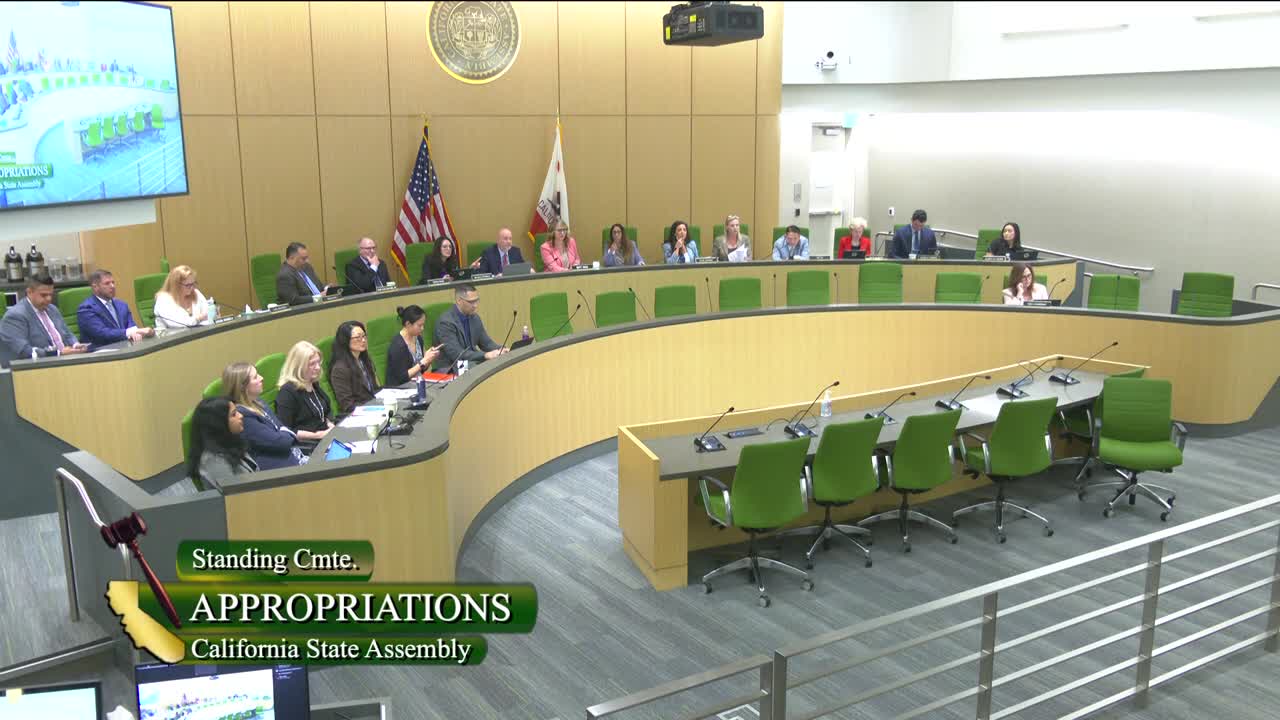
ASSEMBLY COMMITTEE ON APPROPRIATIONS
Buffy Wicks, Chair
ABPCA Bill Id:AB 1022
Author:(Kalra) – As Introduced Ver:February 20, 2025
Policy Committee: | Transportation | Vote: | 10 - 3 |
|
| ||
|
|
Urgency: No State Mandated Local Program: No Reimbursable: No
SUMMARY:
This bill removes from existing law the authority of a peace officer to impound a vehicle that has five or more unpaid parking tickets or traffic violations, or to place a device designed to immobilize such a vehicle, effective January 1, 2026.
FISCAL EFFECT:
The University of California (UC) and the California State University (CSU) will each experience a loss in revenue as a result of this bill because both higher education segments use parking fines for supporting campus alternative methods of transportation, mitigating the effects of campus-related parking on nearby communities and administering the fines and forfeitures program. The UC estimates this loss will be approximately $1 million annually, whereas the CSU estimates the loss to be about $1.5 million annually (special funds).
COMMENTS:
- Purpose. The author intends this bill to end what the author, and many others, term “poverty tows,” which the author claims are “harmful, costly and unconstitutional.”
- Background. Current law authorizes a peace officer or a traffic and parking enforcement employee to tow and impound a vehicle that has five or more unpaid parking citations (tickets). To retrieve the vehicle from impound, the owner of the vehicle must (a) present to the impounding agency proof that parking penalties due for the vehicle and all other vehicles registered to the registered owner of the impounded vehicle, and all traffic violations of the registered owner, have been cleared and (b) pay all costs of towing and storing the vehicle. The law allows the lot owner to sell an impounded vehicle at auction if it is unclaimed for a period of time, usually 30 days, and subtract from sale proceeds any fees due the lot owner.
In addition, existing law allows an agency that issues parking tickets to report any unpaid parking tickets and related fees to DMV, which will require collection of the unpaid fees before allowing the registered owner to register the vehicle. However, the ticketing agency may report the unpaid tickets to DMV for collection only if it first provides a payment plan option for indigent persons that allows payment of unpaid parking penalties and related service fees in monthly installments of no more than $25 for total amounts due that are $500 or less and that can be paid off within 24 months, among many other requirements.
The Legislature has made several efforts to reduce the burden of parking tickets, especially on those Californians with the least ability to pay. For example, statute now requires an agency that issues a parking ticket to offer the owner of the vehicle a payment plan and to waive penalties if the person is indigent before the agency files an itemization of them at the DMV.
Still, many view enforcement of parking violations as unreasonably onerous, or even disastrous for those least able to pay the associated fines and penalties, describing the seizure of such vehicles in these circumstances as “poverty tows.” For example, the Western Center on Law and Poverty writes in support of this bill:
Every year, thousands of drivers get their cars towed because they cannot afford to pay their parking tickets. For low-income and working households, the towing of a vehicle is often catastrophic. In many cases, a tow can also lead to the total loss of a person’s car if the tow and ticket fees are more than they can afford or more than what their car is worth…When people lose their cars, they often lose their biggest personal asset, their ability to get to work, and their ability to meet their basic needs like grocery shopping, taking children to school, or going to medical appointments. In short, vehicle tows result in snowballing consequences that threaten an individual’s stability and wellbeing and undermine our state’s economic equity goals.
The author and supporters also offer as evidence of the righteousness of this bill a decision by the First District of the Court of Appeal (Coalition on Homelessness v. City and County of San Francisco), in which the court found tows for unpaid parking tickets to be warrantless seizures in violation of the Fourth Amendment to the US Constitution.
Nonetheless, others disagree. Writing in opposition to the bill, the League of California Cities (Cal Cities) and Rural County Representatives of California (RCRC) contend the bill would:
severely limit our ability to enforce parking regulations, causing a cascade of fiscal damage: lost revenue, increased administrative costs, decreased compliance, harm to local businesses, public safety risks, and overall reduced effectiveness of municipal government operations.
Analysis Prepared by: Jay Dickenson / APPR. / (916) 319-2081
Date of Hearing: April 21, 2025
ASSEMBLY COMMITTEE ON TRANSPORTATION
Lori D. Wilson, Chair
ABPCA Bill Id:AB 1022 (
Author:Kalra) – As Introduced Ver:February 20, 2025
SUBJECT: Authority to remove vehicles
SUMMARY: Removes the authority for a peace officer to impound a vehicle or place a device designed to immobilize a vehicle for having five or more unpaid parking tickets or traffic violations starting January 1, 2026.
EXISTING LAW:
- Authorizes a peace officer or regularly employed and salaried employee, who is engaged in directing traffic or enforcing parking laws and regulations, of a city, county, or jurisdiction of a state agency in which a vehicle is located, to remove a vehicle if it has five or more unpaid parking or traffic tickets. (Vehicle Code Section (VEH) 22651)
- Places requirements on proof of payment in order to retrieve the vehicle if it was impounded for unpaid traffic or parking tickets and authorizes the lien sale of impounded vehicles should payments not be made in a specified time. (VEH 22651)
- Provides several options to processing agencies collecting unpaid parking penalties for tickets, including filing an itemization of unpaid parking penalties and service fees with The California Department of Motor Vehicles (DMV) for collection with the registration of a vehicle, so long as the processing agency:
- Provides a payment plan option for indigent persons, as defined, that allows unpaid parking fines and fees to be paid off in monthly installments of no more than $25 for total amounts due that are $500 or less, in a period within 24 months. No prepayment penalty for paying off the balance prior to the payment period may be accessed;
- Waives all late fees and penalty assessments, exclusive of any state surcharges, as defined, if an indigent person enrolls in the payment plan. Waived late fees and penalty assessments may be reinstated if the person falls out of compliance with the payment plan;
- Limits the processing fee to participate in a payment plan to $5 or less for indigent persons and $25 or less for all other persons. The processing fee may be added to the payment plan amount at the discretion of the payee; and,
- Allows the application for indigency determination for a period of 120 calendar days from the issuance of a notice of parking violation, or 10 days after the administrative hearing determination, whichever is later. (VEH 40220)
- Requires a processing agency to allow a registered owner or lessee who falls out of compliance with a payment plan a one-time extension of 45 calendar days from the date the plan becomes delinquent to resume payments before the processing agency files an itemization of unpaid parking penalties and service fees with DMV. (VEH 40220)
- Requires a processing agency to include information regarding its payment plan option above on its public website, and a web page link and telephone number to more information on the program. (VEH 40220)
- Defines “indigent” for the purposes of this section to mean anyone who meets the income requirements for or is currently on several public assistance programs, including: Supplemental Security Income (SSI), Supplemental Nutrition Assistance Program (SNAP, or more commonly known as food stamps), Medi-Cal or IHSS (VEH 40220)
FISCAL EFFECT: Unknown
COMMENTS: California law authorizes the government to impound and eventually sell your vehicle for failing to pay parking tickets and traffic tickets. Unpaid parking and toll violations can be placed on a person’s vehicle registration, compounding a person’s potential inability to pay their vehicle registration, which may also result in their vehicle being impounded if the registration is not paid within six months.
This bill attempts to remedy the financial harms that may come from an inability to pay by removing a peace officer or public employee’s authority to tow a vehicle for unpaid parking and traffic tickets, removing the authority to immobilize a vehicle for having unpaid parking tickets or traffic violations.
This bill is aligned with a recent decision made by the Coalition on Homelessness v. City and County of San Francisco, 93 Cal.App.5th 928 (2023), which held that a parking agency would first have to obtain a warrant in order to tow a vehicle for unpaid parking tickets or traffic violations so long as the vehicle at the time of the towing was legally parked. This bill goes beyond the court ruling, however, as it would prohibit towing such vehicles even with a warrant.
According to the author, “AB 1022 will end “poverty tows”, an outdated practice that is harmful, costly, and unconstitutional. Not only has case law ruled these types of tows solely for unpaid parking tickets as a violation of the fourth amendment, but these tows disproportionately punish people experiencing poverty, trapping them in debt and creating barriers to financial stability. By prohibiting “poverty tows” for parking ticket debt collection, California can once again lead the way in helping working families continue to drive to work, pay their rent and bills, and provide for their families.”
The cost of fines and fees associated with traffic and parking citations has steadily increased over the last few decades. Traffic fees can add up to hundreds of dollars after taking into account add-on fees. Add-on fees for minor offenses double or quadruple the original fine, and until recently California suspended drivers’ licenses for failure to pay traffic fines.
Local agencies may use the DMV to collect unpaid parking ticket debt. DMV can require payment in full for unpaid parking tickets to for a person to renew their vehicle registration. For indigent individuals, these piling parking tickets have created a cycle of debt where they are unable to pay back parking fines, and then get additional penalties for driving an unregistered vehicle and an increased vehicle registration fee for late payments.
The cost of being late on payment of a parking ticket can spiral out of control for an indigent person. In the City of Los Angeles, the fine for a parking ticket for overstaying or failing to pay a meter amounts to $63. If someone cannot pay that ticket on time, the late fee adds $88. Los Angeles can then transfer the tickets to the DMV to collect the unpaid debt as a requirement to pay vehicle registration fees. Vehicle registration late fees can increase by 60% of the original fees for payments over 30 days late, which may increase the registration fee by as much as $100. If a person is stopped by law enforcement for having an unregistered vehicle, the fine for driving an unregistered vehicle is currently $285. All totaled, these fines alone add up to $536. This would amount to 1/3 of a single individual’s monthly income if they made the maximum amount of money to be eligible for Medi-Cal.
In addition to unpaid debt, parking fees or late registration may result in a person's vehicle being towed by law enforcement. Having five or more unpaid parking tickets allows law enforcement to tow someone’s vehicle or place a restrictive device on it. If the fines are moved to the DMV for collections and the individual cannot afford to pay their vehicle registration, law enforcement can tow the vehicle if the registration is more than six months past due.
Recovering a vehicle after it has been towed is expensive. Towed into Debt: How Towing Practices in California Punish Poor People, a report issued by the sponsors of this bill, notes that the average tow fee in California is $189, with a $53 storage fee per day and a $150 administrative fee. After three days of storage, a towing fee would be $499. The cost of five unpaid parking tickets in Los Angeles would result in a total cost of $520 with late penalties. The cost of a three-day tow in addition to the five unpaid parking tickets ($1,254) would amount to all but $200 of an indigent person's monthly income if they made the maximum amount to make them eligible for Medi-Cal.
Western Center on Law and Poverty, a co-sponsor of this bill, argues “California, the importance of a car to a person’s daily life cannot be overstated. The loss of a car can have disastrous ramifications, such as jeopardizing a person’s employment or taking away a means for safety. For many survivors of intimate partner violence, a loss of a car can put them and their family’s safety at risk. When people lose their cars, they often lose their biggest personal asset, their ability to get to work, and their ability to meet their basic needs like grocery shopping, taking children to school, or going to medical appointments.
In short, vehicle tows result in snowballing consequences that threaten an individual’s stability and wellbeing and undermine our state’s economic equity goals. Poverty tows are not only costly for families but costly for local governments as well. Often, cities do not get to collect the unpaid ticket fees since most low-income drivers’ cars are sold at lien sales, with the tow yard keeping the proceeds. Towing cars based on outstanding parking debt is counterproductive and is a policy that punishes people because of their poverty.”
The Legislature passed AB 503 (Lackey), Chapter 741, Statutes of 2017 to stem the spiral of debt for an indigent person. Assemblymember Lackey introduced two follow-up bills as a result of processing agencies trying to get around implementing the law. AB 2544 (Lackey), Chapter 494, Statutes of 2018, clarified that parking agencies had to offer payment plans for tickets issued before July 1, 2018, because processing agencies refused to consider older tickets when implementing the law. AB 833 (Lackey), Chapter 495, Statutes of 2019, clarified that the $300 maximum cap for which a parking agency had to offer a payment plan only applied to the base fines, not to late penalties because the City of Sacramento was refusing to provide payment plans for individuals who had more than two tickets with a late fee. In 2020, the Legislature passed AB 3277 (Jones-Sawyer), Chapter 55, which increased the maximum cap from $300 to $500. This bill would require parking agencies to offer the payment plan at any time, not just within the first 120 days of receiving the parking ticket.
Most cities in the United States are designed around having a vehicle and public transit is often inadequate, resulting in people needing cars to get to work, home, and school. As Towed into Debt highlights, owning a vehicle is identified as the second biggest barrier to employment, behind reliable child care; owning a vehicle plays a bigger role in getting a job than having a high school diploma, and people with a car are almost twice as likely to remain employed over a full 18 to 24 months period than workers without a car. Therefore, towing someone’s car can have a detrimental effect if they are unable to recover it, such as the loss of their job. It is estimated that one-third of the estimated 39,000 homeless individuals in Los Angeles live in vehicles. For these individuals, towing their car could result in a loss of their only shelter.
According to the point-in-time estimates of homeless from the 2023 Annual Homelessness Assessment Report to Congress, there are an estimated 180,000 people that were experiencing homelessness in California, up 6% from the previous count.
According to the University of California, Los Angeles (UCLA) report Who Lives in Vehicles and Why? Understanding Vehicular Homelessness in Los Angeles in 2020, almost 60% of the city's unhoused population lived in their vehicle. According to that report, “Compared to non-vehicular respondents, people living in vehicles identified as female, White, and older at higher rates. The vehicular unhoused were also more likely to be in households with children. People living in vehicles reported higher employment rates and were more likely to be actively looking for work.”
According to the UCLA report, while women make up 30% of the unhoused population, they make up 46% of those living in a vehicle. While only 5% of the unhoused population were living with children, 18% of those living in a vehicle were living with children. A higher percentage of unhoused persons living in vehicles were unhoused because of domestic violence (10.7%) while 31% of those living in their vehicles reported suffering from domestic violence.
Cities use parking tickets to manage congestion. Cities use parking tickets to reduce congestion in central business areas, ensure local residents have a place to park, enable people to park near retail stores for a limited period of time, to prevent individuals from parking in spaces for emergency vehicles, keep open spots for people with disabilities, and ensure that non electric vehicles are not parking in spots meant for electric vehicles to charge.
Under AB 1022, agencies will be left with few effective mechanisms to bolster compliance with posted parking rules. For example, cities can use the Department of Motor Vehicles to enforce parking tickets by adding the unpaid parking tickets to a person’s vehicle registration or collect them through the Franchise Tax Board. However, this tool in effective for vehicles registered out of California.
The California Mobility and Parking Association, writing in opposition to this bill, argues “Parking enforcement is not merely about issuing tickets; it is about maintaining access to public spaces, ensuring emergency vehicle routes remain clear, and preventing the monopolization of parking by habitual violators. The ability to tow or immobilize vehicles serves as a deterrent and a practical solution when owners rack up multiple violations—whether on public streets or in off-street facilities—and refuse to respond. Without this authority, we anticipate a significant increase in unpaid fines, clogged parking spaces, and frustrated residents who rely on us to keep streets and parking facilities functional and available.
AB 1022 will render parking agencies helpless to enforce parking laws on those with out of State license plates. Those who are driving vehicles not registered in California could rack up unlimited parking tickets and leave enforcement officers with no recourse to tow or immobilize the vehicle to compel compliance since they are not subject to registration holds or punitive action from the DMV.”
The problem with free parking: Most parking in the United States is free. In order to accommodate car use, cities have dedicated exorbitant amounts of land to cars. The County of Los Angeles has dedicated around 200 square miles to parking, the land mass of Brooklyn, Manhattan, San Francisco, and the Bronx combined (home to 6.5 million people).
University of California Los Angeles urban planner Donald Shoup in his book The High Cost of Free Parking describes parking as “desirable in most locations, but you can have too much of a good thing. The principle that ‘the dose makes the poison’ applies perfectly to parking. By prescribing massive overdoses of parking spaces, planners are poisoning the city. Planning for parking has caused severe adverse reactions, and if a policy is judges by its consequences, off-street parking requirements are a catastrophe….The many significant costs related to current parking policies (e.g., increased housing prices, unjust subsidies for cars, distorted transportation choices, sprawl, social inequity, and economic and environmental degradation) are not a consideration.”
Shoup proposes “market-priced curb parking [to] save time, reduce congestion, conserve energy, improve air quality, and produce public revenue[and] returning all meter revenue to the neighborhoods that generate it.”
Committee comments: This bill eliminates the negative consequences of a person accumulating five or more parking tickets, particularly for low-income individuals who simply cannot afford the cost of the tickets. This bill addresses this problem by eliminating the authority for cities to impound or immobilize vehicles for unpaid parking ticket debt.
While this bill eliminates a cities’ ability to tow or immobilize a vehicle for unpaid parking tickets, a person could ultimately suffer that consequence when unpaid parking tickets are shifted to their vehicle registration and they still fail to pay. By removing local parking agencies ability to tow or immobilize a vehicle, this bill creates a new problem by making it difficult to enforce payment of tickets on out-of-state vehicles. This is because without a California vehicle registration local agencies lack an enforcement mechanism to go after repeat scofflaws and loose easier collection methods like the DMV or the Franchise Tax Board. As this bill moves forward, the Legislature may want to consider restoring the authority to immobilize vehicles or finding another solution for collecting unpaid debt from out of state vehicles.
While immobilizing a vehicle can harm a person’s ability to get to work, it does not come with the same problems as impoundment. Impounding a vehicle can lead to additional costs beyond the traffic tickets, and ultimately lead to the vehicle being auctioned off. Immobilizing the vehicle leaves the vehicle available for shelter for those who need it. Immobilizing a vehicle, however, leaves the parking spot unavailable to others.
Related legislation: AB 1299 (Bryan) of 2025 authorizes a local authority to offer a reduction or suspension of parking penalties if a person can demonstrate an inability to pay the parking penalty in full. That bill passed out of this committee and is currently in Assembly Appropriations Committee.
AB 3277 (Reggie-Jones), Chapter 55, Statutes of 2020 made various eligibility and programmatic changes to the payment plan program administered by local agencies relative to parking citations.
AB 503 (Lackey), Chapter 741, Statutes of 2017 required the offering of a payment plan and the waiver of penalties for indigent people with unpaid parking tickets prior to filing an itemization of them at the DMV, starting on July 1, 2018.
SB 1487 (Glazer) of 2024 would have prohibited a late payment penalty for a parking violation from exceeding 30% of the original penalty and would extend the time to pay a parking violation before additional penalties accrue. That bill was held in Assembly Appropriations Committee on suspense.
AB 1082 (Kalra) of 2023 would have, among other provisions, revised the ability of local processing agencies to refer delinquent parking violations to the DMV and revised requirements for payment plans. The bill died on the Senate floor.
AB 1685 (Bryan) of 2022 would have required processing agencies to forgive at least $1,500 in parking fines and fees annually for a qualified homeless person. The bill was vetoed by Governor Newsom.
REGISTERED SUPPORT / OPPOSITION:
Support
FreeFrom (co-sponsor)
Lawyers Committee for Civil Rights of the San Francisco Bay Area (co-sponsor)
Western Center on Law & Poverty (co-sponsor)
ACLU California Action
Alameda County Homeless Action Center
Alliance of Californians for Community Empowerment
Californians for Safety and Justice
Courage California
Debt Free Justice California
Disability Rights California
Drug Policy Alliance
Glide
Grace Institute
Housing California
Larkin Street Youth Services
Legal Aid Foundation of Los Angeles
Legal Aid of Marin
Legal Services of Northern California
Rubicon Programs
Smart Justice California
University of the Pacific Mc George School of Law Homeless Advocacy Clinic
Opposition
Arcadia Police Officers' Association
Brea Police Association
Burbank Police Officers' Association
California Mobility and Parking Association
California Narcotic Officers' Association
California Police Chiefs Association
California Reserve Peace Officers Association
California State Sheriffs' Association
City of Beaumont
Claremont Police Officers Association
Corona Police Officers Association
Culver City Police Officers' Association
Fullerton Police Officers' Association
League of California Cities
Murrieta Police Officers' Association
Newport Beach Police Association
Palos Verdes Police Officers Association
Placer County Deputy Sheriffs' Association
Pomona Police Officers' Association
Riverside Police Officers Association
Riverside Sheriffs' Association
Santa Ana Police Officers Association
Analysis Prepared by: David Sforza / TRANS. / (916) 319-2093
Discussed in Hearing
 5MIN
Assembly Standing Committee on Appropriations
 34MIN
Assembly Standing Committee on Transportation
Bill Author