SB 1248: State agencies: automated decision systems.
- Session Year: 2025-2026
- House: Senate
- Latest Version Date: 2026-02-19
Current Status:
In Progress
(2026-05-14: May 14 hearing: Held in committee and under submission.)
Introduced
In Committee
Awaiting First Chamber Vote
Passed First Chamber
In Committee
Awaiting Second Chamber Vote
Passed Second Chamber
Enacted
Existing law establishes the Government Operations Agency (GovOps), and establishes within the agency the Department of Technology. Existing law requires the Department of Technology to conduct, in coordination with other interagency bodies as it deems appropriate, a comprehensive inventory of all high-risk automated decision systems that have been proposed for use, development, or procurement by, or are being used, developed, or procured by, any state agency. Existing law defines, for these purposes, an automated decision system as, among other things, a computational process that is used to assist or replace human discretionary decisionmaking and materially impacts natural persons.
Existing law establishes various public assistance and social programs administered by state agencies, including the Department of Social Services and the Employment Development Department. Existing law provides for the licensure and regulation of specified professions and vocations by boards and bureaus within the Department of Consumer Affairs.
This bill would impose certain restrictions on the use of an automated decision system by a state agency to confer services, defined as, among other things, the issuance of professional licenses and provision of public benefits. Among the restrictions, the bill would include a prohibition on using an output from the system as the sole basis for an adverse service determination affecting a natural person, except as specified. The bill would require the state agency to verify the accuracy of the systems outputs and to promote nondiscrimination in its use, as specified. The bill would require the director or designee of a state agency to provide for quality control review of the outputs, as specified, to assure acceptable accuracy.
This bill would authorize GovOps to develop, adopt, and make publicly available guidance for a state agencys use of automated decision systems. The bill would require GovOps to notify the Joint Legislative Budget Committee before issuing the guidance. The bill would require GovOps to provide technical assistance to state agencies upon request. The bill would define terms for purposes of its provisions and would make related findings and declarations.
The Legislature finds and declares all of the following:
(a)Californias residents and businesses increasingly conduct transactions at unprecedented speeds, with private sector services such as loan approvals, insurance applications, and consumer purchases now processed in minutes or seconds through automated systems. Government services have not kept pace with these technological advances, creating a disconnect between public expectations and the reality of government service delivery.
(b)Delays in processing professional license applications, credential verifications, and occupational certifications impose significant hardships on California residents. Nurses, teachers, contractors, cosmetologists, and other professionals face prolonged delays in receiving licenses necessary to begin or continue working, which creates economic hardship and workforce shortages. Businesses cannot operate while waiting for required professional credentials, and Californias economy suffers when qualified individuals are prevented from contributing their skills due to administrative backlogs.
(c)Automatic decisionmaking systems, when properly designed with appropriate safeguards, transparency measures, and human oversight mechanisms, have the potential to dramatically reduce processing times for routine governmental decisions while maintaining accuracy and fairness. These systems can enable state agencies to redirect limited staff resources from repetitive administrative tasks to complex cases requiring human judgment and to providing enhanced customer service.
(d)The deployment of automated decisionmaking technology in government services must be accompanied by robust protections to ensure equity, prevent algorithmic bias, protect individual privacy, and preserve meaningful human review and appeal rights. The benefits of speed and efficiency must not come at the expense of due process, equal protection, or the fundamental principle that government remains accountable to the people it serves.
(e)Authorizing state agencies to utilize automatic decisionmaking systems for professional licensing, occupational credentialing, and benefits determination in state-administered programs, subject to appropriate standards and oversight, will modernize Californias public service infrastructure, reduce administrative burdens on both government and residents, and ensure that government responsiveness reflects the technological capabilities and expectations of the twenty-first century.
(f)California operates over 40 professional licensing boards, bureaus, and programs under the Department of Consumer Affairs, regulating more than 200 occupations and professions. These entities process hundreds of thousands of license applications, renewals, and verifications annually. Automatic decisionmaking systems provide state agencies the technological means to meet statutory processing timelines while ensuring consistent and fair application of licensing criteria and professional standards.
SEC. 2.Chapter 6 (commencing with Section 12898) is added to Part 2.5 of Division 3 of Title 2 of the Government Code, to read:6.Automated Decision Systems12898.For purposes of this chapter, the following definitions apply:
(a)Artificial intelligence means an engineered or machine-based system that varies in its level of autonomy and that can, for explicit or implicit objectives, infer from the input it receives how to generate outputs that can influence physical or virtual environments.
(b)Automated decision system means a computational process derived from machine learning, statistical modeling, data analytics, or artificial intelligence that issues simplified output, including a score, classification, or recommendation, that is used to assist or replace human discretionary decisionmaking and materially impacts natural persons. Automated decision system does not include a spam email filter, firewall, antivirus software, identity and access management tools, calculator, database, dataset, or other compilation of data.
(c)Legally protected information means information that a person is prohibited from disclosing under federal or state law, including provisions of the Evidence Code relating to privilege, or that would result in a violation of a legal duty of confidentiality.
(d)State agency has the same meaning as in Section 11000.
(e)Personally identifiable information means an individuals residential address, telephone number, social security number, drivers license number, state identification card number, passport number, license plate number, vehicle registration information for a motor vehicle owned or leased by the individual, and information regarding an individuals precise geolocation, as defined in Section 1798.140 of the Civil Code.
(f)Protected health information has the same meaning as defined in Section 160.103 of Title 45 of the Code of Federal Regulations.
(g)Services means both of the following:
(1)Services, benefits, or assistance, whether provided in cash or in kind, that a state agency provides or administers, including, but not limited to, social services, linkages to programs administered by the federal Social Security Administration, vocational and education-related services, and employment assistance.
(2)Issuance, renewal, denial, or suspension of a professional license or occupational credential.
12898.1.If a state agency uses an automated decision system for services, not including competitive determinations, the state agency shall comply with all of the following:
(a)The state agency may use an automated decision system to inform its decisionmaking process. The state agency shall not substitute the outputs of an automated decision system for human judgment.
(b)When an automated decision system is used to assist in a decisionmaking process, the system shall be only one of the factors a user considers in reaching a decision. The state agency may use an automated decision system to ascertain whether a services application or submission meets minimum eligibility thresholds as predetermined by the state agency.
(c)The state agency shall not use an output from an automated decision system as the sole basis for an adverse service determination affecting a natural person, such as denial of a benefit or license, except as expressly authorized by federal or state law.
(d)The state agency shall require that any output of an automated decision system that suggests noneligibility or other adverse action be reviewed by a human before any adverse action is taken.
(e)A state agencys user shall not represent work generated solely by an automated decision system as the users own original work.
(f)When the use of an automated decision system is material to a decision, the state agency shall provide a means, consistent with applicable law, to document or disclose that the system was used in the decisionmaking process.
(g)The state agency shall verify the accuracy of an automated decision systems outputs, and shall promote nondiscrimination in its use of an automated decision system, by doing all of the following:
(1)Ensure content, recommendations, or other outputs generated by an automated decision system that may materially affect service levels are reviewed and verified by an employee of the state agency, or by another authorized person, for accuracy before being relied upon.
(2)Monitor and periodically evaluate the use of automated decision systems to reduce the risk that outputs contain or perpetuate bias, including bias based on race, color, religion, sex, gender, gender identity, gender expression, sexual orientation, marital status, national origin, ancestry, age, disability, medical condition, genetic information, immigration or citizenship status, or any other characteristic protected by federal or state law.
(3)Require that an application or submission contain all required fields, attachments, or information in the required format.
(h)The state agency shall safeguard personally identifiable information, protected health information, or other legally protected information by prohibiting a user of the automated decisions system from inputting, uploading, or otherwise disclosing the information to an automated decision system, except where necessary for services administration or delivery, as authorized by law and subject to appropriate safeguards. For third-party systems, a state agency shall employ safeguards that may include access controls and appropriate security standards.
(i)The state agencys director or designee shall provide for an initial and subsequent periodic quality control review of the outputs of the automated decision system, or a statistically valid represented sample thereof to assure acceptable accuracy.
12898.2The Government Operations Agency, in collaboration with any other state entity the agency deems appropriate, may develop, adopt, and make publicly available guidance for a state agencys use of automated decision systems consistent with this chapter. Before issuing the guidance, the agency shall notify the Joint Legislative Budget Committee of its decision to issue guidance.
12898.3The Government Operations Agency may provide technical assistance to state agencies to comply with this chapter.
|
Date
|
Status
|
|---|---|
| May 14, 2026 | May 14 hearing: Held in committee and under submission. |
| May 8, 2026 | Set for hearing May 14. |
| May 4, 2026 | May 4 hearing: Placed on APPR. suspense file. |
| Apr 24, 2026 | Set for hearing May 4. |
| Apr 21, 2026 | From committee: Do pass and re-refer to Com. on APPR. (Ayes 9. Noes 0. Page 3958.) (April 20). Re-referred to Com. on APPR. |
| Apr 21, 2026 | From committee: Do pass and re-refer to Com. on APPR. (Ayes 9. Noes 0.) (April 20). Re-referred to Com. on APPR. |
| Apr 13, 2026 | Set for hearing April 15. |
| Mar 24, 2026 | From committee: Do pass and re-refer to Com. on P., D.T., & C.P. (Ayes 13. Noes 0. Page 3658.) (March 24). Re-referred to Com. on P., D.T., & C.P. |
| Mar 24, 2026 | From committee: Do pass and re-refer to Com. on P., D.T., & C.P. (Ayes 13. Noes 0.) (March 24). Re-referred to Com. on P., D.T., & C.P. |
| Mar 18, 2026 | Set for hearing March 24. |
| Mar 4, 2026 | Referred to Coms. on G.O. and P., D.T., & C.P. |
| Feb 20, 2026 | From printer. May be acted upon on or after March 22. |
| Feb 19, 2026 | Introduced. Read first time. To Com. on RLS. for assignment. To print. |
|
Date
|
Description
|
Location
|
Votes
|
|
|---|---|---|---|---|
| May 4, 2026 | Placed on suspense file | Senate Standing Committee on Appropriations |
Passed |
|
| Apr 20, 2026 | Do pass, but first be re-referred to the Committee on [Appropriations] | Senate Standing Committee on Privacy, Digital Technologies, and Consumer Protection |
Passed |
|
| Mar 24, 2026 | Do pass, but first be re-referred to the Committee on [Privacy, Digital Technologies, and Consumer Protection] | Senate Standing Committee on Governmental Organization |
Passed |
This list shows positions taken on this bill by organizations on the date displayed, which is linked to the original source.
Positions by individuals are not included.
|
Organization
|
Position
|
Date
|
|---|---|---|
| AFSCME California | ** Against | |
| California Federation of Labor Unions, Afl-cio | ** Against | |
| Elevate California | ** Support | |
| SEIU California | ** Against |
SENATE COMMITTEE ON
Senator Sabrina Cervantes, Chair
2025 - 2026 Regular Session
SB 1248 (Cabaldon) - State agencies: ADSs
Version: | Policy Vote: |
Urgency: | Mandate: |
Hearing Date: | Consultant: |
Bill Summary:
SB 1248 requires state agencies utilizing automated decision systems (ADS) to confer services, to implement quality control, human review, bias monitoring, and data privacy safeguards to ensure accuracy and nondiscriminatory outcomes. SB 1248 also authorizes the Government Operations Agency (GovOps) to develop, adopt, and make publicly available guidance for a state agency’s use of ADS.
Fiscal Impact:
- The California Department of Technology (CDT) estimates ongoing General Fund costs of $574,000 for 2.0 permanent positions to support GovOps in developing ADS use guidance and providing technical assistance and support to state agencies to ensure compliance with the new standards.
- The Department of General Services (DGS) estimates total ongoing costs of $5.28 million for its Office of Small Business and DVBE Services (OSDS) Certification and Compliance Section. This estimate supports 31.0 permanent positions, including 25.0 analysts, and six management-level roles, to establish four new units dedicated to certification and compliance mandates. DGS further identifies a need for two permanent Attorney III positions to manage the increased legal workload, though the specific placement of these roles within the department is pending. While one-time setup costs for model contract updates may be absorbed, DGS notes unknown additional costs for software package reconfigurations and potential FI$Cal system modifications.
- Unknown, potentially significant costs for state agencies utilizing ADSs to confer services. These costs are expected to vary based on the complexity of current IT builds, the volume of data processed, and the staffing required to meet new human-review and transparency mandates (General Fund and various special funds).
- The Civil Rights Department (CRD) notes direct fiscal impacts are anticipated to be minor and absorbable, as the department does not confer services in the manner defined by the bill. However, CRD does anticipate an indeterminate increase in complaints filed with the department under Government Code section 11135 and inquiries to its contact center resulting from new non-discrimination requirements imposed on other state agencies. While the department expects to absorb these initial costs, a significant increase in call or complaint volume would necessitate a future request for additional resources.
Background:
An “automated decision system” is defined to mean a computational process derived from machine learning, statistical modeling, data analytics, or artificial intelligence that issues simplified output, including a score, classification, or recommendation, that is used to assist or replace human discretionary decision making and materially impacts natural persons. ADS does not include a spam email filter, firewall, antivirus software, identity and access management tools, calculator, database, dataset, or other compilation of data.
A “high-risk” ADS means an ADS that is used to assist or replace human discretionary decisions that have a legal or similarly significant effect, including decisions that materially impact access to, or approval for, housing or accommodations, education, employment, credit, health care, and criminal justice.
To gain an understanding of how these ADS were being deployed by state agencies, AB 302 (Ward, Chapter 800, Statutes of 2023) required CDT, in coordination with other interagency bodies, to conduct, on or before September 1, 2024, a comprehensive inventory of all high-risk ADS that have been proposed for use, development, or procurement by, or were being used, developed, or procured by, state agencies. The goal was to simply provide transparency into state use of these systems before further regulating their use. The law requires the comprehensive inventory to include a description of, among other things, the categories of data and personal information the ADS uses to make its decisions. CDT was required, on or before January 1, 2025, and annually thereafter, to submit a report of the above-described comprehensive inventory to the Legislature.
CDT released its report last year. Despite the explosion of ADS deployment across the nation, CDT reported that zero agencies, of the over 200 agencies polled, were deploying or proposing to deploy high-risk ADS.
Proposed Law:
- Requires a state agency that uses an ADS for services other than for competitive determinations to comply with all of the following:
- The state agency may use an ADS to inform its decisionmaking process, but may not substitute the ADS output for human judgment.
- When an ADS is used to assist in a decisionmaking process, it must be only one of the factors considered. The state agency may be used to determine if an application meets minimum eligibility thresholds.
- An ADS output cannot be used as the sole basis for an adverse determination affecting a natural person, unless expressly authorized by federal or state law.
- Any ADS output suggesting non-eligibility or other adverse action must be reviewed by a human before the action is taken.
- A state agency’s user shall not represent work generated solely by an ADS as their own original work.
- When ADS use is material to a decision, the state agency must document or disclose its use in the process.
- The state agency must verify the accuracy of an ADS’s outputs and promote nondiscrimination in its use by doing all of the following:
- Ensure content, recommendations, or other outputs generated by an ADS that may materially affect service levels are reviewed and verified by an employee of the state agency, or by another authorized person, for accuracy before being relied upon.
- Monitor and periodically evaluate the use of ADS to reduce the risk that outputs contain or perpetuate bias, including bias based on race, color, religion, sex, gender, gender identity, gender expression, sexual orientation, marital status, national origin, ancestry, age, disability, medical condition, genetic information, immigration or citizenship status, or any other characteristic protected by federal or state law.
- Require that an application or submission contain all required fields, attachments, or information in the required format.
- The state agency must safeguard personally identifiable information, protected health information, or other legally protected information by prohibiting its disclosure to an ADS unless legally authorized for services administration or delivery and protected by appropriate safeguards. For third-party systems, a state agency shall employ safeguards that may include access controls and appropriate security standards.
- The state agency’s director or designee must provide for an initial and periodic quality control review of ADS outputs to ensure acceptable accuracy.
- Authorizes GovOps, in collaboration with appropriate state agencies, to develop, adopt, and publish guidance for a state agency’s use of ADS; requires GovOps to notify the Joint Legislative Budget Committee of its decision to issue guidance.
- Authorizes GovOps to provide technical assistance to state agencies to ensure compliance.
- States legislative findings and declarations.
Related Legislation:
SB 719 (Cabaldon, 2026) extends the requirement for CDT to conduct annual inventories of all high-risk ADS that have been proposed for use, development, or procurement by, or are being used, developed, or procured by, any state agencies and to submit a report of the comprehensive inventories to the Legislature. These requirements become inoperative on January 1, 2032. SB 719 is pending referral in the Assembly.
-- END --
SENATE PRIVACY, DIGITAL TECHNOLOGIES, AND CONSUMER PROTECTION COMMITTEE
Senator Christopher Cabaldon, Chair
2025-2026 Regular Session
Bill No: SB 1248 (Author:Cabaldon)
Version: February 19, 2026
Hearing Date: April 20, 2026
Fiscal: Yes
Urgency: No
Consultant: CK
SUBJECT
State agencies: automated decision systems
DIGEST
This bill imposes requirements on state agencies’ use of automated decision systems (ADS).
EXECUTIVE SUMMARY
ADS, especially those powered by AI, are being increasingly deployed in a multitude of contexts, including employment, housing, education, and health care. ADS can facilitate various decision-making processes and create beneficial efficiencies. Especially in resource-strapped government entities, ADS can optimize the work that is being done. However, major transparency and fairness concerns have been raised about the use of ADS to make consequential decisions, essentially determinations with significant legal or other material effect on people’s lives.
This bill seeks to regulate the use of ADS by state agencies. It imposes certain restrictions on ADS use by agencies to confer “services,” as defined, including prohibiting the use of an ADS output as the sole basis for an adverse determination.
This bill is author-sponsored. It is supported by Elevate California. It is opposed by several labor groups, including the American Federation of State, County, and Municipal Employees, AFL-CIO (AFSCME). This bill passed out of the Senate Governmental Organization Committee on a vote of 13 to 0.
PROPOSED CHANGES TO THE LAW
Existing law:
- Requires the California Department of Technology (CDT) to conduct a comprehensive inventory of all high-risk ADS that have been proposed for use, development, or procurement by, or are being used, developed, or procured by, any state agency. It defines the relevant terms:
- “Automated decision system” means a computational process derived from machine learning, statistical modeling, data analytics, or artificial intelligence that issues simplified output, including a score, classification, or recommendation, that is used to assist or replace human discretionary decisionmaking and materially impacts natural persons. “Automated decision system” does not include a spam email filter, firewall, antivirus software, identity and access management tools, calculator, database, dataset, or other compilation of data.
- “High-risk automated decision system” means an ADS that is used to assist or replace human discretionary decisions that have a legal or similarly significant effect, including decisions that materially impact access to, or approval for, housing or accommodations, education, employment, credit, health care, and criminal justice. (Gov. Code § 11546.45.5.)
- Establishes the Information Practices Act of 1977 (IPA), which declares that the right to privacy is a personal and fundamental right protected by Section 1 of Article I of the Constitution of California and by the United States Constitution and that all individuals have a right of privacy in information pertaining to them. It further states the following legislative findings:
- the right to privacy is being threatened by the indiscriminate collection, maintenance, and dissemination of personal information and the lack of effective laws and legal remedies;
- the increasing use of computers and other sophisticated information technology has greatly magnified the potential risk to individual privacy that can occur from the maintenance of personal information; and
- in order to protect the privacy of individuals, it is necessary that the maintenance and dissemination of personal information be subject to strict limits. (Civ. Code § 1798 et seq.)
- Defines “personal information” for purposes of the IPA as any information that is maintained by an agency that identifies or describes an individual, including, but not limited to, the individual’s name, social security number, physical description, home address, home telephone number, education, financial matters, and medical or employment history. It includes statements made by, or attributed to, the individual. (Civ. Code § 1798.3(a).)
- Defines “agency” to include every state office, officer, department, division, bureau, board, commission, or other state agency, except as provided. (Civ. Code § 1798.3(b).)
- Prohibits an agency from disclosing any personal information in a manner that would link the information disclosed to the individual to whom it pertains unless the information is disclosed as specified, including:
- with the prior written voluntary consent of the individual to whom the personal information pertains within the preceding 30 days;
- to a person or another agency if the transfer is necessary for the transferee agency to perform its constitutional or statutory duties, and the use is compatible with a purpose for which the information was collected;
- to a governmental entity if required by state or federal law;
- to any person pursuant to a search warrant;
- pursuant to a subpoena, court order, search warrant, or other compulsory legal process with notification to the individual, unless notification is prohibited by law;
- to a law enforcement or regulatory agency when required for an investigation of unlawful activity or for licensing, certification, or regulatory purposes, unless the disclosure is otherwise prohibited by law; and
- for statistical and research purposes, as specified. (Civ. Code § 1798.24.)
- Grants individuals with specified rights in connection with their personal information, including the right to inquire and be notified as to whether the agency maintains a record about them; to inspect all personal information in any record maintained; and to submit a request in writing to amend a record containing personal information pertaining to them maintained by an agency. (Civ. Code § 1798.30, et seq.)
This bill:
- Requires a state agency, if it uses an ADS for services, not including competitive determinations, to comply with the series of requirements below.
- Permits a state agency to use an ADS to inform its decisionmaking process, but cannot substitute the outputs of an ADS for human judgment.
- Provides that, when an ADS is used to assist in a decisionmaking process, the system shall be only one of the factors a user considers in reaching a decision. The state agency may use an ADS to ascertain whether a services application or submission meets minimum eligibility thresholds as predetermined by the state agency.
- Prohibits a state agency from using an output from an ADS as the sole basis for an adverse service determination affecting a natural person, such as denial of a benefit or license, except as expressly authorized by federal or state law.
- Provides that a state agency must require that any output of an ADS that suggests noneligibility or other adverse action be reviewed by a human before any adverse action is taken.
- Prohibits a state agency’s user from representing work generated solely by an ADS as the user’s own original work.
- Provides that when the use of an ADS is material to a decision, the state agency shall provide a means, consistent with applicable law, to document or disclose that the system was used in the decisionmaking process.
- Requires a state agency to verify the accuracy of an ADS’s outputs, and to promote nondiscrimination in its use of an ADS, by doing all of the following:
- Ensure content, recommendations, or other outputs generated by an automated decision system that may materially affect service levels are reviewed and verified by an employee of the state agency, or by another authorized person, for accuracy before being relied upon.
- Monitor and periodically evaluate the use of ADS to reduce the risk that outputs contain or perpetuate bias, including bias based on race, color, religion, sex, gender, gender identity, gender expression, sexual orientation, marital status, national origin, ancestry, age, disability, medical condition, genetic information, immigration or citizenship status, or any other characteristic protected by federal or state law.
- Require that an application or submission contain all required fields, attachments, or information in the required format.
- Requires a state agency to safeguard personally identifiable information, protected health information, or other legally protected information by prohibiting a user of the ADS from inputting, uploading, or otherwise disclosing the information to an ADS, except where necessary for services administration or delivery, as authorized by law and subject to appropriate safeguards. For third-party systems, a state agency shall employ safeguards that may include access controls and appropriate security standards.
- Provides that the state agency’s director or designee shall provide for an initial and subsequent periodic quality control review of the outputs of the automated decision system, or a statistically valid represented sample thereof, to assure acceptable accuracy.
- Authorizes GovOps, in collaboration with any other state entity the agency deems appropriate, to develop, adopt, and make publicly available guidance for a state agency’s use of ADS consistent herewith. Before issuing the guidance, the agency shall notify the Joint Legislative Budget Committee of its decision to issue guidance. GovOps may provide technical assistance to state agencies to comply herewith.
- Defines the relevant terms, including:
- “Automated decision system” means a computational process derived from machine learning, statistical modeling, data analytics, or artificial intelligence that issues simplified output, including a score, classification, or recommendation, that is used to assist or replace human discretionary decisionmaking and materially impacts natural persons, except as provided.
- “Legally protected information” means information that a person is prohibited from disclosing under federal or state law, including provisions of the Evidence Code relating to privilege, or that would result in a violation of a legal duty of confidentiality.
- “State agency” has the same meaning as in Section 11000.
- “Personally identifiable information” means an individual’s residential address, telephone number, social security number, driver’s license number, state identification card number, passport number, license plate number, vehicle registration information for a motor vehicle owned or leased by the individual, and information regarding an individual’s precise geolocation, as defined in Section 1798.140 of the Civil Code.
- “Protected health information” has the same meaning as defined in Section 160.103 of Title 45 of the Code of Federal Regulations.
- “Services” means both of the following:
- Services, benefits, or assistance, whether provided in cash or in kind, that a state agency provides or administers, including, but not limited to, social services, linkages to programs administered by the federal Social Security Administration, vocational and education-related services, and employment assistance.
- Issuance, renewal, denial, or suspension of a professional license or occupational credential.
COMMENTS
- Considerations for deployment of ADS
With recent dramatic advances in the capabilities of AI systems, the need for regulatory frameworks for accountability and responsible development and deployment has become ever more urgent. This is especially true with respect to AI-powered ADS that are used to make, or assist in making, decisions that have a legal or other significant effect.
ADS can enhance organizational efficiency, consistency, and speed by quickly processing data sets to make decisions. Key benefits include significant cost savings, reduced human error, and improved scalability for tasks like fraud detection and customer support. However, ADS also introduces several concerning issues when deployed across various sectors. Bias and discrimination represent perhaps the most significant problem, as AI systems frequently reflect and amplify historical biases present in their training data. This can lead to unfair outcomes based on protected characteristics like race, gender, and socioeconomic status, particularly in sensitive domains such as lending, housing allocation, and criminal justice.
The lack of transparency in many AI systems compounds these concerns. These technologies often function as “black boxes” where the rationale behind specific decisions remains obscure to deployers, and even to their developers. This opacity makes it exceptionally difficult for affected individuals to understand why they were denied a loan, were passed over for a job opportunity, or received an unfavorable outcome. Such obscurity directly challenges meaningful accountability when harmful outcomes inevitably occur.
Accuracy and reliability issues also persist even in sophisticated AI systems. These technologies can make confident but incorrect predictions, with errors often disproportionately affecting already marginalized groups. Performance demonstrated in controlled testing environments frequently fails to translate to complex real-world scenarios, leading to unexpected and harmful outcomes.
Accountability gaps emerge when determining responsibility for AI-caused harms. The complex relationship between developers, deployers, and users makes liability difficult to establish. Legal frameworks consistently lag behind rapidly advancing technological capabilities, creating environments where harms can occur without clear recourse.
By reducing complex human situations to algorithmic outputs, ADS risk eliminating human judgment, empathy, and contextual understanding from important processes. Many people report feeling powerless when facing decisions made by automated systems, especially when those systems lack transparency or meaningful appeal mechanisms.
In response to growing concerns about the increased deployment of ever-advanced ADS, the Biden Administration published a Blueprint for an AI Bill of Rights, which is a set of principles and associated practices to help guide the design, use, and deployment of AI to protect the rights of the American public. Of note, the Blueprint specifically called for notice and explanation rights:
Notice and Explanation: You should know that an automated system is being used and understand how and why it contributes to outcomes that impact you. Designers, developers, and deployers of automated systems should provide generally accessible plain language documentation, including clear descriptions of the overall system functioning and the role automation plays, notice that such systems are in use, the individual or organization responsible for the system, and explanations of outcomes that are clear, timely, and accessible. Such notice should be kept up-to-date and people impacted by the system should be notified of significant use case or key functionality changes. You should know how and why an outcome impacting you was determined by an automated system, including when the automated system is not the sole input determining the outcome.[1]
- Creating a regulatory framework for ADS in government
This bill looks to regulate ADS deployment by state agencies. To gain an understanding of how these ADS were being deployed by state agencies, AB 302 (Ward, Ch. 800, Stats. 2023) required CDT, in coordination with other interagency bodies, to conduct, on or before September 1, 2024, a comprehensive inventory of all high-risk ADS that have been proposed for use, development, or procurement by, or were being used, developed, or procured by, state agencies. The goal was to simply provide transparency into state use of these systems before further regulating their use. The law requires the comprehensive inventory to include a description of, among other things, the categories of data and personal information the ADS uses to make its decisions. CDT was required, on or before January 1, 2025, and annually thereafter, to submit a report of the above-described comprehensive inventory to the Legislature.
CDT released its report last year. Despite the explosion of ADS deployment across the nation, CDT reported that zero agencies, of the over 200 agencies polled, were deploying or proposing to deploy high-risk ADS.
Despite the interesting results of the inventory, government agencies across jurisdictions have been integrating ADS into many aspects of their operations and services. According to the Open Government Partnership (OGP):
Governments are increasingly using automated decision-making (ADM) to assess eligibility for government benefits, detect fraud, and allocate resources. ADM can potentially make governments fairer, more efficient, and more effective. To do so, however, it needs appropriate oversight and safeguards. Without safeguards, ADM can reproduce or amplify existing biases in denying welfare benefits, misidentifying innocent people, or misdiagnosing illness. In the context of private sector activity, the use of ADM systems and algorithms also benefits from safeguards that balance innovation with protection of rights. Improving transparency, participation, and accountability can help maximize the benefits and minimize the harms.[2]
OGP cites various examples of the risks, including a Dutch algorithm that was used by the government to detect welfare fraud, but once investigated it was found to discriminate based on ethnicity and gender.[3] OGP argues for basic guardrails, including a focus on algorithmic transparency:
Governments are increasingly using algorithmic decision-making (ADM) to aid in processes. Recent examples around the world show how governments apply ADM across a range of public decisions, from scoring bidders for a public contract to assessing if a family is eligible for social benefits or calculating the amount of bail for a person who has been arrested. The widespread adoption of ADM on such sensitive issues has raised concerns about how algorithms inform decisions and whether they are potentially biased. Recent evidence shows that different methods of algorithmic transparency can reduce potential biases, make bureaucratic processes more efficient, and increase the public’s trust in government decisions that rely on ADM.[4]
The NewDEAL Forum Ideas Summit focused on the potential of using AI in government and the attendant responsibilities that should come with it. One of the takeaways the group highlighted was:
Successful AI implementation in government relies on several critical criteria: strong governance structures, fairness, transparency, and explainability. It is important to avoid “technology overlay” or “black box” tech solutions that may provide a service but without a clean understanding of how it functions. Instead, AI should be approached as a tool to augment — rather than replace — human decision-making.[5]
Recently, Governor Newsom issued another Executive Order relative to AI.[6] In it, he called for recommendations for new certifications that may be incorporated into state contracting processes, “allowing entities seeking to do business with the state of California to attest to and explain their policies and safeguards to protect public safety while preventing the misuse of their technologies.” The EO identified several examples of such misuses, including exploitation or distribution of illegal content, utilization of models that display harmful bias or lack governance to reduce the risk of such bias, and violation of civil rights and liberties.
The EO also called upon GovOps to submit recommendations to the Governor on any reforms to contractor responsibility provisions needed to ensure state entities do not contract with entities judicially determined to have unlawfully undermined privacy or civil liberties, including protections from unlawful discrimination and surveillance.
This bill imposes limitations and obligations on state agencies using ADS for “services,” defined as services, benefits, or assistance, whether provided in cash or in kind, that a state agency provides or administers, including social services, linkages to programs administered by the federal Social Security Administration, vocational and education-related services, and employment assistance. It also includes issuance, renewal, denial, or suspension of a professional license or occupational credential.
The bill prohibits substituting the outputs of ADS for human judgment and requires ADS to be only one of the factors a government user considers in reaching a decision. An agency cannot use an ADS output as the sole basis for an adverse service determination affecting a natural person, except as expressly authorized by state or federal law. ADS outputs suggesting noneligibility or other adverse actions must be reviewed by a human before such action can be taken. However, it specifically authorizes state agencies to use ADS to ascertain whether a services application or submission meets minimum eligibility thresholds as predetermined by the state agency.
The bill requires agencies to document or disclose that ADS was used in a decisionmaking process when ADS is material to the decision. It also requires agencies to review and verify outputs for accuracy and to monitor and evaluate ADS to reduce the risk of bias. The state agency’s director or designee must provide for an initial and subsequent periodic quality control review of the outputs of ADS, or a statistically valid represented sample thereof to assure acceptable accuracy.
The author may wish to consider fleshing out what suffices to meet these obligations. For instance: Must agencies disclose to individuals that ADS was used in making decisions regarding them or is it sufficient to simply internally document such usage? What processes must be used to adequately review and verify outputs and monitor for bias? Can this be done by an internal employee or must there be an objective third party or outside agency? What must be involved in providing a quality control review and how often is periodic?
The bill also requires a state agency to safeguard personally identifiable information, protected health information, or other legally protected information by prohibiting a user of ADS from inputting, uploading, or otherwise disclosing the information to an ADS, except where necessary for services administration or delivery, as authorized by law and subject to appropriate safeguards. This contemplates that such sensitive information can be input into ADS when it is deemed “necessary for services administration or delivery.” The author may wish to consider fleshing out this threshold. The bill also provides that for third-party systems, a state agency shall employ safeguards that may include access controls and appropriate security standards. Given their importance, the author may wish to require appropriate security standards and access controls as part of the required safeguards.
The bill authorizes GovOps, in collaboration with any other state entity the agency deems appropriate, to develop, adopt, and make publicly available guidance for a state agency’s use of ADS consistent herewith. Before issuing the guidance, the agency is required to notify the Joint Legislative Budget Committee (JLBC) of its decision to issue guidance. GovOps is also authorized by the bill to provide technical assistance to state agencies to comply herewith.
The bill does not specify an enforcement scheme or a specific agency tasked with oversight.
- Stakeholder positions
According to the author:
California families face extreme delays in accessing essential government services. Applications for CalFresh and Medi-Cal can take weeks or months to process, leaving vulnerable residents without food assistance or healthcare coverage while they wait. Professionals applying for licenses to work as nurses, teachers, or contractors experience similar delays, unable to earn a living while bureaucratic processes grind forward. These administrative backlogs create real hardships where families go without needed support, qualified workers sit idle, and California's economy suffers. The delays also take a toll on the public servants processing these applications. I heard directly from caseworkers in my district as they described the weight of the massive backlog for CalFresh benefits, knowing that families in need were waiting.
Evidence shows that properly designed automated systems can help both families and the workers serving them. Medicaid programs using automation increased successful renewals by 21.6 percentage points and procedural denials decreased by 8.3 points. By automating straightforward approvals that clearly meet eligibility requirements, caseworkers can redirect their expertise to complex cases where only human discretion and judgment can make the right decision. This allows public servants to focus on what they do best, applying their knowledge and compassion to help people navigate difficult situations, rather than spending hours on routine data entry and processing.
California law has attempted to address the use of automated decision systems in the private sector, but there are currently no laws in place about its usage within the state government. In fact, the Governor is already encouraging agencies to begin using AI tools to improve efficiency and engagement and it is only a matter of time until their use is widespread.
Automation without proper safeguards and legislative oversight creates serious concerns. Automated systems can make consequential errors when not properly designed and monitored, potentially perpetuating bias, denying benefits based on flawed data, or undermining due process protections. By setting clear standards now, the state ensures that if agencies adopt these technologies, the systems will operate fairly, transparently, and subject to meaningful human oversight from the outset rather than attempting to retrofit protections after problems emerge.
SB 1248 requires that automated systems assist human judgment, not replace it. No adverse decision can be made based solely on algorithmic output meaning a human must review any negative determination. Agencies must monitor for bias, verify accuracy, and implement quality control processes. These standards allow agencies to modernize service delivery while ensuring technology operates transparently, fairly, and is subject to meaningful human oversight.
Elevate California writes in support:
Automated decision systems, when used appropriately, can and should help state agencies address the backlog of applicants for routine items. For example, licensing boards are often backlogged and if the agency used ADS to review routine applications it could use its actual people to supervise that and to review the more complex cases. This bill strikes the right balance – letting agencies use technology appropriately, but with safeguards.
A coalition of labor organizations, including the California Federation of Labor Unions, AFL-CIO, writes in opposition to the bill:
Public employees play a critical role in ensuring fairness, accuracy, and accountability in government decisions that affect Californians’ livelihoods and access to essential services. For our public workforce in state government service, the State of California is not just their workplace, it is also their home. Their daily actions and the decisions they make impact people that are their neighbors and their family. As a workforce they cannot just be “in the loop,” they must be “in command.” As these systems are expanded, and the legislature debates the role, guardrails, and limits, we must consider:
- Erosion of professional judgment. Government determinations—such as professional licensing or service eligibility—often require nuanced evaluation and contextual understanding that ADS cannot replicate.
- Algorithmic bias and accountability risks. ADS may reproduce or amplify biases embedded in datasets or design assumptions, while employees may be held accountable for outcomes produced by systems they did not design nor procure and cannot meaningfully audit.
- Workplace and operational impacts. The introduction of ADS can significantly alter job duties, workflows, and staffing structures within state departments and agencies. Over time, this can raise issues relating to deskilling, the reclassification of positions, and ultimately displacement. These impacts must be carefully evaluated in partnership with the workforce to protect public sector jobs.
- Public trust and due process concerns. Californians rely on trained public employees to ensure that government decisions are fair, transparent, and ultimately facilitated by a highly trained public sector workforce.
- Job Monitoring and Performance. The interaction of ADS with daily duties brings new questions regarding surveillance and monitoring of tasks. New forms of discipline may arise. This can also impact performance metrics and evaluation that can have both immediate and long-term impacts on the workforce.
- Promoting the principles of “Human-in-Command.” By solely requiring human review for adverse eligibility decisions, SB 1248 would undercut the need for human oversight on equally consequential decisions. Workers must be in command of ADS tools impacting their scope of work, especially when it comes to providing essential services to the public.
- Creating a clear standard for human review. SB 1248 would fail to establish a detailed process of proper human review. In addition to creating vague worker expectations, an unclear standard for human review may lead to disparate standards of review amongst the State’s various programs.
SUPPORT
Elevate California
OPPOSITION
AFSCME California
California Federation of Labor Unions, AFL-CIO
SEIU California
RELATED LEGISLATION
SB 719 (Cabaldon, 2026) extends the requirement for CDT to conduct annual inventories of all high-risk ADS that have been proposed for use, development, or procurement by, or are being used, developed, or procured by, any state agencies and to submit a report of the comprehensive inventories to the Legislature. These requirements become inoperative on January 1, 2032. SB 719 is currently pending referral in the Assembly.
SB 947 (McNerney, 2026) regulates the use of ADS in the employment context by requiring employers to provide postuse notices that inform workers that they are subject to ADS and of the ADS details. It provides a series of prohibited uses, such as where it may interfere with existing labor protections or where it conducts predictive behavior analysis, as defined. Workers have the right to access information used by the ADS, including inputs, outputs, and any corroborating evidence used by the employer in making the decision. SB 947 can be enforced through civil actions brought by the Labor Commissioner, public prosecutors, and workers or their representatives who are harmed by violations. SB 947 is currently set to be heard in this Committee on the same day as this bill.
SB 1011 (McNerney, 2026) requires the Public Utilities Commission, for a privately owned utility, and the Energy Commission, for a publicly owned utility, to oversee the implementation of a specified program to regulate ADS in connection with certain utility functions. SB 1011 is currently set to be heard in this Committee on the same day as this bill.
SB 7 (McNerney, 2025) was substantially similar to SB 947. It was vetoed by the Governor, who stated in part:
I share the author's concern that in certain cases unregulated use of ADS by employers can be harmful to workers. However, rather than addressing the specific ways employers misuse this technology, the bill imposes unfocused notification requirements on any business using even the most innocuous tools. This proposed solution fails to directly address incidents of misuse.
Moreover, this measure proposes overly broad restrictions on how employers may use ADS tools. For example, prohibiting an employer from using customer ratings as the primary input data for an ADS takes away a potentially valuable tool for rewarding high-performing employees. To the extent that customer reviews are unfairly or inappropriately used to make decisions about a worker, legislation should address those specific scenarios rather than ban this practice altogether.
SB 420 (Padilla, 2025) regulates the use of “high-risk ADS.” This includes requirements on developers and deployers to perform impact assessments on their systems. SB 420 establishes the right of individuals to know when an ADS has been used, details about the systems, and an opportunity to appeal ADS decisions, where technically feasible. SB 420 is currently in the Assembly Privacy and Consumer Protection Committee.
SB 468 (Becker, 2025) would have imposed a duty on a business that deploys a high-risk artificial intelligence system, or high-risk ADS, that processes personal information to protect that information and required such a deployer to maintain a comprehensive information security program that meets specified requirements. SB 468 died in the Senate Appropriations Committee.
AB 1018 (Bauer-Kahan, 2025) seeks to regulate the development and deployment, by both public and private actors, of “covered ADS.” It requires developers to conduct impact assessments of their ADS, which, among other things, identify details of the systems, expected performance and uses, and potential disparate impacts, and submit to third-party audits. Deployers are required to provide certain notices to subjects of consequential decisions and afford certain rights to them, including providing the subject an opportunity to opt out of the use of the covered ADS, provide the subject with an opportunity to correct erroneous personal information used by the ADS, and to appeal the outcome of the consequential decision. AB 1018 is currently on the Senate Floor.
SB 892 (Padilla, 2024) would have required CDT to develop and adopt regulations to create an ADS procurement standard, as specified, and prohibited a state agency from procuring ADS, entering into a contract for ADS, or any service that utilizes ADS, until CDT has adopted regulations creating an ADS procurement standard, as specified. SB 892 was vetoed by Governor Newsom, who stated in his veto message that aspects of the bill would disrupt ongoing work, “including existing information technology modernization efforts, which would lead to implementation delays and higher expenses for critical projects.”
AB 2885 (Bauer-Kahan & Umberg, Ch. 843, Stats. 2024) established a uniform definition for “artificial intelligence” in California’s code, which is used in this bill.
AB 2930 (Bauer-Kahan, 2024) would have regulated the use of ADS in order to prevent “algorithmic discrimination.” This includes requirements on developers and deployers that make and use these tools to make “consequential decisions” to perform impact assessments on ADSs. It would have established the right of individuals to know when an ADS is being used, the right to opt out of its use, and an explanation of how it is used. AB 2930 died without a vote on the Senate Floor.
AB 302 (Ward, Ch. 800, Stats. 2023) required CDT, on or before September 1, 2024, to conduct a comprehensive inventory of all high-risk ADS that have been proposed for use, development, or procurement by, or are being used, developed, or procured by, any state agency.
PRIOR VOTES:
Senate Governmental Organization Committee (Ayes 13, Noes 0)
**************
Blueprint For An AI Bill Of Rights (October 2022) Office of Science and Technology Policy, https://www.whitehouse.gov/wp-content/uploads/2022/10/Blueprint-for-an-AI-Bill-of-Rights.pdf. All internet citations are current as of April 12, 2026. ↑
Automated Decision-Making, Algorithms, and Artificial Intelligence, OGP, https://www.opengovpartnership.org/open-gov-guide/digital-governance-automated-decision-making/. ↑
Eva Constantaras, et al., Inside the Suspicion Machine (March 6, 2023) Wired, https://www.wired.com/story/welfare-state-algorithms/. ↑
Algorithmic Transparency, OGP, https://www.opengovpartnership.org/skeptics-guide-to-open-government-2022-edition/#toc_8. ↑
Governing Smarter With AI: Four Key AI Takeaways From The 2025 Newdeal Forum Ideas Summit (May 2025) The NewDeal Forum, https://static1.squarespace.com/static/64e364d9602e257ac599e468/t/688bc63bb929732bf6ed8ed0/1753990716452/May+2025+Governing+Smarter+with+AI+%287%29.pdf. ↑
Governor Gavin Newsom, Executive Order N-5-26 (March 30, 2026) https://www.gov.ca.gov/wp-content/uploads/2026/03/3.30-FINAL-Trusted-AI-Procurement-EO-N-5-26.pdf. ↑
SENATE COMMITTEE ON GOVERNMENTAL ORGANIZATION
Senator Susan Rubio
Chair
2025 - 2026 Regular
Bill No: Hearing Date: 3/24/2026
Author: | |||
Version: | Introduced | ||
Urgency: | Fiscal: | ||
Consultant: | |||
SUBJECT:
DIGEST: This bill restricts specified use of an automated decision systems (ADS) by a state agency to confer services, as defined, and prohibits using an output from ADS as the sole basis for an adverse service determination affecting a natural person, as specified. Additionally, this bill requires a state agency to verify the accuracy of ADS’ outputs and to promote nondiscrimination in its use, as specified. Finally, this bill authorizes the Government Operations Agency (GovOps) to develop, adopt, and make publicly available guidance for a state agency’s use of ADS, as specified.
ANALYSIS:
Existing law:
- Establishes, within GovOps, the California Department of Technology (CDT), and requires the Director of Technology to supervise the CDT and report directly to the Governor on issues relating to information technology, as specified.
- Requires CDT to conduct, in coordination with other interagency bodies as it deems appropriate, a comprehensive inventory of all high-risk ADS that have been proposed for use, development, or procurement by, or are being used, developed, or procured by, any state agency.
- Establishes various public assistance and social programs administered by state agencies, including the Department of Social Services (DSS) and the Employment Development Department (EDD), as specified.
- Provides for the licensure and regulation of specified professions and vocations by boards and bureaus within the Department of Consumer Affairs (CDA).
- Defines “automated decision system” to mean a computational process derived from machine learning, statistical modeling, data analytics, or artificial intelligence (AI) that issues simplified output, including a score, classification, or recommendation, that is used to assist or replace human discretionary decision-making and materially impacts natural persons. “Automated decision system” does not include a spam email filter, firewall, antivirus software, identity and access management tools, calculator, database, dataset, or other compilation of data.
- Defines “high-risk automated decision system” to mean ADS that is used to assist or replace human discretionary decisions that have a legal or similarly significant effect, including decisions that materially impact access to, or approval for, housing or accommodations, education, employment, credit, health care, and criminal justice.
- Defines “state agency” to include every state office, officer, department, division, bureau, board, and commission. “State agency” does not include the California State University unless the section explicitly provides that it applies to the university.
- Requires a state agency or department that utilizes generative AI (GenAI) to directly communicate with a person regarding government services and benefits to ensure that those communications include both of the following:
- A disclaimer that indicates to the person that the communication was generated by GenAI, as specified.
- Information, or a link to an internet website containing information, describing how the person may contact a human employee of the state agency or department.
This bill:
- Requires a state agency using ADS for services, not including competitive determinations, to comply with all of the following:
- The state agency may use ADS to inform its decision-making process. The state agency shall not substitute the outputs of ADS for human judgement.
- When ADS is used to assist in a decision-making process, the system shall be only one of the factors a user considers in reaching a decision. The state agency may use ADS to ascertain whether a services application or submission meets minimum eligibility thresholds as predetermined by the state agency.
- The state agency shall not use an output from ADS as the sole basis for an adverse service determination affecting a natural person, such as denial of a benefit or license, except as expressly authorized by federal or state law.
- The state agency shall require that any output of ADS that suggests non-eligibility or other adverse action be reviewed by a human before any adverse action is taken.
- A state agency’s user shall not represent work generated solely by ADS as the user’s own original work.
- When the use of ADS is material to a decision, the state agency shall provide a means, consistent with applicable law, to document or disclose that the system was used in the decision-making process.
- The state agency shall verify the accuracy of an ADS’ outputs, and shall promote nondiscrimination in its use of ADS, by doing all of the following:
- Ensure content, recommendations, or other outputs generated by ADS that may materially affect service levels are reviewed and verified by an employee of the state agency, or by another authorized person, for accuracy before being relied upon.
- Monitor and periodically evaluate the use of ADS to reduce the risk that outputs contain or perpetuate bias, including bias based on race, color, religion, sex, gender, gender identity, gender expression, sexual orientation, marital status, national origin, ancestry, age, disability, medical condition, genetic information, immigration or citizenship status, or any other characteristic protected by federal or state law.
- Require that an application or submission contain all required fields, attachments, or information in the required format.
- The state agency shall safeguard personally identifiable information, protected health information, or other legally protected information by prohibiting the use of the ADS from inputting, uploading, or otherwise disclosing the information to ADS, except where necessary for services administration or delivery, as authorized by law and subject to appropriate safeguards. For third-party systems, a state agency shall employ safeguards that may include access controls and appropriate security standards.
- The state agency’s director or designee shall provide for an initial and subsequent periodic quality control review of the outputs of the ADS, or a statistically valid represented sample thereof to assure acceptable accuracy.
- Requires GovOps, in collaboration with any other state entity the agency determines appropriate, to develop, adopt, and make publicly available guidance for a state agency’s use of ADS consistent with this bill. Before issuing the guidance, the agency shall notify the Joint Legislative Budget Committee of its decision to issue guidance.
- Authorizes GovOps to provide technical assistance to state agencies to comply with this bill.
- Defines “legally protected information” to mean information that a person is prohibited from disclosing under federal or state law, including provisions of the Evidence Code relating to privilege, or that would result in a violation of a legal duty of confidentiality.
- Defines “personally identifiable information” to mean an individual’s residential address, telephone number, social security number, driver’s license number, state identification card number, passport number, license plate number, vehicle registration information for a motor vehicle owned or leased by the individual, and information regarding an individual’s precise geolocation, as specified.
- Defines “services” to mean both of the following:
- Services, benefits, or assistance, whether provided in cash or in kind, that a state agency provides or administers, including, but not limited to, social services, linkages to programs administered by the federal Social Security Administration, vocational and education-related services, and employment assistance.
- Issuance, renewal, denial, or suspension of a professional license or occupational credential.
- Includes related Legislative findings and declarations, as specified.
Background
Author Statement. According to the author’s office, “California families face extreme delays in accessing essential government services. Applications for CalFresh and Medi-Cal can take weeks or months to process, leaving vulnerable residents without food assistance or healthcare coverage while they wait. Professionals applying for licenses to work as nurses, teachers, or contractors experience similar delays, unable to earn a living while bureaucratic processes grind forward. These administrative backlogs create real hardships where families go without needed support, qualified workers sit idle, and California's economy suffers. The delays also take a toll on the public servants processing these applications. I heard directly from caseworkers in my district as they described the weight of the massive backlog for CalFresh benefits, knowing that families in need were waiting.”
Further, “[e]vidence shows that properly designed automated systems can help both families and the workers serving them. Medicaid programs using automation increased successful renewals by 21.6 percentage points and procedural denials decreased by 8.3 points. By automating straightforward approvals that clearly meet eligibility requirements, caseworkers can redirect their expertise to complex cases where only human discretion and judgment can make the right decision. This allows public servants to focus on what they do best, applying their knowledge and compassion to help people navigate difficult situations, rather than spending hours on routine data entry and processing.
“California law has attempted to address the use of automated decision systems in the private sector, but there are currently no laws in place about its usage within the state government. In fact, the Governor is already encouraging agencies to begin using AI tools to improve efficiency and engagement and it is only a matter of time until their use is widespread.
“Automation without proper safeguards and legislative oversight creates serious concerns. Automated systems can make consequential errors when not properly designed and monitored, potentially perpetuating bias, denying benefits based on flawed data, or undermining due process protections. By setting clear standards now, the state ensures that if agencies adopt these technologies, the systems will operate fairly, transparently, and subject to meaningful human oversight from the outset rather than attempting to retrofit protections after problems emerge.”
And finally, “SB 1248 requires that automated systems assist human judgment, not replace it. No adverse decision can be made based solely on algorithmic output meaning a human must review any negative determination. Agencies must monitor for bias, verify accuracy, and implement quality control processes. These standards allow agencies to modernize service delivery while ensuring technology operates transparently, fairly, and is subject to meaningful human oversight.”
Artificial Intelligence and Automated Decision Systems. Since the 1950s computers have advanced from being able to do basic processing to having the capacity to undertake complex, ambiguous, and highly skilled tasks. These systems range from simple rule-based tools to complex AI, automating routine tasks while raising concerns about bias and transparency. AI broadly refers to computer systems designed to perform tasks that typically require human intelligence, such as recognizing patterns, making predictions, or supporting decisions. Within that umbrella, ADS is a type of AI (or algorithmic tool) that uses data through methods like machine learning and statistical modeling to generate outputs such as scores, classifications, or recommendations that can inform or replace human decision-making.
Other relevant categories of AI for state government include predictive AI which forecasts outcomes, rule-based systems that follow predefined logic without learning from data but can still function as ADS in practice, and GenAI which produces new content based on patterns learned from large datasets rather than simply analyzing or scoring existing data.
Use case examples for ADS include: government benefit eligibility screening tools that score or flag applicants based on income, household data, and prior records; benefit renewal automation systems that predict whether a beneficiary is still qualified and eligible to be auto-renewed or flagged for termination of benefits; and fraud detection systems that assign a “risk score” to applicants or recipients for potential improper payments. In the private sector, common applications include loan approvals, fraud detection, credit scoring, screening resumes, dynamic pricing, and product recommendations. These systems have the potential to replace or support human decision-makers and rely heavily on data processing and analysis.
California State Government’s High-Risk ADS Inventory. AB 302 (Ward, Chapter 800, Statutes of 2023) requires CDT, until January 1, 2029, to annually submit a report of the comprehensive inventory of high-risk ADS to the Assembly Committee on Privacy and Consumer Protection and the Senate Committee on Governmental Organization. This comprehensive list includes all high-risk ADS that have been proposed for use, development, or procurement by, or are being used, developed, or procured by any state agency.
According to the initial January 2025 CDT comprehensive inventory report, no state agency reported use of high-risk ADS. Although state agencies did not report high-risk ADS, CDT notes that it works with its state agency customers on their ADS, regardless of their risk level. CDT provides consultation for ADS risk assessment, as defined by existing law.
An “automated decision system” is defined to mean a computational process derived from machine learning, statistical modeling, data analytics, or artificial intelligence that issues simplified output, including a score, classification, or recommendation, that is used to assist or replace human discretionary decision making and materially impacts natural persons. “Automated decision system” does not include a spam email filter, firewall, antivirus software, identity and access management tools, calculator, database, dataset, or other compilation of data.
A “high-risk” ADS means an automated decision system that is used to assist or replace human discretionary decisions that have a legal or similarly significant effect, including decisions that materially impact access to, or approval for, housing or accommodations, education, employment, credit, health care, and criminal justice.
Of the 204 state agencies CDT canvased pursuant to AB 302 (Ward, Chapter 800, Statutes of 2023) 198 agencies provided responses. This represents a 97% response rate. CDT sent weekly email reminders to state agencies leading up to the August 30th reporting deadline. After the deadline expired, CDT sent one more email reminder to state agencies that had not yet provided a response. Notably, 140 of 140 executive departments, 19 of 22 constitutional departments, 22 of 24 CSUs, and 17 of 18 independents provided responses.
Risks vary based on use cases for ADS, the services of the state agency using ADS, and the specific data privacy requirements of the state agency using ADS, among other factors. CDT relies on National Institute of Standards and Technology (NIST) risk management best practices and definitions to identify risk areas for ADS. These best practices are considered the government standard for risk mitigation.
The report notes that “ADS can offer a wide variety of benefits to state agencies” including workforce productivity gains, workload scalability and consistency, faster decision-making, data-driven insights, and predictive capabilities. CDT further identifies the following – non exhaustive – risks based on use cases for ADS: validity and reliability, safety, accountability and transparency, security and resiliency, explainability and interpretability, privacy, and fairness.
Additionally, Governor Gavin Newsom issued Executive Order (EO) N-12-23 in 2023 to study the development, use, and risks of emerging technologies such as AI and GenAI, and to develop a deliberate and responsible process for evaluation and deployment of GenAI in state government. An April 29, 2025, press release from Governor Newsom’s office on the utilization of technologies to improve efficiency in state government notes that, “GenAI is here, and it’s growing in importance every day. We know that state government can be more efficient, and as the birthplace of tech it is only natural that California leads in this space. In the Golden State, we know that efficiency means more than cutting services to save a buck, but instead building and refining our state government to better serve all Californians.”
Specifically, the release notes that, “California is leading in the effort to implement AI and other technologies into state government operations, quickly adopting projects through its new innovative procurement method, Request for Innovative Ideas (RFI2). RFI2 allows the state to quickly test technology through safe and secure environments, providing the state and the innovator community valuable insights while protecting state data.”
New Restrictions on California State Government Use of ADS. This bill seeks to impose new restrictions on the use of ADS by a state agency to confer state services. For purposes of this bill, state “services” mean both of the following: services, benefits, or assistance, whether provided in cash or in kind, that a state agency provides or administers, including, but not limited to, social services, linkages to programs administered by the federal Social Security Administration, vocational and education-related services, and employment assistance; and the issuance, renewal, denial, or suspension of a professional license or occupational credential.
This bill requires any state agency utilizing ADS for services, not including competitive determinations to, among other things: not substitute the outputs of an ADS for human judgement; the ADS shall be only one of the factors a user considers in reaching a decision; not use an output from an ADS as the sole basis for an adverse service determination affecting a natural person, such as denial of a benefit or license; require that the output of an ADS that suggests non-eligibility or other adverse action be reviewed by a human before any adverse action is taken; provide a means to document or disclose that the system was used in a material decision-making process; verify the ADS’s outputs, and promote nondiscrimination in its use of an ADS; safeguard personally identifiable information; and provide for an initial and subsequent periodic quality control review of the outputs of the ADS, or a statistically valid represented sample thereof to assure acceptable accuracy.
Government Operations Agency. GovOps leads implementation of strategic initiatives focused on accelerating innovation in state operations. GovOps is one of 11 cabinet-level agencies that reports to the Governor and it oversees and supports the work of 13 departments, boards, and offices with more than 23,000 employees. Housed within GovOps, CDT leads the state’s drive to deliver clear, fast, dependable, and equitable public services and provides for the delivery of digital government services through the oversight of statewide information technology strategic planning, project delivery, procurement, policy and standards, and enterprise architecture.
This bill authorizes GovOps, in collaboration with any other state entity that the agency deems appropriate, to develop, adopt, and make publicly available guidance for a state agency’s use of ADS consistent with this bill. Before issuing the guidance, this bill requires GovOps to notify the Joint Legislative Budget Committee of its decision to issue the guidance. Additionally, this bill authorizes GoOps to provide technical assistance to state agencies to comply with the requirements imposed by this bill.
Prior/Related Legislation
SB 928 (Cervantes, 2026) states the intent of the Legislature to enact legislation to protect California State University employees from the encroachment of AI. (Pending in the Senate Rules Committee)
SB 947 (McNerney, 2026) among other things, prohibits an employer from using an ADS to perform certain functions and limits the purposes for and way in which an ADS may be used, as specified. (Pending in the Senate Labor, Public Employment & Retirement Committee)
SB 7 (McNerney, 2025) would have regulated the use of ADS in the employment setting by, among other things, requiring an employer to provide a written notice that an ADS is in use in the workplace to all workers that will foreseeably be directly affected by the ADS, prohibiting or limiting the use of an ADS by an employer, and providing workers anti-retaliation protections for exercising their rights under the bill, as specified. (Vetoed by Governor Newsom)
SB 53 (Wiener, Chapter 138, Statutes of 2025) requires large AI developers, as defined, to publish safety frameworks, disclose specified transparency reports, and report critical safety incidents to the Office of Emergency Services (OES), as specified. Additionally, this bill creates enhanced whistleblower protections for employees reporting AI safety violations and establishes a consortium to design a framework for “CalCompute,” a public cloud platform to expand safe and equitable AI research, as specified.
SB 420 (Padilla, 2025) regulates the use of high-risk ADS by implementing requirements on developers and deployers to perform impact assessments on their systems, as specified, and establishes the right of individuals to know when an ADS has been used, details about the systems, and an opportunity to appeal ADS decisions where technical feasible. (Pending in the Assembly Privacy and Consumer Protection Committee)
SB 430 (Cabaldon, 2025) among other things, would have imposed certain restrictions on the use of ADS by a local agency to confer supportive services, permits, or licenses, as specified. (Never heard in the Senate Local Government Committee)
SB 468 (Becker, 2025) imposes a duty on a business that deploys a high-risk AI system, or high-risk ADS, that processes personal information to protect that information and requires such a deployer to maintain a comprehensive information security program that meets specified requirements. (Held on the Senate Appropriations Committee Suspense File)
SB 719 (Cabaldon, 2025) extends, until January 1, 2032, the requirement that CDT annually submit a report to the Legislature on the comprehensive inventory of all high-risk ADS that have been or are being used, developed, or procured by a state agency. (Pending at the Assembly Desk)
SB 833 (McNerney, 2025) would have imposed oversight requirements on state agencies that operated covered AI systems that affect the state’s critical infrastructure, as specified. (Held on the Assembly Appropriations Committee Suspense File)
AB 1018 (Bauer-Kahan, 2025) regulates the use of ADS, as specified, and places obligations on developers and deployers of such systems designed or used to make or facilitate “consequential decisions.” (Pending on the Senate Inactive File)
SB 892 (Padilla, 2024) would have required CDT to develop and adopt regulations to create an ADS procurement standard, as specified, and would have prohibited a state agency from procuring ADS, entering into a contract for ADS, or any service that utilizes ADS, until CDT has adopted regulations creating ADS procurement standards, as specified. (Vetoed by Governor Newsom)
SB 896 (Dodd, Chapter 928, Statutes of 2024) the Generative AI Accountability Act, among other things, requires the CDT to report to the Governor as specified; requires the Office of Emergency Services to perform a risk analysis of potential threats posed by the use of Generative AI to California’s critical infrastructure, as specified; and requires a state agency or department utilizing Generative AI to directly communicate with a person regarding government services and benefits to ensure that those communications include a disclaimer, as specified, and provide information describing how a person may contact a human state employee, as specified.
FISCAL EFFECT: Appropriation: Fiscal Com.: Local:
SUPPORT:
None received
OPPOSITION:
American Federation of State, County and Municipal Employees (AFSCME)
ARGUMENTS IN OPPOSITION: In opposition to the bill, AFSCME writes that its “members are deeply concerned about the expansion of automated decision systems in government services, particularly when legislation in this area is developed without meaningful engagement with the workers who will be responsible for implementing and overseeing these systems. This proposal follows SB 430 (Cabaldon), another automated decision systems bill authored by the same office. That measure could have significantly impacted public sector employees and local government operations, yet it was introduced without consultation from the labor organizations representing the affected workers. The bill ultimately did not move forward, but the experience left significant concern among our members about how legislation in this policy area is being developed.”
Further, “[p]ublic employees play a critical role in ensuring fairness, accuracy, and accountability in government decisions that affect Californians’ livelihoods and access to essential services. While technological tools may assist agencies in management workloads, automated decision systems raise significant concerns for frontline public servants, including:
- “Erosion of professional judgement. Government determinations – such as professional licensing or service eligibility – often require nuanced evaluation and contextual understanding that automated systems cannot replicate.
- Algorithmic bias and accountability risks. Automated systems may reproduce or amplify biases embedded in datasets or design assumptions, while employees may be held accountable for outcomes produced by systems they did not design and cannot meaningfully audit.
- Workplace and operational impacts. The introduction of automated decision systems can significantly alter job duties, workflows, and staffing structures within agencies. These impacts must be fully evaluated in partnership with the workforce.
- Public trust and due process concern. Californians rely on trained public employees to ensure that government decisions are fair, transparent, and subject to meaningful human review.”
And finally, “[t]he workers we represent are not opposed to thoughtful modernization of government services. However, technology implementation in the public sector must occur in partnership with the workforce. The deployment of automated decision systems will inevitably affect working conditions, job duties, and accountability structures within agencies. These issues are traditionally addressed through labor-management collaboration and collective bargaining, which ensures that new technologies are implemented in ways that protect both service quality and public accountability. Legislation that establishes frameworks for automated decision systems should therefore prioritize transparency, workforce consultation, and respect for collective bargaining relationships.”
DUAL REFERRAL: Senate Governmental Organization Committee and Senate Privacy, Digital Technologies, & Consumer Protection Committee
Discussed in Hearing
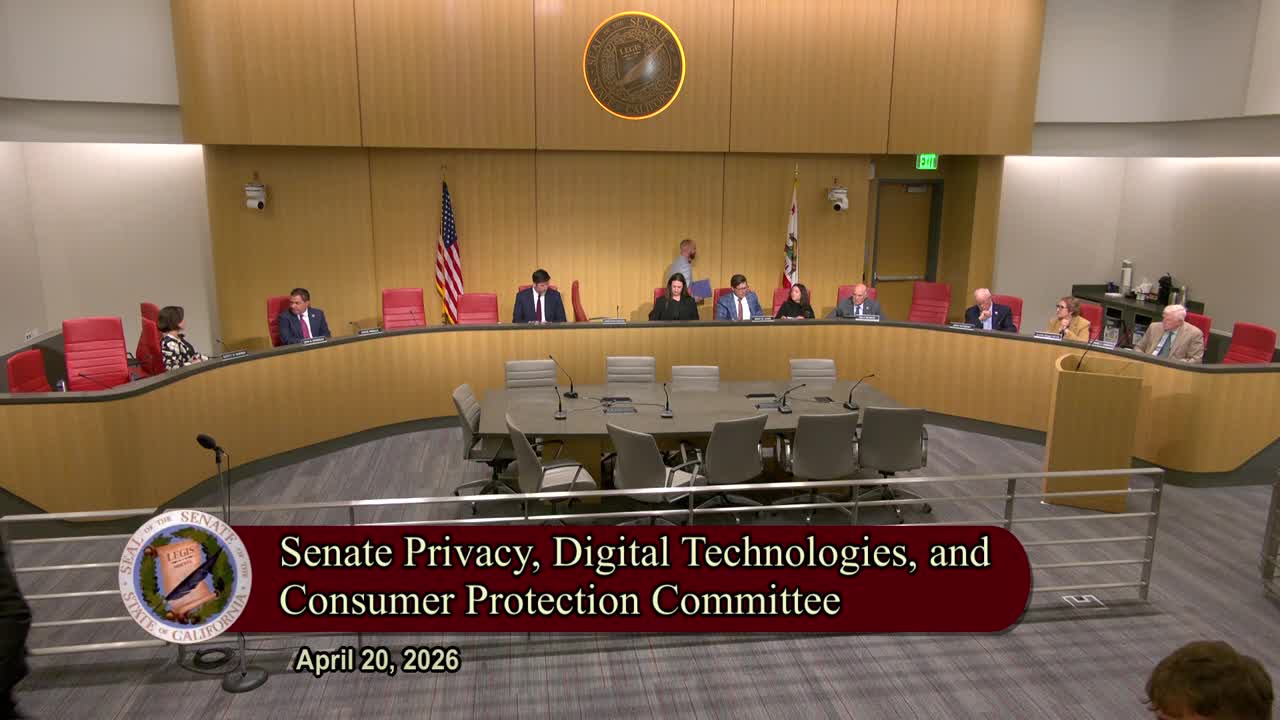 8MIN
Senate Standing Committee on Privacy, Digital Technologies, and Consumer Protection
 50MIN
Senate Standing Committee on Governmental Organization
Bill Author

Bill Co-Author(s):