SB 556: Victims of crime: indemnification: applications.
- Session Year: 2015-2016
- House: Senate
- Latest Version Date: 2015-05-04
Existing law provides for the indemnification of victims of specified types of crimes by the California Victim Compensation and Government Claims Board, subject to specified criteria for, among other things, submission and verification of applications. Existing law requires the board to approve or deny applications, based on recommendations of the board staff, within an average of 90 calendar days and no later than 180 calendar days of acceptance by the board or victim center. Existing law requires the board to report to the Legislature, on a quarterly basis, its progress and its current average time of processing applications if the board does not meet the prescribed 90-day average standard.
This bill would define time of processing applications for purposes of these provisions and would require the board to post on its Internet Web site, on an annual basis, its progress and current average time of processing applications. applications, the number of applications approved, the number of applications denied, and the number of incomplete applications received.
Existing law provides for the indemnification of victims of specified types of crimes by the California Victim Compensation and Government Claims Board, subject to specified criteria for, among other things, submission and verification of applications. Existing law requires the board to approve or deny applications, based on recommendations of the board staff, within an average of 90 calendar days and no later than 180 calendar days of acceptance by the board or victim center. Existing law requires the board to report to the Legislature, on a quarterly basis, its progress and its current average time of processing applications if the board does not meet the prescribed 90-day average standard.
This bill would define time of processing applications for purposes of these provisions and would require the board to post on its Internet Web site, on an annual basis, its progress and current average time of processing applications.
Existing law requires a claim for personal injury against a public entity, which includes the state, the Regents of the University of California, a county, city, district, public authority, public agency, and any other political subdivision or public corporation in the state, or against an employee of a public entity, to be presented not later than 6 months after accrual of the cause of action. Existing law provides that if a claim is not filed within the 6-month period, an application for leave to present the claim within a reasonable time not to exceed one year after the accrual of the cause of action may be filed with the public entity in accordance with specified provisions. Existing law requires the board, the governing body of the local public entity, the California Victim Compensation and Government Claims Board, the Judicial Council, or the Trustees of the California State University, as appropriate, to grant or deny the application for leave to present the claim within 45 days after it is presented to the board.
This bill would require the board, the governing body of the local public entity, the California Victim Compensation and Government Claims Board, the Judicial Council, or the Trustees of the California State University, as appropriate, to grant or deny the application for leave to present the claim within 45 days after it is received by the board.
(a)The board shall approve or deny applications, based on recommendations of the board staff, within an average of 90 calendar days and no later than 180 calendar days of acceptance by the board or victim center.
(1)If the board does not meet the 90-day average standard prescribed in this subdivision, the board shall, thereafter, report to the Legislature, on a quarterly basis, its progress and its current average time of processing applications. These quarterly reports shall continue until the board meets the 90-day average standard for two consecutive quarters.
(2)If the board fails to approve or deny an individual application within 180 days of the date it is accepted, pursuant to this subdivision, the board shall advise the applicant and his or her representative, in writing, of the reason for the failure to approve or deny the application.
(b)The board shall post on its Internet Web site, on an annual basis, its progress and current average time of processing applications. applications, the number of applications approved, the number of applications denied, and the number of incomplete applications received.
(c)For purposes of this section, time of processing applications means the period of time, including all calendar days, that begins when the board first receives and an application and ends when a check is mailed to an eligible victim. a determination is made to approve or deny the application and notice of that determination is sent to the applicant.
(a)The board shall approve or deny applications, based on recommendations of the board staff, within an average of 90 calendar days and no later than 180 calendar days of acceptance by the board or victim center.
(a)
(1)If the board does not meet the 90-day average standard prescribed in this subdivision, the board shall, thereafter, report to the Legislature, on a quarterly basis, its progress and its current average time of processing applications. These quarterly reports shall continue until the board meets the 90-day average standard for two consecutive quarters.
(b)
(2)If the board fails to approve or deny an individual application within 180 days of the date it is accepted, pursuant to this subdivision, the board shall advise the applicant and his or her representative, in writing, of the reason for the failure to approve or deny the application.
(b)The board shall post on its Internet Web site, on an annual basis, its progress and current average time of processing applications.
(c)For purposes of this section, time of processing applications means the period of time, including all calendar days, that begins when the board first receives and application and ends when a check is mailed to an eligible victim.
SECTION 1.Section 911.6 of the Government Code is amended to read:911.6.(a)The board shall grant or deny the application within 45 days after it is received by the board. The claimant and the board may extend the period within which the board is required to act on the application by written agreement made before the expiration of the period.
(b)The board shall grant the application if one or more of the following is applicable:
(1)The failure to present the claim was through mistake, inadvertence, surprise, or excusable neglect and the public entity was not prejudiced in its defense of the claim by the failure to present the claim within the time specified in Section 911.2.
(2)The person who sustained the alleged injury, damage, or loss was a minor during all of the time specified in Section 911.2 for the presentation of the claim.
(3)The person who sustained the alleged injury, damage, or loss was physically or mentally incapacitated during all of the time specified in Section 911.2 for the presentation of the claim and by reason of that disability failed to present a claim during that time.
(4)The person who sustained the alleged injury, damage, or loss died before the expiration of the time specified in Section 911.2 for the presentation of the claim.
(c)If the board fails or refuses to act on an application within the time prescribed by this section, the application shall be deemed to have been denied on the 45th day or, if the period within which the board is required to act is extended by agreement pursuant to this section, the last day of the period specified in the agreement.
(a)The board shall grant or deny the application within 45 days after it is presented to received by the board. The claimant and the board may extend the period within which the board is required to act on the application by written agreement made before the expiration of the period.
(b)The board shall grant the application where if one or more of the following is applicable:
(1)The failure to present the claim was through mistake, inadvertence, surprise, or excusable neglect and the public entity was not prejudiced in its defense of the claim by the failure to present the claim within the time specified in Section 911.2.
(2)The person who sustained the alleged injury, damage, or loss was a minor during all of the time specified in Section 911.2 for the presentation of the claim.
(3)The person who sustained the alleged injury, damage, or loss was physically or mentally incapacitated during all of the time specified in Section 911.2 for the presentation of the claim and by reason of such that disability failed to present a claim during such that time.
(4)The person who sustained the alleged injury, damage, or loss died before the expiration of the time specified in Section 911.2 for the presentation of the claim.
(c)If the board fails or refuses to act on an application within the time prescribed by this section, the application shall be deemed to have been denied on the 45th day or, if the period within which the board is required to act is extended by agreement pursuant to this section, the last day of the period specified in the agreement.
|
Date
|
Status
|
|---|---|
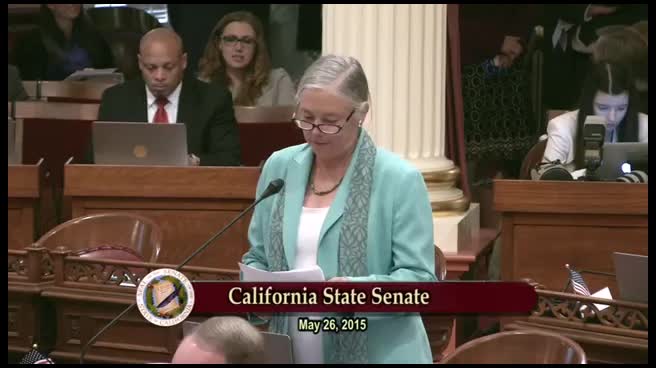
| May 26, 2015 | Read third time. Passed. (Ayes 38. Noes 0. Page 1096.) Ordered to the Assembly. |
| Aug 30, 2016 | Ordered to inactive file on request of Assembly Member Calderon. |
| Aug 19, 2016 | Ordered to third reading. |
| Aug 19, 2016 | From inactive file. |
| Aug 18, 2016 | Notice of intention to remove from inactive file given by Assembly Member Calderon. |
| Sep 10, 2015 | Ordered to inactive file on request of Assembly Member Holden. |
| Jul 13, 2015 | Ordered to third reading. |
| Jul 13, 2015 | From consent calendar. |
| Jul 9, 2015 | Read second time. Ordered to consent calendar. |
| Jul 8, 2015 | From committee: Do pass. Ordered to consent calendar. (Ayes 14. Noes 0.) (July 8). |
| Jul 1, 2015 | From committee: Do pass and re-refer to Com. on APPR. with recommendation: To consent calendar. (Ayes 7. Noes 0.) (June 30). Re-referred to Com. on APPR. |
| Jun 18, 2015 | Referred to Com. on PUB. S. |
| May 26, 2015 | Read third time. Passed. (Ayes 38. Noes 0.) Ordered to the Assembly. |
| Feb 26, 2015 | Introduced. Read first time. To Com. on RLS. for assignment. To print. |
| May 26, 2015 | In Assembly. Read first time. Held at Desk. |
| May 12, 2015 | Read second time. Ordered to third reading. |
| May 11, 2015 | From committee: Be ordered to second reading pursuant to Senate Rule 28.8. |
| May 4, 2015 | From committee with author's amendments. Read second time and amended. Re-referred to Com. on APPR. |
| May 1, 2015 | Set for hearing May 11. |
| Apr 29, 2015 | From committee: Do pass and re-refer to Com. on APPR. (Ayes 7. Noes 0.) (April 28). Re-referred to Com. on APPR. |
| Apr 29, 2015 | From committee: Do pass and re-refer to Com. on APPR. (Ayes 7. Noes 0. Page 823.) (April 28). Re-referred to Com. on APPR. |
| Apr 23, 2015 | Set for hearing April 28. |
| Apr 16, 2015 | Re-referred to Com. on PUB. S. |
| Apr 6, 2015 | From committee with author's amendments. Read second time and amended. Re-referred to Com. on RLS. |
| Mar 12, 2015 | Referred to Com. on RLS. |
| Feb 27, 2015 | From printer. May be acted upon on or after March 29. |
|
Date
|
Description
|
Location
|
Votes
|
|
|---|---|---|---|---|
| Jul 8, 2015 | Do pass. To Consent Calendar. | Assembly Standing Committee on Appropriations |
Passed |
|
| Jun 30, 2015 | Do pass and be re-referred to the Committee on [Appropriations] with recommendation: To Consent Calendar | Assembly Standing Committee on Public Safety |
Passed |
|
| May 26, 2015 | Senate 3rd Reading SB556 De León | Senate Floor |
Passed |
|
| Apr 28, 2015 | Do pass, but first be re-referred to the Committee on [Appropriations] | Senate Standing Committee on Public Safety |
Passed |
This list shows positions taken on this bill by organizations on the date displayed, which is linked to the original source.
Positions by individuals are not included.
SB 556
Page 3
SENATE THIRD READING
SB 556
(De León)
As Amended May 4, 2015
Majority vote
SENATE VOTE: 38-0
Committee |
Votes |
Ayes |
Noes |
Public Safety |
7-0 |
Quirk, Melendez, Jones-Sawyer, Lackey, Lopez, Low, Santiago |
|
Appropriations |
14-0 |
Gomez, Bigelow, Bloom, Bonta, Calderon, Chang, Eggman, Gallagher, Eduardo Garcia, Jones, Quirk, Rendon, Weber, Wood |
|
SUMMARY: Defines "application processing time" for the approval or denial of a victim's compensation claim by the California Victim Compensation Program (CalVCP). Specifically, this bill:
States that, for purposes of processing victim compensation applications under the CalVCP, "time of processing applications" means "the period of time, including all calendar days, that begins when the board first receives an application and ends when a determination is made to approve or deny the application and notice of that determination is sent to the applicant."
Requires the Victim Compensation and Government Claims Board (board) to annually post on its Internet Web site its current average time of processing applications, the number of applications approved and denied, and the number of incomplete applications received.
EXISTING LAW:
Establishes the board to operate the CalVCP.
Provides than an application for compensation shall be filed with the board in the manner determined by the board.
States that, except as provided by specified sections of the Government Code, a person shall be eligible for compensation when all of the following requirements are met:
The person form whom compensation is being sought any of the following:
A victim.
A derivative victim.
A person who is entitled to reimbursement for funeral, burial or crime scene clean-up expenses pursuant to specified sections of the Government Code.
Either of the following conditions is met:
The crime occurred within California, whether or not the victim is a resident of California. This only applies when the California Victim Compensation and Government Claims Board (VCGCB) determines that there are federal funds available to the state for the compensation of crime victims.
Whether or not the crime occurred within the State of California, the victim was any of the following:
A California resident.
A member of the military stationed in California.
A family member living with a member of the military stationed in California.
If compensation is being sought for derivative victim, the derivative victim is a resident of California, or the resident of another state who is any of the following:
At the time of the crimes was the parent, grandparent, sibling, spouse, child or grandchild of the victim.
At the time of the crime was living in the household of the victim.
At the time of the crime was a person who had previously lived in the house of the victim for a person of not less than two years in a relationship substantially similar to a previously listed relationship.
Another family member of the victim including, but not limited to, the victim's fiancé or fiancée, and who witnessed the crime.
Is the primary caretaker of a minor victim, but was not the primary caretaker at the time of the crime.
And other specified requirements.
Authorizes the board to reimburse for pecuniary loss for the following types of losses:
The amount of medical or medical-related expenses incurred by the victim, subject to specified limitations.
The amount of out-patient psychiatric, psychological or other mental health counseling-related expenses incurred by the victim, as specified, including peer counseling services provided by a rape crisis center.
The expenses of non-medical remedial care and treatment rendered in accordance with a religious method of healing recognized by state law.
Compensation equal to the loss of income or loss of support, or both, that a victim or derivative victim incurs as a direct result of the victim’s injury or the victim’s death, subject to specified limitations.
Cash payment to, or on behalf of, the victim for job retraining or similar employment-oriented services.
The expense of installing or increasing residential security, not to exceed $1,000, with respect to a crime that occurred in the victim's residence, upon verification by law enforcement to be necessary for the personal safety of the victim or by a mental health treatment provider to be necessary for the emotional well-being of the victim.
The expense of renovating or retrofitting a victim's residence or a vehicle to make them accessible or operational, if it is medically necessary.
Expenses incurred in relocating, as specified, if the expenses are determined by law enforcement to be necessary for the personal safety or by a mental health treatment provider to be necessary for the emotional well-being of the victim.
Requires the board to approve or deny applications, based on recommendations by the board staff, within an average of 90 calendar days and no later than 180 calendar days of acceptance by the board.
Requires the board, if it fails to meet the 90-day average, to report to the Legislature on a quarterly basis its progress and current average processing time.
FISCAL EFFECT: According to the Assembly Appropriations Committee, minor absorbable cost to the board.
COMMENTS: According to the author, "Through the California Victim Compensation Program (CalVCP), California has been helping victims by covering the cost of bills and expenses resulting from certain violent crimes. Many times, these expenses include medical treatment, mental health services, and lost income. A person seeking assistance must first submit an application to the program to determine eligibility. However, for reasons such as leaving a box unchecked on whether the victim intends to file a civil suit or not signing the form, some applications get held up in the process for extended lengths of time. For these and other minor deficiencies, many eligible victims are stuck with paying bills out of pocket or otherwise unable to receive treatment or services.
"To curb delays, the Legislature required that CalVCP approve or deny applications within an average of 90 day and that the program report to the Legislature whenever the 90-day-average standard was not being met. CalVCP's current method of calculating application processing time, however, starts only when a completed application is received, leaving the time an application is first received, but not fully filled out, outside of the official processing time. This method is not a true reflection of how long it takes the program to process applications and may be masking issues of lengthy processing times that hinder crime victims in their efforts towards rehabilitation and moving on with their lives.
"SB 556 will help ensure that crime victims receive the financial assistance they are owed in a timely manner by clarifying the start and end times that CalVCP uses in processing applications to determine eligibility and requiring this data be made available on the program's website."
Analysis Prepared by: Sandy Uribe / PUB. S. / (916) 319-3744 FN: 0001218
Date of Hearing: July 8, 2015
ASSEMBLY COMMITTEE ON APPROPRIATIONS
Jimmy Gomez, Chair
SB 556
(De León) – As Amended May 4, 2015
Policy Committee: |
Public Safety |
Vote: |
7 - 0 |
|
|
|
|
|
|
|
|
Urgency: No State Mandated Local Program: No Reimbursable: No
SUMMARY:
This bill defines "application processing time" for the approval or denial of a victim's compensation claim by the California Victim Compensation Program (CalVCP), and requires the Victim Compensation and Government Claims Board (board) to annually post on its Internet Web site its current average time of processing applications, the number of applications approved and denied, and the number of incomplete applications received.
FISCAL EFFECT:
Minor absorbable cost to the board.
COMMENTS:
Background. The CalVCP provides compensation for victims of violent crimes. It reimburses eligible victims for many crime-related expenses, such as medical treatment, mental health services, funeral expenses, home security, and relocation services. Funding for the board comes from restitution fines and penalty assessments paid by criminal offenders, as well as federal matching funds.
Purpose. According to the author, "Through the California Victim Compensation Program (CalVCP), California has been helping victims by covering the cost of bills and expenses resulting from certain violent crimes. Many times, these expenses include medical treatment, mental health services, and lost income. A person seeking assistance must first submit an application to the program to determine eligibility. However, for reasons such as leaving a box unchecked on whether the victim intends to file a civil suit or not signing the form, some applications get held up in the process for extended lengths of time. For these and other minor deficiencies, many eligible victims are stuck with paying bills out of pocket or otherwise unable to receive treatment or services."
"To curb delays, the Legislature required that CalVCP approve or deny applications within an average of 90 days and that the program report to the Legislature whenever the 90-day-average standard was not being met. CalVCP’s current method of calculating application processing time, however, starts only when a completed application is received, leaving the time an application is first received, but not fully filled out, outside of the official processing time. This method is not a true reflection of how long it takes the program to process applications and may be masking issues of lengthy processing times that hinder crime victims in their efforts towards rehabilitation and moving on with their lives.
"SB 556 will help ensure that crime victims receive the financial assistance they are owed in a timely manner by clarifying the start and end times that CalVCP uses in processing applications to determine eligibility and requiring this data be made available on the program’s website."
Related Legislation:
AB 1140 (Bonta), pending a hearing in Senate Public Safety, revises various rules governing the CalVCP.
SB 519 (Hancock), pending a hearing in Assembly Public Safety, makes various changes to the CalVCP, including but not limited to expanding eligibility for compensation and revising processing standards.
Analysis Prepared by: Pedro R. Reyes / APPR. / (916) 319-2081
SB 556
Page 5
Date of Hearing: June 30, 2015
Counsel: Sandy Uribe
ASSEMBLY COMMITTEE ON PUBLIC SAFETY
Bill Quirk, Chair
SB 556
(De León) – As Amended May 4, 2015
SUMMARY:
Defines "application processing time" for the approval or
denial of a victim's compensation claim by the California Victim
Compensation Program (CalVCP). Specifically, this bill:
States that, for purposes of processing victim compensation applications under the CalVCP, "time of processing applications" means "the period of time, including all calendar days, that begins when the board first receives an application and ends when a determination is made to approve or deny the application and notice of that determination is sent to the applicant."
Requires the Victim Compensation and Government Claims Board (board) to annually post on its Internet Web site its current average time of processing applications, the number of applications approved and denied, and the number of incomplete applications received.
EXISTING LAW:
Establishes the board to operate the CalVCP. (Gov. Code, § 13950 et. seq.)
Provides than an application for compensation shall be filed with the board in the manner determined by the board. (Gov. Code, § 13952, subd.(a).)
States that, except as provided by specified sections of the Government Code, a person shall be eligible for compensation when all of the following requirements are met:
The person form whom compensation is being sought any of the following:
A victim.
A derivative victim.
A person who is entitled to reimbursement for funeral, burial or crime scene clean-up expenses pursuant to specified sections of the Government Code.
Either of the following conditions is met:
The crime occurred within California, whether or not the victim is a resident of California. This only applies when the VCGCB determines that there are federal funds available to the state for the compensation of crime victims.
Whether or not the crime occurred within the State of California, the victim was any of the following:
A California resident.
A member of the military stationed in California.
A family member living with a member of the military stationed in California.
If compensation is being sought for derivative victim, the derivative victim is a resident of California, or the resident of another state who is any of the following:
At the time of the crimes was the parent, grandparent, sibling, spouse, child or grandchild of the victim.
At the time of the crime was living in the household of the victim.
At the time of the crime was a person who had previously lived in the house of the victim for a person of not less than two years in a relationship substantially similar to a previously listed relationship.
Another family member of the victim including, but not limited to, the victim's fiancé or fiancée, and who witnessed the crime.
Is the primary caretaker of a minor victim, but was not the primary caretaker at the time of the crime.
And other specified requirements. (Gov. Code, § 13955.)
States that an application shall be denied if the board finds that the victim failed to reasonably cooperate with law enforcement in prosecution of the crime. (Gov. Code, § 13956, subd. (b)(1).)
Authorizes the board to reimburse for pecuniary loss for the following types of losses (Gov. Code, § 13957, subd. (a)):
The amount of medical or medical-related expenses incurred by the victim, subject to specified limitations.
The amount of out-patient psychiatric, psychological or other mental health counseling-related expenses incurred by the victim, as specified, including peer counseling services provided by a rape crisis center.
The expenses of non-medical remedial care and treatment rendered in accordance with a religious method of healing recognized by state law.
Compensation equal to the loss of income or loss of support, or both, that a victim or derivative victim incurs as a direct result of the victim’s injury or the victim’s death, subject to specified limitations.
Cash payment to, or on behalf of, the victim for job retraining or similar employment-oriented services.
The expense of installing or increasing residential security, not to exceed $1,000, with respect to a crime that occurred in the victim’s residence, upon verification by law enforcement to be necessary for the personal safety of the victim or by a mental health treatment provider to be necessary for the emotional well-being of the victim.
The expense of renovating or retrofitting a victim’s residence or a vehicle to make them accessible or operational, if it is medically necessary.
Expenses incurred in relocating, as specified, if the expenses are determined by law enforcement to be necessary for the personal safety or by a mental health treatment provider to be necessary for the emotional well-being of the victim.
Requires the board to approve or deny applications, based on recommendations by the board staff, within an average of 90 calendar days and no later than 180 calendar days of acceptance by the board. (Gov. Code, § 13958, subd. (a).)
Requires the board, if it fails to meet the 90-day average, to report to the Legislature on a quarterly basis its progress and current average processing time. (Gov. Code, § 13958, subd. (b).)
FISCAL EFFECT: Unknown
COMMENTS:
Author's Statement: According to the author, "Through the California Victim Compensation Program (CalVCP), California has been helping victims by covering the cost of bills and expenses resulting from certain violent crimes. Many times, these expenses include medical treatment, mental health services, and lost income. A person seeking assistance must first submit an application to the program to determine eligibility. However, for reasons such as leaving a box unchecked on whether the victim intends to file a civil suit or not signing the form, some applications get held up in the process for extended lengths of time. For these and other minor deficiencies, many eligible victims are stuck with paying bills out of pocket or otherwise unable to receive treatment or services.
"To curb delays, the Legislature required that CalVCP approve or deny applications within an average of 90 day and that the program report to the Legislature whenever the 90-day-average standard was not being met. CalVCP’s current method of calculating application processing time, however, starts only when a completed application is received, leaving the time an application is first received, but not fully filled out, outside of the official processing time. This method is not a true reflection of how long it takes the program to process applications and may be masking issues of lengthy processing times that hinder crime victims in their efforts towards rehabilitation and moving on with their lives.
"SB 556 will help ensure that crime victims receive the financial assistance they are owed in a timely manner by clarifying the start and end times that CalVCP uses in processing applications to determine eligibility and requiring this data be made available on the program’s website."
Background: The CalVCP provides compensation for victims of violent crime. It reimburses eligible victims for many crime-related expenses, such as medical treatment, mental health services, funeral expenses, home security, and relocation services. Funding for the board comes from restitution fines and penalty assessments paid by criminal offenders, as well as federal matching funds. (See CVGCB Website <http://www.vcgcb.ca.gov/board>.)
Bureau of State Audit Recommendations: In 2008, the Bureau of State Audits conducted a review of the CalVCP. (Victim Compensation and Government Claims Board: It Has Begun Improving the Victim Compensation Program, but More Remains to Be Done, (Dec. 2008), <http://www.bsa.ca.gov/pdfs/reports/2008-113.pdf>.) One of the areas the bureau considered was how long it took the board to process applications. The bureau concluded that, at times, applications were not processed in a timely manner:
State law related to eligibility determinations for the program
requires the board to approve or deny applications, based on the
recommendation of board staff, within an average of 90 calendar days,
and no later than 180 calendar days after the acceptance date for an
individual application. For the 49 applications we reviewed, the
board’s average processing time was 76 days, which is well within
the statutory average. However, the board did not make a
determination within 180 days in two instances. We also noted
various instances in which the board did not demonstrate that it
approved or denied the applications as promptly as it could have
after receiving the information necessary to make the determination.
(Id. at pp. 30-31.)
For the 49 applications we reviewed from fiscal years 2003–04
through 2007–08, we found that the board’s average processing
time was 76 days, which is well within the 90‑day
average required under state law. However, we noted that in 16 of the
49 applications we reviewed, the board took more than 90 days from
acceptance to notify the applicant of its recommended decision to
approve or deny the application. Although taking more than 90 days to
approve or deny an individual application is not a violation of state
law, any unnecessary delays in processing contribute to crime victims
waiting longer than necessary to be reimbursed for out‑of‑pocket
expenses. Delays may also cause providers to become frustrated and
stop participating in the program, reducing services available to
crime victims and their families. (Id. at p. 31.)
The bureau discussed the board's process as follows:
The board considers the date of acceptance to be the date that it
determines it has received an application that is 'complete' rather
than the date that it receives an application. State regulations
describe a complete application as including, among other things,
information requested from the applicant that allows board staff to
confirm that the applicant is qualified and a crime report or other
documentation necessary to corroborate that a qualifying crime
occurred. Our legal counsel advised us that the board's
interpretation does not conflict with any of the statutes governing
the processing of applications. (Id. at p. 32.)
This bill would specify that the application processing time begins
when the board first receives an application and ends when notice of
the determination to approve or deny the claim is sent to the
applicant.
Argument in Support: Californians for Safety and Justice, the sponsor of this bill, write, "Current law requires the Victim Compensation and Government Claim Board (VCGCB) to either approve or deny a claim an average of 90 days after acceptance by VCGCB. However, there is no statutory definition of 'accepted,' leading to much longer response times for some applicants. For example, an application may not be 'accepted' because the application hasn't been signed, or because the applicant hasn’t checked a box indicated whether or not a civil suit will be filed. These and other similar minor deficiencies can lead to an application not being 'accepted,' leaving the applicant in limbo waiting for a response. And because they applications are not 'accepted' the time the applicant is waiting for a response does not count towards the statutorily required 90 day response time. This can lead to needless delays for the victim in receiving services he or she is entitled to."
Related Legislation:
AB 1140 (Bonta) revises various rules governing the CalVCP. AB 1140 is pending hearing in the Senate Public Safety Committee.
SB 519 (Hancock) makes various changes to the CalVCP, including but not limited to expanding eligibility for compensation and revising processing standards. SB 519 is pending hearing in this committee.
Prior Legislation:
SB 972 (Poochigian), Chapter 238, Statutes of 2005, made various changes to facilitate the recovery of restitution for the VCGCB.
SB 1423 (Chesbro), Chapter 1141, Statutes of 2002, recast and revised numerous provisions of existing law pertaining to the CalVCP, and made many technical and substantive changes, including the time requirements for approval or denial of an application.
REGISTERED SUPPORT / OPPOSITION:
Support
Californians for
Safety and Justice (Sponsor)
California Immigrant Policy Center
Opposition
None
Analysis Prepared by: Sandy Uribe / PUB. S. / (916) 319-3744
SB 556
Page 3
|
Office of Senate Floor Analyses (916) 651-1520 Fax: (916) 327-4478 |
THIRD READING
Bill No: SB 556
Amended: 5/4/15
SENATE PUBLIC SAFETY COMMITTEE: 7-0, 4/28/15
AYES: Hancock, Anderson, Leno, Liu, McGuire, Monning, Stone
SENATE APPROPRIATIONS COMMITTEE: Senate Rule 28.8
SUBJECT: Victims of crime: indemnification: applications
SOURCE: Californians for Safety and Justice
DIGEST: This bill requires the Victims Compensation and Government Claims Board (VCGCB) to 1) annually post on its Internet Web site progress and current average time of processing applications, the number of incomplete applications received and the number of applications approved and denied; and 2) define “time processing applications” as the period of time that begins with the date the board receives an application and ends when a decision to approve or deny the application has been made and notice sent to the applicant.
Existing law:
Establishes the VCGCB to operate the California Victim Compensation Program (CalVCP). (Gov. Code §§ 13950 et. seq.)
Provides than an application for compensation shall be filed with VCGCB in the manner determined by the VCGCB. (Gov. Code § 13952, subd.(a).)
Provides that the VCGCB shall approve or deny applications within an average of 90 calendar days and no later than 180 from “of acceptance” of the application by the board or victim center. Requires the VCGCB report quarterly to the Legislature until it has met these time requirements for two consecutive quarters.
Requires, if the VCGCB does not approve or deny a claim within “180 days of the date it is accepted,” it advise the applicant in writing of the reasons for the failure to rule on the application. (Gov. Code § 13958.)
This bill:
Requires the VCGCB to annually post on its Internet Web site the following:
Progress and current average time of processing applications;
The number of incomplete applications received; and
The number of approved and denied applications.
Defines “time processing applications” as the period of time that begins with the date the VCGCB receives an application and ends when a decision to approve or deny the application has been made and notice sent to the applicant.
Background
The Legislature and the State Auditor have evaluated the VCGCB a number of times over the past decade. A consistent concern has been the length of time the VCGCB takes to review and act on applications for assistance. As noted above, the Legislature has set standards for the VCGCB to meet in this regard. However, it appears that it has been difficult to determine if the VCGCB has met the standards for approving or denying applications. This bill defines what constitutes the time for processing an application and requires posting of data and information so that the VCGCB’s performance in acting on applications in a timely fashion can be evaluated.
FISCAL EFFECT: Appropriation: No Fiscal Com.: Yes Local: No
None received
OPPOSITION: (Verified 5/12/15)
None received
ARGUMENTS IN SUPPORT: According to the author:
The California Victim Compensation Program (CalVCP helps victims by reimbursing or covering victims for expenses resulting from certain violent crimes, including medical treatment, mental health services, and lost income. A crime victim must first apply to the program to determine eligibility. Some applications get held up in the process for extended lengths of time, leaving many eligible victims stuck with paying bills out of pocket or unable to receive treatment or services.
To curb delays, starting in 2003 the Legislature required CalVCP to act on applications within an average of 90 days, but no later than 180 days, and required the program to report back to the Legislature whenever the 90-day-average standard was not being met. In 2004, the board changed the method of calculating the processing time by starting the period only when it accepts a completed application and not including the length of time an application was submitted as incomplete. The current method used by CalVCP is not a true reflection of how long it takes the program to process applications and may be masking a problem of lengthy processing times that hinders crime victims in their efforts in rehabilitation and moving on with their lives.
This bill will provide public accountability and transparency in the CalVCP application process. Victims and the Legislature can adequately assess the performance of the CalVCP and determine if improvements in the process should be made.
Prepared by: Jerome McGuire / PUB. S. /
5/13/15 15:56:02
**** END ****
SB 556 (De León ) Page 5 of 5
SENATE COMMITTEE ON PUBLIC SAFETY
Senator Loni Hancock, Chair
2015 - 2016 Regular
Bill No: SB 556 Hearing Date: April 28, 2015
Author: |
De León |
||
Version: |
April 6, 2015 |
||
Urgency: |
No |
Fiscal: |
Yes |
Consultant: |
JM |
||
Subject: Victims of Crime: Indemnification: Applications
HISTORY
Source: Californian’s for Safety and Justice
Prior Legislation: AB 2685
(Cooley) - Ch. 508, Stats. 2014
AB 2809 (Leno) - Ch. 587, Stats.
2008
AB 2869 (Leno) - Ch. 582, Stats. 2006
AB 2413
(Spitzer) - Ch. 571, Stats. 2006
AB 105 (Cohn) - Ch. 539, Stats.
2006
SB 972 (Poochigian) - Ch. 238, Stats. 2005
SB 631
(McPherson) - Ch. 223, Stats. 2004
SB 1423 (Chesbro) - Ch. 1141,
Stats. 2002
AB 2898 (Bowler) - Ch. 1077, Stats. 1996
Support: Unknown
Opposition: None known
PURPOSE
The purpose of this bill is to require the victims compensation and Government Claims Board (the “board”) to 1) annually post on its website progress and current average time of processing applications, the number of incomplete applications received and the number of applications approved and denied; and 2) define “time processing applications” as the period of time that begins with the date the board receives an application and ends when a decision to approve or deny the application has been made and notice sent to the applicant.
Existing law establishes the Victims Compensation and Government Claims Board (VCGCB or board) to operate the California Victim Compensation Program (CalVCP). (Gov. Code
§§ 13950 et. seq.)
Existing law provides than an application for compensation shall be filed with VCGCB in the manner determined by the board. (Gov. Code § 13952, subd.(a).)
Existing law provides that the board shall approve or deny applications within an average of 90 calendar days and no later than 180 from “of acceptance” of the application by the board or victim center.
The board shall report quarterly to the Legislature until it has met the time requirements for two consecutive quarters.
If the board does not approve or deny a claim within “180 days of the date it is accepted,” the board advises the applicant in writing of the reasons for the failure to rule on the application. (Gov. Code § 13958.)
This bill requires the board to annually post on its website the following:
Progress and current average time of processing applications;
The number of incomplete applications received; and
The number of approved and denied applications.
This bill defines “time processing applications” as the period of time that begins with the date the board receives and application and ends when a decision to approve or deny the application has been made and notice sent to the applicant.
RECEIVERSHIP/OVERCROWDING CRISIS AGGRAVATION
For the past eight years, this Committee has scrutinized legislation referred to its jurisdiction for any potential impact on prison overcrowding. Mindful of the United States Supreme Court ruling and federal court orders relating to the state’s ability to provide a constitutional level of health care to its inmate population and the related issue of prison overcrowding, this Committee has applied its “ROCA” policy as a content-neutral, provisional measure necessary to ensure that the Legislature does not erode progress in reducing prison overcrowding.
On February 10, 2014, the federal court ordered California to reduce its in-state adult institution population to 137.5% of design capacity by February 28, 2016, as follows:
143% of design bed capacity by June 30, 2014;
141.5% of design bed capacity by February 28, 2015; and,
137.5% of design bed capacity by February 28, 2016.
In February of this year the administration reported that as “of February 11, 2015, 112,993 inmates were housed in the State’s 34 adult institutions, which amounts to 136.6% of design bed capacity, and 8,828 inmates were housed in out-of-state facilities. This current population is now below the court-ordered reduction to 137.5% of design bed capacity.”( Defendants’ February 2015 Status Report In Response To February 10, 2014 Order, 2:90-cv-00520 KJM DAD PC, 3-Judge Court, Coleman v. Brown, Plata v. Brown (fn. omitted).
While significant gains have been made in reducing the prison population, the state now must stabilize these advances and demonstrate to the federal court that California has in place the “durable solution” to prison overcrowding “consistently demanded” by the court. (Opinion Re: Order Granting in Part and Denying in Part Defendants’ Request For Extension of December 31, 2013 Deadline, NO. 2:90-cv-0520 LKK DAD (PC), 3-Judge Court, Coleman v. Brown, Plata v. Brown (2-10-14). The Committee’s consideration of bills that may impact the prison population therefore will be informed by the following questions:
Whether a proposal erodes a measure which has contributed to reducing the prison population;
Whether a proposal addresses a major area of public safety or criminal activity for which there is no other reasonable, appropriate remedy;
Whether a proposal addresses a crime which is directly dangerous to the physical safety of others for which there is no other reasonably appropriate sanction;
Whether a proposal corrects a constitutional problem or legislative drafting error; and
Whether a proposal proposes penalties which are proportionate, and cannot be achieved through any other reasonably appropriate remedy.
COMMENTS
Need for This Bill
According to the author:
Through the California Victim Compensation Program (CalVCP), California has been helping victims by covering the cost of bills and expenses resulting from certain violent crimes. Many times, these expenses include medical treatment, mental health services, and lost income. A person seeking assistance must first submit an application to the program to determine eligibility. For various reasons, however, some applications get held up in the process for extended lengths of time, leaving many eligible victims stuck with paying bills out of pocket or otherwise unable to receive treatment or services.
To curb delays, starting in 2003 the Legislature required that CalVCP approve or deny applications within an average of 90 day, but no later than 180 days, and required the program to report back to the Legislature whenever the 90-day-average standard was not being met. In 2004, the board overseeing CalVCP changed the method of calculating the processing time by starting the period only when it accepts a completed application and not including the length of time an application was submitted as incomplete. The current method used by CalVCP is not a true reflection of how long it takes the program to process applications and may be masking a problem of lengthy processing times that hinders crime victims in their efforts in rehabilitation and moving on with their lives.
Purpose and History of the Victims of Crime Program (VCP)
The victims’ compensation program was created in 1965, the first such program in the country. VCGCB provides compensation for victims of violent crime. It reimburses eligible victims for many crime-related expenses. Funding for the board comes from restitution fines and penalty assessments paid by criminal offenders, as well as federal matching funds.
The other core function of the board is to review claims against the state and request payment of claims by the Legislature in annual legislation. A person must present a claim for damages against the state to the board before filing a lawsuit.
Audit of the VCP
The Bureau of State Audit (BSA) report in 2008 included the following highlights:
From fiscal years 2001-02 through 2004-05, program compensation payments decreased from $123.9 million to $61.6 million — a 50 percent decline. Despite the significant decline in payments, the costs to support the program increased.
Administrative costs make up a significant portion of the Restitution Fund disbursements — ranging from 26 percent to 42 percent annually.
The program did not always process applications and bills as promptly or efficiently as it could have. Board staff took longer than 180 days to process applications in two instances out of 49, and longer than 90 days to pay bills for 23 of 77 paid bills.
The board did not adequately investigate alternative sources of funding for victim reimbursement, such as insurance and public aid.
The program’s numerous problems with the transition to a new application and bill processing system led to a reported increase in complaints regarding delays in processing applications and bills.
Some payments in CaRES appeared to be erroneous. Although board staff provided explanations for the erroneous payments, the fact that they were unaware of these items indicated an absence of controls that would prevent erroneous payments.
The board lacks the necessary system documentation for CaRES.
There are no benchmarks, performance measures, or formal written procedures for workload management.
In 2010, BSA found that the program had partially corrected five of the problems noted in the audit and corrected five others. The BSA urged the board to continue correcting the problems noted in the report. For example:
The board reduced administrative costs, but processing times for claims had increased.
The board increased collections, but it had not determined whether outreach programs had been successful and satisfaction with the program had increased.
The board implemented better training program for employees who examined claims submitted by crime victims.
The board developed an inventory monitoring system and set performance benchmarks. The monitoring should improve identification and understanding of eligibility requirements.
Board training does include an emphasis on alternative funding sources.
The board did complete a chapter on appeals of denials in its manual.
The board did improve its use of the CaRES computer system. However, claims were still more quickly processed in the local agencies with which the board contracts.
It appears that the BSA has not issued a progress report or update on the program since 2010.
Legislative Analyst’s Report
As noted in the author’s statement, the Legislative Analyst issued a report on the board. LAO did recommend major changes to the entire program. At this point, a bill has not been introduced to implement the LAO recommendations. It does appear that changes made in this bill to the existing operation of the program could be integrated into any reorganization of the board and its functions.
-- END –
Bill Author
Bill Co-Author(s):