SB 1434: Transportation electrification: electricity rate design.
- Session Year: 2017-2018
- House: Senate
- Latest Version Date: 2018-08-06
Under existing law, the Public Utilities Commission (PUC) has regulatory authority over public utilities, including electrical corporations Existing law, enacted as part of the Clean Energy and Pollution Reduction Act of 2015, requires the PUC, in consultation with the State Energy Resources Conservation and Development Commission and State Air Resources Board, to direct electrical corporations to file applications for programs and investments to accelerate widespread transportation electrification to reduce dependence on petroleum, meet air quality standards, achieve the goals set forth in the Charge Ahead California Initiative, and reduce emissions of greenhouse gases to 40% below 1990 levels by 2030 and to 80% below 1990 levels by 2050. That law requires that the programs proposed by electrical corporations seek to minimize overall costs and maximize overall benefits. The PUC is required to approve, or modify and approve, programs and investments in transportation electrification, including those that deploy charging infrastructure, through a reasonable cost recovery mechanism, if they are consistent with the above-described purposes, do not unfairly compete with nonutility enterprises, include performance accountability measures, and are in the interests of ratepayers.
This bill would require the PUC PUC, on or before July 1, 2019, to direct an electrical corporation with more than 100,000 service connections in California to file a rate design application by July 1, 2019, that supports and accelerates the deployment of zero-emission transit buses to reduce dependence on petroleum, meet air quality standards, and reduce emissions of greenhouse gases to 40% below 1990 levels by 2030 and to 80% below 1990 levels by 2050. This requirement would not apply to an electrical corporation with an approved or proposed rate tariff that meets the goals of the bill as of July 1, 2019. The bill would authorize an electrical corporation with 100,000 or fewer service connections in California to file a rate design application for those purposes. The bill would require that a rate design proposed by an electrical corporation to seek to minimize overall costs and maximize overall benefits and not shift costs to nonparticipating customers. benefits. The bill would require the commission to approve, or modify and approve, a rate design application filed by an electrical corporation if it is consistent with these requirements and is in the interests of ratepayers. revenue neutral to the relevant customer class.
Under existing law, a violation of the Public Utilities Act or any order, decision, rule, direction, demand, or requirement of the commission is a crime.
Because the provisions of this bill are within the act and require action by the commission for implementation, the bill would impose a state-mandated local program by creating a new crime. program.
The California Constitution requires the state to reimburse local agencies and school districts for certain costs mandated by the state. Statutory provisions establish procedures for making that reimbursement.
This bill would provide that no reimbursement is required by this act for a specified reason.
Under existing law, the Public Utilities Commission (PUC) has regulatory authority over public utilities, including electrical corporations Existing law, enacted as part of the Clean Energy and Pollution Reduction Act of 2015, requires the PUC, in consultation with the State Energy Resources Conservation and Development Commission and State Air Resources Board, to direct electrical corporations to file applications for programs and investments to accelerate widespread transportation electrification to reduce dependence on petroleum, meet air quality standards, achieve the goals set forth in the Charge Ahead California Initiative, and reduce emissions of greenhouse gases to 40% below 1990 levels by 2030 and to 80% below 1990 levels by 2050. That law requires that the programs proposed by electrical corporations seek to minimize overall costs and maximize overall benefits. The PUC is required to approve, or modify and approve, programs and investments in transportation electrification, including those that deploy charging infrastructure, through a reasonable cost recovery mechanism, if they are consistent with the above-described purposes, do not unfairly compete with nonutility enterprises, include performance accountability measures, and are in the interests of ratepayers.
This bill would require the PUC to direct electrical corporations an electrical corporation with more than 100,000 service connections in California to file rate design applications, specific to transit agencies as commercial customers, that support and accelerate a rate design application by July 1, 2019, that supports and accelerates the deployment of zero-emission transit buses to reduce dependence on petroleum, meet air quality standards, and reduce emissions of greenhouse gases to 40% below 1990 levels by 2030 and to 80% below 1990 levels by 2050. This requirement would not apply to an electrical corporation with an approved or proposed rate tariff that meets the goals of the bill as of July 1, 2019. The bill would authorize an electrical corporation with 100,000 or fewer service connections in California to file rate design applications a rate design application for those purposes. The bill would require that a rate design proposed by an electrical corporation seek to minimize overall costs and maximize overall benefits to ratepayers and transit agencies and and not shift costs to nonparticipating customers. The bill would require the commission to approve, or modify and approve, rate design applications, but only if they are consistent with this requirement and are a rate design application filed by an electrical corporation if it is consistent with these requirements and is in the interests of ratepayers.
Under existing law, a violation of the Public Utilities Act or any order, decision, rule, direction, demand, or requirement of the commission is a crime.
Because the provisions of this bill are within the act and require action by the commission for implementation, the bill would impose a state-mandated local program by creating a new crime.
The California Constitution requires the state to reimburse local agencies and school districts for certain costs mandated by the state. Statutory provisions establish procedures for making that reimbursement.
This bill would provide that no reimbursement is required by this act for a specified reason.
Under existing law, the Public Utilities Commission (PUC) has regulatory authority over public utilities, including electrical corporations Existing law, enacted as part of the Clean Energy and Pollution Reduction Act of 2015, requires the PUC, in consultation with the State Energy Resources Conservation and Development Commission and State Air Resources Board, to direct electrical corporations to file applications for programs and investments to accelerate widespread transportation electrification to reduce dependence on petroleum, meet air quality standards, achieve the goals set forth in the Charge Ahead California Initiative, and reduce emissions of greenhouse gases to 40% below 1990 levels by 2030 and to 80% below 1990 levels by 2050. That law requires that the programs proposed by electrical corporations seek to minimize overall costs and maximize overall benefits. The PUC is required to approve, or modify and approve, programs and investments in transportation electrification, including those that deploy charging infrastructure, through a reasonable cost recovery mechanism, if they are consistent with the above-described purposes, do not unfairly compete with nonutility enterprises, include performance accountability measures, and are in the interests of ratepayers.
This bill would require the PUC to direct electrical corporations with more than 100,000 service connections in California to file rate design applications, specific to transit agencies as commercial customers, that support and accelerate the deployment of zero-emission transit buses to reduce dependence on petroleum, meet air quality standards, and reduce emissions of greenhouse gases to 40% below 1990 levels by 2030 and to 80% below 1990 levels by 2050. The bill would authorize an electrical corporation with 100,000 or fewer service connections in California to file rate design applications for those purposes. The bill would require that a rate design proposed by an electrical corporation seek to minimize overall costs and maximize overall benefits to ratepayers and transit agencies and would require the commission to approve, or modify and approve, rate design applications, but only if they are consistent with this requirement and are in the interests of ratepayers.
Under existing law, a violation of the Public Utilities Act or any order, decision, rule, direction, demand, or requirement of the commission is a crime.
Because the provisions of this bill are within the act and require action by the commission for implementation, the bill would impose a state-mandated local program by creating a new crime.
The California Constitution requires the state to reimburse local agencies and school districts for certain costs mandated by the state. Statutory provisions establish procedures for making that reimbursement.
This bill would provide that no reimbursement is required by this act for a specified reason.
Under existing law, the Public Utilities Commission (PUC) has regulatory authority over public utilities, including electrical corporations. Existing law requires the commission, in cooperation with the State Energy Resources Conservation and Development Commission, the State Air Resources Board, air quality management districts and air pollution control districts, electrical and gas corporations, and the motor vehicle industry, to evaluate and implement policies to promote the development of equipment and infrastructure needed to facilitate the use of electric power and natural gas to fuel low-emission vehicles. The commission is required to ensure that its policies authorizing utilities to develop equipment and infrastructure needed for electric-powered and natural gas-fueled low-emission vehicles ensure that the costs and expenses of those programs are not passed through to electric or gas ratepayers unless the commission finds and determines that those programs are in the ratepayers interest. Existing law, enacted as part of the Clean Energy and Pollution Reduction Act of 2015, requires the PUC, in consultation with the State Energy Resources Conservation and Development Commission and State Air Resources Board, to direct electrical corporations to file applications for programs and investments to accelerate widespread transportation electrification to reduce dependence on petroleum, meet air quality standards, achieve the goals set forth in the Charge Ahead California Initiative, and reduce emissions of greenhouse gases to 40% below 1990 levels by 2030 and to 80% below 1990 levels by 2050. That law requires that the programs proposed by electrical corporations seek to minimize overall costs and maximize overall benefits. The PUC is required to approve, or modify and approve, programs and investments in transportation electrification, including those that deploy charging infrastructure, through a reasonable cost recovery mechanism, if they are consistent with the above-described purposes, do not unfairly compete with nonutility enterprises, include performance accountability measures, and are in the interests of ratepayers.
This bill would require the PUC to direct electrical corporations with more than 100,000 service connections in California to file rate design applications, specific to transit agencies as commercial customers, that support and accelerate the deployment of zero-emission transit buses to reduce dependence on petroleum, meet air quality standards, and reduce emissions of greenhouse gases to 40% below 1990 levels by 2030 and to 80% below 1990 levels by 2050. The bill would authorize an electrical corporation with 100,000 or fewer service connections in California to file rate design applications for those purposes. The bill would require that a rate design proposed by an electrical corporation seek to minimize overall costs and maximize overall benefits to transit agencies and would require the commission to approve, or modify and approve, rate design applications, if they are consistent with this requirement and are in the interests of ratepayers.
Under existing law, a violation of the Public Utilities Act or any order, decision, rule, direction, demand, or requirement of the commission is a crime.
Because the provisions of this bill are within the act and require action by the commission for implementation, the bill would impose a state-mandated local program by creating a new crime.
The California Constitution requires the state to reimburse local agencies and school districts for certain costs mandated by the state. Statutory provisions establish procedures for making that reimbursement.
This bill would provide that no reimbursement is required by this act for a specified reason.
This bill would declare the intent of the Legislature to enact legislation relating to electricity rate structures that would encourage the adoption of alternative fuel medium- and heavy-duty zero-emission vehicles.Under existing law, the Public Utilities Commission has regulatory authority over public utilities, including electrical corporations. Existing law requires the commission, in cooperation with the State Energy Resources Conservation and Development Commission, the State Air Resources Board, air quality management districts and air pollution control districts, electrical and gas corporations, and the motor vehicle industry, to evaluate and implement policies to promote the development of equipment and infrastructure needed to facilitate the use of electric power and natural gas to fuel low-emission vehicles. The commission is required to ensure that its policies authorizing utilities to develop equipment and infrastructure needed for electric-powered and natural gas-fueled low-emission vehicles ensure that the costs and expenses of those programs are not passed through to electric or gas ratepayers unless the commission finds and determines that those programs are in the ratepayers interest.
This bill would declare the intent of the Legislature to enact legislation relating to electricity rate structures that would encourage the adoption of alternative fuel medium- and heavy-duty zero-emission vehicles.
(a)The Legislature finds and declares all of the following:
(1)Reducing emissions of greenhouse gases to 40 percent below 1990 levels by 2030 and to 80 percent below 1990 levels by 2050 will require widespread transportation electrification, including of Californias transit bus fleet.
(2)Zero-emission transit buses are needed to reduce fossil fuel use, to meet air quality standards, to improve public health, to prove the viability of zero-emission heavy-duty technologies, and to achieve the states goals for reducing emissions of greenhouse gases.
(3)More predictable electricity rates should support and accelerate increased deployment of zero-emission transit buses by providing access to a fuel that is cleaner and less costly than gasoline or other fossil fuels.
(4)According to the State Alternative Fuels Plan analysis by the Energy Commission and the State Air Resources Board, light-, medium-, and heavy-duty vehicle electrification results in approximately 70 percent less of greenhouse gases emitted, over 85 percent less of ozone-forming air pollutants emitted, and 100 percent less petroleum used. These reductions will become larger as renewable generation increases.
(b)It is the policy of the state and the intent of the Legislature to encourage electrification of Californias transit bus fleet as a means to achieve ambient air quality standards and the states climate goals. Agencies designing and implementing regulations, guidelines, plans, and funding programs to reduce emissions of greenhouse gases shall take the findings described in subdivision (a) into account.
SECTION 1.Section 740.17 is added to the Public Utilities Code, to read:740.17.(a)(1)The Legislature finds and declares all of the following:(A)Reducing emissions of greenhouse gases to 40 percent below 1990 levels by 2030 and to 80 percent below 1990 levels by 2050 will require widespread transportation electrification, including of Californias transit bus fleet.(B)Zero-emission transit buses are needed to reduce fossil fuel use, to meet air quality standards, to improve public health, to prove the viability of zero-emission heavy-duty technologies, and to achieve the states goals for reducing emissions of greenhouse gases.(C)More predictable electricity rates should support and accelerate increased deployment of zero-emission transit buses by providing access to a fuel that is cleaner and less costly than gasoline or other fossil fuels.(D)According to the State Alternative Fuels Plan analysis by the Energy Commission and the State Air Resources Board, light-, medium-, and heavy-duty vehicle electrification results in approximately 70 percent less of greenhouse gases emitted, over 85 percent less of ozone-forming air pollutants emitted, and 100 percent less petroleum used. These reductions will become larger as renewable generation increases.(2)It is the policy of the state and the intent of the Legislature to encourage electrification of Californias transit bus fleet as a means to achieve ambient air quality standards and the states climate goals. Agencies designing and implementing regulations, guidelines, plans, and funding programs to reduce emissions of greenhouse gases shall take the findings described in paragraph (1) into account.(b)SEC. 2.Section 740.17 is added to the Public Utilities Code, to read:740.17.(a)(1)On or before July 1, 2019, the commission shall direct an electrical corporation with more than 100,000 service connections in California that does not have an approved or proposed rate tariff that meets the goals of this section as of that date to file a rate design application that supports and accelerates the deployment of zero-emission transit buses to reduce dependence on petroleum, meet air quality standards, and reduce emissions of greenhouse gases to 40 percent below 1990 levels by 2030 and to 80 percent below 1990 levels by 2050.
(2)An electrical corporation with 100,000 or fewer service connections in California may file a rate design application that supports and accelerates the deployment of zero-emission transit buses to reduce dependence on petroleum, meet air quality standards, and reduce emissions of greenhouse gases to 40 percent below 1990 levels by 2030 and to 80 percent below 1990 levels by 2050.
(3)A rate design proposed by an electrical corporation pursuant to this subdivision shall seek to minimize overall costs and maximize overall benefits and shall not shift costs to nonparticipating customers. benefits. The commission shall approve, or modify and approve, a rate design application if it is consistent with this section and in the interests of ratepayers as defined in Section 740.8, is revenue neutral to the relevant customer class, and shall otherwise reject the application.
(c)(b)This section applies to an application to the commission for rate design if one of the following conditions is met:
(1)The application is filed on or after January 1, 2019.
(2)The application is filed before January 1, 2019, but has an evidentiary hearing scheduled on or after July 1, 2019.
SEC. 2.SEC. 3.No reimbursement is required by this act pursuant to Section 6 of Article XIIIB of the California Constitution because the only costs that may be incurred by a local agency or school district will be incurred because this act creates a new crime or infraction, eliminates a crime or infraction, or changes the penalty for a crime or infraction, within the meaning of Section 17556 of the Government Code, or changes the definition of a crime within the meaning of Section 6 of Article XIIIB of the California Constitution.
(a)(1)The Legislature finds and declares all of the following:
(A)Reducing emissions of greenhouse gases to 40 percent below 1990 levels by 2030 and to 80 percent below 1990 levels by 2050 will require widespread transportation electrification, including of Californias transit bus fleet.
(B)Zero-emission transit buses are needed to reduce fossil fuel use, to meet air quality standards, to improve public health, to prove the viability of zero-emission heavy-duty technologies, and to achieve the states goals for reducing emissions of greenhouse gases.
(C)Lower and more More predictable electricity rates should support and accelerate increased deployment of zero-emission transit buses by providing access to a fuel that is cleaner and less costly than gasoline or other fossil fuels.
(D)According to the State Alternative Fuels Plan analysis by the Energy Commission and the State Air Resources Board, light-, medium-, and heavy-duty vehicle electrification results in approximately 70 percent less of greenhouse gases emitted, over 85 percent less of ozone-forming air pollutants emitted, and 100 percent less petroleum used. These reductions will become larger as renewable generation increases.
(2)It is the policy of the state and the intent of the Legislature to encourage electrification of Californias transit bus fleet as a means to achieve ambient air quality standards and the states climate goals. Agencies designing and implementing regulations, guidelines, plans, and funding programs to reduce emissions of greenhouse gases shall take the findings described in paragraph (1) into account.
(b)(1)The On or before July 1, 2019, the commission shall direct an electrical corporation with more than 100,000 service connections in California California that does not have an approved or proposed rate tariff that meets the goals of this section as of that date to file a rate design application that is specific to transit agencies as commercial customers and that supports and accelerates the deployment of zero-emission transit buses to reduce dependence on petroleum, meet air quality standards, and reduce emissions of greenhouse gases to 40 percent below 1990 levels by 2030 and to 80 percent below 1990 levels by 2050.
(2)An electrical corporation with 100,000 or fewer service connections in California may file a rate design application that is specific to transit agencies as commercial customers and that supports and accelerates the deployment of zero-emission transit buses to reduce dependence on petroleum, meet air quality standards, and reduce emissions of greenhouse gases to 40 percent below 1990 levels by 2030 and to 80 percent below 1990 levels by 2050.
(3)A rate design proposed by an electrical corporation pursuant to this subdivision shall seek to minimize overall costs and maximize overall benefits to ratepayers and transit agencies. benefits and shall not shift costs to nonparticipating customers. The commission shall approve, or modify and approve, a rate design application if it is consistent with this section and in the interests of ratepayers as defined in Section 740.8, and shall otherwise reject the application.
(c)This section applies to an application to the commission for rate design if one of the following conditions is met:
(1)The application is filed on or after January 1, 2019.
(2)The application is filed before January 1, 2019, but has an evidentiary hearing scheduled on or after July 1, 2019.
SEC. 2.No reimbursement is required by this act pursuant to Section 6 of Article XIIIB of the California Constitution because the only costs that may be incurred by a local agency or school district will be incurred because this act creates a new crime or infraction, eliminates a crime or infraction, or changes the penalty for a crime or infraction, within the meaning of Section 17556 of the Government Code, or changes the definition of a crime within the meaning of Section 6 of Article XIIIB of the California Constitution.
(a)(1)The Legislature finds and declares all of the following:
(A)Reducing emissions of greenhouse gases to 40 percent below 1990 levels by 2030 and to 80 percent below 1990 levels by 2050 will require widespread transportation electrification, including of Californias transit bus fleet.
(B)Zero-emission transit buses are needed to reduce fossil fuel use, to meet air quality standards, to improve public health, to prove the viability of zero-emission heavy-duty technologies, and to achieve the states goals for reducing emissions of greenhouse gases.
(C)Lower and more predictable electricity rates should support and accelerate increased deployment of zero-emission transit buses by providing access to a fuel that is cleaner and less costly than gasoline or other fossil fuels.
(D)According to the State Alternative Fuels Plan analysis by the Energy Commission and the State Air Resources Board, light-, medium-, and heavy-duty vehicle electrification results in approximately 70 percent less of greenhouse gases emitted, over 85 percent less of ozone-forming air pollutants emitted, and 100 percent less petroleum used. These reductions will become larger as renewable generation increases.
(2)It is the policy of the state and the intent of the Legislature to encourage electrification of Californias transit bus fleet as a means to achieve ambient air quality standards and the states climate goals. Agencies designing and implementing regulations, guidelines, plans, and funding programs to reduce emissions of greenhouse gases shall take the findings described in paragraph (1) into account.
(b)(1)The commission shall direct an electrical corporation with more than 100,000 service connections in California to file a rate design application that is specific to transit agencies as commercial customers and that supports and accelerates the deployment of zero-emission transit buses to reduce dependence on petroleum, meet air quality standards, and reduce emissions of greenhouse gases to 40 percent below 1990 levels by 2030 and to 80 percent below 1990 levels by 2050.
(2)An electrical corporation with 100,000 or fewer service connections in California may file a rate design application that is specific to transit agencies as commercial customers and that supports and accelerates the deployment of zero-emission transit buses to reduce dependence on petroleum, meet air quality standards, and reduce emissions of greenhouse gases to 40 percent below 1990 levels by 2030 and to 80 percent below 1990 levels by 2050.
(3)A rate design proposed by an electrical corporation pursuant to this subdivision shall seek to minimize overall costs and maximize overall benefits to ratepayers and transit agencies. The commission shall approve, or modify and approve, these a rate design applications if they are application if it is consistent with this section, section and are in the interests of ratepayers as defined in Section 740.8. 740.8, and shall otherwise reject the application.
(c)This section applies to an application to the commission for rate design if one of the following conditions is met:
(1)The application is filed on or after January 1, 2019.
(2)The application is filed before January 1, 2019, but has an evidentiary hearing scheduled on or after July 1, 2019.
SEC. 2.No reimbursement is required by this act pursuant to Section 6 of Article XIIIB of the California Constitution because the only costs that may be incurred by a local agency or school district will be incurred because this act creates a new crime or infraction, eliminates a crime or infraction, or changes the penalty for a crime or infraction, within the meaning of Section 17556 of the Government Code, or changes the definition of a crime within the meaning of Section 6 of Article XIIIB of the California Constitution.
(a)(1)The Legislature finds and declares all of the following:
(A)Reducing emissions of greenhouse gases to 40 percent below 1990 levels by 2030 and to 80 percent below 1990 levels by 2050 will require widespread transportation electrification, including of Californias transit bus fleet.
(B)Zero-emission transit buses are needed to reduce fossil fuel use, to meet air quality standards, to improve public health, to prove the viability of zero-emission heavy-duty technologies, and to achieve the states goals for reducing emissions of greenhouse gases.
(C)Lower and more predictable electricity rates should support and accelerate increased deployment of zero-emission transit buses by providing access to a fuel that is cleaner and less costly than gasoline or other fossil fuels.
(D)According to the State Alternative Fuels Plan analysis by the Energy Commission and the State Air Resources Board, light-, medium-, and heavy-duty vehicle electrification results in approximately 70 percent less of greenhouse gases emitted, over 85 percent less of ozone-forming air pollutants emitted, and 100 percent less petroleum used. These reductions will become larger as renewable generation increases.
(2)It is the policy of the state and the intent of the Legislature to encourage electrification of Californias transit bus fleet as a means to achieve ambient air quality standards and the states climate goals. Agencies designing and implementing regulations, guidelines, plans, and funding programs to reduce emissions of greenhouse gases shall take the findings described in paragraph (1) into account.
(b)(1)The commission shall direct an electrical corporation with more than 100,000 service connections in California to file a rate design application that is specific to transit agencies as commercial customers and that supports and accelerates the deployment of zero-emission transit buses to reduce dependence on petroleum, meet air quality standards, and reduce emissions of greenhouse gases to 40 percent below 1990 levels by 2030 and to 80 percent below 1990 levels by 2050.
(2)An electrical corporation with 100,000 or fewer service connections in California may file a rate design application that is specific to transit agencies as commercial customers and that supports and accelerates the deployment of zero-emission transit buses to reduce dependence on petroleum, meet air quality standards, and reduce emissions of greenhouse gases to 40 percent below 1990 levels by 2030 and to 80 percent below 1990 levels by 2050.
(3)A rate design proposed by an electrical corporation pursuant to this subdivision shall seek to minimize overall costs and maximize overall benefits to transit agencies. The commission shall approve, or modify and approve, these rate design applications if they are consistent with this section, and are in the interests of ratepayers as defined in Section 740.8.
(c)This section applies to an application to the commission for rate design if one of the following conditions is met:
(1)The application is filed on or after January 1, 2019.
(2)The application is filed before January 1, 2019, but has an evidentiary hearing scheduled on or after July 1, 2019.
SEC. 2.No reimbursement is required by this act pursuant to Section 6 of Article XIIIB of the California Constitution because the only costs that may be incurred by a local agency or school district will be incurred because this act creates a new crime or infraction, eliminates a crime or infraction, or changes the penalty for a crime or infraction, within the meaning of Section 17556 of the Government Code, or changes the definition of a crime within the meaning of Section 6 of Article XIIIB of the California Constitution.
SECTION 1.It is the intent of the Legislature to enact legislation relating to electricity rate structures that would encourage the adoption of alternative fuel medium- and heavy-duty zero-emission vehicles.It is the intent of the Legislature to enact legislation relating to electricity rate structures that would encourage the adoption of alternative fuel medium- and heavy-duty zero-emission vehicles.
|
Date
|
Status
|
|---|---|
| Aug 16, 2018 | August 16 hearing: Held in committee and under submission. |
| Aug 8, 2018 | August 8 set for first hearing. Placed on suspense file. |
| Aug 6, 2018 | From committee with author's amendments. Read second time and amended. Re-referred to Com. on APPR. |
| Jul 2, 2018 | Read second time and amended. Re-referred to Com. on APPR. |
| Jun 28, 2018 | From committee: Do pass as amended and re-refer to Com. on APPR. (Ayes 7. Noes 3.) (June 27). |
| Jun 21, 2018 | From committee: Do pass and re-refer to Com. on C. & C. (Ayes 10. Noes 3.) (June 20). Re-referred to Com. on C. & C. |
| Jun 11, 2018 | Referred to Coms. on U. & E. and C. & C. |
| May 29, 2018 | In Assembly. Read first time. Held at Desk. |
| May 29, 2018 | Read third time. Passed. (Ayes 29. Noes 7.) Ordered to the Assembly. |
| May 25, 2018 | From committee: Do pass. (Ayes 5. Noes 2.) (May 25). |
| May 18, 2018 | Set for hearing May 25. |
| May 14, 2018 | May 14 hearing: Placed on APPR. suspense file. |
| May 4, 2018 | Set for hearing May 14. |
| May 2, 2018 | Read second time and amended. Re-referred to Com. on APPR. |
| May 1, 2018 | From committee: Do pass as amended and re-refer to Com. on APPR. (Ayes 8. Noes 1.) (April 25). |
| Apr 12, 2018 | Set for hearing April 25. |
| Apr 4, 2018 | Re-referred to Com. on E., U. & C. |
| Mar 22, 2018 | From committee with author's amendments. Read second time and amended. Re-referred to Com. on RLS. |
| Mar 8, 2018 | Referred to Com. on RLS. |
| Feb 20, 2018 | From printer. May be acted upon on or after March 22. |
| Feb 16, 2018 | Introduced. Read first time. To Com. on RLS. for assignment. To print. |
|
Date
|
Description
|
Location
|
Votes
|
|
|---|---|---|---|---|
| Jun 27, 2018 | Do pass as amended and be re-referred to the Committee on [Appropriations] | Assembly Standing Committee on Communications and Conveyance |
Passed |
|
| Jun 20, 2018 | Do pass and be re-referred to the Committee on [Communications and Conveyance] | Assembly Standing Committee on Utilities and Energy |
Passed |
|
| May 29, 2018 | Senate 3rd Reading SB1434 Leyva | Senate Floor |
Passed |
|
| May 25, 2018 | Do pass | Senate Standing Committee on Appropriations |
Passed |
|
| May 14, 2018 | Placed on suspense file | Senate Standing Committee on Appropriations |
Passed |
|
| Apr 25, 2018 | Do pass as amended, but first amend, and re-refer to the Committee on [Appropriations] | Senate Standing Committee on Energy, Utilities and Communications |
Passed |
This list shows positions taken on this bill by organizations on the date displayed, which is linked to the original source.
Positions by individuals are not included.
|
Organization
|
Position
|
Date
|
|---|---|---|
| BYD America | ** Support | Jun 26, 2018 |
| California Transit Association | ** Support | Jun 26, 2018 |
| Center For Transportation And The Environment | ** Support | May 26, 2018 |
| City of Santa Monica | ** Support | Jun 26, 2018 |
| Coalition For Clean Air | ** Support | Jun 26, 2018 |
| Foothill Transit | ** Support | Jun 26, 2018 |
| Foothill Transit Executive Board | ** Support | Jun 19, 2018 |
| Livermore Amador Valley Transit Authority | ** Support | Jun 26, 2018 |
| Los Angeles County Metropolitan Transportation Authority | ** Support | Jun 26, 2018 |
| Monterey-Salinas Transit | ** Support | Jun 26, 2018 |
| Orange County Transportation Authority | ** Support | Jun 26, 2018 |
| Proterra Inc. | ** Support | Jun 26, 2018 |
| San Diego Metropolitan Transit System | ** Support | Jun 26, 2018 |
| San Francisco Municipal Transportation Agency | ** Support | Jun 26, 2018 |
| San Joaquin Regional Transit District | ** Support | Jun 26, 2018 |
| Santa Clara Valley Transportation Authority | ** Support | Jun 26, 2018 |
| Santa Cruz Metropolitan Transit District | ** Support | Jun 26, 2018 |
Date of Hearing: August 8, 2018
ASSEMBLY COMMITTEE ON APPROPRIATIONS
Lorena Gonzalez Fletcher, Chair
SBPCA Bill Id:SB 1434
Author:(Leyva) – As Amended Ver:August 6, 2018
Policy Committee: | Utilities and Energy | Vote: | 10 - 3 |
Communications and Conveyance | 7 - 3 | ||
|
|
Urgency: No State Mandated Local Program: Yes Reimbursable: No
SUMMARY:
This bill requires the state’s largest electrical corporations to file rate design applications to support and accelerate the deployment of zero-emissions transit buses. Specifically, this bill:
- Requires the California Public Utilities Commission (CPUC) to direct an electrical corporation, also known as an “investor-owned utility” or “IOU,” with more than 100,000 service connections to file with CPUC a rate design application that supports and accelerates the deployment of zero-emissions transit buses to reduce dependence on petroleum, meet air quality standards, and reduce emissions of greenhouse gases consistent with existing statutory goals. The bill exempts from this requirement an IOU that already has an approved or proposed tariff that meets the bill’s goals.
- Requires the CPUC to approve, or modify and approve, a rate design application if it is consistent with the bill’s requirements—meaning it reduces dependence on petroleum, meets air quality standards, and reduces emissions of greenhouse gases consistent with existing statutory goals—and is revenue neutral to the relevant customer class; otherwise, the bill requires CPUC to reject the application.
- Explicitly allows an IOU with 100,000 or fewer service connections to file a rate design application to support and accelerate the deployment of zero-emissions transit buses.
FISCAL EFFECT:
- One-time costs in the mid-hundreds of thousands of dollars (special fund) to the CPUC to analyze proposed changes to current IOU rate designs and manage proceedings.
- Ongoing costs in the low-hundreds of thousands of dollars annually (special fund) to CPUC to coordinate new rate designs with existing utility tariffs and work with IOUs on implementation and outreach to transit customers.
COMMENTS:
- Purpose. The author intends this bill to support widespread electrification of transit buses in support of the state’s greenhouse gas emissions reduction goals and of reductions in emission of other pollutants. According to the California Transit Agency (sponsor):
[This bill] direct[s] the PUC to initiate a ratemaking proceeding, specific to transit agencies, with the goal of securing an electricity rate structure that supports widespread transit electrification. Rather than prescribe a specific rate structure in statute, which could have unintended consequences to ratepayers, our approach would bring relevant stakeholder together to deliberate on an appropriate rate structure for transit agencies that is fair to all parties.
- Background. State policy increasingly encourages the electrification of heavy-duty transit. The Air Resources Board (ARB) has proposed regulations to require transit agencies to develop individual plans to transition to a zero-emission bus fleet by 2040 and, today, provides financial incentives for the purchase of low-emissions heavy-duty vehicles, including buses. The CPUC is considering electric-vehicle (EV) integration, in general, and EV rates in particular. However, to date, the CPUC has approved only residential EV rates, which take advantage of the ability of most residential ratepayers to charge EVs at night, when rates are low. This low-cost charging pattern does not work for transportation agencies, who must charge their vehicles throughout the day.
- What about CCAs? Increasingly, customers receive electric service from a community choice aggregator (CCA), not the IOU in whose service territory the customer’s service connection is located. CCAs set and approve their own rates for electric service; there is no review and approval of CCA rates by the CPUC, as there is of the rates of IOUs. It is unclear why this bill does not require CCAs—who will be responsible for dramatically larger proportions of electric service of customers in IOU territories—to also design and approve rates to support and accelerate the deployment of zero-emissions transit buses.
Analysis Prepared by: Jay Dickenson / APPR. / (916) 319-2081
Date of Hearing: June 27, 2018
ASSEMBLY COMMITTEE ON COMMUNICATIONS AND CONVEYANCE
Miguel Santiago, Chair
SBPCA Bill Id:SB 1434
Author:(Leyva) – As Amended Ver:May 2, 2018
SENATE VOTE: 29-7
SUBJECT: Transportation electrification: electricity rate design
SUMMARY: Requires the California Public Utilities Commission (CPUC) to direct electrical corporations to file rate design applications for transit agencies to support and accelerate the deployment of zero-emission transit buses. Specifically, this bill:
- Requires the CPUC to direct an electrical corporation with more than 100,000 service connections in California to file a rate design application that is specific to transit agencies as commercial customers and that supports and accelerates the deployment of zero-emission transit buses to reduce dependence on petroleum, meet air quality standards, and reduce emissions of greenhouse gases (GHG) to 40 percent below 1990 levels by 2030 and to 80 percent below 1990 levels by 2050.
- Authorizes an electrical corporation with 100,000 or fewer service connections in California to file a rate design application that is specific to transit agencies as commercial customers and that supports and accelerates the deployment of zero-emission transit buses to reduce dependence on petroleum, meet air quality standards, and reduce emissions of GHGs to 40 percent below 1990 levels by 2030 and to 80 percent below 1990 levels by 2050.
- Specifies that a specified rate design proposed by an electrical corporation shall seek to minimize overall costs and maximize overall benefits to ratepayers and transit agencies. The CPUC shall approve, or modify and approve, a rate design application if it is consistent, as specified, and in the interests of ratepayers, as specified, and shall otherwise reject the application.
- Specifies that this bill applies to an application to the CPUC for rate design if one of the following conditions is met:
- The application is filed on or after January 1, 2019; or,
- The application is filed before January 1, 2019, but has an evidentiary hearing scheduled on or after July 1, 2019.
- Make the following findings and declarations:
- Reducing emissions of GHGs to 40 percent below 1990 levels by 2030 and to 80 percent below 1990 levels by 2050 will require widespread transportation electrification, including of California’s transit bus fleet.
- Zero-emission transit buses are needed to reduce fossil fuel use, to meet air quality standards, to improve public health, to prove the viability of zero-emission heavy-duty technologies, and to achieve the state’s goals for reducing emissions of GHGs.
- Lower and more predictable electricity rates should support and accelerate increased deployment of zero-emission transit buses by providing access to a fuel that is cleaner and less costly than gasoline or other fossil fuels.
- According to the State Alternative Fuels Plan analysis by the California Energy Commission (CEC) and the California Air Resources Board (CARB), light-, medium-, and heavy-duty vehicle electrification results in approximately 70 percent less of GHGs emitted, over 85 percent less of ozone-forming air pollutants emitted, and 100 percent less petroleum used. These reductions will become larger as renewable generation increases.
- Specifies that it is the policy of the state and the intent of the Legislature to encourage electrification of California’s transit bus fleet as a means to achieve ambient air quality standards and the state’s climate goals. Agencies designing and implementing regulations, guidelines, plans, and funding programs to reduce emissions of GHGs shall take the specified findings into account.
EXISTING LAW:
- Establishes the CPUC with regulatory authority over public utilities, including every common carrier, toll bridge corporation, pipeline corporation, gas corporation, electrical corporation, telephone corporation, telegraph corporation, water corporation, sewer system corporation, and heat corporation, where the service is performed for, or the commodity is delivered to, the public or any portion thereof. (Public Utilities Code (PUC) Section 216)
- Requires all charges demanded or received by any public utility, or by any two or more public utilities, for any product or commodity furnished or to be furnished or any service rendered or to be rendered to be just and reasonable. Every unjust or unreasonable charge demanded or received for such product or commodity or service is unlawful. (PUC Section 451)
- Requires the CPUC, in consultation with the CARB and CEC, to direct electrical corporations to file applications for programs and investments to accelerate widespread transportation electrification to reduce dependence on petroleum, meet air quality standards, achieve the goals set forth in the Charge Ahead California Initiative, as specified, and reduce emissions of GHG to 40 percent below 1990 levels by 2030, and to 80 percent below 1990 levels by 2050. Programs proposed by electrical corporations shall seek to minimize overall costs and maximize overall benefits. Requires the CPUC to approve, or modify and approve, programs and investments in transportation electrification, including those that deploy charging infrastructure, via a reasonable cost recovery mechanism, as specified, do not unfairly compete with nonutility enterprises as specified, include performance accountability measures, and are in the interests of ratepayers, as specified. (PUC Section 740.12 (b))
- Defines “interests” of ratepayers, short- or long-term, as specified, to mean direct benefits that are specific to ratepayers, consistent with both of the following:
- Safer, more reliable, or less costly gas or electrical service, as specified, including electrical service that is safer, more reliable, or less costly due to either improved use of the electric system or improved integration of renewable energy generation; and,
- Any one of the following:
- Improvement in energy efficiency of travel;
- Reduction of health and environmental impacts from air pollution;
- Reduction of GHG emissions related to electricity and natural gas production and use;
- Increased use of alternative fuels; or,
- Creating high-quality jobs or other economic benefits, including in disadvantaged communities, as specified. (PUC Section 740.8)
- Requires the CPUC to establish rates using cost allocation principles that fairly and reasonably assign to different customer classes the costs of providing service to those customer classes, consistent with the policies of affordability and conservation. (PUC Section 739.6)
- Requires the CPUC, in cooperation with the CEC, CARB, air quality management districts and air pollution control districts, regulated electrical and gas corporations, and the motor vehicle industry, to evaluate and implement policies to promote the development of equipment and infrastructure needed to facilitate the use of electric power and natural gas to fuel low-emission vehicles, as specified. (PUC Section 740.3)
- Requires CARB to identify and adopt appropriate policies, rules, or regulations to remove regulatory disincentives preventing retail sellers and local publicly owned electric utilities from facilitating the achievement of GHG emission reductions in other sectors through increased investments in transportation electrification. Policies to be considered shall include, but are not limited to, an allocation of GHGs allowances to retail sellers and local publicly owned electric utilities, or other regulatory mechanisms, to account for increased GHG emissions in the electric sector from transportation electrification. (Health and Safety Code Section 44258.5)
FISCAL EFFECT: Unknown. This bill is keyed fiscal by the Legislative Counsel.
COMMENTS:
- Authors Statement: According to the author, “SB 1434 supports widespread electrification of California’s transit bus fleet, by addressing the high cost of electricity as fuel, which may make operating battery-electric buses uneconomic for transit agencies. Widespread electrification of California’s transit fleet will be vital for meeting the state’s SB 32 goals and continue reductions in criteria pollutants and toxic air contaminants. Such advancements will result in cleaner, healthier communities.”
- Background: The transportation sector represents 50 percent of the California’s GHG emissions and 80 percent of nitrogen oxides. Reducing carbon emissions from the transportation sector is a critical step needed in order to meet California’s climate goals and clean air standards. Zero-emission vehicles (ZEVs) run on electricity stored in batteries instead of fossil fuels, such as plug-in electric vehicles (EVs), plug in hybrid EVs, and hydrogen fuel cell EVs. ZEVs are a vital component of the state’s effort to reach its GHG emission reduction goals. The availability of new vehicle models, improved battery technology resulting in greater driving range, increase availability of electric charging infrastructure, and federal and state incentives have all contributed to expanding the ZEV market.
- California’s ZEV Action Plan: In 2012, Governor Brown signed Executive Order B-16-12 which directed the CPUC and other state agencies to help accelerate the market for ZEVs to support the adoption of 1.5 million ZEVs on California roads by 2025 and the integration of plug-in EV charging into the state’s electricity grid by 2020. In October 2016, the Governor’s Interagency Working Group on ZEVs released its 2016 ZEV Action Plan, which provides an updated roadmap towards reaching the states ZEV goals. The plan highlighted certain priorities for ZEV development and adoption including, raising consumer awareness and education about ZEVs; ensuring ZEVs are accessible to a broad range of Californians, making ZEV technologies commercially viable in targeted sectors, and aiding ZEV market growth beyond California.
In January 2018, Governor Brown issued a new executive order (B-48-18) directing all state entities to work with the private sector and all appropriate levels of government to put at least five million ZEVs on California roads by 2030. The executive order directed all state entities to spur the construction and installation of ZEV charging and fueling infrastructure, find ways to streamline ZEV infrastructure installation processes, and carry out additional programs and actions to reach the goal.
Since 2012, California’s ZEV market has grown significantly through the expansion of federal and state incentives and programs. This includes support by the Legislature through the passage of a number of legislation. Amongst them includes SB 1275 (De Leon) Chapter 530, Statutes of 2014, which created the California Charge Ahead Initiative that sets a goal and policies to achieve the goal of one million ZEVs vehicles on the road by 2023; and AB 118 (Nunez) Chapter 750, Statutes of 2007, which established the Alternative and Renewable Fuels and Vehicle Technology program, the Enhanced Fleet Modernization Program, and the Air Quality Improvement Program to promote vehicle and fuel technology to reduce air pollution and GHG emissions.
- Transportation Electrification: In 2015, the Legislature passed SB 350 (De Leon) Chapter 547, Statutes of 2015, which set 2030 GHG reduction targets to be achieved through a variety of measures, including widespread transportation electrification. The CPUC directed California’s three investor owned utilities (IOUs) to submit applications proposing projects aimed at achieving the transportation electrification goals in SB 350. The CPUC has since proposed two decision authorizing utility investments in transportation electrification, including in November 2017, authorizing the three IOUs to spend up to $42.8 million on 15 pilot projects aimed at accelerating EV adoption, improving air quality and reducing GHG emissions; and in March 2018 approving four IOU projects, totaling approximately $589 million, aimed at installing EV charging infrastructure.
As part of its SB 350 efforts, each IOU has, or plans to, submit proposals to promote the development of medium or heavy duty commercial EVs. For example, in May 2018, the CPUC approved D. 18-05-040 which includes a proposal by Southern California Edison to establish a rate design structure and timeline for medium to heavy duty vehicle charging that would provide better energy cost predictability for such vehicle owners. In addition, San Diego Gas and Electric filed an application in January 2018 which, if approved, would provide program participations the option of selecting approved rates for medium to heavy duty EVs. Finally, Pacific Gas and Electric Company has also committed to developing a proposal for commercial EV rates within six to 12 months following the CPUC’s decision.
This bill requires the CPUC to direct IOUs to file rate design applications for transit agencies to support and accelerate the deployment of zero-emission transit buses. According to the author, transit agencies are replacing conventionally-fueled transit buses with zero-emission buses can help reduce GHG emissions and play a role in the state’s transportation electrification efforts. Unfortunately, as agencies try to scale up their deployment of zero-emission buses, they have found that the cost of electricity as a fuel far exceeds the cost of conventional diesel and compressed natural gas (CNG) buses. According to the California Transit Association, by directing the CPUC to initiate a ratemaking proceeding, specific to transit agencies, this bill would bring relevant stakeholders together to deliberate on an appropriate rate structure for transit agencies that is fair to all parties.
- Ratepayer Cost-Shifting: The electrification of our transportation system is a critical component in the states effort to reduce GHG emissions. But along with increased EV uses, comes greater demand on our electric grid. Current law requires the CPUC to set rates that are just and reasonable. The idea is that customers will pay a fair rate that is based on the cost it takes to serve them. In addition, currently law requires the CPUC to establish rates that are fair and reasonable to different customer classes. Furthermore, as part of transportation electrification proposals, SB 350 required programs proposed by IOUs to minimize overall costs and maximize overall benefits. By requiring IOUs to file applications to accelerate the deployment of zero-emissions transit buses, it is unclear if the efforts proposed under this bill would result in cost-shifting to other ratepayers.
The author may wish to consider an amendment to clarify that the bill does not result in cost-shifting onto other ratepayers and are consistent with efforts currently underway by the IOUs.
- Suggested Amendments:
740.17 (a) (1) (C) Lower and mMore predictable electricity rates should support and accelerate increased deployment of zero-emission transit buses by providing access to a fuel that is cleaner and less costly than gasoline or other fossil fuels.
740.17 (b) (1) On or before July 1, 2019, the The commission shall direct an electrical corporation with more than 100,000 service connections without an existing or proposed rate tariff that meets the goals of this section in California to file a rate design application that is specific to transit agencies as commercial customers and that supports and accelerates the deployment of zero-emission transit buses to reduce dependence on petroleum, meet air quality standards, and reduce emissions of greenhouse gases to 40 percent below 1990 levels by 2030 and to 80 percent below 1990 levels by 2050.
740.17 (b) (3) A rate design proposed by an electrical corporation pursuant to this subdivision shall seek to minimize overall costs and maximize overall benefits. to ratepayers and transit agencies. The commission shall approve, or modify and approve, a rate design application if it is consistent with this section and in the interests of ratepayers as defined in Section 740.8, and shall otherwise reject the application.
740.17 (x) The rate tariff required under this section shall not result in cost shifts to non-participating customers.
- Arguments in Support: According to the California Transit Association, the sponsor of the bill, “Transit agencies across California are replacing conventionally-fueled transit buses, powered by [CNG] or diesel, with zero-emission buses that promise to reduce [GHG] emissions, improve air quality and increase fuel efficiency. To date, 132 zero-emission buses have been deployed by California’s transit agencies. Unfortunately, as agencies scale up their deployment of battery-electric buses some have found that the cost of electricity as a fuel far exceeds the cost of CNG and diesel […] Rather than accept this reality and let it thwart out industry’s progress on transit electrification, we are sponsoring this legislation to jumpstart discussion about a reasonable solution to the cost of electricity as a fuel. We believe this conversation is necessary as our industry moves to fully electrify by 2040, and could help prove technologies that benefit other heavy-duty sectors.”
- Related Legislation: SB 1000 (Lara) of 2018 requires the CEC to evaluate the extent to which charging infrastructure is proportionately deployed and use funds to more proportionately deploy EV chargers as need; prohibits cities and counties from restricting EV charging access, and requires the CPUC to explore facilitating the development of technologies related to charging. Status: Pending in the Assembly Committee on Transportation.
SB 1014 (Skinner) of 2018 requires CARB to adopt, and the CPUC, to implement annual targets for the reduction of GHG emissions driven on behalf of a Transportation Network Company. Status: Pending in the Assembly Committee on Transportation.
- Previous Legislation: SB 32 (Pavley) of 2016 requires CARB to ensure that statewide GHG emissions are reduced to at least 40% below the 1990 level by 2030. Status: Chaptered by the Secretary of State, Chapter 249, Statutes of 2016.
SB 350 (De Leon) of 2015 set GHG reduction targets to be achieved by 2030 through a variety of measures, including supporting electrification of the transportation system and established requirements of the CPUC in adopting EV charging proposals from the IOUs. Status: Chaptered by the Secretary of State, Chapter 547, Statutes of 2015.
SB 1275 (De Leon) of 2014 established the Charge Ahead California Initiative to be administered by the CARB, in consultation with the CEC, air pollution control and air quality management districts, and the public. Specifies that the goals of the initiative is to, among other things, place in service at least one million ZEVs by January 1, 2023, and to increase access for disadvantaged, low-income, and moderate-income communities and consumers to ZEVs. Status: Chaptered by the Secretary of State, Chapter 530, Statutes of 2014.
SB 1204 (Lara and Pavley) of 2014 created the California Clean, Truck, Bus, and Off-Road Vehicle and Equipment Technology Program, to be administered by CARB and funded with cap and trade revenues to develop zero and near zero emission truck, bus, and off-road vehicle and equipment technologies and related projects. Status: Chaptered by the Secretary of State, Chapter 524, Statutes of 2014.
- Double-referral: This bill is double referred, having been previously heard by the Assembly Committee on Utilities and Energy on June 20, 2018 and approved on a 10 to 3 vote.
REGISTERED SUPPORT / OPPOSITION:
Support
California Transit Association (sponsor)
BYD America
City of Santa Monica
Coalition for Clean Air
Foothill Transit
Livermore Amador Valley Transit Authority
Los Angeles County Metropolitan Transportation Authority
Monterey-Salinas Transit
Orange County Transportation Authority
Proterra Inc.
San Francisco Municipal Transportation Agency
San Diego Metropolitan Transit System
San Joaquin Regional Transit District
Santa Clara Valley Transportation Authority
Santa Cruz Metropolitan Transit District
Opposition
None on file.
Analysis Prepared by: Edmond Cheung / C. & C. / (916) 319-2637
Date of Hearing: June 20, 2018
ASSEMBLY COMMITTEE ON UTILITIES AND ENERGY
Chris Holden, Chair
SBPCA Bill Id:SB 1434
Author:(Leyva) – As Amended Ver:May 2, 2018
SENATE VOTE: 29-7
SUBJECT: Transportation electrification: electricity rate design
SUMMARY: Requires electric corporations (IOUs) to file rate design applications with the California Public Utilities Commission (CPUC) for transit agencies to support and accelerate the deployment of zero-emission transit buses. Specifically, this bill:
- Requires an IOU with more than 100,000 service connections to file a rate design application that is specific to transit agencies as commercial customers to support and accelerate the deployment of zero-emission buses while seeking to minimize overall costs, and maximize overall benefits, to ratepayers and transit agencies.
- Permits an IOU with 100,000 or fewer service connections to file a rate design application that is specific to transit agencies as commercial customers that supports and accelerates the deployment of zero-emission transit buses while seeking to minimize overall costs, maximize overall benefits to ratepayers and transit agencies, and is in the interest of ratepayers as defined in Public Utilities Code section 740.8.
EXISTING LAW:
- Requires that all charges demanded or received by any public utility for any product, commodity or service be just and reasonable, and that every unjust or unreasonable charge is unlawful. (Public Utilities Code § 451)
- Requires the CPUC to establish rates using cost allocation principles that fairly and reasonably assign to different customer classes the costs of providing service to those customer classes, consistent with the policies of affordability and conservation. (Public Utilities Code § 739.6)
- Defines “interests” of ratepayers, for the purposes of transportation electrification, to mean direct benefits that are specific to ratepayers, consistent with both safer and more reliable service or less costly gas or electrical service including due to either improved use of the electric system or improved integration of renewable energy generation and any other benefits, as specified. (Public Utilities Code § 740.8)
- Requires the CPUC to evaluate and implement policies to promote the development of equipment and infrastructure needed to facilitate the use of electric power and natural gas to fuel low-emission vehicles and specifically authorize IOUs to develop equipment or infrastructure needed for electric-powered and natural gas-fueled low-emission vehicles. (Public Utilities Code § 740.3)
- Requires IOUs to file applications for programs and investments to accelerate widespread transportation electrification which seek to minimize overall costs and maximize overall benefits, and requires the CPUC to approve, or modify and approve, programs and investments in transportation electrification, including charging infrastructure, through a reasonable cost recovery mechanism, if they do not unfairly compete with nonutility enterprises, include performance accountability measures, and are in the interests of ratepayers. (Public Utilities Code § 740.12)
- Requires the California Air Resources Board (CARB) to identify and adopt appropriate policies, rules, or regulations to remove regulatory disincentives preventing retail sellers and local publicly owned electric utilities from facilitating the achievement of greenhouse gas (GHG) emission reductions in other sectors through increased investments in transportation electrification. Policies to be considered shall include, but are not limited to, an allocation of GHG emissions allowances to retail sellers and local publicly owned electric utilities, or other regulatory mechanisms, to account for increased GHG emissions in the electric sector from transportation electrification. (Health & Safety Code § 44258.5)
FISCAL EFFECT: According to the Senate Appropriations Committee:
- One-time costs to the CPUC in years 1 through 2 to cover of approximately $275,000 (Transportation Reimbursement Account) for staff and travel necessary to analyze change in current utility rate designs, preside over stakeholders, and manage proceeding.
- Ongoing CPUC costs of approximately $175,000 (Transportation Reimbursement Account) to coordinate new rate design with existing utility tariffs that are applicable to transit agencies and work with utilities on implementation and outreach to transit customers. Track costs of new rates and analyze efficacy of rate design.
BACKGROUND:
Innovative Clean Transit (ICT) – CARB is developing strategies to transition the heavy-duty mobile source sector to zero and near-zero emission technologies to meet air quality, climate, and public health protection goals. Proposed regulations in this initiative would require transit agencies to develop individual plans to transition to a zero-emission bus fleet by 2040.
Hybrid and Zero-Emission Truck & Bus Voucher Incentive Project (HVIP) – This CARB program helps ALL fleets buy hybrid and battery-electric trucks and buses. Vouchers are targeted to offset approximately 80% the incremental cost of hybrid and electric trucks and buses. It is funded by the Air Quality Improvement Program and Greenhouse Gas Reduction Funds.
CPUC Electrification Efforts – The CPUC has an ongoing proceeding to develop policies to ensure that ZEVs efficiently integrate with the utility grid and have access to fair rates that encourage electrification. The utilities are in different phases of program development but all have EV charging rates for residential customers which allow EV drivers to fuel their vehicle for less than the equivalent cost of gasoline.
Commercial rates for charging vehicles appear to be in different phases of development including pilots. There are no EV charging rates specific to fleets or public transit.
Two of the three utilities (PG&E & SCE) have charging infrastructure programs, funded through increases in distribution rates for all customers, for “make-ready” charging infrastructure to support fleets of medium- and heavy-duty vehicles which includes municipal bus transit depots.
PG&E, for example, will provide make-ready infrastructure for non-light-duty electric vehicles for customers who commit to purchasing electric vehicles at 700 sites for up to 8,800 charging points, PG&E would own, operate and maintain the make-ready infrastructure, but not the charging equipment (EVSE). The make-ready includes every component from the distribution circuit up to the stub for the EVSE or idle-reduction equipment. PG&E will provide a new service connection with meters and panels exclusively for the make-ready installation.
Low Carbon Fuel Standard (LCFS) – The LCFS is a regulation designed to reduce GHG emissions associated with the lifecycle of transportation fuels used in California. The lifecycle of a fuel includes the emissions associated with producing, transporting, distributing and using the fuel. The regulation reduces lifecycle GHG emissions by assessing a “carbon intensity” score to each transportation fuel based on its lifecycle assessment. Transit Agencies may opt into LCFS and generate credits, under the categories of EV fleet operators, battery switch station owners, and fixed guideway system operators. Those credits then have a market value and can be sold to producers and importers of finished fuels such as gasoline and diesel fuel.
COMMENTS:
- Author’s Statement. SB 1434 supports widespread electrification of California’s transit bus fleet, by addressing the high cost of electricity as fuel, which may make operating battery-electric buses uneconomic for transit agencies. Widespread electrification of California’s transit fleet will be vital for meeting the state’s SB 32 goals and continued reductions in criteria pollutants and toxic air contaminants. Such advancements will result in cleaner, healthier communities.
- EV Charging Rates. The IOUs have established EV rates for residential and commercial customers. Fundamentally, the rates are time-of-use rates which incent the customer to charge off-peak (currently at night) and result in a cost of fuel for the EV which is less than gasoline would be for a car.
Funding will be available to the transit agencies to offset the costs of transitioning to an electric fleet through LCFS credits. Charging infrastructure is being funded by the IOUs. CARB has available vouchers to offset 80% of the incremental cost of electric busses. Commercial EV charging rates are available through the IOUs.
However, the transit agencies are concerned that the costs of electricity as fuel “far exceeds the cost of CNG and diesel.” This impact is not the same for a typical residential customer who converts from gasoline to electricity as a fuel supply. By charging at night, those customers will see a reduction in fuel costs. The sponsor, the California Transit Agency, reports that the goal of this bill is to:
…simply direct the PUC to initiate a ratemaking proceeding, specific to transit agencies, with the goal of securing an electricity rate structure that supports widespread transit electrification. Rather than prescribe a specific rate structure in statute, which could have unintended consequences to ratepayers, our approach would bring relevant stakeholder together to deliberate on an appropriate rate structure for transit agencies that is fair to all parties.
This is a reasonable goal. However, there is concern that the intent of the sponsor is to use their current fuel costs as a gauge against which new electricity rates would be measured to ensure that fuel costs would be lower. This is not a standard for electricity ratemaking and could result in a cost-shift to other customers.
- Free Ride for Community Choice Aggregators (CCAs). A growing number of IOU customers, particularly in urban areas and coastal counties have moved to CCAs as their electricity provider. The specialized transit rates for the charging of electric buses mandated by this bill would not apply to CCAs. The CCAs are not required to offer any specialized rates.
This leaves a schism – IOUs have fewer and fewer customers across which the costs of special rate treatment can be shifted. Moreover, it should not go unnoticed that some municipalities are starting to cherry-pick. The county board of supervisors or city council votes to establish or join a CCA in their region which triggers a default enrollment for all customers in the municipality. They are given the opportunity to opt-out of the CCA. Some municipal customers exercise that opportunity and remain with the IOU where rates have been designed to serve specific needs.
- Double Referral. Should this bill be adopted by the committee, it must be referred to the Assembly Communications & Conveyance Committee for its consideration.
- Related Legislation.
SB 1000 (Lara) Requires the California Energy Commission (CEC) to evaluate the extent to which charging infrastructure is proportionately deployed and use funds to more proportionately deploy chargers as needed. This bill also requires the CPUC to explore facilitating the development of technologies that promote grid integration, submetering capabilities for residential charging stations, integrating dynamic pricing models that reflect excess grid capacity, and adopting a tariff for heavy duty electric vehicles that encourages charging during periods of excess grid capacity. Status: In Assembly; pending referral.
SB 1479 (Stern) Adopts electricity billing requirements applicable to the Los Angeles County Metropolitan Transportation Authority that are similar to the requirements applicable to Bay Area Regional Transit (BART), but would also impose those requirements applicable to an electrical corporation in the BART statute on a local publicly owned electric utility. Status: Held in Senate Energy, Utilities & Communications Committee.
REGISTERED SUPPORT / OPPOSITION:
Support
California Transit Association (Sponsor)
BYD Motors, Inc.
City of Santa Monica
Coalition for Clean Air
Foothill Transit Executive Board
Livermore Amador Valley Transit Authority
Los Angeles County Metropolitan Transportation Authority
Monterey-Salinas Transit
Orange County Transportation Authority
Proterra Inc.
San Diego Metropolitan Transit System
San Francisco Municipal Transportation Agency (SFMTA)
San Joaquin Regional Transit District
Santa Clara Valley Transportation Authority
Santa Cruz Metropolitan Transit District
Opposition
None on file.
Analysis Prepared by: Kellie Smith / U. & E. /
Office of Senate Floor Analyses (916) 651-1520 Fax: (916) 327-4478 | SB |
THIRD READING
Bill No: SB 1434
:
SENATE ENERGY, U. & C. COMMITTEE: 8-1, 4/25/18
AYES: Hueso, Bradford, Hertzberg, Hill, McGuire, Skinner, Stern, Wiener
NOES: Vidak
NO VOTE RECORDED: Morrell, Cannella
SENATE APPROPRIATIONS COMMITTEE: 5-2, 5/25/18
AYES: Lara, Beall, Bradford, Hill, Wiener
NOES: Bates, Nielsen
SOURCE: California Transit Association
DIGEST:
This bill requires the California Public Utilities Commission (CPUC) to direct electrical corporations with more than 100,000 service connections in California to file rate design applications specific to transit agencies as commercial customers that support and accelerate the deployment of zero-emission transit buses and requires the CPUC approve, or modify and approve, or reject the rate design applications. This bill authorizes an electrical corporation with 100,000 or fewer service connections in California to file rate design applications for those purposes.
Existing law:
- Authorizes the CPUC to fix rates, establish rules, examine records, issue subpoenas, administer oaths, take testimony, punish for contempt, and prescribe a uniform system of accounts for all public utilities, including electrical and gas corporations, subject to its jurisdiction. (Article 12 of the California Constitution)
- Requires that all charges demanded or received by any public utility for any product, commodity or service be just and reasonable, and that every unjust or unreasonable charge is unlawful. (Public Utilities Code §451)
- Requires the CPUC, in consultation with the California Energy Commission (CEC) and California Air Resources Board (ARB), to direct electrical corporations to file applications for programs and investments to accelerate widespread transportation electrification to reduce dependence on petroleum, meet air quality standards, achieve the goals set forth in the Charge Ahead California Initiative, and reduce emissions of greenhouse gases (GHG) to 40 percent below 1990 levels by 2030 and to 80 percent below 1990 levels by 2050. Requires that the programs proposed by electrical corporations seek to minimize overall costs and maximize overall benefits. The CPUC is required to approve, or modify and approve, programs and investments in transportation electrification, including those that deploy charging infrastructure, through a reasonable cost recovery mechanism, if they are consistent with the above-described purposes, do not unfairly compete with nonutility enterprises, include performance accountability measures, and are in the interests of ratepayers. (Public Utilities Code §740.12)
- Defines “interests” of ratepayers in Public Utilities Code §§740.3 and 740.12 to mean direct benefits that are specific to ratepayers, consistent with both safer and more reliable service or less costly gas or electrical service including due to either improved use of the electric system or improved integration of renewable energy generation and any one five other benefits, as specified. (Public Utilities Code §740.8)
- Requires the CPUC to establish rates using cost allocation principles that fairly and reasonably assign to different customer classes the costs of providing service to those customer classes, consistent with the policies of affordability and conservation. (Public Utilities Code §739.6)
This bill:
- Makes several findings and declarations related to transportation electrification and electrification of transit buses, specifically.
- Requires the CPUC to direct an electrical corporation with more than 100,000 service connections in California to file a rate design application that is specific to transit agencies as commercial customers and that supports and accelerates the deployment of zero-emission transit buses to reduce dependence on petroleum, meet air quality standards, and reduce emissions of GHG to 40 percent below 1990 levels by 2030 and to 80 percent below 1990 levels by 2050.
- Authorizes an electrical corporation with 100,000 or fewer service connections in California to file a rate design application that is specific to transit agencies as commercial customers and that supports and accelerates the deployment of zero-emission transit buses to reduce dependence on petroleum, meet air quality standards, and reduce emissions of GHG to 40 percent below 1990 levels by 2030 and to 80 percent below 1990 levels by 2050.
- Requires a rate design proposed by an electrical corporation pursuant to this subdivision to seek to minimize overall costs and maximize overall benefits to ratepayers and transit agencies. Requires the CPUC to approve, or modify and approve, these rate design applications if they are consistent with this section, and are in the interests of ratepayers as defined in Section 740.8, and otherwise authorize the CPUC to reject the application.
- Applies to an application to the CPUC for rate design if one of the following conditions is met:
- The application is filed on or after January 1, 2019.
- The application is filed before January 1, 2019, but has an evidentiary hearing scheduled on or after July 1, 2019.
Background
Zero-Emission Vehicles (ZEV). ZEVs run on electricity stored in batteries instead of fossil fuels. ZEV technologies include hydrogen fuel cell electric vehicles (FCEVs) and plug-in electric vehicles (PEVs), which include both pure battery electric vehicles (BEVs) and plug-in hybrid electric vehicles (PHEVs). Range anxiety is often cited as a main hurdle to more widespread adoption of electric vehicles (EVs). Increasing EV charging infrastructure is seen as a solution to address concerns about range anxiety. These statements are just as true for public transit agencies as they are for owners of light-duty passenger vehicles.
ZEV and California’s Climate Goals. With transportation accounting for about 40 percent of California’s GHG emissions, transforming California’s transportation system away from gasoline to ZEVs is a fundamental part of the state’s efforts to reduce GHG emissions and meet the state’s goals to reduce GHG emissions 40 percent below 1990 levels by 2030. In 2012, Governor Brown issued Executive Order B-16-12 directing state government to help accelerate the market for ZEVs in California and specifically calling for 1.5 million ZEVs in California by 2025. The Administration’s 2013 ZEV Action Plan then identified specific actions state government would take to meet the milestones of the Executive Order. The Legislature has also supported these efforts with passage of the California Charge Ahead Initiative via SB 1275 (De León, Chapter 530, Statutes of 2014) which set a goal and policy to achieve one million zero and near-zero emission vehicles by 2023. In January of this year, Governor Brown issued another Executive Order which calls for a new target of five million ZEVs on California’s roads by 2030. The executive order also proposes $2.5 billion eight-year investment plan to fund infrastructure and vehicle rebates for consumers.
Impacts to the electric grid. While the electrification of our transportation system is a key policy to reduce GHG emissions, it’s important to acknowledge that the greater use of plug-in EVs will result in greater load and demands of the electric grid. If EVs are charged at peak times, then each one EV added to a neighborhood is about the equivalent of an additional household worth of load added to that neighborhood. Such increases in electric demand could require distribution system upgrades, as well as additional stress on distribution equipment, and the construction of additional generation capacity and transmission upgrades. Achieving the governor’s target with an equal number of BEVs and PHEVs would represent an additional load of 7,000 megawatts on the grid, roughly 16 percent of the summer peak load. On the other hand, if EV owners can be induced to charge during off-peak times, then the stress and risk on the distribution system will be much less.
Cost-causation guides the CPUC’s ratemaking. Statute charges the CPUC with setting the rates charged by the state’s utilities, including its investor-owned utilities (IOUs). Statute requires that the rates set by the CPUC be just and reasonable. In fulfilling these responsibilities, the CPUC is guided by the cost-causation principle. In simple terms, this principle states that customers pay a fair rate that is based on the cost to serve them. The CPUC has confirmed its commitment to the cost-causation principle, explicitly and implicitly, on numerous occasions. Most recently, this principle, among others, has been driving the CPUC’s ongoing efforts to reform the residential rate structure so that the price residential customers pay for electricity better reflects the cost of providing the electricity to those customers.
Electric customers charged for service based on rate class, some established in statute. IOUs divide their customers into several distinct rate classes. This division reflects the recognition that different general categories of customers place different costs upon the electrical system and, therefore, it is appropriate to charge them differently. Very broadly, the IOUs divide their customers, for rate purpose, into residential and nonresidential classes. In addition, pursuant to legislative requirements, the IOUs have established special rate classes, such as rate classes for agricultural customers. Generally, the IOUs place public transit system customers in one of the nonresidential or commercial class rates.
Bill seeks relief for transit agencies, consistent with cost-causation principle? The author and sponsor report that public transit agencies across California are replacing conventionally-fueled transit buses, powered by compressed natural gas or diesel, with zero-emission buses that promise to reduce GHG emissions, improve air quality and increase fuel efficiency. According to the California Transit Association, sponsor of this bill, to date, nearly 450 zero-emission buses have been deployed, or ordered, by California’s transit agencies. However, more purchases of zero-emission buses are expected, particularly since the ARB is currently advancing a regulation to require all transit agencies to purchase zero-emission buses. The proposed regulation would initially require 25 percent of all future procurements at transit agencies with over 100 buses to be zero-emission. In the draft proposed rule a “purchase mandate” would be increased every three years until, in 2029, 100 percent of all future procurements of transit buses are zero-emission. The ARB is still in the midst of its rulemaking process, so it’s unclear at this juncture what the final adopted rule will be.
IOU transportation electrification efforts. Based on information received by the CPUC and IOUs, Southern California Edison (SCE), along with Liberty utility provide commercial time-of-use rate tariffs for commercial EV customers, which would include public transit agencies. Additionally, the CPUC’s proposed decision regarding transportation electrification from the SB 350 requirements, proposes to approve three new rate tariffs for commercial EV customers in SCE service territory. While public transit agencies in Pacific Gas and Electric Company (PG&E) and San Diego Gas and Electric (SDG&E) are eligible for the same rates as any other commercial electricity customer, both utilities have indicated that they propose to file applications for new or modified time of use tariffs for commercial EV customers. Furthermore, SCE had previously conducted a three-year pilot program with Foothill Transit and bus manufacturer Proterra whereby the CPUC authorized a temporary elimination of demand charges in the special pilot rate for government agencies. According to SCE, during the pilot, the utility worked with Foothill and Proterra to help them “refine their operations, expand fleets, and adopt new technologies and demand management strategies in order to develop an algorithm to minimize their demand charges.” SCE also leveraged the lessons learned from this pilot to design new EV rates for its SB 350 transportation electrification applications. SCE has received CPUC approval for its transit bus electrification one-year pilot project where the utility will install infrastructure and provide rebates toward the purchase of charging stations for buses. SCE has also proposed a new commercial electricity rate as part of this proceeding that would wave demand charges for five years, and reintroduce them over a five-year time horizon. To remain consistent with cost recovery principles, the cost of this demand charge relief would be built into a new time-of-use rate schedule.
CPUC appropriately retains discretion. This bill provides the CPUC with appropriate discretion to reject an application, if necessary, for electric rates for public transit systems. This is important discretion that provides the CPUC with full authority of its jurisdiction to review applications to ensure they satisfy all the relevant requirements, including provide benefits to ratepayers. While IOUs can already submit applications to request specific electric rate tariffs, the author and sponsor wish to encourage all IOUs to do so.
Related/Prior Legislation
SB 1479 (Stern, 2018) would have adopted electricity billing requirements applicable to the Los Angeles County Metropolitan Transportation Authority that are similar to the requirements applicable to Bay Area Regional Transit (BART), but would also impose those requirements applicable to an electrical corporation in the BART statute on a local publicly owned electric utility. The bill would have declare that, due to the special circumstances applicable only to the Los Angeles County Metropolitan Transportation Authority, a general statute cannot be made applicable within the meaning of Section 16 of Article IV of the California Constitution, and the enactment of a special statute is therefore necessary. The bill has been held in the Senate Committee on Energy, Utilities and Communications by the author.
SB 1041 (Hueso, 2016) would have required each IOU in the state to develop and submit to the CPUC for its approval a rate for service applicable to public elementary and secondary schools that reflects the cost of providing service to those schools. The bill died in the Senate Committee on Appropriations.
AB 2218 (Bradford, Chapter 581, Statutes of 2014) required electrical and gas IOUs to develop and implement a program of rate assistance to eligible food banks, subject to discretion and supervision by the CPUC, and encourages the POUs to do the same.
FISCAL EFFECT: Appropriation: Fiscal Com.: Local:
According to the Senate Committee on Appropriations:
- One-time costs to the CPUC in years 1 through 2 to cover of approximately $275,000 (Transportation Reimbursement Account) for staff and travel necessary to analyze change in current utility rate designs, preside over stakeholders, and manage proceeding.
- Ongoing CPUC costs of approximately $175,000 (Transportation Reimbursement Account) to coordinate new rate design with existing utility tariffs that are applicable to transit agencies and work with utilities on implementation and outreach to transit customers. Track costs of new rates and analyze efficacy of rate design.
California Transit Association (source)
BYD America
Center for Transportation and the Environment
City of Santa Monica
Coalition for Clean Air
Foothill Transit
Los Angeles County Metropolitan Transportation Authority
Monterey-Salinas Transit
Proterra Inc.
San Diego Metropolitan Transit System
San Joaquin Regional Transit District
Santa Clara Valley Transportation Authority
Santa Cruz Metropolitan Transit District
OPPOSITION: (Verified 5/25/18)
None received
ARGUMENTS IN SUPPORT: According to the author:
“SB 1434 supports widespread electrification of California’s transit bus fleet, by addressing the high cost of electricity as fuel, which may make operating battery-electric buses uneconomic for transit agencies. Widespread electrification of California’s transit fleet will be vital for meeting the state’s SB 32 goals and continued reductions in criteria pollutants and toxic air contaminants. Such advancements will result in cleaner, healthier communities.”
5/26/18 14:58:51
**** END ****
SENATE COMMITTEE ON APPROPRIATIONS
Senator Ricardo Lara, Chair
2017 - 2018 Regular Session
SB 1434 (Leyva) - Transportation electrification: electricity rate design
Version: May 2, 2018 | Policy Vote: E., U., & C. 8 - 1 |
Urgency: No | Mandate: Yes |
Hearing Date: May 14, 2018 | Consultant: Narisha Bonakdar |
This bill meets the criteria for referral to the Suspense File.
Bill Summary:
SB 1434 specifies rate design requirements intended to accelerate the deployment of zero-emission transit buses.
Fiscal Impact:
- One-time costs to the California Public Utilities Commission (CPUC) in years 1 through 2 to cover of approximately $275,000 (Transportation Reimbursement Account) for staff and travel necessary to analyze change in current utility rate designs, preside over stakeholders, and manage proceeding.
- Ongoing CPUC costs of approximately $175,000 (Transportation Reimbursement Account) to coordinate new rate design with existing utility tariffs that are applicable to transit agencies and work with utilities on implementation and outreach to transit customers. Track costs of new rates and analyze efficacy of rate design.
Background:
Zero-Emissions Vehicles (ZEVs) and California’s Climate Goals. Transportation accounts for about 37 percent of California’s greenhouse gas (GHG) emissions. As such, transforming California’s transportation system away from gasoline to zero-emission vehicles (purely battery operated or plug-in hybrid hydrogen fuel cell electric vehicles and plug-in electric vehicles) is a critical to achieving the state’s goal to reduce GHG emissions 40 percent below 1990 levels by 2030. Concerns about the limited range per charge (discussed below) are often cited as a main hurdle to more widespread adoption of EVs. To address these concerns, state policymakers have enacted several laws intended to increase EV charging infrastructure.
In 2012, Governor Brown issued Executive Order B-16-12 which calls for 1.5 million ZEVs in California by 2025 and establishes several milestones. The Administration’s 2013 ZEV Action Plan then identified specific actions state government would take to meet the milestones outlined in the Executive Order. The Legislature supported these efforts with passage of the California Charge Ahead Initiative via SB 1275 (De León, Chapter 530, Statutes of 2014) which set a goal and policy to achieve one million zero and near-zero emission vehicles by 2023.
Other legislation directed the CPUC, in consultation with relevant state and local government entities and impacted private entities, to take steps to remove barriers to the widespread use of plug-in hybrid and electric vehicles and to implement policies that promote the infrastructure development necessary for the widespread deployment of low-emission vehicles. Additionally, state law requires electrical corporations to file applications for programs and investments to accelerate transportation electrification to help achieve state air quality standards and GHG emissions reduction goals. The CPUC must approve, or modify and approve, programs and investments that deploy charging infrastructure, through a reasonable cost recovery mechanism, if they are consistent with state goals, do not unfairly compete with nonutility enterprises, include performance accountability measures, and are in the interests of ratepayers.
Proposed Law: This bill:
- Directs an electrical corporation with more than 100,000 service connections in California to file a rate design application that is specific to transit agencies as commercial customers and that supports and accelerates the deployment of zero-emission transit buses to reduce dependence on petroleum, meet air quality standards, and reduce emissions of greenhouse gases to 40 percent below 1990 levels by 2030 and to 80 percent below 1990 levels by 2050.
- Requires the CPUC to direct an electrical corporation with fewer than 100,000 service connections in California to file a rate design application that is specific to transit agencies as commercial customers and that supports and accelerates the deployment of zero-emission transit buses to reduce dependence on petroleum, meet air quality standards, and reduce emissions of greenhouse gases to 40 percent below 1990 levels by 2030 and to 80 percent below 1990 levels by 2050.
- Allows an electrical corporation with 100,000 or fewer service connections in California to file a rate design application that is specific to transit agencies as commercial customers and that supports and accelerates the deployment of zero-emission transit buses to reduce dependence on petroleum, meet air quality standards, and reduce emissions of greenhouse gases to 40 percent below 1990 levels by 2030 and to 80 percent below 1990 levels by 2050.
- Specifies that a rate design proposed by the utilities should attempt to minimize overall costs and maximize overall benefits to ratepayers and transit agencies.
- The CPUC must approve, or modify and approve, a rate design application if it is consistent with this section and in the interests of ratepayers as defined in Section 740.8, and shall otherwise reject the application.
- Specifies that only utilities that apply to the CPUC for rate design: those filed on or after January 1, 2019 and those filed before January 1, 2019, but with an evidentiary hearing scheduled on or after July 1, 2019.
- States the mandate is not reimbursable.
Staff Comments:
CPUC Fiscal. According to the CPUC, each of the the three electric utilities with more than 100,000 customers would have to each file a new application to propose the specified electric rate designs. CPUC staff would participate in one or more workshops to discuss principles of rate design. Upon the utility filing of applications, the CPUC would initiate its public review process (which lasts up to 18 months) and analyze whether the proposals meet the bill’s requirements (minimize overall costs and maximize overall benefits to ratepayers and transit agencies). PUC staff also analyzes the impacts of the new rates on transit agencies and other ratepayers for several years after approval. An Administrative Law Judge is necessary part-time for the initial two year period to guarantee the procedural and due process rights of the. Travel to attend public meetings to discuss general issues related to zero-emission transit buses and rate design
Impact on the state as a ratepayer. If enacted, this bill will likely significantly increase rates. The state represents approximately one to two percent of the state’s energy use. As such, the state will incur costs to the extent that this bill increases utility rates.
State mandate not reimbursable. This bill constitutes a state mandate. However, under the California Constitution, cost associated with the following are not reimbursable (1) legislation defining a new crime or changing an existing definition of a crime; (2) mandates on local agencies or school districts because have the authority to levy service charges, fees, or assessments sufficient to pay for the program or level of service mandated; or (3) legislative mandates requested by the local affected agency.
-- END --
SENATE COMMITTEE ON ENERGY, UTILITIES AND COMMUNICATIONS
Senator Ben Hueso, Chair
2017 - 2018 Regular
Bill No: Hearing Date: 4/25/2018
Author: | |||
Version: | As Amended | ||
Urgency: | Fiscal: | ||
Consultant: | |||
SUBJECT:
DIGEST: This bill would require the CPUC to direct electrical corporations with more than 100,000 service connections in California to file rate design applications, specific to transit agencies as commercial customers that support and accelerate the deployment of zero-emission transit buses and require the CPUC approve, or modify and approve, rate design applications. This bill would authorize an electrical corporation with 100,000 or fewer service connections in California to file rate design applications for those purposes. This bill would require that a rate design proposed by an electrical corporation seek to minimize overall costs and maximize overall benefits to transit agencies.
ANALYSIS:
Existing law:
- Authorizes the California Public Utilities Commission (CPUC) to fix rates, establish rules, examine records, issue subpoenas, administer oaths, take testimony, punish for contempt, and prescribe a uniform system of accounts for all public utilities, including electrical and gas corporations, subject to its jurisdiction. (Article 12 of the California Constitution)
- Requires that all charges demanded or received by any public utility for any product, commodity or service be just and reasonable, and that every unjust or unreasonable charge is unlawful. (Public Utilities Code §451)
- Requires the CPUC, in consultation with the California Energy Commission (CEC) and California Air Resources Board (ARB), to direct electrical corporations to file applications for programs and investments to accelerate widespread transportation electrification to reduce dependence on petroleum, meet air quality standards, achieve the goals set forth in the Charge Ahead California Initiative, and reduce emissions of greenhouse gases (GHG) to 40 percent below 1990 levels by 2030 and to 80 percent below 1990 levels by 2050. Requires that the programs proposed by electrical corporations seek to minimize overall costs and maximize overall benefits. The CPUC is required to approve, or modify and approve, programs and investments in transportation electrification, including those that deploy charging infrastructure, through a reasonable cost recovery mechanism, if they are consistent with the above-described purposes, do not unfairly compete with nonutility enterprises, include performance accountability measures, and are in the interests of ratepayers. (Public Utilities Code §740.12)
- Defines “interests” of ratepayers in Public Utilities Code §§740.3 and 740.12 to mean direct benefits that are specific to ratepayers, consistent with both safer and more reliable service or less costly gas or electrical service including due to either improved use of the electric system or improved integration of renewable energy generation and any one five other benefits, as specified. (Public Utilities Code §740.8)
- Requires the CPUC to establish rates using cost allocation principles that fairly and reasonably assign to different customer classes the costs of providing service to those customer classes, consistent with the policies of affordability and conservation. (Public Utilities Code §739.6)
This bill:
- Makes several findings and declarations related to transportation electrification and electrification of transit buses, specifically.
- Requires the CPUC to direct an electrical corporation with more than 100,000 service connections in California to file a rate design application that is specific to transit agencies as commercial customers and that supports and accelerates the deployment of zero-emission transit buses to reduce dependence on petroleum, meet air quality standards, and reduce emissions of GHG to 40 percent below 1990 levels by 2030 and to 80 percent below 1990 levels by 2050.
- Authorizes an electrical corporation with 100,000 or fewer service connections in California to file a rate design application that is specific to transit agencies as commercial customers and that supports and accelerates the deployment of zero-emission transit buses to reduce dependence on petroleum, meet air quality standards, and reduce emissions of GHG to 40 percent below 1990 levels by 2030 and to 80 percent below 1990 levels by 2050.
- Requires a rate design proposed by an electrical corporation pursuant to this subdivision to seek to minimize overall costs and maximize overall benefits to transit agencies. Requires the CPUC to approve, or modify and approve, these rate design applications if they are consistent with this section, and are in the interests of ratepayers as defined in Section 740.8.
- Applies to an application to the CPUC for rate design if one of the following conditions is met:
- The application is filed on or after January 1, 2019.
- The application is filed before January 1, 2019, but has an evidentiary hearing scheduled on or after July 1, 2019.
Background
Zero-Emission Vehicles (ZEV). ZEVs run on electricity stored in batteries instead of fossil fuels. ZEV technologies include hydrogen fuel cell electric vehicles (FCEVs) and plug-in electric vehicles (PEVs), which include both pure battery electric vehicles (BEVs) and plug-in hybrid electric vehicles (PHEVs). Range anxiety is often cited as a main hurdle to more widespread adoption of electric vehicles (EVs). Increasing EV charging infrastructure is seen as a solution to address concerns about range anxiety. These statements are just as true for public transit agencies as they are for owners of light-duty passenger vehicles.
ZEV and California’s Climate Goals. With transportation accounting for about 40 percent of California’s GHG emissions, transforming California’s transportation system away from gasoline to ZEVs is a fundamental part of the state’s efforts to reduce GHG emissions and meet the state’s goals to reduce GHG emissions 40 percent below 1990 levels by 2030. In 2012, Governor Brown issued Executive Order B-16-12 directing state government to help accelerate the market for ZEVs in California and specifically calling for 1.5 million ZEVs in California by 2025. The Administration’s 2013 ZEV Action Plan then identified specific actions state government would take to meet the milestones of the Executive Order. The Legislature has also supported these efforts with passage of the California Charge Ahead Initiative via SB 1275 (De León, Chapter 530, Statutes of 2014) which set a goal and policy to achieve one million zero and near-zero emission vehicles by 2023. In January of this year, Governor Brown issued another Executive Order which calls for a new target of five million ZEVs on California’s roads by 2030. The executive order also proposes $2.5 billion eight-year investment plan to fund infrastructure and vehicle rebates for consumers.
Impacts to the electric grid. While the electrification of our transportation system is a key policy to reduce GHG emissions, it’s important to acknowledge that the greater use of plug-in EVs will result in greater load and demands of the electric grid. If EVs are charged at peak times, then each one EV added to a neighborhood is about the equivalent of an additional household worth of load added to that neighborhood. Such increases in electric demand could require distribution system upgrades, as well as additional stress on distribution equipment, and the construction of additional generation capacity and transmission upgrades. Achieving the governor’s target with an equal number of BEVs and PHEVs would represent an additional load of 7,000 megawatts on the grid, roughly 16 percent of the summer peak load. On the other hand, if EV owners can be induced to charge during off-peak times, then the stress and risk on the distribution system will be much less.
Cost-causation guides the CPUC’s ratemaking. Statute charges the CPUC with setting the rates charged by the state’s utilities, including its investor-owned utilities (IOUs). Statute requires that the rates set by the CPUC be just and reasonable. In fulfilling these responsibilities, the CPUC is guided by the cost-causation principle. In simple terms, this principle states that customers pay a fair rate that is based on the cost to serve them. The CPUC has confirmed its commitment to the cost-causation principle, explicitly and implicitly, on numerous occasions.[1] Most recently, this principle, among others, has been driving the CPUC’s ongoing efforts to reform the residential rate structure so that the price residential customers pay for electricity better reflects the cost of providing the electricity to those customers.
Electric customers charged for service based on rate class, some established in statute. IOUs divide their customers into several distinct rate classes. This division reflects the recognition that different general categories of customers place different costs upon the electrical system and, therefore, it is appropriate to charge them differently. Very broadly, the IOUs divide their customers, for rate purpose, into residential and nonresidential classes.[2] In addition, pursuant to legislative requirements, the IOUs have established special rate classes, such as rate classes for agricultural customers. Generally, the IOUs place public transit system customers in one of the nonresidential or commercial class rates.
Bill seeks relief for transit agencies, consistent with cost-causation principle? The author and sponsor report that public transit agencies across California are replacing conventionally-fueled transit buses, powered by compressed natural gas or diesel, with zero-emission buses that promise to reduce GHG emissions, improve air quality and increase fuel efficiency. According to the California Transit Association, sponsor of this bill, to date, nearly 450 zero-emission buses have been deployed, or ordered by, California’s transit agencies. However, more purchases of zero-emission buses are on the horizon since the ARB is currently advancing a regulation to require all transit agencies to purchase zero-emission buses. The proposed regulation would initially require 25 percent of all future procurements at transit agencies with over 100 buses to be zero-emission. In the draft proposed rule a “purchase mandate” would be increased every three years until, in 2029, 100 percent of all future procurements at transits are zero-emission. The ARB is still in the midst of its rulemaking process, so it’s unclear at this juncture what the final rule will be.
IOU transportation electrification efforts. Based on information received by the CPUC and IOUs, Southern California Edison (SCE), along with Liberty utility provide commercial time-of-use rate tariffs for commercial EV customers, which would include public transit agencies. Additionally, the CPUC’s proposed decision regarding transportation electrification from the SB 350 requirements, proposes to approve three new rate tariffs for commercial EV customers in SCE service territory. While public transit agencies in Pacific Gas and Electric Company (PG&E) and San Diego Gas and Electric (SDG&E) are eligible for the same rates as any other commercial electricity customer, both utilities have indicated that they propose to file applications for new or modified time of use tariffs for commercial EV customers. Furthermore, SCE had previously conducted a three-year pilot program with Foothill Transit and bus manufacturer Proterra whereby the CPUC authorized a temporary elimination of demand charges in the special pilot rate for government agencies. According to SCE, during the pilot, the utility worked with Foothill and Proterra to help them “refine their operations, expand fleets, and adopt new technologies and demand management strategies in order to develop an algorithm to minimize their demand charges.” SCE also leveraged the lessons learned from this pilot to design new EV rates for its SB 350 transportation electrification applications. SCE has received CPUC approval for its transit bus electrification one-year pilot project where the utility will install infrastructure and provide rebates toward the purchase of charging stations for buses. SCE has also proposed a new commercial electricity rate as part of this proceeding that would wave demand charges for five years, and reintroduce them over a five-year time horizon. To remain consistent with cost recovery principles, the cost of this demand charge relief would be built into a new time-of-use rate schedule.
Limiting CPUC discretion. This bill, as drafted would prohibit the CPUC from rejecting an application for electric rates for public transit systems. This is important discretion that provides the CPUC with full authority of its jurisdiction to review applications to ensure they meet all the goals, most importantly that they benefit ratepayers. Therefore, the author and committee may wish to amend this bill to authorize the CPUC to reject applications, if needed. While IOUs can already submit applications to request specific electric rate tariffs, the author and sponsor wish to encourage all IOUs to do so. Further amendments needed, specifically, the rate designs proposed by electrical corporations should seek to minimize costs and maximize benefits to ratepayers, in addition to transit agencies.
Prior/Related Legislation
SB 1479 (Stern, 2018) would adopt electricity billing requirements applicable to the Los Angeles County Metropolitan Transportation Authority that are similar to the requirements applicable to Bay Area Regional Transit (BART), but would also impose those requirements applicable to an electrical corporation in the BART statute on a local publicly owned electric utility. The bill would declare that, due to the special circumstances applicable only to the Los Angeles County Metropolitan Transportation Authority, a general statute cannot be made applicable within the meaning of Section 16 of Article IV of the California Constitution, and the enactment of a special statute is therefore necessary. The bill has been held in this committee by the author.
SB 1041 (Hueso, 2016) would have required each IOU in the state to develop and submit to the CPUC for its approval a rate for service applicable to public elementary and secondary schools that reflects the cost of providing service to those schools. The bill passed this committee with a 10-0 vote, but later died in the Senate Committee on Appropriations.
AB 2218 (Bradford, Chapter 581, Statutes of 2014) required electrical and gas IOUs to develop and implement a program of rate assistance to eligible food banks, subject to discretion and supervision by the CPUC, and encourages the POUs to do the same.
FISCAL EFFECT: Appropriation: Fiscal Com.: Local:
SUPPORT:
California Transit Association (Source)
BYD America
Center for Transportation and the Environment
City of Santa Monica
Coalition for Clean Air
Foothill Transit
Los Angeles County Metropolitan Transportation Authority
Monterey-Salinas Transit
San Diego Metropolitan Transit System
San Joaquin Regional Transit District
Santa Cruz Metropolitan Transit District
OPPOSITION:
None received
ARGUMENTS IN SUPPORT: According to the author:
“SB 1434 supports widespread electrification of California’s transit bus fleet, by addressing the high cost of electricity as fuel, which may make operating battery-electric buses uneconomic for transit agencies. Widespread electrification of California’s transit fleet will be vital for meeting the state’s SB 32 goals and continued reductions in criteria pollutants and toxic air contaminants. Such advancements will result in cleaner, healthier communities.”
-- END --
See, for example, CPUC decisions D.93-06-087, D.92-12-058, D.08-07-045, D.14-12-080 and D.14-06-029. ↑
This is a very generalized discussion of IOU rate classes. The IOUs further distinguish their rate classes by many criteria. See, for example, PG&E’s description of its customer rate classes: http://www.pge.com/tariffs/rateinfo.shtml. ↑
Discussed in Hearing
 1H
Assembly Standing Committee on Appropriations
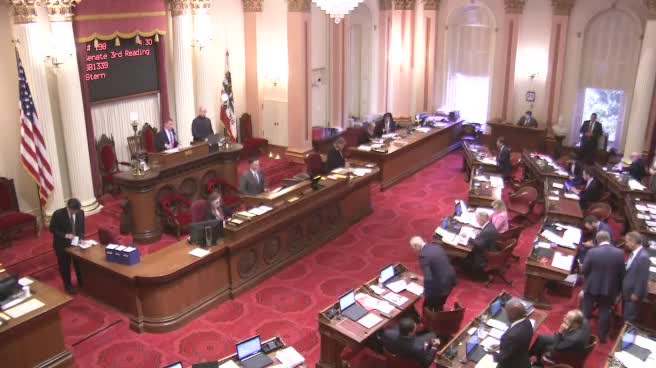 3MIN
Senate Floor
 8MIN
Senate Standing Committee on Energy, Utilities and Communications
Bill Author

Bill Co-Author(s):