SB 990: Inmates.
- Session Year: 2017-2018
- House: Senate
- Latest Version Date: 2018-05-25
Existing law establishes the right of a person under the jurisdiction of the Department of Corrections and Rehabilitation or sentenced to county jail to petition the court to obtain a name or gender change. Existing law requires the department or county jail to use the new name of a person who obtains a name change in all documentation of the person, and to list the prior name only as an alias.
This bill would additionally require that in all verbal communications to or regarding a person under the jurisdiction of the department or imprisoned within a county jail, department staff, facility staff, and contractors use the new name of a person who has obtained a name change.
Existing law requires the Department of Corrections and Rehabilitation to consider certain factors in their inmate classification and housing assignment procedures to prevent sexual violence and promote inmate safety.
This bill would require that during the initial intake and classification process, the department afford each individual entering into custody an opportunity to specify the persons gender identity, preferred first name, gender pronoun pronoun, and honorific, as defined, and would require that a person in the custody of the department who is placed for more than 5 days in a setting other than general population housing because the person is deemed to be at high risk for sexual victimization or other forms of assault or harassment, or because of an investigation not resulting from the persons own alleged violation of criminal laws or institutional rules, have equal access to programming programs and work opportunities as provided opportunities, as provided, to the fullest extent possible, to individuals housed in general population, as specified. The bill would require the department to annually report to the Legislature, the Assembly Committee on Budget, and the Senate Committee on Budget and Fiscal Review on its progress towards providing equal access to programs and work opportunities, as specified. The bill would require that staff and contractors of the department consistently use the gender pronoun and honorific an individual has specified in all verbal and written communications with or regarding that individual.
Existing law requires inmate housing in jails to use a classification procedure that is based upon objective criteria, including consideration of criminal sophistication, seriousness of crime charged, presence or absence of assaultive behavior, age, and other criteria that will provide for the safety of the prisoners and staff.
This bill would require that during the initial intake and classification process, the jail staff afford each individual entering into custody an opportunity to specify the persons gender identity, preferred first name, gender pronoun pronoun, and honorific, as defined, and would require that a person in the custody of a county jail who is placed for more than 5 days in a setting other than general population housing because the person is deemed to be at high risk for sexual victimization or other forms of assault or harassment, or because of an investigation not resulting from the persons own alleged violation of criminal laws or institutional rules, shall have equal access to programming programs and work opportunities as provided to individuals housed in general population, as specified. The bill would require that staff and contractors of the jail consistently use the gender pronoun and honorific an individual has specified in all verbal and written communications with or regarding that individual. By imposing additional duties on local law enforcement entities, this bill would impose a state-mandated local program.
The California Constitution requires the state to reimburse local agencies and school districts for certain costs mandated by the state. Statutory provisions establish procedures for making that reimbursement.
This bill would provide that, if the Commission on State Mandates determines that the bill contains costs mandated by the state, reimbursement for those costs shall be made pursuant to the statutory provisions noted above.
Existing law establishes the right of a person under the jurisdiction of the Department of Corrections and Rehabilitation or sentenced to county jail to petition the court to obtain a name or gender change. Existing law requires the department or county jail to use the new name of a person who obtains a name change in all documentation of the person, and to list the prior name only as an alias.
This bill would additionally require that in all verbal communications to or regarding a person under the jurisdiction of the department or imprisoned within a county jail, department staff, facility staff, and contractors use the new name of a person who has obtained a name change.
Existing law requires the Department of Corrections and Rehabilitation to consider certain factors in their inmate classification and housing assignment procedures to prevent sexual violence and promote inmate safety.
This bill would require that during the initial intake and classification process, the department afford each individual entering into custody an opportunity to specify the persons gender identity, preferred first name, gender pronoun and honorific, as defined, and would require that a person in the custody of the department who is placed for more than 5 days in a setting other than general population housing because the person is deemed to be at high risk for sexual victimization or other forms of assault or harassment, or because of an investigation not resulting from the persons own alleged violation of criminal laws or institutional rules, have equal access to programming and work opportunities as provided to individuals housed in general population, as specified. The bill would require that staff and contractors of the department consistently use the gender pronoun and honorific an individual has specified in all verbal and written communications with or regarding that individual.
Existing law requires inmate housing in jails to use a classification procedure that is based upon objective criteria, including consideration of criminal sophistication, seriousness of crime charged, presence or absence of assaultive behavior, age, and other criteria that will provide for the safety of the prisoners and staff.
This bill would require that during the initial intake and classification process, the jail staff afford each individual entering into custody an opportunity to specify the persons gender identity, preferred first name, gender pronoun and honorific, as defined, and would require that a person in the custody of a county jail who is placed for more than 5 days in a setting other than general population housing because the person is deemed to be at high risk for sexual victimization or other forms of assault or harassment, or because of an investigation not resulting from the persons own alleged violation of criminal laws or institutional rules, shall have equal access to programming and work opportunities as provided to individuals housed in general population, as specified. The bill would require that staff and contractors of the jail consistently use the gender pronoun and honorific an individual has specified in all verbal and written communications with or regarding that individual. By imposing additional duties on local law enforcement entities, this bill would impose a state-mandated local program.
The California Constitution requires the state to reimburse local agencies and school districts for certain costs mandated by the state. Statutory provisions establish procedures for making that reimbursement.
This bill would provide that, if the Commission on State Mandates determines that the bill contains costs mandated by the state, reimbursement for those costs shall be made pursuant to the statutory provisions noted above.
Existing law makes it a felony for an unauthorized person to possess or use, or to obliterate or destroy, the brand registration upon containers, cabinets, or other dairy equipment, that have a value in excess of $950, when the containers, cabinets, or other dairy equipment are marked with a registered brand, as specified.This bill would make technical, nonsubstantive changes to those provisions.Existing law makes it a felony for an unauthorized person to possess or use, or to obliterate or destroy, the brand registration upon containers, cabinets, or other dairy equipment, that have a value in excess of $950, when the containers, cabinets, or other dairy equipment are marked with a registered brand, as specified.
This bill would make technical, nonsubstantive changes to those provisions.
(a)Except as provided in subdivision (e) or (f), this title does not abrogate the common law right of a person to change his or her name.
(b)A person under the jurisdiction of the Department of Corrections and Rehabilitation or sentenced to county jail has the right to petition the court to obtain a name or gender change pursuant to this title or Article 7 (commencing with Section 103425) of Chapter 11 of Part 1 of Division 102 of the Health and Safety Code.
(c)A person under the jurisdiction of the Department of Corrections and Rehabilitation shall provide a copy of the petition for a name change to the department, in a manner prescribed by the department, at the time the petition is filed. A person sentenced to county jail shall provide a copy of the petition for name change to the sheriffs department, in a manner prescribed by the department, at the time the petition is filed.
(d)(1)In all documentation of a person under the jurisdiction of the Department of Corrections and Rehabilitation or imprisoned within a county jail, the new name of a person who obtains a name change shall be used, and prior names shall be listed as an alias.
(2)In all verbal communications to or regarding a person under the jurisdiction of the department or imprisoned within a county jail, department staff, facility staff, and contractors shall use the new name of a person who has obtained a name change.
(e)Notwithstanding any other law, a court shall deny a petition for a name change pursuant to this title made by a person who is required to register as a sex offender under Section 290 of the Penal Code, unless the court determines that it is in the best interest of justice to grant the petition and that doing so will not adversely affect the public safety. If a petition for a name change is granted for an individual required to register as a sex offender, the individual shall, within five working days, notify the chief of police of the city in which he or she is domiciled, or the sheriff of the county if he or she is domiciled in an unincorporated area, and additionally with the chief of police of a campus of a University of California or California State University if he or she is domiciled upon the campus or in any of its facilities.
(f)For the purpose of this section, the court shall use the California Law Enforcement Telecommunications System (CLETS) and Criminal Justice Information System (CJIS) to determine whether or not an applicant for a name change is required to register as a sex offender pursuant to Section 290 of the Penal Code. Each person applying for a name change shall declare under penalty of perjury that he or she is not required to register as a sex offender pursuant to Section 290 of the Penal Code. If a court is not equipped with CLETS or CJIS, the clerk of the court shall contact an appropriate local law enforcement agency, which shall determine whether or not the petitioner is required to register as a sex offender pursuant to Section 290 of the Penal Code.
(g)This section shall become operative on September 1, 2018.
SEC. 2.Section 2067 is added to the Penal Code, to read:2067.(a)(1)A person in the custody of the department who is placed for more than five days in a setting other than general population housing because the person is deemed to be at high risk for sexual victimization or other forms of assault or harassment, or because of an investigation not resulting from the persons own alleged violation of criminal laws or institutional rules, shall have equal access to programming programs and work opportunities opportunities to the fullest extent possible, including work camps, offsite work, and in-facility work, as provided to individuals housed in general population. For purposes of this section, programming programs shall include educational and rehabilitative offerings, volunteer opportunities, vocational training, life skills classes, and any other courses or independent study programs made available to incarcerated individuals.
(2)The department, by January 31, 2020, and annually thereafter, shall report to the Legislature, the Assembly Committee on Budget, and the Senate Committee on Budget and Fiscal Review on its progress towards providing equal access to programs and work opportunities to the persons described in this subdivision.
(3)A report to be submitted pursuant to paragraph (2) shall be submitted in compliance with Section 9795 of the Government Code.
(b)During the initial intake and classification process, the department shall afford each individual entering into custody an opportunity to specify the persons gender identity, preferred first name, gender pronoun pronoun, and honorific.
(c)A person under the jurisdiction of the department who has obtained a court ordered gender change or changed the gender marker on their birth certificate may submit documentation of the change to the department and thereafter the department or facility staff shall promptly repeat the process of offering the individual an opportunity to specify the gender pronoun and honorific most appropriate for staff to use in reference to that individual.
(1)For purposes of this section, gender pronoun means a third-person singular personal pronoun such as he, she, or they.
(2)For purposes of this section, honorific means a form of respectful address typically combined with an individuals surname, such as Mr., Ms., or Mrs..
(d)Staff and contractors of the department shall consistently use the gender pronoun and honorific an individual has specified in all verbal and written communications with or regarding that individual.
(e)An incarcerated individual shall not be issued an identification card or identification wristband reflecting a gender marker different from the gender identity the individual has most recently specified pursuant to subdivision (b) or (c).
SEC. 3.Section 4033 is added to the Penal Code, to read:4033.(a)A person in the custody of a county jail who is placed for more than five days in a setting other than general population housing because the person is deemed to be at high risk for sexual victimization or other forms of assault or harassment, or because of an investigation not resulting from the persons own alleged violation of criminal laws or institutional rules, shall have equal access to programming programs and work opportunities opportunities, including work camps, offsite work, and in-facility work, as provided to individuals housed in general population. For purposes of this section, programming programs shall include educational and rehabilitative offerings, volunteer opportunities, vocational training, life skills classes, and any other courses or independent study programs made available to incarcerated individuals.
(b)During the initial intake and classification process, the county jail shall afford each individual entering into custody an opportunity to specify the persons gender identity, preferred first name, gender pronoun pronoun, and honorific.
(1)For purposes of this section, gender pronoun means a third-person singular personal pronoun such as he, she, or they.
(2)For purposes of this section, honorific means a form of respectful address typically combined with an individuals surname, such as Mr., Ms., or Mrs..
(c)A person under the jurisdiction of a county jail who has obtained a court ordered gender change or changed the gender marker on their birth certificate may submit documentation of the change to the department and thereafter the facility staff shall promptly repeat the process of offering the individual an opportunity to specify the gender pronoun and honorific most appropriate for staff to use in reference to that individual.
(d)Staff and contractors of the county jail shall consistently use the gender pronoun and honorific an individual has specified in all verbal and written communications with or regarding that individual.
(e)An incarcerated individual shall not be issued an identification card or identification wristband reflecting a gender marker different from the gender identity the individual has most recently specified pursuant to subdivision (b) or (c).
SEC. 4.If the Commission on State Mandates determines that this act contains costs mandated by the state, reimbursement to local agencies and school districts for those costs shall be made pursuant to Part 7 (commencing with Section 17500) of Division 4 of Title 2 of the Government Code.
(a)Except as provided in subdivision (e) or (f), this title does not abrogate the common law right of a person to change his or her name.
(b)A person under the jurisdiction of the Department of Corrections and Rehabilitation or sentenced to county jail has the right to petition the court to obtain a name or gender change pursuant to this title or Article 7 (commencing with Section 103425) of Chapter 11 of Part 1 of Division 102 of the Health and Safety Code.
(c)A person under the jurisdiction of the Department of Corrections and Rehabilitation shall provide a copy of the petition for a name change to the department, in a manner prescribed by the department, at the time the petition is filed. A person sentenced to county jail shall provide a copy of the petition for name change to the sheriffs department, in a manner prescribed by the department, at the time the petition is filed.
(d)(1)In all documentation of a person under the jurisdiction of the Department of Corrections and Rehabilitation or imprisoned within a county jail, the new name of a person who obtains a name change shall be used, and prior names shall be listed as an alias.
(2)In all verbal communications to or regarding a person under the jurisdiction of the department or imprisoned within a county jail, department staff, facility staff, and contractors shall use the new name of a person who has obtained a name change.
(e)Notwithstanding any other law, a court shall deny a petition for a name change pursuant to this title made by a person who is required to register as a sex offender under Section 290 of the Penal Code, unless the court determines that it is in the best interest of justice to grant the petition and that doing so will not adversely affect the public safety. If a petition for a name change is granted for an individual required to register as a sex offender, the individual shall, within five working days, notify the chief of police of the city in which he or she is domiciled, or the sheriff of the county if he or she is domiciled in an unincorporated area, and additionally with the chief of police of a campus of a University of California or California State University if he or she is domiciled upon the campus or in any of its facilities.
(f)For the purpose of this section, the court shall use the California Law Enforcement Telecommunications System (CLETS) and Criminal Justice Information System (CJIS) to determine whether or not an applicant for a name change is required to register as a sex offender pursuant to Section 290 of the Penal Code. Each person applying for a name change shall declare under penalty of perjury that he or she is not required to register as a sex offender pursuant to Section 290 of the Penal Code. If a court is not equipped with CLETS or CJIS, the clerk of the court shall contact an appropriate local law enforcement agency, which shall determine whether or not the petitioner is required to register as a sex offender pursuant to Section 290 of the Penal Code.
(g)This section shall become operative on September 1, 2018.
SEC. 2.Section 2067 is added to the Penal Code, to read:2067.(a)A person in the custody of the department who is placed for more than five days in a setting other than general population housing because the person is deemed to be at high risk for sexual victimization or other forms of assault or harassment, or because of an investigation not resulting from the persons own alleged violation of criminal laws or institutional rules, shall have equal access to programming and work opportunities as provided to individuals housed in general population. For purposes of this section, programming shall include educational and rehabilitative offerings, vocational training, life skills classes, and any other courses or independent study programs made available to incarcerated individuals.
(b)During the initial intake and classification process, the department shall afford each individual entering into custody an opportunity to specify the persons gender identity, preferred first name, gender pronoun and honorific.
(c)A person under the jurisdiction of the department who has obtained a court ordered gender change or changed the gender marker on their birth certificate may submit documentation of the change to the department and thereafter the department or facility staff shall promptly repeat the process of offering the individual an opportunity to specify the gender pronoun and honorific most appropriate for staff to use in reference to that individual.
(1)For purposes of this section, gender pronoun means a third-person singular personal pronoun such as he, she, or they.
(2)For purposes of this section, honorific means a form of respectful address typically combined with an individuals surname, such as Mr., Ms., or Mrs..
(d)Staff and contractors of the department shall consistently use the gender pronoun and honorific an individual has specified in all verbal and written communications with or regarding that individual.
(e)An incarcerated individual shall not be issued an identification card or identification wristband reflecting a gender marker different from the gender identity the individual has most recently specified pursuant to subdivision (b) or (c).
SEC. 3.Section 4033 is added to the Penal Code, to read:4033.(a)A person in the custody of a county jail who is placed for more than five days in a setting other than general population housing because the person is deemed to be at high risk for sexual victimization or other forms of assault or harassment, or because of an investigation not resulting from the persons own alleged violation of criminal laws or institutional rules, shall have equal access to programming and work opportunities as provided to individuals housed in general population. For purposes of this section, programming shall include educational and rehabilitative offerings, vocational training, life skills classes, and any other courses or independent study programs made available to incarcerated individuals.
(b)During the initial intake and classification process, the county jail shall afford each individual entering into custody an opportunity to specify the persons gender identity, preferred first name, gender pronoun and honorific.
(1)For purposes of this section, gender pronoun means a third-person singular personal pronoun such as he, she, or they.
(2)For purposes of this section, honorific means a form of respectful address typically combined with an individuals surname, such as Mr., Ms., or Mrs..
(c)A person under the jurisdiction of a county jail who has obtained a court ordered gender change or changed the gender marker on their birth certificate may submit documentation of the change to the department and thereafter the facility staff shall promptly repeat the process of offering the individual an opportunity to specify the gender pronoun and honorific most appropriate for staff to use in reference to that individual.
(d)Staff and contractors of the county jail shall consistently use the gender pronoun and honorific an individual has specified in all verbal and written communications with or regarding that individual.
(e)An incarcerated individual shall not be issued an identification card or identification wristband reflecting a gender marker different from the gender identity the individual has most recently specified pursuant to subdivision (b) or (c).
SEC. 4.If the Commission on State Mandates determines that this act contains costs mandated by the state, reimbursement to local agencies and school districts for those costs shall be made pursuant to Part 7 (commencing with Section 17500) of Division 4 of Title 2 of the Government Code.
SECTION 1.Section 566 of the Penal Code is amended to read:566.(a)It is a felony, punishable by a fine not exceeding one thousand five hundred dollars ($1,500), or by imprisonment pursuant to subdivision (h) of Section 1170, or both, for an unauthorized person to possess or use, or to obliterate or destroy, the brand registration upon containers, cabinets, or other dairy equipment, that have a value in excess of nine hundred fifty dollars ($950), when the containers, cabinets, or other dairy equipment are marked with a brand that is registered pursuant to Chapter 10 (commencing with Section 34501) of Part 1 of Division 15 of the Food and Agricultural Code.(b)As used in this section, containers includes milk cases.(c)As used in this section, unauthorized person has the same meaning as defined in Section 34564 of the Food and Agricultural Code.(a)It is a felony, punishable by a fine not exceeding one thousand five hundred dollars ($1,500), or by imprisonment pursuant to subdivision (h) of Section 1170, or both, for an unauthorized person to possess or use, or to obliterate or destroy destroy, the brand registration upon, containers (including milk cases), upon containers, cabinets, or other dairy equipment, which that have a value in excess of nine hundred fifty dollars ($950), when the containers, cabinets, or other dairy equipment are marked with a brand that is registered pursuant to Chapter 10 (commencing with Section 34501) of Part 1 of Division 15 of the Food and Agricultural Code. Unauthorized person shall have the meaning of that term as defined in Section 34564 of the Food and Agricultural Code.
(b)As used in this section, containers includes milk cases.
(c)As used in this section, unauthorized person has the same meaning as defined in Section 34564 of the Food and Agricultural Code.
|
Date
|
Status
|
|---|---|
| Aug 16, 2018 | August 16 hearing: Held in committee and under submission. |
| Aug 8, 2018 | August 8 set for first hearing. Placed on suspense file. |
| Jun 26, 2018 | From committee: Do pass and re-refer to Com. on APPR. (Ayes 8. Noes 1.) (June 26). Re-referred to Com. on APPR. |
| Jun 19, 2018 | From committee: Do pass and re-refer to Com. on JUD. (Ayes 5. Noes 0.) (June 19). Re-referred to Com. on JUD. |
| Jun 7, 2018 | Referred to Coms. on PUB. S. and JUD. |
| May 31, 2018 | In Assembly. Read first time. Held at Desk. |
| May 30, 2018 | Read third time. Passed. (Ayes 27. Noes 0.) Ordered to the Assembly. |
| May 29, 2018 | Read second time. Ordered to third reading. |
| May 25, 2018 | From committee: Do pass as amended. (Ayes 5. Noes 0.) (May 25). |
| May 18, 2018 | Set for hearing May 25. |
| May 14, 2018 | May 14 hearing: Placed on APPR. suspense file. |
| May 4, 2018 | Set for hearing May 14. |
| Apr 25, 2018 | From committee: Do pass and re-refer to Com. on APPR. (Ayes 7. Noes 0.) (April 24). Re-referred to Com. on APPR. |
| Apr 12, 2018 | Set for hearing April 24. |
| Apr 11, 2018 | From committee: Do pass and re-refer to Com. on JUD. (Ayes 6. Noes 0.) (April 10). Re-referred to Com. on JUD. |
| Mar 22, 2018 | Set for hearing April 10. |
| Mar 21, 2018 | Re-referred to Coms. on PUB. S. and JUD. |
| Mar 14, 2018 | From committee with author's amendments. Read second time and amended. Re-referred to Com. on RLS. |
| Feb 14, 2018 | Referred to Com. on RLS. |
| Feb 6, 2018 | From printer. May be acted upon on or after March 8. |
| Feb 5, 2018 | Introduced. Read first time. To Com. on RLS. for assignment. To print. |
|
Date
|
Description
|
Location
|
Votes
|
|
|---|---|---|---|---|
| Jun 26, 2018 | Do pass and be re-referred to the Committee on [Appropriations] | Assembly Standing Committee on Judiciary |
Passed |
|
| Jun 19, 2018 | Do pass and be re-referred to the Committee on [Judiciary] | Assembly Standing Committee on Public Safety |
Passed |
|
| May 30, 2018 | Senate 3rd Reading SB990 Wiener et al. | Senate Floor |
Passed |
|
| May 25, 2018 | Do pass as amended | Senate Standing Committee on Appropriations |
Passed |
|
| May 14, 2018 | Placed on suspense file | Senate Standing Committee on Appropriations |
Passed |
|
| Apr 24, 2018 | Do pass, but first be re-referred to the Committee on [Appropriations] | Senate Standing Committee on Judiciary |
Passed |
|
| Apr 10, 2018 | Do pass, but first be re-referred to the Committee on [Judiciary] | Senate Standing Committee on Public Safety |
Passed |
This list shows positions taken on this bill by organizations on the date displayed, which is linked to the original source.
Positions by individuals are not included.
|
Organization
|
Position
|
Date
|
|---|---|---|
| A New Way of Life Re-Entry Project | ** Support | Jun 21, 2018 |
| Access Women's Health Justice | ** Support | Jun 21, 2018 |
| aids project of the east bay | ** Support | Jun 21, 2018 |
| American Academy Of Pediatrics, California | ** Support | Jun 21, 2018 |
| American Civil Liberties Union of California | ** Support | Jun 21, 2018 |
| An individual | ** Support | May 28, 2018 |
| Asian Law Alliance | ** Support | Jun 21, 2018 |
| Bay Area Lawyer'S For Individual Freedom | ** Support | Jun 21, 2018 |
| black women for wellness | ** Support | Jun 21, 2018 |
| California Conference of Bar Associations | ** Support | May 28, 2018 |
| California Latinas for Reproductive Justice | ** Support | Jun 21, 2018 |
| California Public Defenders Association | ** Support | Jun 18, 2018 |
| California State Sheriff's Association | ** Against | Jun 21, 2018 |
| Congress on California Bar Association | * Support | Jun 19, 2018 |
| Equality California | ** Support | Jun 21, 2018 |
| Lambda Legal | ** Support | Jun 21, 2018 |
| Legal Services for Prisoners with Children | ** Support | Jun 21, 2018 |
| LGBTQ Center of Long Beach | ** Support | Jun 18, 2018 |
| Minority Aids Project | ** Support | Jun 21, 2018 |
| National Association of Social Workers | * Support | Jun 19, 2018 |
| National Association Of Social Workers, California Chapter | ** Support | Jun 21, 2018 |
| National Council of Jewish Women, California | ** Support | Jun 21, 2018 |
| Nevada County Citizens for Choice | ** Support | Jun 21, 2018 |
| Physicians for Reproductive Health | ** Support | Jun 21, 2018 |
| Positive Women'S Network-Us | ** Support | Jun 21, 2018 |
| Positive Women's Network-USA | ** Support | Jun 18, 2018 |
| Project Inform | ** Support | Jun 18, 2018 |
| Project Reform | ** Support | Jun 21, 2018 |
| Root & Rebound | ** Support | May 28, 2018 |
| San Diego LGBT Community Center | ** Support | Jun 21, 2018 |
| San Fernando Valley Lgbt Community Center | ** Support | May 28, 2018 |
| Silicon Valley Stonewall Democratic Club | ** Support | Jun 21, 2018 |
| South Asian Network | ** Support | Jun 21, 2018 |
| St. James Infirmary | ** Support | Jun 21, 2018 |
| TGI Justice Project | * Support | Apr 10, 2018 |
| the lgbtq center of long beach | ** Support | Jun 21, 2018 |
| Transgender Gender Variant Intersex Justice Project | * Support | Jun 19, 2018 |
| Transgender Law Center | ** Support | Jun 18, 2018 |
| Transgender, Gender-Variant Intersex Justice Project | ** Support | Jun 21, 2018 |
Date of Hearing: August 8, 2018
ASSEMBLY COMMITTEE ON APPROPRIATIONS
Lorena Gonzalez Fletcher, Chair
SBPCA Bill Id:SB 990
Author:(Wiener) – As Amended Ver:May 25, 2018
Policy Committee: | Public Safety | Vote: | 5 - 0 |
Judiciary | 8 - 1 | ||
|
|
Urgency: No State Mandated Local Program: Yes Reimbursable: Yes
SUMMARY:
This bill requires the California Department of Corrections and Rehabilitation (CDCR) and local jails to recognize each inmate’s gender identity and provide equal access to programs for inmates who are not housed with the general population because they require protection from harassment or victimization. Specifically, this bill:
- Requires CDCR and county jails to provide equal access to programs and work opportunities to inmates who are placed for more than five days in a setting other than general population housing because the person is deemed to be at high risk for sexual victimization or other forms of assault or harassment, or because of an investigation not resulting from the person’s own alleged violation of criminal laws or institutional rules.
- States that, during the initial intake and classification process, CDCR and county jail officials shall afford each individual entering into custody an opportunity to specify their gender identity, preferred first name, gender pronoun, and honorific. Requires CDCR and jail officials to use the specified gender identity, name, pronoun and honorific in all communications with and about the inmate.
- Requires CDCR, by January 31, 2020, and annually thereafter, to report to the Legislature on its progress towards providing equal access to programs and work opportunities to the above-mentioned persons.
FISCAL EFFECT:
- Significant ongoing GF costs, in the tens of millions of dollars, for CDCR to hire additional staff to operate career technical training, educational, and cognitive behavioral therapy programs within administrative segregation units inside CDCR facilities. For example, based on current standards for teacher-to-inmate ratios and necessary security it could cost about $1.5 million for staff to operate required programs at each of the 43 locations CDCR estimates are subject to the requirements of this bill, resulting in a total statewide cost of roughly $65 million annually.
- Significant onetime GF costs, in the tens of millions to potentially hundreds of millions of dollars, for CDCR for capital projects to build space for the required programs to operate within administrative segregation units.
- Unknown significant GF costs, potentially in the tens of millions of dollars, for CDCR to hire additional staff to provide security to inmates housed in administrative segregation units while the inmates are engaged in job assignments.
- Unknown potentially significant GF costs, potentially in the millions of dollars, for CDCR to respond to an increase in litigation.
- Onetime GF costs of roughly $150,000 for staff training and updating regulations related to the preferred name, gender pronoun, and honorific requirements.
COMMENTS:
Background and purpose. According to supporters of this bill, LGBTQ people are often at greater risk of victimization and harassment while incarcerated. As a result, LGBTQ inmates are often removed from the general population and housed with limited or no access to rehabilitative programming, educational programming, religious programming, and work opportunities, which are critical for successful rehabilitation and for earning credits towards release. According to the author:
SB 990 would help ensure transgender individuals in the custody of the Department of Corrections and Rehabilitation or imprisoned within a county jail will have the right to affirm their gender identity, preferred first name, gender pronoun and honorific, and require that they be used by facility staff. SB 990 would further require that incarcerated individual who are placed for more than 5 days in a setting other than general population housing due to the person being at risk for sexual victimization or other forms of assault or harassment, have equal access to programming and work opportunities as provided to individuals housed in general population to furthest extent possible.
Analysis Prepared by: Jessica Peters / APPR. / (916) 319-2081
Date of Hearing: June 26, 2018
ASSEMBLY COMMITTEE ON JUDICIARY
Mark Stone, Chair
SBPCA Bill Id:SB 990
Author:(Wiener) – As Amended Ver:May 25, 2018
SENATE VOTE: 31-0
SUBJECT: Inmates: NAME, GENDER PRONOUN, and access to programs
KEY ISSUE: IN ORDER TO BETTER PROTECT THE RIGHTS AND DIGNITY OF TRANSGENDER AND GENDER-NONCONFORMING INMATES, SHOULD the law require that inmates BE ADDRESSED BY THEIR NAME, GENDER IDENTITY, GENDER PRONOUN, AND HONORIFIC title, AND SHOULD THEY HAVE EQUAL ACCESS TO all PROGRAMS AND OPPORTUNITIES that are available to other inmates, EVEN IF THEY ARE HOUSED AWAY FROM THE GENERAL POPULATION FOR THEIR OWN PROTECTION?
SYNOPSIS
California’s laws have been evolving to recognize each individual's right to self-determination and to official recognition of their gender identity. On September 1 of this year, California will become the first state in the nation, legislatively, to provide residents the option of selecting a gender identity other than male or female on their official documents. (SB 179 (Atkins), Chap. 853, Stats. 2017.) Also last year, SB 310 (Atkins), Chap. 856, Stats. 2017, allowed incarcerated persons, commencing on September 1, 2018, to petition for a name change or gender change, and requires that the petition for a name change to be noticed to the Department of Corrections and Rehabilitation (CDCR) or the county jail.
This bill expands on those measures and addresses two challenges confronted by gender non-conforming inmates. While not exclusive to this population, the rules have the primary function of providing additional safeguards for the rights of transgender and gender non-conforming inmates. Specifically, the bill would: (1) require equal access to programs and opportunities to work for inmates housed away from the general population for protective, rather than disciplinary reasons; and (2) require facility staff to use the name, gender identity, gender pronoun (“he,” “she,” or “they”), and honorific title (“Mr.,” “Miss,” “Ms.,” or “Mrs.,”) specified by the inmate.
This bill is sponsored by the American Civil Liberties Union of California, Equality California, and Lambda Legal and supported by another 20 advocacy organizations who state that the bill will "ensure that the dignity and identity of transgender people is honored in incarceration settings and that LGBTQ people and others at high risk of sexual assault and harassment have an equal opportunity to access rehabilitative, educational and work programs that will help them succeed upon release." The California State Sheriff's Association opposes the bill because it could "put peace officers in a situation where they could be accused and held liable for mistakenly referring to an inmate by the wrong pronoun," and that the "mandated policies and practices of inmate classification necessitate that we take into account the resources available in a given facility and that programming needs of those with exclusive constraints be made on a case-by-case basis." This bill passed the Assembly Public Safety Committee last week on a 5-0 vote.
SUMMARY: Requires that inmates be called by their appropriate names, gender pronoun and honorific titles, and that inmates housed outside the general population for their own protection have equal access to programs and work opportunities as inmates housed in the general population. Specifically, this bill:
- Requires that in all verbal communications to, or regarding, a person under the jurisdiction of the California Department of Corrections and Rehabilitation (CDCR) or imprisoned within a county jail, CDCR staff, facility staff, and contractors use the new name of a person who has obtained a name change.
- Requires that a person in the custody of CDCR, who, for more than five days, is placed in a setting other than general population housing because the person is deemed to be at high risk for sexual victimization or other forms of assault or harassment, or because of an investigation not resulting from the person’s own alleged violation of criminal laws or institutional rules, have equal access to programs and work opportunities, including educational and rehabilitative offerings, volunteer opportunities, vocational training, life skills classes, and any other courses or independent study programs made available to incarcerated individuals, to the fullest extent possible, as those provided to individuals housed in the general population.
- Requires CDCR to report annually beginning January 21, 2020 to the Legislature, the Assembly Committee on Budget, and the Senate Committee on Budget and Fiscal Review on its progress toward providing equal access to programs and work opportunities under 2).
- Requires that a person in the custody of a county jail, who, for more than five days, is placed in a setting other than general population housing because the person is deemed to be at high risk for sexual victimization or other forms of assault or harassment, or because of an investigation not resulting from the person’s own alleged violation of criminal laws or institutional rules, have equal access to programs and work opportunities, including educational and rehabilitative offerings, volunteer opportunities, vocational training, life skills classes, and any other courses or independent study programs made available to incarcerated individuals, as those provided to individuals housed in the general population.
- Requires that, during the initial intake and classification process, CDCR or the county jail afford each individual entering into custody an opportunity to specify that person’s gender identity, preferred first name, gender pronoun, and honorific. Defines “gender pronoun” as a third-person singular personal pronoun such as “he,” “she,” or “they.” Defines “honorific” as a form of respectful address typically combined with an individual’s surname, such as “Mr.,” “Ms.,” or “Mrs.”
- Provides that a person under the jurisdiction of CDCR or a county jail who has obtained a court ordered gender change or changed the gender marker on their birth certificate may submit documentation of the change and thereafter the department or facility staff is required to promptly repeat the process of offering the individual an opportunity to specify the gender pronoun and honorific most appropriate for staff to use in reference to that individual.
- Requires that staff and contractors of CDCR or a county jail consistently use the gender pronoun and honorific an individual has specified in all verbal and written communications with, or regarding, that individual.
- Prohibits an incarcerated individual under the jurisdiction of CDCR or a county jail from being issued an identification card or identification wristband reflecting a gender marker different from the gender identity that the individual has most recently specified.
EXISTING LAW:
- Provides that a petition for name change must be filed in the superior court of the county where the person whose name is proposed to be changed resides and signed by the person whose name is to be changed. Provides particular rules for the name change of a minor. (Code of Civil Procedure Section 1276. Unless stated otherwise, all further statutory references are to that code.)
- Provides that if a proceeding for a change of name to conform the petitioner’s name to the petitioner’s gender identity is commenced by the filing of a petition, the court must make an order reciting the filing of the petition, the name of the person by whom it is filed, and the name proposed. Requires the order to direct all persons interested in the matter to make known any objection to the change of name by filing a written objection within six weeks of the making of the order, and to state that if no objection showing good cause to oppose the name change is timely filed, the court shall, without hearing, enter the order that the change of name is granted. Exempts a proceeding for a change of name to conform the petitioner’s name to the petitioner’s gender identity from any requirement for publication. (Section 1277.5.)
- Effective September 1, 2018, provides that a person under the jurisdiction of CDCR or sentenced to county jail has the right to petition the court to obtain a name or gender change, as specified. Requires the person to provide a copy of the petition for a name change, at the time the petition is filed, to the department or the sheriff, as appropriate. Requires that, in all documentation of a person under the jurisdiction of the CDCR or imprisoned within a county jail who obtains a name change, the new name is to be used and any prior name be listed as an alias. (Section 1279.5.)
- Requires a court, notwithstanding any other law, deny a petition for a name change made by a person who is required to register as a sex offender, unless the court determines that it is in the best interest of justice to grant the petition and that doing so will not adversely affect public safety. (Section 1279.5 (e).)
- Provides that a person may file a petition with the superior court in any county seeking a judgment recognizing the change of gender to, effective September 1, 2018, female, male, or nonbinary. (Health & Safety Code Section 103425.)
- Requires CDCR to consider certain factors in their inmate classification and housing assignment procedures to, among other things, prevent sexual violence and promote inmate safety. (California Code of Regulations, Title 15, Section 3269.)
FISCAL EFFECT: As currently in print this bill is keyed fiscal.
COMMENTS: California’s laws have been evolving to recognize everyone’s right to self-determination and official recognition of their gender identity. On September 1 of this year, California will become the first state in the nation, legislatively, to provide residents with the option of selecting a gender identity other than male or female on their official documents. (SB 179 (Atkins), Chap. 853, Stats. 2017.) Also, last year, SB 310 (Atkins), Chap. 856, Stats. 2017, allowed incarcerated persons, commencing on September 1, 2018, to petition for a name change or gender change under existing law, and requires that the petition for a name change to be noticed to the CDCR or the county jail.
This bill expands on those measures and addresses two challenges confronted by gender non-conforming inmates. First, people whose gender identity or expression differs from traditional expectations often experience heightened levels of harassment and assault. Either to protect these individuals from such danger or, potentially in some cases, as a way to further discriminate against them, prisons and jails frequently place these inmates in segregated settings, away from the general inmate population. Sometimes, this means solitary confinement. Being in segregated housing can limit the chance to work or participate in enrichment programs even though in these cases the inmate has done nothing wrong. This bill aims to prevent this side effect, and the disparate impact it has on gender non-conforming individuals, by mandating equal access to work opportunities and programming for individuals held for more than five days in a segregated setting for non-disciplinary reasons.
Second, last year’s SB 310 ensured that California inmates have access to the courts to petition for name and gender changes if they wish to do so. With the exception of a requirement for CDCR and county jail staff to use the new name in all subsequent documentation about the inmate, that legislation did not include any mention of whether CDCR and county jail staff have to use the new gender identity selected by the inmate. As a result, CDCR and county jail personnel are not obligated to refer to gender non-conforming individuals in ways that uphold those inmates’ identity and dignity. This bill addresses that concern by enacting a set of rules and procedures that empower inmates to specify their gender identity, as well as the pronouns and honorific titles they want used in reference to them. CDCR and county jail staff would then be required to use those pronouns and honorific titles in subsequent written and verbal communications with and about the inmate.
The author explains the need for the bill:
Transgender individuals do not currently have the opportunity to affirm their gender identity, preferred first name, gender pronoun or honorific when entering a facility. And current law does not require staff to refer to an individual by their specified name etc. This demeans the dignity and erases the authentic identity of transgender individuals.
Further, lesbian, gay, bisexual, and or transgender and especially transgender women of color are typically at much greater risk for sexual victimization and other forms of assault or harassment while in custody. Because of their heightened risk, prison and jail staff often remove LGBTQ people from the general population and place them in housing with limited or no access to rehabilitative programming, educational programming, religious programming, and work opportunities. Access to these types of programs is critical for successful rehabilitation and for earning credits towards release. As a result of current housing practices LGBT people experience more isolation, spend more time in custody, and leave custody less prepared to succeed, increasing the likelihood of recidivism.
SB 990 would help to change that and provide these important programs to individuals who through no fault of their own are denied access.
Disparate treatment of transgender inmates generally. A number of reports have documented that transgender individuals interact with the U.S. penal system at much higher rates than the rest of the population. (See, e.g., National Center for Transgender Equality, A Blueprint for Equality: A Federal Agenda for Transgender People, p. 42 (June 2015).) Within the prison population, transgender individuals are also at heightened risk. A 2011-2012 study conducted by the Bureau of Justice statistics found that 40 percent of transgender prison inmates and 27 percent of transgender jail inmates reported being the victims of unwanted sexual activity with other inmates or sexual activity with prison staff members, significantly higher than the general population. (Allen Beck, Sexual Victimization in Prisons and Jails Reported by Inmates, 2011–12: Supplemental Tables: Prevalence of Sexual Victimization Among Transgender Adult Inmates, U.S. Department of Justice, Office of Justice Programs, Bureau of Justice Statistics (Dec. 2014).)
Use of solitary confinement to protect inmates has downsides that this bill seeks to address. Given the heightened risk of abuse that transgender inmates face, it is not surprising that they are frequently separated from the main prison population. Such segregation, especially when it comes in the form of solitary confinement, can cause significant psychological harm. (See, e.g., Stuart Grassian, Psychiatric Effects of Solitary Confinement 22 Wash. U.J.L. & Pol’y 325 (2006).) Thus, while ostensibly for the “protection” of transgender inmates, segregation can end up, inadvertently, having punitive effects.
As this bill highlights, there is a secondary, disparate impact on transgender people that results from this protective use of segregated housing. Frequently, being housed away from the main prison population also means being cut off from opportunities to work and to participate in enrichment programs offered to other inmates. In the short term, this further isolates transgender individuals and prevents them from earning money. In the longer term, lack of access to educational, rehabilitative, vocational, and life-skills courses deprives transgender individuals of many of the tools they may need to transition successfully back into society.
The San Diego LGBT Community Center explain the problem: "Due to circumstances outside of their control, LGBTQ people are typically at much greater risk for sexual victimization and other forms of assault or harassment in custody. Because of this, prison and jail staff often remove LGBTQ people from the general population and house them with limited or no access to rehabilitative programming, educational programming, religious programming and work opportunities which are critical for successful rehabilitation and for earning credits towards release. As a result, LGBTQ people experience more isolation, spend more time in custody, and leave custody less prepared to succeed."
To combat this problem, this bill would require that, when individuals are held away from the main prison population for non-punitive reasons for more than five days, they must be given equal access to the work opportunities and other enrichment programming that the rest of the inmate population enjoys. For CDCR, these inmates must be given equal access to programs and opportunities to "the fullest extent possible," while there is no such modifier to limit the access that must be provided by county jails.
The California Women’s Law Center writes: "SB 990 will allow LGBTQ people and others at high risk of sexual assault and harassment the equal opportunity to access rehabilitative, educational and work programs that will help them succeed upon release."
The California State Sheriff's Association opposes the bill, arguing that "we have the obligation to keep all inmates safe from substantial risk of serious harm. The mandated policies and practices of inmate classification necessitate that we take into account the resources available in a given facility and that programming needs of those with exclusive constraints be made on a case-by-case basis."
The author is working with CDCR and the sheriffs to ensure that this provision of the bill can be implemented properly and may consider narrowing provisions if necessary. The author may, as part of those discussions, consider providing county jails with the same modifier as CDCR – "to the fullest extent possible."
This bill seeks to close some remaining gaps in how transgender inmates are addressed. Constitutional guarantees around equal protection and free expression likely give inmates the right to be addressed by the name, gender pronoun, and honorific title of their choosing, absent some compelling penological interest for refusing to do so. (Norsworthy v. Beard (N.D.Cal. 2014) 74 F.Supp.3d 1100, 1113-16.) Yet, while recent laws have better ensured that transgender inmates are able to change their name and gender identity on official documents, there is limited statutory guidance on how prison staff must respect the inmate’s wishes in this regard. Moreover, there is no formal process by which inmates can make their preferences known with regard to their name and the pronouns and titles with which they would like to be addressed.
This bill fills those gaps. Procedurally, it requires jails and prisons to give inmates the opportunity to specify the name, pronouns, and honorific title they wish to be known by. Under the bill, this process would have to take place upon intake and again anytime that an inmate goes through the formal petition process for a name or gender change. More generally, it requires prison and jail personnel to use the name, pronouns, and honorifics chosen by the inmate.
The California State Sheriff's Association opposes these provisions, writing:
While we recognize and are sensitive to the specific and unique difficulties faced by a trans-gender inmate, implementing a policy whereby correctional officers would be required to know the pronoun by which an inmate would like to use is unpractical. The proposal contemplated by SB 990 would put peace officers in a situation where they could be accused and held liable for mistakenly referring to an inmate by the wrong pronoun, and an inmate alleging that the oversight is intentional and purposeful.
While this bill does require that facilities use inmates correct names, pronouns, and honorific, it does not provide a separate or new cause of action for a failure to use them. It seems highly unlikely that a correctional officer who unintentionally and occasionally uses an incorrect name or pronoun for an inmate will be held liable for that. This bill seeks to stop the repeated and intentional refusal to recognize an inmate's identity, not to punish honest mistakes.
REGISTERED SUPPORT / OPPOSITION:
Support
American Civil Liberties Union of California (co-sponsor)
Equality California (co-sponsor)
Lambda Legal (co-sponsor)
A New Way of Life Re-Entry Project
ACCESS Women’s Health Justice
AIDS Project of the East Bay
American Academy of Pediatrics, California
Asian Law Alliance
Bay Area Lawyer’s for Individual Freedom
Black Women for Wellness
California Latinas for Reproductive Justice
Legal Services for Prisoners with Children
Minority AIDS Project
National Association of Social Workers, California Chapter
National Council of Jewish Women, California
Nevada County Citizens for Choice
Physicians for Reproductive Health
Positive Women’s Network-US
Project Reform
San Diego LGBT Community Center
Silicon Valley Stonewall Democratic Club
South Asian Network
St. James Infirmary
The LGBTQ Center of Long Beach
Transgender, Gender-variant Intersex Justice Project
Opposition
California State Sheriff's Association
Analysis Prepared by: Leora Gershenzon / JUD. / (916) 319-2334
Date of Hearing: June 19, 2018
Counsel: Liah Burnley
ASSEMBLY COMMITTEE ON PUBLIC SAFETY
Reginald Byron Jones-Sawyer, Sr., Chair
SBPCA Bill Id:SB 990
Author:(Wiener) – As Amended Ver:May 25, 2018
SUMMARY: Requires prison and jail officials to consistently use the gender pronoun and honorific as specified by the individual in all verbal and written communication with or regarding that inmate. Specifically, this bill:
- States that, during the initial intake and classification process, California Department of Corrections and Rehabilitation (CDCR) and county jail officials shall afford each individual entering into custody an opportunity to specify their gender identity, preferred first name, gender pronoun, and honorific.
- Requires CDCR and county jail staff and contractors to consistently use the gender pronoun and honorific an individual has specified in all verbal and written communications with or regarding that individual.
- States that an incarcerated individual shall not be issued an identification card or identification wristband reflecting a gender marker different from the gender identity the individual has most recently specified.
- Allows a person under the jurisdiction of CDCR or a county jail who has obtained a court ordered gender change or changed the gender marker on their birth certificate to submit documentation of the change to CDCR and requires CDCR staff to promptly repeat the process of offering the individual an opportunity to specify their gender pronoun and honorific.
- Provides that, in all verbal communications to or regarding a person under the jurisdiction of the CDCR or imprisoned within a county jail, staff, and contractors shall use the new name of a person who has obtained a name change.
- Defines, “gender pronoun” as “a third-person singular personal pronoun such as he, she, or they.”
- Defines, “honorific” as “a form of respectful address typically combined with an individual’s surname, such as Mr., Ms., or Mrs.”
- States that a person in the custody of CDCR or a county jail who is placed for more than five days in a setting other than general population housing because the person is deemed to be at high risk for sexual victimization or other forms of assault or harassment, or because of an investigation not resulting from the person’s own alleged violation of criminal laws or institutional rules, shall have equal access to programs and work opportunities to the fullest extent possible, as provided to individuals housed in general population.
- Requires CDCR, by January 31, 2020, and annually thereafter, to report to the Legislature, the Assembly Committee on Budget, and the Senate Committee on Budget and Fiscal Review on its progress towards providing equal access to programs and work opportunities to the above-mentioned persons.
EXISTING LAW:
- Allows individuals to submit a petition for a change of name to the Superior Court, as specified. (Pen. Code, §§ 1276, 1276.)
- States that the provisions prohibiting individuals imprisoned in the state prison from filing a petition for change of name are repealed as of January 1, 2019. (Pen. Code, § 1279.5)
- States that the following provisions regarding name changes for individuals under the jurisdiction of CDCR or sentenced to county jail will become operative on September 1, 2018:
- A person under the jurisdiction of CDCR or sentenced to county jail has the right to petition the court to obtain a name or gender change;
- A person under the jurisdiction of CDCR or sentenced to county jail must provide a copy of the petition for a name change to CDCR or the sheriff’s department, at the time the petition is filed;
- In all documentation of a person under the jurisdiction of CDCR or imprisoned in a county jail, the new name of the person who obtained a name change must be used, and the persons prior names shall be listed as an alias; and,
- A court shall deny a petition for a name change pursuant made by a person who is required to register as a sex offender, unless the court determines that it is in the best interest of justice to grant the petition and that doing so will not adversely affect the public safety, and requires the individual to, within five working days, notify the local law enforcement where he or she is domiciled. (Pen. Code, §1275.9.)
- A person under the jurisdiction of CDCR or sentenced to county jail has the right to petition the court to obtain a name or gender change;
- Provides that a person may file a petition with the superior court in any county seeking a judgment recognizing their change of gender to female, male, or nonbinary, and the judgment shall include an order that a new birth certificate be prepared for the person reflecting the change of gender and any change of name accomplished by an order of a court of this state, another state, the District of Columbia, or any territory of the United States. These provisions become operative on September 1, 2018. (Health & Saf. Code, § 103425.)
FISCAL EFFECT: Unknown.
COMMENTS:
- Author’s Statement: According to the author, “SB 990 would help ensure transgender individuals in the custody of the Department of Corrections and Rehabilitation or imprisoned within a county jail will have the right to affirm their gender identity, preferred first name, gender pronoun and honorific, and require that they be used by facility staff. SB 990 would further require that incarcerated individual who are placed for more than 5 days in a setting other than general population housing due to the person being at risk for sexual victimization or other forms of assault or harassment, have equal access to programming and work opportunities as provided to individuals housed in general population to furthest extent possible.
“Transgender individuals do not currently have the opportunity to affirm their gender identity, preferred first name, gender pronoun or honorific when entering a facility And current law does not require staff to refer to an individual by their specified name etc. This demeans the dignity and erases the authentic identity of transgender individuals.”
“Further, lesbian, gay, bisexual, and or transgender and especially transgender women of color are typically at much greater risk for sexual victimization and other forms of assault or harassment while in custody. Because of their heightened risk, prison and jail staff often remove LGBTQ people from the general population and place them in housing with limited or no access to rehabilitative programming, educational programming, religious programming, and work opportunities. Access to these types of programs is critical for successful rehabilitation and for earning credits towards release. As a result of current housing practices LGBT people experience more isolation, spend more time in custody, and leave custody less prepared to succeed, increasing the likelihood of recidivism. SB 990 would help to change that and provide these important programs to individuals who through no fault of their own are denied access.”
- Need for the Bill: Last year, SB 310 (Atkins), Chapter 856, Statutes of 2017, established the right of a person under the jurisdiction of the CDCR or sentenced to county jail to petition the court to obtain a name or gender change provided under existing law. (Civ. Code, § 1279.5.) SB 310 also required CDCR and county jails to use the person’s new name in all documentation, and requires prior names to be listed as an alias. (Id.) As stated in the Assembly Public Safety Analysis of SB 310 “transgender people face added difficulties – especially in finding employment – when their gender presentation does not match their identification documents.” (Assem. Com. on Pub. Safety, Analysis of Senate Bill No. 310 (2017-2018 Reg. Sess.) as introduced.) As such, SB 310 was intended to ensure that incarcerated people “are referred to by their new name and gender provides a baseline of dignity and respect for prisoners while they are incarcerated and will help ensure their successful reentry into society.” (Id.)
However, as written, SB 310 only required custody officials to use the individuals’ new legal name on documents, and did not mandate custody officials to use the matching gender pronoun and honorific, nor did it require staff to refer to inmates by their new legal name, matching pronoun, and honorific. Indeed, the same concerns regarding dignity, respect, and discrimination that SB 310 intended to discourage still exist if staff do not acknowledge a person by their legal name and pronoun. This bill would ensure that prison and jail officials use the correct name and pronoun when verbally referring to an incarcerated person.
- Argument in Support: According to ACCESS Women’s Health, “Due to circumstances outside of their control, LGBTQ people are typically at much greater risk for sexual victimization and other forms of assault or harassment in custody. Because of this, prison and jail staff often remove LGBTQ people from the general population and house them with limited or no access to rehabilitative programming, educational programming, religious programming and work opportunities which are critical for successful rehabilitation and for earning credits towards release. As a result, LGBTQ people experience more isolation, spend more time in custody, and leave custody less prepared to succeed. Transgender incarcerated individuals suffer the additional indignity of not having the opportunity to affirm their own gender identity when entering a facility. Current law does not clearly require staff to refer to the individual by their specified name, gender identity, gender pronoun or honorific. This demeans the dignity, and erases the authentic identity, of transgender individuals.
“SB 990 will also allow incarcerated individuals housed outside of general population for more than five days to receive the same programming opportunities as individuals housed in general population, which will help reduce isolation and reduce recidivism. SB 990 will also change state law to require that incarcerated people be given an opportunity to indicate during the intake process their gender identity, preferred first name, gender pronoun, and honorific and for all department staff, facility staff, and contractors to use the incarcerated person’s preferences in all written and verbal communication.”
- Related Legislation: AB 2550 (Weber), of the 2017-18 Legislative Session, would prohibit male correctional officers from conducting a pat down search of a female inmate unless the prisoner presents a risk of immediate harm to herself or others or risk of escape and there is not a female correctional officer available to conduct the search. AB 2550 is pending in Senate Appropriations Committee.
- Prior Legislation:
- SB 179 (Atkins), Gender Recognition Act, Chapter 853, Statutes of 2017, deleted the requirement that a person have undergone any treatment to change the gender on their birth certificate, and authorized a person to submit to the State Registrar an application to change gender on the birth certificate and an affidavit attesting, under penalty of perjury, that the request for a change of gender is to conform the person’s legal gender to the person’s gender identity and not for any fraudulent purpose.
- SB 310 (Atkins), Chapter 856, Statutes of 2017, provided individuals under the jurisdiction of CDCR the ability to seek a name change, without CDCR approval.
- SB 179 (Atkins), Gender Recognition Act, Chapter 853, Statutes of 2017, deleted the requirement that a person have undergone any treatment to change the gender on their birth certificate, and authorized a person to submit to the State Registrar an application to change gender on the birth certificate and an affidavit attesting, under penalty of perjury, that the request for a change of gender is to conform the person’s legal gender to the person’s gender identity and not for any fraudulent purpose.
REGISTERED SUPPORT / OPPOSITION:
Support
American Civil Liberties Union of California Center for Advocacy and Policy (Co-Sponsor)
Equality California (Co-Sponsor)
A New Way of Life Re-Entry Project
Access Women’s Health Justice
AIDS Project of the East Bay
American Academy of Pediatrics
Asian Law Alliance
Bay Area Lawyer’s for Individual Freedom
Black Women for Wellness
California Latinas for Reproductive Justice
California Public Defenders Association
LGBTQ Center of Long Beach
Minority AIDS Project
National Council of Jewish Women
Nevada County Citizens for Choice
Physicians for Reproductive Health
Positive Women’s Network-USA
Project Inform
Lambda Legal
Legal Services for Prisoners with Children
San Diego LGBT Community Center
South Asian Network
Silicon Valley Stonewall Democratic Club
St. James Infirmary
Transgender, Gender-variant Intersex Justice Project
Transgender Law Center
Opposition
California State Sheriffs' Association
Analysis Prepared by: Liah Burnley / PUB. S. / (916) 319-3744
Office of Senate Floor Analyses (916) 651-1520 Fax: (916) 327-4478 | SB |
THIRD READING
Bill No: SB 990
:
SENATE PUBLIC SAFETY COMMITTEE: 6-0, 4/10/18
AYES: Skinner, Anderson, Bradford, Jackson, Mitchell, Wiener
NO VOTE RECORDED: Stone
SENATE JUDICIARY COMMITTEE: 7-0, 4/24/18
AYES: Jackson, Moorlach, Anderson, Hertzberg, Monning, Stern, Wieckowski
SENATE APPROPRIATIONS COMMITTEE: 5-0, 5/25/18
AYES: Lara, Beall, Bradford, Hill, Wiener
NO VOTE RECORDED: Bates, Nielsen
Equality California
Lambda Legal
DIGEST:
This bill requires (1) that all staff and contractors of the California Department of Corrections and Rehabilitation (CDCR) or a county jail use the new name of a person who has obtained a name change in all verbal communications to or regarding the person; (2) that during the initial intake and classification process, CDCR or jail staff afford each individual entering into custody an opportunity to specify the person’s gender identity, preferred first name, gender pronoun and honorific, as defined; (3) that a person in the custody of CDCR or a county jail who is placed for more than 5 days in a setting other than general population housing, as specified, have equal access to programming and work opportunities, to the fullest extent possible, as provided to individuals housed in general population; (4) that CDCR report annually to the Legislature on its progress toward providing equal access to programs and work opportunities; (5) and that staff and contractors of CDCR and the county jails consistently use the gender pronoun and honorific an individual has specified in all verbal and written communications with or regarding that individual.
ANALYSIS: Existing federal law establishes, via the Prison Rape Elimination Act, a zero-tolerance standard for the incidence of prison rape in prisons in the United States, provides for the development and implementation of national standards for the detection, prevention, reduction, and punishment of prison rape, and mandates the review and analysis of the incidence and effects of prison rape. (34 U.S.C. § 30301 et seq. [previously classified as 42 U.S.C. § 15601 et seq.])
Existing state law:
- Provides that a petition for name change must be filed in the superior court of the county where the person whose name is proposed to be changed resides and signed by the person whose name is to be changed. (Code Civ. Proc., § 1276, subd. (a).)
- Provides that a petition for name change for a person under 18 years of age is signed by one of the person’s parents, or by any guardian of the person. If the petition is signed by neither parent, the petition shall name, as far as known to the person proposing the name change, the parent(s) of the person and their place of residence. (Code Civ. Proc., § 1276, subd. (b).)
- Provides that if the person whose name is proposed to be changed is under 18 years of age and the petition is signed by only one parent, the petition shall specify the address, if known, of the other parent if living. (Code Civ. Proc., § 1276, subd. (c).)
- Provides that if a proceeding for a change of name to conform the petitioner’s name to the petitioner’s gender identity is commenced by the filing of a petition, the court shall thereupon make an order reciting the filing of the petition, the name of the person by whom it is filed, and the name proposed. The order shall direct all persons interested in the matter to make known any objection to the change of name by filing a written objection, which includes any reasons for the objection, within six weeks of the making of the order, and shall state that if no objection showing good cause to oppose the name change is timely filed, the court shall, without hearing, enter the order that the change of name is granted. (Code Civ. Proc., § 1277.5, subd. (a)(1).)
- Provides that the proceeding for a change of name to conform the petitioner’s name to the petitioner’s gender identity is exempt from any requirement for publication. (Code Civ. Proc., § 1277.5, subd. (a)(2).)
- Provides that a hearing date shall not be set in the proceeding unless an objection is timely filed and shows good cause for opposing the name change. Objections based solely on concerns over the petitioner’s actual gender identity shall not constitute good cause. At the hearing, the court may examine under oath any of the petitioners, remonstrants, or other persons touching the petition or application, and may make an order changing the name or dismissing the petition or application as the court may deem right and proper. (Code Civ. Proc., § 1277.5, subd. (b).)
- Provides that a person under the jurisdiction of CDCR or sentenced to county jail has the right to petition the court to obtain a name or gender change, as specified. (Code Civ. Proc., § 1279.5, subd. (b).)
- Requires a person under the jurisdiction of CDCR to provide a copy of the petition for a name change to the department, in a manner prescribed by the department, at the time the petition is filed. A person sentenced to county jail is required to provide a copy of the petition for name change to the sheriff’s department, in a manner prescribed by the department, at the time the petition is filed. (Code Civ. Proc., § 1279.5, subd. (c).)
- Requires that in all documentation of a person under the jurisdiction of the CDCR or imprisoned within a county jail, the new name of a person who obtains a name change to be used, and prior names to be listed as an alias. (Code Civ. Proc., § 1279.5, subd. (d).)
- Requires, notwithstanding any other law, a court to deny a petition for a name change pursuant to this title made by a person who is required to register as a sex offender, unless the court determines that it is in the best interest of justice to grant the petition and that doing so will not adversely affect the public safety. If a petition for a name change is granted for an individual required to register as a sex offender, the individual must, within five working days, notify the chief of police of the city in which he or she is domiciled, or the sheriff of the county if he or she is domiciled in an unincorporated area, and additionally with the chief of police of a campus of a University of California or California State University if he or she is domiciled upon the campus or in any of its facilities. (Code Civ. Proc., § 1279.5, subd. (e).)
- Provides that a person may file a petition with the superior court in any county seeking a judgment recognizing the change of gender to female, male, or nonbinary. (Health & Saf. Code, § 103425, subd. (a).)
- Requires CDCR to consider certain factors in their inmate classification and housing assignment procedures to prevent sexual violence and promote inmate safety. (Cal. Code Regs., tit. 15, § 3269.)
- Requires inmate housing in county jails to use a classification procedure that is based upon objective criteria, including consideration of criminal sophistication, seriousness of crime charged, presence or absence of assaultive behavior, age, and other criteria that will provide for the safety of the inmates and staff. (Cal. Code Regs., tit. 15, § 1050.)
This bill:
- Requires that in all verbal communications to or regarding a person under the jurisdiction of CDCR or imprisoned within a county jail, department staff, facility staff, and contractors use the new name of a person who has obtained a name change.
- Requires that a person in the custody of CDCR or a county jail who is placed for more than five days in a setting other than general population housing because the person is deemed to be at high risk for sexual victimization or other forms of assault or harassment, or because of an investigation not resulting from the person’s own alleged violation of criminal laws or institutional rules, have equal access to programs and work opportunities, as specified, to the fullest extent possible, as those provided to individuals housed in the general population.
- Requires CDCR to report annually beginning January 21, 2020 to the Legislature, the Assembly Committee on Budget, and the Senate Committee on Budget and Fiscal Review on its progress toward providing equal access to programs and work opportunities to the inmates described above. Requires the report to be submitted in compliance with Government Code section 9795.
- Requires that during the initial intake and classification process, CDCR or the county jail, whichever is applicable, afford each individual entering into custody an opportunity to specify the person’s gender identity, preferred first name, gender pronoun and honorific.
- Provides that a person under the jurisdiction of CDCR or a county jail who has obtained a court ordered gender change or changed the gender marker on their birth certificate may submit documentation of the change to the department and thereafter the department or facility staff is required to promptly repeat the process of offering the individual an opportunity to specify the gender pronoun and honorific most appropriate for staff to use in reference to that individual.
- Defines “gender pronoun” as a third-person singular personal pronoun such as “he,” “she,” or “they.”
- Defines “honorific” as a form of respectful address typically combined with an individual’s surname, such as “Mr.,” “Ms.,” or “Mrs.”.
- Requires that staff and contractors of CDCR or a county jail consistently use the gender pronoun and honorific an individual has specified in all verbal and written communications with or regarding that individual.
- Prohibits an incarcerated individual under the jurisdiction of CDCR or a county jail from being issued an identification card or identification wristband reflecting a gender marker different from the gender identity the individual has most recently specified, as specified.
Background
Penal Code section 2900 provides that defendants sentenced to state prison shall be delivered to the custody of the Secretary at the place designated by the Secretary to serve the term of imprisonment ordered by the court. Chapter 6 of CDCR’s Department Operations Manual (DOM) establishes the procedures for the reception, processing, and transfer of inmates into CDCR institutions. The DOM provides further details on the procedures determining appropriate inmate housing assignments. (DOM §§ 54046.3-54046.4.)
Prison Rape Elimination Act (PREA) and the National PREA Standards
PREA was passed by Congress in 2003. It applies to all correctional facilities, including prisons, jails, and juvenile facilities. Among the many stated purposes for PREA are: to establish a zero-tolerance standard for the incidence of prison rape in prisons in the United States; to develop and implement national standards for the detection, prevention, reduction, and punishment of prison rape; to increase the available data and information on the incidence of prison rape to improve the management and administration of correctional facilities; and to increase the accountability of prison officials who fail to detect, prevent, reduce, and punish prison rape. (34 U.S.C. § 30301 et seq. [previously classified as 42 U.S.C. § 15601 et seq.]) PREA also created the National Prison Rape Elimination Commission and charged it with developing standards for the elimination of prison rape.
The PREA standards developed by the National Prison Rape Elimination Commission were issued as a final rule by the U.S. Department of Justice in 2012. (77 Fed.Reg. 37106 (Jun. 20, 2012).) Among other things, the standards require each agency and facility to: designate a PREA point person to coordinate compliance efforts; develop and document a staffing plan, taking into account a set of specified factors, that provides for adequate levels of staffing, and, where applicable, video monitoring, to protect inmates against sexual abuse; and train staff on key topics related to preventing, detecting, and responding to sexual abuse. In addition, the standards provide requirements regarding the avenues for reporting sexual abuse, investigation of sexual abuse, and access to medical and mental health care for inmate victims of sexual abuse.
The PREA standards account in various ways for the particular vulnerabilities of inmates who are LGBTI or whose appearance or manner does not conform to traditional gender expectations. (Id. at 37149-37154.) The standards require training in effective and professional communication with LGBTI and gender nonconforming inmates and require the screening process to consider whether the inmate is, or is perceived to be, LGBTI or gender nonconforming. The standards also require that post-incident reviews consider whether the incident was motivated by the inmate’s LGBTI identification, status, or perceived status. In addition, the standards do not allow placement of LGBTI inmates in dedicated facilities, units, or wings in adult prisons, jails, or community confinement facilities solely on the basis of such identification or status, unless such placement is in a dedicated facility, unit, or wing established in connection with a consent decree, legal settlement, or legal judgment for the purpose of protecting such inmates. Such placement is not allowed at all in juvenile facilities.
The standards impose a complete ban on searching or physically examining a transgender inmate for the sole purpose of determining the inmate’s genital status. Agencies are required to train security staff in conducting professional and respectful cross-gender pat-down searches and searches of transgender inmates. In deciding whether to assign a transgender inmate to a facility for male or female inmates, and in making other housing and programming assignments, an agency may not simply assign the inmate to a facility based on genital status. Rather, the agency must consider on a case-by-case basis whether a placement would ensure the inmate’s health and safety, and whether the placement would present management or security problems, giving serious consideration to the inmate’s own views regarding his or her own safety. In addition, the standards require that transgender inmates are given the opportunity to shower separately from other inmates.
CDCR PREA Policy
AB 550 (Goldberg, Chapter 303, Statutes of 2005) established the Sexual Abuse in Detention Elimination Act. SADEA required CDCR to adopt specified policies, practices, and protocols related to the placement of inmates, physical and mental health care of inmate victims, and investigation of sexual abuse.
CDCR’s PREA policy provides guidelines for the prevention, detection, response, investigation, and tracking of sexual violence, staff sexual misconduct and sexual harassment against CDCR inmates. (DOM §§ 54040.1-5404.22.) The policy applies to all offenders and persons employed by CDCR, including volunteers and independent contractors assigned to an institution, community correctional facility, conservation camp, or parole. With respect to inmates who are at a high risk for sexual victimization, CDCR’s PREA policy provides:
Offenders at high risk for sexual victimization, as identified on the electronic Initial Housing Review, shall not be placed in segregated housing unless an assessment of all available alternatives has been completed, and a determination has been made that there is no available alternative means of separation from likely abusers.
Offenders at high risk for sexual victimization shall have a housing assessment completed immediately or within 24 hours of placement into segregated housing. . . . If a determination is made at the conclusion of the assessment that there are no available alternative means of separation from likely abusers, the inmate will be retained in segregated housing…The offender’s retention in segregation should not ordinarily exceed 30 days. (Italics added) (DOM § 54040.6.)
The policy further provides:
Based on information that the offender has been a victim of sexual violence or victimization, the custody supervisor conducting the initial screening shall discuss housing alternatives with the offender in a private location. The custody supervisor shall not automatically place the offender into administrative segregation. Consideration shall be given to housing this offender with another offender who has compatible housing needs. . . .
An inmate’s risk level shall be reassessed when warranted due to a referral, request, incident of sexual abuse, or receipt of additional information that bears on the inmate’s risk of sexual victimization or abusiveness. (DOM § 54040.7.)
County jail policies
Regulations pertaining to county jails provide that “[e]ach administrator…shall develop and implement a written classification plan designed to properly assign inmates to housing units…which will provide for the safety of the inmates and staff.” (Cal. Code Regs., tit. 15, § 1050.)
Apart from the minimum standards established under state law, each of the state’s county jail systems has flexibility in creating its own policies regarding the intake, classification and housing of its inmates. As noted above, county jails are subject to PREA requirements. Some counties, including San Francisco and Santa Clara Counties, have developed or are in the process of developing a policy with respect to housing, classification, searches, privacy, and interactions with transgender people in custody that complies with PREA and the PREA standards.
FISCAL EFFECT: Appropriation: Fiscal Com.: Local:
According to the Senate Appropriations Committee:
- Unknown, significant costs per institution, to the Department of Corrections and Rehabilitation (CDCR) to provide equal access to programs and work opportunities for the population segregated for non-disciplinary reasons, as specified. (General Fund)
Alternatively, providing this population with program and work opportunities when none otherwise would be provided could lead to out-year savings to the extent that participation in the opportunities lead to decreased recidivism among these individuals.
- Unknown, potentially-significant costs to counties to provide equal access to programs and work opportunities to certain segregated individuals. (Local funds, General Fund)
American Civil Liberties Union of California (co-source)
Equality California (co-source)
Lambda Legal (co-source)
A New Way of Life Re-Entry Project
ACCESS Women’s Health Justice
AIDS Project of the East Bay
Asian Law Alliance
Bay Area Lawyer’s for Individual Freedom
Black Women for Wellness
California Conference of Bar Associations
California Public Defenders Association
Lambda Legal
Legal Services for Prisoners with Children
Minority AIDS Project
National Council of Jewish Women
Nevada County Citizens for Choice
Physicians for Reproductive Health
Positive Women’s Network-USA
Root & Rebound
San Fernando Valley LGBT Community Center
Silicon Valley Stonewall Democratic Club
South Asian Network
St. James Infirmary
The LGBTQ Center of Long Beach
Transgender, Gender-variant Intersex Justice Project
An individual
OPPOSITION: (Verified 5/25/18)
5/28/18 9:19:12
SENATE COMMITTEE ON APPROPRIATIONS
Senator Ricardo Lara, Chair
2017 - 2018 Regular Session
SB 990 (Wiener) - Inmates
Version: March 14, 2018 | Policy Vote: PUB. S. 6 - 0, JUD. 7 - 0 |
Urgency: No | Mandate: Yes |
Hearing Date: May 25, 2018 | Consultant: Shaun Naidu |
*********** ANALYSIS ADDENDUM – SUSPENSE FILE ***********
The following information is revised to reflect amendments
adopted by the committee on May 25, 2018
Bill Summary:
SB 990 would require equal access to programs and work opportunities to the fullest extent possible for individuals in prison or jail who are segregated from the main population because of a high risk of sexual victimization, assault, harassment, or other specified circumstances. It also would require facility staff to use the gender pronoun and honorific that comports with a person’s gender identity.
Fiscal Impact:
- Unknown, significant costs per institution, to the Department of Corrections and Rehabilitation (CDCR) to provide equal access to programs and work opportunities for the population segregated for non-disciplinary reasons, as specified. (General Fund)
Alternatively, providing this population with program and work opportunities when none otherwise would be provided could lead to out-year savings to the extent that participation in the opportunities lead to decreased recidivism among these individuals.
- Unknown, potentially-significant costs to counties to provide equal access to programs and work opportunities to certain segregated individuals. (Local funds, General Fund)
Author Amendments:
Specify that work opportunities include work camps, offsite work, and in-facility work.
Committee Amendments:
Require CDCR to provide equal access to programs and work opportunities to the fullest extent possible and require the department to report annually to the Legislature on its progress towards providing equal access.
-- END --
SENATE COMMITTEE ON
Senator Ricardo Lara, Chair
2017 - 2018 Regular Session
SB 990 (Wiener) - Inmates
Version: | Policy Vote: |
Urgency: | Mandate: |
Hearing Date: | Consultant: |
This bill meets the criteria for referral to the Suspense File.
Bill Summary:
SB 990 would require equal access to programs and work opportunities for individuals in prison or jail who are segregated from the main population because of a high risk of sexual victimization, assault, harassment, or other specified circumstances. It also would require facility staff to use the gender pronoun and honorific that comports with a person’s gender identity.
Fiscal Impact:
- Major ongoing costs, potentially in the millions of dollars per institution, to the Department of Corrections and Rehabilitation (CDCR) to provide equal access to programs and work opportunities for the population segregated for non-disciplinary reasons, as specified. (General Fund)
Alternatively, providing this population with program and work opportunities when none otherwise would be provided could lead to out-year savings to the extent that participation in the opportunities lead to decreased recidivism among these individuals.
- Unknown, potentially-significant costs to counties to provide equal access to programs and work opportunities to certain segregated individuals. (Local funds, General Fund*)
Background:
A person under the jurisdiction of CDCR or sentenced to county jail has the ability to petition the court to obtain a name or gender change. If granted, the department or jail must use the new name of the person in all documentation of the person and must list the prior name only as an alias.
Most inmates are housed in a general population setting. General population housing units are characterized as those that house minimum- to medium- security level inmates where work, vocational, academic, and self-help program opportunities are available. Other types of housing in CDCR facilities include a Sensitive Needs Yard and the Administrative Segregation Unit (ASU). Sensitive Needs Yards were designed to provide additional protection to inmates with particular safety needs (e.g., an inmate with a disability, an inmate convicted of a sex offense, an inmate who had debriefed from a prison gang, etc.), and, for the purposes of this bill, are similar to a general population yard. The Administrative Segregation Unit primarily houses inmates who have been accused of or found guilty of engaging in some type of misconduct. These units, however, also may be used to house inmates who are alleged to be the victim of an assault or who CDCR has identified as being vulnerable to an attack. The Administrative Segregation Unit is a restrictive housing setting in which inmates remain in their cells for most of the day and must be escorted by correctional staff when leaving their cells.
Proposed Law:
This bill would:
- Require that, in all verbal communications to or regarding a person under the jurisdiction of CDCR or imprisoned within a county jail, department staff, facility staff, and contractors use the new name of a person who has obtained a name change.
- Require that, during the initial intake and classification process, the department afford each individual entering into custody an opportunity to specify the person’s gender identity, preferred first name, gender pronoun and honorific, as defined.
- Require that a person in CDCR custody who is placed for more than five days in a setting other than general population housing because the person is deemed to be at high risk for sexual victimization or other forms of assault or harassment, or because of an investigation not resulting from the person’s own alleged violation of criminal laws or institutional rules have equal access to program and work opportunities as provided to individuals housed in general population, as specified.
- Require that staff and contractors of the department consistently use the gender pronoun and honorific an individual has specified in all verbal and written communications with or regarding that individual.
- Require that, during the initial intake and classification process, the jail staff afford each individual entering into custody an opportunity to specify the person’s gender identity, preferred first name, gender pronoun and honorific, as defined.
- Require that a person in the custody of a county jail who is placed for more than five days in a setting other than general population housing because the person is deemed to be at high risk for sexual victimization or other forms of assault or harassment, or because of an investigation not resulting from the person’s own alleged violation of criminal laws or institutional rules have equal access to program and work opportunities as provided to individuals housed in general population, as specified.
- Require that staff and contractors of the jail consistently use the gender pronoun and honorific an individual has specified in all verbal and written communications with or regarding that individual.
Related Legislation:
SB 179 (Atkins, Ch. 853, Stats. 2017) permitted anyone to petition the courts for legal recognition of a gender change, with the option of obtaining a new birth certificate reflecting that change, based on the petitioner’s expressed gender identity and without regard to whether the petitioner has “undergone clinically appropriate treatment for the purpose of gender transition.”
SB 310 (Atkins, Ch. 856, Stats. 2017) permitted state and county inmates and parolees to petition the court for a change of name and official gender identification without the need for prior authorization, provided that the person notifies the department of the petition. SB 310 also required state prisons and county jails to use the new name in subsequent documentation regarding the inmate.
AB 433 (Lowenthal, Ch. 718, Stats.2011) permitted anyone who has “undergone clinically appropriate treatment for the purpose of gender transition” to petition the courts for legal recognition of a gender change, with the option of requesting issuance of a new birth certificate reflecting the updated gender and any accompanying name change. AB 433 also permitted the consolidation of a gender change petition with a name change petition.
SB 1630 (Committee on Health and Human Services, Ch. 415, Stat. 1995) permitted anyone who has “undergone surgical treatment for the purpose of altering his or her sexual characteristics” to petition the courts for the issuance of a new birth certificate reflecting the updated gender and any accompanying name change.
AB 2782 (Boland, Ch. 557, Stats. of 1994) placed limitations on the ability of inmates to seek name or gender changes.
Staff Comments:
The department would have a few alternatives available in offering equal access, each with varying cost and other considerations. It could attempt to have the segregated persons participate in the programs and work opportunities along with the main prison population with added correctional officers present. In addition to high officer and inmate security concerns, this option could result in a large increase in needed correctional officers providing security for inmates participating in a program or in an onsite or offsite work opportunity. Alternatively, if CDCR keeps the populations separated, it could reconfigure ASUs at each facility, which would incur major one-time capital outlay and equipment costs in the millions of dollars per institution, to be able to offer access to comparable programs. This alternative may not be viable for work opportunities. Additionally, the department could attempt to offer one-on-one program instruction and education to segregated individuals, but it is unclear how this would work for impacted programs without incurring a high cost.
*Proposition 30 (2012) exempts the state from mandate reimbursement for realigned responsibilities for “Public Safety Services” including the managing of local jails and the provision of services for and supervision of minor and adult offenders. The constitutional amendment, however, provides that legislation enacted after September 30, 2012 that has an overall effect of increasing the costs already borne by a local agency for public safety services transferred by the 2011 Realignment Legislation apply to local agencies only to the extent that the state provides annual funding for the costs increase. If the local costs resulting from this measure are determined to be included within the scope of Proposition 30, the local agency would not be obligated to provide the level of service required by this bill above the level for which funding is provided by the state. The provisions of this bill may lead to the additional subvention of funds to obtain local compliance, resulting in cost pressure to the General Fund.
-- END --
Senator Hannah-Beth Jackson, Chair
2017-2018 Regular Session
Bill No: SB 990 (Author:Wiener)
Version: March 14, 2018
Hearing Date: April 24, 2018
Fiscal: Yes
Urgency: No
Consultant: TSG
SUBJECT
Inmates
DESCRIPTION
This bill would enact a series of new rules regarding the treatment of inmates in state prisons and county jails. While not exclusive to this population, the rules have the primary function of providing additional safeguards for the rights of transgender and gender non-conforming inmates. Specifically, the bill would: (1) require equal access to programs and opportunities to work for inmates housed away from the general population for protective, rather than disciplinary reasons; and (2) require facility staff to utilize the gender identity, gender pronoun (“he,” “she,”or “they”), and honorific title (“Mr.,” “Miss,” “Ms.,” or “Mrs.,”) specified by the inmate.
BACKGROUND
California’s laws are in the process of evolving to recognize everyone’s right to self-determination and formal, official recognition of their gender identity. On September 1 of this year, California will become the first state in the nation to give residents the option of selecting a gender identity other than male or female on their official documents. Nonetheless, people whose gender identity or presentation do not conform to lingering beliefs and expectations about the binary, anatomically determinative nature of gender still face considerable prejudice and discrimination. This is especially true in the context of incarceration.
This bill would address two aspects of the challenges confronted by gender non-conforming inmates. First, people whose gender identity or expression differs from traditional expectations often experience heightened levels of harassment and assault. Either to protect these individuals from such danger or, in some cases, as a way to further discriminate against them, prisons and jails frequently place these inmates in segregated settings, away from the general inmate population. Sometimes, this means solitary confinement.
In addition to being isolated from their fellow inmates, being in segregated housing can result in being cut off from the chance to work or participate in enrichment programs. When placement in segregation is being used for disciplinary purposes, losing the opportunity to work or participate in programs is part of the intended punishment. When placement in segregation is being used for protective purposes, however, losing access to these opportunities is a punitive consequence nonetheless. This bill aims to prevent this side effect, and the disparate impact it has on gender non-conforming individuals, by mandating equal access to work opportunities and programming for individuals held for more than five days in a segregated setting for non-disciplinary reasons.
Second, legislation enacted during the most recent session ensured that California inmates have access to the courts to petition for name and gender changes if they wish to do so. (SB 310, Atkins, Ch. 856, Stats. 2017.) With the exception of a requirement for California Department of Corrections and Rehabilitation (CDCR) and county jail staff to use the new name in all subsequent documentation about the inmate, that legislation did not include any mention of whether CDCR and county jail staff have to use the new gender identity selected by the inmate. As a result, CDCR and county jail personnel are not obligated to refer to gender non-conforming individuals in ways that uphold those inmates’ identity and dignity.
This bill would address the problem by enacting a set of rules and procedures that empower inmates to specify their gender identity, as well as the pronouns and honorific titles they want used in reference to them. CDCR and county jail staff would then be compelled to respect the inmate’s wishes in subsequent communications with and about the inmate.
This bill passed out of the Senate Committee on Public Safety on a 6-0 vote.
CHANGES TO EXISTING LAW
Existing law permits anyone to petition the courts for a legally recognized name change. The petition or pleading must specify the place of birth and residence of the person, his or her present name, the name proposed, and the reason for the change of name. (Code Civ. Proc. Sec. 1276.)
Existing law, inoperative as of September 1, 2018, prohibits state prison inmates under the jurisdiction of the California Department of Corrections and Rehabilitation (CDCR) from filing a petition for change of name, gender, or both, unless permitted at the discretion of the Director of Corrections. (Code Civ. Proc. Sec. 1279.5(b).)
Existing law provides for a multi-step internal review process before CDCR authorizes an inmate or parolee to seek a name change. (15 C.C.R. 3294.5.)
Existing law, effective September 1, 2018, gives a person under the jurisdiction of the CDCR or sentenced to county jail, the right to petition the courts to obtain a name or gender change, so long as the person gives a copy of the petition to CDCR or the sheriff of the county in question, in the manner prescribed by those entities. (Code Civ. Proc. Sec. 1279.5(b) and (c).)
Existing law, effective September 1, 2018, requires CDCR and counties to use an inmate’s court-ordered new name in all documentation regarding the person, with any prior names listed as aliases. (Code Civ. Proc. Sec. 1279.5(d).)
This bill would require state prison and county jail staff and contractors, in all verbal communications to or regarding a person under their jurisdiction, to use the new name of a person who has obtained a name change.
This bill would specify that a person in the custody of the California Department of Corrections and Rehabilitation or a county jail who is placed for more than five days in a setting other than general population housing because the person is deemed to be at high risk for sexual victimization or other forms of assault or harassment, or because of an investigation not resulting from the person’s own alleged violation of criminal laws or institutional rules, shall have equal access to work opportunities, educational offerings, rehabilitative offerings, vocational training, life skills classes, and any other course of independent study program, as that provided to individuals housed in general population.
This bill would require the California Department of Corrections and Rehabilitation and county jails to afford each individual entering into custody an opportunity to specify the person’s gender identity, preferred first name, gender pronoun and honorific during the initial intake and classification process.
This bill would provide that any state or county inmate who has obtained a court ordered gender change or changed the gender marker on their birth certificate may submit documentation of the change to the department and thereafter the department or facility staff must promptly offer the individual an opportunity to specify the gender pronoun and honorific most appropriate for staff to use in reference to that individual.
This bill would obligate Department of Corrections and Rehabilitation and county jail staff and contractors to consistently use the gender pronoun and honorific that the inmate has specified in all verbal and written communications with or regarding that individual.
This bill would prohibit the Department of Corrections and Rehabilitation and county jails from issuing to an incarcerated individual an identification card or identification wristband reflecting a gender marker different from the gender identity specified by the individual at intake or after presenting evidence of a court ordered gender change or a change of gender marker on the person’s birth certificate.
COMMENT
1. Stated need for the bill
According to the author:
Transgender individuals do not currently have the opportunity to affirm their gender identity, preferred first name, gender pronoun or honorific when entering a facility. And current law does not require staff to refer to an individual by their specified name etc. This demeans the dignity and erases the authentic identity of transgender individuals.
Further, lesbian, gay, bisexual, and or transgender and especially transgender women of color are typically at much greater risk for sexual victimization and other forms of assault or harassment while in custody. Because of their heightened risk, prison and jail staff often remove LGBTQ people from the general population and place them in housing with limited or no access to rehabilitative programming, educational programming, religious programming, and work opportunities. Access to these types of programs is critical for successful rehabilitation and for earning credits towards release. As a result of current housing practices LGBT people experience more isolation, spend more time in custody, and leave custody less prepared to succeed, increasing the likelihood of recidivism.
SB 990 would help to change that and provide these important programs to individuals who through no fault of their own are denied access.
In support, the San Diego LGBT Community Center writes:
Due to circumstances outside of their control, LGBTQ people are typically at much greater risk for sexual victimization and other forms of assault or harassment in custody. Because of this, prison and jail staff often remove LGBTQ people from the general population and house them with limited or no access to rehabilitative programming, educational programming, religious programming and work opportunities which are critical for successful rehabilitation and for earning credits towards release. As a result, LGBTQ people experience more isolation, spend more time in custody, and leave custody less prepared to succeed. Transgender incarcerated individuals suffer the additional indignity of not having the opportunity to affirm their own gender identity when entering a facility. Current law does not clearly require staff to refer to the individual by their specified names, gender identity, gender pronoun or honorific. This demeans the dignity, and erases the authentic identity, or transgender individuals.
In further support, the California Women’s Law Center writes:
SB 990 will allow LGBTQ people and others at high risk of sexual assault and harassment the equal opportunity to access rehabilitative, educational and work programs that will help them succeed upon release.
2. Concerns expressed about the bill
The Committee received no timely opposition to this bill.
3. Disparate treatment of transgender inmates generally
A number of reports have documented that transgender individuals wind up interacting with the U.S. penal system at much higher rates than the rest of the population.[1] Around 16 percent of transgender people will spend at least some time in prison during the course of their lives.
Within the prison population also, transgender people are at heightened risk. A 2011-2012 study conducted by the Bureau of Justice statistics found that 39.9 percent of transgender prison inmates and 26.8 percent of transgender jail inmates reported being the victims of unwanted sexual activity with other inmates or sexual activity with prison staff members.[2] As the New York Times pointed out in an editorial on the subject, this is 10 times higher than the risk for the general prison and jail populations.
4. “Protective” use of solitary confinement
Given the heightened risk of abuse that transgender inmates face, it is perhaps not surprising that they are frequently separated from the main prison population. Such segregation, especially when it comes in the form of solitary confinement, can cause significant psychological harm.[3] Thus, while ostensibly for the “protection” of transgender inmates, segregation can often end up having punitive effects.
As this bill highlights, there is a secondary, disparate impact on transgender people that results from this protective use of segregated housing. Frequently, being housed away from the main prison population also means being cut off from opportunities to work and to participate in enrichment programs offered to other inmates. In the short term, this further isolates transgender individuals and prevents them from earning money. In the longer term, lack of access to educational, therapeutic, and life-skills courses deprives transgender individuals of many of the tools they may need to transition successfully back into society.
To combat this problem, this bill would require that, when individuals are held away from the main prison population for non-punitive reasons for more than five, they must be given equal access to the work opportunities and other enrichment programming that the rest of the inmate population enjoys.
5. Closing remain gaps in legal protections for transgender inmates
Constitutional guarantees around equal protection and free expression likely give inmates the right to be addressed by the name, gender pronoun, and honorific title of their choosing, absent some compelling penological interest for refusing to do so. (Turner v. Safely (1987) 482 U.S. 78; Norsworthy v. Beard (N.D.Cal. 2014) 74 F.Supp.3d 1100, 1115)) Yet, while recent laws have better ensured that transgender inmates are able to change their name and gender identity on official documents, there is statute that specifically requires prison staff to respect the inmate’s wishes in this regard. Moreover, there is no formal process by which inmates can make their preferences known with regard to their name and the pronouns and titles that the inmate would like to be addressed with.
This bill fills those gaps. Procedurally, it requires jails and prisons to give inmates the opportunity to specify the name, pronouns, and honorific title they wish to be known by. Under the bill, this process would have to take place upon intake (for a detailed description of the inmate receiving process, see Sen. Pub. Saf. Com., Analysis of Sen. Bill No. 990 (2017-2018 Reg. Sess.)) and again anytime that an inmate goes through the formal petition process for a name or gender change. More generally, it requires prison and jail personnel to use the name, pronouns, and honorifics chosen by the inmate.
Support: A New Way of Life Re-Entry Project; ACCESS Women’s Health Justice; AIDS Project of the East Bay; American Academy of Pediatrics, California; Asian Law Alliance; Bay Area Lawyers for Individual Freedom; Black Women for Wellness; California Latinas for Reproductive Justice; California Women’s Law Center; The Executive Committee of the California Sexually Transmitted Disease and HIV Controllers Association; Legal Services for Prisoners with Children; the LGBTQ Center of Long Beach; Minority AIDS Project; National Council of Jewish Women; Nevada County Citizens for Choice; Physicians for Reproductive Health; Positive Women’s Network; Project Inform; the San Diego LGBT Community Center; Silicon Valley Stonewall Democratic Club; South Asian Network; St. James Infirmary; Transgender, Gender-variant Intersex Justice Project
Opposition: None known
HISTORY
Source: American Civil Liberties Union of California; Equality California; Lambda Legal
Related Pending Legislation: None known
Prior Legislation:
SB 179 (Atkins, Ch. 853, Stats. 2017) permitted anyone to petition the courts for legal recognition of a gender change, with the option of obtaining a new birth certificate reflecting that change, based on the petitioner’s expressed gender identity and without regard as to whether or not the petitioner has “undergone clinically appropriate treatment for the purpose of gender transition.”
SB 310 (Atkins, Ch. 856, Stats. 2017) permitted state and county inmates and parolees to petition the courts for a change of name and official gender identification without the need for prior authorization, provided that the inmate or parolee notifies the department of the petition. SB 310 also required state prisons and county jails to use the new name in subsequent documentation regarding the inmate.
AB 433 (Lowenthal, Chapter 718, Statutes of 2011) amended Health and Safety Code Section 103425 to permit anyone who has “undergone clinically appropriate treatment for the purpose of gender transition” to petition the courts for legal recognition of a gender change, with the option of requesting issuance of a new birth certificate reflecting the updated gender and any accompanying name change. AB 433 also permitted the consolidation of a gender change petition with a name change petition.
SB 1630 (Committee on Health and Human Services, Chapter 415, Statutes of 1995) added Health and Safety Code 103425 permitting anyone who has “undergone surgical treatment for the purpose of altering his or her sexual characteristics” to petition the courts for the issuance of a new birth certificate reflecting the updated gender and any accompanying name change.
AB 2782 (Boland, Chapter 557, Statutes of 1994) enacted Code of Civil Procedure Section 1279.5 which places strict limitations on the ability of inmates to seek name or gender changes.
Prior Vote: Senate Public Safety Committee (Ayes 6, Noes 0)
**************
See, Tobin, Freedman-Gurspan, and Mottett, A Blueprint for Equality: A Federal Agenda For Transgender People (June 2015) National Center for Transgender Equality, p. 42 <http://www.transequality.org/sites/default/files/docs/resources/NCTE_Blueprint_June2015_0.pdf> (as of Apr. 10, 2018). ↑
Allen Beck, Sexual Victimization in Prisons and Jails Reported by Inmates,2011–12 (Dec. 2014) U.S. Department of Justice, Office of Justice Programs, Bureau of Justice Statistics <https://www.bjs.gov/content/pub/pdf/svpjri1112_st.pdf> (as of Apr. 10, 2018). ↑
See Stuart Grassian, Psychiatric Effects of Solitary Confinement (2006) 22 Wash. U.J.L. & Pol’y 325 ↑
SENATE COMMITTEE ON PUBLIC SAFETY
Senator Nancy Skinner, Chair
2017 - 2018 Regular
Bill No: SB 990 Hearing Date: April 10, 2018
Author: | Wiener | ||
Version: | March 14, 2018 | ||
Urgency: | No | Fiscal: | Yes |
Consultant: | SJ | ||
Subject: Inmates
HISTORY
Source: American Civil Liberties Union of California
Equality California
Lambda Legal
Prior Legislation: SB 310 (Atkins), Ch. 856, Stats. of 2017
SB 176 (Atkins), Ch. 853, Stats. of 2017
AB 633 (Ammiano), vetoed in 2010
AB 382 (Ammiano), vetoed in 2009
Support: ACCESS Women’s Health Justice; AIDS Project of the East Bay; California Public Defenders Association; National Council of Jewish Women; The LGBTQ Center of Long Beach; Nevada County Citizens for Choice; Positive Women’s Network-USA; Root & Rebound; Silicon Valley Stonewall Democratic Club; 1 individual
Opposition: None known
PURPOSE
The purpose of this bill is to: 1) require that all staff and contractors of the California Department of Corrections and Rehabilitation (CDCR) or a county jail use the new name of a person who has obtained a name change in all verbal communications to or regarding the person; 2) require that during the initial intake and classification process, CDCR or jail staff, whichever is applicable, afford each individual entering into custody an opportunity to specify the person’s gender identity, preferred first name, gender pronoun and honorific, as defined; and 3) require that a person in the custody of CDCR or a county jail who is placed for more than 5 days in a setting other than general population housing, as specified, have equal access to programming and work opportunities as provided to individuals housed in general population; and 4) require that staff and contractors of CDCR and the county jails consistently use the gender pronoun and honorific an individual has specified in all verbal and written communications with or regarding that individual.
Existing law provides that a petition for name change must be filed in the superior court of the county where the person whose name is proposed to be changed resides and signed by the person whose name is to be changed. (Code Civ. Proc., § 1276, subd. (a).)
Existing law provides that a petition for name change for a person under 18 years of age is signed by one of the person’s parents, or by any guardian of the person. If the petition is signed by neither parent, the petition shall name, as far as known to the person proposing the name change, the parent(s) of the person and their place of residence. (Code Civ. Proc., § 1276, subd. (b).)
Existing law provides that if the person whose name is proposed to be changed is under 18 years of age and the petition is signed by only one parent, the petition shall specify the address, if known, of the other parent if living. (Code Civ. Proc., § 1276, subd. (c).)
Existing law provides that if a proceeding for a change of name to conform the petitioner’s name to the petitioner’s gender identity is commenced by the filing of a petition, the court shall thereupon make an order reciting the filing of the petition, the name of the person by whom it is filed, and the name proposed. The order shall direct all persons interested in the matter to make known any objection to the change of name by filing a written objection, which includes any reasons for the objection, within six weeks of the making of the order, and shall state that if no objection showing good cause to oppose the name change is timely filed, the court shall, without hearing, enter the order that the change of name is granted. (Code Civ. Proc., § 1277.5, subd. (a)(1).)
Existing law provides that the proceeding for a change of name to conform the petitioner’s name to the petitioner’s gender identity is exempt from any requirement for publication. (Code Civ. Proc., § 1277.5, subd. (a)(2).)
Existing law provides that a hearing date shall not be set in the proceeding unless an objection is timely filed and shows good cause for opposing the name change. Objections based solely on concerns over the petitioner’s actual gender identity shall not constitute good cause. At the hearing, the court may examine under oath any of the petitioners, remonstrants, or other persons touching the petition or application, and may make an order changing the name or dismissing the petition or application as the court may deem right and proper. (Code Civ. Proc., § 1277.5, subd. (b).)
Existing law provides that a person under the jurisdiction of CDCR or sentenced to county jail has the right to petition the court to obtain a name or gender change, as specified. (Code Civ. Proc., § 1279.5, subd. (b).)
Existing law requires a person under the jurisdiction of CDCR to provide a copy of the petition for a name change to the department, in a manner prescribed by the department, at the time the petition is filed. A person sentenced to county jail is required to provide a copy of the petition for name change to the sheriff’s department, in a manner prescribed by the department, at the time the petition is filed. (Code Civ. Proc., § 1279.5, subd. (c).)
Existing law requires that in all documentation of a person under the jurisdiction of the CDCR or imprisoned within a county jail, the new name of a person who obtains a name change to be used, and prior names to be listed as an alias. (Code Civ. Proc., § 1279.5, subd. (d).)
Existing law requires, notwithstanding any other law, a court to deny a petition for a name change pursuant to this title made by a person who is required to register as a sex offender, unless the court determines that it is in the best interest of justice to grant the petition and that doing so will not adversely affect the public safety. If a petition for a name change is granted for
an individual required to register as a sex offender, the individual must, within five working days, notify the chief of police of the city in which he or she is domiciled, or the sheriff of the county if he or she is domiciled in an unincorporated area, and additionally with the chief of police of a campus of a University of California or California State University if he or she is domiciled upon the campus or in any of its facilities. (Code Civ. Proc., § 1279.5, subd. (e).)
Existing law provides that a person may file a petition with the superior court in any county seeking a judgment recognizing the change of gender to female, male, or nonbinary. (Health & Saf. Code, § 103425, subd. (a).)
Existing law requires CDCR to consider certain factors in their inmate classification and housing assignment procedures to prevent sexual violence and promote inmate safety. (Cal. Code Regs., tit. 15, § 3269.)
Existing law requires inmate housing in county jails to use a classification procedure that is based upon objective criteria, including consideration of criminal sophistication, seriousness of crime charged, presence or absence of assaultive behavior, age, and other criteria that will provide for the safety of the inmates and staff. (Cal. Code Regs., titl. 15, § 1050.)
Existing federal law, the Prison Rape Elimination Act, establishes a zero-tolerance standard for the incidence of prison rape in prisons in the United States, provides for the development and implementation of national standards for the detection, prevention, reduction, and punishment of prison rape, and mandates the review and analysis of the incidence and effects of prison rape. (34 U.S.C. § 30301 et seq.)
This bill requires that in all verbal communications to or regarding a person under the jurisdiction of CDCR or imprisoned within a county jail, department staff, facility staff, and contractors use the new name of a person who has obtained a name change.
This bill requires that a person in the custody of CDCR or a county jail who is placed for more than five days in a setting other than general population housing because the person is deemed to be at high risk for sexual victimization or other forms of assault or harassment, or because of an investigation not resulting from the person’s own alleged violation of criminal laws or institutional rules, have equal access to programming, as specified, and work opportunities as provided to individuals housed in the general population.
This bill requires that during the initial intake and classification process, CDCR or the county jail, whichever is applicable, afford each individual entering into custody an opportunity to specify the person’s gender identity, preferred first name, gender pronoun and honorific.
This bill provides that a person under the jurisdiction of CDCR or a county jail who has obtained a court ordered gender change or changed the gender marker on their birth certificate may submit documentation of the change to the department and thereafter the department or facility staff is required to promptly repeat the process of offering the individual an opportunity to specify the gender pronoun and honorific most appropriate for staff to use in reference to that individual.
This bill defines “gender pronoun” as a third-person singular personal pronoun such as “he,” “she,” or “they.”
This bill defines “honorific” as a form of respectful address typically combined with an individual’s surname, such as “Mr.,” “Ms.,” or “Mrs.”.
This bill requires that staff and contractors of CDCR or a county jail consistently use the gender pronoun and honorific an individual has specified in all verbal and written communications with or regarding that individual.
This bill prohibits an incarcerated individual under the jurisdiction of CDCR or a county jail from being issued an identification card or identification wristband reflecting a gender marker different from the gender identity the individual has most recently specified, as specified.
COMMENTS
1. Need for This Bill
According to the author:
Transgender incarcerated individuals do not have the opportunity to affirm their own gender identity, preferred first name, gender pronoun, or honorific when entering a facility. Current law also does not clearly require staff to refer to the individual by their specified name, gender identity, gender pronoun or honorific. This demeans the dignity, and erases the authentic identity, of transgender individuals.
Due to circumstances outside of their control, Lesbian Gay Bisexual Transgender and Queer (LGBTQ) people are typically at much greater risk for sexual victimization and other forms of assault or harassment in custody. Because they are at heightened risk, prison and jail staff often remove LGBTQ people from the general population and place them in housing placements with limited or no access to rehabilitative programming, educational programming, religious programming and work opportunities. Access to programming and work opportunities is critical for successful rehabilitation and for earning credits towards release. As a result of current housing practices, LGBTQ people experience more isolation, spend more time in custody, and leave custody less prepared to succeed.
2. CDCR Policies—Intake and Classification
Penal Code section 2900 provides that defendants sentenced to state prison shall be delivered to the custody of the Secretary at the place designated by the Secretary to serve the term of imprisonment ordered by the court. Chapter 6 of CDCR’s Department Operations Manual (DOM) establishes the procedures for the reception, processing, and transfer of inmates into CDCR institutions.
When a person is committed to CDCR, the person first goes to a Reception Center where he or she goes through the reception and classification process. Several institutions have been designated as Reception Centers. Reception Center processing staff is responsible for collecting social and criminal history information for each inmate received by CDCR, as well as
interviewing and testing newly received inmates. (DOM § 61010.4.) Classification of inmates is
typically made pursuant to the CDCR Inmate Classification Score System. A staff member reviews all relevant documents available during the Reception Center process to complete the score sheet. The placement score generally determines the security level and the institution to which an inmate will be assigned. The inmate is interviewed during this process and has an opportunity to verbally contest specific score items or case factors. Certain case factors require a minimum mandatory score. For example, an inmate sentenced to a life term is subject to the mandatory minimum score requirement. (DOM § 61010.11.5.)
An inmate’s placement score will fall within one of four placement score ranges, each of which corresponds to a security level. CDCR facilities are categorized into four levels, from Level I to Level IV with Level I being the lowest security level and Level IV being the highest security level. For example, an inmate with a placement score of 0-18 will be assigned to a Level I facility, an inmate with a placement score of 19-35 will be assigned to a Level II facility, and so forth. After the inmate is recommended for placement at a specific institution, endorsement to the institution must be approved before the inmate is transported to that institution.
Each institution has an initial classification committee that reviews and establishes a suitable program for each inmate within 14 days after arrival at the institution. (DOM § 62010.8.3.) Inmates are evaluated on an ongoing basis and the DOM requires staff to document significant case information in the inmate’s central file. The DOM also requires an inmate’s case to be reviewed at least annually to consider the accuracy of the inmate’s placement score, custody designation, program, work and privilege group, and facility placement. (DOM § 61020.14 & 61020.19.2.) An inmate has the opportunity to reduce his or her score if he or she has been programming and has not received any disciplinary actions. However, an inmate’s score and subsequent housing level can be increased due to receiving disciplinary actions.
Each determination affecting an inmate’s placement within an institution or facility, transfer between facilities, program participation, work group, or custody designation is made by a classification committee. There are two types of classification committees. A Unit Classification Committee (UCC) is held for initial and subsequent program assignments, changes, or transfers and composed of three members chaired by staff at the level of Facility Captain or Correctional Captain. Typical actions that the UCC may take include placing an inmate on a job, academic, or vocational waiting list or establishing an inmate’s custody level. Inmates appear before a UCC at least annually to adjust the classification score and reevaluate his or her housing status.
The Institutional Classification Committee (ICC) is an institution’s highest level of committee and consists of at least three members and is chaired by the Warden or Chief Deputy Warden of the institution. Events that require ICC review include behavior resulting in an Administrative Segregation placement, issues referred by lower committees, and review of Security Housing Unit term assessment, among others.
The DOM provides that inmates shall be present at the initial classification hearing and at other classification committee hearings which may result in an adverse effect upon the conditions of confinement, except as specified. (DOM § 62010.4.) The DOM also lists the circumstances under which an in absentia hearing is authorized.
3. CDCR Policies—Inmate Housing Assignments
- Types of Inmate Housing Assignments
Most inmates are housed in a general population setting. General population housing units are characterized as those that house minimum to medium custody inmates where work, vocational, academic, and self-help programming opportunities are available. Other types of housing include a Sensitive Needs Yard (SNY) and the Administrative Segregation Unit (ASU). SNY was designed to provide additional protection to inmates with particular safety needs (e.g., an inmate with a disability, an inmate convicted of a sex offense, an inmate who had debriefed from a prison gang, etc.) ASU primarily houses inmates who have been accused of or found guilty of engaging in some type of misconduct. However, ASU may also be used to house inmates who are alleged to be the victim of an assault, or who CDCR has identified as being vulnerable to an attack. ASU is a restrictive housing setting in which inmates remain in their cells for most of the day and must be escorted by a staff member when leaving their cell.
- Specific Housing Assignment Policies
CDCR policy provides that inmates accept all inmate housing assignments. The DOM provides: “The Warden/Administrator of the institution/facility shall be responsible for maximizing proper bed utilization, ensuring inmates are appropriately housed at the institution, implementing departmental policy in accordance with prison design and institution safety and security. Staff must use correctional experience and training, correctional awareness, and a sense of correctional reasonableness to determine suitability for dormitory, celled, and single-celled housing.” (DOM § 54046.3.) Staff involved in the review and approval of an inmate’s housing assignment is required to consider all available factors prior to determining an inmate housing assignment. In making a decision about an inmate’s housing assignment, the deciding authority must consider, but is not limited to, the following: length of sentence; enemies and victimization history; criminal influence demonstrated over other inmates; vulnerability of the inmate due to medical, mental health, and disabilities; reason(s) for segregation; history of “S” suffix determination; history of in-cell assaults and/or violence; prison gang or disruptive group affiliation and/or association; and nature of commitment offense. (DOM § 54046.4.)
In addition to the above, “[s]taff involved in the review of an inmate’s case factors must be particularly aware of case factors that indicate an inmate has been either the victim of, or the perpetrator of, a sexual assault, and must screen for appropriate housing pursuant to Chapter 5, Article 44.” (Id.) The DOM further provides:
A classification committee and/or the screening authority shall review the Central File (C-file) and other available information to determine if the inmate has a history of in-cell assaultive, abusive, or predatory behavior towards a cellmate, or has been the victim of a sexual assault. A staff member at the level of a correctional supervisor or above shall be designated as the screening authority. Staff shall weigh circumstances documented in the C-file such as documented reports from a prior cellmate the inmate intimidated, threatened, forced, and/or harassed him or her for sex, documentation the cellmate refused to return to a cell occupied by the inmate because of fear, threats, or abuse perpetrated by the inmate, documentation the inmate has been the victim of a sexual assault, and adjudicated department Rules Violations Reports (RVR) where the inmate was found guilty as a perpetrator in an act of physical abuse, sexual abuse, sodomy, or other act of force against a cellmate. (Id.)
- Transgender Inmates are Particularly Vulnerable to Assault
Nearly one in six transgender people, and one in two black transgender people, has been incarcerated. (<https://www.lambdalegal.org/sites/default/files/2015_transgender-incarcerated-people-in-crisis-fs-v5-singlepages.pdf> [as of Apr. 4, 2018].) This population is particularly vulnerable to being assaulted while incarcerated. A UC Irvine study found that transgender inmates were 13 times more likely to be sexually assaulted in prison than non-transgender inmates. (Valerie Jenness, Transgender Inmates in California Prisons: An Empirical Study of a Vulnerable Population <http://ucicorrections.seweb.uci.edu/files/2013/06/Transgender-Inmates-in-CAs-Prisons-An-Empirical-Study-of-a-Vulnerable-Population.pdf>.) In order to maintain the safety of inmates who are particularly vulnerable to assault, including transgender inmates, CDCR and county jails sometimes remove these inmates from the general population. The removal of vulnerable inmates from the general population is subject to various laws and department policies.
- Prison Rape Elimination Act (PREA)
- Federal Law
PREA was passed by Congress in 2003. It applies to all correctional facilities, including prisons, jails, and juvenile facilities. Among the many stated purposes for PREA are: to establish a zero-tolerance standard for the incidence of prison rape in prisons in the United States; to develop and implement national standards for the detection, prevention, reduction, and punishment of prison rape; to increase of the available data and information on the incidence of prison rape to improve the management and administration of correctional facilities; and to increase the accountability of prison officials who fail to detect, prevent, reduce, and punish prison rape. (34 U.S.C. § 30301 et seq.) The act also created the National Prison Rape Elimination Commission and charged it with developing standards for the elimination of prison rape.
- PREA Standards
The PREA standards developed by the National Prison Rape Elimination Commission were issued as a final rule by the U.S. Department of Justice in 2012. (77 Fed.Reg. 37106 (Jun. 20, 2012).) Among other things, the standards require each agency and facility to: designate a PREA point person to coordinate compliance efforts; develop and document a staffing plan, taking into account a set of specified factors, that provides for adequate levels of staffing, and, where applicable, video monitoring, to protect inmates against sexual abuse; and train staff on key topics related to preventing, detecting, and responding to sexual abuse. In addition, the standards provide requirements regarding the avenues for reporting sexual abuse, investigation of sexual abuse, and access to medical and mental health care for inmate victims of sexual abuse.
The PREA standards account in various ways for the particular vulnerabilities of inmates who are LGBTI or whose appearance or manner does not conform to traditional gender expectations. (Id. at 37149-37154.) The standards require training in effective and professional communication with LGBTI and gender nonconforming inmates and require the screening process to consider whether the inmate is, or is perceived to be, LGBTI or gender nonconforming. The standards also require that post-incident reviews consider whether the incident was motivated by the inmate’s LGBTI identification, status, or perceived status. In addition, the standards do not allow placement of LGBTI inmates in dedicated facilities, units, or wings in adult prisons, jails, or community confinement facilities solely on the basis of such identification or status, unless such placement is in a dedicated facility, unit, or wing established in connection with a consent decree, legal settlement, or legal judgment for the purpose of protecting such inmates. Such placement is not allowed at all in juvenile facilities.
The standards impose a complete ban on searching or physically examining a transgender inmate for the sole purpose of determining the inmate’s genital status. Agencies are required to train security staff in conducting professional and respectful cross-gender pat-down searches and searches of transgender inmates. In deciding whether to assign a transgender inmate to a facility for male or female inmates, and in making other housing and programming assignments, an agency may not simply assign the inmate to a facility based on genital status. Rather, the agency must consider on a case-by-case basis whether a placement would ensure the inmate’s health and safety, and whether the placement would present management or security problems, giving serious consideration to the inmate’s own views regarding his or her own safety. In addition, the standards require that transgender inmates are given the opportunity to shower separately from other inmates.
- CDCR PREA Policy
AB 550 (Goldberg), Chapter 303, Statutes of 2005, established the Sexual Abuse in Detention Elimination Act. The Act made several legislative findings and declarations regarding sexual abuse at CDCR institutions and required CDCR to adopt specified policies, practices, and protocols related to the placement of inmates, physical and mental health care of inmate victims, and investigation of sexual abuse.
CDCR’s PREA policy provides guidelines for the prevention, detection, response, investigation, and tracking of sexual violence, staff sexual misconduct and sexual harassment against CDCR inmates. (DOM §§ 54040.1-5404.22.) The policy applies to all offenders and persons employed by CDCR, including volunteers and independent contractors assigned to an institution, community correctional facility, conservation camp, or parole. With respect to inmates who are at a high risk for sexual victimization, CDCR’s PREA policy provides:
Offenders at high risk for sexual victimization, as identified on the electronic Initial Housing Review, shall not be placed in segregated housing unless an assessment of all available alternatives has been completed, and a determination has been made that there is no available alternative means of separation from likely abusers.
Offenders at high risk for sexual victimization shall have a housing assessment completed immediately or within 24 hours of placement into segregated housing. If temporary segregation is required, the inmate shall be issued an Administrative Segregation Placement Notice, explaining the reason for segregation is the need to complete a housing assessment based on the high risk for sexual victimization. If a determination is made at the conclusion of the assessment that there are no available alternative means of separation from likely abusers, the inmate will be retained in segregated housing and issued an Administrative Segregation Placement Notice, explaining the reason for retention. The assigned counseling staff shall schedule the offender for appearance before the Institution Classification Committee for discussion of his/her housing needs. The offender’s retention in segregation should not ordinarily exceed 30 days. (Italics added) (DOM § 54040.6.)
The policy further provides:
Based on information that the offender has been a victim of sexual violence or victimization, the custody supervisor conducting the initial screening shall discuss housing alternatives with the offender in a private location. The custody supervisor shall not automatically place the offender into administrative segregation. Consideration shall be given to housing this offender with another offender who has compatible housing needs. If single cell status is appropriate, the custody supervisor may designate the offender for single cell housing pending a classification review.
An inmate’s risk level shall be reassessed when warranted due to a referral, request, incident of sexual abuse, or receipt of additional information that bears on the inmate’s risk of sexual victimization or abusiveness. (DOM § 54040.7.)
6. County Jail Policies
County jails are governed by Title 15 of the California Code of Regulations which provides:
Each administrator of a temporary holding, Type I, II, or III facility shall develop and implement a written classification plan designed to properly assign inmates to housing units and activities according to the categories of sex, age, criminal sophistication, seriousness of crime charged, physical or mental health needs, assaultive/non-assaultive behavior and other criteria which will provide for the safety of the inmates and staff. Such housing unit assignment shall be accomplished to the extent possible within the limits of the available number of distinct housing units or cells in a facility. The written classification plan shall be based on objective criteria and include receiving screening performed at the time of intake by trained personnel, and a record of each inmate’s classification level, housing restrictions, and housing assignments. (Cal. Code Regs., tit. 15, § 1050.)
Apart from the minimum standards established under state law, each of the state’s county jail systems has flexibility in creating its own policies regarding the intake, classification and housing of its inmates. As noted above, county jails are subject to PREA requirements. Some counties, including San Francisco and Santa Clara Counties, have developed or are in the process of developing a policy with respect to housing, classification, searches, privacy, and interactions with transgender people in custody that complies with PREA and the PREA standards. (<http://www.ktvu.com/news/san-francisco-sheriff-pioneers-2-new-transgender-policies-at-jail>; <https://www.sccgov.org/sites/sheriff/Documents/Custody%20Policy%2014.17%20-%20Inmate%20Rights%2C%20LGBTQI%20Inmates.pdf> [as of Apr. 4, 2018].)
7. Effect of this Legislation
SB 310 (Atkins), Chapter 856, Statutes of 2017, established the right of a person under the jurisdiction of CDCR or sentenced to a county jail petition a court for a name or gender change without the approval of CDCR or county. SB 310 also requires that CDCR or county jail use the new name of a person who obtains a name change in all documentation of the person, and to list the prior name as an alias.
This bill would require that all staff and contractors of CDCR and a county jail staff use the new name of a person who has obtained a name change in all verbal communications to or regarding the person. This bill would additionally require that during the initial intake and classification process, CDCR or jail staff, whichever is applicable, afford each individual entering into custody an opportunity to specify the person’s gender identity, preferred first name, gender pronoun and honorific, as defined. Further, this bill would require that a person in the custody of CDCR or a county jail who is placed for more than 5 days in a setting other than general population housing, as specified, have equal access to programming and work opportunities as provided to individuals housed in general population. Finally, this bill would require that staff and contractors of CDCR and the county jails consistently use the gender pronoun and honorific an individual has specified in all verbal and written communications with or regarding that individual.
It does not appear that there is comprehensive data maintained on the total number of transgender and gender-nonconforming inmates housed in CDCR. As of 2015, the California Correctional Health Care Services agency reported that there were approximately 400 inmates being treated for gender dysphoria, a diagnosis required in order for an inmate to receive certain medical procedures, including hormone therapy or surgery. (<https://www.nytimes.com/2015/10/22/us/california-is-first-state-to-adopt-sex-reassignment-surgery-policy-for-prisoners.html?mwrsm=Email&_r=0 > [as of Apr. 4, 2018].) Due to the lack of data on this population, the scope of this bill is unknown.
This bill raises a number of questions and issues, including:
How will the requirement that CDCR and county jail staff and contractors use the new name of a person who has obtained a name change in all verbal communications to or regarding the person be enforced? What remedies are available to a person who has obtained a name change and whose new name is not used in verbal communications?
Will CDCR and the state’s county jails be able to satisfy the requirement that inmates housed in a setting other than a general population setting have equal access to work and programming opportunities given the nature of restrictive housing settings?
Is the timeline provided in the equal access mandate (i.e., 5 days) appropriate?
One of the goals of this bill is to ensure LGBTQ inmates who are at risk of victimization and placed in housing other than general population for their safety are not penalized by that placement and have access to various programming opportunities. However, the bill provides that “a person in the custody of the department who is placed for more than five days in a setting other than general population housing because the person is deemed to be at high risk for sexual victimization or other forms of assault or harassment, or because of an investigation not resulting from the person’s own alleged violation of criminal laws or institutional rules, shall have equal access to programming and work opportunities as provided to individuals housed in general population.” In its current form, this mandate would apply to inmates who are deemed to be at high risk for assault or harassment due to a drug debt, informant status, or other reason not related to gender identity, gender expression, etc. as the author intends. Should this language be narrowed?
What unique challenges may the county jails face, particularly those in counties with smaller populations and fewer facilities, or space within those facilities, in satisfying the equal access mandate in the bill?
8. Argument in Support
According to the ACLU of California, a co-sponsor of the bill:
SB 990 with ensure that the dignity and identity of transgender people is honored in incarceration settings and that LGBTQ people and others at high risk of sexual assault and harassment have an equal opportunity to access rehabilitative, educational and work programs that will help them succeed upon release.
SB 990 will require that people entering jails and prison be given an opportunity to specify their preferred first name, gender identity, gender pronoun, and honorific (e.g., Mr., Ms., Mx.) and will require all facility staff to use the designated name, pronoun and honorific when addressing the person. SB 990 will further require that people housed outside of the general population for their own safety be provided equal access to rehabilitative, religious and educational programs.
Due to circumstances outside of their control, LGBTQ people are typically at much greater risk for sexual victimization and other forms of assault or harassment in custody. Because of this, prison and jail staff often remove LGBTQ people from the general population and house them with limited or no access to rehabilitative programming, educational programming, religious programming and work opportunities that are critical for successful rehabilitation and for earning credits towards release. As a result, LGBTQ people experience more isolation, spend more time in custody, and leave custody less prepared to succeed. Transgender incarcerated individuals suffer the additional indignity of not having the opportunity to affirm their own gender identity when entering a facility. Current law does not clearly require staff to refer to the individual by their specified name, gender identity, gender pronoun or honorific. This demeans the dignity, and erases the authentic identity, of transgender individuals.
…SB 990…[is] an important step forward to protect the dignity and ensure equality for LGBTQ people…
-- END --
Discussed in Hearing
 1H
Assembly Standing Committee on Appropriations
 6MIN
Assembly Standing Committee on Public Safety
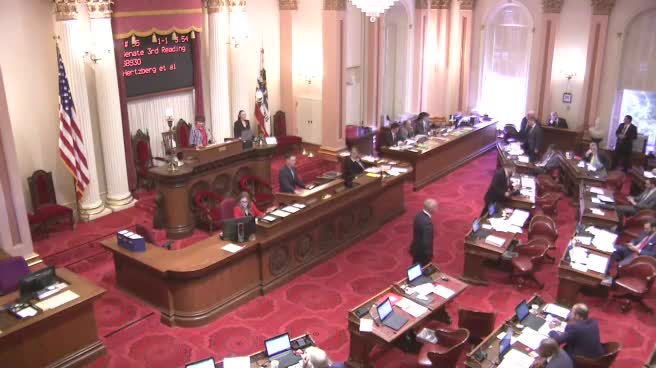 3MIN
Senate Floor
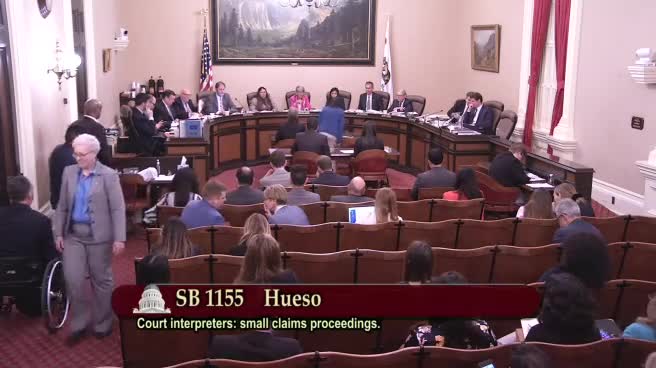 7MIN
Senate Standing Committee on Judiciary
 10MIN
Senate Standing Committee on Public Safety
Bill Author


