AB 2487: Deputy Secretary for Climate.
- Session Year: 2023-2024
- House: Assembly
- Latest Version Date: 2024-03-21
Current Status:
Failed
(2024-05-16: In committee: Held under submission.)
Introduced
In Committee
First Chamber
In Committee
Second Chamber
Enacted
What does this bill do?
The bill requires the Deputy Secretary for Climate to create and maintain a green jobs website as the central hub for employment opportunities tied to California’s shift to carbon‑neutral jobs, affecting job seekers, workers in fossil fuel and clean energy industries, and state workforce programs. It also delays the start of the deputy secretary’s annual report to the Legislature from 2025 to 2026 and ends that reporting requirement on January 1, 2030.
The summary is provided by generative AI which can make mistakes. For original language, please view the details in the table below.
Existing law, upon appropriation by the Legislature, establishes the position of Deputy Secretary for Climate within the Labor and Workforce Development Agency, to be appointed by the Governor and subject to confirmation by the Senate, for the purpose of assisting in the oversight of Californias workforce transition to a sustainable and equitable carbon-neutral economy. Existing law requires the deputy secretary to perform specified duties, including creating or coordinating programs with other state agencies to retrain and upskill workers for, among other jobs, clean energy jobs, as specified. On or before January 1, 2025, and annually thereafter, existing law requires the deputy secretary to submit a report to the Legislature on key findings and recommendations regarding the development and implementation of the workforce transition to a sustainable and equitable clean energy economy.
This bill would also require the deputy secretary to create and maintain a green jobs website that serves as the central hub for employment opportunities related to the transition to carbon-neutral jobs. The bill would delay the operation of the reporting requirement to January 1, 2026, and would make that reporting requirement inoperative on January 1, 2030.
The State Civil Service Act regulates employment with the state and vests in the Department of Human Resources all powers, duties, and authority necessary to operate the state civil service system. Existing law establishes various provisions addressing the impacts and effects of climate change on the states communities, economy, and environment.This bill would state the intent of the Legislature to enact subsequent legislation to prepare the states workforce for evolving demands in response to climate change.The State Civil Service Act regulates employment with the state and vests in the Department of Human Resources all powers, duties, and authority necessary to operate the state civil service system. Existing law establishes various provisions addressing the impacts and effects of climate change on the states communities, economy, and environment.
This bill would state the intent of the Legislature to enact subsequent legislation to prepare the states workforce for evolving demands in response to climate change.
The deputy secretary shall do all of the following:
(a)Coordinate with relevant state agencies, including, but not limited to, the Labor and Workforce Development Agency, the Energy Commission, the Office of Planning and Research, the California Environmental Protection Agency, the Natural Resources Agency, the State Lands Commission, the California Geological Survey, the Public Utilities Commission, and the State Air Resources Board, to track the progress of the state moving toward 100 percent clean energy, including by doing all of the following:
(1)To the extent possible, identifying the timing and location of fossil fuel facility closures and short-term and long-term workforce transition needs, including projected impacts on workers, businesses, and communities related to workforce development, training, job loss, and job creation.
(2)In coordination with the relevant state agencies, establishing recommended strategies and timelines for workers to transition from fossil fuel-based jobs to clean energy jobs and jobs in related fields.
(3)Tracking clean energy jobs and the transition of workers from fossil fuel-based jobs to clean energy jobs and jobs in related fields to increase access to training and employment opportunities.
(b)Create or coordinate programs with other state agencies to retrain and upskill workers for clean energy jobs and jobs in related fields, including, but not limited to, by doing all of the following:
(1)Identifying training needs and gaps in current state programs.
(2)Determining what skills will likely be needed in the states clean energy workforce over the next 25 years.
(3)Prioritizing workforce development funding and programming in communities experiencing growing income disparities due to the transition to a carbon neutral economy.
(c)Create and maintain a green jobs website that serves as the central hub for employment opportunities related to the transition to carbon-neutral jobs.
(c)On
(d)(1)On or before January 1, 2025, 2026, and annually thereafter, submit a report to the Legislature on key findings and recommendations regarding the development and implementation of the workforce transition to a sustainable and equitable clean energy economy, including challenges, achievements, and measurable progress toward creating clean energy jobs. The deputy secretary shall submit the report to the Legislature required by this subdivision in compliance with Section 9795.
(2)The requirement for submitting a report imposed under paragraph (1) is inoperative on January 1, 2030, pursuant to Section 10231.5.
(3)A report to be submitted pursuant to paragraph (1) shall be submitted in compliance with Section 9795.
SECTION 1.It is the intent of the Legislature to enact subsequent legislation to prepare the states workforce for evolving demands in response to climate change.It is the intent of the Legislature to enact subsequent legislation to prepare the states workforce for evolving demands in response to climate change.
|
Date
|
Status
|
|---|---|
| May 16, 2024 | In committee: Held under submission. |
| May 1, 2024 | In committee: Set, first hearing. Referred to APPR. suspense file. |
| Apr 18, 2024 | From committee: Do pass and re-refer to Com. on APPR. (Ayes 15. Noes 0.) (April 17). Re-referred to Com. on APPR. |
| Apr 4, 2024 | From committee: Do pass and re-refer to Com. on U. & E. (Ayes 7. Noes 0.) (April 3). Re-referred to Com. on U. & E. |
| Apr 1, 2024 | Re-referred to Com. on L. & E. |
| Mar 21, 2024 | From committee chair, with author's amendments: Amend, and re-refer to Com. on L. & E. Read second time and amended. |
| Mar 21, 2024 | Referred to Coms. on L. & E. and U. & E. |
| Feb 14, 2024 | From printer. May be heard in committee March 15. |
| Feb 13, 2024 | Read first time. To print. |
|
Date
|
Description
|
Location
|
Votes
|
|
|---|---|---|---|---|
| Apr 17, 2024 | Do pass and be re-referred to the Committee on [Appropriations] | Assembly Standing Committee on Utilities and Energy |
Passed |
|
| Apr 3, 2024 | Do pass and be re-referred to the Committee on [Utilities and Energy] | Assembly Standing Committee on Labor and Employment |
Passed |
This list shows positions taken on this bill by organizations on the date displayed, which is linked to the original source.
Positions by individuals are not included.
|
Organization
|
Position
|
Date
|
|---|---|---|
| California Environmental Voters | * Support | Apr 17, 2024 |
Date of Hearing: May 1, 2024
ASSEMBLY COMMITTEE ON APPROPRIATIONS
Buffy Wicks, Chair
ABPCA Bill Id:AB 2487
Author:(Mike Fong) – As Amended Ver:March 21, 2024
Policy Committee: | Labor and Employment | Vote: | 7 - 0 |
Utilities and Energy | 15 - 0 | ||
|
|
Urgency: No State Mandated Local Program: No Reimbursable: No
SUMMARY:
This bill requires the Deputy Secretary for Climate (Deputy Secretary) within the Labor and Workforce Development Agency (LWDA) to create and maintain a green jobs website that serves as the central hub for employment opportunities in the transition to carbon-neutral jobs.
This bill also delays, by one year, the due date of the Deputy Secretary’s report regarding the development and implementation of the workforce transition to a sustainable and equitable clean energy economy and sunsets the reporting requirement on January 1, 2030.
FISCAL EFFECT:
Ongoing cost pressures of an unknown, but potentially significant, amount to LWDA to develop the green jobs website (General Fund (GF) or Greenhouse Gas Reduction Fund). Likely costs include continued outreach to employers to share and post job opportunities and job seekers to utilize the tool, as well as information technology (IT) costs to create and maintain a user-friendly interface that connects job seekers to timely opportunities for which they qualified. LWDA estimates such IT costs to be approximately $80,000 annually.
Additionally, the Legislature has not yet appropriated money to fund and make operative the Deputy Secretary position to which this bill tasks new responsibilities. A previous estimate by the Senate Appropriations Committee cited cost pressures of approximately $250,000 to LWDA to create and fund the new position.
According to the Legislative Analyst’s Office, the GF faces a structural deficit in the tens of billions of dollars over the next several fiscal years.
COMMENTS:
- Purpose. According to the author:
A crucial part of ensuring a just transition, where all Californians have access to good paying jobs and no communities are left behind, is access to employment and job training opportunities. A Green Jobs Website that serves as the central hub for green jobs, maintained by the [Deputy Secretary], will provide a vital resource to help workers on the path to economic justice and for California to maintain its leadership on environmental justice.
This bill is supported by California Environmental Voters.
- Role of the Deputy Secretary. AB 2204 (Boerner), Chapter 348, Statues of 2022, establishes, upon appropriation, the Deputy Secretary position within LWDA to assist in the oversight of California’s workforce transition to a sustainable and equitable carbon neutral economy. The Deputy Secretary is tasked with coordinating relevant state agencies to track the progress of the state moving toward 100% clean energy, creating programs with other state agencies to retrain and upskill workers for clean energy jobs, and reporting related findings and recommendations to the Legislature. The Deputy Secretary is to be appointed by the Governor, subject to Senate confirmation, but the statute establishing the position becomes operative only upon an appropriation by the Legislature. To date, no appointment or appropriation has been made. This bill adds the creation and maintenance of a green jobs website to the Deputy Secretary’s responsibilities. However, the author is not pursuing a budget request to fund the position in this year’s state budget.
Analysis Prepared by: Irene Ho / APPR. / (916) 319-2081
Date of Hearing: April 17, 2024
ASSEMBLY COMMITTEE ON UTILITIES AND ENERGY
Cottie Petrie-Norris, Chair
ABPCA Bill Id:AB 2487 (
Author:Mike Fong) – As Amended Ver:March 21, 2024
SUBJECT: Deputy Secretary for Climate
SUMMARY: Requires the creation and maintenance of a green jobs website, as specified, by the Deputy Secretary for Climate (Deputy Secretary) at the Labor and Workforce Development Agency (LWDA). Also delays by one year, to January 1, 2026, the requirement for the Deputy Secretary to submit a report to the Legislature on key findings and recommendations regarding the development and implementation of the workforce transition to a sustainable and equitable clean energy economy.
EXISTING LAW:
- Establishes LWDA to serve California workers and businesses by improving access to employment and training programs, enforcing California labor laws to protect workers and create an even playing field for employers, and administering benefits that include workers’ compensation, unemployment insurance, and disability insurance and paid family leave. (Government Code §§ 15550-15562)
- Establishes, upon appropriation by the Legislature, the position of the Deputy Secretary within the LWDA, to be appointed by the Governor and subject to confirmation by the Senate, for the purpose of assisting in the oversight of California’s workforce transition to a sustainable and carbon-neutral economy. (Government Code § 15563.2 et seq.)
- Requires the Deputy Secretary to perform specified duties, including:
- Coordinating with other state agencies to track the progress of the state moving toward 100 percent clean energy by performing specified activities, including:
- Identifying the timing and location of fossil fuel facility closures and short-term and long-term workforce transition needs, including projected impacts on workers, businesses, and communities related to workforce development.
- Establishing recommended strategies and timelines for workers to transition from fossil fuel-based jobs to clean energy jobs and jobs in related fields.
- Tracking clean energy jobs and the transition of workers from fossil fuel-based jobs to clean energy jobs and jobs in related fields to increase access to training and employment opportunities. (Government Code § 15563.4(a))
- Create or coodinate with other state agencies to retrain and upskill workers for clean energy jobs and jobs in related fields, including by:
- Identifying training needs and gaps in current state systems.
- Determining what skills will likely be needed by the state’s clean energy workforce over the next 25 years.
- Prioritizing workforce development funding and programming in communities experiencing growing income disparities due to the transition to a carbon neutral economy. (Government Code § 15563.4(b))
- On or before January 1, 2025, and annually thereafter, submit a report, as specified, to the Legislature on key findings and recommendations regarding the development and implementation of the workforce transition to a sustainable and equitable clean energy economy, including challenges, achievements, and measurable progress toward creating clean energy job. (Government Code § 15563.4(c))
- Coordinating with other state agencies to track the progress of the state moving toward 100 percent clean energy by performing specified activities, including:
- Sunsets the requirements referenced in 2) and 3) above by January 1, 2046, unless a later enacted statute that is enacted before January 1, 2046, deletes or extends the date. (Government Code § 15563.6(b)).
FISCAL EFFECT: Unknown. This bill is keyed fiscal and will be referred to the Committee on Appropriations for its review.
BACKGROUND:
California’s Fossil Fuel Workforce – In June 2021, the Political Economy Research Institute (PERI) released a report showing there are nearly 113,000 people employed in the fossil fuel-based industries in California, amounting to 0.6% of the state’s workforce.[1] The total job figure includes oil and gas extraction operations, as well as support activities for all oil and gas projects, and other ancillary sectors, such as fossil fuel-based power generation.
California’s oil and gas jobs offer significant compensation and benefits, providing workers in those jobs with security for themselves and their families. According to the PERI report, average compensation for fossil-fuel workers is around $130,000, well above the roughly $85,000 received by workers in California’s current clean energy sectors. Three counties in California – Kern, Contra Costa, and Los Angeles – account for roughly half of all employment in the state’s fossil fuel-based industries, with the majority in Kern County.
As California moves to meet its existing climate commitments – to achieve statewide carbon neutrality by 2045[2] – the oil and gas industries may contract. As a result, investment in an ongoing relief program to take care of displaced workers, their families, and their communities could prove critical. The PERI report estimates that about 3,200 workers per year will be displaced in these industries in California between 2021 and 2030 while another roughly 2,500 will voluntarily retire each year. The report estimates that a generous transition package for these workers would come to about $470 million per year.[3]
As part of the 2022 Budget Act, the Legislature created the Displaced Oil and Gas Workers Fund, appropriating $36.5 million to the LWDA for grants to help workers transition into sectors that match their skills and expertise and offer comparable wages.[4]
COMMENTS:
- Author’s Statement. According to the author, “California is a global leader in the transition to a carbon neutral economy. Billions of dollars are already funding millions of good paying jobs, and this is just the beginning. A crucial part of ensuring a just transition, where all Californians have access to good paying jobs and no communities are left behind, is access to employment and job training opportunities. A Green Jobs Website that serves as the central hub for green jobs, maintained by the Deputy Secretary of Climate in the Labor and Workforce Development Agency, will provide a vital resource to help workers on the path to economic justice and for California to maintain its leadership on environmental justice.”
- Planning for the Transition. In June 2020, following a statutory mandate,[5] CWDB released Putting California on the High Road: A Jobs and Climate Action Plan For 2020.[6] The report addresses workforce interventions to ensure that the transition to a carbon-neutral economy creates high-quality jobs, prepares workers with the skills needed to adapt to and master new zero- and low-emission technologies, broadens career opportunities for workers from disadvantaged communities, and supports workers whose jobs may be at risk. The report includes recommendations “for just transition” to assist the state in planning for the protection and support of workers at risk of declining opportunities in the fossil fuel industry. In September 2020, the Governor signed Executive Order N-79-20 which directed the state to take a number of actions to combat the climate crisis, including requiring LWDA, and other state agencies, to develop, by July 15, 2021, and expeditiously implement a Just Transition Roadmap, consistent with the recommendations of the CWDB’s report.
The transition has already begun, and various funding sources promise to bring billions of dollars to California to create new jobs in climate-resilient industries. California recently awarded $26.7 million to prepare displaced workers from the oil and gas industry for sectors that match their skills and offer comparable wages. The California Air Resources Board is setting the stage for more fuel refinery transitions and is phasing out medium and heavy-duty combustion engines by 2036.
To ensure that all levels of government and agencies are coordinated to meet the demands of this transition, the Newsom Administration recently launched the California Jobs First Council to guide the state’s investments in economic and workforce development. This effort includes the Regional Investment Initiative (RII; formerly known as the Community Economic Resilience Fund, or CERF)[7] to support California’s diverse economic regions in reimagining industries in their area and creating the jobs of the future. The RII seeks to create a portfolio of ready-to-go projects that “accelerate California’s progress to a carbon neutral economy while creating good-paying jobs.”
- The Missing Piece. As noted by the support for this measure, California Environmental Voters, “there is no publicly sanctioned resource for the state to communicate its progress on the transition and for Californians to obtain information on green job opportunities.” This bill seeks to do that. However, the position of Deputy Secretary, which this bill gives new requirements to, has not been funded by the Legislature; in other words, this bill would not be in effect until an appropriation was made.
- Prior Legislation.
AB 2204 (Boerner) establishes, upon appropriation by the Legislature, the position of Deputy Secretary for Climate within the LWDA to assist in the oversight of California's workforce transition to a sustainable and equitable carbon neutral economy. Status: Chapter 348, Statutes of 2022.
AB 680 (Burke) established the California Jobs Plan Act of 2021 which requires CARB to work with the LWDA to update, by July 1, 2025, the funding guidelines for administering agencies to ensure that all applicants to grant programs funded by the Greenhouse Gas Reduction Fund meet fair and responsible employer standards and provide inclusive procurement policies. Status: Chapter 746, Statutes of 2021
AB 1453 (Muratsuchi, 2021) would have established the Just Transition Advisory Commission in the LWDA until January 1, 2028 and would require it to adopt and submit to the Legislature, by January 1, 2024, a Just Transition Plan that contains recommendations to transition the state’s economy to a climate-resilient and low-carbon economy. Status: Died – Assembly Committee on Appropriations.
AB 398 (E. Garcia) requires the California Workforce Development Board to publish a report outlining recommendations on workforce development and training to help communities adapt to the economic and labor-market changes resulting from California’s transition to a carbon neutral economy. Status: Chapter 135, Statutes of 2017.
- Double Referral. This bill is double-referred. It was previously heard in the Assembly Committee on Labor and Employment where it passed out on April 3rd, 2024, on a 7-0 vote.
REGISTERED SUPPORT / OPPOSITION:
Support
California Environmental Voters (formerly CLCV)
Opposition
None on file.
Analysis Prepared by: Laura Shybut / U. & E. / (916) 319-2083
Pollin, Robert. “A Program for Economic Recovery and Clean Energy Transition in California.” Department of Economics and Political Economy Research Institute, June 2021 ↑
AB 1279 (Muratsuchi, Chapter 337, Statutes of 2022); Governor’s Executive Order B-55-18, Governor Edmund G. Brown, Jr., September 10, 2018. ↑
Pg.4 Based on the conservative assumption that the oil and natural gas-based industries will contract by only 50% by 2030.; Pollin, Robert. A Program for Economic Recovery and Clean Energy Transition in California. Department of Economics and Political Economy Research Institute (PERI), June 2021. ↑
https://edd.ca.gov/en/jobs_and_training/Information_Notices/dogwf-grant-programs-sfp--py-23-24/ ↑
AB 398 (E. Garcia, Chapter 135, Statutes of 2017) ↑
Zabin, Carol. Putting California on the High Road: A Jobs and Climate Action Plan for 2030. University of California, Berkeley Center for Labor Research and Education, June 2020. ↑
https://www.labor.ca.gov/wp-content/uploads/sites/338/2024/03/ca-jobs-first-regional-investment-initiative-fact-sheet.pdf ↑
Date of Hearing: April 3, 2024
ASSEMBLY COMMITTEE ON LABOR AND EMPLOYMENT
Liz Ortega, Chair
ABPCA Bill Id:AB 2487 (
Author:Mike Fong) – As Amended Ver:March 21, 2024
SUBJECT: Deputy Secretary for Climate
SUMMARY: Requires the Deputy Secretary for Climate (Deputy Secretary) at the Labor and Workforce Development Agency (LWDA) to create and maintain a green jobs website that serves as the central hub for employment opportunities related to the transition to carbon-neutral jobs, and delays by one year, to January 1, 2026, the requirement for the Deputy Secretary to submit a report to the Legislature on key findings and recommendations regarding the development and implementation of the workforce transition to a sustainable and equitable clean energy economy.
EXISTING LAW:
- Establishes the LWDA to serve California workers and businesses by improving access to employment and training programs, enforcing California labor laws to protect workers and create an even playing field for employers, and administering benefits that include workers’ compensation, unemployment insurance, and disability insurance and paid family leave. Government Code § 15550 et seq.
- Establishes, upon appropriation by the Legislature, the position of the Deputy Secretary within the LWDA, to be appointed by the Governor and subject to confirmation by the Senate, for the purpose of assisting in the oversight of California’s workforce transition to a sustainable and carbon-neutral economy. Government Code § 15563.2 et seq.
- Requires the Deputy Secretary to perform specified duties, including:
- Coordinating with other state agencies to track the progress of the state moving toward 100 percent clean energy by performing specified activities, including:
- Identifying the timing and location of fossil fuel facility closures and short-term and long-term workforce transition needs, including projected impacts on workers, businesses, and communities related to workforce development.
- Establishing recommended strategies and timelines for workers to transition from fossil fuel-based jobs to clean energy jobs and jobs in related fields.
- Tracking clean energy jobs and the transition of workers from fossil fuel-based jobs to clean energy jobs and jobs in related fields to increase access to training and employment opportunities. Government Code § 15563.4(a).
- Create or coodinate with other state agencies to retrain and upskill workers for clean energy jobs and jobs in related fields, including by:
- Identifying training needs and gaps in current state systems.
- Determining what skills will likely be needed by the state’s clean energy workforce over the next 25 years.
- Prioritizing workforce development funding and programming in communities experiencing growing income disparities due to the transition to a carbon neutral economy. Government Code § 15563.4(b).
- On or before January 1, 2025, and annually thereafter, submit a report, as specified, to the Legislature on key findings and recommendations regarding the development and implementation of the workforce transition to a sustainable and equitable clean energy economy, including challenges, achievements, and measurable progress toward creating clean energy job. Government Code § 15563.4(c).
- Coordinating with other state agencies to track the progress of the state moving toward 100 percent clean energy by performing specified activities, including:
- Sunsets the requirements referenced in 2) and 3) above by January 1, 2046, unless a later enacted statute that is enacted before January 1, 2046, deletes or extends the date. Government Code § 15563.6(b).
FISCAL EFFECT: Unknown
COMMENTS: Note: This bill has been double-referred to the Assembly Utilities and Energy Committee upon passage out of this Committee.
AB 2204 (Boerner Horvath) of 2022 created the position of Deputy Secretary, but this position has yet to be funded by the Legislature. The requirements of this bill would not become effective until that appropriation is made.
California has committed to addressing climate change through a number of strategies, including reaching net zero emissions by 2045. Recognizing the economic implications of this transition, including for workers, the state has embarked on several just transition efforts to ensure that workers are prepared for, and benefit from, these changes. This includes efforts to train and reskill workers for jobs in new and resilient industries, including those who currently work in fossil fuel industries.
The transition has already begun, and various funding sources promise to bring billions of dollars to California to create new jobs in climate-resilient industries. California recently awarded $26.7 million to prepare displaced workers from the oil and gas industry for sectors that match their skills and offer comparable wages. The state was also recently selected as a national hydrogen hub and will receive up to $1.2 billion for an estimated 220,000 new jobs. The California Air Resources Board is setting the stage for more fuel refinery transitions and is phasing out medium and heavy-duty combustion engines by 2036. California High Speed Rail is another example of a major state-funded project creating thousands of jobs.
To ensure that all levels of government and agencies are coordinated to meet the demands of this transition, the Newsom Administration recently launched the California Jobs First Council and operational plan to guide the state’s investments in economic and workforce development to create more family-supporting jobs and prioritize industry sectors for future growth. This investment includes the Regional Investment Initiative (formerly known as the Community Economic Resilience Fund, or CERF) to support California’s diverse economic regions in reimagining industries in their area and creating the jobs of the future. The California Jobs First operational plan will call for a website for the Regional Investment Initiative that may have a similar database of employment and training opportunities. These efforts, in combination with existing state workforce development and training programs, will help train, reskill and upskill workers to fill the necessary positions.
According to the author, “California is a global leader in the transition to a carbon neutral economy. Billions of dollars are already funding millions of good paying jobs, and this is just the beginning. A crucial part of ensuring a just transition, where all Californians have access to good paying jobs and no communities are left behind, is access to employment and job training opportunities. A Green Jobs Website that serves as the central hub for green jobs, maintained by the Deputy Secretary of Climate in the Labor and Workforce Development Agency, will provide a vital resource to help workers on the path to economic justice and for California to maintain its leadership on environmental justice.”
The author also states that “The concept of the just transition has been recognized and embraced by the United Nations and this Legislature. It ensures that the socio-economic ramifications of this transition are mitigated and the benefits are spread to underserved communities. Section 6981 of the Public Contract Code, for instance, recognizes that underserved groups have been disproportionately impacted by economic downturns and job losses, citing that for every one percentage point increase in the overall unemployment rate, there is a 1.8-percent increase in African American unemployment. Furthermore, the State has embraced a just transition founded on climate, racial, and economic justice. This bill increases access to jobs that provide the strong wages necessary to stabilize families and communities, but does so with an accessible public website so the information is not hidden.”
Arguments in Support
California Environmental Voters is in support and states, “Currently, there is no publicly sanctioned resource for the state to communicate its progress on the transition and for Californians to obtain information on green job opportunities or gain the skills and training necessary to fill these jobs. Coordination and efficiency are required to promote and fill the positions needed to achieve a successful economic transition. A green jobs website ensures that these opportunities reach all Californians, especially those in declining industries.”
Arguments in Opposition
None on file.
Prior Legislation
AB 2204 (Boerner Horvath) Chapter 348, Statutes of 2022 established, upon appropriation by the Legislature, the position of Deputy Secretary for Climate within the LWDA to assist in the oversight of California's workforce transition to a sustainable and equitable carbon neutral economy.
AB 398 (E. Garcia) Chapter 135, Statutes of 2017 requires the California Workforce Development Board to publish a report outlining recommendations on workforce development and training to help communities adapt to the economic and labor-market changes resulting from California’s transition to a carbon neutral economy.
REGISTERED SUPPORT / OPPOSITION:
Support
California Environmental Voters
Opposition
None on file.
Analysis Prepared by: Erin Hickey / L. & E. /
Discussed in Hearing
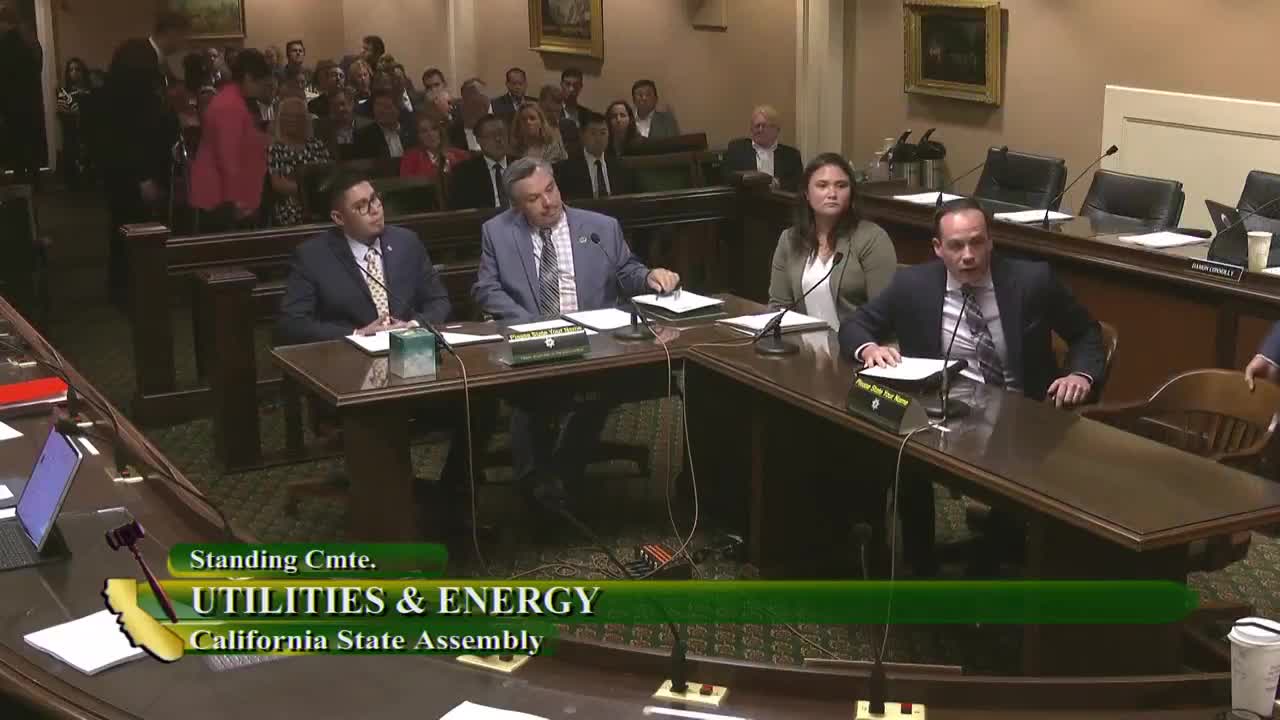 5MIN
Assembly Standing Committee on Utilities and Energy
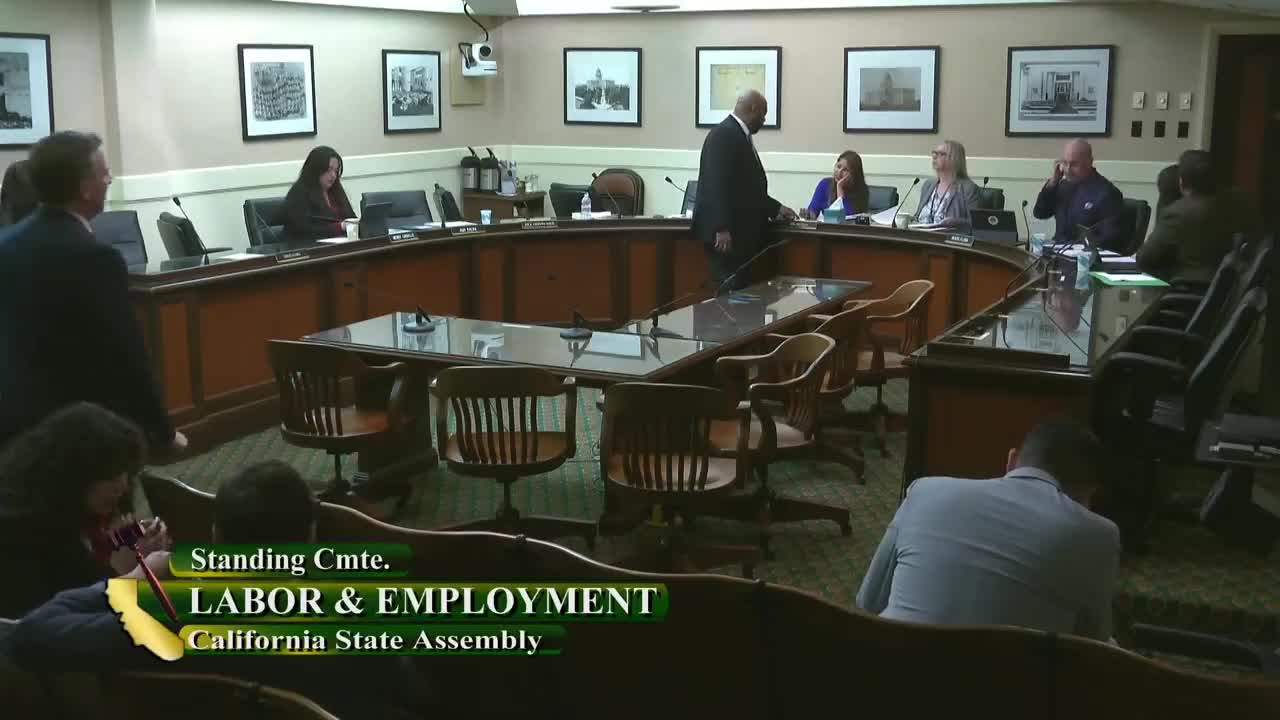 4MIN
Assembly Standing Committee on Labor and Employment
Bill Author

Bill Co-Author(s):