AB 2520: Housing: youth-specific processes and coordinated entry systems.
- Session Year: 2023-2024
- House: Assembly
- Latest Version Date: 2024-03-21
Current Status:
Failed
(2024-05-16: In committee: Held under submission.)
Introduced
In Committee
First Chamber
In Committee
Second Chamber
Enacted
What does this bill do?
The bill requires regional homelessness planning bodies (continuums of care) and Homeless Housing, Assistance, and Prevention Program grantees to create and keep youth-specific homelessness processes, including a documented youth-focused intake and matching process, a youth-tailored assessment tool, a youth advisory body made up of people with lived experience, and a range of youth housing options. If a continuum says it already has a youth system, it must document how its housing assessment is youth-specific and trauma-informed and describe its prioritization policy.
The summary is provided by generative AI which can make mistakes. For original language, please view the details in the table below.
Existing law requires the Governor to create the Homeless Coordinating and Financing Council, renamed the California Interagency Council on Homelessness, to, among other things, identify mainstream resources, benefits, and services that can be accessed to prevent and end homelessness in California and to serve as a statewide facilitator, coordinator, and policy development resource on ending homelessness in California. Existing law establishes the Homeless Housing, Assistance, and Prevention Program, administered by the Business, Consumer Services, and Housing Agency, for the purpose of providing jurisdictions, as defined, with one-time grant funds to support regional coordination and expand or develop local capacity to address their immediate homelessness challenges, as specified. Existing law requires the council, upon appropriation, to distribute certain amounts, as specified, for purposes of the program. Existing law requires an applicant to submit an application containing specified information in order to apply for a program allocation. Existing law requires an applicant to prioritize finds received to specific programs, including to create youth-specific coordinated entry systems and improve assessment tools.
This bill would require an applicant, a continuum of care, upon appropriation and beginning with the 2024-25 202627 fiscal year, to create and or maintain a youth-specific process with their respective coordinated entry system and system, as specified, implement a youth-specific assessment tool, create a body or identify an existing body composed of youth with lived experience of homelessness that the continuum of care and other Homeless Housing, Assistance, and Prevention Program grantees must consult with regularly, and create an array of youth-specific housing inventory. The bill would require the coordinated entry system to include youth-specific access points and youth-centered assessment tools and prioritizations policies. The bill would require the applicant continuum of care to document in their application how the housing assessment is youth-specific and their prioritization policy if the applicant continuum of care states they already maintain a youth-specific coordinated entry system.
The bill would also make findings and declarations related to youth-specific programs and the Homeless Housing, Assistance, and Prevention Program.
Existing law requires the Governor to create the Homeless Coordinating and Financing Council, renamed the California Interagency Council on Homelessness, to, among other things, identify mainstream resources, benefits, and services that can be accessed to prevent and end homelessness in California and to serve as a statewide facilitator, coordinator, and policy development resource on ending homelessness in California. Existing law establishes the Homeless Housing, Assistance, and Prevention Program, administered by the Business, Consumer Services, and Housing Agency, for the purpose of providing jurisdictions, as defined, with one-time grant funds to support regional coordination and expand or develop local capacity to address their immediate homelessness challenges, as specified. Existing law requires the council, upon appropriation, to distribute certain amounts, as specified, for purposes of the program. Existing law requires an applicant to submit an application containing specified information in order to apply for a program allocation. Existing law requires an applicant to prioritize finds received to specific programs, including to create youth-specific coordinated entry systems and improve assessment tools.
This bill would require an applicant, upon appropriation and beginning with the 2024-25 fiscal year, to create and maintain a youth-specific coordinated entry system and an array of youth-specific housing inventory. The bill would require the coordinated entry system to include youth-specific access points and youth-centered assessment tools and prioritizations policies. The bill would require the applicant to document in their application how the housing assessment is youth-specific and their prioritization policy if the applicant states they already maintain a youth-specific coordinated entry system.
The bill would also make findings and declarations related to youth-specific programs and the Homeless Housing, Assistance, and Prevention Program.
The Legislature finds and declares all of the following:
(a)The Homeless Housing, Assistance, and Prevention Program is a multi-round grant program administered by the Business, Consumer Services and Housing Agency. Commencing with Round 3 of the Homeless Housing, Assistance, and Prevention Program, applicants have been asked to prioritize their funding to make homelessness response systems improvements. Specifically, existing law indicates that applicants could use their funding to create a youth-specific coordinated entry system.
(b)Youth-specific coordinated entry systems allow youth to be assessed against other youth, rather than against adults, including chronically homeless adults, whose time on the street will always place them above youth if vulnerability is measured by time spent on the street. Further, youth need housing options that meet their developmentally appropriate needs, which would include a mix of rapid rehousing, time-limited or interim housing, and permanent supportive housing.
(c)In the 2023 Annual Homelessness Assessment Report to Congress from the federal Department of Housing and Urban Development, California reported the largest number of unaccompanied youth (10,173 people), accounting for more than a fourth of all unaccompanied youth nationally (29 percent), with 68.2 percent of these youth being unsheltered.
SEC. 2.Section 50223.5 is added to the Health and Safety Code, to read:50223.5.(a)Upon appropriation, and beginning with the 2024-25 202627 fiscal year, the council shall require applicants a continuum of care to do all of the following:
(1)Create and maintain a youth-specific coordinated entry system. This shall include youth-specific access points and a youth-centered assessment tool and prioritization policy.(A)An applicants prioritization policy involving youth shall not be based on length of time the youth has been homeless.(1)Create or maintain a documented, youth-specific process with their respective coordinated entry system. This process shall specify all of the following:
(A)How youth are matched to youth-specific resources.
(B)The means by which youth can access the coordinated entry system, which shall include factors in addition to length of time experiencing homelessness.
(C)How youth accessing the coordinated entry system through adult or family programs can access youth-specific supports.
(2)Implement a youth-specific assessment tool that considers the unique needs of youth experiencing homelessness and the unique presentation of homelessness among youth.
(3)Create a body or identify an existing body composed of youth with lived experience of homelessness that the continuum of care and other Homeless Housing, Assistance, and Prevention Program grantees shall consult with regularly to receive input on policies, program design, and implementation of interventions for youth.
(2)(4)Create an array of youth-specific housing inventory to align with the needs of youth in their region.
(b)If an applicant a continuum of care states that they already maintain a youth-specific coordinated entry system, the applicant continuum of care shall document all of the following in their application:
(1)How the applicants continuum of cares housing assessment is youth-specific, including how the assessment is trauma-informed.
(2)The applicants continuum of cares prioritization policy.
(c)For purposes of this section, youth-specific means for a homeless youth as defined in Section 8260 of the Welfare and Institutions Code.
The Legislature finds and declares all of the following:
(a)The Homeless Housing, Assistance, and Prevention Program is a multi-round grant program administered by the Business, Consumer Services and Housing Agency. Commencing with Round 3 of the Homeless Housing, Assistance, and Prevention Program, applicants have been asked to prioritize their funding to make homelessness response systems improvements. Specifically, existing law indicates that applicants could use their funding to create a youth-specific coordinated entry system.
(b)Youth-specific coordinated entry systems allow youth to be assessed against other youth, rather than against adults, including chronically homeless adults, whose time on the street will always place them above youth if vulnerability is measured by time spent on the street. Further, youth need housing options that meet their developmentally appropriate needs, which would include a mix of rapid rehousing, time-limited or interim housing, and permanent supportive housing.
(c)In the 2023 Annual Homelessness Assessment Report to Congress from the federal Department of Housing and Urban Development, California reported the largest number of unaccompanied youth (10,173 people), accounting for more than a fourth of all unaccompanied youth nationally (29 percent), with 68.2 percent of these youth being unsheltered.
SEC. 2.Section 50223.5 is added to the Health and Safety Code, to read:50223.5.(a)Upon appropriation, and beginning with the 2024-25 fiscal year, the council shall require applicants to do all of the following:
(1)Create and maintain a youth-specific coordinated entry system. This shall include youth-specific access points and a youth-centered assessment tool and prioritization policy.
(A)An applicants prioritization policy involving youth shall not be based on length of time the youth has been homeless.
(2)Create an array of youth-specific housing inventory to align with the needs of youth in their region.
(b)If an applicant states that they already maintain a youth-specific coordinated entry system, the applicant shall document all of the following in their application:
(1)How the applicants housing assessment is youth-specific, including how the assessment is trauma-informed.
(2)The applicants prioritization policy.
(c)For purposes of this section, youth-specific means for a homeless youth as defined in Section 8260 of the Welfare and Institutions Code.
|
Date
|
Status
|
|---|---|
| May 16, 2024 | In committee: Held under submission. |
| May 8, 2024 | In committee: Set, first hearing. Referred to APPR. suspense file. |
| Apr 24, 2024 | From committee: Do pass and re-refer to Com. on APPR. with recommendation: To Consent Calendar. (Ayes 6. Noes 0.) (April 23). Re-referred to Com. on APPR. |
| Apr 1, 2024 | Re-referred to Com. on HUM. S. |
| Mar 21, 2024 | Read second time and amended. |
| Mar 20, 2024 | From committee: Amend, and do pass as amended and re-refer to Com. on HUM. S. (Ayes 9. Noes 0.) (March 20). |
| Mar 4, 2024 | Referred to Coms. on H. & C.D. and HUM. S. |
| Feb 14, 2024 | From printer. May be heard in committee March 15. |
| Feb 13, 2024 | Read first time. To print. |
|
Date
|
Description
|
Location
|
Votes
|
|
|---|---|---|---|---|
| Apr 23, 2024 | Do pass and be re-referred to the Committee on [Appropriations] with recommendation: To Consent Calendar | Assembly Standing Committee on Human Services |
Passed |
|
| Mar 20, 2024 | Do pass as amended and be re-referred to the Committee on [Human Services] | Assembly Standing Committee on Housing and Community Development |
Passed |
This list shows positions taken on this bill by organizations on the date displayed, which is linked to the original source.
Positions by individuals are not included.
|
Organization
|
Position
|
Date
|
|---|---|---|
| Alliance for Children's Rights | ** Support | |
| Bill Wilson Center | ** Support | |
| Bright Futures for Youth | ** Support | |
| California Alliance of Caregivers | ** Support | |
| California Coalition For Youth | ** Support | |
| Children Now | ** Support | |
| Covenant House California | ** Support | |
| Family Assistance Program | ** Support | |
| First Place for Youth | ** Support | |
| Home Start, Inc. | ** Support | |
| Larkin Street Youth Services | ** Support | |
| Los Angeles LGBT Center | ** Support | |
| National Network for Youth | ** Support | |
| Orangewood Foundation | ** Support | |
| Power CA Action | ** Support | |
| Sacramento LGBT Community Center | ** Support | |
| Safe Place For Youth | ** Support | |
| San Diego Youth Services | ** Support | |
| Steinberg Institute | ** Support | |
| YMCA of San Diego County | ** Support | |
| YMCA San Diego | * Support | Mar 20, 2024 |
Date of Hearing: May 8, 2024
ASSEMBLY COMMITTEE ON APPROPRIATIONS
Buffy Wicks, Chair
ABPCA Bill Id:AB 2520
Author:(Ramos) – As Amended Ver:March 21, 2024
Policy Committee: | Housing and Community Development | Vote: | 9 - 0 |
Human Services | 6 - 0 | ||
|
|
Urgency: No State Mandated Local Program: No Reimbursable: No
SUMMARY:
This bill, beginning in fiscal year 2026-27, requires the California Interagency Council on Homelessness (Cal ICH) to require each continuum of care (CoC) to create or maintain a youth-specific process for its Coordinated Entry System (CES).
Specifically, this bill:
- Requires Cal ICH, upon appropriation, and beginning with the 2026-27 fiscal year, to require each CoC do the following:
- Create or maintain a documented, youth-specific process with their respective CES that specifies how youth are matched to youth-specific resources, the means by which youth can access the CES, as specified, and how youth accessing the CES through adult or family programs can access youth-specific supports.
- Implement a youth-specific assessment tool that considers the unique needs of youth experiencing homelessness and the unique presentation of homelessness among youth.
- Create a body or identify an existing body composed of youth with lived experience of homelessness the CoC and other Homeless Housing, Assistance, and Prevention Program (HHAP) grantees are required to consult with regularly to receive input on policies, program design, and implementation of interventions for youth.
- Create an array of youth-specific housing inventory to align with the needs of youth in the CoC’s region.
- Requires, if a CoC states it already maintains a youth-specific CES, the CoC to document in its application how the CoC’s housing assessment is youth-specific, including how the assessment is trauma-informed, and the CoC’s prioritization policy.
FISCAL EFFECT:
Cal ICH estimates ongoing General Fund costs of $1.8 million in the first year and $1.7 million annually thereafter for 11 staff positions for Cal ICH to establish a new unit responsible for requiring and enforcing statutory requirements onto 44 CoCs to create and maintain a youth-specific process with their respective CES.
The state does not provide ongoing funding to CoCs to maintain CES. Although HHAP funding can be used for this purpose, it is not ongoing and is prioritized for exits into permanent housing.
According to the Legislative Analyst’s Office, the General Fund faces a structural deficit in the tens of billions of dollars over the next several fiscal years.
COMMENTS:
- Purpose. According to the author:
Addressing youth homelessness is a top priority and in order to do so it requires youth specific solutions. We know that up to 50% of adults experiencing chronic homelessness had their first homeless experience between the ages of 16-24. Additional research estimates 85% of people who experience long-term homelessness come from the "youth-to-adult" pipeline. With [this bill] we aim to provide a developmentally-appropriate fix to the gap in services and ensure Continuums of Care include youth-specific entry points, assessment, and prioritization scores, and youth appropriate housing and services. By doing so, we can go a long way in reducing the number of people experiencing homelessness in the long run.
- Background. CoCs and HHAP. A CoC is an integrated system of care designed to guide and track homeless individuals and families through a comprehensive array of housing and services. The CoC provides tailored housing and services based on the specific needs of individuals experiencing homelessness to help them achieve housing stability and independence. There are 44 CoCs in the state, each geographically covering the county in which it is situated.
The HHAP provides local jurisdictions with funds to support regional coordination and expand or develop local capacity to address their immediate homelessness challenges. Large cities, counties, CoCs, and tribes may apply for HHAP funding. Applicants are currently submitting plans for the fifth round of funding. Round 3 and Round 4 both authorized the use of HHAP funds to create a youth-specific CES or youth-specific coordinated entry access points, or to improve the coordinated entry assessment tool to ensure it contemplates the specific needs of youth experiencing homelessness. HHAP requires applicants to use a percent of their allocation to assist homeless youth.
Coordinated Entry System. CES is a CoC-established system-wide process to quickly and equitably coordinate the access, assessment, prioritization, and referrals to housing and services for people experiencing or at imminent risk of homelessness. A CES prioritizes individuals for housing based on the length of time they have been homelessness.
In 2012, the federal Department of Housing and Urban Development (HUD) began requiring CoCs to use a CES. In 2017, HUD mandated the use of CES for all CoCs as a condition of receiving federal funds. HUD has provided guidance to CoCs on developing and implementing a youth-specific coordinated entry process but does not require its inclusion.
Studies show youth experience homelessness differently than adults, meaning they are more likely to cycle in and out of homelessness, staying temporarily with friends or family, but not securing a permanent housing solution. A youth-specific CES allows youth to be assessed against other youth, rather than against adults, including chronically homeless adults, whose length of time on the street will always prioritize them above youth for services, by the current measure. As explained by the sponsors, the California Coalition for Youth:
Unfortunately, without contemplating the needs of youth explicitly, young people are being disadvantaged in CES because they may have had shorter lengths of time experiencing homelessness, and often, vulnerability scores in CES are tied to one’s length of homelessness and overall health. This often means youth will score low on the list when it comes to being offered services.
Existing law encourages HHAP applicants to create a youth-specific CES, but does not require they do so. This bill requires CoCs to ensure there is a youth-specific process with their respective CESs.
Cal ICH. In 2016, SB 1380 (Mitchell), Chapter 847, created the Homelessness Coordinating and Financing Council, which was renamed the California Interagency Council on Homelessness (Cal-ICH) in 2021, to coordinate the state's response to homelessness. Cal-ICH is chaired by the Secretary of the Business, Consumer Services, and Housing (BCSH) Agency and the Secretary of the California Health and Human Services (HHS) Agency, and is made up of various state departments and agencies.
Analysis Prepared by: Jennifer Swenson / APPR. / (916) 319-2081
Date of Hearing: April 23, 2024
ASSEMBLY COMMITTEE ON HUMAN SERVICES
Alex Lee, Chair
ABPCA Bill Id:AB 2520 (
Author:Ramos) – As Amended Ver:March 21, 2024
SUBJECT: Housing: youth-specific processes and coordinated entry systems
SUMMARY: Requires the California Interagency Council on Homelessness (Cal-ICH) to ensure a continuum of care (CoC) has a youth-specific process with their coordinated entry system (CES). Specifically, this bill:
- Requires Cal-ICH, upon appropriation, and beginning with the 2026-27 fiscal year, to ensure a CoC create or maintain a documented, youth-specific process with their respective CES that requires this process to specify all of the following:
- How youth are matched to youth-specific resources;
- The means by which youth can access the CES, to include factors in addition to length of time experiencing homelessness;
- How youth accessing the CES through adult or family programs can access youth-specific supports;
- Implement a youth-specific assessment tool that considers the unique needs of youth experiencing homelessness and the unique presentation of homelessness among youth;
- Create a body or identify an existing body composed of youth with lived experience of homelessness that the CoC and other Homeless Housing, Assistance, and Prevention Program (HHAP) grantees are required to consult with regularly to receive input on policies, program design, and implementation of interventions for youth; and,
- Create an array of youth-specific housing inventory to align with the needs of youth in their region.
- Requires, if a CoC states that they already maintain a youth-specific CES, the CoC to document all of the following in their application:
- How the CoC’s housing assessment is youth-specific, including how the assessment is trauma-informed; and,
- The CoC’s prioritization policy.
- Defines “youth-specific” to mean for a homeless youth, as defined in existing law, an unaccompanied youth between 12 and 24 years of age, inclusive, who is experiencing homelessness, as defined the federal McKinney-Vento Homeless Assistance Act. Specifies that “homeless youth” includes unaccompanied youth who are pregnant or parenting.
- Makes legislative findings and declarations related to HHAP and that applicants can use their funding to create a youth-specific CES.
EXISTING LAW:
State law:
- Establishes Cal-ICH, formerly known as the Homelessness Coordinating and Financing Council (HCFC), to oversee and coordinate the implementation of the Housing First guidelines and regulations in California and to identify resources and services that can be accessed to prevent and end homelessness in California. (Welfare and Institutions Code [WIC] 8255 § et seq.)
- Defines "Housing First" practices as an evidence-based model that uses housing as a tool, rather than a reward, for recovery and centers on providing or connecting people experiencing homelessness to permanent housing as quickly as possible. (WIC § 8255 (d)(1))
- Established HHAP to provide jurisdictions with one-time grant funds to support regional coordination and expand or develop local capacity to address their immediate homelessness challenges informed by a best-practices framework focused on moving homeless individuals and families into permanent housing and supporting the efforts of those individuals and families to maintain their permanent housing. Directs Cal-ICH to administer HHAP. (Health and Safety Code [HSC] § 50216 et seq.)
- Requires HHAP to be used for evidence-based solutions that address and prevent homelessness among eligible populations, including any of the following:
- Rapid rehousing, including rental subsidies and incentives to landlords, such as security deposits and holding fees;
- Interim sheltering, limited to newly developed, clinically enhanced congregate shelters, new or existing non-congregate shelters, and operations of existing navigation centers and shelters based on demonstrated need. Specifies demonstrated need for purposes of these provisions to be based on the following:
- The number of available shelter beds in the city, county, or region served by a CoC;
- The number of people experiencing unsheltered homelessness in the homeless point-in-time count;
- Shelter vacancy rate in the summer and winter months;
- Percentage of exits from emergency shelters to permanent housing solutions; and,
- A plan to connect residents to permanent housing. (HSC § 50220.7)
- Requires, beginning with the third round of HHAP, applicants to provide specified information for all rounds of program allocations through a data collection, reporting, performance monitoring, and accountability framework, as established by Cal-ICH. (HSC § 50223(a))
- Requires Cal-ICH to post a statewide report that aggregates each applicant’s outcome goals into a single statewide set of metrics. (HSC § 50223(a)(3))
- Requires each recipient that receives a round three program allocation to submit to Cal-ICH a final report, as well as detailed uses of all program funds, no later than October 1, 2026. (HSC § 50223(b))
- Requires each recipient that receives a round four program allocation to submit to Cal-ICH a final report, as well as detailed uses of all program funds, no later than October 1, 2027. (HSC § 50223(c))
- Establishes requirements for applicants to receive a round four program allocation, including that the application should include a local homelessness action plan that assesses the current number of people experiencing homelessness and existing programs within the jurisdiction.
Specifies the plan should address strategies to meet outcome goals, including improving CES to eliminate racial bias or creating youth-specific coordinated entry systems. (HSC § 50220.7(a))
Federal law:
- Establishes the McKinney-Vento Homeless Assistance Act to address the education of children and youth experiencing homelessness. Homeless children and youth are defined as individuals without a fixed, regular, and adequate nighttime residence. It encompasses those living in shelters, motels, cars, parks, or other inadequate conditions. Defines unaccompanied youth as homeless children or youth not in the physical custody of a parent or guardian. (42 United States Code (U.S.C.) § 11434a(2))
- Establishes the United States Interagency Council on Homelessness to coordinate a federal response to homelessness and create a national partnership at every level of government and with the private sector to end homelessness. (42 U.S.C. § 11311)
FISCAL EFFECT: Unknown, this bill has not been analyzed by a fiscal committee.
COMMENTS: This analysis is focused only on topics germane to the Assembly Human Services Committee’s jurisdiction. For additional discussion, please see the Assembly Committee on Housing and Community Development’s analysis.
Background: The California Interagency Council on Homelessness. Cal-ICH, as it is known today, began with the initial passage of SB 1380 (Mitchell), Chapter 847, Statutes of 2016, and the establishment of the HCFC. The goal of the HCFC was to implement Housing First practices across the state to reduce the prevalence and duration of homelessness in California. As the homelessness crisis worsened as we entered into the 2020 Coronavirus pandemic, it became apparent that more investments were needed to offer the proper resources and techniques to vulnerable California residents. In 2021, HCFC was renamed and restructured to become Cal-ICH. In addition to administration of Housing First policies, Cal-ICH now also works to provide purposeful coordination of services and benefits to align the many state departments using different programs to help address homelessness. Through an adopted Action Plan, developed with input from over 60 community entities, public agencies, nonprofits, and issue experts, Cal-ICH has landed on five action areas and goals for the state. As required by law, the Action Plan was first adopted in March 2021 and has since been updated in September 2022 and September 2023. According to Cal-ICH, the plan focuses on the highest-priority strategies that will have the greatest impact, with a commitment to update activities annually. The latest update captures the full depth of activities related to housing and homelessness being implemented in Fiscal Year 2023-24. Cal-ICH operates under the Business, Consumer Services, and Housing Agency and is co-chaired by the Secretary of the California Health and Human Services Agency.
Continuums of Care. In the context of California homelessness, a CoC refers to an integrated system of care designed to guide and track homeless individuals and families through a comprehensive array of housing and services. The CoC provides tailored housing and services based on the specific needs of individuals experiencing homelessness. By addressing individual circumstances, CoCs aim to achieve housing stability and independence. CoCs involve local entities, often at the county or group-of-counties level, to administer housing assistance programs. These entities collaborate to create and implement action plans that prevent future homelessness and improve outcomes for those currently without stable housing. This bill would require Cal-ICH, to ensure a CoC has a documented, youth-specific process with their respective CES that requires information on how youth are matched to youth-specific resources and the means by which youth can access the CES. The bill also requires Cal-ICH to ensure that each CoC creates a body or identifies an existing body composed of youth with lived experience of homelessness that the CoC and other HHAP grantees are required to consult with regularly to receive input on policies, program design, and implementation of interventions for youth.
Coordinated Entry Systems: A CES is a vital component of the overall strategy to prevent and end youth homelessness. CES processes enable communities to effectively and efficiently use resources to house those experiencing or at-risk of homelessness. The goal is to make it easier for persons experiencing homelessness to access the housing and service resources that are best suited for them. CES processes are adapted specifically for working with runaway and homeless youth populations. These processes recognize the unique needs and developmental stages of young people who are unaccompanied and without stable housing. Youth-specific CES ensure that all community stakeholders, including runaway and homeless youth providers, child welfare agencies, school systems, justice systems, workforce partners, and other youth-serving organizations, collaborate in planning and implementing a responsive and developmentally appropriate CES processes. The intent is to standardize and streamline the process for youth access to homelessness-dedicated resources across the entire crisis response system, reducing the burden on youth to receive needed housing and supportive services. A youth-inclusive CES process involves several key components:
- Ensuring youth can easily enter the system and access services.
- Using tools to measure vulnerability and need for housing and related services.
- Determining who receives resources based on community-wide availability.
- Facilitating connections to appropriate housing options and support.
The Homeless Housing, Assistance and Prevention Program was established in 2019 and provides local jurisdictions with funds to support regional coordination and expand or develop local capacity to address their immediate homelessness challenges. Cal-ICH plays a crucial role in the HHAP grant program by overseeing implementation and ensuring that the program aligns with guidelines and regulations, and focusing on evidence-based approaches like Housing First. The HHAP program consists of multiple funding rounds:
HHAP Round 1: A $650 million grant supporting local jurisdictions in addressing immediate homelessness challenges, enhancing regional coordination, and expanding local capacity.
HHAP Round 2: A $300 million grant to continue building on regional collaboration developed through previous Cal-ICH funding rounds and create unified regional responses to homelessness.
HHAP Rounds 3, 4, and 5: Each provides $1 billion in flexible funding for local jurisdictions (including federally recognized tribal governments) to sustain efforts in ending and preventing homelessness.
Cal-ICH ensures that these funds are allocated effectively and used to improve regional and systems coordination and monitors progress, provides technical assistance, and ensures accountability. Cal-ICH is permitted to withhold funding until improvements are made, emphasizing program effectiveness and outcomes.
However, as noted in the April 2024 report by the Auditor of the State of California entitled Homelessness in California The State Must Do More to Assess the Cost‑Effectiveness of Its Homelessness Programs, the Legislature intends to transfer all grant programs administered by Cal-ICH to the California Department of Housing and Community Development (HCD) by July 2024 to allow Cal-ICH to better focus its efforts on providing statewide policy development and coordination.
HHAP provides funding for a variety of services that address multiple aspects of homelessness, including providing interim housing. According to the Auditor’s report, Cal-ICH tracks the spending of HHAP funds by individual eligible use categories. Such tracking shows that, as of December 2022, about half of the HHAP Round 1 funding had been used for emergency shelters and operating subsidies. The amount used for each other eligible use was less than 15%. Grantees have until June 2026 to spend the funds from HHAP Rounds 2 and 3, and until June 2027 for Round 4.
Youth-Specific Coordinated Entry Systems: Youth-specific CES allow youth to be assessed against other youth, rather than against adults, including chronically homeless adults, whose time on the street will always place them above youth if vulnerability is measured by time spent on the street. Further, youth need housing options that meet their developmentally appropriate needs, which would include a mix of rapid rehousing, time-limited or interim housing, and permanent supportive housing. Current law encourages HHAP applicants to create a youth-specific CES but does not require that they do so. This bill would require CoCs to ensure there is a youth-specific process with their respective CES.
Author’s Statement: According to the Author, “Addressing youth homelessness is a top priority and in order to do so it requires youth specific solutions. We know that up to 50% of adults experiencing chronic homelessness had their first homeless experience between the ages of 16-24. Additional research estimates 85% of people who experience long-term homelessness come from the "youth-to-adult" pipeline. With [this bill], we aim to provide a developmentally-appropriate fix to the gap in services and ensure Continuums of Care include youth-specific entry points, assessment, and prioritization scores, and youth appropriate housing and services. By doing so, we can go a long way in reducing the number of people experiencing homelessness in the long run.”
Equity Implications: As noted in the 2023 Annual Homelessness Assessment Report to Congress from the federal Department of Housing and Urban Development, California reported the largest number of unaccompanied youth (10,173 people), accounting for more than a fourth of all unaccompanied youth nationally (29%), with 68.2% of these youth being unsheltered. Between 2022 and 2023, the number of unaccompanied youth increased by 15%, representing an additional 4,613 youth. The 2023 figure is similar to the number observed in 2020, just before the onset of the pandemic. The challenges these youth face underscore the need for solutions to assist this vulnerable population.
Double referral: This bill was previously heard in the Assembly Housing and Community Development Committee, on March 20, 2024, and was approved on a 9-0 vote.
RELATED AND PRIOR LEGISLATION:
AB 1220 (Luz Rivas), Chapter 398, Statutes of 2021, renamed the HCFC to Cal-ICH, named the Secretary of the California Health and Human Services Agency as a co-chair, reconstituted the Cal-ICH membership, and required the Cal-ICH to meet at least twice yearly with an advisory committee, among other things.
SB 918 (Wiener), Chapter 841, Statutes of 2018, established the Homeless Youth Act of 2018 to better serve the state’s homeless youth population and required the HCFC to take on additional related responsibilities, including setting goals to prevent and end homelessness among youth in the state, defining outcome measures, and gathering data related to those goals.
SB 1380 (Mitchell), Chapter 847, Statutes of 2016, created the HCFC to implement Housing First policies throughout the state.
REGISTERED SUPPORT / OPPOSITION:
Support
California Coalition for Youth (Sponsor)
Alliance for Children's Rights
Bill Wilson Center
Bright Futures for Youth
California Alliance of Caregivers
Children Now
Covenant House California
Family Assistance Program
First Place for Youth
Home Start, INC
Larkin Street Youth Services
Los Angeles LGBT Center
National Network for Youth
Orangewood Foundation
Power CA Action
Sacramento LGBT Community Center
Safe Place for Youth
San Diego Youth Services
Steinberg Institute
YMCA of San Diego County
Opposition
None on file.
Analysis Prepared by: Jessica Langtry / HUM. S. / (916) 319-2089
Date of Hearing: March 20, 2024
ASSEMBLY COMMITTEE ON HOUSING AND COMMUNITY DEVELOPMENT
Christopher M. Ward, Chair
ABPCA Bill Id:AB 2520 (
Author:Ramos) – As Introduced Ver:February 13, 2024
SUBJECT: Housing: youth-specific coordinated entry systems
SUMMARY: Requires applicants for the Homelessness Housing, Assistance, and Prevention (HHAP) Program to utilize future funding to create and maintain youth-specific coordinated entry systems (CES). Specifically, this bill:
- Requires upon appropriation, beginning with the 2024-25 fiscal year, the California Interagency Council on Homelessness (Cal-ICH) to require HHAP applicants to do all of the following:
- Create and maintain a youth-specific CES that includes youth-specific access points and a youth-centered assessment tool and prioritization policy;
- Provide that an applicant’s prioritization policy involving youth shall not be based on length of time the youth has been homeless; and
- Create an array of youth-specific housing inventory to align with the needs of youth in their region.
- Provides that if an applicant already maintains a youth-specific CES, the applicant must document all of the following in their HHAP application:
- How the applicant’s housing assessment is youth-specific, including how the assessment is trauma-informed; and
- The applicant’s prioritization policy.
- Defines “youth-specific” to mean for a homeless youth, defined as an unaccompanied youth between 12 and 24 years of age, inclusive, who is experiencing homelessness, as defined in subsection (2) of Section 725 of the federal McKinney-Vento Homeless Assistance Act (42 U.S.C. Sec. 11434a(2)). “Homeless youth” includes unaccompanied youth who are pregnant or parenting.
EXISTING LAW:
- Established HHAP to provide jurisdictions with one-time grant funds to support regional coordination and expand or develop local capacity to address their immediate homelessness challenges informed by a best-practices framework focused on moving homeless individuals and families into permanent housing and supporting the efforts of those individuals and families to maintain their permanent housing. Directs Cal-ICH to administer HHAP. (Government Code (GC) Section 50216)
- Requires HHAP to be used for evidence-based solutions that address and prevent homelessness among eligible populations, including any of the following:
- Rapid rehousing, including rental subsidies and incentives to landlords, such as security deposits and holding fees;
- Operating subsidies in new and existing affordable or supportive housing units, emergency shelters, and navigation centers. Operating subsidies may include operating reserves;
- Street outreach to assist persons experiencing homelessness to access permanent housing and services;
- Services coordination, which may include access to workforce, education, and training programs, or other services needed to promote housing stability in supportive housing;
- Systems support for activities necessary to create regional partnerships and maintain a homeless services and housing delivery system, particularly for vulnerable populations, including families and homeless youth;
- Delivery of permanent housing and innovative housing solutions, such as hotel and motel conversions;
- Prevention and shelter diversion to permanent housing, including rental subsidies; and
- Interim sheltering, limited to newly developed clinically enhanced congregate shelters, new or existing noncongregate shelters, and operations of existing navigation centers and shelters based on demonstrated need. Demonstrated need for purposes of this paragraph shall be based on the following:
- The number of available shelter beds in the city, county, or region served by a continuum of care;
- The number of people experiencing unsheltered homelessness in the homeless point-in-time count;
- Shelter vacancy rate in the summer and winter months;
- Percentage of exits from emergency shelters to permanent housing solutions; and
- A plan to connect residents to permanent housing. (GC Section 50220.7)
- Requires, beginning with the third round of HHAP, applicants to provide the following information for all rounds of program allocations through a data collection, reporting, performance monitoring, and accountability framework, as established by Cal-ICH:
- Data on the applicant’s progress towards meeting their outcome goals, which must be submitted annually on December 31 of each year through the duration of the program;
- If the applicant has not made significant progress toward their outcome goals, the applicant must submit a description of barriers and possible solutions to those barriers;
- Applicants that do not demonstrate significant progress towards meeting outcome goals must accept technical assistance from the council and may also be required to limit the allowable uses of these program funds, as determined by the council;
- A quarterly fiscal report of program funds expended and obligated in each allowable budget category approved in their application for program funds; and
- If the applicant has not made significant progress toward their outcome goals, then the applicant must report on their outcome goals in their quarterly report. (GC Section 50220.7)
- Requires Cal-ICH to post a statewide report that aggregates each applicant’s outcome goals into a single statewide set of metrics. (GC Section 50220.7)
- Requires each recipient that receives a round three program allocation to submit to Cal-ICH a final report, as well as detailed uses of all program funds, no later than October 1, 2026. (GC Section 50220.7)
- Requires each recipient that receives a round four program allocation to submit to Cal-ICH a final report, as well as detailed uses of all program funds, no later than October 1, 2027. (GC Section 50220.7)
FISCAL EFFECT: Unknown.
COMMENTS:
Author’s statement: According to the author, “Addressing youth homelessness is a top priority and in order to do so it requires youth specific solutions. We know that up to 50% of adults experiencing chronic homelessness had their first homeless experience between the ages of 16-24. Additional research estimates 85% of people who experience long-term homelessness come from the "youth-to-adult" pipeline. With AB 2520, we aim to provide a developmentally-appropriate fix to the gap in services and ensure Continuums of Care include youth-specific entry points, assessment, and prioritization scores, and youth appropriate housing and services. By doing so, we can go a long way in reducing the number of people experiencing homelessness in the long run.”
HHAP: The HHAP program was created to provide jurisdictions funding to expand or develop local capacity to address their immediate homelessness challenges informed by a best-practices framework focused on moving homeless individuals and families into permanent housing and supporting the efforts of those individuals and families to maintain their permanent housing. Large cities (with a population of 300,000 or more), counties, Continuums of Care (CoCs), and tribes can apply for HHAP funding. There have been five rounds of funding for HHAP. Applicants are currently submitting plans for the fifth round of funding. While Round 3 of HHAP Program required applicants to develop a Local Action Plan and performance goals, it did not require regional coordination. Round 5 of HHAP required applicants to develop a regionally coordinated homeless action plan and apply as a region.
Round 3 and 4 both authorized the use of HHAP funds to create a youth-specific CES or youth-specific coordinated entry access points, or to improve the coordinated entry assessment tool to ensure that it contemplates the specific needs of youth experiencing homelessness.
The Homeless Emergency Aid Program (HEAP) and subsequently HHAP requires applicants to use a percent of their allocation to assist homeless youth. A total of $276 million from both programs is required to be used by local jurisdictions to address youth homelessness. The John Burton Foundation analyzed the impact these funds had regionally on the reducing the number of homelessness youth by comparing the 2020 point-in-time-count (PIT) to the 2022 PIT. They found a 21% reduction in homelessness among unaccompanied youth. California’s decrease in youth homelessness is 2.6 times greater than the reduction in all other states – all other states decreased by 8%.
Homeless Youth in California: According to the 2023 Point-In-Time count, there are 10,173 homeless youth and another 2,219 parenting youth and their children experiencing homelessness in California. Youth homelessness is often rooted in family conflict. Other contributing factors include economic circumstances like poverty and housing insecurity, racial disparities, and mental health and substance use disorders. Young people who have had involvement with the child welfare and juvenile justice systems are also more likely to become homeless. Evidence has also shown that being homelessness as a youth is a key indicator of adult homelessness.
Coordinated Entry Systems: In 2012, the federal Department of Housing and Urban Development (HUD) began requiring CoCs to use a CES. In 2017 HUD mandated the use of CES for all CoCs as a condition of receiving federal funds.
CES is a CoC-established system-wide process to quickly and equitably coordinate the access, assessment, prioritization and referrals to housing and services for people experiencing or at imminent risk of homelessness. CES is an evidence-based strategy that focuses on housing and service coordination designed to link people experiencing homelessness to the most appropriate housing solution based on their needs.
There are 44 CoCs in the state. Each CoC geographically covers the county in which it is situated. A CoC is either controlled by county government or it is created as a nonprofit with representation from local nonprofit homelessness services providers and in some cases representatives from the county and cities it covers geographically. The CES is meant to be a community-wide tool and therefore people entered into system are from the entire county. The CES is also meant to remove racial bias in who is prioritized for housing and services and prioritize people based on need. Significant racial disproportionality exists among those experiencing homelessness, with people who identify as Black/African American very overrepresented.
CESs prioritize individuals for housing based on the length of time they have been homelessness. Youth experience homelessness differently than adults. They are more likely to cycle in and out of homelessness, staying temporarily with friends or family, but not securing a permanent housing solution.
HUD has provided guidance to CoCs on developing and implementing a coordinated entry processes specific to working with runaway and homeless youth populations but does not mandate inclusion. HUD encourages CoCs with a network of youth-serving programs to consider whether they would better serve youth by creating coordinated entry access points dedicated to underage and transition aged youth. Access points can be located in areas where homeless youth feel comfortable and safe, staffed with people who specialize in working with youth. In addition, CoCs should take care to ensure that if they use separate coordinated entry points for youth, that those youth can still access assistance from other parts of the homeless assistance system and that youth who access other coordinated entry points can access assistance from youth serving programs.
This bill would require all HHAP applicants – CoCs large cities, and counties – to maintain a youth-specific CES; however, only CoCs receive funding to maintain a CES by HUD. The committee may wish to amend the bill to limit the requirements of the bill to CoCs to better align the bill will existing processes.
HUD policy guidance does not require a CoC to create a separate youth-specific CES – instead, a CoC can integrate youth-specific access points into an existing CES. The committee may wish to allow a CoC to meet the requirements of the bill by integrating youth-specific assessments and access points into the existing CES.
The state does not provide ongoing funding to CoCs to maintain CES. Although HHAP can be used for this purpose, it is not ongoing and priority for HHAP funding is for exits into permanent housing. The committee may wish to allow CoCs to integrate youth-specific assessment tools in the existing CES rather than create a new system. This aligns with HUD direction to CoCs in creating a youth-specific CES.
Committee Amendments: The following amendments align this bill more closely with HUD’s policy guidance to CoCs for creating a youth-specific CES:
- Apply the requirements of this bill to CoCs only and not all applicants of HHAP
- Apply the requirements of this bill to 2026-27 HHAP funding. This would mean Round 6 of HHAP, should funding be allocated in the budget.
- Allow CoCs to incorporate youth-specific standards into their existing CES without creating another system.
- Require a CoC to identify an existing body composed of youth with lived experience of homelessness that the CoC and other HHAP grantees shall consult with regularly to receive input on policies, program design, and implementation of interventions for youth.
SEC. 2.
Section 50223.5 is added to the Health and Safety Code, to read:
50223.5.
(a) Upon appropriation, and beginning with the 2024-25 2026-27 fiscal year, the council shall require applicants Continuums of Care’s to do all of the following:
(1) Create and or maintain a documented youth-specific process with their coordinated entry system. This process shall specify how youth are matched to youth specific resources, the means by which youth can access the coordinated entry system, which shall include factors in addition to length of time experiencing homelessness, and how youth accessing the coordinated entry system through adult or family programs can access youth-specific supports. youth-specific access points and a youth-centered assessment tool and prioritization policy.
(A) An applicant’s prioritization policy involving youth shall not be based on length of time the youth has been homeless.
(2) Implement a youth-specific assessment tool that considers the unique needs of youth experiencing homelessness and the unique presentation of homelessness among youth.
(3) Create or identify an existing body composed of youth with lived experience of homelessness that the Continuum of Care and other HHAP grantees shall consult with regularly to receive input on policies, program design, and implementation of interventions for youth.
(4) Create an array of youth-specific housing inventory to align with the needs of youth in their region.
(b) If an applicant the Continuums of Care states that they already maintain a youth-specific coordinated entry system, the applicant shall document all of the following in their application:
(1) How the applicant’s the Continuums of Care’s housing assessment is youth-specific, including how the assessment is trauma-informed.
(2) The applicant Continuums of Care’s prioritization policy.
(c) For purposes of this section, “youth-specific” means for a homeless youth as defined in Section 8260 of the Welfare and Institutions Code.
Double-Referred: This bill was also referred to the Assembly Committee on Human Services where it will be heard should it pass out of this committee.
REGISTERED SUPPORT / OPPOSITION:
Support
California Coalition for Youth (Sponsor)
Alliance for Children's Rights
Bill Wilson Center
Bright Futures for Youth
California Alliance of Caregivers
Children Now
Family Assistance Program
Home Start, INC
Larkin Street Youth Services
Los Angeles LGBT Center
National Network for Youth
Orangewood Foundation
Power CA Action
Sacramento LGBT Community Center
San Diego Youth Services
YMCA of San Diego County
Opposition
None on file.
Analysis Prepared by: Lisa Engel / H. & C.D. / (916) 319-2085
Discussed in Hearing
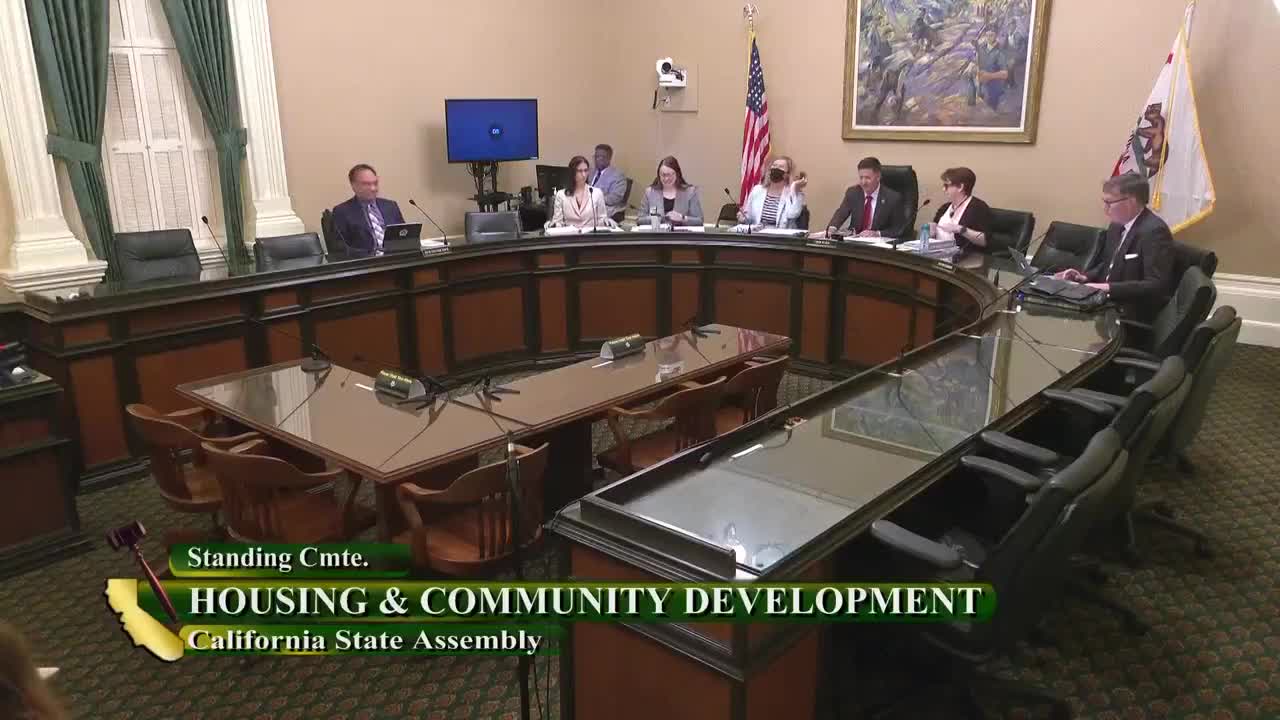 7MIN
Assembly Standing Committee on Housing and Community Development
Bill Author

Bill Co-Author(s):
