AB 61: Criminal procedure: arraignment.
- Session Year: 2023-2024
- House: Assembly
- Latest Version Date: 2023-03-08
Current Status:
Failed
(2024-02-01: Died on inactive file.)
Introduced
In Committee
First Chamber
In Committee
Second Chamber
Enacted
What does this bill do?
The bill requires anyone arrested without a warrant — adults and juveniles — to be brought before a judge for an initial review of probable cause within 48 hours and removes the prior exception for weekends and holidays. If the judge finds no probable cause the person must be released immediately, and to hold someone past 48 hours prosecutors must show a real emergency; the initial review may rely on the arresting officer’s sworn statements and need not be a hearing with both sides present.
The summary is provided by generative AI which can make mistakes. For original language, please view the details in the table below.
Existing law requires a person arrested without a warrant to person, once arrested, to be taken before a magistrate without delay and, in any event, within 48 hours after arrest, not including weekends and holidays, as specified.
This bill would remove the weekends and holidays exemption, thereby requiring a person to be taken before the court within 48 hours of their arrest, or to be released, except that if the 48-hour period expires at a time that the court is in session, the arraignment can occur anytime that day. The bill would require that this initial appearance be an arraignment and include the consideration of conditions of release or bail. The bill would also require the court to make an initial determination of probable cause, as specified.
Existing law requires a person arrested without a warrant to be taken before the nearest magistrate in the county in which the offense is triable without delay. Existing law also authorizes a peace officer to release the arrested person from custody instead of taking them before a magistrate under certain specified circumstances, including if the person was arrested for intoxication only.
This bill would require the person to be taken before the magistrate within 48 hours of their arrest. This bill would require that the court make an initial determination of probable cause, as specified, no more than 48 hours after the warrantless arrest. The bill would also require that if the court makes an initial finding of no probable cause, the court order the person to be released immediately.
Existing law similarly requires a juvenile that has been arrested to be released with 48 hours, excluding judicial holidays, unless a petition has been filed to make the minor a ward of the court or charges have been filed charging the minor as an adult.
This bill would additionally prohibit any juvenile from being held for more than 48 hours without receiving an initial judicial determination of probable cause. remove the judicial holidays exemption and the petition exemption and would instead prohibit any juvenile from being held more than 48 hours if they did not receive an initial judicial determination of probable cause.
By imposing a higher level of service on prosecutors, public defenders, police, jails, and courthouses, this bill would impose a state-mandated local program.
The California Constitution requires the state to reimburse local agencies and school districts for certain costs mandated by the state. Statutory provisions establish procedures for making that reimbursement.
This bill would provide that, if the Commission on State Mandates determines that the bill contains costs mandated by the state, reimbursement for those costs shall be made pursuant to the statutory provisions noted above.
Existing law requires a person arrested without a warrant to be taken before a magistrate without delay and, in any event, within 48 hours after arrest, not including weekends and holidays, as specified.
This bill would remove the weekends and holidays exemption, thereby requiring a person to be taken before the court within 48 hours of their arrest, or to be released, except that if the 48-hour period expires at a time that the court is in session, the arraignment can occur anytime that day. The bill would require that this initial appearance be an arraignment and include the consideration of conditions of release or bail. The bill would also require the court to make an initial determination of probable cause, as specified.
Existing law similarly requires a juvenile that has been arrested to be released with 48 hours, excluding judicial holidays, unless a petition has been filed to make the minor a ward of the court or charges have been filed charging the minor as an adult.
This bill would additionally prohibit any juvenile from being held for more than 48 hours without receiving an initial judicial determination of probable cause.
By imposing a higher level of service on prosecutors, public defenders, police, jails, and courthouses, this bill would impose a state-mandated local program.
The California Constitution requires the state to reimburse local agencies and school districts for certain costs mandated by the state. Statutory provisions establish procedures for making that reimbursement.
This bill would provide that, if the Commission on State Mandates determines that the bill contains costs mandated by the state, reimbursement for those costs shall be made pursuant to the statutory provisions noted above.
Existing law requires that a defendant be taken before a magistrate without unnecessary delay, but not more than 48 hours after arrest, excluding Sundays and holidays. Existing law extends the time to include the duration of the next regular court session on the judicial day immediately following if the 48 hours expire at a time when the court is not in session and authorizes the arraignment to take place at any time while court is in session if the 48-hour period expires while the court is in session.Existing law establishes the jurisdiction of the juvenile court over minors who are between 12 and 17 years of age, inclusive. Existing law provides that the juvenile court may maintain jurisdiction over a person until the person attains 21 years of age. Existing law establishes procedures for the detention of a minor to include the circumstances under which a peace officer may place a minor in temporary custody and the locations where the detention may take place. Existing law requires a minor who is taken into custody under specified circumstances to be released within 48 hours, excluding nonjudicial days, unless a petition has been filed to declare the minor to be a ward of the court.This bill would state that it is the intent of the Legislature to enact legislation to ensure all arrested people have their first appearance in court no more than 48 hours after arrest, without exception, and to codify the requirement of a prompt judicial review of probable cause for warrantless arrests of adults and juveniles, as specified.Existing law requires that a defendant be taken before a magistrate without unnecessary delay, but not more than 48 hours after arrest, excluding Sundays and holidays. Existing law extends the time to include the duration of the next regular court session on the judicial day immediately following if the 48 hours expire at a time when the court is not in session and authorizes the arraignment to take place at any time while court is in session if the 48-hour period expires while the court is in session.
Existing law establishes the jurisdiction of the juvenile court over minors who are between 12 and 17 years of age, inclusive. Existing law provides that the juvenile court may maintain jurisdiction over a person until the person attains 21 years of age. Existing law establishes procedures for the detention of a minor to include the circumstances under which a peace officer may place a minor in temporary custody and the locations where the detention may take place. Existing law requires a minor who is taken into custody under specified circumstances to be released within 48 hours, excluding nonjudicial days, unless a petition has been filed to declare the minor to be a ward of the court.
This bill would state that it is the intent of the Legislature to enact legislation to ensure all arrested people have their first appearance in court no more than 48 hours after arrest, without exception, and to codify the requirement of a prompt judicial review of probable cause for warrantless arrests of adults and juveniles, as specified.
The Legislature finds and declares all of the following:
(a)It is the intent of the Legislature to update Californias criminal pretrial procedures by ensuring that arraignments occur at regular times and to adhere to applicable precedent from the United States Supreme Court. The Committee on Revision of the Penal Code has recently recommended these reforms in its 2022 Annual Report and Recommendations.(b)Numerous other states require initial court appearances at more regular times than California does. At least 13 states require a first appearance to be held within 48 hours of arrest or sooner, including Texas, Florida, Alabama, Georgia, Mississippi, and New York.(c)The Penal Code also does not contain a codification of the requirement from County of Riverside v. McLaughlin (1991) 500 U.S. 44 that every warrantless arrest be reviewed by a neutral judicial officer for probable cause promptly, but no more than 48 hours after the arrest. Numerous other states such as Florida, Louisiana, and Arizona, expressly incorporate McLaughlins requirements of a prompt review of probable cause into their criminal codes.(a)It is the intent of the Legislature to codify the holding in County of Riverside v. McLaughlin (1991) 500 U.S. 44 that every warrantless arrest be reviewed by a judicial officer for probable cause promptly after arrest, that probable cause determinations made after 48 hours requires the government to demonstrate the existence of a bona fide emergency or other extraordinary circumstance, and that matters such as intervening weekends or the need for consolidating pretrial proceedings are not extraordinary circumstances.
(d)(b)It is the intent of the Legislature to abrogate the holding of Alfredo A. v. Superior Court (1994) 6 Cal.4th 1212 that a probable cause determination for juveniles may occur more than 48 hours after arrest.
SEC. 2.Section 825 of the Penal Code is amended to read:825.(a)(1)Except as provided in paragraph (2), the defendant shall in all cases be taken before the court for arraignment and consideration of conditions of release or setting of bail, magistrate without unnecessary delay, and, in any event, within 48 hours after their arrest.
(2)When the 48 hours prescribed by paragraph (1) expires at a time when the court is in session, the arraignment may take place at any time during that session.
(b)After the arrest, any attorney at law entitled to practice in the courts of record of California, may, at the request of the prisoner or any relative of the prisoner, visit the prisoner. Any officer having charge of the prisoner who willfully refuses or neglects to allow that attorney to visit a prisoner is guilty of a misdemeanor. Any officer having a prisoner in charge, who refuses to allow the attorney to visit the prisoner when proper application is made, shall forfeit and pay to the party aggrieved the sum of five hundred dollars ($500), to be recovered by action in any court of competent jurisdiction.
(c)(1)Promptly after any warrantless arrest, but no more than 48 hours after the arrest, the court shall review the basis for the arrest and make an initial determination whether probable cause exists that an offense has been committed and that the arrested person committed it.(2)The initial probable cause determination described in paragraph (1) may be based on sworn statements from the arresting officer, may be conducted in chambers or remotely by the court, and need not be an adversary proceeding. It may also occur at the proceeding specified in subdivision (a).(3)If the court makes an initial finding of no probable cause pursuant to paragraph (1), the court shall order the person to be released immediately, and shall immediately convey that order to the person having custody of the arrested person.(4)The court shall make a record of the initial determination of probable cause in the court file. Such record shall include, without limitation, the initial determination of whether the arrest was supported by probable cause, the time of the arrest, the time of the initial determination of probable cause, and any materials relied on by the court in making the determination.(5)An initial determination of probable cause pursuant to this subdivision shall not be binding on the court in a preliminary hearing or any other future evidentiary proceeding to determine the existence of probable cause.SEC. 3.Section 849 of the Penal Code is amended to read:849.(a)When an arrest is made without a warrant by a peace officer or private person, the person arrested, if not otherwise released, shall, without unnecessary delay, and, in any event, within 48 hours after their arrest, be taken before the nearest or most accessible magistrate in the county in which the offense is triable, and a complaint stating the charge against the arrested person shall be laid before the magistrate.
(1)Promptly after any warrantless arrest, but no more than 48 hours after the arrest, the court shall review the basis for the arrest and make an initial determination as to whether probable cause exists that an offense has been committed and that the arrested person committed it. If a probable cause determination has not been made within 48 hours, the prosecution must demonstrate the existence of a bona fide emergency or other extraordinary circumstance.
(2)The initial probable cause determination described in paragraph (1) may be based on sworn statements from the arresting officer, may be conducted in chambers or remotely by the court, and need not be an adversary proceeding. The determination may also occur at the proceeding pursuant to subdivision (a) of this section and subdivision (a) of Section 825.
(3)If the court makes an initial finding of no probable cause pursuant to paragraph (1), the court shall order the person to be released immediately, and shall immediately convey that order to the person having custody of the arrested person.
(4)The court shall make a record of the initial determination of probable cause in the court file. That record shall include, without limitation, the initial determination of whether the arrest was supported by probable cause, the time of the arrest, the time of the initial determination of probable cause, and any materials relied on by the court in making the determination.
(5)An initial determination of probable cause pursuant to this subdivision shall not be binding on the court in a preliminary hearing or any other future evidentiary proceeding to determine the existence of probable cause.
(b)A peace officer may release from custody, instead of taking the person before a magistrate, a person arrested without a warrant in the following circumstances:
(1)The officer is satisfied that there are insufficient grounds for making a criminal complaint against the person arrested.
(2)The person arrested was arrested for intoxication only, and no further proceedings are desirable.
(3)The person was arrested only for being under the influence of a controlled substance or drug and the person is delivered to a facility or hospital for treatment and no further proceedings are desirable.
(4)The person was arrested for driving under the influence of alcohol or drugs and the person is delivered to a hospital for medical treatment that prohibits immediate delivery before a magistrate.
(5)The person was arrested and subsequently delivered to a hospital or other urgent care facility, including, but not limited to, a facility for the treatment of co-occurring substance use disorders, for mental health evaluation and treatment, and no further proceedings are desirable.
(c)The record of arrest of a person released pursuant to paragraph (1), (3), or (5) of subdivision (b) shall include a record of release. Thereafter, the arrest shall not be deemed an arrest, but a detention only.
SEC. 3.SEC. 4.Section 631 of the Welfare and Institutions Code is amended to read:631.(a)Except as provided in subdivision (b), whenever Whenever a minor is taken into custody by a peace officer or probation officer, except when the minor willfully misrepresents themselves as 18 or more years of age, the minor shall be released within 48 hours after having been taken into custody, excluding nonjudicial days, unless within that period of time a petition to declare the minor a ward has been filed pursuant to this chapter or a criminal complaint against the minor has been filed in a court of competent jurisdiction. if that minor does not receive an initial judicial determination of probable cause. This determination may be based on sworn statements from the arresting officer, may be conducted in chambers or remotely by the court, and need not be an adversary proceeding. The determination may also occur at the detention hearing described in Section 632 if that hearing occurs within 48 hours after the arrest.
(b)Except when the minor represents themselves as 18 or more years of age, whenever a minor is taken into custody by a peace officer or probation officer without a warrant on the belief that the minor has committed a misdemeanor that does not involve violence, the threat of violence, or possession or use of a weapon, and if the minor is not currently on probation or parole, the minor shall be released within 48 hours after having been taken into custody , excluding nonjudicial days, unless a petition has been filed to declare the minor to be a ward of the court and the minor has been ordered detained by a judge or referee of the juvenile court pursuant to Section 635. In all cases involving the detention of a minor pursuant to this subdivision, section, any decision to detain the minor more than 24 hours shall be subject to written review and approval by a probation officer who is a supervisor as soon as possible after it is known that the minor will be detained more than 24 hours. However, if the initial decision to detain the minor more than 24 hours is made by a probation officer who is a supervisor, the decision shall not be subject to review and approval.
(c)Whenever a minor who has been held in custody for more than 24 hours by the probation officer is subsequently released and no petition is filed, the probation officer shall prepare a written explanation of why the minor was held in custody for more than 24 hours. The written explanation shall be prepared within 72 hours after the minor is released from custody and filed in the record of the case. A copy of the written explanation shall be sent to the parents, guardian, or other person having care or custody of the minor.
(d)In any case, a minor shall be released within 48 hours after having been taken into custody if that minor does not receive an initial judicial determination of probable cause. This determination may be based on sworn statements from the arresting officer, may be conducted in chambers or remotely by the court, and need not be an adversary proceeding. It may also occur at the detention hearing described in Section 632 if that hearing occurs within 48 hours after the arrest.SEC. 4.SEC. 5.If the Commission on State Mandates determines that this act contains costs mandated by the state, reimbursement to local agencies and school districts for those costs shall be made pursuant to Part 7 (commencing with Section 17500) of Division 4 of Title 2 of the Government Code.
The Legislature finds and declares all of the following:
(a)It is the intent of the Legislature to update Californias criminal pretrial procedures by ensuring that arraignments occur at regular times and to adhere to applicable precedent from the United States Supreme Court. The Committee on Revision of the Penal Code has recently recommended these reforms in its 2022 Annual Report and Recommendations.
(b)Numerous other states require initial court appearances at more regular times than California does. At least 13 states require a first appearance to be held within 48 hours of arrest or sooner, including Texas, Florida, Alabama, Georgia, Mississippi, and New York.
(c)The Penal Code also does not contain a codification of the requirement from County of Riverside v. McLaughlin (1991) 500 U.S. 44 that every warrantless arrest be reviewed by a neutral judicial officer for probable cause promptly, but no more than 48 hours after the arrest. Numerous other states such as Florida, Louisiana, and Arizona, expressly incorporate McLaughlins requirements of a prompt review of probable cause into their criminal codes.
(d)It is the intent of the Legislature to abrogate the holding of Alfredo A. v. Superior Court (1994) 6 Cal.4th 1212 that a probable cause determination for juveniles may occur more than 48 hours after arrest.
SEC. 2.Section 825 of the Penal Code is amended to read:825.(a)(1)Except as provided in paragraph (2), the defendant shall in all cases be taken before the magistrate court for arraignment and consideration of conditions of release or setting of bail, without unnecessary delay, and, in any event, within 48 hours after his or her arrest, excluding Sundays and holidays. their arrest.
(2)When the 48 hours prescribed by paragraph (1) expire at a time when the court in which the magistrate is sitting is not in session, that time shall be extended to include the duration of the next court session on the judicial day immediately following. If the 48-hour period expires at a time when the court in which the magistrate is sitting is in session, the arraignment may take place at any time during that session. However, when the defendants arrest occurs on a Wednesday after the conclusion of the days court session, and if the Wednesday is not a court holiday, the defendant shall be taken before the magistrate not later than the following Friday, if the Friday is not a court holiday.
(b)After the arrest, any attorney at law entitled to practice in the courts of record of California, may, at the request of the prisoner or any relative of the prisoner, visit the prisoner. Any officer having charge of the prisoner who willfully refuses or neglects to allow that attorney to visit a prisoner is guilty of a misdemeanor. Any officer having a prisoner in charge, who refuses to allow the attorney to visit the prisoner when proper application is made, shall forfeit and pay to the party aggrieved the sum of five hundred dollars ($500), to be recovered by action in any court of competent jurisdiction.
(c)(1)Promptly after any warrantless arrest, but no more than 48 hours after the arrest, the court shall review the basis for the arrest and make an initial determination whether probable cause exists that an offense has been committed and that the arrested person committed it.
(2)The initial probable cause determination described in paragraph (1) may be based on sworn statements from the arresting officer, may be conducted in chambers or remotely by the court, and need not be an adversary proceeding. It may also occur at the proceeding specified in subdivision (a).
(3)If the court makes an initial finding of no probable cause pursuant to paragraph (1), the court shall order the person to be released immediately, and shall immediately convey that order to the person having custody of the arrested person.
(4)The court shall make a record of the initial determination of probable cause in the court file. Such record shall include, without limitation, the initial determination of whether the arrest was supported by probable cause, the time of the arrest, the time of the initial determination of probable cause, and any materials relied on by the court in making the determination.
(5)An initial determination of probable cause pursuant to this subdivision shall not be binding on the court in a preliminary hearing or any other future evidentiary proceeding to determine the existence of probable cause.
SEC. 3.Section 631 of the Welfare and Institutions Code is amended to read:631.(a)Except as provided in subdivision (b), whenever a minor is taken into custody by a peace officer or probation officer, except when the minor willfully misrepresents himself or herself themselves as 18 or more years of age, the minor shall be released within 48 hours after having been taken into custody, excluding nonjudicial days, unless within that period of time a petition to declare the minor a ward has been filed pursuant to this chapter or a criminal complaint against the minor has been filed in a court of competent jurisdiction.
(b)Except when the minor represents himself or herself themselves as 18 or more years of age, whenever a minor is taken into custody by a peace officer or probation officer without a warrant on the belief that the minor has committed a misdemeanor that does not involve violence, the threat of violence, or possession or use of a weapon, and if the minor is not currently on probation or parole, the minor shall be released within 48 hours after having been taken into custody , excluding nonjudicial days, unless a petition has been filed to declare the minor to be a ward of the court and the minor has been ordered detained by a judge or referee of the juvenile court pursuant to Section 635. In all cases involving the detention of a minor pursuant to this subdivision, any decision to detain the minor more than 24 hours shall be subject to written review and approval by a probation officer who is a supervisor as soon as possible after it is known that the minor will be detained more than 24 hours. However, if the initial decision to detain the minor more than 24 hours is made by a probation officer who is a supervisor, the decision shall not be subject to review and approval.
(c)Whenever a minor who has been held in custody for more than 24 hours by the probation officer is subsequently released and no petition is filed, the probation officer shall prepare a written explanation of why the minor was held in custody for more than 24 hours. The written explanation shall be prepared within 72 hours after the minor is released from custody and filed in the record of the case. A copy of the written explanation shall be sent to the parents, guardian, or other person having care or custody of the minor.
(d)In any case, a minor shall be released within 48 hours after having been taken into custody if that minor does not receive an initial judicial determination of probable cause. This determination may be based on sworn statements from the arresting officer, may be conducted in chambers or remotely by the court, and need not be an adversary proceeding. It may also occur at the detention hearing described in Section 632 if that hearing occurs within 48 hours after the arrest.
SEC. 4.If the Commission on State Mandates determines that this act contains costs mandated by the state, reimbursement to local agencies and school districts for those costs shall be made pursuant to Part 7 (commencing with Section 17500) of Division 4 of Title 2 of the Government Code.
SECTION 1.It is the intent of the Legislature to enact legislation to do both of the following:(a)Ensure all arrested people have their first appearance in court no more than 48 hours after arrest, without exception.(b)Codify the requirement of a prompt judicial review of probable cause for warrantless arrests of adults and juveniles that requires courts to make a record of the determination.It is the intent of the Legislature to enact legislation to do both of the following:
(a)Ensure all arrested people have their first appearance in court no more than 48 hours after arrest, without exception.
(b)Codify the requirement of a prompt judicial review of probable cause for warrantless arrests of adults and juveniles that requires courts to make a record of the determination.
|
Date
|
Status
|
|---|---|
| Feb 1, 2024 | Died on inactive file. |
| Jun 1, 2023 | Ordered to inactive file at the request of Assembly Member Bryan. |
| May 18, 2023 | From committee: Do pass. (Ayes 11. Noes 4.) (May 18). |
| May 18, 2023 | Read second time. Ordered to third reading. |
| May 3, 2023 | In committee: Set, first hearing. Referred to APPR. suspense file. |
| Apr 26, 2023 | In committee: Hearing postponed by committee. |
| Mar 9, 2023 | Re-referred to Com. on APPR. |
| Mar 8, 2023 | Read second time and amended. |
| Mar 7, 2023 | From committee: Amend, and do pass as amended and re-refer to Com. on APPR. (Ayes 6. Noes 1.) (March 7). |
| Feb 27, 2023 | Re-referred to Com. on PUB. S. |
| Feb 23, 2023 | From committee chair, with author's amendments: Amend, and re-refer to Com. on PUB. S. Read second time and amended. |
| Feb 23, 2023 | Referred to Com. on PUB. S. |
| Jan 4, 2023 | Read first time. |
| Dec 7, 2022 | From printer. May be heard in committee January 6. |
| Dec 6, 2022 | Introduced. To print. |
|
Date
|
Description
|
Location
|
Votes
|
|
|---|---|---|---|---|
| May 18, 2023 | Do pass. | Assembly Standing Committee on Appropriations |
Passed |
|
| Mar 7, 2023 | Do pass as amended and be re-referred to the Committee on [Appropriations] | Assembly Standing Committee on Public Safety |
Passed |
This list shows positions taken on this bill by organizations on the date displayed, which is linked to the original source.
Positions by individuals are not included.
|
Organization
|
Position
|
Date
|
|---|---|---|
| ACLU California | * Support | Mar 7, 2023 |
| Aclu California Action | * Support | Mar 7, 2023 |
| Anti-Recidivism Coalition | * Support | Mar 7, 2023 |
| ARC | * Support | Mar 7, 2023 |
| California Attorneys For Criminal Justice | * Support | Mar 7, 2023 |
| California District Attorneys Association | ** Against | |
| California Public Defenders Association | * Support | Mar 7, 2023 |
| Californians for Safety & Justice | * Support | Mar 7, 2023 |
| Californians for Safety and Justice | * Support | Mar 7, 2023 |
| Communities United for Restorative Youth Justice | ** Support | |
| Community Agency For Resources Advocacy And Services | ** Support | |
| Drug Policy Alliance | ** Support | |
| Ella Baker Center For Human Rights | * Support | Mar 7, 2023 |
| Initiate Justice | * Support | Mar 7, 2023 |
| milpa | ** Support | |
| Pacific Juvenile Defender Center | ** Support | |
| Peace Officers Research Association Of California | ** Against | |
| San Diego District Attorney's Association | * Against | Mar 7, 2023 |
| San Diego District Attorney's Office | * Against | Mar 7, 2023 |
| San Mateo County Participatory Defense | ** Support | |
| Showing Up for Racial Justice At Sacred Heart in San Jose | ** Support | |
| Silicon Valley De-Bug | * Support | Mar 7, 2023 |
| Silicon Valley Debug | * Support | Mar 7, 2023 |
| Smart Justice California | * Support | Mar 7, 2023 |
| The Bail Project | ** Support |
ASSEMBLY THIRD READING
ATR Bill Id:AB 61
Author:(Bryan)
As Amended Ver:March 8, 2023
Majority vote
SUMMARY
Requires that a person must be taken before a court without unnecessary delay, and, at the most, within 48 hours of their arrest.
Major Provisions
- Requires that a person in custody be taken to a court without unnecessary delay, and in any event, within 48 hours of their arrest inclusive of weekends and holidays.
- States that promptly after a warrantless arrest, but no more than 48 hours after, a court must review the basis for the arrest to determine whether probable cause exists that an offense was committed and the arrestee had committed it.
- States that if a probable cause determination has not been made within 48 hours, the prosecution must demonstrate the existence of a bona fide emergency or other extraordinary circumstance.
- Provides that a probable cause determination for a warrantless arrest may be based on sworn statements from the arresting officer and may be conducted in chambers, remotely, or in conjunction with an arraignment or custodial status hearing.
- Requires, upon a court finding there was no probable cause to warrant the arrest, the court to immediately order the person’s release and to convey the order to the custodial officer.
- Requires a court to make a record of the probable cause determination including the time of arrest, time that the determination was made, and to place it in the court file.
- States that a warrantless arrest probable cause determination shall not bind a court in a preliminary hearing or any other future evidentiary proceeding to determine the existence of probable cause.
- Provides that a minor must be released within 48 hours after being taken into custody if no probable cause determination has been made except in cases when the minor willfully misrepresents themselves to be an adult.
- Outlines the process for making a probable cause determination in the juvenile context and states that the probable cause determination may be held concurrent to other specified judicial actions.
COMMENTS
Pretrial Detention Effects: According to some researchers who examined pretrial detentions and recidivism rates, there are three major takeaways about the effect of pretrial detentions:
"First, being held in detention pretrial beyond one or two days increases a person's chances of being arrested and charged again pretrial (for those eventually released before case disposition) and post-disposition. Second, all things considered, the longer one's stint in detention, the greater the odds of new penal contact. And third, the effects of pretrial detention on future penal system involvement are especially pronounced for low-risk defendants, individuals who likely would not have had further criminal legal system involvement had they not been held in detention. Thus, a growing body of research indicates that pretrial detention is creating 'recidivators' out of individuals who might not otherwise (re)offend."
(Sandra Smith PH.D. Pretrial Detention, Pretrial Release, & Public Safety. (Jul. 2022) <https://www.hks.harvard.edu/publications/pretrial-detention-pretrial-release-public-safety> [as of Mar. 2, 2023] at p. 6, footnotes omitted.)
The California Committee on Revision of the Penal Code has recently stated that California's pretrial timeline misses important procedural protections of when the first court appearance must occur and when a probable cause determination must be made. (California Committee on Revision of Penal Code. Annual Report and Recommendations. (Dec. 2022) <http://www.clrc.ca.gov/CRPC.html> [as of Mar. 2, 2023] at p. 60.)
Indeed, California has an unknown number of overlapping laws that discuss the timing of when an arrestee must be brought before a magistrate. (Penal Code Sections (PEN) 821, 822, 825, 847, 849, 852.3, 859, and 1301.) Of these, Penal Code sections 825 and 849 have generally been used by courts to examine delays in probable cause determinations and arraignments. (People v. Williams (2010) 49 Cal. 4th 405, 446; People v. Hughes (2002) 27 Cal. 4th 287, 326-27; People v. Turner (1994) 8 Cal. 4th 137, 175; Ng v. Superior Court (1992) 4 Cal. 4th 29, 36-39.) One section covers arrests pursuant to warrants and the other deals with warrantless arrests. (PEN 825 and 849.)
With regards to arrests pursuant to a warrant, existing law requires that an arrestee be brought before a magistrate without unnecessary delay, and in any event within 48 hours, but it excludes Sundays and weekends. (PEN 825.) This bill would remove the exclusion of Sundays and holidays to avoid the perils of pretrial detention as mentioned above. With regard to warrantless arrests, while existing law states that an arrestee must be brought before a magistrate without unnecessary delay, it fails to properly lay out McLaughlin's 48 hour rule. This bill would remedy that shortcoming.
According to the Author
"AB 61 will update the arraignment timeline to remove exceptions to the 48 hour rule, and ensure that a judge promptly reviews every warrantless arrest for probable cause. Currently, Sundays and holidays are not accounted for in the 48 hour rule and, as a result, people who are arrested can be held in jail for more than four days without seeing an attorney.
"In 2021, prosecutors rejected over 20,000 felony arrests for lack of sufficient evidence, yet these people can be detained without ever seeing a judge for well beyond the statutory requirement. Thirteen states - including Texas, Florida, and Alabama - require an arraignment hearing within 48 hours of arrest without any exceptions.
"These changes will ensure that people who have not formally been charged with any wrongdoing have their prompt judicial review so that their housing, employment, and family stability are not unjustly jeopardized."
Arguments in Support
According to the bill's sponsor, California Attorneys for Criminal Justice, "Any period of pretrial detention is harmful to an incarcerated person, jeopardizing their housing, job security, and mental health. Currently, people who are arrested can be held in jail for days without seeing a lawyer, even though many will never even be charged.
"Currently, California's pretrial timeline requires people who have been arrested to have their first court appearance "without unnecessary delay" after arrest. The Penal Code sets a 48-hour timeframe for these arraignment hearings, but allows exceptions for Sundays and holidays. As a result of the exceptions, in practice, people can remain in custody for three to five days before seeing a judge. Thirteen states including Texas, Florida, and Alabama require an arraignment hearing within 48 hours of arrest without exceptions for Sundays and holidays.
"In addition, California's Penal Code has not been updated to address the United States Supreme Court case of County of Riverside v. McLaughlin (1991). This case requires a neutral judge to review for probable cause every arrest made without a warrant within 48 hours and without additional time for weekends or holidays – an essential safeguard against blatantly illegal arrests or mistakes by law enforcement. A 2022 survey of adult court public defenders regarding probable cause reviews in their county indicated significant variation in county practices, with many responses indicating that the McLaughlin rule was not adhered to.
"The potential problems are worse in juvenile cases, where current law allows three to seven days to pass before a judicial review of the arrest.
"AB 61 will update the arraignment timeline to remove exceptions for Sundays and holidays, and ensure that a judge promptly reviews every arrest for probable cause."
Arguments in Opposition
According to the California District Attorneys Association, "AB 61 would put a tremendous staffing burden on the criminal justice system, including on the courts, public defenders, and prosecutors. With no exceptions for weekends and holidays, courtrooms would have to be staffed by judges, court personnel, defense attorneys, and prosecutors seven days a week, including holidays. Sheriffs would have to transport defendants to court seven days a week. District attorneys and city attorneys would be forced to have prosecutors on duty seven days a week, including holidays, in order to review police reports and file charges. Public Defender, District Attorney, and City Attorney offices do not have enough staff for this kind of major change. Juvenile courts would similarly be adversely impacted by AB 61.
"Requiring that conditions of release and the setting of bail be considered within 48 hours, with no exceptions for weekends and holidays, also means that many crime victims will not be able to be present at these hearings and, therefore, their views will not be heard by the judge.
The current 48-hour arraignment rule in Penal Code Section 825, which has exceptions for weekends and judicial holidays, has worked well for many years. It contains a specific provision that permits an arraignment to be held on the next judicial day if the 48-hour time period expires when the court is not in session. AB 61 does not contain any such provision. AB 61, for example, would require a defendant arrested for murder or rape at 10:00 p.m. on a Friday night to be arraigned by 10:00 p.m. on Sunday night, when courts are not in session. In a complex case such as murder or sexual assault, police and prosecutors would need every minute of the 48 hours in order to investigate and file charges. Therefore, judges, court staff, public defenders, and prosecutors would have to be available 24-7 for arraignments.
In addition to the staffing burdens outlined above, AB 61 permits a probable cause determination to be based on "sworn statements" from the arresting officer but does not define or clarify what the term means. Would the arresting officer have to appear in person or remotely before a judge in order to make an oral statement? Or would there be a separate written document the arresting officer could submit?"
FISCAL COMMENTS
According to the Assembly Appropriations Committee:
- Annual costs ranging from approximately $28.5 million to $50 million in facility and staffing costs for courts to hear and resolve arraignments over the weekend or on holidays (Trial Court Trust Fund (TCTF)). This range is based on courthouses being open for either one or both days per weekend and on all holidays.
Existing case law and statute requires a defendant arrested without a warrant be arraigned within 48 hours, except on weekends and holidays. Courts are generally closed on weekends and holidays, so defendants are usually arraigned on the workday after a weekend or holiday (for example, if a person is arrested on the Friday before Memorial Day weekend, the person will not be arraigned until the following Tuesday). Without an exception for weekends and holidays, courts will need to be open extended days to handle arraignments approaching the 48-hour time limit. Courts handle thousands of arraignments each year. An hour of court time costs approximately $1,000 in staff workload. If, for instance, Los Angeles County is required to hold 1,000 probable cause determinations over a weekend or holiday each year, requiring an average of 10 minutes for each arraignment, the annual cost would be $167,000. This also assumes an average rate of pay for court employees. Many court employees are eligible for overtime and holiday pay. Costs may be much higher if staff is eligible for a higher rate of pay for weekend and holiday work.
Although courts are not funded on the basis of workload, increased pressure on the TCTF and staff workload may create a need for increased funding for courts from the General Fund (GF) to perform existing duties. To the extent that funding is not provided for the costs and workload created by this bill, resultant delays and re-prioritization of court cases may impact timely access to justice.
- Possible cost offsets in the millions of dollars annually to counties in reduced incarceration costs. Approximately half of all county jail inmates are pretrial. This bill may result in fewer people being held pretrial. It costs approximately $29,000 per year to house an inmate in county jail, depending on the county. If this bill results in 500 people serving on average one month less because of timely probable cause determinations, the annual cost savings would be $1.2 million. California county jails are increasingly overcrowded – particularly since the Realignment Act in 2011. Jail overcrowding since 2011 has resulted in court-mandated population caps and increased rates of inmate violence and death. Overcrowding has also resulted in significant state funding for additional jail construction. Thus, overcrowding in county jails creates cost pressure on the GF because the state has historically granted new funding to counties to offset overcrowding after the 2011 Realignment Act.
VOTES
ASM PUBLIC SAFETY: 6-1-1
YES: Jones-Sawyer, Bonta, Bryan, Ortega, Santiago, Zbur
NO: Lackey
ABS, ABST OR NV: Alanis
ASM APPROPRIATIONS: 11-4-1
YES: Holden, Bryan, Calderon, Wendy Carrillo, Mike Fong, Hart, Lowenthal, Papan, Pellerin, Weber, Ortega
NO: Megan Dahle, Dixon, Mathis, Sanchez
ABS, ABST OR NV: Robert Rivas
UPDATED
VERSION: March 8, 2023
CONSULTANT: Mureed Rasool / PUB. S. / (916) 319-3744 FN: 0000663
Date of Hearing: May 3, 2023
ASSEMBLY COMMITTEE ON APPROPRIATIONS
Chris Holden, Chair
ABPCA Bill Id:AB 61
Author:(Bryan) – As Amended Ver:March 8, 2023
Policy Committee: | Public Safety | Vote: | 6 - 1 |
|
| ||
|
|
Urgency: No State Mandated Local Program: Yes Reimbursable: Yes
SUMMARY:
This bill requires a person be arraigned after a warrantless arrest within 48 hours, inclusive of weekends and holidays.
Specifically, this bill:
- States that if a probable cause determination has not been made within 48 hours, the prosecution must demonstrate the existence of a bona fide emergency or other extraordinary circumstance.
- Provides that a probable cause determination for a warrantless arrest may be based on sworn statements from the arresting officer and may be conducted in chambers, remotely, or in conjunction with an arraignment or custodial status hearing.
- Requires, upon a court finding there was no probable cause to warrant the arrest, the court to immediately order the person’s release and to convey the order to the custodial officer.
- Requires a court to make a record of the probable cause determination, including the time of arrest and time the determination was made, and place the record in the court file.
- Provides that a juvenile must be released within 48 hours after being taken into custody if no probable cause determination has been made, except in cases when the minor willfully misrepresents themselves to be an adult.
FISCAL EFFECT:
- Annual costs ranging from approximately $28.5 million to $50 million in facility and staffing costs for courts to hear and resolve arraignments over the weekend or on holidays (Trial Court Trust Fund (TCTF)). This range is based on courthouses being open for either one or both days per weekend and on all holidays.
Existing case law and statute requires a defendant arrested without a warrant be arraigned within 48 hours, except on weekends and holidays. Courts are generally closed on weekends and holidays, so defendants are usually arraigned on the workday after a weekend or holiday (for example, if a person is arrested on the Friday before Memorial Day weekend, the person will not be arraigned until the following Tuesday). Without an exception for weekends and holidays, courts will need to be open extended days to handle arraignments approaching the 48-hour time limit. Courts handle thousands of arraignments each year. An hour of court time costs approximately $1,000 in staff workload. If, for instance, Los Angeles County is required to hold 1,000 probable cause determinations over a weekend or holiday each year, requiring an average of 10 minutes for each arraignment, the annual cost would be $167,000. This also assumes an average rate of pay for court employees. Many court employees are eligible for overtime and holiday pay. Costs may be much higher if staff is eligible for a higher rate of pay for weekend and holiday work.
Although courts are not funded on the basis of workload, increased pressure on the TCTF and staff workload may create a need for increased funding for courts from the General Fund (GF) to perform existing duties. To the extent that funding is not provided for the costs and workload created by this bill, resultant delays and re-prioritization of court cases may impact timely access to justice.
- Possible cost offsets in the millions of dollars annually to counties in reduced incarceration costs. Approximately half of all county jail inmates are pretrial. This bill may result in fewer people being held pretrial. It costs approximately $29,000 per year to house an inmate in county jail, depending on the county. If this bill results in 500 people serving on average one month less because of timely probable cause determinations, the annual cost savings would be $1.2 million. California county jails are increasingly overcrowded – particularly since the Realignment Act in 2011. Jail overcrowding since 2011 has resulted in court-mandated population caps and increased rates of inmate violence and death. Overcrowding has also resulted in significant state funding for additional jail construction. Thus, overcrowding in county jails creates cost pressure on the GF because the state has historically granted new funding to counties to offset overcrowding after the 2011 Realignment Act.
COMMENTS:
- Purpose. According to the author:
In 2021, prosecutors rejected over 20,000 felony arrests for lack of sufficient evidence, yet these people can be detained without ever seeing a judge for well beyond the statutory requirement. Thirteen states - including Texas, Florida, and Alabama - require an arraignment hearing within 48 hours of arrest without any exceptions. These changes will ensure that people who have not formally been charged with any wrongdoing have their prompt judicial review so that their housing, employment, and family stability are not unjustly jeopardized.
- Warrantless Arrests and Probable Cause. The U.S. Supreme Court held in Gerstein v. Pugh (1975) 420 U.S. 103 that the 4th Amendment right to due process requires that a person arrested without a warrant receive a “prompt” probable cause determination from an impartial magistrate. Probable cause is the standard used to determine whether an officer can justifiably arrest an individual. “Probable cause” is defined in case law as facts and circumstances sufficient to warrant a prudent person to believe that the suspect had committed or was committing an offense. Subsequently, the California Supreme Court decided in In re Walters (1975) 15 Cal.3d 738 that Gerstein was binding on California and applied to misdemeanors as well as felonies. The U.S. Supreme Court refined Gerstein v. Pugh in 1991 by holding in County of Riverside v. McLaughlin (1991) 500 U.S. 44 that “prompt” means a person in custody pursuant to a warrantless arrest must be given a probable cause determination without unreasonable delay, and in any case, within 48 hours, unless there was an exigency or emergency.
In juvenile cases, the California Supreme Court decided that McLaughlin’s 48 hour rule did not apply, and instead, juvenile detainees are only entitled to judicial probable cause determination within 72 hours of arrest. (Alfredo A. v. Superior Court (1994) 6 Cal. 4th 1212, 1216.) The Alfredo court reasoned that although juveniles hold certain basic constitutional protections enjoyed by adults, juveniles are always in some form of custody, and when the legal guardian’s custody fails, the government must exercise custody itself or appoint someone to do so. The Alfredo court also noted juvenile proceedings are fundamentally different from adult criminal proceedings and contained an inherent need for informality and flexibility. It concluded the need for flexibility in juvenile proceedings, in combination with juveniles’ reduced constitutional rights, meant that McLaughlin’s 48 hour rule did not apply in the juvenile context and a probable cause determination within 72 hours of arrest was constitutional.
This bill requires the arraignment of both juveniles and adults within 48 hours of a warrantless arrest, regardless of weekends and holidays.
- Argument in Support. According to the ACLU California Action:
Any period of pretrial detention is harmful to an incarcerated person, jeopardizing their housing, job security, and mental health. Currently, people who are arrested can be held in jail for days without seeing a lawyer, even though many will never even be charged. California’s pretrial timeline requires people who have been arrested to have their first court appearance “without unnecessary delay” after arrest. The Penal Code sets a 48-hour timeframe for these arraignment hearings, but allows exceptions for Sundays and holidays. As a result of the exceptions, in practice, people can remain in custody for three to five days before seeing a judge. Thirteen states including Texas, Florida, and Alabama require an arraignment hearing within 48 hours of arrest without exceptions for Sundays and holidays.
- Argument in Opposition. According to the California District Attorneys Association:
AB 61 would put a tremendous staffing burden on the criminal justice system, including on the courts, public defenders, and prosecutors. With no exceptions for weekends and holidays, courtrooms would have to be staffed by judges, court personnel, defense attorneys, and prosecutors seven days a week, including holidays. Sheriffs would have to transport defendants to court seven days a week. District attorneys and city attorneys would be forced to have prosecutors on duty seven days a week, including holidays, in order to review police reports and file charges. Public Defender, District Attorney, and City Attorney offices do not have enough staff for this kind of major change.
Analysis Prepared by: Irene Ho / APPR. / (916) 319-2081
Date of Hearing: March 7, 2023
Counsel: Mureed Rasool
ASSEMBLY COMMITTEE ON
Reginald Byron Jones-Sawyer, Sr., Chair
ABPCA Bill Id:
Author:() – As Ver:
As Proposed to be Amended in Committee
SUMMARY:
Requires that a person must be taken before a court without unnecessary delay, and, at the most, within 48 hours of their arrest. Specifically, this bill:
- Requires that a person in custody be taken to a court without unnecessary delay, and in any event, within 48 hours of their arrest inclusive of weekends and holidays.
- States that promptly after a warrantless arrest, but no more than 48 hours after, a court must review the basis for the arrest to determine whether probable cause exists that an offense was committed and the arrestee had committed it.
- States that if a probable cause determination has not been made within 48 hours, the prosecution must demonstrate the existence of a bona fide emergency or other extraordinary circumstance.
- Provides that a probable cause determination for a warrantless arrest may be based on sworn statements from the arresting officer and may be conducted in chambers, remotely, or in conjunction with an arraignment or custodial status hearing.
- Requires, upon a court finding there was no probable cause to warrant the arrest, the court to immediately order the person’s release and to convey the order to the custodial officer.
- Requires a court to make a record of the probable cause determination including the time of arrest, time that the determination was made, and to place it in the court file.
- States that a warrantless arrest probable cause determination shall not bind a court in a preliminary hearing or any other future evidentiary proceeding to determine the existence of probable cause.
- Provides that a minor must be released within 48 hours after being taken into custody if no probable cause determination has been made except in cases when the minor willfully misrepresents themselves to be an adult.
- Outlines the process for making a probable cause determination in the juvenile context and states that the probable cause determination may be held concurrent to other specified judicial actions.
EXISTING LAW:
- Requires that a person charged with a felony complaint must be taken without unnecessary delay before a magistrate of the court in which the complaint was filed and be arraigned. (Cal. Const., Art. I, § 14.)
- Provides that a defendant arrested pursuant to a warrant must be taken before a magistrate without unnecessary delay, and in any event, within 48 hours after arrest excluding Sundays and holidays. For a defendant arrested on a Wednesday when court is not in session, and if it does not occur during a court holiday, the defendant must be taken to the magistrate no later than the following Friday, if the Friday is not a court holiday. (Pen. Code, § 825, subd. (a).)
- States that a defendant arrested without a warrant and kept in custody must be taken to a magistrate without unnecessary delay, and a complaint stating the charge must be laid before such magistrate. (Pen. Code, § 849, subd. (a).)
- Provides that the presiding judge of the superior court in a county must designate one judge to be reasonably available on call when court is not in session, for purposes of custody discharges, issuance of search warrants, and other appropriate matters. (Pen. Code, § 810.)
- Makes it a misdemeanor for any public officer or other person who has arrested an individual for a criminal charge to willfully delay taking the arrestee to a magistrate. (Pen. Code, § 145.)
- Authorizes the Chairperson of the Judicial Council, in the event of war, terrorism, natural disaster, epidemic, or other calamity, to allow a court to declare an emergency. The days in which an emergency is declared would constitute holidays for purposes of when a person must be taken before a magistrate or the court. (Gov. Code, § 68115, subd. (a)(5).)
- States that an arraignment must be generally made by the court and consists of reading the accusatory pleading to the defendant, delivering them a copy, and inquiring as to whether the defendant pleads guilty or not guilty. (Pen. Code, § 988.)
- States that when a defendant first appears for arraignment the magistrate must immediately inform them of the charges and of their right to counsel. (Pen. Code, § 858, subd. (a).)
- States that a defendant charged with the commission of a felony by written complaint shall, without unnecessary delay, be taken before a magistrate of the court in which the complaint is on file and that the magistrate must deliver a copy of the complaint, inform of the right to assistance of counsel, and inquire into whether the defendant desires counsel. (Pen. Code, § 859.)
- States that a defendant must be arraigned in the court in which the accusatory pleading is filed unless the action is transferred to another court for purposes of trial, however, in-custody defendants may be arraigned in the court nearest to their location if the presiding judge from the pleading county and the presiding judge from the nearest location county both approve. Also gives a defendant the right to be taken in front of a magistrate in the arresting county for purposes of bail, as specified. (Pen. Code, § 976, subds. (a) & (b).)
- Requires a court arraigning a defendant on an indictment or information to set them aside if no probable cause exists. (Pen. Code, § 995.)
- Outlines the probable cause procedure in misdemeanor cases for a defendant who is in custody when appearing for arraignment, and who has pled not guilty, as specified.
- Requires the magistrate, upon motion by the defendant or defendant’s counsel, to make a probable cause determination.
- States that the probable cause determination must be made immediately unless the court finds good cause to continue for a period of no more than three court days.
- Requires the magistrate, when determining the existence of probable cause, to consider any warrant of arrest with supporting affidavits, and the sworn complaint together with any documents or reports incorporated by reference that state the basis for such information.
- Provides that if a magistrate finds probable cause does exist it has to set the matter for trial and if it finds no probable cause exists, it must dismiss the complaint and discharge the defendant.
- Allows the prosecution to refile a complaint within 15 days of the dismissal and states that a subsequent dismissal due to lack of probable cause shall be a bar to any other prosecution for the same offense. (Pen. Code, § 991.)
- Provides a court with jurisdiction over a minor by adjudging them a ward of the court if they violated specified local, state, or federal laws aside from a curfew ordinance based solely on age. (Welf. & Inst. Code, § 602.)
- States that a peace officer may take a minor into temporary custody without a warrant if, among other things, the peace officer has reasonable suspicion to believe the minor committed a certain offense. (Welf. & Inst. Code, § 625.)
- Requires a peace officer to take a minor to the probation officer without unnecessary delay and prepare a concise probable cause statement to deliver to the probation officer if there is no lesser restrictive alternative that is compatible with the best interests of the minor and the community. (Welf. & Inst. Code, § 626, subd. (d).)
- Requires the probation officer taking custody of the minor to immediately investigate the circumstances of the minor and facts surrounding their custody, and immediately release the minor to their family unless one or more of the following can be demonstrated in court:
- Continued detention is an urgent necessity for the protection of the minor or reasonable necessity for the protection of a person or their property.
- The minor is likely to flee the jurisdiction of the court.
- The minor has violated a juvenile court order. (Welf. & Inst. Code, § 628, subd. (a).)
- States that a minor taken into custody must be released within 48 hours, excluding non-judicial days unless a petition to declare the minor a ward or a criminal complaint has been filed. (Welf. & Inst. Code, § 631, subd. (a).)
FISCAL EFFECT:
Unknown
COMMENTS:
- Author's Statement: According to the author, “AB 61 will update the arraignment timeline to remove exceptions to the 48 hour rule, and ensure that a judge promptly reviews every warrantless arrest for probable cause. Currently, Sundays and holidays are not accounted for in the 48 hour rule and, as a result, people who are arrested can be held in jail for more than four days without seeing an attorney.
“In 2021, prosecutors rejected over 20,000 felony arrests for lack of sufficient evidence, yet these people can be detained without ever seeing a judge for well beyond the statutory requirement. Thirteen states - including Texas, Florida, and Alabama - require an arraignment hearing within 48 hours of arrest without any exceptions.
“These changes will ensure that people who have not formally been charged with any wrongdoing have their prompt judicial review so that their housing, employment, and family stability are not unjustly jeopardized.”
- Probable Cause Requirements for Warrantless Arrests: In Gerstein v. Pugh (hereafter Gerstein) (1975) 420 U.S 103, the U.S. Supreme Court held that the 4th Amendment right to due process requires that a person arrested without a warrant receive a “prompt” probable cause determination from an impartial magistrate. Probable cause is the standard used to determine whether an officer can justifiably arrest an individual. (Id. at 112.) It has been defined as, “facts and circumstances ‘sufficient to warrant a prudent man in believing that the [suspect] had committed or was committing an offense.’ ” (Id. at 111.) One of the principles driving the Supreme Court to ensure a magistrate reviews an arrestee’s case for probable cause is because a magistrate is more neutral and detached than an officer who is often engaged in the competitive enterprise of apprehending criminals. (Gerstein, supra, at 112-13 [quoting Johnson v. United States, (1948) 333 U.S. 10, 13-14].)
Subsequently, the California Supreme Court decided, in the case of In re Walters (1975) 15 Cal.3d 738, that Gerstein was binding on California and applied to misdemeanors as well as felonies. Two decades later, the U.S Supreme Court refined its Gerstein v. Pugh decision by holding, in County of Riverside v. McLaughlin (hereafter McLaughlin) (1991) 500 U.S. 44, that “prompt” means a person in custody pursuant to a warrantless arrest must be given a probable cause determination without unreasonable delay, and in any case, within 48 hours, unless there was an exigency or emergency.
In the juvenile context, the California Supreme Court decided that McLaughlin’s 48 hour rule did not apply, and instead juvenile detainees are only entitled to judicial probable cause determination within 72 hours of arrest. (Alfredo A. v. Superior Court (hereafter Alfredo) 6 Cal. 4th 1212, 1216.) The Alfredo court reasoned that although juveniles hold certain basic constitutional protections enjoyed by adults, that juveniles are always in some form of custody, and when the legal guardian’s custody fails, the government must exercise custody itself or appoint someone to do so. (Id. at 1225, 1228.) The Alfredo court also noted juvenile proceedings are fundamentally different from adult criminal proceedings and contained an inherent need for informality and flexibility. (Id. at 1215.) It finally concluded that the need for flexibility in juvenile proceedings, in combination with juveniles’ reduced constitutional rights, meant that McLaughlin’s 48 hour rule did not apply in the juvenile context and a probable cause determination within 72 hours of arrest was constitutional. (Id. at 1231-32.)
One of the dissenting opinions in the Alfredo case pointed out the informality and flexibility inherent in juvenile proceedings are meant to make the more expeditious than criminal actions, not less. (Alfredo, supra, at 1255.) The dissent further stated the state may have a “legitimate interest” in continuing to detain juveniles who have been arrested when there exists a supported basis for doing so, but that it does not justify expanding the length for detention solely based on criminal activity. (Ibid.)
This bill would, in part, codify the holding in McLaughlin for both adults and juveniles while abrogating Alfredo. - Pretrial Detention Effects: According to some researchers who examined pretrial detentions and recidivism rates, there are three major takeaways about the effect of pretrial detentions:
“First, being held in detention pretrial beyond one or two days increases a person’s chances of being arrested and charged again pretrial (for those eventually released before case disposition) and post-disposition. Second, all things considered, the longer one’s stint in detention, the greater the odds of new penal contact. And third, the effects of pretrial detention on future penal system involvement are especially pronounced for low-risk defendants, individuals who likely would not have had further criminal legal system involvement had they not been held in detention. Thus, a growing body of research indicates that pretrial detention is creating ‘recidivators’ out of individuals who might not otherwise (re)offend.”
(Sandra Smith PH.D. Pretrial Detention, Pretrial Release, & Public Safety. (Jul. 2022) <https://www.hks.harvard.edu/publications/pretrial-detention-pretrial-release-public-safety> [as of Mar. 2, 2023] at p. 6, footnotes omitted.)
The California Committee on Revision of the Penal Code has recently stated that California’s pretrial timeline misses important procedural protections of when the first court appearance must occur and when a probable cause determination must be made. (California Committee on Revision of Penal Code. Annual Report and Recommendations. (Dec. 2022) <http://www.clrc.ca.gov/CRPC.html> [as of Mar. 2, 2023] at p. 60.)
Indeed, California has an unknown number of overlapping laws that discuss the timing of when an arrestee must be brought before a magistrate. (Pen. Code, §§ 821, 822, 825, 847, 849, 852.3, 859, 1301.) Of these, Penal Code sections 825 and 849 have generally been used by courts to examine delays in probable cause determinations and arraignments. (People v. Williams (2010) 49 Cal. 4th 405, 446; People v. Hughes (2002) 27 Cal. 4th 287, 326-27; People v. Turner (1994) 8 Cal. 4th 137, 175; Ng v. Superior Court (1992) 4 Cal. 4th 29, 36-39.) One section covers arrests pursuant to warrants and the other deals with warrantless arrests. (Pen. Code, §§ 825, 849.)
With regards to arrests pursuant to a warrant, existing law requires that an arrestee be brought before a magistrate without unnecessary delay, and in any event within 48 hours, but it excludes Sundays and weekends. (Pen. Code, § 825.) This bill would remove the exclusion of Sundays and holidays to avoid the perils of pretrial detention as mentioned above. With regard to warrantless arrests, while existing law states that an arrestee must be brought before a magistrate without unnecessary delay, it fails to properly lay out McLaughlin’s 48 hour rule. This bill would remedy that shortcoming.
- Argument in Support: According to the bill’s sponsor, California Attorneys for Criminal Justice, “Any period of pretrial detention is harmful to an incarcerated person, jeopardizing their housing, job security, and mental health. Currently, people who are arrested can be held in jail for days without seeing a lawyer, even though many will never even be charged.
“Currently, California’s pretrial timeline requires people who have been arrested to have their first court appearance “without unnecessary delay” after arrest. The Penal Code sets a 48-hour timeframe for these arraignment hearings, but allows exceptions for Sundays and holidays. As a result of the exceptions, in practice, people can remain in custody for three to five days before seeing a judge. Thirteen states including Texas, Florida, and Alabama require an arraignment hearing within 48 hours of arrest without exceptions for Sundays and holidays.
“In addition, California’s Penal Code has not been updated to address the United States Supreme Court case of County of Riverside v. McLaughlin (1991). This case requires a neutral judge to review for probable cause every arrest made without a warrant within 48 hours and without additional time for weekends or holidays – an essential safeguard against blatantly illegal arrests or mistakes by law enforcement. A 2022 survey of adult court public defenders regarding probable cause reviews in their county indicated significant variation in county practices, with many responses indicating that the McLaughlin rule was not adhered to.
“The potential problems are worse in juvenile cases, where current law allows 3 to 7 days to pass before a judicial review of the arrest.
“AB 61 will update the arraignment timeline to remove exceptions for Sundays and holidays, and ensure that a judge promptly reviews every arrest for probable cause.”
- Argument in Opposition: According to the California District Attorneys Association, “AB 61 would put a tremendous staffing burden on the criminal justice system, including on the courts, public defenders, and prosecutors. With no exceptions for weekends and holidays, courtrooms would have to be staffed by judges, court personnel, defense attorneys, and prosecutors seven days a week, including holidays. Sheriffs would have to transport defendants to court seven days a week. District attorneys and city attorneys would be forced to have prosecutors on duty seven days a week, including holidays, in order to review police reports and file charges. Public Defender, District Attorney, and City Attorney offices do not have enough staff for this kind of major change. Juvenile courts would similarly be adversely impacted by AB 61.
“Requiring that conditions of release and the setting of bail be considered within 48 hours, with no exceptions for weekends and holidays, also means that many crime victims will not be able to be present at these hearings and, therefore, their views will not be heard by the judge.
“The current 48-hour arraignment rule in Penal Code Section 825, which has exceptions for weekends and judicial holidays, has worked well for many years. It contains a specific provision that permits an arraignment to be held on the next judicial day if the 48-hour time period expires when the court is not in session. AB 61 does not contain any such provision. AB 61, for example, would require a defendant arrested for murder or rape at 10:00 p.m. on a Friday night to be arraigned by 10:00 p.m. on Sunday night, when courts are not in session. In a complex case such as murder or sexual assault, police and prosecutors would need every minute of the 48 hours in order to investigate and file charges. Therefore, judges, court staff, public defenders, and prosecutors would have to be available 24-7 for arraignments.
In addition to the staffing burdens outlined above, AB 61 permits a probable cause determination to be based on “sworn statements” from the arresting officer but does not define or clarify what the term means. Would the arresting officer have to appear in person or remotely before a judge in order to make an oral statement? Or would there be a separate written document the arresting officer could submit?” - Prior Legislation:
- AB 1636 (Bonta), of the 2019-2020 Legislative Session, would have require the court, at the time a defendant appears for arraignment on a felony complaint, to make a determination as to whether there is probable cause for each felony charged in the complaint. AB 1636 was held in the Assembly Appropriations Committee.
- AB 2013 (Jones-Sawyer), Chapter 689, Statutes of 2016, established a three year pilot program in three counties, requiring the judge to make a finding of probable cause that a crime has been committed when an out of custody defendant is facing a misdemeanor charge, upon request by the defendant.
- AB 696 (Jones-Sawyer), of the 2015-2016 Legislative Session, would have required the judge to make a finding of probable cause that a crime has been committed when an out of custody defendant is facing a misdemeanor charge. AB 696 was vetoed by Governor Brown.
- AB 1636 (Bonta), of the 2019-2020 Legislative Session, would have require the court, at the time a defendant appears for arraignment on a felony complaint, to make a determination as to whether there is probable cause for each felony charged in the complaint. AB 1636 was held in the Assembly Appropriations Committee.
REGISTERED SUPPORT / OPPOSITION:
Support
California Attorneys for Criminal Justice (Sponsor)
ACLU California Action
California Public Defenders Association (CPDA)
Californians for Safety and Justice
Communities United for Restorative Youth Justice (CURYJ)
Community Agency for Resources, Advocacy and Services
Drug Policy Alliance
Ella Baker Center for Human Rights
Initiate Justice
Milpa (motivating Individual Leadership for Public Advancement)
Pacific Juvenile Defender Center
San Mateo County Participatory Defense
Showing Up for Racial Justice (SURJ) At Sacred Heart in San Jose
Smart Justice California
The Bail Project
1 Private Individual
Opposition
California District Attorneys Association
Peace Officers Research Association of California (PORAC)
Analysis Prepared by:
Discussed in Hearing
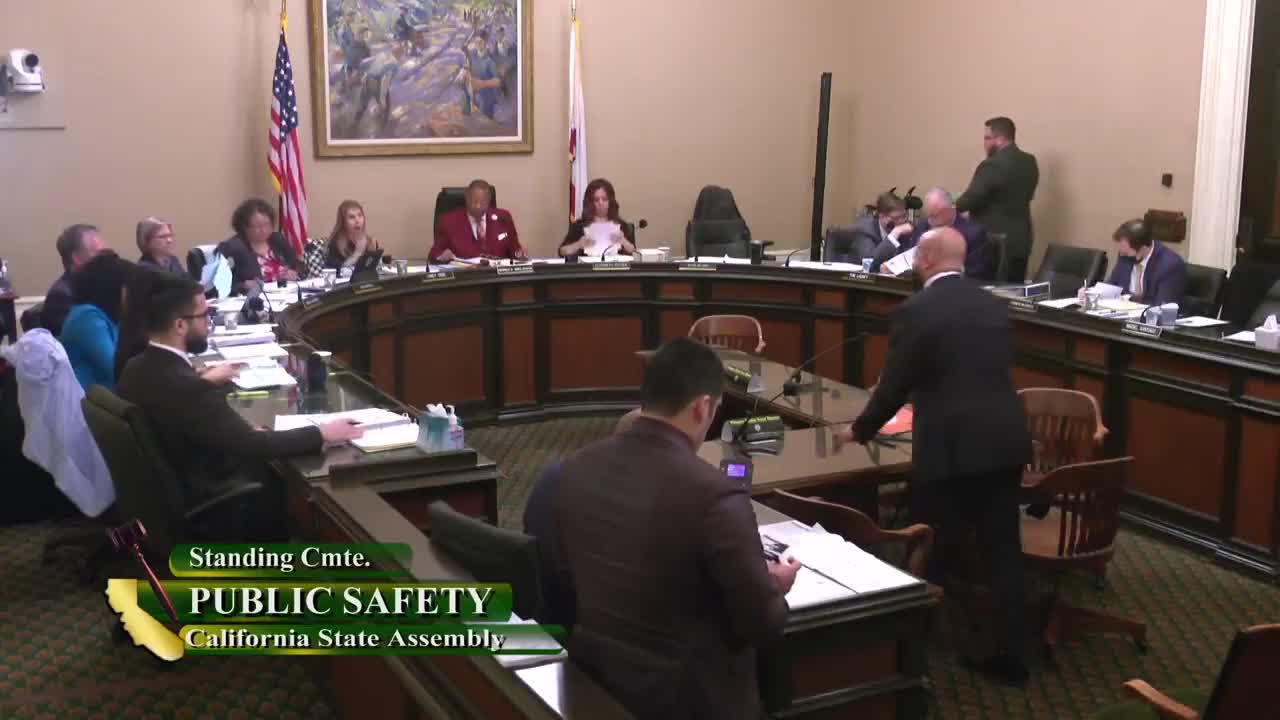 17MIN
Assembly Standing Committee on Public Safety
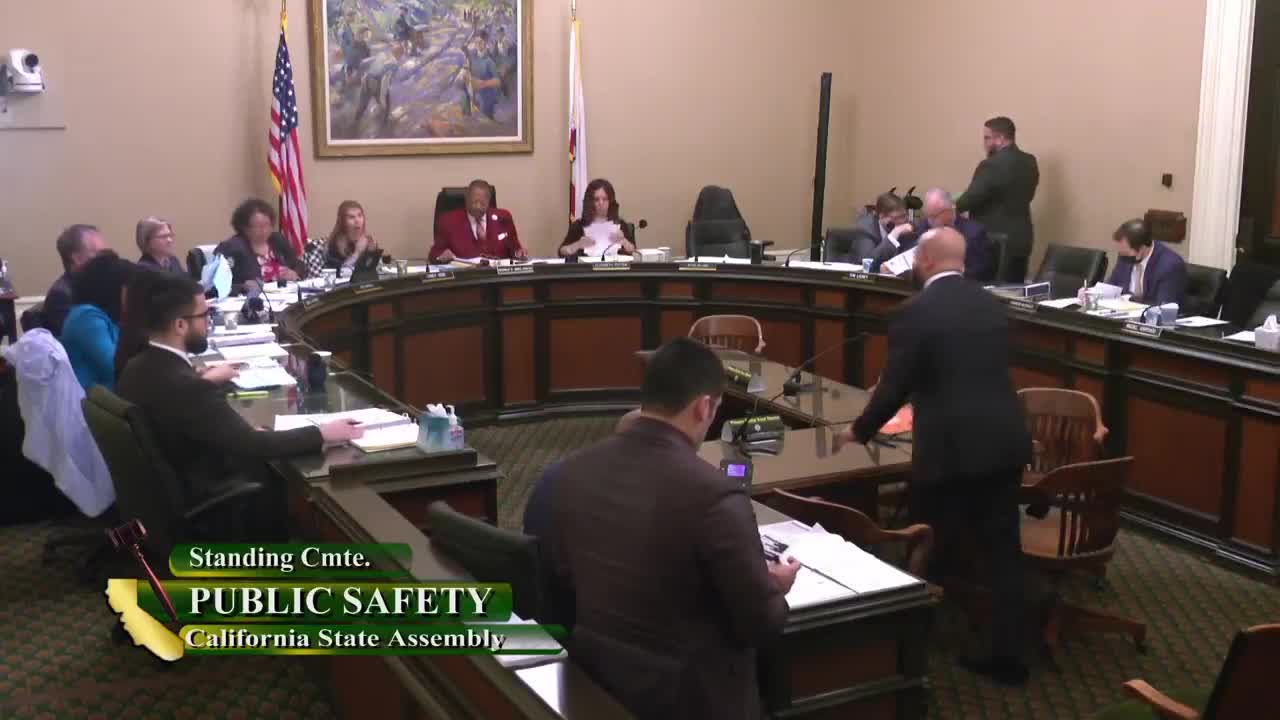 17MIN
Assembly Standing Committee on Public Safety
Bill Author

Bill Co-Author(s):