AB 1113: Federally qualified health centers: mission spend ratio.
- Session Year: 2025-2026
- House: Assembly
- Latest Version Date: 2026-01-22
Current Status:
Failed
(2026-02-02: From committee: Filed with the Chief Clerk pursuant to Joint Rule 56.)
Introduced
In Committee
Awaiting First Chamber Vote
Passed First Chamber
In Committee
Awaiting Second Chamber Vote
Passed Second Chamber
Enacted
Existing law establishes the Medi-Cal program, which is administered by the State Department of Health Care Services and under which qualified low-income individuals receive health care services, including federally qualified health center (FQHC) services as described by federal law. The Medi-Cal program is, in part, governed and funded by federal Medicaid program provisions.
This bill would require each FQHC to have an annual mission spend ratio, as defined, of no less than 90% and would provide a methodology for calculation of that ratio, as specified, until the State Department of Public Health (department) has adopted a methodology for this purpose, with a goal of implementation of the latter methodology by January 1, 2027. 2028.
By June 30, 2026, 2027, and annually thereafter by June 30, the bill would require each FQHC or its parent corporation to report to the department total revenues collected in a form to be determined by the department. The bill would require each report to include, among other things, one of certain Internal Revenue Service (IRS) forms. The bill would require each FQHC to submit an annual registration fee in an amount to be determined by the department and adjusted as necessary to fund these provisions. The bill would require the department to calculate and prepare a report of each FQHCs mission spend ratio no later than 90 days after the deadline for receipt of each FQHCs submission, and to transmit the report to the State Department of Health Care Services. submission. The bill would require the department to conduct an audit of the financial information reported by FQHCs every 3 years, as specified.
This bill would impose penalties for failure of an FQHC to comply with the above-described reporting and mission spend ratio requirements, including an administrative fine of $5,000 for a first violation and $10,000 for each subsequent month that an FQHC fails to submit an annual report. The bill would require those penalties to be deposited into the Mission Spend Ratio Penalty Account, which would be subject to appropriation by the Legislature, within the Special Deposit Fund.
If an FQHC disputes a determination or assessment, the bill would require the FQHC to simultaneously submit a request for appeal to both the department and the State Department of Health Care Services within 30 days of the FQHCs receipt of the determination or assessment, as specified. The bill would require the department to submit its responsive arguments and all supporting documents to the FQHC and the State Department of Health Care Services within 30 days of the departments receipt of the FQHCs request for appeal. The bill would require the State Department of Health Care Services to hear a timely appeal and issue a decision, as specified.This bill would require an FQHC to abate the violation within 2 years after the department imposes an administrative penalty. The bill would prohibit the FQHC from being required to pay the penalty if it meets specified requirements within the abatement period, including reaching an agreement with the department on a plan to spend the total amount of the administrative penalty on mission-directed expenses within 2 years. The bill would require the department to conduct annual audits of any FQHC that has reached an agreement with the department. If the department determines that an FQHC is not in substantial compliance with the agreed-upon plan, the bill would require the FQHC to pay the imposed administrative penalty within 2 working days and to pay other costs, as specified. The bill would provide that appeals run concurrently with the abatement period.
This bill would authorize an FQHC to apply to the department for a waiver, for a term of one year from the date of issuance, to provide waiver providing a temporary pause of the above-described reporting and mission spend ratio requirements or for an alternative mission spend ratio requirement on the basis of unexpected or exceptional circumstances or the FQHCs economic condition. The bill would provide that a waiver or alternative mission spend ratio is for a term of one calendar year. The bill would prescribe various types of information to be reported by an FQHC to obtain a waiver. waiver or alternative mission spend ratio. The bill would authorize the department to provide an alternative mission spend ratio to an FQHC to adjust, exclude, or otherwise account for imminently planned capital improvement, as specified, if the assessed penalty will result in the inability for the planned capital improvement to move forward during the next calendar year. The bill would authorize an FQHC to apply to renew a waiver or alternative mission spend ratio at any time no fewer than 180 days before the expiration of the existing waiver. waiver or alternative mission spend ratio.
This bill would make its provisions inapplicable to an FQHC or FQHC look-alike that is owned or operated by a political subdivision of the state or by a tribe or tribal organization or urban Indian organization receiving certain federal funding, as specified, or to an FQHC or FQHC look-alike participating in a bona fide labor-management cooperation committee.
The bill would require the department to adopt all regulations necessary to implement these provisions and would authorize the department to implement, interpret, or make specific these provisions, in whole or in part, by means of information notices, all-county letters, or other similar instructions without taking regulatory action. The bill would make its provisions severable. The bill would define various terms for purposes of these provisions.
Existing law establishes the Medi-Cal program, which is administered by the State Department of Health Care Services and under which qualified low-income individuals receive health care services, including federally qualified health center (FQHC) services as described by federal law. The Medi-Cal program is, in part, governed and funded by federal Medicaid program provisions.
This bill would require each FQHC to have an annual mission spend ratio, as defined, of no less than 90% and would provide a methodology for calculation of that ratio, as specified, until the State Department of Public Health (department) has adopted a methodology for this purpose. The bill would require the department to adopt that methodology, as specified, sufficient for implementation by January 1, 2027. By purpose, with a goal of implementation of the latter methodology by January 1, 2027.
By June 30, 2026, and annually thereafter by June 30, the bill would require each FQHC or its parent corporation to report to the department total revenues collected in a form to be determined by the department. The bill would require each report to include, among other things, the FQHC or parent corporations filed Internal Revenue Service (IRS) Form 990, 990-PF, 990-EZ, or 1120, from the most recent taxable year, as specified. one of certain Internal Revenue Service (IRS) forms. The bill would require each FQHC to submit an annual registration fee in an amount to be determined by the department and adjusted as necessary to fund these provisions. The bill would require the department to calculate and prepare a report of each FQHCs mission spend ratio no later than 90 days after the deadline for receipt of each FQHCs submission, and to transmit the report to the State Department of Health Care Services. The bill would require the department to conduct an audit of the financial information reported by FQHCs every 3 years, in a manner and form prescribed by the department, as specified.
This bill would prescribe various fines impose penalties for failure of an FQHC to comply with the above-described reporting and mission spend ratio requirements, including an administrative fine imposed by the department of $5,000 for a first violation and $10,000 for each subsequent month that an FQHC fails to submit an annual report. The bill would require those penalties to be deposited into the Mission Spend Ratio Penalty Account, which is would be subject to appropriation by the Legislature, within the Special Deposit Fund. If
If an FQHC disputes a determination or assessment, the bill would require the FQHC to simultaneously submit a request for appeal to both the department and the State Department of Health Care Services within 30 days of the FQHCs receipt of the determination or assessment, as specified. The bill would require the department to submit, among other things, its responsive arguments submit its responsive arguments and all supporting documents to the FQHC and the State Department of Health Care Services within 30 days of the departments receipt of the FQHCs request for appeal. The bill would require the State Department of Health Care Services to hear a timely appeal and issue a decision, as prescribed. specified.
This bill would authorize an FQHC to apply to the department for a waiver, for a term of one year from the date of issuance, to provide a temporary pause of the above-described reporting and mission spend ratio requirements or for an alternative mission spend ratio requirement on the basis of unexpected or exceptional circumstances or the FQHCs economic condition. The bill would prescribe various types of information to be reported by an FQHC to obtain a waiver. The bill would authorize an FQHC to apply to renew a waiver at any time no fewer than 180 days before the expiration of the existing waiver.
This bill would exempt an FQHC participating in a bona fide labor-management cooperation committee from the above-described requirements. The make its provisions inapplicable to an FQHC or FQHC look-alike that is owned or operated by a political subdivision of the state or by a tribe or tribal organization receiving certain federal funding, as specified, or to an FQHC or FQHC look-alike participating in a bona fide labor-management cooperation committee.
The bill would require the department to adopt all regulations necessary to implement these provisions and would authorize the department to implement, interpret, or make specific these provisions, in whole or in part, by means of information notices, all-county letters, or other similar instructions without taking regulatory action. The bill would make its provisions severable. The bill would define various terms for purposes of these provisions.
Existing law establishes the Medi-Cal program, which is administered by the State Department of Health Care Services and under which qualified low-income individuals receive health care services, including federally qualified health center (FQHC) services as described by federal law. The Medi-Cal program is, in part, governed and funded by federal Medicaid program provisions.
This bill would require each FQHC to have an annual mission spend ratio, as defined, of no less than 90% and would provide a methodology for calculation of that ratio, as specified, until the State Department of Public Health (department) has adopted a methodology for this purpose. The bill would require the department to adopt that methodology, as specified, sufficient for implementation by January 1, 2027. By June 30, 2026, and annually thereafter by June 30, the bill would require each FQHC or its parent corporation to report to the department total revenues collected in a form to be determined by the department. The bill would require each report to include, among other things, the FQHC or parent corporations filed Internal Revenue Service (IRS) Form 990, 990-PF, 990-EZ, or 1120, from the most recent taxable year, as specified. The bill would require each FQHC to submit an annual registration fee in an amount to be determined by the department and adjusted as necessary to fund these provisions. The bill would require the department to calculate and prepare a report of each FQHCs mission spend ratio no later than 90 days after the deadline for receipt of each FQHCs submission, and transmit the report to the State Department of Health Care Services. The bill would require the department to conduct an audit of the financial information reported by FQHCs every 3 years, in a manner and form prescribed by the department, as specified.
This bill would prescribe various fines for failure of an FQHC to comply with the above-described reporting and mission spend ratio requirements, including an administrative fine imposed by the department of $5,000 for a first violation and $10,000 for each subsequent month that an FQHC fails to submit an annual report. The bill would require those penalties to be deposited into the Mission Spend Ratio Penalty Account, which is subject to appropriation by the Legislature, within the Special Deposit Fund. If an FQHC disputes a determination or assessment, the bill would require the FQHC to simultaneously submit a request for appeal to both the department and the State Department of Health Care Services within 30 days of the FQHCs receipt of the determination or assessment, as specified. The bill would require the department to submit, among other things, its responsive arguments to the FQHC and the State Department of Health Care Services within 30 days of the departments receipt of the FQHCs request for appeal. The bill would require the State Department of Health Care Services to hear a timely appeal and issue a decision, as prescribed.
This bill would authorize an FQHC to apply to the department for a waiver, for a term of one year from the date of issuance, to provide a temporary pause of the above-described reporting and mission spend ratio requirements or for an alternative mission spend ratio requirement on the basis of unexpected or exceptional circumstances or the FQHCs economic condition. The bill would prescribe various types of information to be reported by an FQHC to obtain a waiver. The bill would authorize an FQHC to apply to renew a waiver at any time no fewer than 180 days before the expiration of the existing waiver.
This bill would exempt an FQHC participating in a bona fide labor-management cooperation committee from the above-described requirements. The bill would require the department to adopt all regulations necessary to implement these provisions and would authorize the department to implement, interpret, or make specific these provisions, in whole or in part, by means of information notices, all-county letters, or other similar instructions without taking regulatory action. The bill would define various terms for purposes of these provisions.
Existing law establishes the State Department of Public Health (department) to implement various programs throughout the state relating to public health and requires the department and the Office of Emergency Services, in coordination with other state agencies, to establish a personal protective equipment stockpile. Existing law also establishes the Personal Protective Equipment Advisory Committee (committee), consisting of representatives of various industries, as prescribed, to make recommendations to the department for the development of guidelines for the procurement, management, and distribution of PPE, as specified. Existing law requires the Director of Emergency Services to appoint the representatives that make up the committee.This bill would instead require the State Public Health Officer to appoint representatives to the committee.Existing law establishes the State Department of Public Health (department) to implement various programs throughout the state relating to public health and requires the department and the Office of Emergency Services, in coordination with other state agencies, to establish a personal protective equipment stockpile. Existing law also establishes the Personal Protective Equipment Advisory Committee (committee), consisting of representatives of various industries, as prescribed, to make recommendations to the department for the development of guidelines for the procurement, management, and distribution of PPE, as specified. Existing law requires the Director of Emergency Services to appoint the representatives that make up the committee.
This bill would instead require the State Public Health Officer to appoint representatives to the committee.
The Legislature finds and declares all of the following:
(a)Federally qualified health centers (FQHCs) are fundamental to the California health care safety net, as their mission is to provide primary and preventive care to low-income and underserved populations.
(b)It is the intent of the Legislature to ensure that an appropriate proportion of each FQHCs revenue is spent on program services expenses directly related to the FQHCs mission to provide essential primary and preventive care to low-income and underserved populations.
(c)(1)The Legislature recognizes the critical intersection between workforce development and delivery of high-quality care, and further recognizes that an FQHCs participation in a statewide, multiemployer bona fide labor-management cooperation committee (LMCC) reflects institutional commitment to seeking partnerships and leveraging funding opportunities to achieve these twin objectives.
(2)Bona fide LMCCs are a specific form of labor-management partnership which in general have been shown to promote cost savings as well as improve staff retention and patient care. The intent of this legislation is to support these same goals for FQHCs that are not part of LMCCs by directing a greater share of spending towards FQHCs mission to provide quality care to vulnerable populations.
(d)It is the intent of this legislation to create a reasonable minimum standard of mission-directed spending as a proportion of revenue (mission spend ratio) to ensure FQHC patient service delivery is prioritized over management and overhead spending, while still allowing an FQHC to maintain ongoing, sound financial footing. It is the intent of the Legislature to apply the mission spend ratio to all FQHCs except those participating in a bona fide LMCC or certain other FQHCs.
(e)It is the intent of the Legislature that the mission spend ratio ensures that no more than 10 percent of an FQHCs revenue may be profit or spent on administrative costs and other costs that do not contribute to the clinics charitable mission.
SEC. 2.Article 4.15 (commencing with Section 14138.35) is added to Chapter 7 of Part 3 of Division 9 of the Welfare and Institutions Code, to read:4.15.Federally Qualified Health Center Mission Spend Ratio14138.35.For purposes of this article, the following definitions apply:
(a)Bona fide labor-management cooperation committee or bona fide LMCC means a statewide, multiemployer joint labor-management committee that is established pursuant to the federal Labor Management Cooperation Act of 1978 (29 U.S.C. Sec. 175a) and meets the following criteria:
(1)The bona fide LMCC is not involved in the governance of an FQHC but exists to promote worker training, workforce expansion, and support for workers during training.
(2)The bona fide LMCC has the following composition:
(A)Fifty percent of the committee consists of representatives of organized labor unions that represent health center workers in the state.
(B)Fifty percent of the committee consists of representatives of FQHCs located in the state.
(3)The membership of the bona fide LMCC includes one or more labor organizations that are certified or recognized as the exclusive bargaining representative of applicable workers at FQHCs in the state.
(b)Department means the State Department of Public Health, unless otherwise specified.
(c)Federally qualified health center or FQHC means any community or public federally qualified health center as that term is defined in Section 1396d of Title 42 of the United States Code, including FQHC look-alikes.
(d)FQHC look-alike means an organization that does not receive an FQHC award, but is designated by the federal Health Resources and Services Administration as meeting FQHC program requirements, as set forth in Sections 1395x(aa)(4)(B) and 1396d(l)(2)(B) of Title 42 of the United States Code. For purposes of this article, an FQHC look-alike is considered an FQHC and all references to FQHCs apply with equal force to FQHC look-alikes.
(e)(1)Mission-directed expenses means expenses associated with activities that further an FQHCs patient services mission and for which the FQHC was created to conduct. conduct, but shall not include administrative and managerial expenses, fundraising expenses, profits, or other expenses that do not further an FQHCs patient services mission. Profits include net income and any profit paid to related parties on leases and property, and any profits paid to management companies. Mission-directed expenses include expenses required for an FQHC to provide culturally and linguistically competent care.
(2)Mission-directed expenses shall include all of the following:(A)The total compensation for all staff employed by the FQHC, including salaries, wages, and employee benefits, but excluding all compensation for executive and administrative officers and employees. Employee benefits shall include payroll benefits, paid time off, health insurance, life insurance, pension and retirement, and workers compensation insurance.(B)The cost of consumable supplies that are used to provide patient care.(C)Outside patient care services, which shall be expenses associated with patient care services purchased under contract from any entity, including a hospital, laboratory, or physician group.(D)Professional liability insurance.(E)Continuing education, which shall be the total cost of providing continuing education classes for health care professionals.(F)Capital expenditures that directly relate to patient care services, including rent, mortgage interest, depreciation, property taxes, property insurance, utilities, and other capital expenditures determined by the department.(3)Mission-directed expenses shall not include any of the following:(A)Administrative costs, including compensation paid to management and executive officers and employees, all costs to management companies, administrative service companies, home office expenses for parent companies and holding companies, legal expenses, trade association fees and dues, insurance costs, licensing fees, and all administrative costs and profits paid to contractors or related party entities for staffing services, ancillary services, support services, or other services.(B)Capital expenditures that relate to administrative, overall operations or management purposes, including rent, mortgage interest, depreciation, property taxes, property insurance, utilities, and other capital expenditures determined by the department.(C)Profits, including net income and any profit paid to related parties on leases and property, and any profits paid to management companies.(2)The department shall further define by regulation the scope of mission-directed expenses as provided in Section 14138.36.
(f)(1)Mission spend ratio means the percent of an FQHCs total revenue from all payer sources in a calendar year expended on mission-directed expenses.
(2)When calculating the mission spend ratio, the department shall exclude from both the total amount of expenses and total revenue an amount equal to any penalties paid pursuant to this article or any expenditures made based on an agreed-upon plan with the department pursuant to Section 14138.37.
(g)Related party means an organization related to the FQHC or that is under common ownership or control, as those terms are defined in Section 413.17(b) of Title 42 of the Code of Federal Regulations. A related party may include a management organization, owners of real estate, entities that provide staffing, any parent companies, holding companies, sister organizations, and others.
14138.36.(a)Each FQHC shall have an annual mission spend ratio of no less than 90 percent.
(1)Until the department has adopted a methodology for this purpose pursuant to paragraph (3), an FQHCs total revenue from all payer sources means the FQHCs total revenue for the calendar year, calculated consistent with Line 12 of Part I of Internal Revenue Service IRS Form 990, as set out in the form and instructions applicable to the 2024 2025 taxable year.
(2)Until the department has adopted a methodology for this purpose pursuant to paragraph (3), for the calculation of the mission spend ratio of each FQHC in the 2026 2027 calendar year, mission-directed expenses shall be the total program service expenses reported under Line 25 of Column B of Part IX of IRS Form 990, as set out in the form and instructions applicable to the 2024 2025 taxable year.
(3)For the calculation of the mission spend ratio of each FQHC in the 2027 2028 calendar year and all subsequent years, the department shall adopt a methodology to determine the expenses associated with activities that further an FQHCs patient services mission, consistent with this section. If the department has not adopted a methodology pursuant to this paragraph sufficient for implementation by January 1, 2027, 2028, then the methodology set forth in paragraph (2) shall continue to be used until the department has adopted a methodology pursuant to this paragraph.
(4)It is the intent of the Legislature that the department makes every effort to minimize the administrative burden on an FQHC of any reporting requirement necessary to carry out this article.
(b)By June 30, 2026, 2027, and annually thereafter by June 30, each FQHC or its parent corporation shall report total revenues collected from all revenue sources, along with the portion of revenues that are expended on all mission-directed expenses, to the department in a form to be determined by the department. Each report shall include, at a minimum, all of the following:
(1)The FQHCs or parent corporations filed IRS Form 990, 990-PF, 990-EZ, or 1120, from the most recent taxable year, with all attachments and schedules as applicable, in the same form as filed with the IRS, along with a list identifying which FQHCs activities are included in the information on the IRS form.
(2)A copy of the annual report filed for each FQHC with the Department of Health Care Access and Information pursuant to Section 1216 of the Health and Safety Code.
(3)A certification signed by a duly authorized official of the FQHC or its parent corporation that certifies that, to the best of the officials knowledge and information, each statement and amount in the accompanying report is believed to be true and correct.
(4)For any FQHC that is required to prepare an annual financial statement pursuant to Section 12586 of the Government Code, certification from an independent certified public accountant that the report submitted has been audited in conformity with generally accepted auditing standards.
(5)For any FQHC that has entered into an agreement with the department pursuant to subdivision (d) of Section 14138.37 or received an alternative mission spend ratio pursuant to paragraph (5) of subdivision (e) of Section 14138.37, documentation demonstrating compliance with the terms agreed to by the FQHC and the department.
(c)Each FQHC shall submit an annual registration fee in an amount to be determined by the department and adjusted as necessary to fund the activities set forth in this article.
(d)(1)No later than 90 days after the deadline for receipt of each FQHCs submission, the department shall calculate the mission spend ratio for each FQHC and prepare a report of the mission spend ratios of every FQHC. The department shall transmit the report to the subunit of the State Department of Health Care Services responsible for conducting Change in Scope-of-Service Request (CSOSR) audits.
(2)The department shall publish the report of the mission spend ratios of every FQHC on its internet website.
(e)The department shall conduct an audit of the financial information reported by FQHCs pursuant to this section every three years, in a manner and form prescribed by the department, to ensure the accuracy of the information reported and compliance with the requirements of this section. These audits may also include any audits of contractors or related party entities.
14138.37.(a)(1)There is hereby continued in the Special Deposit Fund, established pursuant to Section 16370 of the Government Code, the Mission Spend Ratio Penalty Account, which shall be subject to appropriation by the Legislature. The account shall contain all moneys deposited pursuant to subdivisions (b) and (c).
(2)Money in the Mission Spend Ratio Penalty Account, upon appropriation by the Legislature, shall be used to implement this article. It is the intent of the Legislature that moneys deposited in the fund that are not used for purposes of this article shall be used for future legislative efforts relating to clinic worker training, recruitment, and retention.
(b)The department shall impose sanctions for the failure to comply with the reporting provisions set forth in Section 14138.36, in the form of an administrative fine of five thousand dollars ($5,000) for a first violation and ten thousand dollars ($10,000) for each subsequent month that an FQHC fails to submit the annual reports required by that section.
(c)(1)If the department determines that an FQHC has not met the required mission spend ratio for any reporting year, the department shall assess issue a notice of assessment of an administrative penalty equal to the difference between the amount of the FQHC spent on mission-directed expenses and 90 percent of the FQHCs total revenue that year. year, subject to the abatement procedures set forth in subdivision (d).
(2)Any penalties paid pursuant to this subdivision shall not be considered mission-directed expenses for the calculation of the FQHCs mission spend ratio in the year the penalty was incurred. (3)(2)If the FQHC does not dispute the determination or assessment, the penalties shall be paid in full to the department within 30 days of receipt of a notice of penalty and deposited into the Mission Spend Ratio Penalty Account. Account, subject to the abatement procedures set forth in subdivision (d).
(4)(A)If the FQHC disputes the determination or assessment made pursuant to this subdivision, the FQHC shall, within 30 days of the FQHCs receipt of the determination or assessment, simultaneously submit a request for appeal to both the department and the State Department of Health Care Services. The request shall include a detailed statement describing the reason for appeal and include all supporting documents the FQHC will present at the hearing.(B)Within 30 days of the departments receipt of the FQHCs request for appeal, the department shall submit, to both the FQHC and the State Department of Health Care Services, its responsive arguments and all supporting documents that the department will present at the hearing.(C)The State Department of Health Care Services shall hear a timely appeal and issue a decision as follows:(i)The hearing shall commence within 60 days from the date of receipt by the State Department of Health Care Services of the FQHCs timely request for appeal.(ii)The State Department of Health Care Services shall issue a decision within 120 days from the date of receipt by the State Department of Health Care Services of the FQHCs timely request for appeal.(iii)The decision of the State Department of Health Care Services hearing officer, when issued, shall be the final decision of the State Department of Public Health.(D)The appeals process set forth in this paragraph shall be exempt from Chapter 4.5 (commencing with Section 11400), and Chapter 5 (commencing with Section 11500), of Part 1 of Division 3 of Title 2 of the Government Code. The provisions of Sections 100171 and 131071 of the Health and Safety Code do not apply to appeals under this paragraph.(3)If an FQHC disputes the determination or assessment, the FQHC may, within 10 working days, request a hearing pursuant to Section 131071. The administrative penalty shall be paid when all appeals have been exhausted and the departments position is upheld, subject to the abatement procedures set forth in subdivision (d). Appeals shall run concurrently with the abatement period provided in subdivision (d).
(d)(1)After the department imposes an administrative penalty pursuant to this section, an FQHC shall abate the violation within two years. The FQHC shall not be required to pay the penalty if, within the abatement period, the FQHC meets all the following:
(A)The FQHC comes into compliance with the applicable 90-percent mission spend ratio requirement during the abatement period.
(B)The FQHC reaches an agreement with the department on a plan to spend the total amount of the administrative penalty on mission-directed expenses within two years.
(2)(A)The department shall conduct annual audits of any FQHC that has reached an agreement under this subdivision for compliance with an agreed-upon plan pursuant to subparagraph (B) of paragraph (1).
(B)(i)If the department determines that an FQHC is not in substantial compliance with a plan agreed upon pursuant to subparagraph (B) of paragraph (1), the FQHC shall pay the imposed administrative penalty within two working days, reduced by the amount of any spending in compliance with the plan agreed upon pursuant to subparagraph (B) of paragraph (1).
(ii)The FQHC shall also be responsible for any administrative costs incurred by the department associated with implementing the plan agreed upon pursuant to subparagraph (B) of paragraph (1) and auditing the FQHC during the abatement period.
(d)(e)(1)An FQHC may apply to the department for a waiver providing a temporary pause of the requirements of Section 14138.36 or for an alternative mission spend ratio requirement to that set forth in subdivision (a) of Section 14138.36, on the basis of unexpected or exceptional circumstances or the FQHCs economic condition. The issuance and terms of the waiver or alternative mission spend ratio pursuant to this subdivision shall be solely and exclusively within the authority of the department. A waiver or alternative mission spend ratio issued pursuant to this subdivision shall be for a term of one year from the date of issuance. calendar year.
(2)To obtain a waiver or alternative mission spend ratio based on unexpected or exceptional circumstances, an FQHC shall detail the following circumstances experienced by the FQHC:
(A)When the FQHC first learned of the unexpected or exceptional circumstances.
(B)Why the FQHC could not have anticipated those circumstances arising.
(C)Actions that the FQHC took to address those circumstances.
(D)Expenses incurred as a result of addressing those circumstances.
(E)When the FQHC expects those circumstances to be resolved.
(F)Preventive steps that the FQHC is taking to ensure that those circumstances do not unexpectedly arise in the future.
(3)To obtain a waiver or alternative mission spend ratio based on economic condition, an FQHC shall demonstrate that compliance with Section 14138.36 would raise doubts about the FQHCs ability to continue as a going concern under generally accepted accounting principles. The evidence shall include documentation of the FQHCs financial condition, the financial condition of any parent or affiliated entity, and evidence of the actual or potential direct financial impact of compliance with Section 14138.36.
(4)Consideration of an FQHCs ability to continue as a going concern shall include the following factors regarding the FQHC or any affiliated entity:
(A)Actual or likely closure of the FQHC or any affiliated entity.
(B)Actual or likely closure of patient services or programs.
(C)Actual or likely loss of jobs.
(D)Whether the FQHC is small, rural, frontier, or serves a rural catchment area.
(E)Whether closure of the FQHC would significantly impact access to services in the region or service area.
(F)Whether the FQHC is in financial distress that results or is likely to result in the closure of the FQHC or any affiliated entity, closure of patient services or programs, or loss of jobs. Factors to consider in determining financial distress include, but are not limited to, the FQHCs prior and projected performance on financial metrics, including the amount of cash on hand, and whether the FQHC has, or is projected to experience, negative operating margins.
(5)(A)The department may also provide an alternative mission spend ratio to an FQHC to adjust, exclude, or otherwise account for current year revenue placed in a designated reserve account for imminently planned capital improvement, including multi-year capital grants or donor-specific contributions, if the penalty assessed under this section will result in the inability for the planned capital improvement to move forward during the next calendar year.
(i)To obtain an alternative mission spend ratio based on the inability of an imminently planned capital improvement to move forward in the next calendar year, an FQHC shall demonstrate the reserved funds will be used solely on capital expenditures that directly relate to the provision of patient care services and that the project will be completed within two years.
(ii)Demonstration that the reserved funds will be used solely on capital expenditures pursuant to clause (i) and that the penalty assessed under this section will result in the inability of the planned capital improvement to move forward during the next calendar year shall include all of the following:
(I)Documentation of the imminently planned capital improvements. This includes permits, contracts, spending to date on the project, and a timetable for completion.
(II)Documentation of the designated reserve account for capital improvement.
(III)The FQHCs financial condition.
(IV)The financial condition of any parent or affiliated entity.
(V)Evidence of the actual or potential direct financial impact of compliance with Section 14138.36.
(B)The department shall have the authority to audit an FQHC for compliance with the alternative mission spend ratio and shall reassess an FQHCs alternative mission spend ratio and any resultant penalties under subdivision (c) when properly accounting for funds not spent for the planned project.
(5)(6)Requests for a waiver or alternative mission spend ratio pursuant to this subdivision shall be submitted in writing to the department.
(6)(7)The department shall notify the FQHC of the decision on the waiver or alternative mission spend ratio request in writing.
(7)(8)An FQHC may apply to renew a waiver or alternative mission spend ratio issued pursuant to this subdivision at any time no fewer than 180 days before the expiration of the existing waiver. waiver or alternative mission spend ratio.
14138.38.This article shall not apply to any of the following:
(a)Any FQHC or FQHC look-alike that is owned or operated by a county, a city and county, a health care district organized pursuant to Division 23 (commencing with Section 32000) of the Health and Safety Code, the University of California, a special health authority described in Part 4 (commencing with Section 101525) of Division 101 of the Health and Safety Code, or any other political subdivision of the state.
(b)Any FQHC or FQHC look-alike that is owned or operated by a tribe or tribal organization or an urban Indian organization receiving funding under the federal Indian Self-Determination and Education Assistance Act (25 U.S.C. Sec. 5301 et seq.).
(c)Any FQHC or FQHC look-alike participating in a bona fide LMCC.
14138.39.The department shall adopt all regulations necessary to implement this article. Notwithstanding Chapter 3.5 (commencing with Section 11340) of Part 1 of Division 3 of Title 2 of the Government Code, the department may implement, interpret, or make specific this article, in whole or in part, by means of information notices, all-county letters, or other similar instructions without taking regulatory action.
SEC. 3.The provisions of this act are severable. If any provision of this act or its application is held invalid, that invalidity shall not affect other provisions or applications that can be given effect without the invalid provision or application.
The Legislature finds and declares all of the following:
(a)Federally qualified health centers (FQHCs) are fundamental to the California health care safety net, as their mission is to provide primary and preventive care to low-income and underserved populations.
(b)It is the intent of the Legislature to ensure that an appropriate proportion of each FQHCs revenue is spent on program services expenses directly related to the FQHCs mission to provide essential primary and preventive care to low-income and underserved populations.
(c)(1)The Legislature recognizes the critical intersection between workforce development and delivery of high-quality care, and further recognizes that an FQHCs participation in a statewide, multiemployer bona fide labor-management cooperation committee (LMCC) reflects institutional commitment to seeking partnerships and leveraging funding opportunities to achieve these twin objectives.
(2)Bona fide LMCCs are a specific form of labor-management partnership which in general have been shown to promote cost savings as well as improve staff retention and patient care. The intent of this legislation is to support these same goals for FQHCs that are not part of LMCCs by directing a greater share of spending towards FQHCs mission to provide quality care to vulnerable populations.
(d)It is the intent of this legislation to create a reasonable minimum standard of mission-directed spending as a proportion of revenue (mission spend ratio) to ensure FQHC patient service delivery is prioritized over management and overhead spending, while still allowing an FQHC to maintain ongoing, sound financial footing. It is the intent of the Legislature to apply the mission spend ratio to all FQHCs except those participating in a bona fide LMCC. LMCC or certain other FQHCs.
SEC. 2.Article 4.15 (commencing with Section 14138.35) is added to Chapter 7 of Part 3 of Division 9 of the Welfare and Institutions Code, to read:4.15.Federally Qualified Health Center Mission Spend Ratio14138.35.For purposes of this article, the following definitions apply:
(a)Bona fide labor-management cooperation committee or bona fide LMCC means a statewide, multiemployer joint labor-management committee that is established pursuant to the federal Labor Management Cooperation Act of 1978 (29 U.S.C. Sec. 175a) and meets the following criteria:
(1)The bona fide LMCC is not involved in the governance of an FQHC but exists to promote worker training, workforce expansion, and support for workers during training.
(2)The bona fide LMCC has the following composition:
(A)Fifty percent of the committee consists of representatives of organized labor unions that represent health center workers in the state.
(B)Fifty percent of the committee consists of representatives of FQHCs located in the state.
(3)The membership of the bona fide LMCC includes one or more labor organizations that are certified or recognized as the exclusive bargaining representative of applicable workers at FQHCs in the state.
(b)Department means the State Department of Public Health. Health, unless otherwise specified.
(c)Federally qualified health center or FQHC means any community or public federally qualified health center as that term is defined in Section 1396d of Title 42 of the United States Code, including FQHC look-alikes.
(d)FQHC look-alike means an organization that does not receive an FQHC award, but is designated by the federal Health Resources and Services Administration as meeting FQHC program requirements, as set forth in Sections 1395x(aa)(4)(B) and 1396d(l)(2)(B) of Title 42 of the United States Code. For purposes of this article, an FQHC look-alike is considered an FQHC and all references to FQHCs apply with equal force to FQHC look-alikes.
(e)(1)Mission-directed expenses means expenses associated with activities that further an FQHCs patient services mission and for which the FQHC was created to conduct.
(2)Mission-directed expenses shall include all of the following:
(A)The total compensation for all staff employed by the FQHC, including salaries, wages, and employee benefits, but excluding all compensation for executive and administrative officers and employees. Employee benefits shall include payroll benefits, paid time off, health insurance, life insurance, pension and retirement, and workers compensation insurance.
(B)The cost of consumable supplies that are used to provide patient care.
(C)Outside patient care services, which shall be expenses associated with patient care services purchased under contract from any entity, including a hospital, laboratory, or physician group.
(D)Professional liability insurance.
(E)Continuing education, which shall be the total cost of providing continuing education classes for health care professionals.
(F)Capital expenditures that directly relate to patient care services, including rent, mortgage interest, depreciation, property taxes, property insurance, utilities, and other capital expenditures determined by the department.
(3)Mission-directed expenses shall not include any of the following:
(A)Administrative costs, including compensation paid to management and executive officers and employees, all costs to management companies, administrative service companies, home office expenses for parent companies and holding companies, legal expenses, trade association fees and dues, insurance costs, licensing fees, and all administrative costs and profits paid to contractors or related party entities for staffing services, ancillary services, support services, or other services.
(B)Capital expenditures that relate to administrative, overall operations or management purposes, including rent, mortgage interest, depreciation, property taxes, property insurance, utilities, and other capital expenditures determined by the department.
(C)Profits, including net income and any profit paid to related parties on leases and property, and any profits paid to management companies.
(f)Mission spend ratio means the percent of an FQHCs total revenue from all payer sources in a calendar year expended on mission-directed expenses.
(g)Related party means an organization related to the FQHC or that is under common ownership or control, as those terms are defined in Section 413.17(b) of Title 42 of the Code of Federal Regulations. A related party may include a management organization, owners of real estate, entities that provide staffing, any parent companies, holding companies, sister organizations, and others.
14138.36.(a)Each FQHC shall have an annual mission spend ratio of no less than 90 percent.
(1)Until the department has adopted a methodology for this purpose pursuant to paragraph (3), an FQHCs total revenue from all payer sources means the FQHCs total revenue for the calendar year, calculated consistent with Line 12 of Part I of Internal Revenue Service IRS Form 990, as set out in the form and instructions applicable to the 2024 taxable year.
(2)Until the department has adopted a methodology for this purpose pursuant to paragraph (3), for the calculation of the mission spend ratio of each FQHC in the 2026 calendar year, mission-directed expenses shall be the total program service expenses reported under Line 25 of Column B of Part IX of IRS Form 990, as set out in the form and instructions applicable to the 2024 taxable year.
(3)For the calculation of the mission spend ratio of each FQHC in the 2027 calendar year and all subsequent years, the department shall adopt a methodology to determine the expenses associated with activities that further an FQHCs patient services mission, consistent with this section. If the department has not adopted a methodology pursuant to this paragraph sufficient for implementation by January 1, 2027, then the methodology set forth in paragraph (2) shall continue to be used until the department has adopted a methodology pursuant to this paragraph.
(b)By June 30, 2026, and annually thereafter by June 30, each FQHC or its parent corporation shall report total revenues collected from all revenue sources, along with the portion of revenues that are expended on all mission-directed expenses, to the department in a form to be determined by the department. Each report shall include, at a minimum: minimum, all of the following:
(1)The FQHC FQHCs or parent corporations filed IRS Form 990, 990-PF, 990-EZ, or 1120, from the most recent taxable year, with all attachments and schedules as applicable, in the same form as filed with the IRS, along with a list identifying which FQHCs activities are included in the information on the IRS form.
(2)A copy of the annual report filed for each FQHC with the Department of Health Care Access and Information pursuant to Section 1216 of the Health and Safety Code.
(3)A certification signed by a duly authorized official of the FQHC or its parent corporation that certifies that, to the best of the officials knowledge and information, each statement and amount in the accompanying report is believed to be true and correct.
(4)For any FQHC that is required to prepare an annual financial statement pursuant to Section 12586 of the Government Code, certification from an independent certified public accountant that the report submitted has been audited in conformity with generally accepted auditing standards.
(c)Each FQHC shall submit an annual registration fee in an amount to be determined by the department and adjusted as necessary to fund the activities set forth in this article.
(d)(1)No later than 90 days after the deadline for receipt of each FQHCs submission, the department shall calculate the mission spend ratio for each FQHC and prepare a report of the mission spend ratios of every FQHC. The department shall transmit the report to the subunit of the State Department of Health Care Services responsible for conducting Change in Scope-of-Service Request (CSOSR) audits.
(2)The department shall publish the report of the mission spend ratios of every FQHC on its internet website.
(e)The department shall conduct an audit of the financial information reported by FQHCs pursuant to this section every three years, in a manner and form prescribed by the department, to ensure the accuracy of the information reported and compliance with the requirements of this section. These audits may also include any audits of contractors or related party entities.
(f)Notwithstanding any other provision to the contrary, the requirements of this section shall not apply to any FQHC participating in a bona fide LMCC.14138.37.(a)There is hereby continued in the Special Deposit Fund, established pursuant to Section 16370 of the Government Code, the Mission Spend Ratio Penalty Account, which shall be subject to appropriation by the Legislature. The account shall contain all moneys deposited pursuant to subdivisions (b) and (c).
(b)The department shall impose sanctions for the failure to comply with the reporting provisions set forth in Section 14138.36, in the form of an administrative fine of five thousand dollars ($5,000) for a first violation and ten thousand dollars ($10,000) for each subsequent month that an FQHC fails to submit the annual reports required by that section.
(c)(1)If the department determines that an FQHC has not met the required mission spend ratio for any reporting year, the department shall assess an administrative penalty equal to the difference between the amount of the FQHC spent on mission-directed expenses and 90 percent of the FQHCs total revenue that year.
(2)Any penalties paid pursuant to this subdivision shall not be considered mission-directed expenses for the calculation of the FQHCs mission spend ratio in the year the penalty was incurred.
(3)If the FQHC does not dispute the determination or assessment, the penalties shall be paid in full to the department within 30 days of receipt of a notice of penalty and deposited into the Mission Spend Ratio Penalty Account.
(4)(A)If the FQHC disputes the determination or assessment made pursuant to this subdivision, the FQHC shall, within 30 days of the FQHCs receipt of the determination or assessment, simultaneously submit a request for appeal to both the department and the State Department of Health Care Services. The request shall include a detailed statement describing the reason for appeal and include all supporting documents the FQHC will present at the hearing.
(B)Within 30 days of the departments receipt of the FQHCs request for appeal, the department shall submit, to both the FQHC and the State Department of Health Care Services, its responsive arguments and all supporting documents that the department will present at the hearing.
(C)The State Department of Health Care Services shall hear a timely appeal and issue a decision as follows:
(i)The hearing shall commence within 60 days from the date of receipt by the State Department of Health Care Services of the FQHCs timely request for appeal.
(ii)The State Department of Health Care Services shall issue a decision within 120 days from the date of receipt by the State Department of Health Care Services of the FQHCs timely request for appeal.
(iii)The decision of the State Department of Health Care Services hearing officer, when issued, shall be the final decision of the State Department of Public Health.
(D)The appeals process set forth in this paragraph shall be exempt from Chapter 4.5 (commencing with Section 11400), and Chapter 5 (commencing with Section 11500), of Part 1 of Division 3 of Title 2 of the Government Code. The provisions of Sections 100171 and 131071 of the Health and Safety Code do not apply to appeals under this paragraph.
(d)(1)An FQHC may apply to the department for a waiver providing a temporary pause of the requirements of Section 14138.36 or for an alternative mission spend ratio requirement to that set forth in subdivision (a) of Section 14138.36, on the basis of unexpected or exceptional circumstances or the FQHCs economic condition. The issuance and terms of the waiver pursuant to this subdivision shall be solely and exclusively within the authority of the department. A waiver issued pursuant to this subdivision shall be for a term of one year from the date of issuance.
(2)To obtain a waiver based on unexpected or exceptional circumstances, an FQHC shall detail the following circumstances experienced by the FQHC:
(A)When the FQHC first learned of the unexpected or exceptional circumstances.
(B)Why the FQHC could not have anticipated those circumstances arising.
(C)Actions that the FQHC took to address those circumstances.
(D)Expenses incurred as a result of addressing those circumstances.
(E)When the FQHC expects those circumstances to be resolved.
(F)Preventive steps that the FQHC is taking to ensure that those circumstances do not unexpectedly arise in the future.
(3)To obtain a waiver based on economic condition, an FQHC shall demonstrate that compliance with Section 14138.36 would raise doubts about the FQHCs ability to continue as a going concern under generally accepted accounting principles. The evidence shall include documentation of the FQHCs financial condition, the financial condition of any parent or affiliated entity, and evidence of the actual or potential direct financial impact of compliance with Section 14138.36.
(4)Consideration of an FQHCs ability to continue as a going concern shall include the following factors regarding the FQHC or any affiliated entity:
(A)Actual or likely closure of the FQHC or any affiliated entity.
(B)Actual or likely closure of patient services or programs.
(C)Actual or likely loss of jobs.
(D)Whether the FQHC is small, rural, frontier, or serves a rural catchment area.
(E)Whether closure of the FQHC would significantly impact access to services in the region or service area.
(F)Whether the FQHC is in financial distress that results or is likely to result in the closure of the FQHC or any affiliated entity, closure of patient services or programs, or loss of jobs. Factors to consider in determining financial distress include, but are not limited to, the FQHCs prior and projected performance on financial metrics, including the amount of cash on hand, and whether the FQHC has, or is projected to experience, negative operating margins.
(5)Requests for a waiver pursuant to this subdivision shall be submitted in writing to the department.
(6)The department shall notify the FQHC of the decision on the waiver request in writing.
(7)An FQHC may apply to renew a waiver issued pursuant to this subdivision at any time no fewer than 180 days before the expiration of the existing waiver.
(e)This section shall not apply to any FQHC participating in a bona fide LMCC.14138.38.This article shall not apply to any of the following:
(a)Any FQHC or FQHC look-alike that is owned or operated by a county, a city and county, a health care district organized pursuant to Division 23 (commencing with Section 32000) of the Health and Safety Code, the University of California, a special health authority described in Part 4 (commencing with Section 101525) of Division 101 of the Health and Safety Code, or any other political subdivision of the state.
(b)Any FQHC or FQHC look-alike that is owned or operated by a tribe or tribal organization receiving funding under the federal Indian Self-Determination and Education Assistance Act (25 U.S.C. Sec. 5301 et seq.).
(c)Any FQHC or FQHC look-alike participating in a bona fide LMCC.
14138.38.14138.39.The department shall adopt all regulations necessary to implement this article. Notwithstanding Chapter 3.5 (commencing with Section 11340) of Part 1 of Division 3 of Title 2 of the Government Code, the department may implement, interpret, or make specific this article, in whole or in part, by means of information notices, all-county letters, or other similar instructions without taking regulatory action.
SEC. 3.The provisions of this act are severable. If any provision of this act or its application is held invalid, that invalidity shall not affect other provisions or applications that can be given effect without the invalid provision or application.
The Legislature finds and declares all of the following:
(a)Federally qualified health centers (FQHCs) are fundamental to the California health care safety net, as their mission is to provide primary and preventive care to low-income and underserved populations.
(b)It is the intent of the Legislature to ensure that an appropriate proportion of each FQHCs revenue is spent on program services expenses directly related to the FQHCs mission to provide essential primary and preventive care to low-income and underserved populations.
(c)(1)The Legislature recognizes the critical intersection between workforce development and delivery of high-quality care, and further recognizes that an FQHCs participation in a statewide, multiemployer bona fide labor-management cooperation committee (LMCC) reflects institutional commitment to seeking partnerships and leveraging funding opportunities to achieve these twin objectives.
(2)Bona fide LMCCs are a specific form of labor-management partnership which in general have been shown to promote cost savings as well as improve staff retention and patient care. The intent of this legislation is to support these same goals for FQHCs that are not part of LMCCs by directing a greater share of spending towards FQHCs mission to provide quality care to vulnerable populations.
(d)It is the intent of this legislation to create a reasonable minimum standard of mission-directed spending as a proportion of revenue (mission spend ratio) to ensure FQHC patient service delivery is prioritized over management and overhead spending, while still allowing an FQHC to maintain ongoing, sound financial footing. It is the intent of the Legislature to apply the mission spend ratio to all FQHCs except those participating in a bona fide LMCC.
SEC. 2.Article 4.15 (commencing with Section 14138.35) is added to Chapter 7 of Part 3 of Division 9 of the Welfare and Institutions Code, to read:4.15.Federally Qualified Health Center Mission Spend Ratio14138.35.For purposes of this article, the following definitions apply:
(a)Bona fide labor-management cooperation committee or bona fide LMCC means a statewide, multiemployer joint labor-management committee that is established pursuant to the federal Labor Management Cooperation Act of 1978 (29 U.S.C. Sec. 175a) and meets the following criteria:
(1)The bona fide LMCC is not involved in the governance of an FQHC but exists to promote worker training, workforce expansion, and support for workers during training.
(2)The bona fide LMCC has the following composition:
(A)Fifty percent of the committee consists of representatives of organized labor unions that represent health center workers in the state.
(B)Fifty percent of the committee consists of representatives of FQHCs located in the state.
(3)The membership of the bona fide LMCC includes one or more labor organizations that are certified or recognized as the exclusive bargaining representative of applicable workers at FQHCs in the state.
(b)Department means the State Department of Public Health.
(c)Federally qualified health center or FQHC means any community or public federally qualified health center as that term is defined in Section 1396d of Title 42 of the United States Code, including FQHC look-alikes.
(d)FQHC look-alike means an organization that does not receive an FQHC award, but is designated by the federal Health Resources and Services Administration as meeting FQHC program requirements, as set forth in Sections 1395x(aa)(4)(B) and 1396d(l)(2)(B) of Title 42 of the United States Code. For purposes of this article, an FQHC look-alike is considered an FQHC and all references to FQHCs apply with equal force to FQHC look-alikes.
(e)(1)Mission-directed expenses means expenses associated with activities that further an FQHCs patient services mission and for which the FQHC was created to conduct.
(2)Mission-directed expenses shall include all of the following:
(A)The total compensation for all staff employed by the FQHC, including salaries, wages, and employee benefits, but excluding all compensation for executive and administrative officers and employees. Employee benefits shall include payroll benefits, paid time off, health insurance, life insurance, pension and retirement, and workers compensation insurance.
(B)The cost of consumable supplies that are used to provide patient care.
(C)Outside patient care services, which shall be expenses associated with patient care services purchased under contract from any entity, including a hospital, laboratory, or physician group.
(D)Professional liability insurance.
(E)Continuing education, which shall be the total cost of providing continuing education classes for health care professionals.
(F)Capital expenditures that directly relate to patient care services, including rent, mortgage interest, depreciation, property taxes, property insurance, utilities, and other capital expenditures determined by the department.
(3)Mission-directed expenses shall not include any of the following:
(A)Administrative costs, including compensation paid to management and executive officers and employees, all costs to management companies, administrative service companies, home office expenses for parent companies and holding companies, legal expenses, trade association fees and dues, insurance costs, licensing fees, and all administrative costs and profits paid to contractors or related party entities for staffing services, ancillary services, support services, or other services.
(B)Capital expenditures that relate to administrative, overall operations or management purposes, including rent, mortgage interest, depreciation, property taxes, property insurance, utilities, and other capital expenditures determined by the department.
(C)Profits, including net income and any profit paid to related parties on leases and property, and any profits paid to management companies.
(f)Mission spend ratio means the percent of an FQHCs total revenue from all payer sources in a calendar year expended on mission-directed expenses.
(g)Related party means an organization related to the FQHC or that is under common ownership or control, as those terms are defined in Section 413.17(b) of Title 42 of the Code of Federal Regulations. A related party may include a management organization, owners of real estate, entities that provide staffing, any parent companies, holding companies, sister organizations, and others.
14138.36.(a)Each FQHC shall have an annual mission spend ratio of no less than 90 percent.
(1)Until the department has adopted a methodology for this purpose pursuant to paragraph (3), an FQHCs total revenue from all payer sources means the FQHCs total revenue for the calendar year, calculated consistent with Line 12 of Part I of Internal Revenue Service IRS Form 990, as set out in the form and instructions applicable to the 2024 taxable year.
(2)Until the department has adopted a methodology for this purpose pursuant to paragraph (3), for the calculation of the mission spend ratio of each FQHC in the 2026 calendar year, mission-directed expenses shall be the total program service expenses reported under Line 25 of Column B of Part IX of IRS Form 990, as set out in the form and instructions applicable to the 2024 taxable year.
(3)For the calculation of the mission spend ratio of each FQHC in the 2027 calendar year and all subsequent years, the department shall adopt a methodology to determine the expenses associated with activities that further an FQHCs patient services mission, consistent with this section. If the department has not adopted a methodology pursuant to this paragraph sufficient for implementation by January 1, 2027, then the methodology set forth in paragraph (2) shall continue to be used until the department has adopted a methodology pursuant to this paragraph.
(b)By June 30, 2026, and annually thereafter by June 30, each FQHC or its parent corporation shall report total revenues collected from all revenue sources, along with the portion of revenues that are expended on all mission-directed expenses, to the department in a form to be determined by the department. Each report shall include, at a minimum:
(1)The FQHC or parent corporations filed IRS Form 990, 990-PF, 990-EZ, or 1120, from the most recent taxable year, with all attachments and schedules as applicable, in the same form as filed with the IRS, along with a list identifying which FQHCs activities are included in the information on the IRS form.
(2)A copy of the annual report filed for each FQHC with the Department of Health Care Access and Information pursuant to Section 1216 of the Health and Safety Code.
(3)A certification signed by a duly authorized official of the FQHC or its parent corporation that certifies that, to the best of the officials knowledge and information, each statement and amount in the accompanying report is believed to be true and correct.
(4)For any FQHC that is required to prepare an annual financial statement pursuant to Section 12586 of the Government Code, certification from an independent certified public accountant that the report submitted has been audited in conformity with generally accepted auditing standards.
(c)Each FQHC shall submit an annual registration fee in an amount to be determined by the department and adjusted as necessary to fund the activities set forth in this article.
(d)(1)No later than 90 days after the deadline for receipt of each FQHCs submission, the department shall calculate the mission spend ratio for each FQHC and prepare a report of the mission spend ratios of every FQHC. The department shall transmit the report to the subunit of the State Department of Health Care Services responsible for conducting Change in Scope-of-Service Request (CSOSR) audits.
(2)The department shall publish the report of the mission spend ratios of every FQHC on its internet website.
(e)The department shall conduct an audit of the financial information reported by FQHCs pursuant to this section every three years, in a manner and form prescribed by the department, to ensure the accuracy of the information reported and compliance with the requirements of this section. These audits may also include any audits of contractors or related party entities.
(f)Notwithstanding any other provision to the contrary, the requirements of this section shall not apply to any FQHC participating in a bona fide LMCC.
14138.37.(a)There is hereby continued in the Special Deposit Fund, established pursuant to Section 16370 of the Government Code, the Mission Spend Ratio Penalty Account, which shall be subject to appropriation by the Legislature. The account shall contain all moneys deposited pursuant to subdivisions (b) and (c).
(b)The department shall impose sanctions for the failure to comply with the reporting provisions set forth in Section 14138.36, in the form of an administrative fine of five thousand dollars ($5,000) for a first violation and ten thousand dollars ($10,000) for each subsequent month that an FQHC fails to submit the annual reports required by that section.
(c)(1)If the department determines that an FQHC has not met the required mission spend ratio for any reporting year, the department shall assess an administrative penalty equal to the difference between the amount of the FQHC spent on mission-directed expenses and 90 percent of the FQHCs total revenue that year.
(2)Any penalties paid pursuant to this subdivision shall not be considered mission-directed expenses for the calculation of the FQHCs mission spend ratio in the year the penalty was incurred.
(3)If the FQHC does not dispute the determination or assessment, the penalties shall be paid in full to the department within 30 days of receipt of a notice of penalty and deposited into the Mission Spend Ratio Penalty Account.
(4)(A)If the FQHC disputes the determination or assessment made pursuant to this subdivision, the FQHC shall, within 30 days of the FQHCs receipt of the determination or assessment, simultaneously submit a request for appeal to both the department and the State Department of Health Care Services. The request shall include a detailed statement describing the reason for appeal and include all supporting documents the FQHC will present at the hearing.
(B)Within 30 days of the departments receipt of the FQHCs request for appeal, the department shall submit, to both the FQHC and the State Department of Health Care Services, its responsive arguments and all supporting documents that the department will present at the hearing.
(C)The State Department of Health Care Services shall hear a timely appeal and issue a decision as follows:
(i)The hearing shall commence within 60 days from the date of receipt by the State Department of Health Care Services of the FQHCs timely request for appeal.
(ii)The State Department of Health Care Services shall issue a decision within 120 days from the date of receipt by the State Department of Health Care Services of the FQHCs timely request for appeal.
(iii)The decision of the State Department of Health Care Services hearing officer, when issued, shall be the final decision of the State Department of Public Health.
(D)The appeals process set forth in this paragraph shall be exempt from Chapter 4.5 (commencing with Section 11400), and Chapter 5 (commencing with Section 11500), of Part 1 of Division 3 of Title 2 of the Government Code. The provisions of Sections 100171 and 131071 of the Health and Safety Code do not apply to appeals under this paragraph.
(d)(1)An FQHC may apply to the department for a waiver providing a temporary pause of the requirements of Section 14138.36 or for an alternative mission spend ratio requirement to that set forth in subdivision (a) of Section 14138.36, on the basis of unexpected or exceptional circumstances or the FQHCs economic condition. The issuance and terms of the waiver pursuant to this subdivision shall be solely and exclusively within the authority of the department. A waiver issued pursuant to this subdivision shall be for a term of one year from the date of issuance.
(2)To obtain a waiver based on unexpected or exceptional circumstances, an FQHC shall detail the following circumstances experienced by the FQHC:
(A)When the FQHC first learned of the unexpected or exceptional circumstances.
(B)Why the FQHC could not have anticipated those circumstances arising.
(C)Actions the FQHC took to address those circumstances.
(D)Expenses incurred as a result of addressing those circumstances.
(E)When the FQHC expects those circumstances to be resolved.
(F)Preventive steps the FQHC is taking to ensure that those circumstances do not unexpectedly arise in the future.
(3)To obtain a waiver based on economic condition, an FQHC shall demonstrate that compliance with Section 14138.36 would raise doubts about the FQHCs ability to continue as a going concern under generally accepted accounting principles. The evidence shall include documentation of the FQHCs financial condition, the financial condition of any parent or affiliated entity, and evidence of the actual or potential direct financial impact of compliance with Section 14138.36.
(4)Consideration of an FQHCs ability to continue as a going concern shall include the following factors regarding the FQHC or any affiliated entity:
(A)Actual or likely closure of the FQHC or any affiliated entity.
(B)Actual or likely closure of patient services or programs.
(C)Actual or likely loss of jobs.
(D)Whether the FQHC is small, rural, frontier, or serves a rural catchment area.
(E)Whether closure of the FQHC would significantly impact access to services in the region or service area.
(F)Whether the FQHC is in financial distress that results or is likely to result in the closure of the FQHC or any affiliated entity, closure of patient services or programs, or loss of jobs. Factors to consider in determining financial distress include, but are not limited to, the FQHCs prior and projected performance on financial metrics, including the amount of cash on hand, and whether the FQHC has, or is projected to experience, negative operating margins.
(5)Requests for a waiver pursuant to this subdivision shall be submitted in writing to the department.
(6)The department shall notify the FQHC of the decision on the waiver request in writing.
(7)An FQHC may apply to renew a waiver issued pursuant to this subdivision at any time no fewer than 180 days before the expiration of the existing waiver.
(e)This section shall not apply to any FQHC participating in a bona fide LMCC.
14138.38.The department shall adopt all regulations necessary to implement this article. Notwithstanding Chapter 3.5 (commencing with Section 11340) of Part 1 of Division 3 of Title 2 of the Government Code, the department may implement, interpret, or make specific this article, in whole or in part, by means of information notices, all-county letters, or other similar instructions without taking regulatory action.
SEC. 3.The provisions of this act are severable. If any provision of this act or its application is held invalid, that invalidity shall not affect other provisions or applications that can be given effect without the invalid provision or application.
SECTION 1.Section 131021 of the Health and Safety Code is amended to read:131021.(a)The Legislature finds that having access to a statewide stockpile of personal protective equipment in the event of a pandemic, wildfire smoke event, or other health emergency is vital to the health and safety of its health care and essential workers, as well as the general population, which both relies on this workforce and is susceptible to disease transmission should members of this workforce needlessly be infected with transmissible disease.(b)The following definitions apply for purposes of this section:(1)Department means the State Department of Public Health.(2)Office means the Office of Emergency Services.(3)Agricultural worker means a person employed in any of the following:(A)An agricultural occupation, as defined in Wage Order No. 14 of the Industrial Welfare Commission.(B)An industry preparing agricultural products for the market, on the farm, as defined in Wage Order No. 13 of the Industrial Welfare Commission.(C)An industry handling products after harvest, as defined in Wage Order No. 8 of the Industrial Welfare Commission.(4)Essential workers means primary and secondary school workers, workers at detention facilities, as defined in Section 9500 of the Penal Code, in-home support providers, childcare providers, government workers whose work with the public continues throughout the crisis, and workers in other positions that the State Public Health Officer or the Director of Emergency Services deems vital to public health and safety, as well as economic and national security, including, but not limited to, agricultural workers.(5)Health care worker means any worker who provides direct patient care and services directly supporting patient care, including, but not limited, to physicians, pharmacists, clinicians, nurses, aides, technicians, janitorial and housekeeping staff, food services workers, and nonmanagerial administrative staff.(6)Personal protective equipment or PPE means protective equipment for eyes, face, head, and extremities, protective clothing, respiratory devices, and protective shields and barriers, including, but not limited to, N95 and other filtering facepiece respirators, elastomeric air-purifying respirators with appropriate particulate filters or cartridges, powered air purifying respirators, disinfecting and sterilizing devices and supplies, medical gowns and apparel, face masks, surgical masks, face shields, gloves, shoe coverings, and the equipment identified by or otherwise necessary to comply with Section 5199 of Title 8 of the California Code of Regulations.(7)Provider means a licensed clinic, as described in Chapter 1 (commencing with Section 1200), an outpatient setting, as described in Chapter 1.3 (commencing with Section 1248) of, a health facility as described in Chapter 2 (commencing with Section 1250) of, or a county medical facility, as described in Chapter 2.5 (commencing with Section 1440) of, Division 2, a home health agency, a physicians office, a professional medical corporation, a medical partnership, a medical foundation, a rural health clinic, as defined in Section 1395x(aa)(2) of Title 42 of the United States Code, or a federally qualified health center, as defined in Section 1395x(aa)(4) of Title 42 of the United States Code, and any other entity that provides medical services in California.(8)Stockpile means the personal protective equipment stockpile created pursuant to subdivision (c).(c)Within one year of the effective date of this section, the department and office, in coordination with other state agencies, shall establish a PPE stockpile, upon appropriation and as necessary.(d) The department shall also establish guidelines for procurement, management, and distribution of PPE from the department. The department and office shall consider the recommendations of the Personal Protective Equipment Advisory Committee created pursuant to subdivision (f) in developing these guidelines. At a minimum, the guidelines shall take into account all of the following:(1)The various types of PPE that may be required during a pandemic or other health emergency, including, but not limited to, wildfire smoke events.(2)The shelf life of each type of PPE that may be obtained from the department and how to restock a portion of each type of PPE to ensure the procurements consist of unexpired PPE.(3)The amount of each type of PPE that would be required for all health care workers and essential workers in the state during a 90-day pandemic or other health emergency, including, but not limited to, wildfire smoke events.(4)Lessons learned from previous pandemics and state emergencies, including, but not limited to, supply procurement, management, and distribution.(5)Guidance on how to define essential workers based upon different hazards.(6)Geographical distribution of PPE storage.(7)Guidance on how to establish policies and standards for PPE surge capacity to ensure that workers have access to an adequate supply of PPE during a pandemic or other health emergency, including, but not limited to, wildfire smoke events.(8)The policies and funding that would be required for the state to establish a PPE stockpile.(9)How distribution from any procurement shall be prioritized in the event that there is insufficient PPE to meet the needs of providers or employers of essential workers, including consideration of the following:(A)The provider or employer is in a location with a high share of low-income residents.(B)The provider or employer is in a medically underserved area, as designated by the United States Department of Health and Human Services, Health Resources and Services Administration.(C)The provider or employer disproportionately serves a medically underserved population, as designated by the United States Department of Health and Human Services, Health Resources and Services Administration.(D)The provider or employer is in a county with a high infection rate or high hospitalization rate related to the declared emergency.(e)The development of the guidelines shall be informed by the recommendations of the Personal Protective Equipment Advisory Committee pursuant to subdivision (f). The guidelines shall not establish policies or standards that are less protective or prescriptive than any federal, state, or local law on PPE standards.(f)The Personal Protective Equipment Advisory Committee is hereby established. The advisory committee shall consist of the following:(1)One representative of an association representing multiple types of hospitals and health systems.(2)One representative of an association representing skilled nursing facilities.(3)One representative of an association representing primary care clinics.(4)One representative of a statewide association representing physicians.(5)Two representatives of labor organizations that represent health care workers.(6)Two representatives of labor organizations that represent nonagricultural essential workers, as defined by paragraph (4) of subdivision (b).(7)One representative of a labor organization that represents agricultural workers, as defined by paragraph (3) of subdivision (b).(8)One representative of an organization that represents agricultural employers.(9)One representative from the personal protective equipment manufacturing industry.(10)One consumer representative.(11)One representative from an association representing counties.(12)One representative from the State Department of Public Health.(13)One representative from the Office of Emergency Services.(14)One representative from the Emergency Medical Services Authority.(15)One representative from the State Department of Social Services.(g)The State Public Health Officer or their designee shall appoint the representatives from paragraphs (1) to (11), inclusive, of subdivision (f).(h)The Personal Protective Equipment Advisory Committee shall make recommendations to the office and department necessary to develop the guidelines required pursuant to subdivision (d).(i)Nothing in this section alters an employers duty to provide respirators as required by Section 5141.1 of Title 8 of the California Code of Regulations.(j)The department shall report to the Legislature, within six months of the effective date of the amendments to this section made by the act adding this subdivision, with regard to the amount of PPE in the stockpile, the amount of PPE from the stockpile that has been used, and the amount of anticipated future usage. The report shall be made pursuant to Section 9795 of the Government Code.(a)The Legislature finds that having access to a statewide stockpile of personal protective equipment in the event of a pandemic, wildfire smoke event, or other health emergency is vital to the health and safety of its health care and essential workers, as well as the general population, which both relies on this workforce and is susceptible to disease transmission should members of this workforce needlessly be infected with transmissible disease.
(b)The following definitions apply for purposes of this section:
(1)Department means the State Department of Public Health.
(2)Office means the Office of Emergency Services.
(3)Agricultural worker means a person employed in any of the following:
(A)An agricultural occupation, as defined in Wage Order No. 14 of the Industrial Welfare Commission.
(B)An industry preparing agricultural products for the market, on the farm, as defined in Wage Order No. 13 of the Industrial Welfare Commission.
(C)An industry handling products after harvest, as defined in Wage Order No. 8 of the Industrial Welfare Commission.
(4)Essential workers means primary and secondary school workers, workers at detention facilities, as defined in Section 9500 of the Penal Code, in-home support providers, childcare providers, government workers whose work with the public continues throughout the crisis, and workers in other positions that the State Public Health Officer or the Director of the Office of Emergency Services deems vital to public health and safety, as well as economic and national security, including, but not limited to, agricultural workers.
(5)Health care worker means any worker who provides direct patient care and services directly supporting patient care, including, but not limited, to physicians, pharmacists, clinicians, nurses, aides, technicians, janitorial and housekeeping staff, food services workers, and nonmanagerial administrative staff.
(6)Personal protective equipment or PPE means protective equipment for eyes, face, head, and extremities, protective clothing, respiratory devices, and protective shields and barriers, including, but not limited to, N95 and other filtering facepiece respirators, elastomeric air-purifying respirators with appropriate particulate filters or cartridges, powered air purifying respirators, disinfecting and sterilizing devices and supplies, medical gowns and apparel, face masks, surgical masks, face shields, gloves, shoe coverings, and the equipment identified by or otherwise necessary to comply with Section 5199 of Title 8 of the California Code of Regulations.
(7)Provider means a licensed clinic, as described in Chapter 1 (commencing with Section 1200), an outpatient setting, as described in Chapter 1.3 (commencing with Section 1248) of, a health facility as described in Chapter 2 (commencing with Section 1250) of, or a county medical facility, as described in Chapter 2.5 (commencing with Section 1440) of, Division 2, a home health agency, a physicians office, a professional medical corporation, a medical partnership, a medical foundation, a rural health clinic, as defined in Section 1395x(aa)(2) of Title 42 of the United States Code, or a federally qualified health center, as defined in Section 1395x(aa)(4) of Title 42 of the United States Code, and any other entity that provides medical services in California.
(8)Stockpile means the personal protective equipment stockpile created pursuant to subdivision (c).
(c)Within one year of the effective date of this section, the department and office, in coordination with other state agencies, shall establish a PPE stockpile, upon appropriation and as necessary.
(d) The department shall also establish guidelines for procurement, management, and distribution of PPE from the department. The department and office shall consider the recommendations of the Personal Protective Equipment Advisory Committee created pursuant to subdivision (f) in developing these guidelines. At a minimum, the guidelines shall take into account all of the following:
(1)The various types of PPE that may be required during a pandemic or other health emergency, including, but not limited to, wildfire smoke events.
(2)The shelf life of each type of PPE that may be obtained from the department and how to restock a portion of each type of PPE to ensure the procurements consist of unexpired PPE.
(3)The amount of each type of PPE that would be required for all health care workers and essential workers in the state during a 90-day pandemic or other health emergency, including, but not limited to, wildfire smoke events.
(4)Lessons learned from previous pandemics and state emergencies, including, but not limited to, supply procurement, management, and distribution.
(5)Guidance on how to define essential workers based upon different hazards.
(6)Geographical distribution of PPE storage.
(7)Guidance on how to establish policies and standards for PPE surge capacity to ensure that workers have access to an adequate supply of PPE during a pandemic or other health emergency, including, but not limited to, wildfire smoke events.
(8)The policies and funding that would be required for the state to establish a PPE stockpile.
(9)How distribution from any procurement shall be prioritized in the event that there is insufficient PPE to meet the needs of providers or employers of essential workers, including consideration of the following:
(A)The provider or employer is in a location with a high share of low-income residents.
(B)The provider or employer is in a medically underserved area, as designated by the United States Department of Health and Human Services, Health Resources and Services Administration.
(C)The provider or employer disproportionately serves a medically underserved population, as designated by the United States Department of Health and Human Services, Health Resources and Services Administration.
(D)The provider or employer is in a county with a high infection rate or high hospitalization rate related to the declared emergency.
(e)The development of the guidelines shall be informed by the recommendations of the Personal Protective Equipment Advisory Committee pursuant to subdivision (f). The guidelines shall not establish policies or standards that are less protective or prescriptive than any federal, state, or local law on PPE standards.
(f)The Personal Protective Equipment Advisory Committee is hereby established. The advisory committee shall consist of the following:
(1)One representative of an association representing multiple types of hospitals and health systems.
(2)One representative of an association representing skilled nursing facilities.
(3)One representative of an association representing primary care clinics.
(4)One representative of a statewide association representing physicians.
(5)Two representatives of labor organizations that represent health care workers.
(6)Two representatives of labor organizations that represent nonagricultural essential workers, as defined by paragraph (4) of subdivision (b).
(7)One representative of a labor organization that represents agricultural workers, as defined by paragraph (3) of subdivision (b).
(8)One representative of an organization that represents agricultural employers.
(9)One representative from the personal protective equipment manufacturing industry.
(10)One consumer representative.
(11)One representative from an association representing counties.
(12)One representative from the State Department of Public Health.
(13)One representative from the Office of Emergency Services.
(14)One representative from the Emergency Medical Services Authority.
(15)One representative from the State Department of Social Services.
(g)The Director of the Office of Emergency Services State Public Health Officer or their designee shall appoint the representatives from paragraphs (1) through to (11), inclusive, of subdivision (f).
(h)The Personal Protective Equipment Advisory Committee shall make recommendations to the office and department necessary to develop the guidelines required pursuant to subdivision (d).
(i)Nothing in this section alters an employers duty to provide respirators as required by Section 5141.1 of Title 8 of the California Code of Regulations.
(j)The department shall report to the Legislature, within six months of the effective date of the amendments to this section made by the act adding this subdivision, with regard to the amount of PPE in the stockpile, the amount of PPE from the stockpile that has been used, and the amount of anticipated future usage. The report shall be made pursuant to Section 9795 of the Government Code.
|
Date
|
Status
|
|---|---|
| Feb 2, 2026 | From committee: Filed with the Chief Clerk pursuant to Joint Rule 56. |
| Jan 31, 2026 | Died pursuant to Art. IV, Sec. 10(c) of the Constitution. |
| Jan 26, 2026 | Re-referred to Com. on RLS. |
| Jan 22, 2026 | Read second time and amended. |
| Jan 22, 2026 | From committee: Amend, and do pass as amended and re-refer to Com. on RLS. (Ayes 11. Noes 4.) (January 22). |
| Jan 22, 2026 | Assembly Rule 63 suspended. (Page 3806.) |
| May 23, 2025 | In committee: Hearing postponed by committee. |
| May 21, 2025 | Joint Rule 62(a), file notice suspended. (Page 1627.) |
| May 21, 2025 | In committee: Set, first hearing. Referred to APPR. suspense file. |
| May 14, 2025 | In committee: Hearing postponed by committee. |
| May 6, 2025 | Re-referred to Com. on APPR. |
| May 5, 2025 | Read second time and amended. |
| May 1, 2025 | From committee: Amend, and do pass as amended and re-refer to Com. on APPR. (Ayes 11. Noes 1.) (April 29). |
| Apr 21, 2025 | Re-referred to Com. on HEALTH. pursuant to Assembly Rule 96. |
| Apr 21, 2025 | Re-referred to Com. on E.M. |
| Apr 10, 2025 | From committee chair, with author's amendments: Amend, and re-refer to Com. on E.M. Read second time and amended. |
| Mar 13, 2025 | Referred to Coms. on E.M and HEALTH. |
| Feb 21, 2025 | From printer. May be heard in committee March 23. |
| Feb 20, 2025 | Read first time. To print. |
|
Date
|
Description
|
Location
|
Votes
|
|
|---|---|---|---|---|
| Jan 22, 2026 | Do pass as amended and be re-referred to the Committee on [Rules] | Assembly Standing Committee on Appropriations |
Passed |
|
| Apr 29, 2025 | Do pass as amended and be re-referred to the Committee on [Appropriations] | Assembly Standing Committee on Health |
Passed |
This list shows positions taken on this bill by organizations on the date displayed, which is linked to the original source.
Positions by individuals are not included.
|
Organization
|
Position
|
Date
|
|---|---|---|
| Achievable Health | ** Against | |
| Alexander Valley Healthcare | ** Against | |
| Alliance for A Better Community | ** Support | |
| Altamed Health Services Corporation | ** Against | |
| Altura Centers For Health | ** Against | |
| Anderson Valley Health Center | ** Against | |
| APLA Health | ** Against | |
| Aria Community Health Center | ** Against | |
| Arroyo Vista Family Health Center | ** Against | |
| Asian Pacific Health Care Venture, Inc. | ** Against | |
| Bartz-Altadonna Community Health Center | ** Against | |
| Benevolence Health Center | ** Against | |
| Calexico Wellness Center | ** Against | |
| California Alliance For Retired Americans | ** Support | |
| California Black Health Network | ** Support | |
| California Consortium for Urban Indian Health | ** Against | |
| California Federation of Labor Unions, Afl-cio | ** Support | |
| California Human Development | ** Against | |
| Camino Health Center | ** Against | |
| Celebrating Life Community Health Center | ** Against | |
| Central Valley Opportunity Center | ** Against | |
| Clinica Sierra Vista | ** Against | |
| Coalition of Orange County Community Health Centers | ** Against | |
| Communicare+OLE | ** Against | |
| Community Clinic Association of Los Angeles County | ** Against | |
| Community Health Association of Inland Southern Region | ** Against | |
| Community Health Partnership | ** Against | |
| Community Medical Wellness Centers, USA | ** Against | |
| Comprehensive Community Health Centers | ** Against | |
| CPCA Advocates, Subsidiary of The California Primary Care Association | ** Against | |
| Eisner Health | ** Against | |
| El Centro del Pueblo | ** Against | |
| El Dorado Community Health Centers | ** Against | |
| El Proyecto del Barrio, Inc. | ** Against | |
| Elica Health Centers | ** Against | |
| Family Health Centers of San Diego | ** Against | |
| Felipe Hernandez, District 4, Santa Cruz County Board of Supervisors | ** Support | |
| First Day Foundation | ** Against | |
| Fresno American Indian Health Project | ** Against | |
| Friends of Family Health Center | ** Against | |
| Golden Valley Health Centers | ** Against | |
| Harbor Community Health Centers | ** Against | |
| Health Alliance of Northern California | ** Against | |
| Health and Life Organization, Inc./ Dba Sacramento Community Clinics | ** Against | |
| Health Care La Ipa | ** Against | |
| Health Center Partners of Southern California | ** Against | |
| Hill Country Community Clinic | ** Against | |
| Hurtt Family Health Clinic | ** Against | |
| Indian Health Center of Santa Clara Valley | ** Against | |
| Inland Family Community Health Center | ** Against | |
| Innercare | ** Against | |
| JWCH Institute, Inc. | ** Against | |
| Kate Daniels, District 5, Monterey County Board of Supervisors | ** Support | |
| La Clinica de La Raza, Inc. | ** Against | |
| la Cooperativa Campesina de California | ** Against | |
| Laguna Beach Community Clinic | ** Against | |
| Los Amigos De LA Comunidad, INC. | ** Against | |
| Los Angeles LGBT Center | ** Against | |
| Marin Community Clinics | ** Against | |
| Mendocino Coast Clinics, Inc. | ** Against | |
| Monterey Bay Central Labor Council, AFL-CIO | ** Support | |
| Mountain Valleys Health Centers | ** Against | |
| North Coast Clinics Network | ** Against | |
| North East Medical Services | ** Against | |
| Northeast Valley Health Corporation | ** Against | |
| Omni Family Health | ** Against | |
| One Community Health | ** Against | |
| Park Tree Community Health Center | ** Against | |
| Petaluma Health Center, Inc. | ** Against | |
| Proteus, Inc. | ** Against | |
| Saban Community Clinic | ** Against | |
| Salud Para La Gente | ** Against | |
| Samuel Dixon Family Health Centers, Inc. | ** Against | |
| san fernando community health center | ** Against | |
| San Francisco Community Clinic Consortium | ** Against | |
| San Ysidro Health | ** Against | |
| Santa Cruz Community Health | ** Against | |
| Santa Rosa Community Health | ** Against | |
| SEIU California | ** Support | |
| Share Our Selves | ** Against | |
| Shasta Cascade Health Centers | ** Against | |
| Shasta Community Health Center | ** Against | |
| Shingletown Medical Center | ** Against | |
| Southside Coalition of Community Health Centers | ** Against | |
| St. Jude Neighborhood Health Centers | ** Against | |
| Tarzana Treatment Centers, Inc. | ** Against | |
| The Translatin@ Coalition | ** Support | |
| TrueCare | ** Against | |
| UMMA Community Clinic | ** Against | |
| Universal Community Health Center | ** Against | |
| Valley Community Healthcare | ** Against | |
| Venice Family Clinic | ** Against | |
| Via Care Community Health Center | ** Against | |
| Watts Healthcare Corporation | ** Against | |
| Wesley Health Center | ** Against | |
| Westside Family Health Center | ** Against | |
| White Memorial Community Health Center | ** Against | |
| Wilmington Community Clinic | ** Against | |
| Working Partnerships USA | ** Support |
Date of Hearing: May 21, 2025
ASSEMBLY COMMITTEE ON APPROPRIATIONS
Buffy Wicks, Chair
ABPCA Bill Id:AB 1113
Author:(Mark González) – As Amended Ver:May 5, 2025
Policy Committee: | Health | Vote: | 11 - 1 |
|
| ||
|
|
Urgency: No State Mandated Local Program: No Reimbursable: No
SUMMARY:
This bill requires every federally qualified health center (FQHC) to have an “annual mission spend ratio” of no less than 90%. The bill requires the California Department of Public Health (CDPH) adopt a methodology for this purpose, for implementation by January 1, 2027. This bill provides a methodology for an FQHC to calculate its mission spend ratio until CDPH adopts a methodology.
This bill also:
- Requires an FQHC, by June 30, 2026, and annually thereafter, to report total revenues and the portion of revenues spent on mission-directed expenses in a form to be determined by CDPH.
- Requires CDPH to enforce the bill with fines, and requires the Department of Health Care Services (DHCS) to hear and ajdudicate appeals of CDPH’s enforcement actions.
- Exempts certain clinics, including an FQHC or FQHC look-alike participating in a bona fide labor-management cooperation committee, or that is owned or operated by a local government, University of California, or a tribe or tribal organization.
- Defines mission spend ratio as the percent of an FQHC’s total revenue from all payer sources in a calendar year expended on expenses associated with activities that further an FQHC’s patient services mission and for which the FQHC was created to conduct.
Please refer to the Assembly Health Committee analysis for a thorough description of this bill’s provisions.
FISCAL EFFECT:
General Fund costs of an unknown amount, potentially in the millions of dollars one-time and in the hundreds of thousands or more annually, for CDPH to establish a new program and regulations, and collect information from FQHCs and conduct enforcement activities. At the time this analysis was prepared, CDPH had not provided a cost estimate.
Additional ongoing General Fund costs of an unknown amount to DHCS to adjudicate appeals between FQHCs and CDPH.
COMMENTS:
- Purpose. SEIU California is the sponsor of this bill. According to the author:
At a time when many Californians face growing challenges, we must ensure that the institutions responsible for community health are transparent and accountable. AB 1113 affirms the importance of directing resources where they’re needed most—toward patient care and the dedicated workforce that makes it possible.
This bill promotes a standard of stewardship that ensures community clinic funding is aligned with the mission of serving those most in need.
- Background. FQHCs. FQHCs are federally designated clinics that provide primary care services to serve medically underserved populations. FQHCs must meet specified requirements, including being located in or serving a medically underserved area or population, provide comprehensive primary care services furnished regardless of ability to pay, and governance by a community-based board that meets certain composition requirements.
Medi-Cal reimbursement to FQHCs is governed by state and federal law. FQHCs are reimbursed by Medi-Cal at a predetermined per-visit rate known as the prospective payment system (PPS) rate for services provided by specific providers listed in statute. Each FQHC has a specific Medi-Cal PPS rate for each face-to-face encounter, irrespective of the reason for the visit. For Medi-Cal managed care (MCMC) plan patients, DHCS reimburses FQHCs for the difference between its per-visit PPS rate and the payment made by the plan. This payment is known as a “wrap around” payment.
Each FQHC has a specific Medi-Cal PPS rate for each face-to-face encounter, irrespective of the reason for the visit. For Medi-Cal managed care (MCMC) plan patients, DHCS reimburses FQHCs for the difference between its per-visit PPS rate and the payment made by the plan. This payment is known as a “wrap around” payment. The MCMC wrap-around rate was established to reimburse providers for the difference between their PPS rate and their MCMC reimbursement rate. The rationale for the enhanced reimbursement is to ensure that FQHCs do not use federal grant funds intended for the uninsured and special needs populations to back-fill for potentially below-cost Medicare or Medi-Cal rates. - Sponsor. SEIU California states that in many communities—particularly for communities of color, rural populations, and immigrant families—clinic revenue mismanagement can manifest as long wait times, insufficient staffing, or even a lack of access altogether. SEIU contends certain clinic CEOs and executives are irresponsibly spending precious clinic resources on unrelated expenditures. In some cases, serious concerns have been raised regarding the mismanagement of resources. Certain community clinics have been mired in multiple scandals over allegations of false reporting and fraudulent claims, and across the state, many clinic workers report chronic understaffing, high workloads and staffing turnover, and long wait times for patients.
- Opposition. The California Primary Care Association (CPCA) Advocates opposes this bill, stating it will create harmfully broad restrictions with an unworkable spending mandate on how community health centers and clinics can use resources for patient care. CPCA notes that this bill also creates a duplicative and conflicting regulatory burden on clinics already overseen by numerous federal and state government agencies and will ultimately divert millions from patient care into bureaucracy with uncapped state fees, recurring audits and steep and unnecessary penalties. CPCA argues this bill will harm patients by cutting funding for providers, healthcare services, and infrastructure, disproportionately hurting low-income, rural, and medically underserved patients. CPCA further contends this bill imposes an arbitrary spending requirement on an extremely narrow list of services that ignores real operational needs.
Analysis Prepared by: Allegra Kim / APPR. / (916) 319-2081
Date of Hearing: April 29, 2025
ASSEMBLY COMMITTEE ON HEALTH
Mia Bonta, Chair
ABPCA Bill Id:AB 1113
Author:(Mark González) – As Amended Ver:April 10, 2025
SUBJECT: Federally qualified health centers.
SUMMARY: Requires each federally qualified health center (FQHC) to have an annual “mission spend ratio,” as defined, of no less than 90% and would provide a methodology for calculation of that ratio, as specified, until the Department of Public Health (DPH) has adopted a methodology for this purpose. Requires DPH to adopt that methodology, as specified, sufficient for implementation by January 1, 2027. By June 30, 2026, and annually thereafter by June 30, requires each FQHC or its parent corporation to report to DPH total revenues collected in a form to be determined by DPH. Exempts an FQHC participating in a bona fide labor-management cooperation committee (LMCC) from the requirements of this bill. Specifically, this bill:
- Requires each FQHC to have an annual “mission spend ratio” of no less than 90%.
- Specifies that, until DPH has adopted a methodology for this purposes of calculating the mission spend ratio, pursuant to 4) below, an FQHC’s total revenue from all payer sources means the FQHC’s total revenue for the calendar year, calculated consistent with Line 12 of Part I of Internal Revenue Service (IRS) Form 990, as set out in the form and instructions applicable to the 2024 taxable year. (Line 12 of part I of IRS Form 990 is used to provide information on grants and other assistance made by the filing organization during the tax year to domestic organizations, domestic governments, and domestic individuals. The form helps nonprofits keep their tax-exempt status and demonstrate transparency to donors and the IRS.)
- Requires, until DPH has adopted a methodology for this purpose pursuant to 4) below, for the calculation of the mission spend ratio of each FQHC in the 2026 calendar year, “mission-directed expenses” to be the total program service expenses reported under Line 25 of Column B of Part IX of IRS Form 990, as set out in the form and instructions applicable to the 2024 taxable year.
- Requires for the calculation of the mission spend ratio of each FQHC in the 2027 calendar year and all subsequent years, DPH to adopt a methodology to determine the expenses associated with activities that further an FQHC’s patient services mission, consistent with this section. Requires, if the department has not adopted a methodology for implementation by January 1, 2027, then the specified methodology to continue to be used until the department has adopted a methodology.
- Requires, by June 30, 2026, and annually thereafter by June 30, each FQHC or its parent corporation to report total revenues collected from all revenue sources, along with the portion of revenues that are expended on all mission-directed expenses, to DPH in a form to be determined by DPH. Requires each report to include, at a minimum:
- The FQHC or parent corporation’s filed IRS Form 990, 990-PF, 990-EZ, or 1120, from the most recent taxable year, with all attachments and schedules as applicable, in the same form as filed with the IRS, along with a list identifying which FQHC’s activities are included in the information on the IRS form.
- A copy of the annual report filed for each FQHC with the Department of Health Care Access and Information (HCAI) pursuant to existing state law;
- A certification signed by a duly authorized official of the FQHC or its parent corporation that certifies that, to the best of the official’s knowledge and information, each statement and amount in the accompanying report is believed to be true and correct; and,
- For any FQHC that is required to prepare an annual financial statement, as specified, certification from an independent certified public accountant that the report submitted has been audited in conformity with generally accepted auditing standards.
- Requires each FQHC to submit an annual registration fee in an amount to be determined by DPH and adjusted as necessary to fund the activities set forth in this bill.
- Requires DPH, no later than 90 days after the deadline for receipt of each FQHC’s submission of the report described in 5) above, to calculate the mission spend ratio for each FQHC and prepare a report of the mission spend ratios of every FQHC. Requires DPH to transmit the report to the subunit of the Department of Health Care Services (DHCS) responsible for conducting Change in Scope-of-Service Request (CSOSR) audits.
- Requires DPH to publish the report of the mission spend ratios of every FQHC on its internet website.
- Requires DPH to conduct an audit of the financial information reported by FQHCs pursuant to this bill every three years, in a manner and form prescribed by DPH, to ensure the accuracy of the information reported and compliance with the requirements of this section. Authorizes these audits to also include any audits of contractors or related party entities.
- Prohibits, notwithstanding any other provision to the contrary, the requirements of this bill from applying to any FQHC participating in a bona fide LMCC.
- Defines the following for purposes of this bill:
- “Bona fide labor-management cooperation committee” or “bona fide LMCC” to mean a statewide, multiemployer joint labor-management committee that is established pursuant to the federal Labor Management Cooperation Act of 1978 and meets the following criteria:
- The bona fide LMCC is not involved in the governance of an FQHC but exists to promote worker training, workforce expansion, and support for workers during training;
- The bona fide LMCC has the following composition:
- Fifty percent of the committee consists of representatives of organized labor unions that represent health center workers in the state;
- Fifty percent of the committee consists of representatives of FQHCs located in the state; and,
- The membership of the bona fide LMCC includes one or more labor organizations that are certified or recognized as the exclusive bargaining representative of applicable workers at FQHCs in the state.
- “FQHC” to mean any community or public federally qualified health center as that term is defined in federal law, including FQHC look-alikes;
- “FQHC look-alike” to mean an organization that does not receive an FQHC award, but is designated by the federal Health Resources and Services Administration (HRSA) as meeting FQHC program requirements, as set forth in federal law. Clarifies that for purposes of this bill, an FQHC look-alike is considered an FQHC and all references to FQHCs apply with equal force to FQHC look-alikes;
- “Mission-directed expenses” to mean expenses associated with activities that further an FQHC’s patient services mission and for which the FQHC was created to conduct, and that “mission-directed expenses” include all of the following:
- The total compensation for all staff employed by the FQHC, including salaries, wages, and employee benefits, but excluding all compensation for executive and administrative officers and employees. Specifies that employee benefits include payroll benefits, paid time off, health insurance, life insurance, pension and retirement, and workers’ compensation insurance;
- The cost of consumable supplies that are used to provide patient care;
- Outside patient care services, which includes expenses associated with patient care services purchased under contract from any entity, including a hospital, laboratory, or physician group;
- Professional liability insurance;
- Continuing education, which includes the total cost of providing continuing education classes for health care professionals; and,
- Capital expenditures that directly relate to patient care services, including rent, mortgage interest, depreciation, property taxes, property insurance, utilities, and other capital expenditures determined by DPH.
- Specifies that “Mission-directed expenses” do not include any of the following:
- Administrative costs, including compensation paid to management and executive officers and employees, all costs to management companies, administrative service companies, home office expenses for parent companies and holding companies, legal expenses, trade association fees and dues, insurance costs, licensing fees, and all administrative costs and profits paid to contractors or related party entities for staffing services, ancillary services, support services, or other services;
- Capital expenditures that relate to administrative, overall operations or management purposes, including rent, mortgage interest, depreciation, property taxes, property insurance, utilities, and other capital expenditures determined by DPH; and,
- Profits, including net income and any profit paid to related parties on leases and property, and any profits paid to management companies.
- “Mission spend ratio” to mean the percent of an FQHC’s total revenue from all payer sources in a calendar year expended on mission-directed expenses; and,
- “Related party” to means an organization related to the FQHC or that is under common ownership or control, as those terms are defined in Section 413.17(b) of Title 42 of the Code of Federal Regulations. includes in the related party definition, a management organization, owners of real estate, entities that provide staffing, any parent companies, holding companies, sister organizations, and others.
- “Bona fide labor-management cooperation committee” or “bona fide LMCC” to mean a statewide, multiemployer joint labor-management committee that is established pursuant to the federal Labor Management Cooperation Act of 1978 and meets the following criteria:
- Continues in the Special Deposit Fund, the Mission Spend Ratio Penalty Account, subject to appropriation by the Legislature. Requires the account to contain all moneys deposited pursuant to 13) and 14), below.
- Requires DPH to impose sanctions for the failure to comply with the reporting provisions of this bill, in the form of an administrative fine of five thousand dollars ($5,000) for a first violation and ten thousand dollars ($10,000) for each subsequent month that an FQHC fails to submit annual reports as required.
- Requires, if DPH determines that an FQHC has not met the required mission spend ratio for any reporting year, DPH to assess an administrative penalty equal to the difference between the amount of the FQHC spent on mission-directed expenses and 90% of the FQHC’s total revenue that year.
- Prohibits any penalties paid pursuant to this bill from being considered mission-directed expenses for the calculation of the FQHC’s mission spend ratio in the year the penalty was incurred.
- Requires, if the FQHC does not dispute the determination or assessment, the penalties to be paid in full to DPH within 30 days of receipt of a notice of penalty and deposited into the Mission Spend Ratio Penalty Account. Requires if the FQHC disputes the determination or assessment made pursuant to this subdivision, the FQHC to, within 30 days of the FQHC’s receipt of the determination or assessment, simultaneously submit a request for appeal to both DPH and DHCS. Requires the request to include a detailed statement describing the reason for appeal and include all supporting documents the FQHC will present at the hearing.
- Requires DPH, within 30 days of receipt of the request for appeal, to submit, to both the FQHC and DHCS, its responsive arguments and all supporting documents that DPH will present at the hearing. Requires DHCS to timely hear an appeal and issue a decision as follows:
- The hearing to commence within 60 days from the date of receipt by DHCS of the FQHC’s timely request for appeal;
- DHCS to issue a decision within 120 days from the date of receipt by DHCS of the FQHC’s timely request for appeal; and,
- The decision of the DHCS’ hearing officer, when issued, to be the final decision of DPH.
- Makes the appeals process described in 17) above exempt from the administrative adjudication provision of the Administrative Procedure Act.
- Authorizes an FQHC to apply to DPH for a waiver providing a temporary pause of the mission spend requirements or for an alternative mission spend ratio requirement, on the basis of unexpected or exceptional circumstances or the FQHC’s economic condition. Makes the issuance and terms of the waiver pursuant to be solely and exclusively within the authority of DPH. Requires a waiver issued pursuant to this provision to be for a term of one year from the date of issuance.
- Requires, in order to obtain a waiver based on unexpected or exceptional circumstances, an FQHC to detail the following circumstances experienced by the FQHC:
- When the FQHC first learned of the unexpected or exceptional circumstances;
- Why the FQHC could not have anticipated those circumstances arising;
- Actions the FQHC took to address those circumstances;
- Expenses incurred as a result of addressing those circumstances;
- When the FQHC expects those circumstances to be resolved; and,
- Preventive steps the FQHC is taking to ensure that those circumstances do not unexpectedly arise in the future.
- Requires, in order to obtain a waiver based on economic condition, an FQHC to demonstrate that compliance with the mission spend requirements would raise doubts about the FQHC’s ability to continue as a going concern under generally accepted accounting principles. Requires the evidence to include documentation of the FQHC’s financial condition, the financial condition of any parent or affiliated entity, and evidence of the actual or potential direct financial impact of compliance with the mission spend ratio.
- Requires consideration of an FQHC’s ability to continue as a going concern to include the following factors regarding the FQHC or any affiliated entity:
- Actual or likely closure of the FQHC or any affiliated entity;
- Actual or likely closure of patient services or programs;
- Actual or likely loss of jobs;
- Whether the FQHC is small, rural, frontier, or serves a rural catchment area;
- Whether closure of the FQHC would significantly impact access to services in the region or service area; and,
- Whether the FQHC is in financial distress that results or is likely to result in the closure of the FQHC or any affiliated entity, closure of patient services or programs, or loss of jobs. Specifies that factors to consider in determining financial distress include, but are not limited to, the FQHC’s prior and projected performance on financial metrics, including the amount of cash on hand, and whether the FQHC has, or is projected to experience, negative operating margins.
- Requires requests for a waiver based on economic conditions to be submitted in writing to DPH.
- Requires DPH to notify the FQHC of the decision on the waiver request in writing. Authorizes an FQHC to apply to renew a waiver issued pursuant to 21) above at any time no fewer than 180 days before the expiration of the existing waiver.
- Exempts any FQHC participating in a bona fide LMCC, as defined, from the provisions described above.
- Requires DPH to adopt all regulations necessary to implement this bill. Authorizes DPH to implement, interpret, or make specific the bill’s provisions, in whole or in part, by means of information notices, all-county letters, or other similar instructions without taking regulatory action.
- Makes the provisions of this bill severable. States that if any provision of this act or its application is held invalid, that invalidity does not affect other provisions or applications that can be given effect without the invalid provision or application.
EXISTING LAW:
- Establishes the Medi-Cal Program, administered by DHCS, to provide comprehensive health benefits to low-income individuals who meet specified eligibility criteria. [Welfare and Institutions Code (WIC) § 14000 et seq.]
- Requires FQHC services to be covered benefits under the Medi-Cal program and requires these services to be reimbursed on a per-visit basis, as defined. [WIC § 14132.100]
- Establishes the HCAI in the California Health and Human Services Agency to expand equitable access to quality, affordable health care for all Californians through resilient facilities, actionable information, and the health workforce each community needs. [Health and Safety Code (HSC) § 127000, et seq.]
- Requires every clinic holding a license to, on or before the 15th day of February each year, file with HCAI, upon forms to be furnished by HCAI, a verified report showing the following information relating to the previous calendar year:
- Number of patients served and descriptive information, including, but not limited to, age, gender, race, and ethnic background of patients;
- Number of patient visits by type of service, including all of the following:
- Child health and disability prevention screens, treatment, and follow-up services;
- Medical services;
- Dental services;
- Other health services;
- Total clinic operating expenses;
- Gross patient charges by payer category, including Medicare, Medi-Cal, the Child Health Disability Prevention Program, county indigent programs, other county programs, private insurance, self-paying patients, nonpaying patients, and other payers;
- Deductions from revenue by payer category, bad debts, and charity care charges; and,
- Additional information as may be required by HCAI or DPH. [HSC § 1216]
- Requires, commencing January 1, 2027, every clinic holding a license and, every intermittent clinic operated by a licensed clinic and exempt from licensure to file with HCAI a verified report showing the following information relating to the previous calendar year:
- Number of patients served and descriptive information, including, but not limited to, age, sex, race, ethnicity, preferred language spoken, disability status, sexual orientation, gender identity, and payor category. Prohibits a clinic from being subject to any adverse action for not providing sexual orientation and gender identity information if the patient refused to provide that information;
- Number of patient visits by type of service, including all of the following:
- Child health and disability prevention screens, treatment, and follow up services;
- Medical services;
- Dental services; and,
- Other health services.
- Requires primary care clinics participating in the Medi-Cal program or county indigent programs to include the following:
- Number of assigned members per Medi-Cal managed care plan and county indigent program;
- Number of assigned members per Medi-Cal managed care plan and county indigent program that had one or more clinic visits;
- Total clinic operating expenses;
- Gross patient charges by payer category, including Medicare, Medi-Cal, the Child Health Disability Prevention Program, county indigent programs, other county programs, private insurance, self-paying patients, nonpaying patients, and other payers;
- Deductions from revenue by payer category, bad debts, and charity care charges;
- Average weekly number of clinic operating hours and whether or not the clinic is licensed or intermittent; and,
- Additional information as may be required by the department or the State Department of Public Health. [HSC § 128905]
- Authorizes, under federal labor law, the Federal Mediation and Conciliation Service (Service) to provide assistance in the establishment and operation of plant, area and industrywide labor management committees which:
- Have been organized jointly by employers and labor organizations representing employees in that plant, area, or industry; and,
- Are established for the purpose of improving labor management relationships, job security, organizational effectiveness, enhancing economic development or involving workers in decisions affecting their jobs including improving communication with respect to subjects of mutual interest and concern. [Title 29, United States Code § 175a]
FISCAL EFFECT: Unknown. This bill has not been analyzed by a fiscal committee.
COMMENTS:
- PURPOSE OF THIS BILL. According to the author, this bill is a key component of a broader legislative effort to put the health of our communities’ front and center. The author states that when our health is supported, our students can thrive, working families can succeed, and our seniors can age with dignity. The author continues that at a time when many Californians face growing challenges, we must ensure that the institutions responsible for community health are transparent and accountable. The author argues that this bill affirms the importance of directing resources where they’re needed most—toward patient care and the dedicated workforce that makes it possible. The author concludes that this bill promotes a standard of stewardship that ensures community clinic funding is aligned with the mission of serving those most in need.
- BACKGROUND.
- FQHCs. FQHCs are federally designated clinics that provide primary care services to serve medically underserved populations. Pursuant to federal requirements, health centers must meet specified requirements, including being located in or serving a medically underserved area or population, provide comprehensive primary care services furnished regardless of ability to pay, and governance by a community-based board that meets certain composition requirements (including a board composed of a majority of individuals who are served by the health center) that exercises specified authorities.
Medi-Cal reimbursement to FQHCs is governed by state and federal law. FQHCs are reimbursed by Medi-Cal on a per-visit rate (prospective payment systems) which is known as the PPS rate for services provided by specific providers listed in statute. Each FQHC has a specific Medi-Cal PPS rate for each face-to-face encounter, irrespective of the reason for the visit. For Medi-Cal managed care (MCMC) plan patients, DHCS reimburses FQHCs for the difference between its per-visit PPS rate and the payment made by the plan. This payment is known as a “wrap around” payment. The MCMC wrap-around rate was established to reimburse providers for the difference between their PPS rate and their MCMC reimbursement rate. The rationale for the enhanced reimbursement is to ensure that FQHCs do not use federal grant funds intended for the uninsured and special needs populations to back-fill for potentially below-cost Medicare or Medi-Cal rates.
The mean and median PPS rate for FQHC services, as calculated based on DHCS’s December 2024 Rates Sheet for clinic rates, is approximately $291 and $262, respectively. According to the DHCS’ November 2024 Medi-Cal Local Assistance Estimate, clinics receive an annual rate adjustment based on the percentage increase in the Medicare Economic Index and is effective October 1st of each year. In addition, an FQHC can apply for an adjustment to its per-visit rate based on a change in the scope of services provided by the FQHC.
- Medical Loss Ratios (MLR). The Patient Protection and Affordable Care Act (ACA) requires health insurance issuers to submit data on the proportion of premium revenues spent on clinical services and quality improvement, also known as the Medical Loss Ratio (MLR). It also requires them to issue rebates to enrollees if this percentage does not meet minimum standards. The ACA requires insurance companies to spend at least 80% or 85% of premium dollars on medical care. If an issuer fails to meet the applicable MLR standard in any given year, as of 2012, the issuer is required to provide a rebate to its customers. The 90% “mission spend ratio” in this bill appears to be based on MLR requirements.
- Nonprofit Health Center Spending Rules. Federal and state law requires community health centers and clinics to focus on their healthcare mission. By definition, community health centers and clinics must be nonprofit or public entities. Under IRS 501(c)(3) rules, an organization must operate exclusively for charitable (health) purposes, and cannot distribute profits to private individuals. Surplus funds are reinvested in expanding services or improving care.
- Current Clinic Reporting Requirements. Health centers and clinics are regulated by both the federal and state government and have extensive reporting requirements including audits that detail how resources are spent on patient care. The federal HRSA provides oversight of grants and ensures administrative costs are reasonable. One of HRSA’s monitoring roles includes reviewing that a community health center or clinic’s budget and spending align with project goals, and that administrative expenses are proportional. Medicare cost principles also allow CMS to impose a cap or adjustment if “the level of administrative and general expenses” is excessive.
Community health centers and clinic federal grantees also report data to HRSA annually as part of Uniform Data System (UDS) reporting, including total revenues (by source) and total expenditures (by category). HRSA uses this data to assess each health center’s performance and financial soundness. Community health centers and clinics must also submit their independent audit results to HRSA each year. These audits contain financial statements and a schedule of federal program expenditures. This bill also requires DPH to conduct independent audits every three years.
This bill requires clinics to file their IRS Form 990 or equivalent to the state every year, a document they already file with the federal government annually, which are public documents available via IRS or charity databases. The Form 990 discloses executive compensation, program vs. administration expense breakdown, and related-party transactions – all information this bill is asking to be submitted to the state.
California also has oversight of clinic finances through HCAI. Licensed community clinics must file annual utilization and financial reports with HCAI. HCAI collects data on clinic revenues, expenses, and services. Additionally, in 2023, the Legislature passed, and Governor Newsom signed SB 779 (Stern) Chapter 505, Statutes of 2023 which requires community health centers and clinics to provide additional data reporting to the state, commencing on January 1, 2027.
- The Federal Mediation and Conciliation Service (FMCS). FMCS is a small, independent federal agency that plays a role in sustaining the economy by preventing, minimizing, and resolving work stoppages and labor disputes. These efforts help avoid disruptions in production, services, and supply chains, ensuring economic stability and growth. FMCS accomplishes this mission by offering mediation, training, and facilitation services to employers and unions nationwide, fostering collaborative labor-management relationships.
- LMCCs. An LMCC is a forum where employers and union workers work together to solve problems. They generally include a relatively equal number of employer and union members and can include a neutral chairperson or facilitator who all meet periodically to identify, discuss, and resolve issues or problems that are not typically covered under their collective bargaining agreement.
- Tribal Clinics. All Tribal health clinics (THPs and TFQHCs) operate their healthcare programs under the federal authority of the Indian Self-Determination and Education Assistance Act (ISDEAA), enacted in 1975. This law explicitly provides flexibility in how funds are allocated and spent by Tribes, allowing them to prioritize and respond to the unique needs of Tribal communities. ISDEAA marked a significant shift away from paternalistic federal policies and empowered Tribes by recognizing their inherent autonomy and control over their own programs and services, particularly in areas like healthcare and education. This bill does not provide an exemption from the mission spend requirement for tribal clinics.
- SUPPORT. SEIU California is the sponsor of this bill and states that nonprofit community clinics receive hundreds of millions of taxpayer dollars each year to fulfill their mission of reducing disparities in access to care. SEIU notes that when clinic funding is not being directed toward adequate staffing, high-quality care, and accessible services, the consequences are felt most acutely by those already facing barriers to healthcare. In many communities—particularly for communities of color, rural populations, and immigrant families—clinic revenue mismanagement can manifest as long wait times, insufficient staffing, or even a lack of access altogether. SEIU contends that even as Congress threatens cuts to Medicaid funding, certain clinic CEOs and executives are irresponsibly spending precious clinic resources on unrelated expenditures. In some cases, serious concerns have been raised regarding the mismanagement of resources. Certain community clinics have been mired in multiple scandals over allegations of false reporting and fraudulent claims, and across the state, many clinic workers report chronic understaffing, high workloads and staffing turnover, and long wait times for patients.
SEIU argues that by requiring FQHCs to spend a predetermined percentage of their revenue on core program services, a mission spend ratio (MSR) threshold will improve financial accountability, ensure equitable and efficient use of federal resources, and align spending with the core mission of providing high-quality, accessible care to vulnerable populations. This is similar to the ACA requirement that large group healthcare insurance companies spend most of their premium dollars they receive on healthcare services and activities to improve healthcare quality. More specifically, the ACA’s Medical Loss Ratio (MLR) requires health insurers in the large group market to spend at least 85% of premium revenues on medical care and quality improvement rather than administrative costs and profits.
SEIU continues that while each part of the healthcare system is unique, these policies all aim to ensure that patient care is prioritized over excessive overhead and profit-taking, improving healthcare value and access for consumers. SEIU concludes that with increased transparency and accountability of public dollars, community clinics will be better situated to improve health outcomes for patients, expand access to care, and invest in improving the working conditions of clinic workers who provide care and support for California’s most vulnerable residents.
- OPPOSITION. The California Primary Care Association (CPCA) Advocates is opposed to this bill and states that it will create harmfully broad restrictions with an unworkable spending mandate on how community health centers and clinics can use resources for patient care. CPCA notes that this bill also creates a duplicative and conflicting regulatory burden on clinics already overseen by numerous federal and state government agencies and will ultimately divert millions from patient care into bureaucracy with uncapped state fees, recurring audits and steep and unnecessary penalties. And most importantly, it will harm patients by cutting funding for providers, healthcare services, and infrastructure, disproportionately hurting low-income, rural, and medically underserved patients.
CPCA notes that this bill will impose an arbitrary spending requirement which mandates community health centers and clinics to spend at least 90% of their total revenue from all payer sources on an extremely narrow list of services that ignores real operational needs. This does not include community outreach and education, medical devices and technology, state licensing fees, health insurance enrollment assistance, and patient case management, among many other essential services and functions which directly improve patient outcomes. The bill also requires DPH to determine every year, for every individual community health center and clinic in California if capital expenditures like rent, property taxes, mortgage interest, fire and earthquake insurance, and utilities relate to patient care and can or cannot be included in the minimum spend. This would create huge volatility and uncertainty for community health centers and clinics and the vulnerable patients they serve, at a time when Medicaid is already on the chopping block.
Additionally, community health centers and clinics receive a set reimbursement rate from DHCS under the PPS, which comes from both state and federal Medicaid dollars. The PPS rate is set by the Audit and Investigation Unit based on a multiple year deep cost evaluation of each individual health center’s patient population and operations. Many of the vital services excluded from this bill like community outreach and education, are services the federal HRSA, the Centers for Medicare & Medicaid Services (CMS) and DHCS require community health centers to provide. This makes this bill in direct conflict with state and federal law.
CPCA also notes that the entirely new regulatory structure created under this would be funded by three different fines and fees foisted on community health centers and clinics. The largest of which is an ongoing annual registration fee of uncapped size which the bill explicitly states can be adjusted as high as necessary to fund implementing this immensely complex legislation. This bill would force health centers and clinics to waste millions of limited dollars and staff resources on bureaucracy and red tape that should be directed toward patient care. This includes the time and effort to meet all the reporting requirements of the bill, the cost of DPH’s administration of the program, and large fees for missing reporting deadlines or not meeting the spending requirements in this bill, in addition to the uncapped ongoing annual fee to fund administering the program. This just further siphons away precious resources that should be invested in broadening patients’ access to critical services.
CPCA points to the fact that this bill exempts community health centers and clinics who are in a union-sponsored statewide multi-employer labor management committee (LMCC) from the 90% spending requirement. Approximately 30% of workers in California health centers and clinics are represented by several different labor unions. But only one of those unions runs a health center LMCC as defined in the bill. CPCA contends that this reveals the bill’s true intent is not to improve patient care but to penalize community health centers and clinics that happen to not participate in one union’s LMCC. While labor-management collaboration is important, exempting some FQHCs from all the law's requirements undermines fairness and suggests a dual standard not based on quality or accountability, but organizational structure. All workers of course have a right to join a union. And there is an established process for workers at individual health centers to decide whether to unionize. But LMCC’s aren’t subject to any government approval, oversight, or public accountability. And the LMCC members themselves create their own rules regarding who to accept. The exemption of community health centers and clinics who are in LMCCs from this bill is deeply problematic for patients because it creates an unequal system. CPCA concludes patients in our communities have no control over their proximity to a union affiliated or non-union health center and changing health standards based on that will create an unequal system of care.
- PREVIOUS LEGISLATION.
- SB 525 (Durazo) Chapter 890, Statutes of 2023 enacts a phased-in multi-tiered statewide minimum wage schedule for health care workers employed by covered healthcare facilities, as defined; requires, following the phased-in wage increases, the minimum wage for health care workers employed by covered healthcare facilities to be adjusted, as specified; provides a temporary waiver of wage increases under specified circumstances; and establishes a 10-year moratorium on wage ordinances, regulations, or administrative actions for covered health care facility employees, as specified.
- SB 779 (Stern) Chapter 505, Statutes of 2023 requires, beginning January 1, 2027, an organization that operates or maintains a primary care clinic or an intermittent clinic, to file an annual report with HCAI containing specified information for the previous calendar year. Creates new reporting requirements for all PCCs, including intermittent clinics, to report various types of data to HCAI, including a labor report, workforce demographic information, and a detailed workforce development report. Revises and recasts current reporting requirements for specialty clinics.
- AB 2079 (Wood) of 2022 would have established, no later than July 1, 2023, a requirement that skilled nursing facilities (SNFs) report revenues and expenses to the DHCS, and based on these reports, requires 85% of a SNF's total non-Medicare health revenues from all payer sources in each fiscal year to be expended on the direct patient-related services of residents. Would have required a SNF that does not meet the minimum spending requirements on direct patient services to issue a pro rata dividend or credit to the state and anyone that made non-Medicare payments to the SNF for resident services, in an amount to bring the total spending up to 85%. AB 2079 was vetoed.
- SB 1014 (Hertzberg) of 2022, would have required DHCS to authorize a new and voluntary supplemental payment program known as the Enhanced Clinically Integrated Program (ECIP) for FQHCs, or, pursuant to DHCS’ discretion, another type of payment program that DHCS determines will best meet the clinical and financial goals of ECIP and is permissible under federal law. Would have required ECIP to improve quality and access to care by allocating funds to FQHCs that commit to ensuring that all health center workers are paid a minimum wage equivalent to $25 per hour, as specified, and that commit to participate in a bona fide LMCC. Would have required 80% of ECIP funds to be allocated to FQHCs for the purpose of improving patient access primarily by strengthening the workforce, through improved wages, benefits, and salaries, addressing specialist physician reimbursement, and investing in clinic infrastructure and capacity, as specified, and 20% for purposes of training workers and financially supporting workers as they train through a bona fide LMCC. SB 1014 died on the Assembly inactive file.
- AMENDMENTS.
- In order to address concerns raised by the Association of California Health Care Districts, among others, the author is proposing to amend his bill as follows: This article does not apply to any FQHC or FQHC look-alike that is owned or operated by a county, a city and county, a healthcare district organized pursuant to Health and Safety Code 32000 et seq., the University of California, a special health authority described in Part 4 of Division 101 of the Health and Safety Code, or any other political subdivision of the state.
- As noted above, Tribal health clinics operate their healthcare programs under the federal authority of the Indian Self-Determination and Education Assistance Act (ISDEAA), enacted in 1975. Imposing a state-mandated mission-spend requirement on these entities conflicts with the flexibility afforded under ISDEAA and raises concerns regarding Tribal sovereignty and federal preemption. While some Tribal Health Programs may be exempt from IRS Form 990 filing due to their governmental status, others do file and would be directly subject to the bill’s requirements. Those that do not file may still be indirectly affected through Medi-Cal implementation, audit processes, or related reporting mechanisms. The Committee may wish to amend this bill as follows: “This article shall not apply to any Federally Qualified Health Center operated by a Tribe or Tribal organization receiving funding under the Indian Self-Determination and Education Assistance Act (25 U.S.C. § 5301 et seq.).”
REGISTERED SUPPORT / OPPOSITION:
Support
SEIU California (sponsor)
Alliance for a Better Community
California Alliance for Retired Americans
California Black Health Network
California Federation of Labor Unions, AFL-CIO
Kate Daniels, District 5, Monterey County Board of Supervisors
Felipe Hernandez, District 4, Santa Cruz County Board of Supervisors
Monterey Bay Central Labor Council, AFL-CIO
The Translatin@ Coalition
Working Partnerships USA
Opposition
Achievable Health
Alexander Valley Healthcare
AltaMed Health Services Corporation
Altura Centers for Health
Anderson Valley Health Center
APLA Health
Aria Community Health Center
Arroyo Vista Family Health Center
Asian Pacific Health Care Venture, INC.
Bartz-Altadonna Community Health Centers
Benevolence Health Centers
Calexico Wellness Center
California Consortium for Urban Indian Health
California Human Development
Camino Health Center
Celebrating Life Community Health Center
Central Valley Opportunity Center (CVOC)
Clinica Sierra Vista
Coalition of Orange County Community Health Centers
Communicare+ole
Community Clinic Association of Los Angeles County (CCALAC)
Community Health Association of Inland Southern Region
Community Health Partnership
Community Medical Wellness Centers, USA
Comprehensive Community Health Centers
CPCA Advocates, Subsidiary of the California Primary Care Association
Eisner Health
El Centro Del Pueblo
El Dorado Community Health Centers
El Proyecto Del Barrio, INC.
Elica Health Centers
Family Health Centers of San Diego
First Day Foundation
Fresno American Indian Health Project
Friends of Family Health Center
Golden Valley Health Centers
Harbor Community Health Centers
Health Alliance of Northern California
Health and Life Organization, Inc./ Dba Sacramento Community Clinics
Health Care LA, IPA
Health Center Partners of Southern California
Hill Country Community Clinic
Hurtt Family Health Clinic
Indian Health Center of Santa Clara Valley
Inland Family Community Health Center
InnerCare
JWCH Institute, INC.
LA Clinica De LA Raza, INC.
LA Cooperativa Campesina De California
Laguna Beach Community Clinic
Los Amigos De LA Comunidad, INC.
Los Angeles LGBT Center
Marin Community Clinics
Mendocino Coast Clinics, INC.
Mountain Valleys Health Centers
North Coast Clinics Network
North East Medical Services (NEMS)
Northeast Valley Health Corporation
Omni Family Health
One Community Health
Parktree Community Health Centers
Petaluma Health Center, INC.
Proteus, INC.
Saban Community Clinic
Salud Para LA Gente
Samuel Dixon Family Health Center, INC.
San Fernando Community Health Center
San Francisco Community Clinic Consortium
San Ysidro Health
Santa Cruz Community Health
Santa Rosa Community Health
Share Our Selves
Shasta Cascade Health Centers
Shasta Community Health Center
Shingletown Medical Center
Southside Coalition of Community Health Centers
St. Jude Neighborhood Health Center
Tarzana Treatment Centers, INC.
Truecare
Umma Community Clinic
Universal Community Health Center
Valley Community Healthcare
Venice Family Clinic
Via Care Community Health Center
Watts Healthcare Corporation
Wesley Health Centers
Westside Family Health Center
White Memorial Community Health Center
Wilmington Community Clinic
Analysis Prepared by: Lara Flynn / HEALTH / (916) 319-2097
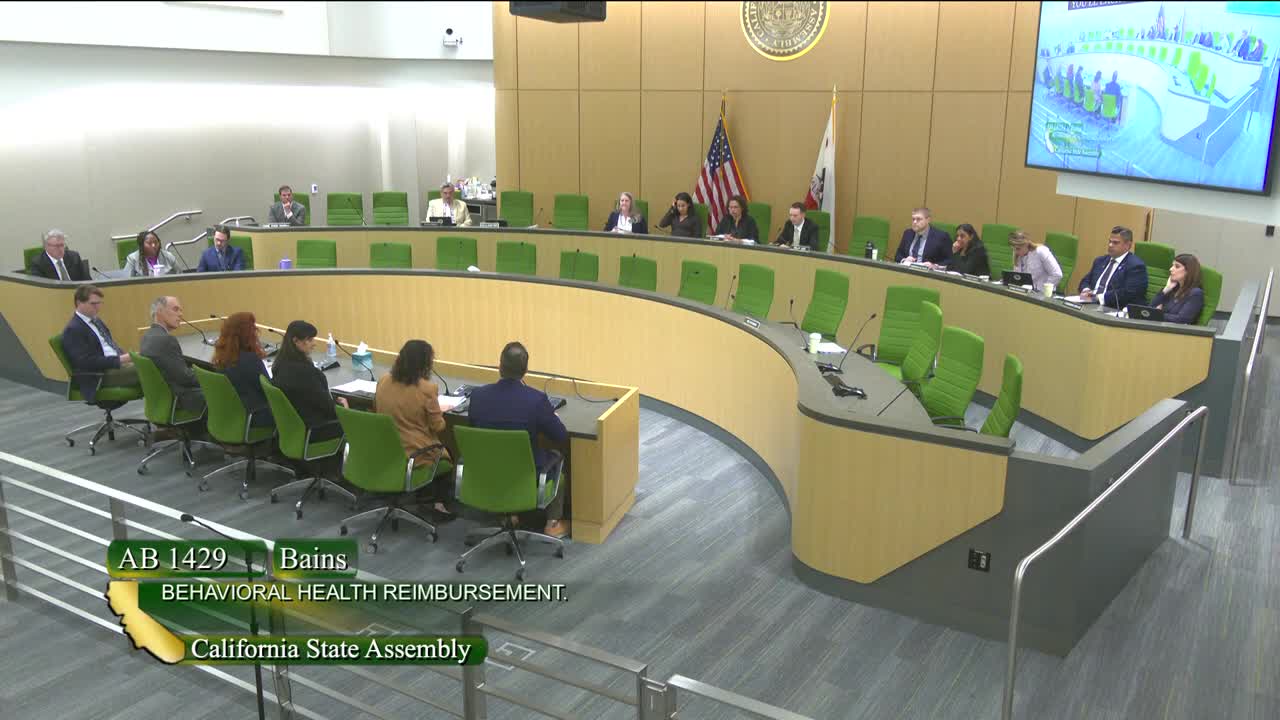
Bill Author
Bill Co-Author(s):