AB 384: Health care coverage: mental health and substance use disorders: inpatient admissions.
- Session Year: 2025-2026
- House: Assembly
- Latest Version Date: 2025-03-17
Current Status:
Failed
(2026-02-02: From committee: Filed with the Chief Clerk pursuant to Joint Rule 56.)
Introduced
In Committee
Awaiting First Chamber Vote
Passed First Chamber
In Committee
Awaiting Second Chamber Vote
Passed Second Chamber
Enacted
Existing law, the Knox-Keene Health Care Service Plan Act of 1975, provides for the licensure and regulation of health care service plans by the Department of Managed Health Care, and makes a willful violation of the act a crime. Existing law provides for the regulation of health insurers by the Department of Insurance. Existing law requires a health care service plan or health insurer to ensure that processes necessary to obtain covered health care services, including, but not limited to, prior authorization processes, are completed in a manner that assures the provision of covered health care services to an enrollee or insured in a timely manner appropriate for the enrollees or insureds condition, as specified.
This bill, the California Mental Health Protection Act, would prohibit a health care service plan contract or health insurance policy issued, amended, or renewed on or after January 1, 2027, that provides coverage for mental health and substance use disorders from requiring prior authorization (1) for an enrollee or insured to be admitted for medically necessary 24-hour care in inpatient settings for mental health and substance use disorders, as specified, and (2) for any medically necessary health care services provided to an enrollee or insured while admitted for that care. The bill would authorize the Director of the Department of Managed Health Care or the Insurance Commissioner, as applicable, to assess administrative or civil penalties, as specified, for violations of these provisions.
Because a willful violation of these provisions by a health care service plan would be a crime, the bill would impose a state-mandated local program.
Existing law establishes the Medi-Cal program, which is administered by the State Department of Health Care Services and under which qualified low-income individuals receive health care services through various delivery systems, including managed care. The Medi-Cal program is, in part, governed and funded by federal Medicaid program provisions.
This bill would prohibit requiring prior authorization under the Medi-Cal program (1) for admission for medically necessary 24-hour care in inpatient settings for mental health and substance use disorders, as specified, and (2) for any medically necessary health care services provided to a beneficiary while admitted for that care. The bill would authorize the Director of the State Department of Health Care Services to terminate a contract with, or impose sanctions on, an entity that violates these provisions. The bill would condition implementation of these provisions on the availability of federal financial participation and the receipt of any necessary federal approvals.
For purposes of these provisions, this bill would provide that 24-hour care in inpatient settings includes, among other things, a general acute care hospital and an acute psychiatric hospital, as specified.
The California Constitution requires the state to reimburse local agencies and school districts for certain costs mandated by the state. Statutory provisions establish procedures for making that reimbursement.
This bill would provide that no reimbursement is required by this act for a specified reason.
Existing law, the Knox-Keene Health Care Service Plan Act of 1975, provides for the licensure and regulation of health care service plans by the Department of Managed Health Care, and makes a willful violation of the act a crime. Existing law provides for the regulation of health insurers by the Department of Insurance. Existing law requires a health care service plan or health insurer to ensure that processes necessary to obtain covered health care services, including, but not limited to, prior authorization processes, are completed in a manner that assures the provision of covered health care services to an enrollee or insured in a timely manner appropriate for the enrollees or insureds condition, as specified.
This bill, the California Mental Health Protection Act, would prohibit a health care service plan contract or health insurance policy issued, amended, or renewed on or after January 1, 2027, that provides coverage for mental health and substance use disorders from requiring prior authorization (1) for an enrollee or insured to be admitted for medically necessary 24-hour care in inpatient settings for mental health and substance use disorders, as specified, and (2) for any medically necessary health care services provided to an enrollee or insured while admitted for that care. The bill would authorize the Director of the Department of Managed Health Care or the Insurance Commissioner, as applicable, to assess administrative or civil penalties, as specified, for violations of these provisions.
Because a willful violation of these provisions by a health care service plan would be a crime, the bill would impose a state-mandated local program.
Existing law establishes the Medi-Cal program, which is administered by the State Department of Health Care Services and under which qualified low-income individuals receive health care services through various delivery systems, including managed care. The Medi-Cal program is, in part, governed and funded by federal Medicaid program provisions.
This bill would prohibit requiring prior authorization under the Medi-Cal program (1) for admission for medically necessary 24-hour care in inpatient settings for mental health and substance use disorders, as specified, and (2) for any medically necessary health care services provided to a beneficiary while admitted for that care. The bill would authorize the Director of the State Department of Health Care Services to terminate a contract with, or impose sanctions on, an entity that violates these provisions. The bill would condition implementation of these provisions on the availability of federal financial participation and the receipt of any necessary federal approvals.
The California Constitution requires the state to reimburse local agencies and school districts for certain costs mandated by the state. Statutory provisions establish procedures for making that reimbursement.
This bill would provide that no reimbursement is required by this act for a specified reason.
This act is known, and may be cited, as the California Mental Health Protection Act.
SEC. 2.Section 1371.45 is added to the Health and Safety Code, to read:1371.45.(a)A health care service plan contract issued, amended, or renewed on or after January 1, 2027, that provides coverage for mental health and substance use disorders shall not require prior authorization for an enrollee to be admitted to medically necessary 24-hour care in inpatient settings, as determined by a physician, for a mental health disorder, substance use disorder, or a co-occurring mental health disorder and substance use disorder.
(b)A health care service plan contract issued, amended, or renewed on or after January 1, 2027, that provides coverage for mental health and substance use disorders shall not require prior authorization for medically necessary health care services, as determined by a physician, provided to an enrollee while the enrollee is admitted to 24-hour care in an inpatient setting for a mental health disorder, substance use disorder, or a co-occurring mental health disorder and substance use disorder.
(c)The director may assess administrative penalties for violations of this section as provided for in Section 1368.04, in addition to any other remedies permitted by law.
(d)For purposes of this section, 24-hour care in inpatient settings includes all of the following settings:
(1)A general acute care hospital and a rural general acute care hospital as those terms are defined in subdivision (a) of Section 1250.
(2)An acute psychiatric hospital, as defined in subdivision (b) of Section 1250.
(3)A psychiatric health facility, as defined in Section 1250.2.
(4)A chemical dependency recovery hospital, as defined in Section 1250.3.
(5)A psychiatric residential treatment facility, as defined in Section 1250.10.
SEC. 3.Section 10112.76 is added to the Insurance Code, to read:10112.76.(a)A health insurance policy issued, amended, or renewed on or after January 1, 2027, that provides coverage for mental health and substance use disorders shall not require prior authorization for an insured to be admitted to medically necessary 24-hour care in inpatient settings, as determined by a physician, for a mental health disorder, substance use disorder, or a co-occurring mental health disorder and substance use disorder.
(b)A health insurance policy issued, amended, or renewed on or after January 1, 2027, that provides coverage for mental health and substance use disorders shall not require prior authorization for medically necessary health care services, as determined by a physician, provided to an insured while the insured is admitted to 24-hour care in an inpatient setting for a mental health disorder, substance use disorder, or a co-occurring mental health disorder and substance use disorder.
(c)If the commissioner determines that a health insurer has violated this section, the commissioner may, after appropriate notice and opportunity for hearing in accordance with the Administrative Procedure Act (Chapter 5 (commencing with Section 11500) of Part 1 of Division 3 of Title 2 of the Government Code), by order, assess civil penalties.
(d)For purposes of this section, 24-hour care in inpatient settings includes all of the following settings:
(1)A general acute care hospital and a rural general acute care hospital as those terms are defined in subdivision (a) of Section 1250 of the Health and Safety Code.
(2)An acute psychiatric hospital, as defined in subdivision (b) of Section 1250 of the Health and Safety Code.
(3)A psychiatric health facility, as defined in Section 1250.2 of the Health and Safety Code.
(4)A chemical dependency recovery hospital, as defined in Section 1250.3 of the Health and Safety Code.
(5)A psychiatric residential treatment facility, as defined in Section 1250.10 of the Health and Safety Code.
SEC. 4.Section 14133.87 is added to the Welfare and Institutions Code, to read:14133.87.(a)Prior authorization shall not be required under the Medi-Cal program for admission for medically necessary 24-hour care in inpatient settings, as determined by a physician, for a mental health disorder, substance use disorder, or a co-occurring mental health disorder and substance use disorder.
(b)Prior authorization shall not be required for medically necessary health care services, as determined by a physician, provided to a beneficiary while the beneficiary is admitted to 24-hour care in an inpatient setting for a mental health disorder, substance use disorder, or a co-occurring mental health disorder and substance use disorder.
(c)If the director finds that an entity that contracts with the department for the delivery of health care services, including a Medi-Cal managed care plan or a prepaid health plan, violates this section, the director may terminate the contract or impose sanctions as set forth in Section 14197.7.
(d)This section shall be implemented only to the extent that federal financial participation is available and not otherwise jeopardized, and any necessary federal approvals have been obtained.
(e)For purposes of this section, 24-hour care in inpatient settings includes all of the following settings:
(1)A general acute care hospital and a rural general acute care hospital as those terms are defined in subdivision (a) of Section 1250 of the Health and Safety Code.
(2)An acute psychiatric hospital, as defined in subdivision (b) of Section 1250 of the Health and Safety Code.
(3)A psychiatric health facility, as defined in Section 1250.2 of the Health and Safety Code.
(4)A chemical dependency recovery hospital, as defined in Section 1250.3 of the Health and Safety Code.
(5)A psychiatric residential treatment facility, as defined in Section 1250.10 of the Health and Safety Code.
SEC. 5.No reimbursement is required by this act pursuant to Section 6 of Article XIIIB of the California Constitution because the only costs that may be incurred by a local agency or school district will be incurred because this act creates a new crime or infraction, eliminates a crime or infraction, or changes the penalty for a crime or infraction, within the meaning of Section 17556 of the Government Code, or changes the definition of a crime within the meaning of Section 6 of Article XIIIB of the California Constitution.
This act is known, and may be cited, as the California Mental Health Protection Act.
SEC. 2.Section 1371.45 is added to the Health and Safety Code, to read:1371.45.(a)A health care service plan contract issued, amended, or renewed on or after January 1, 2027, that provides coverage for mental health and substance use disorders shall not require prior authorization for an enrollee to be admitted to medically necessary 24-hour care in inpatient settings, as determined by a physician, for a mental health disorder, substance use disorder, or a co-occurring mental health disorder and substance use disorder.
(b)A health care service plan contract issued, amended, or renewed on or after January 1, 2027, that provides coverage for mental health and substance use disorders shall not require prior authorization for medically necessary health care services, as determined by a physician, provided to an enrollee while the enrollee is admitted to 24-hour care in an inpatient setting for a mental health disorder, substance use disorder, or a co-occurring mental health disorder and substance use disorder.
(c)The director may assess administrative penalties for violations of this section as provided for in Section 1368.04, in addition to any other remedies permitted by law.
SEC. 3.Section 10112.76 is added to the Insurance Code, to read:10112.76.(a)A health insurance policy issued, amended, or renewed on or after January 1, 2027, that provides coverage for mental health and substance use disorders shall not require prior authorization for an insured to be admitted to medically necessary 24-hour care in inpatient settings, as determined by a physician, for a mental health disorder, substance use disorder, or a co-occurring mental health disorder and substance use disorder.
(b)A health insurance policy issued, amended, or renewed on or after January 1, 2027, that provides coverage for mental health and substance use disorders shall not require prior authorization for medically necessary health care services, as determined by a physician, provided to an insured while the insured is admitted to 24-hour care in an inpatient setting for a mental health disorder, substance use disorder, or a co-occurring mental health disorder and substance use disorder.
(c)If the commissioner determines that a health insurer has violated this section, the commissioner may, after appropriate notice and opportunity for hearing in accordance with the Administrative Procedure Act (Chapter 5 (commencing with Section 11500) of Part 1 of Division 3 of Title 2 of the Government Code), by order, assess civil penalties.
SEC. 4.Section 14133.87 is added to the Welfare and Institutions Code, to read:14133.87.(a)Prior authorization shall not be required under the Medi-Cal program for admission for medically necessary 24-hour care in inpatient settings, as determined by a physician, for a mental health disorder, substance use disorder, or a co-occurring mental health disorder and substance use disorder.
(b)Prior authorization shall not be required for medically necessary health care services, as determined by a physician, provided to a beneficiary while the beneficiary is admitted to 24-hour care in an inpatient setting for a mental health disorder, substance use disorder, or a co-occurring mental health disorder and substance use disorder.
(c)If the director finds that an entity that contracts with the department for the delivery of health care services, including a Medi-Cal managed care plan or a prepaid health plan, violates this section, the director may terminate the contract or impose sanctions as set forth in Section 14197.7.
(d)This section shall be implemented only to the extent that federal financial participation is available and not otherwise jeopardized, and any necessary federal approvals have been obtained.
SEC. 5.No reimbursement is required by this act pursuant to Section 6 of Article XIIIB of the California Constitution because the only costs that may be incurred by a local agency or school district will be incurred because this act creates a new crime or infraction, eliminates a crime or infraction, or changes the penalty for a crime or infraction, within the meaning of Section 17556 of the Government Code, or changes the definition of a crime within the meaning of Section 6 of Article XIIIB of the California Constitution.
|
Date
|
Status
|
|---|---|
| Feb 2, 2026 | From committee: Filed with the Chief Clerk pursuant to Joint Rule 56. |
| Jan 31, 2026 | Died pursuant to Art. IV, Sec. 10(c) of the Constitution. |
| May 23, 2025 | In committee: Held under submission. |
| May 14, 2025 | In committee: Set, first hearing. Referred to suspense file. |
| Apr 23, 2025 | From committee: Do pass and re-refer to Com. on APPR. (Ayes 13. Noes 0.) (April 22). Re-referred to Com. on APPR. |
| Mar 18, 2025 | Re-referred to Com. on HEALTH. |
| Mar 17, 2025 | From committee chair, with author's amendments: Amend, and re-refer to Com. on HEALTH. Read second time and amended. |
| Feb 18, 2025 | Referred to Com. on HEALTH. |
| Feb 4, 2025 | From printer. May be heard in committee March 6. |
| Feb 3, 2025 | Read first time. To print. |
|
Date
|
Description
|
Location
|
Votes
|
|
|---|---|---|---|---|
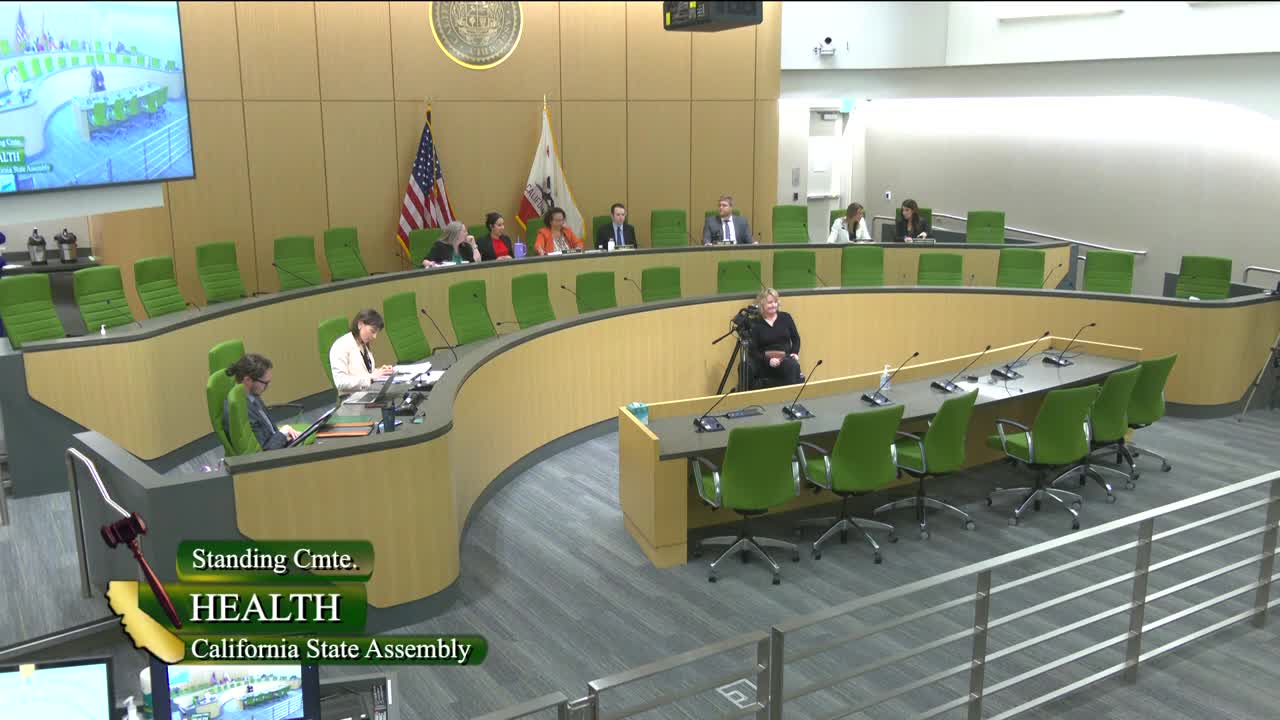
| Apr 22, 2025 | Do pass and be re-referred to the Committee on [Appropriations] | Assembly Standing Committee on Health |
Passed |
This list shows positions taken on this bill by organizations on the date displayed, which is linked to the original source.
Positions by individuals are not included.
|
Organization
|
Position
|
Date
|
|---|---|---|
| Association Of California Life & Health Insurance Companies | ** Against | |
| California Academy of Child and Adolescent Psychiatry | ** Support | |
| California Association Of Health Plans | ** Against | |
| California Behavioral Health Association | ** Support | |
| California Chamber Of Commerce | ** Against | |
| California Chapter of the American College of Emergency Physicians | ** Support | |
| California Hospital Association | ** Support | |
| California Peer Watch | ** Support | |
| California State Association of Psychiatrists | ** Support | |
| Hemophilia Council Of California | ** Support | |
| National Alliance on Mental Illness | ** Support | |
| Providence St. Joseph Health | ** Support | |
| The Kennedy Forum | ** Support | |
| United Hospital Association | ** Support |
Date of Hearing: May 14, 2025
ASSEMBLY COMMITTEE ON APPROPRIATIONS
Buffy Wicks, Chair
ABPCA Bill Id:AB 384
Author:(Connolly) – As Amended Ver:March 17, 2025
Policy Committee: | Health | Vote: | 13 - 0 |
|
| ||
|
|
Urgency: No State Mandated Local Program: Yes Reimbursable: No
SUMMARY:
This bill, the California Mental Health Protection Act, prohibits a health plan or health insurer that provides coverage for mental health (MH) and substance use disorders (SUDs) from requiring prior authorization (PA) for (1) an enrollee to be admitted for medically necessary 24-hour care for MH or SUD in inpatient settings, as specified, and (2) medically necessary health services provided to an enrollee or insured while admitted for that care.
Specifically, this bill:
- Prohibits a health plan contract or health insurance policy that provides coverage for MH or SUD, including Medi-Cal, that is issued, amended, or renewed on or after January 1, 2027, from requiring PA for an enrollee or insured to be admitted for medically necessary 24-hour care, as determined by a physician, in an inpatient setting for MH or SUD. Prohibits the health plan or health insurance policy from requiring PA for medically necessary health care services provided to an enrollee or insured while admitted to the inpatient setting.
- Defines “24-hour care in inpatient settings” to include the following:
- A general acute care hospital and a rural general acute care hospital.
- An acute psychiatric hospital.
- A psychiatric health facility;
- A chemical dependency recovery hospital; and
- A psychiatric residential treatment facility.
- Authorizes the Director of the Department of Managed Health Care (DMHC), Insurance Commissioner, or the Director of the Department of Health Care Services (DHCS), as applicable, to assess administrative or civil penalties to enforce the provisions of this bill.
FISCAL EFFECT:
The Department of Insurance anticipates no new costs associated with this bill.
DMHC estimates the total cost of this bill to be approximately $485,000 in fiscal year (FY) 2025-26, $1.9 million in FY 2026-27, and $3.0 million in FY 2027-28 and annually thereafter (Managed Care Fund). DMHC attributes these costs to an increased volume of complaints, assessing health plan compliance, enforcement, information technology, and administration and overhead.
Costs of an unknown amount to the Medi-Cal program, potentially in the hundreds of thousands to low millions of dollars annually, if this bill results in higher utilization of inpatient care for MH and SUD (General Fund, federal funds). At the time this analysis was prepared, DHCS had not provided a cost estimate.
The California Public Employees’ Retirement System (CalPERS) states it could experience a minimal fiscal impact due to more members receiving treatment for MH or SUD, but was unable to provide a specific cost estimate (General Fund).
COMMENTS:
- Purpose. This bill is sponsored by the California Behavioral Health Association (CBHA) and California State Association of Psychiatrists (CSAP). According to the author:
In a mental health emergency, every second counts. Prior authorizations create delays by forcing doctors to justify their decisions regarding a patient’s medical care to an insurance company. During a mental health crisis, these delays can have severe and life-altering consequences. [This bill] ensures that Californians who are hospitalized for a mental health or substance abuse emergency receive immediate care with no unnecessary delays.
- PA. PA is a utilization management tool that health plans and insurers use to control costs, limit unnecessary care, and evaluate safety and appropriateness of a service. In 2023 report on PA, the California Health Benefits Review Program (CHBRP) cited recent estimates that between 20% and 25% of all health care spending in the U.S. is a result of wasteful and unnecessary spending, as well as missed opportunities to provide appropriate care. CHBRP also noted that PA can contribute to delays in treatment and be a barrier to care. Health plans reported that 5% to 15% of all covered medical services and 16% to 25% of pharmacy services were subject to PA. CHBRP noted that across studies it reviewed, from 40% to 82% of PA denials were overturned upon appeal. The American Medical Association (AMA) contends PA leads to substantial administrative burdens for physicians, with each physician and their staff spending 13 hours per week completing PAs. AMA further reports 40% of physicians have staff who work exclusively on PA, and 89% of physicians reported PA increases physician burnout.
- Related and Prior Legislation. Numerous bills currently under consideration, including AB 510 (Addis), AB 512 (Harabedian), AB 539 (Schiavo), AB 574 (Mark González), AB 669 (Haney), and SB 306 (Becker) address PA. Several bills introduced in previous legislative sessions attempted to make larger, more systematic changes, but were not enacted. These bills include SB 516 (Skinner) and SB 598 (Skinner), of the 2023-24 Legislative Session, and SB 250 (Pan) and AB 1880 (Arambula), of the 2021-22 Legislative Session.
Analysis Prepared by: Allegra Kim / APPR. / (916) 319-2081
Date of Hearing: April 22, 2025
ASSEMBLY COMMITTEE ON HEALTH
Mia Bonta, Chair
ABPCA Bill Id:AB 384
Author:(Connolly) – As Amended Ver:March 17, 2025
SUBJECT: Health care coverage: mental health and substance use disorders: inpatient admissions.
SUMMARY: Prohibits a health care service plan (health plan), health insurer, or Medi-Cal from requiring prior authorization for an individual to be admitted to medically necessary 24-hour inpatient settings for mental health (MH) and substance use disorders (SUDs) and for any medically necessary health care services provided to an individual while admitted for that care. Specifically, this bill:
- Prohibits a health plan contract or health insurance policy issued, amended, or renewed on or after January 1, 2027, that provides coverage for MH and SUDs from requiring prior authorization for an enrollee or insured to be admitted to medically necessary 24-hour inpatient settings for MH and SUDs.
- Prohibits a health plan contract or health insurance policy issued, amended, or renewed on or after January 1, 2027, that provides coverage for MH and SUDs from requiring prior authorization for medically necessary health care services provided to an enrollee or insured while admitted to 24-hour inpatient care.
- Prohibits the Medi-Cal program from requiring prior authorization for admission to medically necessary 24-hour inpatient settings for MH and SUDs. Prohibits prior authorization for medically necessary health care services provided to a beneficiary while admitted to 24-hour inpatient care.
- Grants enforcement powers to the Department of Managed Health Care (DMHC), Department of Insurance (CDI), and Department of Health Care Services (DHCS).
- Defines “24-hour care in inpatient settings” to include all of the following:
- A general acute care hospital and a rural general acute care hospital;
- An acute psychiatric hospital;
- A psychiatric health facility;
- A chemical dependency recovery hospital; and
- A psychiatric residential treatment facility.
EXISTING LAW:
- Establishes the DMHC to regulate health plans under the Knox-Keene Health Care Service Plan Act of 1975 and CDI to regulate health insurers. [Health and Safety Code (HSC) §1340, et seq., and Insurance Code (INS) §106, et seq.]
- Establishes California's Essential Health Benefits (EHBs) benchmark under the Patient Protection and Affordable Care Act (ACA) as the Kaiser Small Group Health Maintenance Organization. Establishes existing California health insurance mandates and the 10 ACA mandated benefits, including MH and SUD coverage. [HSC § 1367.005 and INS § 10112.27]
- Requires every disability insurance policy and health plan that provides hospital, medical, or surgical coverage to provide coverage for medically necessary treatment of MH and SUDs, under the same terms and conditions applied to other medical conditions, as specified. [HSC § 1374.72 and INS § 10144.5]
- Defines medically necessary treatment of MH or SUD including that the service or product is in accordance with generally accepted standards of MH or SUD care, clinically appropriate in terms of type, frequency, extent, site, and duration. [HSC § 1374.72 and INS §10144.5]
- Requires a health plan or insurer that provides hospital, medical, or surgical coverage to base any medical necessity determination or the utilization review (UR) criteria on current generally accepted standards of MH and SUD care, as specified. Requires medical necessity determinations concerning service intensity, level of care placement, continued stay, and transfer or discharge of enrollees diagnosed with MH and SUDs to be conducted in accordance with the requirements in 6) below. [HSC §1374.72 and INS §10144.5]
- Requires a health plan or insurer that provides hospital, medical, or surgical coverage to base any medical necessity determination or the UR criteria that the plan, and any entity acting on the plan’s behalf, applies to determine the medical necessity of health care services and benefits for the diagnosis, prevention, and treatment of MH and SUDs on current generally accepted standards of MH and SUD care, as specified. Requires a health plan or insurer to apply the criteria and guidelines set forth in the most recent versions of treatment criteria developed by the nonprofit professional association for the relevant clinical specialty in conducting UR of all covered health care services and benefits for the diagnosis, prevention, and treatment of MH and SUDs in children, adolescents, and adults. [HSC § 1374.721 and INS § 10144.52]
- Requires the criteria or guidelines used by health plans and insurers, or any entities with which plans or insurers contract for UR or utilization management (UM) functions, to determine whether to authorize, modify, or deny health care services to:
- Be developed with involvement from actively practicing health care providers;
- Be consistent with sound clinical principles and processes;
- Be evaluated, and updated if necessary, at least annually;
- If used as the basis of a decision to modify, delay, or deny services in a specified case under review, be disclosed to the provider and the enrollee or insured in that specified case; and,
- Be available to the public upon request. [HSC § 1363.5 and INS § 10123.135]
- Requires health plans to demonstrate that medical decisions are rendered by qualified medical providers, unhindered by fiscal and administrative management. [HSC § 1367]
- Requires health plans and disability insurers and any contracted entity that performs UR or UM functions, prospectively, retrospectively, or concurrently, based on medical necessity requests to comply with specified requirements. [HSC § 1367.01 and INS § 10123.135]
- Prohibits any individual, other than a licensed physician or a licensed health care professional who is competent to evaluate the specific clinical issues involved in the health care services requested by the provider, from denying or modifying requests for authorization of health care services for an enrollee or insured for reasons of medical necessity. Requires the decision to be communicated to the provider within 24 hours of the decision, and the enrollee (in writing) within two business days of the decision. Prohibits, in the case of concurrent review, discontinuance of care until the treating provider has been notified and has agreed to a care plan that is appropriate for the medical needs of the patient. [HSC § 1367.01 and INS § 10123.135]
- Establishes the Medi-Cal Program, administered by DHCS, to provide comprehensive health benefits to low-income individuals who meet specified eligibility criteria. [Welfare and Institutions Code (WIC) § 14000 et seq.]
- Establishes a schedule of benefits under the Medi-Cal program, including inpatient services. [WIC § 14132]
- Establishes the Lanterman-Petris-Short Act (LPS Act) to end the inappropriate, indefinite, and involuntary commitment of persons with mental health disorders, developmental disabilities, and chronic alcoholism, as well as to safeguard a person’s rights, provide prompt evaluation and treatment, and provide services in the least restrictive setting appropriate to the needs of each person. Permits involuntary detention of a person deemed to be a danger to self or others, or “gravely disabled,” as defined, for periods of up to 72 hours for evaluation and treatment, or for up-to 14 days and up-to 30 days for additional intensive treatment in county-designated facilities. [WIC §5000, et seq.]
FISCAL EFFECT: Unknown. This bill has yet to be analyzed by a fiscal committee.
COMMENTS:
- PURPOSE OF THIS BILL. According to the author, in a MH emergency, every second counts. The author states that prior authorizations create delays by forcing doctors to justify their decisions regarding a patient’s medical care to an insurance company. The author continues that during a MH crisis, these delays can have severe and life-altering consequences. The author concludes that this bill, the Mental Health Protection Act, ensures that Californian’s who are hospitalized for a MH or SUD emergency receive immediate care with no unnecessary delays.
- BACKGROUND. UM and UR are processes used by health plans to evaluate and manage the use of health care services. UR can occur prospectively, retrospectively, or concurrently and a plan can approve, modify, delay or deny in whole or in part a request based on its medical necessity. Prior authorization is a UR technique used by health plans that requires patients to obtain approval of a service or medication before care is provided. Prior authorization is intended to allow plans to evaluate whether care that has been prescribed is medically necessary for purposes of coverage. Prior authorization is one type of UM tool that’s used by health plans, along with others such as concurrent review and step therapy, to control costs, limit unnecessary care, and evaluate safety and appropriateness of a service.
- Overall impact of prior authorization. In 2023, the California Health Benefits Review Program (CHBRP) published a report to help the Legislature better understand the ways in which prior authorization is used in California. CHBRP noted that prior authorization is an imperfect instrument that’s utilized in a myriad of ways. This poses a challenge for policymakers, payers, patients, and providers since prior authorization is generally intended to decrease costs and waste, but it may also contribute to delays in treatment and additional barriers to care. Currently, evidence is limited as to the extent to which health insurance uses prior authorization and its impact on the performance of the health care system, patient access to appropriate care, and the health and financial interests of the general public. Despite the limited evidence, there is clear frustration from both patients and providers regarding prior authorization practices. According to CHBRP, complaints range from the time required to complete the initial authorization request and pursue denials, to delays in care, to a general lack of transparency regarding the process and criteria used to evaluate prior authorization requests. CHBRP further notes that people with disabilities, younger patients, African Americans, and people with lower incomes are more likely to report administrative burdens, including delays in care, due to prior authorization.
- Cost impacts. One common reason prior authorization is used is to reduce and control health care spending. Total national health expenditures as a share of the gross domestic product have increased steadily over time. While the overall increase in health care spending can be largely attributed to increased cost of services and increased utilization, there is another important piece that drives both increased utilization and cost of services. Unnecessary medical care or wasteful health care spending, such as administrative complexities and fraud, are additional drivers. CHBRP cites recent study estimates that between 20% and 25% of all health care spending in the United States is a result of wasteful and unnecessary spending, as well as missed opportunities to provide appropriate care. Health plans and insurers operating in California responding to CHBRP’s query on areas of highest fraud and abuse noted that waste and abuse may occur more frequently when low value or medically unnecessary care is delivered. Behavioral health, particularly applied behavioral analysis, was identified by health plans/insurers as a leading fraud risk.
- Access to and utilization of care. Across state-regulated commercial plans and policies, 100% of enrollees are subject to some sort of prior authorization in their benefits. Plans reported that between five to 15% of all covered medical services and 16 to 25% of pharmacy services were subject to prior authorization. Evidence regarding whether prior authorization improves patient safety and ensures medically appropriate care is provided is mixed. Across studies reviewed by CHBRP, a sizable share of prior authorization denials were overturned upon appeal, ranging from 40% to 82% of denials being overturned. In instances when prior authorization is initially denied, a patient may need to pay out of pocket for services or may delay treatment due to lack of coverage. Much of the published literature regarding the impact of prior authorization focuses on prescription medications, finding that prior authorization requirements result in lower utilization of medications and decreases medication adherence.
- Administrative burden. According to the American Medical Association (AMA), prior authorization leads to substantial administrative burdens for physicians, taking time away from direct patient care while costing practices money. AMA’s 2024 physician survey on prior authorization found that on average, physicians and their staff spend 13 hours each week completing prior authorizations and 40% of physicians have staff who work exclusively on prior authorization. One in three physicians reported that prior authorization requests are often or always denied and 93% reported that prior authorization leads to care delays for their patients. 89% of physicians reported that prior authorization somewhat or significantly increases physician burnout.
- Prevalence of SUD in California. A 2024 publication from Health Management Associates and the California Health Care Foundation (CHCF) titled, “Substance Use Disorder in California — a Focused Landscape Analysis” reported that approximately 9% of Californians ages 12 years and older met the criteria for SUD in 2022. According to the report, the prevalence of SUD among individuals 12 years of age and older increased to 8.8% in 2022 from 8.1% in 2015. While the health care system is moving toward acknowledging SUD as a chronic illness, only 6% of Americans and 10% of Californians ages 12 and older with an SUD received treatment for their condition in 2021. More than 19,335 Californians ages 12 years and older died from the effects of alcohol from 2020 to 2021, and the total annual number of alcohol-related deaths increased by approximately 18% in the state from 2020 and 2021. Overdose deaths from both opioids and psychostimulants (such as amphetamines), are soaring. This issue, compounded by the increased availability of fentanyl, has resulted in a 10-fold increase in fentanyl related deaths between 2015 and 2019. According to the California Department of Public Health’s Overdose Prevention Initiative, 7,847 opioid-related overdose deaths occurred in California in 2023. In the first two quarters of 2024, 2,975 opioid-related overdose deaths were recorded in California.
- Prevalence of MH in California. A 2022 publication from CHCF, entitled “Mental Health in California” reported that nearly one in seven California adults experience a mental illness, and one in 26 has a serious mental health condition that makes it difficult to carry out daily activities. One in 14 children has an emotional disturbance that limits functioning in family, school, or community activities. According to the report, the prevalence of serious mental illness varies by income, with the highest rates in adults and children in families with incomes below 100% of the federal poverty level. A 2019 survey by the Substance Abuse and Mental Health Services Administration found nearly five million, or 16%, of Black Americans reported having a mental illness. However, only one in three Black adults who needs MH care receives it. Similarly, a 2021 study by the University of California Los Angeles Center for Health Policy Research found that almost half of Latino adults who had a perceived need for MH services experienced an unmet need for care.
- SUPPORT. The California Behavioral Health Association (CBHA), co-sponsor of this bill, states that in the midst of a national MH crisis, it is critical to reduce the bureaucratic obstacles that prevent patients from receiving care in a timely manner. CBHA notes that one-third of all inpatient hospitalizations in California involve behavioral health diagnoses. CBHA continues that the state has experienced a 40% spike in hospitalizations for young people with MH emergencies over the last decade. CBHA argues that immediate treatment upon admission is vital to protecting the well-being of patients who may face life threatening conditions.
The California State Association of Psychiatrists (CSAP), another co-sponsor of this bill, states that when prior authorization is used during these crisis situations, doctors must justify their decisions regarding a patient’s care by communicating clinical information with an insurer. CSAP continues that that this lengthy administrative process forces doctors to divert significant amounts of time and focus away from patient care, delaying that patient from receiving vital medical services. CSAP argues that in MH emergencies, the consequences of delayed treatment can be severe, particularly during an inpatient mental health case when an individual is hospitalized for a serious psychiatric condition.
- OPPOSITION. The California Association of Health Plans (CAHP) and Association of California Life and Health Insurance Companies (ACLHIC) oppose this bill, citing concerns with the implications of including residential treatment facilities in the bill’s definition of inpatient settings. CAHP and ACLHIC state that residential treatment centers fundamentally differ from acute care hospitals and other inpatient facilities. CAHP and ACLHIC note that while they operate as 24-hour centers, they are not locked units and do not provide constant medical treatment. CAHP and ACLHIC argue this differentiation is crucial, as it raises significant concerns regarding potential waste, fraud, and abuse within these facilities. CAHP and ACLHIC continue that there has been an increasing trend of legislative efforts aimed at regulating these facilities due to ongoing issues of misconduct, inadequate oversight, and exploitative practices. Additionally, CAHP and ACLHIC find it troubling that the bill lacks clarity regarding whether concurrent or retrospective review of services rendered is permissible. CAHP and ACLHIC argue this ambiguity could lead to additional complications in ensuring appropriate healthcare delivery and safeguarding against unnecessary costs.
- RELATED LEGISLATION.
- AB 510 (Addis) would require, upon request, an appeal or grievance regarding a decision by a health plan or health insurer delaying, denying, or modifying a health care service based in whole or in part on medical necessity, to be reviewed by a peer physician or health care professional of the same or similar specialty as the requesting provider. AB 510 is currently pending in the Assembly Health Committee.
- AB 512 (Harabedian) would shorten the timeline for prior authorization requests to be no longer than 48 hours for standard requests or 24 hours for urgent requests. AB 512 is currently pending in the Assembly Health Committee.
- AB 539 (Schiavo) would require a prior authorization for a health care service to remain valid for a period of at least one year from the date of approval. AB 539 is currently pending in the Assembly Health Committee.
- AB 574 (Mark González) would prohibit a health plan or health insurer from imposing prior authorization for the initial 12 treatment visits for a new episode of care for physical therapy (PT). Would require a PT provider to verify an individual’s coverage and disclose their share of the cost of care, as specified. Would require a PT provider to obtain written consent for costs that may not be covered by the individual’s plan, as specified. AB 574 is currently pending in the Assembly Health Committee.
- AB 669 (Haney) would prohibit concurrent or retrospective review of medical necessity for the first 28 days of in-network inpatient SUD stay. Would prohibit concurrent or retrospective review of medical necessity of in-network outpatient SUD visits. Would prohibit retrospective review of medical necessity for the first 28 days of in-network intensive outpatient or partial hospitalization SUD services, as specified. Would prohibit prior authorization for in-network coverage of medically necessary outpatient prescription drugs to treat SUD. AB 669 is currently pending in the Assembly Health Committee.
- SB 306 (Becker) would prohibit a health plan or health insurer, or an entity with which the plan or insurer contracts, from imposing prior authorization or prior notification for one calendar year on a covered service that was approved 90% or more of the time in the prior calendar year. SB 306 is currently pending in the Senate Health Committee.
- PREVIOUS LEGISLATION.
- SB 516 (Skinner), of 2024, would have required DMHC and CDI, by July 1, 2025, to issue instructions, including a standard reporting template, to health plans and insurers to report specified information, including all covered health care services, items, and supplies subject to prior authorization. SB 516 was not heard in the Assembly Health Committee.
- AB 1451 (Jackson), of 2023, would have required a health plan contract or health insurance policy issued, amended, renewed, or delivered on or after January 1, 2024, to provide coverage for treatment of urgent and emergency MH and SUD without preauthorization. AB 1451 was vetoed by Governor Newsom who stated in part:
“I share the author's concern regarding the importance of accessible behavioral health services statewide, as evidenced by the billions of dollars we have invested to enhance access to timely and necessary behavioral health care, as well as the programs and reforms implemented to improve our delivery system. Existing law already prohibits prior authorization for emergency care, and requires mental health and substance use disorder services to meet timely access standards. The requirements in this bill would result in significant costs in the tens of millions of dollars, to the state General Fund and to consumers through health plan premium increases. These impacts should be considered as part of the annual budget process.”
- SB 238 (Wiener), of 2023, would have required a health plan or a disability insurer that modifies, delays, or denies a health care service, based in whole or in part on medical necessity, to automatically submit within 24 hours a decision regarding a disputed health care service to the IMR System, as specified, if the decision is to deny, modify, or delay specified services relating to MH or SUD conditions for an enrollee or insured up to 26 years of age. SB 238 was held on the Assembly Appropriations suspense file.
- SB 598 (Skinner) of 2023 would have prohibited a health plan or insurer from requiring a contracted health professional to complete or obtain a prior authorization for any covered health care services if the plan or insurer approved or would have approved not less than 90% of the prior authorization requests they submitted in the most recent completed one-year contracted period. SB 598 was held on suspense in the Assembly Appropriations Committee.
- SB 250 (Pan) of 2022 was similar to SB 598 and was held on suspense in the Assembly Appropriations Committee.
- SB 221 (Wiener), Chapter 724, Statutes of 2021, codifies existing timely access to care standards for health plans and insurers, applies these requirements to Medi-Cal Managed Care plans, and adds a standard for non-urgent follow-up appointments for nonphysician MH care or SUD providers that is within 10 business days of the prior appointment.
- SB 855 (Wiener), Chapter 151, Statutes of 2020, revises and recasts California’s MH Parity provisions, and requires a health plan contract or disability insurance policy issued, amended, or renewed on or after January 1, 2021, to provide coverage for medically necessary treatment of MH and SUD, as defined, under the same terms and conditions applied to other medical conditions and prohibits a health plan or disability insurer from limiting benefits or coverage for MH and SUD to short-term or acute treatment. Specifies that if services for the medically necessary treatment of a MH and SUD are not available in network within the geographic and timely access standards in existing law, the health plan or insurer is required to arrange coverage to ensure the delivery of medically necessary out of network services and any medically necessary follow up services, as specified.
- POLICY COMMENTS.
- Best approach for addressing issues with UR and UM. This committee is reviewing a number of bills aiming to address the problems that current UR and UM processes create in terms of access to care and physician burden. The volume of bills introduced on the topic demonstrate the level of Legislative determination to improve UR and UM processes for Californians. However, there is a divide on how to best approach such improvements. Some bills aim to address UR and UM processes at the systemic level by speeding up processing times, reducing the overall volume of services that require prior authorization, or extending authorization periods. Others aim to tackle problems at a more individual level by removing or altering UM and UR processes for specific services or conditions. While there is a clear need and desire for progress on improving the UR and UM experience, the Legislature will need to consider what the best approach is for all Californians. Altering structural processes? Or removing barriers for priority services and conditions?
- Definition of inpatient care. The author and sponsors of this bill provided this committee with detailed examples of prior authorization delaying patient access to inpatient MH and SUD emergencies. Examples ranged from Medi-Cal patients facing delays in access due to their managed care plan requiring prior authorization for all mental health hospitalizations, patients getting stuck in EDs as they awaited approval for transfer to an appropriate inpatient facility, and even patients under LPS conservatorship who were denied access to their judicially mandated care. While there is a wide scope of situations where patients faced barriers to necessary inpatient care due to prior authorization, the list of facilities defined under “inpatient care” in this bill may be unintentionally narrow and exclude some patients from benefiting from its provisions. For example, SB 1238 (Eggman) Chapter 644, Statutes of 2024, expanded the types of facilities that can hold and treat patients for MH and SUD under the LPS Act, yet not all of these facilities are encompassed in the definition under this bill. The author and sponsors may wish to work with stakeholders to ensure their definition is all-encompassing, or at least not limiting, the application of this bill.
REGISTERED SUPPORT / OPPOSITION:
Support
California Behavioral Health Association (co-sponsor)
California State Association of Psychiatrists (co-sponsor)
California Academy of Child and Adolescent Psychiatry
California Chapter of the American College of Emergency Physicians
California Hospital Association
California Peer Watch
Hemophilia Council of California
National Alliance on Mental Illness
Providence St. Joseph Health
The Kennedy Forum
United Hospital Association
Opposition
Association of California Life & Health Insurance Companies
California Association of Health Plans
California Chamber of Commerce
Analysis Prepared by: Riana King / HEALTH / (916) 319-2097
Bill Author

Bill Co-Author(s):