AB 549: Emergency services: human trafficking.
- Session Year: 2025-2026
- House: Assembly
- Latest Version Date: 2025-04-23
Current Status:
Failed
(2026-02-02: From committee: Filed with the Chief Clerk pursuant to Joint Rule 56.)
Introduced
In Committee
Awaiting First Chamber Vote
Passed First Chamber
In Committee
Awaiting Second Chamber Vote
Passed Second Chamber
Enacted
The California Emergency Services Act, among other things, establishes the Office of Emergency Services within the office of the Governor, under the charge of a Director of Emergency Services appointed by the Governor. The act and other existing laws set forth the duties and authority of the office and the director, with respect to specified emergency preparedness, mitigation, and response activities within the state.
This bill would require the office, in collaboration with host cities, counties, host committees, and partners, to prepare for the planning, resourcing, management, and delivery of safety and security at the mega sporting events and official watch parties, including the 2026 FIFA World Cup games, Super Bowl LXI 2027, the Summer Olympic Games 2028, and the Paralympic Games 2028. The bill would require the office to, among other things, consider ways to increase safety around and reduce the risk of, among other things, human trafficking at the mega sporting events. The bill would require the office to enter into a memorandum of understanding with the cities counties hosting the mega sporting events to implement the safety and security activities mentioned above. By imposing new duties on local governmental entities, this bill would impose a state-mandated local program.
The California Constitution requires the state to reimburse local agencies and school districts for certain costs mandated by the state. Statutory provisions establish procedures for making that reimbursement.
This bill would provide that, if the Commission on State Mandates determines that the bill contains costs mandated by the state, reimbursement for those costs shall be made pursuant to the statutory provisions noted above.
The California Emergency Services Act, among other things, establishes the Office of Emergency Services within the office of the Governor, under the charge of a Director of Emergency Services appointed by the Governor. The act and other existing laws set forth the duties and authority of the office and the director, with respect to specified emergency preparedness, mitigation, and response activities within the state.
This bill would require the office, in collaboration with host cities, host committees, and partners, to prepare for the planning, resourcing, management, and delivery of safety and security at the mega sporting events and official watch parties, including the 2026 FIFA World Cup games, Super Bowl LXI 2027, the Summer Olympic Games 2028, and the Paralympic Games 2028. The bill would require the office to, among other things, consider ways to increase safety around and reduce the risk of, among other things, human trafficking at the mega sporting events. The bill would require the office to enter into a memorandum of understanding, as specified, with, among others, understanding with the cities hosting the mega sporting events. events to implement the safety and security activities mentioned above. By imposing new duties on local governmental entities, this bill would impose a state-mandated local program.
The California Constitution requires the state to reimburse local agencies and school districts for certain costs mandated by the state. Statutory provisions establish procedures for making that reimbursement.
This bill would provide that, if the Commission on State Mandates determines that the bill contains costs mandated by the state, reimbursement for those costs shall be made pursuant to the statutory provisions noted above.
The California Emergency Services Act, among other things, establishes the Office of Emergency Services within the office of the Governor, under the charge of a Director of Emergency Services appointed by the Governor. The act and other existing laws set forth the duties and authority of the office and the director, with respect to specified emergency preparedness, mitigation, and response activities within the state.
This bill would require the office, in collaboration with host cities, host committees, and partners, to prepare for the planning, resourcing, management, and delivery of safety and security at the mega sporting events and official watch parties, including the 2026 FIFA World Cup games, Super Bowl LXI 2027, the Summer Olympic Games 2028, and the Paralympic Games 2028. The bill would require the office to, among other things, consider ways to increase safety around and reduce the risk of, among other things, human trafficking at the mega sporting events. The bill would require the office to enter into a memorandum of understanding, as specified, with, among others, the cities hosting the mega sporting events. By imposing new duties on local governmental entities, this bill would impose a state-mandated local program.
The California Constitution requires the state to reimburse local agencies and school districts for certain costs mandated by the state. Statutory provisions establish procedures for making that reimbursement.
This bill would provide that, if the Commission on State Mandates determines that the bill contains costs mandated by the state, reimbursement for those costs shall be made pursuant to the statutory provisions noted above.
Existing law makes a person guilty of human trafficking if the person deprives or violates the personal liberty of another with the intent to obtain forced labor or services. Human trafficking is punishable by imprisonment in the state prison for 5, 8, or 12 years and a fine of not more than $500,000.This bill would state the intent of the Legislature to enact legislation relating to preventing human trafficking at major sporting events.Existing law makes a person guilty of human trafficking if the person deprives or violates the personal liberty of another with the intent to obtain forced labor or services. Human trafficking is punishable by imprisonment in the state prison for 5, 8, or 12 years and a fine of not more than $500,000.
This bill would state the intent of the Legislature to enact legislation relating to preventing human trafficking at major sporting events.
For purposes of this article, the following terms have the following meanings:
(a)Mega sporting events means the 2026 FIFA World Cup games, the Super Bowl LXI 2027, the Summer Olympic Games 2028, and the Paralympic Games 2028.
(b)Office means the Office of Emergency Services.
8594.21.(a)The office shall, in collaboration with host cities, counties, host committees, and partners, prepare for the planning, resourcing, management, and delivery of safety and security at the mega sporting events and official watch parties.
(b)The office shall, in furtherance of this section, consider the work of the offices Large Stadium Initiative and the offices experience implementing the federal National Special Security Event planning and preparedness activities.
(c)The office shall, in furtherance of this section, consider ways to increase safety around and reduce the risk of all of the following issues at mega sporting events:
(1)Human trafficking, including all of the following strategies:
(A)Businesses involved with the sporting events are urged to monitor their supply chains for potential risks, such as human trafficking.
(B)Posting the Department of Justices notice informing the public and victims of human trafficking of hotline numbers to seek help or report unlawful activity in all listed or legally required establishments pursuant to Section 52.6 of the Civil Code.
(C)Hotel staff training to recognize the signs of human trafficking and understand the proper procedures for reporting any suspected incidents.
(D)Collaboration with law enforcement to reduce trafficking in high-risk areas where trafficking is more likely to occur, particularly during large-scale events.
(E)Connecting victims of trafficking to existing resources.
(2)Racism, sexism, and other forms of discrimination.
(3)Any other safety issue that may arise at a national-level sporting event.
(d)At least six months before the start of the 2026 FIFA World Cup games, one year before the Super Bowl LXI 2027, and one year before the Summer Olympic Games and Paralympic Games 2028, the office shall enter into a memorandum of understanding with the cities counties hosting the mega sporting events to implement the safety and security activities described in subdivisions (a), (b), and (c).
SEC. 2.If the Commission on State Mandates determines that this act contains costs mandated by the state, reimbursement to local agencies and school districts for those costs shall be made pursuant to Part 7 (commencing with Section 17500) of Division 4 of Title 2 of the Government Code.
For purposes of this article, the following terms have the following meanings:
(a)Mega sporting events means the 2026 FIFA World Cup games, the Super Bowl LXI 2027, the Summer Olympic Games 2028, and the Paralympic Games 2028.
(b)Office means the Office of Emergency Services.
8594.21.(a)The office shall, in collaboration with host cities, host committees, and partners, prepare for the planning, resourcing, management, and delivery of safety and security at the mega sporting events and official watch parties.
(b)The office shall, in furtherance of this section, consider the work of the offices Large Stadium Initiative and the offices experience implementing the federal National Special Security Event planning and preparedness activities.
(c)The office shall, in furtherance of this section, consider ways to increase safety around and reduce the risk of all of the following issues at mega sporting events:
(1)Human trafficking, including all of the following strategies:
(A)Businesses involved with the sporting events are urged to monitor their supply chains for potential risks, such as human trafficking.
(B)Posting the Department of Justices notice informing the public and victims of human trafficking of hotline numbers to seek help or report unlawful activity in all listed or legally required establishments pursuant to Section 52.6 of the Civil Code.
(C)Hotel staff training to recognize the signs of human trafficking and understand the proper procedures for reporting any suspected incidents.
(D)Collaboration with law enforcement to reduce trafficking in high-risk areas where trafficking is more likely to occur, particularly during large-scale events.
(E)Connecting victims of trafficking to existing resources.
(2)Racism, sexism, and other forms of discrimination.
(3)Any other safety issue that may arise at a national-level sporting event.
(d)At least six months before the start of the 2026 FIFA World Cup games, one year before the Super Bowl LXI 2027, and one year before the Summer Olympic Games and Paralympic Games 2028, the office shall enter into a memorandum of understanding with the cities hosting the mega sporting events, the chosen California host committees, which include the Los Angeles Sports and Entertainment Commission and the Bay Area Host Committee, and with any other necessary parties events to implement the safety and security activities described in subdivisions (a), (b), and (c).
SEC. 2.If the Commission on State Mandates determines that this act contains costs mandated by the state, reimbursement to local agencies and school districts for those costs shall be made pursuant to Part 7 (commencing with Section 17500) of Division 4 of Title 2 of the Government Code.
For purposes of this article, the following terms have the following meanings:
(a)Mega sporting events means the 2026 FIFA World Cup games, the Super Bowl LXI 2027, the Summer Olympic Games 2028, and the Paralympic Games 2028.
(b)Office means the Office of Emergency Services.
8594.21.(a)The office shall, in collaboration with host cities, host committees, and partners, prepare for the planning, resourcing, management, and delivery of safety and security at the mega sporting events and official watch parties.
(b)The office shall, in furtherance of this section, consider the work of the offices Large Stadium Initiative and the offices experience implementing the federal National Special Security Event planning and preparedness activities.
(c)The office shall, in furtherance of this section, consider ways to increase safety around and reduce the risk of all of the following issues at mega sporting events:
(1)Human trafficking, including all of the following strategies:
(A)Businesses involved with the sporting events are urged to monitor their supply chains for potential risks, such as human trafficking.
(B)Posting the Department of Justices notice informing the public and victims of human trafficking of hotline numbers to seek help or report unlawful activity in all listed or legally required establishments pursuant to Section 52.6 of the Civil Code.
(C)Hotel staff training to recognize the signs of human trafficking and understand the proper procedures for reporting any suspected incidents.
(D)Collaboration with law enforcement to reduce trafficking in high-risk areas where trafficking is more likely to occur, particularly during large-scale events.
(E)Connecting victims of trafficking to existing resources.
(2)Racism, sexism, and other forms of discrimination.
(3)Any other safety issue that may arise at a national-level sporting event.
(d)At least six months before the start of the 2026 FIFA World Cup games, one year before the Super Bowl LXI 2027, and one year before the Summer Olympic Games and Paralympic Games 2028, the office shall enter into a memorandum of understanding with the cities hosting the mega sporting events, the chosen California host committees, which include the Los Angeles Sports and Entertainment Commission and the Bay Area Host Committee, and with any other necessary parties to implement the safety and security activities described in subdivisions (a), (b), and (c).
SEC. 2.If the Commission on State Mandates determines that this act contains costs mandated by the state, reimbursement to local agencies and school districts for those costs shall be made pursuant to Part 7 (commencing with Section 17500) of Division 4 of Title 2 of the Government Code.
SECTION 1.It is the intent of the Legislature to enact legislation relating to preventing human trafficking at major sporting events.It is the intent of the Legislature to enact legislation relating to preventing human trafficking at major sporting events.
|
Date
|
Status
|
|---|---|
| Feb 2, 2026 | From committee: Filed with the Chief Clerk pursuant to Joint Rule 56. |
| Jan 31, 2026 | Died pursuant to Art. IV, Sec. 10(c) of the Constitution. |
| May 23, 2025 | In committee: Held under submission. |
| May 14, 2025 | In committee: Set, first hearing. Referred to suspense file. |
| Apr 24, 2025 | Re-referred to Com. on APPR. |
| Apr 23, 2025 | Read second time and amended. |
| Apr 22, 2025 | From committee: Amend, and do pass as amended and re-refer to Com. on APPR. (Ayes 8. Noes 0.) (April 22). |
| Apr 8, 2025 | From committee: Do pass and re-refer to Com. on A.,E.,S., & T. (Ayes 7. Noes 0.) (April 7). Re-referred to Com. on A.,E.,S., & T. |
| Apr 7, 2025 | Re-referred to Com. on E.M. |
| Apr 3, 2025 | From committee chair, with author's amendments: Amend, and re-refer to Com. on E.M. Read second time and amended. |
| Mar 17, 2025 | Re-referred to Com. on E.M. |
| Mar 13, 2025 | From committee chair, with author's amendments: Amend, and re-refer to Com. on E.M. Read second time and amended. |
| Mar 13, 2025 | Referred to Coms. on E.M and A.,E.,S., & T. |
| Feb 12, 2025 | From printer. May be heard in committee March 14. |
| Feb 11, 2025 | Read first time. To print. |
|
Date
|
Description
|
Location
|
Votes
|
|
|---|---|---|---|---|
| Apr 22, 2025 | Do pass as amended and be re-referred to the Committee on [Appropriations] | Assembly Standing Committee on Arts, Entertainment, Sports, and Tourism |
Passed |
|
| Apr 7, 2025 | Do pass and be re-referred to the Committee on [Arts, Entertainment, Sports, and Tourism] | Assembly Standing Committee on Emergency Management |
Passed |
This list shows positions taken on this bill by organizations on the date displayed, which is linked to the original source.
Positions by individuals are not included.
|
Organization
|
Position
|
Date
|
|---|---|---|
| Bay Area Host Committee | ** Support | |
| California Hotel & Lodging Association | ** Support | |
| California Police Chiefs Association | ** Support | |
| California Syringe Exchange Program Coalition | ** Against | |
| California Travel Association | ** Support | |
| Erotic Service Providers Legal, Education, and Research Project | ** Against | |
| San Diego County District Attorney's Office | ** Support | |
| Stripper Worker Center | ** Against | |
| The Sidewalk Project | ** Against |
Date of Hearing: May 14, 2025
ASSEMBLY COMMITTEE ON APPROPRIATIONS
Buffy Wicks, Chair
ABPCA Bill Id:AB 549
Author:(Gabriel) – As Amended Ver:April 23, 2025
Policy Committee: | Emergency Management | Vote: | 7 - 0 |
Arts, Entertainment, Sports, and Tourism | 8 - 0 | ||
|
|
Urgency: No State Mandated Local Program: Yes Reimbursable: Yes
SUMMARY:
This bill requires the Office of Emergency Services (OES) to prepare for the safety and security, including reducing the risk of human trafficking, at mega sporting events and official watch parties in collaboration with host counties and other partners.
Specifically, this bill:
- Requires OES to collaborate with host counties, host committees, and partners to prepare for the planning, resourcing, management, and delivery of safety and security, including reducing the risk of human trafficking, at the 2026 FIFA World Cup, 2027 Super Bowl, 2028 Summer Olympic Games, and 2028 Paralympic Games, as well as at official watch parties for these mega sporting events.
- Requires OES to enter into a memorandum of understanding (MOU) with the counties hosting mega sporting events by a specified timeframe to implement safety and security measures.
FISCAL EFFECT:
- Annual cost pressures of approximately $698,000, through 2028, to OES for three additional positions to coordinate federal, state, and local partners and provide security planning and training to first responders and event stakeholders (federal funds or General Fund (GF)). OES also anticipates potential one-time costs of approximately $250,000 to enter into an outside contract to finalize the training courses specializing in combatting human trafficking. OES notes that these costs may be funded through the federal Homeland Security Grant Program or Emergency Management Performance Grant, but such federally allocated funds have been declining in recent years, and the new federal administration’s priorities may shift, leaving the state responsible for backfilling costs with a GF appropriation.
- Costs of an unknown, but potentially absorbable, amount to the two host counties to enter into MOUs with OES, as the host counties are likely already undertaking related safety and security planning efforts in preparation for the mega events. If the Commission on State Mandates determines this bill’s requirements to be a reimbursable state mandate, the state would need to reimburse these costs to counties (GF).
COMMENTS:
- Purpose. According to the author, “This bill is an essential step towards ensuring security and protecting the most vulnerable during global sporting events. It will ensure that California prioritizes the safety of both our international guests and local residents.”
- Mega Events. The federal government may designate major public events that are considered nationally significant as National Special Security Events (NSSEs). The U.S. Secret Service is the lead federal agency responsible for developing and implementing security operations for NSSEs. Previous NSSEs include Super Bowls, Olympic Games, and other large international sporting events.
AB 1754 (Jones-Sawyer), Chapter 693, Statutes of 2019, required OES to establish the California Olympic and Paralympic Public Safety Command to facilitate public safety and security at the 2028 games, and required OES to enter into an MOU with the Los Angeles Organizing Committee and other necessary parties to implement the command’s safety and security activities. This bill requires OES to enter into another MOU regarding the safety and security of the 2028 games, but more focused on preventing human trafficking. This bill also requires OES to collaborate and enter into MOUs with host counties to prevent human trafficking at other upcoming mega sporting events.
- Support and Opposition. This bill is supported by the Los Angeles Sports and Entertainment Commission (LASEC), Bay Area Host Committee, and law enforcement and tourism associations. LASEC argues mega events create “both opportunities for celebration and the risk of exploitation” and this bill addresses these concerns “by enforcing a coordinated and comprehensive approach to human trafficking prevention and public safety at these major international sporting events.”
This bill is opposed by erotic service provider groups, with the Erotic Service Providers Legal, Education and Research Project arguing, “Every year the same fake stories about sex-trafficking at major sporting events resurface” and are “used to justify high profile law enforcement prostitution sting operations masquerading as ‘rescue’ operations.”
- Prior Legislation. AB 1450 (Gabriel), of the 2021-22 Legislative Session, would have required OES to collaborate and enter into MOUs with cities hosting large-scale sporting events, including the 2026 FIFA World Cup, to prepare for safety and security. AB 1450 was held on this committee’s suspense file.
Analysis Prepared by: Irene Ho / APPR. / (916) 319-2081
Date of Hearing:
ASSEMBLY COMMITTEE ON ARTS, ENTERTAINMENT, SPORTS, AND TOURISM
Christopher M. Ward, Chair
ABPCA Bill Id:AB 549 (
Author:Gabriel) – As Amended Ver:April 3, 2025
SUBJECT: Emergency services: human trafficking
SUMMARY: This bill would require the California Office of Emergency Services (Cal OES), in collaboration with host cities, host committees, and partners, to plan and prepare for safety and security of mega sporting events and official watch parties.
Specifically, this bill:
- Defines “mega sporting events” as the 2026 FIFA World Cup games, the Super Bowl LXI 2027, the Summer Olympic Games 2028, and the Paralympic Games 2028.
- Requires Cal OES, in collaboration with host cities, host committees, and partners, to prepare for the planning, resourcing, management, and delivery of safety and security of mega sporting events and official watch parties.
- Requires Cal OES to consider their work under the Large Stadium Initiative and previous experiences in implementing the federal National Special Security Event (NSSE) planning and preparedness activities.
- Requires Cal OES to consider ways to increase safety around and reduce the risk of human trafficking, racism, sexism, other forms of discrimination, and any other safety issue that may arise at a national-level sporting event.
- Requires Cal OES, in furtherance of reducing the risk of human trafficking to include all of the following strategies:
- Urging businesses involved in the sporting events to monitor their supply chains for potential risks, such as human trafficking;
- Posting the Department of Justice’s notice informing the public and victims of human trafficking of hotline numbers, as specified;
- Training hotel staff to recognize and report signs of human trafficking, as specified;
- Collaborating with local law enforcement to reduce human trafficking, as specified; and
- Connecting victims of trafficking to existing resources.
- Requires Cal OES to enter into a memorandum of understanding with the cities hosting the mega sporting events to implement the safety and security activities described above.
EXISTING LAW:
- Under the California Emergency Services Act, establishes the California Office of Emergency Services (Cal OES) within the office of the Governor for the purpose of mitigating the effects of natural, manmade, or war-caused emergencies. (Government Code 8550)
- Under the California Emergency Services Act, provides Cal OES to be responsible for the state’s emergency and disaster response services for natural, technological, or man-made disasters and emergencies, including responsibility for activities necessary to prevent, respond to, recover from, and mitigate the effects of emergencies and disasters to people and property. (Government Code 8585)
- Requires the Cal OES to establish the California Olympic and Paralympic Public Safety Command (COPPC) to facilitate public safety and security at the 2028 Olympic and Paralympic Games in Los Angeles, California. (Government Code Section 8591.5-8591.7)
FISCAL EFFECT: Unknown. This measure has been keyed fiscal by the Legislative Counsel.
COMMENTS:
- Author’s statement. According to the author, “Californians are eager to host all of the major international events that will be held here, including the FIFA World Cup in 2026 and the Olympic and Paralympic Games of 2028. This bill is an essential step towards ensuring security and protecting the most vulnerable during global sporting events. It will ensure that California prioritizes the safety of both our international guests and local residents.”
- Background. Based on the strength of both the Los Angeles and Paris bids for the 2024 Olympic Games and Paralympic Games, the IOC, on July 11, 2017, voted unanimously to approve a process by which they simultaneously awarded the 2024 Games to Paris and 2028 Games to Los Angeles. The 2028 Summer Olympics, officially known as the Games of the XXXIV Olympiad, will take place from July 21 to August 6, 2028. This will be the third time, and first since 1984, that Los Angeles will host the Summer Olympics, making it the third city after London and Paris to host the Games three times.
- FIFA World Cup 2026. The FIFA World Cup 2026 will be one of the largest sporting events in history and will be hosted jointly by the United States, Mexico, and Canada. Hosting the tournament, which runs from June 11 to July 16, 2026, and includes 104 matches in 16 unique cities, including 8 matches at the SoFi Stadium and 6 matches at the Levi’s Stadium.
- National Special Security Events (NSSE). Following the end of the Cold War, policymakers began to be concerned with a rise in international and domestic terrorism threats. Because of this, Congress debated and legislated on the security of large federal government and public events. The President or his representative, the Secretary of the Department of Homeland Security (DHS), may designate major federal government or public events that are considered nationally significant as National Special Security Events (NSSEs). Some of these events are recurring and are predesignated including such NSSEs as presidential inaugurations, presidential nominating conventions, major sporting events, and major international meetings. Previous Super Bowls, Olympic Games, and large, international sporting events have been designated as NSSEs.
When an event is designated as an NSSE, the U.S. Secret Service (USSS) becomes the lead federal agency responsible for developing, exercising, and implementing security operations. The goal of these security operations is to develop and implement a seamless security plan that will create a safe and secure environment for the general public, event participants, Secret Service protectees, and other dignitaries.
NSSE operational plans include the use of physical infrastructure security fencing, barricades, special access accreditation badges, K-9 teams, and other security technologies. To try to ensure consequence management, DHS pre-positions Domestic Emergency Support Teams, Urban Search and Rescue Teams, National Emergency Response Teams, Nuclear Incident Response Teams, and assets from the Strategic National Stockpile and Mobile Emergency Response System.
Specific teams and groupings of teams are designed for each event based on coordination with other federal entities, state and local jurisdictions, available local resources, and mutual aid agreements. Additionally, USSS sponsors training seminars for command-level federal, state, and local law enforcement and public safety officials to provide principles for managing security at major events and strategies for reducing vulnerabilities related to terrorism. The seminars also discuss key strategies and lessons learned from past NSSEs.
- Human Trafficking. According to the California Attorney General’s Office, “Human trafficking is among the world's fastest growing criminal enterprises and is estimated to be a $150 billion-a-year global industry. It is a form of modern day slavery that profits from the exploitation of our most vulnerable populations. One common misperception is that human trafficking requires movement across borders. In reality, it involves controlling a person or group through force, fraud, or coercion to exploit the victims for forced labor, sexual exploitation, or both. This can occur entirely within a single country or it can cross borders. Human trafficking strips victims of their freedom and violates our nation's promise that every person in the United States is guaranteed basic human rights. It is also a crime. The Attorney General's Office is focused on combating the pervasive issue of human trafficking in California and has made it one of his top priorities.”
- Federal Law Enforcement Response to Human Trafficking. Human traffickers exploit vulnerable individuals for commercial sex and forced labor in a variety of legal and illegal industries, both across the United States and around the world. The federal approach to countering human trafficking employs interagency partnerships to prevent trafficking, protect victims, and prosecute perpetrators. Federal law enforcement agencies largely focus efforts on dismantling human trafficking networks and holding traffickers accountable.
In the United States, federal human trafficking investigations are primarily the responsibility of ICE and the Federal Bureau of Investigation (FBI). Federal law enforcement generally takes a victim-centered approach to human trafficking. This approach places equal value on identifying and stabilizing victims as well as deterring, investigating, and prosecuting traffickers. Part of this approach involves federal law enforcement relying on victim assistance specialists who can help support forensic interviews, which help law enforcement understand what happened and determine if a crime occurred, and connect victims with immediate assistance and long-term support. In addition to taking a victim-centered approach to trafficking investigations, federal law enforcement also uses trauma-informed, culturally sensitive approaches intended to avoid retraumatizing victims.
- Human Trafficking and Large Sporting Events. A recent article in the Business Insider, “The dark side of the 2024 Paris Olympics,” explored the extent to which the major sporting event increased the risk of human trafficking.[1] According to the article, “young women and teens are actively being trafficked around the Paris Games and that “major sporting events like the Olympics tend to attract partying, alcohol, and people looking to pay for sex. Some of that sex, they said, is with vulnerable people who are not willingly participating in sex work, but who are victims of exploitative sex trafficking operations.”
- Arguments in support. According to the California Travel Association (CalTravel) in support, “Travelers infused $156.4 billion into California’s economy in 2024. This spending supported 1.2 million jobs and generated $12.6 billion in local and state tax revenue. We anticipate these numbers will increase as California welcomes more visitors from around the world for the FIFA World Cup, the Super Bowl, and the Olympic and Paralympic Games.
“These mega sporting events are high-profile, international gatherings that create unparalleled opportunities for celebration—but they also create heightened security needs. As the host state for these events, California has an obligation to ensure the security and well-being of its visitors, and residents. With the world’s eyes on California, it is especially important that the state establishes a coordinated and comprehensive approach to public safety to support these major international events. Considering unfortunate past and recent incidents at mega events, and reports of human trafficking at other global tournaments, this bill offers the chance to proactively address safety, while demonstrating California’s support for major events and tourism more broadly.”
- Arguments in opposition. According to the Erotic Service Providers Legal, Education and Research Project, “This ‘trafficking myth’ is used to justify high profile law enforcement prostitution sting operations masquerading as ‘rescue’ operations… The other danger of AB 549 is that it further empowers law enforcement to detain already marginalized people, who may then be deported without proper due process… It would be ironic for California (a Sanctuary state) and Los Angeles (a Sanctuary city) to collude in human rights abuses against immigrant people, migrant workers, people of color, and LGBT people at the hands of federal government agencies like Homeland Security.”
- Double-referral. This measure was referred to both the Assembly Committee on Emergency Management and to the Assembly Committee on Arts, Entertainment, Sports, and Tourism. This measure passed the Assembly Committee on Emergency Management on a 7 to 0 vote.
- Amendments and policy considerations. The committee has received amendments proposed by the author to shift responsibility for collaborating with host committees and partners on safety and security, from individual cities to the broader host counties. Counties are potentially better able to oversee issues with human trafficking and could have fewer financial limitations.
- Prior and related legislation:
- AB 1450 (Gabriel), of 2021, would have required Cal OES, in collaboration with cities hosting large-scale sporting and associated events, specifically the 2026 FIFA World Cup, to prepare for the planning, resourcing, management and delivery of safety and security at the potential hosting sites in the City of Los Angeles and the San Francisco Bay area. The bill died in the Assembly Appropriations Committee.
- AB 2026 (Gabriel), of 2020, would have required Cal OES, in collaboration with cities hosting large-scale sporting and associated events, specifically the 2026 FIFA World Cup, to prepare for the planning, resourcing, management and delivery of safety and security at the potential hosting sites in the City of Los Angeles and the San Francisco Bay area. The bill died in the Assembly Governmental Organization Committee.
- AB 1754 (Jones-Sawyer), Chapter 693, Statutes of 2019, requires the Cal OES to establish the California Olympic and Paralympic Public Safety Command (COPPC) to facilitate public safety and security at the 2028 Olympic and Paralympic Games in Los Angeles, California. The law requires Cal OES to establish and oversee the development, approval and adoption of the COPPC to facilitate the planning, resourcing, management, and delivery of safety and security at the 2028 Olympic and Paralympic Games in Los Angeles. The law also required, no later than January 31, 2021, Cal OES to enter into a memorandum of understanding with the Los Angeles Organizing Committee for the 2028 Olympics and Paralympic Games and other necessary parties to implement safety and security activities.
- AB 132 (Jones-Sawyer), Chapter 836, Statutes of 2017, authorized the Governor to execute games support contracts, not to exceed $270 million, in connection with the site selection process for the City of Los Angeles to become the host for the 2028 Olympic Games and Paralympic Games and established the Olympic Games Trust Fund in the State Treasury and would, upon appropriation by the Legislature, make the money in the fund available.
REGISTERED SUPPORT / OPPOSITION:
Support
Bay Area Host Committee
California Hotel & Lodging Association
California Police Chiefs Association
California Travel Association (CalTravel)
San Diego County District Attorney's Office
Opposition
California Syringe Exchange Program (CASEP) Coalition
Erotic Service Providers Legal, Education, and Research Project
The Sidewalk Project
Stripper Worker Center
Two individuals
Analysis Prepared by: Brian V. Anderson, Jr. / A.,E.,S., & T. / (916) 319-3450
Date of Hearing: April 7, 2025
ASSEMBLY COMMITTEE ON EMERGENCY MANAGEMENT
Rhodesia Ransom, Chair
ABPCA Bill Id:AB 549 (
Author:Gabriel) – As Amended Ver:April 3, 2025
SUBJECT: Emergency services: human trafficking
SUMMARY: Requires the California Office of Emergency Services (Cal OES), in collaboration with host cities, host committees, and partners, to plan and prepare for safety and security of mega sporting events and official watch parties, as defined. Specifically, this bill:
- Defines “mega sporting events” as the 2026 FIFA World Cup games, the Super Bowl LXI 2027, the Summer Olympic Games 2028, and the Paralympic Games 2028.
- Requires Cal OES, in collaboration with host cities, host committees, and partners, to prepare for the planning, resourcing, management, and delivery of safety and security of mega sporting events and official watch parties.
- Requires Cal OES to consider their work under the Large Stadium Initiative and previous experiences in implementing the federal National Special Security Event (NSSE) planning and preparedness activities.
- Requires Cal OES to consider ways to increase safety around and reduce the risk of human trafficking, racism, sexism, other forms of discrimination, and any other safety issue that may arise at a national-level sporting event.
- Requires Cal OES, in furtherance of reducing the risk of human trafficking to include all of the following strategies:
- Urging businesses involved in the sporting events to monitor their supply chains for potential risks, such as human trafficking;
- Posting the Department of Justice’s notice informing the public and victims of human trafficking of hotline numbers, as specified;
- Training hotel staff to recognize and report signs of human trafficking, as specified;
- Collaborating with local law enforcement to reduce human trafficking, as specified; and
- Connecting victims of trafficking to existing resources.
- Requires Cal OES to enter into a memorandum of understanding with the cities hosting the mega sporting events to implement the safety and security activities described above.
EXISTING LAW:
- Under the California Emergency Services Act, establishes the California Office of Emergency Services (Cal OES) within the office of the Governor for the purpose of mitigating the effects of natural, manmade, or war-caused emergencies. (Government Code 8550)
- Under the California Emergency Services Act, provides Cal OES to be responsible for the state’s emergency and disaster response services for natural, technological, or man-made disasters and emergencies, including responsibility for activities necessary to prevent, respond to, recover from, and mitigate the effects of emergencies and disasters to people and property. (Government Code 8585)
- Requires the Cal OES to establish the California Olympic and Paralympic Public Safety Command (COPPC) to facilitate public safety and security at the 2028 Olympic and Paralympic Games in Los Angeles, California. (Government Code Section 8591.5-8591.7)
FISCAL EFFECT: Unknown. This bill has not been analyzed by a fiscal committee.
COMMENTS:
Purpose of the bill: According to the author, “Californians are eager to host all of the major international events that will be held here, including the FIFA World Cup in 2026 and the Olympic and Paralympic Games of 2028. This bill is an essential step towards ensuring security and protecting the most vulnerable during global sporting events. It will ensure that California prioritizes the safety of both our international guests and local residents.”
Equity impact: According to the author’s staff, “Mega sporting events such as the Olympics and World Cup have historically faced challenges related to discrimination, including racial, gender, and disability discrimination. Women and girls, particularly those from marginalized communities, are disproportionately affected by trafficking during sporting events. It is also imperative to ensure that the event is accessible to people with disabilities (e.g. wheelchair accessibility, hearing or visual impairment).”
Background
AB 1754 (Jones-Sawyer), which signed into law in 2019 Chapter 693, Statutes of 2019, requires the California Office of Emergency Services (Cal OES) to establish the California Olympic and Paralympic Public Safety Command (COPPC) to facilitate public safety and security at the 2028 Olympic and Paralympic Games in Los Angeles, California. The law requires Cal OES to establish and oversee the development, approval and adoption of the COPPC to facilitate the planning, resourcing, management, and delivery of safety and security at the 2028 Olympic and Paralympic Games in Los Angeles. The law also requires, no later than January 31, 2021, Cal OES to enter into a memorandum of understanding with the Los Angeles Organizing Committee for the 2028 Olympics and Paralympic Games and other necessary parties to implement safety and security activities.
2028 Summer Olympic and Paralympic Games: Based on the strength of both the Los Angeles and Paris bids for the 2024 Olympic Games and Paralympic Games, the IOC, on July 11, 2017, voted unanimously to approve a process by which they simultaneously awarded the 2024 Games to Paris and 2028 Games to Los Angeles. The 2028 Summer Olympics, officially known as the Games of the XXXIV Olympiad, will take place from July 21 to August 6, 2028. This will be the third time, and first since 1984, that Los Angeles will host the Summer Olympics, making it the third city after London and Paris to host the Games three times.
FIFA World Cup 2026: The FIFA World Cup 2026 will be one of the largest sporting events in history and will be hosted jointly by the United States, Mexico, and Canada. Hosting the tournament, which runs from June 11 to July 16, 2026, and includes 104 matches in 16 unique cities, including 8 matches at the SoFi Stadium and 6 matches at the Levi’s Stadium
National Special Security Events (NSSE): Following the end of the Cold War, policymakers began to be concerned with a rise in international and domestic terrorism threats. Because of this, Congress debated and legislated on the security of large federal government and public events. The President or his representative, the Secretary of the Department of Homeland Security (DHS), may designate major federal government or public events that are considered nationally significant as National Special Security Events (NSSEs). Some of these events are recurring and are predesignated including such NSSEs as presidential inaugurations, presidential nominating conventions, major sporting events, and major international meetings. Previous Super Bowls, Olympic Games, and large, international sporting events have been designated as NSSEs.
When an event is designated as an NSSE, the U.S. Secret Service (USSS) becomes the lead federal agency responsible for developing, exercising, and implementing security operations. The goal of these security operations is to develop and implement a seamless security plan that will create a safe and secure environment for the general public, event participants, Secret Service protectees, and other dignitaries.
NSSE operational plans include the use of physical infrastructure security fencing, barricades, special access accreditation badges, K-9 teams, and other security technologies. To try to ensure consequence management, DHS pre-positions Domestic Emergency Support Teams, Urban Search and Rescue Teams, National Emergency Response Teams, Nuclear Incident Response Teams, and assets from the Strategic National Stockpile and Mobile Emergency Response System.
Specific teams and groupings of teams are designed for each event based on coordination with other federal entities, state and local jurisdictions, available local resources, and mutual aid agreements. Additionally, USSS sponsors training seminars for command-level federal, state, and local law enforcement and public safety officials to provide principles for managing security at major events and strategies for reducing vulnerabilities related to terrorism. The seminars also discuss key strategies and lessons learned from past NSSEs.
Human Trafficking: According to the California Attorney General’s Office, “Human trafficking is among the world's fastest growing criminal enterprises and is estimated to be a $150 billion-a-year global industry. It is a form of modern day slavery that profits from the exploitation of our most vulnerable populations. One common misperception is that human trafficking requires movement across borders. In reality, it involves controlling a person or group through force, fraud, or coercion to exploit the victims for forced labor, sexual exploitation, or both. This can occur entirely within a single country or it can cross borders. Human trafficking strips victims of their freedom and violates our nation's promise that every person in the United States is guaranteed basic human rights. It is also a crime. The Attorney General's Office is focused on combating the pervasive issue of human trafficking in California and has made it one of his top priorities.”
Federal Law Enforcement Response to Human Trafficking: Human traffickers exploit vulnerable individuals for commercial sex and forced labor in a variety of legal and illegal industries, both across the United States and around the world. The federal approach to countering human trafficking employs interagency partnerships to prevent trafficking, protect victims, and prosecute perpetrators. Federal law enforcement agencies largely focus efforts on dismantling human trafficking networks and holding traffickers accountable.
In the United States, federal human trafficking investigations are primarily the responsibility of ICE and the Federal Bureau of Investigation (FBI). Federal law enforcement generally takes a victim-centered approach to human trafficking. This approach places equal value on identifying and stabilizing victims as well as deterring, investigating, and prosecuting traffickers. Part of this approach involves federal law enforcement relying on victim assistance specialists who can help support forensic interviews, which help law enforcement understand what happened and determine if a crime occurred, and connect victims with immediate assistance and long-term support. In addition to taking a victim-centered approach to trafficking investigations, federal law enforcement also uses trauma-informed, culturally sensitive approaches intended to avoid retraumatizing victims.
Human Trafficking and Large Sporting Events: A recent article in the Business Insider, “The dark side of the 2024 Paris Olympics,” explored the extent to which the major sporting event increased the risk of human trafficking.[1] According to the article, “young women and teens are actively being trafficked around the Paris Games and that “major sporting events like the Olympics tend to attract partying, alcohol, and people looking to pay for sex. Some of that sex, they said, is with vulnerable people who are not willingly participating in sex work, but who are victims of exploitative sex trafficking operations.”
Double referral: This bill has been double referred. Should the Assembly Committee on Emergency Management approve this bill, it will be referred to the Assembly Committee on Arts, Entertainment, Sports, and Tourism.
Arguments in support: The California Police Chiefs Association write, “AB 549 would require Cal OES to consider ways to enhance safety and reduce the risk of human trafficking at these mega sporting events. According to the California Department of Justice, human trafficking is one of the fastest-growing criminal enterprises in the world, with an estimated global industry value of $150 billion per year. Unfortunately, we know that these worldwide mega events create more opportunities for international human trafficking operations to exploit the influx of travelers. It is critical to have a collaborative action plan to prevent these and many other crimes from being committed during these events.”
The California Hotel & Lodging Association add, “Large events can bring significant benefits to the host communities, but appropriate attention must be directed to ensure that safety and trafficking risks are mitigated. To that end, CHLA strongly supports AB 549, which would proactively create a framework to maintain a safe event environment and stymie human trafficking operations.”
Arguments in opposition: The Erotic Service Providers Legal, Education, and Research Project write, “AB 549 is a bad bill - predicated on a repeatedly debunked myth. Large sporting events DO NOT cause an increase in human trafficking. Every year the same fake stories about sex-trafficking at major sporting events resurface. There is not a shred of evidence to support them. A simple web search or checking Snopes.com would show it is false. This “trafficking myth” is used to justify high profile law enforcement prostitution sting operations masquerading as “rescue” operations.”
Prior Legislation: AB 1754 (Jones-Sawyer), Chapter 693, Statutes of 2019. Requires the California Office of Emergency Services (Cal OES) to establish the California Olympic and Paralympic Public Safety Command (COPPC) to facilitate public safety and security at the 2028 Olympic and Paralympic Games in Los Angeles, California.
AB 132 (Jones-Sawyer), Chapter 836, Statutes of 2017. Authorized the Governor to execute games support contracts, not to exceed $270 million, in connection with the site selection process for the City of Los Angeles to become the host for the 2028 Olympic Games and Paralympic Games and established the Olympic Games Trust Fund in the State Treasury and would, upon appropriation by the Legislature, make the money in the fund available as specified.
REGISTERED SUPPORT / OPPOSITION:
Support
California Hotel & Lodging Association |
California Police Chiefs Association |
San Diego County District Attorney's Office |
Opposition
Erotic Service Providers Legal, Education, and Research Project |
Stripper Worker Center |
The Sidewalk Project |
Analysis Prepared by: Mike Dayton / E.M. / (916) 319-3802
Discussed in Hearing
 13MIN
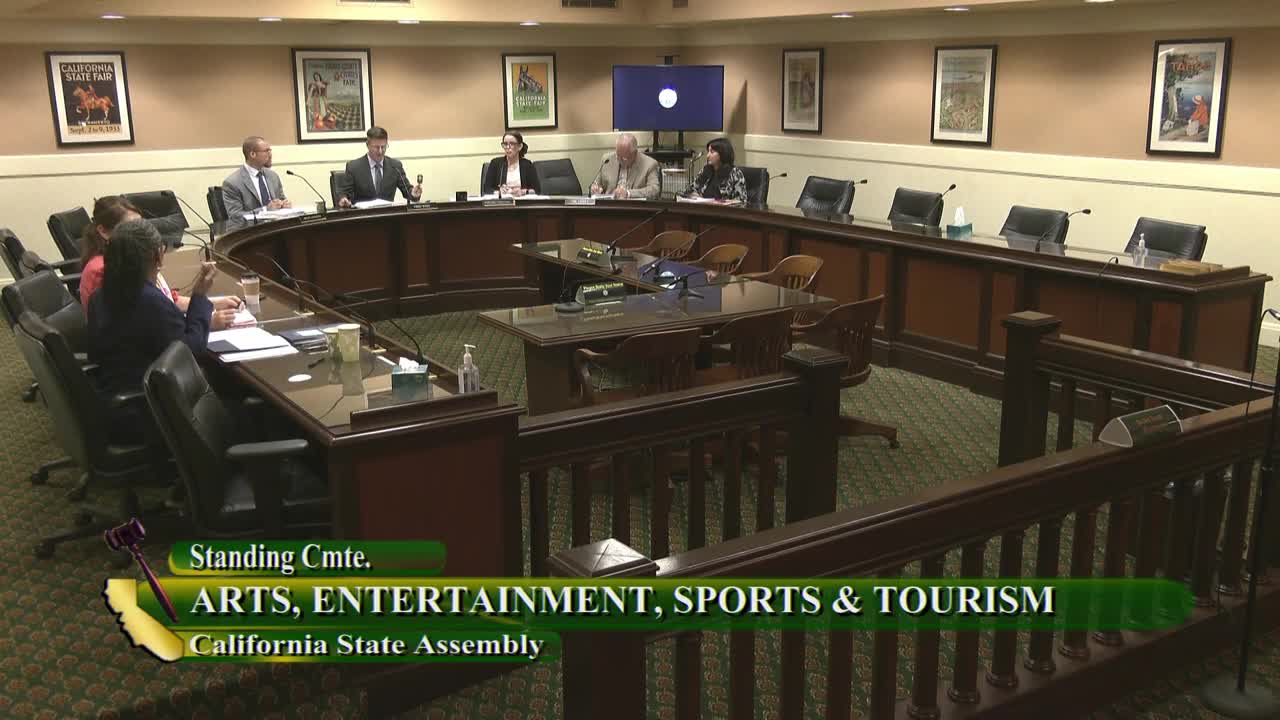
Assembly Standing Committee on Arts, Entertainment, Sports, and Tourism
 11MIN
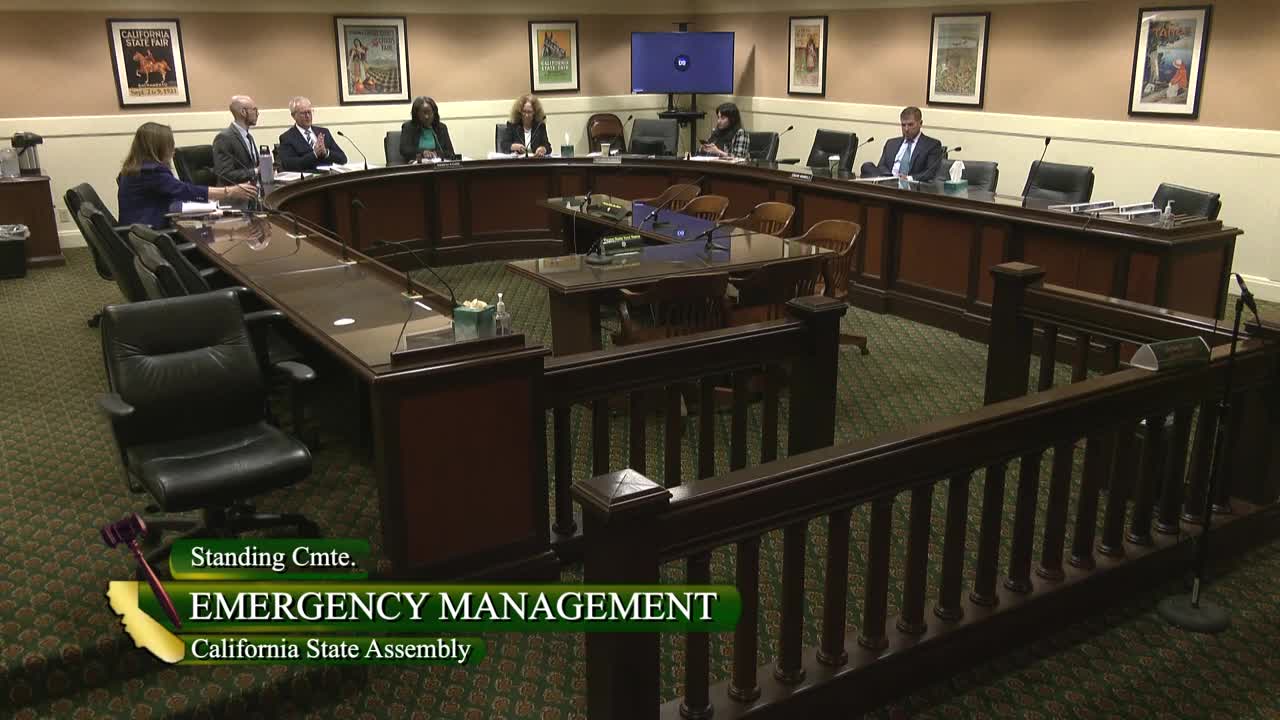
Assembly Standing Committee on Emergency Management
Bill Author

Bill Co-Author(s):