AB 646: Insurance: warranty: catalytic converter.
- Session Year: 2025-2026
- House: Assembly
- Latest Version Date: 2025-04-28
Current Status:
Failed
(2026-02-02: From committee: Filed with the Chief Clerk pursuant to Joint Rule 56.)
Introduced
In Committee
Awaiting First Chamber Vote
Passed First Chamber
In Committee
Awaiting Second Chamber Vote
Passed Second Chamber
Enacted
Under existing law, a warranty issued by the warrantor of a vehicle protection product constitutes an express warranty and does not constitute automobile insurance if the warrantor complies with various requirements, including that the warranty is in writing and provides, among other things, that the benefits are limited to the difference between the actual cash value of the stolen vehicle and the vehicles replacement cost, temporary vehicle rental expenses, reimbursement for insurance policy deductible, and registration fees and taxes on a replacement vehicle or a fixed amount for those benefits, and that the benefit is payable upon the theft of the vehicle. Existing law defines a vehicle protection product for these purposes to mean a vehicle protection device, system, or service that is installed on, or applied to, a vehicle, is designed to deter the theft of the vehicle, and includes a written warranty that provides specified incidental costs if the product fails to deter the theft of the vehicle.
This bill would limit the warranty benefit to the actual cost of replacing the catalytic converter if the warranty covers only the vehicles catalytic converter. The bill would also clarify that the benefit is payable upon the theft of the vehicle or a catalytic converter attached to the vehicle. The bill would expand the definition of a vehicle protection product to include a protection device, system, or service that is installed on, or applied to, a vehicle to deter the theft of the vehicle or a catalytic converter attached to the vehicle and that includes a written warranty that provides specified incidental costs if the product fails to do so.Existing law requires, except as specified, a dealer or person holding a retail sellers permit who sells new or used vehicles equipped with a catalytic converter to permanently mark the catalytic converter with the vehicle identification number of the vehicle to which it is attached.
This bill would expand the definition of a vehicle protection product to include a physical device, system, or service designed to prevent the unauthorized removal of a vehicles catalytic converter, and would limit the warranty benefit for this vehicle protection product to the actual cash value and replacement cost of the catalytic converter, temporary vehicle rental expenses, and reimbursement for the insurance policy deductible. The bill would require the benefit to be payable upon the theft of the catalytic converter from the vehicle, as specified. The bill would also require a seller to disclose a specified notice if this vehicle protection product is a body part marking product designed to permanently mark the catalytic converter.
Under existing law, a warranty issued by the warrantor of a vehicle protection product constitutes an express warranty and does not constitute automobile insurance if the warrantor complies with various requirements, including that the warranty is in writing and provides, among other things, that the benefits are limited to the difference between the actual cash value of the stolen vehicle and the vehicles replacement cost, temporary vehicle rental expenses, reimbursement for insurance policy deductible, and registration fees and taxes on a replacement vehicle or a fixed amount for those benefits, and that the benefit is payable upon the theft of the vehicle. Existing law defines a vehicle protection product for these purposes to mean a vehicle protection device, system, or service that is installed on, or applied to, a vehicle, is designed to deter the theft of the vehicle, and includes a written warranty that provides specified incidental costs if the product fails to deter the theft of the vehicle.
This bill would limit the warranty benefit to the actual cost of replacing the catalytic converter if the warranty covers only the vehicles catalytic converter. The bill would also clarify that the benefit is payable upon the theft of the vehicle or a catalytic converter attached to the vehicle. The bill would expand the definition of a vehicle protection product to include a protection device, system, or service that is installed on, or applied to, a vehicle to deter the theft of the vehicle or a catalytic converter attached to the vehicle and that includes a written warranty that provides specified incidental costs if the product fails to do so.
(a)Notwithstanding Section 116, a warranty issued by the warrantor of a vehicle protection product shall constitute an express warranty, as defined in Section 1791.2 of the Civil Code, and shall not constitute automobile insurance if the warrantor complies with all of the following requirements:
(1)The warrantor maintains an insurance policy with an admitted insurer providing coverage for 100 percent of the warrantors obligations under the warranty. The insurance policy shall allow the warrantyholder to make a direct claim for payment from the insurer upon the failure of the warrantor to pay any covered claim within 60 days after a complete proof-of-loss has been filed with the party designated in the warranty. In addition, all of the following shall apply:
(A)The warrantor shall file with the commissioner a copy of the insurance policy. At any time, a warrantor may have on file with the commissioner only one active policy from one insurer.
(B)The insurers liability under the policy shall not be negated by a failure of the warrantor, for any reason, to report the issuance of a warranty to the insurer or to remit moneys owed to the insurer.
(C)No policy cancellation by an insurer shall be valid unless a notice of the intent to cancel the policy is filed with the commissioner not less than 30 days prior to the effective date of the cancellation, or, in the event that the cancellation is due to fraud, material misrepresentation, or defalcation by the warrantor, not less than 10 days prior to that date.
(D)In the event an insurer cancels a policy that a warrantor has filed with the commissioner, the warrantor shall do either of the following:
(i)File a copy of a new policy with the commissioner, before the termination of the prior policy, providing no lapse in coverage following the termination of the prior policy.
(ii)Discontinue acting as a warrantor as of the termination date of the policy until a new policy becomes effective and is accepted by the commissioner.
(2)The warrantor does not use the words insurance, casualty, surety, mutual, or any other words descriptive of the casualty, insurance, or surety business or deceptively similar to the name or description of any insurance company or casualty or surety company in the vehicle protection product name or warranty or in any advertising or other materials provided to prospective purchasers.
(3)The warranty has been issued to a customer that is insured under a comprehensive vehicle insurance policy for the vehicle covered by the warranty agreement.
(4)The warranty is in writing and provides all of the following:
(A)The benefits are limited to the difference between the actual cash value of the stolen vehicle and the vehicles replacement cost, temporary vehicle rental expenses, reimbursement for insurance policy deductible, and registration fees and taxes on a replacement vehicle or a fixed amount for those benefits. If the warranty covers only the vehicles catalytic converter, the benefits are limited to the actual cost of replacing the catalytic converter. For a vehicle protection product described in subparagraph (C) of paragraph (2) of subdivision (b), the benefits are limited to the actual cash value and replacement cost of the catalytic converter, temporary vehicle rental expenses, and reimbursement for insurance policy deductible.
(B)A statement that the warrantyholder shall be entitled to make a direct claim against the insurer covering the obligations of the warranty upon the failure of the warrantor to pay any covered claim within 60 days after a complete proof-of-loss has been filed with the party designated in the warranty.
(C)A disclosure stating clearly the name, address, and telephone number of the insurer covering the obligations of the warrantor.
(D)A toll-free telephone number established and operated by the warrantor for the warrantyholder to call for questions about the warranty or the procedures to file a claim.
(E)A statement that clearly indicates the terms of the warranty, whether new or used cars are eligible for the vehicle protection product, the method for calculating the benefits paid and provided to the warrantyholder, and the procedure for filing a claim under the warranty.
(F)A disclosure in 10-point type or larger that reads as follows: This agreement is a product warranty and is not insurance. It is not subject to state insurance laws but is subject to state law concerning warranties.
(G)A disclosure in 10-point type or larger that reads as follows: To be eligible for this warranty, the warrantyholder must have comprehensive insurance coverage on the vehicle that is protected by the antitheft device.
(5)The benefit is payable upon the theft of the vehicle or or, for a vehicle protection product described in subparagraph (C) of paragraph (2) of subdivision (b), the theft of the catalytic converter attached to from the vehicle, as defined in the warranty, and subject to the satisfaction of the procedural proof of claim requirements of the warranty.
(b)For purposes of this section, the following definitions shall apply:
(1)Warrantor means the manufacturer or provider of a vehicle protection product who, under the terms of a vehicle protection product warranty, is the contractual obligor to the purchaser of a vehicle protection product.
(2)(A)Vehicle protection product means a vehicle protection device, system, or service that is installed on, or applied to, a vehicle, is designed to deter the theft of a vehicle or catalytic converter attached to the vehicle, vehicle, and includes a written warranty that provides if the product fails to deter the theft of the vehicle or catalytic converter attached to the vehicle, vehicle, that the warrantyholder shall be paid specified incidental costs by the warrantor as a result of the failure of the device, system, or service to perform pursuant to the terms of the warranty.
(B)For purposes of this section, vehicle protection product shall also include alarm systems, window etch products, body part marking products, steering locks, pedal and ignition locks, fuel and ignition kill switches, and electronic, radio, and satellite tracking devices.
(C)(i)For purposes of this section, vehicle protection product shall also include a physical device, system, or service designed to prevent the unauthorized removal of a vehicles catalytic converter.
(ii)If the vehicle protection product is a body part marking product designed to permanently mark the catalytic converter, as defined in subdivision (c) of Section 24020 of the Vehicle Code, the seller shall disclose, in writing and on a separate document in at least 12-point bold type, the following:
YOU ARE NOT OBLIGATED OR REQUIRED TO PURCHASE ANY VEHICLE PROTECTION PRODUCT, INCLUDING A VEHICLE PROTECTION PRODUCT WARRANTYING AGAINST CATALYTIC CONVERTER THEFT.
VEHICLE CODE SECTION 24020 REQUIRES DEALERS TO PERMANENTLY MARK THE CATALYTIC CONVERTERS ON ALL VEHICLES THEY SELL, OR TO OFFER PERMANENT CATALYTIC CONVERTER MARKING AS A SERVICE. PURCHASE OF A VEHICLE PROTECTION PRODUCT WARRANTYING AGAINST CATALYTIC CONVERTER THEFT IS NOT NECESSARY TO RECEIVE THIS SERVICE.
YOUR PRIMARY AUTOMOBILE INSURANCE MAY ALREADY PROVIDE COVERAGE FOR THE THEFT OF A CATALYTIC CONVERTER. YOU SHOULD REVIEW YOUR AUTOMOBILE INSURANCE POLICY BEFORE PURCHASING A VEHICLE PROTECTION PRODUCT WARRANTYING AGAINST CATALYTIC CONVERTER THEFT.
(c)The commissioner may issue a stop order pursuant to Section 12921.8 to a warrantor who is in violation of the requirements of this section.
(d)A warrantor shall have the burden of proving that a claim filed in compliance with the terms and conditions of the warranty is not covered by the warranty. A warrantor shall have the burden of proving that a claim settlement amount fulfills the promises contained in the warranty.
(e)The requirements of this section shall not apply under either of the following conditions:
(1)The warrantor is a manufacturer of motor vehicles, as defined pursuant to Section 672 of the Vehicle Code, or a distributor of motor vehicles, as defined pursuant to Section 296 of the Vehicle Code.
(2)The warranty only provides for the repair or replacement of the vehicle protection product subsequent to a mechanical or electrical breakdown of the vehicle protection product.
(f)Nothing in this section is intended to affect any pending litigation.
(a)Notwithstanding Section 116, a warranty issued by the warrantor of a vehicle protection product shall constitute an express warranty, as defined in Section 1791.2 of the Civil Code, and shall not constitute automobile insurance if the warrantor complies with all of the following requirements:
(1)The warrantor maintains an insurance policy with an admitted insurer providing coverage for 100 percent of the warrantors obligations under the warranty. The insurance policy shall allow the warrantyholder to make a direct claim for payment from the insurer upon the failure of the warrantor to pay any covered claim within 60 days after a complete proof-of-loss has been filed with the party designated in the warranty. In addition, all of the following shall apply:
(A)The warrantor shall file with the commissioner a copy of the insurance policy. At any time, a warrantor may have on file with the commissioner only one active policy from one insurer.
(B)The insurers liability under the policy shall not be negated by a failure of the warrantor, for any reason, to report the issuance of a warranty to the insurer or to remit moneys owed to the insurer.
(C)No policy cancellation by an insurer shall be valid unless a notice of the intent to cancel the policy is filed with the commissioner not less than 30 days prior to the effective date of the cancellation, or, in the event that the cancellation is due to fraud, material misrepresentation, or defalcation by the warrantor, not less than 10 days prior to that date.
(D)In the event an insurer cancels a policy that a warrantor has filed with the commissioner, the warrantor shall do either of the following:
(i)File a copy of a new policy with the commissioner, before the termination of the prior policy, providing no lapse in coverage following the termination of the prior policy.
(ii)Discontinue acting as a warrantor as of the termination date of the policy until a new policy becomes effective and is accepted by the commissioner.
(2)The warrantor does not use the words insurance, casualty, surety, mutual, or any other words descriptive of the casualty, insurance, or surety business or deceptively similar to the name or description of any insurance company or casualty or surety company in the vehicle protection product name or warranty or in any advertising or other materials provided to prospective purchasers.
(3)The warranty has been issued to a customer that is insured under a comprehensive vehicle insurance policy for the vehicle covered by the warranty agreement.
(4)The warranty is in writing and provides all of the following:
(A)The benefits are limited to the difference between the actual cash value of the stolen vehicle and the vehicles replacement cost, temporary vehicle rental expenses, reimbursement for insurance policy deductible, and registration fees and taxes on a replacement vehicle or a fixed amount for those benefits. If the warranty covers only the vehicles catalytic converter, the benefits are limited to the actual cost of replacing the catalytic converter.
(B)A statement that the warrantyholder shall be entitled to make a direct claim against the insurer covering the obligations of the warranty upon the failure of the warrantor to pay any covered claim within 60 days after a complete proof-of-loss has been filed with the party designated in the warranty.
(C)A disclosure stating clearly the name, address, and telephone number of the insurer covering the obligations of the warrantor.
(D)A toll-free telephone number established and operated by the warrantor for the warrantyholder to call for questions about the warranty or the procedures to file a claim.
(E)A statement that clearly indicates the terms of the warranty, whether new or used cars are eligible for the vehicle protection product, the method for calculating the benefits paid and provided to the warrantyholder, and the procedure for filing a claim under the warranty.
(F)A disclosure in 10-point type or larger that reads as follows: This agreement is a product warranty and is not insurance. It is not subject to state insurance laws but is subject to state law concerning warranties.
(G)A disclosure in 10-point type or larger that reads as follows: To be eligible for this warranty, the warrantyholder must have comprehensive insurance coverage on the vehicle that is protected by the antitheft device.
(5)The benefit is payable upon the theft of the vehicle, vehicle or catalytic converter attached to the vehicle, as defined in the warranty, and subject to the satisfaction of the procedural proof of claim requirements of the warranty.
(b)For purposes of this section, the following definitions shall apply:
(1)Warrantor means the manufacturer or provider of a vehicle protection product who, under the terms of a vehicle protection product warranty, is the contractual obligor to the purchaser of a vehicle protection product.
(2)(A)Vehicle protection product means a vehicle protection device, system, or service that is installed on, or applied to, a vehicle, is designed to deter the theft of a vehicle, vehicle or catalytic converter attached to the vehicle, and includes a written warranty that provides if the product fails to deter the theft of the vehicle, vehicle or catalytic converter attached to the vehicle, that the warrantyholder shall be paid specified incidental costs by the warrantor as a result of the failure of the device, system, or service to perform pursuant to the terms of the warranty.
(B)For purposes of this section, vehicle protection product shall also include alarm systems, window etch products, body part marking products, steering locks, pedal and ignition locks, fuel and ignition kill switches, and electronic, radio, and satellite tracking devices.
(c)The commissioner may issue a stop order pursuant to Section 12921.8 to a warrantor who is in violation of the requirements of this section.
(d)A warrantor shall have the burden of proving that a claim filed in compliance with the terms and conditions of the warranty is not covered by the warranty. A warrantor shall have the burden of proving that a claim settlement amount fulfills the promises contained in the warranty.
(e)The requirements of this section shall not apply under either of the following conditions:
(1)The warrantor is a manufacturer of motor vehicles, as defined pursuant to Section 672 of the Vehicle Code, or a distributor of motor vehicles, as defined pursuant to Section 296 of the Vehicle Code.
(2)The warranty only provides for the repair or replacement of the vehicle protection product subsequent to a mechanical or electrical breakdown of the vehicle protection product.
(f)Nothing in this section is intended to affect any pending litigation.
|
Date
|
Status
|
|---|---|
| Feb 2, 2026 | From committee: Filed with the Chief Clerk pursuant to Joint Rule 56. |
| Jan 31, 2026 | Died pursuant to Art. IV, Sec. 10(c) of the Constitution. |
| May 23, 2025 | In committee: Held under submission. |
| May 14, 2025 | In committee: Set, first hearing. Referred to suspense file. |
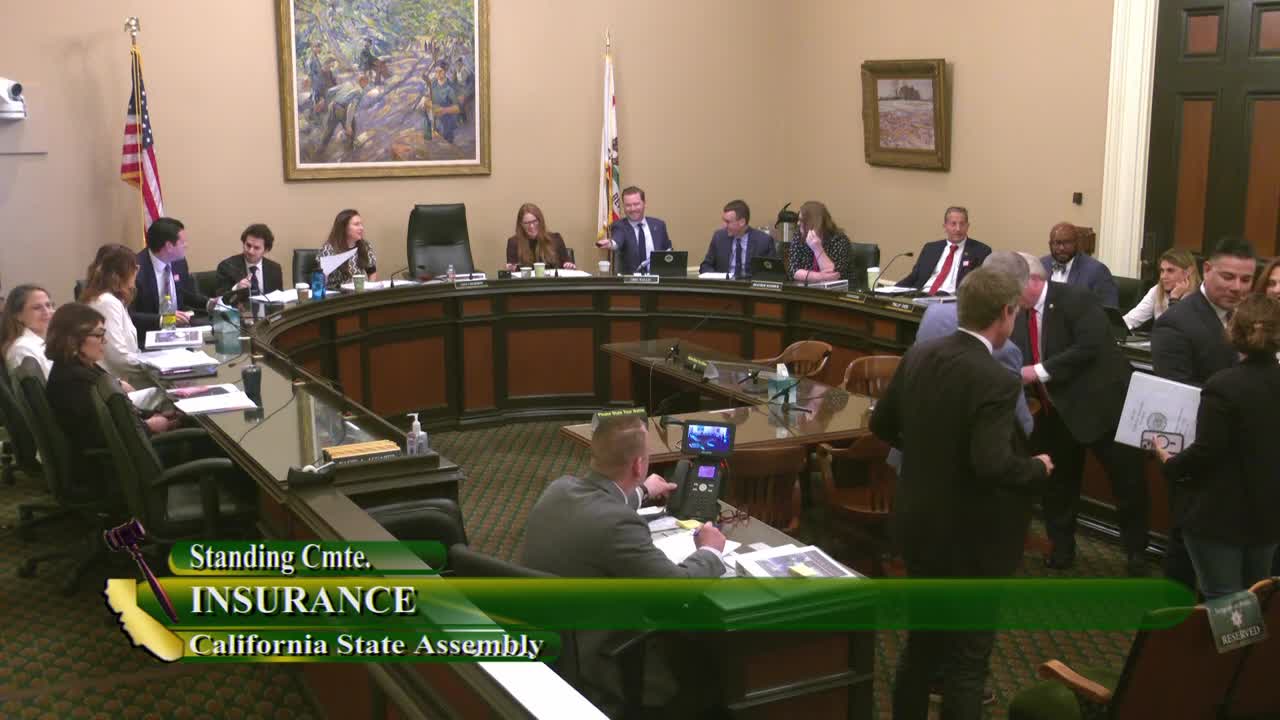
| Apr 30, 2025 | From committee: Do pass and re-refer to Com. on APPR. (Ayes 15. Noes 0.) (April 30). Re-referred to Com. on APPR. |
| Apr 29, 2025 | Re-referred to Com. on INS. |
| Apr 28, 2025 | From committee chair, with author's amendments: Amend, and re-refer to Com. on INS. Read second time and amended. |
| Mar 3, 2025 | Referred to Com. on INS. |
| Feb 14, 2025 | From printer. May be heard in committee March 16. |
| Feb 13, 2025 | Read first time. To print. |
|
Date
|
Description
|
Location
|
Votes
|
|
|---|---|---|---|---|
| Apr 30, 2025 | Do pass and be re-referred to the Committee on [Appropriations] | Assembly Standing Committee on Insurance |
Passed |
This list shows positions taken on this bill by organizations on the date displayed, which is linked to the original source.
Positions by individuals are not included.
|
Organization
|
Position
|
Date
|
|---|---|---|
| Alliance For Automotive Innovation | ** Support | |
| California New Car Dealers Association | ** Support | |
| California Police Chiefs Association | ** Support | |
| Motor Vehicle Protection Products Association | ** Support |
Date of Hearing: May 14, 2025
ASSEMBLY COMMITTEE ON APPROPRIATIONS
Buffy Wicks, Chair
ABPCA Bill Id:AB 646
Author:(Wallis) – As Amended Ver:April 28, 2025
Policy Committee: | Insurance | Vote: | 15 - 0 |
|
| ||
|
|
Urgency: No State Mandated Local Program: No Reimbursable: No
SUMMARY:
This bill expands the definition of a vehicle protection product (VPP) to include a product designed to deter the theft of a catalytic converter.
Specifically, this bill:
- Provides that a vehicle protection product includes a physical device, system, or service designed to prevent the unauthorized removal of a vehicle’s catalytic converter, including a body part marking product designed to permanently mark the catalytic converter. The seller of a VPP warranty must disclose specified information to a consumer if the VPP is a catalytic converter body part marking product.
- Limits the warranty benefits of a VPP that is a catalytic converter anti-theft product to the actual cash value and replacement cost of the catalytic converter, temporary vehicle rental expenses, and reimbursement for the insurance policy deductible, payable upon theft of the catalytic converter from the vehicle.
FISCAL EFFECT:
Costs of approximately $345,000 in fiscal year (FY) 2025-26, $659,000 in FY 2026-27, and $606,000 in FY 2027-28 to the Department of Insurance (CDI), which administers existing law regarding VPPs (Insurance Fund). Although CDI does not have full regulatory oversight over VPPs, this bill defines additional products as VPPs and CDI has authority to issue a cease and desist order to a warrantor in violation VPP law. Given the volume of annual catalytic converter thefts in California, CDI anticipates an increase in consumer complaints and questions regarding catalytic converter VPPs and related insurance claims, necessitating additional staff workload to respond and update informational materials.
COMMENTS:
- Purpose. The author contends that “drivers lack affordable protection” from catalytic converter theft. According to the author, this bill “adds marking products and warranties to the VPP framework, ensuring dealers offer theft deterrents with full replacement coverage – no claims or premium hikes.” This bill is supported by the Motor Vehicle Protection Products Association, California New Car Dealers Association, and other groups.
- Background. VPPs. A VPP is a device, system, or service designed to deter theft of a vehicle, such as a steering wheel lock or alarm system, and is often sold by a car dealer to a car buyer alongside the purchase of the vehicle. A VPP includes a written warranty providing that if the product fails to deter theft, the warrantyholder will be paid for specified incidental costs incurred as a result of the product’s failure. A VPP is not designated as auto insurance under existing law because the products are not insuring against the theft of the car, but rather warrantying against the failure of the product, the result of which is the theft of the car.
Existing law explicitly includes window etching and other car body part marking products in the definition of a VPP, based on the theory that such markings make a vehicle easier to identify if stolen, and thus deter theft. This bill expands the definition of a VPP to also include a product designed to prevent the unauthorized removal of a vehicle’s catalytic converter, including a body part marking product designed to permanently mark the catalytic converter. However, as noted in the Assembly Insurance Committee’s analysis of this bill:
The significant policy change this bill would make is that it would include not only products alleged to deter the theft of the vehicle, as is current law, but also products that allege to deter the theft of a specific component part of the vehicle, i.e. the catalytic converter, in the definition of VPP, thereby exempting warranties of these products from the regulatory protections of the Insurance Code.
CDI Concerns. The Assembly Insurance Committee’s analysis of this bill also outlines several concerns raised by CDI regarding this bill. Most notably, CDI contends that this bill appears to be an amendment to Proposition 103 (1988) and undermines Proposition 103 protections by duplicating coverage currently available under comprehensive automobile insurance coverage. Because VPP warranties are not subject to the same oversight CDI has over insurance coverage under Proposition 103, more consumers would be sold a product without the benefits of CDI rate regulations or rights under the Fair Claims Settlement Act. Since VPP prices are unregulated, in the event a VPP price exceeds the consumer’s comprehensive insurance deductible, the consumer will receive no value for purchasing the VPP warranty or may even experience a net loss.
Analysis Prepared by: Irene Ho / APPR. / (916) 319-2081
Date of Hearing: April 30, 2025
ASSEMBLY COMMITTEE ON INSURANCE
Lisa Calderon, Chair
ABPCA Bill Id:AB 646 (
Author:Wallis) – As Amended Ver:April 28, 2025
SUBJECT: Insurance: warranty: catalytic converter
SUMMARY: Regulates products designed to deter the theft of a catalytic converter under existing statutes regulating express warranties for vehicle protection products (VPPs). Specifically, this bill:
- For purposes of statutes regulating VPP warranties as express warranties, defines “vehicle protection product” to include a physical device, system, or service designed to prevent the unauthorized removal of a vehicle’s catalytic converter.
- Requires that, if the VPP is a body part marking product designed to permanently mark the catalytic converter, the seller disclose, in writing and on a separate document in at least 12-point bold type, a specified disclosure that: the buyer is not obligated or required to purchase a VPP; existing law requires dealers to mark catalytic converters or offer the service, and purchasing the VPP is not necessary to receive this service; and primary automobile insurance may already cover catalytic converter theft.
- Specifies that, if the VPP is a product designed to prevent the unauthorized removal of a vehicle’s catalytic converter, benefits from an associated warranty are payable upon the theft of the catalytic converter from the vehicle, and are limited to the actual cash value and replacement cost of the catalytic converter, temporary vehicle rental expenses, and reimbursement for insurance policy deductible.
EXISTING LAW:
- Defines “insurance” to mean a contract whereby one undertakes to indemnify another against loss, damage, or liability arising from a contingent or unknown event. (Insurance (Ins.) Code Section 22)
- Defines “automobile insurance” to include insurance against hazards incident to ownership, maintenance, operation, and use of automobiles, other than loss resulting from accident or physical injury, fatal or nonfatal, to, or death of, any natural person; and specifies that automobile insurance also includes any contract of warranty or guarantee that promises service, maintenance, parts replacement, repair, money, or any other indemnity in the event of loss of or damage to a motor vehicle, or any part thereof, from any cause. (Ins. Code Section 116(a) and (b))
- Defines “express warranty” to mean a written statement arising out of a sale to the consumer of a consumer good pursuant to which the manufacturer, distributor, or retailer undertakes to preserve or maintain the utility or performance of the consumer good or provide compensation if there is a failure in utility or performance. (Civil Code Section 1791.2(a)(1))
- Provides that a warranty issued by the warrantor of a VPP constitutes an express warranty, and does not constitute automobile insurance, if the warrantor complies with specified requirements, including:
- Maintaining an insurance policy with an admitted insurer providing coverage for 100% of the warrantor’s obligations under the warranty.
- Filing with the Insurance Commissioner a copy of the insurance policy, and meeting specified notice requirements concerning changes and cancellations of the insurance policy.
- Not using the words insurance, casualty, surety, mutual, or any other words descriptive of the casualty, insurance, or surety business or deceptively similar to the name or description of any insurance company or casualty or surety company, in the VPP name or warranty or in any advertising or other materials provided to prospective purchasers.
- Only issuing the warranty to a customer that is insured under a comprehensive vehicle insurance policy for the vehicle covered by the warranty agreement.
- Providing the warranty in writing and including in the warranty specified information concerning the limitations on the benefits provided from the warranty, the contact information of the warrantor and the insurer covering the warrantor, and a statement clearly indicating the terms of the warranty, the method for calculating benefits paid, and the procedure for filing a claim. (Ins. Code Section 116.6(a))
- Provides that a warrantor of a VPP shall have the burden of proving that a claim filed in compliance with the terms and conditions of the warranty is not covered by the warranty, and shall have the burden of proving that a claim settlement amount fulfills the promises contained in the warranty. (Ins. Code Section 116.6(d))
- Authorizes the Insurance Commissioner to issue a stop order to a warrantor who is in violation of these requirements. (Ins. Code Section 116.6(c))
- Defines “vehicle protection product” to mean a vehicle protection device, system, or service that is installed on, or applied to, a vehicle, is designed to deter the theft of a vehicle, and includes a written warranty that provides if the product fails to deter the theft of the vehicle, that the warrantyholder shall be paid specific incidental costs by the warrantor as a result of the failure of the device, system, or service to perform pursuant to the terms of the warranty; and specifies that “vehicle protection product” also include alarm systems, window etch products, body part marking products, steering locks, pedal and ignition locks, fuel and ignition kill switches, and electronic, radio, and satellite tracking devices. (Ins. Code Section 116.6(b)(2))
- Prohibits a vehicle dealer from selling any vehicle equipped with a catalytic converter unless the catalytic converter has been permanently marked with the vehicle identification number (VIN) of the vehicle to which it is attached; and allows dealers to not mark a vehicle’s catalytic converter if the buyer declines the marking offered by the dealer and the dealer discloses the marking as a “body part marking product” in the sale contract. (Vehicle Code Section 24020(a) and (b)(3))
FISCAL EFFECT: Unknown.
COMMENTS:
- Purpose of the bill: According to the author, “Catalytic converter theft is a major issue in California. Thefts spiked during the pandemic, hitting nearly 12,000 claims in 2022, but dropped to 2,000 in early 2024 with laws like SB 55. Still, drivers lack affordable protection. AB 646 adds marking products and warranties to the VPP framework, ensuring dealers offer theft deterrents with full replacement coverage – no claims or premium hikes. Californians need this for financial security and peace of mind.”
This bill is co-sponsored by the Motor Vehicle Protection Products Association (MVPPA) and the California New Car Dealers Association (CNCDA).
- Catalytic converter theft: All automobiles sold in the United States must be outfitted with catalytic converters, which process engine exhaust to mitigate smog and other types of air pollution. To serve this function, catalytic converters rely on properties of valuable rare earth metals including platinum, palladium, and rhodium, which are presently valued between $1,000 and $6,000 per ounce, respectively. In 2021, the per ounce price of rhodium peaked at nearly $30,000.
Because of these valuable components, catalytic converter theft has been a persistent problem in California. According to the National Insurance Crime Bureau (NICB), more than 64,000 catalytic converter thefts were reported nationwide between 2020 and 2022, with California accounting for over one third of those reports. The NICB indicates that metal recyclers will generally pay between $50 to $250 for a catalytic converter, and up to $800 from a catalytic converter removed from a hybrid vehicle.
Replacing a catalytic converter can cost the owner of the vehicle between $1,000 and $3,500. In many cases, this is around, or just over, the typical deductible for automobile insurance. As a result, catalytic converter theft is likely underreported to insurers, as motorists fear that the hassle and subsequent increase in insurance costs is not worth the potentially small return in excess of the deductible.
- Vehicle protection products and AB 2012: VPPs are devices, systems, or services designed to deter theft of a vehicle, and include a written warranty that provides that if the product fails to deter theft, the warrantyholder will be paid incidental costs as a result of the product’s failure. These incidental costs are limited to the actual cash value of the stolen vehicle and its replacement cost, temporary vehicle rental expenses, reimbursement for insurance policy deductible, and registration fees and taxes on the replacement vehicle. VPPs include products such as steering wheel locks, ignition kill switches, tracking devices, and alarm systems.
Traditional auto insurance will generally cover the replacement cost of a vehicle (less the deductible), and benefits paid out in the event of the realization of an unpredictable risk are generally considered insurance. VPPs avoid being designated insurance because they are technically not insuring against the theft of the car, but rather warrantying against the failure of the product, the result of which is the theft of the car. In other words, if the VPP is a steering wheel lock and the car is stolen, the steering wheel lock presumably failed to sufficiently lock the steering wheel, so the warranty pays out.
In 2002, the Legislature codified this designation by passing AB 2012 (Frommer & Campbell, Ch. 749, Stats. 2002), which established that warranties for VPPs that meet specified conditions are considered express warranties, subject to the requirements thereto, rather than automobile insurance. It is unclear whether this implies that a VPP warranty that does not meet the specified conditions is considered insurance. Express warranties are regulated under the Song-Beverly Consumer Warranty Act in the Civil Code (Civil Code Sections 1790, et seq.).
Existing law explicitly includes window etching and other car body part marking products under the definition of “vehicle protection product” based on the theory that these markings, by making a specific vehicle easier to identify (and thus easier to identify as stolen), would deter theft, thereby making them subject to warranty against the product’s failure. The significant policy change this bill would make is that it would include not only products alleged to deter the theft of the vehicle, as is current law, but also products that allege to deter the theft of a specific component part of the vehicle, i.e. the catalytic converter, in the definition of VPP, thereby exempting warranties of these products from the regulatory protections of the Insurance Code.
As MVPPA and CNCDA, who co-sponsor this bill, explain:
[VPPs] are voluntary protections available to consumers primarily through dealers. They offer consumers peace of mind and financial stability when faced with unexpected costs associated with owning a vehicle. Specifically, [VPPs] help deter theft of motor vehicles and, in the event the product fails to deter theft, provides a benefit to consumers under a VPP warranty. In California, these warranties are regulated under CIC §116.6 and CCC §1790-1795.8. These laws require financial backing through a contract liability insurance policy and extend the same consumer protections for express warranties in California to VPP warranty holders.
VPPs include theft deterrent products such as alarm systems, steering locks, and permanent body part marking systems. Currently, the definition of VPP in CIC §116.6 only pertains to products that “deter the theft of a vehicle” but not something designed to deter the theft of a component part of that vehicle. As you are likely aware, catalytic converter theft has been a widespread problem in California. Given the prevalence of catalytic converter theft, consumers often want to ensure they aren’t out of pocket should it happen to them. While primary auto insurance may cover the theft of a catalytic converter, purchasing a catalytic converter permanent marking product with a warranty provides consumers with a zero-deductible alternative for covering the full cost of replacing their stolen catalytic converter and avoids filing a claim with their primary carrier.
- CDI concerns: Though not formally opposed to the bill, CDI raised the following concerns with AB 646:
- Prop 103: To the extent that auto insurance (which covers catalytic converters) is subject to Prop 103, AB 646 appears to be an amendment to Prop 103. We are concerned AB 646 undermines Prop 103 protections by duplicating coverage currently available under comprehensive automobile insurance coverage, which the VPP statute already requires the contract holder to purchase and maintain.
- Weakens Consumer Protections: Because VPP warranties are not subject to the same CDI oversight that is granted by Prop 103, consumers will be sold a product without the benefit of CDI rate regulation/oversight, or rights under the Fair Claims Settlement Act. CDI does not review express warranties, just the underlying insurance policy, so we do not know what the warranty will cover, how it will cover, and the exclusions or limitations. Additionally, the price for a VPP is unregulated and in the event VPP price exceeds the purchaser’s comprehensive insurance deductible, the purchaser will receive no value for purchasing the VPP warranty or may even experience a net loss.
- Intent of VPP Statute: VPPs, as defined, are designed to deter vehicle theft. AB 646 would fundamentally change what a VPP is. We question whether having something attached to a catalytic converter, e.g. an etch product, which is located under a car, is a device to prevent vehicle theft. We are not aware of data demonstrating that catalytic converter etching prevents theft of a vehicle.
- Expanding VPP Scope: VPP statute is meant to cover the entire vehicle, not one component part. Expanding statute to allow catalytic converters to be included in auto part protection plans raises concerns that more component parts will be covered by warranties in the future, shifting coverage away from comprehensive auto insurance, reducing consumer protections, and significantly impacting CDI oversight of products which historically are subject to Prop 103.
Proposition 103, the Insurance Rate Reduction and Reform Act, passed in 1988 and significantly expanded oversight and regulation of insurance, including automobile insurance. Prop 103, among other things, established strict price controls (including prior approval by the Insurance Commissioner) and consumer protections for automobile insurance, and expanded the oversight and enforcement authority of CDI. Prop 103 also specifies that the Legislature may only amend the provisions of the proposition to further its purposes and can only do so with two-thirds majority vote in each house.
Whether this bill would constitute an amendment to Prop 103 is unclear, and hinges in part on whether VPPs warrantying against catalytic converter theft are de facto considered insurance or express warranties. If the former, removing them from regulation under Prop 103 would indeed constitute an amendment to Prop 103 and may weaken existing protections. Staff notes that AB 2012 (see Comment 3), which was signed into law 14 years after the passage of Prop 103, was keyed by Legislative Counsel to require only a simple majority vote, rather than a two-thirds majority. This seems to imply that AB 2012, which established that VPPs are regulated as express warranties rather than insurance, was not considered to be an amendment to Prop 103 at that time. This bill has similarly been keyed by Legislative Counsel to require a simple majority vote.
- Catalytic converter etching and SB 55: According to the sponsors of this bill, the main product car dealers are interested in warrantying is a “catalytic converter etching kit,” which is a tool used to etch an identifying number into the catalytic converter, purportedly to deter theft of the catalytic converter. If the catalytic converter is stolen, under the bill, the warranty could provide benefits including replacement of the catalytic converter and any incidental costs associated with its replacement. Committee staff have been unable to locate reliable data on the efficacy of catalytic converter etching in deterring theft, and theft of a catalytic converter would typically be covered by a traditional automobile insurance policy.
In 2023, the Legislature passed SB 55 (Umberg, Ch. 858, Stats. 2023), which prohibits a motor vehicle dealer from selling a vehicle with a catalytic converter unless the catalytic converter is permanently marked with the vehicle identification number (VIN), except under specified circumstances. Among those circumstances is that the buyer declines the offer to have the catalytic converter marked. In effect, this means that any car sold in California must either have the catalytic converter marked, or must include an offer to mark the catalytic converter. SB 55 does not prohibit charging for the service of marking the catalytic converter.
Because catalytic converter etching kits are contemplated as VPPs that may be sold under this bill, this may create substantial confusion regarding the products and services being offered when a vehicle is purchased. SB 55 requires that either the catalytic converter already be marked, in which case a VPP for marking the catalytic converter would be unnecessary, or that the dealer offer the service of marking the catalytic converter. In either of these circumstances, the buyer would presumably elect to purchase the VPP not for its potential to deter theft, but rather for the accompanying warranty, which provides specified benefits in the event such theft occurs. Because the physical product would be irrelevant to the purchase, this would arguably be serving a function more akin to insurance than express warranty, but would be regulated as the latter.
To minimize potential confusion, the author has amended the bill to include a mandatory disclosure that clarifies that the buyer is not obligated or required to purchase a VPP, that existing law requires dealers to mark catalytic converters or offer the service and that purchasing the VPP is not necessary to receive this service, and that primary automobile insurance may already cover catalytic converter theft.
- Pending and Prior Legislation:
SB 55 (Umberg, Ch. 858, Stats. 2023) prohibits a vehicle dealer from selling any vehicle equipped with a catalytic converter unless the catalytic converter has been permanently marked with the VIN of the vehicle to which it is attached; and allows dealers to not mark a vehicle’s catalytic converter if the buyer declines the marking offered by the dealer and the dealer discloses the marking as a “body part marking product” in the sale contract. See Comment 5.
AB 1519 (Bains, Ch. 847, Stats. 2023) makes the removal, alteration, or obfuscation of a VIN or other unique marking that has been added to a catalytic converter punishable as a misdemeanor. Also makes knowingly possessing three or more catalytic converters that have the VIN or other unique marking removed, altered, or obfuscated punishable as a misdemeanor.
AB 1740 (Muratsuchi, Ch. 513, Stats. 2022) prohibits a core recycler from purchasing or receiving a catalytic converter from any person that is not a commercial enterprise or the verifiable owner of the vehicle from which the catalytic converter was removed.
SB 986 (Umberg, 2022) contained, among other things, provisions substantially similar to SB 55 (Umberg, Ch. 858, Stats. 2023).
AB 1622 (Chen, 2022) would have required the Department of Consumer Affairs to provide a licensed smog check station with a sign informing customers about strategies for deterring catalytic converter theft, including the etching of identifying information on the catalytic converter. Would have also authorized licensed smog check technicians to provide catalytic converter etching as an optional service in conjunction with a smog check. This bill died in the Assembly Transportation Committee.
AB 2682 (Gray, 2022) would have, among other things, required any automotive repair dealer that installs or replaces a catalytic converter on a motor vehicle to ensure that the catalytic converter is permanently marked with the VIN of the vehicle on which it is being installed. This bill was held on suspense in the Senate Appropriations Committee.
AB 2012 (Frommer & Campbell, Ch. 749, Stats. 2002) specifies that a warranty agreement offered by the warrantor of a VPP in connection with the sale of that product is not automobile insurance, and is regulated as an express warranty, if the warrantor and warranty meet specified requirements. See Comment 3.
REGISTERED SUPPORT / OPPOSITION:
Support
Alliance for Automotive Innovation
California New Car Dealers Association
California Police Chiefs Association
Motor Vehicle Protection Products Association
Opposition
None on file.
Analysis Prepared by: Landon Klein / INS. / (916) 319-2086
Bill Author

Bill Co-Author(s):