SB 349: Emergency vehicles: blue warning lights.
- Session Year: 2025-2026
- House: Senate
- Latest Version Date: 2025-02-12
Current Status:
Failed
(2026-02-02: Returned to Secretary of Senate pursuant to Joint Rule 56.)
Introduced
In Committee
Awaiting First Chamber Vote
Passed First Chamber
In Committee
Awaiting Second Chamber Vote
Passed Second Chamber
Enacted
Existing law authorizes specified peace officers, including, among others, police officers, probation officers, and members of the California National Guard, in the performance of the officers duties, to display a steady or flashing blue warning light visible from the front, sides, or rear of their emergency vehicles.
This bill would additionally authorize parole officers to display the blue warning light from their emergency vehicles if they complete a 4-hour classroom training course regarding the operation of emergency vehicles that is certified by the Commission on Correctional Peace Officers Standards and Training.
(a)An authorized emergency vehicle operating under the conditions specified in Section 21055 may display a flashing white light from a gaseous discharge lamp designed and used for the purpose of controlling official traffic control signals.
(b)(1)An authorized emergency vehicle used by a peace officer, as defined in Section 830.1 of, subdivision (a), (b), (c), (d), (e), (f), (g), or (i) of Section 830.2 of, subdivision (n) of Section 830.3 of, subdivision (b) of Section 830.31 of, subdivision (a) or (b) of Section 830.32 of, Section 830.33 of, subdivision (a) of Section 830.36 of, subdivision (a) of Section 830.4 of, or Section 830.6 of, or a probation officer or parole officer, as defined in described in subdivision (a) of Section 830.5 of, the Penal Code, in the performance of the peace officers duties, may, in addition, display a steady or flashing blue warning light visible from the front, sides, or rear of the vehicle.
(2)Before a probation officer operates an emergency vehicle with a blue warning light, the officer shall complete a four-hour classroom training course regarding the operation of emergency vehicles that is certified by the Standards and Training for Corrections Division of the Board of State and Community Corrections.
(3)Before a parole officer operates an emergency vehicle with a blue warning light, the officer shall complete a four-hour classroom training course regarding the operation of emergency vehicles that is certified by the Commission on Correctional Peace Officers Standards and Training.
(3)(4)This subdivision does not expand any existing authority of a probation officer or parole officer to conduct a high-speed vehicle pursuit, nor does it change any existing training requirements for high-speed vehicle pursuits.
(c)Except as provided in subdivision (a), a vehicle shall not be equipped with a device that emits any illumination or radiation that is designed or used for the purpose of controlling official traffic control signals.
|
Date
|
Status
|
|---|---|
| Feb 2, 2026 | Returned to Secretary of Senate pursuant to Joint Rule 56. |
| May 23, 2025 | May 23 hearing: Held in committee and under submission. |
| May 16, 2025 | Set for hearing May 23. |
| May 5, 2025 | May 5 hearing: Placed on APPR. suspense file. |
| Apr 25, 2025 | Set for hearing May 5. |
| Apr 23, 2025 | From committee: Do pass and re-refer to Com. on APPR. with recommendation: To consent calendar. (Ayes 6. Noes 0. Page 841.) (April 22). Re-referred to Com. on APPR. |
| Apr 9, 2025 | Set for hearing April 22. |
| Mar 26, 2025 | From committee: Do pass and re-refer to Com. on PUB. S. with recommendation: To consent calendar. (Ayes 14. Noes 0. Page 534.) (March 25). Re-referred to Com. on PUB. S. |
| Mar 11, 2025 | Set for hearing March 25. |
| Feb 19, 2025 | Referred to Coms. on TRANS. and PUB. S. |
| Feb 13, 2025 | From printer. May be acted upon on or after March 15. |
| Feb 12, 2025 | Introduced. Read first time. To Com. on RLS. for assignment. To print. |
|
Date
|
Description
|
Location
|
Votes
|
|
|---|---|---|---|---|
| May 5, 2025 | Placed on suspense file | Senate Standing Committee on Appropriations |
Passed |
|
| Apr 22, 2025 | Do pass, but first be re-referred to the Committee on [Appropriations] with the recommendation: To Consent Calendar | Senate Standing Committee on Public Safety |
Passed |
|
| Mar 25, 2025 | Do pass, but first be re-referred to the Committee on [Public Safety] with the recommendation: To Consent Calendar | Senate Standing Committee on Transportation |
Passed |
This list shows positions taken on this bill by organizations on the date displayed, which is linked to the original source.
Positions by individuals are not included.
|
Organization
|
Position
|
Date
|
|---|---|---|
| California Correctional Peace Officers Association | ** Support |
SENATE COMMITTEE ON
Senator Anna Caballero, Chair
2025 - 2026 Regular Session
SB 349 (Archuleta) - Emergency vehicles: blue warning lights
Version: | Policy Vote: |
Urgency: | Mandate: |
Hearing Date: | Consultant: |
Bill Summary:
SB 349 would authorize parole officers to display blue warning lights from their emergency vehicles in the performance of their official duties, if an officer completes a specified four-hour classroom training course certified by the Commission on Correctional Peace Officers Standards and Training (CPOST).
Fiscal Impact:
- The Department of Corrections and Rehabilitation (CDCR) would incur unknown, significant one-time costs, potentially as high as the low millions of dollars, to install light bars on parole officer vehicles. These costs would be lower to the extent CDCR only installs light bars on a portion of its parole officer vehicles. (General Fund)
- CDCR would also incur unknown one-time costs, likely in the low hundreds of thousands of dollars, for parole officer staff time associated with completion of the four-hour training course, and for costs associated with the provision of training through CPOST. (General Fund)
Background:
Existing law defines an “authorized emergency vehicle” a vehicle owned or operated by a U.S. department or agency when the vehicle is used in responding to emergency fire, ambulance, or lifesaving calls or is actively engaged in law enforcement work. The driver of an authorized emergency vehicle is exempt from a variety of vehicle code requirements if the driver is sounding a siren and displaying a lighted red lamp, and responding to an emergency call, engaged in rescue operations, or in the immediate pursuit of an actual or suspected violator of the law, as specified.
Existing law allows an authorized emergency vehicle used by a peace officer, as defined, in the performance of the peace officer's duties, to also display a steady or flashing blue warning light visible from the front, sides, or rear of the vehicle. For example, police, sheriffs, district attorney investigators, University of California and California State University police, and certain employees at the departments of Parks and Recreation, Forestry and Fire Protection, Fish and Game, Corrections and Rehabilitation, are all authorized to display blue warning lights on their vehicles. Probation officers were added to the list of peace officers that can display blue warning lights by SB 587 (Atkins), Chap. 286/2017, if they complete a 4-hour classroom training course regarding the operation of emergency vehicles that is certified by the Standards and Training for Corrections Division of the Board of State and Community Corrections (BSCC).
Existing law extends the authority of peace officers who are parole officers of CDCR, CDCR’s Division of Juvenile Parole Operations, and parole agents employed by the Juvenile Parole Board to the following duties:
- To conditions of parole, probation, mandatory supervision, or postrelease community supervision by any person in this state on parole, probation, mandatory supervision, or postrelease community supervision.
- To the escape of any inmate or ward from a state or local institution.
- To the transportation of persons on parole, probation, mandatory supervision, or postrelease community supervision.
- To violations of any penal provisions of law which are discovered while performing the usual or authorized duties of the officer’s employment.
- To the rendering of mutual aid to any other law enforcement agency.
CDCR’s Division of Adult Parole Operations (CDCR-DAPO) provides basic training for parole officers through CPOST.
Proposed Law:
SB 349 would authorize parole officers to display a steady or flashing blue warning light on their authorized emergency vehicles after completing a four-hour classroom training course certified by CPOST. The bill specifies that it does not expand any existing authority of a parole officer to conduct a high-speed vehicle pursuit, or change existing training requirements for high-speed vehicle pursuits.
Related Legislation:
SB 1021 (Archuleta), which was held on this Committee’s Suspense File last year, would have authorized parole officers to display blue warning lights from their emergency vehicles in the performance of their official duties, if an officer completes a specified four-hour classroom training course certified by the Board of State and Community Corrections (BSCC).
SB 587 (Atkins), Chap. 286/2017, authorized probation officers to display blue warning lights from their emergency vehicles in the performance of their official duties, if an officer completes a specified 4-hour classroom training course certified by BSCC.
Staff Comments:
This bill is intended to provide parole officers the same authority afforded to other peace officers regarding the displaying of blue lights on their vehicles in the performance of official duties. The author’s office notes that blue lights alert other officers on an emergency scene, which can be especially important when a parole officer is transporting someone suffering from an emergency, or assisting other law enforcement during emergencies.
Staff notes that CDCR employs nearly 1,300 parole agents who are regularly assigned vehicles. In addition, recent data indicates that CDCR owns 100 vehicles and leases 1,265 through the Department of General Services for parole officer use. CDCR costs noted above would be related to the installation of light bars on those vehicles and for CDCR parole officers’ time to complete the four-hour training course. Since the bill is permissive, and does not explicitly require the training and installation of light bars, it is currently unclear how CDCR would determine whether some or all of its parole officers would be directed to complete the training course, and how many vehicles would be equipped with light bars as a result of the bill.
-- END --
SENATE COMMITTEE ON PUBLIC SAFETY
Senator Jesse Arreguín, Chair
2025 - 2026 Regular
Bill No: SB 349 Hearing Date: April 22, 2025
Author: | Archuleta | ||
Version: | February 12, 2025 | ||
Urgency: | No | Fiscal: | Yes |
Consultant: | AB | ||
Subject: Emergency vehicles: blue warning lights
HISTORY
Source: Author
Prior Legislation: SB 1021 (Archuleta), held in Senate Appropriations, 2024
SB 587 (Atkins), Ch. 286, Stats. of 2017
Support: California Correctional Peace Officers Association
Opposition: None known
PURPOSE
The purpose of this bill is to authorize parole officers to display the blue warning light from their emergency vehicles if they complete a 4-hour training regarding the operation of emergency vehicles, as specified.
Existing law provides that the authority of parole officers extends to any place in the state while engaged in the performance of the duties of their employment and for the purpose of carrying out the primary function of their employment, but shall otherwise be limited as follows:
- To conditions of parole, probation, mandatory supervision, or postrelease community supervision by any person in this state on parole, probation, mandatory supervision, or postrelease community supervision;
- To the escape of any inmate or ward from a state or local institution;
- To the transportation of persons on parole, probation, mandatory supervision, or postrelease community supervision;
- To violations of any penal provisions of law which are discovered while performing the usual or authorized duties of the officer’s employment;
- To the rendering of mutual aid to any other law enforcement agency. (Pen. Code, § 830.5.)
Existing law establishes the Commission on Peace Officer Standards and Training (POST) to set minimum standards for the recruitment and training of peace officers, develop training courses and curriculum, and establish a professional certificate program that awards different levels of certification based on training, education, experience, and other relevant prerequisites. Authorizes POST to cancel a certificate that was awarded in error or fraudulently obtained; however, POST is prohibited from canceling a properly-issued certificate. (Pen. Code, §§ 830-832.10 and 13500 et seq.)
Existing law requires POST to implement a course or courses of instruction for the regular and periodic training of law enforcement officers in the handling of high–speed vehicle pursuits and to also develop uniform, minimum guidelines for adoption and promulgation by California law enforcement agencies for response to high–speed vehicle pursuits. The guidelines and course of instruction are required to stress the importance of vehicle safety and protecting the public at all times, include a regular assessment of law enforcement's vehicle pursuit policies, practices, and training, and recognize the need to balance the known offense and the need for immediate capture against the risks to officers and other citizens of a high–speed pursuit. These guidelines must also be a resource for each agency executive to use in the creation of a specific pursuit policy that the agency is encouraged to adopt and promulgate, and that reflects the needs of the agency, the jurisdiction it serves, and the law. (Pen. Code, § 13519.8.)
Existing law establishes within the Department of Corrections and Rehabilitation (CDCR) a Commission on Correctional Peace Officer Standards and Training (CPOST). (Pen. Code, § 13600, subd. (b).)
Existing law provides that CPOST shall develop, approve, and monitor standards for the selection and training of state correctional peace officer apprentices, and vests CPOST with other duties related to the training and duties of employees under its purview. (Pen. Code, § 13601.)
Existing law provides that CDCR shall adhere to the training standards developed by CPOST at all locations where training is provided. (Pen. Code, § 13602, subd. (a).)
Existing law provides that CPOST shall determine on-the-job training requirements for correctional peace officers. (Pen. Code, § 13603, subd. (b).)
Existing law defines an “authorized emergency vehicle” to include a publicly owned vehicle operated by any federal, state or local agency, department or district employing peace officers, as defined. (Veh. Code, § 165, subd. (b)(1).)
Existing law states that the driver of an authorized emergency vehicle is exempt from a variety of specified Vehicle Code requirements, under all of the following conditions:
- If the vehicle is being driven in response to an emergency call or while engaged in rescue operations or is being used in the immediate pursuit of an actual or suspected violator of the law or is responding to, but not returning from, a fire alarm, except that fire department vehicles are exempt whether directly responding to an emergency call or operated from one place to another as rendered desirable or necessary by reason of an emergency call and operated to the scene of the emergency or operated from one fire station to another or to some other location by reason of the emergency call.
- If the driver of the vehicle sounds a siren as may be reasonably necessary and the vehicle displays a lighted red lamp visible from the front as a warning to other drivers and pedestrians. (Veh. Code, § 21055.)
Existing law provides that Section 21055 does not relieve the driver of a vehicle from the duty to drive with due regard for the safety of all persons using the highway, nor protect him from the consequences of an arbitrary exercise of the privileges granted in that section. (Veh. Code, § 21056.)
Existing law requires that every authorized emergency vehicle be equipped with at least one steady burning red warning lamp visible from at least 1,000 feet to the front of the vehicle, as specified, and provides that emergency vehicles may display revolving, flashing, or steady red warning lights to the front, sides or rear of the vehicles. (Veh. Code, § 25252.)
Exiting law provides that every authorized emergency vehicle may be equipped with a system which flashes the upper-beam headlamps of the vehicle with the flashes occurring alternately from the front headlamp on one side of the vehicle to the front headlamp on the other side of the vehicle, as specified. (Veh. Code, § 25252.5.)
Existing law allows any authorized emergency vehicle to display flashing amber warning lights to the front, sides, or rear, and allows a vehicle operated by a police or traffic officer while in the actual performance of his or her duties to display steady burning or flashing white lights to either side mounted above the roofline of the vehicle, as specified. (Veh. Code, § 25259.)
Existing law allows an authorized emergency vehicle operating under the conditions specified in Section 21055 to display a flashing white light from a gaseous discharge lamp designed and used for the purpose of controlling official traffic control signals. (Veh. Code, § 25258 subd. (a).)
Existing law allows an authorized emergency vehicle used by a peace officer, as defined, in the performance of the peace officer's duties, to, in addition, display a steady or flashing blue warning light visible from the front, sides, or rear of the vehicle. (Veh. Code, § 25258 subd. (b)(1).)
Existing law provides that before a probation officer operates an emergency vehicle with a blue warning light, the officer shall complete a four-hour classroom training course regarding the operation of emergency vehicles that is certified by the Standards and Training for Corrections Division of the Board of State and Community Corrections (BSCC). (Veh. Code, § 25258 subd. (b)(2).)
This bill additionally authorizes a parole officer to display the blue warning light from their emergency vehicles.
This bill provides that before a parole officer operates an emergency vehicle with a blue warning light, the officer shall complete a four-hour classroom training course regarding the operation of emergency vehicles that is certified by CPOST.
COMMENTS
- Need for This Bill
According to the Author:
Without blue warning lights, other law enforcement and first responders are less likely to recognize, assist and support parole officers in the performance of their duties. Over time, California has expanded the types of officers that are able to display these emergency blue lights. In 2018, the Legislature passed into law SB 587 (Atkins), extending blue lights to Probation vehicles so long as the officer completes a 4-hour classroom training course. The Legislature correctly recognized the risk to the public and California’s law enforcement officers that confusion over emergency lights created. SB 349 simply authorizes Parole Officers to display these lights as well. This is especially important in cases where an officer is transporting someone who is suffering a medical emergency. When this happens, every second counts. Parole officers may also be called upon for assistance by other law enforcement during emergencies but cannot display blue warning lights to alert other officers on scene, creating unnecessary confusion for all.
- Blue Warning Lights
California law tightly regulates the use of lighting on vehicles that operate on California roads, including lighting equipped on emergency vehicles. Existing law defines “authorized emergency vehicle” to include any publicly owned vehicle operated by any federal, state, or local agency, department or district employing peace officers.[1] Existing law permits, but does not require, various classes of peace officer to affix a blue warning light to their vehicles, a group that has been expanded over time.[2] In 2018, the Legislature passed SB 587 (Atkins), Chapter 286, Statutes of 2017, which added probation officers to this list, provided they completed a 4-hour classroom training course certified by the BSCC.
Under existing law, parole officers are not included in the classes of peace officers that may affix a blue warning light to their vehicles. According to the Author, this poses a significant problem:
Without blue warning lights, other law enforcement and first responders are less likely to recognize, assist and support parole officers in the performance of their duties. This is especially important in cases where an officer is transporting someone who is suffering a medical emergency. When this happens, every second counts. There have been instances where emergency medical services drivers are unable to locate parole vehicles in an expeditious manner, particularly in traffic.
Parole officers also may be called upon for assistance by other law enforcement during emergencies but cannot display blue warning lights to alert other officers on scene. This creates unnecessary confusion for the public and officers. In some situations, parole officers may also be called upon to make emergency arrests and can be the first LEO to respond to a crime scene. In these cases, having blue emergency lights will allow the officer to navigate traffic in a safe manner while carrying out their duties.
Accordingly, this bill authorizes parole officers to display blue warning lights from their vehicles, and imposes a training requirement similar to that in existing law for probation officers. This bill, however, provides that the 4-hour classroom training course must be certified not by the BSCC, but rather by CPOST, which falls under the ambit of CDCR.[3]
- Prior Legislation
This bill is substantially similar to SB 1021 (Archuleta, 2024), which would have similarly authorized parole officers to display blue warning lights from their emergency vehicles if they completed a 4-hour classroom training. However, under SB 1021, the entity responsible for developing that training would have been the Board of State and Community Corrections, not CPOST.
- Double Referral
This bill was previously heard in Senate Transportation Committee, where it was placed on the committee’s consent calendar and passed out by a vote of 14-0.
- Argument in Support
According to the California Correctional Peace Officers Association:
SB 349 would authorize parole officers to display the blue warning light from their emergency vehicles if they complete a 4-hour classroom training course regarding the operation of emergency vehicles that is certified by the Standards and Training for Corrections Division of the Board of State and Community Corrections. This bill does not expand any existing authority of a parole officer to conduct a high-speed vehicle pursuit, nor does it change any existing training requirements for high-speed vehicle pursuits.
Without blue warning lights, other law enforcement and first responders are less likely to recognize, assist and support parole officers in the performance of their duties. This is especially important in cases where an officer is transporting someone suffering a medical emergency. When this happens, every second counts. Parole officers may also be called upon for assistance by other law enforcement during emergencies but cannot display blue warning lights to alert other officers on scene. This creates unnecessary confusion for the public and officers. In some situations, parole officers may also be called upon to make emergency arrests and can be the first LEO to respond to a crime scene.
-- END –
Veh. Code, § 165(b). ↑
Veh. Code, § 25258(b). ↑
CPOST is generally responsible for establishing standards for training and professional development of rank-and-file state correctional peace officers, as well as first-line and second-line supervisory state correctional peace officers. For more info on CPOST, see their 2024 operating procedures here: CPOST-Operational-Procedures.pdf ↑
SENATE COMMITTEE ON TRANSPORTATION
Senator Dave Cortese, Chair
2025 - 2026 Regular
Bill No: SB 349 Hearing Date: 03/25/2025
Author: | Archuleta | ||
Version: | 2/12/2025 Introduced | ||
Urgency: | No | Fiscal: | Yes |
Consultant: | Isabelle LaSalle | ||
SUBJECT: Emergency vehicles: blue warning lights
DIGEST: This bill authorizes parole officers to display a blue warning light from their emergency vehicles if the officer completes a certified training course on the operation of emergency vehicles.
ANALYSIS:
Existing law:
- Authorizes specified peace officers employed by the following public safety agencies in the performance of their duties, to display a steady or flashing blue warning light visible from the front, sides, or rear of their authorized emergency vehicle:
- Sheriffs, undersheriffs, deputy sheriffs, chiefs of police, chiefs or directors of consolidated municipal public safety agencies that perform police functions, police officers, harbor police, chief executive of public safety agencies, marshals or deputy marshals of superior courts, port wardens, and district attorney inspectors or investigators;
- California Highway Patrol (CHP) officers, University of California police, California State University police, correctional officers, members of the Office of Internal Affairs at the Department of Corrections and Rehabilitation, Department of Fish and Game employees, Department of Parks and Recreation employees, Department of Forestry and Fire Protection employees, and marshals and police appointed by the Board of Directors of the California Exposition and State Fair;
- The chief and coordinators of the Law Enforcement Branch of the Office of Emergency Services;
- Park rangers;
- Community college police and school district police;
- Bay Area Rapid Transit District police, transit district peace officers, airport law enforcement; railroad police;
- Legislative sergeants-at-arms; and,
- Members of the California National Guard
- Probation officers. (Vehicle Code § 25258)
- Provides that any law enforcement agency vehicle driven by a peace officer, including parole officers, in the performance of their duties is an “authorized emergency vehicle”. (Vehicle Code § 165.)
- Defines “parole officer” and limits the extent of their authority as follows:
- To conditions of parole, probation, mandatory supervision, or post release community supervision by any person in this state on parole, probation, mandatory supervision, or post release community supervision.
- To the escape of any inmate or ward from a state or local institution.
- To the transportation of persons on parole, probation, mandatory supervision, or post release community supervision.
- To violations of any penal provisions of law which are discovered while performing the usual or authorized duties of the officer's employment.
- To the rendering of mutual aid to any other law enforcement agency. (Penal Code § 830.5)
- Creates the Commission on Correctional Peace Officer Standards and Training to establish standards for the training and professional development of rank-and-file state correctional peace officers, as well as first-line and second-line supervisory state correctional peace officers. (Penal Code §13600)
This bill:
- Authorizes parole officers to display a steady or flashing blue warning light visible from the front, sides, or rear of their emergency vehicle if they complete a 4-hour classroom training course regarding the operation of emergency vehicles that is certified by the Commission on Correctional Peace Officer Standards and Training.
COMMENTS:
- Purpose of the bill. According to the author, “Without blue warning lights, other law enforcement and first responders are less likely to recognize, assist and support parole officers in the performance of their duties. Over time, California has expanded the types of officers that are able to display these emergency blue lights. In 2018, the Legislature passed into law SB 587 (Atkins), extending blue lights to Probation vehicles so long as the officer completes a 4-hour classroom training course. The Legislature correctly recognized the risk to the public and California’s law enforcement officers that confusion over emergency lights created. SB 349 simply authorizes Parole Officers to display these lights as well. This is especially important in cases where an officer is transporting someone who is suffering a medical emergency. When this happens, every second counts. Parole officers may also be called upon for assistance by other law enforcement during emergencies but cannot display blue warning lights to alert other officers on scene, creating unnecessary confusion for all.”
- Emergency Vehicles and High-speed pursuit. This bill does not expand any existing authority of parole officers to conduct high-speed vehicle pursuit, nor does it change any existing training requirements for high-speed vehicle pursuit.
- Red Light Blue Light. This bill authorizes parole officers to display a blue warning light to help better identify parole officers and their vehicles to the public and other law enforcement officers. Because vehicles driven by parole officers are defined as emergency vehicles, they are currently authorized to display flashing white, red, and amber lights. Statute largely limits the use of blue lights to law enforcement vehicles. However, the list of applicable entities is broad and includes probation officers performing significantly similar functions. Parole officers can be involved in transporting individuals for urgent medical attention or responding quickly to a scene for support. The ability to display blue lights may help with recognition at the scene and the ability for expedited travel in emergency transport situations. A letter in support for SB 349 from the California Correctional Peace Officers Association echoes these points, “Without blue warning lights, other law enforcement and first responders are less likely to recognize, assist, and support parole officers in the performance of their duties. This is especially important in cases where an officer is transporting someone suffering a medical emergency. When this happens, every second counts. Parole officers may also be called upon for assistance by other law enforcement during emergencies but cannot display blue warning lights to alert other officers to the scene. This creates unnecessary confusion for the public and officers.” These are reasonable arguments to allow parole officers to display blue warning lights if they receive the training required in the bill.
- Precedent. This bill mirrors a previous change made through SB 587 (Atkins, Chapter 286, Statutes 2017), which authorized prohibition officers to use blue lights on their emergency vehicles after training. The duties of parole and probation officers are similar enough to justify aligning their access to display blue warning lights from their emergency vehicles.
- Double-referral. This bill is double referred to the Senate Public Safety Committee.
Related/PREVIOUS Legislation:
SB 1021 (Archuleta, 2024) - This bill would have authorized parole officers to display the blue warning light from their emergency vehicles if they complete a 4-hour classroom training course regarding the operation of emergency vehicles that is certified by the Standards and Training for Corrections Division of the Board of State and Community Corrections. This bill failed passage in Senate Appropriations.
SB 587 (Atkins, Chapter 286, Statutes 2017) - This bill authorizes probation officers to display a blue warning light on their authorized emergency vehicles if the officer completes an emergency vehicle operations course certified by the Commission on Peace Officer Standards and Training.
FISCAL EFFECT: Appropriation: Fiscal Com.: Local:
POSITIONS: (Communicated to the committee before noon on Wednesday, March 19, 2025.)
SUPPORT:
California Correctional Peace Officers Association
OPPOSITION:
None received
-- END --
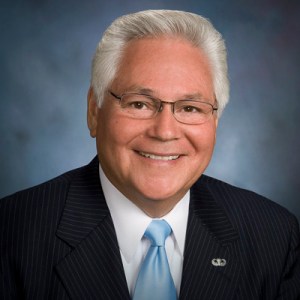
Bill Author
Bill Co-Author(s):