AB 1708: Theft.
- Session Year: 2023-2024
- House: Assembly
- Latest Version Date: 2023-04-12
Current Status:
Failed
(2024-02-01: From committee: Filed with the Chief Clerk pursuant to Joint Rule 56.)
Introduced
In Committee
First Chamber
In Committee
Second Chamber
Enacted
(1)Existing law, the Safe Neighborhoods and Schools Act, enacted by Proposition 47, as approved by the voters at the November 4, 2014, statewide general election, defines and prohibits an act of shoplifting and prohibits prosecution for an act of shoplifting under any other law.
This bill would refine the definition of shoplifting and would specifically exclude certain offenses from prosecution as shoplifting, including, among others, the theft of a firearm or vehicle, identity theft, and credit card fraud.
(2)Existing law requires, except as excluded, the theft of any property valued below $950 to be charged as petty theft, a misdemeanor.
This bill would similarly exclude certain offenses from this provision, including, among others, the theft of a vehicle, identity theft, and credit card fraud.
(3)Existing law provides that a person with a prior conviction for specified sex offenses may be charged with a felony for shoplifting or for theft of property not exceeding $950 in value.
This bill would require a person convicted of petty theft or shoplifting, if the person has 2 or more prior convictions for specified theft-related offenses, to be punished by imprisonment in the county jail for up to one year, or for 16 months, or 2 or 3 years.
(4)Existing law, until January 1, 2026, authorizes a city or county prosecuting authority or county probation department to create a diversion or deferred entry of judgment program pursuant to this section for persons who commit a theft offense or repeat theft offenses, as specified.
This bill would authorize a city or county prosecuting authority or county probation department to create a diversion program for persons who commit theft or repeat theft offenses, as specified.
(5)This bill would provide that the provisions of the bill that amend Proposition 47 would become effective only upon approval of the voters, and would provide for the submission of those provisions to the voters for approval at the next statewide general election.
Existing law requires the Department of Corrections and Rehabilitation to conduct rehabilitative programming in a manner that meets specified requirements, including minimizing program wait times and offering a variety of program opportunities to inmates regardless of security level or sentence length.This bill would express the intent of the Legislature to enact legislation that would increase accountability for repeat offenders through participation in rehabilitative services.Existing law requires the Department of Corrections and Rehabilitation to conduct rehabilitative programming in a manner that meets specified requirements, including minimizing program wait times and offering a variety of program opportunities to inmates regardless of security level or sentence length.
This bill would express the intent of the Legislature to enact legislation that would increase accountability for repeat offenders through participation in rehabilitative services.
(a)Notwithstanding Section 459, shoplifting is defined as entering a commercial establishment while that establishment is open during regular business hours, with the intent to steal retail property or merchandise, where the value of the property that is taken or intended to be taken does not exceed nine hundred fifty dollars ($950). Any other entry into a commercial establishment with intent to commit larceny is burglary. Shoplifting shall be punished as a misdemeanor, except that a person with one or more prior convictions for an offense specified in clause (iv) of subparagraph (C) of paragraph (2) of subdivision (e) of Section 667 or for an offense requiring registration pursuant to subdivision (c) of Section 290 may be punished pursuant to subdivision (h) of Section 1170.
(b)Any act of shoplifting as defined in subdivision (a) shall be charged as shoplifting. No A person who is charged with shoplifting may shall not also be charged with burglary or theft of the same property.
(c)This section does not apply to theft of a firearm; forgery, as described in Chapter 4 (commencing with Section 470); the unlawful sale, transfer, or conveyance of an access card in violation of Section 484e; forgery of an access card in violation of Section 484f; the unlawful use of an access card in violation of Section 484g; theft from an elder or dependent adult in violation of subdivision (e) of Section 368; receiving stolen property in violation of Section 496; embezzlement, as described in Chapter 6 (commencing with Section 503); identity theft in violation of Section 530.5; or the theft or unauthorized use of a vehicle in violation of Section 10851 of the Vehicle Code.
(d)As used in this section, the following terms have the following meanings:
(1)Retail property or merchandise means any article, product, commodity, item, or component intended to be sold in retail commerce.
(2)Value means the retail value of an item as advertised by the affected retail establishment, including applicable taxes.
SEC. 2.Section 490.2 of the Penal Code is amended to read:490.2.(a)Notwithstanding Section 487 or any other provision of law defining grand theft, obtaining any property by theft where the value of the money, labor, real or personal property taken does not exceed nine hundred fifty dollars ($950) shall be considered petty theft and shall be punished as a misdemeanor, except that such person may instead be punished pursuant to subdivision (h) of Section 1170 if that person has one or more prior convictions for an offense specified in clause (iv) of subparagraph (C) of paragraph (2) of subdivision (e) of Section 667 or for an offense requiring registration pursuant to subdivision (c) of Section 290.
(b)This section shall not be applicable to any theft that may be charged as an infraction pursuant to any other provision of law.
(c)This section does not apply to theft of a firearm; forgery, as described in Chapter 4 (commencing with Section 470); the unlawful sale, transfer, or conveyance of an access card in violation of Section 484e; forgery of an access card in violation of Section 484f; the unlawful use of an access card in violation of Section 484g; theft from an elder or dependent adult in violation of subdivision (e) of Section 368; receiving stolen property in violation of Section 496; embezzlement, as described in Chapter 6 (commencing with Section 503); identity theft in violation of Section 530.5; or the theft or unauthorized use of a vehicle in violation of Section 10851 of the Vehicle Code.
SEC. 3.Section 666.1 is added to the Penal Code, to read:666.1.(a)(1)Notwithstanding any other law, a person who, having two or more convictions for any of the offenses listed in paragraph (2), and who is subsequently convicted of petty theft or shoplifting, is punishable by imprisonment in the county jail not exceeding one year, or pursuant to subdivision (h) of Section 1170.
(2)This section applies to the following offenses:
(A)Petty theft, as described in Section 488.
(B)Grand theft, as described in Section 487.
(C)Theft from an elder or dependent adult in violation of subdivision (e) of Section 368.
(D)The theft or unauthorized use of a vehicle, as described in Section 10851 of the Vehicle Code.
(E)Burglary, as described in Section 459.
(F)Carjacking, as described in Section 215.
(G)Robbery, as described in Section 211.
(H)Receiving stolen property, as described in Section 496.
(I)Shoplifting, as described in Section 459.5.
(J)Mail theft, as described in subdivision (e) of Section 530.5.
(b)This section shall not be construed to preclude prosecution or punishment pursuant to any other law.
SEC. 4.Chapter 2.97 (commencing with Section 1001.98) is added to Title 6 of Part 2 of the Penal Code, to read:2.97.Theft Crimes Diversion1001.98.(a)The city or county prosecuting attorney or county probation department may create a diversion program pursuant to this section for persons who commit a theft offense or repeat theft offenses. The program may be conducted by the prosecuting attorneys office or the county probation department.
(b)Except as provided in subdivision (e), this chapter does not limit the power of the prosecuting attorney to prosecute theft or repeat theft.
(c)If a county creates a diversion or deferred entry of judgment program for individuals committing theft or repeat theft offenses, on receipt of a case or at arraignment, the prosecuting attorney shall either refer the case to the county probation department to conduct a prefiling investigation report to assess the appropriateness of program placement or, if the prosecuting attorneys office operates the program, determine if the case is one that is appropriate to be referred to the program. In determining whether to refer a case to the program, the probation department or prosecuting attorney shall consider, but is not limited to, all of the following factors:
(1)Any prefiling investigation report conducted by the county probation department or nonprofit contract agency operating the program that evaluates the individuals risk and needs and the appropriateness of program placement.
(2)If the person demonstrates a willingness to engage in community service, restitution, or other mechanisms to repair the harm caused by the criminal activity and address the underlying drivers of the criminal activity.
(3)If a risk and needs assessment identifies underlying substance abuse or mental health needs or other drivers of criminal activity that can be addressed through the diversion or deferred entry of judgment program.
(4)If the person has a violent or serious prior criminal record or has previously been referred to a diversion program and failed that program.
(5)Any relevant information concerning the efficacy of the program in reducing the likelihood of participants committing future offenses.
(d)On referral of a case to the program, a notice shall be provided to the person alleged to have committed the offense with both of the following information:
(1)The date by which the person must contact the diversion program or deferred entry of judgment program in the manner designated by the supervising agency.
(2)A statement of the penalty for the offense or offenses with which that person has been charged.
(e)The prosecuting attorney may enter into a written agreement with the person to refrain from, or defer, prosecution on the offense or offenses on the following conditions:
(1)Completion of the program requirements such as community service or courses reasonably required by the prosecuting attorney.
(2)Making adequate restitution or an appropriate substitute for restitution to the victim or victims.
SEC. 5.This act amends the Safe Neighborhoods and Schools Act, an initiative statute approved by the voters at the November 4, 2014, statewide general election as Proposition 47, and shall become effective only when submitted to and approved by the voters. The Secretary of State shall submit Sections 1, 2, and 3 of this act for approval by the voters at a statewide election in accordance with Section 9040 of the Elections Code.
REVISIONS: HeadingLine 3.(a)Notwithstanding Section 459, shoplifting is defined as entering a commercial establishment with intent to commit larceny while that establishment is open during regular business hours, with the intent to steal retail property or merchandise, where the value of the property that is taken or intended to be taken does not exceed nine hundred fifty dollars ($950). Any other entry into a commercial establishment with intent to commit larceny is burglary. Shoplifting shall be punished as a misdemeanor, except that a person with one or more prior convictions for an offense specified in clause (iv) of subparagraph (C) of paragraph (2) of subdivision (e) of Section 667 or for an offense requiring registration pursuant to subdivision (c) of Section 290 may be punished pursuant to subdivision (h) of Section 1170.
(b)Any act of shoplifting as defined in subdivision (a) shall be charged as shoplifting. No person who is charged with shoplifting may also be charged with burglary or theft of the same property.
(c)This section does not apply to theft of a firearm; forgery, as described in Chapter 4 (commencing with Section 470); the unlawful sale, transfer, or conveyance of an access card in violation of Section 484e; forgery of an access card in violation of Section 484f; the unlawful use of an access card in violation of Section 484g; theft from an elder or dependent adult in violation of subdivision (e) of Section 368; receiving stolen property in violation of Section 496; embezzlement, as described in Chapter 6 (commencing with Section 503); identity theft in violation of Section 530.5; or the theft or unauthorized use of a vehicle in violation of Section 10851 of the Vehicle Code.
(d)As used in this section, the following terms have the following meanings:
(1)Retail property or merchandise means any article, product, commodity, item, or component intended to be sold in retail commerce.
(2)Value means the retail value of an item as advertised by the affected retail establishment, including applicable taxes.
SEC. 2.Section 490.2 of the Penal Code is amended to read:490.2.(a)Notwithstanding Section 487 or any other provision of law defining grand theft, obtaining any property by theft where the value of the money, labor, real or personal property taken does not exceed nine hundred fifty dollars ($950) shall be considered petty theft and shall be punished as a misdemeanor, except that such person may instead be punished pursuant to subdivision (h) of Section 1170 if that person has one or more prior convictions for an offense specified in clause (iv) of subparagraph (C) of paragraph (2) of subdivision (e) of Section 667 or for an offense requiring registration pursuant to subdivision (c) of Section 290.
(b)This section shall not be applicable to any theft that may be charged as an infraction pursuant to any other provision of law.
(c)This section shall does not apply to theft of a firearm. firearm; forgery, as described in Chapter 4 (commencing with Section 470); the unlawful sale, transfer, or conveyance of an access card in violation of Section 484e; forgery of an access card in violation of Section 484f; the unlawful use of an access card in violation of Section 484g; theft from an elder or dependent adult in violation of subdivision (e) of Section 368; receiving stolen property in violation of Section 496; embezzlement, as described in Chapter 6 (commencing with Section 503); identity theft in violation of Section 530.5; or the theft or unauthorized use of a vehicle in violation of Section 10851 of the Vehicle Code.
SEC. 3.Section 666.1 is added to the Penal Code, to read:666.1.(a)(1)Notwithstanding any other law, a person who, having two or more convictions for any of the offenses listed in paragraph (2), and who is subsequently convicted of petty theft or shoplifting, is punishable by imprisonment in the county jail not exceeding one year, or pursuant to subdivision (h) of Section 1170.
(2)This section applies to the following offenses:
(A)Petty theft, as described in Section 488.
(B)Grand theft, as described in Section 487.
(C)Theft from an elder or dependent adult in violation of subdivision (e) of Section 368.
(D)The theft or unauthorized use of a vehicle, as described in Section 10851 of the Vehicle Code.
(E)Burglary, as described in Section 459.
(F)Carjacking, as described in Section 215.
(G)Robbery, as described in Section 211.
(H)Receiving stolen property, as described in Section 496.
(I)Shoplifting, as described in Section 459.5.
(J)Mail theft, as described in subdivision (e) of Section 530.5.
(b)This section shall not be construed to preclude prosecution or punishment pursuant to any other law.
SEC. 4.Chapter 2.97 (commencing with Section 1001.98) is added to Title 6 of Part 2 of the Penal Code, to read:2.97.Theft Crimes Diversion1001.98.(a)The city or county prosecuting attorney or county probation department may create a diversion program pursuant to this section for persons who commit a theft offense or repeat theft offenses. The program may be conducted by the prosecuting attorneys office or the county probation department.
(b)Except as provided in subdivision (e), this chapter does not limit the power of the prosecuting attorney to prosecute theft or repeat theft.
(c)If a county creates a diversion or deferred entry of judgment program for individuals committing theft or repeat theft offenses, on receipt of a case or at arraignment, the prosecuting attorney shall either refer the case to the county probation department to conduct a prefiling investigation report to assess the appropriateness of program placement or, if the prosecuting attorneys office operates the program, determine if the case is one that is appropriate to be referred to the program. In determining whether to refer a case to the program, the probation department or prosecuting attorney shall consider, but is not limited to, all of the following factors:
(1)Any prefiling investigation report conducted by the county probation department or nonprofit contract agency operating the program that evaluates the individuals risk and needs and the appropriateness of program placement.
(2)If the person demonstrates a willingness to engage in community service, restitution, or other mechanisms to repair the harm caused by the criminal activity and address the underlying drivers of the criminal activity.
(3)If a risk and needs assessment identifies underlying substance abuse or mental health needs or other drivers of criminal activity that can be addressed through the diversion or deferred entry of judgment program.
(4)If the person has a violent or serious prior criminal record or has previously been referred to a diversion program and failed that program.
(5)Any relevant information concerning the efficacy of the program in reducing the likelihood of participants committing future offenses.
(d)On referral of a case to the program, a notice shall be provided to the person alleged to have committed the offense with both of the following information:
(1)The date by which the person must contact the diversion program or deferred entry of judgment program in the manner designated by the supervising agency.
(2)A statement of the penalty for the offense or offenses with which that person has been charged.
(e)The prosecuting attorney may enter into a written agreement with the person to refrain from, or defer, prosecution on the offense or offenses on the following conditions:
(1)Completion of the program requirements such as community service or courses reasonably required by the prosecuting attorney.
(2)Making adequate restitution or an appropriate substitute for restitution to the victim or victims.
SEC. 5.This act amends the Safe Neighborhoods and Schools Act, an initiative statute approved by the voters at the November 4, 2014, statewide general election as Proposition 47, and shall become effective only when submitted to and approved by the voters. The Secretary of State shall submit Sections 1, 2, and 3 of this act for approval by the voters at a statewide election in accordance with Section 9040 of the Elections Code.
SECTION 1.It is the intent of the Legislature to enact legislation that would increase accountability for repeat offenders through participation in rehabilitative services.It is the intent of the Legislature to enact legislation that would increase accountability for repeat offenders through participation in rehabilitative services.
|
Date
|
Status
|
|---|---|
| Feb 1, 2024 | From committee: Filed with the Chief Clerk pursuant to Joint Rule 56. |
| Jan 31, 2024 | Died pursuant to Art. IV, Sec. 10(c) of the Constitution. |
| Apr 19, 2023 | Coauthors revised. |
| Apr 18, 2023 | In committee: Set, second hearing. Failed passage. Reconsideration granted. |
| Apr 17, 2023 | Re-referred to Com. on PUB. S. |
| Apr 12, 2023 | From committee chair, with author's amendments: Amend, and re-refer to Com. on PUB. S. Read second time and amended. |
| Apr 11, 2023 | In committee: Set, first hearing. Hearing canceled at the request of author. |
| Mar 13, 2023 | Re-referred to Com. on PUB. S. |
| Mar 9, 2023 | From committee chair, with author's amendments: Amend, and re-refer to Com. on PUB. S. Read second time and amended. |
| Mar 9, 2023 | Referred to Com. on PUB. S. |
| Feb 18, 2023 | From printer. May be heard in committee March 20. |
| Feb 17, 2023 | Read first time. To print. |
|
Date
|
Description
|
Location
|
Votes
|
|
|---|---|---|---|---|
| Apr 18, 2023 | Do pass and be re-referred to the Committee on [Appropriations] | Assembly Standing Committee on Public Safety |
Failed |
This list shows positions taken on this bill by organizations on the date displayed, which is linked to the original source.
Positions by individuals are not included.
|
Organization
|
Position
|
Date
|
|---|---|---|
| A New Way of Life Reentry Project | ** Against | |
| Aclu California Action | * Against | Apr 18, 2023 |
| All of Us or None | * Against | Apr 18, 2023 |
| Anti-Recidivism Coalition | * Against | Apr 18, 2023 |
| BizFed Los Angeles | ** Support | |
| Bolda Bridges INC | ** Against | |
| BOMA California | ** Support | |
| California Association Of Highway Patrolmen | ** Support | |
| California Attorneys For Criminal Justice | ** Against | |
| California Building Industry Association | ** Support | |
| California Business Properties Association | ** Support | |
| California Business Roundtable | ** Support | |
| California Chamber Of Commerce | ** Support | |
| California District Attorneys Association | ** Support | |
| California Grocers Association | * Support | Apr 18, 2023 |
| California Police Chiefs Association | * Support | Apr 18, 2023 |
| California Public Defenders Association | * Against | Apr 18, 2023 |
| California Retailers Association | * Support | Apr 18, 2023 |
| Californians for Safety and Justice | * Against | Apr 18, 2023 |
| Californians United for a Responsible Budget | ** Against | |
| Carmichael Improvement District | ** Support | |
| City of Artesia | ** Support | |
| City of Atwater | ** Support | |
| City of Bakersfield | * Support | Apr 18, 2023 |
| City of Bellflower | ** Support | |
| City of Brentwood | ** Support | |
| City of Carlsbad | * Support | Apr 18, 2023 |
| City of Ceres Council District 2 | ** Support | |
| City of Chino | ** Support | |
| City Of Clovis | ** Support | |
| City of Concord | ** Support | |
| City of Downey | ** Support | |
| City of Duarte | ** Support | |
| City of El Segundo | ** Support | |
| City of Fairfield | ** Support | |
| City of Fontana | ** Support | |
| City of Fortuna | ** Support | |
| City Of Garden Grove | ** Support | |
| City of Glendora | ** Support | |
| City of Grand Terrace | ** Support | |
| City of Hanford | ** Support | |
| City of Hesperia | ** Support | |
| City of Indian Wells | ** Support | |
| City of Kerman, CA | ** Support | |
| City of Lake Elsinore | ** Support | |
| City of Lakeport | ** Support | |
| City of Lakewood | ** Support | |
| City of Lakewood CA | ** Support | |
| City Of Lomita | ** Support | |
| City Of Menifee | ** Support | |
| City Of Mission Viejo | ** Support | |
| City of Morgan Hill | ** Support | |
| City of Newark, California | ** Support | |
| City of Newport Beach | ** Support | |
| City of Norco | ** Support | |
| City of Norwalk | ** Support | |
| City of Oceanside | ** Support | |
| City of Paramount | * Support | Apr 18, 2023 |
| City Of Placentia | ** Support | |
| City of Red Bluff | ** Support | |
| City Of Redlands | ** Support | |
| City of Ripon | ** Support | |
| City of Riverbank | ** Support | |
| City of Riverside | ** Support | |
| City of Rosemead | ** Support | |
| City of San Fernando | ** Support | |
| City of San Marcos | * Support | Apr 18, 2023 |
| city of turlock | ** Support | |
| City of Vista | ** Support | |
| City of Walnut | ** Support | |
| City of Walnut Creek | ** Support | |
| City Of Westminster | ** Support | |
| City of Whittier | ** Support | |
| Communities United for Restorative Youth Justice | ** Against | |
| Crime Survivors Resource Center | ** Support | |
| Defy Ventures | ** Against | |
| Drug Policy Alliance | ** Against | |
| El Dorado County Chamber of Commerce | ** Support | |
| El Dorado Hills Chamber of Commerce | ** Support | |
| Elk Grove Chamber Of Commerce | ** Support | |
| Ella Baker Center For Human Rights | * Against | Apr 18, 2023 |
| Fair Chance Project | ** Against | |
| Folsom Chamber Of Commerce | ** Support | |
| Friends Committee On Legislation Of California | * Against | Apr 18, 2023 |
| Goods Movement Alliance | ** Support | |
| Greater Ontario Business Council | ** Support | |
| Hollywood Chamber Of Commerce | * Support | Apr 18, 2023 |
| Indivisible Ca Statestrong | ** Against | |
| Initiate Justice | * Against | Apr 18, 2023 |
| Inland Empire Chamber Alliance | ** Support | |
| Inland Empire Economic Partnership | ** Support | |
| Last Prisoner Project | ** Against | |
| League Of California Cities | * Support | Apr 18, 2023 |
| Legal Services for Prisoners with Children | * Against | Apr 18, 2023 |
| Let's Make It Happen | ** Against | |
| lincoln area chamber of commerce | ** Support | |
| Los Angeles County Division, League of California Cities | ** Support | |
| Los Angeles Regional Reentry Partnership | ** Against | |
| Loyola Law School Collateral Consequences of Conviction Justice Project | ** Against | |
| Menifee Bicycles | ** Support | |
| NAIO | ** Support | |
| National Federation Of Independent Business | ** Support | |
| Peace Officers Research Association Of California | ** Support | |
| Rancho Cordova Chamber of Commerce | ** Support | |
| Rancho Palos Verdes City Of | * Support | Apr 18, 2023 |
| Rocklin Area Chamber of Commerce | ** Support | |
| Roseville Area Chamber Of Commerce | ** Support | |
| Rubicon Programs | ** Against | |
| Sacramento District Attorney's Office | * Support | Apr 18, 2023 |
| Sacred Purpose LLC | ** Against | |
| San Francisco Public Defenders Association | * Against | Apr 18, 2023 |
| Santa Cruz Barrios Unidos INC. | ** Against | |
| Seeds for Youth Development | ** Against | |
| SHIELDS for Families | ** Against | |
| Shingle Springs/cameron Park Chamber of Commerce | ** Support | |
| Sister Warriors Freedom Coalition | * Against | Apr 18, 2023 |
| Southern California Leadership Council | ** Support | |
| Time Done | ** Against | |
| Town of Apple Valley | ** Support | |
| UCAN – United Chamber Advocacy Network | ** Support | |
| United Communities for Peace | ** Against | |
| Yolo County District Attorney's Office | * Support | Apr 18, 2023 |
| Young Women's Freedom Center | * Against | Apr 18, 2023 |
| Yuba Sutter Chamber of Commerce | ** Support |
Date of Hearing: April 18, 2023
Counsel: Liah Burnley
ASSEMBLY COMMITTEE ON
Reginald Byron Jones-Sawyer, Sr., Chair
ABPCA Bill Id:
Author:() – As Ver:
SUMMARY: Amends provisions of Proposition 47 relating to shoplifting and petty theft.
- Specifically, this bill:
- Defines “Shoplifting” as entering a commercial establishment with intent to steal retail property or merchandise, where the value of the property that is taken or intended to be taken does not exceed $950.
- Defines “Retail property or merchandise” as any article, product, commodity, item, or component intended to be sold in retail commerce.
- Defines “Value,” for the purpose of shoplifting, as the retail value of an item as advertised by the affected retail establishment, including applicable taxes.
- Excludes from the offense of shoplifting, forgery, the unlawful sale, transfer, or conveyance of an access card, forgery of an access card, the unlawful use of an access card, theft from an elder or dependent adult, receiving stolen property, embezzlement, identity theft, or the theft or unauthorized use of a vehicle.
- Excludes from the offense of petty theft, forgery, the unlawful sale, transfer, or conveyance of an access card, forgery of an access card, the unlawful use of an access card, theft from an elder or dependent adult, receiving stolen property, embezzlement, identity theft, or the theft or unauthorized use of a vehicle.
- Creates a new offense of petty theft with a prior, a wobbler. Any person who has two or more convictions for any of the following offenses, and who is subsequently convicted of petty theft or shoplifting, is guilty of petty theft with a prior:
- Petty theft;
- Grand theft;
- Theft from an elder or dependent adult;
- Theft or unauthorized use of a vehicle;
- Burglary;
- Carjacking;
- Robbery;
- Receiving stolen property;
- Shoplifting; and,
- Mail theft.
- Petty theft;
- Provides that the above provisions shall only become effective when submitted to and approved by the voters.
- Authorizes the city or county prosecuting attorney or county probation department to create a diversion program for theft offenses or repeat theft offenses.
- States that, in determining whether to refer a case to the program, the probation department or prosecuting attorney shall consider, but is not limited to, all of the following factors:
- Any prefiling investigation report conducted by the county probation department or nonprofit contract agency operating the program that evaluates the individual’s risk and needs and the appropriateness of program placement;
- If the person demonstrates a willingness to engage in community service, restitution, or other mechanisms to repair the harm caused by the criminal activity and address the underlying drivers of the criminal activity;
- If a risk and needs assessment identifies underlying substance abuse or mental health needs or other drivers of criminal activity that can be addressed through the diversion or deferred entry of judgment program;
- If the person has a violent or serious prior criminal record or has previously been referred to a diversion program and failed that program; and,
- Any relevant information concerning the efficacy of the program in reducing the likelihood of participants committing future offenses.
- States that on referral of a case to the program, a notice shall be provided to the defendant with the following information:
- The date by which the person must contact the diversion program or deferred entry of judgment program in the manner designated by the supervising agency; and
- A statement of the penalty for the offense or offenses with which that person has been charged.
- The date by which the person must contact the diversion program or deferred entry of judgment program in the manner designated by the supervising agency; and
- Allows the prosecuting attorney to enter into a written agreement with the defendant to refrain from, or defer, prosecution of the offenses on the following conditions:
- Completion of the program requirements such as community service or courses reasonably required by the prosecuting attorney; and
- Making adequate restitution or an appropriate substitute for restitution to the victim or victims.
EXISTING LAW:
- Defines “Shoplifting” as entering a commercial establishment with intent to commit theft, where the value of the property that is taken or intended to be taken does not exceed $950. (Pen. Code § 459.5 subd. (a).)
- Defines “Value” for the purpose of shoplifting as the “reasonable and fair market value” of the property. (Pen. Code, §484, subd. (a); People v. Romanowski (2017) 2 Cal.5th 903, 914-915.)
- States that shoplifting shall be punished as a misdemeanor, except that shoplifting may be punished as a felony if a person has a prior “super strike,” or a registerable sex conviction, as specified. (Pen. Code, § 459.5, subd. (a).)
- Requires any act of shoplifting to be charged as shoplifting. (Pen. Code, § 459.5, subd. (b).)
- Clarifies that a person who is charged with shoplifting cannot also be charged with burglary or theft of the same property. (Pen. Code, § 459.5, subd. (b).)
- Divides theft into two degrees: petty theft and grand theft. (Pen. Code, § 486.)
- Defines “Grand theft” as theft that is committed when the money, labor, or real or personal property taken is of a value exceeding $950, except as specified. (Pen. Code, § 487.)
- Provides that grand theft is a wobbler. (Pen. Code, § 489, subd. (c).)
- States that any other case of theft is petty theft. (Pen. Code, § 488.)
- Defines “Petty theft” as obtaining any property by theft where the value of the money, labor, real or personal property taken does not exceed $950. (Pen. Code, § 490.2 subd. (a).)
- Provides that petty theft is a misdemeanor, punishable by a fine not exceeding $1,000 or by imprisonment in the county jail not exceeding 6 months, or both. (Pen. Code, § 490.)
- Provides that petty theft shall be punished as a misdemeanor, except that petty theft may be punished as a felony, if a person has a prior “super strike,” or a registerable sex conviction, as specified. (Pen. Code, § 490.2, subd. (a).)
- Specifies that petty theft does not include any theft that may be charged as an infraction. (Pen. Code, § 490.2, subd. (b).)
- Specifies that petty theft does not include theft of a firearm. Theft of a firearm is grand theft, punishable as a felony by imprisonment in the state prison for 16 months, or two or three years. (Pen. Code, §§ 490.2, subd. (c) & 489, subd. (a).)
- Provides that the offense of petty theft with a prior is a wobbler. (Pen. Code, § 666, subd. (a).)
- States that petty theft with a prior may be charged if a defendant has a prior conviction for petty theft, grand theft, embezzlement from an elderly person or dependent adult, auto theft as specified, burglary, carjacking, robbery, or a felony for receiving stolen property. (Pen. Code, § 666, subd. (a).)
- Allows a peace officer to take into custody a person who has been cited, arrested, or convicted for misdemeanor or felony theft from a store in the previous six months or if there is probable cause to believe the person committed organized retail theft, as specified. (Pen. Code, § 856, subd. (i)(11)-(12).)
- Allows a court to issue a bench warrant if a defendant has been cited or arrested for misdemeanor or felony theft from a store and has failed to appear in court in connection with that charge or those charges within the past six months. (Pen. Code, § 978.5, subd. (a)(7).)
- States that is the intent of the Legislature that any provision of law should not construed to preempt current or future pretrial diversion programs. (Pen. Code, § 1001.)
- Authorizes local jurisdictions to establish misdemeanor diversion programs upon approval of the district attorney. (Penal Code §§ 1001.2, subd. (b), 1001.50.)
- Authorizes a city attorney, district attorney, or county probation department to create a diversion program for persons who commit a theft offense or repeat theft offenses. The program may be conducted by the prosecuting attorney’s office or the county probation department. (Pen. Code, § 1001.81.)
FISCAL EFFECT:
Unknown
COMMENTS:
- Author's Statement: According to the author, “A report by the National Retail Foundation highlighted that retail theft accounts for nearly $30 billion in economic loss per year, with California as one of the states most impacted by retail theft. Most of these incidents are traced back to a few repeat offenders who have learned how to game the system. Since Proposition 47 eliminated the use of felony options for most serial theft cases, law enforcement generally only use a misdemeanor citation, which usually results in the suspect being immediately released. The National Association for Shoplifting Prevention further reports that since Proposition 47 was enacted, they have seen a 50% drop in court participation in their education programs. With the rise in retail theft and the lack of accountability, a recent survey by UC Berkeley highlighted that a majority of California voters would like to see changes made to Proposition 47 to better address theft crimes. If approved by the voters, AB 1708 holds repeat offenders accountable and provides a pretrial diversion option. If a person has two or more prior convictions related to theft, they could be charged with a misdemeanor or felony on their next offense. The bill also establishes a pretrial diversion program for persons charged with theft-related offenses and offers them appropriate mental health and substance abuse treatment in an effort to help prevent future theft and crimes that are more serious.”
- Diversion: Existing law permits pretrial diversion programs. (Pen. Code, §1001.) Pre-trial diversion suspends the criminal proceedings without requiring the defendant to enter a plea. (Pen. Code, §§ 1001.1, 1001.3.) The defendant must successfully complete a program or other conditions imposed by the court. If a defendant does not successfully complete the diversion program, criminal proceedings resume but the defendant, having not entered a plea, may still proceed to trial or enter a plea. If diversion is successfully completed, the criminal charges are dismissed and the defendant may, with certain exceptions, legally answer that they have never been arrested or charged for the diverted offense. (Pen. Code, §§ 1001.7, 1001.9.)
Current law already authorizes local jurisdictions to establish misdemeanor diversion programs upon approval of the district attorney. (Penal Code §§ 1001.2, subd. (b), 1001.50.) This bill would authorize a city or county prosecuting attorney or county probation department to create a diversion program for persons who commit a misdemeanor or felony theft offense or repeated theft offenses.
Current law also already authorizes the city or county prosecuting attorney or county probation department to create diversion programs for thefts or repeat thefts. AB 1065 (Jones-Sawyer), Chapter 803, Statutes of 2018 added “Chapter 2.9D. Theft and Repeat Theft Crimes Diversion or Deferred Entry of Judgment Program” to the Penal Code. The diversion program proposed by this bill is identical to the program already authorized pursuant to AB 1065 (Jones-Sawyer) in Penal Code section 1001.82, which is set to sunset on January 1, 2026. (Pen. Code, §§ 1001.81- 1001.82.)
- Proposition 47 and Theft Offenses: In the November 4, 2014 election, California voters approved Proposition 47, which became effective the following day. (California Secretary of State (“SOS”), Statement of the Vote at p. 93 <https://elections.cdn.sos.ca.gov/sov/2014-general/pdf/2014-complete-sov.pdf> [as of Feb. 16, 2023].) The purpose of Proposition 47 is to “ensure that spending focused on violent and serious offences and to maximize alternatives for nonserious, nonviolent crime” and to invest the savings into “prevention and support programs for schools, victims services, and mental health and drug treatment.” (SOS, Voter Guide, Proposition 47, Section 2 at p. 70 <https://vig.cdn.sos.ca.gov/2014/general/pdf/text-of-proposed-laws1.pdf> [as of Feb. 16, 2023].)
Proposition 47 amended various provisions of the Government Code, Penal Code and Health and Safety Code to reclassify certain drug possession offenses and property offenses from felonies or wobblers to misdemeanors. In addition, individuals can petition the court to amend their criminal records. Generally, individuals previously convicted of a “super strike,” or a registerable sex offence, are not eligible for the reduced penalties and record relief under Proposition 47.
In relation to thefts, Proposition 47 reclassified several theft offenses, where the value of the property does not exceed $950, from felonies or wobblers to misdemeanors. This bill would make changes to some of those reforms as follows:
- Shoplifting: Proposition 47 created the misdemeanor offense of shoplifting, punishable by up to six months in county jail. (Pen. Code, § 459.5.) Shoplifting is entering a commercial establishment with intent to commit theft, where the value of the property that is taken or intended to be taken does not exceed $950. (Ibid.) Acts of shoplifting must be charged as shoplifting. (Ibid.) Prior to the enactment of Proposition 47, shoplifting could be charged as a burglary, a potential felony.
- Shoplifting: Proposition 47 created the misdemeanor offense of shoplifting, punishable by up to six months in county jail. (Pen. Code, § 459.5.) Shoplifting is entering a commercial establishment with intent to commit theft, where the value of the property that is taken or intended to be taken does not exceed $950. (Ibid.) Acts of shoplifting must be charged as shoplifting. (Ibid.) Prior to the enactment of Proposition 47, shoplifting could be charged as a burglary, a potential felony.
This bill would narrow the definition of shoplifting to apply to only circumstances in which a person enters a commercial establishment with intent to steal retail property or merchandise, which is defined as any item intended to be sold in retail commerce, where the value of the property that is taken or intended to be taken does not exceed $950. Thus, any offense that does not meet this definition would have to be charged as another offense with increased penalties.
This bill also changes the definition of “value” for the purposes of shoplifting. This bill would define “value” as the retail value of an item as advertised by the affected retail establishment, including applicable taxes. Decades of case law has defined “value” in regards to theft offenses, including shoplifting, as the “reasonable and fair market value” of the property. (Pen. Code, § 484, subd. (a); People v. Romanowski (2017) 2 Cal.5th 903, 914-915.) As explained by the California Supreme Court:
[T]he Penal Code’s definition of “theft,” [] requires courts to determine the value of property obtained by theft based on “reasonable and fair market value.” […] Section 484 is a definitional section. It sets the ground rules for how theft crimes are adjudicated—for example, how various terms are defined, how value must be calculated, and how certain evidentiary presumptions operate. Specific theft crimes are set out in a variety of other sections, and courts have long required section 484’s “reasonable and fair market value” test to be used for theft crimes that contained a value threshold […]. Acceptance of this approach was part of the backdrop against which Proposition 47 was enacted, and Proposition 47 does not refer to any other approach to valuation. We thus see no basis for an alternative approach to valuation either in the original statutory scheme or in the provisions enacted by Proposition 47. Courts must use section 484’s “reasonable and fair market value” test when applying section 490.2’s value threshold for theft crimes.
(People v. Romanowski (2017) 2 Cal.5th 903, 914-915 (citations omitted).) Fair market value “means the highest price obtainable in the market place rather than the lowest price or the average price.” (People v. Pena (1977) 68 Cal.App.3d 100, 104; see also CALCRIM No. 1801 [“Fair market value is the price a reasonable buyer and seller would agree on if the buyer wanted to buy the property and the seller wanted to sell it, but neither was under an urgent need to buy or sell.”].) Fair market value is “not the value of the property to any particular individual.” (People v. Lizarraga (1954) 122 Cal.App.2d 436, 438 [264 P.2d 953] (Lizarraga) (emphasis added); see also People v. Grant (2020) 57 Cal.App.5th 323, 329.)
This bill would establish a new method of valuation for shoplifting offenses only. Whether a person could be guilty of shoplifting, would rest on the value of an item as advertised by the retailer, instead of the fair market value of the item. Further, price advertising has been the subject of much legislation, regulation, and litigation because of concerns that advertised prices do not correspond to prices actually charged for truly comparable products. (See, e.g.; Shaulis v. Nordstrom, Inc. (1st Cir. 2017) 865 F.3d 1, 5 [consumer class action alleging that price tags on Nordstrom Rack products purport to represent a bona fide price, but such items were never sold or intended to be sold at the prices advertised on the price tags]; John v. AM Retail Group, Inc. (S.D.Cal., Mar. 20, 2018, No. 17CV727-JAH (BGS)) 2018 WL 1400718, p. *2 [consumer class action alleging that a sign advertising a leather wallet as having a ticket price and a sale price was misleading because the particular wallet was not offered for sale at the ticket price at any store in California; Pena, supra, 68 Cal.App.3d at p. 103 [“If some stores would underprice the items or would give them away that would not be representative of the fair market value”]; People v. Grant (2020) 57 Cal.App.5th 323, 331, [“This is particularly relevant in the context of an outlet store that sells everything at a discount].)
- Petty Theft: Existing law separates the crime of theft into two categories: “petty theft,” an infraction/misdemeanor and “grand theft,” a wobbler. (Pen. Code, § 489, subd. (c).) Prior to Proposition 47, an offense would be charged as either grand theft of petty theft based on the conduct involved, the manner in which the crime was committed or the value of the property stolen. (Gomez v. Superior Court of Mendocino County (1958), 50 Cal.2d 640.) Proposition 47 provides that theft must be charged as petty theft if the value of the property stolen does not exceed $950, unless the defendant has a prior “super strike,” or a registerable sex conviction, in which case the offence can be charged as a felony. (Pen. Code, § 490.2.) Theft remains chargeable as grand theft if the value of the property taken exceeds $950 and/or is a firearm. (Pen Code, §§ 487, 490.2, subd. (a).)
This bill would narrow the types of theft that could be charged as petty theft. Specifically, forgery, unlawful sale, transfer, conveyance, or use of an access card, theft from an elder or dependent adult, receiving stolen property, embezzlement, identity theft, and the theft or unauthorized use of a vehicle could not be charged as petty theft, even if the value of the property involved is less than $950. Instead, these thefts would have to be charged as a different offense with increased penalties.
For example, embezzlement is treated like either a petty theft or grand theft depending on the value of the property in question. Under existing law, if the embezzled amount was $950 or less, the defendant can be charged with a misdemeanor. If the amount exceeds $950 the offense is a wobbler that can be charged as a misdemeanor or felony. (Pen. Code, § 514.) This bill would eliminate the ability for embezzlement, and other specified offenses, to be charged as petty theft, even if the value of the property was under $950. - Petty Theft with a Prior Conviction: Prior to the passage of Proposition 47, a defendant could be charged with felony petty theft with a prior, if the defendant had three or more prior convictions for specified crimes. Proposition 47 repealed the crime of petty theft with a prior, unless the defendant has a prior conviction for specified auto theft offenses or embezzlement from an elderly person or dependent adult, in which case the offense is chargeable as a wobbler. (Pen. Code, § 666.)
This bill creates a new, additional petty theft with a prior offense. This bill would allow a person to be charged with a petty theft with prior if they have had two or more convictions for specified crimes including petty theft and shoplifting, among other offenses, and are subsequently convicted of petty theft or shoplifting. This offense would be punishable a wobbler. For example, a person with two prior shoplifting convictions could be guilty of a felony upon their third shoplifting offense, even if the value of the property stolen was far below $950.
- Petty Theft: Existing law separates the crime of theft into two categories: “petty theft,” an infraction/misdemeanor and “grand theft,” a wobbler. (Pen. Code, § 489, subd. (c).) Prior to Proposition 47, an offense would be charged as either grand theft of petty theft based on the conduct involved, the manner in which the crime was committed or the value of the property stolen. (Gomez v. Superior Court of Mendocino County (1958), 50 Cal.2d 640.) Proposition 47 provides that theft must be charged as petty theft if the value of the property stolen does not exceed $950, unless the defendant has a prior “super strike,” or a registerable sex conviction, in which case the offence can be charged as a felony. (Pen. Code, § 490.2.) Theft remains chargeable as grand theft if the value of the property taken exceeds $950 and/or is a firearm. (Pen Code, §§ 487, 490.2, subd. (a).)
- Proposition 47 and Crime Rates: Opponents of Proposition 47 claim that there is an increase in crime attributable to the initiative. However, reports evaluating the effects of the initiative have found that Proposition 47 has had little to no effect on California’s crime rates overall. (KQED, California Prison Reform Didn't Cause Crime Increase, Study Finds <https://www.kpcc.org/2016-02-18/study-cas-prison-reform-didnt-cause-crime-increase>[as of Feb. 16, 2023]; see also, Center on Juvenile and Criminal Justice, Urban Crime Trends Remain Stable Through California’s Policy Reform Era (2010-2016) <http://www.cjcj.org/uploads/cjcj/documents/urban_crime_trends_remain_stable_through_californias_policy_reform_era_2010-2016.pdf> [as of Feb. 16, 2023].) Incarceration and crime rates are all down substantially compared to their levels in 2006 – shortly before state policymakers and the voters began enacting reforms to California’s criminal justice system. (Criminal Justice Reform is Working in California, California Budget & Policy Center <https://calbudgetcenter.org/resources/criminal-justice-reform-is-working-in-california/> [as of Feb. 16, 2023].)
There is evidence that recidivism rates have fallen. (Public Police Institute of California (“PPIC”), Recidivism of Felony Offenders in California <https://www.ppic.org/publication/recidivism-of-felony-offenders-in-california/> [as of Feb. 16, 2023].) An evaluation of Proposition 47’s effect of recidivism found statistically significant fewer rearrests and reconvictions for any crime or revocation. (National Institute of Justice, Program Profile: The Impact of California’s Proposition 47 (The Reduced Penalties for Some Crimes Initiative) on Recidivism (Nov. 29, 2021) <https://crimesolutions.ojp.gov/ratedprograms/740#ar> [as of Feb. 16, 2023].)
Further research suggests that Proposition 47 has had no effect on violent crimes, including homicide, rape, aggravated assault and robbery and findings of increased property offenses such as larceny and motor vehicle theft that blame Proposition 47 as the cause do not withstand more rigorous statistical testing. (Bartos, Bradley J. & Kubrin, Charis E., Can We Downsize Our Prisons and Jails without Compromising Public Safety? (2018) 17 Criminology & Public Policy 3 <https://onlinelibrary.wiley.com/doi/10.1111/1745-9133.12378 > [as of Feb. 16, 2023].)
Moreover, a study by the Pew Research Center found that raising the felony theft threshold in other states had no impact on crime; states that increased their thresholds reported roughly the same average decrease in crime as the 20 states that did not change their theft laws; and the amount of a state’s felony theft threshold—whether it is $500, $1,000, $2,000, or more—is not correlated with its property crime and larceny rates. (Pew Research Center, The Effects of Changing Felony Theft Thresholds <https://www.pewtrusts.org/en/research-and-analysis/issue-briefs/2017/04/the-effects-of-changing-felony-theft-thresholds> [as of Feb. 16, 2023].)
FBI data reflects that nationally, the rate of property crimes has been decreasing for 18 years. California, with its landmark criminal justice reforms, saw a more than eight percent decrease in the statewide property crime rate. (Californians for Safety and Justice, New Federal Crime Data Underscores Urgency Of Increased Investments In Community-Based Crime Prevention (Sept. 27, 2021) <https://safeandjust.org/news/https-safeandjust-org-news-new-federal-crime-data-underscores-urgency-of-increased-investments-in-community-based-crime-prevention/> [as of March 29, 2023].)
Broader crime statistics paint a picture of a decreasing problem, not one on the rise. National crime statistics from the FBI show shoplifting decreasing steadily every year from 2015 through 2020, the most recent data available. Larceny — the taking of property without using force or breaking in — declined 16% between 2010 and 2019, then dipped even lower in 2020, the data indicate.
At a local level, more up-to-date statistics sharpen the image of a waning problem. Property crime in Los Angeles is up 2.6% from last year, according to LAPD numbers published Nov. 27, but down 6.6% from 2019. The category that includes shoplifting — “personal/other theft” per LAPD — is down 32% from 2019. A San Francisco Chronicle analysis of that city’s shoplifting crime data showed that the number of monthly reports had changed little in the last three years, though it also raised some major questions about the accuracy of shoplifting reporting to law enforcement. Smash-and-grab thefts are classified differently because they involve violence, trespassing and high-value hauls, and suspects have been charged with robbery, burglary or grand theft after recent incidents in L.A. and San Francisco.
(Los Angeles Times, Retailers Say Thefts Are at Crisis Level. The Numbers Say Otherwise (Dec. 15, 2021) <https://www.latimes.com/business/story/2021-12-15/organized-retail-theft-crime-rate> [as of March 2, 2023].)
- Reports of Exaggerated Losses by Retailers: Some complaints of retail theft were overstated. For example, in 2021, Walgreens closed five stores in San Francisco purportedly due to retail theft. However, the San Francisco Police Department’s data on shoplifting did not support this explanation for the closures. Recently, the chief financial officer of Walgreens acknowledged the shoplifting threat had probably been overstated. The company likely spent too much on security measures and mischaracterized the amount of theft at stores. In fact, shrinkage (the inventory that was bought but could not be sold primarily due to shoplifting) actually decreased to around 2.5 to 2.6 percent of sales, compared to 3.5 percent the prior year. (See New York Times, Walgreens Executive Says Shoplifting Threat Was Overstated (Jan. 6, 2023) <https://www.nytimes.com/2023/01/06/business/walgreens-shoplifting.html> [as of March 2, 2023]; see also Los Angeles Times, Retailers Say Thefts Are at Crisis Level. The Numbers Say Otherwise (Dec. 15, 2021) <https://www.latimes.com/business/story/2021-12-15/organized-retail-theft-crime-rate> [as of March 2, 2023]; CNN Business, ‘Maybe We Cried Too Much’ Over Shoplifting, Walgreens Executive Says (Jan. 7, 2023) <https://www.cnn.com/2023/01/06/business/walgreens-shoplifting-retail/index.html> [as of March 2, 2023]; The Atlantic, The Great Shoplifting Freak-Out (Dec. 203, 2021) <https://www.theatlantic.com/health/archive/2021/12/shoplifting-holiday-theft-panic/621108/> [as of March 2, 2023].)
- Existing Penalties for Theft Offenses: To the extent this bill is aimed at increasing penalties for thefts, there are currently a number of laws that prosecutors can use to charge these crimes that call for increased penalties.
Separate offenses may generally be punished by up to six months consecutive for each offense. And, a prosecutor can consolidate similar thefts, after a case has already been filed, where the offenses possess common characteristics or attributes. (Pen. Code, § 954.) Thus, while a defendant’s exposure for one theft offense might be six months in jail, an individual convicted of multiple theft offenses can face multiple six-month terms in the county jail.
Repeated acts of theft can be aggregated and prosecuted as one felony if they are conducted pursuant to one intention, one general impulse, and one plan. (Pen. Code, § 487; see also People v. Bailey (1961) 55 Cal.2d 514, 518-519 (Bailey).) AB 2356 (Rodriguez), Chapter 22, Statues of 2022, specified that if the value of the money, labor, real property, or personal property taken exceeds $950 over the course of distinct but related acts, whether committed against one or more victims, the value of the money, labor, real property, or personal property taken may properly be aggregated to charge a count of grand theft, if the acts are motivated by one intention, one general impulse, and one plan. According to the Assembly Public Safety Analysis of AB 2356, the intent of the bill was to codify People v. Bailey to “clarify the state of the law to the extent some prosecutors may think Proposition 47 changed the Bailey rule.”
Law enforcement can also use aggregation to pursue felony charges when individuals are in possession of stolen items, where multiple items are received on one occasion and the total amount exceeds $950, even in instances where a person possesses items stolen from different stores. (People v. Lyons (1958) 50 Cal.2d 275; see also People v. Roberts (1960) 182 Cal.App.2d 431, 436-437.)
Moreover, under California law, if two or more persons conspire to commit any crime, even misdemeanor petty theft or shoplifting, they can be charged with a felony for the conspiracy itself. Thus, any time there is more than one person involved in any act of theft, they can be charged as felony conspiracy, regardless of the value of the items stolen. (Pen. Code, § 182.)
In sum, there are many legal options for charging thefts with increased penalties.
- Recent Legislation Targeting Reports of Increased Retail Theft: Penal Code section 490.4 punishes “organized retail theft” – shoplifting schemes undertaken by two or more persons who have organized themselves to commit shoplifting for financial gain. (Pen. Code, § 490.4.) The punishment ranges from one year in the county jail (misdemeanor) to 16 months, or two, or three years in the county jail (felony), depending on the specific circumstances.
The crime of organized retail theft was created by AB 1065 (Jones-Sawyer), Chapter 803, Statutes of 2018. AB 1065 also authorized CHP to establish regional task forces to investigate property theft crimes. AB 1065 contained various provisions expanding jurisdiction to prosecute theft, organized retail theft and receipt of stolen property; authorizing nonrelease of individuals arrested for misdemeanors when certain circumstances are present; specifying that a court may issue a bench warrant for a person who failed to appear if the defendant has been cited or arrested for a theft offense in the previous 6 months; and authorizing the creation of a diversion or deferred entry of judgment program for persons who commit theft and repeat theft offenses. AB 1065 contained a sunset date of January 1, 2021.
Subsequently, AB 331 (Jones-Sawyer), Chapter 113, Statutes of 2021, reenacted the provisions of the original bill that created the crime of organized retain theft. AB 331 contains a sunset date of January 1, 2026. AB 2294 (Jones-Sawyer), Chapter 856, Statutes of 2022, authorized the misdemeanor arrest of a person that has a prior arrest, citation or conviction for theft, as specified, and provisions of AB 1065 that had authorized nonrelease of individuals arrested for misdemeanors when certain circumstances are present; specifying that a court may issue a bench warrant for a person who failed to appear if the defendant has been cited or arrested for a theft offense in the previous six months; and authorizing the creation of a diversion or deferred entry of judgment program for persons who commit repeat theft offenses but also expanded to apply to single theft offenses. AB 2294 contains a sunset date of January 1, 2026. - Failed Attempts to Amend Proposition 47: Since its enactment, there have been numerous legislative attempts to repeal and/or amend Proposition 47, most of which failed passage by the Legislature, or were vetoed.
In addition to unsuccessful legislative attempts to repeal and/or amend Proposition 47, the Criminal Sentencing, Parole, and DNA Collection Initiative (Proposition 20), was on the ballot in the November 2020 election. Proposition 20 was a citizen-initiated measure designed to reverse some reforms made by Proposition 47. The voters rejected Proposition 20 by 61.7%. (SOS, Statement of the Vote at p. 63 <https://elections.cdn.sos.ca.gov/sov/2020-general/sov/complete-sov.pdf> [as of Feb. 16, 2023].) Proposition 20 would have would have made specific types of theft, shoplifting, and fraud, no matter the value, chargeable as wobblers, rather than misdemeanors. (SOS, Voter Guide, Proposition 20 at pp. 15-26 <https://vig.cdn.sos.ca.gov/2020/general/pdf/topl-prop20.pdf > [as of Feb. 16, 2023].)
Again, in 2022, the California Punishment for Repeat Theft convictions Initiative (#21-004) would have authorized felony sentences for certain thefts under $950 and required longer sentences for specified property losses. (SOS, Initiative and Referendum Proposals Pending Review <https://www.sos.ca.gov/elections/ballot-measures/attorney-general-information> [as of Feb. 16, 2023].) To be certified for the 2022 ballot, the initiative needed 623,212 signatures by July 26, 2022. The initiative failed to qualify for the ballot.
At the ballot box, the California electorate has repeatedly rejected regressive “tough on crime” measures, in favor of criminal justice reforms aimed at reducing incarceration and reinvesting savings toward prevention, and reducing recidivism.
- Long Sentences are Counterproductive for Public Safety: This bill would increase sentences for theft offenses. Unduly long sentences are counterproductive for public safety and contribute to the dynamic of diminishing returns as the incarcerated population expands. (Long-Term Sentences: Time to Reconsider the Scale of Punishment, 87 UMKC L. Rev., 1 (Nov. 5, 2018).) Increasingly punitive sentences add little to the deterrent effect of the criminal justice system; and mass incarceration diverts resources from program and policy initiatives that hold the potential for greater impact on public safety. (Ibid.)
Research shows that increasing the severity of the punishment does little to deter the crime. According to the National Institute of Justice, laws and policies designed to deter crime by focusing mainly on increasing the severity of punishment are ineffective partly because criminals know little about the sanctions for specific crimes. More severe punishments do not “chasten” individuals convicted of crimes, and prisons may exacerbate recidivism. Studies show that for most individuals convicted of a crime, short to moderate prison sentences may be a deterrent but longer prison terms produce only a limited deterrent effect. In addition, the crime prevention benefit falls far short of the social and economic costs. (National Institute of Justice, Five Things about Deterrence <https://www.ojp.gov/pdffiles1/nij/247350.pdf> [as of Feb. 15, 2023].)
This finding makes intuitive sense. Consider a person who is thinking about stealing a car or burglarizing a local business. If he is thinking rationally, he will take into account a variety of factors when considering how to commit the crime, including time of day, ease of entry, presence of security personnel or technology, or his ability to leave the crime scene. He does this to avoid being caught in the act because being arrested and prosecuted will impose significant burdens on him. Additionally, because he is not planning on being apprehended, he is unlikely to be thinking about how much time he might spend in prison and whether his sentence will be three, five, or seven years.
Notably, this example looks at the behavior of a rational person, which rarely fits the picture of a substantial portion of those who actually commit a crime. Many are teenagers seeking peer approval for their illegal behavior, individuals under the influence of alcohol or drugs at the time of the offense, or are motivated by economic challenges. Many of these individuals are not even thinking about the risk of being caught, let alone know how much prison time they may face.
The limited impact of extending sentence length becomes even more attenuated for long-term incarceration. If the penalty for a second robbery conviction is twenty years and a legislative body increases that penalty to twenty- five, few would-be robbers undeterred by the prospect of “only” a twenty year sentence would balk at an additional five years.
Again, there are multiple possible reasons for imposing a given prison term, depending on the circumstances of the crime. But policymakers and judges should be cognizant of the evidence to support any particular goal of sentencing. If the length of a prison term has little deterrent value, it may be time to forego the rationale of “sending a message.”
(Long-Term Sentences: Time to Reconsider the Scale of Punishment, 87 UMKC L. Rev., 1 (Nov. 5, 2018) (citations omitted).) These findings are consistent with other research from national institutions of renown. (See Travis, The Growth of Incarceration in the United States: Exploring Causes and Consequences, National Research Council of the National Academies of Sciences, Engineering, and Medicine (April 2014) at pp. 130 -150 <https://academicworks.cuny.edu/cgi/viewcontent.cgi?article=1026&context=jj_pubs> [as of March 27, 2023].)
- California Constitutional Limitations on Amending a Voter Initiative: Because Proposition 47 was a voter initiative, the Legislature may not amend the statute without subsequent voter approval unless the initiative permits such amendment, and then only upon whatever conditions the voters attached to the Legislature’s amendatory powers. (People v. Superior Court (Pearson) (2010) 48 Cal.4th 564, 568; see also Cal. Const., art. II, § 10, subd. (c).) The California Constitution states, “The Legislature may amend or repeal referendum statutes. It may amend or repeal an initiative statute by another statute that becomes effective only when approved by the electors unless the initiative statute permits amendment or repeal without their approval.” (Cal. Const., art. II, § 10, subd. (c).) Therefore, unless the initiative expressly authorizes the Legislature to amend, only the voters may alter statutes created by initiative.
The purpose of California’s constitutional limitation on the Legislature’s power to amend initiative statutes is to protect the people’s initiative powers by precluding the Legislature from undoing what the people have done, without the electorate’s consent.
As to the Legislature’s authority to amend the initiative, Proposition 47 states: “This act shall be broadly construed to accomplish its purposes. The provisions of this measure may be amended by a two-thirds vote of the members of each house of the Legislature and signed by the Governor, so long as the amendments are consistent with and further the intent of this act. The Legislature may by majority vote amend, add, or repeal provisions to further reduce the penalties for any of the offenses addressed by this act.” (SOS, Voter Guide, Proposition 47 at p. 74 <https://vig.cdn.sos.ca.gov/2014/general/pdf/text-of-proposed-laws1.pdf> [as of Feb. 16, 2023].)
Three sections of this bill seek to increase penalties for theft offenses addressed by Proposition 47. As such, it is inconsistent with the purpose of Proposition 47. Therefore, pursuant to the above-referenced provisions of the California Constitution, only the voters may authorize the provisions. Accordingly, this bill would become effective only upon approval of the voters at the statewide general election. - Argument in Support: According to the City of Brentwood, “This measure would increase accountability for repeat theft offenders and offer pathways for pre-plea diversion programming. If passed, the bill would send the issue to the voters for approval at the next statewide general election.
“This strategy is one of many supported by cities to address crime and its underlying causes. We remain committed to improving California’s carceral systems, interrupting and ending cycles of recidivism, and building a community-based system of care that appropriately meets the needs of all community members.
“Proposition 47 of 2014 made promises of safe neighborhoods, but the unintended consequences that followed have provided anything but. According to a February 2023 study conducted by the Public Policy Institute of California, a strong majority of Californians worry they or a family member will be a victim of a crime (21% very, 44% somewhat). This is the sentiment being felt by residents of cities throughout the state.
“Our communities deserve better, and cities are more than ready to find solutions that fix Proposition 47.
“The City of Brentwood is keenly interested in exploring additional strategies to address the impacts of crime in our communities. This includes resources to improve community safety through prevention and early intervention programming, as well as improved re-entry service provision for our formerly incarcerated community members. While these provisions have historically been the responsibility of state and county departments, cities are interested in increased collaboration to meet these urgent needs.”
- Argument in Opposition: According to Californians for Safety and Justice, “AB 1708 would partially repeal key elements of Proposition 47 (Prop 47) by increasing penalties for low-level shoplifting and petty theft under multiple circumstances. The legislation weakens the definition of shoplifting under California law, allowing people to be charged with other, additional, and more serious property crimes under a variety of circumstances. Also under AB 1708, a person convicted of shoplifting or petty theft under $950 who has two or more prior convictions for property crimes could be charged with a felony and receive a sentence of three years or more. These changes all work to repeal key elements of Prop 47, which since its enactment has been followed by historic lows in property crime.
“In numerous ways, AB 1708 would make it easier to charge non-violent Californians with felonies and to go back to the same shortsighted “tough on crime” measures that have failed California for the past three decades. It is yet another attempt to go down a path that California’s voters have already twice rejected. Increasing penalties for these offenses would once again dramatically increase incarceration rates, leaving the state vulnerable to falling out of compliance with the prison system’s population cap mandated by the federal judiciary. Increasing incarceration rates would also eliminate the more than $1 billion Prop. 47 is expected to save each decade in perpetuity, savings that are required to be reallocated back to local, community- based programs proven to more effectively prevent crime and harm, like drug treatment, mental health services, re-entry services and programs that help crime victims heal. As of 2022, Prop. 47 has saved the state more than $600 million and has been reinvested in the community.
“AB 1708 nonetheless proposes to expose more people to felony sentencing and incarceration for low-level property crimes. Such an attempt is not justified by actual crime data, flies in the face of sensible criminal justice reform, and would force counties to shoulder the cost of imprisoning more people for years, at great human and fiscal expense.”
- Related Legislation:
- AB 23 (Muratsuchi), would amend Proposition 47 by reducing the threshold amount for petty theft and shoplifting from $950 to $400. The hearing for AB 23 was canceled at the request of author.
- AB 75 (Hoover), would reinstate a provision of law that was repealed by Proposition 47 relating to petty theft with a prior and would increase penalties for shoplifting. AB 75 failed passage in this Committee.
- AB 335 (Alanis), would require the Little Hoover Commission to submit a report to the Legislature describing reports retail thefts, as specified. AB 335 is pending in Assembly Appropriations Committee.
- SB 316 (Niello), would reinstate a provision of law that was repealed by Proposition 47 relating to petty theft with a prior and would increase penalties for shoplifting. SB 316 is pending in Senate Public Safety Committee.
- AB 23 (Muratsuchi), would amend Proposition 47 by reducing the threshold amount for petty theft and shoplifting from $950 to $400. The hearing for AB 23 was canceled at the request of author.
- Prior Legislation:
- AB 2294 (Jones-Sawyer), Chapter 856, Statutes of 2022, authorized the misdemeanor arrest of a person that has a prior arrest, citation or conviction for theft, as specified, and authorized a city or county prosecuting authority or county probation department to create a diversion or deferred entry of judgment program for persons who commit a theft offense or repeat theft offenses.
- AB 2356 (Rodriguez), Chapter 22, Statues of 2022, expanded the definition of “grand theft” where the aggregate amount taken by all participants exceeds $950.
- AB 1597 (Waldron), of the 2021-2022 Legislative Session, would have amended Proposition 47 by reinstating the offense of petty theft with a prior. AB 1597 failed passage in this Committee.
- AB 1599 (Kiley), of the 2021-2022 Legislative Session, would have repealed the changes made by Proposition 47, except those related to reducing the penalty for possession of concentrated cannabis, subject to approval of the voters. AB 1599 failed passage in this Committee.
- AB 1603 (Salas), of the 2021-2022 Legislative Session, would have amended Proposition 47 by reducing the threshold amount for petty theft and shoplifting to be punished as a misdemeanor from $950 to $400. AB 1603 failed passage in this Committee.
- AB 2390 (Muratsuchi), of the 2021-2022 Legislative Session, would have amended Proposition 47 by authorizing the aggregation of the value of property from one or more acts of theft or shoplifting, as specified. AB 2390 failed passage in this Committee.
- SB 1108 (Bates), of the 2021-2022 Legislative Session, would have amended Proposition 47 by reinstating the offense of petty theft with a prior. SB 1108 failed passage in Senate Public Safety Committee.
- AB 3234 (Ting), Chapter 334, Statutes of 2020, created a court-initiated misdemeanor diversion program.
- AB 1810 (Budget Committee), Chapter 34, Statutes of 2018, allows trial courts to divert mentally ill defendants into pre-existing treatment programs, where the proposed program is consistent with the needs of the defendant and the safety of the community.
- AB 1065 (Jones-Sawyer), Chapter 803, Statutes of 2018, created the crime of organized retail theft and expanded jurisdiction to prosecute cases of theft or receipt of stolen merchandise.
- AB 2369 (Patterson), of the 2015-2016 Legislative Session, would have amended Proposition 47 by making persons convicted of crimes reduced to misdemeanors eligible for felony prosecution and sentencing if convicted of specified offenses two times within a three-year period. AB 2369 failed passage in this Committee.
- Proposition 47 of the November 2014 general election, the Safe Neighborhoods and Schools Act, reduced penalties for certain drug and property crimes.
- SB 1227 (Hancock), Chapter 658, Statutes of 2013, created a diversion program for veterans who commit misdemeanors or county jail-eligible felonies and who are suffering from service-related trauma or substance abuse.
- AB 994 (Lowenthal), of the 2013-2014 Legislative Session, would have required each county to establish and maintain a pretrial diversion program, to be administered by the district attorney of that county, and authorizes either the district attorney or the superior court to offer diversion to a defendant. AB 994 was vetoed.
- AB 1844 (Fletcher), Chapter 219, Statutes of 2010, amended petty theft with a prior to require three prior theft-related convictions.
- AB 2294 (Jones-Sawyer), Chapter 856, Statutes of 2022, authorized the misdemeanor arrest of a person that has a prior arrest, citation or conviction for theft, as specified, and authorized a city or county prosecuting authority or county probation department to create a diversion or deferred entry of judgment program for persons who commit a theft offense or repeat theft offenses.
REGISTERED SUPPORT / OPPOSITION:
Support
BizFed Los Angeles
BOMA California
California Building Industry Association
California Business Properties Association
California Business Roundtable
California Retailers Association
California Chamber of Commerce
California District Attorneys Association (Co-Sponsor)
California Association of Highway Patrolmen
California Grocers Association
California Police Chiefs Association
California Retailers Association
Carmichael Improvement District
City of Artesia
City of Atwater
City of Bakersfield
City of Bellflower
City of Brentwood
City of Ceres Council District 2
City of Chino
City of Clovis
City of Concord
City of Downey
City of Duarte
City of El Segundo
City of Fairfield
City of Fontana
City of Fortuna
City of Garden Grove
City of Glendora
City of Grand Terrace
City of Hanford
City of Hesperia
City of Indian Wells
City of Kerman, CA
City of Lake Elsinore
City of Lakeport
City of Lakewood
City of Lakewood CA
City of Lomita
City of Menifee
City of Mission Viejo
City of Morgan Hill
City of Newark, California
City of Newport Beach
City of Norco
City of Norwalk
City of Oceanside
City of Placentia
City of Red Bluff
City of Redlands
City of Ripon
City of Riverbank
City of Riverside
City of Rosemead
City of San Fernando
City of San Marcos
City of Turlock
City of Vista
City of Walnut
City of Walnut Creek
City of Westminster
City of Whittier
Crime Survivors Resource Center
El Dorado County Chamber of Commerce
El Dorado Hills Chamber of Commerce
Elk Grove Chamber of Commerce
Folsom Chamber of Commerce
Goods Movement Alliance
Greater Ontario Business Council
Hollywood Chamber of Commerce
Inland Empire Chamber Alliance
Inland Empire Economic Partnership
League of California Cities
Lincoln Area Chamber of Commerce
Los Angeles County Division, League of California Cities
Mayor Patricia Lock Dawson, City of Riverside
Menifee Bicycles
NAIO
National Federation of Independent Business
Peace Officers Research Association of California (PORAC)
Rancho Cordova Chamber of Commerce
Rocklin Area Chamber of Commerce
Roseville Area Chamber of Commerce
Shingle Springs/Cameron Park Chamber of Commerce
Southern California Leadership Council
Town of Apple Valley
UCAN – United Chamber Advocacy Network
Yuba Sutter Chamber of Commerce
Opposition
A New Way of Life Reentry Project
Anti Recidivism Coalition
Bolda Bridges INC
California Attorneys for Criminal Justice
California Public Defenders Association (CPDA)
Californians for Safety and Justice
Californians United for A Responsible Budget
Communities United for Restorative Youth Justice (CURYJ)
Defy Ventures
Drug Policy Alliance
Ella Baker Center for Human Rights
Fair Chance Project
Indivisible CA Statestrong
Initiate Justice
Last Prisoner Project
Let's Make It Happen
Los Angeles Regional Reentry Partnership (LARRP)
Loyola Law School Collateral Consequences of Conviction Justice Project
Rubicon Programs
Sacred Purpose LLC
San Francisco Public Defender
Santa Cruz Barrios Unidos INC.
Seeds for Youth Development
Shields for Families
Time Done
United Communities for Peace
Analysis Prepared by:
Discussed in Hearing
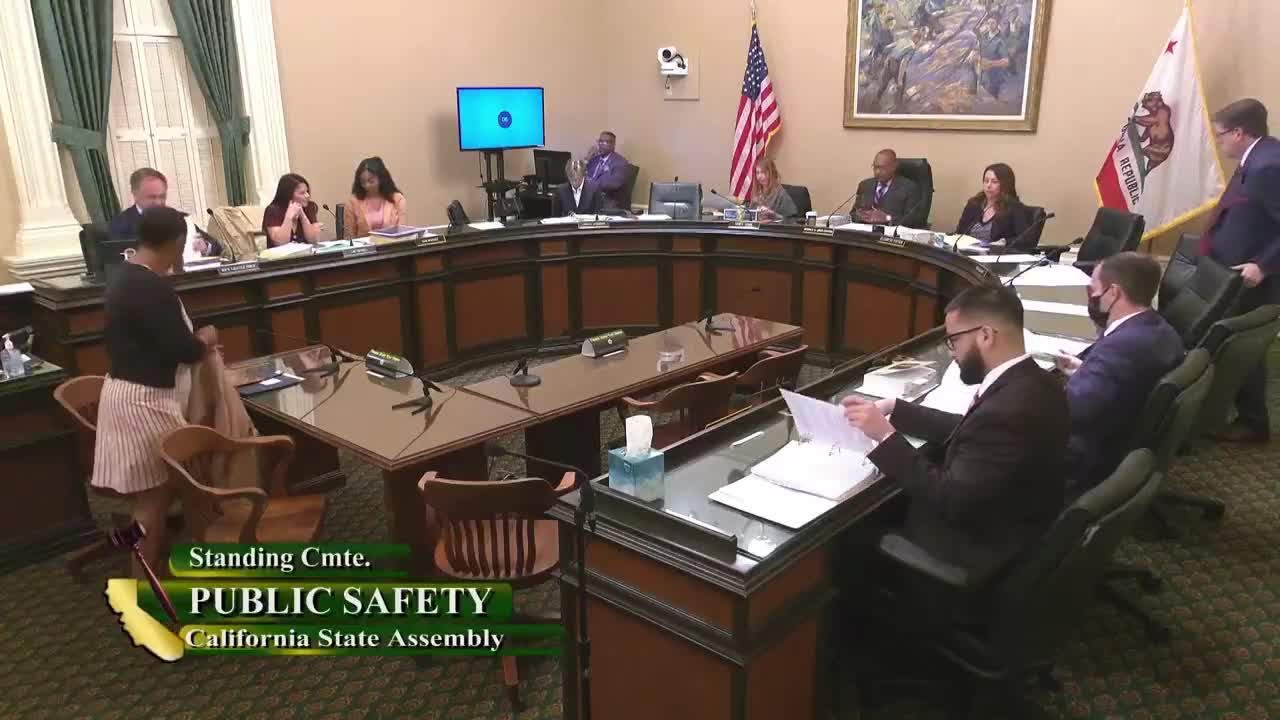 26MIN
Assembly Standing Committee on Public Safety
Bill Author







Bill Co-Author(s):