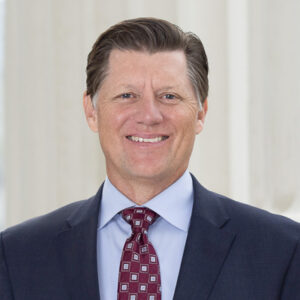
SB 53: Open meetings.
- Session Year: 2019-2020
- House: Senate
- Latest Version Date: 2019-03-05
The Bagley-Keene Open Meeting Act requires that all meetings of a state body, as defined, be open and public and that all persons be permitted to attend and participate in a meeting of a state body, subject to certain conditions and exceptions.
This bill would specify that the definition of state body includes an advisory board, advisory commission, advisory committee, advisory subcommittee, or similar multimember advisory body of a state body that consists of 3 or more individuals, as prescribed, except a board, commission, committee, or similar multimember body on which a member of a body serves in his or her official capacity as a representative of that state body and that is supported, in whole or in part, by funds provided by the state body, whether the multimember body is organized and operated by the state body or by a private corporation.
This bill would declare that it is to take effect immediately as an urgency statute.
As used in this article, state body means each of the following:
(a)Every state board, or commission, or similar multimember body of the state that is created by statute or required by law to conduct official meetings and every commission created by executive order.
(b)A board, commission, committee, or similar multimember body that exercises any authority of a state body delegated to it by that state body.
(c)An advisory board, advisory commission, advisory committee, advisory subcommittee, or similar multimember advisory body of a state body, if created by formal action of the state body or of any member of the state body, and if the advisory body so created consists of three or more persons. persons, except as provided in subdivision (d).
(d)A board, commission, committee, or similar multimember body on which a member of a body that is a state body pursuant to this section serves in his or her official capacity as a representative of that state body and that is supported, in whole or in part, by funds provided by the state body, whether the multimember body is organized and operated by the state body or by a private corporation.
(e)Notwithstanding subdivision (a) of Section 11121.1, the State Bar of California, as described in Section 6001 of the Business and Professions Code. This subdivision shall become operative on April 1, 2016.
SEC. 2.This act is an urgency statute necessary for the immediate preservation of the public peace, health, or safety within the meaning of Article IV of the California Constitution and shall go into immediate effect. The facts constituting the necessity are:
In order to avoid unnecessary litigation and ensure the peoples right to access the meetings of public bodies pursuant to Section 3 of Article 1 of the California Constitution, it is necessary that this act take effect immediately.
|
Date
|
Status
|
|---|---|
| Aug 30, 2019 | August 30 hearing: Held in committee and under submission. |
| Aug 14, 2019 | August 14 set for first hearing. Placed on APPR. suspense file. |
| Jul 11, 2019 | From committee: Do pass and re-refer to Com. on APPR. (Ayes 21. Noes 0.) (July 10). Re-referred to Com. on APPR. |
| May 6, 2019 | Referred to Com. on G.O. |
| Apr 22, 2019 | In Assembly. Read first time. Held at Desk. |
| Apr 22, 2019 | Read third time. Urgency clause adopted. Passed. (Ayes 38. Noes 0.) Ordered to the Assembly. |
| Apr 9, 2019 | Read second time. Ordered to third reading. |
| Apr 8, 2019 | From committee: Do pass. (Ayes 6. Noes 0.) (April 8). |
| Mar 29, 2019 | Set for hearing April 8. |
| Mar 12, 2019 | From committee: Do pass and re-refer to Com. on APPR. (Ayes 14. Noes 0.) (March 12). Re-referred to Com. on APPR. |
| Mar 5, 2019 | From committee with author's amendments. Read second time and amended. Re-referred to Com. on G.O. |
| Feb 20, 2019 | Set for hearing March 12. |
| Jan 16, 2019 | Referred to Com. on G.O. |
| Jan 7, 2019 | Read first time. |
| Dec 11, 2018 | From printer. May be acted upon on or after January 10. |
| Dec 10, 2018 | Introduced. To Com. on RLS. for assignment. To print. |
|
Date
|
Description
|
Location
|
Votes
|
|
|---|---|---|---|---|
| Jul 10, 2019 | Do pass and be re-referred to the Committee on [Appropriations] | Assembly Standing Committee on Governmental Organization |
Passed |
|
| Apr 22, 2019 | Senate 3rd Reading SB53 Wilk et al. Urgency Clause | Senate Floor |
Passed |
|
| Apr 8, 2019 | Do pass | Senate Standing Committee on Appropriations |
Passed |
|
| Mar 12, 2019 | Do pass, but first be re-referred to the Committee on [Appropriations] | Senate Standing Committee on Governmental Organization |
Passed |
This list shows positions taken on this bill by organizations on the date displayed, which is linked to the original source.
Positions by individuals are not included.
Date of Hearing: August 14, 2019
ASSEMBLY COMMITTEE ON APPROPRIATIONS
Lorena Gonzalez, Chair
SBPCA Bill Id:SB 53
Author:(Wilk) – As Amended Ver:March 5, 2019
Policy Committee: | Governmental Organization | Vote: | 21 - 0 |
|
| ||
|
|
Urgency: Yes State Mandated Local Program: No Reimbursable: No
SUMMARY:
This bill modifies the Bagley-Keene Open Meeting Act (Bagley-Keene) to require two-member advisory committees of a state body to hold open, public meetings if specified conditions are met.
FISCAL EFFECT:
Potentially significant costs to state agencies for complying with new notice and open meeting requirements. While this bill may apply to a range of state agencies and departments, the Department of Consumer Affairs (DCA) will be the most acutely affected. A range of DCA programs, such as the Board of Barbering and Cosmetology and the California State Athletic Commission, will see increased workload and costs related to coordinating additional meetings. Altogether, additional DCA costs could exceed $850,000 annually.
COMMENTS:
- Purpose. According to the author, the current definition of "state body" in Bagley-Keene contains an ambiguity with respect to whether standing committees composed of fewer than three members need to comply with public notice and open meeting requirements. This bill seeks to clarify that any multimember advisory body that includes one representative of the state body is advises falls under the scope of Bagley-Keene.
2) Open Meeting Acts. The Government Code contains two parallel open meeting statutes, Bagley-Keene for state government, and the Ralph M. Brown Act (the Brown Act) for local governments. The philosophy underpinning the two acts is that transparency and consensus should be favored over administrative efficiency in most cases. The acts explicitly mandate open meetings for state and local agencies, boards and commissions, providing the public with the ability to monitor and participate in the decision-making process.
- The fiscal impact of Bagley-Keene. This bill imposes new costs by applying Bagley-Keene rules to advisory bodies currently unequipped to comply with open meeting and notification requirements. Right now, these types of advisory bodies often involve conversations over the phone or informal discussions between advisory body members and staff. Bringing these conversations and meetings into a more formal public environment will result in costs for meeting space, travel costs and per diem, document preparation, and webcasting and recording equipment costs.
- Recent legislation. AB 85 (Wilk), of the 2015-2016 Legislative Session, was similar to this bill and was vetoed by the Governor, whose veto message stated:
This bill expands the Bagley-Keene Open Meeting Act to include state advisory bodies, regardless of their size.
My thinking on this matter has not changed from last year when I vetoed a similar measure, AB 2058. I believe strongly in transparency and openness but the more informal deliberation of advisory bodies is best left to current law.
Analysis Prepared by: Luke Reidenbach / APPR. / (916) 319-2081
Date of Hearing: July 10, 2019
ASSEMBLY COMMITTEE ON GOVERNMENTAL ORGANIZATION
Adam Gray, Chair
SBPCA Bill Id:SB 53
Author:(Wilk) – As Amended Ver:March 5, 2019
SENATE VOTE: 38-0
SUBJECT: Open meetings
SUMMARY: Modifies the definition of "state body" to clarify that standing committees, even if composed of less than three members, are a "state body" for the purposes of the Bagley-Keene Open Meeting Act (Bagley-Keene Act). Specifically, this bill:
- Requires two-member advisory committees of a "state body" to hold open, public meetings if at least one member of the advisory committee is a member of the larger state body and the advisory committee is supported by state funds.
EXISTING LAW:
- The Bagley-Keene Act generally requires that all meetings of a “state body” be open and public and that all persons be permitted to attend and participate in any meeting of a state body.
- Defines a "state body" as each of the following:
- Every state board, or commission, or similar multimember body of the state that is created by statute or required by law to conduct official meetings and every commission created by executive order.
- A board, commission, committee, or similar multimember body that exercises any authority of a state body delegated to it by that state body.
- An advisory board, advisory commission, advisory committee, advisory subcommittee, or similar multimember advisory body of a state body, if created by formal action of the state body or of any member of the state body, and if the advisory body so created consists of three or more persons,
- A board, commission, committee, or similar multimember body on which a member of a body that is a state body pursuant to this sections serves in his or her official capacity as a representative of that state body and that is supported, in whole or in part, by funds provided by the state body, whether the multimember body is organized and operated by the state body or by a private corporation.
- Requires, under the Ralph M. Brown Act (Brown Act), that all meetings of a local government body be open and public and that all persons be permitted to attend and participate in any meeting.
FISCAL EFFECT: Unknown
COMMENTS:
Purpose of the bill: According to the author, “the bill provides much-needed transparency to state government. The Bagley-Keene Act, which sets open meeting requirements for state government, is ambiguous in its definition of which state bodies must comply with the Bagley-Keene Act. The ambiguity of the Bagley-Keene Act has for years provided a loophole for state agencies that create two-member committees and claim they are exempt from open meeting requirements so long as they do not take action on anything.”
The author adds, “this bill clarifies the Bagley-Keene Act to state in definite terms that any multimember body that is funded by another state body and served by one of its officials falls under the scope of the Act. By clarifying this nebulous language, SB 53 ensures maximum transparency for state government.”
Bagley-Keene Act: When the Legislature enacted the Bagley-Keene Act of 1967 it essentially said that when a body sits down to develop its consensus, there needs to be a seat at the table reserved for the public. In doing so, the Legislature has provided the public with the ability to monitor and be part of the decision-making process. The Bagley-Keene Act explicitly mandates open meetings for California State agencies, boards, and commissions. The Bagley-Keene Act facilitates transparency of government activities and protects the rights of citizens to participate in state government deliberations. Therefore, absent a specific reason to keep the public out of meetings, the public should be allowed to monitor and participate in the decision-making process.
Brown Act: Similarly, the Brown Act of 1953 protects citizen's rights to open meetings at the local and county government levels and contains language that is very similar to the language found in AB 2058 (Wilk). The Brown Act defines a "legislative body" as a:
A commission, committee, board, or other body of a local agency, whether permanent or temporary, decisionmaking or advisory, created by charter, ordinance, resolution, or formal action of a legislative body. However, advisory committee, composed solely of the members of the legislative body that are less than a quorum of the legislative bodies, except that standing committees of a legislative body, irrespective of their composition, which have a continuing subject matter jurisdiction, or a meeting schedule fixed by charter, ordinance, resolution, or formal action of a legislative boy are legislative bodies for purposes of this chapter.
Previous legislative efforts: Former Governor Jerry Brown vetoed similar bills authored by Senator Wilk in 2014 and in 2015. In the veto message of AB 2058, former Governor Brown wrote, "any meeting involving formal action by a state body should be open to the public. An advisory committee, however, does not have authority to act on its own and must present any findings and recommendations to a larger body in a public setting for formal action. That should be sufficient."
The following year former Governor Brown vetoed AB 85, noting “this bill expands the Bagley-Keene Open Meeting Act to include advisory bodies, regardless of their size. My thinking on this matter has not changed from last year when I vetoed a similar measure, AB 2058. I believe strongly in transparency and openness but the more informal deliberation of advisory bodies is best left to current law.”
Arguments in support: The League of Women Voters of California writes in support, “no formally-constituted state bodies should be exempt from holding open meetings based on a legal technicality, rather than a specifically authorized closed session. Currently two-member advisory bodies may claim that they do not qualify as state bodies because the defining clause requires them to have three or more members. This bill would remove the loophole and uphold the purpose of the Bagley-Keene Act.”
The California News Publishers Association adds, “unfortunately, ambiguity in the law is allowing state agencies to deliberate behind closed doors by limiting standing committees to fewer than three members. What this means is that decisions about policy development are being made without the public having a seat at the table. When two-member advisory committees are allowed to meet outside of public view, the public only gets the benefit of an abbreviated version of the deliberations that underlie actions taken by the state body.”
Arguments in opposition: The California Board of Accountancy (CBA) writes in opposition, “the CBA recognizes the value of our open meeting laws, and therefore, operates in an open and transparent manner, and uses two-member advisory committees in an appropriate manner. Under current law, the activities of its advisory activities are reviewed and approved by the whole committee or board in a meeting open to the public. However, the CBA is concerned that SB 53 would negatively impact its operations by subjecting those advisory committees to the Open Meeting Act. This bill would prevent the CBA, and its committees, from asking two members to review a document, draft a letter, provide expert analysis, or advise CBA staff on other matters without giving public notice.”
Urgency clause: This bill has an urgency clause and would take effect immediately.
Prior Legislation: AB 2958 (Quirk) Chapter 881, Statutes of 2018. Provided specified exemptions from Bagley-Keene for advisory state bodies that conduct meetings via teleconference.
SB 984 (Skinner) of the 2017-2018 Legislative Session. Would have required the composition of each appointed state board and commission to have a specified number of women directors, and would have required the office of the governor to collect and release aggregated demographic data provided by state board and commission applicants, nominees, and appointees. (Held in the Assembly Appropriations Committee)
AB 85 (Wilk) of the 2015-2016 Legislative Session. Was substantially similar to SB 53, and would have modified Bagley-Keene to require two-member advisory committees of a “state body” to hold open, public meetings if at least one member of the advisory committee is a member of the larger state body, and the advisory committee is supported, in whole or in part, by state funds. (Vetoed by Governor Brown)
AB 1976 (Irwin) Chapter 451, Statutes of 2016. Created an exemption from the teleconference meeting requirements in Bagley-Keene for agricultural state bodies.
AB 2058 (Wilk) of the 2013- 2014 Legislative Session. Would have modified the definition of “state body,” under Bagley-Keene, to exclude an advisory body with less than three individuals, except for certain standing committees. (Vetoed by Governor Brown)
AB 2720 (Ting, Chapter 510, Statutes of 2014). Required a state body to publicly report any action taken and the vote or abstention on that action of each member present for the action.
REGISTERED SUPPORT / OPPOSITION:
Support
California News Publishers Association
California Association of Licensed Investigators
Californians Aware
League of Women Voters California
Opposition
California Acupuncture Board
California Board for Professional Engineers, Land Surveyors, and Geologists
California Board of Accountancy
California Board of Chiropractic Examiners
California Board of Psychology
Contractors State License Board
The Speech-Language Pathology and Audiology and Hearing Aid Dispensers Board
Analysis Prepared by: Mike Dayton / G.O. / (916) 319-2531
Office of Senate Floor Analyses (916) 651-1520 Fax: (916) 327-4478 | SB 53 |
THIRD READING
Bill No: SB 53
Amended: 3/5/19
SENATE GOVERNMENTAL ORG. COMMITTEE: 14-0, 3/12/19
AYES: Dodd, Wilk, Archuleta, Borgeas, Bradford, Chang, Galgiani, Glazer, Hill, Hueso, Nielsen, Portantino, Rubio, Wiener
NO VOTE RECORDED: Allen, Jones
SENATE APPROPRIATIONS COMMITTEE: 6-0, 4/8/19
AYES: Portantino, Bates, Bradford, Hill, Jones, Wieckowski
DIGEST:
This bill modifies the Bagley-Keene Open Meeting Act (Bagley-Keene) to require two-member advisory committees of a “state body” to hold open, public meetings if at least one member of the advisory committee is a member of the larger state body, and the advisory committee is supported, in whole or in part, by state funds.
Existing law:
- Requires, under Bagley-Keene, that all meetings of a state body, as defined, be open and public and that all persons be permitted to attend and participate in a meeting of a state body, subject to certain conditions and exceptions.
- Defines a state body, for purposes of Bagley-Keene, to mean each of the following:
- Every state board, or commission, or similar multimember body of the state that is created by statute or required by law to conduct official meetings, and every commission created by executive order.
- A board, commission, committee, or similar multimember body that exercises any authority of a state body delegated to it by that state body.
- An advisory board, advisory commission, advisory committee, advisory subcommittee, or similar multimember advisory body of a state body, if created by formal action of the state body or of any member of the state body, and if the advisory body so created consists of three or more persons.
- A board, commission, committee, or similar multimember body on which a member of a body that is a state body pursuant to this section serves in his or her official capacity as a representative of that state body and that is supported, in whole or in part, by funds provided by the state body, whether the multimember body is organized and operated by the state body or by a private corporation.
- The State Bar of California, as specified.
This bill:
- Clarifies that, under Bagley-Keene, a two-member advisory board, commission, committee, subcommittee, or similar multimember advisory body of a state body, is defined as a “state body” if a member of that larger state body sits on the advisory board, commission, committee, subcommittee, or similar multimember advisory body and the advisory board, commission, committee, subcommittee, or similar multimember advisory body is supported, in whole or in part, by funds provided by the state body.
- Contains an urgency clause to take effect immediately.
Background
The Bagley-Keene Open Meeting Act. Bagley-Keene covers all state boards and commissions and generally requires these bodies to publicly notice their meetings, prepare agendas, accept public testimony, and conduct their meetings in public unless specifically authorized by Bagley-Keene to meet in closed session.
For the purposes of Bagley-Keene, existing law defines an advisory board, commission, committee, subcommittee, or similar multimember advisory board of a state body that is created by a formal action of the body or by any member of the state body as a “state body” if it is comprised of three or more persons. This generally requires state agencies, boards, and commissions to publicly notice meetings, prepare formal agendas, accept public testimony, and conduct meetings in public, unless specifically authorized to meet in closed session.
This bill changes the definition of a “state body,” for the purposes of Bagley-Keene, to include any advisory board, commission, committee, subcommittee, or similar multimember advisory body comprised of two (not three) or more persons, if one member of the larger state body serves in their official capacity as a representative of the state body, and if the advisory board is funded by the state.
Previous attempts. In 2014 and in 2015, Governor Jerry Brown vetoed similar measures. In the veto message of AB 2058 (Wilk, 2014), Governor Brown wrote, "[a]ny meeting involving formal action by a state body should be open to the public. An advisory committee, however, does not have authority to act on its own and must present any findings and recommendations to a larger body in a public setting for formal action. That should be sufficient."
The following year Governor Brown vetoed AB 85 (Wilk, 2015), writing “[t]his bill expands the Bagley-Keene Open Meeting Act to include advisory bodies, regardless of their size. My thinking on this matter has not changed from last year when I vetoed a similar measure, AB 2058. I believe strongly in transparency and openness but the more informal deliberation of advisory bodies is best left to current law.”
Comments
Purpose of the bill. According to the author, “SB 53 provides much-needed transparency to state government. The Bagley-Keene Act, which sets open meeting requirements for state government, is ambiguous in its definition of which state bodies must comply with Bagley-Keene.”
Further, the author states that “the ambiguity of Bagley-Keene has for years provided a loophole for state agencies that create two-member committees and claim they are exempt from open meeting requirements so long as they do not take action on anything. SB 53 clarifies Bagley-Keene to state in definite terms that any multimember body that is funded by a state body, created by formal action, or served by a state official is defined as a state body and falls under the scope of the Bagley-Keene.”
The author has provided examples of two-member advisory committees that have been created utilizing what the author argues is a loophole in current law, thereby exempting these two-member advisory committees from the open meeting requirements of Bagley-Keene. Most prominently, during budget negotiations in 2015, the University of California (UC) Board of Regents endorsed forming a committee consisting of two members, Governor Jerry Brown and UC President Janet Napolitano. The author of this bill argues that this two-member committee was in fact a “state body,” and the exemption of this two-member advisory committee defies the original legislative intent of Bagley-Keene.
AB 85 (Wilk, 2015) was substantially similar to SB 53, and would have modified Bagley-Keene to require two-member advisory committees of a “state body” to hold open, public meetings if at least one member of the advisory committee is a member of the larger state body, and the advisory committee is supported, in whole or in part, by state funds. (Vetoed by Governor Brown)
AB 2058 (Wilk, 2014) would have modified the definition of “state body,” under Bagley-Keene, to exclude an advisory body with less than three individuals, except for certain standing committees. (Vetoed by Governor Brown)
FISCAL EFFECT: Appropriation: No Fiscal Com.: Yes Local: No
According to the Senate Appropriations Committee, in general this bill imposes minor to moderate costs on affected state entities. Some state entities may simply decide to eliminate certain advisory bodies and specified standing committees rather than spend limited resources for compliance with open meeting requirements.
Additionally, many regulatory entities with the Department of Consumer Affairs use advisory committees of less than three members. These entities would incur costs to comply with open meeting requirements, including costs for board member and staff travel, communications, and providing public meeting space. Costs would be less than $150,000 per entity per year. (Various special funds)
CalAware
California Association of Licensed Investigators
California News Publishers Association
League of Women Voters of California
California Board of Accountancy
ARGUMENTS IN SUPPORT: In support of the bill, the California News Publishers Association writes that, “[o]ne of the purposes of the Bagley-Keene Act is to ensure that deliberations of state agencies be conducted openly. See Government Code § 11120. Unfortunately, ambiguity in the law is allowing state agencies to deliberate behind closed doors by limiting standing committees to fewer than three members. What this means is that decisions about policy development are being made without the public having a seat at the table. When two-member advisory committees are allowed to meet outside of public view, the public only gets the benefit of an abbreviated version of the deliberations that underlie actions taken by the state body.”
ARGUMENTS IN OPPOSITION: In opposition to the bill, the California Board of Accountancy (CBA) writes that, “[t]his bill would prevent the CBA, and its committees, from asking two members to review a document, draft a letter, provide expert analysis, or advise CBA staff on other matters without giving public notice. SB 53 may prevent the CBA from conducting certain outreach and communications activities that include more than one member present, as that may constitute a meeting, and therefore be subject to the Open Meeting Act. This bill would also appear to prohibit two board members meeting together with Legislators in support of any important consumer protection issues relating to the practice of public accountancy as it would be impractical, if not impossible, to publically notice such visits.”
Prepared by: Brian Duke / G.O. / (916) 651-1530
4/10/19 14:59:02
SENATE COMMITTEE ON APPROPRIATIONS
Senator Anthony Portantino, Chair
2019 - 2020 Regular Session
SB 53 (Wilk) - Open meetings
Version: March 5, 2019 | Policy Vote: G.O. 14 - 0 |
Urgency: Yes | Mandate: No |
Hearing Date: April 8, 2019 | Consultant: Debra Cooper |
Bill Summary:
SB 53 would modify the Bagley-Keene Open Meeting Act (Bagley-Keene) to require two-member advisory committees of a “state body” to hold open, public meetings if at least one member of the advisory committee is a member of the larger state body, and the advisory committee is supported, in whole or in part, by state funds.
Fiscal Impact:
- In general, this bill would impose minor to moderate costs on affected state entities. Some state entities may simply decide to eliminate certain advisory bodies and specified standing committees rather than spend limited resources for compliance with open meeting requirements.
- Many regulatory entities within the Department of Consumer Affairs (DCA) use advisory committees of less than three members. These entities would incur costs to comply with open meeting requirements, including costs for board member and staff travel, communications, and providing public meeting space. Costs would be less than $150,000 per entity per year. (various special funds)
Background:
Existing law defines an advisory board, commission, committee, and subcommittee of a state body that is composed of three or more persons and created by a formal action of the body as a “state body” for purposes of the Bagley-Keene Open Meeting Act. This generally requires state agencies, boards, and commissions to publicly notice meetings, prepare formal agendas, accept public testimony, and conduct meetings in public, unless specifically authorized by Bagley-Keene to meet in closed session.
The original intention of Bagley-Keene was that when a state body sits down to develop its consensus, there needs transparency and an opportunity for public involvement. By reserving this place for the public, the Legislature has provided the public with the ability to monitor and participate in the decision-making process. When the body is permitted to meet in private, the public’s role in the decision-making process is negated.
The definition of “state body” in the Bagley-Keene Act currently exempts advisory bodies created by a formal action of the board that are composed of fewer than three individuals from the definition of “state body” which authorizes them to meet without public notice. The author of this bill states that “the ambiguity of Bagley-Keene has for years provided a loophole for state agencies that create two-member committees and claim they are exempt from open meeting requirements so long as they do not take action on anything.”
Proposed Law:
This bill would clarify that under Bagley-Keene, a two-member advisory board, commission, committee, subcommittee, or similar multimember advisory body of a state body, is defined as a “state body” if a member of that larger state body sits on the advisory board, commission, committee, subcommittee, or similar multimember advisory body and that advisory board, commission, committee, subcommittee, or similar multimember advisory body is supported in whole, or in part, by funds provided by the state body. This bill would also contain an urgency clause to take effect immediately.
Related Legislation:
AB 2958 (Quirk, Chapter 881, Statutes of 2018) provided specified exemptions from Bagley-Keene for advisory state bodies that conduct meetings via teleconference.
AB 85 (Wilk, 2015), similar to this bill, would have modified Bagley-Keene to require two-member advisory committees of a “state body” to hold open, public meetings if at least one member of the advisory committee is a member of the larger state body, and the advisory committee is supported, in whole or in part, by state funds. It was vetoed by Governor Brown with the veto message “… I believe strongly in transparency and openness but the more informal deliberation of advisory bodies is best left to current law.”
AB 2058 (Wilk, 2014) would have modified the definition of “state body,” under Bagley-Keene, to exclude an advisory body with less than three individuals, except for certain standing committees. It was vetoed by Governor Brown with the veto message “any meeting involving formal action by a state body should be open to the public. An advisory committee, however, does not have authority to act on its own and must present any findings and recommendations to a larger body in a public setting for formal action. That should be sufficient.”
Staff Comments:
This bill is intended to increase transparency and public participation and oversight of state entities that form certain advisory or policy bodies of fewer than three persons that are not subject to open meeting requirements. It should be noted that these advisory bodies are generally formed to investigate specific issues and advise a full board at public meetings, but cannot independently take official actions.
The bill would impose increased duties on state entities who currently have advisory bodies consisting of fewer than three members related to compliance with the open meeting requirements of the Bagley-Keene Act, including publicly noticing all meetings, preparing formal agendas, accepting public testimony, conducting meetings in public, and recording proceedings. Costs to individual state entities are likely to be relatively minor, but cumulatively could reach the hundreds of thousands annually. It is likely that some state entities would change practices related to advisory bodies and committees, which may shift costs to state staff to conduct the advisory work of those bodies.
-- END --
SENATE COMMITTEE ON GOVERNMENTAL ORGANIZATION
Senator Bill Dodd
Chair
2019 - 2020 Regular
Bill No: SB 53 Hearing Date: 3/12/2019
Author: | Wilk, et al. | ||
Version: | 3/5/2019 Amended | ||
Urgency: | Yes | Fiscal: | Yes |
Consultant: | Brian Duke | ||
SUBJECT: Open meetings
DIGEST: This bill modifies the Bagley-Keene Open Meeting Act (Bagley-Keene) to require two-member advisory committees of a “state body” to hold open, public meetings if at least one member of the advisory committee is a member of the larger state body, and the advisory committee is supported, in whole or in part, by state funds.
ANALYSIS:
Existing law:
- Bagley-Keene requires that all meetings of a state body, as defined, be open and public and that all persons be permitted to attend and participate in a meeting of a state body, subject to certain conditions and exceptions.
- Defines a state body, for purposes of Bagley-Keene, to mean each of the following:
- Every state board, or commission, or similar multimember body of the state that is created by statute or required by law to conduct official meetings, and every commission created by executive order.
- A board, commission, committee, or similar multimember body that exercises any authority of a state body delegated to it by that state body.
- An advisory board, advisory commission, advisory committee, advisory subcommittee, or similar multimember advisory body of a state body, if created by formal action of the state body or of any member of the state body, and if the advisory body so created consists of three or more persons.
- A board, commission, committee, or similar multimember body on which a member of a body that is a state body pursuant to this section serves in his or her official capacity as a representative of that state body and that is supported, in whole or in part, by funds provided by the state body, whether the multimember body is organized and operated by the state body or by a private corporation.
- The State Bar of California, as specified.
This bill:
- Clarifies that, under Bagley-Keene, a two-member advisory board, commission, committee, subcommittee, or similar multimember advisory body of a state body, is defined as a “state body” if a member of that larger state body sits on the advisory board, commission, committee, subcommittee, or similar multimember advisory body and the advisory board, commission, committee, subcommittee, or similar multimember advisory body is supported, in whole or in part, by funds provided by the state body.
- Contains an urgency clause to take effect immediately.
Background
Purpose of the bill. According to the author, “SB 53 provides much-needed transparency to state government. The Bagley-Keene Act, which sets open meeting requirements for state government, is ambiguous in its definition of which state bodies must comply with Bagley-Keene.”
Further, the author states that “the ambiguity of Bagley-Keene has for years provided a loophole for state agencies that create two-member committees and claim they are exempt from open meeting requirements so long as they do not take action on anything. SB 53 clarifies Bagley-Keene to state in definite terms that any multimember body that is funded by a state body, created by formal action, or served by a state official is defined as a state body and falls under the scope of the Bagley-Keene.”
The author has provided the committee with examples of two-member advisory committees that have been created utilizing what the author argues is a loophole in current law, thereby exempting these two-member advisory committees from the open meeting requirements of Bagley-Keene. Most prominently, during budget negotiations in 2015, the University of California (UC) Board of Regents endorsed forming a committee consisting of two members, Governor Jerry Brown and UC President Janet Napolitano. The author of the bill argues that this two-member committee was in fact a “state body,” and the exemption of this two-member advisory committee defies the original legislative intent of Bagley-Keene.
The Bagley-Keene Open Meeting Act. Bagley-Keene covers all state boards and commissions and generally requires these bodies to publicly notice their meetings, prepare agendas, accept public testimony, and conduct their meetings in public unless specifically authorized by Bagley-Keene to meet in closed session.
When the Legislature enacted Bagley-Keene it essentially said that when a state body sits down to develop its consensus, there needs to be a seat at the table reserved for the public. By reserving this place for the public, the Legislature has provided the public with the ability to monitor and participate in the decision-making process. If the body were permitted to meet in secret, the public’s role in the decision-making process would be negated. Therefore, absent a specific reason to keep the public out of the meeting, the public should be allowed to monitor and participate in the decision-making process.
For the purposes of Bagley-Keene, existing law defines an advisory board, commission, committee, subcommittee, or similar multimember advisory board of a state body that is created by a formal action of the body or by any member of the state body as a “state body” if it is comprised of three or more persons. This generally requires state agencies, boards, and commissions to publicly notice meetings, prepare formal agendas, accept public testimony, and conduct meetings in public, unless specifically authorized to meet in closed session.
This bill would change the definition of a “state body,” for the purposes of Bagley-Keene, to include any advisory board, commission, committee, subcommittee, or similar multimember advisory body comprised of two (not three) or more persons, if one member of the larger state body serves in their official capacity as a representative of the state body, and if the advisory board is funded by the state. This change would therefore require all meetings of an advisory body, regardless of their size, be open to the public, and subject to the requirements set forth in Bagley-Keene.
Previous attempts. In 2014 and in 2015, Governor Jerry Brown vetoed similar measures. In the veto message of AB 2058 (Wilk, 2014), Governor Brown wrote, "[a]ny meeting involving formal action by a state body should be open to the public. An advisory committee, however, does not have authority to act on its own and must present any findings and recommendations to a larger body in a public setting for formal action. That should be sufficient."
The following year Governor Brown vetoed AB 85 (Wilk, 2015), writing “[t]his bill expands the Bagley-Keene Open Meeting Act to include advisory bodies, regardless of their size. My thinking on this matter has not changed from last year when I vetoed a similar measure, AB 2058. I believe strongly in transparency and openness but the more informal deliberation of advisory bodies is best left to current law.”
Prior/Related Legislation
AB 2958 (Quirk, Chapter 881, Statutes of 2018) provided specified exemptions from Bagley-Keene for advisory state bodies that conduct meetings via teleconference.
SB 984 (Skinner, 2018) would have required the composition of each appointed state board and commission to have a specified number of women directors, and would have required the office of the governor to collect and release aggregated demographic data provided by state board and commission applicants, nominees, and appointees. (Held in the Assembly Appropriations Committee)
AB 85 (Wilk, 2015) was substantially similar to SB 53, and would have modified Bagley-Keene to require two-member advisory committees of a “state body” to hold open, public meetings if at least one member of the advisory committee is a member of the larger state body, and the advisory committee is supported, in whole or in part, by state funds. (Vetoed by Governor Brown)
AB 1976 (Irwin, Chapter 451, Statutes of 2016) created an exemption from the teleconference meeting requirements in Bagley-Keene for agricultural state bodies.
AB 2058 (Wilk, 2014) would have modified the definition of “state body,” under Bagley-Keene, to exclude an advisory body with less than three individuals, except for certain standing committees. (Vetoed by Governor Brown)
AB 2720 (Ting, Chapter 510, Statutes of 2014) required a state body to publicly report any action taken and the vote or abstention on that action of each member present for the action.
SB 962 (Liu, Chapter 482, Statutes of 2010) allowed the use of videoconferencing and teleconferencing at the court's discretion and subject to availability for prisoners to participate in court proceedings for the termination of their parental rights or the court ordered dependency petition of their child.
AB 495 (Bagley, Chapter 1656, Statutes of 1967) created what would become known as the Bagley-Keene, establishing that it is the public policy of this state that public agencies exist to aid in the conduct of the people’s business and the proceedings of public agencies be conducted openly so that the public may remain informed, among other things.
FISCAL EFFECT: Appropriation: No Fiscal Com.: Yes Local: No
SUPPORT:
CalAware
California Association of Licensed Investigators
California Newspaper Publishers Association
OPPOSITION:
California Board of Accountancy
ARGUMENTS IN SUPPORT: In support of the bill, the California News Publishers Association writes that, “[o]ne of the purposes of the Bagley-Keene Act is to ensure that deliberations of state agencies be conducted openly. See Government Code § 11120. Unfortunately, ambiguity in the law is allowing state agencies to deliberate behind closed doors by limiting standing committees to fewer than three members. What this means is that decisions about policy development are being made without the public having a seat at the table. When two-member advisory committees are allowed to meet outside of public view, the public only gets the benefit of an abbreviated version of the deliberations that underlie actions taken by the state body.”
ARGUMENTS IN OPPOSITION: In opposition to the bill, the California Board of Accountancy (CBA) writes that, “[t]his bill would prevent the CBA, and its committees, from asking two members to review a document, draft a letter, provide expert analysis, or advise CBA staff on other matters without giving public notice. SB 53 may prevent the CBA from conducting certain outreach and communications activities that include more than one member present, as that may constitute a meeting, and therefore be subject to the Open Meeting Act. This bill would also appear to prohibit two board members meeting together with Legislators in support of any important consumer protection issues relating to the practice of public accountancy as it would be impractical, if not impossible, to publically notice such visits.”
Bill Author