AB 24: Emergency response: opioid antagonist kits.
- Session Year: 2023-2024
- House: Assembly
- Latest Version Date: 2023-04-26
Current Status:
Failed
(2024-02-01: From committee: Filed with the Chief Clerk pursuant to Joint Rule 56.)
Introduced
In Committee
First Chamber
In Committee
Second Chamber
Enacted
Existing law creates the State Department of Public Health and vests it with duties, powers, functions, jurisdiction, and responsibilities with regard to the advancement of public health. Existing law requires the department, subject to an appropriation in the Budget Act of 2016, to award funding to local health departments, local governmental agencies, or on a competitive basis to other organizations, as specified, to support or establish programs that provide naloxone to first responders and to at-risk opioid users through programs that serve at-risk drug users. Existing law exempts from civil liability any person who, in good faith and not for compensation, renders emergency medical or nonmedical care or assistance at the scene of an emergency other than an act or omission constituting gross negligence or willful or wanton misconduct.
This bill would require a person or entity that owns or is responsible for a designated facility, defined as a bar, as defined, gas station, public library, or residential hotel, as defined, in a county that is experiencing an opioid overdose crisis, as defined, to acquire and after receiving an opioid antagonist kit from the department, to post an opioid antagonist kit, which includes an instructional poster and opioid antagonist nasal spray, in areas that are readily accessible only by employees, including, but not limited to, a break room, and to restock the opioid antagonist kit after each use or upon expiration of the opioid antagonist nasal spray contained in the opioid antagonist kit. kit, and to request a replacement kit from the department, as specified. The bill would apply the provisions governing exempt from civil liability described above to a person or designated facility that provides aid with an opioid antagonist kit stored at the designated facility. provides, or omits to provide, aid with the opioid antagonist kit, as specified. The bill would prohibit an employer from requiring its employees to render aid, or from disciplining an employee for not rendering aid, or from prohibiting employees to render aid with an opioid antagonist in the event of an apparent overdose. The bill would provide clarify, among other things, that a designated facility and its employees have no obligation to provide an opioid antagonist in the event of an apparent overdose and shall face no liability if they fail to identify an apparent overdose or provide an opioid antagonist, and that a designated facility is not obligated to acquire, post, or restock opioid antagonist kits under specified circumstances. The overdose.
This bill would require the department to compile a list of all counties that are experiencing an opioid overdose crisis, as defined, and publish the list on its internet website. The bill would also require the department to provide opioid antagonist kits free of charge, charge to as many designated facilities as possible in the counties on the list, to create the opioid antagonist poster with easy-to-understand instructions and graphics on the administration of the attached opioid antagonist nasal spray, and to make the determination on how best to allocate and distribute its limited supply of opioid antagonist among its various programs in the event of an opioid antagonist supply shortage. The
This bill would make a violation of these provisions subject to a civil penalty of not more than $100, except for public entities or public employees. The bill would require these provisions to be effective 6 months after the department publishes the list of counties experiencing an opioid crisis on its internet website. The bill would require these provisions to be implemented only upon an appropriation being made for these purposes by the Legislature in the annual Budget Act or another statute.
Existing law grants the Division of Occupational Safety and Health, which is within the Department of Industrial Relations, jurisdiction over all employment and places of employment, with the power necessary to enforce and administer all occupational health and safety laws and standards.
This bill would require the division to investigate and enforce the provisions in this act.
By requiring public libraries to provide opioid antagonist kits, this bill would impose a state-mandated local program.
The California Constitution requires the state to reimburse local agencies and school districts for certain costs mandated by the state. Statutory provisions establish procedures for making that reimbursement.
This bill would provide that, if the Commission on State Mandates determines that the bill contains costs mandated by the state, reimbursement for those costs shall be made pursuant to the statutory provisions noted above.
Existing law creates the State Department of Public Health and vests it with duties, powers, functions, jurisdiction, and responsibilities with regard to the advancement of public health. Existing law requires the department, subject to an appropriation in the Budget Act of 2016, to award funding to local health departments, local governmental agencies, or on a competitive basis to other organizations, as specified, to support or establish programs that provide naloxone to first responders and to at-risk opioid users through programs that serve at-risk drug users. Existing law exempts from civil liability any person who, in good faith and not for compensation, renders emergency medical or nonmedical care or assistance at the scene of an emergency other than an act or omission constituting gross negligence or willful or wanton misconduct.
This bill would require a person or entity that owns or is responsible for a designated facility, defined as a bar, as defined, gas station, public library, or residential hotel, as defined, in a county that is experiencing an opioid overdose crisis, as defined, to acquire and post an opioid antagonist kit, which includes an instructional poster and opioid antagonist nasal spray, in areas that are readily accessible only by employees, including, but not limited to, a break room, and to restock the opioid antagonist kit after each use. use or upon expiration of the opioid antagonist nasal spray contained in the opioid antagonist kit. The bill would apply the provisions governing civil liability described above to a person or designated facility that provides aid with an opioid antagonist kit stored at the designated facility. The bill would provide that a designated facility and its employees have no obligation to provide an opioid antagonist in the event of an apparent overdose and shall face no liability if they fail to identify an apparent overdose or provide an opioid antagonist, and that a designated facility is not obligated to acquire, post, or restock opioid antagonist kits under specified circumstances. The bill would require the department to provide opioid antagonist kits free of charge, to create the opioid antagonist poster with easy-to-understand instructions and graphics on the administration of the attached opioid antagonist nasal spray, and to make the determination on how best to allocate and distribute its limited supply of opioid antagonist among its various programs in the event of an opioid antagonist supply shortage. The bill would make a violation of these provisions subject to a civil penalty of not more than $1,000. $100, except for public entities or public employees. The bill would require these provisions to be effective 6 months after the department publishes the list of counties experiencing an opioid crisis on its internet website. The bill would require these provisions to be implemented only upon an appropriation being made for these purposes by the Legislature in the annual Budget Act or another statute.
Existing law grants the Division of Occupational Safety and Health, which is within the Department of Industrial Relations, jurisdiction over all employment and places of employment, with the power necessary to enforce and administer all occupational health and safety laws and standards.
This bill would require the division to investigate and enforce the provisions in this act.
By requiring public libraries to provide opioid antagonist kits, this bill would impose a state-mandated local program.
The California Constitution requires the state to reimburse local agencies and school districts for certain costs mandated by the state. Statutory provisions establish procedures for making that reimbursement.
This bill would provide that, if the Commission on State Mandates determines that the bill contains costs mandated by the state, reimbursement for those costs shall be made pursuant to the statutory provisions noted above.
Existing law creates the State Department of Public Health and vests it with duties, powers, functions, jurisdiction, and responsibilities with regard to the advancement of public health. Existing law requires the department, subject to an appropriation in the Budget Act of 2016, to award funding to local health departments, local governmental agencies, or on a competitive basis to other organizations, as specified, to support or establish programs that provide naloxone to first responders and to at-risk opioid users through programs that serve at-risk drug users. Existing law exempts from civil liability any person who, in good faith and not for compensation, renders emergency medical or nonmedical care or assistance at the scene of an emergency other than an act or omission constituting gross negligence or willful or wanton misconduct.
This bill would require a person or entity that owns, manages, owns or is responsible for a designated facility, defined as a bar, as defined, gas station, public library, or residential hotel, as defined, in a county that is experiencing an opioid overdose crisis, as defined, to acquire and post an opioid antagonist kit, which includes an instructional poster and opioid antagonist nasal spray, in areas that are readily accessible only by employees, including, but not limited to, a break room, and to restock the opioid antagonist kit after each use. The bill would apply the provisions governing civil liability described above to a person or designated facility that provides aid with an opioid antagonist kit stored at the designated facility. The bill would provide that a designated facility and its employees have no obligation to provide an opioid antagonist in the event of an apparent overdose and shall face no liability if they fail to identify an apparent overdose or provide an opioid antagonist, and that a designated facility is not obligated to acquire, post, or restock opioid antagonist kits under specified circumstances. The bill would require the department to provide opioid antagonist kits free of charge, to create the opioid antagonist poster with easy-to-understand instructions and graphics on the administration of the attached opioid antagonist nasal spray, and to make the determination on how best to allocate and distribute its limited supply of opioid antagonist among its various programs in the event of an opioid antagonist supply shortage. The bill would make a violation of these provisions subject to a civil penalty of not more than $1,000. The bill would require these provisions to be effective 6 months after the department publishes the list of counties experiencing an opioid crisis on its internet website. The bill would require these provisions to be implemented only upon an appropriation being made for these purposes by the Legislature in the annual Budget Act or another statute.
Existing law grants the Division of Occupational Safety and Health, which is within the Department of Industrial Relations, jurisdiction over all employment and places of employment, with the power necessary to enforce and administer all occupational health and safety laws and standards.
This bill would require the division to investigate and enforce the provisions in this act.
By requiring public libraries to provide opioid antagonist kits, this bill would impose a state-mandated local program.
The California Constitution requires the state to reimburse local agencies and school districts for certain costs mandated by the state. Statutory provisions establish procedures for making that reimbursement.
This bill would provide that, if the Commission on State Mandates determines that the bill contains costs mandated by the state, reimbursement for those costs shall be made pursuant to the statutory provisions noted above.
Existing law creates the State Department of Public Health and vests it with duties, powers, functions, jurisdiction, and responsibilities with regard to the advancement of public health. Existing law requires the department, subject to an appropriation in the Budget Act of 2016, to award funding to local health departments, local governmental agencies, or on a competitive basis to other organizations, as specified, to support or establish programs that provide naloxone to first responders and to at-risk opioid users through programs that serve at-risk drug users. Existing law exempts from civil liability any person who, in good faith and not for compensation, renders emergency medical or nonmedical care or assistance at the scene of an emergency other than an act or omission constituting gross negligence or willful or wanton misconduct.
This bill would require a person or entity that owns, manages, or is responsible for a bar, a designated facility, defined as a bar, as defined, gas station, public library, or single-room occupancy hotel residential hotel, as defined, in a county that is experiencing an opioid overdose crisis, as defined, to acquire and post an opioid antagonist kit, which includes an instructional poster and opioid antagonist nasal spray, in areas that are readily accessible only by employees, including, but not limited to, a break room, and to restock the opioid antagonist kit after each use. The bill would apply the provisions governing civil liability described above to a person or entity that acquires and posts the opioid antagonist kit. Upon appropriation by the Legislature, the designated facility that provides aid with an opioid antagonist kit stored at the designated facility. The bill would provide that a designated facility and its employees have no obligation to provide an opioid antagonist in the event of an apparent overdose and shall face no liability if they fail to identify an apparent overdose or provide an opioid antagonist, and that a designated facility is not obligated to acquire, post, or restock opioid antagonist kits under specified circumstances. The bill would require the department to provide opioid antagonist kits free of charge, to create the opioid antagonist poster with easy-to-understand instructions and graphics on the administration of the attached opioid antagonist nasal spray, and to make the determination on how best to allocate and distribute its limited supply of opioid antagonist among its various programs in the event of an opioid antagonist supply shortage. The bill would make a violation of these provisions a misdemeanor punishable by a fine subject to a civil penalty of not more than $1,000, by imprisonment in jail for 6 months, or both. $1,000. The bill would require these provisions to be effective 6 months after the department publishes the list of counties experiencing an opioid crisis on its internet website. The bill would require these provisions to be implemented only upon an appropriation being made for these purposes by the Legislature in the annual Budget Act or another statute.
By creating a new crime and requiring public libraries to provide opioid antagonist kits, this bill would impose a state-mandated local program.
The California Constitution requires the state to reimburse local agencies and school districts for certain costs mandated by the state. Statutory provisions establish procedures for making that reimbursement.This bill would provide that with regard to certain mandates no reimbursement is required by this act for a specified reason.With regard to any other mandates, this bill would provide that, if the Commission on State Mandates determines that the bill contains costs so mandated by the state, reimbursement for those costs shall be made pursuant to the statutory provisions noted above.The California Constitution requires the state to reimburse local agencies and school districts for certain costs mandated by the state. Statutory provisions establish procedures for making that reimbursement.
This bill would provide that, if the Commission on State Mandates determines that the bill contains costs mandated by the state, reimbursement for those costs shall be made pursuant to the statutory provisions noted above.
Existing law creates the State Department of Public Health and vests it with duties, powers, functions, jurisdiction, and responsibilities with regard to the advancement of public health. Existing law requires the department, subject to an appropriation in the Budget Act of 2016, to award funding to local health departments, local governmental agencies, or on a competitive basis to other organizations, as specified, to support or establish programs that provide naloxone to first responders and to at-risk opioid users through programs that serve at-risk drug users. Existing law exempts from civil liability any person who, in good faith and not for compensation, renders emergency medical or nonmedical care or assistance at the scene of an emergency other than an act or omission constituting gross negligence or willful or wanton misconduct.
This bill would require a person or entity that owns, manages, or is responsible for a bar, gas station, public library, or single-room occupancy hotel in a county that is experiencing an opioid overdose crisis, as defined, to acquire and post an opioid antagonist kit, which includes an instructional poster and opioid antagonist nasal spray, in areas that are readily accessible only by employees, including, but not limited to, a break room, and to restock the opioid antagonist kit after each use. The bill would apply the provisions governing civil liability described above to a person or entity that acquires and posts the opioid antagonist kit. Upon appropriation by the Legislature, the bill would require the department to provide opioid antagonist kits free of charge, to create the opioid antagonist poster with easy-to-understand instructions and graphics on the administration of the attached opioid antagonist nasal spray, and to make the determination on how best to allocate and distribute its limited supply of opioid antagonist among its various programs in the event of an opioid antagonist supply shortage. The bill would make a violation of these provisions a misdemeanor punishable by a fine of not more than $1,000, by imprisonment in jail for 6 months, or both.
By creating a new crime and requiring public libraries to provide opioid antagonist kits, this bill would impose a state-mandated local program.
The California Constitution requires the state to reimburse local agencies and school districts for certain costs mandated by the state. Statutory provisions establish procedures for making that reimbursement.
This bill would provide that with regard to certain mandates no reimbursement is required by this act for a specified reason.
With regard to any other mandates, this bill would provide that, if the Commission on State Mandates determines that the bill contains costs so mandated by the state, reimbursement for those costs shall be made pursuant to the statutory provisions noted above.
For purposes of this chapter, the following definitions apply:
(a)Bar means a business with a Type 42, 48, or 90 license issued by the Department of Alcoholic Beverage Control.
(b)Department means the State Department of Public Health.
(b)(c)Designated facilities means a bar, gas station, public library, or a residential hotel.
(c)(d)Opioid antagonist means naloxone hydrochloride or another drug approved by the United States Food and Drug Administration that, when administered, negates or neutralizes in whole or in part the pharmacological effects of an opioid in the body, and has been approved for the treatment of an opioid overdose.
(d)(e)Opioid antagonist kit means an emergency medical response kit that contains both of the following:
(1)A poster that provides simplified instructions on how to administer an opioid antagonist to a person who is suffering, or is reasonably believed to be suffering, from an opioid overdose.
(2)An opioid antagonist nasal spray that is attached to the poster.
(e)(f)Residential hotel means a residential hotel as defined in Section 50519.
11861.(a)This chapter shall apply to designated facilities in counties that are experiencing an opioid overdose crisis, defined as an opioid-related overdose death rate equal to or greater than 100 deaths per 100,000 people and based on metrics reported by the that receive opioid antagonist kits from the department.
(b)In order to ensure public safety, the person or entity that owns or is responsible for the designated facility shall do all of the following: following after receiving an opioid antagonist kit from the department:
(1)Acquire an opioid antagonist kit for the designated facility. (2)(1)Place the opioid antagonist kit poster in an area that is readily accessible only by employees of the designated facility, including, but not limited to, a break room.
(3)(2)Inspect periodically all opioid antagonist kits acquired and posted in the designated facility to ensure the opioid antagonist nasal sprays are not expired.
(4)(3)Restock the opioid antagonist kit after each use or upon expiration of the opioid antagonist nasal spray contained in the opioid antagonist kit.
(c)A designated facility or person that provides aid with an opioid antagonist kit stored at a designated facility is not liable for any civil damages resulting from any acts or omissions in the rendering of emergency care by use of the opioid antagonist kit.(4)Request a replacement opioid antagonist kit from the department as soon as reasonably possible after any use of the nasal spray contained in the kit.
(d)(c)The opioid antagonist kit shall be posted and kept posted in every designated facility as required in paragraph (2) (1) of subdivision (b).
(e)(d)A designated facility is not obligated to comply with subdivision (b) in the event of either of the following:
(1)(A)There is a shortage of opioid antagonists, as identified in subdivision (c) of Section 11862.(B)In the event of a shortage, the department shall designate in which counties this chapter shall continue to apply.(2)The state is unable to provide opioid antagonist kits to designated facilities at no cost. that both of the following occur:(1)The nasal spray contained in the opioid antagonist kit provided by the department has been used or has expired.
(2)The department does not provide a replacement nasal spray to the designated facility at no cost.
11862.The State Department of Public Health shall do each of the following:
(a)Provide an opioid antagonist kit, as described in subdivision (d) (e) of Section 11860, free of charge to the person or entity identified in subdivision (b) of Section 11861. as many designated facilities as possible in the counties of the state that are on the list described in subdivision (e).
(b)Create the opioid antagonist kit poster with easy-to-understand instructions and graphics on the administration of the attached opioid antagonist nasal spray.
(c)Provide a replacement nasal spray to a designated facility at no cost within seven days of the facilitys request for a replacement.
(c)(d)In the event of a shortage of opioid antagonist, make the determination on how best to allocate and distribute its limited supply of opioid antagonist among its various programs.
(e)Compile a list of all counties that are experiencing an opioid overdose crisis, defined as an opioid-related overdose death rate equal to or greater than 100 deaths per 100,000 people and based on metrics reported by the department and publish the list on its internet website.
11863.A person who violates any provision of this chapter may be subject to a civil penalty of not more than one hundred dollars ($100). This section shall not apply to a public entity or public employee.
11864.(a)A designated facility and its employees have no obligation to provide an opioid antagonist in the event of an opioid overdose or suspected opioid overdose and shall have no civil or criminal liability in the event that they fail to identify an opioid overdose or suspected opioid overdose or fail to provide or administer an opioid antagonist on their premises.(b)A designated facility shall not prohibit its employee from providing an opioid antagonist in the event of an apparent overdose.(a)This chapter does not affect the availability of any immunity otherwise applicable to a designated facility or its employees, including, but not limited to, Sections 2395 and 2727.5 of the Business and Professions Code, Sections 1714.2 and 1714.5 of the Civil Code, Sections 820.2 and 850.8 of the Government Code, and Section 1799.102 of the Health and Safety Code or create either of the following:
(1)A new obligation on the part of a designated facility or its employees to provide an opioid antagonist in the event of an opioid overdose or suspected opioid overdose.
(2)A mandatory duty pursuant to Section 815.6 of the Government Code.
(b)(1)A designated facility shall not require its employee to render, discipline the employee for failure to render, or prohibit its employee from rendering emergency treatment with an opioid antagonist in the event of an apparent overdose.
(2)Except as described in subdivision (d), neither a designated facility nor an employee of a designated facility has a duty to render emergency treatment to a member of the public with an opioid antagonist in the event of an opioid overdose or suspected opioid overdose on the premises of the designated facility.
(c)(1)A designated facility that complies with the requirements of Section 11861 shall not be liable for civil damages resulting from an act or omission related to the furnishing or use of the opioid antagonist on or near its premises.
(2)A person who, in good faith and not for compensation, renders emergency treatment with an opioid antagonist stored at a designated facility is not liable for any civil damages resulting from any acts or omissions in the rendering of emergency care by use of the opioid antagonist.
(3)A person who renders emergency treatment by means of an opioid antagonist and who receives compensation as a result of their employment with the designated facility, but is not compensated to provide emergency medical care, is not rendering emergency medical care or furnishing an opioid antagonist for compensation.
(4)This subdivision does not apply to an act or omission related to the rendering of emergency treatment at the scene of an opioid overdose or suspected opioid overdose by means of an opioid antagonist that constitutes gross negligence or willful or wanton misconduct.
(d)This chapter does not alter either of the following:
(1)The duty of an employer to ensure the safety of its employees that are established by existing law, including, but not limited to, the provisions of Chapter 3 (commencing with Section 6400) of Part 1 of Division 5 of the Labor Code.
(2)Any duty a business establishment may have under common law to reasonably ensure the safety of its patrons, including the duty to protect or aid a patron who sustains an injury or suffers an illness while on the business's premises.
11865.A designated facility is not required to provide training in the use of the opioid antagonist, beyond posting the opioid antagonist poster kit as detailed in paragraph (2) (1) of subdivision (b) of Section 11861.
11866.(a)This chapter shall become effective six months after the department has published the list of counties experiencing an opioid crisis, as provided in subdivision (a) (e) of Section 11861, on its internet website.
(b)In the event that the department updates its list of counties that are experiencing an opioid overdose crisis, designated facilities in counties that were not on the list prior to the update shall be allowed a reasonable time to secure the requisite opioid antagonist kit. 11862.11867.The Division of Occupational Safety and Health shall investigate and enforce the provisions of this chapter pursuant to Chapter 1 (commencing with Section 6300) of Part 1 of Division 5 of the Labor Code.
11868.This article shall be implemented only upon an appropriation being made for its purpose by the Legislature in the annual Budget Act or another statute.
SEC. 2.If the Commission on State Mandates determines that this act contains costs mandated by the state, reimbursement to local agencies and school districts for those costs shall be made pursuant to Part 7 (commencing with Section 17500) of Division 4 of Title 2 of the Government Code.
For purposes of this chapter, the following definitions apply:
(a)Bar means a business with a Type 42, 48, or 90 license issued by the Department of Alcoholic Beverage Control.
(b)Designated facilities means a bar, gas station, public library, or a residential hotel.
(c)Opioid antagonist means naloxone hydrochloride or another drug approved by the United States Food and Drug Administration that, when administered, negates or neutralizes in whole or in part the pharmacological effects of an opioid in the body, and has been approved for the treatment of an opioid overdose.
(d)Opioid antagonist kit means an emergency medical response kit that contains both of the following:
(1)A poster that provides simplified instructions on how to administer an opioid antagonist to a person who is suffering, or is reasonably believed to be suffering, from an opioid overdose.
(2)An opioid antagonist nasal spray that is attached to the poster.
(e)Residential hotel means a residential hotel as defined in Section 50519.
11861.(a)This chapter shall apply to designated facilities in counties that are experiencing an opioid overdose crisis, defined as an opioid-related overdose death rate equal to or greater than 100 deaths per 100,000 people and based on metrics reported by the department.
(b)In order to ensure public safety, the person or entity that owns or is responsible for the designated facility shall do all of the following:
(1)Acquire an opioid antagonist kit for the designated facility.
(2)Place the opioid antagonist kit poster in an area that is readily accessible only by employees of the designated facility, including, but not limited to, a break room.
(3)Inspect periodically all opioid antagonist kits acquired and posted in the designated facility to ensure the opioid antagonist nasal sprays are not expired.
(4)Restock the opioid antagonist kit after each use. use or upon expiration of the opioid antagonist nasal spray contained in the opioid antagonist kit.
(c)A designated facility or person that provides aid with an opioid antagonist kit stored at a designated facility is not liable for any civil damages resulting from any acts or omissions in the rendering of emergency care by use of the opioid antagonist kit.
(d)The opioid antagonist kit shall be posted and kept posted in every designated facility as required in paragraph (2) of subdivision (b).
(e)A designated facility is not obligated to comply with subdivision (b) in the event of either of the following:
(1)(A)There is a shortage of opioid antagonists, as identified in subdivision (c) of Section 11862.
(B)In the event of a shortage, the department shall designate in which counties this chapter shall continue to apply.
(2)The state is unable to provide opioid antagonist kits to designated facilities at no cost.
11862.The State Department of Public Health shall do each of the following:
(a)Provide an opioid antagonist kit, as described in subdivision (d) of Section 11860, free of charge to the person or entity identified in subdivision (b) of Section 11861.
(b)Create the opioid antagonist kit poster with easy-to-understand instructions and graphics on the administration of the attached opioid antagonist nasal spray.
(c)In the event of a shortage of opioid antagonist, make the determination on how best to allocate and distribute its limited supply of opioid antagonist among its various programs.
11863.A person who violates any provision of this chapter shall may be subject to a civil penalty of not more than one thousand dollars ($1,000). hundred dollars ($100). This section shall not apply to a public entity or public employee.
11864.(a)A designated facility and its employees have no obligation to provide an opioid antagonist in the event of an opioid overdose or suspected opioid overdose and shall have no civil or criminal liability in the event that they fail to identify an opioid overdose or suspected opioid overdose or fail to provide or administer an opioid antagonist on their premises.
(b)A designated facility shall not prohibit its employee from providing an opioid antagonist in the event of an apparent overdose.
11865.A designated facility is not required to provide training in the use of the opioid antagonist, beyond posting the opioid antagonist poster kit as detailed in paragraph (2) of subdivision (b) of Section 11861.
11866.(a)This chapter shall become effective six months after the department has published the list of counties experiencing an opioid crisis, as provided in subdivision (a) of Section 11861, on its internet website.
(b)In the event that the department updates its list of counties that are experiencing an opioid overdose crisis, designated facilities in counties that were not on the list prior to the update shall be allowed a reasonable time to secure the requisite opioid antagonist kit.
11867.The Division of Occupational Safety and Health shall investigate and enforce the provisions of this chapter pursuant to Chapter 1 (commencing with Section 6300) of Part 1 of Division 5 of the Labor Code.
11868.This article shall be implemented only upon an appropriation being made for its purpose by the Legislature in the annual Budget Act or another statute.
SEC. 2.If the Commission on State Mandates determines that this act contains costs mandated by the state, reimbursement to local agencies and school districts for those costs shall be made pursuant to Part 7 (commencing with Section 17500) of Division 4 of Title 2 of the Government Code.
For purposes of this chapter, the following definitions apply:
(a)Bar means a business with a Type 42, 48, or 90 license issued by the Department of Alcoholic Beverage Control.
(b)Designated facilities means a bar, gas station, public library, or a residential hotel.
(c)Opioid antagonist means naloxone hydrochloride or another drug approved by the United States Food and Drug Administration that, when administered, negates or neutralizes in whole or in part the pharmacological effects of an opioid in the body, and has been approved for the treatment of an opioid overdose.
(d)Opioid antagonist kit means an emergency medical response kit that contains both of the following:
(1)A poster that provides simplified instructions on how to administer an opioid antagonist to a person who is suffering, or is reasonably believed to be suffering, from an opioid overdose.
(2)An opioid antagonist nasal spray that is attached to the poster.
(e)Residential hotel means a residential hotel as defined in Section 50519.
11861.(a)This chapter shall apply to designated facilities in counties that are experiencing an opioid overdose crisis, as defined by, defined as an opioid-related overdose death rate equal to or greater than 100 deaths per 100,000 people and based on metrics reported by, by the department.
(b)In order to ensure public safety, the person or entity that owns, manages, owns or is responsible for the designated facility shall do all of the following:
(1)Acquire an opioid antagonist kit for the designated facility.
(2)Place the opioid antagonist kit poster in an area that is readily accessible only by employees of the designated facility, including, but not limited to, a break room.
(3)Inspect periodically all opioid antagonist kits acquired and posted in the designated facility to ensure the opioid antagonist nasal sprays are not expired.
(4)Restock the opioid antagonist kit after each use.
(c)A designated facility or person that provides aid with an opioid antagonist kit stored at a designated facility is not liable for any civil damages resulting from any acts or omissions in the rendering of emergency care by use of the opioid antagonist kit.
(d)The opioid antagonist kit shall be posted and kept posted in every designated facility as required in paragraph (2) of subdivision (b).
(e)A designated facility is not obligated to comply with subdivision (b) in the event of either of the following:
(1)(A)There is a shortage of opioid antagonists, as identified in subdivision (c) of Section 11862.
(B)In the event of a shortage, the department shall designate in which counties this chapter shall continue to apply.
(2)The state is unable to provide opioid antagonist kits to designated facilities at no cost.
11862.The State Department of Public Health shall do each of the following:
(a)Provide an opioid antagonist kit, as described in subdivision (d) of Section 11860, free of charge to the person or entity identified in subdivision (b) of Section 11861.
(b)Create the opioid antagonist kit poster with easy-to-understand instructions and graphics on the administration of the attached opioid antagonist nasal spray.
(c)In the event of a shortage of opioid antagonist, make the determination on how best to allocate and distribute its limited supply of opioid antagonist among its various programs.
11863.A person who violates any provision of this chapter shall be subject to a civil penalty of not more than one thousand dollars ($1,000).
11864.(a)A designated facility and its employees have no obligation to provide an opioid antagonist in the event of an apparent opioid overdose or suspected opioid overdose and shall face have no civil or criminal liability in the event that they fail to identify an apparent opioid overdose or suspected opioid overdose or fail to provide or administer an opioid antagonist to the apparent overdose on their premises.
(b)A designated facility shall not prohibit its employee from providing an opioid antagonist in the event of an apparent overdose.
11865.A designated facility is not required to provide training in the use of the opioid antagonist, beyond posting the opioid antagonist poster kit as detailed in paragraph (2) of subdivision (b) of Section 11861.
11866.(a)This chapter shall become effective six months after the department has published the list of counties experiencing an opioid crisis, as provided in subdivision (a) of Section 11861, on its internet website.
(b)In the event that the department updates its list of counties that are experiencing an opioid overdose crisis, designated facilities in counties that were not on the list prior to the update shall be allowed a reasonable time to secure the requisite opioid antagonist kit.
11867.The Division of Occupational Safety and Health shall investigate and enforce the provisions of this chapter pursuant to Chapter 1 (commencing with Section 6300) of Part 1 of Division 5 of the Labor Code.
11867.11868.This article shall be implemented only upon an appropriation being made for its purpose by the Legislature in the annual Budget Act or another statute.
SEC. 2.If the Commission on State Mandates determines that this act contains costs mandated by the state, reimbursement to local agencies and school districts for those costs shall be made pursuant to Part 7 (commencing with Section 17500) of Division 4 of Title 2 of the Government Code.
For purposes of this chapter, the following definitions apply:
(a)Bar means a business with a Type 42, 48, or 90 license issued by the Department of Alcoholic Beverage Control.
(a)(b)Designated facilities means a bar, gas station, public library, or single-room occupancy (SRO) a residential hotel.
(b)(c)Opioid antagonist means naloxone hydrochloride or another drug approved by the United States Food and Drug Administration that, when administered, negates or neutralizes in whole or in part the pharmacological effects of an opioid in the body, and has been approved for the treatment of an opioid overdose.
(c)(d)Opioid antagonist kit means an emergency medical response kit that contains both of the following:
(1)A poster that provides simplified instructions on how to administer an opioid antagonist to a person who is suffering, or is reasonably believed to be suffering, from an opioid overdose.
(2)An opioid antagonist nasal spray that is attached to the poster.
(e)Residential hotel means a residential hotel as defined in Section 50519.
11861.(a)This chapter shall apply to designated facilities in counties that are experiencing an opioid overdose crisis, as defined by, and based on metrics reported by, the department.
(b)In order to ensure public safety, the person or entity that owns, manages, or is responsible for the designated facility shall do all of the following:
(1)Acquire an opioid antagonist kit for the designated facility.
(2)Place the opioid antagonist kit poster in an area that is readily accessible only by employees of the designated facility, including, but not limited to, a break room.
(3)Inspect periodically all opioid antagonist kits acquired and posted in the designated facility to ensure the opioid antagonist nasal sprays are not expired.
(4)Restock the opioid antagonist kit after each use.
(c)A designated facility or person or entity that complies with subdivision (b) that provides aid with an opioid antagonist kit stored at a designated facility is not liable for any civil damages resulting from any acts or omissions in the rendering of emergency care by use of the opioid antagonist kit.
(d)The opioid antagonist kit shall be posted and kept posted in every designated facility as required in paragraph (2) of subdivision (b).
(e)A designated facility is not obligated to comply with subdivision (b) in the event of either of the following:
(1)(A)There is a shortage of opioid antagonists, as identified in subdivision (c) of Section 11862.
(B)In the event of a shortage, the department shall designate in which counties this chapter shall continue to apply.
(2)The state is unable to provide opioid antagonist kits to designated facilities at no cost.
11862.Upon an appropriation by the Legislature, the The State Department of Public Health shall do each of the following:
(a)Provide an opioid antagonist kit kit, as described in subdivision (d) of Section 11860, free of charge to the person or entity identified in subdivision (b) of Section 11861.
(b)Create the opioid antagonist kit poster with easy-to-understand instructions and graphics on the administration of the attached opioid antagonist nasal spray.
(c)In the event of a shortage of opioid antagonist, make the determination on how best to allocate and distribute its limited supply of opioid antagonist among its various programs.
11863.A person who violates any provision of this chapter is guilty of a misdemeanor punishable by a fine shall be subject to a civil penalty of not more than one thousand dollars ($1,000), by imprisonment in jail for six month, or both. ($1,000).
11864.(a)A designated facility and its employees have no obligation to provide an opioid antagonist in the event of an apparent overdose and shall face no liability in the event that they fail to identify an apparent overdose or provide an opioid antagonist to the apparent overdose on their premises.
(b)A designated facility shall not prohibit its employee from providing an opioid antagonist in the event of an apparent overdose.
11865.A designated facility is not required to provide training in the use of the opioid antagonist, beyond posting the opioid antagonist poster kit as detailed in paragraph (2) of subdivision (b) of Section 11861.
11866.(a)This chapter shall become effective six months after the department has published the list of counties experiencing an opioid crisis, as provided in subdivision (a) of Section 11861, on its internet website.
(b)In the event that the department updates its list of counties that are experiencing an opioid overdose crisis, designated facilities in counties that were not on the list prior to the update shall be allowed a reasonable time to secure the requisite opioid antagonist kit.
11867.This article shall be implemented only upon an appropriation being made for its purpose by the Legislature in the annual Budget Act or another statute.
SEC. 2.No reimbursement is required by this act pursuant to Section 6 of Article XIIIB of the California Constitution for certain costs that may be incurred by a local agency or school district because, in that regard, this act creates a new crime or infraction, eliminates a crime or infraction, or changes the penalty for a crime or infraction, within the meaning of Section 17556 of the Government Code, or changes the definition of a crime within the meaning of Section 6 of Article XIIIB of the California Constitution.However, if the Commission on State Mandates determines that this act contains other costs mandated by the state, reimbursement to local agencies and school districts for those costs shall be made pursuant to Part 7 (commencing with Section 17500) of Division 4 of Title 2 of the Government Code.SEC. 2.If the Commission on State Mandates determines that this act contains costs mandated by the state, reimbursement to local agencies and school districts for those costs shall be made pursuant to Part 7 (commencing with Section 17500) of Division 4 of Title 2 of the Government Code.
For purposes of this chapter, the following definitions apply:
(a)Designated facilities means a bar, gas station, public library, or single-room occupancy (SRO) hotel.
(b)Opioid antagonist means naloxone hydrochloride or another drug approved by the United States Food and Drug Administration that, when administered, negates or neutralizes in whole or in part the pharmacological effects of an opioid in the body, and has been approved for the treatment of an opioid overdose.
(c)Opioid antagonist kit means an emergency medical response kit that contains both of the following:
(1)A poster that provides simplified instructions on how to administer an opioid antagonist to a person who is suffering, or is reasonably believed to be suffering, from an opioid overdose.
(2)An opioid antagonist nasal spray that is attached to the poster.
11861.(a)This chapter shall apply to designated facilities in counties that are experiencing an opioid overdose crisis, as defined by, and based on metrics reported by, the department.
(b)In order to ensure public safety, the person or entity that owns, manages, or is responsible for the designated facility shall do all of the following:
(1)Acquire an opioid antagonist kit for the designated facility.
(2)Place the opioid antagonist kit poster in an area that is readily accessible only by employees of the designated facility, including, but not limited to, a break room.
(3)Inspect periodically all opioid antagonist kits acquired and posted in the designated facility to ensure the opioid antagonist nasal sprays are not expired.
(4)Restock the opioid antagonist kit after each use.
(c)A person or entity that complies with subdivision (b) is not liable for any civil damages resulting from any acts or omissions in the rendering of emergency care by use of the opioid antagonist kit.
(d)The opioid antagonist kit shall be posted and kept posted in every designated facility as required in paragraph (2) of subdivision (b).
11862.Upon an appropriation by the Legislature, the State Department of Public Health shall do each of the following:
(a)Provide an opioid antagonist kit free of charge to the person or entity identified in subdivision (b) of Section 11861.
(b)Create the opioid antagonist kit poster with easy-to-understand instructions and graphics on the administration of the attached opioid antagonist nasal spray.
(c)In the event of a shortage of opioid antagonist, make the determination on how best to allocate and distribute its limited supply of opioid antagonist among its various programs.
11863.A person who violates any provision of this chapter is guilty of a misdemeanor punishable by a fine of not more than one thousand dollars ($1,000), by imprisonment in jail for six month, or both.
SEC. 2.No reimbursement is required by this act pursuant to Section 6 of Article XIIIB of the California Constitution for certain costs that may be incurred by a local agency or school district because, in that regard, this act creates a new crime or infraction, eliminates a crime or infraction, or changes the penalty for a crime or infraction, within the meaning of Section 17556 of the Government Code, or changes the definition of a crime within the meaning of Section 6 of Article XIIIB of the California Constitution.
However, if the Commission on State Mandates determines that this act contains other costs mandated by the state, reimbursement to local agencies and school districts for those costs shall be made pursuant to Part 7 (commencing with Section 17500) of Division 4 of Title 2 of the Government Code.
|
Date
|
Status
|
|---|---|
| Feb 1, 2024 | From committee: Filed with the Chief Clerk pursuant to Joint Rule 56. |
| Jan 31, 2024 | Died pursuant to Art. IV, Sec. 10(c) of the Constitution. |
| May 18, 2023 | In committee: Held under submission. |
| May 10, 2023 | In committee: Set, first hearing. Referred to APPR. suspense file. |
| Apr 27, 2023 | Re-referred to Com. on APPR. |
| Apr 26, 2023 | Read second time and amended. |
| Apr 25, 2023 | From committee: Amend, and do pass as amended and re-refer to Com. on APPR. (Ayes 11. Noes 0.) (April 25). |
| Apr 17, 2023 | Re-referred to Com. on JUD. |
| Apr 13, 2023 | Read second time and amended. |
| Apr 12, 2023 | From committee: Amend, and do pass as amended and re-refer to Com. on JUD. (Ayes 15. Noes 0.) (April 11). |
| Apr 3, 2023 | Re-referred to Com. on HEALTH. |
| Mar 30, 2023 | From committee chair, with author's amendments: Amend, and re-refer to Com. on HEALTH. Read second time and amended. |
| Mar 7, 2023 | Re-referred to Com. on HEALTH. |
| Mar 6, 2023 | In committee: Set, first hearing. Hearing canceled at the request of author. |
| Mar 6, 2023 | From committee chair, with author's amendments: Amend, and re-refer to Com. on HEALTH. Read second time and amended. |
| Feb 2, 2023 | Referred to Coms. on HEALTH and PUB. S. |
| Dec 6, 2022 | From printer. May be heard in committee January 5. |
| Dec 5, 2022 | Read first time. To print. |
|
Date
|
Description
|
Location
|
Votes
|
|
|---|---|---|---|---|
| Apr 25, 2023 | Do pass as amended and be re-referred to the Committee on [Appropriations] | Assembly Standing Committee on Judiciary |
Passed |
|
| Apr 11, 2023 | Do pass as amended and be re-referred to the Committee on [Judiciary] | Assembly Standing Committee on Health |
Passed |
This list shows positions taken on this bill by organizations on the date displayed, which is linked to the original source.
Positions by individuals are not included.
|
Organization
|
Position
|
Date
|
|---|---|---|
| Arcadia Police Officers' Association | ** Support | |
| Burbank Police Officers' Association | ** Support | |
| California Coalition of School Safety Professionals | ** Support | |
| California Library Association | * Neutral | Apr 11, 2023 |
| California Society Of Addiction Medicine | * Support | Apr 11, 2023 |
| California State Association Of Counties | ** Against | |
| Cedars-Sinai Medical Center | * Support | Apr 11, 2023 |
| City of Santa Monica | ** Support | |
| CLAREMONT POLICE OFFICERS ASSOCIATION | ** Support | |
| Corona Police Officers Association | ** Support | |
| Culver City Police Officers' Association | ** Support | |
| Emergency Nurses Association, California State Council | ** Support | |
| Friends Committee On Legislation Of California | * Support | Apr 11, 2023 |
| Fullerton Police Officers' Association | ** Support | |
| Inglewood Police Officers Association | ** Support | |
| League Of California Cities | ** Support | |
| los angeles school police officers association | ** Support | |
| National Association Of Social Workers, California Chapter | ** Support | |
| Newport Beach Police Association | ** Support | |
| Palos Verdes Police Officers Association | ** Support | |
| PLACER COUNTY DEPUTY SHERIFFS ASSOCIATION | ** Support | |
| Pomona Police Officers' Association | ** Support | |
| RIVERSIDE POLICE OFFICERS ASSOCIATION | ** Support | |
| Riverside Sheriffs' Association | ** Support | |
| Rural County Representatives of California | ** Against | |
| San Francisco Community Health Center | ** Support | |
| Santa Ana Police Officers Association | ** Support | |
| Steinburg Institute | * Support | Apr 25, 2023 |
| The Stud Bar | * Support | Apr 11, 2023 |
| Upland Police Officers Association | ** Support | |
| Urban Counties of California | ** Against |
Date of Hearing: May 10, 2023
ASSEMBLY COMMITTEE ON APPROPRIATIONS
Chris Holden, Chair
ABPCA Bill Id:AB 24
Author:(Haney) – As Amended Ver:April 26, 2023
Policy Committee: | Health | Vote: | 15 - 0 |
Judiciary | 11 - 0 | ||
|
|
Urgency: No State Mandated Local Program: Yes Reimbursable: No
SUMMARY:
This bill requires a bar, gas station, public library, or residential hotel (collectively, “facility”) that receives an opioid antagonist kit (kit) from the California Department of Public Health (CDPH) to place the kit in an area of the facility that is readily accessible only by employees. The bill requires CDPH to compile and publish a list of counties experiencing an overdose crisis, create a poster with instructions on how to use the opioid antagonist, and to provide the kits, free of charge, to as many facilities as possible in the listed counties.
This bill also provides immunity from civil liability to a person or facility for providing, or not providing, aid with the kit. The bill prohibits an employer from requiring or prohibiting its employees to render aid with a kit.
FISCAL EFFECT:
CDPH estimates costs of approximately $406,000 annually for three fiscal years, and $324,000 annually thereafter (General Fund, unless the Opioid Settlement Fund is made available). CDPH would need the funds to promulgate regulations and for two positions for program development, monitoring, and support. These positions would be responsible for creating the instructional poster, creating additional metrics to determine if a county is experiencing an overdose crisis, publishing the list of counties on its website, and determining how best to allocate and distribute supply of opioid antagonist kits in the event of a shortage, among other administrative activities.
The total cost for the kits is unknown. If each kit costs approximately $55, including shipping, and there are 5,000 facilities in counties experiencing an opioid crisis, the cost for kits would be $275,000 in the first year, and less in subsequent years (General Fund or Opioid Settlement Fund). Narcan nasal spray has a shelf life of three years.
COMMENTS:
- Purpose. According to the author:
The opioid crisis is getting worse. Making sure naloxone nasal sprays—the most effective tool to stop overdoses—are always available is critical to stopping deaths. Other public health interventions like first-aid kits and fire extinguishers are required to be kept in public locations, but opioid blockers are currently not—even though they are just as safe and often times easier to use. AB 24 takes a new approach to stopping overdose deaths by requiring opioid blocker nasal sprays and clear directions on how to use them to be kept in public places where experts agree people are most likely to overdose.
- Background. On March 29, 2023, the federal Food and Drug Administration (FDA) approved the opioid antagonist Narcan (naloxone) for over-the-counter (OTC) use. The FDA's approval means the medication can now be sold in drug stores, grocery stores, convenience stores, gas stations, and even online. The FDA commissioner stated, “Today's approval of OTC naloxone nasal spray will help improve access to naloxone, increase the number of locations where it's available and help reduce opioid overdose deaths throughout the country. We encourage the manufacturer to make accessibility to the product a priority by making it available as soon as possible and at an affordable price." An April 20, 2023 NBC News report stated the Manufacturer of Narcan had announced that it would make Narcan available for less than $50 for a pack of two doses.
California law provides civil and criminal immunity to a person who is not licensed to administer an opioid antagonist, but trained as required and who acts with reasonable care in administering an opioid antagonist, in good faith and not for compensation, to a person who is experiencing or is suspected of experiencing an overdose.
Analysis Prepared by: Allegra Kim / APPR. / (916) 319-2081
Date of Hearing: April 25, 2023
ASSEMBLY COMMITTEE ON JUDICIARY
Brian Maienschein, Chair
ABPCA Bill Id:AB 24
Author:(Haney) – As Amended Ver:April 13, 2023
As Proposed to be Amended
SUBJECT: Emergency response: opioid antagonist kits
KEY ISSUES:
- SHOULD A DESIGNATED FACILITY (A BAR, GAS STATION, PUBLIC LIBRARY, OR RESIDENTIAL HOTEL) THAT RECEIVES AN OPIOID ANTAGONIST KIT FROM THE STATE DEPARTMENT OF PUBLIC HEALTH BE REQUIRED TO PLACE THE KIT IN AN AREA THAT READILY IS ACCESSIBLE ONLY BY EMPLOYEES?
- SHOULD SUCH FACILITIES, AS WELL AS USERS OF THE OPIOID ANTAGONIST CONTAINED WITHIN THESE KITS, HAVE IMMUNITY FROM CIVIL LIABILITY FOR ANY DAMAGES CAUSED BY USE OF THE OPIOID ANTAGONIST UNDER SPECIFIED CIRCUMSTANCES?
SYNOPSIS
Despite multi-faceted efforts to address the public health epidemic of opioid overdoses in California, the crisis continues, killing thousands of Californians, and more than 100,000 Americans every year. This bill requires an opioid antagonist kit, with an opioid antagonist nasal spray and clear directions on how to use the spray, to be kept in “designated facilities” (defined by the bill to mean a bar, gas station, public library, or a residential hotel): public places where experts agree people are most likely to overdose. An “opioid antagonist” means naloxone hydrochloride or another drug approved by the United States Food and Drug Administration (FDA) that, when administered, negates or neutralizes in whole or in part the pharmacological effects of an opioid in the body. Naloxone is highly effective for people suffering from an opioid overdose and generally harmless, even to people who are not. On March 29, 2023, the FDA approved Narcan for over-the-counter (OTC) use; a milestone decision that advocates said will make it easier to save lives amid the ongoing opioid epidemic. The FDA's approval means the medication can now be sold in places such as drug stores, grocery stores, convenience stores, gas stations and even online.
This author-sponsored bill seeks to encourage increased access to opioid antagonists, including to laypersons, in the community by requiring them to be available in designated facilities and clarifying that a person who in good faith and not for compensation, renders emergency care by means of administering an opioid antagonist, or furnishes an opioid antagonist, is generally not liable for civil damages resulting from an act or omission related to such actions. Despite its good intentions, the bill in print is somewhat problematic for a number of reasons:
- The immunity provisions of the bill in print appear to be inconsistent with existing law.
- The language is overbroad in relation to employer-employee relations in that it (i) may undermine the statutory and regulatory duties of employers to protect the life, safety, and health of employees; and (ii) does not explicitly prohibit an employer from requiring an employee to administer an opioid antagonist.
- The language is overbroad in relation to business-patron relations in that it may undermine the common law duty of a designated facility to provide aid to ill or injured patrons and a duty to protect patrons against unreasonable risks of physical harm.
- The language in print does not require, in order to be immune from civil liability, a Good Samaritan to act in good faith and not be a paid rescuer.
- The process set forth by the bill in print for designated facilities to know whether they are subject to the bill’s requirement to have opioid antagonist kits on hand raises questions about its implementation and is generally suboptimal.
- The bill in print does not clarify that provisions of existing law that protect public entities from liability would apply to public entities that meet the bill’s definition of a “designated facility.”
The author proposes a number of amendments to address these issues. The amendments are incorporated into the SUMMARY, below, and explained in the analysis. The bill is supported by a large number of law enforcement groups, as well as some public health organizations and local governments. A group of organizations that represents counties are opposed to the bill, unless it is amended, but the author’s proposed amendments appear to address most, if not all, of their concerns. The Assembly Health Committee recently approved the bill by a vote of 15-0.
SUMMARY: Requires a designated facility (a bar, gas station, public library, or residential hotel) that receives an opioid antagonist kit from the State Department of Public Health to place the kit in areas of the facility that are readily accessible only by employees; and provides immunity from civil liability for use of the kits to the designated facility and users of the kit under specified circumstances. Specifically, this bill:
- Makes the bill applicable only to designated facilities (as defined) that receive opioid antagonist kits from the State Department of Public Health (hereafter, department).
- Requires, in order to ensure public safety, the person or entity that owns or is responsible for the designated facility to do all of the following after receiving an opioid antagonist kit from the department:
- Place the opioid antagonist kit poster in an area that is readily accessible only by employees of the designated facility, including, but not limited to, a break room.
- Inspect periodically all opioid antagonist kits acquired and posted in the designated facility to ensure the opioid antagonist nasal sprays are not expired.
- Restock the opioid antagonist kit after each use or upon expiration of the opioid antagonist nasal spray contained in the opioid antagonist kit.
- Request a replacement opioid antagonist kit from the department as soon as reasonably possible after each use of the nasal spray contained in the kit.
- Requires the opioid antagonist kit to be posted and kept posted in every designated facility as required in 2a), above.
- Provides that a designated facility is not obligated to comply with 2a), above, in the event that both of the following occur:
- The nasal spray contained in the opioid antagonist kit provided by the department has been used or has expired.
- The department does not provide a replacement opioid antagonist kit to the designated facility at no cost.
- Requires the department to:
- Provide an opioid antagonist kit, free of charge, to as many designated facilities as possible in the counties of the state that are on the list described in e) below;
- Create the opioid antagonist kit poster with easy-to-understand instructions and graphics on the administration of the attached opioid antagonist nasal spray;
- Provide a replacement opioid antagonist kit to a designated facility at no cost within seven days of the facility’s request for such a replacement;
- In the event of a shortage of opioid antagonists, make the determination on how best to allocate and distribute the limited supply of opioid antagonist among the various programs; and
- Compile a list of all counties that are experiencing an opioid overdose crisis, defined as an opioid-related overdose death rate equal to or greater than 100 deaths per 100,000 people and based on metrics reported by the department and publish the list on its internet website.
- Provides that a person who violates any provision of this bill may be subject to a civil penalty of not more than one hundred dollars ($100) and exempts this provision from applying to a public entity or public employee.
- Provides that the bill does not affect the availability of any immunity otherwise applicable to a designated facility or its employees under existing law, including specified provisions of existing law, or create either of the following:
- A new obligation on the part of a designated facility or its employees to provide an opioid antagonist in the event of an opioid overdose or suspected opioid overdose.
- A mandatory duty pursuant to Section 815.6 of the Government Code.
- Prohibits a designated facility from requiring its employees to render, disciplining employees for failure to render, or preventing its employees from rendering emergency treatment with an opioid antagonist in the event of an apparent overdose.
- Provides that, except as described in 13), below, neither a designated facility nor an employee of a designated facility has a duty to render emergency treatment to a member of the public with an opioid antagonist in the event of an opioid overdose or suspected opioid overdose on the premises of the designated facility.
- States that a designated facility that complies with the requirements of 2), above, shall not be liable for civil damages resulting from an act or omission related to the furnishing or use of the opioid antagonist on or near its premises.
- States that a person who, in good faith and not for compensation, renders emergency treatment with an opioid antagonist stored at a designated facility is not liable for any civil damages resulting from any acts or omissions in the rendering of emergency care by use of the opioid antagonist.
- States that a person who renders emergency treatment by means of an opioid antagonist and who is not compensated for doing so, but receives compensation for other actions as a result of their unrelated employment, is not rendering emergency medical care or furnishing opioid antagonist “for compensation.”
- Clarifies that 9) – 11), above, do not apply to an act or omission related to the rendering of emergency treatment at the scene of an opioid overdose or suspected opioid overdose by means of an opioid antagonist that constitutes gross negligence or willful or wanton misconduct.
- Clarifies that the bill does not alter either of the following:
- The duty of an employer to ensure the safety of its employees that are established by existing law, including, but not limited to the provisions of Chapter 3, commencing with Section 6400, of the Labor Code.
- Any duty a business establishment may have under common law to reasonably ensure the safety of its patrons, including the duty to protect or aid a patron who sustains an injury or suffers an illness while on the business's premises.
- Provides that a designated facility is not required to provide training in the use of the opioid antagonist, beyond posting the opioid antagonist poster kit as detailed in 2a), above.
- Requires this bill to become effective six months after the DPH has published the list of counties experiencing an opioid crisis as defined as described in 5e), above.
- Requires the Division of Occupational Safety and Health (OSHA) to investigate and enforce the provisions of this bill.
- Requires implementation of this bill is contingent upon an appropriation in the annual Budget Act or another statute.
- Defines the following terms:
- “Bar” means a business with a Type 42, 48, or 90 license issued by the Department of Alcoholic Beverage Control.
- “Department” means the State Department of Public Health.
- “Designated facilities” means a bar, gas station, public library, or a residential hotel, as defined.
- “Opioid antagonist” means naloxone hydrochloride or another drug approved by the United States Food and Drug Administration (FDA) that, when administered, negates or neutralizes in whole or in part the pharmacological effects of an opioid in the body, and has been approved for the treatment of an opioid overdose.
- “Opioid antagonist kit” means an emergency medical response kit that contains both of the following:
- A poster that provides simplified instructions on how to administer an opioid antagonist to a person who is suffering, or is reasonably believed to be suffering, from an opioid overdose.
- An opioid antagonist nasal spray attached to the poster.
- “Residential hotel” means any building containing six or more guestrooms or efficiency units intended or designed to be used, or which are used, rented, or hired out, to be occupied, or which are occupied, for sleeping purposes by guests, which is also the primary residence of those guests, but does not mean any building containing six or more guestrooms or efficiency units.
EXISTING LAW:
- Provides that, “everyone is responsible, not only for the result of his or her willful acts, but also for an injury occasioned to another by his or her want of ordinary care or skill in the management of his or her property or person, except so far as the latter has, willfully or by want of ordinary care, brought the injury upon himself or herself.” (Civil Code Section 1714 (a).)
- Provides that a “Good Samaritan” who in good faith, and not for compensation, renders medical or nonmedical care at the scene of an emergency shall not be liable for any civil damages resulting from any act or omission other than an act or omission constituting gross negligence or willful or wanton misconduct. (Health and Safety Code Section 1799.102.)
- Provides that notwithstanding any other law, a person who possesses or distributes an opioid antagonist pursuant to a prescription or standing order shall not be subject to professional review, be liable in a civil action, or be subject to criminal prosecution for this possession or distribution. Further provides that a person not otherwise licensed to administer an opioid antagonist, but trained as required and who acts with reasonable care in administering an opioid antagonist, in good faith and not for compensation, to a person who is experiencing or is suspected of experiencing an overdose shall not be subject to professional review, be liable in a civil action, or be subject to criminal prosecution for this administration. (Civil Code Section 1714.22 (f).)
- Provides that notwithstanding any other law, school personnel who volunteer to be trained to administer naloxone hydrochloride (naloxone) or another opioid antagonist, in good faith and not for compensation, to a person who appears to be experiencing an opioid overdose shall not be subject to professional review, be liable in a civil action, or be subject to criminal prosecution for his or her acts or omissions in administering the opioid antagonist. (Education Code Section 49414.3 (j)(1).)
- Authorizes the DPH, in order to reduce the rate of fatal overdose from opioid drugs including heroin and prescription opioids, to award funding to local health departments, local government agencies, or on a competitive basis to community-based organizations, regional opioid prevention coalitions, or both, to support or establish programs that provide naloxone, or any other opioid antagonist that is approved by the FDA for the treatment of an opioid overdose, to first responders and to at-risk opioid users through programs that serve at-risk drug users, including, but not limited to, syringe exchange and disposal programs, homeless programs, and substance use disorder (SUD) treatment providers. (Health and Safety Code Section 1179.80.)
FISCAL EFFECT: As currently in print this bill is keyed fiscal.
COMMENTS: Despite multi-faceted efforts to address the public health epidemic of opioid overdoses in California, the crisis continues, killing thousands of Californians, and more than 100,000 Americans every year. This bill requires an opioid antagonist kit, with an opioid antagonist nasal spray and clear directions on how to use the spray, to be kept in “designated facilities” (defined by the bill to mean a bar, gas station, public library, or a residential hotel): public places where experts agree people are most likely to overdose. According to the author:
The opioid crisis is getting worse. Making sure naloxone nasal sprays—the most effective tool to stop overdoses—are always available is critical to stopping deaths. Other public health interventions like first-aid kits and fire extinguishers are required to be kept in public locations, but opioid blockers are currently not—even though they are just as safe and often times easier to use. AB 24 takes a new approach to stopping overdose deaths by requiring opioid blocker nasal sprays and clear directions on how to use them to be kept in public places where experts agree people are most likely to overdose.
The author has submitted a $30 million budget request to fund this bill. The bill’s provision that immunize entities and persons for using (or not using) the nasal spray are in the jurisdiction of this Committee and therefore are the focus of this analysis.
Background on the opioid overdose epidemic in California. According to the Overdose Surveillance Dashboard of the California Department of Public Health (CDPH), opioid prescriptions have dropped by half in the last four years, but opioid overdose deaths in that same time have tripled, killing over 7,000 Californians in 2021. (California Overdoes Surveillance Dashboard, Welcome to the California Overdoes Surveillance Dashboard (Feb. 15, 2023), available at https://skylab.cdph.ca.gov/ODdash/?tab=Home.) According to a recent study of opioid deaths during the COVID-19 pandemic, there were 8605 fatal drug overdoses in 2021—a 44% increase over the same period one year prior. (Mathew V. Kiang, et al, Sociodemographic and geographic disparities in excess fatal drug overdoses during the COVID-19 pandemic in California: A population-based study, The Lancet Regional Health - Americas, Volume 11, 2022, available at
https://www.sciencedirect.com/science/article/pii/S2667193X22000540.) Non-white populations have been disproportionately affected by this phenomenon, having fatal drug overdose rates that are roughly double those in the non-Hispanic white population. (Ibid.) According to the National Institute on Drug Abuse (NIDA) within the National Institutes of Health (NIH), more than 106,000 persons in the U.S. died from a drug-involved overdose in 2021, including illicit drugs and prescription opioids. (Trends and Statistics, Drug Overdose Drug Rates, NIH/NIDA (February 9, 2023), available at https://nida.nih.gov/research-topics/trends-statistics/overdose-death-rates.)
The number of overdose deaths in California and nationwide has continued to grow in recent years, despite numerous public health efforts to address the problem in the past decade. For example, when overdose and substance use involving prescription drugs, particularly opioids, emerged as a major public health and safety concern in both California and the United States in the early 2000s, CDPH convened a State Opioid Safety Workgroup composed of state agencies and local health jurisdictions to facilitate and coordinate state responses to the opioid epidemic. Initial efforts comprised promoting safe prescribing, increasing medication for opioid use disorder services, and reducing opioid-related overdose deaths. In 2015, the state secured funding from the Centers for Disease Control and Prevention (CDC) and the United States Bureau of Justice Assistance for the California Prescription Drug Overdose Prevention (PDOP) Initiative, a 4-year, multi-pronged effort to reduce deaths involving prescription opioids. The two major areas of focus for the PDOP Initiative were leveraging recent improvements to California's prescription drug monitoring program (PDMP) and local advisory councils. Mandatory PDMP registration was associated with a 35% decrease and local advisory councils with a 21% decrease, respectively, in prescription opioid overdose deaths. Both interventions were also associated with significantly lower prescription rates, fewer deaths involving any opioid, but had no significant association with non-fatal overdose rates. (Stephen G. Henry, et al, Impacts of prescription drug monitoring program policy changes and county opioid safety coalitions on prescribing and overdose outcomes in California, 2015–2018, Preventive Medicine, Volume 153, 2021, available at https://doi.org/10.1016/j.ypmed.2021.106861.) Prescription-related opioid deaths (excluding synthetics) peaked in 2009 at 1,483 deaths, and decreased in 2018 to 1,091 deaths (a 26% decrease) indicating progress on promoting safe opioid prescribing practices. (California Overdoes Surveillance Dashboard, supra.) The total number of prescriptions dispensed has decreased 14%, from 23 million in 2010, to 19.8 million in 2018. (Ibid.) Meanwhile, overdose deaths from illicit drugs have skyrocketed: Heroin overdose deaths increased 117% between 2012 and 2018; fentanyl overdose deaths increased 858%; and amphetamine overdose deaths increased 212% during that same time period. (Ibid.)
Background on the properties of naloxone, a common opioid antagonist. An opioid overdose is characterized by central nervous system and respiratory depression, leading to coma and death. Opioid antagonists attach to opioid receptors and block the effects of opioids, enabling the ability to counteract depression of the central nervous and respiratory system caused by an opioid overdose. An opioid antagonist has no effect if administered to a person who is not experiencing an opioid overdose (because there are no opioid receptors to bind to).
Opioid antagonists are a group of drugs routinely used in hospitals and in pre-hospital settings (i.e. by paramedics in the field) on patients who are suspected to be experiencing overdose of an opioid, such as heroin, methadone, or oxycodone. The most common type of opioid antagonist is known as naloxone hydrochloride (or as "Narcan," its brand name), which is approved by the federal Food and Drug Administration (FDA) for the treatment of an opioid overdose. Naloxone is not effective, however, in treating overdoses of benzodiazepines, barbiturates, clonidine, GHB, or ketamine. It is also not effective to treat overdoses of stimulants, such as cocaine and amphetamines (including methamphetamine and MDMA). (U.S. Department of Health and Human Services, Substance Abuse and Mental Health Services Administration (SAMHSA), SAMHSA Opioid Overdose Prevention Toolkit (2018), p. 2; available at https://store.samhsa.gov/sites/default/files/d7/priv/sma18-4742.pdf.)
Approved by the FDA since the 1970s, naloxone is considered to be a very safe medication. According to SAMHSA:
The safety profile of naloxone is remarkably high, especially when used in low doses and titrated to effect. [fn] If given to individuals who are not opioid intoxicated or opioid dependent, naloxone produces no clinical effects, even at high doses. Moreover, although rapid opioid withdrawal in opioid-tolerant patients may be unpleasant, it is not life threatening. (SAMHSA Opioid Overdose Prevention Toolkit, supra, at p. 13.)
While in theory, there is a risk of allergic reaction to naloxone, such allergic reactions have never been documented. On rare occasions, reviving an opioid overdose victim with naloxone may restart existing health problems or uncover the effect of other drugs the victim had taken. More commonly, the use of naloxone will send the patient into opioid withdrawal, triggering nausea/vomiting, diarrhea, chills, sweating, anxiety, and combativeness or disorientation. (New Mexico Department of Health, Overdose and Prevention Program, Epidemiology & Response Division, Opioid Fact Sheet, Are there any adverse effects from naloxone? (July 2021), available at POS-More-About-Naloxone-20210716.pdf.) When given to individuals who are not opioid intoxicated or opioid dependent, naloxone produces no clinical effects, even at high doses. Naloxone can also be used in life-threatening opioid overdose circumstances in pregnant women. Moreover, although rapid opioid withdrawal in opioid-tolerant individuals may be unpleasant, it is not life threatening. (SAMHSA Opioid Overdose Prevention Toolkit, supra, at p. 6.) Multiple models and programs cited by the National Institute of Drug Abuse have demonstrated that increasing naloxone or opioid antagonist access by increased distribution of naloxone to laypersons, could decrease opioid overdose deaths by up to 21%. (NIH/NIDA, Policy Brief, Naloxone for Opioid Overdose: Life-Saving Science (2016), available at: https://nida.nih.gov/publications/effective-treatments-opioid-addiction.)
On March 29, 2023, the FDA approved Narcan for over-the-counter (OTC) use; a milestone decision that advocates said will make it easier to save lives amid the ongoing opioid epidemic. The FDA's approval means the medication can now be sold in places such as drug stores, grocery stores, convenience stores, gas stations and even online. FDA Commissioner, Robert M. Califf said in a statement, “Today's approval of OTC naloxone nasal spray will help improve access to naloxone, increase the number of locations where it's available and help reduce opioid overdose deaths throughout the country. We encourage the manufacturer to make accessibility to the product a priority by making it available as soon as possible and at an affordable price." It is unclear how much OTC Narcan will cost.
In response to the opioid crisis, many states, including California, have expanded access to opioid antagonists. According to SAMHSA, prior to 2012, just six states had laws that expanded access to naloxone or limited criminal liability. By mid-2017, every state and the District of Columbia had enacted statutes that provide criminal liability protections to laypersons or first responders who administer naloxone. Forty-six states and the District of Columbia have statutes that provide civil liability protections to laypersons or first responders who administer naloxone. Thirty-seven states have statutes that offer criminal liability protections for prescribing or distributing naloxone. Forty-one states have statutes that offer civil liability protections for prescribing or distributing naloxone, and 46 states have statutes that allow naloxone distribution to third parties or first responders via direct prescription or standing order. (SAMHSA Opioid Overdose Prevention Toolkit, supra, at p. 3.) To find relevant laws for each state, visit the Prescription Drug Abuse Policy System at http://www.pdaps.org/.
In the past decade, California statutes have expanded policies to make naloxone and other opioid antagonists more accessible in pharmacies, schools, and licensed treatment facilities. Current law authorizes licensed health care providers to prescribe and distribute opioid antagonists for emergency treatment of drug overdose without being subject to civil liability or criminal prosecution. (Civil Code Section 1714.22 (f).) Current law also requires alcohol and other drug residential treatment facilities licensed by the Department of Health Care Services (DHCS) to maintain at least two unexpired doses of naloxone on the premises. Pharmacists are also authorized by law to stock naloxone in their pharmacies, school districts, and law enforcement agencies. A person who possesses or distributes an opioid antagonist pursuant to a prescription or standing order shall not be subject to professional review, be liable in a civil action, or be subject to criminal prosecution for this possession or distribution. (Business and Professions Code Section 4052.01 (a), (c).) A person who is not otherwise licensed to administer an opioid antagonist, but trained as required and who acts with reasonable care in administering an opioid antagonist, in good faith and not for compensation, to a person who is experiencing or is suspected of experiencing an overdose shall not be subject to professional review, be liable in a civil action, or be subject to criminal prosecution for this administration. (Ibid.) A pharmacist may furnish an FDA-approved opioid antagonist in accordance with standardized procedures or other protocols developed and approved by both the Board of Pharmacy and the Medical Board of California, in consultation with other appropriate entities. (Ibid.) A pharmacist must complete a training program on the use of opioid antagonists that consist of at least one hour of approved continuing education on the use of opioid antagonists. (Ibid.) A pharmacist, wholesaler, or manufacturer may furnish opioid antagonists to a law enforcement agency as long as the opioid antagonist is furnished exclusively for use by employees of the law enforcement agency who have completed training provided by the law enforcement agency, in administering opioid antagonists. (Business & Professions Code Section 4119.9 (a).)
School personnel who volunteer to be trained to administer naloxone or another opioid antagonist in good faith and not for compensation, to a person who appears to be experiencing an opioid overdose, are not subject to professional review, liable in a civil action, or subject to criminal prosecution for their acts or omissions in administering the opioid antagonist. (Education Code Section 49414.3 (j)(1).) A pharmacist may furnish an FDA-approved opioid antagonist to a school district, county office of education, or charter school if the opioid antagonist is furnished exclusively for use at the school and a physician and surgeon provides a written order that specifies the quantity of opioid antagonist to be furnished. (Business & Professions Code Section 4119.8 (a).)
The "Good Samaritan" Law. Under common law tort rules, a person who voluntarily comes to the aid of another person suffering a medical emergency is immune from liability for injuries and even death, so long as that person acts in a reasonably prudent manner under the circumstances. In addition, in 2009, California adopted a so-called "Good Samaritan" statute. (The term refers to the parable in the Gospel of Luke about the "lowly" Samaritan who came to the aid of a stranger left for dead while supposedly more upstanding citizens ignored the cries of the dying man.) California's Good Samaritan statute (Health & Safety Code Section 1799.102) grants qualified immunity to any person who renders medical or non-medical aid in an emergency, so long as that person acts in good faith and not for compensation, and so long as that person's conduct is not grossly negligent and does not constitute willful or wanton misconduct.
In recent years this Committee has heard, the Legislature has approved, and the Governor has signed numerous bills providing express immunity from liability to lay people (as well as off-duty professionals) who are trained to voluntarily render medical aid in specific emergency situations, such as administering cardiopulmonary resuscitation (CPR), using an AED, applying a tourniquet, and administering an opioid antagonist or anti-seizure medication, among other things. These provisions arguably are unnecessary given that, regardless of the method, administering medical or non-medical care at the scene of an emergency would most certainly qualify the lay person rendering medical aid as a Good Samaritan. While providing express immunity for specific medical emergencies or for using special medications or medical supplies may be unnecessary in light of the Good Samaritan statute, one could argue that bills like this one are a harmless and potentially provide a helpful clarification of existing law.
Common law duty of retailers to take reasonable measures to ensure the safety of customers. Whereas as a general rule an individual or entity does not have a duty under the common law to come to the aid of another person who the individual or entity has not injured (the general no-duty-to-rescue rule; Rest.2d Torts, 314; Civil Code Section 1714 (a)), a different rule is applicable with regard to the common law duty that a business entity owes to its patrons on its business premises. “Because of the so-called ‘special relationship’ between a business entity and its patrons, past California cases have recognized that a business may have a duty, under the common law, to take reasonable action to protect or aid patrons who sustain an injury or suffer an illness while on the business's premises, including ‘undertak[ing] relatively simple measures such as providing assistance [to] their customers who become ill or need medical attention.’ ” (Verdugo v. Target Corp. (2014) 59 Cal.4th 312, 335 [citations and some internal quotations omitted].) A business entity has both a duty to provide aid to ill or injured patrons and a duty to protect patrons against unreasonable risks of physical harm, reflecting the fact that in both settings the legal duty to the patron arises from the relationship between the parties and exists even though a business has not itself caused the injury or illness in question. (Id. at p. 337.) But a retailer is only required to act in a manner that is reasonable and is not required to undertake difficult or onerous measures to keep patrons safe. “If the relative burden of providing a particular precautionary safety or security measure is onerous rather than minimal, the governing cases have held that absent a showing of a ‘heightened’ or ‘high degree’ of foreseeability of the danger in question, it is not appropriate for courts to recognize or impose a common law duty to provide the measure.” (Id. at p. 338.)
In Verdugo, the California Supreme Court held that, notwithstanding statutory language providing that a retailer was not required to acquire or have its employees use an AED for the emergency care of its customers, a common law duty could, at least in theory, require the retailer to do so. (Verdugo, supra, 59 Cal.4th at pp. 337, 339-40.) At a minimum, a retailer must take precautionary measures to protect patrons against potential third party criminal conduct (Id. at p. 338) and promptly summon medical assistance (Id. at p. 336). While arguably a retailer may be obligated to take additional measures, the Court in Verdugo ruled that it was unnecessary to make such a determination give that the plaintiff’s only claim was that Target had a duty to acquire and make available an AED on its premises. (Id. at pp. 336 – 37.)
Statutory duty of employers to ensure the life, safety, and health of employees. Labor Code Section 6401 requires that “Every employer shall do every other thing reasonably necessary to protect the life, safety, and health of employees.” While this statute and other statutes in Chapter 3, commencing with Section 6400, of the Labor Code “do not require an employer to take all conceivable steps to ensure safety, nor forbid an employer from adopting practices or methods which might conceivably result in harm to an employee (Cal. Correctional Supervisors Org. v. Dep't of Corr. (2002) 96 Cal.App.4th 824, 831), an employer certainly would be required to provide medical care to (or summon EMS for) an employee who is experiencing a medical emergency. For this reason, all workplaces are required to have the following resources for the medical care and treatment of employees:
- Pursuant to Department of Industrial Relations (DIR) regulations, all employers must “ensure the ready availability of medical personnel for advice and consultation on matters of industrial health or injury.” (8 CCR section 3400 (a).)
- Pursuant to DIR regulations, employers must, in the absence of an infirmary, clinic, or hospital, in near proximity to the workplace, which is used for the treatment of all injured employees, to have a person or persons adequately trained to render first aid. Training shall be equal to that of the American Red Cross or the Mine Safety and Health Administration. (8 CCR section 3400 (b).)
- Pursuant to DIR regulations, all employers must have specific medical and first aid equipment. (8 CCR section 3400 (f).)
- Pursuant to Health & Safety Code Section 19310 (a) – (b)(1), buildings that are open to the public that have an occupancy of at least 200 people, including buildings owned or operated by a local governmental entity (but excluding a health facility) and are constructed on or after January 1, 2023 must install a trauma kit on their premises.
This bill seeks to encourage increased access to opioid antagonists, including to laypersons, in the community by requiring them to be available in designated facilities and clarifying that a person who in good faith and not for compensation, renders emergency care by means of administering an opioid antagonist, or furnishes an opioid antagonist, is generally not liable for civil damages resulting from an act or omission related to such actions.
Despite its good intentions, the bill in print is somewhat problematic for a number of reasons.
- The immunity provisions of the bill in print appear to be inconsistent with existing law.
- The language is overbroad in relation to employer-employee relations in that it (i) may undermine the statutory and regulatory duties of employers to protect the life, safety, and health of employees; and (ii) does not explicitly prohibit an employer from requiring an employee to administer an opioid antagonist.
But the current wording of the bill in print’s subdivision (a) of Section 11864 provides, “A designated facility . . . [has] no obligation to provide an opioid antagonist in the event of an opioid overdose or suspected opioid overdose and shall have no civil or criminal liability in the event that they fail to identify an opioid overdose or suspected opioid overdose or fail to provide or administer an opioid antagonist on their premises.” As explained above, Labor Code Section 6401 provides that “Every employer shall do every other thing reasonably necessary to protect the life, safety, and health of employees.” Therefore this language appears to be overbroad in that it could be interpreted to override the statutory and regulatory requirements on employers to protect the “life, safety, and health of employees” (including to administer an available opioid antagonist to an employee experiencing an overdose).
Furthermore, while subdivision (b) of Section 11864 of the bill in print states that, “A designated facility shall not prohibit its employee from providing an opioid antagonist in the event of an apparent overdose,” the bill does not prohibit an employer from requiring an employee to take on a new (presumably uncompensated) duty, or punishing the employee for not coming to the rescue of a person in need of emergency assistance. Given that the premise of the bill is to provide the means for a Good Samaritan to revive a person who is experiencing an opioid overdose with an opioid antagonist if the person wishes to do so, this provision should be clarified.
- The language is overbroad in relation to business-patron relations in that it may undermine the common law duty of a designated facility to provide aid to ill or injured patrons and a duty to protect patrons against unreasonable risks of physical harm.
The bill in print’s subdivision (a) of Section 11864 provides, “A designated facility . . . [has] no obligation to provide an opioid antagonist in the event of an opioid overdose or suspected opioid overdose and shall have no civil or criminal liability in the event that they fail to identify an opioid overdose or suspected opioid overdose or fail to provide or administer an opioid antagonist on their premises.” Again, this language may be overbroad. As explained above, California courts have recognized that businesses have a duty, under the common law, to take reasonable action to protect or aid patrons who sustain an injury or suffer an illness while on the business's premises, including by taking relatively simple measures such as providing assistance to their customers who become ill or need medical attention. At a minimum, a retailer must take precautionary measures to protect patrons against potential third party criminal conduct (Verdugo, supra, 59 Cal.4th at p. 338) and promptly summon medical assistance (Id. at p. 336).
For example, what if a third party were inside the business, selling an opioid to a customer, or even injecting a customer with an opioid? Under current law, the business would have a duty to take action to help the customer—by at a minimum either ejecting the drug dealer from the premises, or calling 911 (or both). Just because the bill deals with the topic of opioid antagonist kits—and a requirement to provide a kit on the premises of a designated facility—the bill should not undermine these common law principles and requirements. The language of the bill in print arguably would do just that.
- The language in print does not require, in order to be immune from civil liability, a Good Samaritan to act in good faith and not be a paid rescuer.
The bill in print does not exempt acts of gross negligence or willful or wanton misconduct from its provisions. Therefore, a lay rescuer who administered naloxone to a person with a known allergy to naloxone (indicated by perhaps a medic-alert bracelet or necklace) or administered it to a person who clearly was not experiencing an overdose, would be immune from all liability for any adverse reaction or psychological trauma from such administration. Likewise, a person who decided in bad faith not to administer the opioid (i.e. because they knew and did not like the person experiencing the overdose), would be immune from liability under the bill in print. While naloxone is generally safe and the likelihood of anyone being injured from naloxone, or any rescuer being held liable for being grossly negligent or acting in bad faith for their use (or nonuse) of naloxone is therefore very small, it is important that the bill be consistent with other similar Good Samaritan statutes.
The bill in print also does not clarify that, in order to qualify as a good Samaritan and for the lay rescuer to be entitled to immunity from civil liability, they must, in fact, be a lay person (or off duty professional) and not compensated as a professional rescuer who would be held to a higher standard of care under the circumstances. This “not for compensation” language is included in similar statutes dealing with Good Samaritans who provide emergency medical care. Therefore, it should also be included in this bill.
- The process set forth by the bill in print for designated facilities to know whether they are subject to the bill’s requirement to have opioid antagonist kits on hand raises questions about its implementation and is generally suboptimal.
The bill in print states that its requirements are “applicable only to designated facilities (as defined) in counties that are experiencing an opioid overdose crisis. Defines an opioid overdose crisis to mean counties where the opioid-related overdose death rate is equal to or greater than 100 deaths per 100,000 people and based on metrics reported by the Department of Public Health (DPH).”
But the bill in print raises a number of questions that are difficult to answer:
- How is the designated facility to know whether they are in such a county?
- How often is this information updated?
- How does the facility know if the status of their county has changed?
- Should the designated facility be mandated to check the list – once, or how often?
- How long after a county is added to the list should the requirement to acquire and install an opioid antagonist kit take effect (and when could the department begin enforcing such a requirement)?
- How would the designated facility know that there were a shortage so the requirements of the bill would no longer apply?
- How does the designated facility get replacement opioid antagonist kits after a nasal spray within the kit has been used?
Leaving these questions unanswered deprives a designated facility of reasonable notice/due process, and would make the bill difficult or impossible to enforce. Arguably, the lack of such details could may even make the bill void for vagueness under the U.S. Constitution. Legislation that imposes a penalty for failure to comply with its provisions “may run afoul of the Due Process Clause because it fails to give adequate guidance to those who would be law-abiding, to advise defendants of the nature of the offense with which they are charged, or to guide courts in trying those who are accused.” (Musser v. Utah (1948) 333 U.S. 95, 97.)
- The bill in print does not clarify that provisions of existing law that protect public entities from liability would apply to public entities that meet the bill’s definition of a “designated facility.”
A number of local governments suggest that the bill in print does not adequately address issues of governmental liability and immunity. While the groups did not contact Committee staff, or submit an updated letter to the Committee, perhaps because of the relatively late referral of the bill to the Committee, it appears that some of their concerns are valid and have not been addressed by past amendments to the bill. The group proposes that the following language be added to the bill:
The requirements of this chapter shall not be construed to impose a mandatory duty pursuant to Section 815.6 of the Government Code, and shall not be construed to affect the availability of any immunity otherwise applicable to a designated facility or its employees, including, but not limited to, Section 1799.102 of the Health and Safety Code, Sections 820.2 and 850.8 of the Government Code, Section 2325 and 2727.5 of the Business and Professions Code, and Sections 1714.2 and 1714.5 of the Civil Code.
Government Code 815.6 provides as follows:
815.6. Where a public entity is under a mandatory duty imposed by an enactment that is designed to protect against the risk of a particular kind of injury, the public entity is liable for an injury of that kind proximately caused by its failure to discharge the duty unless the public entity establishes that it exercised reasonable diligence to discharge the duty.
It does not appear to be the author’s intent either to impose new liability on local governments and public entities, or interfere with any existing immunities for public agencies that are in existing law. Therefore, it may be prudent to address the legitimate concerns of these groups.
Author’s amendments. As proposed to be amended, the bill now appears to answer most if not all of the above questions about notice and implementation by making the bill’s mandates on a designated facility contingent upon the designated facility receiving an opioid antagonist kit from the California Department of Public Health (DPH). Until and unless it receives a kit, the facility would have no obligation to acquire or place a kit on its premises. The facility would not have to monitor DPH’s website to see if the county where the facility is located has been placed on, or removed from, the list of counties with opioid states of emergency; nor would the facility have to wonder how to acquire a kit, or a replacement kit, once the mandates of the bill took effect.
Instead, DPH could prioritize which facilities should receive kits first (or at all). DPH would not be required to send kits to every facility in every county. Rather, as proposed to be amended, the bill would require the department to send kits to as many designated facilities as possible in the counties of the state that are on department’s list of counties that are experiencing an opioid overdose crisis. The bill in print requires DPH to send just one opioid antagonist kit to each designated facility, presumably to preserve resources. The San Francisco Community Health Center points out that this may be unduly restrictive. It writes:
[A]s AB 24 moves through the legislative process, we would be remiss if we did not share our support for language that would increase the number of opioid antagonist kits that must be acquired by the entities as defined. Ensuring that more than one kit is on site across these entities will only further equip employers, employees, and surrounding community members to respond to incidences of overdose, when able, without scarcity of supply.
As the bill moves forward, the author may wish to consider granting DPH more authority about how to distribute kits, and how many kits to send to each facility, in order to best address the opioid crisis.
A designated facility, once it received a kit from the department, would still be required to place the kit in an area that is readily accessible only by employees; inspect the kit periodically to ensure that nasal sprays are not expired; and restock the kit with nasal spray after the spray is used or has expired. The bill, as proposed to be amended, would also require that the facility request a replacement from the department as soon as reasonably possible after any use of the nasal spray.
The bill in print states that a facility is not required to comply with the bill if there is either “a shortage of opioid antagonists” (which the facility would not necessarily know about) or the department is “unable to provide opioid antagonist kits to designated facilities at no cost” (which again, the facility would not know about or have any control over). The amended language would clarify that a facility is not required to comply with the bill’s mandates if the department does not provide a replacement opioid antagonist kit to the facility at no cost. Again, these provisions seem to address the issues of uncertainty and unfairness of the process envisioned by the bill in print.
The amendments add the following definition to the bill:
“Department” means the State Department of Public Health.
The additional proposed amendments to the bill (other than by adding the above to the bill’s definitional section) would read as follows:
11861. (a) This chapter shall apply to designated facilities in counties that are experiencing an opioid overdose crisis, defined as an opioid-related overdose death rate equal to or greater than 100 deaths per 100,000 people and based on metrics reported by that receive opioid antagonist kits from the department.
(b) In order to ensure public safety, the person or entity that owns or is responsible for the designated facility shall do all of the following after receiving an opioid antagonist kit from the department:
(1) Acquire an opioid antagonist kit for the designated facility.
(2) Place the opioid antagonist kit poster in an area that is readily accessible only by employees of the designated facility, including, but not limited to, a break room.
(3) (2) Inspect periodically all opioid antagonist kits acquired and posted in the designated facility to ensure the opioid antagonist nasal sprays are not expired.
(4) (3) Restock the opioid antagonist kit after each use or upon expiration of the opioid antagonist nasal spray contained in the opioid antagonist kit.
(4) Request a replacement opioid antagonist kit from the department as soon as reasonably possible after any use of the nasal spray contained in the kit.
(c) A designated facility or person that provides aid with an opioid antagonist kit stored at a designated facility is not liable for any civil damages resulting from any acts or omissions in the rendering of emergency care by use of the opioid antagonist kit.
(d) The opioid antagonist kit shall be posted and kept posted in every designated facility as required in paragraph (2) (1) of subdivision (b).
(e) (d) A designated facility is not obligated to comply with subdivision (b) in the event of either that both of the following occur:
(1) (A) There is a shortage of opioid antagonists, as identified in subdivision (c) of Section 11862.
(B) In the event of a shortage, the department shall designate in which counties this chapter shall continue to apply.
(1) The nasal spray contained in the opioid antagonist kit provided by the department has been used or has expired.
(2) The state department does not is unable to provide a replacement nasal spray to the designated facility opioid antagonist kits to designated facilities at no cost.
11862. The State Department of Public Health shall do each of the following:
(a) Provide an opioid antagonist kit, as described in subdivision (d) of Section 11860, free of charge to the person or entity identified in subdivision (b) of Section 11861 as many designated facilities as possible in the counties of the state that are on the list described in subdivision (e).
(b) Create the opioid antagonist kit poster with easy-to-understand instructions and graphics on the administration of the attached opioid antagonist nasal spray.
(c) Provide a replacement nasal spray to a designated facility at no cost within seven days of the facility’s request for such a replacement.
(d) In the event of a shortage of opioid antagonist, make the determination on how best to allocate and distribute its limited supply of opioid antagonist among its various programs.
(e) Compile a list of all counties that are experiencing an opioid overdose crisis, defined as an opioid-related overdose death rate equal to or greater than 100 deaths per 100,000 people and based on metrics reported by the department and publish the list on its internet website.
11863. A person who violates any provision of this chapter may be subject to a civil penalty of not more than one hundred dollars ($100). This section shall not apply to a public entity or public employee.
11864. (a) A This chapter does not affect the availability of any immunity otherwise applicable to a designated facility or its employees, including, but not limited to, Section 1799.102 of the Health and Safety Code, Sections 820.2 and 850.8 of the Government Code, Section 2325 and 2727.5 of the Business and Professions Code, and Sections 1714.2 and 1714.5 of the Civil Code or create either of the following:
- A new obligation on the part of a designated facility
andor its employeeshave no obligationto provide an opioid antagonist in the event of an opioid overdose or suspected opioid overdoseand shall have no civil or criminal liability in the event that they fail to identify an opioid overdose or suspected opioid overdose or fail to provide or administer an opioid antagonist on their premises. - A mandatory duty pursuant to Section 815.6 of the Government Code.
- A new obligation on the part of a designated facility
(b)(1) A designated facility shall not require its employee to render, discipline the employee for failure to render, or prohibit its employee from providing rendering emergency treatment with an opioid antagonist in the event of an apparent overdose.
(2)Except as described in subdivision (e), neither a designated facility nor an employee of a designated facility has a duty to render emergency treatment to a member of the public with an opioid antagonist in the event of an opioid overdose or suspected opioid overdose on the premises of the designated facility.
(c) (1) A designated facility that complies with the requirements of Section 11861 shall not be liable for civil damages resulting from an act or omission related to the furnishing or use of the opioid antagonist on or near its premises.
(2) A person who, in good faith and not for compensation, renders emergency treatment with an opioid antagonist stored at a designated facility is not liable for any civil damages resulting from any acts or omissions in the rendering of emergency care by use of the opioid antagonist.
(3) A person who renders emergency treatment by means of an opioid antagonist and who is not compensated for doing so, but receives compensation for other actions as a result of their unrelated employment, is not rendering emergency medical care or furnishing opioid antagonist “for compensation.”
(4) This subdivision does not apply to an act or omission related to the rendering of emergency treatment at the scene of an opioid overdose or suspected opioid overdose by means of an opioid antagonist that constitutes gross negligence or willful or wanton misconduct.
(e) This chapter does not alter either of the following: (1) The duty of an employer to ensure the safety of its employees that are established by existing law, including, but not limited to the provisions of Chapter 3, commencing with Section 6400, of the Labor Code.
(2) The common law duty of a business establishment to reasonably ensure the safety of its patrons, including the duty to protect or aid a patron who sustains an injury or suffers an illness while on the business's premises.
11865. A designated facility is not required to provide training in the use of the opioid antagonist, beyond posting the opioid antagonist poster kit as detailed in paragraph (2) (1) of subdivision (b) of Section 11861.
11866. (a) This chapter shall become effective six months after the department has published the list of counties experiencing an opioid crisis, as provided in subdivision (a) (e) of Section 11861, on its internet website 11862.
(b) In the event that the department updates its list of counties that are experiencing an opioid overdose crisis, designated facilities in counties that were not on the list prior to the update shall be allowed a reasonable time to secure the requisite opioid antagonist kit.
ARGUMENTS IN SUPPORT: Supporters of the bill all cite the current public health crisis of opioid overdoses as a reason why the bill is important. The National Association of Social Workers, California Chapter, also observes, “AB 24 introduces a new strategy to prevent overdose deaths by mandating the presence of opioid antagonist nasal sprays and clear instructions on how to use them in public locations.” League of California Cities observes that the bill will provide much needed resources to communities suffering from the opioid overdose crisis:
Cal Cities supports additional funding and resources to address the substance use crisis through appropriate prevention and intervention efforts, educational awareness campaigns, and increased access to life-saving overdose treatment aids such as naloxone. AB 24 is a step in the right direction, by providing tools and resources throughout the state at no cost.
San Francisco Community Health Center points out that while the bill provides much needed resources, one opioid antagonist kit per facility may not be enough:
AB 24 expands access for our clients and other individuals who use substances to seek Narcan in the defined entities of the bill. This is especially true for gas stations and libraries—where a large majority of our unhoused clients and community members who use substances frequent. Restricting—or any measure aimed at limiting—the availability of Narcan only furthers the chance of stigma that our clients may face when interacting with either traditional healthcare settings or other community-based organizations. . . . As a state, we should be using all mechanisms at our disposal to combat the opioid crisis, and perhaps serve as a model for others working to address this.
ARGUMENTS IN OPPOSITION (UNLESS AMENDED): In a joint letter dated March 7, 2023 (prior to the bill’s amendments taken in the Health Committee, reducing the bill’s original $1,000 fine to $100 dollars and exempting public entities altogether from the civil penalty), the California State Association of Counties, the Urban Counties of California, and the Rural County Representatives of California write that they “respectfully oppose AB 24 (Haney) unless it is amended to . . . provide adequate liability protections.” The groups propose a number of amendments to the bill, including some about liability in general. It appears that the group’s concerns are addressed by the amendments described above.
REGISTERED SUPPORT / OPPOSITION:
Support
Arcadia Police Officers' Association
Burbank Police Officers' Association
California Coalition of School Safety Professionals
City of Santa Monica
Claremont Police Officers Association
Corona Police Officers Association
Culver City Police Officers' Association
Emergency Nurses Association, California State Council
Fullerton Police Officers' Association
Inglewood Police Officers Association
League of California Cities
Los Angeles School Police Officers Association
National Association of Social Workers, California Chapter
Newport Beach Police Association
Palos Verdes Police Officers Association
Placer County Deputy Sheriffs' Association
Pomona Police Officers' Association
Riverside Police Officers Association
Riverside Sheriffs' Association
San Francisco Community Health Center
Santa Ana Police Officers Association
Steinberg Institute
Upland Police Officers Association
Opposition (unless amended)
California State Association of Counties
Rural County Representatives of California
Urban Counties of California
Analysis Prepared by: Alison Merrilees / JUD. / (916) 319-2334
Date of Hearing: April 11, 2023
ASSEMBLY COMMITTEE ON HEALTH
Jim Wood, Chair
ABPCA Bill Id:AB 24
Author:((Haney) – As Amended Ver:March 30, 2023
SUBJECT: Emergency response: opioid antagonist kits.
SUMMARY: Requires a person or entity that owns or is responsible for a designated facility, defined as a bar, gas station, public library, or residential hotel, in a county that is experiencing an opioid overdose crisis to acquire and post an opioid antagonist kit, which includes an instructional poster and opioid antagonist nasal spray, in areas that are readily accessible only by employees, including, but not limited to, a break room. Specifically, this bill:
- Requires this bill to apply only to designated facilities (as defined) in counties that are experiencing an opioid overdose crisis. Defines an opioid overdose crisis to mean counties where the opioid-related overdose death rate is equal to or greater than 100 deaths per 100,000 people and based on metrics reported by the Department of Public Health (DPH).
- Requires the person or entity that owns or is responsible for the designated facility to do all of the following:
- Acquire an opioid antagonist kit for the designated facility;
- Place the opioid antagonist kit poster in an area that is readily accessible only by employees of the designated facility, including, but not limited to, a break room;
- Inspect periodically all opioid antagonist kits acquired and posted in the designated facility to ensure the opioid antagonist nasal sprays are not expired; and,
- Restock the opioid antagonist kit after each use.
- Provides that a designated facility or person that provides aid with an opioid antagonist kit stored at a designated facility is not liable for any civil damages resulting from any acts or omissions in the rendering of emergency care by use of the opioid antagonist kit.
- Requires the opioid antagonist kit to be posted and kept posted in every designated facility as required in 2) b) above.
- Provides that a designated facility is not obligated to comply with 2) b) above in the event of either of the following:
- There is a shortage of opioid antagonists, as identified in 6) c) below. In the event of a shortage, DPH will designate in which counties this bill will continue to apply; or,
- The state is unable to provide opioid antagonist kits to designated facilities at no cost.
- Requires DPH to:
- Provide an opioid antagonist kit as described, free of charge, to the person or entity identified as a designated facility;
- Create the opioid antagonist kit poster with easy-to-understand instructions and graphics on the administration of the attached opioid antagonist nasal spray; and,
- In the event of a shortage of opioid antagonists, make the determination on how best to allocate and distribute the limited supply of opioid antagonist among the various programs.
- Requires that a person who violates any provision of this bill is subject to a civil penalty of not more than one thousand dollars ($1,000).
- Provides that a designated facility and its employees have no obligation to provide an opioid antagonist in the event of an opioid overdose or suspected opioid overdose and to have no civil or criminal liability in the event that they fail to identify an opioid overdose or suspected opioid overdose or fail to provide or administer an opioid antagonist on their premises.
- Prohibits a designated facility from preventing its employee from providing an opioid antagonist in the event of an apparent overdose.
- Provides that a designated facility is not required to provide training in the use of the opioid antagonist, beyond posting the opioid antagonist poster kit as detailed in 2) b) above.
- Requires this bill to become effective six months after the DPH has published the list of counties experiencing an opioid crisis as defined, on its internet website.
- Provides that in the event DPH updates its list of counties that are experiencing an opioid overdose crisis, designated facilities in counties that were not on the list prior to the update will be allowed a reasonable time to secure the requisite opioid antagonist kit.
- Requires the Division of Occupational Safety and Health (OSHA) to investigate and enforce the provisions of this bill.
- Requires implementation of this bill is contingent upon an appropriation in the annual Budget Act or another statute.
- Defines the following:
- Bar means a business with a Type 42, 48, or 90 license issued by the Department of Alcoholic Beverage Control;
- Designated facilities means a bar, gas station, public library, or a residential hotel, as defined;
- Opioid antagonist means naloxone hydrochloride or another drug approved by the United States Food and Drug Administration (FDA) that, when administered, negates or neutralizes in whole or in part the pharmacological effects of an opioid in the body, and has been approved for the treatment of an opioid overdose;
- Opioid antagonist kit means an emergency medical response kit that contains both of the following:
- A poster that provides simplified instructions on how to administer an opioid antagonist to a person who is suffering, or is reasonably believed to be suffering, from an opioid overdose; and,
- An opioid antagonist nasal spray that is attached to the poster; and,
- Residential hotel means any building containing six or more guestrooms or efficiency units intended or designed to be used, or which are used, rented, or hired out, to be occupied, or which are occupied, for sleeping purposes by guests, which is also the primary residence of those guests, but does not mean any building containing six or more guestrooms or efficiency units.
EXISTING LAW:
- Classifies controlled substances under the California Uniform Controlled Substances Act (CUCSA), into five schedules and places the greatest restrictions and penalties on the use of those substances placed in Schedule I. Classifies the drug fentanyl in Schedule II. [Health & Safety Code (HSC) §11054-11058]
- Permits a pharmacy to furnish naloxone hydrochloride or another opioid antagonist to a school district, county office of education, or charter school pursuant to existing law if certain requirements are met. [Business and Professions Code (BPC) § 49414.3]
- Establishes within the California Health and Human Services Agency (CHHSA) a grant program to reduce fentanyl overdoses and use throughout the state by providing six one-time grants: two in northern California, two in the central valley, and two in southern California. [Welfare and Institutions Code §3200]
- Authorizes a pharmacy, wholesaler, or manufacturer to furnish naloxone hydrochloride or other opioid antagonists to a law enforcement agency if specified conditions are met. [BPC §4119.9]
- Requires a prescriber, when prescribing an opioid, to also prescribe naloxone or other opioid antagonists for a patient in an identified risk group. [BPC § 741]
- Authorizes the DPH, in order to reduce the rate of fatal overdose from opioid drugs including heroin and prescription opioids, to award funding to local health departments, local government agencies, or on a competitive basis to community-based organizations, regional opioid prevention coalitions, or both, to support or establish programs that provide naloxone, or any other opioid antagonist that is approved by the FDA for the treatment of an opioid overdose, to first responders and to at-risk opioid users through programs that serve at-risk drug users, including, but not limited to, syringe exchange and disposal programs, homeless programs, and substance use disorder (SUD) treatment providers. [HSC §1179.80]
FISCAL EFFECT: Unknown. This bill has not yet been analyzed by a fiscal committee.
COMMENTS:
- PURPOSE OF THIS BILL. According to the author, the opioid crisis is getting worse. Making sure naloxone nasal sprays, the most effective tool to stop overdoses, are always available is critical to stopping deaths. Other public health interventions like first-aid kits and fire extinguishers are required to be kept in public locations, but opioid blockers are currently not—even though they are just as safe and often times easier to use. The author concludes that this bill takes a new approach to stopping overdose deaths by requiring opioid blocker nasal sprays and clear directions on how to use them to be kept in public places where experts agree people are most likely to overdose. The author has submitted a $30 million budget request to fund this bill.
- BACKGROUND.
- Controlled Substances. Certain drugs are classified under the federal Controlled Substances Act of 1970 (CSA) into one of five schedules. Placement in a given schedule depends on whether a drug has a currently accepted medical use, its relative abuse potential, and its likelihood of causing either addiction or physical dependency when abused. Most opioid analgesics are Schedule II drugs, in that they have a recognized medical use, but also have a high potential for abuse that may lead to severe psychological and/or physical dependence. The CSA places a number of restrictions on prescribers and pharmacies that dispense controlled substances like opioids. For example, refills are not permitted and a new written prescription must be presented each time the drug is dispensed. Fentanyl is currently classified as Schedule II. CUCSA very closely mirrors the Federal CSA related to drug/opioid classification.
- Fentanyl. Fentanyl is a potent synthetic opioid drug approved by the FDA for use as an analgesic and anesthetic. It is approximately 50 times stronger than heroin and 100 times stronger than morphine. First developed in 1959, it was introduced in the 1960’s as an intravenous anesthetic. Fentanyl is legally manufactured and distributed in the US; however, there are two types of fentanyl: pharmaceutical fentanyl and illicitly manufactured fentanyl. Both are considered synthetic opioids. Pharmaceutical fentanyl is prescribed by doctors to treat severe pain, especially after surgery and for advanced-stage cancer. Most recently, cases of fentanyl-related overdoses are linked to illicitly manufactured fentanyl that is distributed through illegal drug markets for its heroin-like effect. It is often added to other drugs because of its extreme potency, which makes drugs cheaper, more powerful, more addictive, and more dangerous.
The Centers for Disease Control and Prevention (CDC) reports that over 150 people die every day from overdoses related to synthetic opioids like fentanyl. According to the CDC, only three states, California, Illinois, and Virginia experienced a statistically significant increase in overdose death rates involving synthetic opioids from 2016 to 2017. Eighteen states reflected no statistically significant change in overdose deaths and 25 states plus the District of Columbia had remained stable. In stark contrast, the 2019-2020 figures reflect that 40 states and the District of Columbia experienced a statistically significant increase in opioid related deaths while only four states did not have a significant increase and only seven states remained stable. - Fentanyl in California. Fentanyl is a major contributor to fatal and nonfatal overdoses in California. In 2021, fentanyl was involved in over 83% of the 7,175 opioid related deaths. The number of deaths each year involving fentanyl increased dramatically between 2012 and 2021. During this time period fentanyl related overdose deaths increased by more than 7,250% from 82 deaths to 5,961 death in 2021.
- Naloxone Distribution Program (NDP). Established in October of 2018, the NDP aims to reduce opioid overdose deaths through the provision of free naloxone in nasal spray and intramuscular formulations. The NDP is funded by State General Funds, Opioid Settlement Funds, and federal grants and is administered by the Department of Health Care Services (DHCS). Entities apply to DHCS to have naloxone shipped directly to their address. Eligible entities under the NDP include law enforcement agencies such as police departments, county jails and probation departments; fire, emergency medical services, and first responders; schools and universities, county public health and behavioral health departments; tribal agencies, harm reduction organizations; and, community organizations such as local opioid coalitions.
As of March 6, 2023, the NDP had approved more than 7,200 applications; distributed nearly 2.2 million naloxone kits; and had reported more than 137,000 opioid overdose reversals. Naloxone kits were distributed to the following:- Harm Reduction Organizations 31%;
- Law Enforcement & Criminal Justice 18%;
- County Health Agencies 17%;
- Community Organizations 10%;
- Emergency Department of Hospital 7%;
- Homeless Programs 7%;
- Fire, EMS & First Responders 3%;
- Schools& Universities 4%; and,
- Other 4%*.
*Other includes Libraries, Veteran Organizations, SUD Treatment Programs and Tribal Entities
- The NDP application process requires applicants to agree to the following terms and conditions:
- Certify that the authorized person, communication, and mailing information is correct;
- Ensure that any of its affiliates or subcontractors apply for their organization;
- Agrees to provide a copy of a valid and active business license, Federal Employer ID Number or tax exempt letter;
- Agree to provide a copy of a naloxone standing order that can be obtained at DPH standing order application or a physician’s prescription;
- If the naloxone request is for more than 48 units, the organization/entity to provide a comprehensive summary with the application to validate their request;
- Agree to allow DHCS to contact the organization/entity using the information provided on the application form; and,
- Agree to allow DHCS to use the information provided on the application form to track the use of the naloxone distribution and conduct other public health and epidemiological surveillance activities.
- State Unintentional Drug Overdose Reporting System (SUDORS). SUDORS is data collection system that is stored on internal servers and maintained by the DPH. Data is shared with the CDC via a secure, web-based system, as required by the CDC Overdose Data to Action grant. In 2021, 55.4% of drug-related overdose deaths in SUDORS participating counties occurred in houses/apartments; 13.6% occurred in ‘Other’ locations, including bars/nightclubs and service stations; 10.4% occurred in streets/roads, sidewalks, alleys, highways, freeways, and parking lots/public parking garages; and 8.6% occurred in hotels/motels. Of the 13.6% of drug-related overdose deaths occurring in ‘Other’ locations, 6.3% occurred in an unknown location; 5.8% occurred in a motor vehicle or motor home; 3.8% occurred in a location that does not fit into any of CDC’s categories; 2.3% occurred in a supervised residential facility (e.g. shelter, halfway house, group home); 1.7% occurred in a natural area (e.g. field, river, beaches, woods); 1.7% occurred in another commercial establishment (e.g. grocery store, restaurants, retail outlets); 1.2% occurred in a park, playground, or public use area; and 0.8% occurred on/in public transportation or station (e.g. bus, train, plane, airport, depot, taxi). Fewer than 25 drug-related overdose deaths occurred in each of the following locations: in a jail, prison, or detention facility; in a hospital or medical facility; in a service station; in an abandoned house, building, or warehouse; in an office building; in a sports or athletic area (e.g. stadium, baseball field, gymnasium, recreation center); in a bar, nightclub; in an elementary school, middle school (i.e. K-8) including school dormitory, or residential school; or at a liquor store. In 2021, no drug-related overdose deaths occurred on a school bus; at a childcare center, daycare, or preschool; at a high school, including school dormitory, or residential school; at a College/University, including dormitory, fraternity/sorority; at an unspecified school; at a farm; or, at a cemetery, graveyard, or other burial ground.
- FDA Approves Over the Counter Sale of Narcan. On March 29, 2023, the FDA approved the overdose reversal drug Narcan (brand name for naloxone hydrochloride) for over-the-counter (OTC) use; a milestone decision that advocates said will make it easier to save lives amid the ongoing opioid epidemic. Medical experts said it is safe for bystanders to administer the drug to anyone who appears to be experiencing an overdose and will not hurt users if it turns out they are not experiencing an overdose. The FDA's approval means the medication can now be sold in places such as drug stores, grocery stores, convenience stores, gas stations and even online. FDA Commissioner, Robert M. Califf said in a statement, “Today's approval of OTC naloxone nasal spray will help improve access to naloxone, increase the number of locations where it's available and help reduce opioid overdose deaths throughout the country. We encourage the manufacturer to make accessibility to the product a priority by making it available as soon as possible and at an affordable price." It is unclear how much OTC Narcan will cost.
- The NDP application process requires applicants to agree to the following terms and conditions:
- SUPPORT. More than 15 separate police and sheriff associations have signed on in support of this bill. They state, that law enforcement associations support legislation that seeks to improve the safety of the public, and that seeks to ensure that the employees of gas stations, libraries, bars, and single room occupancy hotels have access to opioid blocker nasal sprays whenever they need it to save a life. In concluding, they state that this bill provides a common sense approach to making sure that naloxone is more readily available in additional locations and ensuring that this life-saving medication will be available to protect individuals from an accidental opioid overdose.
The Steinberg Institute also in a support position, states that currently, the State provides opioid blocker nasal sprays to organizations that give them directly to opioid users. However, opioid users who are in the midst of an overdose cannot self-administer naloxone once they become unconscious. For an opioid blocker to be effective, it requires someone near the person overdosing to have access to the medication. The Steinberg Institute concludes that this bill takes a new approach to stopping overdose deaths by requiring opioid blocker nasal sprays and clear directions on how to use them be kept in public places where experts agree people are most likely to overdose. - OPPOSE UNLESS AMENDED. The California State Association of Counties, the Urban Counties of California, and the Rural County Representatives of California (the coalition) oppose this bill unless amended. The coalition states that while the counties applaud efforts to prevent and treat SUDs and overdoses, concerns remain with several provisions. They state that while recent amendments are a step toward addressing liability concerns, there is still significant liability exposure to counties and county employees. To ensure adequate liability protections for public employees and to mitigate the litigation risk in providing opioid overdose medication to the public, amendments are requested. The coalition goes on to state that public entities should be exempt from the civil penalties proposed in this bill. Fining librarians for not acquiring, restocking, or inspecting opioid antagonist kits correctly for activities outside of their normal scope of duties dis-incentivizes employees from wanting to take on this responsibility and would result in the redirection of public funds from core services. In concluding, the coalition requests flexibility to designate the appropriate public facility to disburse free opioid antagonist kits. Counties provide numerous services, and some programs may already offer similar services. Additional flexibility will allow counties to building on existing efforts.
- RELATED LEGISLATION.
- AB 19 (Joe Patterson) requires each individual public school operated by a school district, county office of education or charter school to maintain at least two doses of naloxone hydrochloride or another opioid antagonist for purposes of those authorizations. AB 19 is pending in the Assembly Education Committee.
- AB 33 (Bains) establishes the Fentanyl Addiction and Overdose Prevention Task Force to undertake specified duties relating to reducing fentanyl abuse. AB 33 is pending in
Assembly Public Safety.
- AB 1233 (Waldron) requires DHCS to conduct an outreach program to each of the tribal governments in California for the purpose of advising them of the availability of naloxone hydrochloride or another opioid antagonist through the DHCS’ NDP. Requires DHCS to also provide technical assistance, if requested by the tribal government, to those tribal entities applying for naloxone kits through the NDP. AB 1233 is pending in the Assembly Appropriations committee.
- AB 1288 (Reyes) prohibits a medical service plan and a health insurer from subjecting a buprenorphine product, methadone, or long-acting injectable naltrexone for detoxification or maintenance treatment of a SUD that is prescribed according to generally accepted national professional guidelines for the treatment of a SUD to prior authorization. AB 1288 is pending in the Assembly Health Committee.
- SB 10 (Cortese) requires local educational agencies and County Offices of Education to include strategies for the prevention and treatment of an opioid overdose in their school safety plans. Requires the California Department of Education to develop training materials on the use of emergency opioid antagonists for school personnel, and safety materials for parents, guardians, and pupils in conjunction with the CHHSA. SB 10 is pending in the Senate Health Committee.
- SB 472 (Hurtado) require each individual public school operated by a school district, county office of education, or charter school to maintain at least 2 doses of naloxone hydrochloride or another opioid antagonist for purposes of those authorizations. SB 472 is pending in the Senate Health Committee.
- SB 641 (Roth) requires DHCS, as part of the NDP, to make all FDA-approved formulations and dosage strengths of naloxone that are indicated for the emergency treatment of known or suspected opioid overdose available to NDP applicants. SB 641 makes legislative findings and declarations. SB 641 is pending in the Senate Health Committee.
- PREVIOUS LEGISLATION.
- AB 2760 (Wood) Chapter 324, Statutes of 2018, requires a prescriber to offer a prescription for naloxone hydrochloride or another drug approved by the for the complete or partial reversal of opioid depression to a patient when certain conditions are present and to provide education on overdose prevention and the use of naloxone hydrochloride or another drug to the patient and specified others, except as specified..
- SB 1259 (Laird) Chapter 245, Statutes of 2022, authorizes a pharmacist to furnish an opioid antagonist approved by the federal Food and Drug Administration, subject to completion of continuing education on the use of opioid antagonists.
- SB 1438 (Pavley) Chapter 491, Statutes of 2014, authorizes peace officers to those to those allowed to administer an opioid antagonist to a person at risk of an opioid-related overdose.
- DOUBLE REFERRED. This bill is double referred, upon passage of this committee, it will be referred to the Assembly Committee on Judiciary.
- COMMITTEE AMENDMENTS.
- This bill as currently written imposes a civil penalty of not more than $1,000 to a person who violates any provision of the bill. This bill requires the imposition of a penalty. This would apply to managing librarians of a county library who failed to acquire, restock or inspect opioid antagonist kits. The fining of public libraries for a failure to perform those duties seems excessive. Additionally, the fine of up to $1,000 is also excessive and burdensome for small businesses. Likewise, the automatic imposition of a fine for a failure to comply with the requirements of this bill removes discretionary authority for enforcement actions. The committee may wish to consider amending the bill to remove the assessment of a penalty on a public entity or employee, reduce the maximum penalty to $100 and remove the requirement to impose the fine and instead make it discretionary:
Section 11863 is amended to read as follows:
A person who violates any provision of this chapter shall may be subject to a civil penalty of not more than $1,000100. This section shall not apply to a public entity or public employee.
- This bill as currently written requires a person or entity that owns or is responsible for the designated facility to restock the opioid antagonist kit after each use. The Committee may wish to amend the bill to also require the restocking of opioid kits that have expired.
Section 11861(b)(4) is amended to read as follows:
Restock the opioid antagonist kit after each use or upon expiration of the opioid antagonist nasal spray contained in the opioid antagonist kit.
- POLICY COMMENTS. This bill contains immunity from liability clauses for entities and/or their employees for both providing aid with an opioid antagonist kit or for not providing aid with an opioid antagonist kit. The proposed liability language is vague and does not address the many concerns of stakeholders related to its protections. As this bill moves forward, the author should work with stakeholders and the appropriate Assembly and/or Senate Committees to further refine the liability language.
Additionally, while the bill provides immunity from liability for both providing and not providing the opioid antagonist to a person in distress; this bill mandates a penalty of not more than $1,000 for any violation of this bill. Of concern is that this bill creates a duty on entities that are not under contract with the state to directly provide services or are licensed.by the state, such as a SUD residential treatment facility. This penalty appears excessive for all entities and particularly burdensome for small “Mom and Pop” businesses who run gas stations or small, neighborhood bars as noted. The Committee recommends instead a penalty of not more than $100.
Lastly, while the intent of this bill is to find another pathway to address the opioid crisis, the SUDORS data on the number of overdose deaths occurring at gas stations, residential hotels, public libraries, and bars does not seem to justify imposing a duty and penalty on these entities, regardless of the extent of the problem.
REGISTERED SUPPORT / OPPOSITION:
Support
Arcadia Police Officers' Association
Burbank Police Officers' Association
California Coalition of School Safety Professionals
City of Santa Monica
Claremont Police Officers Association
Corona Police Officers Association
Culver City Police Officers' Association
Emergency Nurses Association, California State Council
Fullerton Police Officers' Association
Inglewood Police Officers Association
Los Angeles School Police Officers Association
National Association of Social Workers, California Chapter
Newport Beach Police Association
Palos Verdes Police Officers Association
Placer County Deputy Sheriffs' Association
Pomona Police Officers' Association
Riverside Police Officers Association
Riverside Sheriffs' Association
Santa Ana Police Officers Association
Steinberg Institute
Upland Police Officers Association
Opposition
None on file.
Analysis Prepared by: Judith Babcock / HEALTH / (916) 319-2097
Discussed in Hearing
 5MIN
Assembly Standing Committee on Judiciary
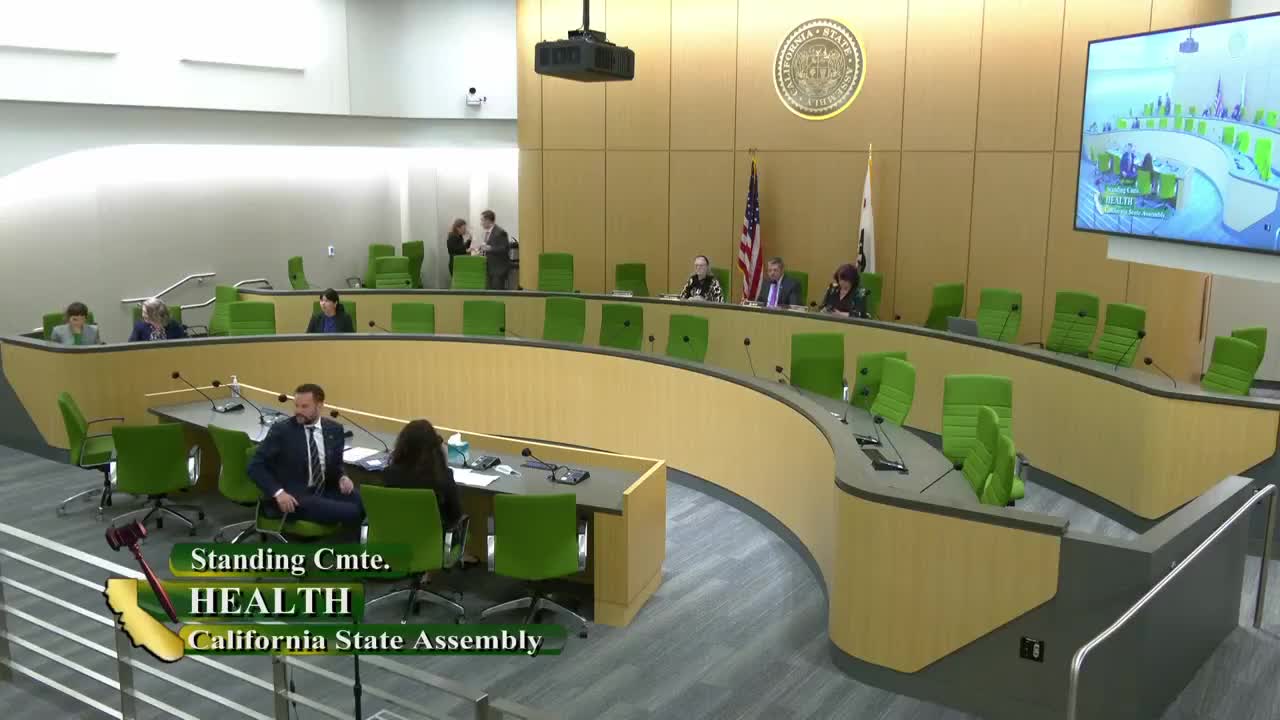 11MIN
Assembly Standing Committee on Health
Bill Author