AB 758: Firearms.
- Session Year: 2023-2024
- House: Assembly
- Latest Version Date: 2023-02-13
Current Status:
Failed
(2024-01-10: From committee: Without further action pursuant to Joint Rule 62(a).)
Introduced
In Committee
First Chamber
In Committee
Second Chamber
Enacted
What does this bill do?
The bill creates new prison sentence add-ons for people who are armed with or who use a firearm that lacks a valid state or federal serial number or identifying mark while committing or attempting a felony. It adds a consecutive two‑year term when a person is armed (including when a co‑participant is armed) and a consecutive three‑year term when a person personally uses such an unmarked firearm, and allows these penalties to be added on top of other weapon enhancements. It also adds a one‑year enhancement for people barred from owning guns (for example, certain convicted people or those treated for mental disorders) who possess an unmarked firearm.
The summary is provided by generative AI which can make mistakes. For original language, please view the details in the table below.
Existing law, commencing on January 1, 2024, prohibits the possession of a firearm that does not have a valid state or federal serial number or mark of identification. Existing law provides certain sentencing enhancements for persons who use or possess a firearm in the commission of certain crimes.
This bill would add an additional sentencing enhancement for persons who use or possess a firearm without a valid serial number or mark of identification during the commission of certain criminal offenses.
Existing law also prohibits certain persons who have been convicted of a criminal offense or have been treated for a mental disorder from possessing a firearm.
This bill would impose a sentencing enhancement for this offense if the firearm possessed does not have a valid serial number or mark of identification.
By adding new sentencing enhancements, this bill would impose a state-mandated local program.
The California Constitution requires the state to reimburse local agencies and school districts for certain costs mandated by the state. Statutory provisions establish procedures for making that reimbursement.
This bill would provide that no reimbursement is required by this act for a specified reason.
(a)Notwithstanding subdivision (c) of Section 1385, a person who, in the commission of a felony or attempted commission of a felony, is armed with a firearm that does not have a valid state or federal serial number or mark of identification as described in Section 17312, shall be punished by an additional and consecutive term of imprisonment pursuant to subdivision (h) of Section 1170 for two years unless the arming is an element of that offense. The additional term of this subdivision shall apply to any person who is a principal in the commission of a felony or attempted felony if one or more of the principals is armed with a firearm that does not have a valid state or federal serial number or mark of identification.
(b)Notwithstanding subdivision (c) of Section 1385, any person who, in the commission of a felony or attempted felony, personally uses a firearm that does not have a valid state or federal serial number or mark of identification as described in Section 17312, shall be punished by an additional and consecutive term of imprisonment in the state prison for three years.
(c)Notwithstanding subdivision (f) of Section 1170.1, the enhancements in this section may be imposed in addition to other enhancements for being armed with or using a dangerous or deadly weapon or firearm.
SEC. 2.Section 29807 is added to the Penal Code, to read:29807.(a)Notwithstanding subdivision (c) of Section 1385, any person who is within any of the classes prohibited by Chapter 2 (commencing with Section 29800) or Chapter 3 (commencing with Section 29900) of Division 9 of this title, or Section 8100 or 8103 of the Welfare and Institutions Code who owns, purchases, receives, or has in their custody or control any firearm that does not have a valid state or federal serial number or mark of identification as described in Section 17312 shall, in addition to any other penalties, be punished by an additional and consecutive term of imprisonment pursuant to subdivision (h) of Section 1170 for one year.
(b)Notwithstanding subdivision (f) of Section 1170.1, the enhancement in this section may be imposed in addition to other enhancements for being armed with or using a dangerous or deadly weapon or firearm.
SEC. 3.No reimbursement is required by this act pursuant to Section 6 of Article XIIIB of the California Constitution because the only costs that may be incurred by a local agency or school district will be incurred because this act creates a new crime or infraction, eliminates a crime or infraction, or changes the penalty for a crime or infraction, within the meaning of Section 17556 of the Government Code, or changes the definition of a crime within the meaning of Section 6 of Article XIIIB of the California Constitution.
|
Date
|
Status
|
|---|---|
| Jan 10, 2024 | From committee: Without further action pursuant to Joint Rule 62(a). |
| Jan 9, 2024 | In committee: Set, second hearing. Failed passage. |
| Mar 21, 2023 | In committee: Reconsideration granted. |
| Mar 21, 2023 | In committee: Set, first hearing. Failed passage. |
| Feb 23, 2023 | Referred to Com. on PUB. S. |
| Feb 14, 2023 | From printer. May be heard in committee March 16. |
| Feb 13, 2023 | Read first time. To print. |
|
Date
|
Description
|
Location
|
Votes
|
|
|---|---|---|---|---|
| Jan 9, 2024 | Do pass and be re-referred to the Committee on [Appropriations] | Assembly Standing Committee on Public Safety |
Failed |
|
| Mar 21, 2023 | Reconsideration. | Assembly Standing Committee on Public Safety |
Passed |
|
| Mar 21, 2023 | Do pass and be re-referred to the Committee on [Appropriations] | Assembly Standing Committee on Public Safety |
Failed |
This list shows positions taken on this bill by organizations on the date displayed, which is linked to the original source.
Positions by individuals are not included.
|
Organization
|
Position
|
Date
|
|---|---|---|
| Aclu California Action | * Against | Mar 21, 2023 |
| Arcadia Police Officers' Association | ** Support | |
| Burbank Police Officers' Association | ** Support | |
| California Coalition of School Safety Professionals | ** Support | |
| California District Attorneys Association | ** Support | |
| California Public Defenders Association | ** Against | |
| California State Sheriffs' Association | ** Support | |
| CLAREMONT POLICE OFFICERS ASSOCIATION | ** Support | |
| Corona Police Officers Association | ** Support | |
| Culver City Police Officers' Association | ** Support | |
| Deputy Sheriffs Association of Monterey County | ** Support | |
| Drug Policy Alliance | ** Against | |
| Ella Baker Center For Human Rights | ** Against | |
| Fullerton Police Officers' Association | ** Support | |
| Initiate Justice Action | ** Against | |
| Los Angeles County Professional Peace Officers Association | ** Support | |
| los angeles school police officers association | ** Support | |
| Murrieta Police Officers' Association | ** Support | |
| Newport Beach Police Association | ** Support | |
| Palos Verdes Police Officers Association | ** Support | |
| PLACER COUNTY DEPUTY SHERIFFS ASSOCIATION | ** Support | |
| Pomona Police Officers' Association | ** Support | |
| RIVERSIDE POLICE OFFICERS ASSOCIATION | ** Support | |
| Riverside Sheriffs' Association | ** Support | |
| San Francisco Public Defender | ** Against | |
| San Joaquin County | * Support | Mar 21, 2023 |
| San Joaquin Deputy District Attorney | * Support | Mar 21, 2023 |
| Santa Ana Police Officers Association | ** Support | |
| Sister Warriors Freedom Coalition | ** Against | |
| Smart Justice California, a project of Tides Advocacy | ** Against | |
| Upland Police Officers Association | ** Support |
Date of Hearing:
Chief Counsel: Sandy Uribe
ASSEMBLY COMMITTEE ON PUBLIC SAFETY
Kevin McCarty, Chair
ABPCA Bill Id:AB 758
Author:(Dixon) – As Introduced Ver:February 13, 2023
VOTE ONLY
SUMMARY:
Creates sentencing enhancements for persons who in the commission, or attempted commission, of a felony are armed with, or personally use, a ghost gun, and for specified persons who are prohibited from possessing firearms who possess ghost guns. Specifically, this bill:
1) Provides that any principal in a crime who is armed with a firearm that does not have a valid serial number or mark of identification during the commission, or attempted commission, of a felony shall be punished by an additional and consecutive two years in the county jail, unless arming is an element of the offense.
2) Provides that person who personally uses a firearm that does not have a valid serial number or mark of identification during the commission, or attempted commission, of a felony shall be punished by an additional and consecutive three years in the state prison.
3) States that this additional punishment shall be imposed notwithstanding the provision that a court shall dismiss an enhancement if it is in the furtherance of justice and does not endanger public safety.
4) States that this additional punishment may be imposed notwithstanding the limitation on imposing more than one enhancement for being armed or using a firearm in the commission of a single offense.
5) Provides that any person who is prohibited from possessing a firearm by virtue of having a prior felony conviction or a mental disorder, as specified, shall be punished by an additional year in the county jail if the firearm in their possession does not have a valid serial number or mark of identification.
6) States that this additional punishment shall be imposed notwithstanding the provision that a court shall dismiss an enhancement if it is in the furtherance of justice and does not endanger public safety.
7) States that this additional punishment may be imposed notwithstanding the limitation on imposing more than one enhancement for being armed or using a firearm in the commission of a single offense.
EXISTING LAW:
- Imposes an additional term of imprisonment of one year for committing or attempting to commit a felony while armed with a firearm. If the firearm is an assault weapon, a machine gun, or a .50 BMG rifle, then the additional term is three year. (Pen. Code, § 12022, subd. (a).)
- Imposes an additional term of 3, 4, or 10 years for personally using a firearm in the commission or attempted commission of a felony, unless the use of a firearm is an element of the offense for which he or she is convicted. A person who personally uses an assault weapon or machine gun during the commission, or attempted commission, of a felony is subject to an additional consecutive term of 5, 6 or 10 years in state prison. (Pen. Code, § 12022.5, subds. (a) & (b).)[1]
- Imposes an additional term of imprisonment of three, four, or five years for committing or attempting to commit specified drug offenses while armed with a firearm (Pen. Code, § 12022, subd. (c).)
- Imposes an additional term of imprisonment of one, two, or three years for carrying a loaded or unloaded firearm during the commission or attempted commission of a street gang crime. If the perpetrator also has a detachable magazine, the additional term is of imprisonment is two, three, or four years. (Pen. Code, § 12021.5, subds. (a) & (b).)
- Imposes an additional term of imprisonment of one, two, or five years for committing, or attempting to commit, specified sex offenses while armed with a firearm. If the perpetrator uses the firearm, the additional punishment is 3, 4, or 10 years. (Pen. Code, § 12022.3.)
- Imposes an additional term of imprisonment of one, two, or three years for furnishing, or offering to furnish, a firearm to another for purposes of aiding, abetting, or enabling the commission or attempted commission of a felony. (Pen. Code, § 12022.4.)
- Provides for the 10-20-life firearm law. A person who personally uses a firearm, whether or not the firearm was operable or loaded, during the commission of certain enumerated offenses[2] is subject to an additional consecutive term of 10 years in prison. If the firearm is personally and intentionally discharged during the crime, the defendant is subject to an additional consecutive term of 20 years in prison. If discharging the firearm results in great bodily injury (GBI) or death, the defendant is subject to an additional, consecutive term of 25-years-to-life in prison.[3] (Pen. Code, § 12022.53, subds. (b)-(d).)
- Provides that if the offense is gang-related, the 10-20-life firearm enhancements shall apply to every principal in the commission of the offense. An enhancement for participation in a criminal street gang shall not be imposed in addition to an enhancement under this provision, unless the person personally used or personally discharged a firearm in the commission of the specified offense. (Pen. Code, § 12022.53, subds. (e)(1) & (e)(2).)
- Provides that only one additional term of imprisonment under the 10-20-life firearm law shall be imposed per person per crime. An enhancement for use of a firearm shall not be imposed on a person in addition to an enhancement under this provision. (Pen. Code, § 12022.53, subd. (f).)
- Imposes an additional term of imprisonment for discharging a firearm from a motor vehicle in the commission or attempted commission of a felony (Pen. Code, § 12022.55.)
- Imposes an additional term of punishment for the improper transfer of a firearm which is subsequently used in the commission of a felony offense resulting in conviction. (Pen. Code, § 27590, subd. (d).)
- States that notwithstanding any other law, a person who commits another crime with while violating the assault weapons ban, shall receive an additional and consecutive one-year enhancement. (Pen. Code, § 30615.)
- States that when two or more enhancements may be imposed for being armed with or using a a firearm in the commission of a single offense, only the greatest of those enhancements shall be imposed for that offense. (Pen. Code, § 1170.1, subd, (f).)
- Provides that any person who changes, alters, removes, or obliterates the name of the maker, model, manufacturer’s number, or other mark of identification, including any distinguishing number or mark assigned by the Department of Justice (DOJ), on any pistol, revolver, or any other firearm, without first having secured written permission from the department to make that change, alteration, or removal is guilty of a felony punishably by imprisonment in the county jail. (Pen. Code, § 23900.)
- Provides that any person who buys, sells, receives, or possesses a firearm knowing that the serial number or other mark of identification has been changed, altered, or removed, is guilty of a misdemeanor. (Pen. Code, § 23920.)
- Requires, beginning July 1, 2018, a person manufacturing or assembling a firearm to apply to the DOJ for a unique serial number or other mark of identification for that firearm. Punishes the failure to obtain a serial number from DOJ as a misdemeanor. (Pen. Code, § 29180.)
- States that, notwithstanding any other law, the sentencing court “shall dismiss” an enhancement “if it is in the furtherance of justice to do so” except if dismissal of that enhancement is prohibited by any initiative statute. (Pen. Code, § 1385, subd. (c)(1).)
- Instructs the court to consider specified factors in determining whether it is in the interests of justice to dismiss an enhancement, and requires the court to consider and afford great weight to evidence offered by the defendant to prove that any of the mitigating circumstances are present. (Pen. Code, § 1385, subd. (c)(2)-(3).)
- States that proof of the presence of one or more of those mitigating circumstances weighs greatly in favor of dismissing the enhancement, unless the court finds that dismissal of the enhancement would “endanger public safety,” meaning that there is a likelihood that the dismissal of the enhancement would result in physical injury or other serious danger to others. (Pen. Code, § 1385, subd. (c)(2).)
FISCAL EFFECT:
Unknown
COMMENTS:
- Author's Statement: According to the author, “AB 758 will create an additional enhancement for the possession of an unserialized or unregistered ‘ghost’ guns at the time a felony is committed. A felony committed by a person possessing a firearm that does not have a registered serial number as stated by Section 17312 will be subject to consecutive additional imprisonment: two years if the firearm is in possession during the felony and three years if the firearm is used in the commission of a felony or attempted felony. In addition, because of the lack of identification of ghost guns, it makes it nearly impossible to trace these guns back to an individual dealer or purchaser. Enhanced sentencing for individuals who use ghost guns while committing unlawful acts will deter serious crime in our communities.”
- Need for this Bill: The stated need for the increased penalties proposed by this bill is the proliferation of ghost guns and their use in committing crimes.
As the author recognizes, recovery of a ghost gun is usually in connection with the commission of another crime. Moreover, possessing a firearm that does not have a valid serial number or mark of identification is a separate offense which can also be charged. (Pen. Code, § 23920, subd. (b).) And changing, altering, removing, or obliterating the identification markers on a firearm, whether assigned by the DOJ or placed there by the manufacturer, is another distinct crime. (Pen. Code, § 23900.)
Besides these stand-alone offenses related to ghost guns, the conduct addressed by this bill can often be further enhanced by any number of existing sentence enhancements. The punishments can range from one year for committing a felony while armed with a firearm to a life term for committing specified felonies and intentionally discharging a firearm resulting in great bodily injury or death. (See e.g., Pen. Code, §§ 12022, subd. (a), & 12022.53, subd. (d).) “Often the enhancement for gun use is longer than the sentence for the crime itself. For example, in the case of second-degree robbery, a person could serve a maximum of five years for the robbery and an extra 10 years for brandishing a gun during the robbery, even if the gun was unloaded or otherwise inoperable.” (California Budget and Policy Center (2015) Sentencing in California: Moving Toward a Smarter, More Cost-Effective Approach.)
Thus, in the event that a person who possesses a ghost gun uses it in the commission of another crime, that person will already face punishment for that other more serious crime as well as likely face punishment for a gun-use enhancement. Accordingly, the proposed increased criminal penalties for use of a ghost gun during the commission of a crime are unlikely to have the desired impact.
According the U.S. Department of Justice, “Laws and policies designed to deter crime by focusing mainly on increasing the severity of punishment are ineffective partly because criminals know little about the sanctions for specific crimes. More severe punishments do not ‘chasten’ individuals convicted of crimes, and prisons may exacerbate recidivism.” (National Institute of Justice, U.S. Department of Justice, Five Things About Deterrence (June 5, 2016) https://nij.ojp.gov/topics/articles/five-things-about-deterrence [as of Dec. 28, 2023]) As such, increasing the penalty for ghost gun possession is unlikely to deter criminal conduct or reduce the prevalence of ghost guns in our communities. - Judicial Discretion to Strike Enhancements: Penal Code section 1385 specifies that a judge may, in furtherance of justice, order an action to be dismissed. That provision has been interpreted to allow courts broad discretion to strike enhancements in order to provide individualized sentencing to a defendant. "Section 1385 has long been recognized as an essential tool to enable a trial court 'to properly individualize the treatment of the offender.'" (People v. Tanner (1979), 24 Cal.3d 514, 530.) “It was designed to alleviate ‘mandatory, arbitrary or rigid sentencing procedures [which] invariably lead to unjust results.’" (People v. Dorsey (1972), 28 Cal.App.3d 15, 18.) "Society receives maximum protection when the penalty, treatment or disposition of the offender is tailored to the individual case. Only the trial judge has the knowledge, ability and tools at hand to properly individualize the treatment of the offender." (People v. Williams (1970) 30 Cal.3d 470, 482, citation and internal quotation marks omitted.) One of the purposes of Section 1385 is to ensure that sentences are proportional to a defendant’s conduct.
Effective January 1, 2022, SB 81 (Skinner) Chapter 721, Statutes of 2021, Penal Code section 1385, subdivision (c) provides that a court “shall dismiss” an enhancement if it is in the furtherance of justice to do so, unless any initiative statute prohibits such action, and unless dismissal endangers public safety. (See People v. Mendoza (2023) 88 Cal.App.5th 427 [section 1385, subdivision (c)(2)(C) does not mandate dismissal of an enhancement that could result in a sentence over 20 years where the trial court finds dismissal would endanger public safety].)
In exercising discretion under section 1385, subdivision (c), the court must give great weight to evidence offered by the defendant to prove any of mitigating circumstances, unless the court finds that dismissal would endanger public safety. Examples of mitigating circumstances include: where the enhancement would result in discriminatory racial impact; where multiple enhancements are alleged in a single case; where the enhancement could result in a sentence exceeding 20 years; and where the enhancement is based on a prior conviction that is over five years old.
This bill eliminates judicial authority under Penal Code section 1385, subdivision (c) to dismiss the proposed ghost gun enhancement. This bill specifies that the ghost gun enhancements must be imposed notwithstanding any discretion the trial court has to dismiss the enhancements under the provision of law.
- Limitations on Imposition of Firearm Enhancements: Two statutes limit the imposition of more than one firearm enhancement when two or more enhancements for being armed with, or using, a firearm have been plead and proven in conjunction with commission of a single offense, and require the sentencing judge to impose sentence on the firearm enhancement with the longer sentence. First, there is a general limitation on enhancements for being armed with or using a dangerous or deadly weapon or a firearm in the commission of most offenses (See Pen. Code, § 1170.1, subds. (f).) Second, there is a similar limitation in the “Use of a Gun and You’re Done” Law which applies only to the offenses covered by that law. (Pen. Code, § 12022.53, subd. (f).)
Despite this longstanding rule of sentencing, this bill would allow the court to stack the punishment for firearm enhancements due to the fact that the firearm does not have a serialized number. Specifically, this bill states that notwithstanding Penal Code section 1170.1, subdivision (f), the ghost gun use enhancements may be imposed in addition to other enhancements for being armed with or using a dangerous or deadly weapon or firearm. However, because the bill does not specifically exclude the limitation in the “Use of a Gun and You’re Done” Law, the ghost gun use enhancement could not be stacked when a section 12022.53 enhancement is imposed. - Penal Code Section 654 Limitation on Double Punishment: Penal Code section 654 provides, in relevant part, that “[a]n act or omission that is punishable in different ways by different provisions of law may be punished under either of such provisions, but in no case shall the act or omission be punished under more than one provision.”
Penal Code section 654 was enacted to prohibit double punishment of a single act that violates multiple statutes. The prohibition is on double punishment, not double conviction. (People v. Johnson (1966) 242 Cal.App. 2d 870, 876.) The prohibition applies even if the punishments were to be run concurrently. (People v. Diaz (1967) 66 Cal.2d 801, 807.)
In People v. Ahmed (2011) 53 Cal.4th 156, the California Supreme Court addressed the question of whether Penal Code section 654 prohibits imposition of more than one enhancement for the same underlying criminal act. The court noted that “enhancements are different from substantive crimes” in that they often “focus on aspects of the criminal act that are not always present and warrant additional punishment.” (People v. Ahmed, supra, 53 Cal.4th at p. 163, fn. omitted.) This difference “affects how section 654 applies to enhancements.” (Ibid.) The court explained how to determine whether any of multiple sentence enhancements for a single crime must be stayed.
As a preliminary matter, the court noted that there are two types of enhancements: those which enhance a sentence due to the defendant’s status, and those which arise from the circumstances of the crime. (People v. Ahmed, supra, 53 Cal.4th at p. 161.) The court reiterated its prior holding in People v. Coronado (1995) 12 Cal.4th 145, that section 654 does not apply to the first type of enhancement—those that go to the nature of the offender. (Id. at p. 162.)
With regards to enhancements concerning the circumstances of the crime, the court observed that “often the sentencing statutes themselves will supply the answer whether multiple enhancements can be imposed.” (People v. Ahmed, supra, 53 Cal.4th at p. 163.) Only if the specific statute itself does not provide the answer, should the court turn to section 654.” (Ibid.) The court held that “as a default, section 654 does apply to enhancements when the specific statutes do not provide the answer.” The court reasons that section 654’s language states that it applies to “provisions of law” under which an “act or omission” is “punishable,” and this language would encompass enhancements. (Ibid.)
When applying section 654 to enhancements, the court found it significant that while substantive crimes define criminal acts, enhancements focus on different aspects of the criminal acts. (People v. Ahmed, supra, 53 Cal.4th at pp. 163-164.) The court held that “when applied to multiple enhancements for a single crime, section 654 bars multiple punishment for enhancements the same aspect of a criminal act.” (Id. at p. 164.) The court noted as an example of separate enhancements that focus on the same aspect of a criminal act numerous weapons enhancements, and specifically cited to several firearm-use enhancements. (Ibid.)
Thus, under the Supreme Court’s holding in Ahmed, supra, 53 Cal.4th 156, Penal Code section would prohibit the imposition of one of the newly created ghost-gun-use enhancement and another firearm-use enhancement because otherwise that would result in multiple punishment for the same aspect of the criminal act- using a firearm. - Enhancements and Proposition 57: Proposition 57, the Public Safety and Rehabilitation Act of 2016, created a process for parole consideration for eligible people convicted of nonviolent crimes. Those who demonstrate that their release would not pose an unreasonable risk of violence to the community may be eligible for release upon serving the full term of their primary offense when an alternative sentence has been imposed. This effectively means that people who are eligible for consideration for parole release under Proposition 57 may be released prior to serving the time added by a sentence enhancement if they do not present a risk to public safety.
Proposition 57 adopted California Constitution, Article I, section 32, which states:
(a)(1) Parole Consideration: Any person convicted of a nonviolent felony offense and sentenced to state prison shall be eligible for parole consideration after completing the full term for his or her primary offense.
(A) For purposes of this section only, the full term for the primary offense means the longest term of imprisonment imposed by the court for any offense, excluding the imposition of an enhancement, consecutive sentence, or alternative sentence.
….
(b) The Department of Corrections and Rehabilitation shall adopt regulations in furtherance of these provisions, and the Secretary of the Department of Corrections and Rehabilitation shall certify that these regulations protect and enhance public safety.
Nonviolent offender parole eligibility is based on a person’s current convictions. (In re Gadlin (2020) 10 Cal.5th 915, 943.) CDCR regulations define a “violent felony” for purposes of early parole consideration as a crime or enhancement listed in Penal Code section 667.5, subdivision (c). (Cal. Code Regs., tit. 15, § 3490, subd. (c)). The ballot materials provide support for this interpretation. (See In re Mohammad (2022) 12 Cal.5th 518, 542.) In its classification of “violent felony,” Penal Code 667.5 includes “any felony in which the defendant uses a firearm which use has been charged and proved as provided in subdivision (a) of [Penal Code] Section 12022.3, or Section 12022.5 or 12022.55.” (Pen. Code, § 667.5, subd. (c)(8).)
This bill creates new enhancements which, while related to being armed with or using a firearm, would not render an offense a violent felony under Penal Code section 667.5. So, as a practical matter, a person committing a non-violent felony would be eligible for Proposition 57 non-violent offender parole and would not necessarily serve the sentence for the enhancement despite their mandatory nature.
- Frequency of Imposition of Firearm Enhancements: According to the 2020 Annual Report by the Committee on the Revision of the Penal Code, over 80% of the people sentenced to state prison are serving a sentence lengthened by an enhancement, with some of the most common enhancements including firearm-use enhancements. (See Annual Report and Recommendations 2020, Committee on Revision of the Penal Code, at p. 37-38, http://www.clrc.ca.gov/CRPC/Pub/Reports/CRPC_AR2020.pdf [as of Dec. 29, 2023].)
More recent research conducted by the California Policy Lab at the University of California and the Committee on Revision of the Penal Code, as of July 2022, shows that individuals incarcerated at CDCR were serving the following numbers of the most common firearm enhancements:
PC 12022(a) | Armed with a Firearm | 3,364 |
PC 12022.5(a) | Use of a Firearm | 15,231 |
PC 12002.53(b) | Use of a Firearm | 11,745 |
PC 12002.53(c) | Discharge of a Firearm | 3,908 |
PC 12002.53(d) | Discharge Causing Great Bodily Injury or Death | 8,168 |
(See M. Bird et al., Sentence Enhancements in California, March 2023, p. 50. Table B-2, https://www.capolicylab.org/sentence-enhancements-in-california/ [as of Dec. 28, 2023].)
“Sentence enhancements are more likely to be applied to men. Black people and American Indian individuals are the most likely to be receive enhanced sentences, followed by Hispanic people, White people, and Asian or Pacific Islander people.” (Id. at p. 3.)
- Argument in Support: According to the California State Sheriffs’ Association, “Commencing on January 1, 2024, individuals in California will be prohibited from using or possessing firearms without a valid state or federal serial number or mark of identification,
otherwise known as “ghost guns.” Currently, California has a number of statutes that provide sentence enhancements for defendants who are convicted of possessing a firearm in the commission of certain felonies.
“AB 758 ensures that individuals found in possession of “ghost guns” in the commission of a
felony receive a similar penalty to those who commit a felony with a registered, serialized
firearm.”
- Argument in Opposition: According to the California Public Defenders Association, “While eliminating so called 'ghost guns' is a worthy endeavor, imprisoning more Californians is not the solution. We have already seen what mass incarceration has done to black and brown Californians and their families. Resources were diverted to imprison people, while California schools, health care and housing went wanting for adequate funding.
“Adopting a public health approach to the pandemic of guns in our state would be more cost effective and humane. California has reduced smoking by a combination of taxes on cigarettes, bans on smoking in public spaces and education. Such a multi-pronged strategy should be employed to reduce the number of ghost guns in California.
“Also, the Legislature should consider allowing individuals to bring public nuisance lawsuits against individuals and companies who manufacture ghost guns or ghost gun manufacturing equipment. Serious financial penalties are more likely to deter these individuals and their companies than criminal penalties against the unwitting individual who possesses such a weapon.
“AB 758 is not needed. There are already sufficient penalties for any individual who commits a crime while armed with any kind of firearm or using a firearm. These penalties range from an addition year in county jail or state prison to 25 years to life in state prison depending on the seriousness of the offense.” - Prior Legislation:
- AB 27 (Ta), of the 2023-2024 Legislative Session, would have exempted specified firearm enhancements from the provision of law that states a court shall dismiss an enhancement if it is in the furtherance of justice and does not endanger public safety. AB 27 failed passage in this committee.
- AB 97 (Rodriguez), Chapter 233, Statutes of 2023, requires the DOJ to report data on arrests and prosecutions of specified misdemeanor offenses related to unserialized firearms.
- AB 328 (Essayli), of the 2023-2024 Legislative Session, would have prohibited the court from dismissing an enhancement for personal use of a firearm in the commission of certain violent crimes, except when the person did not personally use or discharge the firearm or when the firearm was unloaded. AB 328 failed passage in this committee and reconsideration was refused.
- AB 1509 (Lee), of the 2021-2022 Legislative Session, would have repealed several firearm enhancements, reduced the penalty for using a firearm in the commission of specified crimes from 10 years, 20 years, or 25-years-to-life to one, two or three years, and authorized recall and resentencing for a person serving a term for these enhancements. AB 1509 was held in the Assembly Appropriations Committee.
- SB 620 (Bradford), Chapter 682, Statutes of 2017, allows a court, in the interest of justice, to strike or dismiss a firearm enhancement which otherwise adds a state prison term of three, four, or 10 years, or five, six, or 10 years, depending on the firearm, or a state prison term of 10 years, 20 years, or 25-years-to-life depending on the underlying offense and manner of use.
- AB 27 (Ta), of the 2023-2024 Legislative Session, would have exempted specified firearm enhancements from the provision of law that states a court shall dismiss an enhancement if it is in the furtherance of justice and does not endanger public safety. AB 27 failed passage in this committee.
REGISTERED SUPPORT / OPPOSITION:
Support
Arcadia Police Officers' Association
Burbank Police Officers' Association
California Coalition of School Safety Professionals
California District Attorneys Association
California State Sheriffs' Association
Claremont Police Officers Association
Corona Police Officers Association
Culver City Police Officers' Association
Deputy Sheriffs' Association of Monterey County
Fullerton Police Officers' Association
Los Angeles County Professional Peace Officers Association
Los Angeles School Police Officers Association
Murrieta Police Officers' Association
Newport Beach Police Association
Palos Verdes Police Officers Association
Placer County Deputy Sheriffs' Association
Pomona Police Officers' Association
Riverside Police Officers Association
Riverside Sheriffs' Association
Santa Ana Police Officers Association
Upland Police Officers Association
Oppose
California Public Defenders Association
Drug Policy Alliance
Ella Baker Center for Human Rights
Initiate Justice Action
San Francisco Public Defender
Sister Warriors Freedom Coalition
Smart Justice California, a Project of Tides Advocacy
Analysis Prepared by:
Sandy Uribe / PUB. S. / (916) 319-3744
The firearm need not be operable or loaded. (People v. Nelums (1982) 31 Cal.3d 355, 360; see People v. Steele (1991) 235 Cal.App.3d 788, 791–795.) Someone personally uses a firearm if he or she intentionally displays the firearm in a menacing manner, hits someone with the firearm, or fires the firearm. (People v. Bland (1995) 10 Cal.4th 991, 997; People v. Johnson (1995) 38 Cal.App.4th 1315, 1319–1320; see also Pen. Code, § 1203.06, subd. (b)(2).)
↑The felonies which trigger the enhancements under the 10-20-life firearm law are: murder; mayhem, kidnapping; robbery; carjacking; assault with intent to commit a specified felony; assault with a firearm on a peace officer or firefighter; specified sex offenses; assault by a life prisoner; assault by a prisoner; holding a hostage by a prisoner; any felony punishable by death or life imprisonment; and any attempt to commit one of these crimes other than assault. (Pen. Code, § 12022.53, subd. (a).) ↑
The felonies which trigger the 25-to-life enhancement also include discharge of a firearm at an inhabited dwelling and willfully and maliciously discharging a firearm from a motor vehicle. (Pen. Code, § 12022.53, subd. (d).) ↑
Date of Hearing:
Chief Counsel: Sandy Uribe
ASSEMBLY COMMITTEE ON PUBLIC SAFETY
Reginald Byron Jones-Sawyer, Sr., Chair
ABPCA Bill Id:AB 758
Author:(Dixon) – As Introduced Ver:February 13, 2023
SUMMARY:
Creates sentencing enhancements for persons who in the commission, or attempted commission, of a felony are armed with a ghost gun and for specified persons who are prohibited from possessing firearms who possess ghost guns. Specifically, this bill:
- Provides that any principal in a crime who is armed with a firearm that does not have a valid serial number or mark of identification during the commission, or attempted commission, of a felony shall be punished by an additional and consecutive two years in the county jail, unless arming is an element of the offense.
- Provides that person who personally uses a firearm that does not have a valid serial number or mark of identification during the commission, or attempted commission, of a felony shall be punished by an additional and consecutive three years in the state prison.
- States that this additional punishment shall be imposed notwithstanding the provision that a court shall dismiss an enhancement if it is in the furtherance of justice and does not endanger public safety.
- States that this additional punishment may be imposed notwithstanding the limitation on imposing more than one enhancement for being armed or using a firearm in the commission of a single offense.
- Provides that any person who is prohibited from possessing a firearm by virtue of having a prior felony conviction or a mental disorder, as specified, shall be punished by an additional year in the county jail if the firearm in their possession does not have a valid serial number or mark of identification.
- States that this additional punishment shall be imposed notwithstanding the provision that a court shall dismiss an enhancement if it is in the furtherance of justice and does not endanger public safety.
- States that this additional punishment may be imposed notwithstanding the limitation on imposing more than one enhancement for being armed or using a firearm in the commission of a single offense.
EXISTING LAW:
- Imposes an additional term of imprisonment for carrying a loaded or unloaded firearm during the commission or attempted commission of a street gang crime. (Pen. Code, § 12021.5, subds. (a) & (b).)
- Imposes an additional term of imprisonment for committing or attempting to commit a felony while armed with a firearm. (Pen. Code, § 12022.)
- Imposes an additional term of imprisonment for committing or attempting to commit specified sex offenses while armed with a firearm. (Pen. Code, § 12022.3.)
- Imposes an additional term of imprisonment for furnishing or offering to furnish a firearm to another for purposes of aiding, abetting, or enabling the commission or attempted commission of a felony. (Pen. Code, § 12022.4.)
- Provides that any person who personally uses a firearm in the commission or attempted commission of a felony, in addition and consecutive to the punishment for the underlying felony offense, shall be sentenced to a term of 3, 4, or 10 years in state prison, unless the use of a firearm is an element of the offense for which he or she is convicted. A person who personally uses an assault weapon or machine gun during the commission of a felony or attempted felony is subject to an additional consecutive term of 5, 6 or 10 years in state prison. (Pen. Code, § 12022.5, subds. (a) & (b).)[1]
- Provides for the 10-20-life firearm law. A person who personally uses a firearm, whether or not the firearm was operable or loaded, during the commission of certain enumerated offenses[2] is subject to an additional consecutive term of 10 years in prison. If the firearm is personally and intentionally discharged during the crime, the defendant is subject to an additional consecutive term of 20 years in prison. If discharging the firearm results in great bodily injury (GBI) or death, the defendant is subject to an additional, consecutive term of 25-years-to-life in prison.[3] (Pen. Code, § 12022.53, subds. (b)-(d).)
- Provides that if the offense is gang-related, the 10-20-life firearm enhancements shall apply to every principal in the commission of the offense. An enhancement for participation in a criminal street gang shall not be imposed in addition to an enhancement under this provision, unless the person personally used or personally discharged a firearm in the commission of the specified offense. (Pen. Code, § 12022.53, subds. (e)(1) & (e)(2).)
- Provides that only one additional term of imprisonment under the 10-20-life firearm law shall be imposed per person per crime. An enhancement for use of a firearm shall not be imposed on a person in addition to an enhancement under this provision. (Pen. Code, § 12022.53, subd. (f).)
- Imposes an additional term of imprisonment for discharging a firearm from a motor vehicle in the commission or attempted commission of a felony (Pen. Code, § 12022.55.)
- Imposes an additional term of punishment for the improper transfer of a firearm which is subsequently used in the commission of a felony offense resulting in conviction. (Pen. Code, § 27590, subd. (d).)
- States that notwithstanding any other law, a person who commits another crime with while violating the assault weapons ban, shall receive an additional and consecutive one-year enhancement. (Pen. Code, § 30615.)
- States that when two or more enhancements may be imposed for being armed with or using a a firearm in the commission of a single offense, only the greatest of those enhancements shall be imposed for that offense. (Pen. Code, § 1170.1, subd, (f).)
- Provides that any person who changes, alters, removes, or obliterates the name of the maker, model, manufacturer’s number, or other mark of identification, including any distinguishing number or mark assigned by the Department of Justice (DOJ), on any pistol, revolver, or any other firearm, without first having secured written permission from the department to make that change, alteration, or removal is guilty of a felony punishably by imprisonment in the county jail. (Pen. Code, § 23900.)
- Provides that any person who buys, sells, receives, or possesses a firearm knowing that the serial number or other mark of identification has been changed, altered, or removed, is guilty of a misdemeanor. (Pen. Code, § 23920.)
- Requires, beginning July 1, 2018, a person manufacturing or assembling a firearm to apply to the DOJ for a unique serial number or other mark of identification for that firearm. Punishes the failure to obtain a serial number from DOJ as a misdemeanor. (Pen. Code, § 29180.)
- States that, notwithstanding any other law, the sentencing court “shall dismiss” an enhancement “if it is in the furtherance of justice to do so” except if dismissal of that enhancement is prohibited by any initiative statute. (Pen. Code, § 1385, subd. (c)(1).)
- Instructs the court to consider specified factors in determining whether it is in the interests of justice to dismiss an enhancement, and requires the court to consider and afford great weight to evidence offered by the defendant to prove that any of the mitigating circumstances are present. (Pen. Code, § 1385, subd. (c)(2)-(3).)
- States that proof of the presence of one or more of those mitigating circumstances weighs greatly in favor of dismissing the enhancement, unless the court finds that dismissal of the enhancement would “endanger public safety,” meaning that there is a likelihood that the dismissal of the enhancement would result in physical injury or other serious danger to others. (Pen. Code, § 1385, subd. (c)(2).)
FISCAL EFFECT:
Unknown
COMMENTS:
- Author's Statement: According to the author, “AB 758 will create an additional enhancement for the possession of an unserialized or unregistered ‘ghost’ guns at the time a felony is committed. A felony committed by a person possessing a firearm that does not have a registered serial number as stated by Section 17312 will be subject to consecutive additional imprisonment: two years if the firearm is in possession during the felony and three years if the firearm is used in the commission of a felony or attempted felony. In addition, because of the lack of identification of ghost guns, it makes it nearly impossible to trace these guns back to an individual dealer or purchaser. Enhanced sentencing for individuals who use ghost guns in while committing unlawful acts will deter serious crime in our communities.”
- Need for this Bill: The stated need for the increased penalties proposed by this bill is the proliferation of ghost guns and their use in committing crimes.
As the author of this bill recognizes, recovery of these firearms is usually in connection with the commission of another crime. Therefore, in the likely event that the person who possesses a ghost gun used it in the commission of another crime, that person will already face punishment for that other, more serious, crime as well as likely face punishment for a gun-use enhancement. Moreover, it should be noted that changing, altering, removing, or obliterating the identification markers on a firearm, whether assigned by the DOJ or placed there by the manufacturer, is a separate offense. (See Pen. Code, § 23900.)
Increased criminal penalties for use of a ghost gun during the commission of a crime are unlikely to have the desired impact. According the U.S. Department of Justice, “Laws and policies designed to deter crime by focusing mainly on increasing the severity of punishment are ineffective partly because criminals know little about the sanctions for specific crimes. More severe punishments do not ‘chasten’ individuals convicted of crimes, and prisons may exacerbate recidivism.” (National Institute of Justice, U.S. Department of Justice, Five Things About Deterrence (June 5, 2016) https://nij.ojp.gov/topics/articles/five-things-about-deterrence [as of March 5, 2023]) As such, increasing the penalty for ghost gun possession is unlikely to deter criminal conduct or reduce the prevalence of ghost guns in our communities.
Similarly, in a 2014 report, the Little Hoover Commission addressed the disconnect between science and sentencing: putting away offenders for increasingly longer periods of time, with no evidence that lengthy incarceration, for many, brings any additional public safety benefit. The report also explains how California’s sentencing structure and enhancements contributed to a 20-year state prison building boom. (Sensible Sentencing for Safer California, Little Hoover Commission, Feb. 2014, available at: http://lhc.ca.gov/sites/lhc.ca.gov/files/Reports/219/Report219.pdf [as of March 5, 2023].)
- Limitations on Imposition of Enhancements: Under existing law, when two or more enhancements for being armed with, or using, a firearm have been plead and proven with regards to the commission of a single offense, at sentencing the trial is limited to imposing sentence on only one of the enhancements, and directed to impose sentence on the one with the longer sentence. (Pen. Code, § 1170.1, subd, (f).) Despite this longstanding rule of sentencing, this bill would allow the court to impose a sentence on the ghost gun enhancement as well as the other firearm-use enhancement.
In addition to permitting the stacking of firearm enhancements, this bill eliminates judicial authority under Penal Code section 1385, subdivision (c) to dismiss this new ghost gun enhancement. In general, “[s]ection 1385 has long been recognized as an essential tool to enable a trial court 'to properly individualize the treatment of the offender.'" (People v. Tanner (1979), 24 Cal.3d 514, 530.) “It was designed to alleviate ‘mandatory, arbitrary or rigid sentencing procedures [which] invariably lead to unjust results.’" (People v. Dorsey (1972), 28 Cal.App.3d 15, 18.) “Society receives maximum protection when the penalty, treatment or disposition of the offender is tailored to the individual case. Only the trial judge has the knowledge, ability and tools at hand to properly individualize the treatment of the offender.” (People v. Williams (1970) 30 Cal.3d 470, 482, citation and internal quotation marks omitted.) One of the purposes of section 1385 is to ensure that sentences are proportional to a defendant’s conduct. Effective January 1, 2022, SB 81 (Skinner) Chapter 721, Statutes of 2021, Penal Code section 1385, subdivision (c) provides that a court “shall dismiss” an enhancement if it is in the furtherance of justice to do so, unless any initiative statute prohibits such action, and unless dismissal endangers public safety. (See People v. Mendoza (2023) 88 Cal.App.5th 427 [section 1385, subdivision (c)(2)(C) does not mandate dismissal of an enhancement that could result in a sentence over 20 years where the trial court finds dismissal would endanger public safety].)
In exercising discretion under section 1385, subdivision (c), the court must give great weight to evidence offered by the defendant to prove any of mitigating circumstances, unless the court finds that dismissal would endanger public safety. Examples of mitigating circumstances include where: the enhancement would result in discriminatory racial impact; where multiple enhancements are alleged in a single case; where the enhancement could result in a sentence exceeding 20 years; and where the enhancement is based on a prior conviction that is over five years old. The statute allows a court to exercise this discretion before, during, or after trial or entry of plea as well as at sentencing. This bill would specify that the ghost gun enhancements must be imposed notwithstanding any discretion the trial court has to dismiss the enhancements under the provision of law. - Enhancements and Proposition 57: In November 2016, California voters overwhelmingly passed Proposition 57, the Public Safety and Rehabilitation Act of 2016 (Prop. 57). Prop. 57, created a process for parole consideration for eligible people convicted of nonviolent crimes. Those who demonstrate that their release would not pose an unreasonable risk of violence to the community may be eligible for release upon serving the full term of their primary offense when an alternative sentence has been imposed. Prop. 57 also gave the California Department of Corrections and Rehabilitation (CDCR) new authority to award certain credits that reduce the length of state prison sentences.
Propostion 57 adopted California Constitution, Article I, section 32, which states:
(a)(1) Parole Consideration: Any person convicted of a nonviolent felony offense and sentenced to state prison shall be eligible for parole consideration after completing the full term for his or her primary offense.
(A) For purposes of this section only, the full term for the primary offense means the longest term of imprisonment imposed by the court for any offense, excluding the imposition of an enhancement, consecutive sentence, or alternative sentence.
….
(b) The Department of Corrections and Rehabilitation shall adopt regulations in furtherance of these provisions, and the Secretary of the Department of Corrections and Rehabilitation shall certify that these regulations protect and enhance public safety.
Nonviolent offender parole eligibility is based on an inmate's current convictions. (In re Gadlin (2020) 10 Cal.5th 915, 943.) CDCR regulations define a “violent felony” for purposes of early parole consideration as a crime or enhancement listed in Penal Code section 667.5, subdivision (c). (Cal. Code Regs., tit. 15, § 3490, subd. (c)). The ballot materials provide support for this interpretation. (See In re Mohammad (2022) 12 Cal.5th 518, 542.) In its classification of “violent felony,” Penal Code 667.5 includes “any felony in which the defendant uses a firearm which use has been charged and proved as provided in subdivision (a) of [Penal Code] Section 12022.3, or Section 12022.5 or 12022.55.” (Pen. Code, § 667.5, subd. (c)(8).)
This bill creates two new enhancements which while related to use of a firearm, would not render an offense a violent felony under Penal Code section 667.5. So, as a practical matter, a person committing a non-violent felony would be eligible for Prop. 57 non-violent offender parole and would not necessarily serve the sentence for the enhancement despite their mandatory nature.
- Argument in Support: According to the California District Attorneys Association, “As you well know, gun violence in California has increased in recent years, and much of the violence is perpetrated with the use of un-serialized firearms, many of which are ghost guns. Your bill will properly punish the use of these guns to commit crimes, which is why we support AB 758.”
- Argument in Opposition: According to the California Public Defenders Association, “While eliminating so called ‘ghost guns’ is a worthy endeavor, imprisoning more Californians is not the solution. We have already seen what mass incarceration has done to black and brown Californians and their families. Resources were diverted to imprison people, while California schools, health care and housing went wanting for adequate funding.
“Adopting a public health approach to the pandemic of guns in our state would be more cost effective and humane. California has reduced smoking by a combination of taxes on cigarettes, bans on smoking in public spaces and education. Such a multi-pronged strategy should be employed to reduce the number of ghost guns in California.
“Also, the Legislature should consider allowing individuals to bring public nuisance lawsuits against individuals and companies who manufacture ghost guns or ghost gun manufacturing equipment. Serious financial penalties are more likely to deter these individuals and their companies than criminal penalties against the unwitting individual who possesses such a weapon.
“AB 758 is not needed. There are already sufficient penalties for any individual who commits a crime while armed with any kind of firearm or using a firearm. These penalties range from an addition year in county jail or state prison to 25 years to life in state prison depending on the seriousness of the offense.”
- Related Legislation:
- AB 27 (Ta), would have exempted specified firearm enhancements from the provision of law that states a court shall dismiss an enhancement if it is in the furtherance of justice and does not endanger public safety. AB 27 failed passage and in this committee.
- AB 97 (Rodriguez), as introduced, would have increased the punishment from a misdemeanor to a felony for the crimes of buying, selling, or possessing a firearm with a removed or altered a serial number or possessing a firearm without a valid serial number, and for the crime of failing to obtain a serial number for an assembled firearm. AB was amended in this committee to a data collection bill on ghost guns. AB 97 is pending in the Assembly Appropriations Committee.
- AB 328 (Essayli), would have prohibited the court from dismissing an enhancement for personal use of a firearm in the commission of certain violent crimes, except when the person did not personally use or discharge the firearm or when the firearm was unloaded. AB 328 failed passage in this committee and reconsideration was refused.
- AB 27 (Ta), would have exempted specified firearm enhancements from the provision of law that states a court shall dismiss an enhancement if it is in the furtherance of justice and does not endanger public safety. AB 27 failed passage and in this committee.
- Prior Legislation:
- AB 1509 (Lee), of the 2021-2022 Legislative Session, would have repealed several firearm enhancements, reduced the penalty for using a firearm in the commission of specified crimes from 10 years, 20 years, or 25-years-to-life to one, two or three years, and authorized recall and resentencing for a person serving a term for these enhancements. AB 1509 was held in the Assembly Appropriations Committee.
- SB 620 (Bradford), Chapter 682, Statutes of 2017, allows a court, in the interest of justice, to strike or dismiss a firearm enhancement which otherwise adds a state prison term of three, four, or 10 years, or five, six, or 10 years, depending on the firearm, or a state prison term of 10 years, 20 years, or 25-years-to-life depending on the underlying offense and manner of use.
- AB 1509 (Lee), of the 2021-2022 Legislative Session, would have repealed several firearm enhancements, reduced the penalty for using a firearm in the commission of specified crimes from 10 years, 20 years, or 25-years-to-life to one, two or three years, and authorized recall and resentencing for a person serving a term for these enhancements. AB 1509 was held in the Assembly Appropriations Committee.
REGISTERED SUPPORT / OPPOSITION:
Support
Arcadia Police Officers' Association
Burbank Police Officers' Association
California Coalition of School Safety Professionals
California District Attorneys Association
California State Sheriffs' Association
Claremont Police Officers Association
Corona Police Officers Association
Culver City Police Officers' Association
Deputy Sheriffs' Association of Monterey County
Fullerton Police Officers' Association
Los Angeles School Police Officers Association
Murrieta Police Officers' Association
Newport Beach Police Association
Palos Verdes Police Officers Association
Placer County Deputy Sheriffs' Assocation
Pomona Police Officers' Association
Riverside Police Officers Association
Riverside Sheriffs' Association
Santa Ana Police Officers Association
Upland Police Officers Association
Opposition
California Public Defenders Association
Analysis Prepared by:
Sandy Uribe / PUB. S. / (916) 319-3744
The firearm need not be operable or loaded. (People v. Nelums (1982) 31 Cal.3d 355, 360; see People v. Steele (1991) 235 Cal.App.3d 788, 791–795.) Someone personally uses a firearm if he or she intentionally displays the firearm in a menacing manner, hits someone with the firearm, or fires the firearm. (People v. Bland (1995) 10 Cal.4th 991, 997; People v. Johnson (1995) 38 Cal.App.4th 1315, 1319–1320; see also Pen. Code, § 1203.06, subd. (b)(2).)
↑The felonies which trigger the enhancements under the 10-20-life firearm law are: murder; mayhem, kidnapping; robbery; carjacking; assault with intent to commit a specified felony; assault with a firearm on a peace officer or firefighter; specified sex offenses; assault by a life prisoner; assault by a prisoner; holding a hostage by a prisoner; any felony punishable by death or life imprisonment; and any attempt to commit one of these crimes other than assault. (Pen. Code, § 12022.53, subd. (a).) ↑
The felonies which trigger the 25-to-life enhancement also include discharge of a firearm at an inhabited dwelling and willfully and maliciously discharging a firearm from a motor vehicle. (Pen. Code, § 12022.53, subd. (d).) ↑
Discussed in Hearing
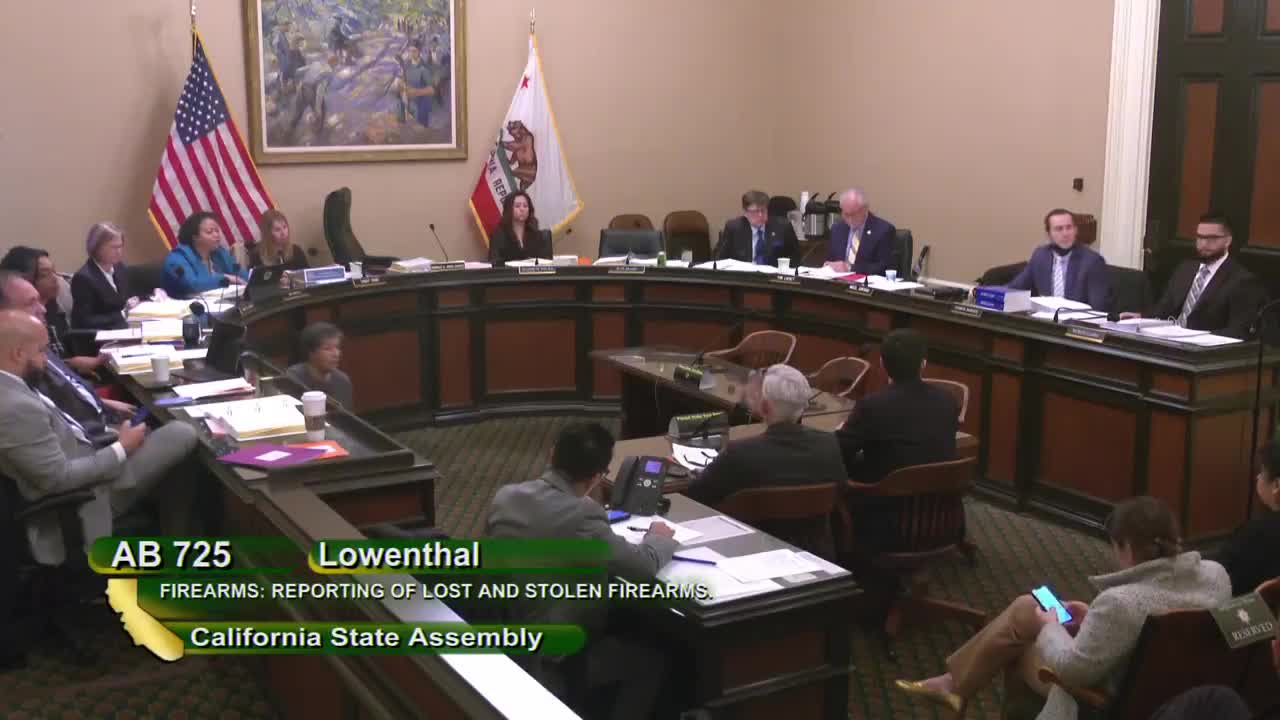 16MIN
Assembly Standing Committee on Public Safety
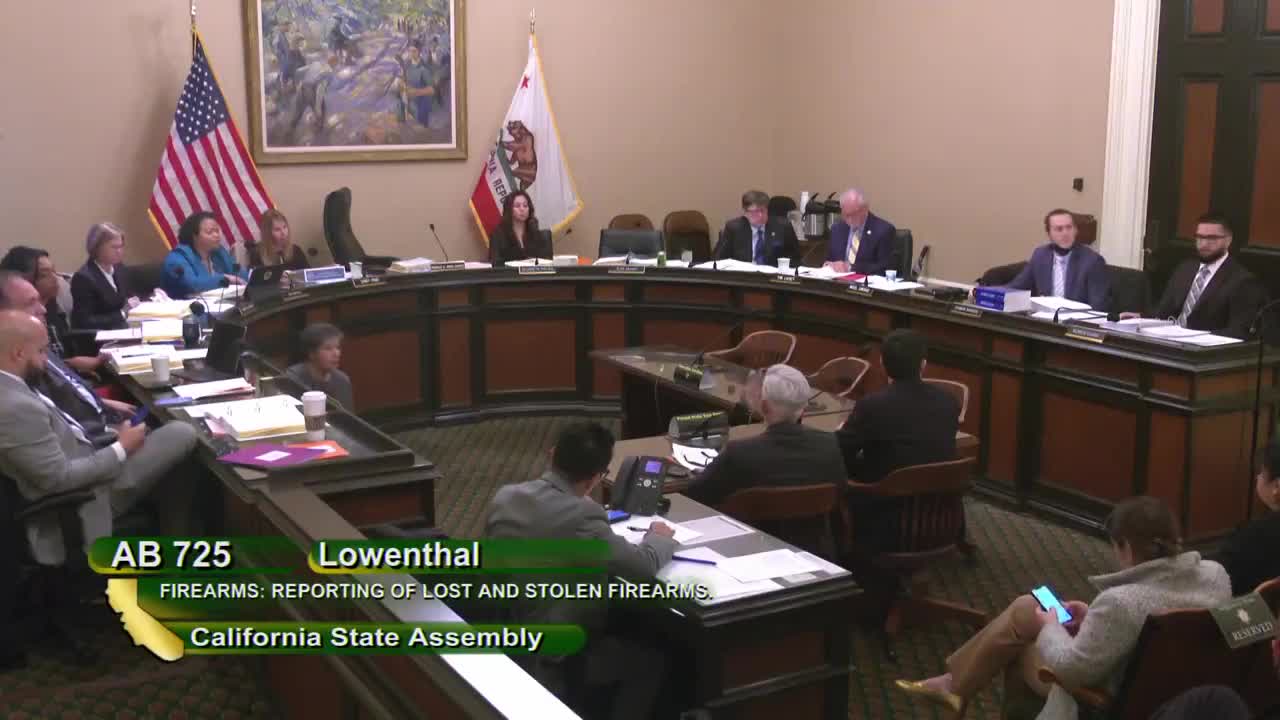 16MIN
Assembly Standing Committee on Public Safety
Bill Author

Bill Co-Author(s):