SB 534: Equitable Access to Job Opportunity Pilot Program.
- Session Year: 2023-2024
- House: Senate
- Latest Version Date: 2023-05-18
Current Status:
Failed
(2023-09-01: September 1 hearing: Held in committee and under submission.)
Introduced
In Committee
First Chamber
In Committee
Second Chamber
Enacted
What does this bill do?
This bill creates a short-term pilot program to pay the full cost of workforce training — including tuition, housing, and books — for people without college degrees who live in low-income or rural California communities so they can get jobs in selected key industries. The California Workforce Development Board and the Governor’s Office of Planning and Research would run the program, work with local partners to build training-to-job pathways, provide support services like job prep, childcare, housing help, health care, and transportation, decide who is eligible, and report on results to the Legislature.
The summary is provided by generative AI which can make mistakes. For original language, please view the details in the table below.
Existing law establishes the California Workforce Development Board as the body responsible for assisting the Governor in the development, oversight, and continuous improvement of Californias workforce investment system and the alignment of the education and workforce investment systems to the needs of the 21st century economy and workforce. Existing law establishes the Office of Planning and Research within the Governors office to provide long-range planning and research and to serve as the comprehensive state planning agency.
This bill would establish the Equitable Access to Job Opportunity Pilot Program, to be operative from January 1, 2025, to January 1, 2026, inclusive, to provide individuals without postsecondary education degrees from rural or low-income communities with financial aid for workforce development training and education to gain employment in key industries. The bill would require the board and the office to administer the pilot program, including identifying key industries and developing partnerships, pathways, and opportunities to ensure local development of those industries, as specified. The bill would require the board and the office to use existing resources for purposes of the pilot program, subject to the availability of funding in this act or the annual Budget Act, and would require the board and the office to work with local stakeholders, including local workforce development boards, in securing job opportunities and building pathways and partnerships, as specified. The bill would require the board and the office, on or before January 1, 2027, to report to the Legislature on the effectiveness of the program, as specified. The bill would make the bills provisions operative only upon appropriation by the Legislature. The bill would repeal the bills provisions on January 1, 2028.
Existing law establishes the California Workforce Development Board as the body responsible for assisting the Governor in the development, oversight, and continuous improvement of Californias workforce investment system and the alignment of the education and workforce investment systems to the needs of the 21st century economy and workforce. Existing law establishes the Office of Planning and Research within the Governors office to provide long-range planning and research and to serve as the comprehensive state planning agency.
This bill would establish the Equitable Access to Job Opportunity Pilot Program, to be operative from January 1, 2024, 2025, to January 1, 2025, 2026, inclusive, to provide individuals without postsecondary education degrees from rural or low-income communities with financial aid for workforce development training and education to gain employment in key industries. The bill would require the board and the office to administer the pilot program, including identifying key industries and developing partnerships, pathways, and opportunities to ensure local development of those industries, as specified. The bill would require the board and the office to use existing resources for purposes of the pilot program, subject to the availability of funding in this act or the annual Budget Act, and would require the board and the office to work with local stakeholders, including local workforce development boards, in securing job opportunities and building pathways and partnerships, as specified. The bill would require the board and the office, on or before January 1, 2026, 2027, to report to the Legislature on the effectiveness of the program, as specified. The bill would repeal the bills provisions on January 1, 2027. 2028.
Existing law establishes the California Workforce Development Board to, among other things, assist the Governor in developing, implementing, and modifying the state plan, which serves as the comprehensive framework and coordinated plan for the aligned investment of all federal and state workforce training and employment services funding streams and programs. Existing law states the Legislature finds and declares that specified principals shall guide the states workforce investment system. as the body responsible for assisting the Governor in the development, oversight, and continuous improvement of Californias workforce investment system and the alignment of the education and workforce investment systems to the needs of the 21st century economy and workforce. Existing law establishes the Office of Planning and Research within the Governors office to provide long-range planning and research and to serve as the comprehensive state planning agency.
This bill would require the board to specifically target investment in critical industries, as specified. establish the Equitable Access to Job Opportunity Pilot Program, to be operative from January 1, 2024, to January 1, 2025, inclusive, to provide individuals without postsecondary education degrees from rural or low-income communities with financial aid for workforce development training and education to gain employment in key industries. The bill would require the board and the office to administer the pilot program, including identifying key industries and developing partnerships, pathways, and opportunities to ensure local development of those industries, as specified. The bill would require the board and the office to use existing resources for purposes of the pilot program, subject to the availability of funding in this act or the annual Budget Act, and would require the board and the office to work with local stakeholders, including local workforce development boards, in securing job opportunities and building pathways and partnerships, as specified. The bill would require the board and the office, on or before January 1, 2026, to report to the Legislature on the effectiveness of the program, as specified. The bill would repeal the bills provisions on January 1, 2027.
Existing law establishes the California Workforce Development Board to, among other things, assist the Governor in developing, implementing, and modifying the state plan, which serves as the comprehensive framework and coordinated plan for the aligned investment of all federal and state workforce training and employment services funding streams and programs. Existing law states the Legislature finds and declares that specified principals shall guide the states workforce investment system.
This bill would require the board to specifically target investment in critical industries, as specified.
The Legislature finds and declares all of the following:
(a)Low-income and rural communities face barriers to accessing state and federal funding because of limited technical capacity and lack of community-based organizations.
(b)Low-income and rural Californians are in dire need of highly skilled training and ample economic development opportunities located within their local communities.
(c)In order to remain competitive, California will need a highly skilled and trained workforce to meet the needs of the labor market.
(d)In order to build this workforce, low-income and rural Californians must have equitable access to workforce and economic development opportunities within their local community.
(e)Investing in access to job opportunity and job creation in low-income and rural communities has multiple benefits, including increased individual economic mobility, healthier and more stable communities, and a more economically resilient California.
(f)The GI Bill (Public Law 78-346) formally known as the Servicemens Readjustment Act of 1944, helped build the American middle class. It guaranteed millions of veterans a college education and home loans and many of the benefits and impacts can still be seen today.
(g)California must aggressively train and educate underinvested areas of our workforce in order to meet the demands of tomorrow, yet many of our states resources continue to fail to reach the people that need it the most.
(h)Enacting a program in California similar to the GI Bill to address historic underinvestment in sectors and regions of our workforce in exchange for public service will provide economic mobility for all Californians and ensure every region of our state grows competitively.
SEC. 2.Division 11 (commencing with Section 19000) is added to the Unemployment Insurance Code, to read:11.Equitable Access to Job Opportunity Act of 202319000.(a)The Equitable Access to Job Opportunity Pilot Program is hereby established as a pilot program to provide individuals without postsecondary education degrees from rural or low-income communities with financial aid that covers the full cost of attendance in any workforce development training and education needed to gain employment in key industries, including tuition and fees, housing, and books.
(b)The pilot program shall be operative from January 1, 2025, to January 1, 2026, inclusive.
19001.For purposes of this division:
(a)Board means the California Workforce Development Board.
(b)Office means the Office of Planning and Research.
(c)Pilot program means the Equitable Access to Job Opportunity Pilot Program established pursuant to this division.
19002.(a)The board and the office shall administer the pilot program in accordance with this division.
(b)The board and the office shall identify key industries and develop partnerships, pathways, and opportunities to ensure local development of those industries by working with local workforce investment boards, employers, unions, and other relevant local stakeholders. The identification of key industries shall be based on goals established in California, including, but not limited to, climate change goals, renewable energy production goals, recycling goals, workforce development and educational attainment goals, as well as ensuring the delivery of health care.
19003.The board and the office shall be tasked with providing all of the following:
(a)Wraparound services including, but not limited to, job or interview preparation, childcare, housing, health care, transportation, and other nonwage benefits.
(b)Determining eligibility for individuals participating in the program, and supporting individuals in accessing benefits.
19004.The board and the office shall use existing resources to help meet the purposes of the pilot program, subject to the availability of funding in the act that added this section or the annual Budget Act.19005. 19004.The board and the office shall be required to work with local stakeholders, including, but not limited to, local workforce investment boards, employers, unions, and community-based organizations, in securing job opportunities and building pathways and partnerships to secure and create those opportunities.
19006. 19005.(a)On or before January 1, 2027, the board and the office shall report to the Legislature on the effectiveness of the program, including how successful the program is at recruiting participants from targeted populations, integrating the program within local jurisdictions, providing pathways and opportunities for employment, and effectiveness at utilizing existing resources and programming.
(b)The report shall be submitted to the Legislature in compliance with Section 9795.
19006.This division shall become operative only upon appropriation by the Legislature in the annual Budget Act or another statute.
19007.This division shall remain in effect only until January 1, 2028, and as of that date is repealed.
The Legislature finds and declares all of the following:
(a)Low-income and rural communities face barriers to accessing state and federal funding because of limited technical capacity and lack of community-based organizations.
(b)Low-income and rural Californians are in dire need of a highly skilled training and ample economic development opportunities located within their local communities.
(c)In order to remain competitive, California will need a highly skilled and trained workforce to meet the needs of the labor market.
(d)In order to build this workforce, low-income and rural Californians must have equitable access to workforce and economic development opportunities within their local community.
(e)Investing in access to job opportunity and job creation in low-income and rural communities has multiple benefits, including increased individual economic mobility, healthier and more stable communities, and a more economically resilient California.
(f)The GI Bill (Public Law 78-346) formally known as the Servicemens Readjustment Act of 1944, helped build the American middle class. It guaranteed millions of veterans a college education and home loans and many of the benefits and impacts can still be seen today.
(g)California must aggressively train and educate underinvested areas of our workforce in order to meet the demands of tomorrow, yet many of our states resources continue to fail to reach the people that need it the most.
(h)Enacting a program in California similar to the GI Bill to address historic underinvestment in sectors and regions of our workforce in exchange for public service will provide economic mobility for all Californians and ensure every region of our state grows competitively.
SEC. 2.Division 11 (commencing with Section 19000) is added to the Unemployment Insurance Code, to read:11.Equitable Access to Job Opportunity Act of 202319000.(a)The Equitable Access to Job Opportunity Pilot Program is hereby established as a pilot program to provide individuals without postsecondary education degrees from rural or low-income communities with financial aid that covers the full cost of attendance in any workforce development training and education needed to gain employment in key industries, including tuition and fees, housing, and books.
(b)The pilot program shall be operative from January 1, 2024, 2025, to January 1, 2025, 2026, inclusive.
19001.For purposes of this division:
(a)Board means the California Workforce Development Board.
(b)Office means the Office of Planning and Research.
(c)Pilot program means the Equitable Access to Job Opportunity Pilot Program established pursuant to this division.
19002.(a)The board and the office shall administer the pilot program in accordance with this division.
(b)The board and the office shall identify key industries and develop partnerships, pathways, and opportunities to ensure local development of those industries by working with local workforce investment boards, employers, unions, and other relevant local stakeholders. The identification of key industries shall be based on goals established in California, including, but not limited to, climate change goals, renewable energy production goals, recycling goals, workforce development and educational attainment goals, as well as ensuring the delivery of health care.
19003.The board and the office shall be tasked with providing all of the following:
(a)Wraparound services including, but not limited to, job or interview preparation, childcare, housing, health care, transportation, and other nonwage benefits.
(b)Determining eligibility for individuals participating in the program, and supporting individuals in accessing benefits.
19004.The board and the office shall use existing resources to help meet the purposes of the pilot program, subject to the availability of funding in the act that added this section or the annual Budget Act.
19005.The board and the office shall be required to work with local stakeholders, including, but not limited to, local workforce investment boards, employers, unions, and community-based organizations, in securing job opportunities and building pathways and partnerships to secure and create those opportunities.
19006.(a)On or before January 1, 2026, 2027, the board and the office shall report to the Legislature on the effectiveness of the program, including how successful the program is at recruiting participants from targeted populations, integrating the program within local jurisdictions, providing pathways and opportunities for employment, and effectiveness at utilizing existing resources and programming.
(b)The report shall be submitted to the Legislature in compliance with Section 9795.
19007.This division shall remain in effect only until January 1, 2027, 2028, and as of that date is repealed.
The Legislature finds and declares all of the following:
(a)Low-income and rural communities face barriers to accessing state and federal funding because of limited technical capacity and lack of community-based organizations.
(b)Low-income and rural Californians are in dire need of a highly skilled training and ample economic development opportunities located within their local communities.
(c)In order to remain competitive, California will need a highly skilled and trained workforce to meet the needs of the labor market.
(d)In order to build this workforce, low-income and rural Californians must have equitable access to workforce and economic development opportunities within their local community.
(e)Investing in access to job opportunity and job creation in low-income and rural communities has multiple benefits, including increased individual economic mobility, healthier and more stable communities, and a more economically resilient California.
(f)The GI Bill (Public Law 78-346) formally known as the Servicemens Readjustment Act of 1944, helped build the American middle class. It guaranteed millions of veterans a college education and home loans and many of the benefits and impacts can still be seen today.
(g)California must aggressively train and educate underinvested areas of our workforce in order to meet the demands of tomorrow, yet many of our states resources continue to fail to reach the people that need it the most.
(h)Enacting a program in California similar to the GI Bill to address historic underinvestment in sectors and regions of our workforce in exchange for public service will provide economic mobility for all Californians and ensure every region of our state grows competitively.
SEC. 2.Division 11 (commencing with Section 19000) is added to the Unemployment Insurance Code, to read:11.Equitable Access to Job Opportunity Act of 202319000.(a)The Equitable Access to Job Opportunity Pilot Program is hereby established as a pilot program to provide individuals without postsecondary education degrees from rural or low-income communities with financial aid that covers the full cost of attendance in any workforce development training and education needed to gain employment in key industries, including tuition and fees, housing, and books.
(b)The pilot program shall be operative from January 1, 2024, to January 1, 2025, inclusive.
19001.For purposes of this division:
(a)Board means the California Workforce Development Board.
(b)Office means the Office of Planning and Research.
(c)Pilot program means the Equitable Access to Job Opportunity Pilot Program established pursuant to this division.
19002.(a)The board and the office shall administer the pilot program in accordance with this division.
(b)The board and the office shall identify key industries and develop partnerships, pathways, and opportunities to ensure local development of those industries by working with local workforce investment boards, employers, unions, and other relevant local stakeholders. The identification of key industries shall be based on goals established in California, including, but not limited to, climate change goals, renewable energy production goals, recycling goals, workforce development and educational attainment goals, as well ensuring the delivery of health care.
19003.The board and the office shall be tasked with providing all of the following:
(a)Wraparound services including, but not limited to, job or interview preparation, childcare, housing, health care, transportation, and other nonwage benefits.
(b)Determining eligibility for individuals participating in the program, and supporting individuals in accessing benefits.
19004.The board and the office shall use existing resources to help meet the purposes of the pilot program, subject to the availability of funding in the act that added this section or the annual Budget Act.
19005.The board and the office shall be required to work with local stakeholders, including, but not limited to, local workforce investment boards, employers, unions, and community-based organizations, in securing job opportunities and building pathways and partnerships to secure and create those opportunities.
19006.(a)On or before January 1, 2026, the board and the office shall report to the Legislature on the effectiveness of the program, including how successful the program is at recruiting participants from targeted populations, integrating the program within local jurisdictions, providing pathways and opportunities for employment, and effectiveness at utilizing existing resources and programming.
(b)The report shall be submitted to the Legislature in compliance with Section 9795.
19007.This division shall remain in effect only until January 1, 2027, and as of that date is repealed.
SECTION 1.Section 14000 of the Unemployment Insurance Code is amended to read:14000.(a)The Legislature finds and declares that, in order for California to remain prosperous and globally competitive, it needs to have a well-educated and highly skilled workforce.(b)The Legislature finds and declares that the following principles shall guide the states workforce investment system:(1)Workforce investment programs and services shall be responsive to the needs of employers, workers, and students by accomplishing the following:(A)Preparing Californias students and workers with the skills necessary to successfully compete in the global economy.(B)Producing greater numbers of individuals who obtain industry-recognized certificates and career-oriented degrees in competitive and emerging industry sectors and filling critical labor market skills gaps.(C)Adapting to rapidly changing local and regional labor markets as specific workforce skill requirements change over time.(D)Preparing workers for good-paying jobs that foster economic security and upward mobility.(E)Aligning employment programs, resources, and planning efforts regionally around industry sectors that drive regional employment to connect services and training directly to jobs.(2)State and local workforce development boards are encouraged to collaborate with other public and private institutions, including businesses, unions, nonprofit organizations, kindergarten and grades 1 to 12, inclusive, career technical education programs, adult career technical education and basic skills programs, apprenticeships, community college career technical education and basic skills programs, entrepreneurship training programs, where appropriate, the California Community Colleges Economic and Workforce Development Program, the Employment Training Panel, and county-based social and employment services, to better align resources across workforce, training, education, and social service delivery systems and build a well-articulated workforce investment system by accomplishing the following:(A)Adopting local and regional training and education strategies which include workplace-based earn and learn programs that build on the strengths and fill the gaps in the education and workforce development pipeline in order to address the needs of job seekers, workers, and employers within regional labor markets by supporting sector strategies.(B)Leveraging resources across education and workforce training delivery systems to build career pathways and fill critical skills gaps.(3)Workforce investment programs and services shall be data driven and evidence based when setting priorities, investing resources, and adopting practices.(4)Workforce investment programs and services shall develop strong partnerships with the private sector, ensuring industry involvement in needs assessment, planning, and program evaluation.(A)Workforce investment programs and services shall encourage industry involvement by developing strong partnerships with an industrys employers and the unions that represent the industrys workers.(B)Workforce investment programs and services may consider the needs of employers and businesses of all sizes, including large, medium, small, and microenterprises, when setting priorities, investing resources, and adopting practices.(5)Workforce investment programs and services shall be outcome oriented and accountable, measuring results for program participants, including, but not limited to, outcomes related to program completion, employment, and earnings.(6)Programs and services shall be accessible to employers, the self-employed, workers, and students who may benefit from their operation, including individuals with employment barriers, such as persons with economic, physical, or other barriers to employment.(c)The California Workforce Development Board shall specifically target investment towards critical industries, including public health, mental health, prekindergarten education, skilled home nursing and caregiving, and skilled trades necessary for critical infrastructure development for the states clean energy needs.(a)The Legislature finds and declares that, in order for California to remain prosperous and globally competitive, it needs to have a well-educated and highly skilled workforce.
(b)The Legislature finds and declares that the following principles shall guide the states workforce investment system:
(1)Workforce investment programs and services shall be responsive to the needs of employers, workers, and students by accomplishing the following:
(A)Preparing Californias students and workers with the skills necessary to successfully compete in the global economy.
(B)Producing greater numbers of individuals who obtain industry-recognized certificates and career-oriented degrees in competitive and emerging industry sectors and filling critical labor market skills gaps.
(C)Adapting to rapidly changing local and regional labor markets as specific workforce skill requirements change over time.
(D)Preparing workers for good-paying jobs that foster economic security and upward mobility.
(E)Aligning employment programs, resources, and planning efforts regionally around industry sectors that drive regional employment to connect services and training directly to jobs.
(2)State and local workforce development boards are encouraged to collaborate with other public and private institutions, including businesses, unions, nonprofit organizations, kindergarten and grades 1 to 12, inclusive, career technical education programs, adult career technical education and basic skills programs, apprenticeships, community college career technical education and basic skills programs, entrepreneurship training programs, where appropriate, the California Community Colleges Economic and Workforce Development Program, the Employment Training Panel, and county-based social and employment services, to better align resources across workforce, training, education, and social service delivery systems and build a well-articulated workforce investment system by accomplishing the following:
(A)Adopting local and regional training and education strategies which include workplace-based earn and learn programs that build on the strengths and fill the gaps in the education and workforce development pipeline in order to address the needs of job seekers, workers, and employers within regional labor markets by supporting sector strategies.
(B)Leveraging resources across education and workforce training delivery systems to build career pathways and fill critical skills gaps.
(3)Workforce investment programs and services shall be data driven and evidence based when setting priorities, investing resources, and adopting practices.
(4)Workforce investment programs and services shall develop strong partnerships with the private sector, ensuring industry involvement in needs assessment, planning, and program evaluation.
(A)Workforce investment programs and services shall encourage industry involvement by developing strong partnerships with an industrys employers and the unions that represent the industrys workers.
(B)Workforce investment programs and services may consider the needs of employers and businesses of all sizes, including large, medium, small, and microenterprises, when setting priorities, investing resources, and adopting practices.
(5)Workforce investment programs and services shall be outcome oriented and accountable, measuring results for program participants, including, but not limited to, outcomes related to program completion, employment, and earnings.
(6)Programs and services shall be accessible to employers, the self-employed, workers, and students who may benefit from their operation, including individuals with employment barriers, such as persons with economic, physical, or other barriers to employment.
(c)The California Workforce Development Board shall specifically target investment towards critical industries, including public health, mental health, prekindergarten education, skilled home nursing and caregiving, and skilled trades necessary for critical infrastructure development for the states clean energy needs.
|
Date
|
Status
|
|---|---|
| Sep 1, 2023 | September 1 hearing: Held in committee and under submission. |
| Jul 12, 2023 | July 12 set for first hearing. Placed on APPR. suspense file. |
| Jun 15, 2023 | From committee: Do pass and re-refer to Com. on APPR. (Ayes 6. Noes 0.) (June 14). Re-referred to Com. on APPR. |
| Jun 1, 2023 | Referred to Com. on L. & E. |
| May 25, 2023 | In Assembly. Read first time. Held at Desk. |
| May 24, 2023 | Read third time. Passed. (Ayes 32. Noes 6. Page 1267.) Ordered to the Assembly. |
| May 22, 2023 | Read second time. Ordered to third reading. |
| May 18, 2023 | Read second time and amended. Ordered to second reading. |
| May 18, 2023 | From committee: Do pass as amended. (Ayes 5. Noes 2. Page 1174.) (May 18). |
| May 16, 2023 | Set for hearing May 18. |
| May 15, 2023 | May 15 hearing: Placed on APPR suspense file. |
| May 5, 2023 | Set for hearing May 15. |
| May 3, 2023 | Read second time and amended. Re-referred to Com. on APPR. |
| May 2, 2023 | From committee: Do pass as amended and re-refer to Com. on APPR. (Ayes 4. Noes 0. Page 898.) (April 26). |
| Apr 13, 2023 | Set for hearing April 26. |
| Mar 22, 2023 | From committee with author's amendments. Read second time and amended. Re-referred to Com. on L., P.E. & R. |
| Feb 22, 2023 | Referred to Com. on L., P.E. & R. |
| Feb 15, 2023 | From printer. May be acted upon on or after March 17. |
| Feb 14, 2023 | Introduced. Read first time. To Com. on RLS. for assignment. To print. |
|
Date
|
Description
|
Location
|
Votes
|
|
|---|---|---|---|---|
| Jun 14, 2023 | Do pass and be re-referred to the Committee on [Appropriations] | Assembly Standing Committee on Labor and Employment |
Passed |
|
| May 24, 2023 | Senate 3rd Reading SB534 Padilla | Senate Floor |
Passed |
|
| May 18, 2023 | Do pass as amended | Senate Standing Committee on Appropriations |
Passed |
|
| May 15, 2023 | Placed on suspense file | Senate Standing Committee on Appropriations |
Passed |
|
| Apr 26, 2023 | Do pass as amended, but first amend, and re-refer to the Committee on [Appropriations] | Senate Standing Committee on Labor, Public Employment and Retirement |
Passed |
This list shows positions taken on this bill by organizations on the date displayed, which is linked to the original source.
Positions by individuals are not included.
|
Organization
|
Position
|
Date
|
|---|---|---|
| Alianza Coachella Valley | ** Support | |
| California Health Plus Advocates | * Support | Jun 14, 2023 |
| California Human Development | ** Support | |
| California Teamsters Public Affairs Council | ** Support | |
| City Of El Centro | ** Support | |
| City of Imperial | * Support | Jun 14, 2023 |
| Imperial County | * Support | Apr 26, 2023 |
| imperial Valley Equity and Justice Coalition | ** Support | |
| la Cooperativa Campesina de California | ** Support | |
| La Cooperative Campesina de California | * Support | Jun 14, 2023 |
| Lift To Rise | ** Support | |
| Los Amigos De LA Comunidad, INC. | ** Support | |
| Proteus, Inc. | ** Support |
Date of Hearing: July 12, 2023
ASSEMBLY COMMITTEE ON APPROPRIATIONS
Chris Holden, Chair
SBPCA Bill Id:SB 534
Author:(Padilla) – As Amended Ver:May 18, 2023
Policy Committee: | Labor and Employment | Vote: | 6 - 0 |
|
| ||
|
|
Urgency: No State Mandated Local Program: No Reimbursable: No
SUMMARY:
This bill establishes, upon appropriation, the Equitable Access to Job Opportunity Pilot Program (Pilot Program) administered by the California Workforce Development Board (CWDB) and Office of Planning and Research (OPR).
Specifically, this bill:
- Makes operative, from January 1, 2025, to January 1, 2026, the Pilot Program to provide individuals without postsecondary education degrees, and who are from rural or low-income communities, with financial aid that covers the full cost of attendance in any workforce development training and education needed to gain employment in key industries.
- Requires CWDB and OPR to identify key industries and develop partnerships, pathways, and opportunities to ensure local development of such industries, including work with local stakeholders such as local workforce development boards.
- Requires CWDB and OPR to provide wraparound services and determine eligibility for Pilot Program participants.
- Requires, by January 1, 2027, CWDB and OPR to report on the Pilot Program’s effectiveness to the Legislature.
FISCAL EFFECT:
- Cost pressures of an unknown amount, but likely in the millions of dollars, to fund financial aid provided under the Pilot Program (General Fund (GF)). This bill’s provisions are contingent on an appropriation, but neither the Budget Act of 2023 (SB 101, Skinner) nor other budget clean-up or trailer bills contain an appropriation for these purposes.
- Costs of approximately $676,000 annually to CWDB and costs of approximately $599,000 in the first year and $379,000 annually thereafter to OPR to administer the Pilot Program (GF).
This bill outlines a broad, somewhat ambiguous, scope of work for the Pilot Program, and does not specify the division of roles between CWDB and OPR. Thus, costs to CWDB and OPR could ultimately be much higher, depending on each agency’s level of involvement in developing and implementing the final scope of the Pilot Program. OPR notes it does not have any experience or staff expertise implementing a financial aid program or wraparound services.
COMMENTS:
- Purpose. According to the author:
Funding of workforce development programs remains inaccessible to rural, low-income, and underinvested communities across the state. California will need significant additions to a trained and skilled workforce in order to meet our goals. But, these projects must be made available to all of California, not a privileged few communities…Modeled after the GI Bill, [this bill] would create a pilot program focused on providing access to workforce development and wrap around services in exchange for helping the state meet our ambitious goals and driving local economic development.
This bill is supported by various cities, community organizations, and labor unions.
- Local Development of Key Industries. A report by the California Future of Work Commission, published in March 2021, found that “Two million Californians live in low-growth, trailing cities and rural counties…with consistent outward net migration, poverty rates above [20%] of the population, and low levels of higher education amongst the population.” Thus, “These regions will benefit from a focus on sustainable and inclusive economic development to bring more and higher-income jobs to the region.” This bill requires CWDB and OPR to identify key industries for local development and provide financial aid for workforce development training and education in those industries to individuals without postsecondary education degrees from rural or low-income communities. The Pilot Program would be operative for one year, after which CWDB and OPR must report on its effectiveness to the Legislature. However, Pilot Program results may be incomplete to the extent identified key industries require multi-year training and education before employment.
Analysis Prepared by: Irene Ho / APPR. / (916) 319-2081
Date of Hearing: June 14, 2023
ASSEMBLY COMMITTEE ON LABOR AND EMPLOYMENT
Ash Kalra, Chair
SBPCA Bill Id:SB 534
Author:(Padilla) – As Amended Ver:May 18, 2023
SENATE VOTE: 32-6
SUBJECT: Equitable Access to Job Opportunity Pilot Program
SUMMARY: Establishes the Equitable Access to Job Opportunity Pilot Program (program), upon appropriation by the Legislature, to be administered by the California Workforce Development Board (CWDB) and the Office of Planning and Research (OPR), to provide individuals without postsecondary education degrees from rural or low-income communities with financial aid for workforce development training and education to gain employment in key industries. Specifically, this bill:
- Finds and declares, among other things, that investing in access to job opportunity and job creation in low-income and rural communities has multiple benefits, including increased individual economic mobility, healthier and more stable communities, and a more economically resilient California.
- Requires the pilot program to be operative from January 1, 2025, to January 1, 2026, inclusive.
- Requires CWDB and OPR to identify key industries and develop partnerships, pathways, and opportunities to ensure local development of those industries by working with local workforce investment boards, employers, unions, and other relevant local stakeholders.
- Requires the identification of key industries to be based on goals established in California, including, but not limited to, climate change goals, renewable energy production goals, recycling goals, workforce development and educational attainment goals, as well as ensuring the delivery of health care.
- Requires CWDB and OPR to do all of the following:
- Provide wraparound services including, but not limited to, job or interview preparation, childcare, housing, health care, transportation, and other nonwage benefits.
- Determine eligibility for individuals participating in the program, and supporting individuals in accessing benefits.
- Work with local stakeholders, including, but not limited to, local workforce investment boards, employers, unions, and community-based organizations, in securing job opportunities and building pathways and partnerships to secure and create those opportunities.
- Requires CWDB and OPR, on or before January 1, 2027, to report to the Legislature on the effectiveness of the program, including how successful the program is at recruiting participants from targeted populations, integrating the program within local jurisdictions, providing pathways and opportunities for employment, and effectiveness at utilizing existing resources and programming.
- Repeals the provisions of this measure on January 1, 2028.
EXISTING FEDERAL LAW:
Establishes the Workforce Innovation and Opportunity Act (WIOA) of 2014 in order to help job seekers access employment, education, training, and support services to succeed in the labor market and to match employers with skilled workers. WIOA coordinates employment and training services for adults, dislocated workers, and youth through grants to states that are implemented at the state and local level. (29 U.S.C. § 3101 et seq.)
EXISTING STATE LAW:
- Establishes CWDB within the Labor and Workforce Development Agency (LWDA) as the body responsible for assisting the Governor in the development, oversight, and continuous improvement of California’s workforce investment system and the alignment of the education and workforce investment systems to the needs of the 21st century economy and workforce. (Unemp. Ins. Code, § 14010 et seq.)
- Establishes OPR within the Governor’s office to, among other things, providing research, planning, and policy guidance to the Governor, state agencies, and local governments. (Gov. Code, § 65037-65039.)
- Establishes the Breaking Barriers to Employment Initiative (BBEI), as a grant program administered by the CWDB to provide individuals with barriers to employment the services they need to enter, participate in, and complete boarder workforce preparation, training, and education programs aligned with regional labor market needs. (Unemp. Ins. Code, § 14031 et seq.)
- Establishes the Community Economic Resilience Fund (CERF), administered by LWDA, OPR, and the Governor’s Office of Business and Economic Development (GO-Biz), to among other things, support the development of meaningfully inclusive regional planning processes that produce regional roadmaps for economic development efforts that prioritize the creation of accessible, high-quality jobs in sustainable industries. (Unemp. Ins. Code, § 14531 et seq.)
- Requires CWDB to report to the Legislature on, among other things, the need for increased education, career technical education, job training, and workforce development resources, including community workforce agreements (CWAs), to help industry, workers, and communities transition to economic and labor-market changes related to statewide greenhouse gas (GHG) emissions reduction goals. (Health & Safety Code, § 38591.3.)
- Requires the CWDB to establish a committee known as the Green Collar Jobs Council (GCJC) to, among other things, consult with state agencies, higher education representatives, local workforce investment boards, and other industry representatives, as specified, to develop a strategic initiative relating to the training and development of a skilled workforce to meet the needs of California’s emerging green economy.
(Unemp. Ins. Code, § 15002.)
FISCAL EFFECT: According to the Senate Committee on Appropriations:
- OPR indicates that, at a minimum, it would incur first-year costs of $599,000, and $379,000 annually thereafter for the duration of the program (General Fund). Costs could be higher depending on its level of involvement with the development and administration of the pilot program.
- Administrative costs to CWDB, at a minimum would total $676,000 per year. (General Fund)
- The bill would result in a cost pressure to fund this financial aid program. The magnitude is unknown, but would likely be in the millions of dollars. (General Fund)
COMMENTS: According to a recent report by the California Future of Work Commission, “A growing divide in economic advancement between coastal and inland counties, and between rural and urban communities, leads to inequality in income and employment between geographic regions across the country and across California. Two million Californians live in low-growth, trailing cities and rural counties, including Fresno, Yuba City, and Mariposa County. These regions struggled to recover from the last financial crisis and are particularly vulnerable to the economic impacts of the pandemic, with consistent outward net migration, poverty rates above 20 percent of the population, and low levels of higher education amongst the population. These regions will benefit from a focus on sustainable and inclusive economic development to bring more and higher-income jobs to the region.”[1]
Additionally, a recent report by the Little Hoover Commission notes that, “Regions can encourage economic development by building on regional strengths, supporting traded sectors (those that sell goods and services outside the region), fostering innovation, encouraging talent development, and developing public-private partnerships that move existing industries up the value chain and advance emerging economic opportunities. Regions can also ensure that economic growth benefits disinvested communities by addressing barriers to opportunity, investing in community development, and working with organizations that can help create pathways to training and employment in quality jobs.”[2]
According to the author, “California’s current approach to meeting our ambitious goals is unsustainable. Funding of workforce development programs remains inaccessible to rural, low-income, and underinvested communities across the state. California will need significant additions to a trained and skilled workforce in order to meet our goals. But, these projects must be made available to all of California, not a privileged few communities. At the same time that rural communities face challenges to access the few quality jobs available, many industries in these same areas are failing. Modeled after the GI Bill, [this bill] would create a pilot program focused on providing access to workforce development and wrap around services in exchange for helping the state meet our ambitious goals and driving local economic development. The bill would identify emerging industries souring economic development and the creation of quality jobs in rural regions of our state. California’s focus on the supply side of the labor market means our workforce will lead in emerging industries.”
In addition, the author points out that this bill will promote equity solutions and maximize benefits for underserved and marginalized communities because, “the bill is [seeking] to address the lack of access for workforce development training for marginalized communities in rural areas of the state including farmworkers and other communities that have historically faced challenges to upward mobility.”
Arguments in Support
Alianza Coachella Valley, in support, states “California is a tale of two economies. A growing percentage of communities across California are economically stranded. Rural and inland communities tend to have higher unemployment, lower educational attainment, and more families struggling to put food on the table. The Equitable Access to Job Opportunity Pilot Program established by [this bill] represents an opportunity to address underinvestment in rural and low-income communities, the need to identify emerging industries within these communities, and the need to build a workforce that supports both local economic development and helps the state meet our ambitious goals.”
Committee Comments
Committee staff acknowledges that the bill aims to establish a pilot program designed to offer financial assistance for workforce development training and education to individuals from underserved "rural" or "low-income communities" who do not possess postsecondary degrees. It is suggested that the author consider providing a clearer definition for the terms "rural" or "low-income communities" or direct the CWDB and OPR to establish definitions for these terms. This would enable the program to effectively target the populations that would derive the greatest benefit from this program.
REGISTERED SUPPORT / OPPOSITION:
Support
Alianza Coachella Valley
California Health+advocates, Subsidiary of The California Primary Care Association
California Human Development
California Teamsters Public Affairs Council
City of El Centro
City of Imperial
Imperial Valley Equity and Justice Coalition
LA Cooperativa Campesina De California
Lift to Rise
Los Amigos De LA Comunidad, Inc.
Proteus, Inc.
Opposition
None on file.
Analysis Prepared by: Martin Vindiola / L. & E. /
SENATE RULES COMMITTEE Office of Senate Floor Analyses (916) 651-1520 Fax: (916) 327-4478 | SB 534 |
THIRD READING
Bill No: SB 534
Author: Padilla (D)
Amended: 5/18/23
Vote: 21
SENATE LABOR, PUB. EMP. & RET. COMMITTEE: 4-0, 4/26/23
AYES: Cortese, Durazo, Laird, Smallwood-Cuevas
NO VOTE RECORDED: Wilk
SENATE APPROPRIATIONS COMMITTEE: 5-2, 5/18/23
AYES: Portantino, Ashby, Bradford, Wahab, Wiener
NOES: Jones, Seyarto
SUBJECT: Equitable Access to Job Opportunity Pilot Program
SOURCE: Author
DIGEST:
This bill establishes a pilot program to require the California Workforce Development Board (CWDB) and the Governor’s Office of Planning and Research (OPR) to provide individuals without college degrees in rural and low-income communities with financial aid for workforce development training and education in key industries. The program would become operative only upon appropriation by the Legislature.
ANALYSIS: Existing federal law establishes the federal Workforce Innovation and Opportunity Act (WIOA) to require local workforce development boards (local boards) to be established in each area of the state to assist in planning, oversight, and evaluation of local workforce investment, perform various duties, and develop and submit to the Governor a comprehensive four-year local plan in partnership with the appropriate chief local elected official.
Existing state law:
- Creates the CWDB within the Labor and Workforce Development Agency (LWDA) to provide oversight and continuous improvement of the workforce system in California through policy development, workforce support and innovation, and performance assessment, measurement, and reporting.
- Establishes apprenticeship programs in various trades, to be approved by the Chief of the Division of Apprenticeship Standards (DAS) within DIR in any trade in the state or in a city or geographic area whenever the apprentice training needs justify the establishment.
- Establishes preapprenticeship programs and charges DAS with developing a process to approve preapprenticeship programs and verify partnership with an apprenticeship program.
- Creates the Green Collar Jobs Act of 2008 and charges the CWDB with development of a framework, funding, strategies, programs, policies, partnerships, and opportunities necessary to address the growing need for a highly skilled and well-trained workforce to meet the needs of California’s green economy.
This bill:
- Establishes. upon appropriation by the Legislature, the Equitable Access to Job Opportunity Pilot Program (Program) to provide individuals without postsecondary education degrees from rural or low-income communities with financial aid that covers the full cost of attendance in any workforce development training and education needed to gain employment in key industries, including tuition and fees, housing, and books.
- Requires the Program to be operative from January 1, 2025, to January 1, 2026.
- Requires CWDB and OPR to identify key industries and develop partnerships, pathways, and opportunities to ensure local development of those industries by working with local boards, employers, unions, and other relevant local stakeholders. The identification of key industries shall be based on goals established in California, including, but not limited to, climate change goals, renewable energy production goals, recycling goals, workforce development and educational attainment goals, as well as ensuring the delivery of health care.
- Requires CWDB and OPR to do all of the following.
- Provide wraparound services including, but not limited to, job or interview preparation, childcare, housing, health care, transportation, and other nonwage benefits.
- Determine eligibility for individuals participating in the Program, and supporting individuals in accessing benefits.
- Work with local stakeholders, including, but not limited to, local boards, employers, unions, and community-based organizations, in securing job opportunities and building pathways and partnerships to secure and create those opportunities.
- Report to the Legislature by January 1, 2027, on the effectiveness of the Program, including how successful the Program is at recruiting participants from targeted populations, integrating the Program within local jurisdictions, providing pathways and opportunities for employment, and effectiveness at utilizing existing resources and programming.
- Provide wraparound services including, but not limited to, job or interview preparation, childcare, housing, health care, transportation, and other nonwage benefits.
- Repeals the provisions of this bill on January 1, 2028.
- Makes Legislative findings and declarations, including a finding that enacting a program in California similar to the GI Bill to address historic underinvestment in sectors and regions of our workforce in exchange for public service will provide economic mobility for all Californians and ensure every region of our state grows competitively.
Background
The federal Workforce Investment Act (WIA), later replaced by WIOA in 2014, was created to increase access to and opportunities for the employment, education, training, and support services workers need to succeed in the labor market. The CWDB was created to assist the Governor in coordinating with federal, state, and local entities to administer workforce training and education programs. Local workforce development boards bring together employers, community leaders, labor, education, policymakers, and the public to facilitate dialogue and respond to local workforce needs at the regional level. There are 45 local boards within the 49 Local Workforce Development Areas throughout California, each tasked with ensuring those seeking work can access job placement and training services.
In 2019, Governor Newsom established the Future of Work Commission (Commission) to “study, understand, analyze, and make recommendations regarding the kinds of jobs Californians could have in the decades to come.” The Commission’s final report recommended support for efforts that promote job quality, citing a 2019 Gallup Poll stating fewer than half of California workers consider themselves in a “good job.” The report found a “growing divide in economic advancement between coastal and inland counties, and between rural and urban communities, leads to inequality in income and employment between geographic regions in California. Just five large California counties make up more than two-thirds of California’s economy in terms of economic output and employment.”
Comments
Purpose of this bill. According to the author, “California’s current approach to meeting our ambitious goals is unsustainable. Funding of workforce development programs remains inaccessible to rural, low-income, and underinvested communities across the state. California will need significant additions to a trained and skilled workforce in order to meet our goals. But, these projects must be made available to all of California, not a privileged few communities. At the same time that rural communities face challenges to access the few quality jobs available, many industries in these same areas are failing. Modeled after the GI Bill, SB 534 would create a pilot program focused on providing access to workforce development and wrap around services in exchange for helping the state meet our ambitious goals and driving local economic development. The bill would identify emerging industries souring economic development and the creation of quality jobs in rural regions of our state. California’s focus on the supply side of the labor market means our workforce will lead in emerging industries.”
Related/Prior Legislation
SB 822 (Durazo, 2023) establishes the Interagency High Road Team (Team) consisting of the LWDA, the Government Operations Agency (including the Department of General Services), and the Governor’s Office of Business and Economic Development and charges the Team with creating high road evaluation metrics, among other things.
AB 2696 (Bass - Chapter 396, Statutes of 2010) set forth additional reporting and consulting duties for the Green Collar Jobs Council.
AB 3018 (Nunez - Chapter 312, Statutes of 2008) established the Green Collar Jobs Council to perform specified tasks related to addressing the workforce needs that accompany California's growing green economy.
FISCAL EFFECT: Appropriation: No Fiscal Com.: Yes Local: No
According to the Senate Committee on Appropriations:
- OPR indicates that, at a minimum, it would incur first-year costs of $599,000, and $379,000 annually thereafter for the duration of the program (General Fund). Costs could be higher depending on its level of involvement with the development and administration of the pilot program.
- Administrative costs to CWDB, at a minimum would total $676,000 per year. (General Fund).
- The bill would result in a cost pressure to fund is financial aid program. The magnitude is unknown, but would likely be in the millions of dollars (General Fund).
SUPPORT: (Verified 5/18/23)
Alianza Coachella Valley
California Human Development
California Teamsters Public Affairs Council
City of El Centro
City of Imperial
Imperial Valley Equity and Justice Coalition
LA Cooperativa Campesina De California
Lift to Rise
Los Amigos De LA Comunidad, Inc.
Proteus, Inc.
OPPOSITION: (Verified 5/18/23)
None received
ARGUMENTS IN SUPPORT: Alianza Coachella Valley, the Cities of El Centro
and Imperial, Imperial Valley Equity & Justice Coalition, Lift to Rise, and Los
Amigos de la Comunidad state, “California is a tale of two economies. A growing
percentage of communities across California are economically stranded. Rural and
inland communities tend to have higher unemployment, lower educational
attainment, and more families struggling to put food on the table.
According to the Little Hoover Commission, “California’s inland and more rural regions have less exposure to the knowledge and technology industries that have powered California’s economy over the past decades. Their economies are less diversified than those of coastal regions and many currently lack the economic drivers to create quality jobs at scale for residents. Inland and rural regions are at once most impacted by climate change and environmental pollution and most vulnerable to potential job losses from measures designed to address climate change and improve environmental quality.” The Equitable Access to Job Opportunity Pilot Program established by SB 534 represents an opportunity to address underinvestment in rural and low-income communities, the need to identify emerging industries within these communities, and the need to build a workforce that supports both local economic development and helps the state meet our ambitious goals.”
Prepared by: Dawn Clover / L., P.E. & R. / (916) 651-1556
5/23/23 14:05:09
**** END ****
SENATE COMMITTEE ON
Senator Anthony Portantino, Chair
2023 - 2024 Regular Session
SB 534 (Padilla) - Equitable Access to Job Opportunity Pilot Program
Version: | Policy Vote: |
Urgency: | Mandate: |
Hearing Date: | Consultant: |
Bill Summary:
SB 534 would establish a pilot program to require the California Workforce Development Board (CWDB) and the Governor’s Office of Planning and Research (OPR) to provide individuals without college degrees in rural and low-income communities with financial aid for workforce development training and education in key industries.
*********** ANALYSIS ADDENDUM – SUSPENSE FILE ***********
The following information is revised to reflect amendments
adopted by the committee on May 18, 2023
Fiscal Impact:
- OPR indicates that, at a minimum, it would incur first-year costs of $599,000, and $379,000 annually thereafter for the duration of the program (General Fund). Costs could be higher depending on its level of involvement with the development and administration of the pilot program.
- Administrative costs to CWDB, at a minimum would total $676,000 per year. (General Fund).
- The bill would result in a cost pressure to fund is financial aid program. The magnitude is unknown, but would likely be in the millions of dollars (General Fund).
Committee Amendments:
Make the bill contingent upon an appropriation.
-- END --
SENATE COMMITTEE ON
Senator Anthony Portantino, Chair
2023 - 2024 Regular Session
SB 534 (Padilla) - Equitable Access to Job Opportunity Pilot Program
Version: | Policy Vote: |
Urgency: | Mandate: |
Hearing Date: | Consultant: |
Bill Summary:
SB 534 would establish a pilot program to require the California Workforce Development Board (CWDB) and the Governor’s Office of Planning and Research (OPR) to provide individuals without college degrees in rural and low-income communities with financial aid for workforce development training and education in key industries.
Fiscal Impact:
- OPR indicates that, at a minimum, it would incur first-year costs of $599,000, and $379,000 annually thereafter for the duration of the program (General Fund). Costs could be higher depending on its level of involvement with the development and administration of the pilot program (See Staff Comments).
- Administrative costs to CWDB, at a minimum would total $676,000 per year. (General Fund).
- The bill would result in a cost pressure to fund is financial aid program. The magnitude is unknown, but would likely be in the millions of dollars (General Fund).
Background:
The federal Workforce Investment Act (WIA), later replaced by the Workforce Innovation and Opportunity Act (WIOA) in 2014, was created to increase access to and opportunities for the employment, education, training, and support services workers need to succeed in the labor market. CWDB was created to assist the Governor in coordinating with federal, state, and local entities to administer workforce training and education programs. Local workforce development boards bring together employers, community leaders, labor, education, policymakers, and the public to facilitate dialogue and respond to local workforce needs at the regional level. There are 45 local boards within the 49 Local Workforce Development Areas throughout California, each tasked with ensuring those seeking work can access job placement and training services.
Proposed Law:
This bill, until January 1, 2028 would, among other things, do the following:
- Establish the Equitable Access to Job Opportunity Pilot Program (Program) to provide individuals without postsecondary education degrees from rural or low-income communities with financial aid that covers the full cost of attendance in any workforce development training and education needed to gain employment in key industries, including tuition and fees, housing, and books.
- Require the Program to be operative from January 1, 2025, to January 1, 2026.
- Require CWDB and OPR to identify key industries and develop partnerships, pathways, and opportunities to ensure local development of those industries by working with local boards, employers, unions, and other relevant local stakeholders. The identification of key industries shall be based on goals established in California, including, but not limited to, climate change goals, renewable energy production goals, recycling goals, workforce development and educational attainment goals, as well ensuring the delivery of health care.
- Require CWDB and OPR to do all of the following:
- Provide wraparound services including, but not limited to, job or interview preparation, childcare, housing, health care, transportation, and other nonwage benefits.
- Determine eligibility for individuals participating in the Program, and supporting individuals in accessing benefits.
- Work with local stakeholders, including, but not limited to, local boards, employers, unions, and community-based organizations, in securing job opportunities and building pathways and partnerships to secure and create those opportunities.
- Report to the Legislature on the effectiveness of the Program, including how successful the Program is at recruiting participants from targeted populations, integrating the Program within local jurisdictions, providing pathways and opportunities for employment, and effectiveness at utilizing existing resources and programming.
- Use existing resources to help meet the purposes of the Program, subject to the availability of funding.
Related Legislation:
- SB 822 (Durazo) would establish the Interagency High Road Team (Team) consisting of the Labor and Workforce Development Agency, the Government Operations Agency (including the Department of General Services), and the Governor’s Office of Business and Economic Development and require the Team to create high road evaluation metrics, among other things. The bill is currently pending in this Committee.
- AB 2696 (Bass, Chapter 396, Statutes of 2010) set forth additional reporting and consulting duties for the Green Collar Jobs Council.
- AB 3018 (Nunez, Chapter 312, Statutes of 2008) established the Green Collar Jobs Council to perform specified tasks related to addressing the workforce needs that accompany California's growing green economy.
Staff Comments:
This bill, as currently written, is ambiguous regarding (1) the intended size of the pilot program, and (2) the role that both OPR and CWDB would serve in its execution. Consequently, the fiscal impact to each of the two entities is unclear.
OPR notes that individual supportive grants and wraparound services are areas in which it lacks experience or staff expertise. If OPR’s role were limited to a more traditional advisory and support capacity, with many of the core functions envisioned by the bill being fulfilled by CWDB (including the cost of grants awarded), OPR estimates that it would require two positions and $200,000 in contracting in the first year. If, conversely, OPR were tasked with the development and administration of this pilot program (as opposed to simply acting in an advisory and support capacity), it anticipates that, at a minimum, it would require six positions and present an unknown amount of contracting costs to administer, exclusive of any actual grant funding that would be awarded. The staffing requirements would present a fiscal impact of approximately $1.4 million. Additionally, while unknown, the contracting costs to provide the required wraparound services are anticipated to be significant.
Should OPR and CWDB be required, as currently written in the bill, to develop or support this pilot program without identified funding, it would come at the direct cost and subsequent reduction of existing programs, responsibilities, and services.
-- END --
SENATE COMMITTEE ON LABOR, PUBLIC EMPLOYMENT AND RETIREMENT
Senator Dave Cortese, Chair
2023 - 2024 Regular
Bill No: SB 534 Hearing Date: April 26, 2023
Author: | Padilla | ||
Version: | March 22, 2023 | ||
Urgency: | No | Fiscal: | Yes |
Consultant: | Dawn Clover | ||
SUBJECT: Equitable Access to Job Opportunity Pilot Program
KEY ISSUE
Should the Legislature establish a pilot program to require the California Workforce Development Board (WDB) and the Governor’s Office of Planning and Research (OPR) to provide individuals without college degrees in rural and low-income communities with financial aid for workforce development training and education in key industries?
ANALYSIS
Existing law:
- Creates the WDB within the Labor and Workforce Development Agency (LWDA) to provide oversight and continuous improvement of the workforce system in California through policy development, workforce support and innovation, and performance assessment, measurement, and reporting. (Unemployment Insurance Code §§14010)
- Establishes apprenticeship programs in various trades, to be approved by the Chief of the Division of Apprenticeship Standards (DAS) within DIR in any trade in the state or in a city or geographic area whenever the apprentice training needs justify the establishment. (Labor Code §3070-3098)
- Establishes preapprenticeship programs and charges DAS with developing a process to approve preapprenticeship programs and verify partnership with an apprenticeship program. (Labor Code §3100)
- Creates the Green Collar Jobs Act of 2008 and charges the WDB with development of a framework, funding, strategies, programs, policies, partnerships, and opportunities necessary to address the growing need for a highly skilled and well-trained workforce to meet the needs of California’s green economy. (Unemployment Insurance Code §15000 et seq.)
- Establishes the federal Workforce Innovation and Opportunity Act (WIOA) to require local workforce development boards (local boards) to be established in each area of the state to assist in planning, oversight, and evaluation of local workforce investment, perform various duties, and develop and submit to the Governor a comprehensive four-year local plan in partnership with the appropriate chief local elected official. (20 CFR Parts 603, 651, 652, et al.)
- Requires any report submitted to the legislature be submitted as a printed copy to the Secretary of the Senate and Legislative Counsel and an electronic copy to the Chief Clerk of the Assembly. The report shall also be posted on the submitting agency’s website. (Government Code §9795)
This bill:
- Establishes the Equitable Access to Job Opportunity Pilot Program (Program) to provide individuals without postsecondary education degrees from rural or low-income communities with financial aid that covers the full cost of attendance in any workforce development training and education needed to gain employment in key industries, including tuition and fees, housing, and books.
- Requires the Program to be operative from January 1, 2024, to January 1, 2025.
- Requires WDB and OPR to identify key industries and develop partnerships, pathways, and opportunities to ensure local development of those industries by working with local boards, employers, unions, and other relevant local stakeholders. The identification of key industries shall be based on goals established in California, including, but not limited to, climate change goals, renewable energy production goals, recycling goals, workforce development and educational attainment goals, as well ensuring the delivery of health care.
- Requires WDB and OPR to do all of the following.
- Provide wraparound services including, but not limited to, job or interview preparation, childcare, housing, health care, transportation, and other nonwage benefits.
- Determine eligibility for individuals participating in the Program, and supporting individuals in accessing benefits.
- Work with local stakeholders, including, but not limited to, local boards, employers, unions, and community-based organizations, in securing job opportunities and building pathways and partnerships to secure and create those opportunities.
- Report to the Legislature on the effectiveness of the Program, including how successful the Program is at recruiting participants from targeted populations, integrating the Program within local jurisdictions, providing pathways and opportunities for employment, and effectiveness at utilizing existing resources and programming.
- Use existing resources to help meet the purposes of the Program, subject to the availability of funding.
- Provide wraparound services including, but not limited to, job or interview preparation, childcare, housing, health care, transportation, and other nonwage benefits.
- Repeals the provisions of this bill on January 1, 2027.
- Makes Legislative findings and declarations, including a finding that enacting a program in California similar to the GI Bill to address historic underinvestment in sectors and regions of our workforce in exchange for public service will provide economic mobility for all Californians and ensure every region of our state grows competitively.
COMMENTS
1. Background:
The federal Workforce Investment Act (WIA), later replaced by WIOA in 2014, was created
to increase access to and opportunities for the employment, education, training, and support
services workers need to succeed in the labor market. The CWDB was created to assist the
Governor in coordinating with federal, state, and local entities to administer workforce
training and education programs. Local workforce development boards bring together
employers, community leaders, labor, education, policymakers, and the public to facilitate
dialogue and respond to local workforce needs at the regional level. There are 45 local boards
within the 49 Local Workforce Development Areas throughout California, each tasked with
ensuring those seeking work can access job placement and training services.
In 2019, Governor Newsom established the Future of Work Commission (Commission) to
“study, understand, analyze, and make recommendations regarding the kinds of jobs
Californians could have in the decades to come.” The Commission’s final report
recommended support for efforts that promote job quality, citing a 2019 Gallup Poll stating
fewer than half of California workers consider themselves in a “good job.” The report found
a “growing divide in economic advancement between coastal and inland counties, and
between rural and urban communities, leads to inequality in income and employment
between geographic regions in California. Just five large California counties make up more
than two-thirds of California’s economy in terms of economic output and employment.”
2. Need for this bill?
According to the author, “California’s current approach to meeting our ambitious goals is unsustainable. Funding of workforce development programs remains inaccessible to rural, low-income, and underinvested communities across the state. California will need significant additions to a trained and skilled workforce in order to meet our goals. But, these projects must be made available to all of California, not a privileged few communities. At the same time that rural communities face challenges to access the few quality jobs available, many industries in these same areas are failing. Modeled after the GI Bill, SB 534 would create a pilot program focused on providing access to workforce development and wrap around services in exchange for helping the state meet our ambitious goals and driving local economic development. The bill would identify emerging industries souring economic development and the creation of quality jobs in rural regions of our state. California’s focus on the supply side of the labor market means our workforce will lead in emerging industries.”
3. Committee Discussion:
This bill specifies the Program shall be one year long, operative between January 1, 2024, and January 1, 2025. This would provide WDB and OPR with no time to develop the Program once the bill goes into effect on January 1, 2024. The committee suggests amending the bill to provide a longer onramp to allow the agencies sufficient time to develop the Program and conduct the appropriate outreach. The committee recommends one year to develop the Program, which could then get underway January 1, 2025 and operate until January 1, 2026. The study and subsequent inoperative date required by the bill would then need to be adjusted to a later due date. The committee suggests moving those dates one year to January 1, 2027, instead of January 1, 2026, for the due date and January 1, 2028, as the inoperative date.
Proposed Amendments
SEC. 2. Division 11 (commencing with Section 19000) is added to the Unemployment Insurance Code, to read:
DIVISION 11. Equitable Access to Job Opportunity Act
19000.
(a) The Equitable Access to Job Opportunity Pilot Program is hereby established as a pilot
program to provide individuals without postsecondary education degrees from rural
or low-income communities with financial aid that covers the full cost of attendance in any
workforce development training and education needed to gain employment in key industries,
including tuition and fees, housing, and books.
(b) The pilot program shall be operative from January 1, 20242025, to January 1, 20252026,
inclusive.
19006.
(a) On or before January 1, 20262027, the board and the office shall report to the Legislature
on the effectiveness of the program, including how successful the program is at recruiting
participants from targeted populations, integrating the program within local jurisdictions,
providing pathways and opportunities for employment, and effectiveness at utilizing existing
resources and programming.
(b) The report shall be submitted to the Legislature in compliance with Section 9795.
19007.
This division shall remain in effect only until January 1, 20272028, and as of that date is
repealed.
4. Proponent Arguments:
Alianza Coachella Valley, the Cities of El Centro and Imperial, Imperial Valley
Equity & Justice Coalition, Lift to Rise, and Los Amigos de la Comunidad state, “California is a tale of two economies. A growing percentage of communities across California are
economically stranded. Rural and inland communities tend to have higher unemployment,
lower educational attainment, and more families struggling to put food on the table.
According to the Little Hoover Commission, “California’s inland and more rural regions have less exposure to the knowledge and technology industries that have powered California’s economy over the past decades. Their economies are less diversified than those of coastal regions and many currently lack the economic drivers to create quality jobs at scale for residents. Inland and rural regions are at once most impacted by climate change and environmental pollution and most vulnerable to potential job losses from measures designed to address climate change and improve environmental quality.” The Equitable Access to Job Opportunity Pilot Program established by SB 534 represents an opportunity to address underinvestment in rural and low-income communities, the need to identify emerging industries within these communities, and the need to build a workforce that supports both local economic development and helps the state meet our ambitious goals.”
5. Opponent Arguments:
None received
6. Prior Legislation:
SB 822 (Durazo, 2023) would establish the Interagency High Road Team (Team) consisting of the LWDA, the Government Operations Agency (including the Department of General Services), and the Governor’s Office of Business and Economic Development and charges the Team with creating high road evaluation metrics, among other things.
AB 2696 (Bass - Chapter 396, Statutes of 2010) set forth additional reporting and consulting duties for the Green Collar Jobs Council.
AB 3018 (Nunez - Chapter 312, Statutes of 2008) established the Green Collar Jobs Council to perform specified tasks related to addressing the workforce needs that accompany California's growing green economy.
SUPPORT
Alianza Coachella Valley
California Teamsters Public Affairs Council
City of El Centro
City of Imperial
Imperial Valley Equity and Justice Coalition
Lift to Rise
Los Amigos De LA Comunidad, Inc.
OPPOSITION
None received
-- END --
Discussed in Hearing
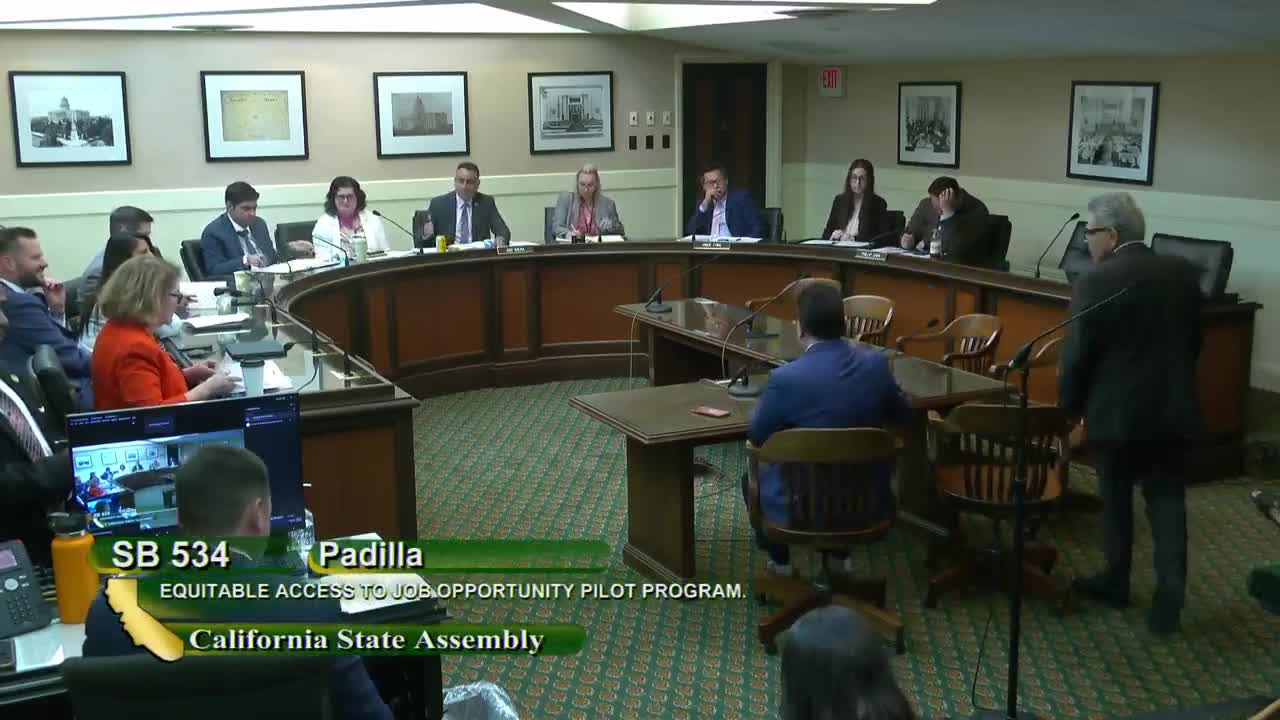 6MIN
Assembly Standing Committee on Labor and Employment
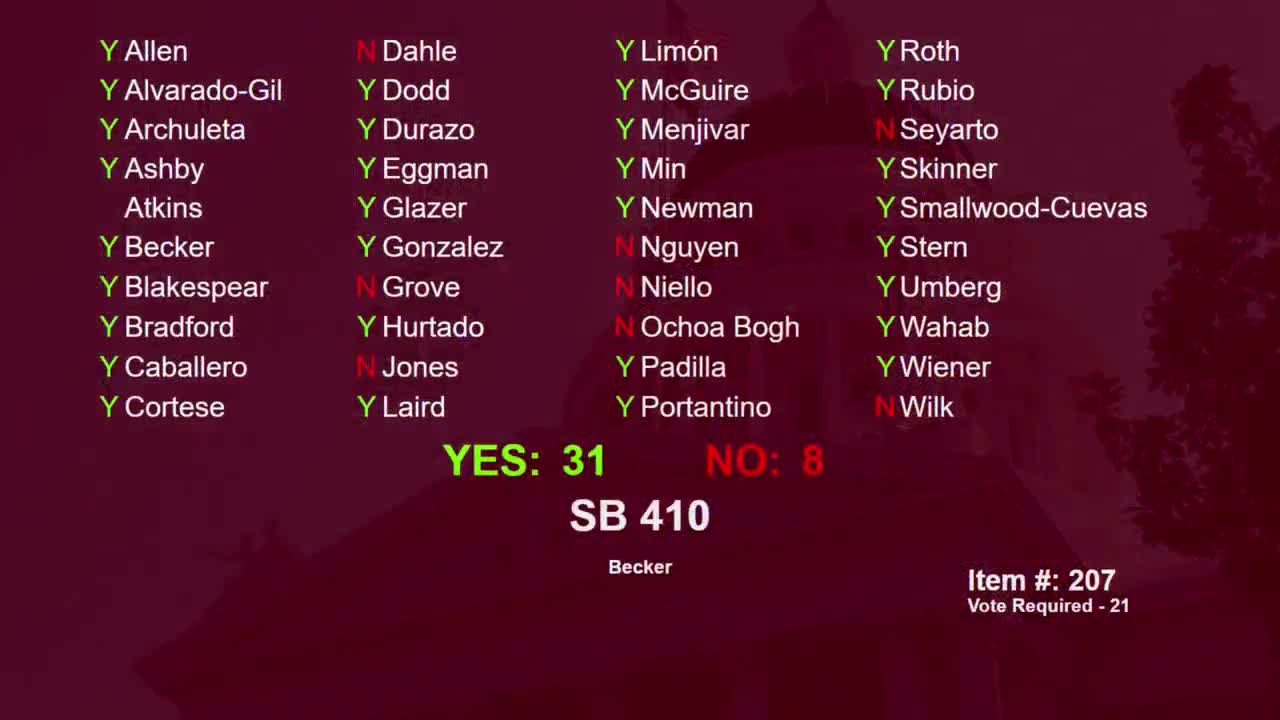 4MIN
Senate Floor
 10MIN
Senate Standing Committee on Labor, Public Employment and Retirement
Bill Author

Bill Co-Author(s):