SB 984: Personal Income Tax Law: deductions: tips.
- Session Year: 2025-2026
- House: Senate
- Latest Version Date: 2026-04-29
Current Status:
In Progress
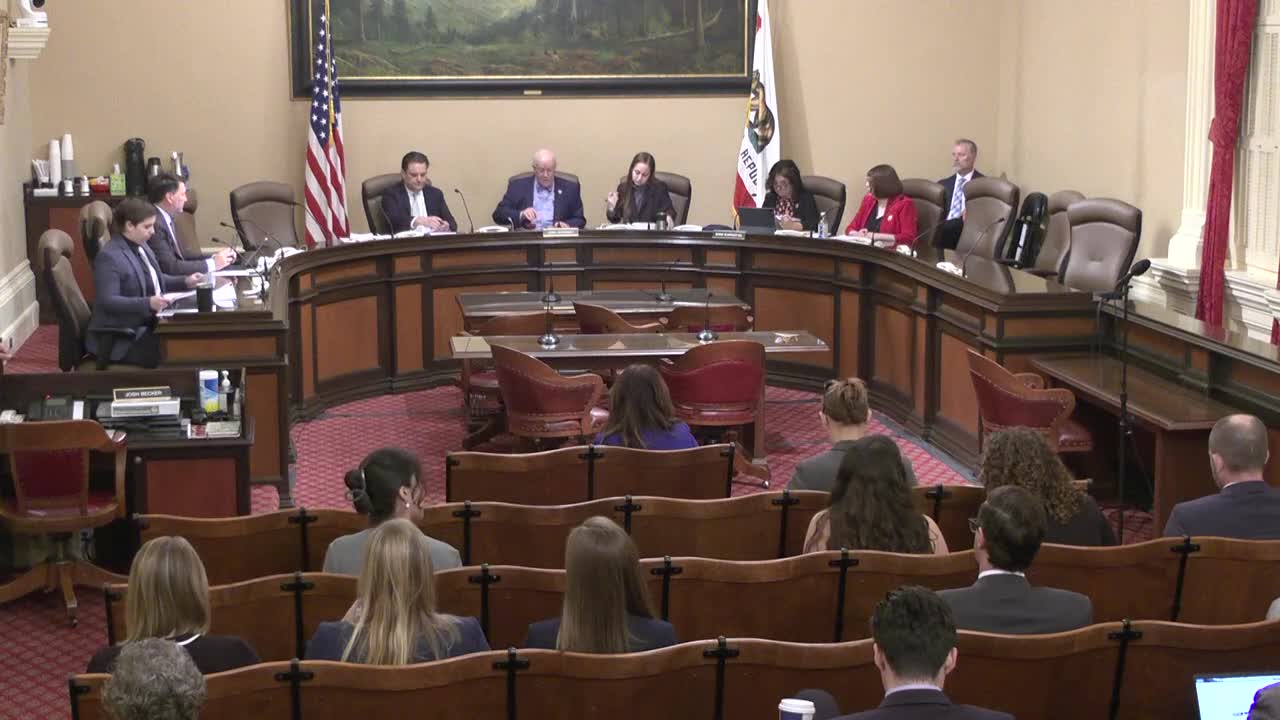
(2026-05-14: May 14 hearing: Held in committee and under submission.)
Introduced
In Committee
Awaiting First Chamber Vote
Passed First Chamber
In Committee
Awaiting Second Chamber Vote
Passed Second Chamber
Enacted
What does this bill do?
This bill lets workers who receive tips deduct qualified tip income on their California tax returns for tax years beginning in 2026 through 2028 by adopting the federal rule (Internal Revenue Code Section 224) as it read on January 1, 2026. It removes the federal requirement to provide a Social Security number to claim the deduction, requires the Franchise Tax Board to report how many taxpayers claim the deduction and the average amount claimed, and the provision expires on December 1, 2029.
The summary is provided by generative AI which can make mistakes. For original language, please view the details in the table below.
The Personal Income Tax Law, in modified conformity with federal income tax laws, allows various deductions in calculating taxable income. Existing federal income tax law, for taxable years beginning before January 1, 2029, allows deductions in determining taxable income, as defined, for amounts equal to the qualified tips, as defined.
This bill, for taxable years beginning on or after January 1, 2026, and before January 1, 2029, would conform to federal income tax law with regard to qualified tips. tips, except as provided.
Existing law requires any bill authorizing a new tax expenditure to contain, among other things, specific goals that the tax expenditure will achieve, detailed performance indicators, and data collection requirements.
This bill also would include additional information required for any bill authorizing a new tax expenditure.
This bill would take effect immediately as a tax levy.
The Personal Income Tax Law, in modified conformity with federal income tax laws, allows various deductions in calculating taxable income. Existing federal income tax law, for taxable years beginning before January 1, 2029, allows deductions in determining taxable income, as defined, for amounts equal to the qualified tips, as defined.
This bill, for taxable years beginning on or after January 1, 2026, and before January 1, 2029, would conform to federal income tax law with regard to qualified tips.
Existing law requires any bill authorizing a new tax expenditure to contain, among other things, specific goals that the tax expenditure will achieve, detailed performance indicators, and data collection requirements.
This bill also would include additional information required for any bill authorizing a new tax expenditure.
This bill would take effect immediately as a tax levy.
(a)For taxable years beginning on or after January 1, 2026, and before January 1, 2029, Section 224 of the Internal Revenue Code, relating to qualified tips, as it read on January 1, 2026, shall apply, except that in subsection (g) thereof the term secretary shall be replaced by the term Franchise Tax Board. except that Section 224(e) of the Internal Revenue Code, relating to social security number required, shall not apply.
(b)(1)For purposes of complying with Section 41, the Legislature finds and declares the following:
(A)The specific goal of the deduction provided by this section is to help workers retain more of their earnings.
(B)The performance indicators for the Legislature to use in determining whether the deduction achieves its goal shall be the number of taxpayers deducting tips from income pursuant to this section, and the average dollar value amount of those amounts deducted from income.
(2)(A)The Franchise Tax Board, no later than December 1, 2029, shall submit a report to the Legislature, in compliance with Section 9795 of the Government Code, detailing the number of taxpayers deducting tips from income under this section and the average dollar value of those amounts deducted.
(B)The disclosure provisions of this paragraph shall be treated as an exception to Section 19542.
(c)This section shall remain operative only until December 1, 2029, and as of that date is repealed.
SEC. 2.This act provides for a tax levy within the meaning of Article IV of the California Constitution and shall go into immediate effect.
(a)For taxable years beginning on or after January 1, 2026, and before January 1, 2029, Section 224 of the Internal Revenue Code, relating to qualified tips, shall apply, except that in subsection (g) thereof the term secretary shall be replaced by the term Franchise Tax Board.
(b)(1)For purposes of complying with Section 41, the Legislature finds and declares the following:
(A)The specific goal of the deduction provided by this section is to help workers retain more of their earnings.
(B)The performance indicators for the Legislature to use in determining whether the deduction achieves its goal shall be the number of taxpayers deducting tips from income pursuant to this section, and the average dollar value of those amounts deducted from income.
(2)(A)The Franchise Tax Board, no later than December 1, 2029, shall submit a report to the Legislature, in compliance with Section 9795 of the Government Code, detailing the number of taxpayers deducting tips from income under this section and the average dollar value of those amounts deducted.
(B)The disclosure provisions of this paragraph shall be treated as an exception to Section 19542.
(c)This section shall remain operative only until December 1, 2029, and as of that date is repealed.
SEC. 2.This act provides for a tax levy within the meaning of Article IV of the California Constitution and shall go into immediate effect.
|
Date
|
Status
|
|---|---|
| May 14, 2026 | May 14 hearing: Held in committee and under submission. |
| May 12, 2026 | Set for hearing May 14. |
| May 11, 2026 | May 11 hearing: Placed on APPR. suspense file. |
| May 7, 2026 | Set for hearing May 11. |
| May 6, 2026 | From committee: Do pass and re-refer to Com. on APPR. (Ayes 5. Noes 0. Page 4154.) (May 6). Re-referred to Com. on APPR. |
| May 6, 2026 | From committee: Do pass and re-refer to Com. on APPR. (Ayes 5. Noes 0.) (May 6). Re-referred to Com. on APPR. |
| Apr 29, 2026 | From committee with author's amendments. Read second time and amended. Re-referred to Com. on REV. & TAX. |
| Apr 9, 2026 | Set for hearing May 6. |
| Feb 18, 2026 | Referred to Com. on REV. & TAX. |
| Feb 9, 2026 | From printer. May be acted upon on or after March 8. |
| Feb 5, 2026 | Introduced. Read first time. To Com. on RLS. for assignment. To print. |
|
Date
|
Description
|
Location
|
Votes
|
|
|---|---|---|---|---|
| May 11, 2026 | Placed on suspense file | Senate Standing Committee on Appropriations |
Passed |
|
| May 6, 2026 | Do pass, but first be re-referred to the Committee on [Appropriations] | Senate Standing Committee on Revenue and Taxation |
Passed |
This list shows positions taken on this bill by organizations on the date displayed, which is linked to the original source.
Positions by individuals are not included.
|
Organization
|
Position
|
Date
|
|---|---|---|
| California Restaurant Association | ** Support | |
| California Society Of Enrolled Agents | ** Support | |
| California Teachers Association | ** Against | |
| Howard Jarvis Taxpayers Association | ** Support | |
| One individual | ** Against | |
| Six Individuals | ** Support | |
| Southwest California Legislative Council | ** Support |
SENATE COMMITTEE ON
Senator Sabrina Cervantes, Chair
2025 - 2026 Regular Session
SB 984 (Ochoa Bogh) - Personal Income Tax Law: deductions: tips
Version: | Policy Vote: |
Urgency: | Mandate: |
Hearing Date: | Consultant: |
Bill Summary:
SB 984 would conform state law to the federal deduction for tipped income.
Fiscal Impact:
The Franchise Tax Board (FTB) estimates that this bill would result in General Fund revenue losses of $650 million in 2026-27, $430 million in 2027-28, and $210 million in 2028-29. FTB’s administrative costs have yet to be identified.
Background:
Tax expenditure programs (TEPs) are special tax provisions that reduce the amount of revenues the “basic” tax system would otherwise generate in order to provide (1) benefits to certain groups of taxpayers, and/or (2) incentives to encourage certain types of behavior and activities, such as charitable giving. Specifically, current law provides for, among other things, various income and corporation tax credits and deductions, as well as exemptions from the sales and use tax. The Department of Finance is required to publish a list of TEPs (currently totaling several hundred), which currently exceed $94 billion annually.
Current federal and state laws provide that gross income includes all income from any source, unless specifically excluded; examples include amounts received as a gift or inheritance, certain compensation for injuries and sickness, qualified scholarships, educational assistance programs, foster care payments, and interest received on certain state or federal obligations.
Existing federal and state laws allow for the deduction of certain expenses from gross income when calculating adjusted gross income (AGI). Some examples include moving expenses for members of the armed service, as well as certain ordinary and necessary trade and business expenses. These are known as “above the line” deductions. Unlike itemized deductions, such as charitable deductions and mortgage interest deductions, all taxpayers with these types of expenses may take the corresponding deduction. In other words, the taxpayer can take above-the-line deductions regardless of whether the taxpayer claims the standard or itemized deduction. Tips have always been considered income.
In July 2025, Congress enacted H.R. 1, which allows a deduction of up to $25,000 for qualified tips received, applicable for tax years 2025 through 2028. The deduction is reduced for taxpayers whose modified adjusted gross income exceeds $150,000 for single taxpayers, or $300,000 for married filing joint taxpayers. The deduction applies to tips reported by employees to employers under current requirements in federal law. H.R. 1 defined “qualified tips” as cash paid, or amounts charged, including amounts received by an employee under any tip sharing arrangement in an occupation that receives tips on a customary and regular basis, but excludes amounts that are not provided voluntarily, not in a specified service trade or business, or excluded under guidance to be established by the Secretary of the U.S. Department of the Treasury. The deduction is available to taxpayers regardless of whether they itemize deductions or claim the standard deduction, similar to an above-the-line deduction.
State law does not automatically conform to federal changes. Instead, the Legislature must conform to federal changes. Specifically, it can pass (1) an individual bill that conforms to a specific federal tax provision, or (2) an omnibus bill to conform state law to federal law as of a specified date. Current state law generally conforms to federal tax law as of January 1, 2025 (SB 711, McNerney). H.R. 1 was enacted after SB 711’s conformity date of January 1, 2025; consequently, California currently does not conform to the new tip deduction.
Proposed Law:
This bill, among other things, would conform state law to H.R. 1’s tip deduction, for tax years 2026 through 2028. Any California filer could claim the deduction.
Related Legislation: SB 17 (Ochoa Bogh, 2025) would have conformed state law to H.R. 1. The bill was held under submission on the Suspense File of this Committee.
Staff Comments: FTB’s estimate is largely based on a national estimate from the Joint Committee on Taxation (JCT). JCT estimates the 2025-26 revenue loss at the federal level to be $10 billion.
-- END --
SENATE COMMITTEE ON REVENUE AND TAXATION
Senator Jerry McNerney, Chair
2025 - 2026 Regular
Bill No: | SB 984 | Hearing Date: | 5/6/26 |
Author: | Ochoa Bogh | Tax Levy: | Yes |
Version: | 4/29/26 | Fiscal: | Yes |
Consultant: | Grinnell, Summers | ||
Personal Income Tax Law: deductions: tips
Conforms state law to the federal deduction for tipped income.
Background
Tax expenditures. California law allows various income tax credits, deductions, exemptions, and exclusions. The Legislature enacts such tax incentives either to compensate taxpayers for incurring certain expenses, such as child adoption, or to influence certain behavior, such as charitable giving. The Legislature uses tax incentives to encourage taxpayers to do something that they would not otherwise do. The Department of Finance is required annually to publish a list of state tax expenditures, currently totaling around $94.5 billion per year in foregone General Fund revenue.
Income. Existing federal and state laws provide that gross income includes all income from any source, including compensation for services, business income, gains from property, interest, dividends, rents, and royalties, unless specifically excluded. Existing federal and state laws provide that certain types of income are excluded from gross income, such as amounts received as a gift or inheritance, certain compensation for injuries and sickness, qualified scholarships, educational assistance programs, foster care payments, and interest received on certain state or federal obligations.
Existing federal and state laws allow for the deduction of certain expenses from gross income when calculating adjusted gross income (AGI). Some examples include moving expenses for members of the armed service, as well as certain ordinary and necessary trade and business expenses. These are known as “above the line” deductions. Unlike itemized deductions, such as charitable deductions and mortgage interest deductions, all taxpayers with these types of expenses may take the corresponding deduction. In other words, the taxpayer can take above-the-line deductions regardless of whether the taxpayer claims the standard or itemized deduction.
Tips. Tips have always been considered income, even though enforcement has been ineffective. The Congressional Joint Committee on Taxation estimated the tips tax compliance rate for 1981 to be as low as 16%, noting that the only type of income with a lower compliance rate was illegal income at 5%. In response, Congress enacted the Tax Equity and Fiscal Responsibility Act in 1982, which, among other requirements, directed employees who receive tips to report them to their employers if they receive $20 or more for 1 month. Employers must withhold income and social security taxes on reported tips and remit the withheld taxes to the IRS. Even with these requirements, enforcement is far from perfect; in its estimates of unreported income, the IRS notes that, “since a significant portion of tip income is paid in cash by customers, tip income is subject to less information reporting than most wages and salaries.”
HR 1. In July 2025, Congress enacted H.R. 1 (Public Law 119-21, One Big Beautiful Bill Act, or “OBBBA”). Section 70201 of H.R. 1 allows a deduction of up to $25,000 for qualified tips received, applicable for the 2025 through 2028 taxable years. The deduction is reduced for taxpayers whose modified adjusted gross income exceeds $150,000 for single taxpayers, or $300,000 for married filing joint taxpayers. The deduction applies to tips reported by employees to employers under current requirements in federal law. H.R. 1 defined “qualified tips” as cash paid, or amounts charged, including amounts received by an employee under any tip sharing arrangement in an occupation that receives tips on a customary and regular basis, but excludes amounts that are not provided voluntarily, not in a specified service trade or business, or excluded under guidance to be established by the Secretary of the U.S. Department of the Treasury. Additionally, the tip deduction is available to taxpayers regardless of whether they itemize deductions or claim the standard deduction, similar to an above-the-line deduction.
Unlike other similar tax preferences, H.R. 1 limited the tip deduction solely to taxpayers with Social Security Numbers (SSNs), thereby excluding those who file using an Individual Taxpayer Identification Number (ITIN), which is a 9-digit number issued by the Internal Revenue Service (IRS) for federal income tax purposes when an individual is not eligible for an SSN.
Conformity. State law does not automatically conform to changes in federal tax law, except for specific retirement provisions. Instead, the Legislature must affirmatively conform to federal changes, which it can do in two different ways. First, the Legislature can pass an individual tax bill that conforms to a specific federal provision, such as the Regulated Investment Company Modernization Act (AB 1423, Perea, 2011). Second, the Legislature can enact an omnibus bill to provide that state law conforms to federal law as of a specified date. Currently, state law generally conforms to federal tax law as of January 1, 2025 (SB 711, McNerney, 2025).
As H.R. 1 was enacted after SB 711’s conformity date of January 1, 2025, California has not conformed to the new tip deduction. The author wants to conform to the deduction to provide tax relief to tipped workers in California.
Proposed Law
Senate Bill 984 conforms state law to H.R. 1’s tip deduction, commencing in the 2026 taxable year and ending after the 2028 taxable year. The measure provides that the SSN requirement does not apply, thereby allowing any California filer to claim the deduction. The bill also contains legislative findings and declarations to comply with Section 41 of the Revenue & Taxation Code, and sunsets its provisions on December 1, 2029.
State Revenue Impact
According to the Franchise Tax Board (FTB), the 2/5/26 version of SB 984 results in revenue losses of $600 million in 2026-27, $410 million in 2027-28, and $200 million in 2028-29.
Comments
1. Purpose of the bill. According to the author, “Tipped workers – who are disproportionately of color and female – are more than twice as likely to live in poverty compared to non-tipped workers. Tipped workers are also more likely to be single parents. Nearly three in 10 female workers who earn tips have a child under 18. In part due to the overrepresentation of vulnerable groups in the tipped workforce, both former Vice President Harris and President Trump expressed support for some form of a tax break on tips during the 2024 presidential campaign. In July 2025, President Trump signed HR 1, which allows taxpayers to take a federal deduction on tips they have earned, starting in 2025. To provide relief to workers who rely on tips, SB 984 would align state law to federal law so California workers could take advantage of the deduction for tips on their state income tax return. By ensuring our state’s employees can retain more of their pay, the bill will serve as an economic stimulus, lifting all sectors of the economy.”
2. Equity. Tipped work is a significant, but not especially large, segment of the U.S. economy. The Yale Budget Lab estimates that about four million, or 2.5%, of workers across the country work in jobs that regularly receive tips.[1] That report also states that while workers in various sectors receive tips (like hairstylists or dog walkers), most tipped workers are in the hospitality industry, with more than half in food service. According to the same report, tipped workers have very low incomes: 37% had incomes low enough that they paid no federal income tax in 2022, even before accounting for tax credits; for non-tipped occupations, the equivalent share was only 16%. However, while SB 984 would provide a significant tax benefit for tipped employees whose incomes are generally lower than average, its deduction does not apply to workers in other occupations with similarly low incomes, violating the core principle of equity in taxation. Additionally, SB 984’s benefit does not apply to workers who provide core public services, such as teachers, law enforcement, and first responders, whose income is fully taxable. The Committee may wish to consider the criteria under which professions can deduct income and which should not.
3. Revenue loss. Existing tax law provides various credits, deductions, exclusions, and exemptions for certain taxpayers. Since these items are enacted to accomplish some governmental purpose and are determined to have a cost (in the form of foregone revenues), state law refers to them as “tax expenditures.” This bill would create a new tax expenditure, costing the General Fund in foregone revenue. As a result, the state will have to reduce spending or increase taxes to match the foregone revenue. Additionally, because Proposition 98 establishes a minimum funding guarantee for K-14 education in California, which generally represents roughly 40% of the state’s General Fund revenues, every dollar of General Fund loss results in approximately 40 cents less of funding for K-14 education.
4. Who qualifies? H.R. 1 set a significant precedent by limiting several of its tax benefits to filers with SSNs, including the tip, overtime, and senior deductions. An SSN requirement excludes taxpayers who file using ITINs, which can include noncitizens working in the United States, dependent spouses of U.S. Citizens or residents, and other nonresidents with tax filing obligations. ITIN filers also include foreign students, foreign nationals, and investors working or doing business in the U.S, as well as workers with “unsatisfactory immigration status.” While the federal Earned Income Tax Credit (EITC) requires an SSN, California has allowed ITIN filers to claim the Cal EITC for several years. As introduced, SB 984 would have conformed to the tip deduction’s limitation for filers with SSNs. On April 29th, the author amended SB 984 to decouple from that requirement. Additionally, H.R. 1 only allows married taxpayers who file jointly to claim the deduction, but not when they file separately; SB 984 maintains this restriction.
5. Who’s affected? According to the Yale Policy Lab, women are more likely than men to be tipped workers, representing more than 71% of tipped workers nationally in June 2024, despite representing 47% of total workers. Women of color are especially likely to be tipped workers, making up more than 29% of all tipped workers. The typical tipped worker is a full 10 years younger (31) than the median non-tipped worker. A third, or 33%, of tipped workers are below 25 years of age, (versus 12% for non-tipped), with 13% being teenagers (3% for non-tipped). Among workers in the bottom half of hourly wages — those earning below $25 an hour in 2023 — less than 4% were in a tipped occupation. Recent research defined tipped employees to include waiters and waitresses; bartenders; gaming services workers; barbers, hairdressers, hairstylists, and cosmetologists; and miscellaneous personal appearance workers in all industries.[2]
6. Section 41. Section 41 of the Revenue and Taxation Code requires any bill enacting a new tax expenditure to contain, among other things, specific goals, purposes, and objectives that the tax expenditure will achieve and detailed performance indicators, along with data collection and reporting requirements (SB 1335, Leno, 2014). To comply with Section 41, SB 984:
- States that its goal is to help workers retain more of their earnings.
- Identifies, as performance indicators for the Legislature to use in determining whether the exclusion achieves its goal, the number of taxpayers excluding tips from income under the bill, and the average dollar value of tips excluded from income.
- Directs FTB to provide a report to the Legislature detailing the number of taxpayers excluding tips from income under this section, and the average dollar value of tips excluded, by December 1, 2029.
7. Related legislation. Last year, before Congress enacted H.R. 1, the Committee unanimously approved SB 17 (Ochoa Bogh). By conforming to H.R. 1, SB 984 would align state law to federal law except with regard to the requirement for taxpayers to supply a social security number to claim the deduction. Differences between SB 17 and SB 984 include:
Item: | SB 984 (2026) | SB 17 (2025) |
Amount of Deduction: |
|
|
Applicable Taxable years: |
|
|
Definition of tips: | Cash paid, or amounts charged, including amounts received by an employee under any tip sharing arrangement in an occupation that receives tips on a customary and regular basis. Must be reported on the recipient’s W-2, Forms 1099, 1099-K | Tips or voluntary monetary contributions received by a qualified taxpayer from a guest, patron or customer for services rendered to the guest, patron or customer, and the qualified taxpayer reports the tips for purposes of Section 6053 of the IRC, relating to reporting of tips, and the Federal Insurance Contributions Act |
Definition of qualified taxpayer/criteria for tips: |
The IRS is required to publish a list of occupations that customarily and regularly received tips on or before December 31, 2024, no later than 90 days after the date of the enactment of this Act. | A taxpayer who satisfies all of the following:
|
AGI limitation: | Modified AGI does not exceed $150,000 or $300,000 for MFJ.
| Has an AGI, not including the qualified tips deduction, that does not exceed the following:
|
Self-employed: | Can take the deduction if the business’ gross income exceeds business related deductions. | Does not include a definition. |
Support and Opposition
(5/1/26)
Support: California Restaurant Association
California Society of Enrolled Agents
Howard Jarvis Taxpayers Association
Southwest California Legislative Council
Six Individuals
Opposition: California Teachers Association
One Individual
-- END --
Ernie Tedeschi, “The ‘No Tax on Tips Act’: Background on Tipped Workers,” The Budget Lab at Yale,
June 24, 2024. ↑
Heidi Schierholz, David Cooper, Julia Wolfe, and David Zipperer, “Employers would pocket $5.8 billion of workers’ tips under Trump administration’s proposed ‘tip stealing’ rule,” Economic Policy Institute, December 12, 2017. ↑
Discussed in Hearing
 6MIN