SB 378: Alcoholic beverages: licenses: emergency orders.
- Session Year: 2017-2018
- House: Senate
- Latest Version Date: 2017-06-29
Existing law, the Alcoholic Beverage Control Act, which is administered by the Department of Alcoholic Beverage Control, regulates the application, issuance, and suspension of alcoholic beverage licenses. The act authorizes the department to investigate potential violations of the act, authorizes the Director of Alcoholic Beverage Control to bring an action to enjoin a violation or a threatened violation of the act, and provides for a hearing process held on a protest, accusation, or petition for a license.
This bill would authorize the department, by temporary restraining order, to temporarily suspend or condition any license, as defined, when, in the opinion of the department, and supported by a preponderance of the evidence indicating a pattern of behavior, the action is urgent and necessary to protect against an immediate threat to health or safety, as defined, that is reasonably related to the operation of the licensed business, subject to specified provisions, including provisions related to notice and judicial review. The bill would, in proceedings not initiated by the department, require evidence, as defined, to be presented prior to the issuance of temporary restraining order, which shall include an affidavit signed, under penalty of perjury, by specified persons. The bill would require that a licensee be granted the opportunity to present evidence, as specified, and oral argument at an initial hearing and would permit the licensee to be represented by counsel. For orders granted without notice, the bill would require the department to accept certain evidence from the licensee into the record.
By expanding the scope of the crime of perjury, this bill would impose a state-mandated local program.
The California Constitution requires the state to reimburse local agencies and school districts for certain costs mandated by the state. Statutory provisions establish procedures for making that reimbursement.
This bill would provide that no reimbursement is required by this act for a specified reason.
Existing law, the Alcoholic Beverage Control Act, which is administered by the Department of Alcoholic Beverage Control, regulates the application, issuance, and suspension of alcoholic beverage licenses. The act authorizes the department to investigate potential violations of the act, authorizes the Director of Alcoholic Beverage Control to bring an action to enjoin a violation or a threatened violation of the act, and provides for a hearing process held on a protest, accusation, or petition for a license.
This bill would authorize the department, by temporary restraining order, to temporarily suspend or condition any alcoholic beverage license license, as defined, when, in the opinion of the department, and supported by a preponderance of the evidence, evidence indicating a pattern of behavior, the action is urgent and necessary to protect against an immediate threat to health or safety safety, as defined, that is reasonably related to the operation of the licensed business, subject to specified provisions, including provisions related to notice and judicial review. The bill would, in proceedings not initiated by the department, require evidence, as defined, to be presented prior to the issuance of temporary restraining order, which shall include an affidavit signed, under penalty of perjury, by specified persons. The bill would require that a licensee be granted the opportunity to present evidence, as specified, and oral argument at an initial hearing and would permit the licensee to be represented by counsel. For orders granted without notice, the bill would require the department to accept certain evidence from the licensee into the record.
By expanding the scope of the crime of perjury, this bill would impose a state-mandated local program.
The California Constitution requires the state to reimburse local agencies and school districts for certain costs mandated by the state. Statutory provisions establish procedures for making that reimbursement.
This bill would provide that no reimbursement is required by this act for a specified reason.
Existing law, the Alcoholic Beverage Control Act, which is administered by the Department of Alcoholic Beverage Control, regulates the application, issuance, and suspension of alcoholic beverage licenses. The act authorizes the department to investigate potential violations of the act, authorizes the Director of Alcoholic Beverage Control to bring an action to enjoin a violation or a threatened violation of the act, and provides for a hearing process held on a protest, accusation, or petition for a license.
This bill would authorize the department, by temporary restraining order, to temporarily suspend or condition any alcoholic beverage license when, in the opinion of the department, and supported by a preponderance of the evidence, the action is urgent and necessary to protect against an immediate threat to health or safety that is reasonably related to the operation of the licensed business, subject to specified provisions, including provisions related to notice and judicial review. The bill would, in proceedings not initiated by the department, require evidence, as defined, to be presented prior to the issuance of temporary restraining order, which shall include an affidavit signed, under penalty of perjury, by specified persons. The bill would require that a licensee be granted the opportunity to present evidence, as specified, and oral argument at an initial hearing and would permit the licensee to be represented by counsel. For orders granted without notice, the bill would require the department to accept certain evidence from the licensee into the record.
By expanding the scope of the crime of perjury, this bill would impose a state-mandated local program.
The California Constitution requires the state to reimburse local agencies and school districts for certain costs mandated by the state. Statutory provisions establish procedures for making that reimbursement.
This bill would provide that no reimbursement is required by this act for a specified reason.
Existing law, the Alcoholic Beverage Control Act, which is administered by the Department of Alcoholic Beverage Control, regulates the application, issuance, and suspension of alcoholic beverage licenses. The act authorizes the department to investigate potential violations of the act, authorizes the Director of Alcoholic Beverage Control to bring an action to enjoin a violation or a threatened violation of the act, and provides for a hearing process held on a protest, accusation, or petition for a license.
This bill would authorize the director, department, by temporary restraining order, to temporarily suspend or condition any alcoholic beverage license when, in the opinion of the department, and supported by evidence, the action is urgent and necessary to protect against an immediate threat to health or safety that is reasonably related to the operation of the licensed business. business, subject to specified provisions, including provisions related to notice and judicial review. The bill would, in proceedings not initiated by the department, require direct evidence, as defined, to be presented prior to the issuance of temporary restraining order, which would shall include an affidavit signed, under penalty of perjury, by specified persons.
By expanding the scope of the crime of perjury, this bill would impose a state-mandated local program.
The California Constitution requires the state to reimburse local agencies and school districts for certain costs mandated by the state. Statutory provisions establish procedures for making that reimbursement.
This bill would provide that no reimbursement is required by this act for a specified reason.
Existing law, the Alcoholic Beverage Control Act, which is administrated administered by the Department of Alcoholic Beverage Control, regulates the application, issuance, and suspension of alcoholic beverage licenses. The act authorizes the department to investigate potential violations of the act, authorizes the Director of the Department of Alcoholic Beverage Control to bring an action to enjoin a violation or the a threatened violation of the act, and provides for a hearing process held on a protest, accusation, or petition for a license.
This bill would authorize the director, by emergency order temporary restraining order, to temporarily suspend, limit, suspend or condition any alcoholic beverage license that authorizes consumption of alcohol on the premises of the licensee, except as specified, prior to any hearing when, in the opinion of the department, the action is urgent and necessary to protect against an immediate threat to health or safety that is reasonably related to the operation of the licensed business. The bill would, among other things related to the issuance and application of an emergency order, authorize a licensee against whom the order has been issued to petition for relief by written argument. The bill, upon order of the department, would authorize the hearing to be conducted electronically. The bill would authorize a licensee to bring a cause of action seeking damages against a local civil authority, law enforcement, or another public official acting in his or her official capacity, if the licensee can establish that the direct evidence proffered to the department to support the existence of an immediate threat to health or safety was false and presented with malicious intent. would, in proceedings not initiated by the department, require direct evidence, as defined, to be presented prior to the issuance of temporary restraining order, which would include an affidavit signed, under penalty of perjury, by specified persons.
By expanding the scope of the crime of perjury, this bill would impose a state-mandated local program.
The California Constitution requires the state to reimburse local agencies and school districts for certain costs mandated by the state. Statutory provisions establish procedures for making that reimbursement.
This bill would provide that no reimbursement is required by this act for a specified reason.
Existing law, the Alcoholic Beverage Control Act, which is administrated by the Department of Alcoholic Beverage Control, regulates the application, issuance, and suspension of alcoholic beverage licenses. The act authorizes the department to investigate potential violations of the act, authorizes the Director of the Department of Alcoholic Beverage Control to bring an action to enjoin a violation or the threatened violation of the act, and provides for a hearing process held on a protest, accusation, or petition for a license.
This bill would authorize the director, by emergency order, to temporarily suspend, limit, or condition any license that authorizes consumption of alcohol on the premises of the licensee, except as specified, prior to any hearing when, in the opinion of the department, the action is urgent and necessary to protect against an immediate threat to health or safety that is reasonably related to the operation of the licensed business. The bill would, among other things related to the issuance and application of an emergency order, authorize a licensee against whom the order has been issued to petition for relief by written argument. The bill, upon order of the department, would authorize the hearing to be conducted electronically. The bill would authorize a licensee to bring a cause of action seeking damages against a local civil authority, law enforcement, or another public official acting in his or her official capacity, if the licensee can establish that the direct evidence proffered to the department to support the existence of an immediate threat to health or safety was false and presented with malicious intent.
(a)(1)The department may temporarily suspend or condition any license issued pursuant to this division by temporary restraining order when, in the opinion of the department, and supported by a preponderance of the evidence indicating a pattern of behavior, the action is urgent and necessary to protect against an immediate threat to health or safety that is reasonably related to the operation of the licensed business.
(2)Unless initiated by the department, evidence of the threat must be presented prior to the issuance of temporary restraining order pursuant to this section, and shall include an affidavit describing the basis for the request signed by the citys chief of police, or county sheriff of that region, and the city manager or mayor requesting the order.
(3)A petition under this section may be initiated by the department, a city attorney, or a city county counsel.
(4)The licensee shall be granted the opportunity to present affidavits and other documentary evidence and to present oral argument at the initial hearing conducted pursuant to this section. The licensee may be represented by counsel. If the order is granted without notice, the department shall accept affidavits and other documentary evidence from the licensee into the record.
(b)The decision of the department on the petition for the temporary restraining order is final, subject only to judicial review in accordance with subdivision (e).
(c)No temporary restraining order shall be granted without notice to the opposing party, unless both of the following requirements are satisfied:
(1)It appears from facts shown by affidavit or by the petition that great or irreparable injury will result before the matter can be heard on notice.
(2)Unless initiated by the department, the petitioner or the petitioners attorney certifies one of the following to the department by affidavit:
(A)That within a reasonable time prior to the petition, the petitioner informed the licensee or the licensees attorney at what time and where the petition would be made.
(B)That the petitioner in good faith attempted but was unable to inform the licensee or the licensees attorney, specifying the efforts made to contact them.
(d)Upon the granting of a temporary restraining order, with or without notice to the licensee or the licensees attorney, the following shall occur:
(1)The matter shall be made returnable on an order requiring cause to be shown why a preliminary injunction should not be granted, on the earliest day that the business of the department will admit of, but not later than 15 days or, if good cause is appears to the department, 22 days from the date the temporary restraining order is issued.
(2)The party who obtained the temporary restraining order shall, within five days from the date the temporary restraining order is issued or two days prior to the hearing, whichever is earlier, serve on the licensee or the licensees attorney a copy of the petition if not previously served, the order to show cause stating the date, time, and place of the hearing, any affidavits to be used in the application, and a copy of the points and authorities in support of the petition. The court may for good cause, on motion of the petitioner or on its own motion, shorten the time required by this paragraph for service on the licensee or the licensees attorney.
(3)When the matter first comes up for hearing, if the party who obtained the temporary restraining order is not ready to proceed, or if the party has failed to effect service as required by paragraph (2), the department shall dissolve the temporary restraining order.
(4)The licensee is entitled to one continuance for a reasonable period of not less than 15 days or any shorter period requested by the licensee, to enable it to respond to the petition for a preliminary injunction. If the licensee obtains a continuance under this paragraph, the temporary restraining order shall remain in effect until the date of the continued hearing.
(5)Upon the filing of an affidavit by the petitioner that the licensee or the licensees attorney could not be served within the time required by paragraph (2), the department may reissue any temporary restraining order previously issued. The reissued order shall be made returnable as provided in paragraph (1), with the time for hearing measured from the date of reissuance.
(e)A temporary restraining order or temporary preliminary injunction issued under this section shall be subject to judicial review review by the superior court pursuant to Section 1094.5 of the Code of Civil Procedure. The review shall be limited to a determination of whether the department abused its discretion, based upon a review of the record, in the issuance of the temporary restraining order or preliminary injunction. Review by the superior court pursuant to this subdivision shall not be construed as giving the superior court jurisdiction over any other matter or aspect of a case contrary to Section 23090.5. The decision of the superior court following review of the temporary restraining order or preliminary injunction pursuant to this subdivision shall not be considered by the department or the Alcoholic Beverage Control Appeals Board in connection with any final decision of the department or the review of any such final decision of the department.
(f)The order may be modified or dissolved by the department upon a showing that there has been a material change in the facts upon which the temporary restraining order was granted, that the law upon which the injunction or temporary restraining order was granted has changed, or that the ends of justice would be served by the modification or dissolution of the temporary restraining order.
(g)Following the issuance of the temporary restraining order and prior to the hearing specified in paragraph (1) of subdivision (d), an accusation alleging cause for discipline of the license shall be filed with the department.
(h)Failure to comply with an order issued pursuant to this section shall constitute a separate cause for disciplinary action against the license. Allegations of noncompliance with the order may be filed at any time prior to the rendering of a decision on the accusation. Violation of the order is established upon proof that the licensee was on notice of the order and its terms, and that the order was in effect at the time of the violation. The finding of a violation of an order made at the hearing on the accusation shall be reviewed as a part of any review of a final decision.
If the order issued by the department provides for anything less than a complete suspension of the license and the licensee violates the order prior to the hearing on the accusation provided for in subdivision (d), the department may, upon notice to the licensee and proof of violation, modify or expand the order.
(i)The orders provided for by this section shall be in addition to, and not a limitation on, the authority to seek injunctive relief provided in any other provision of law.
(j)Notwithstanding Section 24300, upon order of the department, the initial hearing conducted pursuant to this section may be conducted electronically, including by telephone or by video. The hearing need not be held in the county in which the premises or licensee are located.(j)(1)Notwithstanding the provisions in subdivision (a) of Section 24300 regarding the location where a hearing must be held, the initial hearing conducted pursuant to this section may be held in a county other than the county in which the premises or licensee is located, upon order of the department.
(2)The department may order the hearing to be conducted electronically, including by telephone or by video. The licensee shall be permitted to appear in person upon request. If the licensee requests to appear in person, the hearing may still be conducted at a location pursuant to paragraph (1) and may still be recorded electronically.
(k)The department shall adopt regulations to develop the procedures necessary to implement this section.
(l)For purposes of this section:
(1)Evidence includes, but is not limited to, police reports, citations from the relevant local civil authority, photographs, and video footage provided by law enforcement or another public official acting in his or her official capacity.
(2)Immediate threat to health and safety means any of the following that occurs on the premises of a licensee:
(A)Child endangerment.
(B)Extortion.
(C)Human trafficking.
(D)Illegal use, manufacture, or distribution of controlled substances.
(E)Prostitution.
(F)Sexual assault.
(G)Violence resulting in great bodily injury or death.
(3)License means a retail license, license issued pursuant to this division, that authorizes consumption of alcoholic beverages on the premises of a licensee, excluding licenses issued for the manufacturing, production, rectification, importation, distribution, or wholesaling of alcoholic beverages. License does not include a retail license for the premises of a federally recognized Indian tribe operating a casino.
(4)Temporary restraining order and preliminary injunction mean a temporary or interim emergency order issued by the department.
SEC. 2.No reimbursement is required by this act pursuant to Section 6 of Article XIIIB of the California Constitution because the only costs that may be incurred by a local agency or school district will be incurred because this act creates a new crime or infraction, eliminates a crime or infraction, or changes the penalty for a crime or infraction, within the meaning of Section 17556 of the Government Code, or changes the definition of a crime within the meaning of Section 6 of Article XIIIB of the California Constitution.
(a)(1)The department may temporarily suspend or condition any license issued pursuant to this division by temporary restraining order when, in the opinion of the department, and supported by a preponderance of the evidence, evidence indicating a pattern of behavior, the action is urgent and necessary to protect against an immediate threat to health or safety that is reasonably related to the operation of the licensed business.
(2)Unless initiated by the department, evidence of the threat must be presented prior to the issuance of temporary restraining order pursuant to this section, and shall include an affidavit describing the basis for the request signed by the citys chief of police, or county sheriff of that region, and the city manager or mayor requesting the order.
(3)A petition under this section may be initiated by the department, a city attorney, or a city counsel.
(4)The licensee shall be granted the opportunity to present affidavits and other documentary evidence and to present oral argument at the initial hearing conducted pursuant to this section. The licensee may be represented by counsel. If the order is granted without notice, the department shall accept affidavits and other documentary evidence from the licensee into the record.
(b)The decision of the department on the petition for the temporary restraining order is final, subject only to judicial review in accordance with subdivision (e).
(c)No temporary restraining order shall be granted without notice to the opposing party, unless both of the following requirements are satisfied:
(1)It appears from facts shown by affidavit or by the petition that great or irreparable injury will result before the matter can be heard on notice.
(2)Unless initiated by the department, the petitioner or the petitioners attorney certifies one of the following to the department by affidavit:
(A)That within a reasonable time prior to the petition, the petitioner informed the licensee or the licensees attorney at what time and where the petition would be made.
(B)That the petitioner in good faith attempted but was unable to inform the licensee or the licensees attorney, specifying the efforts made to contact them.
(d)Upon the granting of a temporary restraining order, with or without notice to the licensee or the licensees attorney, the following shall occur:
(1)The matter shall be made returnable on an order requiring cause to be shown why a preliminary injunction should not be granted, on the earliest day that the business of the department will admit of, but not later than 15 days or, if good cause is appears to the department, 22 days from the date the temporary restraining order is issued.
(2)The party who obtained the temporary restraining order shall, within five days from the date the temporary restraining order is issued or two days prior to the hearing, whichever is earlier, serve on the licensee or the licensees attorney a copy of the petition if not previously served, the order to show cause stating the date, time, and place of the hearing, any affidavits to be used in the application, and a copy of the points and authorities in support of the petition. The court may for good cause, on motion of the petitioner or on its own motion, shorten the time required by this paragraph for service on the licensee or the licensees attorney.
(3)When the matter first comes up for hearing, if the party who obtained the temporary restraining order is not ready to proceed, or if the party has failed to effect service as required by paragraph (2), the department shall dissolve the temporary restraining order.
(4)The licensee is entitled to one continuance for a reasonable period of not less than 15 days or any shorter period requested by the licensee, to enable it to respond to the petition for a preliminary injunction. If the licensee obtains a continuance under this paragraph, the temporary restraining order shall remain in effect until the date of the continued hearing.
(5)Upon the filing of an affidavit by the petitioner that the licensee or the licensees attorney could not be served within the time required by paragraph (2), the department may reissue any temporary restraining order previously issued. The reissued order shall be made returnable as provided in paragraph (1), with the time for hearing measured from the date of reissuance.
(e)A temporary restraining order or temporary injunction issued under this section shall be subject to judicial review in the same manner as if it were a final order of the Alcoholic Beverage Control Appeals Board, pursuant to Article 5 (commencing with Section 23090). The review of an order shall be limited to a determination of whether the order was not issued in the manner required by law, or if the court determines that the order is not supported by substantial evidence in light of the whole record. pursuant to Section 1094.5 of the Code of Civil Procedure.
(f)The order may be modified or dissolved by the department upon a showing that there has been a material change in the facts upon which the temporary restraining order was granted, that the law upon which the injunction or temporary restraining order was granted has changed, or that the ends of justice would be served by the modification or dissolution of the temporary restraining order.
(g)Following the issuance of the temporary restraining order and prior to the hearing specified in paragraph (1) of subdivision (d), an accusation alleging cause for discipline of the license shall be filed with the department.
(h)Failure to comply with an order issued pursuant to this section shall constitute a separate cause for disciplinary action against the license. Allegations of noncompliance with the order may be filed at any time prior to the rendering of a decision on the accusation. Violation of the order is established upon proof that the licensee was on notice of the order and its terms, and that the order was in effect at the time of the violation. The finding of a violation of an order made at the hearing on the accusation shall be reviewed as a part of any review of a final decision.
If the order issued by the department provides for anything less than a complete suspension of the license and the licensee violates the order prior to the hearing on the accusation provided for in subdivision (d), the department may, upon notice to the licensee and proof of violation, modify or expand the order.
(i)The orders provided for by this section shall be in addition to, and not a limitation on, the authority to seek injunctive relief provided in any other provision of law.
(j)Notwithstanding Section 24300, upon order of the department, the initial hearing conducted pursuant to this section may be conducted electronically, including by telephone or by video. The hearing need not be held in the county in which the premises or licensee are located.
(k)The department shall adopt regulations to develop the procedures necessary to implement this section.
(l)For purposes of this section:
(1)Evidence includes, but is not limited to, police reports, citations from the relevant local civil authority, photographs, and video footage provided by law enforcement or another public official acting in his or her official capacity.
(2)Immediate threat to health and safety means any of the following that occurs on the premises of a licensee:
(A)Child endangerment.
(B)Extortion.
(C)Human trafficking.
(D)Illegal use, manufacture, or distribution of controlled substances.
(E)Prostitution.
(F)Sexual assault.
(G)Violence resulting in great bodily injury or death.
(3)License means a retail license, issued pursuant to this division, that authorizes consumption of alcoholic beverages on the premises of a licensee, excluding licenses issued for the manufacturing, production, rectification, importation, distribution, or wholesaling of alcoholic beverages. License does not include a retail license for the premises of a federally recognized Indian tribe operating a casino.
(2)(4)Temporary restraining order and preliminary injunction mean a temporary or interim emergency order issued by the department.
SEC. 2.No reimbursement is required by this act pursuant to Section 6 of Article XIIIB of the California Constitution because the only costs that may be incurred by a local agency or school district will be incurred because this act creates a new crime or infraction, eliminates a crime or infraction, or changes the penalty for a crime or infraction, within the meaning of Section 17556 of the Government Code, or changes the definition of a crime within the meaning of Section 6 of Article XIIIB of the California Constitution.
(a)(1)The department may temporarily suspend or condition any license issued pursuant to this division by temporary restraining order when, in the opinion of the department, and supported by a preponderance of the evidence, the action is urgent and necessary to protect against an immediate threat to health or safety that is reasonably related to the operation of the licensed business.
(2)Unless initiated by the department, evidence of the threat must be presented prior to the issuance of temporary restraining order pursuant to this section, and shall include an affidavit describing the basis for the request signed by the citys chief of police, or county sheriff of that region, and the city manager or mayor requesting the order.
(3)A petition under this section may be initiated by the department, a city attorney, or a city counsel.
(4)The licensee shall be granted the opportunity to present affidavits and other documentary evidence and to present oral argument at the initial hearing conducted pursuant to this section. The licensee may be represented by counsel. If the order is granted without notice, the department shall accept affidavits and other documentary evidence from the licensee into the record.
(b)The decision of the department on the petition for the temporary restraining order is final, subject only to judicial review in accordance with subdivision (e).
(c)No temporary restraining order shall be granted without notice to the opposing party, unless both of the following requirements are satisfied:
(1)It appears from facts shown by affidavit or by the petition that great or irreparable injury will result before the matter can be heard on notice.
(2)Unless initiated by the department, the petitioner or the petitioners attorney certifies one of the following to the department by affidavit:
(A)That within a reasonable time prior to the petition, the petitioner informed the licensee or the licensees attorney at what time and where the petition would be made.
(B)That the petitioner in good faith attempted but was unable to inform the licensee or the licensees attorney, specifying the efforts made to contact them.
(d)Upon the granting of a temporary restraining order, with or without notice to the licensee or the licensees attorney, the following shall occur:
(1)The matter shall be made returnable on an order requiring cause to be shown why a preliminary injunction should not be granted, on the earliest day that the business of the department will admit of, but not later than 15 days or, if good cause is appears to the department, 22 days from the date the temporary restraining order is issued.
(2)The party who obtained the temporary restraining order shall, within five days from the date the temporary restraining order is issued or two days prior to the hearing, whichever is earlier, serve on the licensee or the licensees attorney a copy of the petition if not previously served, the order to show cause stating the date, time, and place of the hearing, any affidavits to be used in the application, and a copy of the points and authorities in support of the petition. The court may for good cause, on motion of the petitioner or on its own motion, shorten the time required by this paragraph for service on the licensee or the licensees attorney.
(3)When the matter first comes up for hearing, if the party who obtained the temporary restraining order is not ready to proceed, or if the party has failed to effect service as required by paragraph (2), the department shall dissolve the temporary restraining order.
(4)The licensee is entitled to one continuance for a reasonable period of not less than 15 days or any shorter period requested by the licensee, to enable it to respond to the petition for a preliminary injunction. If the licensee obtains a continuance under this paragraph, the temporary restraining order shall remain in effect until the date of the continued hearing.
(5)Upon the filing of an affidavit by the petitioner that the licensee or the licensees attorney could not be served within the time required by paragraph (2), the department may reissue any temporary restraining order previously issued. The reissued order shall be made returnable as provided in paragraph (1), with the time for hearing measured from the date of reissuance.
(e)A temporary restraining order issued under this section shall be subject to judicial review in the same manner as if it were a final order of the Alcoholic Beverage Control Appeals Board, pursuant to Article 5 (commencing with Section 23090). The review of an order shall be limited to a determination of whether the order was not issued in the manner required by law, or if the court determines that the order is not supported by substantial evidence in light of the whole record.
(f)The order may be modified or dissolved by the department upon a showing that there has been a material change in the facts upon which the temporary restraining order was granted, that the law upon which the injunction or temporary restraining order was granted has changed, or that the ends of justice would be served by the modification or dissolution of the temporary restraining order.
(g)Following the issuance of the temporary restraining order and prior to the hearing specified in paragraph (1) of subdivision (d), an accusation alleging cause for discipline of the license shall be filed with the department.
(h)Failure to comply with an order issued pursuant to this section shall constitute a separate cause for disciplinary action against the license. Allegations of noncompliance with the order may be filed at any time prior to the rendering of a decision on the accusation. Violation of the order is established upon proof that the licensee was on notice of the order and its terms, and that the order was in effect at the time of the violation. The finding of a violation of an order made at the hearing on the accusation shall be reviewed as a part of any review of a final decision.
If the order issued by the department provides for anything less than a complete suspension of the license and the licensee violates the order prior to the hearing on the accusation provided for in subdivision (d), the department may, upon notice to the licensee and proof of violation, modify or expand the order.
(i)The orders provided for by this section shall be in addition to, and not a limitation on, the authority to seek injunctive relief provided in any other provision of law.
(j)Notwithstanding Section 24300, upon order of the department, the initial hearing conducted pursuant to this section may be conducted electronically, including by telephone or by video. The hearing need not be held in the county in which the premises or licensee are located.
(k)The department shall adopt regulations to develop the procedures necessary to implement this section.
(l)For purposes of this section:
(1)Evidence includes, but is not limited to, police reports, citations from the relevant local civil authority, photographs, and video footage provided by law enforcement or another public official acting in his or her official capacity.
(2)Temporary restraining order and preliminary injunction mean a temporary or interim emergency order issued by the department.
SEC. 2.No reimbursement is required by this act pursuant to Section 6 of Article XIIIB of the California Constitution because the only costs that may be incurred by a local agency or school district will be incurred because this act creates a new crime or infraction, eliminates a crime or infraction, or changes the penalty for a crime or infraction, within the meaning of Section 17556 of the Government Code, or changes the definition of a crime within the meaning of Section 6 of Article XIIIB of the California Constitution.
(a)(1)The director department may temporarily suspend or condition any license issued pursuant to this division by temporary restraining order when, in the opinion of the department, and supported by evidence, the action is urgent and necessary to protect against an immediate threat to health or safety that is reasonably related to the operation of the licensed business.
(2)Any proceeding brought hereunder shall conform to the requirements of Chapter 3 (commencing with Section 525) of Title 7 of Part 2 of the Code of Civil Procedure.(3)(2)Unless initiated by the department, direct evidence of the threat must be presented to the director prior to the issuance of temporary restraining order pursuant to this section, and shall include an affidavit describing the basis for the request signed by the citys chief of police, or county sheriff of that region, and the city manager or mayor requesting the order.
(3)A petition under this section may be initiated by the department, a city attorney, or a city counsel.
(b)The decision of the department on the petition for the temporary restraining order is final, subject only to judicial review in accordance with subdivision (e).
(c)No temporary restraining order shall be granted without notice to the opposing party, unless both of the following requirements are satisfied:
(1)It appears from facts shown by affidavit or by the petition that great or irreparable injury will result before the matter can be heard on notice.
(2)Unless initiated by the department, the petitioner or the petitioners attorney certifies one of the following to the department by affidavit:
(A)That within a reasonable time prior to the petition, the petitioner informed the licensee or the licensees attorney at what time and where the petition would be made.
(B)That the petitioner in good faith attempted but was unable to inform the licensee or the licensees attorney, specifying the efforts made to contact them.
(d)Upon the granting of a temporary restraining order, with or without notice to the licensee or the licensees attorney, the following shall occur:
(1)The matter shall be made returnable on an order requiring cause to be shown why a preliminary injunction should not be granted, on the earliest day that the business of the department will admit of, but not later than 15 days or, if good cause is appears to the department, 22 days from the date the temporary restraining order is issued.
(2)The party who obtained the temporary restraining order shall, within five days from the date the temporary restraining order is issued or two days prior to the hearing, whichever is earlier, serve on the licensee or the licensees attorney a copy of the petition if not previously served, the order to show cause stating the date, time, and place of the hearing, any affidavits to be used in the application, and a copy of the points and authorities in support of the petition. The court may for good cause, on motion of the petitioner or on its own motion, shorten the time required by this paragraph for service on the licensee or the licensees attorney.
(3)When the matter first comes up for hearing, if the party who obtained the temporary restraining order is not ready to proceed, or if the party has failed to effect service as required by paragraph (2), the department shall dissolve the temporary restraining order.
(4)The licensee is entitled to one continuance for a reasonable period of not less than 15 days or any shorter period requested by the licensee, to enable it to respond to the petition for a preliminary injunction. If the licensee obtains a continuance under this paragraph, the temporary restraining order shall remain in effect until the date of the continued hearing.
(5)Upon the filing of an affidavit by the petitioner that the licensee or the licensees attorney could not be served within the time required by paragraph (2), the department may reissue any temporary restraining order previously issued. The reissued order shall be made returnable as provided in paragraph (1), with the time for hearing measured from the date of reissuance.
(e)A temporary restraining order issued under this section shall be subject to judicial review in the same manner as if it were a final order of the Alcoholic Beverage Control Appeals Board, pursuant to Article 5 (commencing with Section 23090). The review of an order shall be limited to a determination of whether the order was not issued in the manner required by law, or if the court determines that the order is not supported by substantial evidence in light of the whole record.
(f)The order may be modified or dissolved by the department upon a showing that there has been a material change in the facts upon which the temporary restraining order was granted, that the law upon which the injunction or temporary restraining order was granted has changed, or that the ends of justice would be served by the modification or dissolution of the temporary restraining order.
(g)Following the issuance of the temporary restraining order and prior to the hearing specified in paragraph (1) of subdivision (d), an accusation alleging cause for discipline of the license shall be filed with the department.
(h)Failure to comply with an order issued pursuant to this section shall constitute a separate cause for disciplinary action against the license. Allegations of noncompliance with the order may be filed at any time prior to the rendering of a decision on the accusation. Violation of the order is established upon proof that the licensee was on notice of the order and its terms, and that the order was in effect at the time of the violation. The finding of a violation of an order made at the hearing on the accusation shall be reviewed as a part of any review of a final decision.
If the order issued by the department provides for anything less than a complete suspension of the license and the licensee violates the order prior to the hearing on the accusation provided for in subdivision (d), the department may, upon notice to the licensee and proof of violation, modify or expand the order.
(i)The orders provided for by this section shall be in addition to, and not a limitation on, the authority to seek injunctive relief provided in any other provision of law.
(b)(j)Notwithstanding Section 24300, upon order of the department, the initial hearing conducted pursuant to this section may be conducted electronically. electronically, including by telephone or by video. The hearing need not be held in the county in which the premises or licensee are located.
(c)(k)The department shall adopt regulations to develop the procedures necessary to implement this section.
(d)(l)For purposes of this section:
(1)Direct evidence Evidence includes, but is not limited to, police reports, citations from the relevant local civil authority, photographs, and video footage provided by law enforcement or another public official acting in his or her official capacity.
(2)Temporary restraining order means a temporary injunction issued by an administrative law judge.(2)Temporary restraining order and preliminary injunction mean a temporary or interim emergency order issued by the department.
SEC. 2.No reimbursement is required by this act pursuant to Section 6 of Article XIIIB of the California Constitution because the only costs that may be incurred by a local agency or school district will be incurred because this act creates a new crime or infraction, eliminates a crime or infraction, or changes the penalty for a crime or infraction, within the meaning of Section 17556 of the Government Code, or changes the definition of a crime within the meaning of Section 6 of Article XIIIB of the California Constitution.
(a)(1)The director may temporarily suspend or condition any license issued pursuant to this division by temporary restraining order when, in the opinion of the department, the action is urgent and necessary to protect against an immediate threat to health or safety that is reasonably related to the operation of the licensed business.
(2)Any proceeding brought hereunder shall conform to the requirements of Chapter 3 (commencing with Section 525) of Title 7 of Part 2 of the Code of Civil Procedure.
(3)Unless initiated by the department, direct evidence of the threat must be presented to the director prior to the issuance of temporary restraining order pursuant to this section, and include an affidavit signed by the citys chief of police, or county sheriff of that region, and the city manager or mayor requesting the order.
(b)Notwithstanding Section 24300, upon order of the department, the initial hearing conducted pursuant to this section may be conducted electronically.
(c)The department shall adopt regulations to develop the procedures necessary to implement this section.
(d)For purposes of this section:
(1)Direct evidence includes, but is not limited to, police reports, citations from the relevant local civil authority, photographs, and video footage provided by law enforcement or another public official acting in his or her official capacity.
(2)Temporary restraining order means a temporary injunction issued by an administrative law judge.
SEC. 2.No reimbursement is required by this act pursuant to Section 6 of Article XIIIB of the California Constitution because the only costs that may be incurred by a local agency or school district will be incurred because this act creates a new crime or infraction, eliminates a crime or infraction, or changes the penalty for a crime or infraction, within the meaning of Section 17556 of the Government Code, or changes the definition of a crime within the meaning of Section 6 of Article XIIIB of the California Constitution.
SECTION 1.Section 23059 is added to the Business and Professions Code, to read:23059.(a)(1)The director may, by emergency order, temporarily suspend, limit, or condition any license issued pursuant to this division by emergency order prior to any hearing when, in the opinion of the department, the action is urgent and necessary to protect against an immediate threat to health or safety that is reasonably related to the operation of the licensed business.(2)If an immediate threat to health or safety is alleged, direct evidence of the threat must be presented to the director prior to the issuance of an emergency order pursuant to this section. The standard in any subsequent evidentiary hearing shall be whether the licensee knew about the threat.(b)For purposes of this section:(1)Direct evidence includes, but is not limited to, police reports, citations from the relevant local civil authority, photographs, and video footage provided by law enforcement or another public official acting in his or her official capacity.(2)Immediate threat to health or safety means the trafficking or dealing of controlled substances, prostitution, human trafficking, gambling, or violence involving great bodily injury or death that occurs on the licensees premises.(3)License means a license issued pursuant to this division that authorizes consumption of alcohol on the premises of a licensee, excluding the licensed premises of production of a winery, brewery, or distillery.(c)(1)The emergency order shall set forth the grounds upon which it is based, including a statement of facts constituting the alleged emergency necessitating the action.(2)The emergency order shall be effective immediately upon issuance and service upon the licensee or any agent of the licensee. The department shall serve the licensee with the emergency order, a copy of available discovery, and other relevant evidence in possession of the department, including, but not limited to, affidavits, declarations, and any other direct evidence upon which the department relied in issuing the emergency order. The department shall notify the licensee of the licensees right to petition for relief.(d)(1)Once the emergency order has been served, a licensee may petition for relief from the order by written argument.(2)If a petition for relief is filed, using a preponderance of the evidence standard, the director shall modify or vacate the emergency order if either:(A)The department has determined that the evidence is not substantial enough to prevail in a hearing or the department has acknowledged an error on its behalf.(B)The likelihood of immediate threat to the health or safety in not sustaining the emergency order does not outweigh the likelihood of injury to the licensee in sustaining the emergency order.(e)The department shall respond, in writing, to a petition for relief, either by sustaining, modifying, or vacating the emergency order, within three business days of receipt of the petition. If the department does not sustain or modify the emergency order within three business days of receipt of the petition, the emergency order shall be dissolved. (f)The emergency order shall remain effective until further order of the department or disposition at an accusation proceeding.(g)The department shall file an accusation against the licensee with any additional, available pertinent discovery that was not provided to the licensee at the time the emergency order was issued within five business days after the issuance of an emergency order. The emergency order shall be dissolved if the department does not file an accusation within five business days after the issuance of the order.(h)The licensee is entitled to a hearing. If a hearing is requested, it shall commence within 10 business days after the departments receipt of the Notice of Defense.(i)Nothing in this section precludes a licensee from proceeding directly to a full evidentiary hearing on an accusation without first petitioning the department for relief.(j)At the accusation hearing, the administrative law judge shall issue a verbal decision which sustains or vacates the emergency order or shall issue a written order sustaining or vacating the emergency order within 24 hours of the close of the hearing. The administrative law judge shall submit a written proposed decision within 10 days after the close of the hearing.(k)Notwithstanding any other law, upon order of the department, the hearing required by this section may be conducted electronically.(l)If a licensee can establish that the direct evidence proffered to the department to support the existence of an immediate threat to health or safety pursuant to this section was false and presented with malicious intent, the licensee may bring a cause of action seeking damages against a local civil authority, law enforcement, or another public official acting in his or her official capacity. CORRECTIONS: DigestPage 1.(a)(1)The director may, by emergency order, temporarily suspend, limit, or condition any license issued pursuant to this division by emergency order prior to any hearing when, in the opinion of the department, the action is urgent and necessary to protect against an immediate threat to health or safety that is reasonably related to the operation of the licensed business.
(2)If an immediate threat to health or safety is alleged, direct evidence of the threat must be presented to the director prior to the issuance of an emergency order pursuant to this section. The standard in any subsequent evidentiary hearing shall be whether the licensee knew about the threat.
(b)For purposes of this section:
(1)Direct evidence includes, but is not limited to, police reports, citations from the relevant local civil authority, photographs, and video footage provided by law enforcement or another public official acting in his or her official capacity.
(2)Immediate threat to health or safety means the trafficking or dealing of controlled substances, prostitution, human trafficking, gambling, or violence involving great bodily injury or death that occurs on the licensees premises.
(3)License means a license issued pursuant to this division that authorizes consumption of alcohol on the premises of a licensee, excluding the licensed premises of production of a winery, brewery, or distillery.
(c)(1)The emergency order shall set forth the grounds upon which it is based, including a statement of facts constituting the alleged emergency necessitating the action.
(2)The emergency order shall be effective immediately upon issuance and service upon the licensee or any agent of the licensee. The department shall serve the licensee with the emergency order, a copy of available discovery, and other relevant evidence in possession of the department, including, but not limited to, affidavits, declarations, and any other direct evidence upon which the department relied in issuing the emergency order. The department shall notify the licensee of the licensees right to petition for relief.
(d)(1)Once the emergency order has been served, a licensee may petition for relief from the order by written argument.
(2)If a petition for relief is filed, using a preponderance of the evidence standard, the director shall modify or vacate the emergency order if either:
(A)The department has determined that the evidence is not substantial enough to prevail in a hearing or the department has acknowledged an error on its behalf.
(B)The likelihood of immediate threat to the health or safety in not sustaining the emergency order does not outweigh the likelihood of injury to the licensee in sustaining the emergency order.
(e)The department shall respond, in writing, to a petition for relief, either by sustaining, modifying, or vacating the emergency order, within three business days of receipt of the petition. If the department does not sustain or modify the emergency order within three business days of receipt of the petition, the emergency order shall be dissolved.
(f)The emergency order shall remain effective until further order of the department or disposition at an accusation proceeding.
(g)The department shall file an accusation against the licensee with any additional, available pertinent discovery that was not provided to the licensee at the time the emergency order was issued within five business days after the issuance of an emergency order. The emergency order shall be dissolved if the department does not file an accusation within five business days after the issuance of the order.
(h)The licensee is entitled to a hearing. If a hearing is requested, it shall commence within 10 business days after the departments receipt of the Notice of Defense.
(i)Nothing in this section precludes a licensee from proceeding directly to a full evidentiary hearing on an accusation without first petitioning the department for relief.
(j)At the accusation hearing, the administrative law judge shall issue a verbal decision which sustains or vacates the emergency order or shall issue a written order sustaining or vacating the emergency order within 24 hours of the close of the hearing. The administrative law judge shall submit a written proposed decision within 10 days after the close of the hearing.
(k)Notwithstanding any other law, upon order of the department, the hearing required by this section may be conducted electronically.
(l)If a licensee can establish that the direct evidence proffered to the department to support the existence of an immediate threat to health or safety pursuant to this section was false and presented with malicious intent, the licensee may bring a cause of action seeking damages against a local civil authority, law enforcement, or another public official acting in his or her official capacity.
|
Date
|
Status
|
|---|---|
| Sep 1, 2017 | September 1 hearing: Held in committee and under submission. |
| Aug 23, 2017 | August 23 set for first hearing. Placed on suspense file. |
| Jun 29, 2017 | Read second time and amended. Re-referred to Com. on APPR. |
| Jun 28, 2017 | From committee: Do pass as amended and re-refer to Com. on APPR. (Ayes 10. Noes 0.) (June 27). |
| Jun 22, 2017 | From committee: Do pass and re-refer to Com. on JUD. (Ayes 13. Noes 0.) (June 21). Re-referred to Com. on JUD. |
| Jun 12, 2017 | From committee with author's amendments. Read second time and amended. Re-referred to Com. on G.O. |
| Jun 1, 2017 | Referred to Coms. on G.O. and JUD. |
| May 23, 2017 | In Assembly. Read first time. Held at Desk. |
| May 22, 2017 | Read third time. Passed. (Ayes 37. Noes 0. Page 1134.) Ordered to the Assembly. |
| May 16, 2017 | Read second time. Ordered to third reading. |
| May 15, 2017 | From committee: Be ordered to second reading pursuant to Senate Rule 28.8. |
| May 5, 2017 | Set for hearing May 15. |
| May 3, 2017 | Read second time and amended. Re-referred to Com. on APPR. |
| May 2, 2017 | From committee: Do pass as amended and re-refer to Com. on APPR. (Ayes 7. Noes 0. Page 852.) (April 25). |
| Apr 19, 2017 | From committee with author's amendments. Read second time and amended. Re-referred to Com. on JUD. |
| Apr 13, 2017 | Set for hearing April 25. |
| Apr 13, 2017 | April 18 set for first hearing canceled at the request of author. |
| Mar 30, 2017 | Set for hearing April 18. |
| Mar 28, 2017 | From committee: Do pass and re-refer to Com. on JUD. (Ayes 11. Noes 0.) (March 28). Re-referred to Com. on JUD. |
| Mar 20, 2017 | From committee with author's amendments. Read second time and amended. Re-referred to Com. on G.O. |
| Mar 7, 2017 | Set for hearing March 28. |
| Feb 23, 2017 | Referred to Coms. on G.O. and JUD. |
| Feb 15, 2017 | From printer. May be acted upon on or after March 17. |
| Feb 14, 2017 | Introduced. Read first time. To Com. on RLS. for assignment. To print. |
|
Date
|
Description
|
Location
|
Votes
|
|
|---|---|---|---|---|
| Jun 27, 2017 | Do pass as amended and be re-referred to the Committee on [Appropriations] | Assembly Standing Committee on Judiciary |
Passed |
|
| Jun 21, 2017 | Do pass and be re-referred to the Committee on [Judiciary] | Assembly Standing Committee on Governmental Organization |
Passed |
|
| May 22, 2017 | Senate 3rd Reading SB378 Portantino | Senate Floor |
Passed |
|
| Apr 25, 2017 | Do pass as amended, but first amend, and re-refer to the Committee on [Appropriations] | Senate Standing Committee on Judiciary |
Passed |
|
| Mar 28, 2017 | Do pass, but first be re-referred to the Committee on [Judiciary] | Senate Standing Committee on Governmental Organization |
Passed |
This list shows positions taken on this bill by organizations on the date displayed, which is linked to the original source.
Positions by individuals are not included.
|
Organization
|
Position
|
Date
|
|---|---|---|
| Alcohol Justice | ** Support | Jun 24, 2017 |
| Beverly Hills | * Support | Apr 25, 2017 |
| California Alcohol Policy Alliance | ** Support | Jun 24, 2017 |
| California Council on Alcohol Problems | ** Support | Jun 24, 2017 |
| California Nations Indian Gaming Association | * Against | Apr 25, 2017 |
| California Police Chiefs Association | ** Support | Jun 24, 2017 |
| City Of Beverly Hills | ** Support | Jun 24, 2017 |
| City of Indio | ** Support | Jun 24, 2017 |
| City of Thousand Oaks | ** Support | Jun 24, 2017 |
| City of Vista | ** Support | Jun 24, 2017 |
| League Of California Cities | ** Support | Jun 24, 2017 |
Date of Hearing: August 23, 2017
ASSEMBLY COMMITTEE ON APPROPRIATIONS
Lorena Gonzalez Fletcher, Chair
SBPCA Bill Id:SB 378
Author:(Portantino) – As Amended Ver:June 29, 2017
Policy Committee: | Governmental Organization | Vote: | 13 - 0 |
Judiciary | 10 - 0 |
Urgency: No State Mandated Local Program: Yes Reimbursable: No
SUMMARY:
This bill authorizes the Department of Alcoholic Beverage Control (ABC), by temporary restraining order (TRO), to temporarily suspend or condition a license under specified circumstances. Specifically, this bill:
- Allows ABC to issue a TRO when an action is urgent and necessary to protect against an immediate threat to health and safety, such as instances of child endangerment, sexual assault and prostitution, and human trafficking, that is related to the operation of the licensed business. This action can be initiated by ABC or by a city attorney or county counsel.
- Defines the process by which ABC can obtain a TRO and the conditions when ABC must notify a licensee before a TRO is granted, and makes the issuance of the TRO subject to judicial review.
- Allows the licensee to be represented by legal counsel at the initial hearing to grant the TRO, and ensures that the licensee shall be granted the chance to present affidavits, other documentary evidence, and oral argument at the hearing.
- Specifies conditions when the TRO can be modified or dissolved, including when the party who obtains the TRO is not ready to proceed when the matter comes up for a hearing or when there’s a material change in the facts upon which the TRO was granted.
FISCAL EFFECT:
Potential annual costs to ABC in the range of $10,000 to $175,000 (Special Fund) to conduct investigations and handle appeals. These cost estimates assume three cases per year, with the higher end of the cost range reflecting cases with subsequent licensee appeals to the issuance of the TRO.
COMMENTS:
- Background and Purpose. Existing law outlines a detailed disciplinary process for ABC to take action against a licensee. After a violation has been reported, an investigation is done which can result in ABC filing a formal accusation against the licensee. ABC conducts administrative hearings with decisions generally proposed by administrative law judges. Appeals to any final order are done through the ABC Appeals Board, but a person affected by a final order may also apply directly to the court of appeal or the Supreme Court for a writ of review of the order. Because of the variables involved in each individual case of due process, the period of time between the discovery of a violation to a final order of suspension or revocation (and resolution of any appeal) may in fact be quite lengthy—sometimes a year or more.
According to the author, SB 378 will give ABC the tools necessary to quickly deal with licensee that poses an immediate danger to the health and safety of individuals.
- Recent Legislation. AB 2082 (Campos), of the 2015-16 Legislative Session, would have similarly given ABC authority to temporarily suspend, limit, or condition an alcohol license. However, as the Assembly Judiciary Committee notes in its analysis of this bill, AB 2082 lacked many of the due process and appeal provision found in this bill, and it was held in the Senate Governmental Organization Committee.
Analysis Prepared by: Luke Reidenbach / APPR. / (916) 319-2081
Date of Hearing: June 27, 2017
ASSEMBLY COMMITTEE ON JUDICIARY
Mark Stone, Chair
SBPCA Bill Id:SB 378
Author:(Portantino) – As Amended Ver:June 12, 2017
As Proposed to be Amended
SENATE VOTE: 37-0
SUBJECT: ALCOHOLIC BEVERAGES: LICENSES: EMERGENCY ORDERS
KEY ISSUE: in order to provide quicker enforcement options to the department of alcohol and beverage control, should the department be authorized to temporarily suspend or place conditions on an alcohol license when such action is justified as necessary to protect against an immediate threat to public health or safety and adequate due process is provided to the licensee?
SYNOPSIS
This bill, sponsored by the California Police Chiefs Association, seeks to provide an additional enforcement tool to the Department of Alcohol and Beverage Control (ABC) to allow the department to respond more quickly to problematic businesses holding liquor licenses when they reportedly engage in a pattern of behavior that threatens public health and safety. Although ABC already has the authority to suspend or revoke the alcohol license of any licensee for such conduct, the author contends that experience shows that the existing administrative process often takes too long in some particularly egregious cases of misconduct to be effective when officials believe it is necessary to quickly suspend or revoke a license to avoid prolonging a threat to health and safety. Accordingly, this bill seeks to authorize ABC to temporarily suspend or place conditions on an alcohol license upon showing evidence that such action is urgent and necessary to protect against an immediate threat to health or safety, while simultaneously seeking to ensure adequate due process has been provided to the licensee to contest a temporary restraining order (TRO) or preliminary injunction sought by ABC.
The bill establishes basic due process protections for licensees that are adopted from existing sections of the Code of Civil Procedure that protect the rights of parties subject to a TRO or injunction, generally. Because ABC may issue the initial TRO without approval by the court and also may consider appeals of its own actions, it is important that the licensee have some ability to seek judicial review as a balance against possible abuse of discretion by the department. Thus, this bill makes any TRO or preliminary injunction issued pursuant to this bill subject to review by a superior court in accordance with CCP Section 1094.5 (authorizing a Petition for Writ of Administrative Mandamus.) As proposed to be amended, the court's review is limited to a determination of whether the department abused its discretion, based upon a review of the record, in the issuance of the TRO or preliminary injunction.
The bill creates an exception to existing law by allowing ABC to do the following: (1) order the initial hearing on the TRO to be conducted in a county other than the county in which the premises or licensee are located, and (2) conduct the hearing electronically, including by telephone or by video, which would allow both the ABC officer and the licensee to participate in the hearing without physically being present in the same location. Proposed amendments to the bill require that a licensee be permitted to appear in person at the hearing, while still allowing ABC to conduct the hearing in a different county than where the licensee or business premises are located, and to electronically record the proceedings. This bill is supported by the League of California Cities, several local governments, and by alcohol policy advocates, among others. There is no registered opposition to this bill, and it previously was approved by the Assembly G.O. Committee by a vote of 13-0.
SUMMARY: Authorizes the Department of Alcoholic Beverage Control (ABC or department) to temporarily suspend or condition an alcohol license upon showing evidence that such action is urgent and necessary to protect against an immediate threat to health or safety, and specifies due process protections that must be provided to the licensee. Specifically, this bill:
- Authorizes ABC to temporarily suspend or condition a license, as defined, by issuing a temporary restraining order (TRO) when, in the opinion of ABC and supported by a preponderance of the evidence indicating a pattern of behavior, the action is urgent and necessary to protect against an immediate threat to health or safety that is reasonably related to the operation of the licensed business.
- Applies to retail licenses issued pursuant to the Alcohol Beverage Control Act (Act), excluding licenses issued for the manufacturing, production, rectification, importation, distribution, or wholesaling of alcoholic beverages, and not including a retail license for the premises of a federally recognized Indian tribe operating a casino.
- Authorizes action to obtain a TRO to be initiated by ABC or by a city attorney or city counsel, and requires evidence of the threat, unless initiated by ABC, to be presented prior to the issuance of a TRO, including an affidavit describing the basis for the request signed by city officials requesting the order, as specified.
- Allows the licensee to be represented by legal counsel at the initial hearing to grant the TRO, and ensures that the licensee shall be granted the chance to present affidavits, other documentary evidence, and oral argument at the hearing.
- Authorizes ABC to hold the initial hearing to grant the TRO in a county other than the county in which the premises or licensee are located, upon order of the department.
- Authorizes ABC to order the hearing to be conducted electronically, including by telephone or by video, but requires the licensee to be permitted to appear in person upon request. Provides that if the licensee requests to appear in person, the hearing may still be conducted at a location pursuant to 5) and may still be recorded electronically.
- Provides that the decision of ABC on the petition for the TRO is final, subject only to review by the superior court pursuant to Section 1094.5 of the Code of Civil Procedure (CCP) (authorizing a Petition for Writ of Administrative Mandamus.) The review shall be limited to a determination of whether the department abused its discretion, based upon a review of the record, in the issuance of the temporary restraining order or preliminary injunction.
- Clarifies that review by the superior court pursuant to 7) shall not be construed as giving the superior court jurisdiction over any other matter or aspect of a case. Further provides that the decision of the superior court following such review shall not be considered by the department or the Alcoholic Beverage Control Appeals Board in connection with any final decision of the department or the review of any such final decision of the department.
- Requires notice to the licensee before a TRO may be granted, except in certain limited circumstances. Upon granting of the TRO, requires the matter to be made returnable on an order requiring cause to be shown why a preliminary injunction should not be granted within certain time limitations (approximately 15 to 22 days from issuance of the TRO.)
- Requires the party who obtained the TRO to serve on the licensee specified notice of the hearing to determine whether a preliminary injunction should be granted, and requires the TRO to be dissolved if the party who obtained it is not ready to proceed when the matter comes up for hearing or the party has failed to effect proper service of process, as specified.
- Authorizes the licensee to have one continuance of at least 15 days to enable a response to the petition for a preliminary injunction, and also allows ABC to reissue a TRO upon filing an affidavit that the licensee could not be served within the proper time.
- Provides that the order may be modified or dissolved by ABC upon a showing that there has been a material change in the facts upon which the TRO was granted, that the law upon which the injunction or TRO was granted has changed, or that the ends of justice would be served by the modification or dissolution of the TRO.
- Defines "immediate threat to health and safety" to mean any of the following that occurs on the premises of a licensee: (a) child endangerment; (b) extortion; (c) human trafficking; (d) illegal use, manufacture, or distribution of controlled substances; (e) prostitution; (f) sexual assault; or (g) violence resulting in great bodily injury or death.
EXISTING LAW:
- Grants the Department of Alcoholic Beverage Control with the exclusive power, in accordance with laws enacted by the Legislature, to license the manufacture, importation and sale of alcoholic beverages in this State, and to collect license fees or occupation taxes on account thereof. Further provides that ABC has the power, in its discretion, to deny, suspend, or revoke any specific alcoholic beverage license if it shall determine for good cause that the granting or continuance of such license would be contrary to public welfare or morals, or that a person seeking or holding a license has violated any law prohibiting conduct involving moral turpitude. (California Constitution, Article XX, Sec. 22.)
- Requires ABC to make and prescribe reasonable rules necessary or proper to carry out the purposes and intent of Section 22 of Article XX of the California Constitution, and enables it to exercise the powers and perform the duties conferred upon it by that section, not inconsistent with any statute of this state. (Business & Professions Code (BPC) Section 25750. All further references are to this code unless otherwise stated.)
- Specifies a detailed process for appealing any determination of ABC imposing a penalty assessment or affecting a license which may be appealed to the ABC Appeals Board under Section 22 of Article XX of the Constitution. (Section 23080 et seq.)
- Provides detailed grounds upon which the department can suspend or revoke a previously issued license, including when the continuance of the license would be contrary to public welfare or morals. (Section 24200 et seq.)
- Authorizes ABC to bring an action to enjoin a violation or the threatened violation of any provision of the Act, or any regulation promulgated pursuant to the Act, in the county in which the violation occurred or is threatened to occur. Further requires any such proceeding to conform to the requirements of Chapter 3 (commencing with Section 525) of Title 7 of Part 2 of the Code of Civil Procedure. (Section 23053.1.)
- Requires any hearing held on a protest, accusation, or petition for a license to be held in the county in which the premises or licensee is located, except as provided, and requires the proceedings to be conducted in accordance with Chapter 5 of the California Administrative Procedures Act (commencing with Government Code Section 11500.) (Section 24300 (a).)
- Specifies basic due process requirements for the issuance of a temporary restraining order or preliminary injunction, including provision of notice to the opposing party and an initial hearing where the opposing party may introduce evidence into the record. (Code of Civil Procedure Section 527.)
FISCAL EFFECT: As currently in print this bill is keyed fiscal.
COMMENTS: This bill, sponsored by the California Police Chiefs Association, seeks to provide an additional enforcement tool to the Department of Alcohol and Beverage Control (ABC) to allow the department to respond more quickly to problematic businesses holding liquor licenses when they reportedly engage in a pattern of behavior that threatens public health and safety. According to the author:
In recent years, California cities have increased their efforts to address the issues of human trafficking, gang activity, and violent crimes. However, in the limited situations when these activities run in conjunction with a business holding a liquor license, local law enforcement and city officials often lack the tools necessary to quickly deal with problem businesses that pose an immediate danger to the health and safety of individuals while at the same time protecting the businesses’ due process rights.
This bill allows the Department of ABC to temporarily suspend or condition a license via a temporary restraining order or temporary injunction when, in the opinion of the department, the action is urgent and necessary to protect against an immediate threat to health or safety that is reasonably related to the operation of the licensed business.
The author and sponsor cite numerous specific examples of businesses in California that were associated with a pattern of crimes or violations and for which a TRO would have been a helpful tool to more quickly revoke the alcohol license. Proponents note that in some of these examples, the business was tied to frequent and severe violations on the premises, but ABC was not able to complete the revocation process for over a year, even when there was clear evidence supporting suspension or revocation. (See, e.g. "Trouble-plagued South L.A. liquor store has license revoked." Los Angeles Times (March 7, 2014); available at http://articles.latimes.com/2014/ mar/07/local/la-me-ln-liquor-store-license-revoked-20140307.)
Background on alcohol control in California and licensing rules under the ABC. In 1955, the California Constitution was amended to establish the new Department of Alcoholic Beverage Control and vest it with the exclusive authority to regulate the manufacture, distribution, and sale of alcoholic beverages. ABC investigates applications for licenses to sell alcoholic beverages, including the fitness of the applicants and the suitability of the premises. Licensees who violate state laws or local ordinances are subject to disciplinary action and may have their licenses suspended or revoked.
According to the author, there are currently more than 85,000 alcoholic beverage licenses throughout the state, including both on-sale and off-sale establishments that sell beer and wine, and on-sale and off-sale. General licensees are authorized to sell distilled spirits, including beer and wine. The ABC is required to investigate both the applicant and the premises for which a license is applied to determine if the public would be adversely affected by the license issuance. These investigations include an evaluation of the moral character of the applicant and the suitability of the proposed premises.
The ABC must deny an application for a license if issuance would create a law enforcement problem or if issuance would result in, or add to, an undue concentration of licenses in the area where the license is desired. For liquor stores and other specified retail licenses, however, the ABC is authorized to issue a license if the respective local government determines that public convenience or necessity would be served by granting the license. State law caps the number of new on-sale and off-sale general licenses issued by the ABC at one for every 2,500 inhabitants of the county where the establishment is located (2,000:1 for on-sale licenses).
Existing law outlines a detailed disciplinary process for ABC to take action against a licensee. After a violation has been reported, an investigation is done which can result in ABC filing a formal accusation against the licensee. ABC conducts administrative hearings with decisions generally proposed by administrative law judges. Existing law also specifies a detailed process for appealing any determination of ABC imposing a penalty assessment or affecting a license. (BPC Code Section 23080 et seq.) The process directs many appeals to the ABC Appeals Board, but also allows a person affected by a final order to apply directly to the court of appeal or the Supreme Court for a writ of review of the order. Because of the variables involved in each individual case of due process, the period of time between the discovery of a violation to a final order of suspension or revocation (and resolution of any appeal) may in fact be quite lengthy—sometimes a year or more, according to the author.
The need for the additional enforcement tools sought by this bill arises because of the length of time that it takes in some cases to actually revoke or suspend a license. In egregious cases that pose a prolonged threat to health and safety, proponents contend, additional authority is needed to enable ABC to suspend an alcohol license more immediately than may be otherwise dictated under existing law. The issue then is whether sufficient due process protections exist for the licensee under the proposed new scheme allowing licenses to be suspended via TRO or preliminary injunction.
Due process for licensees facing temporary suspension of a license by TRO under this bill. This bill would allow ABC to issue a temporary order that suspends or place conditions on a license without following the normal due process procedures provided by existing law. While the stated goal of the bill is to enable ABC to more quickly respond to problematic licensed establishments that are the sites of repeated crime and other nuisances, it is also important that the proposed new procedure for issuing the temporary order adequately protects due process for the licensee, particularly when loss of the alcohol license may not only close the business but effectively curtail the licensee's economic livelihood in some cases.
Under this bill, ABC may issue a TRO to temporarily suspend a license only when “urgent and necessary to protect against an immediate threat to health or safety that is reasonably related to the operation of the licensed business.” Limited, narrow circumstances that must be justified by evidence are appropriate to protect the private, economic interest of the licensee, and help ensure that this new authority is not overused, but used sparingly in the "most egregious cases" as intended by the author. To support a petition for such an order, the ABC or a city attorney would need to provide evidence of the threat to public health and safety. Unless initiated by ABC, the petition would also need to be supported by an affidavit laying out the bases for the request. To ensure such affidavits are adequately vetted, they must be signed by the city’s chief of police or the county sheriff, as well as by either the city manager or mayor. The author notes that similar provisions elsewhere in current law authorize temporary suspension of a license in cases where the action is justified by a threat to public health or safety. (See, e.g. BPC Section 494, allowing a license to be suspended if permitting licensee to continue to engage in licensed activity would endanger public health, safety, or welfare.)
Basic due process requires the party subject to an official action to be provided notice and an opportunity to be heard, including the ability to present evidence. The author notes that many of the due process procedures contained in this bill are adopted from Sections 527 and 533 of the Code of Civil Procedure, relating to injunctions and TROs generally. Under this bill, no TRO may be granted without notice to the licensee, unless certain narrow exceptions apply, as follows. First, a TRO could be issued without notice if facts shown by affidavit indicate that great or irreparable injury will result before the matter can be heard on notice. A second exception applies if the petition for the TRO is brought by a city attorney (i.e. not initiated by ABC itself) and the petitioner certifies by affidavit that some prior attempt at notice was made. After a TRO is granted, the bill provides additional due process rights to the licensee by making the matter returnable on an order to show cause why a preliminary injunction should not be granted, with this hearing to occur no later than 15 days from the date the TRO is issued (or no later than 22 days if the department has good cause.) The party who obtained the TRO must serve the licensee the order to show cause, noticing the time, date, and place of the hearing, as well as any affidavits and a copy of the points and authorities in support of the petition for the preliminary injunction. In this respect, the licensee is provided notice of elements of the case against him in advance of the hearing, which will presumably allow the licensee to better respond to the petition at the hearing. The bill also entitles the licensee to one continuance of the hearing for not less than 15 days to prepare the case, although the TRO continues to remain in effect during that time.
Proposed amendments clarify the scope of judicial review upon appeal of an order. Because ABC may issue the initial TRO without approval by the court and also is allowed to consider appeals of its own actions, it is important that the licensee have some ability to seek judicial review as a balance against possible abuse of discretion by the department. Thus, this bill makes any TRO or preliminary injunction issued pursuant to this bill subject to review by a superior court in accordance with CCP Section 1094.5 (authorizing a Petition for Writ of Administrative Mandamus.) As proposed to be amended, this review is limited to a determination of whether the department abused its discretion, based upon a review of the record, in the issuance of the temporary restraining order or preliminary injunction. The proposed amendments state that the court's review in this instance shall not be construed as giving the court jurisdiction over any other matter or aspect of the case contrary to BPC Section 23090.5. Lastly, the proposed amendments provide that the decision of the superior court following review of the TRO or preliminary injunction shall not be considered by ABC or the Alcoholic Beverage Control Appeals Board in connection with any final decision of ABC or the review of any such final decision of ABC. These proposed amendments clarify that the scope of the court's review of the petition for writ is limited to the narrow issue of whether there was abuse of discretion in issuing the TRO or preliminary injunction, and does not include review of or the ability to affirm or reverse any other ABC rule or decision in the case (i.e. upholding the rule of Section 23090.5, which excludes such actions from the jurisdiction of the superior court.)
Proposed amendments allow the initial hearing to be conducted electronically, but ensure that licensees may appear in person at the hearing, upon request. Existing law, Section 24300, requires any hearing held on a protest, accusation, or petition for a license to be held in the county in which the premises or licensee is located, except as specified. According to the author and proponents of the bill, there are over 90,000 alcohol licenses in the state, but approximately only 125 ABC officers in the field. As a result, the author contends, it would be prohibitively difficult for ABC to hold each hearing in the same county where the premises or the licensee is located, in accordance with Section 24300. As currently in print, this bill provides that the initial hearing on the TRO need not be held in the county in which the premises or licensee are located, notwithstanding Section 24300. Proposed amendments retain this provision but rephrase the language.
The bill also authorizes ABC to conduct the hearing electronically, including by telephone or by video, which would allow both the ABC officer and the licensee to participate in the hearing without physically being present in the same location. While this waiver of Section 24300 enables ABC to hold more hearings from a single location and greatly reduces the need for ABC officers to travel up and down the state, the proposed rule also denies the licensee the opportunity to personally appear at the hearing if he or she does not wish to participate by phone or video in an electronically conducted hearing. As proposed to be amended, the bill requires that a licensee be permitted to appear in person, upon request. The proposed amendments also clarify, however, that the hearing may still be recorded electronically and may still be conducted in a county other than the county in which the premises or licensee are located. Practically speaking, the proposed amendments seek to ensure that a licensee can no longer be unilaterally compelled into a hearing that is electronically conducted; however, in order to exercise the right to personally appear at the hearing, the licensee may have to travel a long distance outside the county where he or she resides or where the business is located.
Proposed technical and corrective amendments. As currently in print, the bill explicitly would apply to any retail license issued by the ABC "that authorizes consumption of alcoholic beverages on the premises of a licensee, excluding licenses issued for the manufacturing, production, rectification, importation, distribution, or wholesaling of alcoholic beverages." According to the author, the provision limiting the applicability of the bill to licenses that authorize consumption of alcohol on the premises of the licensee is an unfortunate but rather significant drafting error that occurred in the most recent set of amendments to the bill. The unintentional effect of this clause would be to exclude the bill from applying to any liquor store in the state, since consumption of alcohol is not permitted in liquor stores. Without correcting this error, the bill would unfortunately not apply to the very establishments that the author cites as examples often justifying the need for increased enforcement tools under this bill. Therefore, the author proposes the following amendment:
On page 6, lines 2 and 3, delete the following: "that authorizes consumption of alcoholic beverages on the premises of a licensee,"
In addition, there are two technical amendments to correct previous drafting errors:
On page 3, line 31, delete "is"
On page 4, line 21, delete "temporary" and replace with "preliminary"
ARGUMENTS IN SUPPORT: Proponents note that at least 10 other states provide their liquor licensing agency the authority to immediately suspend or alter a liquor license in order to protect public health and safety, including New York, Michigan, Nevada, District of Columbia, Texas, Louisiana, Ohio, Oklahoma, Washington, and Maryland. Examples of statutes from those states provided to Committee staff reveal varying means of ensuring that licensees have due process protections.
Highlighting the bill's benefit to local authorities, who often are the first to know of problem establishments, the League of California Cities writes in support:
SB 378 would give ABC the authority to quickly deal with problem business that pose an immediate danger to the health and safety of individuals, while at the same time protecting the businesses' due process rights. By doing so, SB 378 closes a problematic enforcement gap by allowing the ABC to address problem liquor stores within the timeframe expected by the neighborhoods surrounding these licensees, by invoking an authority that would only be employed in the most egregious instances. Additionally, SB 378 establishes a mechanism for local officials to formally request that (ABC) seek a TRO under this act, thereby providing an avenue for law enforcement and city government to help identify the most egregious cases.
The bill is also supported by the California Alcohol Policy Alliance (CAPA) and Alcohol Justice (formerly the Marin Institute), among others, who state:
We support SB 378 because the state suffers more than $35 billion in alcohol-related harm and 10,500 alcohol-related deaths annually. We believe this new law will help safeguard public health and safety and reduce the number of problem alcohol retailers in California. . . Providing the new tool of rapid revocation of a problem license will provide a strong incentive for retailers to not allow problems from starting or continuing.
Previous related legislation. AB 2082 (Campos) of 2016 was similar to this bill, and would have authorized ABC to issue an emergency order to temporarily suspend, limit, or condition any license that authorizes the consumption of alcohol on the premises of the licensee. AB 2082, however, did not contain many of the due process and appeal provisions found in this bill. The bill ultimately was held in the Senate Governmental Organization Committee.
REGISTERED SUPPORT / OPPOSITION:
Support
California Police Chiefs Association (sponsor)
Alcohol Justice
California Alcohol Policy Alliance
California Council on Alcohol Problems
City of Beverly Hills
City of Indio
City of Thousand Oaks
City of Vista
League of California Cities
Opposition
None on file
Analysis Prepared by: Anthony Lew / JUD. / (916) 319-2334
Date of Hearing: June 21, 2017
ASSEMBLY COMMITTEE ON GOVERNMENTAL ORGANIZATION
Adam Gray, Chair
SBPCA Bill Id:SB 378
Author:(Portantino) – As Amended Ver:June 12, 2017
SENATE VOTE: 37-0
SUBJECT: Alcoholic beverages: licenses: emergency orders
SUMMARY: Authorizes the Department of Alcoholic Beverage Control (ABC), by temporary restraining order, to temporarily suspend or condition a license, as defined, when, in the opinion of ABC, and supported by a preponderance of the evidence indicating a pattern of behavior, the action is urgent and necessary to protect against an immediate threat to health or safety, as defined, that is reasonably related to the operation of the licensed business, as defined, including provisions related to notice and judicial review. Specifically, this bill:
1) Provides ABC may temporarily suspend or condition any license issued by temporary restraining order (TRO) when, in the opinion of ABC, and supported by a preponderance of the evidence indicating a pattern of behavior, the action is urgent and necessary to protect against an immediate threat to health or safety that is reasonably related to the operation of the licensed business.
2) Provides that a “Temporary restraining order” and “preliminary injunction” mean a temporary or interim emergency order issued by ABC.
3) Provides “Immediate threat to health and safety” means any of the following that occurs on the premises of a licensee:
a) Child endangerment.
b) Extortion.
c) Human trafficking.
d) Illegal use, manufacture, or distribution of controlled substances.
e) Prostitution.
f) Sexual assault.
g) Violence resulting in great bodily injury or death.
4) States unless initiated by ABC, evidence of the threat must be presented prior to the issuance of TRO and shall include an affidavit describing the basis for the request signed by the city’s chief of police, or county sheriff of that region, and the city manager or mayor requesting the order.
5) States “Evidence” includes, but is not limited to, police reports, citations from the relevant local civil authority, photographs, and video footage provided by law enforcement or another public official acting in his or her official capacity.
6) States a petition may be initiated by ABC, a city attorney, or a city counsel.
7) Provides the licensee shall be granted the opportunity to present affidavits and other documentary evidence and to present oral argument at the initial hearing. The licensee may be represented by counsel. If the order is granted without notice, ABC shall accept affidavits and other documentary evidence from the licensee into the record.
8) Provides that the decision of ABC on the petition for the TRO is final, subject only to judicial review, as specified.
9) States no TRO shall be granted without notice to the opposing party, unless both of the following requirements are satisfied:
i) It appears from facts shown by affidavit or by the petition, that great or irreparable injury will result before the matter can be heard on notice.
ii) Unless initiated by ABC, the petitioner or the petitioner’s attorney certifies one of the following to ABC by affidavit:
a) That within a reasonable time prior to the petition, the petitioner informed the licensee or the licensee’s attorney at what time and where the petition would be made.
b) That the petitioner in good faith attempted but was unable to inform the licensee or the licensee’s attorney, specifying the efforts made to contact them.
10) States upon the granting of a TRO, with or without notice to the licensee or the licensee’s attorney, the following shall occur:
a) The matter shall be made returnable on an order requiring cause to be shown why a preliminary injunction should not be granted, on the earliest day that the business of ABC will admit of, but not later than 15 days or, if good cause is appears to ABC, 22 days from the date the TRO is issued.
b) The party who obtained the TRO shall, within five days from the date the temporary restraining order is issued or two days prior to the hearing, whichever is earlier, serve on the licensee or the licensee’s attorney a copy of the petition if not previously served, the order to show cause stating the date, time, and place of the hearing, any affidavits to be used in the application, and a copy of the points and authorities in support of the petition. The court may for good cause, on motion of the petitioner or on its own motion, shorten the time required, as specified for service on the licensee or the licensee’s attorney.
c) When the matter comes up for hearing, if the party who obtained the TRO is not ready to proceed, or if the party has failed to effect service as defined, ABC shall dissolve the TRO.
d) The licensee is entitled to one continuance for a reasonable period of not less than 15 days or any shorter period requested by the licensee, to enable it to respond to the petition for a preliminary injunction. If the licensee obtains a continuance, as specified, the TRO shall remain in effect until the date of the continued hearing.
e) Upon the filing of an affidavit by the petitioner that the licensee or the licensee’s attorney could not be served within the time, as defined, ABC may reissue any TRO previously issued, as specified.
11) Provides a TRO or temporary injunction issued under this section shall be subject to judicial review pursuant to the California Code of Civil Procedure (CCP) §1094.5. Generally, a Petition for Writ of Administrative Mandamus is a request that a Superior Court review and reverse the final decision or order of an administrative agency.
12) States the order may be modified or dissolved by ABC upon a showing that there has been a material change in the facts upon which the TRO was granted, that the law upon which the injunction or TRO was granted has changed, or that the ends of justice would be served by the modification or dissolution of the TRO.
13) Provides that following the issuance of the TRO and prior to the hearing, an accusation alleging cause for discipline of the license shall be filed with ABC.
14) Specifies that failure to comply with an order issued shall constitute a separate cause for disciplinary action against the license, as specified.
15) Provides if the order issued by ABC provides for anything less than a complete suspension of the license and the licensee violates the order prior to the hearing on the accusation as defined, ABC may, upon notice to the licensee and proof of violation, modify or expand the order. Orders provided for by this bill shall be in addition to, and not a limitation on, the authority to seek injunctive relief provided in any other provision of law.
16) Provides that upon order of ABC, the initial hearing conducted pursuant to this section can be conducted electronically, including by telephone or by video. The hearing need not be held in the county in which the premises or licensee are located.
17) Requires ABC to adopt regulations to develop the procedures necessary to implement the bill’s provisions.
18) Defines “License” as a retail license, issued pursuant to the Act, which authorizes consumption of alcoholic beverages on the premises of a licensee, excluding licenses issued for the manufacturing, production, rectification, importation, distribution, or wholesaling of alcoholic beverages. “License” does not include a retail license for the premises of a federally recognized Indian tribe operating a casino.
EXISTING LAW:
1) Establishes ABC and grants it exclusive authority to administer the provisions of the Alcoholic Beverage Control Act (Act) in accordance with laws enacted by the Legislature (California Constitution Article XX, Section 22). This involves licensing individuals and businesses associated with the manufacture, importation and sale of alcoholic beverages in this state and the collection of license fees or occupation taxes for this purpose.
2) Authorizes ABC to investigate potential violations of the Act and grants the director authority to bring an action to enjoin a violation or the threatened violation of the Act, and provides for a hearing process held on a protest, accusation, or petition for a license.
3) Provides that the ABC may place reasonable conditions upon any licensee in certain situations, including, but not limited to, the following: (a) where grounds exist for the denial of an application for a license or where a protest against the issuance of a license has been filed; (b) where findings are made by the ABC which would justify suspension or revocation of the license, and imposition of the conditions is reasonably related to those findings; and, (c) where findings are made by the ABC that the licensee has failed to correct objectionable conditions within a reasonable period of time. Furthermore, the law provides that the ABC may suspend or revoke a license for failure to take reasonable steps to correct objectionable conditions, as described.
4) Authorizes ABC, in its discretion, to suspend or revoke any license to sell alcoholic beverages if it determines for good cause that the continuance of such license would be contrary to the public welfare or morals. ABC may use a range of progressive and proportional penalties, as specified.
5) Provides that if an accusation is filed against a licensee, the licensee is entitled to have a public hearing on the accusation to present a defense against the charges made. The hearing will be presided over by an Administrative Law Judge of the Administrative Hearing Office. At the hearing, the licensee is entitled to the issuance of subpoenas to compel the attendance of witnesses and materials and may be represented by counsel (but not at public expense), may present relevant evidence and may cross-examine all witnesses. The Administrative Law Judge makes a proposed decision, which is filed with the ABC Director. (Government Code Sections 11500 to 11528)
6) Generally provides that the ABC shall deny an application for a license if the issuance or transfer of the license would tend to create a law enforcement problem or add to undue concentration of licenses, unless issuing the license would serve a public convenience or necessity. The law defines "undue concentration" in terms of a specified ratio of licensed premises-to-population within a census tract or a crime-reporting district in which the reported crime rate exceeds the crime rate of the entire local law enforcement jurisdiction by more than 20%.
7) Requires that notice of an application for a license be conspicuously posted on applicant premises and requires ABC to notify various local officials in the jurisdictions in which the premise is located that an application has been received. The law also sets out procedures by which public agencies or public officials may protest the issuance of a license.
8) Empowers the Alcoholic Beverage Control Appeals Board to exercise such powers as are vested in it by Section 22 of Article XX of the Constitution and may adopt such rules pertaining to appeals and other matters within its jurisdiction as may be required. The board and its duly authorized representatives in the performance of its duties , as defined, shall have the powers of a head of a department. (Bus. & Prof. Code Sec. 23077.)
9) Defines an “on-sale” license as authorizing the sale of all types of alcoholic beverages: namely, beer, wine and distilled spirits, for consumption on the premises (such as at a restaurant or bar). An “off-sale” license authorizes the sale of all types of alcoholic beverages for consumption off the premises in original, sealed containers.
FISCAL EFFECT: Unknown
COMMENTS:
Purpose of the bill. The author’s office states, “in recent years, California cities have increased their efforts to address the issues of human trafficking, gang activity, and violent crimes. However, in the limited situations when these activities run in conjunction with a business holding a liquor license, local law enforcement and city officials often lack the tools necessary to quickly shut down the establishment despite the urgent threat to the safety of their communities.”
Additionally, the author’s office states currently, the Department of Consumer Affairs, the Bureau of Gambling Control, and the Department of Public Health have the authority to pull licenses or close down businesses swiftly if they are found to be engaged in illegal activities that endanger the health and safety of individuals.”
The author’s office provided several examples of alcohol establishments that have continued to operate despite repeated violations of the law. The author’s office contends that illegal activities in such businesses may go unpunished for weeks, months, or even years, while local law enforcement and ABC officials build a case against the business.
In addition, there are a number of states that enable the department overseeing alcoholic beverage control to issue emergency orders similar to those that would be authorized by this bill. In addition, there are other contexts in California whereby boards or departments can act on a more timely basis in emergency situations. For instance, Business and Professions Code Section 494 provides a process for an interim suspension of licentiates. This bill incorporates various provisions from Section 494.
In support: The sponsor of this bill, the California Police Chiefs Association states, “this bill would give the ABC the authority to quickly deal with problem businesses that pose an immediate danger to the health and safety of individuals, while at the same time protecting the businesses’ due process rights. By doing so, this bill closes a problematic enforcement gap by allowing the ABC to address problem liquor stores within the timeframe expected by the neighborhoods surrounding these licensees.”
The League of California Cities states, “SB 378 establishes a mechanism for local officials to formally request that the Director of ABC seek a temporary restraining order under this act, thereby providing an avenue for city law enforcement and city government to help identify the most egregious cases.”
The California Council on Alcohol Problems states in support that “we are aware of many unfortunate examples of ABC licenses being given to businesses that claim to be eating places or bars but morph— often in the late evening hours—into commercial enterprises that mix alcohol (including after-hour drinking) with prohibited business activities. This bill would provide the state the authority to assist local law enforcement in their efforts to protect the citizens of the communities negatively impacted by these ‘morphing’ business ventures.”
Background:
Overview of ABC: The enactment of the 21st Amendment to the U.S. Constitution in 1933 repealed the 18th Amendment and ended the era of Prohibition. Accordingly, states were granted the authority to establish alcoholic beverage laws and administrative structures to regulate the sale and distribution of alcoholic beverages. In California, this responsibility was originally entrusted to the State Board of Equalization. In 1955, however, the State Constitution was amended to shift this responsibility to the newly established ABC. The intent in establishing the ABC was to create a governmental organization, which would ensure strict, honest, impartial, and uniform administration and enforcement of the state’s liquor laws. The ABC is vested with the exclusive authority to license and regulate the manufacture, distribution and sale of alcoholic beverages within California.
ABC has the authority to suspend, revoke or deny a license if it determines that granting or continuance of the license would be contrary to public welfare or morals. ABC has a clearly delineated disciplinary process for its licensees. The process usually begins with a reported violation then proceeds through an investigation after which an accusation can be filed. ABC conducts administrative hearings with decisions generally proposed by administrative law judges. The process can also include appeals to the ABC Appeals Board and, if necessary and requested, an appeal directly to the California Appellate Courts. However, there is wide variance in the period from the discovery of a violation to a final order of suspension or revocation.
State v. Local Control of Alcohol Policy: Much to local government's frustration, both the state Constitution and the Act generally prohibit local governments from regulating the sale of alcoholic beverages within their jurisdictions. Exacerbating this sentiment is the perception that ABC is under-funded and understaffed with less than 200 enforcement agents available to police the almost 70,000 retail licenses in the state. Further compounding this situation is the inability of ABC to receive any funding increases. The ABC is a special fund department that receives funding from fees imposed upon alcoholic beverage licensees.
Over the years, local governments have often petitioned the Legislature for greater authority to directly regulate establishments that sell alcohol (e.g., restricting the hours of operation of problem premises, or limiting the sale of certain products such as fortified wines or high alcohol content malt beverages). Much of this activity has been centered on local government's use of zoning laws and conditional use permits that place operating conditions on new businesses that sell alcohol. While current law prohibits the ABC from issuing a new license in an area not locally zoned for that type of business activity, those establishments in existence prior to any local zoning action are "grandfathered" and therefore beyond the reach of the local government – a source of contention for local governments.
Historically, the alcohol industry and retailers have opposed ceding to local government any measure of the state's exclusive authority to regulate alcohol. The industry has advocated that matters relating to the regulation of alcohol should be determined at the state level, as opposed to an assortment of local regulations, which may vary from local jurisdiction to local jurisdiction.
ABC licensing: There are currently more than 85,000 alcoholic beverage licenses throughout the state – this includes both on-sale and off-sale establishments that sell beer and wine, and on-sale and off-sale general licensees that are authorized to sell distilled spirits, including beer and wine. The ABC is required to investigate both the applicant and the premises for which a license is applied to determine if the public would be adversely affected by the license issuance. These investigations include an evaluation of the moral character of the applicant and the suitability of the proposed premises.
The ABC must deny an application for a license if issuance would create a law enforcement problem or if issuance would result in, or add to, an undue concentration of licenses in the area where the license is desired. For liquor stores and other specified retail licenses, however, the ABC is authorized to issue a license if the respective local government determines that public convenience or necessity would be served by granting the license.
State law caps the number of new on-sale and off-sale general licenses issued by the ABC at one for every 2,500 inhabitants of the county where the establishment is located (2,000:1 for on-sale licenses). If no licenses are available from the state due to the population restrictions, those people interested in obtaining a liquor license may purchase one from an existing licensee, for “whatever price the market bears.”
Disorderly house law: A disorderly house is a licensed premises that disturbs the neighborhood or is maintained for purposes that are injurious to the public morals, health, convenience or safety. For example, a licensed outlet that 1) disturbs the neighborhood with noise, loud music, loitering, littering, vandalism, urination or defecation by patrons, graffiti, etc.; or 2) has many crimes ongoing inside, such as drunks, fights, assaults, prostitution, narcotics, etc. The licensed premise includes the parking lot. Any licensee, or employee of any licensee, who keeps or permits such a disorderly house is guilty of a misdemeanor, and the license is subject to disciplinary action. (B&P Code Sections 25601 and 24200)
Penalty for selling an alcoholic beverage to a minor or permitting a minor to consume an alcoholic beverage in an on-sale premises: The law requires the suspension of a license for a second or subsequent violation within a 36-month period. The law also authorizes the revocation of a license for a third violation within a 36-month period. ABC may revoke a license prior to a third violation when the circumstances warrant it. (B&P Code Section 25658.1)
Double-referral: This bill is double-referred to the Assembly Judiciary Committee, where it will be heard if passed by this Committee.
Author amendment: The author will be offering an amendment in committee to correct a drafting error. On page 4, line 21 ... strikeout "temporary" and add "preliminary". Since SB 378 is double-referred, the amendment will be adopted in the Assembly Judiciary Committee, contingent upon passage in this Committee.
Policy consideration: The author might consider an amendment that would better define "controlled substance" contained on page 5 in lines 35-36. Does this mean a federally recognized control substance or state controlled substance? This ambiguity could interfere with how the state perceives recreational marijuana and how the federal government perceives marijuana and the usage of this definition by localities that may not be favorable to recreational marijuana.
Additionally, the author might consider an amendment, which would further define and clarify the various instances of what constitutes an “Immediate threat to health and safety," as stated in the bill.
In addition, should language be amended in the bill which would authorize a licensee to bring a cause of action seeking damages against a local civil authority, law enforcement, or another public official acting in his or her official capacity, if the licensee can establish that the direct evidence offered to ABC to support the existence of an immediate threat to health or safety was false and presented with malicious intent?
Prior legislation: AB 2082 (Campos of 2016). Would have granted the Director of ABC the authority, by emergency order, to temporarily suspend, limit, or condition any license that authorizes the consumption of alcohol on the premises of the licensee. (Held in Senate Governmental Organization Committee)
AB 2893 (Hancock), Chapter 253, Statutes of 2008. Granted ABC the authority to impose restrictions on retail license transfers in instances where the license transferor has been cited for multiple violations of the Act during his/her ownership of the license.
AB 2151 (Jones of 2008). Among other things, would have granted ABC the authority to deny the issuance or transfer of an off-sale retail license where the department determines that the issuance or transfer of the license will contribute to conditions of blight, as provided. This bill was vetoed by the Governor.
SB 148 (Scott), Chapter 625, Statutes of 2006. Provided additional basis for the suspension or revocation of an alcoholic beverage license, when a licensee fails to take reasonable steps to correct objectionable conditions on the licensed premises or any public sidewalk abutting a licensed premise, as provided, after specified notice from the district attorney, city attorney, or a county counsel.
AB 624 (Oropeza), Chapter 931, Statutes of 2001. Permitted ABC to take into account neighboring crime statistics in the area of the site of the establishment when transferring an alcohol license.
AB 1092 (Lowenthal), Chapter 499, Statutes of 1999. Authorized ABC to place reasonable restrictions upon retail licenses or any licensee in the exercise of retail privileges if ABC adopts conditions requested by a local governing body.
AB 2897 (Caldera), Chapter 630, Statutes of 1994. Granted ABC the authority to deny an application for a license if issuance would tend to create a law enforcement problem, or would result in or add to an undue concentration of licenses.
AB 463 (Tucker), Chapter 627, Statutes of 1994. Authorized ABC to suspend or impose new conditions on a licensee who has failed to correct "reasonable conditions" as noticed by a local official.
AB 2742 (Lee, Chapter 629, Statutes of 1994). Made a series of changes relating to ABC licensing and standards, including: establishing general operating standards with respect to the licensed premise of retailers of alcoholic beverages; providing that the existing 30-day review process shall be extended by 20 days to give the local jurisdictions more authority and opportunity for related input; requiring the ABC to notify the entity or official in writing as to why they recommend that a license be issued after a protest has been made by an entity or official, as specified; and, providing additional regulation of a licensee, as specified.
REGISTERED SUPPORT / OPPOSITION:
Support
California Police Chiefs Association (source)
Alcohol Justice
California Alcohol Policy Alliance
California Council on Alcohol Problems
City of Beverly Hills
City of Indio
City of Thousand Oaks
City of Vista
League of California Cities
Opposition
None on file
Analysis Prepared by: Eric Johnson / G.O. / (916) 319-2531
Office of Senate Floor Analyses (916) 651-1520 Fax: (916) 327-4478 | SB |
THIRD READING
Bill No: SB 378
:
SENATE GOVERNMENTAL ORG. COMMITTEE: 11-0, 3/28/17
AYES: Glazer, Bradford, Cannella, Dodd, Gaines, Galgiani, Hill, Hueso, Lara, Mendoza, Vidak
NO VOTE RECORDED: Berryhill, Portantino
SENATE JUDICIARY COMMITTEE: 7-0, 4/25/17
AYES: Jackson, Moorlach, Anderson, Hertzberg, Monning, Stern, Wieckowski
SENATE APPROPRIATIONS COMMITTEE: Senate Rule 28.8
SOURCE: California Police Chiefs Association
DIGEST:
This bill authorizes and provides a process for the Department of Alcoholic Beverage Control (ABC) to temporarily suspend or condition a license by temporary restraining order.
Existing law:
- Establishes the Department of ABC and grants it exclusive authority to administer the provisions of the ABC Act in accordance with laws enacted by the Legislature. This involves licensing individuals and businesses associated with the manufacture, importation, and sale of alcoholic beverages in this state and the collection of license fees or occupation taxes for this purpose.
- Authorizes Department of ABC to investigate potential violations of the ABC Act and grants the Director authority to bring an action to enjoin a violation or a threatened violation of the ABC Act, and provides for a hearing process held on a protest, accusation, or petition for a license.
- Provides that the Department of ABC may place reasonable conditions (e.g., restricting the hours of sale, or limiting the sale of certain products such as high alcohol content beverages) upon any licensee in certain situations, including, but not limited to, the following: (a) where grounds exist for the denial of an application for a license or where a protest against the issuance of a license has been filed; (b) where findings are made by the Department of ABC which would justify suspension or revocation of the license, and imposition of the conditions is reasonably related to those findings; and, (c) where findings are made by the Department of ABC that the licensee has failed to correct objectionable conditions within a reasonable period of time. Furthermore, the law provides that the Department of ABC may suspend or revoke a license for failure to take reasonable steps to correct objectionable conditions, as described.
- Authorizes the Department of ABC, in its discretion, to suspend or revoke any license to sell alcoholic beverages if it determines for good cause that the continuance of such license would be contrary to the public welfare or morals. The Department of ABC may use a range of progressive and proportional penalties, as specified.
- Provides that if an accusation is filed against a licensee, the licensee is entitled to have a public hearing on the accusation to present a defense against the charges made. The hearing will be presided over by an Administrative Law Judge of the Administrative Hearing Office. At the hearing, the licensee is entitled to the issuance of subpoenas to compel the attendance of witnesses and materials and may be represented by counsel (but not at public expense), may present relevant evidence and may cross-examine all witnesses. The Administrative Law Judge makes a proposed decision, which is filed with the Director of ABC.
- Generally, provides that the ABC shall deny an application for a license if the issuance or transfer of the license would tend to create a law enforcement problem or add to an undue concentration of licenses unless issuing the license would serve a public convenience or necessity. The law defines "undue concentration" in terms of a specified ratio of licensed premises-to-population within a census tract or a crime reporting district in which the reported crime rate exceeds the crime rate of the entire local law enforcement agency jurisdiction by more than 20%.
- Prohibits the issuance of any retail license for the sale of alcoholic beverages for any premises that are located in any territory where the exercise of the rights and privileges conferred by the license is contrary to a valid zoning ordinance of any county or city.
- Requires that notice of an application for a license be conspicuously posted on applicant premises for at least 30 consecutive days and requires ABC to notify various local officials in the jurisdictions in which the premise is located that an application has been received. The law also sets out procedures by which public agencies or public officials may protest the issuance of a license.
- Defines an “on-sale” license as authorizing the sale of all types of alcoholic beverages: namely, beer, wine and distilled spirits, for consumption on the premises (such as at a restaurant or bar). An “off-sale” license authorizes the sale of all types of alcoholic beverages for consumption off the premises in original, sealed containers.
This bill:
- Authorizes the Department of ABC, by temporary restraining order, to temporarily suspend or condition any license, when, in the opinion of the Department of ABC, and supported by a preponderance of the evidence, the action is urgent and necessary to protect against an immediate threat to health or safety that is reasonably related to the operation of the licensed business.
- Requires that in proceedings not initiated by the Department of ABC, evidence of the threat must be presented prior to the issuance of a temporary restraining order, and include an affidavit signed by the city’s Chief of Police or County Sheriff of that region, and City Manager or City Mayor requesting the order.
- Specifies that a petition may be initiated by the Department of ABC, a city attorney, or a city council.
- Provides that the licensee shall be granted the opportunity to present affidavits and other documentary evidence and to present oral argument at the initial hearing conducted.
- Specifies that the licensee may be represented by counsel. If the order is granted without notice, the Department of ABC shall accept affidavits and other documentary evidence from the licensee into the record.
- Provides that the decision of the Department of ABC on the petition for the temporary restraining order is final, subject only to judicial review, as specified.
- Provides that no temporary restraining order shall be granted without notice to the opposing party, unless specified requirements are satisfied.
- Requires that upon the granting of a temporary restraining order, with or without notice to the licensee or the licensee’s attorney, the matter to be made returnable on an order requiring cause to be shown why a preliminary injunction should not be granted within certain time limitations.
- Provides that a temporary restraining order issued would be subject to judicial review in the same manner as if it were a final order of the ABC Appeals Board. The review of an order would be limited to a determination of whether the order was not issued in the manner required by law, or if the court determines that the order is not supported by substantial evidence in light of the whole record.
- Specifies that the order may be modified or dissolved by the Department of ABC under specified circumstances.
- Provides that following the issuance of the temporary restraining order and prior to the hearing, an accusation alleging cause for discipline of the license shall be filed with the Department of ABC.
- Specifies that failure to comply with an order issued shall constitute a separate cause for disciplinary action against the license.
- Provides that upon order of the Department of ABC, the initial hearing conducted can be conducted electronically, including by telephone or by video, and specifies that the hearing need not be held in the county in which the premises or licensee are located.
- Requires the Department of ABC to adopt regulations to develop the procedures necessary to implement the bill’s provisions.
- Defines the following:
- “Evidence” includes, but is not limited to, police reports, citations from the relevant local civil authority, photographs, and video footage provided by law enforcement or another public official acting in his or her official capacity.
- “Temporary restraining order” and “preliminary injunction” mean a temporary or interim emergency order issued by the Department of ABC.
Background
Purpose of the bill. The author’s office states that “in recent years, California cities have increased their efforts to address the issues of human trafficking, gang activity, and violent crimes. However, in the limited situations when these activities run in conjunction with a business holding a liquor license, local law enforcement and city officials often lack the tools necessary to quickly shut down the establishment despite the urgent threat to the safety of their communities.”
Additionally, the author’s office notes that “currently, the Department of Consumer Affairs, the Bureau of Gambling Control, and the Department of Public Health have the authority to pull licenses or close down businesses swiftly if they are found to be engaged in illegal activities that endanger the health and safety of individuals.”
The author’s office provided several examples of alcohol establishments that have continued to operate despite repeated violations of the law. The author’s office contends that illegal activities in such businesses may go unpunished for weeks, months, or even years, while local law enforcement and ABC officials build a case against the business.
Department of Alcoholic Beverage Control. The enactment of the 21st Amendment to the U.S. Constitution in 1933 repealed the 18th Amendment and ended the era of Prohibition. Accordingly, states were granted the authority to establish alcoholic beverage laws and administrative structures to regulate the sale and distribution of alcoholic beverages. In California, this responsibility was originally entrusted to the State Board of Equalization. In 1955, however, the State Constitution was amended to shift this responsibility to the newly established Department of ABC.
The intent in establishing the Department of ABC was to create a governmental organization which would ensure strict, honest, impartial, and uniform administration and enforcement of the state’s liquor laws.
The Department of ABC was vested with the exclusive authority to license and regulate the manufacture, distribution, and sale of alcoholic beverages within California. The Department of ABC has the broad authority to suspend, revoke or deny a license if it determines that granting or continuance of the license would be contrary to public welfare or morals. The law requires notice of violation and a hearing at which a licensee can defend itself, as well as a right to an appeal to the ABC Appeals Board, a three-member body appointed by the Governor, subject to Senate confirmation.
ABC licensing. There are currently approximately 90,000 alcoholic beverage licenses throughout the state – this includes both on-sale and off-sale establishments which sell beer and wine and on-sale and off-sale general licensees that are authorized to sell distilled spirits, including beer and wine. The Department of ABC is required to investigate both the applicant and the premises for which a license is applied to determine if the public would be adversely affected by the license issuance. These investigations include an evaluation of the moral character of the applicant and the suitability of the proposed premises.
The Department of ABC must deny an application for a license if issuance would create a law enforcement problem or if issuance would result in, or add to, an undue concentration of licenses in the area where the license is desired. For liquor stores and other specified retail licenses, however, the Department of ABC is authorized to issue a license if the respective local government determines that public convenience or necessity would be served by granting the license.
State v. local control of alcohol policy. Currently, the Department of ABC has authority to suspend and revoke an alcoholic beverage license – such an action requires notice of violation and allows for a hearing at which a licensee can defend itself as well as a right to an appeal. Over the years, local governments have often petitioned the Legislature for greater authority to directly regulate establishments that sell alcohol. Much of this activity has been centered on local government’s use of zoning laws and conditional use permits that place operating conditions on new businesses that sell alcohol. While current law prohibits the Department of ABC from issuing a new license in an area not locally zoned for that type of business activity, those establishments in existence prior to any local zoning action are generally “grandfathered” and may continue to operate. This has been a source of contention for local governments, as it is more difficult to utilize local control and land use tools to oversee and regulate these established businesses.
Prior/Related Legislation
AB 2082 (Campos, 2016) would have granted the Director of ABC the authority, by emergency order, to temporarily suspend, limit, or condition any license that authorizes the consumption of alcohol on the premises of the licensee. (Held in Senate Governmental Organization Committee)
AB 2893 (Hancock, Chapter 253, Statutes of 2008) granted ABC the authority to impose restrictions on retail license transfers in instances where the license transferor has been cited for multiple violations of the ABC Act during his/her ownership of the license.
SB 148 (Scott, Chapter 625, Statutes of 2006) among other things, provided additional basis for the suspension or revocation of an alcoholic beverage license, when a licensee fails to take reasonable steps to correct objectionable conditions on the licensed premises or any public sidewalk abutting a licensed premise, as provided, after specified notice from the district attorney, city attorney, or a county counsel.
AB 624 (Oropeza, Chapter 931, Statutes of 2001) among other things, permitted ABC to take into account neighboring crime statistics in the area of the site of the establishment when transferring an alcohol license.
AB 1092 (Lowenthal, Chapter 499, Statutes of 1999) authorized ABC to place reasonable restrictions upon retail licenses or any licensee in the exercise of retail privileges if ABC adopts conditions requested by a local governing body.
AB 2897 (Caldera, Chapter 630, Statutes of 1994) among other things, granted ABC the authority to deny an application for a license if issuance would tend to create a law enforcement problem, or would result in or add to an undue concentration of licenses.
AB 463 (Tucker, Chapter 627, Statutes of 1994) authorized the Department ABC to suspend or impose new conditions on a licensee who has failed to correct "reasonable conditions" as noticed by a local official.
FISCAL EFFECT: Appropriation: Fiscal Com.: Local:
California Police Chiefs Association (source)
Alcohol Justice
California Alcohol Policy Alliance
California Council on Alcohol Problems
City of Beverly Hills
City of Indio
City of Thousand Oaks
City of Vista
League of California Cities
OPPOSITION: (Verified 5/16/17)
None received
ARGUMENTS IN SUPPORT: The California Police Chiefs Association state that, “SB 378 would give the ABC the authority to quickly deal with problem businesses that pose an immediate danger to the health and safety of individuals, while at the same time protecting the businesses’ due process rights. By doing so, SB 378 closes a problematic enforcement gap by allowing the ABC to address problem liquor stores within the timeframe expected by the neighborhoods surrounding these licensees.”
The League of California Cities notes that “SB 378 establishes a mechanism for local officials to formally request that the Director seek a temporary restraining order under this act, thereby providing an avenue for city law enforcement and city government to help identify the most egregious cases.”
Additionally, the California Council on Alcohol Problems notes that they “are aware of many unfortunate examples of ABC licenses being given to businesses that claim to be eating places or bars but morph— often in the late evening hours—into commercial enterprises that mix alcohol (including after-hour drinking) with prohibited business activities. SB 378 would provide the state the authority to assist local law enforcement in their efforts to protect the citizens of the communities negatively impacted by these ‘morphing’ business ventures.”
5/17/17 15:35:05
**** END ****
Senator Hannah-Beth Jackson, Chair
2017-2018 Regular Session
Bill No: SB 378 (Author:Portantino)
Version: April 19, 2017
Hearing Date: April 25, 2017
Fiscal: Yes
Urgency: No
Consultant: CK
SUBJECT
Alcoholic beverages: licenses: emergency orders
DESCRIPTION
This bill would authorize and provide a process for the Department of Alcoholic Beverage Control to temporarily suspend or condition a license by temporary restraining order.
BACKGROUND
Upon the repeal of prohibition in 1933 and the return of the legal sale of alcoholic beverages to California, taxation and regulation of the manufacture, distribution, and sale of alcoholic beverages were given to the State Board of Equalization. In 1955, an amendment to the State Constitution became effective removing the duty of regulating the manufacture and sale of alcoholic beverages from the State Board of Equalization and placing it in the new Department of Alcoholic Beverage Control (ABC). ABC investigates applications for licenses to sell alcoholic beverages, including the fitness of the applicants and the suitability of the premises. Licensees who violate state laws or local ordinances are subject to disciplinary action and may have their licenses suspended or revoked.
Currently, ABC has a clearly delineated disciplinary process for its licensees. The process usually begins with a reported violation then proceeds through an investigation after which an accusation can be filed. ABC conducts administrative hearings with decisions generally proposed by administrative law judges. The process can also include appeals to the ABC Appeals Board and, if necessary and requested, an appeal directly to the California Appellate Courts. However, there is wide variance in the time frame from the discovery of a violation to a final order of suspension or revocation.
The issue is when licensed establishments become the site of illegal activities or licensees engage in repeated misconduct that endangers the health and safety of the community in which the licensee operates. It can take a year or more for ABC to respond to a repeatedly problematic licensee despite clear evidence supporting license suspension or revocation even with active law enforcement support and chronicling.
This bill seeks to address this issue. In order to make ABC more nimble in responding to such problematic licensees, this bill would allow ABC to temporarily suspend or condition any license issued by temporary restraining order when the action is deemed urgent and necessary to protect against an immediate threat to health and safety that is reasonably related to the operation of the licensed business. Such action would need to have evidentiary support. The licensee would be afforded the opportunity to challenge the petition internally or appeal any order to a California Appellate Court.
CHANGES TO EXISTING LAW
Existing law, the California Constitution, provides that the Department of Alcoholic Beverage Control shall have the exclusive power, in accordance with laws enacted by the Legislature, to license the manufacture, importation and sale of alcoholic beverages in this State, and to collect license fees or occupation taxes on account thereof. The department has the power, in its discretion, to deny, suspend, or revoke any specific alcoholic beverage license if it shall determine for good cause that the granting or continuance of such license would be contrary to public welfare or morals, or that a person seeking or holding a license has violated any law prohibiting conduct involving moral turpitude. It shall be unlawful for any person other than a licensee of said department to manufacture, import or sell alcoholic beverages in this State. (Cal. Const. art. XX, Sec. 22.)
Existing law provides for the Department of Alcoholic Beverage Control (Department) in the state government, in the Business, Consumer Services, and Housing Agency. The Department shall be administered through a civil executive officer who shall be known as the Director of Alcoholic Beverage Control. The director shall be appointed and shall serve as provided in Section 22 of Article XX of the Constitution. (Bus. & Prof. Code Sec. 23050.)
Existing law provides the Department is required to make and prescribe reasonable rules necessary or proper to carry out the purposes and intent of Section 22 of Article XX of the California Constitution and enables it to exercise the powers and perform the duties conferred upon it by that section, not inconsistent with any statute of this state. (Bus. & Prof. Code Sec. 25750.)
Existing law empowers the Alcoholic Beverage Control Appeals Board to exercise such powers as are vested in it by Section 22 of Article XX of the Constitution and may adopt such rules pertaining to appeals and other matters within its jurisdiction as may be required. The board and its duly authorized representatives in the performance of its duties under this chapter shall have the powers of a head of a department. (Bus. & Prof. Code Sec. 23077.)
Existing law provides a detailed process for appealing any decision of the department. “Decision” is defined as any determination of the department imposing a penalty assessment or affecting a license which may be appealed to the board under Section 22 of Article XX of the Constitution. (Bus. & Prof. Code Sec. 23080 et seq.)
Existing law provides detailed grounds upon which the department can suspend or revoke a previously issued license, including when the continuance of the license would be contrary to public welfare or morals. (Bus. & Prof. Code Sec. 24200 et seq.)
Existing law provides that the director may bring an action to enjoin a violation or the threatened violation of any provision of this division or any rule promulgated pursuant to the provisions of this division. The action may be brought in the county in which the violation occurred or is threatened to occur. Any proceeding brought hereunder shall conform to the requirements of Chapter 3 (commencing with Section 525) of Title 7 of Part 2 of the Code of Civil Procedure. (Bus. & Prof. Code Sec. 23053.1.)
This bill would allow the Department of Alcoholic Beverage Control to temporarily suspend or condition any license issued by temporary restraining order when, in the opinion of the department, and supported by evidence, the action is urgent and necessary to protect against an immediate threat to health or safety that is reasonably related to the operation of the licensed business.
This bill would allow a petition for such an order to be initiated by the department, a city attorney, or a county counsel. Unless initiated by the department, a petition would need to include an affidavit describing the bases for the request signed by the city’s chief of police, or county sheriff of that region, and the city manager or mayor requesting the order.
This bill would require notice to the licensee except in certain exceptions. Upon granting the temporary restraining order, this bill would require the matter to be made returnable on an order requiring cause to be shown why a preliminary injunction should not be granted within certain time limitations.
This bill provides that a temporary restraining order issued would be subject to judicial review in the same manner as if it were a final order of the Alcoholic Beverage Control Appeals Board. The review of an order would be limited to a determination of whether the order was not issued in the manner required by law, or if the court determines that the order is not supported by substantial evidence in light of the whole record.
This bill would provide that upon order of the department, the initial hearing conducted pursuant to this section can be conducted electronically, including by telephone or by video. The hearing need not be held in the county in which the premises or licensee are located.
This bill would require the Department of Alcoholic Beverage Control to adopt regulations to develop the procedures necessary to implement the bill’s provisions.
COMMENT
1. Stated need for the bill
According to the author:
In recent years, California cities have increased their efforts to address the issues of human trafficking, gang activity, and violent crimes. However, in the limited situations when these activities run in conjunction with a business holding a liquor license[], local law enforcement and city officials often lack the tools necessary to quickly deal with problem businesses that pose an immediate danger to the health and safety of individuals while at the same time protecting the businesses’ due process rights.
This bill allows the Director of ABC to temporarily suspend or condition a license via a temporary re-straining order when, in the opinion of the department, the action is urgent and necessary to protect against an immediate threat to health [or] safety that is reasonably related to the operation of the licensed business.
The sponsor of this bill, California Police Chiefs Association, states that this bill would establish “a method for local officials to formally request that the Director [of the Department of Alcohol Beverage Control] seek a temporary restraining order under this act, thereby providing an avenue for city law enforcement and city government to help identify the most egregious cases.”
2. Establishing a more expedient tool to address problem establishments
Currently, ABC follows a clear process through which it disciplines its licensees. However, based on recent media reports and assertions by law enforcement agencies, there is a critical need for a tool by which ABC can more quickly respond to threats to health and safety. Issues such as prostitution, human trafficking, and drug trafficking have centered around licensed establishments, resulting, in some cases, in hundreds of calls to police. Even in the more egregious situations, ABC lacks a mechanism to immediately respond. This bill would provide such a mechanism.
Writing in support, the League of California Cities states that this bill would close “a problematic enforcement gap by allowing the ABC to address problem liquor stores within the timeframe expected by the neighborhoods surrounding these licensees.” Also in support, the California Alcohol Policy Alliance writes that this bill would “help safeguard public health and safety and reduce the number of problem alcohol retailers in California.”
Currently, there are a number of states that enable the department overseeing alcoholic beverage control to issue emergency orders similar to those that would be authorized by this bill. In addition, there are other contexts in California whereby boards or departments can act on a more timely basis in emergency situations. For instance, Business and Professions Code Section 494 provides a process for an interim suspension of licentiates. In fact, this bill borrows extensively from Section 494.
3. Due Process
The Fifth Amendment to the U.S. Constitution states: “[n]o person shall be… deprived of life, liberty, or property, without due process of law…” The Fourteenth Amendment imposes the same requirement upon the states.
What exactly is “due process of law?” The basic concept behind due process of law is simple and rooted in common sense. It is the answer to the question: “how do we resolve conflicts fairly?” As constitutional scholar and University of California, Irvine School of Law Dean Erwin Chemerinsky has summarized it, due process of law always entails “certain basic safeguards such as notice of the charges or issue, the opportunity for a meaningful hearing, and an impartial decision maker.”
But, Dean Chemerinsky notes, from this simple formulation spring myriad questions:
what type of notice is required; must it be notice that is personally served or is notice by posting or even by publication sufficient? What type of hearing must be supplied; is a full-trial type, adversarial hearing required or is a much more informal proceeding sufficient? What procedural safeguards must be accorded at the hearing? Must the government provide the right to be represented by an attorney at the hearing and, if so, is the government required to provide indigents with a free lawyer if they cannot afford one? When must the hearing occur: must it be before the deprivation can occur or is a post-deprivation hearing sufficient? What is the standard of proof and who has the burden of proof? Who is a permissible decision maker; must it be a judge or can others suffice? And these are just some of the choices that must be made in deciding what due process requires.
To complicate matters, the U.S. Supreme Court has not given any hard and fast meaning to “due process of law.” According to the Court: “due process, unlike some legal rules, is not a technical conception with a fixed content unrelated to time, place, and circumstances. Due process is flexible and calls for such procedural protections as the particular situation demands.”
Nonetheless, to help in assessing the constitutional sufficiency of administrative procedures, the U.S. Supreme Court laid down a three-factor balancing test in Mathews v. Eldridge (1976) 424 U.S. 319. Whether any given set of procedures will pass constitutional muster depends on:
1. the private interest that will be affected by the official action;
2. the risk of an erroneous deprivation of such interest through the procedures used, and the probable value, if any, of additional or substitute procedural safeguards; and
3. the Government’s interest, including the function involved and the fiscal and administrative burdens that the additional or substitute procedural requirements would entail.
This bill would allow ABC to issue an emergency order that suspends or conditions a license without following the existing procedural roadmap in use at ABC. Applying a general procedural due process analysis to the procedures set out in this bill pits the private interest of the licensee’s ability to continue to conduct its business without unreasonable interference against the government’s interest in empowering ABC to effectively respond to licensed establishments that are the sites of repeated crime and other public nuisances. The question is whether the process afforded adequately protects licensee’s interests in pursuit of the government’s asserted goal.
First, this bill would narrow the impact on licensee’s interests by authorizing emergency orders only when “urgent and necessary to protect against an immediate threat to health or safety that is reasonably related to the operation of the licensed business.” This basis for expedited relief squares up with similar provisions that currently exist, such as the interim suspensions pursuant to Business and Professions Code Section 494 discussed above (must demonstrate endangerment to the public health, safety, or welfare) or injunctive relief in the court system pursuant to Code of Civil Procedure Section 525 et seq. (showing of possibility of irreparable harm).
To support a petition for such an order, ABC, a city attorney, or a county counsel would need to provide evidence of the threat to public health and safety. Unless initiated by ABC, the petition would also need to be supported by an affidavit laying out the bases for the request. To ensure such affidavits are adequately vetted, they must be signed by both (1) the city’s chief of police or the county sheriff; and (2) the city manager or mayor.
Notice must generally be given to the licensee prior to being subjected to the emergency order. Certain, narrowly circumscribed exceptions would allow an interim order to be issued without notice. It would have to appear from the facts that “great or irreparable injury will result before the matter can be heard on notice,” and some attempt at notice would need to have been made.
To further protect the licensee’s interests, the matter would be made returnable on an order to show cause why a preliminary injunction should not be granted, on the earliest day that the business of the department will admit of, but not later than 15 days. To ensure that the licensee would have the ability to assert the licensee’s right outside of ABC, any temporary restraining order issued would be subject to judicial review. A licensee would be able to apply to the Supreme Court or to the court of appeal for the appellate district in which the proceeding arose, for a writ of review of such order pursuant to Business and Professions Code Section 23090 et seq. The review would be limited to a determination of whether the order was not issued in the manner required by law, or if the court determines that the order is not supported by substantial evidence in light of the whole record.
4. Some issues with the initial hearing process
This bill does not explicitly allow for a licensee to present evidence at the initial hearing, especially if conducted ex parte and without notice. In addition to the ability to initially provide evidence, the sections governing the judicial review that would be afforded under this bill provide: “No new or additional evidence shall be introduced in such court, but the cause shall be heard on the whole record of the department as certified to by the board.” (Bus. & Prof. Code Sec. 23090.1.) Therefore, the value from a due process perspective of the ability to appeal to a California Appellate Court or the Supreme Court with these conditions would be limited. It is also not clear that the licensee can be represented by an attorney at this hearing. To alleviate these concerns, the author has agreed to accept the amendment below.
Author’s Amendment:
On page 1, after Business and Professions Code Section 23059(a)(3) insert:
(4) The licensee shall be granted the opportunity to present affidavits and other documentary evidence and to present oral argument at the initial hearing conducted pursuant to this section. The licensee may be represented by counsel. If the order is granted without notice, the department shall accept affidavits and other documentary evidence from the licensee into the record.
One other concern surrounding the initial hearing provided for by this bill is that the hearing “may be conducted electronically, including by telephone or by video. The hearing need not be held in the county in which the premises or licensee are located.” Such a provision could limit the procedural safeguards accorded at this hearing. Licensees would be faced with losing their livelihood at a hearing that is held in a distant location and is held electronically without the consent of the licensee. The author may wish to consider providing a more substantial opportunity for a licensee to be heard at this initial hearing.
Additionally, this bill does not explicitly provide a standard of proof that would need to be met before the Department issues a temporary restraining order pursuant to this bill. To respond to this concern, the author has agreed to accept the amendment below.
Author’s Amendment:
On page 1, in Business and Professions Code Section 23059(a)(1), after “supported by” insert: “a preponderance of the”
Support: Alcohol Justice; California Alcohol Policy Alliance; California Council on Alcohol Problems; City of Vista; League of California Cities
Opposition: None Known
HISTORY
Source: California Police Chiefs Association
Related Pending Legislation:
SB 664 (Glazer, 2017) would require ABC to post information pertaining to the California Highway Patrol’s Designated Driver Program to its Web site. This bill is in the Senate Appropriations Committee.
SB 271 (Mendoza, 2017) would authorize a licensee who has violated the prohibition on providing alcohol to a person under age 21, but not within the last three years, to attend a class to remove the violation for certain regulatory purposes. This bill is in the Senate Governmental Organization Committee.
SB 345 (Bradford, 2017) would, among other things, require ABC to post its regulations on its Web site. This bill is in the Senate Public Safety Committee.
AB 1285 (Gipson, 2017) would allow ABC to utilize audio recordings as the record of administrative hearings that can be utilized for appeals in lieu of a transcript. This bill is the Assembly Appropriations Committee.
AB 1724 (Committee on Governmental Organization, 2017) would require the Director of the State Department of Public Health to notify ABC of the conviction of any licensees of any violation of the Sherman Food, Drug, and Cosmetic Law in connection with alcoholic beverages. This bill is in the Assembly Appropriations Committee.
Prior Legislation:
AB 2151 (Jones, 2008) among other things, would have granted ABC the authority to deny the issuance or transfer of an off-sale retail license where the department determines that the issuance or transfer of the license will contribute to conditions of blight, as provided. This bill was vetoed by the Governor.
AB 2893 (Hancock, Chapter 254, Statutes of 2008) granted ABC the authority to impose restrictions on retail license transfers in instances where the license transferor has been cited for multiple violations of the ABC Act during his/her ownership of the license.
SB 148 (Scott, Chapter 625, Statutes of 2006) among other things, provided additional bases for the suspension or revocation of an alcoholic beverage license, when a licensee fails to take reasonable steps to correct objectionable conditions on the licensed premises or any public sidewalk abutting a licensed premise, as provided, after specified notice from the district attorney, city attorney, or a county counsel.
AB 624 (Oropeza, Chapter 931, Statutes of 2001) permitted ABC to take into account neighboring crime statistics in the area of the site of the establishment when transferring an alcohol license. Furthermore, this bill extended the time local entities have to respond to the notice of a new or transferred license and required the notification of local property owners around the site.
AB 1092 (Lowenthal, Chapter 499, Statutes of 1999) authorized ABC to place reasonable restrictions upon retail licenses or any licensee in the exercise of retail privileges if ABC adopts conditions requested by a local governing body.
AB 2897 (Caldera, Chapter 630, Statutes of 1994) among other things, granted ABC the authority to deny an application for a license if issuance would tend to create a law enforcement problem, or would result in or add to an undue concentration of licenses. In addition, provided that a license may be issued if the local governing body of the area in which the applicant premises are located determines that public convenience or necessity would be served by the issuance.
AB 463 (Tucker, Chapter 627, Statutes of 1994) authorized ABC to suspend or impose new conditions on a licensee who has failed to correct “reasonable conditions” as noticed by a local official.
AB 2742 (Lee, Chapter 629, Statutes of 1994) made a series of changes relating to ABC licensing and standards, including: establishing general operating standards with respect to the licensed premise of retailers of alcoholic beverages; providing that the existing 30-day review process shall be extended by 20 days to give the local jurisdictions more authority and opportunity for related input; requiring the ABC to notify the entity or official in writing as to why they recommend that a license be issued after a protest has been made by an entity or official, as specified; and, providing additional regulation of a licensee, as specified.
Prior Vote: Senate Governmental Organization Committee (Ayes 11, Noes 0)
**************
SENATE COMMITTEE ON GOVERNMENTAL ORGANIZATION
Senator Steven Glazer
Chair
2017 - 2018 Regular
Bill No: SB Hearing Date: 3/28/2017
Author: | Portantino | ||
Version: | Amended | ||
Urgency: | Fiscal: | ||
Consultant: | |||
SUBJECT:
DIGEST: This bill authorizes the Director of Alcoholic Beverage Control (ABC), by temporary restraining order, to temporarily suspend or condition a license, when, in the opinion of the Department of ABC, the action is urgent and necessary to protect against an immediate threat to health or safety that is reasonably related to the operation of the licensed business.
ANALYSIS:
Existing law:
- Establishes the Department of ABC and grants it exclusive authority to administer the provisions of the ABC Act in accordance with laws enacted by the Legislature. This involves licensing individuals and businesses associated with the manufacture, importation, and sale of alcoholic beverages in this state and the collection of license fees or occupation taxes for this purpose.
- Authorizes Department of ABC to investigate potential violations of the ABC Act and grants the Director authority to bring an action to enjoin a violation or a threatened violation of the ABC Act, and provides for a hearing process held on a protest, accusation, or petition for a license.
- Provides that the Department of ABC may place reasonable conditions (e.g., restricting the hours of sale, or limiting the sale of certain products such as high alcohol content beverages) upon any licensee in certain situations, including, but not limited to, the following: (a) where grounds exist for the denial of an application for a license or where a protest against the issuance of a license has been filed; (b) where findings are made by the Department of ABC which would justify suspension or revocation of the license, and imposition of the conditions is reasonably related to those findings; and, (c) where findings are made by the Department of ABC that the licensee has failed to correct objectionable conditions within a reasonable period of time. Furthermore, the law provides that the Department of ABC may suspend or revoke a license for failure to take reasonable steps to correct objectionable conditions, as described.
- Authorizes the Department of ABC, in its discretion, to suspend or revoke any license to sell alcoholic beverages if it determines for good cause that the continuance of such license would be contrary to the public welfare or morals. The Department of ABC may use a range of progressive and proportional penalties, as specified.
- Provides that if an accusation is filed against a licensee, the licensee is entitled to have a public hearing on the accusation to present a defense against the charges made. The hearing will be presided over by an Administrative Law Judge of the Administrative Hearing Office. At the hearing, the licensee is entitled to the issuance of subpoenas to compel the attendance of witnesses and materials and may be represented by counsel (but not at public expense), may present relevant evidence and may cross-examine all witnesses. The Administrative Law Judge makes a proposed decision, which is filed with the Director of ABC.
- Generally, provides that the ABC shall deny an application for a license if the issuance or transfer of the license would tend to create a law enforcement problem or add to an undue concentration of licenses unless issuing the license would serve a public convenience or necessity. The law defines "undue concentration" in terms of a specified ratio of licensed premises-to-population within a census tract or a crime reporting district in which the reported crime rate exceeds the crime rate of the entire local law enforcement agency jurisdiction by more than 20%.
- Prohibits the issuance of any retail license for the sale of alcoholic beverages for any premises that are located in any territory where the exercise of the rights and privileges conferred by the license is contrary to a valid zoning ordinance of any county or city.
- Requires that notice of an application for a license be conspicuously posted on applicant premises for at least 30 consecutive days and requires ABC to notify various local officials in the jurisdictions in which the premise is located that an application has been received. The law also sets out procedures by which public agencies or public officials may protest the issuance of a license.
- Defines an “on-sale” license as authorizing the sale of all types of alcoholic beverages: namely, beer, wine and distilled spirits, for consumption on the premises (such as at a restaurant or bar). An “off-sale” license authorizes the sale of all types of alcoholic beverages for consumption off the premises in original, sealed containers.
- Defines an “injunction” as is a writ or order requiring a person to refrain from a particular act. It may be granted by the court in which the action is brought, or by a judge thereof; and when granted by a judge, it may be enforced as an order of the court.
This bill:
- Authorizes the Director of ABC, by temporary restraining order, to temporarily suspend or condition any license, when, in the opinion of the Department of ABC, the action is urgent and necessary to protect against an immediate threat to health or safety that is reasonably related to the operation of the licensed business.
- Requires that any proceeding brought hereunder conform to the specified requirements of the Code of Civil Procedure relative to temporary restraining orders.
- Requires that in proceedings not initiated by the Department of ABC, direct evidence of the threat must be presented to the Director of ABC prior to the issuance of a temporary restraining order, and include an affidavit signed by the city’s Chief of Police or County Sheriff of that region, and City Manager or City Mayor requesting the order.
- Permits the initial hearing for issuance of a temporary restraining order to be conducted electronically.
- Directs the Department of ABC to adopt regulations to develop procedures necessary to utilize provision set forth in the bill.
- Defines “direct evidence” to include police reports, citations from the relevant local civil authority, photographs, and video footage provided by law enforcement or another public official acting in his or her official capacity.
- Defines “temporary restraining order” to mean a temporary injunction issued by an administrative law judge.
Background
Purpose of the bill. The author’s office states that “in recent years, California cities have increased their efforts to address the issues of human trafficking, gang activity, and violent crimes. However, in the limited situations when these activities run in conjunction with a business holding a liquor license, local law enforcement and city officials often lack the tools necessary to quickly shut down the establishment despite the urgent threat to the safety of their communities.”
Additionally, the author’s office notes that “currently, the Department of Consumer Affairs, the Bureau of Gambling Control, and the Department of Public Health have the authority to pull licenses or close down businesses swiftly if they are found to be engaged in illegal activities that endanger the health and safety of individuals.”
In summary, the author’s office states “the bill sets up a temporary restraining order process that will allow the Director of ABC to set up a hearing with an Administrative Law Judge, electronically, if all parties agree, to temporarily put restrictions on a licensee that is sought to have an imminent threat to the well-being of California citizens – a public safety threat that needs an urgent response.”
Examples. The author’s office provided several examples of alcohol establishments that have continued to operate despite repeated violations of the law. The author’s office contends that illegal activities in such businesses may go unpunished for weeks, months, or even years, while local law enforcement and ABC officials build a case against the business.
One of the examples provided was a South Los Angeles liquor store that according to local law enforcement had become a hot spot for crime and violence. A Los Angeles Times article noted that it took four years to revoke the liquor store's license despite the fact that law enforcement officials stated that 125 arrests had been made directly related to alcohol purchased, including for public intoxication and selling alcohol to minors. Additionally, the business had been cited twice for violating its conditional use permit by selling alcohol without a license.
Additionally, the author’s office provided examples that represent the kind of violent incidents for which the additional regulatory authority provided for in this bill would have been a helpful tool for the Department of ABC and local law enforcement to have at their disposal.
One of those examples includes a night club in the City of San Jose, in 2015, where five individuals were shot and wounded. Law enforcement warned the licensee of potential violence in advance, but sufficient security was not instituted the night of the shooting. After the incident, the San Jose police revoked the venue’s entertainment permit, and the Department of ABC concurrently suspended the alcohol license for 60 days. However, the business had committed previous violations. According to an article in The Mercury News, “In 2008, the business was cited for code-enforcement violations related to not having adequate security, graffiti removal, noise abatement and door alarms. The business came into compliance in 2012. Still, the site has been a familiar callout for police, who have responded to violent incidents there, particularly in the parking lot. State beverage control officials said that in 2014, police were summoned to the business for incidents involving assault with a deadly weapon, a discharged firearm and public drunkenness in January, March, July and August.”
Other states. Liquor licensing agencies in various states have the authority to act quickly against an establishment that sells alcoholic beverages in order to protect public health and safety. The author’s office states that New York, Michigan, Nevada, Texas, Louisiana, Ohio, Oklahoma, Washington, and Maryland all have the authority to immediately suspend or alter a liquor license.
Additionally, in the District of Columbia, the law states that “if the Alcoholic Beverage Control Board determines, after investigation, that the operations of a licensee present an imminent danger to the health and safety of the public, the Board may summarily revoke, suspend, fine, or restrict, without a hearing, the license to sell alcoholic beverages in the District.”
Department of Alcoholic Beverage Control. The enactment of the 21st Amendment to the U.S. Constitution in 1933 repealed the 18th Amendment and ended the era of Prohibition. Accordingly, states were granted the authority to establish alcoholic beverage laws and administrative structures to regulate the sale and distribution of alcoholic beverages. In California, this responsibility was originally entrusted to the State Board of Equalization. In 1955, however, the State Constitution was amended to shift this responsibility to the newly established Department of ABC.
The intent in establishing the Department of ABC was to create a governmental organization which would ensure strict, honest, impartial, and uniform administration and enforcement of the state’s liquor laws.
The Department of ABC was vested with the exclusive authority to license and regulate the manufacture, distribution, and sale of alcoholic beverages within California. The Department of ABC has the broad authority to suspend, revoke or deny a license if it determines that granting or continuance of the license would be contrary to public welfare or morals. The law requires notice of violation and a hearing at which a licensee can defend itself, as well as a right to an appeal to the ABC Appeals Board, a three-member body appointed by the Governor, subject to Senate confirmation.
ABC licensing. There are currently approximately 90,000 alcoholic beverage licenses throughout the state – this includes both on-sale and off-sale establishments which sell beer and wine and on-sale and off-sale general licensees that are authorized to sell distilled spirits, including beer and wine. The Department of ABC is required to investigate both the applicant and the premises for which a license is applied to determine if the public would be adversely affected by the license issuance. These investigations include an evaluation of the moral character of the applicant and the suitability of the proposed premises.
The Department of ABC must deny an application for a license if issuance would create a law enforcement problem or if issuance would result in, or add to, an undue concentration of licenses in the area where the license is desired. For liquor stores and other specified retail licenses, however, the Department of ABC is authorized to issue a license if the respective local government determines that public convenience or necessity would be served by granting the license.
Since 1939, the number of certain retail licenses has been limited. At present, the ratio is one on-sale general license for each 2,000 persons in the county in which the premises are situated and one off-sale general license for each 2,500 persons.
If no licenses are available from the state due to the population restrictions, those people interested in obtaining a liquor license may purchase one from an existing licensee, for whatever price the market bears.
State v. local control of alcohol policy. Currently, the Department of ABC has authority to suspend and revoke an alcoholic beverage license – such an action requires notice of violation and allows for a hearing at which a licensee can defend itself as well as a right to an appeal. Over the years, local governments have often petitioned the Legislature for greater authority to directly regulate establishments that sell alcohol. Much of this activity has been centered on local government’s use of zoning laws and conditional use permits that place operating conditions on new businesses that sell alcohol. While current law prohibits the Department of ABC from issuing a new license in an area not locally zoned for that type of business activity, those establishments in existence prior to any local zoning action are generally “grandfathered” and may continue to operate. This has been a source of contention for local governments, as it is more difficult to utilize local control and land use tools to oversee and regulate these established businesses.
Prior/Related Legislation
AB 2082 (Campos, 2016) would have granted the Director of ABC the authority, by emergency order, to temporarily suspend, limit, or condition any license that authorizes the consumption of alcohol on the premises of the licensee. (Held in Senate Governmental Organization Committee)
AB 2151 (Jones, 2008) among other things, would have granted the Department of ABC the authority to deny the issuance or transfer of an off-sale retail license where the department determines that the issuance or transfer of the license will contribute to conditions of blight, as provided. (Vetoed by Governor Schwarzenegger)
AB 2893 (Hancock, Chapter 253, Statutes of 2008) granted ABC the authority to impose restrictions on retail license transfers in instances where the license transferor has been cited for multiple violations of the ABC Act during his/her ownership of the license.
SB 148 (Scott, Chapter 625, Statutes of 2006) among other things, provided additional basis for the suspension or revocation of an alcoholic beverage license, when a licensee fails to take reasonable steps to correct objectionable conditions on the licensed premises or any public sidewalk abutting a licensed premise, as provided, after specified notice from the district attorney, city attorney, or a county counsel.
AB 624 (Oropeza, Chapter 931, Statutes of 2001) permitted ABC to take into account neighboring crime statistics in the area of the site of the establishment when transferring an alcohol license. Furthermore, this bill extended the time local entities have to respond to the notice of a new or transferred license and required the notification of local property owners around the site.
AB 1092 (Lowenthal, Chapter 499, Statutes of 1999) authorized ABC to place reasonable restrictions upon retail licenses or any licensee in the exercise of retail privileges if ABC adopts conditions requested by a local governing body.
AB 2897 (Caldera, Chapter 630, Statutes of 1994) among other things, granted ABC the authority to deny an application for a license if issuance would tend to create a law enforcement problem, or would result in or add to an undue concentration of licenses. In addition, provided that a license may be issued if the local governing body of the area in which the applicant premises are located determines that public convenience or necessity would be served by the issuance.
AB 463 (Tucker, Chapter 627, Statutes of 1994) authorized the Department ABC to suspend or impose new conditions on a licensee who has failed to correct "reasonable conditions" as noticed by a local official.
AB 2742 (Lee, Chapter 629, Statutes of 1994) made a series of changes relating to ABC licensing and standards, including (a) establishing general operating standards with respect to the licensed premise of retailers of alcoholic beverages; (b) providing that the existing 30-day review process shall be extended by 20 days to give the local jurisdictions more authority and opportunity for related input; (c) requiring the ABC to notify the entity or official in writing as to why they recommend that a license be issued after a protest has been made by an entity or official, as specified; and, (d) providing additional regulation of a licensee, as specified.
FISCAL EFFECT: Appropriation: No Fiscal Com.: Yes Local: No
SUPPORT:
California Police Chiefs Association (Source)
Alcohol Justice
California Alcohol Policy Alliance
California Council on Alcohol Problems
League of California Cities
OPPOSITION:
None Received
ARGUMENTS IN SUPPORT: The California Police Chiefs Association state that, “SB 378 would give the ABC the authority to quickly deal with problem businesses that pose an immediate danger to the health and safety of individuals, while at the same time protecting the businesses’ due process rights. By doing so, SB 378 closes a problematic enforcement gap by allowing the ABC to address problem liquor stores within the timeframe expected by the neighborhoods surrounding these licensees.”
The League of California Cities notes that “SB 378 establishes a mechanism for local officials to formally request that the Director seek a temporary restraining order under this act, thereby providing an avenue for city law enforcement and city government to help identify the most egregious cases.”
Additionally, the California Council on Alcohol Problems notes that they “are aware of many unfortunate examples of ABC licenses being given to businesses that claim to be eating places or bars but morph— often in the late evening hours—into commercial enterprises that mix alcohol (including after-hour drinking) with prohibited business activities. SB 378 would provide the state the authority to assist local law enforcement in their efforts to protect the citizens of the communities negatively impact by these ‘morphing’ business ventures.”
Discussed in Hearing
 23MIN
Assembly Standing Committee on Judiciary
 5MIN
Assembly Standing Committee on Governmental Organization
 2MIN
Senate Floor
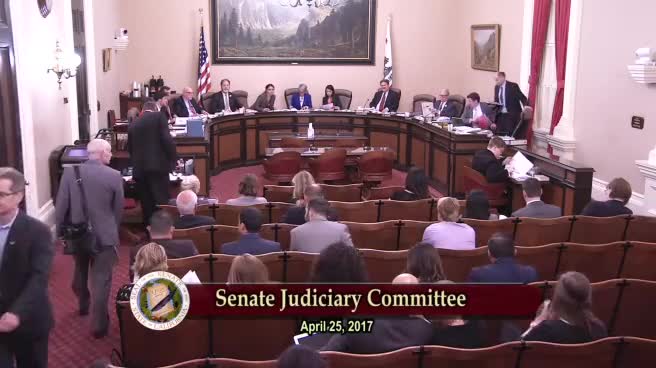 5MIN
Senate Standing Committee on Judiciary
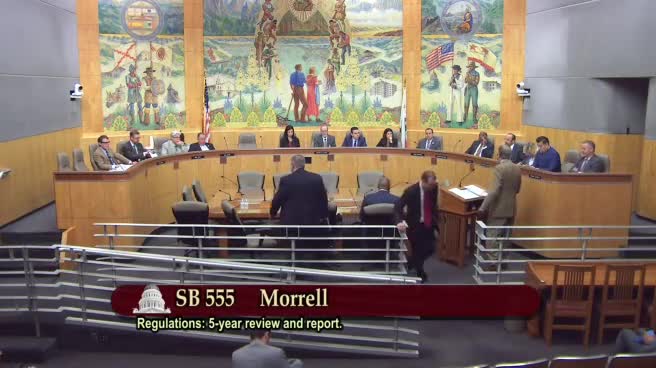 10MIN
Senate Standing Committee on Governmental Organization
Bill Author

Bill Co-Author(s):
